The Once and Future King
“The Once and Future King” by T.H. White – Honor, King David, and Justice
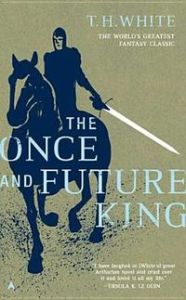 T.H White’s classic Arthurian tale, The Once and Future King is an absolute delight to read. I had never read it before, and I was surprised to see the sheer amount of humor found therein. The depth of the work’s story is immense. Here, I will look at some of the worldview level themes found in the book. There will be SPOILERS in this post.
Honor
Young Arthur, known as “The Wart,” shows his character in one discussion with Merlyn-
If I were to be a Knight… I should pray to God to let me encounter all the evil in the world in my own person, so that if I conquered there would be none left, and, if I were defeated, I would be the one to suffer for it. (174)
Arthur is an honorable man–and was even an honorable boy. That doesn’t mean he never makes poor choices, but he is ultimately motivated by faith and a desire to take on evil directly.
King David… Arthur
In many ways, the story of Arthur parallels the biblical story of David. Like David, Arthur desires to follow justice and walk in the way of God. Like David, it is illicit affairs which lead to his undoing. Like David, Arthur’s downfall ultimately comes from within his own family. Each has a kind of guide in the early stages of their rule (Merlyn or Samuel), but neither takes on such guidance later in life. Each is guided by faith, and it each attempts to capture a kind of ideal in their monarchy. Their ideals are never quite reached, and it is evident in the story of each that their own choices limit their capacity to reach that ideal. In the end, each turns to God for the final answers.
Justice
One of the best portrayals of justice in the book can be found in the way White portrayed injustice. The knights are operating under a principle of “Might makes Right.” They expect the lower class soldiers to be slaughtered, while they themselves are so heavily armored they can barely be harmed (as hilariously depicted in an early scene that young Arthur gets to witness). Arthur seeks to go against this principle–to wage war on Might. Yet, even that battle ends in failure as it becomes corrupted. A question the book seems to point us towards is whether violence to overcome violence is a realistic means.
The conclusion to the book catches Arthur at his most reflective. White’s own view begins to peek through the words of Arthur’s thoughts. What is it that failed Arthur? How did his quest for good become so embroiled in deceit and betrayal? Yet Arthur finds that there was a crucial flaw in his plan: “[T]he whole structure depended on the first premise: that man was decent” (637). He had forgotten about the sinfulness of humanity:
For if there was such a thing as original sin, if man was on the whole a villain, if the Bible was right in saying that the heart of men was deceitful above all things and desperately wicked, then the purpose of his life had been a vain one. (638)
The purpose was vain, because it was not pursued alongside God’s will but rather as Arthur’s will imposed upon humanity–the very thing that Merlyn had come back through time (or was it forward?) to discover. Yet that which Arthur wished to bring about–the defeat of Might–was not itself an evil end. Indeed, it is the King’s page who reveals the ultimate judgment on Arthur’s plan: “I think it was a good idea, my lord”–thus said the page; and Arthur’s response: “It was, and it was not. God knows” (644).
Ultimately, it seems, justice is defined on God’s terms and humans are incapable of seeing the whole picture. White was an agnostic, but was apparently scornful of the evil he saw in the world. A kind of pessimism about human capacities is found throughout the book. The fact that, in the end, “God knows” is the answer that can be given towards whether humans can accomplish an ideal is telling. Without God, endeavors of that sort are impossible.
Other Topics
There are some pretty interesting parables included within the text, particularly in the “Sword in the Stone” section. One of them is from the Talmud–a story in which Elijah travels with a Rabbi and perplexes the Rabbi with his apparent lack of concern for the poor while he aids the rich. Yet this parable shows that God is indeed working towards justice, and a God’s-eye perspective of justice is impossible. Another parable tells a story about humanity as a kind of capstone of creation, while limiting humanity to being an “embryo” for all time- a creature in development. This capacity-laden view of humanity points to White’s worldview once more. Human choices matter, but we so often choose poorly.
The Dark Ages, White notes, may have been a bit of a misnomer:
Do you think that they [those times sometimes called “The Dark Ages”], with their Battles, Famine, Black Death and Serfdom, were less enlightened than we are, with our Wars, Blockade, Influenza and Conscription? (544)
Here again we see White’s own world creeping back into the novel. The novel was published in 1939, the year World War II officially began, though there was plenty going on before that. It was difficult to see the War coming and think that another age was to be singled out as the “Dark” age. There is a kind of intellectual hubris in dismissing the ideas of the past and seeing one’s own time as somehow enlightened. White did not think that was a route to take.
Merlyn (yes, Merlyn, not Merlin) is a character whose interactions with Arthur bring up all kinds of questions. He seems to be guiding a young Arthur towards the attempt to bring about justice in the world, but he also allows himself–seemingly willingly–to be cast aside when Arthur is at his most vulnerable. He only reappears at the very end of the book as a kind of wind. I am left feeling rather ambivalent about Merlyn, who had so much power but who did not ultimately use it very effectively.
Conclusion
The Once and Future King is a simply phenomenal book layered with many levels of meaning. There are so many avenues to explore from a worldview level that I’m sure repeated readings will be rewarding. The central theme, however, is incredibly powerful: humans cannot complete their own ideals. We are imperfect. God knows.
Links
Be sure to check out the page for this site on Facebook and Twitter for discussion of posts, links to other pages of interest, random talk about theology/philosophy/apologetics/movies and more!
Popular Books– Read through my other posts on popular books–science fiction, fantasy, and more! (Scroll down for more.)
Source
T.H. White The Once and Future King (New York: Ace, 2004 edition).
SDG.
——
The preceding post is the property of J.W. Wartick (apart from quotations, which are the property of their respective owners, and works of art as credited; images are often freely available to the public and J.W. Wartick makes no claims of owning rights to the images unless he makes that explicit) and should not be reproduced in part or in whole without the expressed consent of the author. All content on this site is the property of J.W. Wartick and is made available for individual and personal usage. If you cite from these documents, whether for personal or professional purposes, please give appropriate citation with both the name of the author (J.W. Wartick) and a link to the original URL. If you’d like to repost a post, you may do so, provided you show less than half of the original post on your own site and link to the original post for the rest. You must also appropriately cite the post as noted above. This blog is protected by Creative Commons licensing. By viewing any part of this site, you are agreeing to this usage policy.
2015: The Year’s Best Books, My Reading, Blogs, and More!
Another year has passed more quickly than I could have ever imagined. I’d like to share with you my reading for the year, as well as my awards for books, movies, and blogs. Please let me know about your own reading, movie-watching, and the like this year. I’d love to read about what you were up to last year and what books moved you or taught you much.
Books
The books of the year are based off my reading this year; not on whether they were actually released this year. The categories for InterVarsity Press (IVP) and Crossway, however, are from this year.
Theology book of the year
Flame of Yahweh by Richard Davidson- This book is a massive wealth of information about sexuality in the Old Testament. Davidson analyzes an enormous number of texts to draw out the teaching on sexuality found therein. Davidson approaches the texts from what I would call a moderate egalitarian viewpoint, but he justifies this view directly from the text, with a particular emphasis on the creation account. Moreover, Davidson’s exposition of Song of Songs in particular is just phenomenal. I cannot recommend this book highly enough.
Philosophy book of the year
The Shape of the Past by John Warwick Montgomery- this book is a historiography book–it is a study of how we write and study history, and it is phenomenal. John Warwick Montgomery is one of those rare people who can touch on seemingly endless topics from a clearly informed perspective, and draw them together with breathless beauty. The first half of the book offers a major look at various historiographic perspectives of the past. The second half is a collection of essays, each of which as informative and wonderful as the next. The book was published originally in 1975, but it remains as brilliant as it ever was. John Warwick Montgomery is just phenomenal, and this book was heavy, but breathtaking. Here’s a quote from the book.
IVP Book of the Year
Rescuing the Gospel from the Cowboys by Richard Twiss- A convicting read, Richard Twiss argues that we have failed Native Americans when it comes to spreading the Gospel. The book is full of moving stories and deep insights. It is beautiful and haunting. If you want to know more, read my review.
Crossway Book of the Year
Newton on the Christian Life by Tony Reinke- John Newton is probably best known as the author of the hymn “Amazing Grace,” but Reinke highlights so much more about this amazing pastor in this interesting work. Read my review for more.
Fiction book of the Year
The Once and Future King by T.H. White – I’m embarassed to say this, but I actually owned this book once and got rid of it because I figured I wouldn’t actually enjoy it. Was I ever wrong. I picked it up at the library and was absolutely blown away. This classic novel about King Arthur was everything I expected it to be and so much more. I was particularly impressed by the amount of genuinely hilarious humor found throughout. I did not expect the depth it had, either. It was fantastic. Okay, I did read Ben Hur by means of audiobook this year, but I read that book annually because it is probably my favorite work of fiction ever, so it’s not really fair to put it in competition.
Best non-fiction, non-theology/philosophy
The New Jim Crow by Michelle Alexander- think racism is no longer a problem in America? Think again. This book has an enormous amount of research showing how our allegedly colorblind criminal justice system has perpetuated a system of injustice.
Young Adult Novel of the Year
Ghost Hawk by Susan Cooper- A haunting novel about the colonial period in the United States. It is rare that I am as emotionally moved by a novel as I was in this one.
Most Anticipated Book of Next Year
Brandon Sanderson seems to me a well that I will not stop returning to. Ever. I’ve not worked through his whole body of work yet, but everything I’ve read from him is amazing. He consistently nails stunning plot twists in believable ways. Thus, Calamity, the third book of “The Reckoners” is my most anticipated book for next year. I can’t wait to get my hands on it and find out what happens next.
Movie
Best worldview movie of the year
Star Wars: The Force Awakens- No, I’m not just saying this because it is Star Wars (though part of me is saying precisely that). I selected this one because it has so much in it to discuss. I’m not going to spoil anything here, so be sure to head on over to my post on the movie to read more.
Blog
Blog of the Year
Christians for Biblical Equality– CBE continues to put out excellent articles week in and week out. Every new post is worth the time to read, and they have covered an enormous amount of ground with articles on neuroscience to articles on exegesis. This is a fantastic blog and well worth your time to read and subscribe to.
Reading List for 2015
The list starts at where I left off in 2014, when I first started keeping track.
- Star Wars: Heir to the Empire by Timothy Zahn – Finished 1/2/15
- 4 Views on Divine Providence edited by Dennis Jowers and Gundry – Finished 1/4/15
- Wind and Shadow by Kathy Tyers – Finished 1/6/15
- Kingdom Come: The Amillennial Alternative – Finished 1/8/15
- Allegiant by Veronica Roth – Finished 1/10/15
- The Civil War as a Theological Crisis by Mark Noll – Finished 1/12/15
- Salvation Applied by the Spirit by Robert Peterson – Finished 1/13/15
- Star Wars: Dark Force Rising by Timothy Zahn – Finished 1/13/15
- God’s Battalions by Rodney Stark – Finished 1/13/15
- Gender, Religion, and Diversity edited by Ursula King and Tina Beattie – Finished 1/15/15
- Off Armageddon Reef by David Weber – Finished 1/19/15
- Beyond the Control of God? Edited by Paul Gould – Finished 1/22/15
- By Schism Rent Asunder by David Weber – Finished 1/24/15
- Religions of Mesoamerica by David Carrasco – Finished 1/25/15
- By Heresies Distressed by David Weber – Finished 1/28/15
- Eternity Falls by Kirk Outerbridge – Finished 2/1/15
- Evolutionary Creation by Denis Lamoureux – Finished 2/1/15
- A Mighty Fortress by David Weber – Finished 2/6/15
- The New Evangelical Subordinationism edited Jowers and House – Finished 2/7/15
- Red Rising by Pierce Brown – Finished 2/9/15
- Creative Church Handbook by J. Scott McElroy – Finished 2/10/15
- Never to Live by Just B. Johnson – Finished 2/14/15
- Sanctification: Explorations in Theology and Practice edited Kelly Kapic- Finished 2/16/15
- Star Wars: The Last Command by Timothy Zahn – Finished 2/17/15
- The Dominant Culture by Martin Murphy – Finished 2/17/15
- Daystar by Kathy Tyers – Finished 2/23/15
- Give Them Grace by Jessica Thompson and Elyse Fitzpatrick – Finished 2/23/15
- Reinventing Jesus by Komoszewski, Sawyer, and Wallace – Finished 2/25/15
- How Firm a Foundation by David Weber – Finished 3/2/15
- Tamar’s Tears edited by Andrew Sloane – Finished 3/2/15
- Heretics of Dune by Frank Herbert – Finished 3/4/15
- For the Beauty of the Earth by Steven Bouma-Prediger – Finished 3/6/15
- Star Trek: New Frontier- The Quiet Place by Peter David – Finished 3/6/15
- The Warlord of Mars by Edgar Rice Burroughs – Finished 3/7/15
- Three Views on the NT Use of the OT edited Berding and Lunde – Finished 3/10/15
- Chapterhouse: Dune by Frank Herbert – Finished 3/11/15
- A Matter of Days by Hugh Ross – Finished 3/12/15
- Midst Toil and Tribulation by David Weber – Finished 3/16/15
- The Lost World of Adam and Eve by John Walton – Finished 3/17/15
- Hunters of Dune by Brian Herbert and Kevin J. Anderson – Finished 3/19/15
- Martin Luther on the Christian Life by Carl Trueman – Finished 3/21/15
- Golden Sun by Pierce Brown – Finished 3/22/15
- 4 Views on Church Government edited Cowan and Engle – Finished 3/23/15
- Sandworms of Dune by Brian Herbert and Kevin J. Anderson – Finished 3/25/15
- Faith, Freedom, and the Spirit by Paul D. Molnar – Finished 3/29/15
- Weaveworld by Clive Barker – Finished 4/1/5
- Presence and Thought by Hans Urs von Balthasar – Finished 4/1/5
- The Soul Hypothesis edited Mark Baker and Stewart Goetz – Finished 4/1/15
- The Book of Three by Lloyd Alexander – Finished 4/3/15
- Science and Christianity: Four Views edited by Richard Carlson – Finished 4/7/15
- Like a Mighty Army by David Weber – Finished 4/9/15
- No Other Name by John Sanders – Finished 4/10/15
- The Lord of the Rings: Return of the King by J.R.R. Tolkien – Finished 4/11/15
- Dune: House Atreides by Brian Herbert and Kevin J. Anderson – Finished 4/14/15
- The Black Cauldron by Lloyd Alexander – Finished 4/14/15
- Two Views of Hell by Edward Fudge and Robert Peterson – Finished 4/15/15
- Total Church by Tim Chester and Steve Timmis – Finished 4/17/15
- Oxygen by John Olson and Randy Ingermanson – Finished 4/18/15
- Bulls, Bears, and Golden Calves by John Stapleford – Finished 4/19/15
- Odd Thomas by Dean Koontz – Finished 4/20/15
- Divine Foreknowledge and Human Freedom by William Lane Craig – Finished 4/21/15
- Dune: House Harkonnen by Brian Herbert and Kevin J. Anderson – Finished 4/23/15
- Hominids by Robert J. Sawyer – Finished 4/26/15
- Mapping Apologetics by Brian Morley – Finished 4/28/15
- The Legend of Drizzt: Homeland by R.A. Salvatore – Finished 4/28/15
- The Legend of Drizzt: Exile by R.A. Salvatore – Finished 4/30/15
- The Legend of Drizzt: Sojourn by R.A. Salvatore – Finished 5/2/15
- Interpreting the Prophets by Aaron Chalmers – Finished 5/2/15
- Titan by Ben Bova – Finished 5/5/15
- Forever Odd by Dean Koontz – Finished 5/6/15
- God and Design edited by Neil Manson – Finished 5/11/15
- Dune: House Corrin by Brian Herbert and Kevin J. Anderson – Finished 5/12/15
- Bound for the Promised Land by Oren Martin – Finished 5/13/15
- Anne of Green Gables by L.M. Montgomery – Finished 5/15/15
- Humans by Robert J. Sawyer – Finished 5/19/15
- Hybrids by Robert J. Sawyer – Finished 5/21/15
- Brother Odd by Dean Koontz – Finished 5/28/15
- Venus by Ben Bova – Finished 5/30/15
- The Bible Story Handbook by John Walton and Kim Walton – Finished 5/31/15
- Cauldron of Ghosts by David Weber and Eric Flint – Finished 6/2/15
- Bismarck by Michael Tamelander and Niklas Zetterling – Finished 6/3/15
- Dune: The Butlerian Jihad by Brian Herbert and Kevin J. Anderson – Finished 6/5/15
- Star Wars: The Paradise Snare by A.C. Crispin – Finished 6/6/15
- The Legend of Drizzt: The Crystal Shard by R.A. Salvatore – Finished 6/11/15
- Renewing Moral Theology by Daniel Westberg – Finished 6/12/15
- The Legend of Drizzt: Streams of Silver by R.A. Salvatore – Finished 6/14/15
- The Legend of Drizzt: The Halfling’s Gem by R.A. Salvatore – Finished 6/17/15
- The Legend of Drizzt: The Legacy by R.A. Salvatore – Finished 6/21/15
- Fool’s Talk by Os Guinness – Finished 6/21/15
- The Legend of Drizzt: Starless Night by R.A. Salvatore – Finished 6/25/15
- The Legend of Drizzt: Siege of Darkness by R.A. Salvatore – Finished 6/25/15
- The Legend of Drizzt: Passage to Dawn by R.A. Salvatore – Finished 6/28/15
- Understanding Gender Dysphoria by Mark Yarhouse – Finished 7/9/15
- War God’s Oath by David Weber – Finished 7/9/15
- No More Dead Dogs by Gordon Korman – Finished 7/11/15
- Genesis: History, Fiction, or Neither edited Halton and Gundry – Finished 7/13/15
- Double Eagle by Dan Abnett – Finished 7/14/15
- [John] Newton on the Christian Life by Tony Reinke – Finished 7/18/15
- 4 Views on the Nature of the Atonement edited Beilby and Eddy – Finished 7/21/15
- We the Underpeople by Cordwainer Smith – Finished 7/22/15
- Norstrilia by Cordwainer Smith – Finished 7/22/15
- Odd Hours by Dean Koontz – Finished 7/24/15
- Theology as Retrieval by W. David Buschart and Kent D. Eilers – Finished 7/25/15
- The Austere Academy by Lemony Snicket – Finished 7/25/15
- The Ersatz Elevator by Lemony Snicket – Finished 7/27/15
- The Just City by Jo Walton – Finished 8/4/15
- The Vile Village by Lemony Snicket – Finished 8/5/15
- Rescuing the Gospel from the Cowboys by Richard Twiss – Finished 8/6/15
- Packer on the Christian Life by Sam Storms – Finished 8/9/15
- The War God’s Own by David Weber – Finished 8/10/15
- Talking Doctrine: [LDS] & Evngls in Conversation ed. Mouw & Millet- Finished 8/10/15
- Star Trek: New Frontier- Dark Allies by Peter David – Finished 8/11/15
- God’s Crime Scene by J. Warner Wallace – Finished 8/11/15
- Joy in the Journey by Steve & Sharol Hayner – Finished 8/14/15
- Fall of Giants by Ken Follett – Finished 8/17/15
- The Hostile Hotel by Lemony Snicket – Finished 8/18/15
- Hell Under Fire edited Christopher Morgan and Robert Peterson – Finished 8/19/15
- How Jesus Passes the Outsider Test by David Marshall – Finished 8/20/15
- Odd Apocalypse by Dean Koontz – Finished 8/21/15
- Kris Longknife: Mutineer by Mike Shepherd – Finished 8/27/15
- Kris Longknife: Deserter by Mike Shepherd – Finished 8/25/15
- The Carnivorous Carnival by Lemony Snicket – Finished 8/27/15
- Star Wars: The Hutt Gambit by A.C. Crispin – Finished 8/28/15
- Winter of the World by Ken Follett- Finshed 9/4/15
- The Malestrom by Carolyn Custis Davis – Finished 9/4/15
- The Slippery Slope by Lemony Snicket – Finished 9/5/15
- Rediscovering Jesus by Capes, Reeves, and Richards – Finished 9/7/15
- Wind Rider’s Oath by David Weber – Finished 9/9/15
- The Philosopher Kings by Jo Walton – Finished 9/11/15
- Deeply Odd by Dean Koontz – Finished 9/13/15
- Bavinck on the Christian Life by John Bolt – Finished 9/14/15
- The Martian by Andy Weir – Finished 9/15/15
- The Grim Grotto by Lemony Snicket – Finished 9/16/15
- Ship of Magic by Robin Hobb – Finished 9/20/15
- The Love of God by John C. Peckham – Finished 9/22/15
- Saint Odd by Dean Koontz – Finished 9/26/15
- Owen on the Christian Life by Matthew Barrett and Michael Haykin – finished 10/2/15
- Edge of Eternity by Ken Follett – Finished 10/6/15
- Debating Darwin’s Doubt edited by David Klinghoffer – Finished 10/8/15
- Star Wars: Rebel Dawn by A.C. Crispin – Finished 10/9/15
- Aborting Aristotle by Dave Sterrett – Finished 10/9/15
- Who Was Adam? By Fazale Rana with Hugh Ross – Finished 10/12/15
- The Godfather by Mario Puzo – Finished 10/13/15
- Reformation Christianity edited by Peter Matheson – Finished 10/15/15
- War Maid’s Choice by David Weber – Finished 10/19/15
- Scripture and Cosmology by Kyle Greenwood – Finished 10/20/15
- To Kill a Mockingbird by Harper Lee – Finished 10/21/15
- Innocence by Dean Koontz – Finished 10/24/15
- Onward by Russell Moore – Finished 10/25/15
- Reformation Readings of Paul edited Allen and Linebaugh – Finished 10/26/15
- The God Abduction by Ron Londen – Finished 10/26/15
- Hell’s Foundations Quiver by David Weber – Finished 11/1/15
- The Paradoxical Rationality of Soren Kierkegaard by McComb – Finished 11/1/15
- Star Wars: Aftermath by Chuck Wendig – Finished 11/2/15
- Ghost Hawk by Susan Cooper – Finished 11/4/15
- Ben Hur by Lew Wallace (audiobook) – Finished 11/4/15
- The Penultimate Peril by Lemony Snicket – Finished 11/5/15
- Augustine on the Christian Life by Gerald Bray – Finished 11/6/15
- The End by Lemony Snicket – Finished 11/7/15
- The Analogy of Faith by Archie J. Spencer – Finished 11/8/15
- Eve by William Paul Young – Finished 11/9/15
- The Spirit of Hinduism by David Burnett – Finished 11/9/15
- Flame of Yahweh by Richard M. Davidson – Finished 11/11/15
- Life Together by Dietrich Bonhoeffer – Finished 11/12/15
- The Once and Future King by T.H. White – Finished 11/13/15
- WH40K: Nightbringer by Graham McNeil – Finished 11/14/15
- American Exceptionalism and Civil Religion by John Wilsey – Finished 11/16/15
- A Beautiful Friendship by David Weber – Finished 11/17/15
- History, Law, and Christianity by John Warwick Montgomery – Finished 11/18/15
- The Battle of the Tanks by Lloyd Clark – Finished 11/18/15
- The Husband by Dean Koontz – Finished 11/19/15
- The Myth of Religious Neutrality by Roy Clouser – Finished 11/22/15
- Leviathan by Scott Westerfeld- Finished 11/22/14
- The Olmecs: America’s First Civilization by Richard Diehl – Finished 11/23/15
- A Wrinkle in Time by Madeleine L’Engle – Finished 11/23/15
- Behemoth by Scott Westerfeld – Finished 11/26/15
- The New Jim Crow by Michelle Alexander – Finished 11/28/15
- Goliath by Scott Westerfeld – Finished 11/30/15
- Steelheart by Brandon Sanderson – Finished 12/3/15
- The Incas by Terence D’Altroy – Finished 12/4/15
- Partners in Christ by John G. Stackhouse, Jr. – Finished 12/4/15
- The Aztecs by Richard F. Townsend – Finished 12/6/15
- Firefight by Brandon Sanderson – Finished 12/7/15
- The Great Christ Comet by Colin Nicholl – Finished 12/8/15
- Starship Troopers by Robert Heinlein – Finished 12/9/15
- Foxcraft: The Taken by Inbali Iserles – Finished 12/9/15
- Shadow and Bone by Leigh Bardugo – Finished 12/12/15
- Karen Memory by Elizabeth Bear – Finished 12/14/15
- Expository Apologetics by Voddie Baucham, Jr. – Finished 12/14/15
- Aquinas: A Beginner’s Guide by Edward Feser – Finished 12/15/15
- Of Bone and Thunder by Chris Evans – Finished 12/17/15
- 2001: A Space Odyssey by Arthur C. Clarke – Finished 12/19/15
- The Shape of the Past by John Warwick Montgomery – Finished 12/22/15
- The 5th Wave by Rick Yancey – Finished 12/22/15
- 40 Questions about Creation and Evolution by Keathley and Rooker – Finished 12/22/15
- How Much Does God Foreknow? by Steven C. Roy – Finished 12/23/15
- The Art of War by Sun Tzu – Finished 12/25/15
- The First World War by Martin Gilbert – Finished 12/27/15
- Knowledge and Christian Belief by Alvin Plantinga – Finished 12/28/15
- Death Wave by Ben Bova – Finished 12/28/15

 J.W. Wartick - Reconstructing Faith