the problem of evil
What Evil? (The Problem of Evil on Empiricism)
 The problem of evil is often seen to be the greatest philosophical challenge to theistic belief. The problem of evil is also most frequently raised by people who are ardent empiricists (which undergirds their atheism). There are many versions of empiricism, but the one we will investigate at the moment is naturalistic, atheistic empiricism, which holds both that there is nothing but the natural world in the sense of the world which can be directly accessed via the senses and only sensory, empirical evidence is sufficient evidence for holding a proposition to be true.
On this view, it seems extremely difficult to figure out what exactly evil is. Sam Harris is well known for trying to show that science is capable of dealing with moral issues (discussed here). The method basically involves finding out what makes people happy (which is “good”) and what makes them unhappy (which makes it “bad”) (see here). It remains totally unclear to me, however, how Harris makes the jump from “happy” to “objective good.” Measuring people’s happiness doesn’t mean measuring goodness. There are serial killers who are very happy to go about secretly killing as many people as possible. That doesn’t make their action “good”, unless you boil “good” down to a purely subjective basis, on which nothing can be decried as “evil” unless 100% of people agree it is indeed evil.
Returning to the problem of evil, then, it seems like theists can simply ask the atheists a question: “What evil?” Judging something as “evil” is necessarily a valuation of an action. How does one make an experiment which can make a value judgment? Certainly, one can try to argue, as does Harris, that values are just [scientific] facts (note that the theist agrees that moral values are facts… but facts centered on the nature of God, not on empirical grounds). But simply asserting something doesn’t make it so. I often say “God exists.” People don’t tend to take this as profound evidence that the statement is true. (Though, perhaps if I said “God exists is a fact.” I might win some over… at least those who take Harris seriously when he makes a similar claim about values in the video linked above.)
So the question remains: What evil? On an atheistic empirical standpoint, there doesn’t seem to be any way to judge actions or events as “evil” other than by saying “I don’t like that.” But perhaps I do like that same event/action. Who’s to judge between us? Bringing numbers into the mix won’t help either. Imagine a scenario in which 1,000,000 people thought some action (rape) was evil. On the other side there were 10,000 who thought the same action was perfectly reasonable, because, after all, that’s how our ancestors behaved. Who is right? Well, on empiricism, perhaps one could argue that the 1,000,000 are right, but then we’re making a judgment on values simply because of a majority vote. Science doesn’t work that way. We don’t just vote on what is empirically correct.
The only way to solve this problem would be to argue that in moral questions, the majority is correct. Yet I don’t see any way to argue in this matter other than metaphysically, which is exactly what the empiricist is trying to avoid. Therefore, on empiricism, there is no such thing as evil. Just good and bad feelings. And that’s not enough.
And so we get to my main argument.
1) One cannot rationally hold both to a proposition’s truth and falsehood.
2) On atheistic empiricism, there is no evil.
3) Atheistic empiricists argue that evil disproves (or challenges) the existence of God [implicit premise: evil exists].
4) Therefore, atheistic empiricists hold that both evil does not exist, and that it does exist (2, 3).
5) Therefore, atheistic empiricism is irrational (1, 4).
In order to avoid the argument, the atheistic empiricist can simply deny 3). However, this would disarm the strongest anti-theistic argument. I see no reason to feel threatened by the problem of evil when it is leveled by an empirical/naturalistic anti-theist. In fact, some have argued that:
1) If evil has meaning, then God exists.
2) Evil has meaning.
3) God exists (1, 2, modus ponens).
This argument is a kind of reverse moral argument, and I think it works, though I doubt one will find many anti-theists who will accept premise 1). As is the case with the moral argument [1) If objective morals exist, then God exists; 2) Objective morals exist; 3) therefore God exists], I believe atheists will vary between denying 1) and 2) as they find convenient.
I leave it to the naturalistic/empirical atheist to show that science can, in fact, test for objective morality, rather than just measuring feelings.
SDG.
——
The preceding post is the property of J.W. Wartick (apart from citations, which are the property of their respective owners) and should not be reproduced in part or in whole without the expressed consent of the author. All content on this site is the property of J.W. Wartick and is made available for individual and personal usage. If you cite from these documents, whether for personal or professional purposes, please give appropriate citation and provide a link to the original URL. By viewing any part of this site, you are agreeing to this usage policy.
Book Review: Horrendous Evils and the Goodness of God
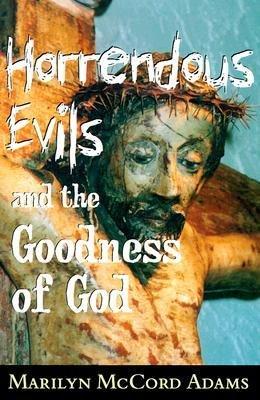 The problem of evil is often seen as the greatest threat to theistic belief. Analytic Philosophers have struggled with the issue on both sides of theism–from Plantinga’s innovative “Free Will Defense” to the claim of the positive irrationality of theism issued by the late J.L. Mackie. This issue doesn’t show signs of slowing down, either. It has dominated philosophy of religion for millenia.
In Horrendous Evils and the Goodness of God
Adams’ account has the kind of honest, penetrating discussion of real evil in our world about which philosophy would do well to take notice. The little child kidnapped and murdered; the innocent family killed by the drunk driver; the millions murdered by Hitler; these examples all demand answers for the individual occurrences of evil, according to Adams (see her discussion on pages 17ff). Specifically, she writes that “At a minimum, God’s goodness to human individuals would require that God guarantee each a life that was a great good to him/her on the whole… God would have to… [give each person’s life value]… by giving it positive meaning through… great enough good within the context of his/her life” (31, emphasis hers). This stunning claim will likely make the theistic philosopher rock back on his/her heels for a moment. Surely, we cannot be called to account for every individual evil!
Adams believes that the Christian theist can indeed do so, not by taking the unconvincing (in my opinion) route of arguing that such persons are having their character built by suffering, but by appealing to God’s goodness to each individual person (55). Specifically, this goodness of God is demonstrated within Christianity by Jesus Christ. After a penetrating discussion of purity and defilement on Christianity and Judaism (see 86ff), Adams argues that in Christ, God “takes the… approach of joining us in our defilement [that is, our suffering of horrendous, individual evils]” (98). This act of Christ means that our defilement from sin, evils, and even horrendous evils has the possibility of becoming holiness (99). Thus, through Christ, and the power of the Holy Spirit’s redefining rebirth of baptism, God offers the greatest good to every individual (102).
Through this self-defilement which leads to holiness, God invests meaning by “…being good to all created persons–that is, in seeing to it that each gets a life that is a great good to him/her on the whole, one in which any participation in horrors is not merely balanced off but defeated” (126, emphasis hers). Adams’ thesis, then, is that in Christ, God provides the defeater for horrendous evils by ensuring that each person’s life is a great good. Here Adams rides a fine line of universalism (it seems as though she may be saying every person is indeed saved through Christ, eventually), but her account can be easily modified by those who reject universalism–for one can argue that God provides the defeater simply by offering the possibility of such goods to each person. And God is good to each person by providing such an opportunity.
Adams uses the rest of her work to argue further how God’s participation in suffering demonstrates that God has been immeasurably good to each individual.
I find Adams’ argument particularly enlightening. Her emphasis on the individual evils of the world is a breath of fresh air as well as a new challenge to Christian philosophers. We do need to address individual atrocities. This doesn’t mean we need to go through, case-by-case, and provide theodicies for each event. Rather, as Adams urges, we can address this by arguing that God is good to every individual through his redemptive act by Jesus Christ.
My main critique of Adams in this work is that while I find her issues with abstracting the problem of evil to hit the mark some of the time, I think she underestimates the value of some of the analytic responses to the problem of evil. Certainly, taking evil as a sum total and arguing that God could have some reason for permitting this much evil to occur downplays the importance pf the evil actions towards individuals , but there is a place for such defenses within philosophy. Rather than jettisoning these types of answers, then, I think we would be best suited adding Adams’ defense to the many-faceted response to the problem of evil from Christian philosophers of religion.
Source:
Adams, Marilyn McCord. Horrendous Evils and the Goodness of God
——
The preceding post is the property of J.W. Wartick (apart from citations, which are the property of their respective owners) and should not be reproduced in part or in whole without the expressed consent of the author.
God and Moral Obligation, or Euthyphro, rethought
Euthyphro’s dilemma is so frequently discussed in philosophy that I don’t see a need to thoroughly present it. The horns, however, are going to be the topic of this post, so I’ll outline them below:
It seems that if God makes commands which create moral duties for humans (and others), then there may only be two options for the theist:
1) We ought to do what God commands because God commands it (and thus he could have commanded any random thing to be dutiful–i.e. torturing cute rabbits)
or
2) God commands us to do things because they are what we ought to do (and therefore there is some standard to which even God answers–see Richard Swinburne’s Revelation for an interesting description of a potential way around this problem)
If these are the only two options, it seems as though theists are in an uncomfortable position indeed! Normally, most theists would attack one of the horns of the dilemma or hit between the horns and find a way out. The late William Alston, however, ingeniously argues in Divine Nature and Human Language that the theist can accept both horns of the dilemma, albeit with some interpretation (DNHL 255).
The most important part of Alston’s solution is to assume that God is perfectly good essentially, that is, necessarily, God is perfectly good (257). In other words, God cannot perform a morally imperfect action. Alston makes no argument for this position, though I think that Stephen Parrish argues this rather well in God and Necessity. Regardless, I’m going to follow Alston’s assumption for the presentation of his argument, for now ignoring the potential problems with removing libertarian free will from God.
If it is the case that God is essentially perfectly good, then moral “oughtness” words such as “required”, “forbidden”, “duty”, etc. do not apply to God. This is because these terms “apply to a being only if that being has a choice between doing or failing to do what it ought to do” (257). But if God cannot fail to do good, then His own nature “prevents him from acting freely in a way that is required for moral obligation… it is metaphysically impossible that God should do anything that is less than supremely good” (257). But then this means that horn 1 of the dilemma serves as no problem–God can not order things which would be arbitrarily evil, but it also means horn 2 is no problem either–God is not restricted by any “ought” statements.
Further, implicit in the dilemma is the idea that some form of Platonism is correct, that is, there are some objective morals as ideas somewhere. But again the theist can adapt this to theism and say that instead of some morals that just exist of necessity on their own (though again see Swinburne, Revelation for a defense of this very idea of theistic morality), God Himself is the “supreme standard of goodness. God plays the role in evaluation that is… assigned… to Platonic Ideas or principles” (268). Moral obligations are what we ought to do (horn 2 of the dilemma) because they are features of God (269).
Therefore, by accepting that God is essentially perfectly good, and further supposing that God Himself is the standard for goodness, the theist can accept the horns of the dilemma while arguing that they don’t really serve as objections to theism as classically supposed. God, having no “ought” statements apply to him, cannot be the subject of 2), while his very existence as essentially perfectly good means that 1) cannot apply to him either.
Sources:
Alston, William P. Divine Nature and Human Language. Cornell University Press. 1989.
Parrish, Stephen. God and Necessity. University Press of America. 2001.
Swinburne, Richard. Revelation. Oxford University Press. 2007.
——
The preceding post is the property of J.W. Wartick (apart from citations, which are the property of their respective owners) and should not be reproduced in part or in whole without the expressed consent of the author.
The Morality of God: Christ at the Center
Here we have a perfect example of the truth of God’s Word: “The mind of sinful man is death, but the mind controlled by the Spirit is life and peace; the sinful mind is hostile to God. It does not submit to God’s law, nor can it do so. Those controlled by the sinful nature cannot please God.” Romans 8:6-8. Indeed, when man is in sin, he is hostile to God. He doesn’t simply misunderstand or misinterpret God, but he is hostile to God.
This can be seen in the writings of the so-called New Atheists (who bring nothing new to the table). They accuse the God of the Old Testament (Hebrew Scriptures) of being an evil, sadistic being (to put it nicely). They defame God’s name and delight in calling Him unjust.
In all of this, however, they betray their complete lack of knowledge about Scripture, God, and the universe.
I believe that there are (among many others) two primary ways that the New Atheists are in error when they attack God in such a way. These two ways are:
1) They forget that if God does indeed exist, then they are in no position to judge God
2) They ignore Christology, which is of utmost importance in any discussion of God
But there is a third point that I have left unmentioned, as I’m still mulling over it. I learned of it upon reading God is Great, God is Good edited by William Lane Craig. I’ll likely write about it in the future.
In the first place, those who attack God’s morality seem to be forgetting a rather obvious point: if God exists, then we are certainly in no position whatsoever to judge whether God is moral or not.
Let us assume for a moment that the God of classical theism exists (i.e. omnipotent/omniscient/omnibenevolent/necessary/sovereign/etc.). If this God exists, then it seems blatantly obvious that it is God who judges what is right and wrong, not us. It’s honestly baffling that anyone could miss this point, but I’ll try to make it more clear.
1. If the God of classical theism exists, then He is sovereign (i.e. the ultimate authority in the universe)
2. Assume, for the sake of argument, that the God of classical theism exists
3. Therefore, God is the ultimate authority in the universe.
Now those who raise this objection somehow think that they are capable of judging the actions of the ultimate authority in the universe. This is not only irrational, but it is an ultimate show of egoism and haughtiness. There is no such thing as a good argument for humans being able to judge the Supreme Being, if such a Being exists.
The second explanation is even more readily ignored by the New Atheists. It’s easy to quote mine Scripture to pull things out of context in order to try to prove a point, but one must understand that Scripture stands or falls as a whole. As such, Christ is to be understood as the interpretive principle for all of Scripture. Every verse should be understood in light of Christ, who is to be at the center of all theology.
So what does Christ have to do with an argument about whether God’s Law as presented in the Hebrew Scriptures is evil? Everything. Christ is the accomplishment of the Torah (the Law). N.T. Wright argues in his work The Climax of the Covenant that the Law “is given for a specific period of time, and is then set aside–not because it was a bad thing now happily abolished, but because it was a good thing whose purpose had now been accomplished.” While some may object to Wright’s interpretation (as they may argue that this view of Torah is anti-nomian in nature, though I think anyone who reads Wright in context will realize this is not the point he makes at all), I believe he makes a wonderful point here. Christ came to save all people (the doctrine of objective justification). Thus, the question should not be whether or not the OT Laws are evil, but the question should rather be “What does this [the Law] mean?”
The answer can be seen in Christ. Romans 10:4- “Christ is the end of the law so that there may be righteousness for everyone who believes.” The Greek word for “end” in this passage is tellos, which means “end, goal, to set out for an ultimate goal” (Strong’s Bible Dictionary). Christ has now come. The Law is accomplished. It is to Him that we should turn when we are condemned by the Law. Further, Galatians 2:15-16 “We who are Jews by birth and not ‘Gentile sinners’ know that a man is not justified by observing the law, but by faith in Jesus Christ. So we, too, have put our faith in Christ Jesus that we may be justified by faith in Christ and not by observing the law, because by observing the law no one will be justified.”
Thus we know that it is through Christ that the Law must be interpreted, as the perfect atoning sacrifice for our sins. The Law can make no one righteous, it can only condemn (and that is evident in those who react with hatred to it [see C.F.W. Walther’s “Proper Distinction between Law and Gospel” to examine this point exhaustively). Those condemned by the law react with hatred, as can be seen by the works of Dawkins, Hitchens, Harris, et al. But what the New Atheists (and others) need most severely is most certainly the Gospel and the understanding thereof. All Scripture must be interpreted through the Cross of Christ.
This post is part of a series on Jesus: the Living God. View other posts in the series here.
——
The preceding post is the property of J.W. Wartick and should not be reproduced in part or in whole without the expressed consent of the author.
Why ask the “Why” question?
I can’t help but continue to think about the suffering in the world and how it relates to Christianity. I don’t think people who are not Christian, or indeed not religious at all, don’t wonder about these concepts also. Quite the contrary, suffering so permeates our world that anyone who attempts to downplay it seems obviously wrong. But I continue not to think about the “why” part of the question, but the “how” question. Rather than asking “Why is there suffering?” I ask “Why do people have the concept of suffering?” The former question is answered on the Christian view of the fall into sin (or in various other ways in more depth, see here for a longish response). The latter question I believe Christianity also has an answer for.
I believe that the very question actually presupposes at least the concept of some kind of objective standard of good and evil. Suffering is often defined with such terms as “pain.” The very concept of suffering presupposes that there is some line between what is good and bad, what is pleasure and pain. But these concepts can exist in almost any epistemology. What sets this issue in a new light for me is the very fact that we ask questions about it.
How are we justified in asking questions like “Why is there suffering?”? I don’t see any reason that one can be justified in asking such a question unless they are supposing that there is a very real right and wrong. Someone is suffering. That is wrong. Why must they suffer? But what I must then press is my own question: Why do you think you’re justified in asking that question? It seems to me that a naturalist certainly cannot be justified in asking this question, because on naturalism the concepts of good and evil or right and wrong have evolved into us and are part of nature. They serve evolutionary functions, and no more. So what could justify someone who follows this epistemology to ask a question like “Why is there suffering?”? A possible answer could be that the reason there is suffering is because we have evolved some capacity that understands the world in such terms as right and wrong (similar to Dawkins discussion about the reason we observe that the universe seems remarkable and we seem unlikely within it [my comments here]), but these aren’t objective (we could have evolved a different experience of the world which would perhaps give us entirely different concepts of what suffering is, or a lack of the concept entirely) and therefore can’t serve as an objective answer to a question that seems to demand it. It seems completely unsatisfactory, especially in light of the fact that the question demands an objective answer. Some may be satisfied by it, I’m not arguing against that, what I am arguing is that naturalists haven’t answered the question in an objective sense. They can only pose it as a challenge to competing epistemologies.
So it seems to me that, on a naturalist ontology, we cannot be justified in asking these kinds of “Why” questions. The only answer to be provided is that it is natural. The question demands more. It begs for more. But in order to justify the question, one has to dig deeper than a naturalist ontology (which may be uncomfortable to accept for other reasons) can provide. One has to delve into that realm of theism. It is only when the objective meaning in the universe is personal that such personal, objective questions can be asked. We cannot ask a meaningless, eternal (or circular? self-existant? etc.) universe “Why is there suffering?” when the question itself demands an answer to “How can suffering be allowed?” We cannot ask the universe of deism or naturalism “Why” and claim we are justified in expecting a response other than “Because.”
This answer leaves us wanting. Others may refer to theism as a crutch. They may see a reliance on God as a way to strengthen a weakness in oneself. It’s not. Rather, it’s the answer. God can answer the “Why” questions that are so synonymous with our nature. And a God who suffers provides an even more personal answer. It may not be the answer we’re looking for. It may not be an explanation. Rather, the answer can come as an understanding. God understanding suffering and even suffering Himself.
The book of Job in the Bible examines this question in some detail. Job suffered. He suffered at the permission of God (Job 1:12). But Job’s faith remained strong, despite the verbal throttling he received from those around him. He says “Shall we accept good from God, and not trouble?” (Job 2:10). And Job suffered greatly. But why? What answer would God give to Job? God does answer, “Will the one who contends with the Almighty correct him? Let him who accuses God answer him!” (Job40:2) and “Brace yourself like a man; I will question you and you shall naswer me. Would you discredit my justice? Would you condemn me to justify yourself?” (Job 40:7-8). He continues, saying, “Who has a claim against me that I must pay? Everything under heaven belongs to me.” (41:11)
Job is left without answers to these questions from God. “Surely I spoke of things I did not understand, things too wonderful for me to know… Therefore I despise myself and repent in dust and ashes” (42:3, 6). It would seem here that God’s answer to the question “Why is there suffering?” may be a “You don’t understand” or even, “You can’t understand.” Job is content with this, but God isn’t. In the person of Christ, in whom all the fullness of the Deity lives in bodily form (Colossians 2:9), God suffered Himself. Not only that, but instead of answering “Why,” God delivered the ultimate answer: Jesus. This earth may be a time of suffering, but in the end there is eternal joy.
It is here, however, that the Christian now may be accused of not providing a satisfactory answer to the question. “Forget about all this theological garbage [1 Corinthians 1:18-31] and answer the question!” This is where the Christian can thank God for the gifts of logic and reason, for the answer to the question can be determined from them. I’m not going to rewrite everything, as I’ve already gone through the question here.
It therefore stands, in my mind, that the justification for such “Why” questions can only be had on theism. Naturalism, without objective right and wrong, has no stance from which to ask the question, and no answer that it can give achieves the transcendental meaning it demands.
——–
The preceding post is the property of J.W. Wartick and should not be reproduced in part or in whole without the expressed consent of the author.
Book Review: The Nature of Necessity
Alright, I managed to finish another book this weekend. This is one I’ve been working through for months. Literally.
The Nature of Necessity by Alvin Plantinga is quite the philosophy book. In it, Plantinga tackles “The distinction between necessary and contingent truth (1)…” He distinguishes necessity de re and de dicto necessity. De dicto necessity he defines as “a matter of a proposition’s being necessarily true (v)” while de re necessity is “an object’s having a property essentially or necessarily.”
The first few chapters compose Plantinga’s argument for de re necessity by showing that such things can be shown in de dicto terms. It is quite an interesting section, and one in which I think Plantinga makes a strong case. Chapter IV I found particularly interesting, as Plantinga’s discussion here starts to turn to modal logic. The discussion of how we should define worlds, books (which I take to mean a list of propositions that belong to a given world), actuality, possibility, and the like. This discussion is extremely interesting and leads to some conclusions like “A possible world… is a possible state of affairs in the broadly logical sense… a state of affairs S is complete or maximal if for every state of affairs S’, S includes S’ or S precludes S’. And a possible world is simply a possible state of affairs that is maximal (45).”
But then, “Equally obviously [as that one state of affairs obtains], at most one obtains; for suppose two worlds W and W* are distinct worlds, there will be some state of affairs S such that W includes S and W* precludes S. But then if both W and W* are actual, S both obtains and does not obtain; and this, as they say, is repugnant to the intellect (45).”
These kinds of conclusions are to be found throughout The Nature of Necessity and it is this that makes the book such a good read. Plantinga’s descriptions of various states of affairs never fails to entertain, as his sense of humor is present at places throughout the book, while he still maintains his extremely rigorous treatment of the items at hand.
In later chapters (notably VI), Plantinga defends his version of necessity from alternatives, and in the process raises some objections to these alternatives. I’d write more of these out, but the fact of the matter is that the Nature of Necessity has that problem that I believe most books that are so heavy on analytic philosophy have: if one doesn’t read the whole, it is hard to understand any one part. This isn’t really a strike against the book, but is rather simply of note. The way that Plantinga builds on each previous point throughout the book helps give his case clarity.
Once Plantinga has gotten the bulk of the text out of the way, having made a strong case for necessity, he gets into how it is that these concepts apply to God, particularly the theistic God. The chapters about God and evil and God and necessity are largely recycled (or perhaps reworked) versions of his book God, Freedom, and Evil. As such, I didn’t spend a lot of time on these chapters, but in them Plantinga presents his case for the “Victorious Modal” version of the Ontological Argument. It is a version that I think has great potential, and has been the subject of some debate (see Graham Oppy, for instance… or the Blackwell Companion to Natural Theology‘s treatment). Plantinga’s defense of theism from the problem of evil is equally impressive. I have written about it in the past, so I will not do so again, but I do think that Plantinga’s various arguments carry some weight and certainly merit discussion among apologists.
The Nature of Necessity closes with an appendix of some length (30 pages) about modal logic. Specifically, it is directed at answering objections (and more specifically, Quine’s objections) to modal logic. I believe that Plantinga does a fine job of taking on this task, and making a valid case for modal logic, but readers must be absolutely warned that a deep understanding of symbolic logic is required to even begin to approach the appendix. I recommend tackling some texts on logic before reading the appendix. As it was, I had to write out a list of the symbols being used in order to understand this section. It took me several days to get through the appendix alone. But once one does so, they will find that it is yet another rewarding section in an overall wonderful book.
The book weighs in at about 251 pages (including the appendix, but not including the preface), but the content that it includes is immense. Not only that, but the text itself is so heavy that a single page can often take minutes to work through and ponder. I recommend The Nature of Necessity to those who wish to explore, well, necessity and what it means further. It is by no means an easy work to read, and will require quite a bit of pondering and rereading, but in the end the payoff is worth it.
Scores (5 is truly average):
Quality of Arguments (if it applies): 10
Overall Content: 8
Difficulty: 9
Clarity: 9
Theology/Doctrine: N/A- other than theism, this doesn’t really have enough to judge the work based on Doctrinal or Theological stances
Value (price): 8- There’s a lot here, and I think it warrants the purchase price.
Relevance: 6- I don’t know how much use I’ll get out of the book as an apologetic work. Plantinga’s God, Freedom, and Evil may be more useful in this regard, but that doesn’t really take away from how much I liked the book
Review Criteria:
The Quality of arguments is just what it says. Obviously this is subjective. Do I think the arguments presented in the book (if there are any) are valid and/or useful?
Overall Content is a general judge of how good I felt the book is.
Difficulty is the amount of work it takes to get through the work. Higher values don’t necessarily mean the book is better, just more difficult to read.
Clarity simply outlines how clear I believe the author was.
Theology/Doctrine is my judgment, clearly based on my presuppositions, of how good I felt the author’s theological or doctrinal content was (if there is any).
Value is a determination of whether I believe the book is worth the asking price.
Relevance outlines whether I think the book has real-life applications. A low score in this doesn’t necessarily mean the book is bad, just that I believe there may not be much to use. In other words, a book could score low on this criterium, but I might still find it quite good.

 J.W. Wartick - Reconstructing Faith