theology
Women, Emotions, and Apologetics: A Response to “Apologetically Blonde”
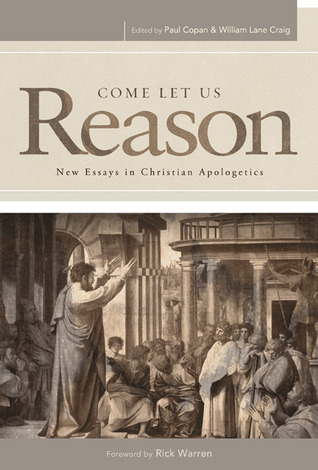 I recently came upon Come Let Us Reason: New Essays in Christian Apologetics, a book I’d been meaning to read for some time. I decided to take a break from the unpacking I was doing to do a little browsing as my son crawled around on my lap. I turned to the index to discover an article entitled: “Apologetically Blonde: The Struggle of Women to Defend Their Faith and What They Should Do about It” by Toni Allen (full citation below- all references to this text). As I browsed the article I knew I needed to write a response, because–with apologies to Toni Allen–I felt much of it was misguided.
Emotional Reasoning
The first critique I have of Allen’s article is the continued references to emotional reasoning and its apparent lack of justification for knowledge. Writes Allen:
…I find that women often depend on their experience and emotional connection with God as the primary justification for the beliefs they hold. In other words, women tend to perceive meaningful experiences and their corresponding emotions to be validation that what they believe is accurate. (40)
She goes on to say:
Yes, the gospel is for the whole person, and this includes existential reasons (including personal experience as well as our deepest emotions and longings)… However, a well-rounded defense of the gospel will include rational reasons and evidences. (40)
Throughout this section, Allen affirms the reality of personal experience and emotions as a basis for believing, but continually asserts that rational reasons are required in the public defense of Christianity. It is difficult to pin down exactly what Allen’s critique is in this section, because the wording is such that it could allow any number of exceptions. Words like “typically,” “often,” “includes,” and the like allow for broad interpretations of her meaning. But it does seem like the whole tone of the article as a whole is that emotions are somehow inadequate as a defense of the faith or that they are opposite or opposed to reason. This latter point is particularly problematic, and it seems like it is closest to the way Allen is leaning throughout the essay.
The reason I say this is because emotions are set up not alongside reasons and rationality, but rather as something separate from them. But this is itself mistaken. As any number of authors have pointed out, emotions themselves are part of the reasoning process and indeed can be integral or even essential to rationality. For example, Daniel Westberg argues in Renewing Moral Theology, a Thomistic approach to ethical theology, that emotions are a central part of the process of reasoning and judgment (see especially 40-43; see also my review of the book here). If Westberg is right, then for Thomists–a formidable bunch of philosophers indeed–emotions are a central aspect of reasoning; not something separate from and possibly antithetical to it. But even if he’s wrong, his case is fairly persuasive that emotions should not be dismissed from the reasoning process, and philosophers of several other flavors have agreed.
Thus, one of the major points of Allen’s assessment is itself mistaken because it operates from a false understanding of the relationship between emotions and reasoning.
As an aside, Allen’s assertion that “we must realize that appeals to religious experience typically do not function as a decisive apologetic” (41) is shifty in its wording (“typically”) while also being mistaken, as philosophers like Richard Swinburne, Caroline Franks Davis, Keith Yandell, and the like have made the argument from religious experience a powerful apologetic tool. Moreover, people like Alvin Plantinga have argued (persuasively, in my opinion), that we can have a rational basis for belief in God through properly basic belief and religious experience.
Can Women Do Apologetics?
Alongside Allen’s constant stream of arguing that women think more emotionally, there is the question of what exactly that is supposed to mean. Again and again we are treated to quotes like the one shared above and those below:
“[W]omen are naturally more cognizant of their emotions… depending on them as the primary validation for our beliefs directly affects our judgment.” (42)
“[I]n mentoring many women over the years, I have found it very common that rather than evaluate an idea on its merits, they are instead more reluctant to adopt an idea if it actuates negative feelings, or more eager to accept it because of positive ones.” (42)
“As women, we should welcome the challenge of defending our faith, even if this pushes us out of our comfort zone.” (45)
Lines like these are found throughout the essay with little supporting evidence other than personal experience–itself a great irony given the previous analysis. But apart from this, it fails to take into account that men and women operate on bell curves in regard to emotional–and other–reasoning skills and so making broad statements like these fails to reflect the reality of the spectrum of capacities for either gender.
Women, according to Allen, also are hamstrung in their attempts to do apologetics through “their natural inclination to avoid conflict” (37). But again, what does this say about men and women essentially (in the philosophical sense)? Do men who have an inclination to avoid conflict somehow become women or more feminine because of this? If so, in what fashion? And what biblical basis do we have for these kinds of assertions?
These and other issues betray a primary underlying presupposition of Allen’s article: gender essentialism. This is a deep topic that I cannot explore thoroughly here, but basically what Allen has–consciously or not–bought into is the notion that men and women operate in largely different spheres with clearly defined cognitive and other barriers between them. That’s why lines like “Women are naturally more cognizant of their emotions…” manage to sneak into the text. But these lines find little argumentative support and again fail to take into account the aforementioned reality that men and women do not operate in entirely different planes of existence–or even emotions. Although Allen generally included lines that allowed for some wiggle room, the overall message was clearly based on this presupposed and unfounded adherence to gender essentialism.
Apologetically Blonde?
A final issue I wanted to mention with the article is the title itself. Although “blonde jokes” have become part of our culture, I think that we as Christians are called to a higher standard. “Blonde” jokes select a specific portion of the population for the sake of ridicule. Though these are often “in good fun” the question is whether such jokes are taken that way and what kind of impact that might have on the people who are, well, blonde. I am not, but it’s easy to see how the use of “blonde” in the title as a synonym for “challenged” could be taken poorly and works against the gentleness and respect we need to display as Christian case-makers.
Links
Be sure to check out the page for this site on Facebook and Twitter for discussion of posts, links to other pages of interest, random talk about theology/philosophy/apologetics/movies and more!
Source
Toni Allen, “Apologetically Blonde: The Struggle of Women to Defend Their Faith and What They Should Do about It” in Come Let Us Reason: New Essays in Christian Apologetics eds. Paul Copan & William Lane Craig (Nashville, TN: B&H Publishing Group, 2012).
SDG.
——
The preceding post is the property of J.W. Wartick (apart from quotations, which are the property of their respective owners, and works of art as credited; images are often freely available to the public and J.W. Wartick makes no claims of owning rights to the images unless he makes that explicit) and should not be reproduced in part or in whole without the expressed consent of the author. All content on this site is the property of J.W. Wartick and is made available for individual and personal usage. If you cite from these documents, whether for personal or professional purposes, please give appropriate citation with both the name of the author (J.W. Wartick) and a link to the original URL. If you’d like to repost a post, you may do so, provided you show less than half of the original post on your own site and link to the original post for the rest. You must also appropriately cite the post as noted above. This blog is protected by Creative Commons licensing. By viewing any part of this site, you are agreeing to this usage policy.
Sunday Quote!- Samson as Israel
 Every Sunday, I will share a quote from something I’ve been reading. The hope is for you, dear reader, to share your thoughts on the quote and related issues and perhaps pick up some reading material along the way!
Samson as Israel
I finished reading the Samson narrative (Judged 13-16) after going through it in detail over the last several months. I found Barry Webb’s summary statement regarding Samson to be profound and deeply moving:
[B]eneath all the surface chaos, and the mad careering here and there of the wild-man hero, there is a steady building toward a predetermined climax of profound theological significance. For Samson is not just Samson; he is also Israel. His is separated from other men, but he longs to be like them, just as Israel is separated from other nations, but is continually drawn to them. He goes after foreign women, as Israel goes after foreign gods. He suffers for his willfulness, as Israel does for its. And in his extremity he cries out to Yahweh, as Israel has repeatedly done. But now it is Samson alone who does so; he is remnant Israel; Israel reduced to a single man. (416-417)
After this summary statement, Webb goes on to place this in canonical perspective and analyze other perspectives of Samson. The commentary is worth the purchase for these sections alone, but the whole thing is phenomenal. I highly recommend that you, dear readers, take the time to read the Bible alongside a solid commentary sometime.
Links
Be sure to check out the page for this site on Facebook and Twitter for discussion of posts, links to other pages of interest, random talk about theology/philosophy/apologetics/movies and more!
Sunday Quote– If you want to read more Sunday Quotes and join the discussion, check them out! (Scroll down for more)
Source
Barry Webb, The Book of Judges (Grand Rapids, MI: Wm B. Eerdmans, 2012).
SDG.
Book Review: “Renewing Moral Theology” by Daniel Westberg
 How might we integrate the study of ethics and theology? In Renewing Moral Theology
The book is not, like many, a handbook for discussing various moral issues. Some hot-button topics are raised, but they are not the focus. Westberg’s focus is, instead, much broader. He provides here a metaphysical basis for ethical reasoning, while addressing some of the main questions that come up regarding that framework. Thus, this is a book that encourages further reasoning and research rather than trying to answer some laundry list of moral questions (such as questions of sexuality, abortion, capital punishment, and the like). The focus is on giving an overarching metaphysical basis for using one’s reasoning in ethical situations, not handing the answers to such questions to the readers. This alone makes it valuable because many books on ethical reasoning unfortunately do not address the pressing metaphysical or metaethical questions that come up in thinking about morality.
Thomism has much to offer when it comes to moral theology. The system gives a framework for analyzing things like “being,” “right and wrong,” motivations, emotions, and more.
Westberg provides valuable insights into a number of key issues for ethics from a Christian perspective. Incorporating the holistic approach of Thomism into ethics, he notes that emotions do play a vital role in our practical reasoning and the way we approach moral questions. Emotions are often ignored or treated as frivolous in treatments of objective morality, and to have them incorporated into the study was a much-needed corrective.
He also gives excellent illustrations of and counters objections to the “double-effect” principle, which is the notion that moral actions can have two outcomes, one intended and one not, which allows for right action to be taken even if a wrong outcome will occur or is known to occur. Thus, for example, he treats the notion of a surgery which would kill an unborn child but save the mother. The intent of the surgery is to save the mother, not kill the child, but both are “effects” (hence double-effect) of the procedure. There are some key objections to using this principle to allow for certain moral actions, such as the apparent parsing down of moral choices into separate spheres of decision and intent, but Westberg counters them deftly. In doing so, he provides a strong defense of this critical ethical principle.
Examples are abundant throughout the book, and they constantly are used in ways that helpfully illustrate the point at hand. Some of the more obscure-seeming aspects of how an Aristotelian-Thomistic metaphysics might impact ethics are made much more clear by Westberg’s clarifying examples.
This is inherently a work of moral theology and so Westberg spends a good amount of time outlining how theology might impact one’s moral outlook. Aquinas had much to contribute here, and again the Thomistic system is incorporated into the discussion, allowing for a robust metaphysics to back up the ethical reasoning placed herein.
Renewing Moral Theology
The Good
+Strong Thomistic look at ethics
+Good use of examples to illustrate principles
+Excellent analysis of “double-effect” principle
+Rightly emphasizes some key areas of moral decision-making
The Bad
-At times it skips too quickly to conclusions
Disclaimer: I was provided with a review copy of the book from the publisher. I was not asked to give any specific kind of feedback whatsoever.
Links
Be sure to check out the page for this site on Facebook and Twitter for discussion of posts, links to other pages of interest, random talk about theology/philosophy/apologetics/movies and more!
Book Reviews– There are plenty more book reviews to read! Read like crazy! (Scroll down for more, and click at bottom for even more!)
Source
Daniel Westberg, Renewing Moral Theology
SDG.
——
The preceding post is the property of J.W. Wartick (apart from quotations, which are the property of their respective owners, and works of art as credited; images are often freely available to the public and J.W. Wartick makes no claims of owning rights to the images unless he makes that explicit) and should not be reproduced in part or in whole without the expressed consent of the author. All content on this site is the property of J.W. Wartick and is made available for individual and personal usage. If you cite from these documents, whether for personal or professional purposes, please give appropriate citation with both the name of the author (J.W. Wartick) and a link to the original URL. If you’d like to repost a post, you may do so, provided you show less than half of the original post on your own site and link to the original post for the rest. You must also appropriately cite the post as noted above. This blog is protected by Creative Commons licensing. By viewing any part of this site, you are agreeing to this usage policy.
Sunday Quote!- Genre and Genesis 1-11, does it matter?
Every Sunday, I will share a quote from something I’ve been reading. The hope is for you, dear reader, to share your thoughts on the quote and related issues and perhaps pick up some reading material along the way!
Genre and Genesis 1-11, does it matter?
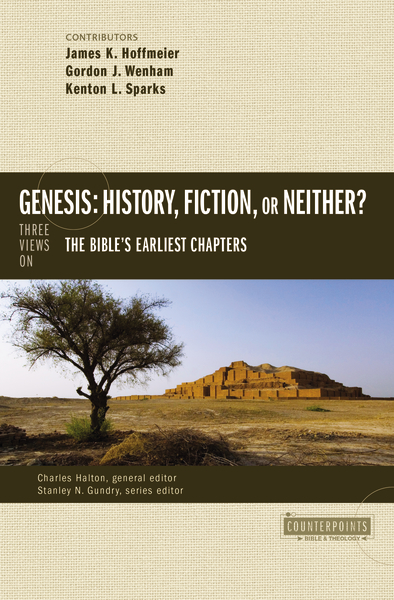
The central question of Genesis: History, Fiction, or Neither? is the question of the genre of Genesis 1-11. But does this question really even matter? Gordon Wenham argues that shouldn’t trump interpretation:
[U]ltimately we must recognize that how we define the genre of Gen[esis] 1-11 is a secondary issue: our primary concern must be the interpretation of the stories and their application today. The definition of genre refines and clarifies the message of Genesis, but disagreements about genre should not obscure our substantial agreement about the theological teaching of these stories. Whether one calls Gen[esis] 1-11 doctrine, history, fiction, or myth, it is clear that these chapters are making profound statements about the character of God and his relationship to mankind. Elucidating these truths must be the goal of every interpreter. (74,cited below)
Later in the book, Sparks argues that Wenham is mistaken and genre does determine much more about the text–even what might be considered binding to believe. What are your thoughts? How important is it to determine the genre of Genesis 1-11 in order to properly interpret it? Can we focus instead on the texts themselves?
Links
Be sure to check out the page for this site on Facebook and Twitter for discussion of posts, links to other pages of interest, random talk about theology/philosophy/apologetics/movies and more!
Sunday Quote– If you want to read more Sunday Quotes and join the discussion, check them out! (Scroll down for more)
Source
Gordon Wenham, “Genesis 1-11 as Protohistory” in Genesis: History, Fiction, or Neither? Charles Halton and Stanley Gundry, eds. (Grand Rapids, MI: Zondervan, 2015).
SDG.
Sunday Quote!- Gender Dysphoria and the Bible?
 Every Sunday, I will share a quote from something I’ve been reading. The hope is for you, dear reader, to share your thoughts on the quote and related issues and perhaps pick up some reading material along the way!
Gender Dysphoria and the Bible
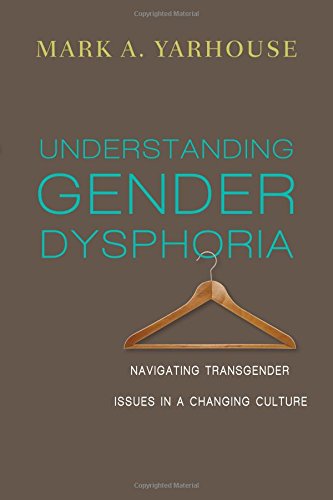
In Understanding Gender Dysphoria, Mark Yarhouse seeks to provide ways for Christians to think about gender dysphoria and transgender issues. Regarding the use of biblical passages in this discussion, Yarhouse urges caution:
There is a need to balance between two hazards when we turn to the Bible to inform our discussions about gender dysphoria. The one hazard is to look to Scripture for answers it is not prepared to provide. The other hazard is to fail to critically reflect on the sociocultural context in which we live and make decisions about gender identity and dysphoria. (30, cited below)
He goes on to comment on several biblical passages (like 1 Corinthians 6:9-10) which are frequently cited in contexts of discussions about gender dysphoria.
What do you think? Do we need to exercise more caution when we cite “proof texts” related to issues like gender dysphoria? Is 1 Corinthians 6:9-10 best applied to issues of transgender identification? Are these categories valid at all?
Links
Be sure to check out the page for this site on Facebook and Twitter for discussion of posts, links to other pages of interest, random talk about theology/philosophy/apologetics/movies and more!
Sunday Quote– If you want to read more Sunday Quotes and join the discussion, check them out! (Scroll down for more)
Source
Mark Yarhouse, Understanding Gender Dysphoria (Downers Grove, IL: InterVarsity, 2015).
SDG.
Sunday Quote!- Genesis as Sui Generis (Its Own Genre)?
Every Sunday, I will share a quote from something I’ve been reading. The hope is for you, dear reader, to share your thoughts on the quote and related issues and perhaps pick up some reading material along the way!
Genesis as Sui Generis (Its Own Genre)?
I’ve been reading through Genesis: History, Fiction, or Neither? It is part of the Zondervan Counterpoints series in which authors with different views present essays and (usually) interact with each other’s views. In it, there is much debate over the genre–and thus in part the meaning–of Genesis 1-11 in particular. In his response to Gordon Wenham, Kenton Sparks argued that Genesis could not be its own genre or sui generis because:
…all intelligible discourse must conform to a significant degree with existing modes and patterns of discourse, else readers would not understand it… (102, cited below)
Thus, he asserted, we cannot see these early chapters of Genesis as standing apart or unique as a completely separate genre. To do so would be to make it unintelligible.
It seems to me that this is on-point. We shouldn’t just throw up our hands and separate Genesis from the rest of the Bible as its own genre, distinct from any other human writing. God would not have communicated in a way that we cannot understand.
What do you think? Is Genesis 1-11 completely unique? Should we give up on trying to discern its genre, or is it clearly discernible?
Links
Be sure to check out the page for this site on Facebook and Twitter for discussion of posts, links to other pages of interest, random talk about theology/philosophy/apologetics/movies and more!
Sunday Quote– If you want to read more Sunday Quotes and join the discussion, check them out! (Scroll down for more)
Source
Kenton Sparks, “Response to Gordon J. Wenham” in Genesis: History, Fiction, or Neither? Charles Halton and Stanley Gundry, eds. (Grand Rapids, MI: Zondervan, 2015).
SDG.
Book Review: “John Newton on the Christian Life” by Tony Reinke
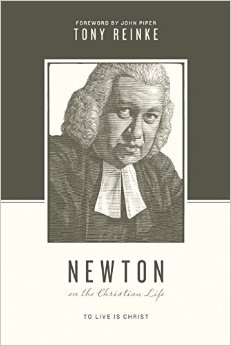 Newton on the Christian Life presents the theology of John Newton (more on that later) in light of Christian living. Central to Newton’s theology is the notion that “to live is Christ.” We as Christians are to continually rely upon Christ in all things.
The book has only parts of Newton’s biographical information found throughout the various chapters, but there is enough there to get a picture of the mighty fall the man had and the depths from which God plucked him. Here is the man who wrote the hymn “Amazing Grace” and who was friend of such prominent persons as William Wilberforce, yet who had worked on a slave ship and taken place in the vulgarities thereof. It is truly a story of grace, but Reinke emphasizes throughout the book Newton’s own commitment to “to live is Christ.”
The concept of living as Christ or “being Christ” is central to the book, which highlights again and again. Newton’s belief in, description of, and application of this concept are each drawn out in detail. Admittedly, this emphasis became a little overmuch by the end of the book as it seemed some themes were touched on over and over. However, there are many other insightful points throughout the book which are intertwined with Newton’s emphasis.
For example, the chapter on “Christian blemishes” utilizes examples of how we might live our life as Christians in ways which are largely commendable, but which lend themselves to certain sins. Another chapter highlights the effects of indwelling sin from Newton’s perspective (himself a Calvinist) and applies this to the Christian life. The chapters on spiritual weariness and battling insecurity are extremely pastoral and applicable in their content and tone and, I think highly valuable. Yet another deeply insightful section was chapter 9, which speaks about how trials in our lives can be used as spiritual discipline. Finally, the section on “Victory Over Mr. Self” that spoke of theological controversies had profound insights into how we should treat others with whom we disagree. I should note that I’m a Lutheran and at no point felt that I was not getting value for my time out of this book, despite Newton’s own strong Calvinism. I would say that anyone could benefit hugely from these chapters.
There is a wealth of firsthand quotations from Newton himself in the book, which makes it well worth engaging for that purpose alone. The pastoral tone and care that Newton had shines through in these quotations and Reinke himself does an excellent job summarizing points in a way that lends itself to the same tone as the man about whom he is writing.
One critique may be my own obtuseness coming through, but I think it’s worth mentioning. When I first got the book I saw some guy with a wig on the cover and thought–reasonably enough, I think–that “Newton” probably referred to Isaac Newton. It wasn’t long into the book before I was disillusioned, but I think that although it might make sense to leave books in the series consistent, given that not everyone may immediately think of John Newton instead of Isaac Newton, it might have been a better choice to include first names across the board. I asked a few friends who they thought the book was about based on the cover or title and every single one said Isaac Newton. It’s not a substantial critique, but I think it was worth a mention.
Another criticism I have is that there is virtually no use of women as examples in the discussions. Much of this is because Newton himself did not use women as examples in his letters and Reinke worked closely with Newton’s own writings. However, it would have been nice to have some counter-balancing examples to show that women struggle with the same problems. Here and there this is brought out in a letter, but it is very rare and noticeably so.
Newton on the Christian Life is an excellent read worthy of a thorough study. The examples he used can be applied in all kinds of pastoral contexts, and the emphasis on life in Christ is commendable. Moreover, the last several chapters are completely full of deeply impactful and applicable insights into the Christian life. The book comes highly recommended.
The Good
+Great insight into the pastoral theology of John Newton
+Extensive quotes from the letters of Newton
+Filled with insights
The Bad
-Sometimes repetitive
-Title could stand to be clearer
-Almost every single generic person used as an example is masculine
Disclaimer: I was provided with a review copy of the book from the publisher. I was not asked to give any specific kind of feedback whatsoever.
Links
Be sure to check out the page for this site on Facebook and Twitter for discussion of posts, links to other pages of interest, random talk about theology/philosophy/apologetics/movies and more!
Luther on the Christian Life by Carl Trueman– I review another book in this series, this one focusing on Martin Luther.
Book Reviews– There are plenty more book reviews to read! Read like crazy! (Scroll down for more, and click at bottom for even more!)
Source
Tony Reinke, Newton on the Christian Life (Downers Grove, IL: Crossway, 2015).
SDG.
——
The preceding post is the property of J.W. Wartick (apart from quotations, which are the property of their respective owners, and works of art as credited; images are often freely available to the public and J.W. Wartick makes no claims of owning rights to the images unless he makes that explicit) and should not be reproduced in part or in whole without the expressed consent of the author. All content on this site is the property of J.W. Wartick and is made available for individual and personal usage. If you cite from these documents, whether for personal or professional purposes, please give appropriate citation with both the name of the author (J.W. Wartick) and a link to the original URL. If you’d like to repost a post, you may do so, provided you show less than half of the original post on your own site and link to the original post for the rest. You must also appropriately cite the post as noted above. This blog is protected by Creative Commons licensing. By viewing any part of this site, you are agreeing to this usage policy.
Book Review: “Bound for the Promised Land” by Oren Martin
Oren Martin’s Bound for the Promised Land
The book advances a broad argument for this thesis by surveying what the Bible has to say about the land promise and its fulfillment. Martin does not offer a comprehensive look at every verse in the Bible that deals with the land promise, but rather puts forward a canonical view in which he surveys what various books of the Bible say about the promise and puts them in perspective alongside each other. He thus develops the promise from Eden in Genesis through Abraham, into Canaan, exile, through prophetic hope of return, the ushering in through Christ, and the ultimate consummation in the New Creation.
The book isn’t going to blow readers away with stunning insights. Frankly, that can be a good thing when it comes to theology texts. Martin’s exegesis is sound, based on firm principles and clearly drawn from the texts themselves. By connecting these verses to wider canonical strands, he demonstrates that his position is capable of dealing with the whole teaching of the Bible on the land promise rather than isolating it and trying to trump these threads with individual out-of-context verses.
Though not stunning or necessarily new, the insights Martin puts forward provide a great resource for those interested in eschatology and the issues raised by dispensationalists regarding the land promise. Martin does not support the dispensational view and argues cogently that it cannot be supported by the texts that teach on the land promise. The notion that we must take the land promise “literally” does not do full justice to the texts themselves and cannot account for the broadness of teaching on the topic.
Bound for the Promised Land
The Good
+Clearly outlines presuppositions the author maintains throughout the study
+Solid exegesis
+Canonical view gives picture of whole teaching of Bible on topic
+Applicable insights put forward
The Bad
-Skims over arguments very briefly at points
Disclaimer: InterVarsity Press provided me with a copy of the book for review. I was not obligated to provide any specific kind of feedback whatsoever, nor did they request changes or edit this review in any way.
Source
Oren Martin, Bound for the Promised Land
Links
Be sure to check out the page for this site on Facebook and Twitter for discussion of posts, links to other pages of interest, random talk about theology/philosophy/apologetics/movies and more!
Book Reviews– There are plenty more book reviews to read! Read like crazy! (Scroll down for more, and click at bottom for even more!)
SDG.
——
The preceding post is the property of J.W. Wartick (apart from quotations, which are the property of their respective owners, and works of art as credited; images are often freely available to the public and J.W. Wartick makes no claims of owning rights to the images unless he makes that explicit) and should not be reproduced in part or in whole without the expressed consent of the author. All content on this site is the property of J.W. Wartick and is made available for individual and personal usage. If you cite from these documents, whether for personal or professional purposes, please give appropriate citation with both the name of the author (J.W. Wartick) and a link to the original URL. If you’d like to repost a post, you may do so, provided you show less than half of the original post on your own site and link to the original post for the rest. You must also appropriately cite the post as noted above. This blog is protected by Creative Commons licensing. By viewing any part of this site, you are agreeing to this usage policy.
Bible Note: Judges 15:1-3 and the right for vengeance
 As I’m working through the Bible writing a kind of running commentary on it as I go, I continually encounter depths of the material I hadn’t encountered before. One such place is the Samson narrative–one of my favorite stories in the entire Bible. The following is an extended version of one of the notes I put in my running commentary:
In Judges 15:3, having discovered his wife was given to someone else, Samson notes that “this time” he has the right to take vengeance. What does this mean? Is Samson saying that he has a right ‘this time’ as opposed to last (when he took vengeance because of the Philistines getting the answer to his riddle through his wife)? Or does he mean that he has a right ‘this time’ in addition to the last time?
Added dimension: In 14:19 when he strikes down 30 Philistines he does so in the power of the Spirit of the LORD. Further dimension: 14:4 speaks of how the LORD was seeking to confront the Philistines.
It seems to me this must imply that God, in sovereignty, is guiding the events towards an end God desires. Given this, we may be tempted to say Samson’s right is indeed a right to vengeance–a divinely given one. But it is possible God is also using this (clearly) sinful man in spite of the sinfulness of his behavior, including his desire for vengeance (which belongs to God alone).
Which interpretation do you think is correct? Why?
Sunday Quote!- Sanctification and Vocation
 Every Sunday, I will share a quote from something I’ve been reading. The hope is for you, dear reader, to share your thoughts on the quote and related issues and perhaps pick up some reading material along the way!
Sanctification and Vocation
I’ll admit at the outset that I have read very little on the topic of sanctification. Thus, Sanctification: Explorations in Theology and Practice
Sanctification understood biographically has given encouragement to a belief in progressive and incremental moral improvement, to be attained with maturity and age… The map [of constant progression towards final sanctification over one’s life] was indeed wrong. It confused the work of God, who sanctifies old age as he sanctifies childhood, youth, and maturity, with the more attractive features that may decorate the progress of years through unaided nature… why, one wonders, has indulgence been accorded to the doctrine that the elect commit only venial sins after the age of fifty? (155)
I think this question is spot-on. The notion that we as Christians simply are automatically on a linear path to complete sanctification does not match reality and indeed can be extremely damaging to the life of faith. We are sinner-saints who struggle with sins throughout our lives and we must cast our cares on God, ever trusting in the blood of Christ and work of the Spirit to cleanses us from sin and unrighteousness.
What thoughts do you have on sanctification in the life of the believer? How might we be sanctified?
Whatever your views, Sanctification: Explorations in Theology and Practice
Links
Be sure to check out the page for this site on Facebook and Twitter for discussion of posts, links to other pages of interest, random talk about theology/philosophy/apologetics/movies and more!
Sunday Quote– If you want to read more Sunday Quotes and join the discussion, check them out! (Scroll down for more)
Source
“Sanctification and Ethics” by Oliver O’Donovan in Sanctification: Explorations in Theology and Practice
SDG.

 J.W. Wartick - Reconstructing Faith