theology
Book Review: “Luther on the Christian Life” by Carl Trueman
 Carl Trueman’s Luther on the Christian Life
Understanding Luther, argues Trueman, means at least in part to understand his own life and the pressures that exerted on his thought. Thus, in the first chapter (and throughout), readers get a picture of what Luther’s own Christian life was like and how that impacted his thought. Then, Trueman traces Luther’s theology of Christian life through various themes including theology of the Word, Sacraments, righteousness, government, family, and more.
The insights into Luther’s life and theology abound throughout the book, and the way that Trueman skillfully weave the two together is impressive. This is a highly readable and, yes, entertaining book. There is much to learn, but it is a joy to read. Luther’s doctrine of the Christian life is intertwined not only with his own life, but also with his sacramental theology. Trueman draws this out in extended fashion, showing how these ideas are related to readers who may not be familiar with such a way of thinking about the world.
Trueman puts forward a tremendous effort to be sympathetic in his reading of Luther. The sacramental theology of Luther is put forward as part of his understanding of the Christian life without any efforts to undermine or thwart the power of that same message. Trueman is Presbyterian (or so I gather from his Introduction), and admits to serious disagreements with Luther on sacraments and other areas. But he presents in this book Luther’s view, not his own critique, and he does so generously with a spirit of trying to understand and convey Luther’s meaning. This is exactly the kind of Christ-like attitude towards those with whom we disagree that we should all have as Christians, and as a Lutheran I was taken aback by how well Trueman accomplished it.
Luther on the Christian Life
The Good
+Surprisingly sympathetic reading of Luther from a non-Lutheran
+Many insights into Luther’s broader patterns of thought
+Focus on Christian life in Luther’s work is highly interesting
+Constantly brings up strong insights
The Bad
-Not really anything to put in this category
Conclusion
Luther on the Christian Life
I received a review copy of the book from Crossway. I was not required to give any kind of review whatsoever. My thanks to the publisher for the book.
Links
Be sure to check out the page for this site on Facebook and Twitter for discussion of posts, links to other pages of interest, random talk about theology/philosophy/apologetics/movies and more!
Book Reviews– There are plenty more book reviews to read! Read like crazy! (Scroll down for more, and click at bottom for even more!)
Source
Carl Trueman, Luther on the Christian Life
SDG.
——
The preceding post is the property of J.W. Wartick (apart from quotations, which are the property of their respective owners, and works of art as credited; images are often freely available to the public and J.W. Wartick makes no claims of owning rights to the images unless he makes that explicit) and should not be reproduced in part or in whole without the expressed consent of the author. All content on this site is the property of J.W. Wartick and is made available for individual and personal usage. If you cite from these documents, whether for personal or professional purposes, please give appropriate citation with both the name of the author (J.W. Wartick) and a link to the original URL. If you’d like to repost a post, you may do so, provided you show less than half of the original post on your own site and link to the original post for the rest. You must also appropriately cite the post as noted above. This blog is protected by Creative Commons licensing. By viewing any part of this site, you are agreeing to this usage policy.
Sunday Quote!- Does 1 Corinthians 15 teach a Millennial Gap?
 Every Sunday, I will share a quote from something I’ve been reading. The hope is for you, dear reader, to share your thoughts on the quote and related issues and perhaps pick up some reading material along the way!
Does 1 Corinthians 15 teach a Millennial Gap?
Sam Storms’ Kingdom Come: The Amillennial Alternative
Sam Storms analyzes this argument in extended fashion. Here’s a snippet of his discussion:
The premillennialist argues that the “end” [in verse 24] is the end or close of the millennial age, 1000 years after Christ has returned to earth. The amillennialist argues that the “end” is the end or close of the present church age… all one need do is demonstrate which of these two options is correct… So, does Paul tell us when death dies? …As I read 1 Corinthians 15:50-58, the defeat of death occurs at the second coming of Christ… (145, cited below)
If it is the case that Christ’s second coming is indeed the “end,” then it follows that the premillennial interpretation is mistaken and indeed, Storms argues, the whole system mostly collapses on itself. Storms concludes that 1 Corinthians 15 cannot be used to support the notion of a millennial gap.
What do you think? Does 1 Corinthians allow for such a lengthy gap in between parts of the text? What eschatological position do you hold to? How damaging is this text–if at all–for various eschatological positions?
No matter what you think, Kingdom Come: The Amillennial Alternative
Links
Be sure to check out the page for this site on Facebook and Twitter for discussion of posts, links to other pages of interest, random talk about theology/philosophy/apologetics/movies and more!
Sunday Quote– If you want to read more Sunday Quotes and join the discussion, check them out! (Scroll down for more)
Source
Sam Storms, Kingdom Come: The Amillennial Alternative
SDG.
Really Recommended Posts 3/20/15- Blood Moons, Jupiter Ascending, and more!
 What’s this!? Weather that is above freezing? I cracked my windows last week when it hit 33 degrees Fahrenheit because I was warm. Then it hit 65! SCORCHING! I think maybe I’ve adapted to life in Minnesota. Anyway, I also took the time out of this beautiful week to provide you, my dear readers, with what I hope will be some most edifying material. Here we have posts on Blood Moons, women’s church history, creationism, Jupiter Ascending, and (!) a great apologetics resource.
Jupiter Ascending– A worldview-minded look at the flick “Jupiter Ascending.” Largely blasted by critics, the film is an attempt at a science fiction fairy tale. What does this “fairy tale” about the future teach us?
Trillions of Stone Artifacts: A Young Earth Anthropology Paradox– Are there more human artifacts than there should be, if we grant young earth creationist assumptions about the age of the Earth? Check out this post for an interesting challenge to this paradigm from the perspective of anthropology.
Blood Moons: An End-Times Sign?– Should we view the fact that there are Four Blood Moons happening as a sign of the end-times? Here’s an examination of the claim that we should.
Women’s History Month: The Early Church– Here are some women in the early church who had profound impacts on the faith.
Apologetics 315– Here’s a site to follow if you don’t already. It features interviews with top apologists, book reviews, resource links, and more! It is one of the first sites I ever followed and it still pays dividends.
Book Review: “A Matter of Days” by Hugh Ross, Second Expanded Edition
Hugh Ross is one of the most influential Old Earth Creationists alive. The founder of Reasons to Believe, he has had a profound influence on putting forth Old Earth Creationism from a concordist–that is, the notion that the Bible and science will agree where they overlap [often including the notion that the Bible explicitly speaks on scientific issues]–perspective. A Matter of Days
The book provides a huge amount of material for those wanting to interact with topics of creationism. Ross begins by surveying the contentious way the issue is often argued and noting that we as Christians ought to strive for more tolerant attitudes towards each other. Alongside this, he notes various statements by evangelicals allowing for some openness on the topic.
The book covers a massive range of arguments for and against young earth creationism, but the real meat of the text is dealing with various scientific arguments on either side. These are surveyed in a kind of question and answer or objection and rejoinder format in which Ross clearly explains a huge amount of scientific data for an ancient universe and deals with the major objections to such a position from the young earth creationist perspective.
Ross also confronts textual issues in a number of places, including much discussion on the concept of “day” and its meaning in Genesis 1. This, he covers from different perspectives including historic theology, exegesis, and science. He also puts forward a canonical view of how to see Creation in the Bible rather than limiting it simply to Genesis 1-2. There are a number of other texts that he argues also teach on creation.
Although he is an “Old Earth” believer, Ross is also clearly a creationist and puts forward several brief arguments about the faultiness of evolution. This is not a focus of the work, but through such arguments he establishes a clearer picture of his own position related to origins of both life and speciation.
One issue that might be raised with the book is whether the seemingly strict concordism Ross advocates is necessary. For example, rather than arguing that entropy and decay are spoken about in the Bible (100-102), could one not simply note that the human biblical author almost certainly had no concept of entropy and therefore was not addressing it? That is to say, a concept of divine condescension might be easier to hold to than one of future scientific knowledge revealed in the Bible.
The new edition is expanded and has noticeably featured references to some recent works as well as more arguments. It is a rather large re-write with much new information. Readers considering purchase should get this edition.
The Good
+Major point-by-point explorations of evidence for and against an old earth
+Strong defense of the Old Earth Creationist/Concordist position
+Many technical issues explained in understandable ways
+Charitable tone
+Excellent index
+Expanded arguments and new information for the new edition
+Really cool cover
The Bad
-Some questions about concordism remain
-Perhaps too brief on some objections
Conclusion
A Matter of Days
Disclaimer: I was provided with a review copy by the publisher. I was not required to write any sort of review whatsoever thereby.
Links
Be sure to check out the page for this site on Facebook and Twitter for discussion of posts, links to other pages of interest, random talk about theology/philosophy/apologetics/movies and more!
Origins Debate– Read a whole bunch more on different views within Christianity of the “origins debate.” Here I have posts on young and old earth creationism, intelligent design, theistic evolutionism, and more!
Source
Hugh Ross, A Matter of Days
SDG.
——
The preceding post is the property of J.W. Wartick (apart from quotations, which are the property of their respective owners, and works of art as credited; images are often freely available to the public and J.W. Wartick makes no claims of owning rights to the images unless he makes that explicit) and should not be reproduced in part or in whole without the expressed consent of the author. All content on this site is the property of J.W. Wartick and is made available for individual and personal usage. If you cite from these documents, whether for personal or professional purposes, please give appropriate citation with both the name of the author (J.W. Wartick) and a link to the original URL. If you’d like to repost a post, you may do so, provided you show less than half of the original post on your own site and link to the original post for the rest. You must also appropriately cite the post as noted above. This blog is protected by Creative Commons licensing. By viewing any part of this site, you are agreeing to this usage policy.
Debate Review: Al Mohler vs. Chris Date on “Should Christians Rethink Hell?”

Not hell. But it is a pretty picture I took with a kind of intriguing/ominous path.
I want to preface this post by saying I am by no means an expert on the topic of hell. I’ve only read two books on the subject and listened to several lectures. I approach this as one who is still learning and seeking understanding. I hold to what would be called in this debate the “traditional” view of hell as opposed to a literalist view of hell. That is, I believe hell is a place (spiritual? physical?) that is eternal; but I am unconvinced that the fire references made in the Bible are to be taken literally (i.e. how are they literal flames and yet the place is in darkness? – seems to me to be metaphorical language).
I was very interested in listening to this debate between the traditional view, as espoused by prominent conservative theologian Al Mohler and the conditional view (that of annihilationism–those who are unsaved are annihilated at the judgment [typically–please correct me if I have misportrayed this) as put forward by Chris Date. Here, I’ll offer a brief summary of major statements in the debate, followed by my own analysis. Note that these are my summaries of what was said, not necessarily direct quotes. I welcome critique and comments. Let me know if you listened to the debate, and feel free to offer your own thoughts! The debate may be found here.
Summary
Justin Brierly asked Mohler to speak on what he thought about the biblical basis for conditionalism.
Mohler- Anyone who speaks on a doctrinal question sees their side as more biblical, and I find the evidence for conditionalism wanting. We must also present the picture of hell which is that which should be presented to others–we have to see what the biblical picture of hell is. The biblical “meta-narrative” points to dual everlasting destinies–eternal life in a New Heaven and New Earth–and also for eternal punishment. The unified consensus reading of Scripture for the history of Christianity has been the traditional position.
Date– Regarding Matthew 25, the question is not the duration of the punishment but the actual nature of the punishment. The context suggests that the wages of sin is death, physical death and not living any more. At judgment, the conditionalist holds that the second death will be just that–death. Moreover, the alleged consensus opinion on hell has not been completely on the side of traditionalism, and in the last few centuries conditionalism has gained support. [Outlines the biblical evidence for conditionalism while citing a huge number of texts.] The preponderance of Scripture points to conditionalism. The concept of eternal punishment is correct; the question is what the nature of this punishment is.
Mohler– The normal Christian reading of Matthew 25 has been eternal conscious torment, not destruction. The infinite wrath and infinite grace of God are each being experienced. To say that eternal punishment is not an eternal state but just something that endures until it is taken away does not seem to be what the text itself implies. Humans have a life beyond this life–not an inherent right to immortality of the soul but because of the image of God in humanity–we are made for eternal life.
Date– Saying that Christ purchased eternal salvation for us in Hebrews does not imply a continued state of Christ forever redeeming; it was an act in time with eternal consequences. Eternal life is something only experienced by the saved–the punishment is death and its effect lasts forever.
Mohler– It is difficult to square this view with the actual texts. Rather than appealing to a different passage in Hebrews, Date must explain the parallelism in Matthew 25 regarding the phrase eternal–does it mean two things in the same context?
Date– Eternal means forever in both cases–eternal life and death which lasts forever.
Mohler– Substituting death does not explain away the parallelism in the text. The Christian church has long understood that this passage means eternal torment.
Date– That’s why it’s called the traditional view!
Mohler– The traditional view does not rest on isolated texts of Scripture but on the church’s understanding of the weight of the texts as a whole. There is no indication in various depictions of hell in which there is an end to the torment as spoken.
Date– Mohler’s interpretation is incorrect; the Greek can be taken in different senses in the places he cites.
Mohler– These interpretations are based on arguing that when we look at a text, we have to say it doesn’t mean what it looks like it means.
Date– Many Christians held to a conditionalist view in historic Christianity. Moreover, we should not forget that we come to the text with presuppositions, and such giants of the church as Augustine who held to the traditional view had a Platonic view of the soul which influenced their interpretation of the Bible.
Mohler– There was development of the doctrine of hell. Regarding Augustine, if we argue that Augustine’s view was due to Platonism, we have to see that his entire picture of reality was Hellenized and so his view of other important doctrines like the deity of Christ is undermined.
Date– Nobody is claiming that everything found in the Platonic view or the Hellenistic view is wrong. Scripture is the authority, however, not the culture. The Platonic view specifically imported mistakes into the view of the soul and its indestructible nature according to that view.
Mohler– Jesus held to what we call the traditional view. However, Jewish thought at the same time didn’t have much developed thought regarding hell, which is largely a distinctively Christian view.
Date– Jesus’ language speaks of destruction and seemingly endorsed the view of annihilationism through his use of language of destruction and burning up.
Mohler– Gehenna does not point to Jesus endorsing an annihilationist view because the use of that term was a reference to continued endless fire, despite being a distinct historic view. …Jesus spoke more about eternal punishment and hell than about heaven. Our understanding of the Gospel is impacted by a different view of hell. The urgency of the Christian message is undermined by the conditionalist position because it effectively removes any urgency for conversion because the materialist already believes they will just cease existing.
Date– Atheists often reject Christianity because they see the traditional view as unjust, which means that a conditionalist view has greater apologetic value. Moreover, the Gospel can continue to be presented as either the gift of life or the punishment of death. Conditionalism does not undermine urgency of spreading the Good News.
Analysis
It was edifying to listen to both presenters on this program and get a better idea about the differing views related to hell within Christianity. The speakers were each respectful and gracious–something that should be the case!
Chris Date cogently argued for and defended his position against major objections. I think one of the most pressing issues for the conditionalist/annihilationist remains the notion that, on their view, there really is no major difference between the end of the unsaved and that which the materialist believes will happen. However, it should be noted this is less a biblical challenge than it is a philosophical/theological one. Date’s defense of the biblical capacity for conditionalism was challenging to my paradigm as I think he presented some passages which do possibly read more easily on his view than on the traditional view.
I do think, however, some of Date’s claims were a bit of a stretch. For example, his assertion that Jesus endorsed conditionalist teachers perhaps goes beyond the evidence we have. Moreover, his style of argument in some sections was problematic because he simply through a number of texts out (without quoting the text, simply citing the locations) without giving any sort of context. Of course, this latter issue is more due to the format than a defect of his position.
One of the biggest problems with Al Mohler’s defense of the traditional view is how much he appealed to, well, tradition. It seems to me like the traditional view has a solid scriptural basis, and to appeal to the notion that the church as a whole has largely leaned towards the traditional view is inadequate as a defense. Thus, it was his method which I think was greatly problematic. However, towards the end he got deeper into the issues and I think made some solid points, particularly in regards to whether Gehenna necessarily entails the conditional view and on the seeming parity of the unsaved on the conditional view vs. their own position. That said, I think a stronger focus on exegesis would have been more compelling rather than a continued appeal to traditional church teaching.
Overall, I came out of this debate feeling challenged to consider my own position. I also think the conditionalist view is not, as some assert, clearly unbiblical. If one wants to continue asserting that, I think they must deal very closely with the texts Date and others cite for their position. One can’t just cite a single proof text and say that other texts must be reinterpreted in light of a single text.
What are your thoughts? Please let me know in the comments.
Links
Should Christians Rethink Hell?– The link for the audio of the debate along with some related links from Premier Christian Radio.
Be sure to check out the page for this site on Facebook and Twitter for discussion of posts, links to other pages of interest, random talk about theology/philosophy/apologetics/movies and more!
*The image in this post was taken by me. I claim the copyright as noted below.
SDG.
——
The preceding post is the property of J.W. Wartick (apart from quotations, which are the property of their respective owners, and works of art as credited; images are often freely available to the public and J.W. Wartick makes no claims of owning rights to the images unless he makes that explicit) and should not be reproduced in part or in whole without the expressed consent of the author. All content on this site is the property of J.W. Wartick and is made available for individual and personal usage. If you cite from these documents, whether for personal or professional purposes, please give appropriate citation with both the name of the author (J.W. Wartick) and a link to the original URL. If you’d like to repost a post, you may do so, provided you show less than half of the original post on your own site and link to the original post for the rest. You must also appropriately cite the post as noted above. This blog is protected by Creative Commons licensing. By viewing any part of this site, you are agreeing to this usage policy.
Sunday Quote!- Is Adam Necessary for Christianity?
 Every Sunday, I will share a quote from something I’ve been reading. The hope is for you, dear reader, to share your thoughts on the quote and related issues and perhaps pick up some reading material along the way!
Is Adam Necessary for Christianity?
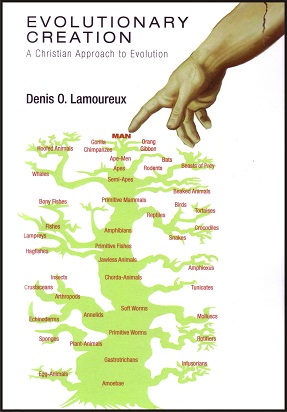
Not long ago, I wrote a post about the historical Adam in which I asked whether it was a “Gospel” issue. Unsurprisingly, there were many different voices raised talking about it, and I quite enjoyed the discussion. I also shared a different Sunday Quote! on how the doctrine of Adam is interwoven with others. I often read books that I know will challenge what I believe, because I think it is important to test your beliefs constantly in order to strengthen them and correct what is wrong. I read through Denis Lamoureux’s book, Evolutionary Creation
His central thesis is particularly striking:
Adam never existed, and this fact has no impact whatsoever on the foundational beliefs of Christianity. (367)
This thesis is very strongly worded, and I think there are a few problems with it. Key, of course, is the question of what is meant by “foundational” beliefs. Lamoureux does dive into that earlier in the book, but I think in some ways he doesn’t hit all the points he needs to. For example, the notion of original sin is one which is “foundational” in some theological traditions. Thus, for them, Adam’s non-existence would be extremely problematic. Lamoureux, however, does try to offer ways to even accommodate these traditions in the book. However, he ultimately has to settle for a “reformulation” of the doctrine in which:
[T]he entrance of sin was not a punctiliar event committed by two individuals. Instead, original sin was manifested mysteriously and gradually over countless many generations… (292).
I think this “reformulation” is unsatisfying. Moreover, as I have argued briefly elsewhere, federal headship seems to be a possible way around this for the evolutionary creation (read: theistic evolution) advocate. So, ultimately, I’m not convinced that Lamoureux’s central thesis can be carried. In fact, I think it is unnecessary for advocates of his position to even put forward.
What are your thoughts? How might we engage Lamoureux in a winsome way? What theological challenges might be offered to his position?
Links
Be sure to check out the page for this site on Facebook and Twitter for discussion of posts, links to other pages of interest, random talk about theology/philosophy/apologetics/movies and more!
Sunday Quote– If you want to read more Sunday Quotes and join the discussion, check them out! (Scroll down for more)
Is the historical Adam a “Gospel” issue? – I discuss what impact it has on Christianity if Adam is not a historical person.
Source
Denis O. Lamoureux, Evolutionary Creation
SDG.
Sunday Quote!- Trading Off the Bible for Science?
 Every Sunday, I will share a quote from something I’ve been reading. The hope is for you, dear reader, to share your thoughts on the quote and related issues and perhaps pick up some reading material along the way!
Trading Off the Bible for Science?
Adam, the Fall, and Original Sin
One area that was fairly interesting was the discussion Hans Madueme offered of an interplay between the Bible and science:
There is a trade-off between what is biblically plausible and what is scientifically plausible. To the degree that the doctrine of the fall reflects the biblical story, to the same degree is it inversely faithful to the evolutionary story. (238, cited below)
I think the language of “trade-off” here might be viewed as a rhetorical flourish. The next phrase is equally weighted to seemingly back-load a specific reading of the story of the fall into what is “plausible” over and against that which is “scientifically plausible.” Although I think there may be something of a trade-off in some sense, in order for this qupte to be true there would have to be an inherent inverse relationship between evolution and the Bible. This may, in fact, be the case, but there are a number of steps that need to be proven before one can get to that point.
More intriguing, perhaps, is the notion that we could recast this “trade-off” between exactly how much science we want to read into the Bible and how biblically plausible we are. I would argue that the more we insist that the Bible is explicitly revealing specifics of exact empirical science, the more we do damage to the text. This is a position that does not see science and the Bible as in complete opposition to each other, nor does it see the Bible as scientifically inaccurate or as “non overlapping magisteria.” Instead, where the Bible speaks to scientific issues–if anywhere–those are affirmed. Where it doesn’t, we should not insist that it does.
What do you think? Is there really a trade-off between science and the Bible? If so, in what way?
Links
Be sure to check out the page for this site on Facebook and Twitter for discussion of posts, links to other pages of interest, random talk about theology/philosophy/apologetics/movies and more!
Sunday Quote– If you want to read more Sunday Quotes and join the discussion, check them out! (Scroll down for more)
Source
Hans Madueme, “The Most Vulnerable Part of the Whole Christian Account: Original Sin and Modern Science” in Adam, the Fall, and Original Sin
SDG.
adam, fall, original sin 238
Sunday Quote!- Sending the “Other” to Hell
 Every Sunday, I will share a quote from something I’ve been reading. The hope is for you, dear reader, to share your thoughts on the quote and related issues and perhaps pick up some reading material along the way!
Sending the “Other” to Hell
We as Christians often need reminders that we are to share our faith with gentleness and respect. I know I often fail in this regard, and sincerely repent and ask for forgiveness from those whom I have failed. Re-reading James Emery White’s Christ Among the Dragons
Many Christians view those outside of the faith as needing to go to hell. They are the bad guys, the enemy. (95)
We see this often when, for example, someone dies and a comment is shared “he/she is burning in hell.” I have, unfortunately, seen this myself many times. But is that the attitude we should be taking as Christians with regard to those of other faiths or–heaven forbid–those with whom we disagree in our own faith tradition?
Whenever this kind of attitude crops up in our own lives, we should repent and ask for forgiveness. Our job is not to send the “other” to hell. It is to share Christ’s love with them.
Links
Be sure to check out the page for this site on Facebook and Twitter for discussion of posts, links to other pages of interest, random talk about theology/philosophy/apologetics/movies and more!
Sunday Quote– If you want to read more Sunday Quotes and join the discussion, check them out! (Scroll down for more)
Source
James Emery White, Christ Among the Dragons
SDG.
christ among dragons- 95
Sunday Quote!- The Reality of Adam and the Origins Debate
Every Sunday, I will share a quote from something I’ve been reading. The hope is for you, dear reader, to share your thoughts on the quote and related issues and perhaps pick up some reading material along the way!
The Reality of Adam and the Origins Debate
Adam, the Fall, and Original Sin
The temptation in this debate [about the historicity of Adam] is to think that Adam is simply one piece in a puzzle in which the fall and evolution are separate pieces that we can rearrange and shuffle around the board. But… Adam and the fall do not float free in Scripture like rootless, atomistic, independent ideas. They are central nodes that hold together and are completely enmeshed in a much broader, organic, theological matrix. (ix, cited below)
What makes this quote so interesting is the way it speaks to the notion–a correct one, I think–that these doctrines are of such central concern. Whether or not these are “essential” doctrines to the Christian faith is hotly debated, but it seems clear that one’s view of original sin (and indeed whether it even exists) and Adam will inter-relate with all kinds of other doctrines, including soteriology, justification, sanctification, and beyond.
What do you think? What doctrines inter-relate most closely with these doctrines? Is it correct to think we can’t treat them in “atomized” form? Is it possible to speak of the notion of whether Adam and Eve were historical figures without also speaking of the implications it has for other doctrines?
Links
Be sure to check out the page for this site on Facebook and Twitter for discussion of posts, links to other pages of interest, random talk about theology/philosophy/apologetics/movies and more!
Sunday Quote– If you want to read more Sunday Quotes and join the discussion, check them out! (Scroll down for more)
Source
Michael Reeves and Hans Madueme, “Adam Under Siege” in Adam, the Fall, and Original Sin
SDG.
Adam, Fall, Original Sin ix
Sunday Quote!- Spiritual Warfare and Mapping the Land?
 Every Sunday, I will share a quote from something I’ve been reading. The hope is for you, dear reader, to share your thoughts on the quote and related issues and perhaps pick up some reading material along the way!
Spiritual Warfare and Mapping the Land?
I recently read through Understanding Spiritual Warfare: Four Views
Spiritual mapping is the practice of identifying the spiritual conditions at work in a given community, city, or nation. By gathering objective information (including key historical facts… locations of bloodshed, idolatrous practices, [etc…]) and combining it with spiritual impressions (prophecy, revelation, words of knowledge, dreams, and visions), believers can prayerfully combine all of this information and draw a map that identifies the open doors between the spiritual world and the material world (182-183, cited below).
Now I admit that I come from a background in which spiritual warfare was little (if at all) discussed, but this does seem a little bit more than we can glean from the biblical image of spiritual warfare. Where, for example, are we instructed to try to use dreams and revelation in order to find “open doors” of the spiritual world? Where are we instructed that there might be doors for the spiritual world into our own that are identifiable? I think some aspects of this notion might be helpful for witnessing and the like–after all, knowing the landscape in this fashion would be helpful for identifying areas of conflict in a community and offering Christlike compassion in those areas–but I hesitate to think that the way they can be applied is in this fashion.
What are your thoughts on this? What do you think of spiritual warfare?
Again, I highly recommend this book with its very wide range of diverse views presented on the topic in order to get an introduction.
Links
Be sure to check out the page for this site on Facebook and Twitter for discussion of posts, links to other pages of interest, random talk about theology/philosophy/apologetics/movies and more!
Microview: Understanding Spiritual Warfare: Four Views– I briefly review this highly interesting book on different views of spiritual warfare.
Sunday Quote– If you want to read more Sunday Quotes and join the discussion, check them out! (Scroll down for more)
Source
C. Peter Wagner and Rebecca Greenwood, “The Strategic-Level Deliverance Model” in James Beilby and Paul Rhodes Eddy, eds., Understanding Spiritual Warfare: Four Views
SDG.

 J.W. Wartick - Reconstructing Faith