theology
Sunday Quote!- Can Adam be (merely) a federal head?
 Every Sunday, I will share a quote from something I’ve been reading. The hope is for you, dear reader, to share your thoughts on the quote and related issues and perhaps pick up some reading material along the way!
Can Adam be (merely) a federal head?
I recently finished reading the thought-provoking book, Adam, the Fall, and Original Sin
Adam’s imputed sin has no ontological basis [on this view]. If only Africans and Asians, let us say, are true physical descendants of Adam, God will still impute Adam’s sin to Britons and Americans since Adam was also the federal head of all his contemporaries (among whom would have been their ancestors). This divine decree seems unfair and arbitrary since it is not grounded in an antecedent natural reality. (217, cited below)
I found this to be an argument that could trouble those who hold to Adam as mere federal head (rather than “natural head”–here being used to mean that Adam and Eve were the first of all humans and all are descended from them), but I think a few responses would be possible from the theistic evolutionist perspective. First, one could argue that there need be no grounding in a natural reality for Adam’s federal headship. After all, divine fiat should settle the question! Second, one might instead argue that God’s decree of Adam as federal headship itself just is the ontological basis. That is, there is an ontological basis for the condemnation: God’s decree. Third, one might argue that the federal headship of Adam went alongside the giving of the human soul to Adam and Eve and that the other humans were also given souls with Adam as their federal head. I think other possibilities are possible as well.
What do you think? Does this argument undermine the possibility of theistic evolutionism? Are the possible responses good rebuttals? Are there other possible responses?
Links
Be sure to check out the page for this site on Facebook and Twitter for discussion of posts, links to other pages of interest, random talk about theology/philosophy/apologetics/movies and more!
Sunday Quote– If you want to read more Sunday Quotes and join the discussion, check them out! (Scroll down for more)
Source
Michael Reeves and Hans Madueme, “Threads in a Seamless Garment: Original Sin in Systematic Theology” in Adam, the Fall, and Original Sin
SDG.
“Leave it to the Early Church”- A Young Earth challenge
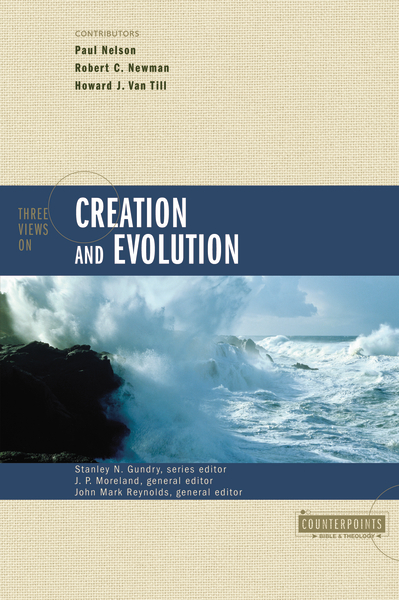 It’s no secret: I consume just about any book I can get my hands on related to the debate over the duration and means of creation within Christianity. Recently, I read through Three Views on Creation and Evolution, part of the Zondervan Counterpoints series. The young earth creationists (John Mark Reynolds and Paul Nelson) in this volume were more even than many I have read, and I appreciated their contribution in many ways and even found myself agreeing with portions of it. However, they did make a few remarkable claims, one of which will be my focus here. Namely, they suggested we leave interpretation of Genesis behind us and just assume the early church got it right.
Here is the quote:
Our advice, therefore, is to leave the issues of biblical chronology and history to a saner period. (100)
Why should we do that, you ask? Well, before offering this advice, Reynolds and Nelson argue:
Whatever the truth of the matter may be in regard to biblical history, we are… least likely to find it. Nothing about the education of most moderns leaves them disposed to be sympathetic to traditional readings of the biblical text… The almost overwhelming temptation is to “trim” [the portions of text which may be hard to swallow]. Suddenly, new ways of reading the text of Scripture are discovered, which to no one’s surprise allow for accommodation between at least some of the reigning paradigms and traditional religion. (99-100)
I find this simply astonishing! There are a number of reasons to reject this entire line of reasoning immediately. First, it is, in effect, poisoning the well. Second, it abandons any notion that new evidence can challenge established traditions. Third, it begs the question. Fourth, it undermines the need for the church to be semper reformanda – always reforming. We’ll examine these briefly in order.
Poisoned Well
The way Nelson and Reynolds present their argument poisons the well against any who would disagree with them. The insinuation is that the only reason anyone would come to a different conclusion is either because they don’t have an “educational” background which allows them to consider traditional readings or because they are in such a hurry to compromise the text to align with science. Although it is certainly possible that many readings come from these motivations, to suggest that we must put a ban on any future looks at the interpretation of Genesis shows the authors seem to think these motivations apply to all novel interpretations.
New Evidence
To put an interpretation of Genesis on an indisputable pedestal and say “that came from a ‘saner’ time and so we must follow it” undermines any possibility for new evidence to challenge established readings. Yet the fruit of research in many areas of biblical interpretation continues to yield great insight into the biblical text. Moreover, to make an interpretation like that indisputable is to perhaps set up stumbling blocks for future generations, who may in good faith find more evidence which challenges that interpretation.
Question Begged
By saying we need to leave the interpretation of Genesis to the past, Reynolds and Nelson have begged the question by assuming this interpretation is correct. In fact, they seem to assume it is so obviously correct that they don’t even bother to defend it. But of course this is not how theology ought to be done. We should not just relegate interpretations to the ecclesial past because we don’t want to face the challenges of today. Rather, we should explore the new evidence and new interpretations to see if they might in fact better match God’s revealed truths. By simply assuming we can leave an interpretation of Genesis as is, Reynolds and Nelson just assert their view is obviously correct without argument.
Semper Reformanda
The notion that the church needs to continually be reforming seems to be correct. When we find truths revealed in God’s natural revelation, we should be prepared to realize this may not align with our established paradigms. We need not reject these discoveries merely because the historical church didn’t know about them. Instead, we should realize that as an imperfect church waiting for our Lord’s return, we may get things wrong. We are always going to need to reform.
Conclusion
Thus, I think that any young earth creationist who simply asserts we must hold to the historic understanding of the text of Genesis is mistaken. Of course, I would also point out that the “historic” understanding is hardly what the modern young earth creationist would believe (such as the duration of the entire universe only lasting 6000 years in order to align with the creation days, etc.), but that is a matter for a different post. For now, it should be acknowledged that we should not just abandon attempts to understand God’s revelation in Genesis.
Links
Be sure to check out the page for this site on Facebook and Twitter for discussion of posts, links to other pages of interest, random talk about theology/philosophy/apologetics/movies and more!
Origins Debate– Check out all my posts on the discussion within Christianity over the duration and means of creation.
Source
Paul Nelson and John Mark Reynolds, “Conclusion” in Three Views on Creation and Evolution
SDG.
——
The preceding post is the property of J.W. Wartick (apart from quotations, which are the property of their respective owners, and works of art as credited; images are often freely available to the public and J.W. Wartick makes no claims of owning rights to the images unless he makes that explicit) and should not be reproduced in part or in whole without the expressed consent of the author. All content on this site is the property of J.W. Wartick and is made available for individual and personal usage. If you cite from these documents, whether for personal or professional purposes, please give appropriate citation with both the name of the author (J.W. Wartick) and a link to the original URL. If you’d like to repost a post, you may do so, provided you show less than half of the original post on your own site and link to the original post for the rest. You must also appropriately cite the post as noted above. This blog is protected by Creative Commons licensing. By viewing any part of this site, you are agreeing to this usage policy.
Sunday Quote!- Charismata and Authority of Scripture
 Every Sunday, I will share a quote from something I’ve been reading. The hope is for you, dear reader, to share your thoughts on the quote and related issues and perhaps pick up some reading material along the way!
Charismata and the Authority of Scripture
I have been reading through Jon Mark Ruthven’s On the Cessation of the Charismata
the implicit attack on the sufficiency of scriptural authority made by those claiming miracles and extraordinary gifts of the Holy Spirit… Such claims [of spiritual gifts]… represented a direct challenge to Protestant religious authority in that it was specifically based upon a closed canon of Scripture. (32, cited below)
Now I have not finished the book, so I’m not sure whether Ruthven would affirm this point. Indeed, he calls this a “polemical” argument against spiritual gifts, so I suspect he’s going to argue that the “continuationist” position–that which affirms spiritual gifts moving into the modern era–does not need to deny the closedness of the canon or affirm a denial of the sufficiency of Scripture. I’m looking forward to seeing how his argument proceeds, and whether he will indeed argue against this or affirm the openness of the canon.
What do you think? Do charismata–spiritual gifts–entail this position? If so, how problematic is it? What is your position? I’d love to read your thoughts in the comments.
Links
Be sure to check out the page for this site on Facebook and Twitter for discussion of posts, links to other pages of interest, random talk about theology/philosophy/apologetics/movies and more!
“Are Miraculous Gifts for Today?”- A look at four views in Christian Theology– I provide a look at four positions on miraculous/spiritual gifts in contemporary theology.
Sunday Quote– If you want to read more Sunday Quotes and join the discussion, check them out! (Scroll down for more)
Source
Jon Mark Ruthven, On the Cessation of the Charismata
SDG.
Book Review: “Salvation Applied by the Spirit” by Robert Peterson
 Robert Peterson’s Salvation Applied by the Spirit
The first part of the book is comprised of a comprehensive (to my knowledge) survey of texts related to the notion of being “in the Spirit.” Peterson goes across the whole of the biblical witness in order to draw several conclusions, including the notion that being “in Christ” simply is salvation and that this is brought about by union with Christ, which is the work of the Holy Spirit.
This first section brings up many intriguing points of inquiry alongside the central theme of union with Christ. Included among these are the meaning and application of the Sacraments (the Lord’s Supper and Baptism), the doctrine of justification and its application, and more.
The second part of the book draws broad theological conclusions from the exegetical work done in the first section. Broadly, Peterson uses this to explain the work of the Spirit in santification, justification, and salvation. Other primary theological topics that are necessary for understanding these concepts–such as the Incarnation–are also briefly discussed.
The exegetical portion of the book is fantastic and provides not only a solid understanding of the Bible’s understanding of the Spirit’s work in salvation (and particularly that of Paul), but also several insights of the applicability of these discussions to other areas.
The discussion of the Sacraments and the Holy Spirit’s work therein, along with the Incarnational perspective, was interesting and somewhat neutral. The notion that the indwelling of Christ may come through a Sacrament like the Lord’s Supper was wonderful to see (from my perspective as a Lutheran), though the somewhat dismissive language of “symbol” applied alongside this discussion gave it a sense of schizophrenia related to the Sacraments.
The theological threads of the second part of the book are interesting, as was the choice to spend some time covering topics like the Incarnation while spending lesser time on things like the specific view of justification of the author. The latter synthesis of both a covenantal perspective similar to N.T. Wright’s and the emphasis on imputation of righteousness was intriguing and deserving of deeper exploration.
Perhaps the greatest downside to the book is an amorphous sense of audience. It is written at a level which laity will find understandable, but its length will likely be off-putting. Similarly, those looking for a technical discussion will be edified by the quantity of exegetical insights, but perhaps disappointed by the lack of depth. It seems a book a bit caught in the middle between wanting to convey information to the general audience while also appealing to readers with academic interest. Unfortunately, it ultimately doesn’t quite hit its stride with either.
Overall, this is a good book looking at an interesting topic. It would just benefit from being either more or less technical. It will benefit greatly readers interested in the work of the Holy Spirit.
Disclaimer: I received a review copy of the book through Crossway. I was not obligated by the publisher to give any specific type of feedback whatsoever.
Source
Robert Peterson, Salvation Applied by the Spirit
Links
Be sure to check out the page for this site on Facebook and Twitter for discussion of posts, links to other pages of interest, random talk about theology/philosophy/apologetics/movies and more.
SDG.
——
The preceding post is the property of J.W. Wartick (apart from quotations, which are the property of their respective owners, and works of art as credited; images are often freely available to the public and J.W. Wartick makes no claims of owning rights to the images unless he makes that explicit) and should not be reproduced in part or in whole without the expressed consent of the author. All content on this site is the property of J.W. Wartick and is made available for individual and personal usage. If you cite from these documents, whether for personal or professional purposes, please give appropriate citation with both the name of the author (J.W. Wartick) and a link to the original URL. If you’d like to repost a post, you may do so, provided you show less than half of the original post on your own site and link to the original post for the rest. You must also appropriately cite the post as noted above. This blog is protected by Creative Commons licensing. By viewing any part of this site, you are agreeing to this usage policy.
Sunday Quote!- An Eclectic Dialogue Between Christianity and Science
Every Sunday, I will share a quote from something I’ve been reading. The hope is for you, dear reader, to share your thoughts on the quote and related issues and perhaps pick up some reading material along the way!
An Eclectic Dialogue Between Christianity and Science
I recently finished reading Adam, the Fall, and Original Sin, a series of essays from a variety of authors on these highly important subjects. There are a number of excellent articles in this work, and I highly recommend it. One great quote from the book was about Christianity and science and the way to integrate them:
[W]hy should we choose sides [between science and Christianity]? Theology should be eclectic in how it engages with science. Christians should engage scientific theories on a case-by-case basis. Different theories will invite different attitudes and responses (sometimes dialogue, sometimes conflict, sometimes independence, and so on)… This is partly because Scripture does not usually answer our scientific questions and partly because scientific claims are by nature revisable. (243-244, cited below)
I found this an enormously helpful quote and approach because I think too often Christians and non-Christians act as though “science” is this homogeneous whole, and that “Christianity” is itself a single entire unit. But realistically, this is not at all the case. Different theories and different theological points have their own
What are your thoughts? Is this a helpful way to view the religious and scientific dialogue?
Links
Be sure to check out the page for this site on Facebook and Twitter for discussion of posts, links to other pages of interest, random talk about theology/philosophy/apologetics/movies and more!
Sunday Quote– If you want to read more Sunday Quotes and join the discussion, check them out! (Scroll down for more)
Source
Adam, the Fall, and Original Sin
SDG.
Sunday Quote!- Desecrating Creation’s Holy Ground?
 Every Sunday, I will share a quote from something I’ve been reading. The hope is for you, dear reader, to share your thoughts on the quote and related issues and perhaps pick up some reading material along the way!
Desecrating Creation’s Holy Ground?
I recently read through Perspectives on an Evolving Creation, a book of essays centered around defending theistic evolutionism. I think it is important to read books from several different perspectives in order to test them and keep the good. I came upon an interesting quote in one of the essays on caring for creation:
For those who can see creation glorifying God there is an opportunity to get a glimpse of “his eternal power and divine nature” (Romans 1:20, NRSV) in the things he has made. Genesis presents the entire creation as a cosmic sanctuary where the Creator is present, glorified, and to be worshipped… If creation is God’s sanctuary, then when we desecrate creation for our short-term needs, we are desecrating holy ground. (Braaten, 422-423, cited below)
The notion that creation is God’s temple or sanctuary is one found in numerous studies on Genesis and its context. I find it to be a very appropriate way to envision creation as God’s ordered cosmos. I had not, however, thought of creation care in these terms. It seems to me to be correct, however. After all, if we really believe that all of creation is God’s temple, then the unwarranted and often greedy molestation of creation for monetary or other short-term gain is a molestation of God’s holy ground. It is a desecration.
How might we better approach creation and care for it as we have been charged to do? That is a difficult question–one I and others have explored elsewhere. However, I think it is time we as Christians stop ignoring the issues of caring for creation. We need to stand against the desecration of God’s temple.
Links
Be sure to check out the page for this site on Facebook and Twitter for discussion of posts, links to other pages of interest, random talk about theology/philosophy/apologetics/movies and more!
Caring for Creation: A discussion among evangelicals– I write about creation care from a number of perspectives offered at a recent panel of prominent evangelical thinkers in this area.
Sunday Quote– If you want to read more Sunday Quotes and join the discussion, check them out! (Scroll down for more)
Source
Laurie Braaten, “May the Glory of the Lord Endure Forever! Biblical Reflections on Creation Care” in Perspectives on an Evolving Creation edited Keith Miller (Grand Rapids, MI: Wm. B. Eerdmans, 2003).
SDG.
Microview: “Understanding Spiritual Warfare: Four Views” edited by James Beilby and Paul Rhodes Eddy
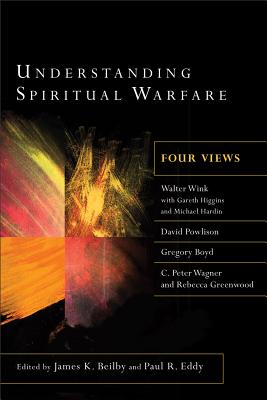 Understanding Spiritual Warfare: Four Views
The work starts with an introduction that does a great job introducing questions of primary importance in discussions of spiritual warfare. Walter Wink’s (alongside Gareth Higgins and Michael Hardin) view is presented first and might best be summarized as: Satan is equal to (and reducible to) human institutions of evil and suffering; he is neither personal nor is he the enemy of God but rather God’s servant–showing people their evil. We fight Satan by fighting institutionalized evil.
David Powlison’s “Classical” view is that spiritual warfare is essentially living like Christ and fighting temptation and sin. Satan is a real person and tempts us. Evils are combated through prayer and a call to repentance. Gregory Boyd’s “Ground-Level Deliverance model” argues for both a Christlike life but also for active warfare against demonic powers and Satan (who are personal and ontologically extant) on an individual level. C. Peter Wagner and Rebecca Greenwood’s “Strategic Level Deliverance model” is committed to finding and rooting out demonic activity in local and even national levels, including making “spiritual maps” to find where areas of demonic activity might be found and trying to identify the specific demons behind various activity.
From the above, it may seem like these views are radically diverse. You’d be correct to think so. James Beilby and Paul Rhodes Eddy did a fantastic job putting together this volume with such diverse views. Questions of orthodoxy at times arise (particularly in regard to Wink’s perspective), but this makes it clear how much divergence there is related to this specific issue. The responses to the different views are each insightful and provide more material of interest to pursue.
It’s rare that I’ve had a book be this interesting and engaging throughout. I highly recommend this volume for anyone with even a remote interest in the topic of spiritual warfare.
The Good
+Excellent diversity of views never feels like you’re reading rehashed material
+Clearly defines several key terms
+Superb introductory material prepares readers to understand some key questions on issue
+Author responses insightful and given just enough space to make serious points
+Cool cover
+Excellent indices
The Bad
-Could have given even more space to responses
-Not enough interaction on exegetical questions
-No rejoinders for authors to responses
Links
Be sure to check out the page for this site on Facebook and Twitter for discussion of posts, links to other pages of interest, random talk about theology/philosophy/apologetics/movies and more!
Book Reviews– There are plenty more book reviews to read! Read like crazy! (Scroll down for more, and click at bottom for even more!)
Source
James Beilby and Paul Rhodes Eddy, eds., Understanding Spiritual Warfare: Four Views
Sunday Quote!- My Position is the Gospel; Yours is Not!
 Every Sunday, I will share a quote from something I’ve been reading. The hope is for you, dear reader, to share your thoughts on the quote and related issues and perhaps pick up some reading material along the way!
My Position is the Gospel; Yours is Not!
I recently re-read James Emery White’s fantastic Christ Among the Dragons. It is a book that encourages Christian conviction with charity. That is, it encourages Christians to stand firm in their beliefs, while doing so in ways that do not lead to name-calling, bitterness, and resentment. One highly interesting part was when White discussed how some Christians tend to reduce the Gospel to their own position:
when we condescendingly say that our position is simply the ‘gospel,’ as if it’s not really a debate worth having, then we are being arrogant. When we make our view the litmus test of orthodoxy, or even community, we are being neither gracious nor loving. When we say that our view alone upholds God’s sovereignty or that our perspective is the only one that cares about lost people, we are not being truthful. When we exhibit a haughty smirkiness, or we so state our position that we divide churches, student ministry groups, or denominations, then we are sinning. (126-127)
White suggests various criterion for when we might say that one position is, in fact, not the Gospel, but this means moving past our narrow definitions of what we want others to believe about things that are not essentials of the Christian faith. Yes, these things remain important, but they do not allow us to exclude from the church of Christ those who disagree with us.
Christ Among the Dragons is a fantastic book, and well worth the read. White’s insights on this and other issues are spot-on.
Links
Be sure to check out the page for this site on Facebook and Twitter for discussion of posts, links to other pages of interest, random talk about theology/philosophy/apologetics/movies and more!
Sunday Quote– If you want to read more Sunday Quotes and join the discussion, check them out! (Scroll down for more)
Source
James Emery White, Christ Among the Dragons (Downers Grove, IL: InterVarsity, 2010).
SDG.
Book Review: “Roman Catholic Theology and Practice: An Evangelical Assessment” by Gregg R. Allison
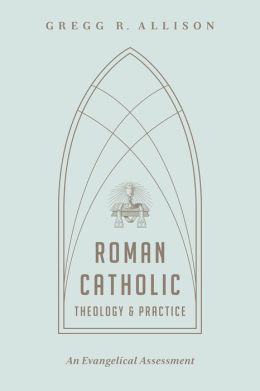 Gregg Allison’s work, Roman Catholic Theology and Practice: An Evangelical Assessment
Evangelicalism in Dialogue
One issue that some may see rising from Allison’s approach is the notion of “evangelical thought” or perspective. Allison himself notes how difficult it would be to pin down one specific approach. He does, however, do a good job of approaching the various aspects of Roman Catholic theology in a way that allows for different evangelical voices to get a say. For example, in his discussion of the Lord’s Supper/Eucharist/etc., he critiques Roman Catholic teaching from a number of different evangelical positions. That said, Allison is Reformed and focuses much of the space for critique on offering a specifically Reformed criticism. This means that at some points those outside of the Reformed tradition may feel they have differing criticisms to offer that are not fully covered.
One can hardly fault Allison for this approach, however, because the space needed simply to cover the Catechism and offer a critique is large.
Roman Catholicism Outlined and Critiqued
The value of the book for many will be found in the fact that it does present Roman Catholic teaching as found in their official Catechism. Allison does a great job simply presenting what the Catechism teaches in each section before he offers a critique.
Allison’s critique often focuses on either the Church-Christ identification or the nature-grace interdependence in Roman Catholic theology. It is the latter which is the most prominent critique offered. Roman Catholicism sees human nature and grace working together whereas evangelicalism sees human nature as corrupted through the fall and not working together with grace. Allison does an excellent job showing numerous difficulties with the Roman Catholic view on this topic and then showing how many doctrines of Roman Catholicism are dependent upon this faulty premise.
Allison’s critique of specific doctrines is also helpful. His criticisms of papal and magisterial infallibility are on-point, concise, and decisive. His outline and critique of Mariology, justification, etc. are each valuable and insightful. Again, however, readers may be left hoping there was more space to dedicate to each individual topic.
Some other issues
One issue that happens a few times is that Allison seems to inadequately ground his critique. This is particularly the case in a number of places in which the criticism amounts to “evangelicalism dismisses x.” Such a “dismissal” happens frequently through the book on minor topics, but it leaves the reader wondering on what grounds such ideas are dismissed. Often, the only grounds provided is something like not having sufficient biblical warrant or because of its reliance on one of the above mentioned overarching themes (Church/Christ or nature/grace).
Another issue is that Allison sometimes offers critiques that do not seem very convincing or are products of his theological presuppositions. For example, his discussion of baptism and his denial that Jesus is speaking of baptism in John 3:5ff seems confused, to say the least. Indeed, he confirms that the discussion of “water and the spirit” are being used in such a way as to refer to the same thing. However, no real alternative to baptism is given of this water- and spirit-filled notion. It is simply asserted that it cannot be baptism because that would mean an anachronistic notion (baptism) was in the text. But of course John the Baptist was around before Jesus, and he baptized with water… and the spirit. Now, I am Lutheran, so my perspective on baptism certainly differs from that of Allison’s, but his treatment of this passage seemed exegetically impossible.
Conclusion
Gregg Allison’s interaction with Roman Catholicism is enormously helpful in that it walks readers through the beliefs of Roman Catholics from their own Catechism. The strength of the work is its broadness, which is also its weakness as individual topics are sometimes skimmed over too briefly. That said, Roman Catholic Theology and Practice: An Evangelical Assessment
Disclaimer: I received a review copy of the book through Crossway. I was not obligated by the publisher to give any specific type of feedback whatsoever.
Source
Gregg Allison, Roman Catholic Theology and Practice: An Evangelical Assessment
Links
Be sure to check out the page for this site on Facebook and Twitter for discussion of posts, links to other pages of interest, random talk about theology/philosophy/apologetics/movies and more.
SDG.
——
The preceding post is the property of J.W. Wartick (apart from quotations, which are the property of their respective owners, and works of art as credited; images are often freely available to the public and J.W. Wartick makes no claims of owning rights to the images unless he makes that explicit) and should not be reproduced in part or in whole without the expressed consent of the author. All content on this site is the property of J.W. Wartick and is made available for individual and personal usage. If you cite from these documents, whether for personal or professional purposes, please give appropriate citation with both the name of the author (J.W. Wartick) and a link to the original URL. If you’d like to repost a post, you may do so, provided you show less than half of the original post on your own site and link to the original post for the rest. You must also appropriately cite the post as noted above. This blog is protected by Creative Commons licensing. By viewing any part of this site, you are agreeing to this usage policy.
Book Review: “Theology’s Epistemological Dilemma: How Karl Barth and Alvin Plantinga Provide a Unified Response” by Kevin Diller
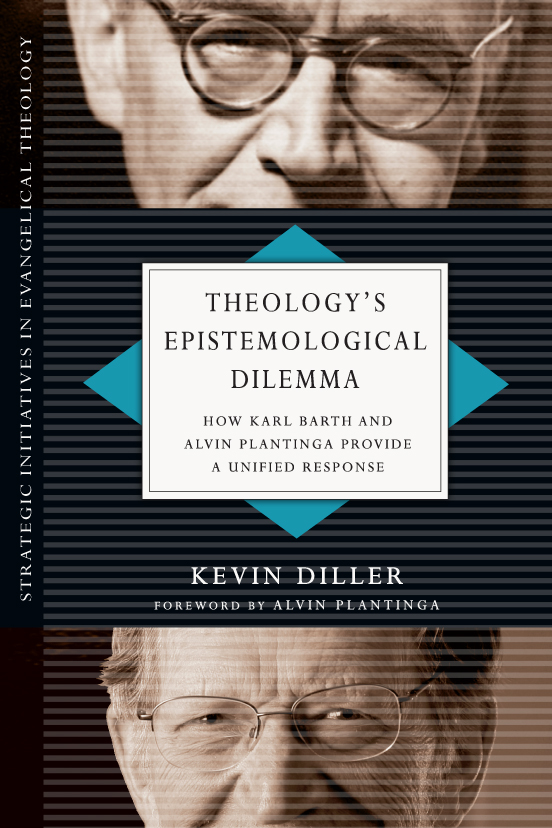 Kevin Diller’s Theology’s Epistemological Dilemma: How Karl Barth and Alvin Plantinga Provide a Unified Response
Diller first goes deeper into the epistemological problem, then analyzes Barth’s view of revelation and his theological epistemology, and wraps up the first part of the book with a deep look at Plantinga’s concept of warrant and how it may impact the question of theological epistemology. He puts forward a consistent interpretation that allows for a unified perspective of Barth’s and Plantinga’s thought. The second part focuses on this unified perspective and puts it forward in analysis of natural theology, human knowledge of God, and Scripture.
Such a brief summary of contents does not do justice to the broad scale of the book, which touches upon many different topics of importance, while always remaining centered on the question of knowledge in theology. Diller has thoughtfully brought forth key aspects of the thoughts of both Barth and Plantinga in such a way as to demand reflection from both philosophers and theologians.
Some of the most interesting insights come from Diller’s integration of Barth’s concept of revelation with Plantinga’s concept of warrant. By focusing on God as self-revealing and self-attesting (Barth), believers are able to maintain warrant in their knowledge of theology (Plantinga).
Another area of profound interest is the way that both Barth and Plantinga approach natural theology–they largely argue that it cannot succeed in its end goal–to demonstrate the existence of God. Barth’s thought reflects this because God will necessarily be hidden from unaided human reason, while Plantinga argues that the arguments of natural theology are part of but do not ground warrant for belief in God. This latter section has much to reflect upon for one who, like me, thinks natural theology can be largely successful.
Theology’s Epistemological Dilemma is a superb, worthwhile read for anyone with interest in the questions of how we may have knowledge within the worldview of Christianity. I highly commend it to my readers.
Disclaimer: I received a review copy of the book through InterVarsity Press. I was not obligated by the publisher to give any specific type of feedback whatsoever.
Source
Kevin Diller, Theology’s Epistemological Dilemma: How Karl Barth and Alvin Plantinga Provide a Unified Response
Links
Be sure to check out the page for this site on Facebook and Twitter for discussion of posts, links to other pages of interest, random talk about theology/philosophy/apologetics/movies and more.
SDG.
——
The preceding post is the property of J.W. Wartick (apart from quotations, which are the property of their respective owners, and works of art as credited; images are often freely available to the public and J.W. Wartick makes no claims of owning rights to the images unless he makes that explicit) and should not be reproduced in part or in whole without the expressed consent of the author. All content on this site is the property of J.W. Wartick and is made available for individual and personal usage. If you cite from these documents, whether for personal or professional purposes, please give appropriate citation with both the name of the author (J.W. Wartick) and a link to the original URL. If you’d like to repost a post, you may do so, provided you show less than half of the original post on your own site and link to the original post for the rest. You must also appropriately cite the post as noted above. This blog is protected by Creative Commons licensing. By viewing any part of this site, you are agreeing to this usage policy.

 J.W. Wartick - Reconstructing Faith