theology
Sunday Quote!- Sola Scriptura and Reading the Bible
 Every Sunday, I will share a quote from something I’ve been reading. The hope is for you, dear reader, to share your thoughts on the quote and related issues and perhaps pick up some reading material along the way!
Sola Scriptura and Reading the Bible
Alister McGrath has done much work in the area of Reformation theology. Here, he has some extremely important words about how sola scriptura does not, in and of itself, yield a way to read Scripture:
The Reformation principle of sola scriptura is rendered either meaningless or unusable without a reliable hermeneutical program… The hermeneutical presuppositions of theologians inevitably exercise considerable influence over their theological conclusions. (148, cited below)
Too often, people assume that if we just look at the text, we’ll know what it says. If we just read the words, that’s the meaning. But everyone presupposes a hermeneutical system, and the danger is that if we are not aware of this, we may be using an unreliable one, and our presuppositions will influence us to read the text as meaning something it does not, in fact mean. McGrath shares this and many other insights in this important work.
What do you think of this? How important is it to be aware of the way we’re reading the Bible?
Links
Be sure to check out the page for this site on Facebook and Twitter for discussion of posts, links to other pages of interest, random talk about theology/philosophy/apologetics/movies and more!
Microview: “Intellectual Origins of the European Reformation” by Alister McGrath- I reviewed this highly interesting book by Alister McGrath. Be sure to read this as well!
Sunday Quote– If you want to read more Sunday Quotes and join the discussion, check them out! (Scroll down for more)
Source
Alister E. McGrath, The Intellectual Origins of the European Reformation
SDG.
Really Recommended Posts 12/5/14- secular humanism, theology books, RPGs, and more!
 Yep, lots of diversity this go-round. We have a challenge for secular humanism, theology books, the atonement, Levitical Law, and a role-playing game. Think I didn’t get a good variety? Think again! Let me know what you think in the comments below, I’d love to read them! Be sure you let the others who wrote the posts know what you think.
The Secular Humanist’s Dilemma– An extremely brief but challenging post. How should secular humanists behave? Is this a compelling argument? I’d love to read your thoughts.
Why November Overwhelms Me (Books!)– A bookseller reflects on this past month and all the awesome looking books that come out in November. Lots of theology books this past month that are of interest.
Zack Hunt and Ken Ham walk into a House of Cards, on Yom Kippur– An interesting look at the doctrine of atonement and the interrelationship with sacrifice via a look at Ken Ham and Zack Hunt. Here’s a surprise- Ham and I agree largely on this point.
Why Wearing Clothes of Mixed Fabrics (Leviticus 19:19) Was Wrong– Sometimes it seems the laws in the Old Testament don’t make sense. Here’s an interesting post on critiques of the Hebrew Scriptures on these types of laws and points. I got this link from The Poached Egg, a site you should definitely follow!
Americana Dawn: Historical RPG– I don’t often share kickstarters, but when I do, you should take notice! Check out this awesome looking kickstarter for an RPG that is based on early American history. I’m pretty pumped for it!
Humanity on the Brink in Ben Bova’s “New Earth”
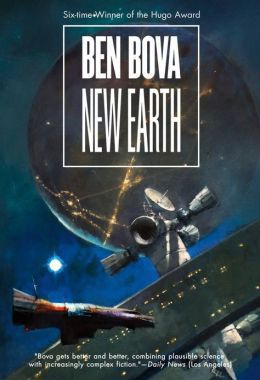
Ben Bova’s New Earth is a spectacular novel that mixes hard sci fi with a touch of space opera. I recently investigated a major theme of the novel: the notion that we may find hope in the stars. Here, we’ll explore some other major themes of the book, including exploration, the possibility of human extinction, and xenophobia. There will be major SPOILERS in what follows.
Exploration
A major theme found in New Earth is the urge to explore and possible benefits thereof. In a conversation between Anita Halleck–a wealthy investor, and Douglas Stavenger–the semi-retired leader of Selene, the independent sovereign nation on the moon, this theme is drawn out most poignantly:
“It’s a big universe,” said Stavenger.
“But what good is it [exploration of “New Earth”]?” she demanded. “What does it accomplish? So they explore another planet. Does that help anybody? Does that solve any real problems?”
…”There are always problems on Earth.[” said Stavenger. “]And here in Selene, too. That shouldn’t stop our push to explore.”
“Where will it end?”
“It won’t end. We keep on exploring, keep on learning. That’s where new knowledge comes from, the frontier. And new knowledge always leads to new wealth, new benefits for everyone.”
“Very philanthropic.”
“Very practical,” Stavenger corrected. (83)
There is some debate now over funding for NASA, for example. What good does it do to send people to the moon? Surely that funding could be better spent on, say, relieving world hunger. In fact, this exact argument is made within New Earth, because the planet Earth is itself suffering from catastrophes caused by global warming, among other issues.
Yet Bova, through Stavenger, makes an argument for exploration: the drive to explore, the imagination; these are things which drive invention and innovation. As Stavenger put it, the drive to explore leads to new wealth and new technology for everyone. It is interesting to see this debate play out in fiction, though this was largely where it dropped… However, one could argue that the ultimate revelation, that humanity was truly on the brink of destruction from the coming apocalypse from a local star, is itself an argument for the success of the project of human exploration.
Environmentalism
Our home planet is in serious trouble in the time of New Earth. Global warming has devastated the environment, causing flooding across coastal regions, precipitation cycles to reorient and move. Drought and inundations of rain alternatively destroy their respective climate zones. Humanity flees the shorelines.
Through this bleak look into humanity’s plight, Bova issues a call for humans now to work against environmental catastrophe. Of course, some dispute the trend towards global warming, but even if global warming is some sort of myth, it seems to me that we must work toward caring for creation in such a way that we minimize our destruction of ecological systems. We are God’s stewards on Earth and so we should work to take care of the gifts of God’s creation.
Of course, in New Earth the consequences of forsaking this gift of God–our charge to care for the Earth–are put into fictional perspective. The destruction to the planet leads to destruction of human life.
Xenophobia
The resistance the human characters have in New Earth to the information presented to them by the “humans” on New Earth is interesting and, in my opinion, helps to characterize the reality of human nature. Many of the humans on the excursion to New Earth are deeply suspicious of the alien life they have found. Moreover, the way they react to the friendliness of the aliens reflects a culture that the aliens (and the sentient machine) view as deeply barbaric. The human tendency to be distrustful, it is said, is due to their evolutionary history and the way that such distrust helped survival.
However, I think this same portrayal has theological significance. Humanity is fallen, and our past is littered with the results of our fallen nature. It is not at all hard to imagine humans reacting just as those did in New Earth. The reality of human nature is such that one cannot but think that no matter how tactfully and amiably such aliens approached us, the reaction would probably be negative. To trust the aliens to tell us about a coming destruction for which we should prepare to survive is to take it to another level.
What does this say about human nature?
Conclusion
Bova’s work New Earth is one of my favorites from one of the masters of science fiction. I’ve already discussed how it explored the issue of hope from the heavens in materialistic literature. Now, we’ve seen how it explores other issues which are both current and historic. Let me know what you think of the themes brought up in the book!
Links
Be sure to check out the page for this site on Facebook and Twitter for discussion of posts, links to other pages of interest, random talk about theology/philosophy/apologetics/movies and more!
Caring for Creation: A discussion among evangelicals– I write about creation care from a number of perspectives offered at a recent panel of prominent evangelical thinkers in this area.
Book Review: “For the Beauty of the Earth” by Steven Bouma-Prediger– Several issues related to the environment and Christian theology are drawn out in this extremely interesting book.
I have discussed the use of science fiction in showing how religious persons act. Check out Religious Dialogue: A case study in science fiction with Bova and Weber.
SDG.
——
The preceding post is the property of J.W. Wartick (apart from quotations, which are the property of their respective owners, and works of art as credited; images are often freely available to the public and J.W. Wartick makes no claims of owning rights to the images unless he makes that explicit) and should not be reproduced in part or in whole without the expressed consent of the author. All content on this site is the property of J.W. Wartick and is made available for individual and personal usage. If you cite from these documents, whether for personal or professional purposes, please give appropriate citation with both the name of the author (J.W. Wartick) and a link to the original URL. If you’d like to repost a post, you may do so, provided you show less than half of the original post on your own site and link to the original post for the rest. You must also appropriately cite the post as noted above. This blog is protected by Creative Commons licensing. By viewing any part of this site, you are agreeing to this usage policy.
Book Review: “Overcoming Sin and Temptation” by John Owen
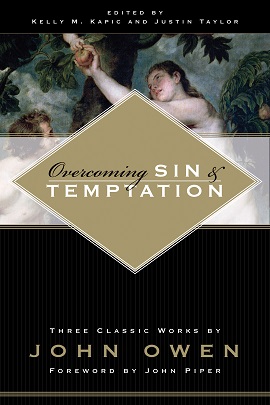 Be killing sin, or it will be killing you. – John Owen
John Owen was a Puritan minister who lived in the 1600s. In Overcoming Sin and Temptation
If I had to sum up this volume with one word, I would say: “Convicting.” John Owen throughout does a fantastic job calling believers to the awareness of their own sin and the various ways in which we deny our sin and try to pretend it isn’t there. There were many times I found myself nodding along, realizing that Owen had laid bare yet another way I had been trying to ignore sin in my own life. It is a powerful work of law.
Owen points out how we often rely upon grace in the face of temptation–surely we will be forgiven this sin!–rather than putting the temptation to death; he notes how we often try to ignore sin through various means like the weariness of our body (we’re too tired to avoid this sin); he exhaustively draws out the many ways we deceive ourselves through our sin and persist in sin. It’s almost tiring because we realize how often our sins have been covered up in our minds through rationalizing it away.
But Owen does not end with the conviction of our hearts for our sin. Instead, as the title of this book suggests, he puts forward ways in which we may overcome sin and temptation. Primarily, they involve watchfulness and prayer. We are called by Owen to an active assault on sin rather than passive resistance. We must always be looking out for the ways sin penetrates our lives and close those gaps. Some concrete things Owen suggests are focusing upon Christ’s work and how our sin adds to Christ’s suffering; thinking upon the grace and love of God and how we wound the great God who made us when we sin; considering God’s sovereignty and asking, with Joseph in Genesis, “How can I sin against my God?” These are only a few of the ways Owen suggests we put sin to death in our lives.
This edition of the works is made especially helpful by extensive notes explaining hard-to-understand words. Various explanatory words are sometimes added into the text (always bracketed so readers know they have been added) to continue Owen’s train of thought. Each work has a brief but information-packed introduction, and there are lengthy and detailed outlines of the works at the end of the book.
I do wish the editors had also decided to make the language throughout the text gender-inclusive. It is jarring to have to continually process: “Oh yeah, he’s using ‘men’ to reference ‘people.” It may seem like a small thing, but if this is so clearly what Owen means when he says “he” or “man” or “men,” etc., then why not just say it through the editorial process? This is a minor strike against an otherwise excellent work.
I recommend that every Christian obtain a volume of Overcoming Sin and Temptation
Disclaimer: I received a review copy of the book through Crossway. I was not obligated by the publisher to give any specific type of feedback whatsoever.
Source
John Owen, Overcoming Sin and Temptation
Links
Be sure to check out the page for this site on Facebook and Twitter for discussion of posts, links to other pages of interest, random talk about theology/philosophy/apologetics/movies and more.
SDG.
——
The preceding post is the property of J.W. Wartick (apart from quotations, which are the property of their respective owners, and works of art as credited; images are often freely available to the public and J.W. Wartick makes no claims of owning rights to the images unless he makes that explicit) and should not be reproduced in part or in whole without the expressed consent of the author. All content on this site is the property of J.W. Wartick and is made available for individual and personal usage. If you cite from these documents, whether for personal or professional purposes, please give appropriate citation with both the name of the author (J.W. Wartick) and a link to the original URL. If you’d like to repost a post, you may do so, provided you show less than half of the original post on your own site and link to the original post for the rest. You must also appropriately cite the post as noted above. This blog is protected by Creative Commons licensing. By viewing any part of this site, you are agreeing to this usage policy.
Thomas Kinkade and Christianity- What do we learn from “The Painter of Light”?

A favorite of Kinkade’s works.
Thomas Kinkade is a polarizing figure. His art is beloved and hated. Some see the art as picturesque and hearkening back to a simpler time. Others see his art as gaudy and outlandish with terrible lighting effect. Whatever your own view, it must be admitted that an artist with paintings in thousands upon thousands of homes is vastly more influential than most. Here, we will examine Thomas Kinkade’s art from a few different angles.
The image featured in this post, “Sunday Evening Sleigh Ride,” exhibits a number of features of Kinkade’s art. Light is featured prominently. It is used in a kind of spiritual fashion–its warmth beckons from the church to the cold, snow-covered land around it. The viewer’s attention is not upon the sleigh itself, because the light is centered upon the place of worship: the church. Note also the fish symbol displayed above Kinkade’s signature. The image is one of familiarity–particularly for those who are most assuredly Kinkade’s audience: broadly mainstream protestants.
There is something to be had in the image for different parts of the country. The mountains could place it in the winter of Colorado, but the feel of chill found in the image reminds me, at least, of the Midwest. The Northeast may reflect upon their love for sleigh rides. The uniting theme, of course, is found in the call to the church as found in the image.
Others who are better equipped for critique of art have noticed these themes in Kinkade’s work as well. I have been reading through Thomas Kinkade: The Artist in the Mall. The book analyzes Kinkade’s work from a number of angles. Some of the contributors enjoyed his work–or at least appreciated it as art. Others dismissed it as clearly obscene or hideous. One undercurrent in many of the essays was the notion of Kinkade’s professed religious values and how those may come out in his art.
One of the essays actually seemed to accuse Kinkade of specifically exploiting foolish middle-class Protestants through the use of pseudo-religion to cause them to open their wallets and spend money on his works. Another explored the way in which Kinkade consciously displayed light and other features in his artwork to convey a message he clearly conceived of as evangelical, while also appealing to a kind of picturesque, idealistic view of Christian culture (45ff, cited below). The artist viewed nature as imbued with God’s beauty revealed, and felt he should paint it as such (46). In my opinion, the least flattering image portrayed of Kinkade was the essay entitled “The Painter of the Right.” In this essay, Micki McElya basically paints Kinkade’s project as one of glorifying a kind of civil religion of American Christianity (see especially p.73, 76 cited below).
There is clearly a broad spectrum of views as to the project Kinkade pursued through his life. The fact that he plastered his art over coffee mugs, blankets, ornaments, and anything else an image could be placed upon might strike the more cynical as truly an exploitation of the foolish religious masses with money to spend. However, one must wonder whether the sincerity of one’s professed religious beliefs must be reevaluated in light of consumer success. Of course, one might also suggest that Kinkade’s public failings regarding his marriage and alcohol may be grounds for doubting his religious affectation. But again, this would be to act in a fairly Pharisaic manner–to condemn another saint who remains yet a sinner while one is the same. Regardless, it seems there is much to perhaps learn about and from Kinkade, as ridiculous as that may sound to some.
Returning to the art itself, there is little doubt that Kinkade masterfully pursued his project of attempting to subtly evangelize through his art. The image I selected is more obvious than most, but the themes of light and other religious imagery may be found throughout his body of work. Perhaps one may see these as the marks of a man’s dedication to trying to use his skills most fully in the best way he knew how to adhere to his faith. Perhaps not. I tend to favor the former rather than the latter.
Although I realize some of the criticisms of his art may be on-point, I cannot help but be drawn in by his art. I don’t enjoy all of it, but “Sunday Evening Sleigh Ride” is one I particularly do enjoy. I realize it is constructed in such a way as to tug at my heart–I am most certainly part of Kinkade’s target audience–but that does not, in itself, belittle the art’s value. Nor does Kinkade’s own life, which stirred some controversy towards the end, destroy the possibility for his true belief. I’m keen to give people the benefit of the doubt, and I think that Kinkade’s did little to mar his own image as the “Painter of Light.” It is possible to be a sinner-saint, as are all the redeemed in this life. Kinkade’s art may not be your cup of tea, but it should be of interest to see how someone may integrate their faith into their life.
Links
Be sure to check out the page for this site on Facebook and Twitter for discussion of posts, links to other pages of interest, random talk about theology/philosophy/apologetics/movies and more!
Source
Alexis L. Boylan, Editor, Thomas Kinkade: The Artist in the Mall (Duke University Press, 2011).
The image is copyright Thomas Kinkade and I do not claim any credit for it. I am using it under fair use as a critical examination of the artwork. Be sure to check out Thomas Kinkade’s website if you would like to browse his art and purchase it in various forms.
SDG.
——
The preceding post is the property of J.W. Wartick (apart from quotations, which are the property of their respective owners, and works of art as credited; images are often freely available to the public and J.W. Wartick makes no claims of owning rights to the images unless he makes that explicit) and should not be reproduced in part or in whole without the expressed consent of the author. All content on this site is the property of J.W. Wartick and is made available for individual and personal usage. If you cite from these documents, whether for personal or professional purposes, please give appropriate citation with both the name of the author (J.W. Wartick) and a link to the original URL. If you’d like to repost a post, you may do so, provided you show less than half of the original post on your own site and link to the original post for the rest. You must also appropriately cite the post as noted above. This blog is protected by Creative Commons licensing. By viewing any part of this site, you are agreeing to this usage policy.
Reformation Recommended Posts 10/31/14- Reformation Day Reading
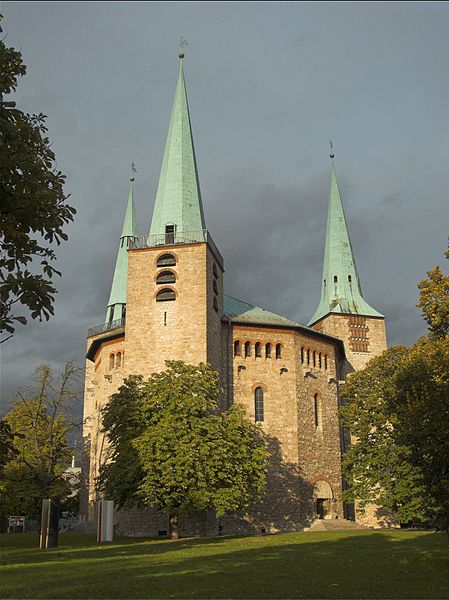 Happy Reformation Day! I have a special edition of posts put together to discuss the Reformation.
Forming and Reforming– Timothy Siburg reflects on how we might see the Reformation working into today in the church. How might we apply the notion of “reform” to formative thought and practice?
The Coming Vindication of Martin Luther– Martin Luther has been both vilified and praised. Will his thought have a vindication, despite the splitting of the church? Check out this post which summarizes a number of points related to Luther’s thought along with many other links to explore.
Debate: Is the Roman Catholic Priesthood Biblical & Ancient? James White vs. Mitchell Pacwa– One of the issues that divides the church is the notion of the priesthood and that office. I found this debate interesting to listen to, and I found that there were some points raised by either side. Is it possible to debate these issues with respect and care? Should we debate these issues? What do you think?
My Writings on the Reformation
I discuss the origins of the European Reformations and how many of its debates carry on into our own day. The debates that took place during the Reformation continue on into today’s theological discussions.
The Church Universal: Reformation Review– What makes a church part of the Church Universal? What makes a church part of the true church? I write on these topics (and more!) and their origins in the Reformation.
Who Interprets Scripture? Sola Scriptura, the Reformation, and the modern era: Reformation Review– I investigate the notion of “sola scriptura” and its different applications in interpreting Scripture. I particularly emphasize the problem of doctrinal unity and the various ways church bodies have dealt with these difficulties from the Reformation into today.
The Continuing Influence of the Reformation: Our lives, our thoughts, our theology- Reformation review– I examine how the issues which came up during the Reformation continue to influence almost every aspect of our lives today. Theology matters.
Women in the Reformation: Hope, Silence, and Circumstance– I explore the role of women throughout the Reformation period from different angles.
Microview: “The Intellectual Origins of the European Reformation” by Alister McGrath
It’s Reformation Month and I unfortunately haven’t been able to write as much as I’ve been able to in the past years on the Reformation, but I’d like to focus here on one of the several books on the topic I read this month. Check out the links for more of my writing on the Reformation.
Alister McGrath’s The Intellectual Origins of the European Reformation
Among the insights provided by McGrath, his analysis of humanism and its relationship with Reformation thought was particularly helpful. He showed that the Reformation did not rely as much upon humanism as is often alleged, while also describing the various ways in which humanist and Reformation thought interacted.
Overall, the book is a much-needed work on the background to the Reformation. Anyone who is interested in studying the development of thought in this period or in Reformation theology should read this excellent book.
Links
I discuss the origins of the European Reformations and how many of its debates carry on into our own day. The debates that took place during the Reformation continue on into today’s theological discussions.
The Church Universal: Reformation Review– What makes a church part of the Church Universal? What makes a church part of the true church? I write on these topics (and more!) and their origins in the Reformation.
Who Interprets Scripture? Sola Scriptura, the Reformation, and the modern era: Reformation Review– I investigate the notion of “sola scriptura” and its different applications in interpreting Scripture. I particularly emphasize the problem of doctrinal unity and the various ways church bodies have dealt with these difficulties from the Reformation into today.
The Continuing Influence of the Reformation: Our lives, our thoughts, our theology- Reformation review– I examine how the issues which came up during the Reformation continue to influence almost every aspect of our lives today. Theology matters.
Women in the Reformation: Hope, Silence, and Circumstance– I explore the role of women throughout the Reformation period from different angles.
Source
Alister E. McGrath b, The Intellectual Origins of the European Reformation
SDG.
——
The preceding post is the property of J.W. Wartick (apart from quotations, which are the property of their respective owners, and works of art as credited; images are often freely available to the public and J.W. Wartick makes no claims of owning rights to the images unless he makes that explicit) and should not be reproduced in part or in whole without the expressed consent of the author. All content on this site is the property of J.W. Wartick and is made available for individual and personal usage. If you cite from these documents, whether for personal or professional purposes, please give appropriate citation with both the name of the author (J.W. Wartick) and a link to the original URL. If you’d like to repost a post, you may do so, provided you show less than half of the original post on your own site and link to the original post for the rest. You must also appropriately cite the post as noted above. This blog is protected by Creative Commons licensing. By viewing any part of this site, you are agreeing to this usage policy.
Microview: “Ancient Near Eastern Thought and the Old Testament” by John Walton
 John Walton’s Ancient Near Eastern Thought and the Old Testament
The book is chock full of quotations from various documents from the ANE set alongside each other with comparative insight from Walton. It is organized in such a way that ANE thought is analyzed in regards to religion, cosmos, and people, with subdivisions of each. Throughout the text there are sidebars comparing what is being studied to the Old Testament, thus revealing many insights into the meaning of key OT texts. Walton’s approach is even-handed and fair.
I’d honestly say this might be the most interesting scholarly book I’ve read. I cannot recommend it highly enough.
Links
Be sure to check out the page for this site on Facebook and Twitter for discussion of posts, links to other pages of interest, random talk about theology/philosophy/apologetics/movies and more!
Source
John Walton, Ancient Near Eastern Thought and the Old Testament
SDG.
——
The preceding post is the property of J.W. Wartick (apart from quotations, which are the property of their respective owners, and works of art as credited; images are often freely available to the public and J.W. Wartick makes no claims of owning rights to the images unless he makes that explicit) and should not be reproduced in part or in whole without the expressed consent of the author. All content on this site is the property of J.W. Wartick and is made available for individual and personal usage. If you cite from these documents, whether for personal or professional purposes, please give appropriate citation with both the name of the author (J.W. Wartick) and a link to the original URL. If you’d like to repost a post, you may do so, provided you show less than half of the original post on your own site and link to the original post for the rest. You must also appropriately cite the post as noted above. This blog is protected by Creative Commons licensing. By viewing any part of this site, you are agreeing to this usage policy.
Do Young Earth Creationists Advocate Appearance of Age?
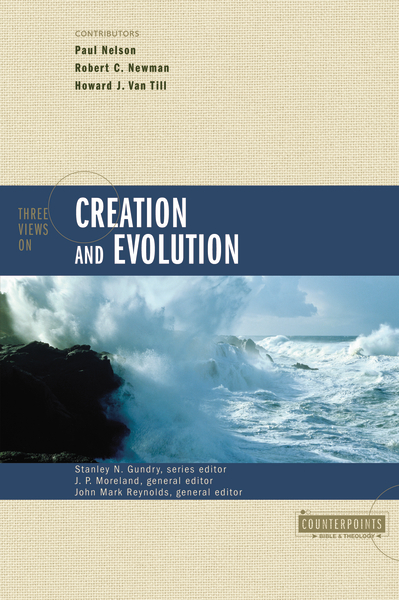
Young Earth Creationists (hereafter YEC or YECs) sometimes make the claim that the reason the universe is found to be so ancient by modern science is because it merely appears to be that old. I myself actually held to this view for a while when I was holding young earth creationism in tension with the evidence I observed.
I have been challenged in the past (for example, in the comments here) to provide evidence to show that this a claim made by anyone other than the “YEC in the street,” so to speak. That is, some YECs have told me that no serious YECs (that is, those who are publishing or working with the larger creationist think-tanks) make this argument.
Published Claim
In the past I appealed to various online sources to show that, for example, the Institute for Creation Research makes this claim. I recently finished reading Three Views on Creation and Evolution
Some suggest God could have created starlight in transit to the earth. Perhaps most of cosmic history is apparent rather than actual. (52, cited below)
Initially this may not seem like a claim of “appearance of age,” but the authors go on to defend the plausibility of this “apparent” cosmic history and age of the universe:
…[Perhaps] God needed such a[n ancient appearing] creation to sustain life on earth. It might be necessary to have the universe the size and shape that it is in order for life on this planet to survive… God would have no real motive to ‘actualize’ most of cosmic history… ‘Apparent’ history in the mind of God could not be any different than ‘actual’ history… He would gain a fully functioning universe, but without the ‘waste of time’ needed to actualize the less interesting parts. (52-53)
From these quotes, it is obvious that Nelson and Reynolds are defending the notion of apparent age.
Problems for Young Earth Creationists
The notion of apparent age raises a number of issues for YECs. First is the common charge that this turns God into a deceiver. Nelson and Reynolds anticipated this objection and answered by using an analogy of someone’s mother refinishing an antique chair which would make it appear new. The only deception in this case, the authors argue, would occur if the mother failed to correct someone if they commented on the brand new chair. Similarly, God has provided a “label” to show the universe is not ancient: the Bible.
There are a number of problem with explanations like this one: first, in the case of the chair, further investigation would demonstrate it is not brand new. After all, antique dealers know the value of chairs which have not been tampered with by refinishing! We are able to discover whether additional layers of paint or finishing have been applied over the surface of a chair; similarly, we are able to discover whether things which initially appear young may indeed be quite old. The analogy itself breaks down. Second, the argument begs the question. After all, apart from YECs, those Christians who are asserting the universe is really billions of years old also claim that the Bible does not limit the age to only a few thousand years. This is the reason the challenge of “apparent age” comes up to begin with! So to turn around and say, no, it’s not deception because the Bible says it is young is to merely assert that which is being challenged.
Briefly, one might also wonder why Nelson and Reynolds think God “wasted time” in taking 7 days creating. Their dismissal of, say, star formation as something “less interesting” is frankly astonishing. Would that I could go back in time to see these “less interesting” events!
Another difficulty for the YEC comes in the form of a dilemma: Do you advocate a scientific understanding of young earth (and thus read science into the text) or argue for appearance of age (and thus grant that the Earth appears ancient)?
Think about that line for a moment. If YECs wish to affirm their position, they must either come up with a rival scientific understanding of the age of the universe and therefore read that scientific understanding back into the text (after all, where does Flood geology come from?–certainly not the text of the Bible!) or they must acknowledge the evidence that the universe is indeed quite ancient and merely assert that the evidence is trumped by their understanding of the Bible. The “appearance of age” argument grants that the universe indeed does provide evidence for being quite ancient.
Conclusion
Appearance of age is indeed part of the YEC quiver of arguments, as I have demonstrated. The question is, can this actually save YECs from an inconsistent view? I have argued that it does not. But even if YECs drop the “appearance of age” argument, they must still do that which they often attack others for doing: reading science back into the text of Genesis 1. If you’re a YEC, I hope you will think seriously before using the argument from “appearance of age.” But I also hope you’ll think seriously about whatever your alternative theory for the history of the universe might be. How much of it is actually derived from the pages of Scripture? How does your theory fit the Genesis account? Remember, there are other possibilities out there.
Links
Be sure to check out the page for this site on Facebook and Twitter for discussion of posts, links to other pages of interest, random talk about theology/philosophy/apologetics/movies and more!
Origins Debate– Check out all my posts on the discussion within Christianity over the duration and means of creation.
Source
Paul Nelson and John Mark Reynolds, “Young Earth Creationism” in Three Views on Creation and Evolution
SDG.
——
The preceding post is the property of J.W. Wartick (apart from quotations, which are the property of their respective owners, and works of art as credited; images are often freely available to the public and J.W. Wartick makes no claims of owning rights to the images unless he makes that explicit) and should not be reproduced in part or in whole without the expressed consent of the author. All content on this site is the property of J.W. Wartick and is made available for individual and personal usage. If you cite from these documents, whether for personal or professional purposes, please give appropriate citation with both the name of the author (J.W. Wartick) and a link to the original URL. If you’d like to repost a post, you may do so, provided you show less than half of the original post on your own site and link to the original post for the rest. You must also appropriately cite the post as noted above. This blog is protected by Creative Commons licensing. By viewing any part of this site, you are agreeing to this usage policy.
Sunday Quote!- Forgiveness in Islam and Christianity
 Every Sunday, I will share a quote from something I’ve been reading. The hope is for you, dear reader, to share your thoughts on the quote and related issues and perhaps pick up some reading material along the way!
Forgiveness in Islam and Christianity
James White’s book, What Every Christian Needs to Know About the Qur’an
Here Allah not only forgives the man of horrendous sin but also does so without the slightest reference to the fulfillment of the divine law against murder. The key issue is not God’s mercy or even God’s desire to forgive. The issue is how forgiveness can be obtained without violating His holiness and justice. From the perspective of this hadith, forgiveness flows not from God’s actions in providing a basis for salvation, but from His power alone. (158, cited below)
The distinction White discusses here is crucial. The basis for forgiveness in Christianity flows along with God’s holiness and justice: God provides for justice through the atonement provided by Christ. In Islam, however, Allah may choose to forgive whomever, whenever, merely because Allah is all-powerful–and this in the radical sense that Allah may do whatever Allah wishes, even violate divine law against murder and the like without any intercession and mediation.
It seems to me that this provides another reason to think of the reasonableness of Christianity: it provides a basis for God’s forgiveness apart from mere divine fiat.
What do you think? How important is this distinction? Does James White accurately portray this difference?
Links
Be sure to check out the page for this site on Facebook and Twitter for discussion of posts, links to other pages of interest, random talk about theology/philosophy/apologetics/movies and more!
Sunday Quote– If you want to read more Sunday Quotes and join the discussion, check them out! (Scroll down for more)
Source
James White, What Every Christian Needs to Know About the Qur’an
SDG.

 J.W. Wartick - Reconstructing Faith