theology
Book Review: “Theology and Contemporary Critical Theory” by Graham Ward
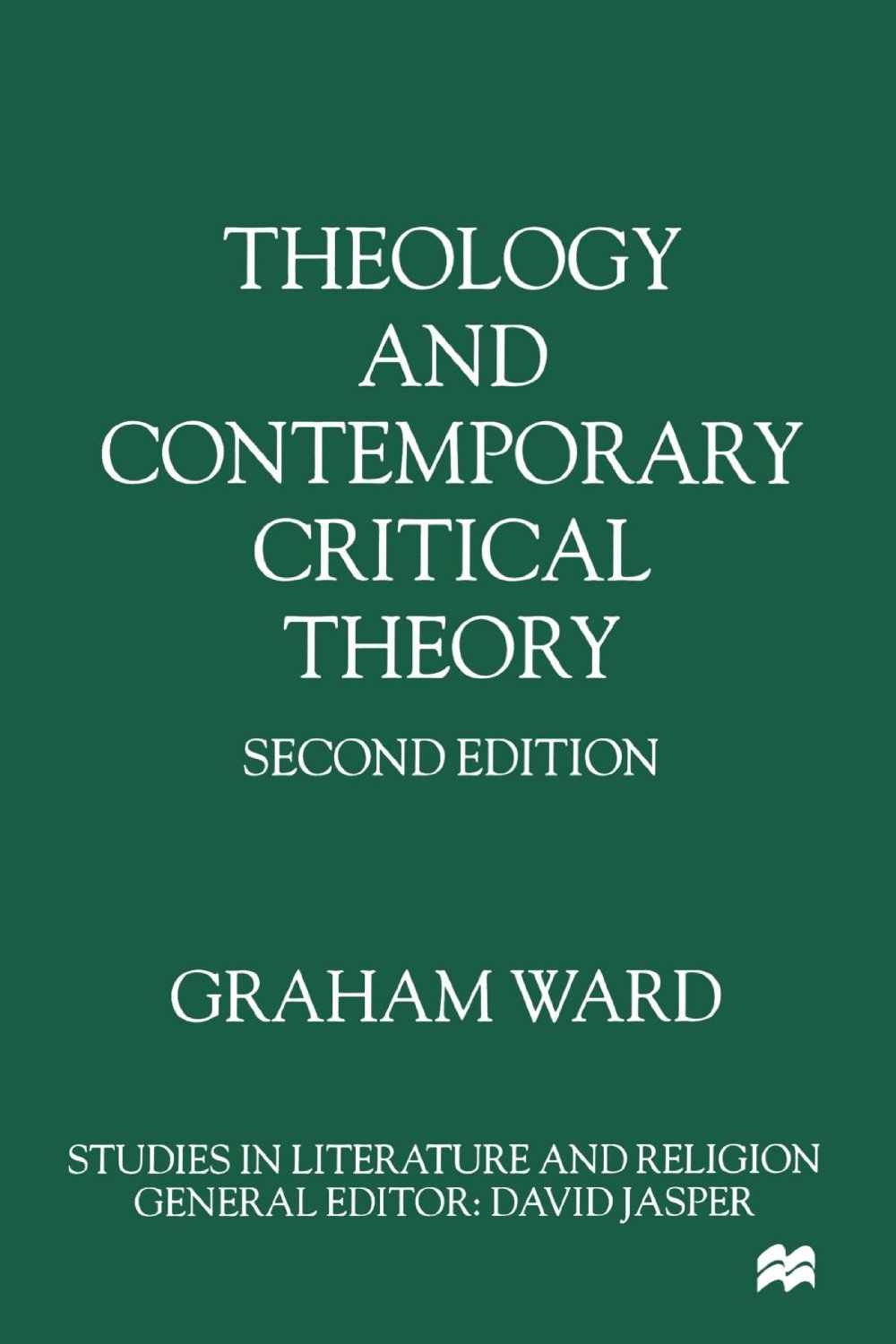
There is no conceivable limit to what critical theory cannot comment upon, nor what form that comment can take. Every discipline and cultural phenomenon is swept into its purview… (xviii)
Graham Ward, in Theology and Contemporary Critical Theory, seeks to bridge a gap between critical theorists and theologians. Critical theory is essentially various ways to look at how discourse is practiced through the means of socio-cultural factors. Yes, this is a simplified definition, but at its core critical theory engages with various practices of discourse in order to draw out the implications for how the conclusions may be reached. It calls into questions those conclusions by pointing out there may be more to the story.
In order to explore critical theory, Ward outlines the thinking of various contemporary theorists under representation, history, ethics, and aesthetics. These topics are each interesting in their own ways, and readers will be often surprised at the turns critical theorists take. Much of the thinking involved here is of interest, sometimes as much for how wrong it seems as for how enlightening it may be. There are some very weird findings from critical theorists, who are often involved in psychoanalysis and other projects to draw out the alleged sources of purported evidence.
Ward ends each chapter with insights into how the theories discussed may be applied to thinking about theology today. These conclusions are highly fruitful, as they demonstrate how even some approaches which seem at odds with Christianity in whole or in part may help shape theological thought. For example, issues of gender loom large and Ward suggests that critical theorists have jumped ahead of theologians in their thinking on the topic through explorations of how concepts of gender are formed. Whatever one’s thoughts regarding gender, it is true that theologians may do well to explore this topic further, whether from a critical (!) perspective or not.
One area readers may fault the work is that Ward, while engaging critical theory, is rarely critical himself. That is, he seems to adopt the findings (if psychoanalysis of entire fields of research may be called findings) of critical theorists without himself having a critical eye towards these same. However, that would be to try to make the book into something it is not. Ward’s project is to simply present critical theory and see how it might be applied to theology. That said, it would have been nice to have a chapter which engaged these theories. Those interested in the book should be aware that it really is the case that Ward essentially just reports on the theories and comments upon how theology might benefit from them.
Again, critical theory is far more complex than outlined above, but Ward has set for himself the monumental task of distilling it and applying it to theology, another field which he stresses touches upon all aspects of human life and experience. As such, readers should realize that although this book is engaging and compelling, there is far more work which can and should be done in this area.
Links
Be sure to check out the page for this site on Facebook and Twitter for discussion of posts, links to other pages of interest, random talk about theology/philosophy/apologetics/movies and more!
Source
Graham Ward, Theology and Contemporary Critical Theory (New York: St. Martin’s Press, 2000).
SDG.
——
The preceding post is the property of J.W. Wartick (apart from quotations, which are the property of their respective owners, and works of art as credited; images are often freely available to the public and J.W. Wartick makes no claims of owning rights to the images unless he makes that explicit) and should not be reproduced in part or in whole without the expressed consent of the author. All content on this site is the property of J.W. Wartick and is made available for individual and personal usage. If you cite from these documents, whether for personal or professional purposes, please give appropriate citation with both the name of the author (J.W. Wartick) and a link to the original URL. If you’d like to repost a post, you may do so, provided you show less than half of the original post on your own site and link to the original post for the rest. You must also appropriately cite the post as noted above. This blog is protected by Creative Commons licensing. By viewing any part of this site, you are agreeing to this usage policy.
Constantine’s Faith and the Myth of “Constantine’s Takeover”
 There is a narrative within some branches of Christianity (and some… “offshoots”) regarding church history. It is a narrative in which Constantine is seen as the great evil (whether intentionally or not) which corrupted Christianity. The narrative basically goes like this: Constantine rose to power, then everything went wrong in Christianity. He made Christianity the state religion, which introduced scores of nominal Christians into the church. He made service in the church a well-paying position, which corrupted the office of the ministry. He himself was probably not even a Christian!
So the story goes. Is it accurate?
From Narrative to History
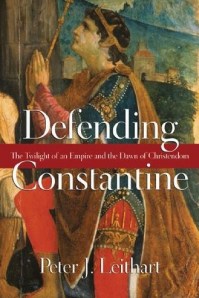
The question of Constantine is one of history. Too often, people have subjected Constantine to psychoanalysis, analyzing an ancient historical figure’s mental state to determine his motives. Historical study may indeed speculate about such things, but to suggest, as some do, that one may uncover some nefarious ancient plot to take over Christianity and lead it into heresy is to engage in writing historical fiction. So what may we actually learn from the historical accounts? Peter Leithart’s work, Defending Constantine: The Twilight of an Empire and the Dawn of Christendom 
Leithart notes that it seems clear that Constantine actually paid much deference to Christianity (Leithart, 93; 121ff; 128-129; 326-328, etc., cite below). He was keen to prevent major divisions within the Church which could have resulted, for example, from the Arian controversy. Hence, he called a council at Nicaea which would define Christian orthodoxy for centuries to come. Constantine himself likely favored the view of Arius, but when the Nicene Council ultimately came against Arianism, Constantine submitted to the defining of orthodoxy.
Constantine’s life appears to be one not of a plot to take Christianity over for political gain, but rather as a life lived struggling with newfound faith and attempting to integrate that faith into public policy. Alister McGrath notes that Constantine’s faith led him to legalize Christianity and sanction it, with some interesting and perhaps unforeseen side-effects:
The new imperial status of Christianity meant that its unity and polity were now matters of significance to the state. (McGrath, 139, cited below)
The much-discussed question of why, if Constatine’s faith were genuine, he would have waited until his deathbed to get baptized is easily answered by his belief that he should wait until the last possible moment to gain the purifying from sins which baptism would provide (Leithart, 299-300).
Frankly, the more one reads about Constantine, the more difficult it becomes to imagine him as someone whose faith was not genuine. Like any Christian, he had his faults–he was a sinner-saint–but he also worked through his position to try to spread and unite Christianity. Leithart notes that many of Constantine’s laws were “more often Christian in effect than in intent” (304). What he means by this is that many laws he made spring from a Christian worldview, though not being explicitly Christian themselves. For example, he outlawed gladiator shows–hardly something which can be said to be explicitly Christian–and this demonstrated Constantine’s genuine concern for human life and the “image of God” in humanity which was noted in yet another law he made (303-304).
In another work, a collection of essays on Apologetics in the Roman Empire
[The work] reveals an emperor who was able to give more substance to his faith than many clerics, and an apologist whose breadth of view and fertile innovations make it possible to mark him with the more eminent theologians of his age (275).
It’s time to set aside the notion that Constantine was somehow “faking it.”
 Constantine’s Takeover?
The “narrative” of Constantine has, unfortunately, often dipped into the notion that he was indeed a Pagan who overthrew traditional Christianity and condemned Christianity to political power-plays for centuries after his death. This notion simply does not line up with historical reality. Although Constantine’s enriching of the church’s coffers did lead to church positions becoming a political gain, it also provided a counter-balance to Imperial authority (Leithart, 304).
Moreover, Leithart argues that the notion that Constantine himself brought about so many wrongs to the church is historically fictitious: “[T]here was a brief, ambiguous ‘Constantinian moment’ in the early fourth century, and there have been many tragic ‘Constantinian moments’ since. There was no permanent, epochal ‘Constantinian shift'” (287). Indeed, the notion of church and state was something found seeded in Augustine’s writings (286) and although Constantine did bring about some monumental changes, the effects they had could only take place over vast amounts of time. It would be impossible to argue that the Catholic Church of the Medieval Period was directly the same or even the exact result of Constantine’s policy.
Finally, Constantine’s policies and actions “Baptized Rome” (Leithart, 301ff). He built churches, empowered bishops, called for unity, and deferred to church teaching. His laws, as noted above, were rooted in a genuinely Christian worldview and sprung from faith.
Conclusion: Defending Constantine
Was Constantine a perfect human? Obviously not. But was Constantine a Pagan who dramatically undermined Christianity; was he a usurper of the Church’s authority who did incalculable damage to Christianity? It does not seem so. Whatever your views on the matters, one must contend with strong historical evidence for the genuineness of Constantine’s faith. His policies indeed may have (and at points certainly did) damage the church, but was that his intent? Again, psychoanalysis of ancient figures is dubious, but the actions Constantine took were those of someone with genuine concern for the stability of Christianity. Most telling, perhaps, were his actions that were not explicitly stamped with Christianity but reflective of his background beliefs: by seeking to end violence, help alleviate poverty, and the like, he demonstrated his faith.
Links
Be sure to check out the page for this site on Facebook and Twitter for discussion of posts, links to other pages of interest, random talk about theology/philosophy/apologetics/movies and more!
Sources
Peter Leithart, Defending Constantine: The Twilight of an Empire and the Dawn of Christendom
Alister McGrath, Heresy: A History of Defending the Truth
Mark Edwards, Martin Goodman, and Simon Price, eds., Apologetics in the Roman Empire
SDG.
——
The preceding post is the property of J.W. Wartick (apart from quotations, which are the property of their respective owners, and works of art as credited; images are often freely available to the public and J.W. Wartick makes no claims of owning rights to the images unless he makes that explicit) and should not be reproduced in part or in whole without the expressed consent of the author. All content on this site is the property of J.W. Wartick and is made available for individual and personal usage. If you cite from these documents, whether for personal or professional purposes, please give appropriate citation with both the name of the author (J.W. Wartick) and a link to the original URL. If you’d like to repost a post, you may do so, provided you show less than half of the original post on your own site and link to the original post for the rest. You must also appropriately cite the post as noted above. This blog is protected by Creative Commons licensing. By viewing any part of this site, you are agreeing to this usage policy.
Sunday Quote!- Historical Criticism and What Prophets Would Have Done
 Every Sunday, I will share a quote from something I’ve been reading. The hope is for you, dear reader, to share your thoughts on the quote and related issues and perhaps pick up some reading material along the way!
Historical Criticism and What Prophets Would Have Done
Do Historical Matters Matter to Faith?
[R]edactional analysis is, of course, based on a number of presuppositions about Old Testament prophets and prophecy that cannot be proved, or disproved: (1) that a prophet/editor would not use the same concept or theme in more than one way… (2) that a prophet would not reuse, allude to, or elaborate upon his own (earlier) oracles… and (3) that a prophet would not proclaim anything that was not clearly relevant and perspicuous for his contemporaries ( Schultz 256, cited below)
There is great difficulty with each of these assumptions, as should be clear simply from reading through them. Although each is not necessarily without some merit–surely, for example, it is not an error to think that very often concepts are used in the same ways–the difficulty is when rather than becoming guides for interpretation, these points become areas around which to base limits on the possible meaning of various texts.
The book is full of insights like this throughout, and though I’m still reading through it, I would say I recommend it for the amount of information contained in it, along with the variety of its contents.
What do you think? Are these assumptions valid? How might historical critical methods impact how one reads the text? What presuppositions might be better suited to Christian scholarship regarding prophecy, if any?
Links
Be sure to check out the page for this site on Facebook and Twitter for discussion of posts, links to other pages of interest, random talk about theology/philosophy/apologetics/movies and more!
Sunday Quote– If you want to read more Sunday Quotes and join the discussion, check them out! (Scroll down for more)
Source
Richard Schultz, “Isaiah, Isaiahs, and Current Scholarship” in Do Historical Matters Matter to Faith?
SDG.
Honoring Giftedness- Women in David Weber’s science fiction
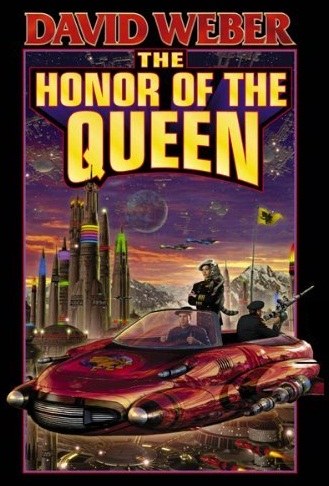 David Weber is the author of a few New York Times Bestselling science fiction series. One, the Honor Harrington series, follows a woman who starts off as a captain of a starship sent on routine (and initially boring) missions. The second book in the series, The Honor of the Queen
The two nations are complementarian in nature. Complementarianism is the theological belief that men and women are “complementary” in roles, which means that men should be in charge in the church and home. I have discussed it and the rival view that women should be ordained/treated as equals (egalitarianism) at length elsewhere [scroll down to see other posts].
What really struck me is that David Weber fairly presented firm theistic believers as a spectrum. In the future, the Christian Church has continued to reform and have splinter groups form because of this. Weber’s presentation of the issue showed that believers–even some who might be considered extreme–can be reasoned with and even persuaded to believe differently based upon evidence. Furthermore, he showed that even those who may line up on the side with which he disagrees are not all (or even mostly) blinded by faith or foolishness. Rather, although there are some truly evil and disillusioned people, Weber shows that many are capable of changing their position or at least acknowledging that rival views are worth consideration.
The most vivid portrayal of this theme is found in a conversation between Admiral Courvosier and Admiral Yakanov. Courvosier is from the same nation as Honor Harrington and wholly endorses his female officer in a position of command. They discuss Captain Honor Harrington:
[Yanakov responds to Courvosier’s question about his society’s reaction to Honor]: “If Captain Harrington is as outstanding an officer as you believe–as I believe–she invalidates all our concepts of womanhood. She means we’re wrong, that our religion is wrong. She means we’ve spent nine centuries being wrong… I think we can admit our error, in time. Not easily… but I believe we can do it.”
“Yet if we do[” Yanakov continues, “]what happens to Grayson [Yanakov’s world]? You’ve met two of my wives. I love all three of them dearly… but your Captain Harrington, just by existing, tells me I’ve made them less than they could have been… Less capable of her independence, her ability to accept responsibility and risk… How do I know where my doubts over their capability stop being genuine love and concern?” (96, cited below)
The exchange is characteristic of the way Grayson’s people are treated throughout the book. They are real people, capable of interacting with other views in honest ways. They feel challenged by a view contrary to their own. Some react poorly, and there are extremists who are blinded by hatred and anger. Yet all of them are treated as people with real concerns shaped by their upbringing and backgrounds.
Honor Harrington ends up saving Grayson, and at the end of the book, she is commended by the rulers of that planet. She talks to the “Protector” [read: king/president] of Grayson:
“You see,” [said the Protector] “we need you.”
“Need me, Sir?” [Responded Honor]
“Yes, Grayson faces tremendous changes… You’ll be the first woman in our history to hold land… and we need you as a model–and a challenge–as we bring our women fully into our society.” (419)
Weber thus allows for even ardent supporters of specific religious backgrounds to respond to reasoned argument and to change. They are capable of interacting on a human level and deserve every bit of respect as those who disagree with them. Again, there are those who are radicals and will not be reasoned with, but they are the minority and they do not win out.
The dialogue presented in this book provides some interesting insight into facets of the present dialogue between complementarians and egalitarians. David Weber’s fictional character presented a challenge to the Grayson’s notions of what it meant to be a woman by being an excellent officer and professional. There are, it seems, real “Honor Harringtons” out there, challenging preconceived notions of what it is to be a woman. When, for example, a woman takes on the role of leadership in the church and succeeds, that should not be dismissed as a fluke, but rather a challenge to a paradigm which may itself be undercutting women’s ability to succeed.
On a personal note, I have been challenged in exactly this way. When I was younger, I was a complementarian and was confronted by a woman who destroyed my presuppositions about what a woman “could do” spiritually. She showed that she could be a leader and present Christ to all without having to fit into role I defined for her. This real challenge caused me to realize that my notions of what a woman “should be” were themselves social constructs, not anything derived from the Bible. Like Yanakov, I had to rethink what my words and actions had done to perhaps limit the women around me. By God’s grace, this woman’s very existence forced me to rethink what I had assumed as truth and go back to God’s word to see where I had gone wrong.
David Weber’s own presentation of Honor Harrington as a paradigm-shattering woman is something that hits close to home for me. For you, dear reader, I think it is worth considering the same: who has challenged your view of what they are “supposed to be”? Is your view of someone’s giftedness directly drawn from the Bible or is it something that you’ve just always assumed? As for me, I think we need more Honor Harringtons in our lives.
Links
Be sure to check out the page for this site on Facebook and Twitter for discussion of posts, links to other pages of interest, random talk about theology/philosophy/apologetics/movies and more!
Check out my posts on egalitarianism (scroll down for more).
Source
David Weber, The Honor of the Queen
SDG.
——
The preceding post is the property of J.W. Wartick (apart from quotations, which are the property of their respective owners, and works of art as credited; images are often freely available to the public and J.W. Wartick makes no claims of owning rights to the images unless he makes that explicit) and should not be reproduced in part or in whole without the expressed consent of the author. All content on this site is the property of J.W. Wartick and is made available for individual and personal usage. If you cite from these documents, whether for personal or professional purposes, please give appropriate citation with both the name of the author (J.W. Wartick) and a link to the original URL. If you’d like to repost a post, you may do so, provided you show less than half of the original post on your own site and link to the original post for the rest. You must also appropriately cite the post as noted above. This blog is protected by Creative Commons licensing. By viewing any part of this site, you are agreeing to this usage policy.
Really Recommended Posts 9/26/14- Jesus Seminar, atheists and kids, and creationism!
 First, I gotta brag: I have a son! He was born 9/17 and he’s just the cutest darling ever. Yay! I’ve been greatly blessed.
Now, I have still put together some awesome posts for your persual, dear readers! Here we have a nice variety of topics from the need to realize the dangers of a hardened heart to the Jesus seminar to talking about atheism with kids (I’m sure this last one won’t be controversial). Check them out and let me know what you thought!
Chemostratigraphy: silent objector to ‘Flood Geology’– Young Earth Creationists often argue that the Noachian Flood is to be seen as the explanation for the layers of sediment we find all over the planet. Can this claim stand up to scrutiny?
Who Were the Jesus Seminar? Should anyone have taken them seriously?– Christians have long faced challenges thrown at the historical faith by historical critics like those in the Jesus Seminar. But should the Jesus Seminar really be (or have been) taken seriously? Check out this post which addresses some issues related to this group.
14 Ways for Christian Parents to Teach Kids about Atheism– How might we as Christians approach the topic of atheism when speaking with children? Natasha Crain provides some much-needed insights into this area. I think this is a must-read even for those who are not parents so that we can think about how to interact in age-appropriate ways.
The Dangers of a Hardened Heart– The heardening of one’s heart presents a number of dangers for both a life of faith and a life without faith. Eric Chabot addresses these dangers in this thought-provoking post.
Is Your View Falsifiable?– Luke Nix points out a number of helpful ideas regarding whether one’s view is falsifiable. Does this matter? Read the post for many insights related to falsifiability and the Christian life.
A Brief Musing on the “Prosperity Gospel” – Psalm 4:6-7
 I have been reading back through the Psalms, because, you know, it’s what the cool kids do. Anyway, I came upon a passage which I thought may have some relevance for the “Prosperity Gospel” teaching (check out this brief summary and critique of this movement):
“Many, LORD, are asking, ‘Who will bring us prosperity?’
Let the light of your face shine on us.
Fill my heart with joy
When their grain and new wine abound.” Psalm 4:6-7 [7-8 in Hebrew Bible]
The text may not immediately seem to have anything to say about the notion that God will grant us ‘health, wealth, and prosperity.’ However, I think it actually does serve as a brief refutation of this alleged “gospel.” I’ll break it down.
Many, LORD, are asking “Who will bring us prosperity?”
There are those who call out to anyone, seeking prosperity rather than seeking after the LORD. Rather than asking the King of the Universe to let His will be done, they seek out prosperity from whatever place it may come. The modern teaching of the “prosperity gospel” is a form of this, but it smuggles in the notion that God is going to provide such wealth to those who ask.
Let the light of your face shine on us.
Rather than asking the LORD for prosperity, the Psalmist David seeks only to have God “shine” on him. Happiness comes from the presence of God.
Fill my heart with joy when their grain and new wine abound.
Here is what I would consider the dramatic turnaround: the first quoted section speaks of how there are others who are seeking after wealth from wherever it may come. Now, David asks from God, the only true provider, to give joy to him even when those who seek such prosperity actually get it.
Thus, we have a very real contrast: those who seek wealth as opposed to those who realize that the rain falls even upon the wicked and so they should rejoice in the light of God’s presence. The difficulty is not purely that the “others” are seeking from others; rather it is that they are seeking prosperity (more literally “happiness”) from God rather than simply rejoicing in God’s presence and Word.
Am I on Track?
I decided to take the time to look up these verses in a commentary after writing the above to see if I may be on the right track. There’s something to be said for the notion that we shouldn’t be doing theology in a vacuum. Samuel Terrien, in his commentary on Psalms from the Eerdman’s Critical Commentary series, argues that Psalm 4 should be seen as an evening prayer, likely even sung in the bedroom/prayed as one was getting into bed. His comments on the relevant passage note that “the poet is… saddened by the discovery of a certain skepticism around [him]… Happiness… which is lacking around him, may be due to a satiety of a materialist kind… For the pious, however, happiness arises from a grateful acceptance of God’s presence” (98-99, cited below).
Again, we see that the problem is that we should be finding our joy in the presence of God rather than material blessings from wherever they may come. Those who seek “health, wealth, and prosperity” are in fact pursuing the latter rather than the former. Psalm 4 should serve as a corrective to the prosperity “gospel.”
Links
Be sure to check out the page for this site on Facebook and Twitter for discussion of posts, links to other pages of interest, random talk about theology/philosophy/apologetics/movies and more!
Source
Samuel Terrien, The Psalms: Strophic Structure and Theological Commentary (Grand Rapids, MI: William B. Eerdmans, 2003).
SDG.
——
The preceding post is the property of J.W. Wartick (apart from quotations, which are the property of their respective owners, and works of art as credited; images are often freely available to the public and J.W. Wartick makes no claims of owning rights to the images unless he makes that explicit) and should not be reproduced in part or in whole without the expressed consent of the author. All content on this site is the property of J.W. Wartick and is made available for individual and personal usage. If you cite from these documents, whether for personal or professional purposes, please give appropriate citation with both the name of the author (J.W. Wartick) and a link to the original URL. If you’d like to repost a post, you may do so, provided you show less than half of the original post on your own site and link to the original post for the rest. You must also appropriately cite the post as noted above. This blog is protected by Creative Commons licensing. By viewing any part of this site, you are agreeing to this usage policy.
Sunday Quote!- The Heartbeat and Delight of Christianity
 Every Sunday, I will share a quote from something I’ve been reading. The hope is for you, dear reader, to share your thoughts on the quote and related issues and perhaps pick up some reading material along the way!
The Heartbeat and Delight of Christianity
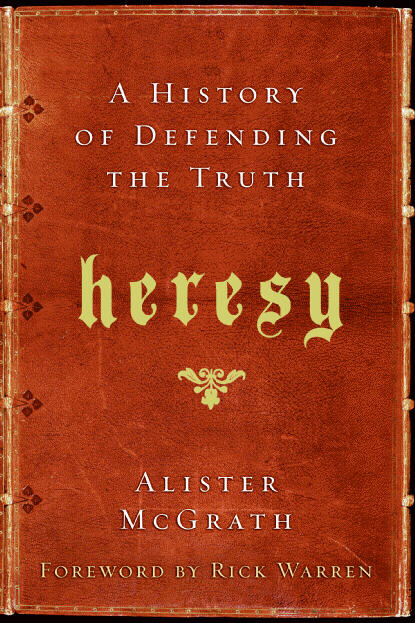
I re-read Alister McGrath’s Heresy: A History of Defending the Truth
If there is a heartbeat of the Christian faith, it lies in the sheer intellectual delight and excitement caused by the person of Jesus of Nazareth. Here is the one whom the church finds to be intellectually luminous, spiritually persuasive, and infinitely satisfying, both communally and individually. (17, cited below)
I found this passage quite powerful. Jesus is the heartbeat of Christianity, and our delight. Without Christ, there is no faith. Without our Lord, there is no salvation. But McGrath goes beyond that: Jesus of Nazareth is an intellectually compelling person, which drives us to seek out formulations to explain who He is; Christ is satisfaction and communal unity.
Have you thought about Jesus in these ways? How has Jesus spurred your intellect? In what ways have you recently delighted in the person of Jesus Christ?
Links
Be sure to check out the page for this site on Facebook and Twitter for discussion of posts, links to other pages of interest, random talk about theology/philosophy/apologetics/movies and more!
Sunday Quote– If you want to read more Sunday Quotes and join the discussion, check them out! (Scroll down for more)
Book Review: “Heresy: A History of Defending the Truth” by Alister McGrath– Check out my review of McGrath’s book.
Source
Alister McGrath, Heresy: A History of Defending the Truth
SDG.
Christian Discerment Regarding Music: A reflection and response
 I recently read a post which called for “discernment concerning the Christian music world.” The author, “EvangelZ” writes:
We have been told to be discerning in terms of what types of secular music to not assimilate into our minds if it is degrading, anti-Christ, and vulgar, to name a few. But what about the call to be discerning concerning the Christian music world?
I agree wholeheartedly with this sentiment. We should–must–be discerning when it comes to what music we engage with. Our engagement with both Christian music and “secular” music (whatever these categories even mean) should be reflective of the content of that music. The list EvangelZ provided above is hardly comprehensive, but a good place to start. If our “Christian” music is “degrading” or “vulgar,” that would certainly seem to exclude it from any use in a worship service, and should be a strong reason against our integrating that music into our lives.
Indeed, I would contend that the content of the music should be essentially the criterion (with notable exceptions below) for the music deemed acceptable for a Christian to consume. Of course, there should be a real acknowledgement that some people have different levels of discernment or resilience than others (can we eat the meat offered in sacrifice to false gods or not? after all, it’s just some meat left out for some false idol? [see here if you’re not sure what I’m referencing]).
However, after this introductory comment, EvangelZ spent the rest of the post discussing how we should us discernment regarding Christian music by way of the lives of those who made the music. For example, one issue highlighted was Tim Lambesis’ (singer for “As I Lay Dying”) apostasy. Now, setting aside the issue of whether any “As I Lay Dying” song could even possibly be used in a worship service (although I like metal, I hardly think it lends itself to corporate worship and singing praises), what I want to briefly touch on is exactly this notion: should our discernment apply to content of the music or to the lives of the musicians (or, of course, both)?
After reading the post, I wrote a comment, and I’d like to just reflect on what I wrote there a bit more. I’ll reproduce my comment, in part, here:
[T]he criteria given for discernment in “Christian” music are pretty much all matters of personal character of the musicians, not the actual content of the music. I’m wondering why on the one hand it is content (“secular” music) but on the other (“Christian” music), it is the people producing the music. This raises a number of questions for me:
1) Why the difference in criteria?
=> 1A) Is it because music functions didactically and so we should be aware of who is “teaching” us through music?
=> 1B) If so, then do we need to know about the lives of every single person who has written a song that we use in worship before we are able to use it?
2) If we are to use character as a criteria of discernment for worship music, does that not essentially mean we can’t use any music?
=> Explanation: everyone is a sinner in the process of sanctification, so by default anyone who has written a song we use in worship has still sinned.
=> 2A) Or is the issue simply unrepentant sin?
I think all of these questions are issues we must deal with as we consider the need for discernment in whatever music we listen to. I’ll provide a brief reflection on each issue I raised in these questions:
1) I am unconvinced that there should be any difference in our criteria for discernment when reflecting on Christian or “secular” music. Part of this is because I’m not sure such a dichotomy actually does exist (see here), and part is because I don’t know why such a distinction should exist.
1A) If we grant that hymns or music used in church functions didactically–as teaching–then perhaps a case could be made, but I think, abstractly, the content should once again be the ultimate judge of whether a teaching is good (or not).
1B) Because we cannot feasibly be required to know about the lives of all who write the music we listen to, this cannot serve as a viable criterion for discernment. Perhaps exceptions could be made in those cases wherein we do know something should (and what does “should” mean here?) disqualify one (i.e. I could see the knowledge that ‘the person who wrote this hymn is a satanist’ as a perfectly sound reason for not using a hymn), but one cannot realistically be expected to know about the lives of every single artist who writes any part of our hymnody (or music generally).
2) Because all are sinners, if character is a criterion for discernment, it would seem that all are disqualified.
2A) However, perhaps the qualification could be made that it is merely persistent, unrepentant sin which should disqualify one. But then one has muddied the waters via 1B again.
Thus, I think that for Christians, the best way to use discernment is to apply the truths of the Bible to the content of the music. We cannot realistically be expected to know the backgrounds of every individual who writes the music we may listen to or use in worship, and with the caveat noted above, I think the criterion simply should be the content–the lyrics–of the music. How do we analyze the content? Well I think there are a number of factors, including those rightfully noted above by EvangelZ. God’s revelation in Scripture and the gift of conscience should be our guides.
Links
Be sure to check out the page for this site on Facebook and Twitter for discussion of posts, links to other pages of interest, random talk about theology/philosophy/apologetics/movies and more!
On Christian Music– I reflect on the category of “Christian Music” and whether it is even a functionally helpful tool.
Engaging Culture: Demon Hunter’s “Extremist” and the Apologetic Task– I discuss the latest album from Demon Hunter and how music may act as an apologetic endeavor.
The Call for Discernment Concerning the Christian Music World– Be sure to read the post to which I responded here, and see what you think of their reasoning. I think this is an issue worth discussing.
SDG.
——
The preceding post is the property of J.W. Wartick (apart from quotations, which are the property of their respective owners, and works of art as credited; images are often freely available to the public and J.W. Wartick makes no claims of owning rights to the images unless he makes that explicit) and should not be reproduced in part or in whole without the expressed consent of the author. All content on this site is the property of J.W. Wartick and is made available for individual and personal usage. If you cite from these documents, whether for personal or professional purposes, please give appropriate citation with both the name of the author (J.W. Wartick) and a link to the original URL. If you’d like to repost a post, you may do so, provided you show less than half of the original post on your own site and link to the original post for the rest. You must also appropriately cite the post as noted above. This blog is protected by Creative Commons licensing. By viewing any part of this site, you are agreeing to this usage policy.
Is the historical Adam a “Gospel” issue?
 [Adam] must be a real individual who rebels against a clear divine directive at a specific moment in real time in a real place. (Barrick, 221, cited below)
One of the many issues which comes up related to the debate over the historical existence of Adam and Eve is the relation of Adam to Christ. Specifically: does undermining of the reality of Adam’s historical person undermine the work of Christ? Here, we’ll explore that question.
To be clear: we are not here exploring whether or not Adam really existed or whether there really was a real pair, Adam and Eve, from whom all humanity sprang. Rather, the question is this: if one denies the historical Adam and Eve, does one undermine the Gospel of Christ? Whatever one thinks of the answer to the question of the historical persons, one should consider the answer to this question as well. There are many issues to be addressed, so this post will only touch on a few. Write a comment to let me know your own thoughts or other issues you think of.
“Gospel” Issue?
In order to ask whether the history of Adam is a “Gospel” issue, we must first consider exactly what is meant by a “Gospel” issue. Definitions are important, and my own search for the meaning of this term yielded a whole range of definitions. Thus, I’m going to focus on a kind of working definition: to say something is a “Gospel” issue is to say that a specific doctrine, if untrue, undermines the Gospel [here meaning the glorious truth of salvation through Jesus Christ] and possibly one’s salvation itself. In the definitions I’ve found, and the use I’ve seen of this term, I believe this is an accurate understanding.
The Historical Adam as a Gospel Issue- Two Perspectives
The book, Four Views on The Historical Adam
the biblical description of sin depends entirely on the historicity of Adam. He must be a real individual… in real time in a real place… [denial of the historical Adam] has serious implications for the doctrine of Scripture and the doctrine of Christ… [quoting John Mahoney]: “If the first man is not historical and the fall into sin is not historical, then one begins to wonder why there is a need for our Lord to come and undo the work of the first man.” That makes the historicity of Adam a gospel issue. (Barrick, 221-222)
Barrick’s argument seems pretty clear: if no historical Adam lived and acted in the Fall, then what reason is there for Christ to come as the second Adam and restore humanity to God? If Barrick’s argument is successful, it does seem to establish that the historical Adam is indeed vital to an understanding of the truths of salvation.
Denis Lamoureux takes up the challenge of restoring confidence in the possibility of the Gospel without an historical Adam. His argument is instead that when “behaviorally modern humans” showed up (about 50,000 years ago), they broke their relationship with God (he does not make explicit how this may have occurred). Moreover, he argues that Barrick’s argument is unsuccessful because it is a non sequitor–the conclusion simply doesn’t follow. Is it really the case, Lamoureux asks, that the reality of sin “depend[s] entirely” upon a historic Adam (Lamoureux, 229)? Barrick’s argument was simply to appeal to the requirement for sin to be an action against God (itself a disputable claim–does sin really require action or is it possible to have [actually] sinful inclination?–but we’ll set that aside). Lamoureux notes that saying there was no historical Adam does not undermine or remove the reality of sinful activity.
Moreover, Lamoureux argues that Barrick’s argument conflates the historicity of Adam with the historicity of the resurrection (ibid). Not only that, but:
The gospel is about Jesus Christ, not Adam. The gospel is about the reality of sin, not how sin entered the world. The gospel is about Jesus dying on the cross for our sins, not specifically Adam’s sin. (ibid, 229)
Adam and the Gospel
So is the historical Adam a “Gospel” issue? Returning to our definition, it seems to me fairly clear that one’s salvation is not determined by whether one believes in a historical Adam. The foundation of faith is Christ raised from the dead (1 Corinthians 15). Lamoureux is right to point out that the Gospel is ultimately the message of our salvation through Jesus Christ. The first part of our definition, however, asks whether the grounding for this salvation might be undermined. Romans 5:12-21 seems to demonstrate that Christ came to save humanity as the second Adam, and that a real person, Adam, really did sin and created the need for salvation.
Lamoureux’s counter to this is to argue that such statements are divine accommodation–that is, Paul did believe in a single, historical Adam, but that doesn’t mean there was one. The debate over this must wait for a different post, but for now I’ll just say that although I think there is divine accommodation in God’s revelation, I’m not convinced it involves allowing for very clearly false statements (such as the claim that Adam existed if Adam did not exist).
So if there is no historical Adam, it seems to me that this entails at least a denial of the specificity of the text in Romans 5. Thus, one could say that this undermines the basis for salvation. However, if one is willing to strip down to the bare bones of “Mere Christianity,” might one still preserve the Gospel? At this point I say yes. The basis for our salvation is belief in Jesus Christ, not belief in Adam. This does not mean that I think the historical Adam is unimportant or non-existent. Rather, I would say that anyone who does wish to say the historical Adam is necessary for salvation has yet to demonstrate that claim.
Links
Be sure to check out the page for this site on Facebook and Twitter for discussion of posts, links to other pages of interest, random talk about theology/philosophy/apologetics/movies and more!
What options are there in the origins debate? – A Taxonomy of Christian Origins Positions– I clarify the breadth of options available for Christians who want to interact on various levels with models of origins. I think this post is extremely important because it gives readers a chance to see the various positions explained briefly.
Check out other posts on the origins debate within Christianity.
Sources
William Barrick, “A Historical Adam: Young-Earth Creation View” in Four Views on The Historical Adam
Denis Lamoureux, “Response from the Evolutionary View” in Four Views on The Historical Adam
SDG.
——
The preceding post is the property of J.W. Wartick (apart from quotations, which are the property of their respective owners, and works of art as credited; images are often freely available to the public and J.W. Wartick makes no claims of owning rights to the images unless he makes that explicit) and should not be reproduced in part or in whole without the expressed consent of the author. All content on this site is the property of J.W. Wartick and is made available for individual and personal usage. If you cite from these documents, whether for personal or professional purposes, please give appropriate citation with both the name of the author (J.W. Wartick) and a link to the original URL. If you’d like to repost a post, you may do so, provided you show less than half of the original post on your own site and link to the original post for the rest. You must also appropriately cite the post as noted above. This blog is protected by Creative Commons licensing. By viewing any part of this site, you are agreeing to this usage policy.
Sunday Quote!- Modern Warfare and the Power of God
Every Sunday, I will share a quote from something I’ve been reading. The hope is for you, dear reader, to share your thoughts on the quote and related issues and perhaps pick up some reading material along the way!
Modern Warfare and the Power of God
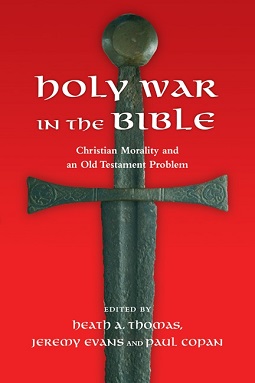
I’ve been reading through Holy War in the Bible: Christian Morality and an Old Testament Problem
Modernity is arguably no less brutal than the ancient world for conducting a secularized, technologized, indiscriminate form of war that excludes God from the kill zone on principle, thereby seducing the strong into believing that they are masters of their own destiny. Indeed, the biblical witness unblinkingly confronts modernity most sharply right at this point: “Assyria will not save us; we will not ride upon horses; we will say no more, ‘Our God’ to the work of our hands'” (Hosea 14:3) (66, cited below)
The so-called secularization of war has not somehow cleansed it of evil, but rather made the work of our hands the sole credit and often reason for war. Salvation comes not from others, but we turn to the work of our hands–cruise missiles, drone strikes, and the like–to wage war for resources, land, money, and the like. Has war become more or less justified? Is it somehow sanctified through “secularization”? I think this quote speaks powerfully to these notions. I’m about 1/3 of the way through the book now and I really have enjoyed it. It hasn’t quite been about the topics I expected, but it’s been more challenging and expanding in its vision for that reason.
Links
Be sure to check out the page for this site on Facebook and Twitter for discussion of posts, links to other pages of interest, random talk about theology/philosophy/apologetics/movies and more!
Sunday Quote– If you want to read more Sunday Quotes and join the discussion, check them out! (Scroll down for more)
Source
Stephen Chapman, “Martial Memory, Peaceable Vision: Divine War in the OT” in Holy War in the Bible: Christian Morality and an Old Testament Problem
SDG.

 J.W. Wartick - Reconstructing Faith