theology
Quick Link: N.T. Wright on Women in the Ministry
Eminent New Testament scholar N.T. Wright, former Bishop of Durham, is an egalitarian. Yes, he knows Pauline writing, and he believes women can (and should) be pastors. Check out his wonderfully lucid article on the topic: here.
Here are some choice quotes:
Mary Magdalene and the others are the apostles to the apostles. We should not be surprised that Paul calls a woman named Junia an apostle in Romans 16.7. If an apostle is a witness to the resurrection, there were women who deserved that title before any of the men.
In regards to 1 Timothy 2:
The key to the present passage, then, is to recognise that it is commanding that women, too, should be allowed to study and learn, and should not be restrained from doing so (verse 11). They are to be ‘in full submission’; this is often taken to mean ‘to the men’, or ‘to their husbands’, but it is equally likely that it refers to their attitude, as learners, of submission to God or to the gospel – which of course would be true for men as well. Then the crucial verse 12 need not be read as ‘I do not allow a woman to teach or hold authority over a man’ – the translation which has caused so much difficulty in recent years. It can equally mean (and in context this makes much more sense): ‘I don’t mean to imply that I’m now setting up women as the new authority over men in the same way that previously men held authority over women.’ Why might Paul need to say this?
Now if you were writing a letter to someone in a small, new religious movement with a base in Ephesus, and wanted to say that because of the gospel of Jesus the old ways of organising male and female roles had to be rethought from top to bottom, with one feature of that being that the women were to be encouraged to study and learn and take a leadership role, you might well want to avoid giving the wrong impression. Was the apostle saying, people might wonder, that women should be trained up so that Christianity would gradually become a cult like that of Artemis, where women did the leading and kept the men in line? That, it seems to me, is what verse 12 is denying. The word I’ve translated ‘try to dictate to them’ is unusual, but seems to have the overtones of ‘being bossy’ or ‘seizing control’. Paul is saying, like Jesus in Luke 10, that women must have the space and leisure to study and learn in their own way, not in order that they may muscle in and take over the leadership as in the Artemis-cult, but so that men and women alike can develop whatever gifts of learning, teaching and leadership God is giving them.
Really, check out the rest of his article.
Check out my argument for women pastors: here.
Book Review: “No Other God: A Response to Open Theism” by John Frame
 I recently finished No Other God
Areas of Agreement
One of the strengths of Frame’s book is how clear his thinking is. His style of argumentation is precise, and he clearly lays out what he considers evidence for his positions. He is unafraid to make statements with huge implications.
A particularly interesting aspect of Frame’s work was a brief historical look at the roots of Open Theism, leading it back to the Socinianism. Frame points out that advocates of Open Theism tend to portray their view as the “new theology on the block” despite the fact that it has been around (and rejected) for quite some time.
I believe Frame is correct when he argues against the centralization of any one attribute of God. Specifically, the centralization of love on Open Theism tends to ignore other important attributes of God (49ff). (Interestingly, Frame’s own account of God unnecessarily over-emphasizes Sovereignty, though he disguises this by calling it “Lordship.)
Frame levels strong critiques against Open Theism’s reading of Scripture. Open Theists tend to advocate the “straightforward” reading of texts which help their case. One of Open Theist’s favorite passages is God testing Abraham. Yet Frame rightly notes that if there is a straightforward reading of the text, then God did not know the present truth of Abraham’s heart, whereas Open Theists attempt to use this to support God not knowing the future (47). Further, if God was trying to figure out how Abraham would act in the future, then He was trying to do something He couldn’t (determine what the libertarian free choices of humans would be) according to Open Theism. So the story’s straightforward reading does not work to support Open Theism. Frame urges a similar examination of other passages, though he doesn’t expand on it.
Areas of Disagreement
Despite these areas of agreement, I vehemently oppose Frame’s position on several issues. Most notably, on theistic determinism, compatibilism, and libertarianism.
First, libertarianism. Frame correctly notes that the core of Open Theism is the assumption of libertarianism. Yet his critique of libertarianism is wrongheaded. He caricatures libertarians as believing that choices are made in the absence of any motivation. He writes, commenting on the libertarian view, “if our decisions are caused by anything or anyone (including our own desires), they are not properly our decisions… to be responsible, we must be able to do otherwise” (121). Yet this is explicitly not libertarianism. Peter van Inwagen, for example, explicates libertarianism by saying “…that someone’s acts are undetermined does not entail that they are uncaused” (van Inwagen, An Essay on Free Will, Oxford: 1983, p. 14).
But Frame explicitly centers his critique of libertarianism on a contra-causal account of freedom, saying, for example, “If guilt presupposed libertarian freedom, then in order to show that Hubert [a man accused of robbing a bank] is guilty, the prosecutor would have to show that his decision to rob a bank had no cause…” (126). But again, libertarians deny this very type of contra-causal freedom, so Frame is arguing against a straw man. Because Frame thinks libertarianism is so utterly central to Open Theism, this means that the core of his critique fails to hit home.
The problem with Frame’s counter against libertarianism is that it barely touches the surface of the philosophical arguments for the position. He correctly rails against the idea that our actions are just random occurrences, but incorrectly assumes that this is libertarianism.
Finally, the greatest area of disagreement I have with Frame is on his view of omnidetermination. Consider the following two quotes:
“The uniform witness of Scripture is that the evils of this life come from God” (140).
“…[I]t is important to see that God does in fact bring about the sinful behavior of human beings, whatever problems that may create in our understanding” (68).
I’d be curious to see how Frame reconciles these assertions with the constant witness of Scripture that God is just; fair; good; opposed to evil; etc. Frame utilizes several verses to support his position, but he makes primary those which say God uses “all things” and verses which say calamities are from God. But regarding the former, this can easily refer simply to permissive will, and regarding the latter, the verses he uses are out of context (and even were one to grant the “straightforward reading,” one could counter by saying the calamities are not every evil action, but merely those things which God uses–i.e. storms, other nations, etc.–to instruct His people). Frame, like many theological determinists, is not building even on sand, but on a void. Literally saying that God causes evil is so utterly repugnant and contrary to Scripture that this view overshadows all the good things Frame has to say.
Conclusions
Ultimately, No Other God is on target in a few ways, but it is wildly gunning the wrong direction on too many issues. Frame’s philosophical case against libertarianism is off the mark, he fails to deal with the strong philosophical arguments for libertarianism, and his view that God literally causes evil is baseless. Interestingly, while I went in reading this book looking for some good arguments against Open Theism, I came out with the realization that theological determinism is a far more dangerous doctrine indeed.
SDG.
Check out other posts about Open Theism here.
John Frame,No Other God
——
The preceding post is the property of J.W. Wartick (apart from citations, which are the property of their respective owners) and should not be reproduced in part or in whole without the expressed consent of the author. All content on this site is the property of J.W. Wartick and is made available for individual and personal usage. If you cite from these documents, whether for personal or professional purposes, please give appropriate citation with both the name of the author (J.W. Wartick) and a link to the original URL. This blog is protected by Creative Commons licensing. By viewing any part of this site, you are agreeing to this usage policy.
The Unacknowledged Teachers: an argument for women pastors.
 An argument for the position of egalitarianism (the position that women are not to be restricted from certain offices in the church):
1) Women say things in Scripture which are not condemned (cf. Deborah’s song, Mary’s Magnificat which is used in liturgical worship, Ruth’s words which are used in wedding ceremonies, Esther’s story and her actions, etc., etc.). [Edit: this premise must be made more clear. The things women say in Scripture are not simply not condemned, but are often explicitly centralized. The Song of Deborah; Ruth’s words to Naomi; the magnificat; etc. These words are made into liturgies and used for teaching. Yet they are the words of women. Thanks to Adam at Unworthy Yet Redeemed for pointing out this flaw in the argument. Consider P1 to be modified to “Women say things in Scripture which are centralized and utilized for church liturgies and teaching.”]
2) All Scripture is useful for teaching, rebuking, correcting, and training in righteousness (1 Timothy 3:14-17).
3) Those things which women say in Scripture teach us truths useful for teaching, rebuking, correcting, and training in righteousness (1, 2).
4) If we use truths women teach us in Scripture to teach doctrine/righteousness/etc., we should not exclude women from the ministry. (Premise)
5) We use truths women teach us in Scripture to teach doctrine/righteousness/etc. (1-3)
6) Therefore, we should not exclude women from the ministry (4, 5, modus ponens).
Defense of premise 1: I cited examples in the argument itself. See Judges 4-5; Luke 1:46-56; Ruth 1:16-17 (and the rest of the book); the book of Esther; these are just a few examples.
Defense of premise 2: Again, directly from Scripture: 1 Timothy 3:14-17.
3 follows from 1 and 2.
Premise 4 is likely to be the most controversial of these premises. The position of those who hold that women should not be ordained into the office of the ministry (complementarianism) is generally based upon the suggestion that women should not teach doctrine in a public setting (see more on this below). Therefore, I think that premise 4 must be accepted by complementarians because a denial of this premise would undermine their position. In other words, if one wants to hold that premise 4 is false, they would have to provide a different reason to exclude women from the ministry. Premise 4 simply states that which the sides agree upon. Ultimately, the strength of premise 4 will depend upon one’s definition of “the office of the ministry.” However, if one’s definition of “office of the ministry” includes “teaching”; “teaching doctrine”; “rebuking” [those who need correction]; etc., then premise 4 is correct.
Further, premise 4 could be weakened so that its conclusion would be not quite as strong. Instead, one could reword it as:
4′) If we use truths women teach us in Scripture to teach doctrine/righteousness/etc., we should not exclude women from teaching doctrine/righteousness/etc. to others.
This modified premise will not yield the conclusion that women should not be excluded from the “office of the ministry” but it would yield the conclusion that women should be allowed to teach doctrine, righteousness, and other things no matter who the audience happens to be.
Premise 5 follows from 1-3. 6 follows via modus ponens from 4 and 5. The same could be said for 4′ and the perceived 5′ and 6′.
The language used by those who are against women preaching must be very carefully selected because they do not wish to say women cannot be teachers at the university, or that they cannot teach elsewhere–rather, it is restricted to the church. Yet the argument above would be specifically useful for permitting women to teach in the church. After all, their words are used to teach continually. Whenever the Magnificat is sung or spoken, we use the words of Mary to teach us truths about Jesus. Whenever we read the story of Ruth or use her words in our wedding vows, we use them authoritatively.
Another way we could put this argument would be “If it is okay for women to compose sections of the Bible, perhaps we should let them teach it?” (quoted from Lamb, 64, citation below). I think the answer to the question is eminently obvious: yes
Therefore, women are already acting as a kind of “unacknowledged teacher” in the church: their very words are being used to tell us about God. I conclude that women should not be excluded from the ministry.
Note on terminology: by “teach” I am explicating the role of “teacher” in the church–the pastor.
Part of this argument was developed from a reading of God Behaving Badly by David Lamb (Downers Grove, IL: InterVarsity Press, 2011), 64-65, wherein he states “If it is okay for women to compose sections of the Bible, perhaps we should let them teach it?” (64).
SDG.
——
The preceding post is the property of J.W. Wartick (apart from citations, which are the property of their respective owners) and should not be reproduced in part or in whole without the expressed consent of the author. All content on this site is the property of J.W. Wartick and is made available for individual and personal usage. If you cite from these documents, whether for personal or professional purposes, please give appropriate citation with both the name of the author (J.W. Wartick) and a link to the original URL. This blog is protected by Creative Commons licensing. By viewing any part of this site, you are agreeing to this usage policy.
Against Open Theism: The Infinite Knowledge of God
 Psalm 147:5
“Great is our Lord, and of great power: his understanding is infinite” (KJV).
“Great is our Lord, and abundant in power; his understanding is beyond measure.” (ESV)
” גדול אדונינו ורב־כח לתבונתו אין מספר׃” (Hebrew Old Testament)
Infinite Knowledge
Within Scripture we find that God knows all things. But here, in the Psalms, we read that God’s knowledge is “infinite.” Of course, this is a translation of the Hebrew, which says “…his understanding is without number/measure.” But this can also be correctly translated simply as the KJV does, “His understanding is infinite.” Thus, within Scripture, we have a picture of God’s knowledge as infinite or without number.
The Argument
1) If God’s knowledge is infinite/without number/unable to be counted, then God’s knowledge cannot be increased (it’s infinite).
2) God’s knowledge is without number.
3) God’s knowledge cannot be increased.
4) Open Theism asserts that God’s knowledge can be increased.
5) Therefore, Open Theism is false.
Defense of Premises
Premise 1 can be defended in a similar fashion as one would argue against actual infinites in the Kalam Cosmological Argument. Basically, we cannot add up to infinite. Nor, if something is actually infinite, can we increase or decrease its “number” in any way. We cannot add to infinity and increase it, nor can we take away one item from an infinite set and decrease it to some finite number. Therefore, if God’s knowledge is infinite, it is complete–it cannot be increased.
Premise 2 simply asserts what the Bible passage says.
Premise 3 follows from 1 and 2 deductively.
Premise 4 follows from the core of Open Theism. On Open Theism, God knows all things which have happened and are happening, but he does not necessarily know what will happen until it does happen. Therefore, God’s propositional knowledge would continually be increasing. Each day, he would learn an astounding number of truths which he did not previously know.
Premise 5 follows from 3 and 4; if 3 is true, 4 cannot be true. Yet 3 is true, so 4 cannot be true.
Therefore, Open Theism is false.
A Potential Rebuttal
Can the Open Theist get out of this argument? One way would be to challenge that the Psalm is not claiming God knows an actually infinite number of propositions, but simply that conceptually, God’s knowledge is so far beyond our own it appears to be infinite.
I would respond to this counter-argument by challenging the Open Theist to successfully read that off the Hebrew, which literally says “without number”/”infinite.” Open Theism, by definition, would have to entail God knowing only a finite number of propositions. If God did not know only a finite number of propositions, then His knowledge could not increase (it would be infinite). Thus, on Open Theism, the number of propositions God knows would increase by the second/minute/day. So the Open Theistic reading of Psalm 147:5 would have to read it like “[God’s] knowledge is unlimited; it increases forever.” But that reading is not justified by the text.
[Edit: Note the comment section for some great discussion of this post, wherein two commentators provided a “way out” for the Open Theist regarding my argument and a denial of premise 4.]
This is part of a series I’ve written against the doctrine of Open Theism. If you’d like to read more, check out the original post for discussion and links.
SDG.
——
The preceding post is the property of J.W. Wartick (apart from citations, which are the property of their respective owners) and should not be reproduced in part or in whole without the expressed consent of the author. All content on this site is the property of J.W. Wartick and is made available for individual and personal usage. If you cite from these documents, whether for personal or professional purposes, please give appropriate citation with both the name of the author (J.W. Wartick) and a link to the original URL. This blog is protected by Creative Commons licensing. By viewing any part of this site, you are agreeing to this usage policy
Against Open Theism: Definitions
 I’ve encountered Open Theism a number of times in my readings and online. Many people I respect greatly fall under the category of “Open Theists.” Greg Boyd, for example, wrote one of the first apologetic books I ever read, yet he is an ardent Open Theist. Yet the doctrine of Open Theism is one with which I disagree vehemently. Therefore, I’m going to write several posts outlining a series of arguments against the doctrine.
Definitions
Open Theism: The doctrine that God, through his own freedom and sovereignty, chose to create free creatures (humans) which could make truly free decisions. Because God made these free creatures, he freely chose to limit his knowledge of the future, such that he would not pre-ordain their actions. Therefore, God knows only those things which God unilaterally brings about.
Another Definition
From http://www.opentheism.info/, a site collecting information and advocating Open Theism (endorsed by John Sanders, a well known proponent of the view) we can examine a 5-part definition:
1) “In freedom God decided to create beings capable of experiencing his love.” (emphasis theirs)
2) “God has, in sovereign freedom, decided to make some of his actions contingent upon our requests and actions. God elicits our free collaboration in his plans. Hence, God can be influenced by what we do and God truly responds to what we do.” (emphasis theirs)
3) “God has chosen to exercise general rather than meticulous providence, allowing space for us to operate and for God to be creative and resourceful in working with us. It was solely God’s decision not to control every detail that happens in our lives.”
4) “God has granted us the type of freedom (libertarian) necessary for a truly personal relationship of love to develop. ”
5) “God knows all that can be known given the sort of world he created… in our view God decided to create beings with indeterministic freedom which implies that God chose to create a universe in which the future is not entirely knowable, even for God. For many open theists the ‘future’ is not a present reality-it does not exist-and God knows reality as it is.”
(Again, please note these are quoted verbatim from sections on http://www.opentheism.info/; I do not claim credit for these 5 steps of the definition.)
Areas of Disagreement/Agreement
There are many areas of agreement I can share with the Open Theist. For example, I agree that God created free creatures, who have libertarian free will (1 and 4). I agree that God has not predetermined all future events (3). I agree at least in some sense that God’s actions are contingent upon our own (2)–but that’s where the differences begin.
I disagree with Open Theists on an unqualified 2 and 5. It is my belief that:
A) Future Events are knowable
B) God knows the outcome of all future events before they happen.
C) God’s knowledge of the future allows him to take into account our free choices and respond to them from eternity.
One final area of disagreement would be with the implicit idea within Open Theism of divine temporality. I believe:
D) God is essentially timeless.
What’s at Stake
“Okay, all this is well and good,” you may say, “but what’s the payoff? What’s really at stake in this debate?”
Fair questions! There are some who argue that Open Theism is a heresy, period. A simple Google search turns up dozens of articles and comments calling the doctrine a heresy. Several have attempted to ban Open Theists from evangelical circles (the ETS voted to keep two prominent Open Theists within their ranks; others have lobbied to call it heretical).
I do not think that Open Theists are heretics. While I disagree with their views, I think that they have some very good arguments for their position. I do think, however, that the Scriptural evidence excludes Open Theism from possibility. While there are many passages which could be utilized to argue for the position of Open Theism, I believe those passages which exclude the position take priority, and therefore the passages appearing to advocate the position are to be interpreted as use of metaphors or anthropomorphism.
Other Posts in the Series
This post will also serve as a host for links to other posts in the series. View them below, with brief descriptions of their content:
God’s Infinite Knowledge– Argues that Scripture clearly states God’s knowledge is infinte/without number/unlimited. Yet, on Open Theism, God’s knowledge increases, and would therefore have to be finite. Concludes Open Theism is false.
Scrooge and God’s knowledge of the future– Addresses one of the main arguments for Open Theism–that God changes his mind or repents of certain actions.
Book Review: “No Other God: A Response to Open Theism” by John Frame– I review John Frame’s work on open theism. Interestingly, Frame combats open theism with the opposite extreme: theological determinism, a view which I disagree with as adamantly (or more) than I do open theism.
——
The preceding post is the property of J.W. Wartick (apart from citations, which are the property of their respective owners) and should not be reproduced in part or in whole without the expressed consent of the author. All content on this site is the property of J.W. Wartick and is made available for individual and personal usage. If you cite from these documents, whether for personal or professional purposes, please give appropriate citation with both the name of the author (J.W. Wartick) and a link to the original URL. This blog is protected by Creative Commons licensing. By viewing any part of this site, you are agreeing to this usage policy
The end of it all…
 There’s a lot of confusion about endtimes in our world. It isn’t helped by the fact that there are false prophets springing up all around us, trying to tell us that which is to come. The recent controversy over Harold Camping’s prediction that the world would end on May 21st has me thinking about the study of end times (eschatology).
It’s an area I admit I haven’t studied much. The subject is confusing. There is a staggering array of views about what will happen in the end. The book of Revelation, from which we draw much of our knowledge over what will happen in the end times, can be greatly confusing to both the uninitiated and the scholar.
There are two major themes upon which I’d like to focus: knowledge of the end and our behavior at the end.
1) Knowledge of the end
Thinking about the apocalypse–the end of the world–is a tough issue. Like I said, there is a lot of diversity on the subject. As such, it is important for Christians to look to the Bible to see what we can know about the end. The key is to remember that must always go back to the Bible to see what it says about a subject before we believe what someone tells us it may say.
We are warned by Jesus in Matthew that there will arise false prophets (Matthew 24:24). Harold Camping is one such false prophet. He has distorted the truth of Scripture to gain followers.
Perhaps the most telling verse in the Bible which speaks against us being able to know when the end will come is Matthew 24:36, in which Jesus Himself says “But about that day or hour no one knows, not even the angels in heaven, nor the Son, but only the Father.” If that’s true, then how would any other human know? Not even Christ, in his state of humiliation, could tell us when the last day would come!
The bottom line is that we can’t know and we won’t know when the last days have arrived–not until Jesus Himself is here.
2) Behavior at the end
Suppose for a moment we are at the last days; what should our attitude be? The resounding chorus in Scripture is that we should be diligent and ready, but we should continue to spread God’s Kingdom. Looking back at the Matthew 24 passage, Jesus tells us, ““Therefore keep watch, because you do not know on what day your Lord will come… Who then is the faithful and wise servant, whom the master has put in charge of the servants in his household to give them their food at the proper time? It will be good for that servant whose master finds him doing so when he returns” (24:42, 45-46).
So our attitude should be one of the watchful servant: ready for Christ to come, but not letting that distract us from the work He has given us. Rather than put up billboards and go around telling everyone the end is nigh, our task is to continue what should be our “business as usual”–spreading the Word, taking care of the needy, and living our lives as Christians.
Conclusion
It is easy to get caught up in the “end times” controversies. I admit that often when I hear of such predictions, I am more diligent than usual in remembering to repent of my sins. But what does that tell me? It tells me that I need to be more diligent about that at all times. For we need to be ready when Christ does come. A life of readiness for Christ means a life of spreading the Good News about Him to all people. It means living a life of repentance and reconciliation to God. We may not know when the end will come, but it is coming–and we will experience it either in this life or the next.
SDG.
Links
Check out this blog post by Austin which discusses the Camping controversy: here.
News article discussing Camping’s befuddlement about his failure: here.
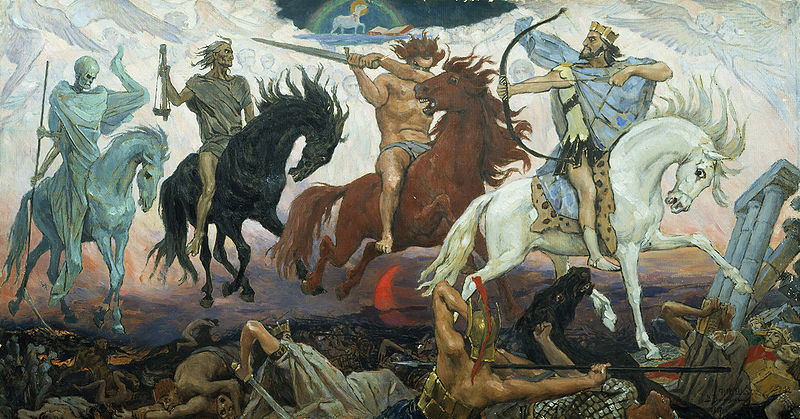
Image: “Four Horsemen of the Apocalypse” by Viktor Vasnetsov, 1887.
——
The preceding post is the property of J.W. Wartick (apart from citations, which are the property of their respective owners) and should not be reproduced in part or in whole without the expressed consent of the author. All content on this site is the property of J.W. Wartick and is made available for individual and personal usage. If you cite from these documents, whether for personal or professional purposes, please give appropriate citation with both the name of the author (J.W. Wartick) and a link to the original URL. This blog is protected by Creative Commons licensing. By viewing any part of this site, you are agreeing to this usage policy.
Awesome Person of the Bible: Michael
 There are few persons (using the word “person” here in the broad sense as opposed to meaning simply “humans”) in the Bible more awesome than Michael the Archangel. He only shows up a few times, but those times in which he does appear, he is one bad (read: good) dude. Seriously, check out the three major places he shows up:
1) Daniel 12:1: “At that time Michael, the great prince who protects your people, will arise. There will be a time of distress such as has not happened from the beginning of nations until then. But at that time your people—everyone whose name is found written in the book—will be delivered.”
You read that right. The archangel Michael is the prince of God’s chosen people. And by prince, we don’t mean that sissy version of a prince who’s always running around wishing he wasn’t king or being stupid. We mean he’s the ruler, protector, and guide of Israel. He protects them until God’s chosen people are delivered, according to God’s plan.
I know, “So what? There are a bunch of princes out there. Big deal.” Fine, but what about:
2) Jude 1:9: “But even the archangel Michael, when he was disputing with the devil about the body of Moses, did not himself dare to condemn him [the devil] for slander but said, ‘The Lord rebuke you!'”
Oh yeah, that’s right. The archangel Michael fought with SATAN over Moses’ body. Not only that, but he won the fight. How did he win? By invoking the name of the Lord, YHWH. You may be saying “Wow, that’s not a very big deal. I could probably do that.” Think so? How about:
3) Revelation 12:7-9: “Then war broke out in heaven. Michael and his angels fought against the dragon, and the dragon and his angels fought back. But he was not strong enough, and they lost their place in heaven. The great dragon was hurled down—that ancient serpent called the devil, or Satan, who leads the whole world astray. He was hurled to the earth, and his angels with him.”
Uh huh. Try that one on for size. First off, Michael’s an archangel. That, on its own, makes you awesome. But Michael isn’t just some rank-and-file archangel, he is an archangel out to kick some massive tail. Michael is just chilling out in heaven one day, picking his teeth with a toothpick made of demon’s bone, when suddenly war breaks out between God and Satan. I don’t know about you, but I’d be running the opposite direction. What does Michael do? He gets his gang of burly warrior-angels and fights Satan and the demons. And notice what the text tells us about Michael: “[Satan] was not strong enough, and they lost their place in heaven.” Yup, Michael is more powerful than Satan himself. He comes along and literally hurls Satan out of heaven and down to the earth. I don’t know about you, but I think that is pretty awesome.
Archangel Michael, you are a certified “Awesome Person of the Bible.”
SDG
———
The preceding post is the property of J.W. Wartick (apart from citations, which are the property of their respective owners) and should not be reproduced in part or in whole without the expressed consent of the author. All content on this site is the property of J.W. Wartick and is made available for individual and personal usage. If you cite from these documents, whether for personal or professional purposes, please give appropriate citation and provide a link to the original URL. By viewing any part of this site, you are agreeing to this usage policy.
“Black Swan”: A Christian Analysis
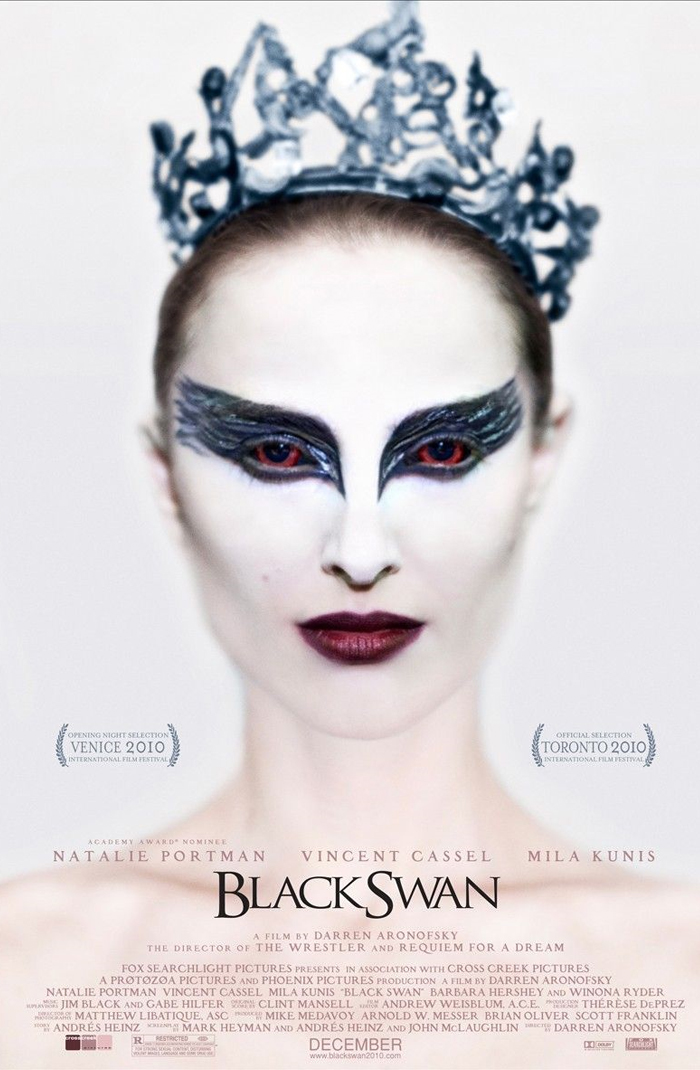 “Black Swan” is, in a word, “disturbing.” There is no doubt that the film is well made, and that Natalie Portman pulls off a stunning performance. Rather than reviewing it as a movie worth seeing, I thought I’d comment on it from a Christian perspective. In what follows, there will be spoilers.
What kind of thoughts can the Christian take away from a movie like “Black Swan”? I think the most obvious point is that the Christian can reflect on the nature of sin. What will things of this world drive us to? In her pursuit of perfection, Nina (Natalie Portman) is driven to the depths of her soul’s darkness. She is lead to violent fantasies (it’s unclear as to whether much of the violence is real or not) and to sexual depravity. It all culminates in her self-destruction, sacrificing her life for the “perfect” performance of “Swan Lake.”
I think we can see similar themes in our own lives as Christians. We often pursue worldly passions–among them a well-paying career; a sexual sin; an addiction; or the like–rather than focusing on that which matters: our Lord. Yet Christians even have this very idea built into the fabric of their belief system: we are sinners, with the capacity for great evil within us. Indeed, we are “originally sinful” and “totally depraved”, by nature we are sinful and unclean. “Black Swan” poignantly portrays this. An innocent girl is driven to the depths of hell in her pursuit of the world. It’s maddening, it’s horrifying, it’s disturbing. Despite this, in a way, the story draws us in. We can relate to the obsession with the world in ways that should scare us. Perhaps that’s why I found “Black Swan” so frightening. It wasn’t a horror movie by any means–it has its thrills and chills–but mostly, the fear is of the reality that could be. Could we become the “Black Swan” ourselves?
Now, I’m not suggesting “Black Swan” is a Christian film. It has sin of almost every imaginable kind portrayed, sometimes graphically. My point is that Christians can take away a message from the movie. The pursuit of the world will lead only to darkness… a “perfection” which can only destroy.
———
The preceding post is the property of J.W. Wartick (apart from citations, which are the property of their respective owners) and should not be reproduced in part or in whole without the expressed consent of the author. All content on this site is the property of J.W. Wartick and is made available for individual and personal usage. If you cite from these documents, whether for personal or professional purposes, please give appropriate citation and provide a link to the original URL. By viewing any part of this site, you are agreeing to this usage policy.
Our Longing For God
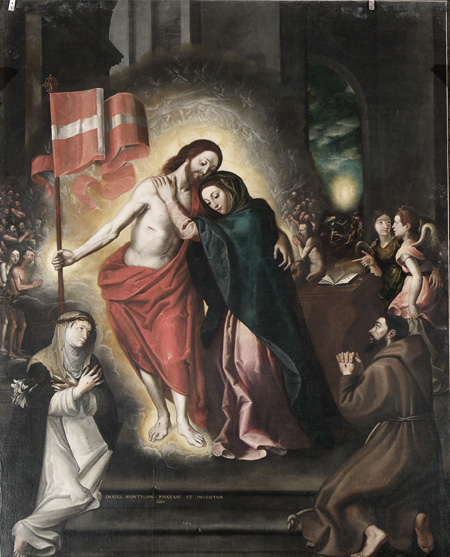 Recently, I had a discussion with my fiancée about the idea of Song of Songs being utilized as an analogy for Christ and the Church. Song of Songs is clearly a book about love, even erotic (eros) love. There are verses like 1:4 “Draw me after you; let us run. The king has brought me into his chambers” or 6:3a “I am my beloved’s and my beloved is mine.” If we are to apply such verses to the life of a Christian and his or her relation to God, we can see it sometimes as an almost uncomfortably close relationship. We aren’t comfortable thinking of our love of God as this kind of intimate desire; a desire for union, to be brought into the chambers of our God.
Yet it is exactly this kind of intimacy–this kind of eros love–which God has planned for us. Song of Songs is such a beautiful book because of this exact thing. It teaches us that we need not be ashamed of the kind of union we desire with God. We are sheep lead astray, and our one desire should be to return to our Lord, in whose arms we find peace and love.
There are other verses in Scripture wherein we can see this idea. Psalm 84:2 states “My soul yearns, even faints for the courts of the Lord; my heart and my flesh cry out for the living God.” Psalm 63:1 puts it eloquently, “Oh God, you are my God, earnestly I seek you; my soul thirsts for you, my body longs for you.”
My favorite exposition of these ideas is found in Alvin Plantinga’s Warranted Christian Belief, of all places. In this monumental work, Plantinga discusses the very idea of God’s love as eros. I feel compelled to quote him at length:
This love for God isn’t like, say an inclination to spend the afternoon organizing your stamp collection. It is longing, filled with desire and yearning; and it is physical as well as spiritual… It is erotic; and one of the closest analogues would be with sexual eros. There is a powerful desire for union with God… What is to be made of this phenomenon? Most psychiatric literature has tended to follow Freud in understanding religion as a kind of neurosis, the ‘universal obsessional neurosis of humanity.’ From this point of view, the religious eros is to be understood as a kind of analogue, displacement, or sublimation of (broadly) sexual energy…
From a Christian perspective… here (as often) Freud has things just backwards. It isn’t that religious eros, love for God, is really sexual eros gone astray or rechanneled… It is sexual desire and longing that is a sign of something deeper: it is a sign of this longing, yearning for God that we human beings achieve when we are graciousliy enabled to reach a certain level of the Christian life. It is love for God that is fundamental or basic, and sexual eros that is the sign or symbol or pointer to something else and something deeper.
[S]exual eros points to two deeper realities… human love for God… [and] a sign, symbol, or type of God’s love. (Plantinga, 311-318)
Those who have had religious experiences in which they felt a kind of union with God can attest to what Plantinga is describing. The kind of mystical union we experience when we are granted the chance to commune with God in a relation of creature-creator is beautiful, to the point of being even sensual. It is something which we long for; something we look forward to in the hereafter.
This also serves to help describe the kind of feelings involved in religious experience. It is a kind of fulfillment of a yearning and a quenching of thirst. Our longing for God is part of humanity. Plantinga argues it is part of our sensus divinitatis–our inborn sense of divine reality. Only when we submit to God and experience relation with him can our deepest desires be realized.
Source:
Alvin Plantinga. Warrented Christian Belief (New York, NY: 2000, Oxford).
——
The preceding post is the property of J.W. Wartick (apart from citations, which are the property of their respective owners) and should not be reproduced in part or in whole without the expressed consent of the author. All content on this site is the property of J.W. Wartick and is made available for individual and personal usage. If you cite from these documents, whether for personal or professional purposes, please give appropriate citation and provide a link to the original URL. By viewing any part of this site, you are agreeing to this usage policy.
New Page: Christian Diversity
I have started another blog, which will not interfere with this one (though there may be some overlap). It is called Christian Diversity. Here’s the mission statement:
Christianity has been separated into divisions over denominational, cultural, and theological lines, yet the message of Christianity remains the same for all generations: Christ crucified for our sins. We at ‘Christian Diversity’ seek to demonstrate that while Christianity may be divided institutionally, we are of one mind spiritually. We affirm ‘Mere Christianity’, which is the belief that Christianity is ultimately this faith in Jesus Christ as Lord and Savior. We affirm the Three Ecumenical Creeds (The Apostles’, Nicene, and Athanasian Creeds).
The goal of ‘Christian Diversity’ is to discuss doctrinal differences on matters not essential to the faith. We understand that the goal of total ecumenism–that is, the unity of all churches–may be out of reach, but we strive to come to the understanding that all Christians are saved, and there are no divisions among us when it comes to Christ. Thus, while we may disagree on many of the issues we discuss, we continue to strive towards a better understanding of our fellow Christians and increase unity with them. This will serve to strengthen us as brothers and sisters in Christ.
Our motto comes from St. Paul, who writes in 1 Corinthians 1:10 I appeal to you, brothers, in the name of our Lord Jesus Christ, that all of you agree with one another so that there may be no divisions among you and that you may be perfectly united in mind and thought.
Check it out! Let me know your thoughts!

 J.W. Wartick - Reconstructing Faith