theology
“It’s a Yes or No Question!” – Reconstructing Faith

On my faith journey one of the hardest things was when people I used to agree with would aggressively demand yes or no answers to what they thought were simple questions but that I thought were incredibly difficult and complex to answer.
Then they’d be angry about my hesitancy to answer. “It’s just a yes or no question!” they’d exclaim. Many continue to offer these questions to me as I consider questions about faith. The dichotomies that are offered are thought to be definitional, of deepest concern, and simple. But so often they’re not–they’re false dichotomies, they’re secondary issues, and they’re incredibly complex. Even trying to explain some of the difficulty with how complex these issues are would take much more than a single blog post. I’ll show a few examples of some of these dichotomies, some of which I actually did have offered as yes/no questions to me.
Do you believe that God created the heavens and the earth? Yes or no?
Do you believe in hell?
Do you believe we have souls?
Do you believe the Trinity is an essential doctrine?
Some readers might see some of these questions as quite simple–maybe even all of them, but here are some examples of the complexity:
Do you believe that God created the heavens and the earth? Yes or no?
What is meant by “created” here? Is it direct, fiat creation? Could God have used processes? What is meant by “heavens and the earth”?
Do you believe in hell?
What do you mean by hell? Do you mean endless, eternal, conscious torment? Do you mean literal fire? How does one “believe in” hell? Shouldn’t we all wish there were no hell and be hopeful that all might be saved, even if we don’t think all shall be?
Do you believe we have souls?
What is meant by the soul? Is it dualism? What kind of dualism–Cartesian, interactionism, emergentism? Could a Thomistic view of the soul be correct?
Do you believe the Trinity is an essential doctrine?
Yes, I do. But! What exactly does it mean to call it “essential”? Must one have it 100% correct in order to be saved? What does one make of the immense disagreement over subordination of the Son in recent debates, if so? What about questions of rejection of the Trinity being based upon rejection of colonialism?
Yes or no questions, intentionally or not, cut across sociological, theological, and philosophical lines without any precision and are seemingly designed to stop serious discussion and debate about a topic. They are used as a divisive tool, cutting apart people to show others what they’re right or wrong about? They’re traps that cut off discussion.
So yes, people will continue to get angry with me, but I refuse to allow some of these incredibly complex issues get boiled down to a yes or no question. It might make things simpler to boil down these topics to yes or no, affirm or deny type dichotomies, but it doesn’t help us get at truth. And that is what I desire: to seek truth.
Links
Reconstructing Faith– Read other posts as I search for truth and navigate the messiness that is faith.
Be sure to check out the page for this site on Facebook and Twitter for discussion of posts, links to other pages of interest, random talk about theology/philosophy/apologetics/movies and more!
SDG.
——
The preceding post is the property of J.W. Wartick (apart from quotations, which are the property of their respective owners, and works of art as credited; images are often freely available to the public and J.W. Wartick makes no claims of owning rights to the images unless he makes that explicit) and should not be reproduced in part or in whole without the expressed consent of the author. All content on this site is the property of J.W. Wartick and is made available for individual and personal usage. If you cite from these documents, whether for personal or professional purposes, please give appropriate citation with both the name of the author (J.W. Wartick) and a link to the original URL. If you’d like to repost a post, you may do so, provided you show less than half of the original post on your own site and link to the original post for the rest. You must also appropriately cite the post as noted above. This blog is protected by Creative Commons licensing. By viewing any part of this site, you are agreeing to this usage policy.
Book Review: “The Liturgy of Creation: Understanding Calendars in Old Testament Context” by Michael LeFebvre
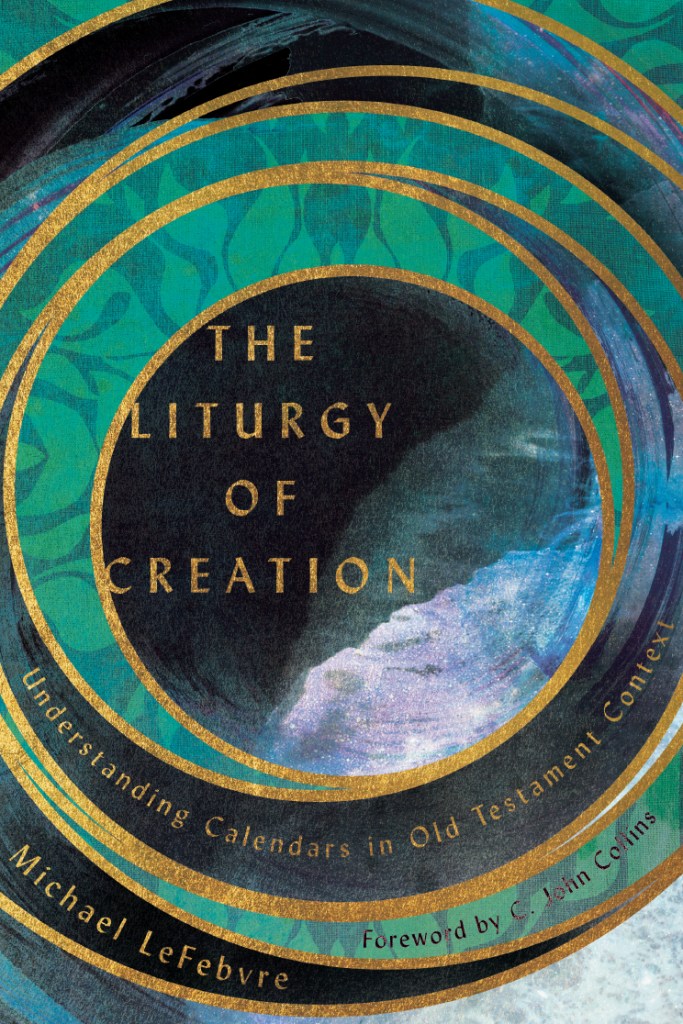
The common saying that “the more you know, the more you know you don’t know” applies perhaps especially well to theology. It shouldn’t be surprising, as it is a topic that attempts to make sense of the infinite. Questions in Christianity about creation abound. Modern debates are often more heat than light, with apparently no way to come to an understanding. Michael LeFebvre’s The Liturgy of Creation: Understanding Calendars in Old Testament Context is a book that can help to break that deadlock and help readers learn about some of the context and meaning of key Old Testament passages.
The core of LeFebvre’s thesis is that the Old Testament narratives center around key aspects of everyday life in their temporal contexts. Specifically, the heavenly lights and the agricultural cycle–which crops could be grown when, harvest time, etc.–helped ground those who spoke and wrote the Old Testament in ways that they would understand. From this, LeFebvre notes that we do the Old Testament damage when we insist upon it providing a kind of modern journalistic approach to dates and dating. The way festivals and days were used in the Old Testament helped provide information to those who heard it about how life ought to be lived and how labor and worship go hand-in-hand.
LeFebvre makes this argument over the course of three major parts. Part I- Israel’s Calendars examines the way calendars were used in the Bible and what reference points they had for understanding time. Part II – Festivals and Their Stories surveys the festivals mentioned throughout the Old Testament and why they were celebrated, grounding them both in the context of the Old Testament text and the time and places in which they occurred. Part III – The Creation Week examines the creation week with the insights gained from Parts I and II in mind.
Part I is a deep exploration of how ancient Israel would have read time, showing not only the use of the stars, the moon, and the sun, but also the way seasons ran throughout the region as ways that people measured their own lives and ways of going about living. LeFebvre is fairly comprehensive in his look at all the stories in the Old Testament that have dates as well as bringing up every festival and examining its importance and usage in the Old Testament. Readers will likely find much to examine and benefit from throughout these first two parts.
It is in part III where the rubber meets the road and LeFebvre applies his insights into timing throughout the Old Testament to the specific questions about the week of creation. The days themselves are laid out in such a way as to correspond to his theses about how Israel ordered itself. LeFebvre makes a strong argument that these creation days are not intended to be read in light of modern science and forced into such a box. Instead, they are intended to give order to creation and one’s own life, providing a reason for Sabbath as well as an understanding of all creation within the context of God’s ordered running of the seasons and universe.
The Liturgy of Creation is an excellent look at what the calendars, seasons, and dates in the Old Testament mean in their own context. LeFebvre brings light to some of the more difficult questions in interpretation, while also challenging readers to examine their own assumptions about the text. Highly recommended.
Disclaimer: I was provided with a copy of the book for review by the publisher. I was not required to give any specific kind of feedback whatsoever.
Links
Be sure to check out the page for this site on Facebook and Twitter for discussion of posts, links to other pages of interest, random talk about theology/philosophy/apologetics/movies and more!
Book Reviews– There are plenty more book reviews to read! Read like crazy! (Scroll down for more, and click at bottom for even more!)
SDG.
——
The preceding post is the property of J.W. Wartick (apart from quotations, which are the property of their respective owners, and works of art as credited; images are often freely available to the public and J.W. Wartick makes no claims of owning rights to the images unless he makes that explicit) and should not be reproduced in part or in whole without the expressed consent of the author. All content on this site is the property of J.W. Wartick and is made available for individual and personal usage. If you cite from these documents, whether for personal or professional purposes, please give appropriate citation with both the name of the author (J.W. Wartick) and a link to the original URL. If you’d like to repost a post, you may do so, provided you show less than half of the original post on your own site and link to the original post for the rest. You must also appropriately cite the post as noted above. This blog is protected by Creative Commons licensing. By viewing any part of this site, you are agreeing to this usage policy.
Book Review: “Myths and Mistakes in New Testament Textual Criticism” edited by Elijah Hixson and Peter J. Gurry
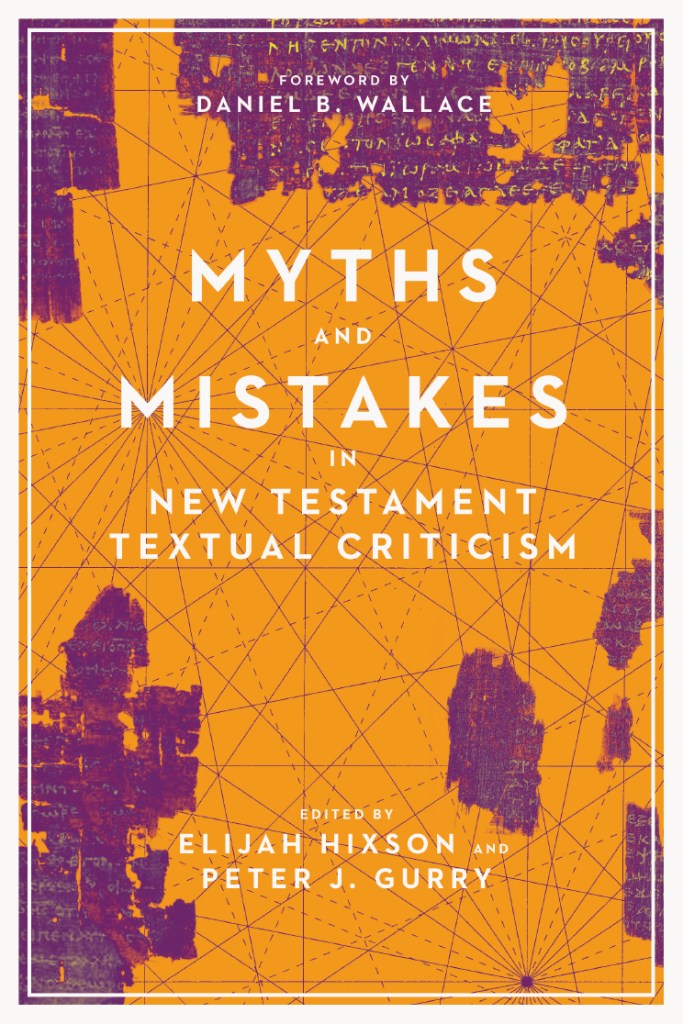
Sometimes a book comes along that makes you as a reader realize that everything you thought you knew about a certain topic was wrong. Myths and Mistakes in New Testament Textual Criticism is sure to be one of those books for many people. The editors, Elijah Hixson and Peter J. Gurry put together a collection of essays that challenge common assumptions and “knowledge” about New Testament textual criticism to the point of overturning expectations and forcing readers to re-think their research. Make no mistake, if you’re not an expert in this specific field–and perhaps even if you are–this book is going to challenge your preconceptions and even what you thought you knew.
After a foreword by renowned textual critic Daniel Wallace and an introduction that opens up the themes of the book, Timothy N. Mitchell’s chapter on autographs (entitled “Myths about Autographs: What they Were and How Long They May Have Survived”) is the first to set a major challenge to assumptions about the New Testament text. The autographic text is considered to be the original text. Thus, an autograph, in the mind of those interested in Christian apologetics or the transmission of the New Testament, is often what is affirmed as being the copy that was inspired or inerrant or the goal of textual criticism to find. Various apologetists have made claims about the autographs surviving long enough to produce many copies over decades (or even centuries) (27). Yet Mitchell points out that some have argue that the concept of a single original itself is mistaken (28). The way documents were disseminated in the ancient world was very different from the way we spread documents, and the same “original” may have been produced several times, with minor edits or even major ones depending on the audience. Specific examples in the ancient world are cited, which challenge the very concept of a single autographic text. Another difficulty would be the concept of multiple autographs. Copying an original for the author to keep was a common practice, but then which would be the autograph–the one sent to one or another person, or the one kept by the author (39-41)? The claims about longevity of the authographs also meet serious challenges, due to climate, persecution, and many other possible problems with thinking that any supposed original text could have survived centuries.
Note that all of these challenges–which are detailed, of course in the book–are all from the first non-introductory chapter alone. There are more than 10 additional chapters outlining many, many assumptions about NT textual criticism and the errors they make. Chapter three outlines questions about the number of NT manuscripts as well as why having more manuscripts might not be better. If all we had was a multiplicity of error-ridden manuscripts, that would hardly be better than just a few very precise ones. Chapter four notes the common errors in citation of numbers of other ancient literature’s manuscript evidence vs. that of the NT (this will have those involved in apologetics–like me–checking their numbers). The next two chapters deal with dating manuscripts and the immense difficulties with getting at which MSS are earlier than other ones at times. Additionally, earlier manuscripts aren’t always better than later manuscripts, in part because later manuscripts might be based on manuscripts that are even earlier than the earliest extant manuscripts!
Questions about who made copies of the NT are another common myth-making scenario. As is often the case in the book, the issue is much more complex. Many claim that the copies were made by untrained hands just scrawling what they could from the NT on whatever they had at hand, while others claim the opposite is true–trained hands copied them and ensured few errors. The truth is somewhere in between. Myths about how scribes made errors are abundant, and attempts to discern scribal intent are shown to be often impossible, but at other times somewhat easier to demonstrate. The number of variants is wildly huge in the claims about how many there are, and the way they are counted is often misstated. Too often, apologists and others claim that variant counts include misspellings, but this is not the case–the huge number of variants would only increase astronomically were misspellings included in the count! Questions about how much of the NT really could be constructed from the patristics are also addressed, and the answer is a somewhat interesting middle ground once again, in which the question of tradition looms large. Canonicity, translations modern and ancient, and more are addressed as well.
All of this is to say the book is an absolute treasure trove of information for those interested in any way in the textual reliability of the New Testament. It is tempting in any day and age to seek certainty, but Christians–and hopefully others–ought to really be seeking after truth. This book helps get at that, providing ways forward for additional research while also blowing open the doors of understanding both hyper-critical and overly optimistic myths about the possibility of getting at the “original” New Testament.
Myths and Mistakes in New Testament Textual Criticism is an invaluable resource for those interested in textual criticism. It points out many major errors that persist in common knowledge while also opening many avenues for new research. There are few times I think a book comes along that everyone should read, but this is one that anyone with even the slightest interest in the reliability of the New Testament ought to read, mark, and inwardly digest.
Disclaimer: I was provided with a copy of the book for review by the publisher. I was not required to give any specific kind of feedback whatsoever.
Links
Be sure to check out the page for this site on Facebook and Twitter for discussion of posts, links to other pages of interest, random talk about theology/philosophy/apologetics/movies and more!
Book Reviews– There are plenty more book reviews to read! Read like crazy! (Scroll down for more, and click at bottom for even more!)
SDG.
——
The preceding post is the property of J.W. Wartick (apart from quotations, which are the property of their respective owners, and works of art as credited; images are often freely available to the public and J.W. Wartick makes no claims of owning rights to the images unless he makes that explicit) and should not be reproduced in part or in whole without the expressed consent of the author. All content on this site is the property of J.W. Wartick and is made available for individual and personal usage. If you cite from these documents, whether for personal or professional purposes, please give appropriate citation with both the name of the author (J.W. Wartick) and a link to the original URL. If you’d like to repost a post, you may do so, provided you show less than half of the original post on your own site and link to the original post for the rest. You must also appropriately cite the post as noted above. This blog is protected by Creative Commons licensing. By viewing any part of this site, you are agreeing to this usage policy.
Book Review: “The New Testament in Seven Sentences” by Gary M. Burge
Gary M. Burge’s The New Testament in 7 Sentences is a brief introduction to several major themes of the New Testament.
The seven sentences that Burge focuses on are all key parts of the NT and he uses these to build broader theological topics. The topics covered are fulfillment, kingdom, cross, grace, covenant, spirit, and completion. Generally, Burge tries to stay fairly neutral on some of the biggest theological debates among Christians. That’s not to say that none of the book would be controversial on that regard–the notion of ‘covenant’ and its meaning is probably the one most likely to generate conflict of these. That said, this would be a good work to introduce someone to the overall concepts in the New Testament.
The book is designed to be used to jump start study of the Bible, whether alone or in small group settings. The last few pages are dedicated to a number of study questions that facilitate that study.
The New Testament in 7 Sentences serves as a brief introduction to major theological issues in the New Testmaent. It would serve well as a study group book that could lead to wider discussion and honing in on specific topics.
Disclaimer: I was provided with a copy of the book for review by the publisher. I was not required to give any specific kind of feedback whatsoever.
Links
Be sure to check out the page for this site on Facebook and Twitter for discussion of posts, links to other pages of interest, random talk about theology/philosophy/apologetics/movies and more!
Book Reviews– There are plenty more book reviews to read! Read like crazy! (Scroll down for more, and click at bottom for even more!)
SDG.
——
The preceding post is the property of J.W. Wartick (apart from quotations, which are the property of their respective owners, and works of art as credited; images are often freely available to the public and J.W. Wartick makes no claims of owning rights to the images unless he makes that explicit) and should not be reproduced in part or in whole without the expressed consent of the author. All content on this site is the property of J.W. Wartick and is made available for individual and personal usage. If you cite from these documents, whether for personal or professional purposes, please give appropriate citation with both the name of the author (J.W. Wartick) and a link to the original URL. If you’d like to repost a post, you may do so, provided you show less than half of the original post on your own site and link to the original post for the rest. You must also appropriately cite the post as noted above. This blog is protected by Creative Commons licensing. By viewing any part of this site, you are agreeing to this usage policy.
Book Review: “The Making of Stanley Hauerwas: Bridging Barth and Postliberalism” by David B. Hunsicker
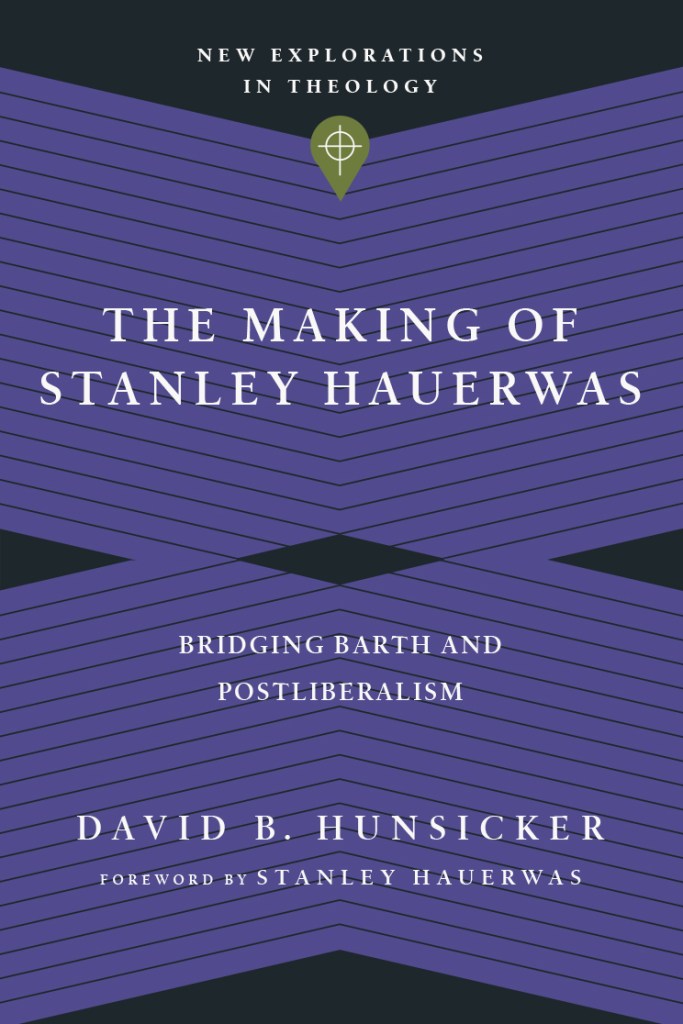
Stanley Hauerwas is one of the most influential theologians of our time. He is well-known for his pacifism, as well as his works on theological ethics more generally. David B. Hunsicker, in The Making of Stanley Hauerwas, sheds valuable insight into the influences on Hauerwas as well as how he has created his own synthesis of thought.
Central to the book are the concepts of postliberalism and Barthianism. Is Hauerwas a Barthian, as he claims? Or is he fully in the postliberal camp, as others have charged? Of course, the definitions of “Barthian” and “postliberal” are highly relevant to this. A Barthian, Hunsicker argues, can fairly be described as someone who has a genuine understanding of and use of Barth. It is possible to be someone who is “indirectly influenced” by Barth by interacting but perhaps not understanding Barth (3-4). Postliberalism is difficult to pin down, with somewhat broad and slippery definitions. Ultimately, Hunsicker notes that there is no single postliberalism (8) but that it can still be a useful way to categorize thinkers among a broad stream of thought. Specifically for Hauerwas, Hunsicker argues that he falls into postliberalism’s pragmatic bent within theology (9). Hauerwas, then, is envisioned in this book as a Barthian postliberal–he’s both/and rather than either/or when it comes to those often opposed categories.
The rest of the book delves into the details of Hauerwas’s ethical theology in order to draw out both the influence of Barth on it and to show his innovations, all set within the context of Hauerwas’s stated claims to be genuinely trying to interpreter Barth and apply his theology to today. He starts with a chapter outlining the influences on Hauerwas from his life. Then, he shows how Hauerwas moves with and beyond Barth.
Next is a brief case study on the question of abortion from a theological, ethical perspective. This chapter is of particular interest because it shows how Hauerwas applies both postliberal and Barthian insights to make a theological case against abortion. It also shows how those united streams of thought create a different case against abortion that rejects a natural law framework and instead grounds the debate theologically. Part of this is a rejection of accepting the premises of non-Christians in debates over the topic (79). It’s a fascinating chapter that shows Hauerwas’s own ethical innovations on Barth’s uncompromising theology.
The following chapters go back and forth on showing influences and usage of Barth and postliberalism by Hauerwas. The last section wraps up the book by giving insights into Hauerwas’s doctrine of the church, itself a major part of Barth’s project.
Hunsicker is unafraid to be critical of the subject of his work. Regarding Hauerwas defense of John Howard Yoder and the way he sexually abused many women, Hunsicker notes somewhat laconically that this “problematizes” Hauerwas’s dependence upon Yoder’s work.
The Making of Stanley Hauerwas is a deep, engaging look at the theological and ethical formation of one of the most important theologians of our time. For those interested in Hauerwas’s work, it is an absolute must-read. For me, as one who hasn’t engaged much with Hauerwas, it was still of great interest, with several points that caused me to think more deeply on theological and ethical topics.
Disclaimer: I was provided with a copy of the book for review by the publisher. I was not required to give any specific kind of feedback whatsoever.
Links
Be sure to check out the page for this site on Facebook and Twitter for discussion of posts, links to other pages of interest, random talk about theology/philosophy/apologetics/movies and more!
Book Reviews– There are plenty more book reviews to read! Read like crazy! (Scroll down for more, and click at bottom for even more!)
SDG.
——
The preceding post is the property of J.W. Wartick (apart from quotations, which are the property of their respective owners, and works of art as credited; images are often freely available to the public and J.W. Wartick makes no claims of owning rights to the images unless he makes that explicit) and should not be reproduced in part or in whole without the expressed consent of the author. All content on this site is the property of J.W. Wartick and is made available for individual and personal usage. If you cite from these documents, whether for personal or professional purposes, please give appropriate citation with both the name of the author (J.W. Wartick) and a link to the original URL. If you’d like to repost a post, you may do so, provided you show less than half of the original post on your own site and link to the original post for the rest. You must also appropriately cite the post as noted above. This blog is protected by Creative Commons licensing. By viewing any part of this site, you are agreeing to this usage policy.
Book Review: “The Lost World of the Torah” by John H. Walton and J. Harvey Walton
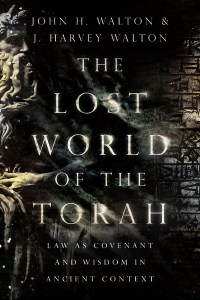 The series John H. Walton (with others along the way) has written on “The Lost World of…” serves to shine light from studies on the Ancient Near East (ANE) onto questions of interpretation of Scripture. In The Lost World of the Torah: Law as Covenant and Wisdom in Ancient Context, John H. Walton and J. Harvey Walton tackle questions about the meaning of the Torah and Old Testament Law for us today. Specifically, they examine what the Torah would have meant in its Ancient Near Eastern context to those who wrote it down and passed it along to us.
First, the authors outline their methodology. Specifically, they note that the Old Testament is an ancient document, and so we ought to be aware of its ancient context and the background beliefs of those who read it in its own time and how that could impact its meaning for us as well. It is also the case that our own cultural background influences the way that we think law and legislation work. Specifically, we tend to think of law and legislation as rigid and unbreakable, but even into today some societies see law less as legal code than as a way to show the regulation of society through social norms and customs (19).
The Torah, then, is best understood as expressions of wisdom rather than legislation, which itself means that instead of seeing the Torah as a sense of “you ought,” it is better understood as “you will know” or something similar (45). The Torah is a “collection of examples that combine to form a description of the desired established order” (ibid). Trying to make the Torah acontextual is a potentially dangerous path that undermines its meaning (100).
Understanding the Torah in its ancient context frees Christian interpreters from the constant battle of trying to sort which parts of Torah are required legislation and which are not. “It is neither a question… about the unchanging law of an unchanging God nor a presumption that morality is relative” (100). Thus, “when people try to sort out which parts of the Old Testament ‘law’ are still relevant and which parts are not, they are really trying to determine which sayings are culturally relative and which are not” (ibid). It is actually this very approach that yields a relativistic response to Scripture, because as interpreters attempt to lock down the Torah into inflexible, unchanging legislation for all time, they are forcing their own view of morality onto God’s Word. “[I]f we have to be selective about which passages we mine for moral guidance and which we reject, it is not Scripture that is guiding us but our own preconceived notions of what is right and wrong. As a corollary, then, whatever is producing our sense of right and wrong, which we are using to filter and evaluate Scripture, is not Scripture” (171).
Christian interpreters who insist on divisions like ceremonial, civil, and moral for the Torah are once again imposing a foreign context onto the Scripture itself. Effectively, they have made their own view of which laws fall into which categories the determining factor for what ought to determine morality for all people for all time. There are no labels in the text that demonstrate which of the alleged legislation falls into which preconceived category, so the categories themselves are sorted by the interpreter based on their own biases and understanding of what it ought to be saying. This is extremely clear when specific issue are raised. For example, why take laws about eating of shellfish as “ceremonial” but not laws about what people wear? Essentially, it is the interpreter who then turns and says one is ceremonial and the other is moral. Understanding the Torah as being concerned with God’s covenant with the people also helps illuminate the meaning of certain difficult passages. It is often suggested, for example, that the legislation regarding cross-dressing is moral because it refers back to homosexuality which it is then argued is a moral law and specifically sinful. But the Waltons note that the ANE context of the text includes the disruption of order found in ceremonies of Ishtar (186). Though this may not have been the exact reason these prohibitions existed in the Torah, the Waltons note that “the practice of cross-dressing in the ancient world operated under different premises than it does in modern society. Most importantly, it is not demonstrably associated with homosexuality. Blurring of boundaries violates order, but that sense of order is inherent in the ideology of the society” (187). So again, it is important not to proof text from the Torah and remove it from its original context because that may result in misapplying Scripture.
The Waltons address the question of objective morality in an inset (206-207). They note that objective morality probably does exist as do moral obligations and that they very well may be grounded in God, but our own moral systems are very much products of our cultural contexts and understandings. It is very easy to assume one’s own morality or beliefs about moral codes are objective and binding for all people
The Walton’s arguments are sure to be controversial, but have weighty evidence behind them. Moreover, their arguments, as noted above, help to solve some of the greatest difficulties for Christians in questions of dealing with Torah from a Christian perspective. Rather than dismissing the Torah or picking and choosing which parts to obey based on a superimposed interpretive grid, the Waltons here present a compelling argument for seeing the Torah in its context as it was: evidence of the covenant between God and humanity.
Disclaimer: I was provided with a copy of the book for review by the publisher. I was not required to give any specific kind of feedback whatsoever.
Links
Be sure to check out the page for this site on Facebook and Twitter for discussion of posts, links to other pages of interest, random talk about theology/philosophy/apologetics/movies and more!
Book Reviews– There are plenty more book reviews to read! Read like crazy! (Scroll down for more, and click at bottom for even more!)
SDG.
——
The preceding post is the property of J.W. Wartick (apart from quotations, which are the property of their respective owners, and works of art as credited; images are often freely available to the public and J.W. Wartick makes no claims of owning rights to the images unless he makes that explicit) and should not be reproduced in part or in whole without the expressed consent of the author. All content on this site is the property of J.W. Wartick and is made available for individual and personal usage. If you cite from these documents, whether for personal or professional purposes, please give appropriate citation with both the name of the author (J.W. Wartick) and a link to the original URL. If you’d like to repost a post, you may do so, provided you show less than half of the original post on your own site and link to the original post for the rest. You must also appropriately cite the post as noted above. This blog is protected by Creative Commons licensing. By viewing any part of this site, you are agreeing to this usage policy.
“Debate on the Evidences for Christianity” – Alexander Campbell vs. Robert Owen (1829) Part 2- Historical Apologetics Debates
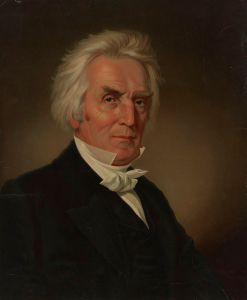
Alexander Campbell
Alexander Campbell (1788-1866) was a Scots-Irish immigrant in the United States who debated Christianity with a few well-known skeptics. One of his best known debates was with Robert Owen (1771-1858), who argued in favor of agnosticism. This debate was published as “Debate on the Evidences of Christianity” (1829, see link for download). Here, will look at what answers Campbell gave and where his arguments might have been improved. Owen was a fine opponent whom Campbell himself acknowledged as a worthy scholar.
Debate on the Evidences for Christianity Part II
We left off last time with Alexander Campbell having just outlined his own project for the defense of Christianity, which shows a number of arguments that are different from those used today in apologetics. But one argument worth highlighting is where he charges Owen’s position with having to essentially undermine all human testimony. Campbell here is alluding to the position of Owen and many people today that only that which is able to be experienced by direct sense perception is credible. But if true, Campbell charges, it follows that:
To complete the process of degradation, [humans are] to be taught that [they] ha[ve] no faculty, or power of learning or knowing any thing but by
[their] senses , or that [they] can receive no certain information from the testimony of [their] ancestors.
…That all the information which is traditional or handed down, is false and incredible. (page 18 of the edition linked)
In other words, if we truly affirm that only that which can be perceived is to be believed, all human testimony, all tradition, all knowledge handed down is false–or at least, ought to be doubted. This is a point which persists to this day when speaking of Christianity and atheism. Often, the position is taken that only scientific knowledge is verifiable or trustworthy. But if that’s the case, it would mean that every person is an island of ignorance. After all, it is impossible for one person to even begin to scientifically test every single discovery for themselves. Simply having someone tell them how gravity works, about the Big Bang, or the like would entail believing testimony as opposed to that which one has tested oneself. Humans, in other words, must believe testimony whether we like it or not.
Owen then, rises and offers his own principles. First, that “truth is always consistent with itself.” Second, that “No name or authority, whatever may be its nature, can change truth into falsehood or falsehood into truth, or can, in any way, make that which is true to be false, or that which is false to be true” (20). Astute readers may jump ahead and try to guess where Owen plans to take these axioms in his attack on Christian faith. For now, Owen’s own words are enlightening.
After noting that humanity is spread about all kinds of different places, Owen notes the necessity, then, for humans to have gained knowledge in their own locales. These introduce prejudices and assumptions based on one’s own perspective which Owen charges we ought to try to remove–a quest for universally verifiable facts (21). Here is where Owen approaches the meat of his early argument:
In furtherance of this mighty change in the destinies of mankind, I am now to prove “that all the religions of the world have originated in error; that they are directly opposed to the divine unchanging laws of human nature; that they are necessarily the source of vice, disunion, and misery; that they are now the only obstacle to the formation of a society, over the earth, of intelligence, of charity in its most extended sense,and of sincerity and affection. And that these district religions can be no longer maintained in any part of the world, except by keeping the mass of the people in ignorance of their own nature, by an increase of the tyranny of the few over the many.” (21)
It would be easy to simply dismiss these lofty claims as impossible for Owen to prove, but if we are seeking truth it is important to examine the arguments even of those with whom we disagree. Tucked in between these assertions of Owen, some of which he will argue for at length, are some hints as to how Christians were perceived in his own time–as well as our own–along with some truly challenging questions about Christianity specifically. There are, after all, many religions in the world. If we agree with Owen’s claims that these cannot contradict each other and that no testimony may make that which is false true, then we must account for the great many divergent beliefs about the ultimate reality in our universe. Additionally, the notion that all religions lead to vice, disunion, and misery is often countered by ways religion has benefited the world. Historically, it is important to see that this debate took place on the soil of the United States and was published in 1829. During this time, there were Christian ministers explicitly arguing in favor of slavery and even of slaves needing to submit to the cruelest forms of punishments of their masters, using the Bible to back their claims. The charges against Christianity are not always easily answered by argument; Owen’s arguments show that practice is just as important as beliefs.
Owen then launches into a series of points to establish the accidents of birth in time and location of every human being. No one can determine when they’re born, where they’re born, what their parents believe, or anything of the sort (22-23). After that, he argues about how characters are developed with some questionable generalizations about psychology and child rearing. Owen then argues from all of this that no one can determine their own character or beliefs. From there, Owen argues that the origins of all human religions have come from the most ignorant and darkest of all times, and so they ought to be rejected as ideas which, due to their accident of circumstance having been formed in the worst of times, will not yield the greatest good for the most people (26-27). It’s important to note throughout these arguments of Owen’s where assumptions are made or stated without argument. For example, he says:
doctrines and fables could not, at first, be received, except through force, fraud, or ignorance, they have been the cause of shedding the blood of the most conscientious and best men in all countries, of deluging the world with all manner of crime, and in producing all kinds of suffering and misery. (27)
But Owen has certainly not established that all “doctrines” were first established through force, fraud or ignorance. He’s playing to the audience here, and it is important to note that. He goes on to assert that all “fables and doctrines” lead to poverty or fear of it, ignorance, and many more ills (27-29). Moreover, it is only by historical accident that his audience, Owen charges, are teaching their children Christianity rather than any other belief system (29).
We’ll leave off here for now, anticipating Campbell’s response, beginning on page 30.
Questions
- What do you think of Campbell’s points regarding sense perception and testimony?
- Is there anything objectionable in Owen’s two principles on page 20?
- How can we as apologists witness to others not merely with sound arguments, but with actions that show Christianity is worthy of consideration?
- What do you think about the way Owen is using historical accidents of birth as the backbone of argument so far? How might such arguments be answered?
Links
Be sure to check out the page for this site on Facebook and Twitter for discussion of posts, links to other pages of interest, random talk about theology/philosophy/apologetics/movies and more!
Apologetics Read-Through: Historical Apologetics Read-Along– Here are links for the collected posts in this series and other read-throughs of apologetics books (forthcoming).
Dead Apologists Society– A page for Christians interested in the works of historical apologetics. There is also a Facebook group for it.
SDG.
——
The preceding post is the property of J.W. Wartick (apart from quotations, which are the property of their respective owners, and works of art as credited; images are often freely available to the public and J.W. Wartick makes no claims of owning rights to the images unless he makes that explicit) and should not be reproduced in part or in whole without the expressed consent of the author. All content on this site is the property of J.W. Wartick and is made available for individual and personal usage. If you cite from these documents, whether for personal or professional purposes, please give appropriate citation with both the name of the author (J.W. Wartick) and a link to the original URL. If you’d like to repost a post, you may do so, provided you show less than half of the original post on your own site and link to the original post for the rest. You must also appropriately cite the post as noted above. This blog is protected by Creative Commons licensing. By viewing any part of this site, you are agreeing to this usage policy.
Book Review: “Disability and the Way of Jesus” by Bethany McKinney Fox
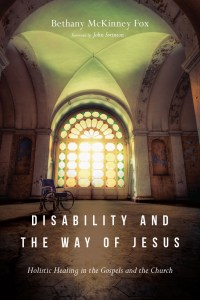 The question of what it means to be “healed” is one of those that seems simple on first glance, but upon closer examination becomes extremely complex quite swiftly. Bethany McKinney Fox’s Disability and the Way of Jesus: Holistic Healing in the Gospels and the Church is an exploration of many of these complex questions. Fox brings light to these questions by surveying many perspectives in sometimes surprising and challenging ways.
Fox challenges assumptions from the get-go, pushing readers to look beyond their assumptions about what it means to experience healing or even to desire it. Too often, people assume that someone with a disability wants to be “healed” so that they can be “normal”–but this itself smuggles in a number of perceptions and assumptions about what the person who has a disability is feeling or thinking. Fox even notes the ways our language can change these perceptions.
The bulk of the book, though, deals with biblical texts related to healing and brings a number of perspectives to bear on these texts. After a look at the context in the First Century of Jesus as healer, Fox brings the perspectives of physicians, people with disabilities, and pastors to bear on various healing texts in the Bible. These often bring very different ideas to the text and come away with surprising readings. For example, do the texts suggest healing is something everyone ought to seek? Do they demand Christians pray for healing? What does it mean to be healed? These questions get very different answers depending upon who is reflecting upon them.
Finally,the book turns to what it means to be healed in the Bible, as well as practices of the church that can help assist healing. Here, there is a stirring call to the church to break the structures that bind those with disabilities in addition to trying to bring healing and holistic care to all people.
Disability and the Way of Jesus is a fascinating read that will force readers to rethink assumptions and examine Scripture texts anew while also looking for new applications to their personal lives. I recommend it.
Disclaimer: I was provided with a copy of the book for review by the publisher. I was not required to give any specific kind of feedback whatsoever.
Links
Be sure to check out the page for this site on Facebook and Twitter for discussion of posts, links to other pages of interest, random talk about theology/philosophy/apologetics/movies and more!
Book Reviews– There are plenty more book reviews to read! Read like crazy! (Scroll down for more, and click at bottom for even more!)
SDG.
——
The preceding post is the property of J.W. Wartick (apart from quotations, which are the property of their respective owners, and works of art as credited; images are often freely available to the public and J.W. Wartick makes no claims of owning rights to the images unless he makes that explicit) and should not be reproduced in part or in whole without the expressed consent of the author. All content on this site is the property of J.W. Wartick and is made available for individual and personal usage. If you cite from these documents, whether for personal or professional purposes, please give appropriate citation with both the name of the author (J.W. Wartick) and a link to the original URL. If you’d like to repost a post, you may do so, provided you show less than half of the original post on your own site and link to the original post for the rest. You must also appropriately cite the post as noted above. This blog is protected by Creative Commons licensing. By viewing any part of this site, you are agreeing to this usage policy.
Book Review: “Doing Theology with the Reformers” by Gerald L. Bray

The theology of the Reformation is a deep, complex issue. Gerald L. Bray is the editor of a number of commentaries, including Reformation Commentaries on Scripture and numerous other books. He brings much experience to the questions related to bringing the theology of the Reformers to light for modern readers. Bray’s book Doing Theology with the Reformers is an excellent place for readers to start gaining an understanding of the questions, controversies, and ongoing conclusions of the Reformation.
Bray divides the book into six major topics, each with a chapter dedicated to it: the education of a reformer, the sources of theological authority, the interpretation of the Bible, the work of the Holy Spirit, the Godly commonwealth, and the emergence of confessional theology. Each of these chapters has several subdivisions that help readers learn about each major topic.
The book excels at bringing to the forefront topics that will challenge readers to be careful in their interpretation of the Reformers’ theology. The Reformers clearly situated within their own cultural contexts (often with theology tailored to speak to then-current events), and those contexts are important for understanding how to read them and why their thoughts developed in the directions they did. The chapter on education is a great example of this, demonstrating that the Reformers’ had their own academic experiences that are far different from those of today.
The chapter on the sources of theology was fascinating, showing how the Reformers sought to go back to the source—the Scriptures–while also acknowledging the difficulties presented by attempting such an approach. The following chapter on the interpretation of the Bible in the Reformers’ thought is enlightening, as it shows that the modern debates over the same often experience similar difficulties to those of today. Bray argues that the Reformation Hermeneutic, however, is intensely personal in the sense that it is primarily about transformation: the Reformation hermeneutic demanded the work of the Spirit in the hearts and minds of believers and the Bible could not be rightly understood outside of that experience (103-104).
The work of the Holy Spirit was taken in different ways by many Reformers and led to some of the greatest rifts theologically both then and today. Such issues as the Sacraments and the Christian life served as dividing lines for the Reformers. These issues continue to divide Christians today. Additionally, the question of what it means to have church and state is dramatically divisive, just as it was in the time of the Reformation. During the Reformation, there was also a revitalized interest in confessionalism, proclaiming the specifics of different faith traditions as they emerged. Bray ties the book together with an attempt to show some of the core theological emphases of the Reformation. These are the radical character of the Fall, salvation, the church, and spiritual authority.
Doing Theology with the Reformers is a fascinating introduction to the Reformers’ thought. The exploration of the Reformers’ emergent and emerging thought–along with how it developed and its origins–makes the book a valuable resource for those interested in Reformation theology today.
Links
Be sure to check out the page for this site on Facebook and Twitter for discussion of posts, links to other pages of interest, random talk about theology/philosophy/apologetics/movies and more!
Book Reviews– There are plenty more book reviews to read! Read like crazy! (Scroll down for more, and click at bottom for even more!)
SDG.
——
The preceding post is the property of J.W. Wartick (apart from quotations, which are the property of their respective owners, and works of art as credited; images are often freely available to the public and J.W. Wartick makes no claims of owning rights to the images unless he makes that explicit) and should not be reproduced in part or in whole without the expressed consent of the author. All content on this site is the property of J.W. Wartick and is made available for individual and personal usage. If you cite from these documents, whether for personal or professional purposes, please give appropriate citation with both the name of the author (J.W. Wartick) and a link to the original URL. If you’d like to repost a post, you may do so, provided you show less than half of the original post on your own site and link to the original post for the rest. You must also appropriately cite the post as noted above. This blog is protected by Creative Commons licensing. By viewing any part of this site, you are agreeing to this usage policy.
Book Review: “Priscilla” by Ben Witherington III
 Priscilla: The Life of an Early Christian is an exploration of early Christianity using an integration of fiction and fact, specifically centered on the biblical person, Priscilla. The book is written as an historical fiction account of her life looking back on various stages in early Christianity in Ephesus, Rome, and Corinth. We know from the Bible her importance and that she interacted with Paul and others. Ben Witherington III uses this information alongside a wealth of data about the early Christian world to construct an insightful look at early Christianity.
As a reader, I’ve enjoyed many of these works from InterVarsity Press bringing the early Christian world to life. This one is different from some of the other entries like A Week in the Life of Rome in that it focuses more on a specific biblical individual than on a broader look at early Christianity. In the process, though, Witherington highlights several of the early theological controversies in the church and uses Priscilla and those who knew her to answer some of these questions. For example, another biblical person who shows up is Junia (Romans 16:7), who Witherington points out is likely the same woman as Joanna (Luke 8:3) due to the way names translated between languages (97). Junia, Witherington notes, would have truly been an apostle, because in the Pauline usage, unless qualified, the term did indeed mean ones commissioned by the risen Christ himself (98).
These introductions to broader theological controversies within their first century context are important for readers looking to learn more about theology. At times, they feel a little bit contrived (eg, would there really need to be such detailed explanations about how Hebrew names translated into Latin or Greek for those who were familiar with the languages?) but the importance of the topics raised cannot be understated.
Readers are introduced to a great number of details about life in the first century, as well. Arranged marriages, the importance of places like Caesarea, arrangements in theaters and controversies about them, and many more historically relevant topics are raised throughout the text.
Priscilla: The Life of an Early Christian is a good introduction both to the world of the early Christians and to many related theological topics in the early church.
Disclaimer: I was provided with a copy of the book for review by the publisher. I was not required to give any specific kind of feedback whatsoever.
Links
Be sure to check out the page for this site on Facebook and Twitter for discussion of posts, links to other pages of interest, random talk about theology/philosophy/apologetics/movies and more!
Book Reviews– There are plenty more book reviews to read! Read like crazy! (Scroll down for more, and click at bottom for even more!)
SDG.
——
The preceding post is the property of J.W. Wartick (apart from quotations, which are the property of their respective owners, and works of art as credited; images are often freely available to the public and J.W. Wartick makes no claims of owning rights to the images unless he makes that explicit) and should not be reproduced in part or in whole without the expressed consent of the author. All content on this site is the property of J.W. Wartick and is made available for individual and personal usage. If you cite from these documents, whether for personal or professional purposes, please give appropriate citation with both the name of the author (J.W. Wartick) and a link to the original URL. If you’d like to repost a post, you may do so, provided you show less than half of the original post on your own site and link to the original post for the rest. You must also appropriately cite the post as noted above. This blog is protected by Creative Commons licensing. By viewing any part of this site, you are agreeing to this usage policy.

 J.W. Wartick - Reconstructing Faith