value
Atheism’s Universe is Meaningless and Valueless
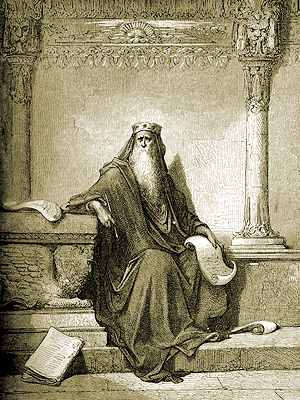 “‘Meaningless! Meaningless!’
says the Teacher.
‘Utterly meaningless!
Everything is meaningless.'” – Ecclesiastes 1:2
My most recent post on the problem of evil granting empirical atheism generated some thoughtful discussion. Most importantly, it lead me to the following argument:
1) On materialistic [I use materialism and physicalism interchangeably, as is common in philosophy today] atheism, all we are is matter in motion.
2) There is no objective reason to value matter moving in way A over matter moving in way B
3) Therefore, on materialistic atheism, there is no value or meaning
Premise 1 seems self-evident. Materialistic atheism, by definition, says that “everything is physical, or as contemporary philosophers sometimes put it, that everything supervenes on, or is necessitated by, the physical” (Stanford Encyclopedia of Philosophy). The physical world is matter.
Premise 2 also seems like it should need little defense, yet atheists continually come up with ideas to try to get around it. For example, one may argue that the subjective suffering of persons should matter. Yet I fail to see how this argument succeeds. Pain and suffering, on materialism, at most supervenes upon neurons firing in the brain (along with chemical reactions and other physical phenomenon). My question for the materialist is: What reason can be provided for favoring matter moving in way A (call it, the way neurons fire when someone is in a state of bliss) over matter moving in way B (neurons firing in the way which causes pain)?
One answer which may be forthcoming is that creatures and persons tend to try to get away from things which cause B. This argument fails to provide an answer to the question, because all it does is push the question back to a higher level. It would change to: Why should we favor physical observable phenomenon which don’t cause avoidance over those that do? Again, the avoidance of B would simply be matter moving in a different way. In order to make a judgment between them, one would have to reach beyond the material world and into the world of objective meaning and value; this is, necessarily, a world which is nonexistent on materialism. Even if one could provide an answer to this second question, say “We tend to not like B. Things we don’t like are bad”, then we would have a purely subjective reality. What of the serial killer who delights in torturing himself, causing things to B? What reason do we have for saying what he is doing is wrong, because, after all, he likes B?
Ultimately, on materialism, everything boils down to matter in motion. Making value judgments about matter in motion is meaningless.
But if everything is matter in motion, then there doesn’t seem to be any way to make value judgments. How does one value a rock over a stick? They’re both just stuff. But then, on materialism, people are just stuff too; albeit more complex. However, if you were to break us down into our ultimately realities, we are no different than the rock. We are matter organized in a different way. Why value us?
There is no objective reason to do so. Therefore, there is no objective meaning or value. Life is purposeless, meaningless, valueless. Atheistic materialism demands this bleak view of the universe. I’m not saying it’s a good reason to abandon that [un]belief. I’m merely saying that those who hold such a view must be consistent.
“Now all has been heard;
here is the conclusion of the matter:
Fear God and keep his commandments,
for this is the duty of all mankind.
For God will bring every deed into judgment,
including every hidden thing,
whether it is good or evil.” -Ecclesiastes 12:13-14
[In the comments, I have suggested that on materialism, there is no such thing as a subject. The claim has proven highly contentious, so I have created a post to clarify my position: https://jwwartick.com/2011/12/05/subjects-materialism/.]
Check out my post on the Ontology of Morality: Some Problems for Humanists and their friends
SDG
——
The preceding post is the property of J.W. Wartick (apart from citations, which are the property of their respective owners) and should not be reproduced in part or in whole without the expressed consent of the author. All content on this site is the property of J.W. Wartick and is made available for individual and personal usage. If you cite from these documents, whether for personal or professional purposes, please give appropriate citation and provide a link to the original URL. By viewing any part of this site, you are agreeing to this usage policy.

 J.W. Wartick - Reconstructing Faith