virgin birth of Jesus
The Virgin Birth?
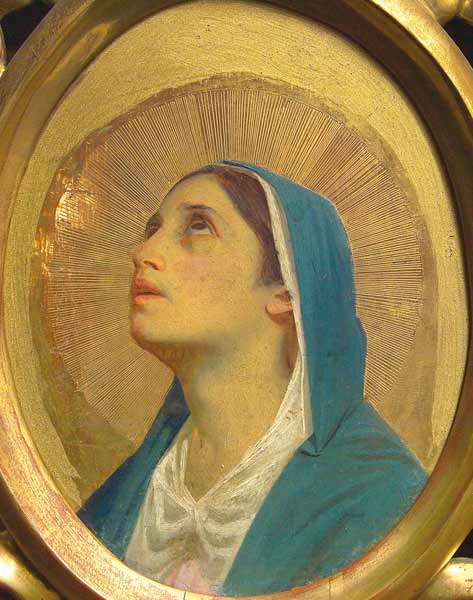 Was Jesus born of a virgin?
The question has many facets and nuances. I’m going to focus briefly on two: the possibility of virgin birth, and the question of whether or not the prophecy of Christ was a prophecy about a virgin birth.
Is virgin birth possible? The question centers around one’s worldview. It is intuitively obvious that if God exists, then a virgin birth is possible; while if God does not, then the virgin birth seems highly implausible, at best. Therefore, the question of whether a virgin birth is possible centers around whether or not God exists. On the face of it, this doesn’t seem like a very important point. However, I believe that this kind of point is central to many questions about the validity of the Scriptural accounts and other things which anti-theists often bring up in debates with theists.
Very often, the question of whether God exists is what is paramount in such debates. For example, the question of whether the moral imperatives in Scripture are right or not betrays metaethical questions lurking in the background: does God exist, and is He the grounding of ethical theory? Similarly, whether or not a virgin birth is possible, whether or not the Flood happened, whether or not Moses parted the Red (Reed?) Sea, and other questions really reveal a metaphysical question: does God exist? If God does exist, then the accounts mentioned are much more likely epistemically than they would be if theism is false. Because I believe there are good reasons to believe in a theistic God (see here for some), I find the question of whether virgin birth is possible more likely epistemically than not.
The second question references a charge that the writers of the Gospels were relying on a mistranslated Hebrew word which did not mean virgin. The argument hinges around the Hebrew word, almah, which is used in the prophecy in Isaiah 7:14, “…the virgin (almah) will conceive and give birth to a son…” This prophecy is used by the Gospel writers to refer to the virgin birth of Christ. The word means “young woman.” But, as is the case in English, in Hebrew, words can have more than one meaning. Almah in Hebrew is not the common word for virgin, but it is always used for an unmarried woman (McDowell, 391). The assumption of an unmarried woman was that she was also a virgin (393). Unfortunately, today it is hard for us to see this assumption, for too often young, unmarried women are giving birth.
Further evidence for the use of “virgin” for the word stems from its usage in Isaiah 7:14. The key here is that the prophecy was fulfilled immediately in the context. The King of Judah was told that the virgin birth would be the sign for him from God. The fact that it was to be a miracle signaling God’s unique work in the world as a sign for the King helps further support the idea that the passage is referring to a virgin birth rather than simply any birth, which, one can guess, was not terribly uncommon in Judah.
Even more evidence comes from the fact that the translators of the Old Testament into the Greek Septuagint took the word in Isaiah 7:14 and used the Greek word specifically used for virgins. This wasn’t due to a mistake, but because they were familiar with the prophecy itself. It would be a fantastical claim on the part of the objector here to argue that those who were translating the Old Testament into Greek were so unfamiliar with Hebrew that they wouldn’t have recognized the nuance. Such a claim would demand evidence; and no evidence exists.
Therefore, it seems that it was prophesied that Christ would be born of a virgin, and it also seems at least possible that such a birth could happen, on theism.
Merry Christmas.
SDG.
This is part of a series I’ve entitled “Jesus: the Living God,” which explores Jesus from Biblical, theological, and apologetic levels. View other posts in the series here.
McDowell, Josh, Evidence for Christianity: Historical Evidences for the Christian Faith (Nashville, TN: Thomas Nelson, 2006).
——
The preceding post is the property of J.W. Wartick (apart from citations, which are the property of their respective owners) and should not be reproduced in part or in whole without the expressed consent of the author. All content on this site is the property of J.W. Wartick and is made available for individual and personal usage. If you cite from these documents, whether for personal or professional purposes, please give appropriate citation and provide a link to the original URL. By viewing any part of this site, you are agreeing to this usage policy.

 J.W. Wartick - Reconstructing Faith