Zachary Wagner
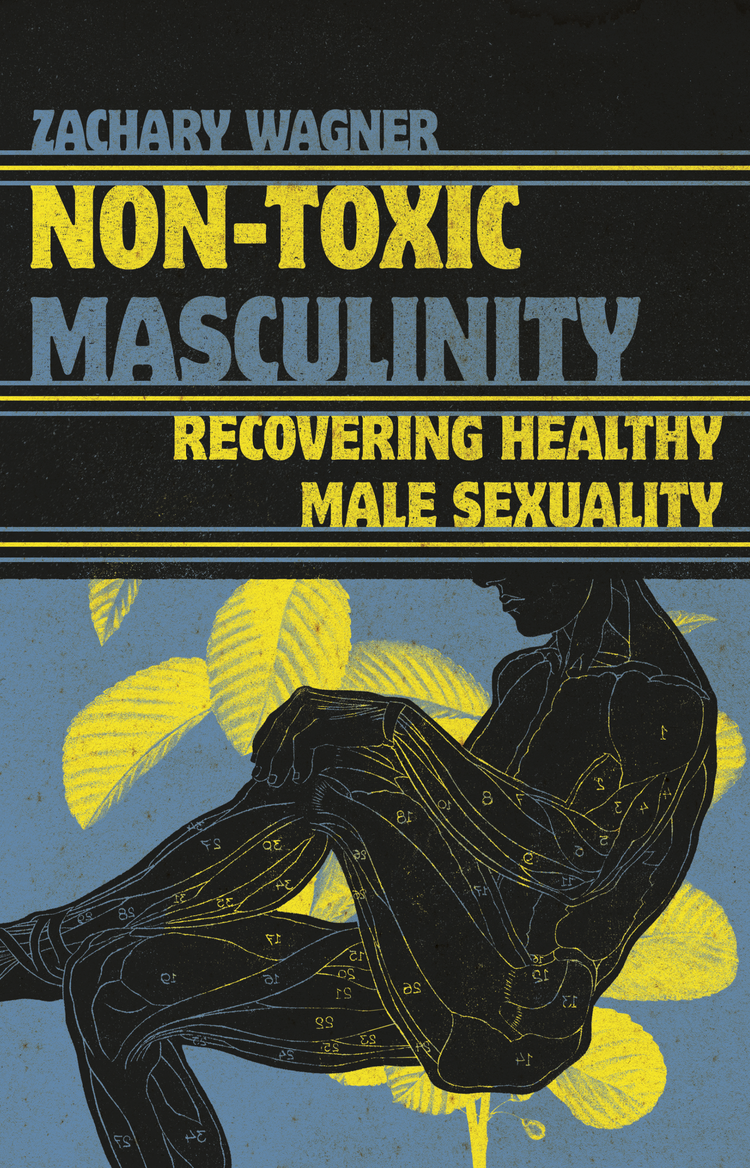
Book Review: “Non-Toxic Masculinity: Recovering Healthy Male Sexuality” by Zachary Wagner
Content Warning: Discussion of Sexuality and related topics throughout this review
Toxic Masculinity is a hot-button topic. One question that often gets asked once someone acknowledges the problematic nature of a lot of masculinity-oriented ideas is “What does healthy masculinity look like?” Non-Toxic Masculinity: Recovering Healthy Male Sexuality by Zachary Wagner seeks to answer that question.
After an introduction discussing the ways in which people have been awakened to the problems of toxic masculinity (eg. through the #MeToo movement, Harvey Weinstein, and many others), Wagner dives into purity culture and how that movement helped create cultural norms that ended up causing damage not just to people harmed by men but harmed men as well. This is evident in Wagner’s discussion of the promises purity culture made to men, essentially claiming that if men behaved in certain ways it would guarantee satisfactory sexual activity, among other things (33ff). Included in this messaging was a mixed appeal to sexuality as a dangerous thing that was portrayed as nearly out of control in men while also selling it as an endgame or goal of male behavior. Indeed, this portrayal meant that both girls and boys were seen as inherently dangerous sexually, requiring girls to “cover up” while men were portrayed as potentially violent sexually at a moment’s notice.
Wagner does an excellent job of showing how toxic masculinity and purity culture are harmful to men qua males. That is, many forms of alleged masculine behavior or advice is harmful to men in ways that are quite insidious, selling essentially “prosperity sex” type mythos to men. Additionally, the way men were portrayed as inherently sexual meant that men with lower sex drives were seen as less than male or less masculine because of it. Obviously all of this ties into harmful views of women, such as the hypersexualization of women and objectification thereof.
Next, Wagner turns to a reforming of masculine portrayal, offering helpful ways to see masculinity that avoid the problematic nature of toxic masculinity.
There were a few issues I had with the book, however. First is that any discussion of reforming masculinity almost inevitably lends itself to a dichotomy of human nature that fails to see humanity as bell curve. Men and women aren’t opposite extremes–and to be clear, I’m not saying at all Wagner portrays them as such. Books that speak exclusively to femininity or masculinity almost require a dichotomy that doesn’t account for the wide range of human gender expression, even within traditional conceptions of male/female expression. I found this book to be no exception, and wondered what people from LGBTQ+ perspectives might think of it. Wagner does point out that many traditional comments about gay sexuality are off base and often show difficulties with traditional sexual ethical expectations as well (see, for example, the discussion of marriage on 40-41).
Another sort of strange note was the discussion of masturbation, in which Wagner suggests that it might necessarily include dehumanizaiton of others, interestingly because he argues that it includes lust and non-consensual sexual performance in a sense (127). After giving these nods to an anti-masturbation stance, Wagner says he “want[s] to allow for some nuance and disagreement around masturbation…” This nuance includes the fact that many who denounce it are doing so from cisgender heterosexual married people and thus from the easiest ground to do so. Additionally, he notes that we shouldn’t burden people with additional rules that aren’t easy to find or define biblically. I honestly thought this whole aside was strange, but thought-provoking. The concept of tying masturbation to nonconsensual sexual behavior was particularly provoking, but also made me wonder more along the lines of whether thoughts are inherently sinful/etc. And there seem to be things that would counter some of the arguments Wagner offered. What if, for example, a partner gives permission to the other to think of them sexually in such a way? That would seem to remove the problems regarding consent. Overall I admit some skepticism of the whole arguments in this section.
A final, tiny note is that there is no index in the book, and I think basically any book of this kind would benefit from indices.
Non-Toxic Masculinity has many helpful parts, though I wasn’t entirely sold on everything. It would serve as a good conversation starter that might help direct future discussion of the topic for many readers. The discussion of how men are harmed by masculinity-movements was especially helpful.
All Links to Amazon are Affiliates links
Links
Be sure to check out the page for this site on Facebook and Twitter for discussion of posts, links to other pages of interest, random talk about theology/philosophy/apologetics/movies and more!
Book Reviews– There are plenty more book reviews to read! Read like crazy! (Scroll down for more, and click at bottom for even more!)
SDG.
——
The preceding post is the property of J.W. Wartick (apart from quotations, which are the property of their respective owners, and works of art as credited; images are often freely available to the public and J.W. Wartick makes no claims of owning rights to the images unless he makes that explicit) and should not be reproduced in part or in whole without the expressed consent of the author. All content on this site is the property of J.W. Wartick and is made available for individual and personal usage. If you cite from these documents, whether for personal or professional purposes, please give appropriate citation with both the name of the author (J.W. Wartick) and a link to the original URL. If you’d like to repost a post, you may do so, provided you show less than half of the original post on your own site and link to the original post for the rest. You must also appropriately cite the post as noted above. This blog is protected by Creative Commons licensing. By viewing any part of this site, you are agreeing to this usage policy.

 J.W. Wartick - Reconstructing Faith