physicalism
Sunday Quote!- The Failure of Eliminativism for Explaining Mind

Every Sunday, I will share a quote from something I’ve been reading. The hope is for you, dear reader, to share your thoughts on the quote and related issues and perhaps pick up some reading material along the way!
The Failure of Eliminativism for Explaining Mind
Philosophy of mind has long been an interest of mine that I have read extensively on. Stephen Parrish’s The Knower and the Known remains what I consider the most valuable single-volume resource for outlining and refuting various physicalist and materialist varieties of philosophy of mind. I have been re-reading the book and come across many excellent arguments once again.
One example is the section on eilminativist views of the mind. According to those who hold this theory, at the most basic level, things like beliefs and consciousness simply don’t exist and are instead relegated to “Folk Psychology.” Parrish’s critique is incisive. He writes:
One cannot, in the making of theories, coherently deny that there are theories and theory makers. One cannot, in trying to understand something, coherently deny that there is such a thing as understanding, and that there are conscious selves who understand. One cannot try to make reality intelligible by denying the very notion of intelligibility. Yet it is precisely these things that eliminativists attempt to do. Therefore, belief in eliminativism is self-refuting and cannot possibly be true. (139, cited below)
Of course, this argument is not one that is unanticipated by eliminative materialists like Patricia and Paul Churchland. Parrish deals with their counter-arguments at length, but the most pressing problem remains that their position effectively is impossible to maintain, for it denies that it can be believed itself.
I’d highly recommend The Knower and the Known to you, dear readers, if you’d enjoy a lengthy, deep treatment of this and many other related issues. Check out my 2 part review (part 1 and part 2) for more analysis.
Links
Be sure to check out the page for this site on Facebook and Twitter for discussion of posts, links to other pages of interest, random talk about theology/philosophy/apologetics/movies and more!
Sunday Quote– If you want to read more Sunday Quotes and join the discussion, check them out! (Scroll down for more)
Eclectic Theist– Check out my other blog for my writings on science fiction, history, fantasy movies, and more!
Source
Stephen Parrish, The Knower and the Known (South Bend, IN: St. Augustine’s Press, 2013).
SDG.
Sunday Quote!- Evolution: A Materialist and an Idealist Weigh In

Every Sunday, I will share a quote from something I’ve been reading. The hope is for you, dear reader, to share your thoughts on the quote and related issues and perhaps pick up some reading material along the way!
Evolution: A Materialist and Idealist Weigh In
John Warwick Montgomery is one of those rare thinkers who seems equally at home in just about any subject with which they engage. I’ve been reading through his phenomenal book, The Shape of the Past and been blown away by the breadth of topics covered. What is more amazing is how he relates them back to the central topic: historiography. The second part of the book is a series of essays on various subjects. In one of these, on Marxism and Materialism, he writes:
Evolution means natural development to the materialist; it means teleology in the universe to the idealist. (234, cited below)
The quote is particularly poignant because it shows how even having what many consider raw data requires interpretation. One person can interpret evolution as confirmation of naturalism, while another might interpret it as teleology–goal orientation–found within the universe.
Be sure to check out The Shape of the Past. It is a fascinating work.
Source
John Warwick Montgomery, The Shape of the Past (Eugene, OR: Wipf and Stock Publishers, 2008 edition [originally published 1975 by Bethany Fellowship]).
Links
Be sure to check out the page for this site on Facebook and Twitter for discussion of posts, links to other pages of interest, random talk about theology/philosophy/apologetics/movies and more!
Sunday Quote– If you want to read more Sunday Quotes and join the discussion, check them out! (Scroll down for more)
Eclectic Theist– Check out my other blog for discussions about all kinds of topics including science fiction, history, fantasy movies, and more!
SDG.
Book Review: “The Knower and the Known” by Stephen Parrish – Part 1
 What is the mind? Are humans purely physical beings? What are we to make of physicalist/materialist philosophies of the mind? Do these debates have any relevance for the existence of God?
Stephen Parrish seeks to answer these questions (and more) in his work, The Knower and the Known
The work is split into two major sections. The first is an exploration of physicalist/materialist theories of mind; the second is an exploration of consciousness and how theism provides the best explanation for our phenomenal consciousness (among other things). We shall explore these in order. In this post, I shall focus upon Parrish’s critique of physicalism.
Physicalism
Parrish introduces the major physicalist theories related to the mind-body problem. These include reductionism, eliminativism, supervenience, and emergence. In order to make sense of the claim that the mind is a purely physical substance, it is important to come to an understanding of what it means to be “physical,” and Parrish cites numerous philosophers in order to come to a fairly simple working definition: “to be a material object (to be composed of matter) is ultimately to have certain kinds of causal power over certain areas” (69). The definition must, necessarily, be more complex. Thus, various aspects of dimension, space, and the like are explored. Then, KK provides an explanation of the standard materialist/physicalist view of reality, which is essentially that “everything that exists… can be located within space and time…” (85, Parrish’s definition cites that of C. Koons, and is also lengthier, but for the purpose of this review I have left it at this).
The nature of physicalism must also be understood in order to analyze the claims of physicalists. How is it, exactly, that the physical is to account for the mental? Parrish explores numerous ways proposed to explain physically the connection. These are centered around various proposed psycophysical laws, which hold that there are certain ways in which conscious states relate relation to other physical states. There have been many different proposals about how these laws might work.
According to the nomological theory, there is a lawlike correlation between conscious and other physical states. A nomological theorist would note the correlation between neurons firing in the brain and various mental states. The proposal would then lead to a law of correlation (and perhaps causation) for brain states b1, b2, and b3 with conscious states c1, c2, and c3. Parrish notes a number of problems with this theory, however. Most notably is the fact that there are sometimes different patterns of neurons firing for the same thought. Of course, a physicalist could counter that there are different laws for these different patterns as well. In that case, notes Parrish, “there would have to be laws to regulate the relation of every brain state with the relevant phenomenological aspect of thought to which it is correlated” (89-90). Of course, this becomes even more problematic when one considers that there is an infinite set of phenomenological aspects of our consciousness. That is, we can focus our minds around thinking of numbers and continue counting from one to a billion and beyond. For nomological theory to be correct, there must be a specific brain state for each of these thoughts (along with whatever different brain states would need to exist for the variations which can produce the same number). So there would then need to be an infinite set of laws to account for our mental life.
Yet there is another difficulty, for “since it seems possible for different types of brains to have the same conscious phenomenal thought, and every brain is constructed somewhat differently from every other brain, there would have to be even more laws that accounted for conscious items to accommodate all of the brain states of all the different brains” (90). To say that such a theory of mind begins to make a bloated metaphysics seems something of an understatement. And this is not to even begin to consider the possibility of other intelligent life in the universe, which would also need these lawlike relations for governing their conscious states.
And all of this is not to take into account the problems with explaining how and why there could be different patterns for the same thoughts not only across species but also across brains of the same species and also across individuals. A number of other possibilities are examined, including accidental correlation theory, realizability, and identity. Each of these comes with their own set of problems which Parrish elucidates (92-97).
Parrish throws the gauntlet at physicalist theories of mind in the chapter aptly titled “Judging Physicalist Theories of the Mind.” In this chapter, KK provides a thorough critique of all the major physicalist theories of mind. For the purpose of this review, I will only provide the briefest of summaries for each of these critiques. Mysterianism is essentially the notion that we cannot know how consciousness and the brain relate, but we do know that physicalism is true. The problem with this position is that such a position basically pushes the burden of proof unto other physicalist theories of mind as opposed to providing its own explanation, and the theory in fact seems to be just another form of epiphenomenalism.
Eliminativism is a simpler theory in which it is simply asserted that consciousness does not exist (133ff). Such a theory seems patently absurd on its face, yet some physicalist philosophers continue to maintain that despite any appearance to the contrary, “there are no conscious aspects, objects, properties, or events at all” (136). The difficulty with such a position is that it is “self-referentially incoherent” (137). That is, it cannot be consistently believed (whatever it means to “believe” something) that there are on mental state when, in order to have such a belief, one must have some sort of mental state. Parrish further offers a scenario to describe our world in terms of an eliminativist worldview, which would yield a kind of “zombie” world in which our fictional mental states have no relation to the world around us (149-150).
Identity theory basically asserts that consciousness just is identical to the brain. Much work must be done to analyze this theory by noting which theory of identity one might hold to, along with how such a theory of identity might play out. KK provides just such an exploration and comes to conclude that any of these identity theories falls to a number of objections, including the arbitrariness of the connection between the physical and the [identical] consciousness (162-163). Supervenience theory, which holds that somehow the mental supervenes upon the physical, suffers from providing no actual explanation for how this should be the case and thus basically devolves into one of the other physicalist theories.
Functionalism is the theory that “the conscious mind is the brain functioning in a certain manner” (171). Again, the difficulty here is that this seems to boil down largely into a bare assertion and how closely related to (and probably reliant upon) eliminativism it is.
Higher order theories of mind posit that consciousness is something like the brain scanning itself. However, this provides no explanation for how consciousness could arise and thus is again parasitic upon other varieties of physicalism, most notably eliminativism.
Epiphenomenalism is at the core of Parrish’s critique, for throughout the work he shows in numerous ways how the other physicalist theories of mind are ultimately mysterian or epiphenomenal in nature. Epiphenomenalism is basically the view that consciousness is causally inefficacious. Thus, it is the brain which “does the work” while consciousness is some kind of byproduct of brain activity. However, such a theory does not adequately explain how consciousness may itself arise, nor does it provide any attachment for our thoughts to reality. It thus suffers again from self-referential incoherence, for our mental states have no causal attachment to our brain states or reality. They are, again, merely “epiphenomena” which somehow are generated by our brains. If our mental states happen to line up with reality, that becomes a merely happy accident, for our mental states do not control our brain states but are rather generated by them. This is not to imply that mental states must control brain states to give rise to coherency, but rather to note that unless our mental states are causal in some sense, the very process of rational thought is illusory, for our prior mental states have no connection to our past mental states other than to be generated in a certain temporal order.
Conclusion
We have outlined Parrish’s critique of physicalism. Next week, we shall explore his defense of dualism and his case for theism from the nature of intelligibility. However, by way of conclusions for this section, it is important to note the insights which Parrish has offered in KK. The arguments he presented seem devastating to physicalism. In particular, the fact that so physicalist theories of mind all seem to either ultimately appeal to mystery or reduce consciousness beyond causal powers undermine the physicalists’ ability to explain reality sufficiently. If a worldview cannot even account for something as basic as our thoughts, such a deficiency seems to bode ill for the rest of that view. As noted, we shall note a powerful alternative which Parrish argues for in the latter part of the book, theistic substance dualism.
Parrish, of course, offers much more thorough critiques of every position listed here (along with many that were not included in this outline). The work is extremely important in not only its comprehensiveness but also its thoroughness for exploring theories of mind.
Stephen Parrish’s The Knower and the Known
Source
Stephen Parrish, The Knower and the Known
SDG.
——
The preceding post is the property of J.W. Wartick (apart from citations, which are the property of their respective owners, and works of art as credited) and should not be reproduced in part or in whole without the expressed consent of the author. All content on this site is the property of J.W. Wartick and is made available for individual and personal usage. If you cite from these documents, whether for personal or professional purposes, please give appropriate citation with both the name of the author (J.W. Wartick) and a link to the original URL. If you’d like to repost a post, you may do so, provided you show less than half of the original post on your own site and link to the original post for the rest. You must also appropriately cite the post as noted above. This blog is protected by Creative Commons licensing. By viewing any part of this site, you are agreeing to this usage policy.
Abortion, fundamentalists, physicalism, and evolution: Sawyer’s “Calculating God” and some contentious issues
 I have already written on Sawyer’s Calculating God
Fundamentalism, Religion, and Abortion
Sawyer lumps fundamentalism in with the discussions about abortion. Unfortunately, fundamentalism is portrayed in the worst possible light, not unlike in the work of Ben Bova. The religious fundamentalists here are extremists bent on destroying anything that counts as evidence against their worldview. As such, they are first introduced as blowing up an abortion clinic (86-87). Frequent readers of my site know that I write often from a pro-life perspective but also that I am very much opposed to violence in this opposition. Unfortunately, such principled opposition is not portrayed as an option in Sawyer’s work.
Interestingly the discussion of abortion in the book–intentionally or not–reveals some important details about the abortion debate. The alien, Hollus, notes the irony in being “pro-life” while also killing people who perform abortions. Yet in this discussion, Hollus reveals something of note:
Hollus looked at me [Tom Jericho, the main character] for the longest time. “These–what did you call them? Fundamentalist extremists? These fundamentalist extremists believe it is wrong to kill even an unborn child?”
“Yes” [Tom responded].
It may take a moment, but think about it: Sawyer expresses incredulity at this notion through the alien Hollus, yet in what may have been a Freudian slip, calls the unborn “children.” Yes, of course I’m opposed to killing an unborn child! In fact, this dialogue reveals exactly what is at stake in the abortion debate: if the unborn is not a human person, then who cares what you do with it? But if it is, then what relevant status difference is there between a child who is located inside the mother as opposed to outside the mother? Again, I’ve written more on this issue elsewhere, but it is important to note that even in expressing incredulity about this, there is a revealing phrase: child. It is an unborn child killed in abortion.
Disturbingly, the book touches on an issue very relevant to the personhood debate: children who are screened for disabilities. In one scene, Hollus is confronted by a child with Down’s Syndrome. He notes nonchalantly that a similar disease is almost always “screened for” in the wombs of the alien mothers (115-116). Unfortunately, this exact thing is happening right now. Unborn children who are shown as having Down’s Syndrome are being aborted inside their mothers at an alarming rate. I can’t help but see this as a modern eugenics movement: killing those we deem unworthy of life for a genetic reason. The logic that this entails is even more disturbing.
Of course the same fundamentalists who bombed the abortion clinic were also out to destroy any evidence for evolution. They sought to destroy a fossil exhibit which they saw as an affront to God. Thus, I can’t help but think that the way Sawyer presents fundamentalists is a bit disingenuous. Not all fundamentalists are incapable of reason and violent. Indeed, almost no fundamentalists are like this! Thankfully, there are positive examples of religious persons in Calculating God, including Tom’s wife.
In one poignant scene, Tom–who is dying from cancer–struggles with the fact that he has been confronted with evidence for the existence of a god. He considers famous atheists who purportedly went to death, all the while denying God’s existence to the end. Yet Tom himself gets down on his knees to pray. When he does so, though, he considers the words of someone from his past: “The Lord works in mysterious ways.” He can’t help but react violently against this:
Such bull. Such unmitigated crap. I felt my stomach knotting. Cancer didn’t happen for any purpose. It tore people apart; if a god did create life, then he’s a shoddy workman, churning out flawed, self-destructing products. “God,” [he prayed] “I wish–I wish you had decided to do some things differently.” (230-231)
Interestingly, in the book, cancer turns out to actually have a purpose… in the sense of being a side-effect of something great: the ability to fuse genetic codes with other intelligently designed species. Here it seems Sawyer has employed a great deal of imaginative techno-babble to explore the notion of a physical god, but it also has hints of a greater good theodicy akin to that of Swinburne.
Physicalism
The discussion of physicalism in Sawyer’s work is very brief, but enlightening. There is a variety of substance dualism here in the sense of emergence. That is, in Sawyer’s fictional world, intelligence and “mind” emerges from matter once complexity reaches a certain threshold. This is similar to the theories of emergence theorists like William Hasker. I can’t help but find this a bit strange. The people who argue for this type of theory are frequently the same who are very hostile to the notion of anything beyond the physical realm, yet they argue that something aphysical can indeed “emerge” from matter itself. Surely this is a leap of the imagination! That matter has creative force simply because it can reach a certain level of complexity seems to me patently absurd.
Not only that, emergence suffers from a second major problem. Namely, if our “mind” is simply a product of complexity in matter, then our “intelligence” is entirely supervenient upon physical complexity. Indeed, our intelligence is a product of that complexity and therefore cannot operate independently of that matter. Therefore, it is hard to see any kind of properties that our minds would have that would be capable of maintaining free will or even rational thought on this theory. Indeed, I have trouble seeing how this theory would be any different from physicalistic monism.
Evolution
The simple notion of evolution is a given in the book. No, it is not friendly to any who are unwilling to accept the notion of “macroevolution,” as the term is used in relevant literature. All the intelligent beings depicted in the book had evolved from a (potentially distinct) distant ancestor.
Darwinian evolution is simply assumed as truth in Calculating God. Or is it? The deity presented in the book is not very conducive to undirected evolution via natural selection and chance. It is portrayed as hurling asteroids at the planets where life was developing in order to press a “reset” button on the creatures that were currently dominant there. It also shown that this deity prevented other catastrophes from happening on these planets, thus interfering with natural selection. Indeed, the evolution depicted here is eerily similar to intelligent design, wherein the process is guided by a deity with a specific aim.
Indeed, one could argue that the entire book is an argument for intelligent design, albeit divorced from much of the theological framework that many of that movement’s frameworks operate within. Yet I can’t help but find this part of Sawyer’s argument (if, indeed, the intention is to make the argument that theists have it all wrong) is completely off. After all, the “god” of Sawyer’s universe is imperfect and concrete in the sense of physically existing. But this works against his concept of deity as being capable of coordinating the events it brings about. Granted, he could perhaps continue to increase the power of this deity beyond what is clearly outlined in the book, but there are hints that the deity is capable of knowing what is happening on places where it is not present, that it is capable of knowing what will happen with certain directions for evolution, and what will happen at the end of the universe. These work against the notion of God as a kind of blundering physical entity that just happens to be supremely powerful. Indeed, the god of calculating God may not be as hostile to Christianity as it initially seems. It serves as a pointer towards the true God of spacetime.
Links
Like this page on Facebook: J.W. Wartick – “Always Have a Reason”
Check out my other post on this book: Aliens that believe in God: The theological speculations of Robert Sawyer’s “Calculating God”
I have discussed the use of science fiction in showing how religious persons act. Check out Religious Dialogue: A case study in science fiction with Bova and Weber.
What would it mean if we discovered life? I have reflected on the possibility: Alien Life: Theological reflections on life on other planets.
Our Spooky Universe– I make the case for the intelligent design argument for the existence of God, which is heavily used throughout Calculating God.
Check out my other looks at popular level books. (Scroll down to see more!)
Source
Robert Sawyer, Calculating God
SDG.
——
The preceding post is the property of J.W. Wartick (apart from citations, which are the property of their respective owners, and works of art as credited) and should not be reproduced in part or in whole without the expressed consent of the author. All content on this site is the property of J.W. Wartick and is made available for individual and personal usage. If you cite from these documents, whether for personal or professional purposes, please give appropriate citation with both the name of the author (J.W. Wartick) and a link to the original URL. If you’d like to repost a post, you may do so, provided you show less than half of the original post on your own site and link to the original post for the rest. You must also appropriately cite the post as noted above. This blog is protected by Creative Commons licensing. By viewing any part of this site, you are agreeing to this usage policy.
Book Review: “Material Beings” by Peter van Inwagen
 Peter van Inwagen presents a discussion of composition in his work, Material Beings
there are no tables or chairs or any other visible objects except living organisms (1).
This sounds odd to a great many people, and he acknowledges this. The thesis, however, solves many of the standard problems of composition. Specifically, van Inwagen seeks to answer, specifically, the special composition question: “In what circumstances is a thing a (proper) part of something?” (21). He surveys traditional answers to this question and finds them wanting. Some have argued simply that “contact” is enough to deduce when an object is composed of other objects, but van Inwagen utilizes a series of thought experiments to show this cannot be right (33ff). Specific types of physical bonding fair no better (61ff) while nihilism (there are no composite objects) and universalism (one can’t compose something, because if there are disjoint xs they compose something [74]) fall victim to a number of difficulties (72ff).
Van Inwagen therefore suggests that one way to show that things are composed is:
(there is a y such that the xs composes y) iff the activity of the xs constitutes a life (or there is only one of the xs) (82).
He goes on to define what he means by life (87ff). Against those who argue that his answer violates ordinary beliefs, van Inwagen proposes various linguistic fixes to allow for everyday language to still be “correct” without violating his suggested answer to the composition question. Thought experiments about artifacts (constructs of people/other living things) help bolster his points (124ff).
After these sections, van Inwagen turns to questions over how to identify life as well as offering attempts to deal with various dilemmas presented to materialists. This composes most of the rest of his work, but more on that shortly.
Van Inwagen’s analysis of the problem of composition seems quite sound, and while his proposed modifications of everyday language to fit into the philosophical answer he has proposed may seem a bit odd to many, they seem to answer the charges his opponent may level against him regarding such questions. Furthermore, his proposed answer gets past the difficulties of the other answers which have been proposed. The most intuitive answer, “contact,” van Inwagen shows is at least fraught with difficulties.
That said, there are some significant problems with van Inwagan’s approach, most of which stem from those which he, being a materialist, has presented to himself and other materialists.
First, he takes life as the basic indicator for when things are composed. But van Inwagen does little to clearly define life, only briefly touching on what it means to be “alive.” Although he devotes several chapters towards various problems about life, his basis for seeing something as alive or not is fairly weak. There is significant debate in scientific literature on what it means for something to be living (or indeed if “living” is a category at all separate from “nonliving”). While one can hardly fault van Inwagen for not dealing directly with these heavy issues in biology and philosophy of science, it is hard to feel comfortable accepting his thesis without a better understanding of what he means by “life.”
Second, van Inwagen has to resort to some extremely implausible positions regarding life. The reason van Inwagen must deal with such problems, I charge, is exactly because he is a materialist. [Astute readers will note that van Inwagen is a theistic materialist, but the problems I raise here go against any materialists who wish to hold to his analysis.]
One place to identify van Inwagen’s problematic approach is in section 12. He writes, “…the fact that I am a thinking being shows that there is at least one composite material object…” (120). He continues, “What is the ground of my unity? …It seems to me to be plausible to say that what binds [the simples which compose me] together is that their activites constitute a life…” (121).
These thoughts start to reveal the serious cracks in his view. He holds that he himself is a material object, which he takes to be demonstrated by the fact that he is thinking. Yet then he argues that what binds him together is the fact that he’s alive. But this is exactly what he is seeking to demonstrate via his observation that he is thinking. But what is “he”? He is a material object. Thus, we have the argument, tied to his thesis:
1) Only those things which are living are composite objects
2) I think
3) Thinking things must be alive [implicit premise given his conclusion on p. 120]
4) Therefore, I am alive
5) Therefore, I am a composite object
Now, wholly apart from whether or not “simples” can be thinking objects, this argument seems unsound. For, on materialism, what justifies 3? Why think that whatever thinks is alive? I’ve already noted that there are philosophers of science and biologists who seem to think there isn’t such a distinction as alive/nonliving (see, for example, Iris Fry’s work, The Emergence of Life on Earth). This therefore reflects the problem I’ve noted already: without a clearer definition of “life,” it is hard to analyze van Inwagen’s thesis.
Yet one may also question the second premise. Why suppose that “I think?” Materialists cannot be substance dualists and must therefore justify personhood in purely materialistic ways. As I’ve argued elsewhere, it seems that materialists almost must deny that there are such things as subjects. Yet van Inwagen just makes the assumption that “I think.” What is “I” on his view? Finally, why think that 1 is true?
One can see the great difficulties with his position illustrated when he turns to thought experiments about when human life begins. Van Inwagen argues that we cannot be the same as the zygote which was our intial state because it splits from A into B and C, neither of which is identical to A (152ff). He argues that the zygote ceases to exist. One instantly wonders how it is that “I” am therefore the same person as I was yesterday, or years ago when all the material which composes me is different. Van Inwagen’s answer is his thesis (above) with the supposition that life actively continues itself. But then one wonders why he doesn’t consider a zygote alive, because it clearly self-organizes, continues itself, etc. In fact, when one examines van Inwagen’s definitions of life, one sees that a zygote meets every criteria. They maintain themselves, they are individuating events, they are “jealous events,” etc. (see his brief discussion 87-90). So why suppose that the zygote isn’t alive?
Again one can observe van Inwagen’s frustrations with brain transplants (section 15). Eventually, he resorts to a mock discourse in which he uses question-and-answer format to try to deal with some extremely illogical consequences of his own naturalism (196ff).
Similar confounding issues arise with the “vagueness of composition,” unity and thought, and the identity of material objects. One can see that van Inwagen’s materialistic bias truly undermines his position in each of these problems. If one holds to substance dualism, one can easily answer any of these problems. Not only that, but his “proposed answer” makes much more sense conjoined with substance dualism, which allows one to make sense of the persistence of persons, living things, etc. without any of the counter-intuitive solutions to which van Inwagen must adhere.
Thus, it seems to me that Material Beings is an excellent book which will provoke much thought, but that its author is, unfortunately, trapped within his own materialism. If he’d think outside the [brain] box, the seemingly insurmountable problems he honestly faces find solutions.
Source:
Peter van Inwagen, Material Beings
SDG.
——
The preceding post is the property of J.W. Wartick (apart from citations, which are the property of their respective owners) and should not be reproduced in part or in whole without the expressed consent of the author. All content on this site is the property of J.W. Wartick and is made available for individual and personal usage. If you cite from these documents, whether for personal or professional purposes, please give appropriate citation with both the name of the author (J.W. Wartick) and a link to the original URL. If you’d like to repost a post, you may do so, provided you show less than half of the original post on your own site and link to the original post for the rest. You must also appropriately cite the post as noted above. This blog is protected by Creative Commons licensing. By viewing any part of this site, you are agreeing to this usage policy.
If materialism, are there subjects?
 In this post I seek to establish one premise: If materialism is true, there are no subjects.
There has been much extended discussion in my post on atheism’s universe, wherein (in the comments) I asserted that, on atheism, there are no subjects. It is high time I clarified my position and drew out its implications.
Materialism and Atheism
My argument is based upon a materialist or physicalist view of reality [I use the terms ‘materialism’ and ‘physicalism’ interchangeably here–I realize they are sometimes used to delineate differences between hard and soft materialists, but for the sake of this post one may assume that any time I mention “physicalism” I mean materialism at large]. I am asserting that: if physicalism is true, there are no such things as “subjects.” I’ve briefly argued elsewhere (see the post linked above) that the only consistent atheism is materialistic. For atheists who are not materialists, I leave it to them to show that their view consistently allows for immaterial entities.
The Nature of a “Subject”
One constant objection to my position is that I never defined what I meant by “subject.” One reason I did not seek to define the term is because I did not want the debate to boil down into a semantic war over the meaning of subject. There are some features of “subjects” which most parties agree upon, but how to lay out those features is hotly debated. Further, I did not wish to beg the question against the materialist by defining a subject in such a way that no materialist ontology could even attempt to approach it (suppose I defined a “subject” as a “wholly mental feature of reality which acts as the center of consciousness”; in such a case, I’ve added nothing to the discussion because I’ve excluded materialism from the debate without argument).
There is no easy way to define what is meant by “a subject.” I will seek now to define it as broadly as possible, so as to avoid any questions begged.
A Subject:
- Is the referent of the term, “I”
- Endures from moment-to-moment as one being. A subject would be the same subject at T2 as it was at T1.
- Accounts for any mental states–whether they are actually aphysical or physical.
Hopefully these terms are agreeable to both sides. I’m sure people on either side will want to flesh out the notion of “subject” more, but it seems to me that these points can be acknowledged by all. The first point seems to be fairly clearly true. It is “I” who experience x and not someone else. The second point is necessary for subjects because otherwise “I” would be a different “I” from T1 to T2, and in fact not be the same being at all. The third point, likewise, seems fairly obvious, because it seems mental life is what comprises a subject to begin with. Whether the image in my mind of a cat is a purely physical phenomenon or not, any theory of the mind must take it into account.
Materialism Fails to Account for One and Many
On materialism, what is it that is the referent of the term “I”? Is it my brain (only)? Is it my body? What am “I”? I will here offer a brief argument that no materialist account can take seriously the notion that “I” am distinct from other entities. It is, basically, an offshoot of the “one and the many” problem in philosophy.
Materialism holds that all which exists is matter. Thus, “I” am composed of matter. The problem is distinguishing between everything else and me, for ultimately “I” am just a rearrangement of matter. Suppose that all matter is referred to as (M), and I am referred to by (I). Ultimately, on materialism, (I) is reducible to (M), which is really just all real being on materialism. Why suppose there are separate entities, (I) and (I2) and (I3) when all are, ultimately, (M)? It is much simpler to just suppose that (M) is all and that (I), (I2), and (I3) are (M) in rearranged forms.
Now I don’t suppose for a moment this isn’t highly contentious. Some will come along and say that their own experience is enough to confirm that they are a different being from every other. But why suppose this? Ultimately, that conscious experience is reducible to the brain, which is reducible to matter, which is everything. On materialism, there really is just one “thing”: the material universe as a whole. The “parts” of this “thing” are ultimately reducible to smaller and smaller particles which comprise all the “things” themselves. Ultimately, all is matter, merely arranged in different ways at different times. I’m not suggesting that matter is some kind of single entity. It is particulate. But matter is also one kind of thing. Ultimately, on materialism, all things are just this kind of thing: material. The only way to differentiate between them is by time and place, but even then every individual thing is itself composed of particles of matter. All things are reducible to the same thing.
What can save materialists from this? Materialists would have to embrace a robust metaphysics in order to supply a way out for the problem of “the one and the many.” Yet it seems to me that no materialist can take seriously a robust metaphysics, because they would then have to posit distinctions between entities that are aphysical. Positing such entities or properties would be decidedly contrary to materialism. For example, one solution is that entities are distinct in that all share being itself, but they also have essences which distinguish them from other things (see Clarke, 72ff, cited below). For a materialist to embrace this, they would have to hold that each individual person has an immaterial essence which is such that it makes it distinct from other entities. But of course, that would fly in the face of materialism. It seems to me, therefore, that materialism has no way to answer the problem of “the one and the many.”
Materialism Fails to Provide Enduring Identity
On what basis can a materialist affirm that I, J.W., am the same subject now as I was 20 years ago? All my matter has been replaced. There is no material component of me which is the same as it was back then. Yet my experience tells me that I am the same subject.
How can materialists account for this?
One possibility is that they can simply point out that I am numerically identical to my past self. Although the individual pieces of matter which comprise me are not the same as they were 20 years ago, they were replaced only in portions, during which my body endured as a totality.
The difficulty with this scenario is that it only serves to underscore the problems with materialism. Imagine a mad scientist, who, over the course of a day, cuts my brain into 24 pieces. Each hour, he removes one piece of my brain and places it into another body, which has no brain. He simultaneously replaces the piece of brain with an exact molecular copy. After the day, there is a body which has my brain in it, and my body, which has a copy of my brain in it. Which is me? And, if that question can be answered on materialism (which I doubt), when did my body/brain cease being me and transfer to the other body/brain?
Materialism simply cannot answer these questions. The worldview is baffled by them. Yet in order for something to be a subject, it must endure through time. On materialism, I have not endured through time at all. My entire being–from my fingers to the hairs on my head to my brain–is material, and has been replaced by new material. Where am “I”?
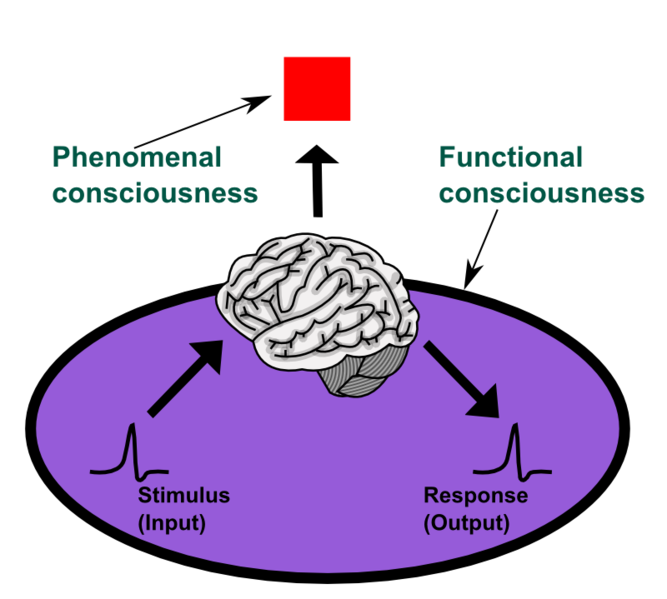 Materialism Cannot Account for Mental States
There are at least five features of mental states which materialism cannot take into account. They are:
- The feeling of “‘what-it-is-like’ to have a mental state such as a pain”
- Intentionality
- Inner, private, and immediate access to the subject
- Subjective ontology which is irreducible to the third person
- They lack spatial extension, location, etc. (Adapted from Moreland, 20, cited below)
While delving into these in great detail is beyond the reach of this post, I have already addressed a few of them in my post arguing for Substance Dualism against Monism. It seems that, on materialism, one must embrace supervenience and epiphenominalism in order to preserve mental states. Consider the following:
When I experience thought A’, it is because of a prior brain state, A. My mental states are either identical to, or supervenient upon, the physical state of my brain. The problem with this is that it relegates mental states to epiphenomenalism… This is because the mental state is entirely dependent upon (or identical to) the brain state. On physicalism, a mental state does not occur without a brain state occurring prior to, or in conjunction with, it.
…If it is always the case that Brain state A=> Mental state A’, then Brain state A causes whatever actions we take, for the brain state entails the mental state, which itself is identical to or supervenient upon the brain state to exist. But then, if we cut mental state A’ out of the equation, we would still have Brain state A and the action. Thus, consciousness is entirely superfluous. (Wartick, https://jwwartick.com/2010/11/10/against-monism/)
Reflection upon the supervenience of the mental on the physical leads materialist philosopher Jaegwon Kim to writes:
To think that one can be a serious physicalist and at the same time enjoy the company of things and phenomena that are nonphysical [by this he is referring to consciousness, the causal powers of thought, etc.], I believe, is an idle dream. (Kim, 120, cited below)
Objections
Objection 1: One of the most common objections I have encountered when I reason in this fashion is the common sense objection: “I think, therefore I am a subject!” or, as one commented on another post, “I’m an [atheist]. I have meaning. It’s possible.”
Such notions are scoffed at by materialist philosophers. Paul Churchland, the famed materialist and philosopher of mind, writes:
You came to this book assuming that the basic units of human cognition are states such as thoughts, beliefs, perceptions, desires, and preferences. That assumption is natural enough: it is built into the vocabulary of every natural language… These assumptions are central elements in our standard conception of human cognitive activity, a conception often called ‘Folk psychology’ to acknowledge if as the common property of folks generally. Their universality notwithstanding, these bedrock assumptions are probably mistaken.
In other words, the notion that “I’m a subject! I have meaning!” is nothing more than a philosophical dinosaur, a remnant of our ‘folk psychology’ which we should cast off now that we know the truth of materialism. Those who object in such a fashion as materialists seem to be blissfully unaware that they stand aligned against the vast majority of materialistic philosophy of mind. They must justify their position, but cannot, as they arguments above have shown.
Objection 2: Neuroscience has shown that the brain is the center of consciousness. When we think things, we can observe specific areas of activity in the brain.
This objection is clearly mistaken. The previous arguments have sought to establish the premise: On materialism, there are no subjects. I could easily grant Objection 2 without doing any damage to my arguments. Sure, when we “think thoughts” we may be able to observe effects in the brain. How does it then follow that “we” are subjects? All that this has done–assuming I grant it–is show that our consciousness is somehow related to our brains. It doesn’t demonstrate that mind is identical to brain, nor does it justify the position that “I am a subject.” In fact, it seems to undermine the notion that materialism can explain subjects, because it implies, once more, that “I” am reducible to “my brain” which is, of course, reducible to its component matter as well.
Conclusion: That There Are No Subjects on Materialism and the Implications Thereof
Any one of these problems provides insurmountable problems for materialists who believe they are, themselves, subjects. There is no way, on materialism, to distinguish the one from the many; there is no way for subjects to endure; mental states are reduced to causally inert epiphenomena; and there is no way to account for mental phenomena.
Thus, if atheism is committed to materialism, and materialism cannot account for subjects, it follows that, without question, there is no meaning on atheism. There cannot even be subjective meaning, for to reference something as a “subject” is, itself, illusory.
Sources
Jaegwon Kim, Mind in a Physical World (Cambridge, MA: MIT Press, 2000).
J.P. Moreland, The Recalcitrant Imago Dei (London, UK: SCM Press, 2009).
Paul Churchland,The Engine of Reason, The Seat of the Soul: A Philosophical Journey into the Brain, (Cambridge, MA: MIT Press, 1996).
W. Norris Clark, The One and the Many: A Contemporary Thomistic Metaphysics (South Bend, IN: Notre Dame, 2001).
SDG.
——
The preceding post is the property of J.W. Wartick (apart from citations, which are the property of their respective owners) and should not be reproduced in part or in whole without the expressed consent of the author. All content on this site is the property of J.W. Wartick and is made available for individual and personal usage. If you cite from these documents, whether for personal or professional purposes, please give appropriate citation with both the name of the author (J.W. Wartick) and a link to the original URL. If you’d like to repost a post, you may do so, provided you show less than half of the original post on your own site and link to the original post for the rest. You must also appropriately cite the post as noted above. This blog is protected by Creative Commons licensing. By viewing any part of this site, you are agreeing to this usage policy.
Materialists: Where is hope? Look to the stars!
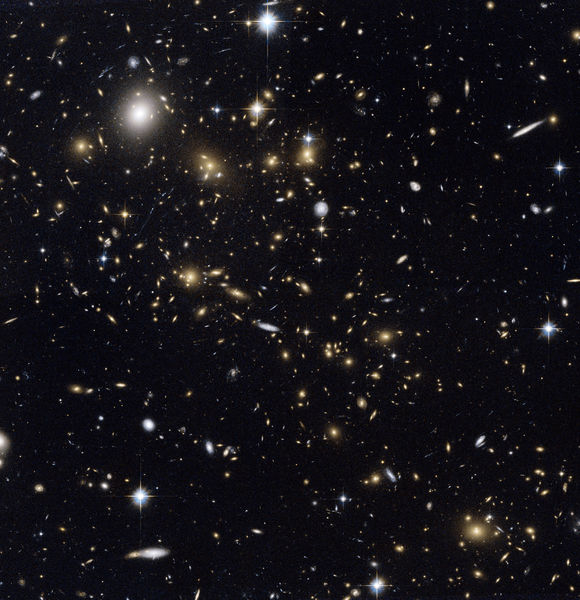 “[T]he Universe may harbor civilizations more intelligent than our own. Perhaps one day, through interstellar communication, some advanced civilization will help us resolve such age-old problems as war, famine, disease, overpopulation, misuse of natural resources, and human aging.”- John Oró, “Historical Understanding of Life’s Beginnings” (40, cited below).
Such is the hope of materialism. I’ve argued elsewhere that if all we are is matter, then there is no meaning. The pervasive response was that “we make our own meaning.” Leaving questions over the tenability of such a view aside, I have turned to a different, and interesting phenomenon: Where is there room for hope, within materialism?
It didn’t take long to dig up some quotes. One of the classes I’m taking this semester is on the Origins of Life. A few books we were assigned for this class were from a materialist perspective. The quote above is from one of those books. It resonated deeply with me. Consider this: If all we are is matter, having arrived here by unguided, biochemical processes, living on a dying planet in a dying universe–where is our hope? One cannot turn to transcendence with such a worldview, but one can attempt to emulate it.
Such is the case found in materialistic literature. Such is the grand materialist hope:
We can look hopefully for our saviors from the stars. There must be more intelligent life out there, and they will usher in a new era, a near utopia wherein disease, death, war, and hunger are all eliminated. Our alien saviors will rush to our aide once they’ve found us on this dying rock, and we will worship them as we used to worship the mythic gods of old.
But it is not just hope for the future which must guide us. Our realization that we are but one among many (and many who are probably smarter than us) must lead us to a new set of ethics. Oró writes of new ethical principles we must embrace: “Humility: The life of all cells descends from simple molecules… Hope: Someday we may communicate with more advanced civilizations… Universality: We come from stardust and to stardust we shall return… Peace: We should change our culture of war into a culture of peace” (Oró, 40-41 cited below). Humility, hope, peace, universality–these are all things Christians embrace also, but the materialist has redefined them. Our hope is not int the transcendent but in the here-and-now. Our hope, again, reaches for the stars.
But is this really a hope? We know the universe is dying. We know that, even were we to escape death, eventually the cosmic heat death of the universe would occur, and our ultimate doom is sealed. Should we hope that our alien saviors are also inter-dimensional travelers? Should we hope that they transcend space and time? I leave these questions open.
But the most interesting phenomenon in all of this is that the materialist has abandoned their presupposition. Rather than hoping for what is they hope for what we know not. They look to the stars, grasping at things unseen. Iris Fry, a professor at both Tel Aviv University and Technion-Israel Institute of Technology in Haifa and author of The Emergence of Life on Earth writes honestly and lucidly of the philosophical commitments of the materialist in this sphere:
[T]he realization that many non-empirical factors are involved in determining scientific positions and in the adoption of scientific theories leads to the notion of theoretical and philosophical decision, or commitment. Research into the origin of life and the search for extraterrestrial life are a clear case in point, because here the weight of the philosophical commitment is much greater than in more conventional scientific fields. As long as no empirical evidence of life beyond Earth has been found, and as long as no scientific theory has succeeded in providing a fully convincing account of the emergence of life on Earth, the adoption of an evolutionary point of view toward the question of life’s origin and the rejection of the idea of purposeful design involve a very strong philosophical commitment. -Iris Fry (283, Cited Below)
Ultimately, I think she is quite right. There is a philosophical commitment being espoused here, not a scientific commitment. Too often, materialists forget that, but kudos to Fry for honestly admitting it while also espousing the very commitment.
Where is our hope?
The materialist answers: The stars.
Is this really rational?
Sources:
John Oró “Historical Understanding of Life’s Beginnings” in Life’s Origin ed. J. William Schopf (Berkeley, CA: University of California, 2002).
Iris Fry The Emergence of Life on Earth (New Brunswick, NJ: Rutgers, 2000.
SDG.
——
The preceding post is the property of J.W. Wartick (apart from citations, which are the property of their respective owners) and should not be reproduced in part or in whole without the expressed consent of the author. All content on this site is the property of J.W. Wartick and is made available for individual and personal usage. If you cite from these documents, whether for personal or professional purposes, please give appropriate citation with both the name of the author (J.W. Wartick) and a link to the original URL. This blog is protected by Creative Commons licensing. By viewing any part of this site, you are agreeing to this usage policy.
Cruel Logic: “Ideas have Consequences”
“No Apologies Allowed” put a post up with a link to a YouTube video called “Cruel Logic.” In it, a serial killer debates a college professor about ethics and determinism in a materialistic universe. Check out the original post and discussion here. I recommend his site because it has tons of thought-provoking imagery and links to videos.
Watch the video below: WARNING: VIDEO CONTAINS DISTURBING IMAGERY.
What do you think? Are these the implications of materialism? Are we merely matter, determined in motion and emotion?
Atheism’s Universe is Meaningless and Valueless
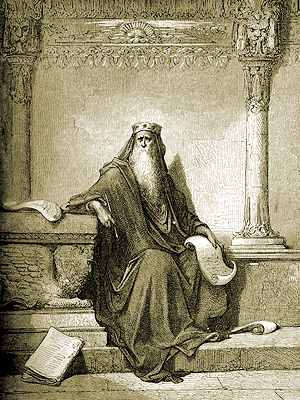 “‘Meaningless! Meaningless!’
says the Teacher.
‘Utterly meaningless!
Everything is meaningless.'” – Ecclesiastes 1:2
My most recent post on the problem of evil granting empirical atheism generated some thoughtful discussion. Most importantly, it lead me to the following argument:
1) On materialistic [I use materialism and physicalism interchangeably, as is common in philosophy today] atheism, all we are is matter in motion.
2) There is no objective reason to value matter moving in way A over matter moving in way B
3) Therefore, on materialistic atheism, there is no value or meaning
Premise 1 seems self-evident. Materialistic atheism, by definition, says that “everything is physical, or as contemporary philosophers sometimes put it, that everything supervenes on, or is necessitated by, the physical” (Stanford Encyclopedia of Philosophy). The physical world is matter.
Premise 2 also seems like it should need little defense, yet atheists continually come up with ideas to try to get around it. For example, one may argue that the subjective suffering of persons should matter. Yet I fail to see how this argument succeeds. Pain and suffering, on materialism, at most supervenes upon neurons firing in the brain (along with chemical reactions and other physical phenomenon). My question for the materialist is: What reason can be provided for favoring matter moving in way A (call it, the way neurons fire when someone is in a state of bliss) over matter moving in way B (neurons firing in the way which causes pain)?
One answer which may be forthcoming is that creatures and persons tend to try to get away from things which cause B. This argument fails to provide an answer to the question, because all it does is push the question back to a higher level. It would change to: Why should we favor physical observable phenomenon which don’t cause avoidance over those that do? Again, the avoidance of B would simply be matter moving in a different way. In order to make a judgment between them, one would have to reach beyond the material world and into the world of objective meaning and value; this is, necessarily, a world which is nonexistent on materialism. Even if one could provide an answer to this second question, say “We tend to not like B. Things we don’t like are bad”, then we would have a purely subjective reality. What of the serial killer who delights in torturing himself, causing things to B? What reason do we have for saying what he is doing is wrong, because, after all, he likes B?
Ultimately, on materialism, everything boils down to matter in motion. Making value judgments about matter in motion is meaningless.
But if everything is matter in motion, then there doesn’t seem to be any way to make value judgments. How does one value a rock over a stick? They’re both just stuff. But then, on materialism, people are just stuff too; albeit more complex. However, if you were to break us down into our ultimately realities, we are no different than the rock. We are matter organized in a different way. Why value us?
There is no objective reason to do so. Therefore, there is no objective meaning or value. Life is purposeless, meaningless, valueless. Atheistic materialism demands this bleak view of the universe. I’m not saying it’s a good reason to abandon that [un]belief. I’m merely saying that those who hold such a view must be consistent.
“Now all has been heard;
here is the conclusion of the matter:
Fear God and keep his commandments,
for this is the duty of all mankind.
For God will bring every deed into judgment,
including every hidden thing,
whether it is good or evil.” -Ecclesiastes 12:13-14
[In the comments, I have suggested that on materialism, there is no such thing as a subject. The claim has proven highly contentious, so I have created a post to clarify my position: https://jwwartick.com/2011/12/05/subjects-materialism/.]
Check out my post on the Ontology of Morality: Some Problems for Humanists and their friends
SDG
——
The preceding post is the property of J.W. Wartick (apart from citations, which are the property of their respective owners) and should not be reproduced in part or in whole without the expressed consent of the author. All content on this site is the property of J.W. Wartick and is made available for individual and personal usage. If you cite from these documents, whether for personal or professional purposes, please give appropriate citation and provide a link to the original URL. By viewing any part of this site, you are agreeing to this usage policy.
The Case for Dualism: Against Monism
.png "667px-Consciousness_phenomenal-functional_(en)") Substance dualism seems to be the most reasonable position when it comes to consciousness. I’m going to be exploring the reasons for this throughout several posts.
Substance dualism seems to be the most reasonable position when it comes to consciousness. I’m going to be exploring the reasons for this throughout several posts.
Substance dualism is the idea that our conscious self is a combination of both a physical and non-physical reality. That is, our consciousness is not just neurons firing in the brain, but also some kind of phenomenal self, which is separate from the physical realm.
One reason for holding to substance dualism is that it avoids the problems of monistic physicalism. Physicalism argues that our conscious self is literally the brain. There is nothing but neurons firing in the brain (okay, it’s a lot more complicated than that, but the general idea is that our brain is our “self”).
Physicalism, therefore, leads to a kind of monism–everything is matter. Depending on which physicalist philosopher one prefers, this can lead to all sorts of problems. We can see this when we examine what exactly composes a “thought.” On dualism, a “thought” is a non-physical, phenomenal experience of the “self”–which is generally referred to either as “mind” or “soul.” On physicalism, a “thought” is identical with a brain state.
In other words, on Physicalism:
Brain state A => Mental state A’
Brain state B => Mental state B’
And so on.
When I experience thought A’, it is because of a prior brain state, A. My mental states are either identical to, or supervenient upon, the physical state of my brain. The problem with this is that it relegates mental states to epiphenomenalism. That is, if a mental state is wholly dependent on a brain state, the mental state is superfluous. This is because the mental state is entirely dependent upon (or identical to) the brain state. On physicalism, a mental state does not occur without a brain state occurring prior to, or in conjunction with, it.
This, in turn, leads to epiphenomenalism because the mental state is, as I said, superfluous. If it is always the case that Brain state A=> Mental state A’, then Brain state A causes whatever actions we take, for the brain state entails the mental state, which itself is identical to or supervenient upon the brain state to exist. But then, if we cut mental state A’ out of the equation, we would still have Brain state A and the action. Thus, consciousness is entirely superfluous.
Another problem with this is that it also means consciousness doesn’t have to have any connection with the actual world. Our brain states could be causing all kinds of wild mental states which are completely unconnected to what is happening outside of our “self,” but we would never know it or act differently. I could be having the mental states of pigs flying and eating buffaloes as I write this, but it wouldn’t matter because the brain state is what is causative. The mental state is simply a byproduct of the brain state. Or, we could all be zombies, without any kind of phenomenal consciousness, and yet still be performing the same actions.
Yet another problem, on the physicalist perspective, is that there seems to be no reason for our mental states to line up with reality. Why is it that despite the fact that our brain state is causing all of our actions, or mental state seems to line up with those actions? There doesn’t seem to be any reason our mental states should line up with reality. One response could be that we have no reason to suppose they do line up with reality, but then we have no reason to trust anything we “think” and should give up whatever positions we do hold.
Of course, monistic physicalism actually argues that there is no mental state A’ generated by brain state A, but I don’t see any reason for believing this is true, for they are of two completely different kinds. One is gray mush, the other is a phenomenal image of a cat. One is composed of neurons shooting impulses to and fro, the other is the idea that “I wish I had eaten breakfast.” The law of identity states that A = A. But, according to monistic physicalism, my gray mush/neurons firing = image of cat. This is simply false.
So, I have no reason to accept physicalism on any of these formulations, and every reason to reject it. Physicalism is epiphenomenal, gives us reasons to doubt our basic intuitions, and makes any thoughts we have completely arbitrary.
——
The preceding post is the property of J.W. Wartick (apart from citations, which are the property of their respective owners) and should not be reproduced in part or in whole without the expressed consent of the author. All content on this site is the property of J.W. Wartick and is made available for individual and personal usage. If you cite from these documents, whether for personal or professional purposes, please give appropriate citation and provide a link to the original URL. By viewing any part of this site, you are agreeing to this usage policy.

 J.W. Wartick - Reconstructing Faith