Archive for
Sunday Quote!- The War Between Science and Religion
 Every Sunday, I will share a quote from something I’ve been reading. The hope is for you, dear reader, to share your thoughts on the quote and related issues and perhaps pick up some reading material along the way!
The War Between Science and Religion
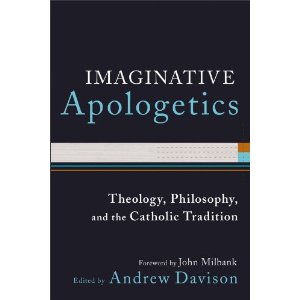
I recently finished reading Imaginative Apologetics: Theology, Philosophy, and the Catholic Tradition. I have a review of the book coming in some time, but for now I’ll say it was an uneven experience. Lots of high points; many low points. One high point was Alister McGrath’s discussion of science and religion and the alleged war between the two:
This conflict is often expressed more generally in terms of the phrase ‘science and religion’, which unhelpfully reifies both notions, attributing concrete identity to abstractions. Science and religion are not well-delimited entities, whose essence can be defined; they are shaped by the interaction of social, cultural and intellectual factors, so that both notions are shaped by factors that vary from one cultural location to another… the historical evidence suggests that it was actually [two 19th century works not by Darwin] which crystallized a growing public perception of tension and hostility between science and religion. (144, 145)
I think this quote is particularly thought-provoking due to its two pronged approach to the “science vs. religion” mentality. First, I think McGrath is certainly correct to note that the reification of the terms is unhelpful, to say the least. People often say things like “science says ___” or “religion says ___.” Such statements turn either science or religion into separately existing, distinct entities which somehow make proclamations. In other words, they remove either concept from the people putting for the concepts under the umbrella terms “science” or “religion.” I find this unhelpful, and as McGrath later notes, only use the terms out of convention.
Second, exploring the historical origins of an idea like the “war” thesis between science and religion often has astonishing results. One finds, often, that one’s assumptions are challenged and even overthrown by the evidence.
What do you think? What other concepts might we unintentionally reify through our use of terms? How might we seek to avoid doing this?
Links
Be sure to check out the page for this site on Facebook and Twitter for discussion of posts, links to other pages of interest, random talk about theology/philosophy/apologetics/movies and more!
Source
Alister McGrath, “The Natural Sciences and Apologetics” in Imaginative Apologetics: Theology, Philosophy, and the Catholic Tradition
Really Recommended Posts 4/11/14- submission, creationism, and apologetics!
 I’m really itching for a game of Ultimate Frisbee. Seriously, can the snow please melt? Anyway, this week I’m presenting for your reading pleasure a slew of high quality posts on the (non-)tasks of the apologist, submission, “street epistemology,” presuppositionalism, and young earth creationism. How’s that for a lineup? Let me know your thoughts in the comments! I love to read what you think. Have a link to share? Drop it here with your own thoughts on it, and I may include it next time!
What an Apologist’s Job is NOT– Melissa Cain Travis offers some extremely sound advice on things to avoid as an apologist. This is a very practical post and a most read for those of us involved in apologetics. Read it!
On Submitting to One Another– What does it mean to submit? How does the notion of submission to one another play out in the church? Check out this thoughtful post by Paul D. Adams on these topics.
On Interacting with Street Epistemologists– Nick Peters has spent some time interacting with “street epistemologists” trained by atheist Peter Boghossian. Here, he shares some of his insights gained from this task. If you’re unfamiliar with the Boghossian, I highly recommend you check out “Peter Boghossian, Atheist Tactician.”
Picture Charades: Do you know your presuppositional apologists?– A fun activity of identifying key presuppositional thinkers. I take an integrative approach to apologetics, so I think it is important to read evidentialists, presuppositionalists, classical apologists, and yes, even fideists.
An Ancient and Alien Forest Reconstructed: A Challenge for young earth creationism– How might the forests of the past present difficulties for young earth creationism? Well, read the post to find out! It’s well worth it.
“Captain America: The Winter Soldier”- The Longing for Purpose and Truth
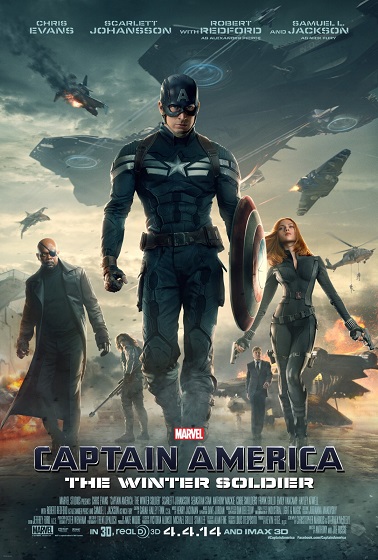 “Captain America: The Winter Soldier” opened to a tune of a $300 million weekend. The film has been “certified fresh” by reviews aggregate Rotten Tomatoes (currently at an 89%). People are talking about the film. Here, we will explore some major themes in the movie from a Christian perspective. There will be SPOILERS in what follows.
Purpose
A question which reverberates throughout the film is that of purpose. What is Captain America’s purpose? He struggled with this himself; in a world far different from the one he sprung from, what place did he have?
It’s a kind of struggle that all humans experience at some point: an existential crisis of place. Where are we in the world? What is our purpose? How do we pursue it?
These questions speak to a longing for something greater. They are questions which address the core of human nature: awash in a universe which at times seems empty and without purpose, we mirror the uncertainty Captain America displayed. Yet the film itself speaks to the fact that there is real purpose in the universe. In “The Winter Soldier,” friendship and loyalty play major roles. The revelation that The Winter Soldier is, in fact, Bucky, a friend from the Captain’s past, leads to a poignant scene in which the Captain refuses to fight his friend due to an earlier vow. Purpose, it seems, is grounded on relationships. It is grounded in persons.
Ultimately, of course, the Christian worldview holds to that same concept but on a cosmic scale. Purpose in the universe is grounded on a person: God.
Human Nature
The depths of human nature are plumbed in the film, as it is discovered that Hydra, an evil Nazi organization, has managed to infiltrate Shield at the highest levels. At the core of the film’s portrayal of human nature is the notion that we are ruled by various fears. We are overwhelmed by chaos, and, if given enough of it, will succumb to any amount of limitations and control in order to turn away from the pit of destruction. Hydra helped bring about as much chaos as possible in order to push humanity to the brink.
It is a conspiracy theorists dream come true: the highest levels of intelligence infiltrated by an evil institution bent on wiping out all threats to its ultimate power. But the fact is that the plot twist was not really that unbelievable. But the strength of the scenario is how very believable it was. The notion that humans would give in to extreme injustice in order to flee from those things which scare them most really wasn’t unbelievable. The fact that both Hydra and Shield were working to eliminate “potential” threats ahead of time sealed the deal.
The commentary on human nature should not be missed: humanity is inherently fearful. Separated from a sense of tranquility and order, we often cling to things which are patently unjust in order to try to overcome our current situation. Think about it frankly: do you really think the scenario in this movie is all that preposterous? That’s what makes it so powerful. It’s not preposterous. In some ways, it’s already happening.
 Captain America: The Moral Compass
The portrayal of human nature discussed above leads naturally into the question of justice. Captain America acts as a kind of moral compass in the current Marvel universe. It is hard to resist the reasoning from both ends–Hydra and Shield–regarding the nature of humanity. In one scene, people are asked whether, if able, they would “press a button” to prevent violent hostage situations, terrorism, and the like. The appeal could have some nodding along with it. But think about it, touching that button would kill those who had yet to do anything wrong.
Thus, Captain America seems initially naive when it comes to this moral reasoning. After all, why would he be so opposed to a system that could prevent the loss of life and ruination of people? But the Captain doesn’t stop the chain of reasoning there. Instead, he calls for a view of justice towards all people; one in which even the “bad guys” aren’t assumed to be irreparable. Its a strong message, and one which resonates with the Christian worldview in powerful ways.
Think of Jonah, who would have preferred to see Nineveh burn than to see them repent. But he knew that God was a loving God, eager to show love and mercy to repentant sinners. Or consider the cry of Ezekiel to “turn” from wicked ways and repent to avoid certain death (Ezekiel 33:11). These themes echo in “The Winter Soldier” as the notion that simply terminating people who may be threats is explored.
Viewing the Captain as a moral compass has some interesting outcomes. For example, though Joss Whedon (director of “The Avengers”) is an avowed non-theist, in that flick, Captain America quips to Thor: “There’s only one God, and… he doesn’t dress like that.” Though an offhand remark, it is interesting to see that Captain America affirms there is “a” deity at all, let alone “only one.” This, from the man who in the face of pressure from all sides, refused to kill the man he promised to protect.
Regarding the Winter Soldier, I have to say that I see shades of the biblical Jonathan and David in the relationship here. There is a mutual vow to protect each other. The two are enmeshed in conflict and end up on opposite sides. Ultimately, they are forced to choose between destroying the other or honoring their loyalty to each other. Again, I’m not saying this is intentional, but the theme is there.
Conclusion
“Captain America: The Winter Soldier” has much for Christians to discuss. It’s an extremely compelling tale filled with themes of justice, loyalty, and friendship. In order to effectively engage the culture, we should use it as a springboard to start discussions about the deeper things. Let me know your thoughts on the movie in the comments.
Links
Be sure to check out the page for this site on Facebook and Twitter for discussion of posts, links to other pages of interest, random talk about theology/philosophy/apologetics/movies and more!
Check out my other looks at films from a Christian perspective. (Scroll down for more.)
A Christian Look at “The Avengers”– I examine a number of themes in “The Avengers” which Christians and non-Christians can discuss.
Engaging Culture: A Brief Guide for movies– I reflect on how Christians can engage with popular movies in order to have meaningful conversations with those around them.
The image is copyrighted by Marvel and I make no claim to rights. I use it under fair use.
SDG.
——
The preceding post is the property of J.W. Wartick (apart from quotations, which are the property of their respective owners, and works of art as credited; images are often freely available to the public and J.W. Wartick makes no claims of owning rights to the images unless he makes that explicit) and should not be reproduced in part or in whole without the expressed consent of the author. All content on this site is the property of J.W. Wartick and is made available for individual and personal usage. If you cite from these documents, whether for personal or professional purposes, please give appropriate citation with both the name of the author (J.W. Wartick) and a link to the original URL. If you’d like to repost a post, you may do so, provided you show less than half of the original post on your own site and link to the original post for the rest. You must also appropriately cite the post as noted above. This blog is protected by Creative Commons licensing. By viewing any part of this site, you are agreeing to this usage policy.
A Solar System and Cosmos Filled With Life? – A reflection upon Ben Bova’s “Farside” and “New Earth”
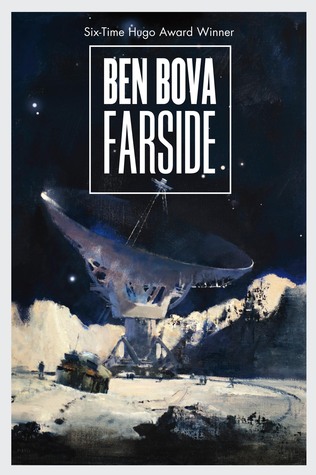
Ben Bova’s contributions to science fiction are monumental. A six-tme Hugo Award winner (!!), he is established as one of the most successful and entertaining authors of our time. I have quite enjoyed a number of his works, though I have at times been critical of his portrayal of religion. Bova’s major series, the “Grand Tour,” follows human exploration of the solar system (and at some points, beyond). The series is constructed in such a way as to not require readers to follow it chronologically. They are interlinked and interrelated, but not interdependent. Here, we’ll look at two recent books in this series which look at the discovery of an Earth-like planet. There will, of course, be major plot SPOILERS for both books in what follows.
Farside
After telescopes on Earth discover an Earth-sized planet relatively local to our own Solar System (ten light years away), the race is on to learn more about this planet. Farside portrays the struggles of a number of people in their efforts to build an observation base on the dark side of the moon. Jason Uhlrich seeks his Nobel Prize in his attempts to be the first to observe and chart the planet.
Life has already been found within the Solar System, and now two rivals rush to be the first to discover it in the great beyond of the stars. What is interesting is to note some of the assumptions that go into Bova’s characterization of life beyond Earth. First, one primary assumption seems to be that where there is water, there must be life. Second, life should be expected in all corners of the universe.
These assumptions are the subjects of much debate within the scientific community around the possibility of life on other planets and the origin of life. Regarding the former, there are those who do believe that life will be found in abundance throughout the universe. After all, given that we exist, life cannot be all that improbable, right? The other primary way of thinking is to argue that life is, in fact, quite rare in the universe and our own existence is a wonderfully improbable jackpot win.
 New Earth
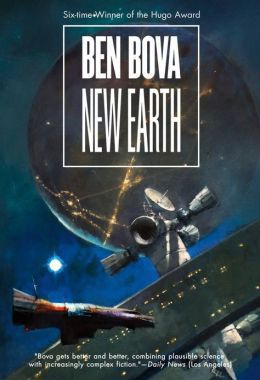
New Earth picks up some time after the events of Farside. Humanity has sent an expedition to “New Earth.” Upon arrival, there is a great mystery: “New Earth” is eerily like Earth itself. It turns out that a machine known as a “predecessor” has created the planet and grown these human-like aliens as a way to break it to humanity that there is, in fact, more intelligent life “out there.” Moreover, there is a catastrophic event coming towards the whole arm of the Milky Way which will wipe out these intelligent species, and humanity needs to help preserve themselves and the other species.
Though skeptical, ultimately all the members of the expedition are convinced, and the book ends with the message reaching Earth and the gearing up to proceed on this mission given by the Predecessor.
Reflection
There are, of course, any number of things that one could nitpick regarding the plausibility of the scenarios Bova envisions (one would be the rewiring of Uhlrich’s brain to “see” via hearing and touch… how does that work?), but here we’ll focus on two aspects of the work: the plausibility of life outside Earth and the mythos of the benevolent alien.
In Farside, readers who haven’t surveyed the body of Bova’s work discover that the Solar System itself teems with life: life once flourished on Mars, and its vestiges remain; on Jupiter, creatures soar in the skies; life is found elsewhere throughout the System. Bova’s vision of the origin of life seems to be that if there’s water, there may be life. Yet one has to wonder about the plausibility of life forming on a planet like Jupiter. How might biochemical interactions with delicate balances of material be maintained for long? What of the distance to the sun? The origin of life requires all kinds of factors to be “just right” and it simply is not enough to fudge the numbers by saying “It could have happened this way.” To develop a hypothesis around ad hoc assumptions is faulty.
Intelligent life, as explicated in New Earth, is even more problematic. It is easier to have single celled organisms than to have the complexity needed for intelligence. Even granting a naturalistic scenario, the conditions must be even more tuned for life and allow for the nurturing of that life for extremely long periods of time. The universe is indeed huge beyond belief but one has to wonder if even that immensity is enough to repeat the conditions which occur on Earth.
Of course, in the end, one must acknowledge that these are tales of science fiction, not proposals about how science fact might be. There is a certain sense of awe and wonder involved in considering whether life could exist all over the Solar System. It seems to me, however, that if that is the case, it probably got there by means of Earth–blown off the surface of our planet by an asteroid and traveled through space to Mars and possibly beyond.
Another major theme found in both books is what I dubbed the “Myth of the Benevolent Alien.” There is a kind of pervasive battle in science fiction between the notions that aliens want us dead or that aliens are going to be ultimately some kind of saviors of humankind. New Earth brings this benevolence front and center: some unknown life form created these “Predecessors” to find and aid intelligent life. It’s a scenario filled with wonder and hope. But it’s also a scenario which I’ve found time and again in materialistic literature.
The way this story goes: wherever possible, life is certain. It’s a kind of appeal to a fantasy of a godless universe wherein it may be possible to find hope and meaning in the stars. As one character (I believe it is Grant) said in Farside: Ad astra! (To the stars!). Second, the actual inherent implausibility of life both leads to this longing (we don’t want to be alone) and to a search for meaning (how did we get here?). My own answer is that theism provides a more plausible explanation of both the longing for meaning, meaning itself, and the way in which life arose. Interestingly, however, the atheistic accusation that theists are engaged in wishful thinking is perhaps mirrored through various declarations made by naturalists themselves (see the post linked above and in the links below).
Bova’s novels thus serve as a way forward in this discussion. By illustrating our longing and loneliness through the fulfillment of our desires (the discovery of life and the notion that we are not alone), Bova grants readers their wishes. However, we ultimately come to realize that these are indeed just wishes. Perhaps, one day, a “New Earth” will be discovered. But even if that happens, it will not be enough to satisfy our loneliness, nor will it answer our ultimate questions. Theism is the ultimate antidote to loneliness, the ultimate answer for our questions.
Links
Be sure to check out the page for this site on Facebook and Twitter for discussion of posts, links to other pages of interest, random talk about theology/philosophy/apologetics/movies and more!
Materialists: Where is hope? Look to the stars!– I analyze one aspect of materialism: the way that some look to hope in the “beyond” of the outer limits of the universe. Hope, for materialists, may come from the stars. Our salvation may lay beyond our solar system, in benevolent aliens who will bring great change and advances to us.
Our Spooky Universe: Fine-Tuning and God- The incredible circumstances which allow for life to exist and thrive on Earth are the cause for not merely fictional speculation, but actual reflection upon our place in the universe and how it might relate to the transcendent. Check out this post which surveys the evidence for the existence of God found in “fine-tuning.”
Sources
Ben Bova, Farside (New York: Tor, 2013).
Ben Bova, New Earth (New York: Tor, 2013).
SDG.
——
The preceding post is the property of J.W. Wartick (apart from quotations, which are the property of their respective owners, and works of art as credited; images are often freely available to the public and J.W. Wartick makes no claims of owning rights to the images unless he makes that explicit) and should not be reproduced in part or in whole without the expressed consent of the author. All content on this site is the property of J.W. Wartick and is made available for individual and personal usage. If you cite from these documents, whether for personal or professional purposes, please give appropriate citation with both the name of the author (J.W. Wartick) and a link to the original URL. If you’d like to repost a post, you may do so, provided you show less than half of the original post on your own site and link to the original post for the rest. You must also appropriately cite the post as noted above. This blog is protected by Creative Commons licensing. By viewing any part of this site, you are agreeing to this usage policy.
Sunday Quote: Do we need to agree with past thinkers?
 Every Sunday, I will share a quote from something I’ve been reading. The hope is for you, dear reader, to share your thoughts on the quote and related issues and perhaps pick up some reading material along the way!
Do we need to agree with past thinkers?
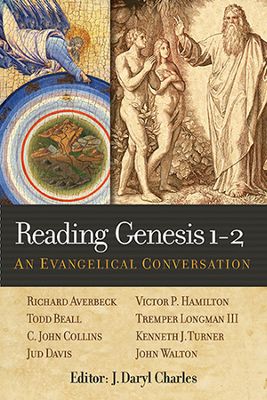
I recently read through Reading Genesis 1-2: An Evangelical Conversation, which has given me a lot to reflect upon. One quote that struck me was from Jud Davis:
A beloved teacher once said, “If you cannot find at least one ancient, one medieval, and one modern commentator who shares your view, it probably means you are wrong.” Over the years, I have thought long and hard about this statement, and I believe it is exactly right because if you could not find such examples, you would be forced to say, “Everyone before missed it until me.” (215)
I thought this was an interesting quote because it says much about how one approaches theological issues. First, there is some concern regarding this passage for me because it seems that some truths are indeed missed by everyone until someone discovers (or rediscovers) them. Second, there is a real concern for whether one innovates in doctrine and thus becomes a heretic. That is, innovation in theology is often divergence from established truths. These established truths are often established exactly because they follow from the text. Thus, an innovation which says, for example, that Jesus is not God is rightly denounced as heretical.
Based upon these conflicting concerns, I think it is permissible to say there is some tension within the practice of historical theology and exegesis. We must be careful to avoid the pitfalls of either ignoring the voices of the past or being too cautious to reconsider the evidence for certain positions. Going to either extreme would be dangerous. The most prominent danger, in my opinion, is the danger of using a passage like this to squelch debate or exploration. Ultimately, the text is the arbiter of truth, not established interpretations. If someone comes up with a “new” look at a text, it is important to consider it on its own terms rather than reject it because it is new. The weight of unanimity in the past should be seen to increase the standard of proof for those who disagree, but it should not be used to silence those who seek truth.
What are your thoughts on the balance between historical scholarship and new interpretations?
Links
Be sure to check out the page for this site on Facebook and Twitter for discussion of posts, links to other pages of interest, random talk about theology/philosophy/apologetics/movies and more!
Source
Jud Davis, “Unresolved Major Questions: Evangelicals and Genesis1-2” in Reading Genesis 1-2: An Evangelical Conversation
Really Recommended Posts 4/4/14- Views on “Noah” and “God’s Not Dead”
 I think it’s important to view a range of perspectives on two of the latest flicks to hit the big screens: “Noah” and “God’s Not Dead.” These films are going to draw religious viewers simply based on their content. How do we approach them? What conversations do we have? Here, I’ve offered a few posts about each film. I’d love to read your own thoughts on either or both of these flicks. Yes, this is an owl post edition because I have a winter storm blowing through right now. So that’s fun. (This is my attempt to keep smiling.)
God’s Not Dead
An Apologist Reviews “God’s Not Dead”– Here, a Christian apologist discusses his viewing of the movie. His overall thought is that though it is at times simplistic, it may help awaken the need for apologetics within the church.
David Baggett Guest Post: “God’s Not Dead”– Noted Christian philosopher David Baggett takes on the film. He’s concerned that the film oversimplifies and caricatures atheists and Christians, without paying enough attention to the thoughtfulness of either.
Personal Comments on God’s Not Dead– Astrophysicist Hugh Ross shared his personal thoughts on the film. He thinks it is worth seeing for Christians, but also has reservations regarding its portrayal of the people involved.
A Christian Philosopher’s Thoughts on “God’s Not Dead”– This is a Christian apologist from a different [presuppositional] perspective offering thoughts on the film. To be fair, he is actually looking at the trailer. Can his comments be valid still? Check out the post and judge for yourselves.
Noah
Darren Aronofsky’s “Noah”– Over at The Gospel Coalition, the flick “Noah” is presented as having numerous issues, but it may start conversations and it also helps show the reality of evil before the Flood. Moreover, the reality of the spiritual realm is something that not enough people think of, but in the film the spiritual reality is very real and powerful.
I’m a Christian and I think ‘Noah’ deserves a four star review– In stark contrast to the above, Matt Walsh rips the film apart and also questions why any Christian leaders would be endorsing it or thinking of it as worthy viewing.
Sympathy for the Devil– In this post, Brian Mattson argues that the film is actually an ingenious way of portraying Gnostic ideas and Kabbalah. Essentially, his view is that the film is very explicitly Gnostic and portrays God as evil and the devil as sympathetic.
No, Noah is not Gnostic– In response to the claims of Gnosticisim, Peter Chattaway argues that one cannot conflate Kabbalah with Gnostic thought. Furthermore, he argues that Mattson gets several plot points and points of comparison wrong.
Both, and Then Some!
Hollywood, Movies, and the Bible: Should We Rewind on How We View?– Darrell Bock shares some thoughts on several recent movies with faith themes in them, such as “Noah” and “God’s Not Dead.” He offers practical advice regarding how one might view films with a discerning eye as well.
Abortion Clinics, Pro-Life Activism, and “Abolish Human Abortion”
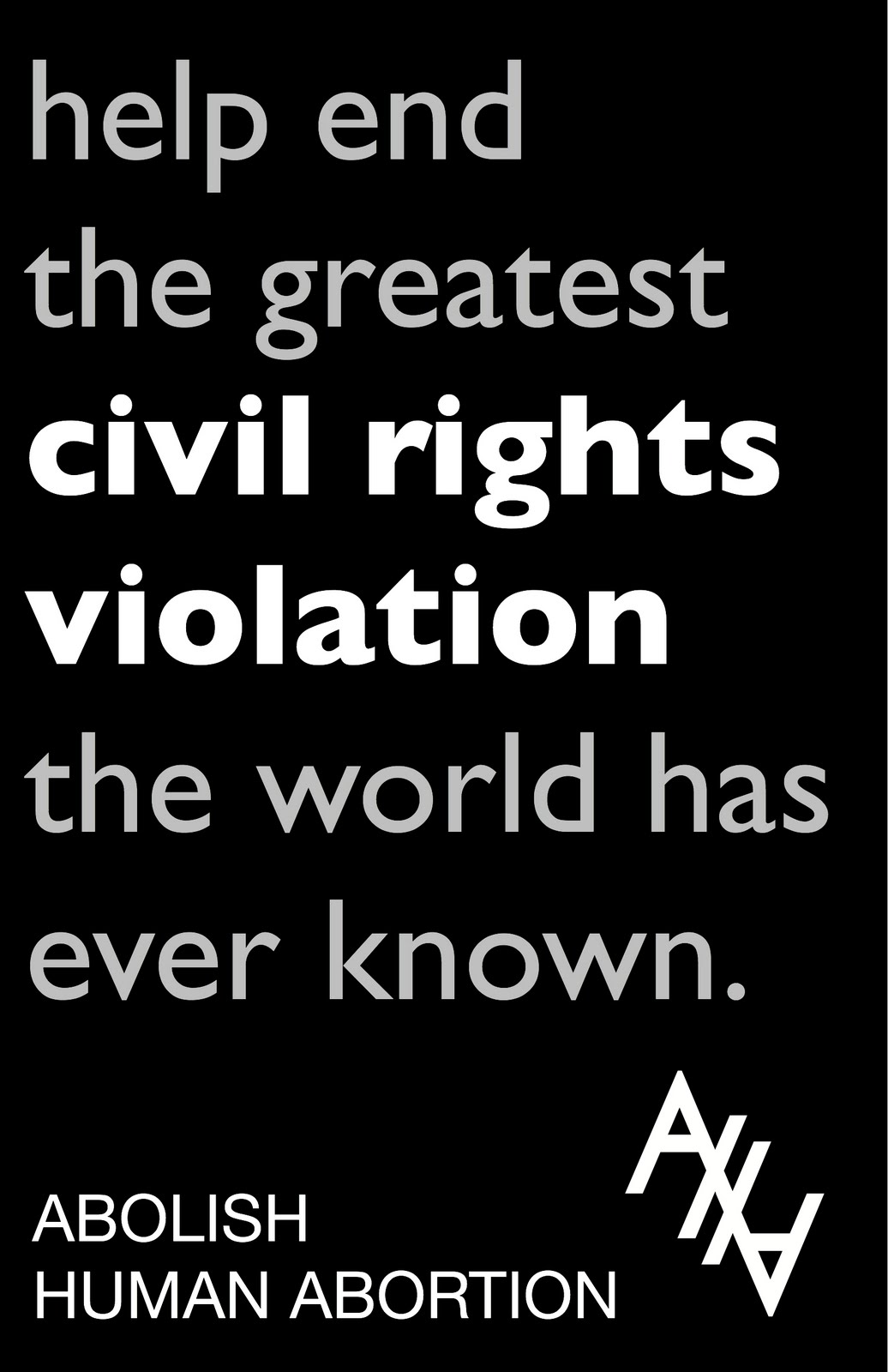 Recently, the Facebook group for the activist group known as “Abolish Human Abortion” shared a note to fellow pro-life activists providing critique and advice. Here, we’ll analyze that post to see how accurately it represents their opponents and what we can take away from how to argue the abortion issue.
I’ll link to the entire post (see above; see it also reproduced in the comments below) so that you can read it for yourself and see if I unfairly represented anything. I’ve also kept a copy of it on file to reproduce it in the comments. I welcome comments so long as they follow my comment policy.
Tone
First, I want to say that I do appreciate some of what AHA has done and continued to do. Many of their posters are helpful (such as the one featured in this post or in my post on Bonhoeffer’s view of abortion), and they provide some solid analysis of the abortion issue from a worldview perspective. No one reading this post should think that everything I think about AHA is negative. I have had positive interactions with AHA in the past and hope, as they do, that one day we can end abortion. I also favor the immediate end of abortion to gradually ending it. My contention is that gradual legislation is actually effective (this claim will be borne out below).
Second, note that any response to me should operate under a fairly similar tone. I have actively worked to end abortion through protest, prayer, writing, and other avenues. I hope that one day we can end abortion. Attacks on me as a person because I disagree with the method of another pro-life group should be seen for what they are: obfuscation.
Third, I will not respond to anything not in the comments here. I simply don’t have time to go actively seeking responses to my posts, so if you have something to say, write it here and please be brief.
Analysis
The author of the note, T. Russell Hunter, begins with a claim: “When hospitals all across America start paying doctors to perform abortions within their walls, it will be the triumphs of pro-life legislation which drove them there.” This claim is that which Hunter contends to support. Let us analyze the rest of the note to see if this claim is borne out therein.
The first piece of allegedly supporting evidence is this: “Passing laws that temporarily shut down abortion clinics because they are not close enough to hospitals only strengthens the abortion industry…”
Think about that claim for a second. First, does it support the claim that hospitals “all across America” will start performing abortions? Second, does it provide any evidence whatsoever? Finally, let’s put this claim in perspective with some facts. Planned Parenthood has said, of the closure of several clinics in Texas [paraphrasing], “…the requirement could leave the state of 26 million people with as few as six abortion centers.” That same article notes how many abortion providers have failed to meet the new requirements put in place by laws in Texas. Think about that: if there are only 6 abortion centers in a state the size of Texas, do you think that the number of abortions will increase or decrease?
Another claim made by Hunter: “Abortion is not health care and we should not be fighting it by passing health-code rules and regulations.”
Given how much AHA likes to parallel ending abortion with the abolition movement, I think it is fitting to point to the way William Wilberforce–who effectively ended slavery in Great Britain–worked against slavery. For some time he tried to get votes passed to outright abolish slavery. Ultimately, however, abolition was assured when a bill was passed forbidding military aid to be provided to slave ships due to the war with France. The move was effectively a sleight of hand because several British ships operated under neutral flags, so the slave trade was crippled and slavery was abolished not long after that. You can see this story beautifully dramatized in the film Amazing Grace.
What does this bit of history tell us? It tells us that such means actually are effective. Thus, when a state like Texas passes new legislation to ensure the heath and safety of women who are at abortion clinics, and those new regulations cause a state with 26 million people to shut down abortion clinics, the pro-life cause does benefit.
Two claims of supporting evidence provided are: “4. Some ‘clinics’ will close, but those remaining will pick up the slack; 5. Shutting down clinics doesn’t halt abortion, it just makes people who choose to sacrifice their children drive further.”
I’d like to ask AHA to provide statistics to back up these claims. Rather than just throwing out speculation that women who choose abortion will just “drive further” (remember, Planned Parenthood is concerned a state like Texas [look at its size on the map!] will go down to just six clinics), back it up. Yet AHA expects us to believe through mere speculation that these women will “drive further.” I wonder what evidence they have to support that. Moreover, the evidence actually counters this claim. (From the article:) “Kansas is one state that is an example of how closing abortion clinics saves lives. Since 2001, every time an abortion clinic closed in Kansas, the number of abortions significantly dropped the following year.” That’s a fact. What has AHA provided to support their claim that closing clinics is not effective?
Unfortunately, the rest of the note essentially follows this same theme. There are a number of claims thrown out there with no evidence. Consider this tidbit: “Do you not see that the abortion industry only gets stronger as they build bigger and better clinics to meet your pro life standards. Do you not see that they (like you) just raise money from their so-called defeats? Have you not come to realized that no matter how many clinics you shut down, millions of babies are still being aborted every year. Do you not see that the devil himself would allow you to take a few pieces off the board so long as he constantly has you in check mate?”
Again, facts speak louder than empty leading questions. The number of clinics closed has not been offset by the number opened. The number is, in fact, down 74% since 1991. And, when clinics close, the number of abortions decreases.
Consequentialism or Pragmatism- Getting it Done?
The main problem with AHA’s reasoning is that they take an all-or-nothing mentality. You can observe that in the leading questions noted above. In particular, “Have you not come to realized [sic] that no matter how many clinics you shut down, millions of babies are still being aborted every year[?]” Yes, it is true that millions are being aborted. However, when pro-life legislation continues to reduce the number of those being aborted, that is cause to say that pro-life views are being furthered. I don’t know of any pro-life organization that’s saying “Hey, we got some clinics to close! Let’s stop working to end abortion!” That’s not how pro-life groups are approaching the issue. However, many of these groups are happy that when clinics close–as they are–the number of abortions decreases.
The fact that AHA is not happy about this says something, I think, about their own mentality when it comes to the issue. AHA demands only legislation which will immediately end abortion. They are seemingly unaware of how historically (as noted above with Wilberforce) working through other means can actually be more effective.
It is this seeming historical illiteracy (see also here) of AHA which worries me enough to make me want to respond to a note like the one I wrote on here. By failing to acknowledge the success of gradualism and, in fact, working against gradualist approaches, AHA is working against facts. Lives are being saved when abortion clinics closed. That’s something anyone who labels themselves “pro life” should celebrate.
Conclusion
AHA has not provided evidence to support the claims made in the note I analyzed. Moreover, several of the assertions made therein are actually contrary to observed facts. AHA seems to be either historically ignorant or willfully obfuscating the way in which abolition was brought about. Although I would also far prefer the immediate end of abortion, I think any who are pro-life should agree that when legislation closes abortion clinics–which lowers the number of abortions and therefore saves lives–it is cause for celebration rather than chastising those who worked to pass the legislation.
I reiterate that I know of no pro-life organization which is saying that the work is done once legislation which may close abortion clinics passes. The work will continue until we have brought an end to abortion. Groups like AHA should stop trying to muzzle those who have actively worked to save lives.
Finally, I admit I wrote this post with a heavy heart and only because I’m deeply concerned with the way that AHA has continued to aim criticism at pro-life individuals or groups which are actively saving lives. I was very excited when I learned about AHA over a year ago but have, unfortunately, felt burdened to caution others away from the group because of the way it continually fails to provide facts to support their attacks on other pro-life persons. We must learn from history and we should celebrate when lives are saved. I long to return to a point where I and AHA could stand together as we work side-by-side to end abortion. Unfortunately, as long as AHA fails to recognize that gradual steps actually do save lives, that day will not come.
Links
Be sure to check out the page for this site on Facebook and Twitter for discussion of posts, links to other pages of interest, random talk about theology/philosophy/apologetics/movies and more!
How Abolish Human Abortion Gets History Wrong– Here, a pro-life individual notes some of the historical errors in evaluating abolition and abortion AHA has put forth. It is worth seeing the response to some counter arguments made by AHA as well.
Abolish Human Abortion’s Revisionist History– Clinton Wilcox provides a more thorough analysis of the use of the term “abolition” and how abolitionists themselves actually worked incrementally to bring about the abolition of slavery.
SDG.
——
The preceding post is the property of J.W. Wartick (apart from quotations, which are the property of their respective owners, and works of art as credited; images are often freely available to the public and J.W. Wartick makes no claims of owning rights to the images unless he makes that explicit) and should not be reproduced in part or in whole without the expressed consent of the author. All content on this site is the property of J.W. Wartick and is made available for individual and personal usage. If you cite from these documents, whether for personal or professional purposes, please give appropriate citation with both the name of the author (J.W. Wartick) and a link to the original URL. If you’d like to repost a post, you may do so, provided you show less than half of the original post on your own site and link to the original post for the rest. You must also appropriately cite the post as noted above. This blog is protected by Creative Commons licensing. By viewing any part of this site, you are agreeing to this usage policy.

 J.W. Wartick - Reconstructing Faith