Archive for
Really Recommended Posts 10/30/15- What do you know about Domestic Abuse?, apologetics, and more!
 Another week, another round of enjoyable reads for you, dear readers. It is Domestic Violence Awareness Month, so I’ve shared a double-feature of posts that work to dispel myths about domestic violence. How many of these myths have you heard or held onto? Other posts include the fine-tuning argument, apologetics in the Bible, fossilized burrows, and the strangeness of the Bible. Check them out, and let me know what you think.
Ten Myths About Domestic Abuse You Didn’t Know You Believed – Part 1 – I found this post enlightening about some of the perceptions related to domestic abuse we often absorb without realizing it. I think everyone should read this post to get an idea of some of the difficulties around speaking about domestic abuse. This post has the first 5 myths. Don’t forget to check out Part 2 as well.
The Fine-Tuning Argument (Video)– A video which outlines and explains the argument for the existence of God from fine-tuning. I think this is a sound argument well-worth knowing.
Fossilized Animal Burrows in Argentina from the Triassic Period– If the Flood is supposed to explain the overwhelming majority of sedimentary layers on Earth, how do Flood Geologists explain animal burrows? This post presses home the challenge.
Apologetics Started in the Bible– Some reject the need for Christian apologetics, but the fact is that apologetics is found in the Bible itself.
Parents, Please Don’t Forget How Strange the Bible Is– If we don’t take the whole word of God seriously, it will be hard for our children to do so. We need to be aware of the sometimes strange aspects of the Bible and be prepared to answer our kids’ questions about them.
Book Review: “The Reformation Study Bible”
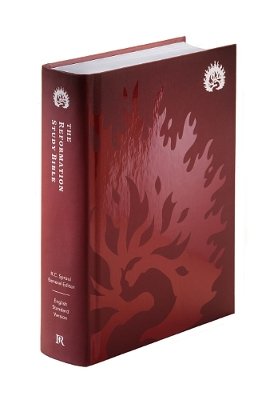 A few months ago I was sent a review copy of The Reformation Study Bible. Given the title, I kind of expected there to be study notes from Luther, Calvin, Zwingli, and the like. I mean, it’s the “Reformation” Study Bible, right? What it actually is is a Reformed Study Bible. I’ll be reviewing it from that perspective as well as I can, but I wanted to be sure readers wouldn’t be confused, as I was.
The Bible is extremely robust, with notes often taking up half or more of the actual pages of the text. Each book has a brief introduction that does a good job outlining key details and theological themes. There are extensive maps and additional notes found throughout the text. Notes range from theological exposition to apologetics-oriented. At times they focus on a pastoral perspective or draw out inter-canonical readings of the texts. There is little that passes without comment.
I received the edition pictured here. The cover is beautiful and also very solid. The binding clearly will hold up quiet well under lengthy use. There are, of course, other bindings available including leather. The pages are extremely thin, however, and it is easy to see the text through the page. The font is small, though readable. As with most other modern study bibles, there is very little space in the margins for writing notes (apart from sections of biblical poetry).
The extent to which readers will enjoy this Bible is going to be almost entirely based on how much they align with Refromed theology. In some places (such as interpretation of Genesis 1), there is leeway granted in the notes for a spectrum of views. In others (such as the discussion over men and women in the church), a specific perspective (complementarianism) is heavily endorsed. Discussions of sacraments, foreknowledge, predestination, election, and the like are all explicitly Reformed in their perspective. This is not a strike against the study Bible–it is, after all, effectively a Reformed Study Bible–but readers must realize that they will get exactly that.
In order to write this review, I went through several books in their entirety, along with reading the notes and the like. These included Ruth, Genesis, John, and 1 Corinthians. In addition, I read selections from every other book. The tone and notes are consistent throughout. As already noted, the notes are also fairly extensive.
The bottom line is that you’re going to get out of The Reformation Study Bible exactly what you would expect from a conservative Reformed study Bible. It is excellent in that regard–and could even serve as a resource if you are interested in researching Reformed perspectives on various passages–but if that is not what you want, you should look elsewhere for a study Bible.
The Good
+Extensive notes with deep discussion of inter-related texts
+Good format
+Readable introductions with inter-canonical perspective noted
The Bad
-Confusing title
-Lots of notes will be largely disregarded if you have a different theological bent
Disclaimer: I was provided with a review copy of this book by the publisher. I was not obligated to write any specific kind of feedback whatsoever.
Adhering to the Book of Concord: “In So Far As” or “Because” it agrees with Scripture?
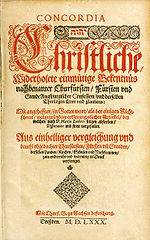
A title page of the Book of Concord
Lutheran theology is derived from and reflective upon not just Martin Luther but also the Lutheran Confessions, as found in the Book of Concord. Within Lutheranism, there is much debate over exactly how tightly one must adhere to the Book of Concord. On one side, there are those who insist we must affirm the Book of Concord “because” it agrees with the Bible. On the other side, others maintain we should affirm it “in so far as” it agrees with the Bible.
Because it Agrees
Representative of the view that one must agree with the Book of Concord because it teaches what the Bible teaches is the following:
Authentically Lutheran churches insist on a subscription to the Confessions [The Lutheran Confessions/Book of Concord are used interchangeably] because they agree with the Bible, not merely in so far as they agree with Scripture. Otherwise, there would be no objective way to make sure that there is faithful teaching and preaching of God’s Word. Everything would depend on each pastor’s private opinions, subjective interpretations, and personal feelings, rather than on objective truth as set forth in the Lutheran Confessions. (Book of Concord (.org) FAQ)
Note some important aspects in this quote. First, the Book of Concord just does agree with the Bible. That is insisted upon. Second, the Book of Concord is said to be “objective truth” as opposed to the “subjective interpretations” of the individual. These considerations frame what I’d like to comment on regarding those who hold to the view that we must agree with the book of Concord “because…”
Because?
I’ll start with the second aspect noted above. There are, of course, all kinds of increasingly detailed issues people on either side of the debate might raise here. For example, how are “objective” and “subjective” being here defined? I’m going to set that kind of issue mostly aside and focus on a few difficulties I see.
The first is that one cannot simply read the words off the pages of the Book of Concord without going through the necessary step of interpreting them. That is, I as a reader of the Book of Concord must try to make sense of the words I am reading, and thus I am participating in the act of interpreting the Book of Concord. If, as the quote above states, the problem is the individual’s subjective nature, then the problem is completely unavoidable. Indeed, even if we grant that the Book of Concord is “objective truth” in its entirety, all we’ve done is moved the problem of subjective interpretation one step back. Now the reader must interpret the Book of Concord in order to get to the objective truth about Scripture found therein.
Another difficulty with this objective/subjective distinction is that it assumes the writers of the Lutheran Confessions were themselves either not subjective (which seems impossible) or explicitly guided by the Spirit to write out objective truth only. I would not dispute that the Holy Spirit could bring about a completely faultless writing, but the question is whether those who affirm the “because” position would like to argue this. The first thing we should do if they do want to argue this would be to see whether the writers of the Book of Concord assert the Holy Spirit did bring about such a completely objective, 100% correct work.
In the Preface to the Book of Concord, we can read:
Finally, with invocation of God Almighty and to his praise and glory and with careful deliberation and meticulous diligence through the particular grace of the Holy Spirit, they wrote down in good order and brought together into one book everything that pertains to and is necessary for this purpose. (Preface, 12)
Later, the Preface makes clear (15) that this Book was “the correct, Christian understanding of the Augsburg Confession…” In the closing of the Preface, we read (23) that those who signed on to it that they “are minded not to manufacture anything new… nor to depart in either substance or expression… from the divine truth… by the grace of the Holy Spirit we intend to persist and remain unanimously in this truth and regulate all religious controversies and their explanations according to it.”
These are all strong statements, and they clearly called upon God the Holy Spirit for guidance in the composition of the various works that make up the Book of Concord. But does it follow that they were explicitly, inerrantly inspired and guided by the Spirit to never once get a single thing wrong in this book? Those who affirm the “because” position must answer yes. There is no wiggle room.
But a close reading of the Preface seems to suggest that although the writers certainly believed everything in the Book of Concord to be without theological error (otherwise they would not have it regulate all controversies, etc.), I have yet to find anywhere that a claim could be made that the book is explicitly inerrant. It would have to be, however, for the “because” position to be true. This human composition would have to be 100% correct in every single minute detail down to the last proof text cited in order for it to be acceptable to affirm that we must agree with it “because” it agrees with Scripture.
Among other things, what follows from that is that anyone who subscribes to the Book of Concord “because” position must have read the entirety, looked up every citation, and assured themselves that every single interpretation, doctrinal position, and the like is 100% correct, lest they be saying that it is a human-made book without error on God’s Word without actually knowing every detail it contains.
The first issue raised above will be addressed in the section named “A Case Study,” below.
In So Far As
A supporting argument for the “In So Far As” position is that we should always only affirm that which is true. If we can agree that the Bible is true in all it teaches, then we should only agree with other writings about the Bible so far as they agree with the Bible. This seems like an obvious conclusion, but the whole debate centers on whether this argument is sound. It is difficult for me to figure out how to support this argument, not because I think it is a poor argument, but because it seems just intuitively clear.
It may help to use an analogy. Historians have debated how to write history and whether writers of history can ever fully get at the “true” history as it happened. Yet very few would deny that there is such a thing as a “true” history. There must be some absolutely correct sequence in which events occurred such that if we had a complete set of writings that simply reported those events, that would be the “true” history. Thus, there is an objectively true history, against which historians can be measured. Granting some of the hand waving involved in this thought experiment, suppose we had a book, The True History of the World, and we looked up the John F. Kennedy assassination therein. We would then have the objectively true report of that hotly-debated historical event as it really did happen. Now suppose I wanted to write a book about the JFK assassination based upon The True History of the World. However careful a historian I am, however excellent and detailed my mind is, however much guidance I may have had, would it be reasonable to say that you agree with my book, The Objective JFK Assassination “because” it agrees with The True History of the World or “in so far as” it does? It seems that the reasonable conclusion would be “in so far as” it does, because we know that The True History of the World is objectively true.
Though imperfect, this analogy gets at the argument written above. We can agree the Bible is inerrant. Thus, if I were to write a book entitled The Objective Bible, I think we can agree that we should only agree with my book so far as it agrees with the Bible, right? No matter how detailed I am, no matter how meticulous, no matter how large a group of thoughtful interpreters I got together to vet my work, it would be entirely reasonable to only affirm agreement with my book so far as it is biblical. Then why would such a standard not also apply to the Book of Concord? I see no reason why that standard would not.
Indeed, to argue against those who affirm the Book of Concord only “in so far as” it agrees with the Bible would mean that one would have to assert that the caution and respect for God’s word implicit in that position–that I would not want to affirm anything, even by mistake, as biblical if it is even possibly in error anywhere–are mistaken. That the care and caution necessary to say “I will only agree with any book in so far as it agrees with the Word of God” is mistaken, and that that the Book of Concord must also be included under the umbrella of books against which all others must be judged.
For the “because” position ultimately, unswervingly leads to the conclusion that we should only affirm any other book “in so far as” it agrees with the Book of Concord. After all, if it is true that the Book of Concord is affirmed because it agrees with Scripture, then it follows that the authority of the Bible is effectively equivalent to the authority of the Book of Concord. The Bible is God’s word, and the Book of Concord is the objective teaching of God’s word without even possible error. That is not simply rhetoric; it is what must follow from the “because” position. Any interpretation of the Bible must be judged against the Book of Concord; hence, any reading of the Bible must also be judged against it.
A Case Study
Finally, we are in position to ask whether the Book of Concord does indeed have any error therein. That is a crucial question, of course, and one not easily resolved by those who remain faithful Lutherans. If, however, there is even one incorrect use of a proof text in the Book of Concord, the “because” position fails.
In the Apology of the Augsburg Confession, Article XXIII (XI) on the Marriage of Priests, section 25, we read:
Therefore this law concerning perpetual celibacy is peculiar to this new pontifical despotism. Nor is it without a reason. For Daniel 11:37, ascribes to the kingdom of Antichrist this mark, namely, the contempt of women.
Daniel 11:37 reads (ESV) “He shall pay no attention to the gods of his fathers, or to the one beloved by women. He shall not pay attention to any other god, for he shall magnify himself above all.”
The whole passage is difficult to interpret given its prophetic message about the Kings of the North and the South. I’m not going to enter into whether this is specifically referencing “Antichrist” or “the kingdom of Antichrist” or anything of the sort. Instead, the issue is with the reading as “contempt of women.” The Reformers were obviously not using the ESV or anything in English. But older English editions like the KJV might support this text as a proof for contempt of women: “Neither shall he regard the God of his fathers, nor the desire of women, nor regard any god: for he shall magnify himself above all.”
But the problem is that critical editions of the Old Testament don’t support a reading as contempt of women. Without going into depths of detail, and because I’m not a Hebrew scholar by any measure, I would just point out that the Hebrew does seem to clearly state “the one desired by women.” So if we are to read 11:37 as a proof text for contempt of women, it doesn’t seem to be a right reading. It’s a minor difficulty, but one nevertheless. Did the citation above from the Book of Concord properly exegete the Bible? I would assert that the use of this proof text is mistaken. If we are to take “paying no attention” as “contempt”–itself a move that could be disputed, then the subject remains “the one desired by women” not “women.”
Now, if the Book of Concord should be agreed with because it agrees with the Bible, then how are we to take this? I don’t know. It seems to me that this is more an example of the way people read the Bible at the time and used proof texts–often stripped of context–in defense of their positions. A single dispute over a citation is not a paradigm shift; indeed, I think that the authors of the Apology were correct on this notion about the marriage of priests. But that doesn’t mean everything they wrote is correct.
Conclusion
I agree with and affirm the Book of Concord in so far as it agrees with Scripture. I think it is correct on a huge amount of the things it teaches. I am currently re-reading it (slowly) and checking citations as I go. I have found it to be edifying and a source of profound theological insight. But it is not the Bible, and I do not think that to be Lutheran–or even a confessing Lutheran–I need to affirm that the Book of Concord is without possible error.
Source
Robert Kolb and Timothy J. Wengert, eds. with Charles P. Arand, translator, The Book of Concord.
Links
Be sure to check out the page for this site on Facebook and Twitter for discussion of posts, links to other pages of interest, random talk about theology/philosophy/apologetics/movies and more!
SDG.
——
The preceding post is the property of J.W. Wartick (apart from quotations, which are the property of their respective owners, and works of art as credited; images are often freely available to the public and J.W. Wartick makes no claims of owning rights to the images unless he makes that explicit) and should not be reproduced in part or in whole without the expressed consent of the author. All content on this site is the property of J.W. Wartick and is made available for individual and personal usage. If you cite from these documents, whether for personal or professional purposes, please give appropriate citation with both the name of the author (J.W. Wartick) and a link to the original URL. If you’d like to repost a post, you may do so, provided you show less than half of the original post on your own site and link to the original post for the rest. You must also appropriately cite the post as noted above. This blog is protected by Creative Commons licensing. By viewing any part of this site, you are agreeing to this usage policy.
Sunday Quote!- Setting aside Luther?
 Every Sunday, I will share a quote from something I’ve been reading. The hope is for you, dear reader, to share your thoughts on the quote and related issues and perhaps pick up some reading material along the way!
Setting aside Luther?
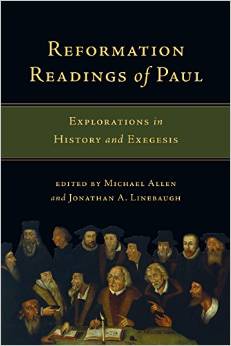
During October each year, I read some books about the Reformation to inform myself about that vastly important time in church history. October 31st is Reformation Day, of course, and so I thought I’d share a quote this Reformation Sunday from one of the books I’ve been reading. This year, Reformation Readings of Paul was high on my list, and I received a review copy from InterVarsity Press to devour.
There is a danger in the Protestant Church to enshrine the interpretations and methods of the Reformers such that the way they read the Bible becomes a new authority or at least lens through which Scripture must be read in order to be rightly understood. There is a fine line between referencing, respecting, and gleaning insight those who have come before as opposed to mechanically sticking to them. David C. Fink points out that even Reformers like Luther would have advised against this:
Luther showed no hesitation in setting aside the views of Jerome, Erasmus, or even Augustine. If we take him at his word, there is no reason to think he would not expect the same handling from modern exegetes today. (33-34, cited below)
Luther referenced these church fathers but did not see them as the authority on exegesis or interpretation of the biblical text. Similarly, Fink notes, we should not be afraid to set aside Luther if we should find that his interpretation of a passage is mistaken.
Links
Be sure to check out the page for this site on Facebook and Twitter for discussion of posts, links to other pages of interest, random talk about theology/philosophy/apologetics/movies and more!
Sunday Quote– If you want to read more Sunday Quotes and join the discussion, check them out! (Scroll down for more)
Reformation Theology- Check out my other posts on the Reformation and its theology (scroll down for more)
Source
David C. Fink “Martin Luther’s Reading of Galatians” in Reformation Readings of Paul eds. Michael Allen and Jonathan A. Linebaugh (Downers Grove, IL: InterVarsity, 2015).
SDG.
Really Recommended Posts 10/23/15- Apologetics, Diatoms and the Flood, patriarchy, and more!
Hello, dear readers! I have another round of posts that I hope you will enjoy perusing. The topics this week include apologetics, an objection to the pro-life position, patriarchy and biblical sex, and some tiny organisms that pose some big problems. Let me know what you think, and be sure to tell the authors you enjoyed their posts as well!
Apologetics Started in the Bible– Some Christians object to the use or import of Christian apologetics. However, apologetics got its start in and from the Bible. Here’s a post showing how.
Biblical Sex: Patriarchy’s Great Enemy– This post highlights the fact that in the Bible, male-female sexual relations really go against the paradigm of complementarian theology.
Book Review: “The Grand Weaver”– Ravi Zacharias is an excellent Christian apologist. Here’s an in-depth look at one of his books from Luke Nix. I recommend reading this one because it will give you some insights into Zacharias’ approach to apologetics. The book itself is also excellent.
Diatoms: Tiny Organisms Highlight Big Inconsistencies in Young Earth Flood Geology Models– Diatoms are tiny organisms that put up some big difficulties for young earth creationist models. Check out this post to read about some of these difficulties.
Response to objection that pro-lifers are “nowhere to be found once our children are born”– It is commonly objected that the pro-life position only cares about children in the womb. Once they’re born–who cares? I think that it is important for the pro-life position to be holistic and look at the totality of life rather than simply looking at unborn life as worth protecting. Here is a post that directly confronts this common objection.
“But it’s Legal” – Does the legality of an act make it moral?
One argument that is often used to defend certain acts which are argued to be immoral is the notion that these acts are “legal.” For example, one might say they are personally opposed to abortion, but it is legal and so they do not seek to end abortions. A more specific example has been the defense of Planned Parenthood in regards to donating fetal tissue. It is argued that the donation is legal, and so no wrongdoing has occurred. Evidence from the recent videos released seems to suggest that those fetal tissues might be sold, rather than donated, but that is not the issue at hand. The question to address here is: “Does the legality of an act make it moral?”
Thus, in the case of Planned Parenthood’s donations/sales, if legal, does it follow that it is moral?
To be blunt, the legality of an act is not enough to make it moral. One clear example of this would be antebellum slavery, which was legal for quite some time in the United States. Would those who want to assert that legality is enough to make an act morally permissible agree that slavery, at that time, was moral? If so, that is a tough pill to swallow. But we can go beyond that example and see how Nazi Germany was treated. After World War II, several of the perpetrators of the Holocaust and other atrocities committed by the Nazis were put on trial. The first of these became known as the Nuremberg Trials. The argument they made, however, was that they were obeying the law of their land. The argument was thus made that there was no law to which they could be held accountable.
The argument was rejected, and the legacy of these trials led to the creation of various international law organizations and more specific definitions of war crimes and crimes against humanity. But the question that must be pressed is whether these trials were just. The laws that they were condemned by were largely created after or during the trials themselves. What were the Nazis guilty of? The answer has already been provided, in part, as crimes against humanity. By willingly participating in and carrying out genocide and other atrocities, despite having orders to do so and acting within the laws of their land, the Nazis had still violated a higher law, which held them to a moral standard. There remains much debate over the legal basis for the convictions and executions of those who carried out the atrocities, but it seems that if one ultimately wants to argue that the law is all it requires to make something moral, they must side with the Nazis and agree that they should not have been held accountable for their acts.
We can therefore see that the mere appeal to a law to argue something is moral is not enough. Anyone who disagrees must assert that slavery, as it was being conducted in the United States, was at least morally ambiguous if not a moral good, because it was legal. Similarly, they must assert that the genocide the Nazis carried out was itself at least morally ambiguous if not a moral good, because it was legal and they did it under orders. The absurdity of these two conclusions should lead any reasonable person to agree that the legality of an act is not enough to establish its morality.
Thus, the simple legality of an act does not make it moral. An appeal to an acts legality does not mean it should be dismissed from moral scrutiny. Planned Parenthood should justly remain under intense scrutiny.
Sunday Quote!- Methodological Naturalism Makes a Farce of Empirical Investigation?
Every Sunday, I will share a quote from something I’ve been reading. The hope is for you, dear reader, to share your thoughts on the quote and related issues and perhaps pick up some reading material along the way!
Methodological Naturalism Makes a Farce of Empirical Investigation?
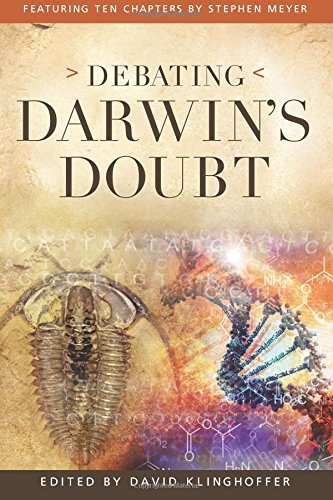
I’ve been reading through Debating Darwin’s Doubt, which is a collection of essays responding to various critics of Stephen Meyer’s major work arguing for intelligent design within biology, Darwin’s Doubt. In one of the essays, Paul Nelson, a philosopher of biology, directly addresses whether methodological naturalism–the notion that science must offer always and only physical, material causes as explanations–is a viable restriction on scientific inquiry:
[Methodological naturalism] “…makes a farce of empirical investigation, because the outcome of any research could never be in doubt: some material or physical cause must be affirmed as the explanation. If you don’t find one, try harder; just keep looking until you do. (288, cited below)
The point that is being made is that methodological naturalism is itself a limiting factor imposed upon scientific inquiry, rather than something that is required for scientific inquiry. I sympathize with this critique, to be frank. Whatever one thinks of the merits (or lack thereof) of the notion of intelligent design, I think that the sheer possibility of using inference to best explanation to detect intelligent agency is not itself anything to undermine scientific inquiry. Indeed, why should said inquiry be limited unnecessarily? Reject those theories which do not have the evidence to support them; but I don’t think we should do so simply by ruling out some varieties of theory a priori.
Debating Darwin’s Doubt has been an intriguing read so far.
Links
Be sure to check out the page for this site on Facebook and Twitter for discussion of posts, links to other pages of interest, random talk about theology/philosophy/apologetics/movies and more!
Sunday Quote– If you want to read more Sunday Quotes and join the discussion, check them out! (Scroll down for more)
Source
Paul Nelson, “Methodological Naturalism: A Rule That No One Needs or Obeys” in Debating Darwin’s Doubt edited David Klinghoffer (Seattle, WA: Discovery Institute Press, 2015).
SDG.
Really Recommended Posts 10/9/15- Gospels, Domestic Abuse, Dinosaurs, and more!
I am pleased to present this wide range of topics to you, dear readers! I hope you enjoy the reads as much as I did. We have posts on the origins of the Gospels from an atheistic perspective, domestic abuse, the ontological argument, soft tissue in dinosaurs, and Bill Nye on abortion. Let me know what you think, and be sure to thank the authors as well!
Where the Gospels Came From– This is a satirical post that highlights how broad swaths of internet atheism tend to view the origin of the Gospels. It’s well worth reading as it highlights some of the major errors.
When Staying in an Abusive Relationship is Part of Your Theology– It is Domestic Violence Awareness Month, and this post from Christians for Biblical Equality highlights one major difficulty with some theologies- they argue that one should stay in an abusive relationship from theological reasons.
The Probability of God’s Existence is Either 0% or 100% (video)– Kenneth Keathley offers this analysis and presentation of Alvin Plantinga’s ontological argument. He defines terms and answers some major objections, with the objections offered by atheists themselves.
“Soft Tissue” Found in Dinosaur Bones– Creationists sometimes claim that the finds of “soft tissue” undermine the possibility for an old earth perspective. Is that the case? Here is some analysis of this claim and some more recent findings regarding allegations of blood and other soft tissue found in ancient fossils.
Responding to Bill Nye’s Abortion Video– Bill Nye “The Science Guy” made a lot of claims about science and abortion in a video recently. Here’s a thorough analysis and refutation of his claims.
“The Martian” – Hope, Humanity, and God- a Christian look at the film
 The Martian is receiving some excellent reviews from critics, and for good reason. It is a stirring story about humanity and our capacities and drive to survive. Here we will look at the worldview htemes found in the film. There will be SPOILERS in what follows. I will not be summarizing the plot, but a summary can be found here.
Hope and Humanity
A major theme of the movie is that of hope. Mark Watney, the astronaut left behind on Mars, becomes the center of hope of the entire world. All eyes were following as he continued to fight against the unforgiving Red Planet. When the mission to rescue him finally comes to a climax, there is a scene of people around the globe watching in anticipation and hope. They celebrate merely hearing his voice.
I can’t help but think about the hope of the shepherd in a certain story told be a Jew in Galilee, in which the celebration over but one lost sheep was immense. There is an inter-connectedness that humans experience as we seek to help others and exult in the triumphs even of strangers in need.
Perhaps the central theme in the movie is that of the very, well, human-ness of humanity. We need companionship, and the poignancy of that is found throughout the film. Mark fights against the loneliness he feels by fighting one problem after another. But simply hearing someone’s voice is enough to send him celebrating, and when the rest of his mission team come to rescue him–and he can hear his commander’s voice for the first time, the overwhelming sensation of emotion he feels leads him to tears.
Humanity was not made to be alone.
God?
By no means does this film offer much related to worldview issues about God, but there are a few moments worth mentioning. The first is when Mark has to whittle a crucifix in order to get some material to burn for making water. He looks at the figure of Christ on it and says that he thinks that Jesus wouldn’t mind him using it to save his life. Though this never develops beyond a joke, it is interesting to see how it ultimately is a kind of salvation through the cross–this time in a very literal sense.
Prayer is hinted at when the head of NASA asks the head of the Mars projects whether he believes in God. The answer that came was unexpected: with a Baptist mother and Hindu father, “I believe in several.” The response? “We need all the help we can get.” Again, this joking moment does reveal a hint of truth: that God is the one who provides help. Of course, not the many gods of Hinduism, but the true God is the one who saves.
Conclusion
“The Martian” is a great film. It explores the human need more than most films ever even touch on. These needs reflect deeply ingrained desires that mesh well with the Christian worldview. Only in Christ can we ultimately find the consummation of hope.
Links
Be sure to check out the page for this site on Facebook and Twitter for discussion of posts, links to other pages of interest, random talk about theology/philosophy/apologetics/movies and more!
Andy Weir’s “The Martian” A Christian Look at the Book: Humanity, Community, and Hope– I look at the the worldview themes found throughout the book on which the film was based.
Also see my other looks into movies (scroll down for more).
SDG.
——
The preceding post is the property of J.W. Wartick (apart from quotations, which are the property of their respective owners, and works of art as credited; images are often freely available to the public and J.W. Wartick makes no claims of owning rights to the images unless he makes that explicit) and should not be reproduced in part or in whole without the expressed consent of the author. All content on this site is the property of J.W. Wartick and is made available for individual and personal usage. If you cite from these documents, whether for personal or professional purposes, please give appropriate citation with both the name of the author (J.W. Wartick) and a link to the original URL. If you’d like to repost a post, you may do so, provided you show less than half of the original post on your own site and link to the original post for the rest. You must also appropriately cite the post as noted above. This blog is protected by Creative Commons licensing. By viewing any part of this site, you are agreeing to this usage policy.
Sunday Quote!- Sarah the Matriarch as Equal to Abraham
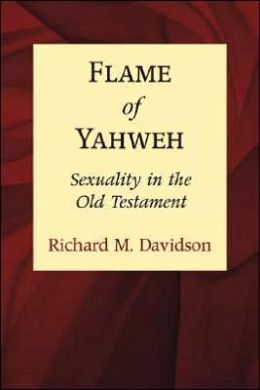
Every Sunday, I will share a quote from something I’ve been reading. The hope is for you, dear reader, to share your thoughts on the quote and related issues and perhaps pick up some reading material along the way!
Sarah the Matriarch as Equal to Abraham
I’ve been reading through Richard Davidson’s tome, Flame of Yahweh: Sexuality in the Old Testament, a huge study of, well, sexuality in the Old Testament. One portion focuses on the narratives in the Pentateuch and the women discussed therein. Sarah, Abraham’s wife, is shown to be the equal of Abraham, argues Davidson:
Details of Sarah’s life in the Genesis narratives reveal the high valuation of this matriarch, as she and her husband are portrayed as equal partners… given their social context, Sarah and Abraham are amazingly equal… (226, 227)
Davidson’s argument lists a number of reasons to believe this is the case. Here I will quote just a couple:
Sarah is regarded as just as critical to the divine covenant as Abraham himself… ([Genesis] 17:18-19; 21:12)… Sarah’s name is changed from Sarai, just as Abraham’s is from Abram… (17:16)… (227)
These are among the total of 10 main reasons Davidson cites to demonstrate that Sarah was “no wallflower.” The high valuation of women in the Old Testament is something Davidson demonstrates, in my opinion.
Links
Be sure to check out the page for this site on Facebook and Twitter for discussion of posts, links to other pages of interest, random talk about theology/philosophy/apologetics/movies and more!
Sunday Quote– If you want to read more Sunday Quotes and join the discussion, check them out! (Scroll down for more)
Source
Richard M. Davidson, Flame of Yahweh (Peabody, MA: Hendrickson Publishers, 2007).
SDG.

 J.W. Wartick - Reconstructing Faith