J.W. Wartick
Molinism and Aseity- A knock-down argument against middle knowledge?
 One of the most recent “Straight Thinking” podcasts–a podcast put on by Reasons to Believe–featured Travis Campbell discussing Middle Knowledge (which is an aspect of the philosophical theological position known as molinism). Middle Knowledge is, essentially, God’s knowledge of counterfactuals–that is, the knowledge of things like “If someone talks about molinism, J.W. Wartick will be interested.” That is a counterfactual because it states something which may be contrary to fact–that is, it depends on some condition to be fulfilled in order to be true (in the example above, it is the occasion of someone to talk about molinism).
On the second part of the interview, Campbell discussed some objections to molinism which he felt made the position intractable. One of the first objections he presented was an objection from “aseity” that is, God’s self-existence. According to the doctrine of divine aseity, God does not rely upon anything else for God’s existence. Now, molinism classically holds that God surveys the realm of possible worlds prior to the creative act and so sees all possibilities related to free creaturely choices. Then, God creates the world God desires. Campbell argued that this undermines God’s aseity because it makes God dependent upon creatures for omniscience–one of God’s essential attributes.
The argument, if sound, has great force. After all, if molinism means one must deny an essential attribute of God, there is a pretty serious difficulty with the doctrine. But does it? Campbell cited William Lane Craig, a leading proponent of molinism, as admitting that molinism entails that God’s knowledge, at least, is in some sense dependent upon creaturely choices. From what I have read of WLC,* I have found it seems he frequently makes it appear as though molinism presents God as able to choose among any parts of possible worlds to construct whatever possible world God wants. Not correct… but possibly also not Craig’s actual view;* perhaps Craig is only making it seem thus when he discusses molinism in summary. What I’m getting at is that I’m not convinced Craig is as consistent a molinist as, well, Molina (or in modern times, Thomas P. Flint).
Now for the claim itself, I do not think it follows that God is actually dependent upon creaturely choices. And, if it follows from molinism that God is dependent in that way, then it must also be true of any view which holds to foreknowledge whatsoever. In fact, this is where I have a pretty serious bone to pick with any view which denies comprehensive foreknowledge. Unless I am much mistaken–which is quite possible–the realm of possible worlds is a set of necessary truths. That is, each possible world is a complete set of all true propositions for the entire history of that world.*** But if that is the case, then molinism is no different on God’s creative activity than any other view of creation, for God is simply selecting one from a set of possible worlds.
There is debate over how such a set of possible worlds might be populated–does the set of possible worlds come from God, or is it simply a set of necessary truths?** Whatever one’s answer for this, it remains clear to me that molinism is not defective in this area: the molinist simply holds that God selects a possible world from the set of possible worlds. The fact that the molinist emphasizes that these possible worlds include free choices is essentially a moot point so far as aseity is concerned. If there is such a set of possible worlds, then any view of God’s foreknowledge and creation has to acknowledge that God’s creative act is the bringing forth of one such possible world. If there is no such set, then it seems our universe is necessary, which would itself be problematic for the doctrine of creation.
So it seems to me that Campbell failed to make a compelling argument against molinism from aseity. In order for his argument to be successful, he would have to show that molinism’s view of possible worlds is somehow radically different from any other position and then also demonstrate that molinism’s view also necessarily makes God dependent upon creaturely freedom. But of course that would also involve him having to show that the set of possible worlds, on molinism, is itself independent of God. And it seems to me that although perhaps not all molinists hold that God does generate the set of possible worlds, it is entirely possible for a molinist to consistently hold that this is the case: the set of possible worlds is dependent upon God. And, if that is true, Campbell’s argument fails. I conclude that Campbell’s argument fails because it is both incomplete and unsound.
*I have his Divine Foreknowledge and Human Freedom but I am working through Molina’s work before I transition into it.
**Interestingly, Craig is working in this area for his next major academic work, according to his own discussion of related topics on his podcasts.
***One may hold that a possible world is merely the starting conditions of a world, but I do not see how that distinction could be made coherently. That is, I’m not convinced that a set of possible worlds would not include the entire history of the possible world. Moreover, any who would argue that God has comprehensive knowledge of the future would have to grant that God’s creative act would entail the history of the entire [possible] world.
Links
Be sure to check out the page for this site on Facebook and Twitter for discussion of posts, links to other pages of interest, random talk about theology/philosophy/apologetics/movies and more!
SDG.
——
The preceding post is the property of J.W. Wartick (apart from quotations, which are the property of their respective owners, and works of art as credited; images are often freely available to the public and J.W. Wartick makes no claims of owning rights to the images unless he makes that explicit) and should not be reproduced in part or in whole without the expressed consent of the author. All content on this site is the property of J.W. Wartick and is made available for individual and personal usage. If you cite from these documents, whether for personal or professional purposes, please give appropriate citation with both the name of the author (J.W. Wartick) and a link to the original URL. If you’d like to repost a post, you may do so, provided you show less than half of the original post on your own site and link to the original post for the rest. You must also appropriately cite the post as noted above. This blog is protected by Creative Commons licensing. By viewing any part of this site, you are agreeing to this usage policy.
Dying for Belief: An analysis of a confused objection to one of the evidences for the resurrection
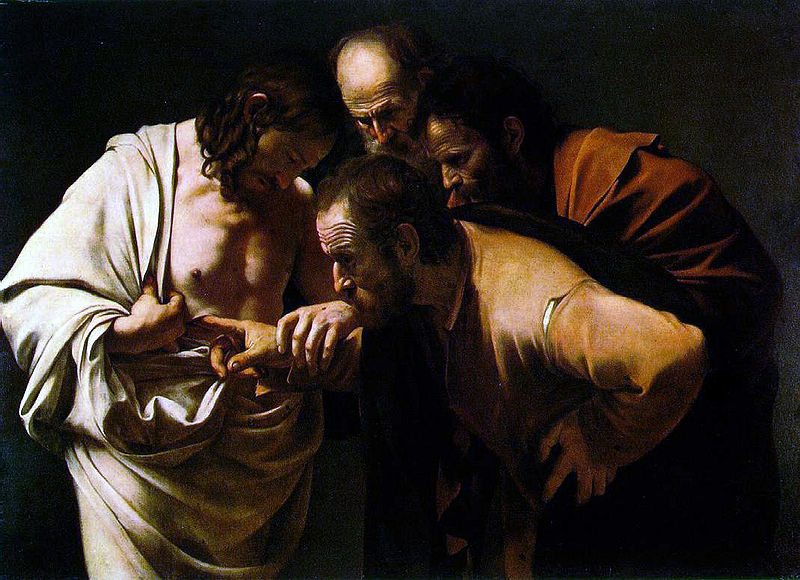 There is an objection to one of the evidences for the resurrection which is, frankly, terribly confused. I most recently ran into it on the discussion page for the radio show Unbelievable? Essentially, the objection goes like this: Christians say the fact that the disciples died for what they believe is evidence for its truth, but all kinds of religious people die for what they believe; are they all true?
The objector then often proceeds to note that some Muslims will die in suicide bombings due to their beliefs; they will note events like Thich Quang Duc burning himself to protest persecution; they will note other events in which religious people die for their beliefs. The implication, it is alleged, is that this cannot count for evidence for the truth of what they belief. People die for false things all the time; it doesn’t make what they believe true.
The objection seems compelling at first because it is, in fact, largely correct. The simple fact that people are willing to die for something does not make whatever they are wiling to die for true. However, this objection shows that the objector is badly misrepresenting the Christian apologetic argument.
The apologetic argument is intended to be used against those who would allege that the disciples made up or plotted for the notion of the resurrection for some reason. It therefore presents a major disanalogy with people of other faiths (or even later Christians) dying for what they believe. The major difference is that the Christian is claiming the disciples who went willingly to their deaths would have known what they were dying for is false, if it were.
Suppose you and a group of friends decided to make up a story to get some money. You decided that you were going to pretend that a buddy had died and risen again. You managed to set up circumstances in which your buddy appeared to die; then smuggled him off to Argentina–because that’s where everyone likes to hide, apparently. Later, you ran about the streets proclaiming that you’d seen your buddy walking around. He had been risen from the dead. And, you’d tell the story for the right price. To your delight, the story spreads like wildfire. But eventually it attracts attention of the wrong kind, and people are coming to kill you. Now, suppose that you could easily get out of it alive by simply confessing you’d made up the whole story. What would you do?
Alleged explanations for the evidence for the resurrection which appeal to purported conspiracies are much like this. The disciples would have known they were lying. Thus, the fact that they willingly went to their deaths does indeed count as evidence for the truth of what they were claiming. Otherwise, one would have to claim that these people quite seriously and willingly went to their deaths for something they knew was a lie they themselves had invented.
Thus, it is not enough for the objector to simply point out that other people die for faith not infrequently. That is not the core of the apologetic argument. Instead, they must argue for the implausible notion that the disciples willingly died for what they knew was a lie. It was not something they simply thought might be a lie; it would have been something that they were certain was false.
I do not think it is too far afield to suggest that the objection fails. It seems far more likely that they certainly believed what they professed were true, and they were in the unique position of knowing whether or not they were lying. Thus, the explanation of the resurrection is more credible than the explanation of a conspiracy. There are, of course, other attempts to explain away the historical argument for the resurrection, but those are arguments for a different time.
Links
Be sure to check out the page for this site on Facebook and Twitter for discussion of posts, links to other pages of interest, random talk about theology/philosophy/apologetics/movies and more!
SDG.
——
The preceding post is the property of J.W. Wartick (apart from quotations, which are the property of their respective owners, and works of art as credited; images are often freely available to the public and J.W. Wartick makes no claims of owning rights to the images unless he makes that explicit) and should not be reproduced in part or in whole without the expressed consent of the author. All content on this site is the property of J.W. Wartick and is made available for individual and personal usage. If you cite from these documents, whether for personal or professional purposes, please give appropriate citation with both the name of the author (J.W. Wartick) and a link to the original URL. If you’d like to repost a post, you may do so, provided you show less than half of the original post on your own site and link to the original post for the rest. You must also appropriately cite the post as noted above. This blog is protected by Creative Commons licensing. By viewing any part of this site, you are agreeing to this usage policy.
Really Recommended Posts 1/3/14- Dinosaurs, Evangelists, Down Syndrome, and more!
 Every week I search to find the best the web has to offer to you, dear reader. Check out my Really Recommended Posts this week, which feature everyone’s favorite topic: dinosaurs. Also featured are egalitarianism, Down Syndrome and abortion, creationism, a comic (and who doesn’t love comics!), and the worship wars. If you see something you like, let me know! Also, feel free to share your own recommendations here. I’d be happy to look into them. If you do share a link, be sure to drop a comment to let me know what it’s all about.
Rapid Burial Allows Preservation of a Hadrosaur Fleshy Head Comb– There have been a few finds of late with soft tissue preservation of dinosaurs. This allegedly presents a problem for the time scales proposed by contemporary science, according to some young earth creationists. Here, the author explores the preservation of soft tissue and argues that it actually presents a difficulty for young earth creationists.
‘If I don’t protect them, I am nothing’: The man who discovered Down syndrome– Down syndrome is a reason that many children are aborted today. It’s horrifying. The story of the man who discovered Down syndrome is a powerful testament to the need to protect and preserve life.
Women Evangelists in Acts– A brief but compelling argument that those who dismiss the notion of women in the ministry may not be taking the entire biblical witness into account. For example, what of those women who evangelized?
How Young-Earth Creationism Became a Core Tenet of American Fundamentalism, Part 1– It is often assumed that young earth creationism is simply a product of the Bible. The history of the movement is informative in correcting this misconception. Get informed yourself and check out this article.
Humans in Light of Biblical Revelation– A comic which shares an uncomfortable truth.
Worship Wars–faulty (and hurtful) logic– Does contemporary Christian music, by necessity, entail a lack of depth and wanton emotionalism? Check out this article exploring some issues related to a recent critique of CCM in general.
My Blog and Social Media Resolution: Your Feedback Needed!
It’s hard to believe that this blog has now reached over 400,000 all time views. I’m pretty excited about that. But I think it can go to greater heights, and I’m asking for your help with that.
I have decided to commit to writing more on my blog (2-3 posts per week + the “Really Recommended Posts” each week). What would you like to see more of? What format of posts work best for you, as a reader? I will also try to focus each Monday on a lengthy, in-depth post, while keeping my other posts 500 or fewer words. What are your thoughts?
One way that I will increase the posting on this site will be to comment quite a bit more on what I’m reading. This will serve two purposes: it will give me a medium for sharing my thoughts and questions about reading as I’m going along, and it will also allow me to interact with you, dear readers, on the things we both think are interesting. I think that means it is a win-win situation.
I also want to increase the impact of this page and my twitter account. What do you like most about this page? What should I discuss or do more which would make it more helpful to you and your friends?
I do need your help. If you see something interesting here, please share it with others. Tweet it, put it on reddit, send it on facebook. I rely on you to help spread what I’m writing. I also rely on you to give awesome feedback and interaction to keep me thinking on various topics. Thank you so much for all your comments, sharing, and the like which you’ve done already. If you haven’t done so, please follow me on Twitter and Facebook. On both of these I share more links than I can here and I also frequently ask questions and start discussions, so check them out.
Please also take this post as a place for you to share your thoughts on my blog and ideas for it going forward. I’m going to work to increase my voice on here and elsewhere, and I need your feedback to help me.Thank you for any insight you may provide!
2013 in review- Basically you all love movies and debates
The WordPress.com stats helper monkeys prepared a 2013 annual report for this blog.

Here’s an excerpt:
The Louvre Museum has 8.5 million visitors per year. This blog was viewed about 130,000 times in 2013. If it were an exhibit at the Louvre Museum, it would take about 6 days for that many people to see it.
2013: The Year’s Best Books, Web, and More! An Apologist’s Year in Review
 Who doesn’t love to look back on the year and reflect on the things done and learned? I’m sure plenty of people don’t! But I do! So here’s my reflection on the year simply highlighting the “bests” that I’ve read/watched/etc. from an apologetic perspective throughout the year. I have not included all the books I read in 2013; rather, only books/movies/etc. which came out/were active/etc. in 2013 are eligible.
Best Books
Best Apologetics Book
J. Warner Wallace, Cold-Case Christianity. I think this book is, hands down, the most important introductory level book for the historical reliability of the New Testament. I reviewed this fantastic book here. Wallace does a fantastic job introducing hard topics in readable ways. His experience as a cold-case detective allows him to draw on his knowledge to make the “detective work” of history exciting and engaging. I highly recommend this book to any and all, whether they are interested in apologetics or not.
Best Advanced Apologetics Book
Stephen Parrish, The Knower and the Known. In this advanced work of epistemology and metaphysics, Parrish provides a comprehensive case against physicalism. However, not content with merely the via negativa, he also provides readers with an extensive positive case for substance dualism. I analyzed and reviewed this work in two parts: part 1 focused on the case against naturalism; part 2 focused on the case for dualism.
Best Movie for Discussing Worldview
 “Ender’s Game”- The movie “Ender’s Game” is one of the more philosophical movies to have come out this year. Although its core is a kind of race-against-time action movie, the film explores issues of just war, innocence, morality, and more. I reviewed it with a focus on worldview issues here; I also reviewed the award-winning science fiction book on which it is based.
Best Podcast- For the Best Overall Podcast
The Dividing Line– The podcast of the Calvinist theologian and apologist James White, “The Dividing Line” is consistently interesting and engaging–even when I disagree. White’s emphasis revolves around worldview issues, Calvinist theology, and apologetics–particularly those issues which deal with textual criticism. He is one of the few apologists I know of who consistently engages Muslims. “The Dividing Line” is one of the few podcasts which I listen to every single time. Whether or not you agree with White–and I find I do disagree on several points–you will find his level of engagement with primary materials high, and his critiques will force one to rethink their positions where they disagree.
Best Apologetics Site- For the Best Site focused upon Apologetics
The Poached Egg– I do, of course, mean “best” apart from this one! Okay, not really… I don’t actually think this is the best apologetics blog on the internet… not by a long shot. Anyway, “The Poached Egg” is a kind of apologetics-resource site which features a number of blog articles daily. Greg West runs it and he consistently has an excellent range of resources featured so that people interested in apologetics and related issues may continually interact with new articles of interest. I highly recommend that any readers of this site go and immediately begin following (or at least routinely checking) The Poached Egg.
Best Theological Topics Blog- For the Best Blog on topic(s) specifically related to Theology
Baker Book House Church Connection– Yep, this is a blog about books. That not only means it gets immediate bonus points from me, but it also means that the author, Louis McBride, has a whole slew of topics available. The posts on the blog are generally centered around works the McBride has browsed recently, with brief quotes and reflection upon the content. The broadness of the blog’s content is its greatest draw. I highly recommend following this blog and reading every post for thought-provoking and wide-ranging theological content.
Best Worldview Blog- For The Best Blog on a topic(s) related to the Christian Worldview
The CBE Scroll– The CBE Scroll is the official blog for Christians for Biblical Equality, a group which advocates for the full equality in the home and ministry for men and women. Whether one agrees or disagrees with this perspective, the blog raises a number of highly important arguments with which one must contend.
Best Creation Issues Blog
Naturalis Historia– The issue of the time and length of creation is a highly controversial one among evangelicals today. Here, “The Natural Historian” covers a wide range of topics related to the evidence for the age of the earth, as well as occasionally reflecting upon theological topics. Every single post on this site is worth reading and will inspire much thinking in related areas. I highly, highly recommend this site.
Best Non-Traditional Presentation Apologetics/Theology Blog- For the best blog that utilizes method other than pure text or video to convey its meaning
No Apologies Allowed– Who doesn’t like comics? That’s right, nobody. No Apologies Allowed is a site that uses comics as its primary means to get across apologetic and theological insights. The site is always entertaining and the conversation is quite interesting. Be sure to swing by.
“The Saint Who Would Be Santa Claus” by Adam English – A Seasonably Appropriate Book Review
In the quest for the real Santa Claus, what is discovered more often than not is that he can assume any shape. He can accommodate anyone… (191)
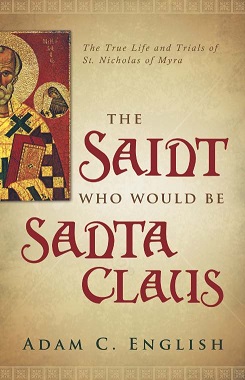
There are many discussions floating around about the “real” Santa Claus, Saint Nicholas. I have a bit of a side interest in the topic because I was never a believer in Santa Claus and so I’ve always been interested in the reality behind the myth. So, when I received The Saint Who Would Be Santa Claus
for Christmas last year, I was excited to dive in for the season this year
Perhaps the most interesting portion of the work is English’s discussion of the historiographical difficulties related to unearthing the historical Nicholas of Myra. The difficulty with discovering the “real Santa Claus”–Saint Nicholas–is compounded by the fact that Nicholas of Myra (the Nicholas in question) is often confused with Nicholas of Sion (10; 80; 120; 174). Historical accounts of the life of Nicholas have often conflated these two persons, which means historians must extract them from each other in order to make an account of either. English confronts the possibility that Nicholas did not exist–a possibility put forth by some scholars, in fact–head-on by noting the multiple, independent sources for his life. Although Nicholas did not leave behind a legacy of his own writings, the extant evidence, argues English, is enough to acknowledge his existence as well as a historical core of stories about his life (11ff).
English does a great job of reflecting upon the apparently historical narrative while also drawing out the legends and apologetic tales which grew up around the narratives. Throughout the book, he reports a number of stories related to the life of Nicholas of Myra. He reports these stories seemingly in order of legendary development. For example, the famous story of Nicholas’ gift of gold to three women in need (about to be sold into prostitution) received more embellishment as time went on (57ff). However, English does not always do a great job of making the distinctions clear when these various types of tales are discussed. Part of this is probably due to the historiographical difficulties noted above, but it would have been nice for English to at least offer his opinion regarding the stories he related as to which he felt might be accurate as opposed to inaccurate. At some points he does, but at others he simply offers a series of increasingly surprising accounts without any commentary as to the possible historicity of the accounts.
A central part of the work focuses upon the council of Nicaea and the famous incident of Nicholas’ alleged slapping or punching of Arius or a different heretic (Arian) at the event. English argues that it is unlikely that it would have been Arius, because Arius was not a bishop and so likely would not have been present at the council itself (101-107). Moreover, English believes that a different story, in which Nicholas reasons with an avowed Arian to change his view, is more likely the historical background for the story (107-109). Nicholas’ own place at the council is disputed, but his orthodoxy is acknowledged by all his biographers, and it is likely that he defended the orthodox position at the council itself (107ff).
Apart from his participation at Nicaea, Nicholas also, of course, performed the basic functions of a bishop, which at his time included helping to resolve issues in Myra and the surrounding area (115ff). He helped with the struggle against pagan belief and practice, and at this point some of the stories and legends of Nicholas of Sion were often intermixed with those stories of Nicholas of Myra (120-125).
English’s work also draws out the way that Nicholas of Myra has been adapted for multiple purposes and occasions. Whether this is through the adaptation of his apparently real, historical life to various theological discussions (including Aquinas) or legends which were developed to supplement his legacy and individual viewpoints, Nicholas’ story continues to have widespread appeal.
The Saint Who Would be Santa Claus is an interesting read on a compelling man. Perhaps the most interesting part is the frequent fusion of myth and legend with the historical account. Those interested in the life of the “real Santa Claus” should immediately grab the book for their collection.
Links/Source
Adam English, The Saint Who Would Be Santa Claus: The True Life and Trials of Nicholas of Myra
Saint Nicholas- A Christian life lived, a story told– I wrote about the interplay between myth and reality in the stories about Nicholas. I wrote about how the myth of Nicholas actually bolsters the Christian worldview by pointing toward our longing for the ideal.
Be sure to check out the page for this site on Facebook for discussion of posts, links to other pages of interest, random talk about theology/philosophy/apologetics/movies and more!
SDG.
——
The preceding post is the property of J.W. Wartick (apart from quotations, which are the property of their respective owners, and works of art as credited; images are often freely available to the public and J.W. Wartick makes no claims of owning rights to the images unless he makes that explicit) and should not be reproduced in part or in whole without the expressed consent of the author. All content on this site is the property of J.W. Wartick and is made available for individual and personal usage. If you cite from these documents, whether for personal or professional purposes, please give appropriate citation with both the name of the author (J.W. Wartick) and a link to the original URL. If you’d like to repost a post, you may do so, provided you show less than half of the original post on your own site and link to the original post for the rest. You must also appropriately cite the post as noted above. This blog is protected by Creative Commons licensing. By viewing any part of this site, you are agreeing to this usage policy.
Christmas Edition Really Recommended Posts 2013
 Merry Christmas, everyone! It’s only 5 days away and I have to say I’m extremely excited myself. My in-laws will be visiting and it’s going to be a ton of fun. Then, in January, my wife and I are making a trip to visit my parents. But of course, at the center of it all, there is reflection upon the meaning of Christmas and its application to our lives. And, equally unsurprising, I’m most interested in those writings which explore the evidence. Check out my finds below. And again, Merry Christmas!
Was Jesus Born in Bethlehem?– Here, Tim McGrew takes on the suggestion that Jesus was not born in Bethlehem. He analyzes it from a number of angles, including the notion that the birth in Bethlehem was invented or that there was disagreement among the Gospel writers. This post comes highly recommended. For more on the evidence of the birth narrative of Christ, check out my post Jesus’ Birth: How undesigned coincidences give evidence for the truth of the Gospel accounts.
Was the Virgin Birth Incorrectly Prophesied?– A brief, interesting post opposing the notion that the virgin birth was not a prophecy about Christ. For a post on the importance and meaning of the virgin birth, check out a guest post on this site: Rev. Kent Wartick on “The Virgin Birth.”
A More Accurate Picture of the Original Christmas Morning– What would the Christmas morning really have looked like? Check out this post for a brief, interesting summary of what the surroundings of Jesus would most likely have been at his birth.
A Moment in Eternity– Ravi Zacharias is a phenomenal speaker and writer. Here, he reflects upon the meaning and celebration of Christmas from his time in Dubai and other Middle Eastern areas.
The Gift of Christmas Was Predicted With the Gift of Prophecy– J. Warner Wallace, author of Cold Case Christianity, has put together a nice brief summary of a number of prophecies which were fulfilled by Jesus’ birth and life. Check out this interesting post related to prophecy.
Should Christians Celebrate Christmas– Are Christians allowed to participate in an allegedly pagan holiday? Check out this brief post for some answers.
“The Hobbit: The Desolation of Smaug”- A Christian Reflection on the Film
 The second part of “The Hobbit” trilogy has arrived in theaters. What themes does it present? What might we talk about in relation to the latest film? Here, we’ll explore a few themes found through the film and view the movie through worldview glasses. There will be SPOILERS below.
Justice
Perhaps the strongest theme throughout the movie is that of justice. The most obvious aspect of this may be found in the quest at the heart of the story itself: the dwarves seeking to reclaim their homeland.
Yet justice also plays its part in reflection upon each ruler the film shows. Thorin, for example, seems to be consumed in part by greed. He is comfortable leaving members of his group behind so that they do not slow the quest. In fairness, when he does leave Kili, Oin, Fili, and Bofur behind, it is in a place in which they were welcomed (eventually) and so perhaps Thorin is not so cold here as he may seem.
Thranduil, on the other hand, is a clearly unjust ruler. First, he treats his subjects unjustly. When he discusses the potential feelings Legolas has for Tauriel, an elven captain, she (seemingly with some hope) mentions that she thinks he would never allow Legolas to become betrothed to a non-royal. Thranduil responds saying she is right, which is why he charges her with telling Legolas there is no hope. The injustice of the scene is both seen and felt. One cannot help but sympathize with Tauriel against Thranduil’s audacity.
Yet Thranduil’s unjust rule also extends to his entire kingdom. His concern seems to be purely with his own borders, as he prefers to keep evil out rather than confronting it at its source. His isolationism is based upon the notion that only his kingdom has “the light” and so that light must be preserved from the darkness of the surrounding world. The discussion made me think of the fact that some Christian evangelical groups withdraw from the world, because they do not wish to be part of the world or its darkness any longer. Yet as Christians, we are called to go into the world and confront the darkness rather than isolate ourselves from it. Thranduil’s comments speak to our own feelings, and his unjust ways are a call to us for action.
The Master of Laketown is also unjust in his dealings with his people. His highest aim is to preserve his own power. The thought of anyone sharing power with him–or the thought of the people having some say–is horrifying to him. Yet rather than ruling for the sake of his people, it seems his life is consumed by alcoholism and gluttony.
Light in the Darkness
The theme of light opposed to darkness is found throughout the film. Thranduil speaks of the battle between light and darkness in his own confused fashion, Beorn notices the “stench” of evil and a darkness over the woods, and Gandalf directly confronts darkness with light.
The latter instance is perhaps the most powerful, for it features Gandalf facing off against Sauron as Gandalf uses light from his staff to combat the blackness with which Sauron assaults him. Sauron’s words call out, telling Gandalf that there is not enough light in the world to combat his darkness.
For those who know how the Lord of the Rings ends, the scene is ironic. But in the moment, it rings true. It seems that darkness will indeed prevail.
Greed
Thorin, as noted, seems to be consumed by greed. Not only does he leave his fellow dwarves who would slow him behind, but he eventually confronts Bilbo regarding the Arkenstone. He uses his sword to bar Bilbo’s way and demands he hand over the Arkenstone, if he found it. The tension of the scene is only broken when Smaug attempts to destroy them both. However, the greed within Thorin seems to be growing. It will be interesting to see how it plays out in the conclusion to the trilogy.
The Master of Laketown also makes his decision through greed. Although the prophecy regarding the return of the king under the mountain makes clear the notion that his own town will burn, Thorin’s appeal to the Master based upon shared wealth does not fall upon deaf ears. The Master of Laketown succumbs both to his own greed and to the mob which has formed around the debate.
Evil
One of the more interesting things for me to reflect upon in the film was the way evil was portrayed. Clearly, the unjust rulers discussed above are each, in their own way, a kind of evil. However, the orcs were the clearest portrayal of evil. Yet their evil, to me, seemed to be inherently unreasonable. There was little reason for them to act as they did apart from pure hatred. Sauron was calling out to his evil minions as well, and his motivation seems to be simply the destruction of any who are not subject to him.
Reflection upon this depiction of evil leads to an insight: evil is, at its core, irrational. There is no reason to it. It goes against what genuinely makes sense in the world. This applies not only to the fanatical lust for murder which the orcs had, but also to the injustice of the rulers mentioned above. A viewer cannot help but think that Thorin, Thranduil, and the Master are each acting in an illogical fashion. Their greed corrupted them. For the orcs, their lust for suffering has consumed them. Evil is illogical; those who practice it are chasing fantasy.
Conclusion
I admit I did not enjoy “The Desolation of Smaug” as much as I enjoyed “An Unexpected Journey,” though I did still like the movie. I think the themes found here are worth reflecting upon, and the way they are presented forces viewers to really sit back and think as the movie continues. In particular, the feeling of injustice throughout the movie was unexpected, but it touched upon a number of areas related to our own lives and how we live them.
There is, of course, much more which could be discussed regarding the “Desolation of Smaug,” and I turn to you, readers, to start that discussion in the comments.
Links
The Hobbit: An Unexpected Journey- A Christian Perspective– check out my look at the first of “The Hobbit” trilogy.
Be sure to check out the page for this site on Facebook for discussion of posts, links to other pages of interest, random talk about theology/philosophy/apologetics/movies and more!
The picture featured in this discussion is an official movie poster and the property of MGM/New Line/WingNut films. I do not claim any rights to it.
SDG.
——
The preceding post is the property of J.W. Wartick (apart from quotations, which are the property of their respective owners, and works of art as credited; images are often freely available to the public and J.W. Wartick makes no claims of owning rights to the images unless he makes that explicit) and should not be reproduced in part or in whole without the expressed consent of the author. All content on this site is the property of J.W. Wartick and is made available for individual and personal usage. If you cite from these documents, whether for personal or professional purposes, please give appropriate citation with both the name of the author (J.W. Wartick) and a link to the original URL. If you’d like to repost a post, you may do so, provided you show less than half of the original post on your own site and link to the original post for the rest. You must also appropriately cite the post as noted above. This blog is protected by Creative Commons licensing. By viewing any part of this site, you are agreeing to this usage policy.
Really Recommended Posts 12/13/13- Bonhoeffer, Creationism, Feminism, and more!
 The Really Recommended Posts this week are really wide-ranging. I hope you’ll enjoy this smorgasbord as much as I did. We feature Dietrich Bonhoeffer’s theology, creationism, feminism, intelligent design, the conquest narratives in the Bible, and more! Check them out, and, as always, let me know what you think!
Dietrich Bonhoeffer, a New Testament Pastoral Theologian– Bonhoeffer is, I admit, one of my favorite theologians. I only wish he had had more time upon the earth to develop more systematic works than he did write. I’m Lutheran too, which makes me gleeful at the broad appeal Bonhoeffer has demonstrated. In this post, Joel Willitts explores the way in which Bonhoeffer did theology. It’s a fascinating look at the development of his theology.
Multiple Lines of Evidence Support an Ancient Earth– The charge is often made from young earth creationists that dating methods don’t work. What about when those dating methods correspond across independent and multiple lines of evidence? It seems this presents a major challenge to the young-earth paradigm. Check out this post for a summary of several related points.
Was There an Exodus & Conquest– Two of the biggest challenges to the OT narrative are directly related to the historical accounts of the Exodus and the Conquest narratives. That is, did these even happen? Here, there is a post which briefly summarizes the issues and evidences related to these events.
“Darwin’s Doubt” with Stephen Meyer (and Eric Metaxas) [VIDEO]– A fairly lengthy video in which Eric Metaxas discusses intelligent design with Stephen Meyer. I found this video to be highly informative and also really entertaining. Metaxas is clearly a great speaker, and he keeps the discussion going and interesting throughout. Meyer, of course, is also a great speaker and it is worth hearing his discussion of these ideas.
thoughts on being a “Jesus Feminist”– What does it mean to be a Jesus Feminist? Can Christians be feminists and follow Christ? Check out this reflective post on what it means to be a Jesus Feminist.
Rescuing Songs of Christ’s Birth from Christmas– Should songs of Jesus’ birth be sung only during the Christmas season? Here, compelling reasons are offered as to why these songs are appropriate year-round.
The Advent Project– A pretty sweet deal: Biola University, one of the best schools out there (not biased at all ;)), has a series of Advent devotions going up daily available on their site. Each has a work of art, a music selection(s), and a brief reflection upon the coming of Christ, the incarnate God, into our lives. I’ve been following them as they go up and have enjoyed them all. Check them out for an excellent way to meditate on the meaning of Christmas.

 J.W. Wartick - Reconstructing Faith