J.W. Wartick
Book Review: “Placemaking and the Arts” by Jennifer Allen Craft
 Jennifer Allen Craft’s Placemaking and the Arts: Cultivating the Christian Life is one of those books that lives at an intersection of topics one might not normally see as connected. Craft pulls together insights from the Bible and Christian theology on the concepts of place and embodiment with her extensive knowledge of the arts to draw readers’ attention to how our theology of place may be developed and grown.
After a brief introduction, Jennifer Allen Craft provides working definitions of place and art. Place is not merely physical; it involves social relationships, networks of people, and one’s mental states as well. Moreover, space is distinguished from place in that the former is a kind of universal denotation while the latter is particular (8-9). The reason to deal with place as Christians is because it helps answer who we are and why we are here–really here in a sense as embodied creations of God. Art is notoriously difficult to define, and Craft opts for a somewhat general definition, with a few qualifications: art, for her, “will be generally referring to some practice or object of the fine arts…” though she also includes craft, folk art, and other “making” practices (21). Art is important because it helps humans define themselves and relations to others.
Craft argues that the arts can help us to cultivate responsible relationships with the natural world. Integrating nature into our imagination helps us see it as valuable and calls us to protect it. Humans as the image of God can be seen as co-creators rather than simply those exercising conquest of the earth. We participate, through art, in creation and the natural world.
Art can also help in the processes of homemaking and hospitality, each aspects of place that allow us to form our own space. Craft notes the ways that people have created false dichotomies or devalued the arts as well as ways we can correct those misunderstandings. The arts can enter into church as well, leading to worship and the sense of community. Interaction with art can also help stir a sense of wonder at the majesty of God’s creation. The arts can also help Christians see the Kingdom of God on earth and the shaping of that Kingdom in the here and now.
The book is peppered throughout with images, both black-and-white and (in a set of plates in the middle) in color. These help illustrate Craft’s points more vividly and allow the reader to reflect directly upon the themes of the book.
Placemaking and the Arts is a fascinating look at the unity of two themes that aren’t often explored in conjunction. On a higher level, it is a call to Christians to be co-creators with God and to see the impact of the arts on every aspect of our lives.
Disclaimer: I was provided with a copy of the book for review by the publisher. I was not required to give any specific kind of feedback whatsoever.
Links
Be sure to check out the page for this site on Facebook and Twitter for discussion of posts, links to other pages of interest, random talk about theology/philosophy/apologetics/movies and more!
Book Reviews– There are plenty more book reviews to read! Read like crazy! (Scroll down for more, and click at bottom for even more!)
SDG.
——
The preceding post is the property of J.W. Wartick (apart from quotations, which are the property of their respective owners, and works of art as credited; images are often freely available to the public and J.W. Wartick makes no claims of owning rights to the images unless he makes that explicit) and should not be reproduced in part or in whole without the expressed consent of the author. All content on this site is the property of J.W. Wartick and is made available for individual and personal usage. If you cite from these documents, whether for personal or professional purposes, please give appropriate citation with both the name of the author (J.W. Wartick) and a link to the original URL. If you’d like to repost a post, you may do so, provided you show less than half of the original post on your own site and link to the original post for the rest. You must also appropriately cite the post as noted above. This blog is protected by Creative Commons licensing. By viewing any part of this site, you are agreeing to this usage policy.
Bible Verses Edited for Eternal Conscious Punishment
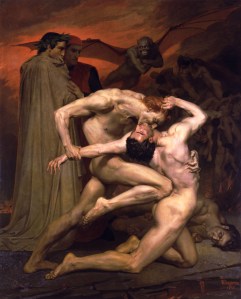 The Bible has a lot to say about the final end of both the redeemed and the lost. It’s often said that the Bible is extremely clear on eternal conscious punishment–as though this is just read of the pages of Scripture and delivered as a whole doctrine to us. I have taken the liberty here of looking at a number of well-loved and well-known passages (and some lesser loved and known) through the lens of eternal conscious punishment, editing them as needed to actually support the allegedly biblical doctrine of eternal conscious punishment. Edits to the verses are in italics, to make it clear where editing has occurred.
John 3:16
For God so loved the world, that he gave his one and only son, that whoever believed in him should not have eternal life[the bad kind], but have eternal life [good kind].
Romans 6:23
For the wages of sin is eternal life [bad kind], but the gift of God is eternal life.
Matthew 10:28
Do not be afraid of those who kill the body but cannot make eternal the soul. Rather, be afraid of the One who can make eternal both soul and body in hell.
Revelation 20:13-14
The sea gave up the dead that were in it, and death and Hades gave up the dead that were in them, and each person was judged according to what they had done. Then death and Hades were thrown into the lake of fire. The lake of fire is eternal life.
Psalm 9:17
The wicked go down to eternal life, all the nations that forget God.
Matthew 25:46 (The Sheep and the Goats)
“Then they will go away to eternal life, but the righteous to eternal life.”
2 Thessalonians 1:9
They will be punished with everlasting life and shut out from the presence of the LORD and from the glory of his might…
Jude 1:7
In a similar way, Sodom and Gomorrah and the surrounding towns gave themselves up to sexual immorality and perversion. They still stand today because they were not destroyed and serve as an example of those who suffer the punishment of eternal fire.
Psalm 37:8-11
Refrain from anger and turn from wrath;
do not fret—it leads only to evil.
For those who are evil will live forever,
but those who hope in the Lord will inherit the land.
A little while, and the wicked will be still alive;
though you look for them, they will be found alive but suffering.
But the meek will inherit the land
and enjoy peace and prosperity.
Conclusion
Eternal conscious punishment is not a “literal” reading of Scripture, nor is it simply read off the pages of scripture. To affirm it, one has to effectively redefine the meaning of “death” and other words constantly throughout the Bible. Generally, this requires the one teaching eternal conscious punishment to turn the word “death” into “eternal life,” for they believe that the lost are given eternal life, just a kind that involves punishment.
Book Review: “Peace and Violence in the Ethics of Dietrich Bonhoeffer” by Trey Palmisano
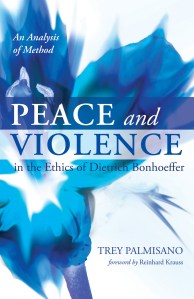 The question of Bonhoeffer’s views on pacifism and related issues like just war or tyrannicide is one that has been controversial almost since the beginning of Bonhoeffer scholarship. Trey Palmisano argues in Peace and Violence in the Ethics of Dietrich Bonhoeffer that such questions are needlessly reductionistic. Instead, Palmisano suggests that instead taking seriously Bonhoeffer’s own claim of consistency means we need to read him in light of how peace and violence might intermix or even be called for in different situations.
After a brief introduction including a timeline of Bonhoeffer’s life, Palmisano begins with a survey of major influences on Bonhoeffer’s thought. Martin Luther’s influence can’t be understated, and Palmisano thankfully notes the distinct impact Luther had on Bonhoeffer, a Lutheran pastor. Specifically, Luther’s impact on Bonhoeffer’s sacramental theology as well as the Lutheran doctrine of the Two Kingdoms are highlighted here. Regarding the latter, Palmisano reflects more nuance than several other writers, noting that Bonhoeffer did not reject Two Kingdoms theology as many have suggested. Instead, Bonhoeffer saw the Nazi attempt to separate public and private life, and the success they had in foisting this false dichotomy on the German Christian church, as a threat to sound doctrine. Instead, Bonhoeffer accepted a separation between church and state while rejecting the Reich’s attempts to subordinate the church, particularly to racial injustice. Other thinkers who influenced Bonhoeffer surveyed are Kierkegaard, Nietzsche, Reinhold Seeberg, and Barth.
The next chapter looks at Bonhoeffer’s ethical method. This is Palmisano’s central contribution to Bonhoeffer scholarship and ties into the other chapters. First, he notes that Bonhoeffer faced questions of individuality vs. community; formal and material cause and effect, and a world-church relationship that was fracturing in new and challenging ways with the threat from the Nazis. He surveys other ethical systems, noting where Bonhoeffer may reflect them while also going beyond or against them. For example, regarding deontological ethics, it is clear that Bonhoeffer felt it failed to adequately account for abstraction in ethical questions. More plausible for impacts on Bonhoeffer are situational ethics–something that largely developed after him in philosophical circles–and a kind of utilitarianism. But neither of these captures what Bonhoeffer thought for ethical grounding. After this survey of different views, Palmisano goes over Bonhoeffer’s own ethical development through his early career and into late in his life. Then, Bonhoeffer’s Christology is clearly central to his thought, and this continues throughout his career. Palmisano argues that it is this Christological grounding in ethics that makes it possible to see the individual and other as dual grounds for ethical relationships, with Christ as the central, objective grounds. Thus, Bonhoeffer’s ethic has an objective criterion in Christ while largely being capable of contextual/subjective application of moral norms. Revelation, for Bonhoeffer, in the form of Christ, is to encounter oneself and reshape one’s ethical standards and boundaries (51-52; 53ff). The way this plays out in the real world–something that was particularly concerning to Bonhoeffer–is that “Obedience understood as the dutiful observance of commandments is never simple because too many moving parts exist… obedience… is oriented to a relationship with Christ…” and this relationship with Christ ultimately yields an almost “creative” ethical stance in which questions are approached on an individual basis following the question of who Christ is for us and for the other (64-65).
The third chapter explores Bonhoeffer’s “Quest for Peace” and argues that Bonhoeffer did not “discover” pacifism in New York, but rather had experiences that brought those ideas to the forefront (see, for example, 78ff). Drawing from Discipleship, Palmisano notes that for Bonhoeffer violence has no place in the gospel message (90) while also nuancing it as a contextual ethical response to relationship (91). Bonhoeffer’s own responses to those in military service as well as to questions of war show a more complex response than a perfect pacifism. Thus, Palmisano concludes that Bonhoeffer’s alleged pacifism is instead “bound to a dynamic notion of ethical relationship through which its very expression was subject to change…” Moreover, “Bonhoeffer’s pacifism is situationally diffuse, located at one and the same time in both the sacred and the secular…” (106).
We especially see this contextuality in Bonhoeffer’s response to the question of murder. Palmisano uses this stronger word because Bonhoeffer does not himself put words like tyrannicide in between himself and the question of killing, and one which Bonhoeffer saw as guilt-laden regardless (120, note 36). The question of killing Hitler, then, is able to be located not in an outside perspective of tyrannicide and the ethical justification thereof, but rather within Bonhoeffer’s own strands of thought and ethical method (125ff). Thus, for Bonhoeffer, taking on sin and guilt for the sake of the other is itself capable of being sanctified, or, at least, forgiven through the “deep waters of relationship with Christ” (143).
Peace and Violence in the Ethics of Dietrich Bonhoeffer offers a bold, refreshing interpretation of Bonhoeffer in regards to the ethics involved in pacifism, just war, and murder/tyrannicide. The greatest strength is that Palmisano is able to offer a cohesive account of Bonhoeffer’s ethics, rather than chopping his thought into distinct and sometimes opposed periods. Moreover, he is able to ground it (thought not explicitly) in the concept of Lutheran thinking and development of those doctrines. He thus offers a compelling, and, to my mind, convincing way of reading Bonhoeffer on pacifism and related questions. Very highly recommended.
Disclaimer: I was provided with a copy of the book for review by the publisher. I was not required to give any specific kind of feedback whatsoever.
Links
Be sure to check out the page for this site on Facebook and Twitter for discussion of posts, links to other pages of interest, random talk about theology/philosophy/apologetics/movies and more!
Book Reviews– There are plenty more book reviews to read! Read like crazy! (Scroll down for more, and click at bottom for even more!)
SDG.
——
The preceding post is the property of J.W. Wartick (apart from quotations, which are the property of their respective owners, and works of art as credited; images are often freely available to the public and J.W. Wartick makes no claims of owning rights to the images unless he makes that explicit) and should not be reproduced in part or in whole without the expressed consent of the author. All content on this site is the property of J.W. Wartick and is made available for individual and personal usage. If you cite from these documents, whether for personal or professional purposes, please give appropriate citation with both the name of the author (J.W. Wartick) and a link to the original URL. If you’d like to repost a post, you may do so, provided you show less than half of the original post on your own site and link to the original post for the rest. You must also appropriately cite the post as noted above. This blog is protected by Creative Commons licensing. By viewing any part of this site, you are agreeing to this usage policy.
Horus Heresy: “Horus Rising” and “False Gods” – the False Gods of statism and totalitarianism
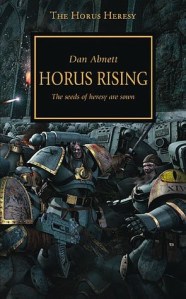 A huge series of novels set within the Warhammer 40,000 universe, the “Horus Heresy” tells the story of a massive rebellion against the Imperium of Man started by a man who was once the darling son of the Empire, Horus. Here, I want to discuss the way that the first two novels discuss religion and, in particular, the notion of “false gods” while setting it alongside false gods we face in our world today.
The Gods of Humanity
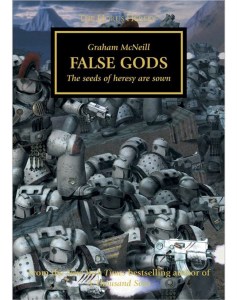
One of the background ideas in the Horus Heresy series is first introduced in the novel Horus Rising by Dan Abnett. This is the notion that the Emperor of Mankind has waged a lengthy Crusade to unite humanity, and that one of the primary aspects of this Crusade was the destruction of all religions. This theme is expanded greatly in False Gods by Graham McNeill, the second book in the series. Here, we find utter contempt from several of the main characters for those who carry along in different religious traditions. In this fictional world, it is unclear whether Christianity or any other major world religion ever existed, though a few analogues exist here and there. The main characters who express this disdain for religion, though, are also those who are pushing forward their own religionless agenda of one rule and a totalitarian state.
The False Gods of Statism and Totalitarianism
It is there–in the agenda of the totalitarian state combined with a kind of cult of statism that we find the true “false gods” in the novel False Gods. Yes, that’s a confusing sentence, but let’s parse it some. For Horus and those who follow him, the notion of the state itself has become a kind of idealized deity. There are even some who are working in this fictional world to deify the Emperor, and readers of the other fiction will know how that turns out. Horus and his ilk have worked for an ideal society, and it is one they don’t know how to stop fighting for. By making their god into the state, they ritualize violence and sanctify war. Their fall from grace, as it begins in this book, is surprising in some ways, but almost inevitable in others, due, again, to the way that violence in the name of the state has become an end for itself.
 We live in times in which statist violence is still sanctified. Whether it is dropping bombs on civilians in the name of our protection or the revision of history to make our own nation state the side that is in the “right” no matter what, the protection of the state leads to the worship of violence and the lifting up of war as an end rather than as a means (as one might argue for in Just War theory). I’ll be very interested to see if these themes continue to develop in the Horus Heresy, which can almost, so far, be seen as a critique of the worldview of the “good guys” in this fictional universe.
Links
Be sure to check out the page for this site on Facebook and Twitter for discussion of posts, links to other pages of interest, random talk about theology/philosophy/apologetics/movies and more!
Book Reviews– There are plenty more book reviews to read! Read like crazy! (Scroll down for more, and click at bottom for even more!)
SDG.
——
The preceding post is the property of J.W. Wartick (apart from quotations, which are the property of their respective owners, and works of art as credited; images are often freely available to the public and J.W. Wartick makes no claims of owning rights to the images unless he makes that explicit) and should not be reproduced in part or in whole without the expressed consent of the author. All content on this site is the property of J.W. Wartick and is made available for individual and personal usage. If you cite from these documents, whether for personal or professional purposes, please give appropriate citation with both the name of the author (J.W. Wartick) and a link to the original URL. If you’d like to repost a post, you may do so, provided you show less than half of the original post on your own site and link to the original post for the rest. You must also appropriately cite the post as noted above. This blog is protected by Creative Commons licensing. By viewing any part of this site, you are agreeing to this usage policy.
Book Review: “Twelve Lies that Hold America Captive” by Jonathan Walton
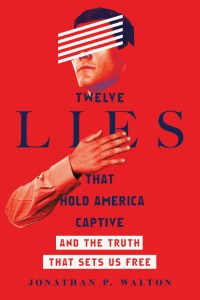 Twelve Lies that Hold America Captive is a provocative title for a book, and the subtitle: “And the Truth that Sets Us Free” only calls for a closer look. Jonathan Walton, in this work, calls for a close look at several pervasive ideas in the United States and calls them out for being mistaken on several counts.
Walton pulls no punches in his denunciation of the mixture of Christianity with nationalism. Early on, he notes that “Many Christians hold the same level of commitment to the Pledge of Allegiance that they hold to the Apostles’ Creed” (12). One could go on from this statement and note that plenty of Christians likely have the former memorized but know almost nothing about the formulation of the Apostles’ belief as outlined in the Creed. What does this say about the allegiance of American Christianity? Walton continues to press this kind of point throughout the book.
What are the twelve lies? They are: We are a Christian Nation; We All Are Immigrants, We Are a Melting Pot, All Men Are Created Equal, We Are a Great Democracy, The American Dream is Alive and Well, We are the Most Prosperous Nation in the World, We Are the Most Generous People in the World, America Is the Land of the Free, America Is the Home of the Brave, America Is the Greatest Country on Earth, and We Are One Nation. One’s visceral reaction to seeing these sentiments as “lies” is a good guide for how much this book is needed. I personally had a negative response to calling some of these lies, but as Walton drew out his meaning and the implications for a Christian life, came to find myself in agreement on most of his points.
Walton continues to make convicting points throughout the book. For example, while talking about the lie that “All Men are Created Equal,” Walton notes that it encourages us to see all achievement as personal success, thus leading to a kind of works righteousness in which if one just does what they ought, they receive (financial) reward. It’s a distortion of the Christian message, and ignores real, societal challenges to success that exist. It also encourages the vision of politeness rather than true kindness. Walton writes, “Preserving the image of a society that is polite and respectful and rewards hard work and grit is more important than genuine kindness, justice, and living like every person is made in the image of God” (65). It is this kind of insight and call to true Christianity that is found throughout the book.
Each chapter goes back to the Bible and Christianity to find a truth instead of the lie that nationalism and what Walton calls “White American Folk Religion” offers. For example, in the chapter on the “melting pot,” Walton points out that God’s kingdom is not a melting pot and instead that it will have every tribe, tongue, and nation–that God’s Kingdom is “shalom [peace] amid difference” (57). Again, the book is filled to the brim with this kind of insight.
Twelve Lies that Hold America Captive is a thoughtful, challenging book. It calls Christians to do better–to see beyond themselves and even their country to the ties that bind us all together in Christ. I recommend it very highly.
Disclaimer: I was provided with a copy of the book for review by the publisher. I was not required to give any specific kind of feedback whatsoever.
Links
Be sure to check out the page for this site on Facebook and Twitter for discussion of posts, links to other pages of interest, random talk about theology/philosophy/apologetics/movies and more!
Book Reviews– There are plenty more book reviews to read! Read like crazy! (Scroll down for more, and click at bottom for even more!)
SDG.
——
The preceding post is the property of J.W. Wartick (apart from quotations, which are the property of their respective owners, and works of art as credited; images are often freely available to the public and J.W. Wartick makes no claims of owning rights to the images unless he makes that explicit) and should not be reproduced in part or in whole without the expressed consent of the author. All content on this site is the property of J.W. Wartick and is made available for individual and personal usage. If you cite from these documents, whether for personal or professional purposes, please give appropriate citation with both the name of the author (J.W. Wartick) and a link to the original URL. If you’d like to repost a post, you may do so, provided you show less than half of the original post on your own site and link to the original post for the rest. You must also appropriately cite the post as noted above. This blog is protected by Creative Commons licensing. By viewing any part of this site, you are agreeing to this usage policy.
The Lutheran Church-Missouri Synod and Creationism: An Unnecessary Match
 The Lutheran Church-Missouri Synod, at their 2019 convention, re-iterated an affirmation and strengthened adherence to statements about creation and evolution made previously by Synod bodies. Res. 5-09A, according to the report from the LCMS, restates the position of earlier statements in the Synod, including a 1932 doctrinal statement that states, among other things:
We reject every doctrine which denies or limits the work of creation as taught in Scripture. In our days it is denied or limited by those who assert, ostensibly in deference to science, that the world came into existence through a process of evolution; that is, that it has, in immense periods of time, developed more or less of itself. Since no man was present when it pleased God to create the world, we must look for a reliable account of creation to God’s own record, found in God’s own book, the Bible. We accept God’s own record with full confidence and confess with Luther’s Catechism: “I believe that God has made me and all creatures.”
In effect, the Resolution (Res. 5-09A) is a significant and modern reiteration of creationism within the LCMS, specifically of young earth creationism. Thus, it also more emphatically excludes and alienates those within the Synod who do not affirm such a position and who have explored the possibility of other positions within the church.
I believe God has made me and all creatures?
There are a number of problems, of course, with such a statement. The quote provided above issues a bald appeal to Luther’s Small Catechism with the statement that “I believe God has made me and all creatures.” On the surface, this appears to be an attempt to use that quote to support direct, fiat creationism. Yet when one reads the rest of that section of the Small Catechism, one finds that the same exact section also states “[God] also gives me clothing and shoes, food and drink, house and home, wife and children, land, animals, and all I have. He richly and daily provides me with all that I need to support this body and life.” Yet the LCMS is not also passing resolutions that affirm direct, fiat action by God in the providing of our clothes, food, drink, shoes, house, and home. They’re not passing resolutions in which Synod laity is expected to affirm that God literally created their clothing and gave it to them directly. But the Catechism does make those statements in the exact same context, without any such qualification. This means that the Catechism does not exclude means when it comes to divine providence regarding these matters. God uses means to provide us with food, home, and clothing. Similarly, God may have used means when it comes to “God made me and all creatures.”
The appeal to the lack of humans being present at creation cuts both ways. No member or pastor in the LCMS was present when God created the heavens and the Earth, so how is it that they may define in more exacting detail how God created them? Indeed, they say that we ought to look at God’s own record, which explicitly states that the heavens declare God’s glory. Scientists have looked to the heavens to see direct evidence of God’s glorious creation. Such evidence, God’s “speech” from the heavens (Psalm 19), points to a universe much, much more ancient than the six- to ten-thousand years most young earth creationists affirm, especially those who are so exacting in defining days as “6 natural days” (more on that below, though).
Six Natural Days?
The Resolution (5-09A) reiterates that creation is in “6 natural days.” But the fact is that the concept of a day as 24 hours is itself a giving into cultural norms of our own time. The length of a day has changed through history, as is demonstrable from such things as the variance in Earth’s rotation, tidal forces, and more can and have changed the length of the day, either permanently or for short periods of time (read more on this phenomenon here). Now, these fluctuations are extremely minor, so the objection may be lodged that this doesn’t impact the concept of a “24 hour day” or a “natural day.” Once one does admit that minor variations are acceptable, however, it becomes much less clear why major variations or even different meanings may not be explored. After all, nothing in the Bible states that God held the Earth in a completely still, static state as the creation week continued. It may be the case that even with a “standard” or “natural” day, the actual duration of each of the 6 days of creation could have varied. So, again, the very concept itself is flawed, for it both reads into the Bible things that are not there and ignores actual observational evidence that it is wrong. In attempting to circumvent science and purely affirm Scripture, the LCMS has fallen into the trap of bringing along scientific presuppositions that are hidden in the premises of their statements, thus doubling the error by both affirming a non-scientific viewpoint and smuggling in scientific assumptions that undermine their position.
Consequences of the Position
The fact is that the LCMS attempt to “take a stand” on this issue places it squarely and officially outside of any possibility for youths or adults to reconcile the official stance of their denomination with modern science. As someone who was within the LCMS and is no longer, I can say that this is one of the reasons I left. The total disregard for any viewpoint that went against a (then unofficial) stance on the timing and/or means of creation as well as the lack of regard for science generally was a massive difficulty for me within the denomination. Making this the official stance will do nothing but exacerbate that same concern for many, many more. I distinctly recall several conversations with other LCMS people, young and old, about how the denomination’s stance on creation was a significant hurdle for them in their faith life.
This is about much larger issues than whether the LCMS will lose or gain members; it is about the actual faith lives of those within the denomination. By drawing the wagons in tighter in the circle, the LCMS pastors have rejected the duty to be pastoral to their congregants and aligned their church body with a statement that cannot be reconciled with mainstream science with mountains of data and evidence to support it. Youths will be told that not to affirm this “6 natural day” creation is to oppose the Bible, and because the LCMS has so strongly emphasized that to believe as they do just is to trust the Bible, such a rejection will lead to crises of faith. As someone who experienced this in my own life, this is deeply disturbing and disappointing. The church body has effectively taken a stance on a non-essential that will lead to many questioning essential issues.
There are many, many more issues with the stance of the LCMS here, as well. For example, in my own experience I have seen several LCMS churches utilize program materials from creationist organizations like Answers in Genesis. Yet, for all the LCMS purports to value doctrinal purity and affirm centrally Lutheran beliefs, their support for groups like Answers in Genesis shows that the Synod is far more interested in aligning with broad evangelical theology than in maintaining a distinctive Lutheranism. The use of youth materials from Answers in Genesis is troubling, not only because it stands so clearly against modern science, but because Answers in Genesis also uses its website to promote non-and even anti-Lutheran positions on things like baptism. For example, a search for “baptism” on the Answers in Genesis Website yields immediate links like this one, a sermon from Charles Spurgeon, in which he states:
the very great majority of Christian people think infant children are fit and proper subjects for this ordinance [baptism]; we, on the other hand, believe that none are fit and proper subjects for the ordinance of baptism, except those who really believe and trust in the Lord Jesus Christ as their Saviour and their King.
Yet the LCMS, an unashamedly Lutheran organization, is perfectly willing to hold hands with an organization that promotes strictly anti-Lutheran materials as top results on its website? Why? Because, again, the LCMS has fallen into the trap of valuing evangelicalism and the narrative of the “culture wars” more than it values its own adherence to Lutheran doctrine. This strong and hard stance on young earth creationism is just one of the many results of such a capitulation, but it is also one of the most vehement positions the LCMS is promoting within its churchwide body.
A Personal Appeal
The LCMS recently published a report in which it was revealed that the “2017 Confirmation Survey identified around a 1-in-3 rate of retention for individuals after confirmation” in the LCMS. This number spawned a number of discussions and responses to it. One such response, the “Executive Summary” of the survey, stated as a category that “Congregations must be safe places for young people to wrestle with life and faith in order for them to faithfully reach out to today’s culture.” Taking such a hard stance on a scientific issue that the LCMS is unwilling or unable to actively engage with (as shown by reliance on outside resources like Answers in Genesis) is the exact opposite of being a “safe place for young people to wrestle with life and faith…” It was not a safe place for me, personally, as I dealt with some of these difficult topics. I came very near to leaving the faith entirely, and it was ironically an LCMS person who said that Jesus resurrection didn’t hinge upon whether the Earth was 10,000 or 10 billion years old that helped me rethink my faith. But now, the LCMS has made even that slight possibility outside the bounds. Their statement has tied people’s faith with the age of the Earth, and that should not and must not be the foundation for any Christian faith whatsoever.
Links
Be sure to check out the page for this site on Facebook and Twitter for discussion of posts, links to other pages of interest, random talk about theology/philosophy/apologetics/movies and more!
Gregg Davidson vs. Andrew Snelling on the Age of the Earth– I attended a debate between an old earth and young earth creationist (the latter from Answers in Genesis like Ken Ham). Check out my overview of the debate as well as my analysis.
Ken Ham vs. Bill Nye- An analysis of a lose-lose debate– In-depth coverage and analysis of the famous debate between young earth creationist Ken Ham and Bill Nye the science guy.
SDG.
——
The preceding post is the property of J.W. Wartick (apart from quotations, which are the property of their respective owners, and works of art as credited; images are often freely available to the public and J.W. Wartick makes no claims of owning rights to the images unless he makes that explicit) and should not be reproduced in part or in whole without the expressed consent of the author. All content on this site is the property of J.W. Wartick and is made available for individual and personal usage. If you cite from these documents, whether for personal or professional purposes, please give appropriate citation with both the name of the author (J.W. Wartick) and a link to the original URL. If you’d like to repost a post, you may do so, provided you show less than half of the original post on your own site and link to the original post for the rest. You must also appropriately cite the post as noted above. This blog is protected by Creative Commons licensing. By viewing any part of this site, you are agreeing to this usage policy.
Book Review: “Haunted by Christ: Modern Writers and the Struggle for Faith” by Richard Harries
 Haunted by Christ is a riveting look at how modern writers dealt with lingering doubts, anger, sorrow, and the question of Christianity. Richard Harries asks readers to engage with several writers to ask them questions that might not normally be asked, and he challenges readers in ways that are intricately tied into these authors’ lives.
First, it is worth pointing out that the concept of “modern” here is being used in the technical sense, related to modernism. Harries sets this period starting with Fyodor Dostoevsky (1821-1881) and Closing in the early 20th century. The authors Harries surveys are Dostoevsky, Emily Dickinson, Gerard Manley Hopkins, Edward Thomas, T.S. Eliot, Stevie Smith, Samuel Beckett, W.H. Auden, William Golding, R.S. Thomas, Edwin Muir and George Mackay Brown, Elizabeth Jennings, Graham Greene with Flannery O’Connor, Shusaku Endo, and Evelyn Waugh, C.S. Lewis and Philip Pullman, and Marilynne Robinson. Readers familiar with the works of these authors will know they run the gamut from skeptics to devout Christians. What ties them together, in Harries reading, is that their works are “haunted” by the supernatural, and specifically through a grappling with the person of Jesus Christ.
As a reader, I was unfamiliar with many of the authors, not having read much from the modernist movement. (This line makes me want to say sorry to my English teachers.) Nevertheless, Harries gives enough biographical information on each author to understand the points he’s making. Indeed, most of the information in the book is biographical, as Harries draws out each authors’ struggle with faith and coming to terms with the person of Jesus Christ. Even the skeptics surveyed clearly interact with Christianity, even if in negative ways.
I found several chapters of particular interest. Seeing C.S. Lewis’s and Philip Pullman’s competing mythologies set alongside each other for examination was fascinating. The chapter on W.H. Auden and his quiet, almost “polite” faith drew to light the great impact culture can have on one’s perception of religion and the work of God. The chapter on Golding makes me want to read more from him, despite not enjoying The Lord of the Flies. Emily Dickinson as “smouldering volcano” was an insightful look at a phenomenally successful poet. Each chapter had something that struck me, though the book also left me wishing I did know more about the authors and their works. I suspect Harries would be pleased to know his work led me to reach out and start reading some of these other works.
The biographical way Harries writes integrates worldview questions into the writings of each author. It never felt as though he subverted their own personal narratives, however. He didn’t pull punches in describing the way a skeptic like Pullman spoke about religion. Nor did he cover up aspects of authors’ lives that some might find unappealing. It’s an honest, almost unyielding book. It made me uncomfortable at times, but in ways that challenged me to learn and understand.
Haunted by Christ is a fascinating work. Harries offers insight and vision into Christianity in ways that I hadn’t really thought of before. It made me want to read many of the authors mentioned. And it made me want to know what someone who actually was more familiar with these authors might think. Recommended.
Disclaimer: I was provided with a copy of the book for review by the publisher. I was not required to give any specific kind of feedback whatsoever.
Links
Be sure to check out the page for this site on Facebook and Twitter for discussion of posts, links to other pages of interest, random talk about theology/philosophy/apologetics/movies and more!
Book Reviews– There are plenty more book reviews to read! Read like crazy! (Scroll down for more, and click at bottom for even more!)
SDG.
——
The preceding post is the property of J.W. Wartick (apart from quotations, which are the property of their respective owners, and works of art as credited; images are often freely available to the public and J.W. Wartick makes no claims of owning rights to the images unless he makes that explicit) and should not be reproduced in part or in whole without the expressed consent of the author. All content on this site is the property of J.W. Wartick and is made available for individual and personal usage. If you cite from these documents, whether for personal or professional purposes, please give appropriate citation with both the name of the author (J.W. Wartick) and a link to the original URL. If you’d like to repost a post, you may do so, provided you show less than half of the original post on your own site and link to the original post for the rest. You must also appropriately cite the post as noted above. This blog is protected by Creative Commons licensing. By viewing any part of this site, you are agreeing to this usage policy.
“Women in the History of the Church” by William Weinrich in “Women Pastors?” edited by Matthew C. Harrison and John T. Pless -a critical review
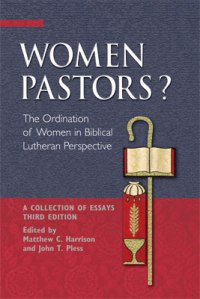 I grew up as a member of the Lutheran Church-Missouri Synod, a church body which rejects the ordination of women to the role of pastor. The publishing branch of that denomination, Concordia Publishing House, put out a book entitled Women Pastors? The Ordination of Women in Biblical Lutheran Perspective edited by Matthew C. Harrison (who is the current President of the LCMS) and John T. Pless. I have decided to take the book on, chapter-by-chapter, for two reasons. 1) I am frequently asked why I support women pastors by friends, family, and people online who do not share my position, and I hope to show that the best arguments my former denomination can bring forward against women pastors fail. 2) I believe the position of the LCMS and other groups like it is deeply mistaken on this, and so it warrants interaction to show that they are wrong. I will, as I said, be tackling this book chapter-by-chapter, sometimes dividing chapters into multiple posts. Finally, I should note I am reviewing the first edition published in 2008. I have been informed that at least some changes were made shortly thereafter, including in particular the section on the Trinity which is, in the edition I own, disturbingly mistaken. I will continue with the edition I have at hand because, frankly, I don’t have a lot of money to use to get another edition. Yes, I’m aware the picture I used is for the third edition.
“Women in the History of the Church: Learned and Holy, But Not Pastors” by William Weinrich
First, the subtitle of this chapter leads us to some expectations. Minimally, I expect Weinrich to offer a definition of “pastor” that can be established from the Bible. Second, I expect Weinrich to firmly establish that the many, many, many women in church history and the Bible who occupied several roles in leadership did not occupy that office that he ought to define: the pastor. This means we need a very clear definition of what it is to be a pastor so that we can say person A is a pastor, and person B is clearly not. So, for example, if “pastor” means “someone who preaches sermons in worship,” I expect the author to establish that definition in the Bible, and show that women did not do that and that men did. I want to reiterate the section introduction for this and following chapters made a number of far-reaching claims about women, pastors, and church history. I have written on those claims here, so we can evaluate whether this and other chapters establish them.
After a very brief survey of a few books about women in church history, Weinrich starts the chapter off by going through different things women did do in the church. He offers a brief look at the ministry of deaconess which developed over time, especially in the east (110-112). The deaconess was “an ordained member of the clergy” (112). A few individuals are surveyed as well. In more modern times, he notes that Deaconesses operated in a number of functions, especially in the Anglican church (113-114). Then, Weinrich offers a short look at women’s contributions to the intellectual and literary heritage of the church. This section includes a look at the hymnody of the church and how women have written much of them. “Christian women have exercised spiritual power in many ways,” notes Weinrich in the next section, noting women as martyrs and their prayerful power in church history. He notes prophetic figures in the early church (121-122) and through the Middle Ages. Here is one of the few parts in these sections where Weinrich makes an effort to show that though these women did all these wonderful things, they weren’t fully included in leadership. He writes, “…it is doubtful whether one can speak meaningfully of the ‘egalitarianism of the double monasteries’…” apparently because “the abbesses had no espicopal power and no power to excommunicate or to administer the sacraments” (123). Protestantism has a rich history of women of faith as well, including women preaching and being involved in outreach, making colleges for the training of pastors, and the like (see esp. his discussion of the Wesleyan tradition on 125).
It is not until the next section of the chapter that Weinrich turns his argument around. Having noted that women were involved in services of prayer, charity, pastoral roles such as helping the widows or even having the “office” of widow, that women have deeply influenced and shaped the theology of the church through their writings of both theological treatises and their hymns that continue to teach the laity and guide worship, that women were involved in religious orders in extraordinary ways and that their spiritual power and administration is to be lauded, he now decides that women, though, ought not to be pastors. Why the turnabout? Well, Weinrich puts it: “until the very recent past, the ‘office’ of teaching and of the sacramental ministry, with the jurisdictional powers this implies, has been reserved for men.” The snarky side of me here would like to quote Rev Tevye “Fiddler on the Roof” and say we have now found the reason: “Tradition!” Indeed, Weinrich even notes “anomalies” throughout church history in which women did occupy these roles, but they’re relegated to “anomalies” apparently because they don’t match the tradition Weinrich prefers to enforce.
Weinrich goes on, quoting people in church history who used 1 Timothy 2:12 to restrict women from teaching. He also once again allows the ugly head of Gnosticism to take over, arguing that it is because of the Gnostics (here, as in the chapter on Gnosticism, apparently categorized as a single, holistic unit despite overwhelming evidence to the contrary) that women were originally allowed to be teachers or ministers. Weinrich then surveys a number of other instances throughout church history in which women did serve in sacramental ministry or teach with an eye for showing how often it was decried by others in the church. Once again, the echoing cry of “Tradition!” appears to be the response to whether women may be allowed in this function. He ends with a note that “It has been only in the last half of the twentieth century that the major Protestant church bodies have begun to accept women as regular preachers and pastors” (134-135). Again, apparently because this does not match with the traditions in the church, we are to accept on face value that women ought not to occupy these roles.
At the beginning, we asked whether Weinrich would define the role of pastor. The closest he gets is to say that it is the “office” of teaching and of the sacramental ministry. The definition is vague enough so as to be effectively useless, particularly when he has already noted that women served in prophetic roles, as teachers through hymns and theological treatises, occasionally as serving the sacraments (though this was denounced–tradition must get its say), caring for the poor, founding colleges that trained pastors, becoming martyrs, and many, many more active duties related to the church.
Finally, going back to the questions this section must answer to satisfy the claims of the editors, let’s evaluate this chapter.
Claim 1: “The practice of ordaining women to the pastoral office is a novelty in the history of the church.” (107)
This claim is actually directly falsified because Weinrich notes how very early on women were engaged in this practice, even if he does relegate them to “Gnostics” or other “anomalous” groups.
Claim 2: “Fueled by theological movements that set the charismatic distribution of the Spirit in opposition to an established office, the emerging equalitarianism of the feminist movement, historical criticism’s distrust of the biblical text, and in some cases a pragmatism that saw the ordination of women as a way to alleviate the clergy shortage… many Protestant denominations took steps to ordain women.” (ibid)
This claim may be true, though Weinrich doesn’t do much to support it. For example, he doesn’t blame historical criticism for women pastors and acknowledges that some groups did this practice long before “historical criticism” was a category of thought.
Claim 3: The women who are noted in the history of the church “were holy and learned but never pastors” (referencing an upcoming chapter’s claims).
Falsified by Weinrich’s “anomalies” in the history of the church. “Never” is a universal negative.
Claim 4: “Ordination of women is a monumental turn in the history of the Church.” (107)
It has existed since very early on in the history of the church, as Weinrich notes, though he relegates them to anomalies.
Claim 5: “[Ordination of women] puts those church bodies that practice it on dangerous ground, for it indicates that they are out of step not only with two thousand years of Christian history but with the will of the Lord of the Church.” (Ibid)
It is difficult to see what relevance this chapter even has in regards to this claim.
Links
Be sure to check out the page for this site on Facebook and Twitter for discussion of posts, links to other pages of interest, random talk about theology/philosophy/apologetics/movies and more!
Book Reviews– There are plenty more book reviews to read! Read like crazy! (Scroll down for more, and click at bottom for even more!)
Interpretations and Applications of 1 Corinthians 14:34-35– Those wondering about egalitarian interpretations of this passage can check out this post for brief looks at some of the major interpretations of the passage from an Egalitarian viewpoint.
SDG.
——
The preceding post is the property of J.W. Wartick (apart from quotations, which are the property of their respective owners, and works of art as credited; images are often freely available to the public and J.W. Wartick makes no claims of owning rights to the images unless he makes that explicit) and should not be reproduced in part or in whole without the expressed consent of the author. All content on this site is the property of J.W. Wartick and is made available for individual and personal usage. If you cite from these documents, whether for personal or professional purposes, please give appropriate citation with both the name of the author (J.W. Wartick) and a link to the original URL. If you’d like to repost a post, you may do so, provided you show less than half of the original post on your own site and link to the original post for the rest. You must also appropriately cite the post as noted above. This blog is protected by Creative Commons licensing. By viewing any part of this site, you are agreeing to this usage policy.
Book Review: “Bonhoeffer’s Black Jesus: Harlem Renaissance Theology and an Ethic of Resistance” by Reggie L. Williams
 Reggie L. Williams’s Bonhoeffer’s Black Jesus is a deep look at how Bonhoeffer’s experience in New York, and more specifically in Harlem, shaped him as a theologian of resistance against Hitler. It’s not just that, though, as it also traces Bonhoeffer’s intellectual development, specifically about racism, both before and after this epochal change.
First, Williams outlines the early theological development of Bonhoeffer, tracing his early intellectual development as well as his struggles to find a church home while visiting the United States. Here, in the United States, Bonhoeffer first encountered white racial terrorism in the form of lynching. Later, he would appeal to a German theologian to speak out against the charade of trials against in Scottsboro, in which nine black men were falsely accused of raping two white women. Eight of them were sentenced to death and killed. This caused something of an awakening for Bonhoeffer to racial violence, though he still had to become aware of his own biases.
The movement of Bonhoeffer from a proponent of volk (the German word for “Folk) type nationalism to a race-conscious and anti-racist perspective is one of the most fascinating portions of Williams’s research. While Bonhoeffer retained several core convictions throughout his life, his thought about race was directly impacted by his time in Harlem. Germany had been a colonial power until the Treaty of Versailles assigned the nation’s colonies to the winning powers, and many German people longed for that Imperial power once again. Williams demonstrates that Bonhoeffer’s own thought was impacted by this, particularly when he surveys Bonhoeffer’s early sermons and discussions of the concept of volk.
Williams then draws an outline of the Harlem Renaissance, including major thinkers and themes, as well as how some of these thinkers and themes explicitly or implicitly show up in Bonhoeffer’s works. Unfortunately, at least one of the works that would provide more insight into this has been lost (a paper Bonhoeffer wrote on black thinkers while in the United States). Nevertheless, Williams demonstrates that the themes of the Harlem Renaissance, along with Bonhoeffer’s own time in Harlem, became deeply influential on his later life. It is in this section that Williams does the most to bring to light strands of thought in Bonhoeffer that might otherwise be missed. Specifically, he traces the constant theme of Jesus identifying with the marginalized as something that would lead to active theology of resistance in Bonhoeffer’s thought. This theme is highlighted both in the thought of W.E.B. Du Bois and the poem “Black Christ” by Countee Cullen, which Bonhoeffer was aware of. The latter is lain out in detail, and shows both how Harlem Renaissance theology could be linked to liberation theology and how Bonhoeffer’s thought developed along that direction as well. It was black thinkers who helped awaken in Bonhoeffer a truly great desire for resistance against racism.
Another major theme of Williams’s work is that of empathy. He argues throughout that Bonhoeffer’s move towards empathy was something that he found through observing segregation in the United States and the resistance to it in Harlem. This, Williams argues, developed into a “Christ-Centered Empathic Resistance,” which is the last part of Bonhoeffer’s life as he actively worked against the Nazis in Germany.
The bulk of Williams’s work focuses on Bonhoeffer’s time in the United States, supporting his theses with meticulous notes and documentary evidence. The endnotes are full of additional argumentation as well as sources and reading.
Bonhoeffer’s Black Jesus is an essential read for those interested in Bonhoeffer’s theology of resistance. More than that, Williams provides here both an historic overview of Bonhoeffer’s thought and the ways in which one might develop him further. The unity of Bonhoeffer’s thought with Harlem Renaissance thinking and the movement of that into modern movements for societal justice is another major theme in the book. It’s a rare work that surveys the thought of a thinker while also offering insight into how modern thought might move forward along the same lines or go beyond its subject. Highly recommended.
Links
Be sure to check out the page for this site on Facebook and Twitter for discussion of posts, links to other pages of interest, random talk about theology/philosophy/apologetics/movies and more!
Book Reviews– There are plenty more book reviews to read! Read like crazy! (Scroll down for more, and click at bottom for even more!)
SDG.
——
The preceding post is the property of J.W. Wartick (apart from quotations, which are the property of their respective owners, and works of art as credited; images are often freely available to the public and J.W. Wartick makes no claims of owning rights to the images unless he makes that explicit) and should not be reproduced in part or in whole without the expressed consent of the author. All content on this site is the property of J.W. Wartick and is made available for individual and personal usage. If you cite from these documents, whether for personal or professional purposes, please give appropriate citation with both the name of the author (J.W. Wartick) and a link to the original URL. If you’d like to repost a post, you may do so, provided you show less than half of the original post on your own site and link to the original post for the rest. You must also appropriately cite the post as noted above. This blog is protected by Creative Commons licensing. By viewing any part of this site, you are agreeing to this usage policy.
Book Review: “Phoebe: A Story” by Paula Gooder
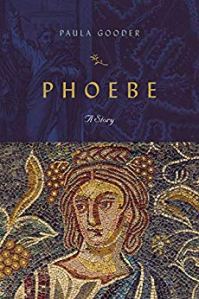 Phoebe: A Story by Paula Gooder is two books in one: a fictional picture of what Phoebe’s life and society might have looked like; and an academic exploration of this same society, world, and individual.
Paula Gooder writes in a style that is engaging and informative. The plot of the narrative section grabbed my interest from the get-go with its interweaving of biblical details with background information from historical studies as well. The main plot is of interest, following Phoebe through potential struggles and a narrative that gives readers rich imagery of what house churches were like and how these could have differed in different places due to income levels, the patrons, and the like. Gooder gives a vital look into the life of early Christians, doing so in a way that is winsome in style. What’s interesting is that, due to the integration of some biblical persons, I as a reader was hyper-aware of these characters. I have to say, I was a bit sad that I didn’t love Junia as a character in Gooder’s book as much as I’d have hoped. But Gooder makes these characters seem true to life, with real motivations and interests beyond simply being set pieces for teaching readers about early Christianity.
The second part is full of notes that bring historical and theological insight into the narrative woven throughout the book. They provide justification for various narrative choices, background information about how things may have been in the early church, and are full of rich details about Christian life. Gooder’s research is quite thorough and will give interested readers more avenues for exploration.
Readers should note that the book is probably best enjoyed with one finger in the endnotes to integrate those notes into their reading of the narrative. I saw the notes section at the back, but read the book front-to-back, thinking that since the notes were called “Part 2,” it made sense to read Part 1 and then 2. But doing so meant I missed out on several key points of interest within the narrative, which meant I went back and re-read portions to make more sense of what Gooder was saying. The book doesn’t have an introduction or preface to recommend this reading order, so be aware of it.
Readers will find much of interest in Phoebe: A Story. From the background information to the more intimate picture of what life may have looked like in the early church, this book is well-worth the time investment. Recommended.
Disclaimer: I was provided with a copy of the book for review by the publisher. I was not required to give any specific kind of feedback whatsoever.
Links
Be sure to check out the page for this site on Facebook and Twitter for discussion of posts, links to other pages of interest, random talk about theology/philosophy/apologetics/movies and more!
Book Reviews– There are plenty more book reviews to read! Read like crazy! (Scroll down for more, and click at bottom for even more!)
SDG.
——
The preceding post is the property of J.W. Wartick (apart from quotations, which are the property of their respective owners, and works of art as credited; images are often freely available to the public and J.W. Wartick makes no claims of owning rights to the images unless he makes that explicit) and should not be reproduced in part or in whole without the expressed consent of the author. All content on this site is the property of J.W. Wartick and is made available for individual and personal usage. If you cite from these documents, whether for personal or professional purposes, please give appropriate citation with both the name of the author (J.W. Wartick) and a link to the original URL. If you’d like to repost a post, you may do so, provided you show less than half of the original post on your own site and link to the original post for the rest. You must also appropriately cite the post as noted above. This blog is protected by Creative Commons licensing. By viewing any part of this site, you are agreeing to this usage policy.

 J.W. Wartick - Reconstructing Faith