J.W. Wartick
“The Rocks Don’t Lie” by David Montgomery: Chapters 5-7
 After a 5 year hiatus, I decided to continue my look at David Montgomery’s work, The Rocks Don’t Lie. For a refresher, the book is from the perspective of a geologist as he looks at Noah’s flood in light of geology, but he also includes material on contemporary accounts and some reflections on faith.
Chapters 5-7
Montgomery goes over what is little-known history (to the general public): the debate over what fossils even were in early paleontology and geology. For some time, geologists debated whether fossils were truly vestiges of the ancient past or not. Some did recognize them as dead life forms, but wantonly miscategorized them. An example Montgomery visits is the identification of Homo diluvii, alleged to be a fossil of someone who died in the Noahic flood, but which is in fact simply a large amphibian. Thus, faith and science interacted in ways which led to mutual learning, with geologists often interpreting finds through their faith (often leading to errors), but then correcting the mistakes and examining interpretations of Scripture.
Geologists continued to find evidence that the Earth was much more ancient than had been previously thought. The concept of geologic time itself evolved over time, but not due to the theory of evolution as young earth creationists so often assert. Rather, geological finds continued to stretch the limits of time and change on the planet. Bishop Ussher’s chronology was neither the first nor last, and was based upon faulty assumptions that continue to be challenged both inside and outside the church.
One of the constant refrains of young earth creationists is the notion that they hold to catastrophism related to the history of the planet, while mainstream geologists rely upon uniformitarianism. But Montgomery demonstrates that this is a false dichotomy. It is one that, historically, was a true battle as evidence initially seemed to refute catastrophism and then showed that catastrophes did indeed form major events in the geologic record. Thus, geology today continues to take both catastrophe and uniformity into account. The young earth view of either/or is deeply mistaken and stuck in historical, rather than modern, understandings of science. Indeed, it was Georges Cuvier (1769-1832) who first developed a synthesis of the theories, though he favored catastrophic understandings due to his own discoveries. Cuvier died more than 20 years before the publication of Darwin’s Origin of Species and so can hardly be charged with changing his geological views due to evolutionary theory. Once again, young earth arguments fail to hold up to the challenge of history and science.
Cuvier’s theory allowing for a sequence of catastrophes was, on his own part, allowed to include the biblical flood. Montgomery continues to survey the changing views on the Deluge and William Buckland contributed both to this theorizing and the expansion of the age of the earth through his own studies. Buckland, however, ultimately discovered that fossils could not all be attributed to a single flood event or the biblical flood. Nevertheless, as a Christian, he felt “Secure as ever in his faith in both nature and the Bible” (129). Lyell’s own study of geology once again expanded the lengths of times required for the shaping of our planet. It didn’t take long, however, for people to push back against this theorizing, and William Cockburn helped champion some of the earliest of what would become young earth theories. He did so mostly by dismissing evidence rather than directly engaging with it (137-138).
Links
“The Rocks Don’t Lie” by David Montgomery: Preface and Chapter 1– Montgomery surveys the intent of the book and how his own investigation of the flood led him to some surprising results. He expected a straightforward refutation of creationism, but found the interplay with science and faith to be more complex than he thought.
“The Rocks Don’t Lie” by David Montgomery: Chapters 2-3– First, Montgomery gives a survey of the basics of geology. Then he notes some serious problems with young earth paradigms related to the Grand Canyon and fossils in the Americas as well as on mountains.
“The Rocks Don’t Lie” by David Montgomery: Chapter 4– Montgomery surveys a number of early flood geological theories and shows how theological interpretations continued to change as evidence was discovered through time.
Be sure to check out the page for this site on Facebook and Twitter for discussion of posts, links to other pages of interest, random talk about theology/philosophy/apologetics/movies and more!
Book Reviews– There are plenty more book reviews to read! Read like crazy! (Scroll down for more, and click at bottom for even more!)
SDG.
——
The preceding post is the property of J.W. Wartick (apart from quotations, which are the property of their respective owners, and works of art as credited; images are often freely available to the public and J.W. Wartick makes no claims of owning rights to the images unless he makes that explicit) and should not be reproduced in part or in whole without the expressed consent of the author. All content on this site is the property of J.W. Wartick and is made available for individual and personal usage. If you cite from these documents, whether for personal or professional purposes, please give appropriate citation with both the name of the author (J.W. Wartick) and a link to the original URL. If you’d like to repost a post, you may do so, provided you show less than half of the original post on your own site and link to the original post for the rest. You must also appropriately cite the post as noted above. This blog is protected by Creative Commons licensing. By viewing any part of this site, you are agreeing to this usage policy.
Book Review: “Philosophical Foundations of a Christian Worldview” 2nd Edition by J.P. Moreland and William Lane Craig
 A work of the size and scope as J.P. Moreland and William Lane Craig’s massive Philosophical Foundations for a Christian Worldview is daunting, so readers will want to know if it is work going through. The short answer to that question is that yes, it is, so long as one reads the work–like any other–with a critical eye.
The book is broken up into six parts: Introduction, Epistemology, Metaphysics, Philosophy of Science, Ethics, and the Philosophy of Religion and Philosophical Theology. Each section is full of definitions and lengthy philosophical outlines arguing for the positions Craig and Moreland hold. They attempt to stick to a largely “mere” Christianity, though at times they stray from a vision that is as broad as possible. For example, regarding the debate over the soul, Moreland and Craig fall staunchly into the dualist camp, to the extent that a physicalist theory of mind from a Christian perspective isn’t even considered. Regarding the science-faith question, the authors argue lengthily against any perspective which would hold to methodological naturalism and seem to align most closely with ID theory. For a theory of time, the authors push for an A-theory of time, which later impacts their doctrine of God by making God temporal post-creation and undermines the notion of divine simplicity.
Yet even those who take issue with the positions the authors hold will continue to benefit from interacting with their views. For example, interacting with their arguments about God and time would be a great exercise whether one believes God is temporal or atemporal.
I did, however, find the choices of subjects related to philosophical theology to be particularly interesting. The first two sections make arguments related to the Trinity and the Incarnation, which are both definitional to the notion of a “Christian.” The third, however, is about the Atonement, and quickly (613) states that “an essential, and indeed central, element of any biblically adequate atonement theory is penal substitution” and then go on to say “More than that, penal substitution, if true, could not be a merely subsidiary facet of an adequate atonement theory, for it is foundational to many other aspects of the atonement, such as redemption from sin, satisfaction of divine justice, and the moral influence of Christ’s example” (613-614). I was quite surprised by this–especially the latter statement–because there are entire theories of atonement based around these aspects. Thus, for example, the Example Theory of the atonement is entirely based upon the notion that Christ is an example and would therefore give us all kinds of moral influence. Interestingly, the fourth doctrine addressed is that of Christian particularism–the notion that salvation is in Christ alone. I tend to agree that no orthodox Christian would deny this, but it is interesting to see that Craig and Moreland seem to equate belief in, say, universalism with a denial of particularism, though to my knowledge most of the 19th century Christian universalists affirmed particularlism but held to universal salvation through Christ. Craig and Moreland go on to state that views like annihilationism “are rather difficult to square with the biblical data” (632) even though, in my experience, annihilationists almost always go straight to the biblical text to support their views (see, eg. numerous passages that equate hell with death or destruction). Again, it seems odd in a book that tends to go towards “mere” Christianity to pick views that are at issue and then exclude all others.
Many readers will want to go straight to the book for arguments about the existence of God, and Moreland and Craig do not disappoint. In the two chapters on the topic, the authors summarize huge swathes of philosophical arguments for the existence of God, along with answering many objections. Like the rest of the book, this is done in summaries of longer arguments, but readers will still get much of use out of this section.
Though I’ve skimmed through many portions of the book, I’d like to focus a little bit on Christology and the discussion of what Craig elsewhere calls Neo-Apollinarianism. I was curious to see if the 2nd edition of the book would modify this position in critical ways to avoid the pitfalls of his previous position, but it seems it does not. The argument is made that “Apollinarianism achieved a genuine incarnation that… is no more implausible than the soul’s union with the body” (597). The problem was that it failed to unify body with mind in Christ. Thus, the authors propose making the divine Logos the mind of Christ, among other things (603ff). This seems to me–and many others–to punt the problem by still making it such that the Incarnated Christ does not have the totality of human nature, for the mind is from the divine nature. Simply calling it the “Logos” does not smooth over the problem of making the human nature effectively mindless without the divine. Because this Christology does not give Christ a human mind, as Gregory of Nazianzus said, “That which was not assumed was not saved” (glossing a bit). This seems an incomplete Christ.
Moreover, the discussion on the Lutheran view of Christology (a view that I as a Lutheran ascribe to) rather strangely condemns Lutherans for confusing the natures of Christ by teaching the communication of the attributes. Such a blithe dismissal seems wrongheaded, unless Moreland and Craig wish to further deny that the Incarnate Christ was incapable of divine activity. Alas, such misunderstanding of Lutheran positions are not uncommon.
With Philosophical Foundations for a Christian Worldview, Moreland and Craig have provided a truly impressive contribution to Christian philosophy of religion that will serve as a starting point for many an engagement with a huge number of topics. At some points, the authors take contentious positions, and it is unfortunate that they endorse a non-standard Christology. Thus, readers should read the work with a critical eye, treating it as a practice of interaction on a high level with a number of philosophical ideas related to Christianity.
Disclaimer: I was provided with a copy of the book for review by the publisher. I was not required to give any specific kind of feedback whatsoever.
Links
Be sure to check out the page for this site on Facebook and Twitter for discussion of posts, links to other pages of interest, random talk about theology/philosophy/apologetics/movies and more!
Book Reviews– There are plenty more book reviews to read! Read like crazy! (Scroll down for more, and click at bottom for even more!)
SDG.
——
The preceding post is the property of J.W. Wartick (apart from quotations, which are the property of their respective owners, and works of art as credited; images are often freely available to the public and J.W. Wartick makes no claims of owning rights to the images unless he makes that explicit) and should not be reproduced in part or in whole without the expressed consent of the author. All content on this site is the property of J.W. Wartick and is made available for individual and personal usage. If you cite from these documents, whether for personal or professional purposes, please give appropriate citation with both the name of the author (J.W. Wartick) and a link to the original URL. If you’d like to repost a post, you may do so, provided you show less than half of the original post on your own site and link to the original post for the rest. You must also appropriately cite the post as noted above. This blog is protected by Creative Commons licensing. By viewing any part of this site, you are agreeing to this usage policy.
“The New Testament and the Ordination of Women” by Henry P. Hamann, part 1 in “Women Pastors?” edited by Matthew C. Harrison and John T. Pless
 I grew up as a member of the Lutheran Church-Missouri Synod, a church body which rejects the ordination of women to the role of pastor. The publishing branch of that denomination, Concordia Publishing House, put out a book entitled Women Pastors? The Ordination of Women in Biblical Lutheran Perspective edited by Matthew C. Harrison (who is the current President of the LCMS) and John T. Pless. I have decided to take the book on, chapter-by-chapter, for two reasons. 1) I am frequently asked why I support women pastors by friends, family, and people online who do not share my position, and I hope to show that the best arguments my former denomination can bring forward against women pastors fail. 2) I believe the position of the LCMS and other groups like it is deeply mistaken on this, and so it warrants interaction to show that they are wrong. I will, as I said, be tackling this book chapter-by-chapter, sometimes dividing chapters into multiple posts. Finally, I should note I am reviewing the first edition published in 2008. I have been informed that at least some changes were made shortly thereafter, including in particular the section on the Trinity which is, in the edition I own, disturbingly mistaken. I will continue with the edition I have at hand because, frankly, I don’t have a lot of money to use to get another edition. Yes, I’m aware the picture I used is for the third edition.
The New Testament and the Ordination of Women by Henry P. Hamann
Hamann begins with a quote from the Lutheran Church of Australia’s Theses of Agreement: “Though women prophets were used by the Spirit of God… 1 Cor. 14:34-35 and 1 Tim. 2:11-14 prohibit a woman from being called into the office of the public ministry for the proclamation of the Word and the administration of the Sacrament…” (13). Already, I am left wondering what Hamann and the Lutheran Church of Australia thinks prophets are/were. Anyway, Hamann goes on to state, interestingly, that these words were “formulated in the early 1950s,” a time, he apparently thinks, at which point “agitation about and for female ordination had hardly begun” (13). It is possible Hamann simply means within the specific branch of American Lutheranism he inhabits, but he doesn’t say that. In any case, women were ordained in the United States in the 1800s across multiple denominations. Looking into church history, it is easy to find women ordained throughout time.
That introduction aside, I’d like to simply focus on the meat of Hamann’s argument, which is, one would think, the exegesis of passages of Scripture. One would then be mistaken. Rather, Hamann’s focus is rather 4-ish theses, which he does little more than provide proof texts for rather than deep exegesis. We will look at them individually.
Section 1
Hamann’s first thesis is “The New Testament gives no support at all for the ordination of women” (14, emphasis removed). Such a thesis is indeed a universal negative that is doubly affirmed. It’s not just no support; Hamann suggests there is no support at all. How does he arrive at this thesis? First, he defines ordination “as authorization and commissioning to do the work of a pastor or minister of the church, a task involving control and pastoral care of a congregation, the public independent teaching of the Gospel and the administration of the sacraments of Baptism and the Lord’s Supper, and the public carrying out of the task of announcing the absolution or, on occasion, the retention of sins” (14). I can hardly wonder why Hamann is then able to claim the NT doesn’t support the ordination of women: after all, there is nowhere in the New Testament where anyone is ordained thusly. But Hamann is quick to add, “Offices exactly corresponding to this definition cannot be shown to have existed in the New Testament…” (ibid). The understatement here is palpable. Hamann would be unable to come up with a single instance of any such office anywhere in the New Testament whatsoever. So he sustains his argument by punting it, pointing to Acts 20:28 instead as a “direction like that [of his view of ordination]” (ibid).
Thesis 1, then, is flatlined from the beginning because the author himself admits he can’t even affirm his own definition of ordination is found in the New Testament… only that it might have a “direction” pointed towards his definition. But Hamann doesn’t actually exegete any texts to support that his definition of ordination is the way the New Testament was pointing. He simply assumes it, and believes his readers will go along. Of course, he later states “No woman appears in the NT as carrying out an independent pastoral charge, as defined above.” Well of course not, because his definition by his own admission doesn’t appear in the NT.
Where Hamann does interact with the NT texts that are brought up to show that his initial claim is false, he is either ignorant of or ignoring serious studies that contradict his conclusion. For example, regarding Junia, who appears in Romans 16:7 as an apostle who is a woman, he states simply “A number of editors… get the name ‘Junia’; however, there seems little likelihood that they can be right, and the masculine ‘Junias’ of the RSV is the right translation…” (14). What basis does he have for saying there is little likelihood that those unnamed and uncited editors (who cannot therefore be looked up to see what their arguments are) to be right? The English translation, the RSV, uses Junias. Never mind that the NRSV has Junia in the text, should we really be looking at English translations as our basis for making an exegetical point about the translation of a contested word in the text? Absolutely not. As multiple studies have shown, the name Junias does not exist in the ancient world, and is therefore an invention of editors, unlke the name “Junia.” Eldon Jay Epp, in Junia: The First Woman Apostle notes, quoting Bernadette Brooten:
To date not a single Greek or Latin inscription, not a single reference in ancient literature has been cited by any of the proponents of the Junias hypothesis. My own search for an attestation has also proved fruitless. This means that we do not have a single shred of evidence that the name Junias ever existed. (44)
Think about that for a moment. Hamann is willing to dismiss those who translate the name as Junia, which is what the Greek seems to state, because he prefers the masculine Junias for theological purposes. But the name Junias has not “a single shred of evidence” of ever having existed in the ancient world. Hamann, however, doesn’t interact with serious studies of the name Junia. Instead, he simply asserts that because an English translation of his choosing uses Junias, that doubt is cast upon those who believe Junia is the proper reading. Such is apparently the best exegetical support he can find. To be frank, it may very well be, because, again, the invention of Junia as male is just that: an invention, and one that can be demonstrated by studying the Greek and contemporary sources. Moreover, even the Nestle Aland Greek New Testament uses “Junia” rather than having the alleged name Junias or its supposed longer root name.
Hamann believes, however, that the formidable challenge of Junia can be simply dismissed (despite our demonstration that it cannot). He does, however, believe that Galatians 3:28 might provide a stronger argument against his thesis. In dealing with the text, however, he simply says that “the declaration of [v. 28]… has to do with the oneness of all those who are in Christ, infants included… Believing and baptized women do not suddenly cease to be women” (15). Apparently, for Hamann, oneness in Christ means that women are still women (okay so far, I suppose) and that apparently means women cannot be pastors. But how does that actually follow from the Galatians text? It doesn’t, though as we will see below, Hamann, like many complementarians, simply imports his interpretation of other passages (specifically 1 Corinthians 14:34-35 and 2 Timothy 2:11-14) into Galatians 3:28. Galatians 3:28 gives no indication of role differentiation in the body of Christ between men and women. But complementarians like Hamann must have it there, so they get it from outside the text–indeed from an entirely different letter–and bring it to the text. This isn’t exegesis, it is a theological assumption layered onto the text.
Given that Junia provides a direct contradiction of Hamann’s point, and that Hamann himself admits that his definition of ordination isn’t actually found in the New Testament, and that Galatians 3:28 is simply dismissed, I believe it is fair to say that his first thesis fails.
Section II
Hamann next states his second thesis: “there is specific NT prohibition of the ordination of women” (16). The first problem with this thesis is that his definition of ordination, as he stated and admitted above, is unsustainable from the biblical text. So because his definition of ordination, as he himself says, “cannot be shown to have existed in the New Testament,” (14) it would be impossible to use the New Testament to exclude anyone from such a position. Nevertheless, he presses on. For the sake of engagement, we will hereafter simply assume that Hamann’s definition of ordination is wrong and simply let ordination mean pastoral office.
Hamann of course cites the two texts thought by many to exclude women from the pastoral ministry, 1 Corinthians 14:34-35 and 1 Timothy 2:11-14. Now, 1 Corinthians 14:34-35 is perhaps an interpolation, which would immediately exclude it from any meaningful discussion of the biblical text. But supposing it is original to the text, Hamann and others’ interpretation still faces difficulties. After all, in the very same letter, Paul writes about women praying (1 Corinthians 11), but the passage being pressed tells women to be silent. This apparent contradiction can only be resolved in a few ways, and it should be unsurprising that excluding women from the office of the ministry is not one of the consistent ways to do this. First, as already noted, it could simply be that the 14:34-35 is an interpolation, so the apparent contradiction which seems fairly strong simply didn’t exist in the original text. Second, Paul could be concerned, as he is in the rest of this section, with orderliness in worship. Thus, women, who were often uneducated in the ancient world, may have been interrupting worship with questions, and so are instead being told to go ask their husbands at home the questions they have instead of interrupting. Third, the passage could be part of the method of quotation-refutation: Paul is quoting the Corinthians their own position so that he may refute it with what follows (see here for a lengthy defense of this position). If any of these is correct, then Hamann’s use of the text fails.
But think if Hamann is correct. If he is, then Paul is clearly stating here that women must be silent in churches. Do women stay silent in your church? If you’re in the LCMS, or a different complementarian body, are women allowed to read from Scripture; do they sing the hymns; do they respond in prayer; do they say “amen”? All of these would be women not being silent. But the verse itself says “the women should keep silent in the churches. For they are not permitted to speak, but should be in submission, as the Law also says” (ESV). I don’t see anything there about allowing women to sing, give praise, respond, or pray! So any churches which allow these things are contradicting their own literal reading of the text. This demonstrates another difficulty with such a reading: even those who affirm what they say are a literal reading cannot follow the text. Moreover, it would mean Paul contradicts himself. So 1 Corinthians 14:34-35 cannot be used to exclude women from the pastoral ministry.
1 Timothy 2:11-14 is an interesting selection, because Hamann leaves off verse 15, which in almost every version I know of is interpreted as a continuation of the clause in verse 14. Why Hamann leaves it off is up for speculation, though I can’t help but thinking it is because it is an extremely difficult verse and his interpretation is already strained. Anyway, here Hamann enters perhaps the most exegetical portion of his essay as he argues that the speech being used is authoritative teaching (17-18). What is interesting is that these verses can easily be affirmed by those who are for women in the ministry as their literal meaning-women not speaking authoritatively. Why? Because cultural context is important. Craig Keener, an eminent New Testament scholar, notes that there are 4 ways of dealing with 1 Timothy 2 here:
(1) Read all other Pauline passages in light of a not-very- literal interpretation of this one (so most traditional interpreters);
(2) Read this passage as applying to a specific situation (so most evangelical egalitarian interpreters);
(3) Argue that Paul moved from an egalitarian to a nonegalitarian position; or
(4) Deny that Paul actually wrote 1 Timothy (the view of many scholars, though not of most evangelical scholars).
Keener goes on to note that Paul frequently addresses specific situations in his letters, and argues that this passage is one of those times. He cites numerous reasons why this would be the case. In this same letter, Paul notes that some have been deceived by silly myths (4:7)- it is entirely possible that women were among those deceived and so are being silenced to stop the spread of heretical or pagan ideas in the church–a plausible, temporal tactic to stop false teaching until it can be corrected or rebutted. What’s interesting is Hamann himself admits that this is the cultural context of the letter, stating that “women were quite prominent in heathen cults” (19). That’s exactly the point, and the cultural context is important, but generally ignored, as far as interpreting the text is concerned, by Hamann. Most importantly, though, it is worth saying that once again complementarians fail to read this passage in the literal way they wish, because they always qualify it in some sense. Even if this is a direct command from Paul, Keener notes, we do not follow all of his direct commands, such as drinking wine to help with stomach ailments (5:23). But why not? Selective readings of the text is the easiest way to answer this.
Hamann does attempt to argue that the notion of “authority” in this passage is that of teaching authority, but his position places him against many, many biblical scholars. Instead, the concept of authority restricted in this passage seems to be that of authority taken up wrongly. Yet even if Hamann is correct, his interpretation, as already shown, is strained at best.
Now, we’ve seen that Hamann’s reading of these passages fail because they cannot be reconciled with the rest of Pauline teaching or because they are inconsistently literal. If one reading of a biblical text allows for a consistent reading that can be applied to all situations, that one ought to be preferred. Thus, the egalitarian reading is to be preferred, and Hamann has failed to demonstrate his second thesis.
We will examine the rest of the chapter in my next post on the book.
Links
Be sure to check out the page for this site on Facebook and Twitter for discussion of posts, links to other pages of interest, random talk about theology/philosophy/apologetics/movies and more!
Book Reviews– There are plenty more book reviews to read! Read like crazy! (Scroll down for more, and click at bottom for even more!)
SDG.
——
The preceding post is the property of J.W. Wartick (apart from quotations, which are the property of their respective owners, and works of art as credited; images are often freely available to the public and J.W. Wartick makes no claims of owning rights to the images unless he makes that explicit) and should not be reproduced in part or in whole without the expressed consent of the author. All content on this site is the property of J.W. Wartick and is made available for individual and personal usage. If you cite from these documents, whether for personal or professional purposes, please give appropriate citation with both the name of the author (J.W. Wartick) and a link to the original URL. If you’d like to repost a post, you may do so, provided you show less than half of the original post on your own site and link to the original post for the rest. You must also appropriately cite the post as noted above. This blog is protected by Creative Commons licensing. By viewing any part of this site, you are agreeing to this usage policy.
A Brief Biblical Proof for Women Pastors – with Alice Guinther

A picture of my wife, the Reverend Elizabeth Wartick. Source: “Living Lutheran,” (Published by the ELCA: Chicago) March 2018 issue, page 27.
God has placed in the church first of all apostles, second prophets, third teachers, then miracles, then gifts of healing, of helping, of guidance, and of different kinds of tongues. (1 Corinthians 12:28, ESV)
In this list, Paul ranked various gifts in the church in this way 1) Apostles 2) Prophets 3) Teachers (etc…)
P1. There are biblical examples of women prophets in both the Old and New Testaments. (eg. Judges 4:4; Exodus 15:20; Acts 21:9)
P2. In the ranked list, the spiritual gift of prophet is ranked above that of teacher, a role that we find biblical examples of women filling.
C1: We therefore find women in higher ranked roles than the role of teacher. Therefore, it is biblically correct for a woman to be a prophet.
P3. But women cannot teach because we believe the bible says so. 1 Timothy 2:12 states that a woman cannot have authority over a man, and teaching is having authority.
P3.1 But the role of prophet is higher-ranked than teaching.
P3.2 According to the Bible women have held the God ordained/blessed role of Prophet, and that is ranked higher in Paul’s list than teacher. Being a prophet is having authority; women had authority over men as prophet. But how can that be, if women are not to have authority over men?
C2: Women cannot both have authority over men as prophet, and not have authority over men as (lower ranking) teachers (law of non-contradiction). Woman cannot both have/not have authority. Ǝx: Wx [Ax & ~Ax] (there exists an x such that x is a woman [x has authority AND x does not have authority])
C3. It is incoherent to claim that a woman may not have teaching authority, because it has been shown that women can have the higher authority of prophet.
C4. Therefore women may teach.
Q.E.D.
Co-Author Credit:
I wrote this with significant help and insight, including major revisions and entire construction of multiple premises/conclusions (as well as all symbolic logic) from Alice Guinther.
Alice Guinther holds a BA in Philosophy from the University of Colorado Boulder, Where she is the department assistant for Journalism and Media Studies. She is a published artist and illustrator, and has a review published in Priscilla Papers.
SDG.
Book Review: “Theistic Evolution: A Scientific, Philosophical, and Theological Critique” Summary of Response
 I’ve spent quite a bit of time reviewing, re-reading, and contemplating the massive book entitled Theistic Evolution: A Scientific, Philosophical, and Theological Critique edited by J.P. Moreland, Stephen C. Meyer, et al. I reviewed the book, interacting with the scientific and philosophical parts, and then looking in even more detail at some individual chapters in the theological section of the work. I wished to make a post that summarized some of my thoughts, as well as providing a one-stop shop for viewing my lengthier criticisms as well as those of others.
Review
Theistic Evolution is, without a doubt, the most comprehensive collection of arguments against the eponymous position that I know of in existence. But that is not to say there is going to be much new here for those who have read about science-faith issues. Indeed, though almost every chapter is first published here (except where otherwise noted in a few chapters), most of the arguments have been dealt with or have been ongoing for years, if not decades. Here, I can only offer the briefest interaction with the massive work (but see my longer interactions linked below).
The scientific section is largely outside my area of expertise, so I’ll limit myself to a few broad comments. Time and again, various authors move from saying that scientists cannot determine the exact order of a certain evolutionary chain to saying that there is therefore no such chain. This is deeply mistaken, though I admit I used to buy into this type of anti-evolutionary argument myself. At first it sounds compelling, until one considers that nowhere else do we allow this reasoning. For example, we would not say that no automobile accident happened just because we could not determine the exact order in which individual parts of the cars involved were crushed. Another difficulty with the scientific part of the book is that time and again, the assertions are made that theistic evolutionists do not allow there to be design as a possibility or God acting in nature; yet this is false at best and disingenuous at worst.
The philosophical critique falls largely flat. For one thing, a constant refrain is that theistic evolutionists are no different from atheists when it comes to methodological naturalism, yet this strangely ignores the “theistic” part of the term theistic evolution. Because proponents of said position are theists, they clearly allow for divine activity, and major proponents of the theory like those at Biologos constantly affirm this. Second, assertions that evolution would not allow for theism in the first place also fail both because Christians from the beginning of interaction with evolution have noted that God could simply have ordained the whole process and because those Christians who think in Aristotelian terms can still have final ends in mind with evolution, even on the level of individual species.
The theological critique musters perhaps the strongest arguments in the book, but even here there are a series of blunders that undercut much of the case. In the chapter on the Old Testament, for example, the author fails to defend or even define the meaning of the term “history” and its use to describe the early chapters of Genesis. In the chapter on the New Testament, the author strangely insists that Jude must mean Genesis is “historical” (again failing to define or even touch on what that term is supposed to mean here) while also dismissing claims that other parts of Jude would make other events historical. Then, the author turns around and says that because Jude cites the book of 1 Enoch, that means some parts of 1 Enoch are historical while others aren’t. Which are which? Well, clearly, whichever parts benefit the author are historical; those that don’t are not. Moreover, the same author does not at any point defend the notion of taking a genealogy in the way that we Westerners in the 21st century take it, despite the genealogies in the New Testament being written in an ancient time with a completely different culture. In the chapter on historical Christian theology, the word “creation” is wielded like a sword, leading to some possible confusion on categories related to Aquinas and others.
Definitions are clearly very important in the book, though vastly important terms like “history” or “historical narrative” are thrown about without ever interacting with them. This, despite the intense debate in the field of history about the changing meaning of the term and how history is written. The definition of Theistic Evolution–“God created matter and after that did not guide or intervene or act directly to cause any empirically detectable change in the natural behavior of matter until all living things had evolved by purely natural processes” (67)–given in the book fails to adequately account for the range of beliefs of theistic evolutionists and does not draw adequately from major TE groups. Nevertheless, the authors use that definition as though it can exclude or include people in the umbrella term. Not only that, but some authors rail against TEs for things the definition that the editors themselves endorse use make clear TEs don’t all believe. Prominent Christian philosopher J.P. Moreland is among those who attack TEs for denying a historical Adam and Eve, yet the definition that the editors provide does not actually exclude this belief in any way.
Overall, Theistic Evolution: A Scientific, Philosophical, and Theological Critique does not contribute much new to the intrafaith debate about evolution. For one thing, as noted above, it fails to adequately interact with the actual views of those who hold to theistic evolution, while also failing to acknowledge the breadth of thought such a position represents. Additionally, the arguments presented herein have largely been encountered in other works throughout the science-faith debate. Finally, many of the arguments presented herein are either circular or self-refuting. As noted briefly above (and in more detail in my extended analyses below), several authors simply assert that parts of the Bible are “historical” and then use that to batter theistic evolution, as if no serious exegesis has been done on the other side. Where exegesis is addressed, it is typically perfunctory and laced with dismissals of rival positions. I cannot recommend the book to those wishing to have a full and honest discussion of theistic evolution, though if it does truly represent the best of the best by way of critique of theistic evolution, I would say that those holding to that position may sleep soundly.
Disclaimer: I was provided with a copy of the book for review by the publisher. I was not required to give any specific kind of feedback whatsoever.
Extended Critique of Individual Sections and Chapters
My individual sections critiquing the book on numerous fronts can be found as follows:
Book Review: “Theistic Evolution: A Scientific, Philosophical, and Theological Critique” Part 1- Definition(s)– Definitions are a key issue throughout the book, and I take a look at a few here, including the definition the authors use for “theistic evolution” and the lack of interaction with major groups who are advocates of this position.
Book Review: “Theistic Evolution: A Scientific, Philosophical, and Theological Critique” Part 2: Science– A significant portion of the book was dedicated to scientific critique of theistic evolution, which is largely to say critique of the theory of evolution broadly speaking. Though I’m not an expert in science by any means, I interact with this portions I felt comfortable with, especially calling into question the movement from lack of 100% certainty to not having any possibility of evolution being true.
Book Review: “Theistic Evolution: A Scientific, Philosophical, and Theological Critique” Part 3: Philosophical Critique– Several philosophical issues are raised, from methodological naturalism to alleged contradiction of affirmations of Christianity that theistic evolutionists must hold. In contrast, I note that theistic evolutionists have a broader base to allow for ends in evolution, while also noting that the alleged contradictions are non-existent.
Book Review: “Theistic Evolution: A Scientific, Philosophical, and Theological Critique” Part 4: Theistic Evolution and the Old Testament– From the creation accounts to the historicity of Adam, arguments are made to the effect that the Old Testament cannot be compatible with theistic evolution. I note the circularity of several arguments the author makes, as well as questioning their use of the category “history.”
Book Review: “Theistic Evolution: A Scientific, Philosophical, and Theological Critique” Part 5: Theistic Evolution and the New Testament– Several parts of New Testament teaching, from the genealogies in the Gospels to the faith list in Hebrews are taken to show that theistic evolution is “incompatible” with the New Testament. I argue that this is mistaken, and indeed the author fails to demonstrate this incompatibility.
Book Review: “Theistic Evolution: A Scientific, Philosophical, and Theological Critique” Part 6: Theistic Evolution and Historical Christian Doctrine– Theistic evolution is often said to contradict the historic teaching of the church. Here, I analyze the extended arguments of one author who suggests this is the case, noting that at many points, modern categories are imported into the discussion of historical theology.
Other Reviews/Interactions (will update with more)
J.P. Moreland and the Book “Theistic Evolution” (Part 1: What do William Paley, Richard Dawkins, and J.P. Moreland all have in common?)– A two-part analysis of J.P. Moreland’s commentary on theistic evolution and its method. Part Two.
Links
Be sure to check out the page for this site on Facebook and Twitter for discussion of posts, links to other pages of interest, random talk about theology/philosophy/apologetics/movies and more!
Book Reviews– There are plenty more book reviews to read! Read like crazy! (Scroll down for more, and click at bottom for even more!)
SDG.
——
The preceding post is the property of J.W. Wartick (apart from quotations, which are the property of their respective owners, and works of art as credited; images are often freely available to the public and J.W. Wartick makes no claims of owning rights to the images unless he makes that explicit) and should not be reproduced in part or in whole without the expressed consent of the author. All content on this site is the property of J.W. Wartick and is made available for individual and personal usage. If you cite from these documents, whether for personal or professional purposes, please give appropriate citation with both the name of the author (J.W. Wartick) and a link to the original URL. If you’d like to repost a post, you may do so, provided you show less than half of the original post on your own site and link to the original post for the rest. You must also appropriately cite the post as noted above. This blog is protected by Creative Commons licensing. By viewing any part of this site, you are agreeing to this usage policy.
Remembering Bonhoeffer, 2018: Bonhoeffer was Not an [American] Evangelical, but he was an Evangelical Lutheran

Today is the anniversary of the execution of Dietrich Bonhoeffer by the Nazis, April 9, 1945. As I hope to do each year, I’d like to share a brief thought on Bonhoeffer’s life and legacy on this date.
Bonhoeffer and Evangelicalism(s)
One of the ways that Bonhoeffer is most frequently abused is by the assumption or argument that he was an evangelical, particularly of the American variety (eg. inerrancy and the like). In honor of the day of his death, I’d like to continue to disabuse people of that notion and instead note that he was actually a 20th century German Lutheran influenced by (but not uncritically accepting of) Neo-Orthodoxy. Here are some of his words about the creation account, specifically Genesis 1:6-10, from “Creation and Fall”:
Here the ancient image of the world confronts us in all its scientific naivete [my fault for lack of correct letters]. To us today its ideas appear altogether absurd. In view of the rapid changes in our own knowledge of nature, a derisive attitude that is too sure of itself is not exactly advisable here; nevertheless in this passage the biblical author is exposed as one whose knowledge is bound by all the limitations of the author’s own time. Heaven and the sea were in any event not formed in the way the author says, and there is no way we could escape having a very bad conscience if we let ourselves be tied to assertions of that kind. The theory of verbal inspiration will not do. The writer of the first chapter of Genesis sees things here in a very human way. [DBW 3:47-48].
Of course, as always, Bonhoeffer’s words must be understood in a much wider context than they are presented here. It is almost never a good idea to read even whole paragraphs from Bonhoeffer in isolation, because his thought is so dense that it cannot adequately be presented in sound bites. Those quotes which often are used as sound bites are either fabrications (eg. the “Not to act is to act…” quote that has yet to have an actual source found) or the exceptions (and even then I’d be very careful). Bonhoeffer throughout this work demonstrates that the Genesis is God’s Word but he means it in a sense that is very aligned to Luther, though not necessarily Lutheranism: that it is God’s Word because it ultimately teaches us about God and Christ. He strongly argues that God remains God and that God’s Word creates and brings life, but he does not demand that the text of Scripture meet his own modern standards of scientific accuracy and even suggests that yes, it would be silly to think it could.
So no, Bonhoeffer is not a modern evangelical, though he certainly was evangelical in the sense that it was used before the modern use: that of the evangelical Lutheran church. Though many (conservative) Lutherans would reject much of his thought, I’ve yet to encounter a thinker as wholly Lutheran among modern thinkers to date. He was a wonderful–dare I say, beautiful–man who applied his incredibly deep theology to his life, even unto death.
I thank God for Dietrich Bonhoeffer.
(February 4, 1906- April 9, 1945)
-4/9/1945
-4/9/2018
Book Review: “Living Wisely with the Church Fathers” by Christopher A. Hall
 What kind of insight can we glean from the church fathers, anyway? That’s a question I’ve heard often and asked myself before I began to delve into the answers. Hall’s series on the fathers is a lengthy answer to that question.
The first logical question is about this book as a series. Is it possible to read this without reading the other books and gain insight? Yes, absolutely. I, in fact, did not read any of the other books in the series and didn’t even know it was one until I read the introduction. I imagine readers would gain more from reading the entire series, but would also say that it is perfectly acceptable to read just this one.
This book is about living with the fathers. Specifically, it is about how we ought to live in light of Christ. Chapters focus on martyrdom, wealth and poverty, war and military service, sex and the dynamics of desire, life as male and female/marriage, life and death, entertainment, and the well-ordered heart. An incredibly broad array of topics, to say the least.
Highlights of the book include the chapters on entertainment, wealth and poverty, and war and military service. Regarding the latter, it seems clear that “for hundreds of years, the ancient church opposed service in the military” (126). However, perspectives began to change later, specifically with Constantine and Augustine. Nevertheless, a strong commitment to pacifism in the church remained a lively option even to this day. Entertainment is a tough field to navigate, and though some seem to suggest that people today face worse challenges than ever before, it is clear that in Ancient Rome, with its debauchery and gladiatorial games, had much to deal with as well. The way the early church dealt with this, argues Hall, reveals a kind of threefold response to entertainment: “first, the intimate link between Roman entertainment and Roman religious life; second, specifically what was being offered as entertainment; and third, the effect of this entertainment on God’s image bearers…” (199). It is easy to see how this can be applied to entertainment today, though Hall doesn’t spend much time highlighting how the application might be transferred. Regarding wealth and poverty, Hall notes that the wealthy and poor were both early Christians, and even then too many Christians ignored the plight of the poor (61). What we do with our wealth shows the state of our heart. If there is something negative to be said about the book it is that at times, it seems Hall may smuggle a few of his own theological perspectives into the positions of the church fathers, but these are few and far between.
Living Wisely with the Church Fathers is a broad look at the theology of the early church regarding the Christian life. Those interested in learning more about Christian living or historical theology should check it out.
Disclaimer: I was provided with a copy of the book for review by the publisher. I was not required to give any specific kind of feedback whatsoever.
Links
Be sure to check out the page for this site on Facebook and Twitter for discussion of posts, links to other pages of interest, random talk about theology/philosophy/apologetics/movies and more!
Book Reviews– There are plenty more book reviews to read! Read like crazy! (Scroll down for more, and click at bottom for even more!)
SDG.
——
The preceding post is the property of J.W. Wartick (apart from quotations, which are the property of their respective owners, and works of art as credited; images are often freely available to the public and J.W. Wartick makes no claims of owning rights to the images unless he makes that explicit) and should not be reproduced in part or in whole without the expressed consent of the author. All content on this site is the property of J.W. Wartick and is made available for individual and personal usage. If you cite from these documents, whether for personal or professional purposes, please give appropriate citation with both the name of the author (J.W. Wartick) and a link to the original URL. If you’d like to repost a post, you may do so, provided you show less than half of the original post on your own site and link to the original post for the rest. You must also appropriately cite the post as noted above. This blog is protected by Creative Commons licensing. By viewing any part of this site, you are agreeing to this usage policy.
Book Review: “The Myth of Equality” by Ken Wytsma
 It is difficult for me to state how important I believe Ken Wytsma’s book, The Myth of Equality, is. Wytsma’s work is half about showing that we–and by we I generally mean WASPs- White Anglo-Saxon Protestants–have bought into serious misinformation or myths about equality and half about showing what we can do about it.
Part I of the book, entitled “The Story of Race,” is a well-researched, broad look at racism in the United States. Wytsma shows how the notions of race became so ingrained in our worldview–despite the United States being a nation, mostly, of immigrants. Then, he demonstrates that institutions have existed throughout the history of the United States that have influence stretching into today. This section is perhaps the most important for building up his overall case, as many express doubts about these very conclusions. The notion that slavery was “back then” and has little-to-no impact on today is one that I have run into many times. Wytsma shows that this is a completely mistaken idea. From the immediate re-enslavement of black people in the south through the use of convicts’ labor, the collapse of Reconstruction, to redlining and the war on Drugs, time and again Wytsma doesn’t just outline the woes of our country, but shows how these institutions’ have influence that reaches into today. The facts, details, and data are all brought to bear, however briefly, to demonstrate his points. Not only that, but he provides ways to do more research for those interested.
Part II moves from the “what” of inequality to the “what can we do about it?” Wytsma argues that racial justice does absolutely belong in conversations in church. Biblically, justice is at the center of the truths of Christianity. Racial reconciliation is a worthy end goal for all people of faith. Citing respected theologians like C.S. Lewis and Dietrich Bonhoeffer, Wytsma shows that the call to obedience and finding justice apply to all Christians.
Part III, called “The Challenge of Privilege,” brings forward that difficult topic of privilege, that many refuse to even acknowledge as an issue. Wytsma challenges us to see how we lie to ourselves and how the way we perceive things can reinforce racism and make it so that we don’t even see it as it happens.
I cannot recommend The Myth of Equality highly enough. It should be required reading for anyone who wishes to have any kind of informed opinion in discussions of race, inequality, and Christianity. From dismantling the lies we tell ourselves about race to encouraging us to seek justice and showing some avenues to do so, the book is an invaluable asset.
Disclaimer: I was provided with a copy of the book for review by the publisher. I was not required to give any specific kind of feedback whatsoever.
Links
Be sure to check out the page for this site on Facebook and Twitter for discussion of posts, links to other pages of interest, random talk about theology/philosophy/apologetics/movies and more!
Book Reviews– There are plenty more book reviews to read! Read like crazy! (Scroll down for more, and click at bottom for even more!)
SDG.
——
The preceding post is the property of J.W. Wartick (apart from quotations, which are the property of their respective owners, and works of art as credited; images are often freely available to the public and J.W. Wartick makes no claims of owning rights to the images unless he makes that explicit) and should not be reproduced in part or in whole without the expressed consent of the author. All content on this site is the property of J.W. Wartick and is made available for individual and personal usage. If you cite from these documents, whether for personal or professional purposes, please give appropriate citation with both the name of the author (J.W. Wartick) and a link to the original URL. If you’d like to repost a post, you may do so, provided you show less than half of the original post on your own site and link to the original post for the rest. You must also appropriately cite the post as noted above. This blog is protected by Creative Commons licensing. By viewing any part of this site, you are agreeing to this usage policy.
Racism and Ignorance in American Christianity

A Map of Redlining of Chicago, credit: University of Chicago Library – https://www.lib.uchicago.edu/e/collections/maps/chigov/
I have had an incredibly formative last couple of years, and one of the things that I have been researching and learning about is the issue of race in the United States. I have to admit my own extreme ignorance of the topic going in, and I definitely do not claim to have become an expert in the topic. I still feel I am only beginning to learn about the many interconnected ways race impacts the way we think and act in the United States, as well as the deep history of racial tensions in our country.
I admit, to my shame, that I had kind of rolled my eyes at some of the discussions of race and its impact today. After all, slavery ended in 1865 with the 13th Amendment, right? Why are people still complaining about it? Why do people complain about things that happened before people today were even alive? I ignorantly–foolishly–assumed that we had gotten over it. That I could say that because something happened more than a hundred years ago, we could safely say it was relegated to our past as something that no longer impacted us. I was deeply, badly mistaken and I apologize for my ignorance.
As I read many of the books that have become formative for me, I shared things that I learned and was alarmed to see many people reacting the way I used to. I shouldn’t have been surprised, as I had done the same, but I was and am nevertheless. I’d see people scoff at the term “systemic racism” and dismiss it as a myth. I’d witness bald incredulity when I mentioned how some of the reasoning used regarding people of color to defend slavery parallels arguments today about refugees and immigrants. People would ask for facts, but when provided with them, would filter them through their existing biases–as we all must–and find that the facts did not, in fact, provide evidence for broad, systemic racism. And, as I write this, I know many of these examples will be dismissed as merely trying to appeal to emotions or pandering to liberalism.
Yet I cannot be silent. I cannot continue to learn about the deep, abiding ways our country has managed to continue to recast issues of race in ways that negatively impact people of color. Over some indefinite period, I would like to share with you parts of my journey. My hope is that you will find it informative and interesting, and perhaps we can talk about the issues we need to work to change. I hope we can work together to bring healing and understanding where there has been very little of either. I hope we can change so that American Christianity is not silent in the face of these systemic wrongs, but rather seen as a powerful group of people working together to crush inequity.
I want to issue a true challenge to those who read this. Do not remain in ignorance. It’s not enough to simply rush to search for an article online to “refute” every fact you are uncomfortable with. And yes, I’m as guilty of this as anyone. But time and again in discussions of issues related to inequality–whether race or gender–I find that when I present historical facts based upon digging through many books on the topic, the response is frequently a link to an article that demonstrates little-to-no understanding of those facts and distorts their context. Such historical ignorance is unfortunately common–again, I admit it in myself as something I am seeking to amend–but it is something we must seek to remedy. I want you to join me in this resolution:
When discussing issues of race and faced with a fact or statistic that makes me uncomfortable, I will not rush to find a way to make the fact more comfortable for me as a first reaction.
We need to be uncomfortable. We need to find out things about the past of our country–and perhaps even our ancestors or, even more importantly, ourselves–that make us uncomfortable and make us realize change is needed.
Links
Be sure to check out the page for this site on Facebook and Twitter for discussion of posts, links to other pages of interest, random talk about theology/philosophy/apologetics/movies and more.
SDG.
——
The preceding post is the property of J.W. Wartick (apart from quotations, which are the property of their respective owners, and works of art as credited; images are often freely available to the public and J.W. Wartick makes no claims of owning rights to the images unless he makes that explicit) and should not be reproduced in part or in whole without the expressed consent of the author. All content on this site is the property of J.W. Wartick and is made available for individual and personal usage. If you cite from these documents, whether for personal or professional purposes, please give appropriate citation with both the name of the author (J.W. Wartick) and a link to the original URL. If you’d like to repost a post, you may do so, provided you show less than half of the original post on your own site and link to the original post for the rest. You must also appropriately cite the post as noted above. This blog is protected by Creative Commons licensing. By viewing any part of this site, you are agreeing to this usage policy.
Book Review: “Dynamics of Muslim Worlds”
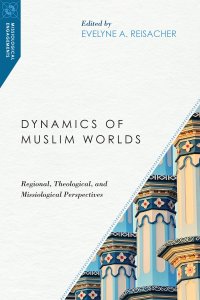 The reasons to be interested in the current state of Islam cannot be fully numerated. It is one of the world’s largest faith traditions. It is intersecting with other major faith traditions. We need to learn about our Muslim neighbors for all kinds of reasons. Dynamics of Muslim Worlds is a sometimes technical look at Islam around the world today.
The book is divided into three parts which focus on Regional Perspectives, Thematic Analyses, and Missiological Assessments, respectively. The first part is particularly intriguing. Martin Accad’s chapter on “Challenging the Monochromatic View of Islam” is perhaps the best chapter in the book. In it, Accad notes that non-Muslims tend to view Islam as a single, unified entity when it manifestly is not. Among the things that such a faulty view reinforces, the notions that Islam is inherently violent or the “conflict thesis”–the notion that Islam must be in an ideological and direct conflict with any other idea–are examined and shown to be wanting. Other chapters explore Islam in Europe, Asia, and Africa and show how it is shaping the look of religion across the world.
The second part has more extremely important topics, including two of the hot-button issues that arise when people talk about Islam: women and Sharia. Cathy Hine’s chapter on women in Islam demonstrates that, again, mistakes about Islam are abundant in our culture. Far from being silent and wholly without voice in Islam, many women are actually working both to change Islam from within and to preserve its traditions. Sharia law is typically the bogeyman in many discussions of Islam, the implication being that all people will be forced to submit to it (again, hearkening back to Accad’s chapter and the “conflict thesis”). However, the many interpretations of Sharia and its application once again mean that we cannot simply see it as a single, unified tradition in Islam. The final section focuses on missiological questions and challenges facing those doing outreach to Muslims.
Dynamics of Muslim Worlds gives readers a broad base from which to learn more while also providing some quite detailed analyses of Islam. I recommend it for readers interested in getting a deeper perspective on Islam and learning about its influence in the world today.
The Good
+Detailed yet brief analysis of significant issues
+Touches upon Islam across the world
+Gives readers an introduction to numerous topics
+Excellent tone and enagement
The Bad
-Somewhat esoteric for the lay reader
Disclaimer: I was provided with a copy of the book for review by the publisher. I was not required to give any specific kind of feedback whatsoever.
Links
Be sure to check out the page for this site on Facebook and Twitter for discussion of posts, links to other pages of interest, random talk about theology/philosophy/apologetics/movies and more!
Book Reviews– There are plenty more book reviews to read! Read like crazy! (Scroll down for more, and click at bottom for even more!)
SDG.
——
The preceding post is the property of J.W. Wartick (apart from quotations, which are the property of their respective owners, and works of art as credited; images are often freely available to the public and J.W. Wartick makes no claims of owning rights to the images unless he makes that explicit) and should not be reproduced in part or in whole without the expressed consent of the author. All content on this site is the property of J.W. Wartick and is made available for individual and personal usage. If you cite from these documents, whether for personal or professional purposes, please give appropriate citation with both the name of the author (J.W. Wartick) and a link to the original URL. If you’d like to repost a post, you may do so, provided you show less than half of the original post on your own site and link to the original post for the rest. You must also appropriately cite the post as noted above. This blog is protected by Creative Commons licensing. By viewing any part of this site, you are agreeing to this usage policy.

 J.W. Wartick - Reconstructing Faith