J.W. Wartick
Sunday Quote!- Evolution: A Materialist and an Idealist Weigh In
Every Sunday, I will share a quote from something I’ve been reading. The hope is for you, dear reader, to share your thoughts on the quote and related issues and perhaps pick up some reading material along the way!
Evolution: A Materialist and Idealist Weigh In
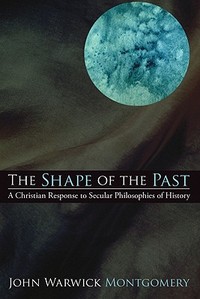
John Warwick Montgomery is one of those rare thinkers who seems equally at home in just about any subject with which they engage. I’ve been reading through his phenomenal book, The Shape of the Past and been blown away by the breadth of topics covered. What is more amazing is how he relates them back to the central topic: historiography. The second part of the book is a series of essays on various subjects. In one of these, on Marxism and Materialism, he writes:
Evolution means natural development to the materialist; it means teleology in the universe to the idealist. (234, cited below)
The quote is particularly poignant because it shows how even having what many consider raw data requires interpretation. One person can interpret evolution as confirmation of naturalism, while another might interpret it as teleology–goal orientation–found within the universe.
Be sure to check out The Shape of the Past. It is a fascinating work.
Source
John Warwick Montgomery, The Shape of the Past (Eugene, OR: Wipf and Stock Publishers, 2008 edition [originally published 1975 by Bethany Fellowship]).
Links
Be sure to check out the page for this site on Facebook and Twitter for discussion of posts, links to other pages of interest, random talk about theology/philosophy/apologetics/movies and more!
Sunday Quote– If you want to read more Sunday Quotes and join the discussion, check them out! (Scroll down for more)
Eclectic Theist– Check out my other blog for discussions about all kinds of topics including science fiction, history, fantasy movies, and more!
SDG.
Really Recommended Posts 2/5/16- Male-Female Relationships, Dean Koontz, atheism, and more!
 Another week, another round of posts for you to browse, dear readers. This week, we have Dean Koontz’s latest novel and literary apologetics, a scathing review of militant atheist Jerry Coyne’s book, male-female relations, the Jesus myth, and an analysis of an argument against the pro-life position.
Disciplining Healthy Male-Female Relations in the Church Part 1– Some have been arguing that we in the church ought to maintain a kind of separation between the sexes such that men and women do not form close friendships. Sometimes this is accompanied by what has become known as the “Billy Graham Rule”- the notion that a man ought not to be alone with a woman who is not his wife. Here is an analysis of that argument and a way forward from it. Also read part 2 and part 3.
Handling an Objection: “Jesus is Just One of Several Messianic Figures in the First Century”– Those who argue that Jesus is a myth often appeal to historical arguments, however fallacious, to support their position. Here is a critical review of one of these arguments- that Jesus was just one of the many messianic figures.
Dean Koontz’s “Ashley Bell”: The World is a Battleground– Dean Koontz continually puts worldview-level discussions into his novels. Here is an excellent analysis of his latest bestselling novel, Ashley Bell.
Omnibus of Fallacies– Edward Feser wrote a scathing review of Jerry Coyne’s book attacking theism. He notes a great number of errors throughout the book. I highly recommend you familiarize yourself with this review and the book so that if you encounter it in apologetic situations you can engage adequately.
Artificial Distinctions within the Imago Dei– As someone who is pro-life, it is important to be consistently pro-life. This post answers an argument against the pro-life position: that pro-life arguments are dealing harm to others.
Which is it? Appearance of Age or Flood Geology?
 Young Earth Creationists often counter the multiple, independent evidences for the ancient age of the Earth (here meaning billions of years old) by appealing to the notion of “appearance of age.” Effectively, what this argues is that because God is creating by fiat, the universe may look old and even show evidences of being quite ancient, when in fact it is a recent creation. Among the evidences mustered in support of this is the notion of the creation of Adam and Eve. The first humans, it is asserted, were created as fully grown individuals and so they would appear to us to be adults, despite being created just that day.
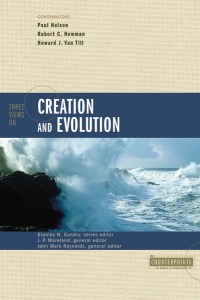
One example of this in practice can be found in a statement from Paul Nelson and John Mark Reynolds:
God would have no real motive to ‘actualize’ most of cosmic history… ‘Apparent’ history in the mind of God could not be any different than ‘actual’ history… He would gain a fully functioning universe, but without the ‘waste of time’ needed to actualize the less interesting parts. (Nelson and Reynolds, 52-53, cited below)
Another significant aspect of most Young Earth Creationists’ (hereafter YECs) argument is the notion of “Flood Geology,” which argues:
…substantial amounts of water can have the same geological effect in a short period of time (even laying down rock layers) that hypothesized millions of years of slow water flow would have. (here – see also the many additional Young Earth resources on the flood at this link from Answers in Genesis)
Essentially, the argument is that there is positive evidence for a young earth when we look at the evidence rightly–through the lens of a catastrophic, global flood.
A Dilemma for Young Earth Creationists
The problem for YECs is that these two commonly held positions are in tension. Kenneth Keathley and Mark Rooker note this tension:
[A] consistent application of the mature creation argument will conclude thatthere are no evidences of a young earth. The universe has been coherently, uniformly created with the appearance of age. (Keathley and Rooker, 223, cited below, emphasis theirs)
These authors go on to note how one of the first proponents of the appearance of age argument, Philip Henry Gosse, would have considered the efforts of groups like the Institute for Creation Research and Answers in Genesis “unrealistic at best and detrimental at worst…” (223) because they are embarking on a program of trying to find what is not there. Gosse affirmed a young earth in spite of the evidence because he consistently clung to the notion of the appearance of age:
[T]he acceptance of the principles presented in this volume [that of the appearance of age and affirmation of a young earth]… would not, in the least degree, affect the study of scientific geology… [The evidences for an old earth] would be facts still… [but] the duration was projected in the mind of God, and not really existent. (Gosse, Omphalos, 369, cited below [quoted in Keathley and Rooker and independently checked by me])
The force of what Gosse is saying should not be missed, for he remained consistent in his application of the notion of appearance of age. If the young earth creationist is going to say that the evidences for an apparently ancient earth are explained by divine fiat creation–they were simply made that way because they had to be made fully formed and ready for habitation–then it is a misguided attempt to go back and try to find evidence for a young earth as well.
Consider this in more depth for a moment: if the explanation from geology for the age of the earth from rock strata and independently confirmed with radiometric dating is that these things merely appear old because God created them as such, would it not be strange to turn around and say all these strata were layered down in the last 6000 years by a catastrophic global flood? Which is it? Do the strata merely “appear” to be old when in fact they were created recently, or were they formed through a global flood? YECs can’t have it both ways.
A False Dichotomy?
It may be countered that the YEC could instead hold that some things are due to appearance of age, while others explicitly demonstrate a young earth. That is, something like the rock strata are alleged to point to a recent, catastrophic, global flood, while the light from stars that are millions of light years away can be explained by appearance of age. There are, however, two problems with this counter-argument.
First, it is effectively question begging. If this counter-argument is maintained, then any evidence which cannot allegedly be explained by recent effects can be relegated to appearance of age, for any reason. Thus, if coral reefs can be independently shown by multiple methods to be quite ancient, they can simply be explained away by “appearance of age,” but if we are only looking at something like an ice core, it is alleged that differing temperatures led to different and multiple layers of ice, thus pointing to a young earth. At this point, it is effectively impossible to falsify any portion of the young earth position, for if one were able to demonstrate that an aspect that purports to show evidence for a young earth in fact is evidence for an old earth, the YEC can simply counter that it merely “appears” to be old.
Second, it is intrinsically inconsistent. The YEC who wishes to use both appearance of age and alleged positive evidence for a young earth has an inconsistent method. They must come up with some reasonable method for sorting out the two from each other and maintaining them–often at odds with each other. After all, the one who wants to hold both of these positions must believe on one hand that much evidence demonstrates the universe is billions of old (but only appears to be so, in actuality), while also arguing that the universe has many evidences for being quite recent. God’s creation is thus turned into a chimera–showing an ancient face on one hand, while being a baby in comparison on the other.
Conclusion
Young Earth Creationists cannot have it both ways. They must decide which of the methods of argumentation they want to use to try to maintain a recent creation. Does the universe appear to be old, when it is in fact quite young? Or has all the evidence been misinterpreted and does it all demonstrate a young earth? These two positions cannot be maintained together without significant tension.
Links
Be sure to check out the page for this site on Facebook and Twitter for discussion of posts, links to other pages of interest, random talk about theology/philosophy/apologetics/movies and more!
Do Young Earth Creationists Advocate Appearance of Age?– A demonstration that the appearance of age position is very much alive among YECs today.
What options are there in the origins debate? – A Taxonomy of Christian Origins Positions– I clarify the breadth of options available for Christians who want to interact on various levels with models of origins. I think this post is extremely important because it gives readers a chance to see the various positions explained briefly.
Eclectic Theist– Follow my “other interests” blog for discussion of sci fi, fantasy, movies, sports, food, and much, much more.
Sources
Paul Nelson and John Mark Reynolds, “Young Earth Creationism” in Three Views on Creation and Evolution
Kenneth Keathley and Mark Rooker, 40 Questions about Creation and Evolution (Grand Rapids, MI: Kregel, 2014).
Philip Henry Gosse, Omphalos: An Attempt to Untie the Geological Knot (now public domain and available here).
“The Flood” – Answers in Genesis – https://answersingenesis.org/the-flood/ (accessed 12/20/15).
SDG.
——
The preceding post is the property of J.W. Wartick (apart from quotations, which are the property of their respective owners, and works of art as credited; images are often freely available to the public and J.W. Wartick makes no claims of owning rights to the images unless he makes that explicit) and should not be reproduced in part or in whole without the expressed consent of the author. All content on this site is the property of J.W. Wartick and is made available for individual and personal usage. If you cite from these documents, whether for personal or professional purposes, please give appropriate citation with both the name of the author (J.W. Wartick) and a link to the original URL. If you’d like to repost a post, you may do so, provided you show less than half of the original post on your own site and link to the original post for the rest. You must also appropriately cite the post as noted above. This blog is protected by Creative Commons licensing. By viewing any part of this site, you are agreeing to this usage policy.
Sunday Quote!- Finding the “real” Jesus
 Every Sunday, I will share a quote from something I’ve been reading. The hope is for you, dear reader, to share your thoughts on the quote and related issues and perhaps pick up some reading material along the way!
Finding the “real” Jesus
There is a continuing quest to try to find the “real” Jesus. Whether that quest is done by critical New Testament scholars who shave off almost everything the Bible says Jesus said or did or it is done by spiritualists attempting to recruit Jesus’s teaching to their cause, many diverse people are searching for Jesus. Rediscovering Jesus offers a way forward in the cacophony of perspectives:
This is what we need to do: take in the entire New Testament, and let each biblical writer teach us about Jesus. Rather than rely upon our favorite parts, our preferred picture of Jesus, we need to rediscover the “whole Jesus”—every portrait, every picture, every single verse. By looking at many different images of Jesus, even the ones outside the Bible, we might be in a better position to rediscover Jesus beyond our preferences, challenging our prejudices and enhancing our faith. (20, cited below)
We should not unnecessarily limit the scope of our search into the “real” Jesus. Although some sources of insight are certainly more reliable than others, an a priori assumption that we must excise the biblical texts or ignore the insights of scholars could actually limit the scope of the greatest event in history: the Incarnation.
Read my review of the book if you’d like to know more about it. It is excellent.
Links
Be sure to check out the page for this site on Facebook and Twitter for discussion of posts, links to other pages of interest, random talk about theology/philosophy/apologetics/movies and more!
Sunday Quote– If you want to read more Sunday Quotes and join the discussion, check them out! (Scroll down for more)
Eclectic Theist– Check out my other blog for my writings on science fiction, history, fantasy movies, and more!
Source
David B. Capes, Rodney Reeves, and E. Randolph Richards, Rediscovering Jesus (Downers Grove, IL: InterVarsity, 2015).
SDG.
Downton Abbey: The Final Seasion Episodes 3 and 4 – A Christian Perspective
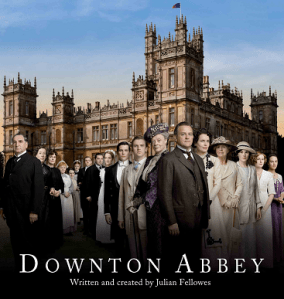 I will be analyzing each episode of the final season of Downton Abbey from a worldview perspective. I will be doing them two at a time to make space for my series on “The Expanse.” There will, of course be SPOILERS for each episode, and I will assume readers know about each previous season and episode’s content as well. It will be assumed that readers are familiar with the characters and circumstances. I will not be summarizing the plot of the episode; I will merely interact with the content from a perspective of worldview. BE COURTEOUS AND DO NOT BRING UP LATER EPISODES THAN THE ONE DISCUSSED HERE IN YOUR COMMENTS.
Episode 3
Mr. Carson and Mrs. Hughes got married! The celebration and excitement that surrounds this event is a reflection of reality. Marriage is a good, one God has given to us from the beginning. There is something beautiful about seeing two people come together before God, blessing their marriage in the name of the Triune Lord. It was particularly interesting to see how the Trinitarian blessing was included in this episode, rather than being left out.
Episode 4
Lady Painswick’s offhand remark about being able to call Mrs. Carson Mrs. Hughes still is worth reflecting on: “There is a God!” We so often jokingly say things like this, but I wonder whether a more serious perspective is right. Is God not found in the little things in life as well as the big things? Is not every joy from God? This is not to say that God will never allow suffering, but it does mean we ought to thank God for even the tiniest blessings.
I’m starting to get quite worried about Thomas, the underbutler. He continues to reject any attempts to be friendly to him, but then turns around and notes to Baxter how he does feel the sometimes cruel remarks and jabs made in his direction. Part of this, of course, is reaping what he has sown. When has he ever done anything to help someone else? I struggle to think of a single instance in which he did so without an ulterior motive. But again, part of what he needs is grace. Baxter, as I noted in the last recap, has been offering that grace to him, but he continues to reject it.
The theme of rejected grace continues in how he has been treating the interview process. He has high hopes for the other positions he is applying to: but each time he is disappointed. He wants to have a position of highest import, like one in bygone years, but these positions are disappearing rapidly. Again, these opportunities are examples of grace towards him, but his own choice is to continue to reject them. I hope this story doesn’t continue to spiral down, because I could see Thomas doing something drastic.
More!
Be sure to let me know what you thought of the episodes, and what worldview-level issues you saw them raise, in the comments below.
Links
Be sure to check out the page for this site on Facebook and Twitter for discussion of posts, links to other pages of interest, random talk about theology/philosophy/apologetics/movies and more!
Eclectic Theist– Check out my other blog for my writings on science fiction, history, fantasy movies, and more!
SDG.
——
The preceding post is the property of J.W. Wartick (apart from quotations, which are the property of their respective owners, and works of art as credited; images are often freely available to the public and J.W. Wartick makes no claims of owning rights to the images unless he makes that explicit) and should not be reproduced in part or in whole without the expressed consent of the author. All content on this site is the property of J.W. Wartick and is made available for individual and personal usage. If you cite from these documents, whether for personal or professional purposes, please give appropriate citation with both the name of the author (J.W. Wartick) and a link to the original URL. If you’d like to repost a post, you may do so, provided you show less than half of the original post on your own site and link to the original post for the rest. You must also appropriately cite the post as noted above. This blog is protected by Creative Commons licensing. By viewing any part of this site, you are agreeing to this usage policy.
Really Recommended Posts 1/29/16- Moses on Messiah, the Ark Encounter, and more!
I can’t believe we’re almost through January already. If you haven’t yet, be sure to check out my awards post for 2015. In this round of Really Recommended Posts, we have messianic prophecy, women in the ministry, evolution and creationism, the Bible, and movies of 2015. Let me know what you think, and be sure to let the authors know as well.
Did Moses really write about Jesus?: A look at Messianic Prophecy in the Torah– An excellent post highlighting a number of biblical prophecies about the Messiah found throughout the Torah.
Prominent Biblical Scholars on Women in Ministry– It continues to amaze me how willing some are to dismiss any nod to egalitarianism as clear rejection of biblical authority and teaching. I do not believe that merely mustering names is enough to prove a position (the list of complementarian scholars is quite long), but the fact that so many clearly biblical thinkers have held to the egalitarian position should give pause to those who make this claim. Here’s a list of just a few such scholars.
Dodging Darwin: How Ken Ham’s Ark Encounter is Slowly Embracing Evolution– “That which we call a rose…” is the essence of this post. As Ham and other young earth creationists decry evolution, they have been slowly embracing forms of it that go beyond the wildest dreams of modern evolutionary biologists. This post highlights the inconsistency of the Answers in Genesis answer to evolution.
Admit it: Some of the Bible is Hard to Believe– We should not sugarcoat the tough passages in the Bible. Here’s a good post that addresses an approach to problematic passages.
An Assassin, White God, and Fury Road- The Top 10 Films of 2015– Think Christian has a post highlighting major worldview-level issues found in several films from 2015.
2015: The Year’s Best Books, My Reading, Blogs, and More!
Another year has passed more quickly than I could have ever imagined. I’d like to share with you my reading for the year, as well as my awards for books, movies, and blogs. Please let me know about your own reading, movie-watching, and the like this year. I’d love to read about what you were up to last year and what books moved you or taught you much.
Books
The books of the year are based off my reading this year; not on whether they were actually released this year. The categories for InterVarsity Press (IVP) and Crossway, however, are from this year.
Theology book of the year
Flame of Yahweh by Richard Davidson- This book is a massive wealth of information about sexuality in the Old Testament. Davidson analyzes an enormous number of texts to draw out the teaching on sexuality found therein. Davidson approaches the texts from what I would call a moderate egalitarian viewpoint, but he justifies this view directly from the text, with a particular emphasis on the creation account. Moreover, Davidson’s exposition of Song of Songs in particular is just phenomenal. I cannot recommend this book highly enough.
Philosophy book of the year
The Shape of the Past by John Warwick Montgomery- this book is a historiography book–it is a study of how we write and study history, and it is phenomenal. John Warwick Montgomery is one of those rare people who can touch on seemingly endless topics from a clearly informed perspective, and draw them together with breathless beauty. The first half of the book offers a major look at various historiographic perspectives of the past. The second half is a collection of essays, each of which as informative and wonderful as the next. The book was published originally in 1975, but it remains as brilliant as it ever was. John Warwick Montgomery is just phenomenal, and this book was heavy, but breathtaking. Here’s a quote from the book.
IVP Book of the Year
Rescuing the Gospel from the Cowboys by Richard Twiss- A convicting read, Richard Twiss argues that we have failed Native Americans when it comes to spreading the Gospel. The book is full of moving stories and deep insights. It is beautiful and haunting. If you want to know more, read my review.
Crossway Book of the Year
Newton on the Christian Life by Tony Reinke- John Newton is probably best known as the author of the hymn “Amazing Grace,” but Reinke highlights so much more about this amazing pastor in this interesting work. Read my review for more.
Fiction book of the Year
The Once and Future King by T.H. White – I’m embarassed to say this, but I actually owned this book once and got rid of it because I figured I wouldn’t actually enjoy it. Was I ever wrong. I picked it up at the library and was absolutely blown away. This classic novel about King Arthur was everything I expected it to be and so much more. I was particularly impressed by the amount of genuinely hilarious humor found throughout. I did not expect the depth it had, either. It was fantastic. Okay, I did read Ben Hur by means of audiobook this year, but I read that book annually because it is probably my favorite work of fiction ever, so it’s not really fair to put it in competition.
Best non-fiction, non-theology/philosophy
The New Jim Crow by Michelle Alexander- think racism is no longer a problem in America? Think again. This book has an enormous amount of research showing how our allegedly colorblind criminal justice system has perpetuated a system of injustice.
Young Adult Novel of the Year
Ghost Hawk by Susan Cooper- A haunting novel about the colonial period in the United States. It is rare that I am as emotionally moved by a novel as I was in this one.
Most Anticipated Book of Next Year
Brandon Sanderson seems to me a well that I will not stop returning to. Ever. I’ve not worked through his whole body of work yet, but everything I’ve read from him is amazing. He consistently nails stunning plot twists in believable ways. Thus, Calamity, the third book of “The Reckoners” is my most anticipated book for next year. I can’t wait to get my hands on it and find out what happens next.
Movie
Best worldview movie of the year
Star Wars: The Force Awakens- No, I’m not just saying this because it is Star Wars (though part of me is saying precisely that). I selected this one because it has so much in it to discuss. I’m not going to spoil anything here, so be sure to head on over to my post on the movie to read more.
Blog
Blog of the Year
Christians for Biblical Equality– CBE continues to put out excellent articles week in and week out. Every new post is worth the time to read, and they have covered an enormous amount of ground with articles on neuroscience to articles on exegesis. This is a fantastic blog and well worth your time to read and subscribe to.
Reading List for 2015
The list starts at where I left off in 2014, when I first started keeping track.
- Star Wars: Heir to the Empire by Timothy Zahn – Finished 1/2/15
- 4 Views on Divine Providence edited by Dennis Jowers and Gundry – Finished 1/4/15
- Wind and Shadow by Kathy Tyers – Finished 1/6/15
- Kingdom Come: The Amillennial Alternative – Finished 1/8/15
- Allegiant by Veronica Roth – Finished 1/10/15
- The Civil War as a Theological Crisis by Mark Noll – Finished 1/12/15
- Salvation Applied by the Spirit by Robert Peterson – Finished 1/13/15
- Star Wars: Dark Force Rising by Timothy Zahn – Finished 1/13/15
- God’s Battalions by Rodney Stark – Finished 1/13/15
- Gender, Religion, and Diversity edited by Ursula King and Tina Beattie – Finished 1/15/15
- Off Armageddon Reef by David Weber – Finished 1/19/15
- Beyond the Control of God? Edited by Paul Gould – Finished 1/22/15
- By Schism Rent Asunder by David Weber – Finished 1/24/15
- Religions of Mesoamerica by David Carrasco – Finished 1/25/15
- By Heresies Distressed by David Weber – Finished 1/28/15
- Eternity Falls by Kirk Outerbridge – Finished 2/1/15
- Evolutionary Creation by Denis Lamoureux – Finished 2/1/15
- A Mighty Fortress by David Weber – Finished 2/6/15
- The New Evangelical Subordinationism edited Jowers and House – Finished 2/7/15
- Red Rising by Pierce Brown – Finished 2/9/15
- Creative Church Handbook by J. Scott McElroy – Finished 2/10/15
- Never to Live by Just B. Johnson – Finished 2/14/15
- Sanctification: Explorations in Theology and Practice edited Kelly Kapic- Finished 2/16/15
- Star Wars: The Last Command by Timothy Zahn – Finished 2/17/15
- The Dominant Culture by Martin Murphy – Finished 2/17/15
- Daystar by Kathy Tyers – Finished 2/23/15
- Give Them Grace by Jessica Thompson and Elyse Fitzpatrick – Finished 2/23/15
- Reinventing Jesus by Komoszewski, Sawyer, and Wallace – Finished 2/25/15
- How Firm a Foundation by David Weber – Finished 3/2/15
- Tamar’s Tears edited by Andrew Sloane – Finished 3/2/15
- Heretics of Dune by Frank Herbert – Finished 3/4/15
- For the Beauty of the Earth by Steven Bouma-Prediger – Finished 3/6/15
- Star Trek: New Frontier- The Quiet Place by Peter David – Finished 3/6/15
- The Warlord of Mars by Edgar Rice Burroughs – Finished 3/7/15
- Three Views on the NT Use of the OT edited Berding and Lunde – Finished 3/10/15
- Chapterhouse: Dune by Frank Herbert – Finished 3/11/15
- A Matter of Days by Hugh Ross – Finished 3/12/15
- Midst Toil and Tribulation by David Weber – Finished 3/16/15
- The Lost World of Adam and Eve by John Walton – Finished 3/17/15
- Hunters of Dune by Brian Herbert and Kevin J. Anderson – Finished 3/19/15
- Martin Luther on the Christian Life by Carl Trueman – Finished 3/21/15
- Golden Sun by Pierce Brown – Finished 3/22/15
- 4 Views on Church Government edited Cowan and Engle – Finished 3/23/15
- Sandworms of Dune by Brian Herbert and Kevin J. Anderson – Finished 3/25/15
- Faith, Freedom, and the Spirit by Paul D. Molnar – Finished 3/29/15
- Weaveworld by Clive Barker – Finished 4/1/5
- Presence and Thought by Hans Urs von Balthasar – Finished 4/1/5
- The Soul Hypothesis edited Mark Baker and Stewart Goetz – Finished 4/1/15
- The Book of Three by Lloyd Alexander – Finished 4/3/15
- Science and Christianity: Four Views edited by Richard Carlson – Finished 4/7/15
- Like a Mighty Army by David Weber – Finished 4/9/15
- No Other Name by John Sanders – Finished 4/10/15
- The Lord of the Rings: Return of the King by J.R.R. Tolkien – Finished 4/11/15
- Dune: House Atreides by Brian Herbert and Kevin J. Anderson – Finished 4/14/15
- The Black Cauldron by Lloyd Alexander – Finished 4/14/15
- Two Views of Hell by Edward Fudge and Robert Peterson – Finished 4/15/15
- Total Church by Tim Chester and Steve Timmis – Finished 4/17/15
- Oxygen by John Olson and Randy Ingermanson – Finished 4/18/15
- Bulls, Bears, and Golden Calves by John Stapleford – Finished 4/19/15
- Odd Thomas by Dean Koontz – Finished 4/20/15
- Divine Foreknowledge and Human Freedom by William Lane Craig – Finished 4/21/15
- Dune: House Harkonnen by Brian Herbert and Kevin J. Anderson – Finished 4/23/15
- Hominids by Robert J. Sawyer – Finished 4/26/15
- Mapping Apologetics by Brian Morley – Finished 4/28/15
- The Legend of Drizzt: Homeland by R.A. Salvatore – Finished 4/28/15
- The Legend of Drizzt: Exile by R.A. Salvatore – Finished 4/30/15
- The Legend of Drizzt: Sojourn by R.A. Salvatore – Finished 5/2/15
- Interpreting the Prophets by Aaron Chalmers – Finished 5/2/15
- Titan by Ben Bova – Finished 5/5/15
- Forever Odd by Dean Koontz – Finished 5/6/15
- God and Design edited by Neil Manson – Finished 5/11/15
- Dune: House Corrin by Brian Herbert and Kevin J. Anderson – Finished 5/12/15
- Bound for the Promised Land by Oren Martin – Finished 5/13/15
- Anne of Green Gables by L.M. Montgomery – Finished 5/15/15
- Humans by Robert J. Sawyer – Finished 5/19/15
- Hybrids by Robert J. Sawyer – Finished 5/21/15
- Brother Odd by Dean Koontz – Finished 5/28/15
- Venus by Ben Bova – Finished 5/30/15
- The Bible Story Handbook by John Walton and Kim Walton – Finished 5/31/15
- Cauldron of Ghosts by David Weber and Eric Flint – Finished 6/2/15
- Bismarck by Michael Tamelander and Niklas Zetterling – Finished 6/3/15
- Dune: The Butlerian Jihad by Brian Herbert and Kevin J. Anderson – Finished 6/5/15
- Star Wars: The Paradise Snare by A.C. Crispin – Finished 6/6/15
- The Legend of Drizzt: The Crystal Shard by R.A. Salvatore – Finished 6/11/15
- Renewing Moral Theology by Daniel Westberg – Finished 6/12/15
- The Legend of Drizzt: Streams of Silver by R.A. Salvatore – Finished 6/14/15
- The Legend of Drizzt: The Halfling’s Gem by R.A. Salvatore – Finished 6/17/15
- The Legend of Drizzt: The Legacy by R.A. Salvatore – Finished 6/21/15
- Fool’s Talk by Os Guinness – Finished 6/21/15
- The Legend of Drizzt: Starless Night by R.A. Salvatore – Finished 6/25/15
- The Legend of Drizzt: Siege of Darkness by R.A. Salvatore – Finished 6/25/15
- The Legend of Drizzt: Passage to Dawn by R.A. Salvatore – Finished 6/28/15
- Understanding Gender Dysphoria by Mark Yarhouse – Finished 7/9/15
- War God’s Oath by David Weber – Finished 7/9/15
- No More Dead Dogs by Gordon Korman – Finished 7/11/15
- Genesis: History, Fiction, or Neither edited Halton and Gundry – Finished 7/13/15
- Double Eagle by Dan Abnett – Finished 7/14/15
- [John] Newton on the Christian Life by Tony Reinke – Finished 7/18/15
- 4 Views on the Nature of the Atonement edited Beilby and Eddy – Finished 7/21/15
- We the Underpeople by Cordwainer Smith – Finished 7/22/15
- Norstrilia by Cordwainer Smith – Finished 7/22/15
- Odd Hours by Dean Koontz – Finished 7/24/15
- Theology as Retrieval by W. David Buschart and Kent D. Eilers – Finished 7/25/15
- The Austere Academy by Lemony Snicket – Finished 7/25/15
- The Ersatz Elevator by Lemony Snicket – Finished 7/27/15
- The Just City by Jo Walton – Finished 8/4/15
- The Vile Village by Lemony Snicket – Finished 8/5/15
- Rescuing the Gospel from the Cowboys by Richard Twiss – Finished 8/6/15
- Packer on the Christian Life by Sam Storms – Finished 8/9/15
- The War God’s Own by David Weber – Finished 8/10/15
- Talking Doctrine: [LDS] & Evngls in Conversation ed. Mouw & Millet- Finished 8/10/15
- Star Trek: New Frontier- Dark Allies by Peter David – Finished 8/11/15
- God’s Crime Scene by J. Warner Wallace – Finished 8/11/15
- Joy in the Journey by Steve & Sharol Hayner – Finished 8/14/15
- Fall of Giants by Ken Follett – Finished 8/17/15
- The Hostile Hotel by Lemony Snicket – Finished 8/18/15
- Hell Under Fire edited Christopher Morgan and Robert Peterson – Finished 8/19/15
- How Jesus Passes the Outsider Test by David Marshall – Finished 8/20/15
- Odd Apocalypse by Dean Koontz – Finished 8/21/15
- Kris Longknife: Mutineer by Mike Shepherd – Finished 8/27/15
- Kris Longknife: Deserter by Mike Shepherd – Finished 8/25/15
- The Carnivorous Carnival by Lemony Snicket – Finished 8/27/15
- Star Wars: The Hutt Gambit by A.C. Crispin – Finished 8/28/15
- Winter of the World by Ken Follett- Finshed 9/4/15
- The Malestrom by Carolyn Custis Davis – Finished 9/4/15
- The Slippery Slope by Lemony Snicket – Finished 9/5/15
- Rediscovering Jesus by Capes, Reeves, and Richards – Finished 9/7/15
- Wind Rider’s Oath by David Weber – Finished 9/9/15
- The Philosopher Kings by Jo Walton – Finished 9/11/15
- Deeply Odd by Dean Koontz – Finished 9/13/15
- Bavinck on the Christian Life by John Bolt – Finished 9/14/15
- The Martian by Andy Weir – Finished 9/15/15
- The Grim Grotto by Lemony Snicket – Finished 9/16/15
- Ship of Magic by Robin Hobb – Finished 9/20/15
- The Love of God by John C. Peckham – Finished 9/22/15
- Saint Odd by Dean Koontz – Finished 9/26/15
- Owen on the Christian Life by Matthew Barrett and Michael Haykin – finished 10/2/15
- Edge of Eternity by Ken Follett – Finished 10/6/15
- Debating Darwin’s Doubt edited by David Klinghoffer – Finished 10/8/15
- Star Wars: Rebel Dawn by A.C. Crispin – Finished 10/9/15
- Aborting Aristotle by Dave Sterrett – Finished 10/9/15
- Who Was Adam? By Fazale Rana with Hugh Ross – Finished 10/12/15
- The Godfather by Mario Puzo – Finished 10/13/15
- Reformation Christianity edited by Peter Matheson – Finished 10/15/15
- War Maid’s Choice by David Weber – Finished 10/19/15
- Scripture and Cosmology by Kyle Greenwood – Finished 10/20/15
- To Kill a Mockingbird by Harper Lee – Finished 10/21/15
- Innocence by Dean Koontz – Finished 10/24/15
- Onward by Russell Moore – Finished 10/25/15
- Reformation Readings of Paul edited Allen and Linebaugh – Finished 10/26/15
- The God Abduction by Ron Londen – Finished 10/26/15
- Hell’s Foundations Quiver by David Weber – Finished 11/1/15
- The Paradoxical Rationality of Soren Kierkegaard by McComb – Finished 11/1/15
- Star Wars: Aftermath by Chuck Wendig – Finished 11/2/15
- Ghost Hawk by Susan Cooper – Finished 11/4/15
- Ben Hur by Lew Wallace (audiobook) – Finished 11/4/15
- The Penultimate Peril by Lemony Snicket – Finished 11/5/15
- Augustine on the Christian Life by Gerald Bray – Finished 11/6/15
- The End by Lemony Snicket – Finished 11/7/15
- The Analogy of Faith by Archie J. Spencer – Finished 11/8/15
- Eve by William Paul Young – Finished 11/9/15
- The Spirit of Hinduism by David Burnett – Finished 11/9/15
- Flame of Yahweh by Richard M. Davidson – Finished 11/11/15
- Life Together by Dietrich Bonhoeffer – Finished 11/12/15
- The Once and Future King by T.H. White – Finished 11/13/15
- WH40K: Nightbringer by Graham McNeil – Finished 11/14/15
- American Exceptionalism and Civil Religion by John Wilsey – Finished 11/16/15
- A Beautiful Friendship by David Weber – Finished 11/17/15
- History, Law, and Christianity by John Warwick Montgomery – Finished 11/18/15
- The Battle of the Tanks by Lloyd Clark – Finished 11/18/15
- The Husband by Dean Koontz – Finished 11/19/15
- The Myth of Religious Neutrality by Roy Clouser – Finished 11/22/15
- Leviathan by Scott Westerfeld- Finished 11/22/14
- The Olmecs: America’s First Civilization by Richard Diehl – Finished 11/23/15
- A Wrinkle in Time by Madeleine L’Engle – Finished 11/23/15
- Behemoth by Scott Westerfeld – Finished 11/26/15
- The New Jim Crow by Michelle Alexander – Finished 11/28/15
- Goliath by Scott Westerfeld – Finished 11/30/15
- Steelheart by Brandon Sanderson – Finished 12/3/15
- The Incas by Terence D’Altroy – Finished 12/4/15
- Partners in Christ by John G. Stackhouse, Jr. – Finished 12/4/15
- The Aztecs by Richard F. Townsend – Finished 12/6/15
- Firefight by Brandon Sanderson – Finished 12/7/15
- The Great Christ Comet by Colin Nicholl – Finished 12/8/15
- Starship Troopers by Robert Heinlein – Finished 12/9/15
- Foxcraft: The Taken by Inbali Iserles – Finished 12/9/15
- Shadow and Bone by Leigh Bardugo – Finished 12/12/15
- Karen Memory by Elizabeth Bear – Finished 12/14/15
- Expository Apologetics by Voddie Baucham, Jr. – Finished 12/14/15
- Aquinas: A Beginner’s Guide by Edward Feser – Finished 12/15/15
- Of Bone and Thunder by Chris Evans – Finished 12/17/15
- 2001: A Space Odyssey by Arthur C. Clarke – Finished 12/19/15
- The Shape of the Past by John Warwick Montgomery – Finished 12/22/15
- The 5th Wave by Rick Yancey – Finished 12/22/15
- 40 Questions about Creation and Evolution by Keathley and Rooker – Finished 12/22/15
- How Much Does God Foreknow? by Steven C. Roy – Finished 12/23/15
- The Art of War by Sun Tzu – Finished 12/25/15
- The First World War by Martin Gilbert – Finished 12/27/15
- Knowledge and Christian Belief by Alvin Plantinga – Finished 12/28/15
- Death Wave by Ben Bova – Finished 12/28/15
Bonhoeffer’s Troubling Theology? – A response to an article on Dietrich Bonhoeffer’s theological perspectives

Recently, Richard Weikart wrote an article entitled “The Troubling Truth About Bonhoeffer’s Theology.” Not surprisingly, this article called attention to some aspects of Dietrich Bonhoeffer’s theology which would be considered, well, troubling to evangelicals.
The article has much to commend it: it shows that we ought not to make any theologian into an idol or endorse everything anyone writes. Indeed, the conclusion of the article has little to question in it: “What then should we make of Bonhoeffer? While recognizing his many admirable traits—compassion, courage, commitment, and integrity—we should be wary of many elements of his theology.” I think this kind of critical perspective is something evangelicals–and Christians generally–ought to take to heart. We should always test theologians by what Scripture teaches us.
All of that said, there are some aspects I wanted to respond to in the article, particularly to give some more context for Bonhoeffer as well as his Lutheran theology. I’m sure Weikart is more studied on Bonhoeffer than I am, and I don’t claim to be an expert on Bonhoeffer’s thought. What I do know, however, is a good amount about Lutheran theology, and what I have read of and about Bonhoeffer. And all of that, I think, is enough to allow me to offer some areas of criticism regarding the article.
The Bible and Apologetics
There is no question that Bonhoeffer’s view of the Bible was heavily influenced by Karl Barth. Weikart is correct to note that this means that, for Bonhoeffer, Scripture is not inerrant. Indeed, he believes the Bible scientifically silly at points (see his Creation and Fall, for example). Scripture was, for both Barth and Bonhoeffer, important more for conveying truths about Christ than it is for being verbally inspired. Scripture conveys the revelation of Christ, rather than itself being revelation, according to both. This is, indeed, a weakness in their theology.
Later, Weikart critiques Bonhoeffer for his view of apologetics: “[Bonhoeffer] thought that the historical accuracy of Scripture was irrelevant. Barth (and Bonhoeffer) considered apologetics misguided, because it transgressed the boundaries separating the empirical and religious realms.”
I’m not sure about the first part of this claim. If, by “historical accuracy,” Weikart means the individual details of how events happened, or specific views of creationism and the like, then the statement is true. But the brush seems to be a bit too broad here; given Bonhoeffer’s view of the importance of Christ, the cross, and the Resurrection, to broadly say that none of these were seen as historical or were in fact irrelevant is to speak too strongly. Did Bonhoeffer think things like the length of creation days, the exact words spoken by the serpent at the Fall, and the like were historically irrelevant? Yes, pretty much. But that doesn’t mean he thought there was nothing of historical value therein, nor does it mean he rejected the usefulness of Scripture. This is a common error evangelicals make regarding the views of Christians who do not affirm inerrancy. Admittedly, it’s one I have made at times. Just because someone doesn’t affirm a form of verbal inspiration does not entail they think everything in the Bible is false or questionable.
Regarding the second part of the claim, it is easy to assume someone like Barth or Bonhoeffer completely rejected apologetics, and indeed each makes statements to that effect; but what they mean by apologetics largely means a kind of apologetics that puts humanity in judgment of God. Barth and Bonhoeffer would not completely reject any form of defense of the faith, but they would reject those that rely on natural theology and the like. Bowman and Boa’s book, Faith Has Its Reasons categorizes Barth as a “fideist” apologist. Delving into those issues would take too long, but it is safe to say that Bonhoeffer would not have been completely against any form of apologetics whatsoever. His own apologetic would have been personal and existential, and apologists ought not to dismiss this aspect of a holistic view of Christianity.
“Conversion Experience”?
Weikart writes, “Though he experienced some kind of conversion around 1931, he hardly ever mentioned it. Later he expressed distaste for Christians talking or writing about their conversions.” Later, he makes his aversion to Bonhoeffer’s Lutheranism plain: “Aside from his faulty view of Scripture, Bonhoeffer’s doctrine of salvation was also problematic. As a Lutheran he embraced baptismal regeneration.”
The multiple mentions about Bonhoeffer’s “conversion” reveal more about the author of the article than about Dietrich Bonhoeffer. Bonhoeffer was, like myself, a Lutheran and ought to be evaluated as such. Unless Weikart wants to dismiss all Lutherans as unsaved heretics–or at least as affirming “troubling” theology–he cannot simply dismiss Bonhoeffer’s view because he didn’t talk about his “conversion experience.”
The fact that Weikart continues to emphasize this makes me wonder just how inclusive his definition of “evangelical” is supposed to be. Lutherans do not have an emphasis on finding some specific event, date, or time that signify we converted to Christianity. Because of the emphasis in Lutheran theology on predestination and baptism, such language seems to us to imply a kind of work of conversion being done by the individual rather than by God. Indeed, for many Lutherans, if pressed to pick a moment of conversion, that would be whatever time they were baptized as an infant. This is not the place to delve into the debate over baptism, infant baptism, and the like. Instead, I’m giving context to Bonhoeffer’s theology and experience. Martin Luther himself affirmed vehemently that infants can have faith, and however absurd this might seem to many non-Lutherans, the reason is because faith is the act of the Holy Spirit–it is pure grace, not tied to some specific synergistic act or affirmation by a human. To critique Bonhoeffer because he wasn’t speaking to the expectations of whatever brand of evangelicalism Weikart subscribes to is to decontextualize his theology and, indeed, to effectively dismiss Lutheran confessions of faith.
Weikart most likely does disagree with much of the Lutheran Confessions, but this does not mean it is acceptable to critique someone like Bonhoeffer as though he is some kind of mainstream evangelical instead of being a Lutheran.
“Religionless Christianity”
Weikart quotes the somewhat infamous passage Bonhoeffer wrote of his resistance to “everything ‘religious.'” Such words tend to rile those who adhere to a narrative of a “culture war” between Christianity and… everything else. But, like Kierkegaard, who gets lumped in by Weikart along with other apparently “troubling” theologians, Bonhoeffer’s comments on religion must be read contextually. Eric Metaxas writes about this very same quote in his lengthy biography (and sometimes controversial) on Bonhoeffer, Bonhoeffer: Pastor, Martyr, Prophet, Spy:
The most tortured interpretations [of Bonhoeffer] have fixed on his reference to “religionless Christianity”… [Bonhoeffer] saw a situation so bleak… that he was rethinking some basic things and wondered whether modern man had moved beyond religion. What Bonhoeffer meant by “religion” was not true Christianity, but the ersatz and abbreviated Christianity that he spent his life working against. This “religious” Christianity had failed Germany and the West during this great time of crisis…. and he wondered whether it wasn’t finally time for the lordship of Jesus Christ to move past Sunday mornings and churches and into the whole world. (466-467, cited below)
The crisis, of course, was Germany in World War II–the same Nazi Germany which executed Bonhoeffer shortly before the end of the war. Weikart’s warnings about Bonhoeffer’s comments on “religion,” it seems, fall into the same trap that many fall into when discussing Kierkegaard–failing to take the historical context and particular usage of the term seriously. Though some have objected to Metaxas’ portrayal of Bonhoeffer, the historical context provided here can hardly be questioned, because it is exactly what Bonhoeffer was rejecting against.
Evangelical Lutheran Hero?
Did Bonhoeffer have some aspects of his theology that evangelicals will find troubling? Absolutely, and Weikart does a good job highlighting some of these. But the point I’m trying to make is that none of this means that Bonhoeffer needs to be rejected or thrown out as an evangelical (and/or Lutheran) hero. Indeed, for the Lutheran in particular, Bonhoeffer’s theology shows us how true it is that we are all but sinner-saints. Though chosen by God and saved by grace alone, that does not mean we will be perfect now, and it means that we may have ideas that will be mistaken throughout our lives.
Many of the greatest theologians of all time have aspects of their theology that evangelicals will find troubling. Obvious examples would include Calvin (who would be troubling to Arminians) and Arminius (whose theology is troubling to Calvinists). But, alas, no human is perfect, and even greats like Augustine, Aquinas, Mother Theresa, and the like will not withstand scrutiny to determine whether they were perfect or affirmed a perfect theology.
Conclusion
Go ahead, enjoy Bonhoeffer’s works, note how he was a hero, and talk about his legacy. But read his works as you would any others: with a critical eye. As far as this article is concerned, as a Lutheran I found it somewhat troubling myself. Does Weikart genuinely mean to imply that all Lutherans must be excluded from the fold of evangelicalism? I’m not sure, but at least some of his criticism leveled at Bonhoeffer would just as easily be applied to Lutheran theology, generally speaking. And that, as I said above, seems to reveal more about the author than about Bonhoeffer.
Sources
Richard Weikart, The Troubling Truth about Bonhoeffer’s Theology (http://www.equip.org/article/troubling-truth-bonhoeffers-theology/) accessed 1/24/16.
Eric Metaxas, Bonhoeffer: Pastor, Martyrd, Prophet, Spy (Nashville: Thomas Nelson, 2010).
Links
Be sure to check out the page for this site on Facebook and Twitter for discussion of posts, links to other pages of interest, random talk about theology/philosophy/apologetics/movies and more!
Eclectic Theist– Check out my other blog for my writings on science fiction, history, fantasy movies, and more!
SDG.
——
The preceding post is the property of J.W. Wartick (apart from quotations, which are the property of their respective owners, and works of art as credited; images are often freely available to the public and J.W. Wartick makes no claims of owning rights to the images unless he makes that explicit) and should not be reproduced in part or in whole without the expressed consent of the author. All content on this site is the property of J.W. Wartick and is made available for individual and personal usage. If you cite from these documents, whether for personal or professional purposes, please give appropriate citation with both the name of the author (J.W. Wartick) and a link to the original URL. If you’d like to repost a post, you may do so, provided you show less than half of the original post on your own site and link to the original post for the rest. You must also appropriately cite the post as noted above. This blog is protected by Creative Commons licensing. By viewing any part of this site, you are agreeing to this usage policy.
Sunday Quote!- Paul and Patriarchy… and Egalitarianism?
 Every Sunday, I will share a quote from something I’ve been reading. The hope is for you, dear reader, to share your thoughts on the quote and related issues and perhaps pick up some reading material along the way!
Paul and Patriarchy… and egalitarianism?
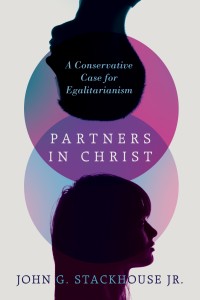
John G. Stackhouse, Jr.’s Partners in Christ presents a challenging perspective on the debate over women in the church and home. One major strength of the book is the balanced perspective he offers. Here is just one example of a refreshing reading of Paul in light of the whole biblical witness (and the cultural background):
Paul means just what he says about gender… Paul is guided by the Holy Spirit… to do two good things simultaneously: (1) to give the church prudent instruction as to how to survive and thrive in a patriarchal culture that he thinks won’t last long; and also (2) to maintain and promote the egalitarian teaching that is evident throughout the Bible and dynamic particularly in the career of Jesus and that in the right circumstances will leave gender lines behind. (66-67, cited below)
I encourage readers to pick up Partners in Christ for a wide-ranging introduction to the debate over women in the church and home. I guarantee that whatever your perspective, you will be challenged and enlightened.
Links
Be sure to check out the page for this site on Facebook and Twitter for discussion of posts, links to other pages of interest, random talk about theology/philosophy/apologetics/movies and more!
Sunday Quote– If you want to read more Sunday Quotes and join the discussion, check them out! (Scroll down for more)
Eclectic Theist– Check out my other blog for my writings on science fiction, history, fantasy movies, and more!
Source
John G. Stackhouse, Jr. Partners in Christ (Downers Grove, IL: InterVarsity, 2015).
SDG.
The Expanse: Episodes 6-7 – A Christian perspective
 I’ve been enjoying watching SyFy’s TV series, “The Expanse,” quite a bit. Part of that is because I’m a huge science fiction fan, but another part of it is because there is plenty of worldview discussion to go around. I’ll be posting a series on worldview in episodes from the expanse biweekly as they come out. There will be SPOILERS for the episodes discussed here, as well as possibly any earlier episodes. Please don’t post spoilers for later episodes on this post.
Home, Family, and Self
Once more we have the OPA entangled in a struggle for a sense of home. I emphasized this last time for episodes 1-5, but here we have the need for home countered by the revelation that the OPA killed Chrisjen Avasarala’s son, and it has become personal for her. Family was emphasized on her side of the plot, as she tries to play that card to get more information about the OPA. It will be interesting to see whether dynamics of family, self-service, and home continue to drive some of the main characters in the series. One question I still have: how important is it to have a place we can call “home”? So far, “The Expanse” seems to emphasize that this is a great need, and this resonates with a Christian worldview when, throughout the Bible, we have continued pointers to a promised land and sense of place.
Truth and Lies
One of the most common expressions regarding lies is that we “weave a web” of them. The more we engage in deception, the more we must tell more lies to keep up the facade. Detective Miller goes deeper and deeper into a web of lies. The question is: what does he have to ground himself? His job was terminated instantly once it was found out he was delving too close into territory that others wanted to keep quiet. What does it mean to continue to seek truth even in the face of such opposition–even threat to one’s own life?
Christianity was based upon the testimony of those who were willing to die for truth. This isn’t merely an appeal to sincerity of belief, but rather an argument that shows that some truths are worth dying for–something difficult to do if you know what you’re dying for is false. Miller–technically no longer Detective Miller–seems like he is willing to go to extraordinary lengths to discover the truth. I wonder where it will lead him.
Survival and the Secular Ethic
The conversation Burton has with the stowaway spy, Kenzo, in episode 7 is interesting, because it focuses on the notion that survival is the highest good for humanity. This reflects an understanding of reality that puts mere continued existence as “the good” as opposed to anything else. Frankly, this is the kind of grounding that secular ethics almost always end up appealing to, whether it is mere survival or some abstraction like “human flourishing.” Yet in this episode we see how hollow such an ethic is. It leads to Burton’s willingness to kill anyone–whether it is someone he just met (and has completely at his mercy) or to keep from getting captured.
Later in the same episode, Kenzo has a deep conversation, asking whether he is going to be dropped out an airlock because he is found to be “inconvenient.” Perhaps with the most moving line in the series so far, he asks to be told if they’re just going to kill him so he can make his peace, because “I am not an animal.” Yet, so far, many of the people have been acting just like animals, again, with Burton’s argument for mere survival as his motto for life.
The absurdity of this way of life was revealed by Kenzo, because his words resonate with us. Mere survival is not enough–we are not animals. Indeed, even the more popular appeals to ground ethics upon “human flourishing” is little more than putting forward prettier words for the same concept. Is mere survival, or even the move towards whatever hedonistic view of “flourishing” we’d like to put forward, the best we can do? I don’t believe so, and I have argued at length that the secular grounding for morality fails even on its own criteria. We are not merely animals, and we can do better than grounding a philosophy of life on an animalistic drive to survive.
Such an ethic makes the most sense on a theistic view of the world, and Christianity is the worldview that stands up under scrutiny. Those who wish to deny this and continue to affirm a secular ethic must embrace the very opposite of that which Kenzo states in this episode. That is, they must affirm “I am [merely] an animal” and then ground their moral action on that.
Conclusion
The Expanse continues to bring intriguing questions about worldview to the forefront, while couching it all in a pseudo-noir science fiction epic. I’m loving the series so far, and would like to know what you think as well. Let me know in the comments!
Links
Be sure to check out the page for this site on Facebook and Twitter for discussion of posts, links to other pages of interest, random talk about theology/philosophy/apologetics/movies and more!
Eclectic Theist– Check out my other blog for my writings on science fiction, history, fantasy movies, and more!
SDG.
——
The preceding post is the property of J.W. Wartick (apart from quotations, which are the property of their respective owners, and works of art as credited; images are often freely available to the public and J.W. Wartick makes no claims of owning rights to the images unless he makes that explicit) and should not be reproduced in part or in whole without the expressed consent of the author. All content on this site is the property of J.W. Wartick and is made available for individual and personal usage. If you cite from these documents, whether for personal or professional purposes, please give appropriate citation with both the name of the author (J.W. Wartick) and a link to the original URL. If you’d like to repost a post, you may do so, provided you show less than half of the original post on your own site and link to the original post for the rest. You must also appropriately cite the post as noted above. This blog is protected by Creative Commons licensing. By viewing any part of this site, you are agreeing to this usage policy.

 J.W. Wartick - Reconstructing Faith