J.W. Wartick
Sunday Quote!- Hidden Science in the Bible?
 Every Sunday, I will share a quote from something I’ve been reading. The hope is for you, dear reader, to share your thoughts on the quote and related issues and perhaps pick up some reading material along the way!
Hidden Science in the Bible?
Some see the Bible as a source of all knowledge. When we come to the very beginning of the Bible, what is it trying to teach us? Might it tell us what to believe about evolution? Could it reveal truths about science that no one knew until they were discovered later? These types of questions come to us very frequently in this age of science in which we invest so much into questions of a material nature.
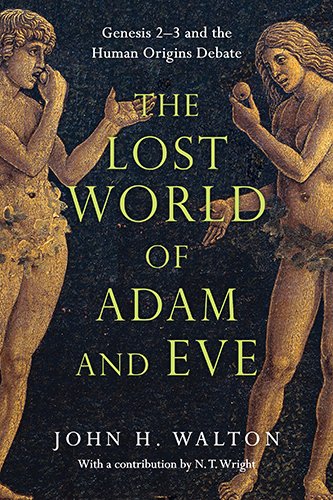
John Walton, in his latest book, The Lost World of Adam and Eve, argues that these questions are largely misguided:
[God] did not hide information of that sort [scientific] in the text for later readers to be discovered. An assumption on our part that he did would have no reliable controls. For example, in the days when people believed in a steady-state universe, people could easily have gone to the Bible to find confirmation of that science. But today we do not believe the steady-state theory to be true… Such approaches cannot be adopted within an authority framework. (18, cited below)
Walton’s argument is compelling. The notion that the Bible necessarily has hidden throughout scientific insight just waiting to be found can never be arbitrated. Thus, it makes the Bible the tool of one generation and the laughing stock of the next. As we attempt to use the Bible to support various scientific notions, we may do much damage to the text.
How might we best approach the text in a way that does not leave us open to this uncontrollable theorizing? Is it possible to maintain the notion that the Bible does teach us about science? If not, why not? If so, to what extent?
Links
Be sure to check out the page for this site on Facebook and Twitter for discussion of posts, links to other pages of interest, random talk about theology/philosophy/apologetics/movies and more!
Sunday Quote– If you want to read more Sunday Quotes and join the discussion, check them out! (Scroll down for more)
Source
John Walton, The Lost World of Adam and Eve
SDG.
Really Recommended Posts 5/1/15- Abortion, Earthquake, and Apologetics!
 Another week, another round of great reading that I bring to you, dear readers! This week, we have a discussion of the Bible and abortion, the notion of “soul vultures” and the Nepalese Earthquake, Free Comic Book Day, the apologist E.J. Carnell, and some apologetics books!
Does Revelation 9:21 Prohibit Abortion?– Is it possible that there is a reference to drugs that caused abortions in the Bible? If so, what does the Bible say about abortion?
Twitter Attack on #SoulVultures and the Nepalese Earthquake– There has been a lot of pushback against Christians who have stated that Nepal needs the Gospel. It’s not as if Christians are not sending aid, but some people have incredibly and viciously attacked Christians for, well, being Christians. Here’s an insightful post on this. The site also has several more posts on the same topic.
Free Comic Book Day!– My friend over at No Apologies Allowed has made a comic encouraging people to get involved in apologetics for Free Comic Book Day. Check it out, and download a free comic!
Remembering E.J. Carnell: Some Reflections of a Great Apologist– I’m not well versed in the works of Carnell, but I have recently had a number of sources I trust cite his work favorably. Here’s a post giving some brief insights into his stance and thought.
Top 10 Apologetics Books– It’s always fun to put together “top ten” lists of favorites. Here, there is a top ten list of apologetics books. I have read almost all of them, and have been edified by many. What are your top ten?
Book Review: “Bulls, Bears, and Golden Calves” by John Stapleford
 John Stapleford’s Bulls, Bears and Golden Calves
Often, when I read about someone putting forward a “Christian” view of economics, I get worried because what happens all too frequently is that the “Christian” view is taken to be equivalent to some existing economic theory and then anyone who disagrees with that theory is seen as being sub-biblical. By contrast, Stapleford does a fantastic job of never giving into the temptation to endorse wholly any one system, noting the impact of human sin and the real injustices that are possible in any economic system. Thus, he successfully navigates a kind of balancing act between liberal and conservative economic views throughout the book.
That said, his often incisive criticism of various economic systems from different angles is sure to challenge almost any reader. In favor of pure free market economies? Stapleford notes that these are the best way to increase overall wealth in a system, but calls them out for often falling victim to greed or ignoring the poor. All in favor of socialist systems? Stapleford argues that these systems can trample the rights of the individual while also making it difficult to anticipate and plan for the needs of societies. No one is safe from the cogent analysis offered in this book.
After outlining numerous ethical theories and practices that Christians can apply to the public square and economics, the book proceeds with a number of practical chapters that apply these to specific situations, whether it is international economics, the environment, and more. The topics treated are extremely wide-ranging and the analysis offered continues to be challenging and insightful throughout. Just as an example, the chapter on gambling points out the failure of several arguments put forth to attempt to ethically justify the practice, while also pointing to numerous injustices in the system. This kind of detailed analysis is found throughout the book on every topic Stapleford touches.
That said, the main downside of the book just is its broadness. At times, readers may feel blown away by how much information is being fed to them. The sheer amount of data can feel a bit overwhelming. Also, because of the broadness of the book, some of the solutions offered feel over-simplified and may leave readers wishing for more analysis.
Overall, Bulls, Bears, and Golden Calves is a simply phenomenal read that will challenge all readers to live out a Christian life in the realm of economics.
The Good
+Eye-opening facts about numerous economic practices
+Excellent chapters on specific economic issues with applicable insights
+Bridges the seeming gap between liberal and conservative views in multiple places
+Consistently puts forth a Christian and holistic view of economics
The Bad
-Sheer amount of data can be overwhelming
-Some solutions offered seem over-simplified
Conclusion
I would highly recommend Bulls, Bears and Golden Calves
Disclaimer: I received a review copy of this book from InterVarsity Press. I was not obligated to provide any specific type of feedback or review nor was I required to give a positive review.
Source
John Stapleford, Bulls, Bears and Golden Calves
Links
Be sure to check out the page for this site on Facebook and Twitter for discussion of posts, links to other pages of interest, random talk about theology/philosophy/apologetics/movies and more!
Book Reviews– There are plenty more book reviews to read! Read like crazy! (Scroll down for more, and click at bottom for even more!)
SDG.
——
The preceding post is the property of J.W. Wartick (apart from quotations, which are the property of their respective owners, and works of art as credited; images are often freely available to the public and J.W. Wartick makes no claims of owning rights to the images unless he makes that explicit) and should not be reproduced in part or in whole without the expressed consent of the author. All content on this site is the property of J.W. Wartick and is made available for individual and personal usage. If you cite from these documents, whether for personal or professional purposes, please give appropriate citation with both the name of the author (J.W. Wartick) and a link to the original URL. If you’d like to repost a post, you may do so, provided you show less than half of the original post on your own site and link to the original post for the rest. You must also appropriately cite the post as noted above. This blog is protected by Creative Commons licensing. By viewing any part of this site, you are agreeing to this usage policy.
The “Mistborn Trilogy” by Brandon Sanderson- Religion(s), Intrigue, and a Messiah
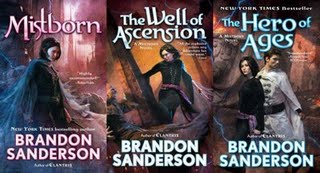 Brandon Sanderson’s Mistborn Trilogy is a wonderfully unique fantasy adventure that is absolutely filled to the brim with political intrigue and religious reflection. Here, we’ll take a look at some of the themes in this series from a worldview perspective. There will be SPOILERS below.
Religion(s)
The character Sazed is a specialist in religions. Indeed, he has the memories of three hundred religions in the trinkets he keeps on his body and preaches them to different characters throughout the first two books of the trilogy. His goal is less to convert than it is to pass on knowledge. Through the foil of Sazed, readers learn about some interesting religions which used to exist before the Lord Ruler began to eradicate them all. Sazed himself asserts that he believes all the religions are true, but in The Well of Ascension, his faith is crushed when he is confronted by the notion that his long search for the religion of his people–and its prophecies–is fruitless.
Sanderson thus presents us with an interesting perspective, through Sazed, of religion. On the one hand, Sazed is seemingly a pluralist. He tries to affirm all the religions he knows about: “I believe them all,” he declares (Well… 504). But on the other hand, his faith in the truth of these religions is decimated by his discovery of direct refutation. The tension of these two views ends up shattering Sazed’s worldview. But, as we’ll see below, it turns out that all religions were false in some sense, but they all had some truth, which Sazed himself uses to piece together the world as it should be (Hero… 716-717).
Interestingly, this resonates in some fashion with what I think is the best way to approach other religions. Rather than assuming everything the religious other believes is false, we should seek the truth in other religions and show how Christianity provides a better and fuller explanation of the same.
Messiah
The “Hero of Ages” is thought by many to be a hero who will come to save them from the oppressive rule of the Lord Ruler and Ruin. Some think that it is Kelsier after the hero of Mistborn helps to destroy the Lord Ruler and then uses a body double to act as though he has been resurrected in order to give hope to the common people. This image alone is an interesting foil for thinking about Jesus and the rise of Christianity. There is no denying the parallels in the story of Kelsier and of Christ in the sense of being seen as resurrected saviors.
But the narrative of Kelsier is intentionally subversive, it has a political aspect to it that is intentionally driven towards the overthrow of the Final Empire. Moreover, his life and times don’t match up quite right with the expected prophecies. A final aspect that is missing is the divine claims and historical evidence. It is all well and good to invent a fantastical narrative of a risen savior by means of a morphing creature; it is another thing to actually account for the historical evidence of a risen human being as confirmation of divine approval.
Ultimately, however, the Hero of Ages turns out not to be a coming hero but rather “A Hero who would preserve mankind throughout all its lives and times. Neither Preservation nor Ruin, but both. God.” (Hero, 718.) Interestingly, it is not completely clear whether the “God” referenced here is Sazed himself taking on the powers of Ruin and Preservation or whether these powers are granted by means of a transcendent deity. One’s interpretation of the final few chapters on this point will radically change how one views the book from a worldview perspective. Regardless of how one does take it, it is still quite intriguing to note that the final solution to the problem is deity. In a sense, it is a case of deus ex machina but in a way that absolutely lines up with the plot and expectations of the world Sanderson created. The ultimate source of salvation is found in deity.
Conclusion
Sanderson’s Mistborn Trilogy is a fascinating look in a fantastical world of how religion may develop and grow. It also features a number of questions which Christians should resonate with. It is a simply wonderful read for those interested in worldview questions. There is so much more with discussing in these books, so please do let me know your own thoughts and again, I highly recommend you go read them!
Links
Be sure to check out the page for this site on Facebook and Twitter for discussion of posts, links to other pages of interest, random talk about theology/philosophy/apologetics/movies and more!
Popular Books– Read through my other posts on popular books–science fiction, fantasy, and more! (Scroll down for more.)
SDG.
——
The preceding post is the property of J.W. Wartick (apart from quotations, which are the property of their respective owners, and works of art as credited; images are often freely available to the public and J.W. Wartick makes no claims of owning rights to the images unless he makes that explicit) and should not be reproduced in part or in whole without the expressed consent of the author. All content on this site is the property of J.W. Wartick and is made available for individual and personal usage. If you cite from these documents, whether for personal or professional purposes, please give appropriate citation with both the name of the author (J.W. Wartick) and a link to the original URL. If you’d like to repost a post, you may do so, provided you show less than half of the original post on your own site and link to the original post for the rest. You must also appropriately cite the post as noted above. This blog is protected by Creative Commons licensing. By viewing any part of this site, you are agreeing to this usage policy.
Sunday Quote!- Cessationism and Defining Miracles

Every Sunday, I will share a quote from something I’ve been reading. The hope is for you, dear reader, to share your thoughts on the quote and related issues and perhaps pick up some reading material along the way!
Cessationism and Defining Miracles
Jon Mark Ruthven’s On the Cessation of the Charismata
The validity of cessationism depends upon a clearly discernible and internally consistent model of miracle which can be applied transparently and uniformly to all candidate cases as they appear throughout history, both in the biblical accounts and afterward. (44, cited below)
Then, he argues–I think rightly–that the cessationist has yet to provide just such a model. It seems instead that there is a kind of arbitrary cut-off point at which miracles are said to be untrustworthy occurrences. Ruthven spends a lengthy portion of the book arguing that the cessationist models have failed this consistency test.
What do you think? Have you seen a model that can consistently affirm the miracles in the Bible but then uniformly and without qualification deny those which are extrabiblical and/or modern? What stance do you take on the issue of miraculous gifts?
Links
Be sure to check out the page for this site on Facebook and Twitter for discussion of posts, links to other pages of interest, random talk about theology/philosophy/apologetics/movies and more!
“Are Miraculous Gifts for Today?”- A look at four views in Christian Theology– I provide a look at four positions on miraculous/spiritual gifts in contemporary theology.
Sunday Quote– If you want to read more Sunday Quotes and join the discussion, check them out! (Scroll down for more)
Source
Jon Mark Ruthven, On the Cessation of the Charismata
SDG.
Really Recommended Posts 4/24/15- abortion and evangelicals, apologetics, and more!
 Winter is back, apparently, here in Minnesota. It’s COLD! And it snowed on Monday and Tuesday. Anyway, here we have some reading to keep you entertained on chilly nights. The topics are abortion and evangelicals, raising kids, apologetic methods, science fiction, and a debate over the Reformation.
Evangelicals Opposed Abortion Much Earlier than You Think– It has been said that evangelicalism wasn’t originally pro-life or oriented against abortion. Is that true? Moreover, does it even matter? Here’s an article examining the historical claim. My own thoughts are that it doesn’t matter when evangelicals began working against abortion. The question is whether abortion is morally permissible (or not). Whether a group historically opposed it or not doesn’t do much to the current debate other than provide a rhetorical flair. This post takes away some of that rhetorical flair.
4 Reasons the Internet May Influence Your Kids’ Faith More Than You– What influence does the internet have on kids exploring questions about the faith? How might awareness of this influence help us to confront worldview issues?
Comparing Apologetics Systems: Methodology and Practice– How should we do apologetics? Here is a post outlining some different approaches to apologetics and how they might be applied.
Spec[ulative]-Fic[tion] Subgenres: Superheroes & Fairy Tales– Christian publisher (of science fiction and fantasy) Enclave has an interesting post comparing the genres of superhero writing to fairy tales. They’re the same publisher who is re-releasing Kathy Tyers’ works. I had an interview with this awesome sci-fi author regarding worldview questions and science fiction here.
Revelation TV Debate: Church would have been better off without the Reformation?– Here’s an interesting debate about whether the Reformation was a good development in church history. The debaters are James White and Rev. Dr. Thomas Norris.
Interview with Christian Science Fiction Author Kathy Tyers
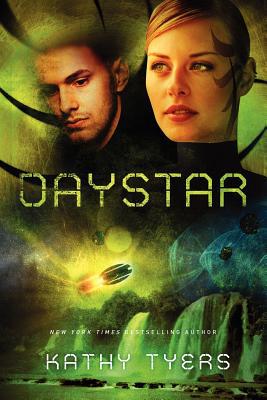 I am extremely pleased to be able to present my readers with an interview with New York Times-Bestselling author Kathy Tyers. Kathy Tyers has been instrumental in growing the genre of Christian science fiction and has published multiple books, including her award-winning “Firebird” series in this genre. She received the Mount Hermon Christian Writers Conference’s Pacesetter award for her work in developing science fiction. She has also published two Star Wars novels and appeared on the New York Times Bestseller list. She currently resides in Montana, where she continues to mentor other authors and work on her own future novels.
I have written several posts on Tyers’ “Firebird” saga (click here and scroll down or see links at the end of this post), and have immensely enjoyed her works.
What were some of the biggest science fiction influences on your writing?
The first SF novel I devoured was The Star Conquerors, an early space opera by Ben Bova. I was also a big fan of Zenna Henderson’s “People” novels. The original Star Wars movies swept me away, of course. I discovered Lois McMaster Bujold’s Miles Vorkosigan series when the first novel came out, and I kept up as she released titles in the series. Whenever I’m called to teach the craft in a classroom, I draw on Orson Scott Card’s excellent book on writing SF and Fantasy.
How has your faith inspired you to write?
My faith inspires my writing as it inspires everything I do; it’s the air I breathe, the ground I walk on, the light by which I can see and the gravity that keeps me grounded. If ever I shut my eyes, quit walking and stop breathing, it surely shows in my writing.
What do you think of the categorization of “Christian” fiction? Is it helpful to have a distinct category of “Christian” fiction?
Some people want to know, before opening a novel, whether it’s going to challenge them to think more deeply about God. Should all fiction come with a worldview alert about the author? That’s probably impractical. But if I open a novel that I know was written by a fellow Christian, or by someone of another faith, of course I approach it with different expectations.
What value do you think Christian speculative fiction has for evangelism, defense of the faith, and theology?
Whether or not we see ourselves as evangelists, we’re ambassadors for a Kingdom that is not of this world. That applies to every Christian in every profession. An author who’s known to be a Christian will have his or her books analyzed accordingly by some of the reviewers. If the book survives scrutiny as a good witness to the craft and the Kingdom, AND if it’s a good story well told, the author has accomplished what good fiction is supposed to accomplish—even if it gets the occasional one-star review.
How awesome was it to write Star Wars books?
Absolutely.
What is one piece of advice for aspiring writers?
Writing will take more time than you could possibly imagine. Don’t use that as an excuse to stop reading, because you’ll unconsciously (or consciously) emulate the books you’ve been reading. So read the good stuff.
What’s next on your plate? Any new books to look forward to?
I’ve written a contemporary supernatural novel set in Montana that I’m looking into indie publishing. Just looking, so far. Haven’t decided.
Conclusion
I would like to once more extend my thanks to Kathy Tyers for being willing to get interviewed for my site and for her excellent work in the field of science fiction.
Links
Kathy Tyers’ “Firebird” Trilogy- Faith, Humanity, and Conflict in the Far Future– The “Firebird” trilogy is one of my fondest memories of a read from when I was much younger. I recently re-read the series and was once more blown away. Here, I reflect on several issues of humanity and faith that Tyers raises in the novels.
Enter [Science] Fictional Messiah- Kathy Tyers’ “Wind and Shadow” and “Daystar”– I look into several worldview themes that Tyers raises in these sequels to her Firebird trilogy. What would a Messiah in the future look like?
Be sure to check out the page for this site on Facebook and Twitter for discussion of posts, links to other pages of interest, random talk about theology/philosophy/apologetics/movies and more!
Microview: “The Annotated Firebird Trilogy” by Kathy Tyers– I review the trilogy with a brief look at the plot and some positives and negatives in the book.
SDG.
——
The preceding post is the property of J.W. Wartick (apart from quotations, which are the property of their respective owners, and works of art as credited; images are often freely available to the public and J.W. Wartick makes no claims of owning rights to the images unless he makes that explicit) and should not be reproduced in part or in whole without the expressed consent of the author. All content on this site is the property of J.W. Wartick and is made available for individual and personal usage. If you cite from these documents, whether for personal or professional purposes, please give appropriate citation with both the name of the author (J.W. Wartick) and a link to the original URL. If you’d like to repost a post, you may do so, provided you show less than half of the original post on your own site and link to the original post for the rest. You must also appropriately cite the post as noted above. This blog is protected by Creative Commons licensing. By viewing any part of this site, you are agreeing to this usage policy.
Sunday Quote!- Ecological Ignorance
 Every Sunday, I will share a quote from something I’ve been reading. The hope is for you, dear reader, to share your thoughts on the quote and related issues and perhaps pick up some reading material along the way!
Ecological Ignorance
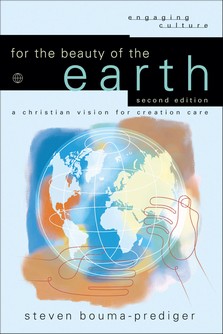
In For the Beauty of the Earth
After asking the questions, he poses this challenge:
If the answer to these questions is “no,” then we really do not know where we are. Despite our education we remain ecologically illiterate. (3, cited below)
Now of course we cannot be experts on every aspect of the place in which we live, but we must acknowledge our general ignorance about it. I couldn’t name most of the native flora in the area I live. How might this impact the way in which we view our place in the world? What of our charge to care for God’s creation? How might we better increase our ecological awareness so that we may not do more harm then good?
For the Beauty of the Earth
Links
Be sure to check out the page for this site on Facebook and Twitter for discussion of posts, links to other pages of interest, random talk about theology/philosophy/apologetics/movies and more!
Sunday Quote– If you want to read more Sunday Quotes and join the discussion, check them out! (Scroll down for more)
Book Review: “For the Beauty of the Earth” by Steven Bouma-Prediger– Bouma-Prediger’s book is a fountain of insight into issues of creation care, ecological apologetics, and more. Check out my review to learn more.
Source
Steven Bouma-Prediger, For the Beauty of the Earth
SDG.
Book Review: “Total Church” by Tim Chester and Steve Timmis
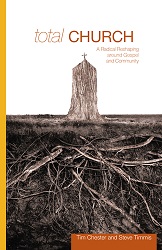 Tim Chester and Steve Timmis aim to present a gospel-centered vision of the local church as a fellowship community oriented towards missions in Total Church: A Radical Reshaping around Gospel and Community.
The notion that the church must be community- and gospel- oriented is absolutely central to the whole book. Time and again examples are put forward towards how the house church can make a huge impact on individuals. The authors rightly emphasize the notion that sometimes measuring success by pure numbers is misleading and, yes, misguided. Throughout the book, a commendable call is issued to seek using the gospel of Christ and making missions a priority in church.
Many stories are provided throughout the book to help make these insights into a practical application. They are appreciated because it gives readers some hands-on ways to deal with situations. I also enjoyed much of the discussion on youth groups and “children’s church.” Basically, it was argued that we cannot simply make the kids a separate unit from the rest of the church. Youth groups cannot just be a game night, because once the youths get past that, “real, adult” church is so vastly different. We need to emphasize the truths of Christianity throughout our children’s lives from the very earliest stages.
The book, however, has some deeply problematic elements. First, the view put forward of counseling and psychology was, frankly, disturbing. There’s a lot going on in this chapter, but it really seems to come down to the authors saying that “secular” psychological treatment doesn’t help, only the gospel can. We just need to embrace the truths of the gospel and all will be well. One representative quote: “The Bible addresses the entire range of problems we experience in living in this world… It addresses all the basic and essential issues of what it means to be human, both in our sin and in our salvation” (Kindle location 1802; all references are to Kindle locations hereafter). Later, this is made into an application that if we just focus on Christ, our sufferings won’t seem significant. At the end of all of this, there is a vague reference to how some kind of counseling outside of church might also be needed, but it is too little, too late, too vaguely stated.
I think this is a deeply misguided attempt to describe a “Christian” view of counseling which simply is–ironically–not outlined in the Bible. Choosing a couple quotes about how our present suffering can be alleviated or overcome by God does not mean that going to “secular” [whatever that means–and in exclusion of the reality of Christian] psychologists and therapists is a poor decision. Yes, we should try to deal with and help with these issues in the context of a community of faith. But God forbid that we approach someone who self-harms [one example they used] and just tell them that their problem is reducible to a spiritual problem, as the authors do: “The term ‘spiritual’ is not simply another category alongside biological, physical, environmental, upbringing, or relationships. Each of those forms of suffering, passive or active, is always and at some point a spiritual and theological issue” (1881). This seems clearly reductionistic and potentially damaging. I felt this whole section was quite disturbing.
Second, there is a very dim view of academic theology put forward. The authors complain that academic theology is often just for academics and compare the probably legendary story of medieval debates over the number of angels on the head of a pin to modern evangelical theological journals as “no less obscure” (2159)! This is another huge difficulty in the book because it ignores the wide implications of “obscure” theology being done in academia for the church at large. By reducing theology to the task merely of the local church (2148), it seems there is something of a denial of the Holy Spirit’s work in guiding the church at large, and, yes, a danger of local churches simply deciding that soul-destroying heresy is sound theology without any support from those “obscure” academics. A blithe dismissal of this enterprise relegates authors like Augustine, Aquinas, Calvin, and more into the scrap heap of obscurity.
Third, the book largely dismisses the enterprise of apologetics as dealing with issues of the mind and instead argues that “The problem is not that we cannot know God. The problem is that we will not know God. It is a problem of the heart rather than the head” (2344). Later, this leads the authors to the claim that the goal of apologetics must be to “demonstrate that unbelief is a problem of the heart rather than a problem with the head” (2419). Apologetics is envisioned as not being intellectually engage but rather engaged with trying to show people the relational problems they have with God (2467). Not only does this reduce apologetics quite a bit in scope, but it also performs some serious psychoanalysis of those who do not believe by saying that the ultimate problem with every non-Christian is that they somehow have some passionate anger against God.
Now, unless we are to assume that all of these people are lying to us, plenty of atheists throughout history have grounded their rejection quite clearly in intellectual issues. Numerous modern studies have shown that the people leaving the church often do so because of perceived anti-intellectualism or a failure to engage the mind. The task of apologetics can not, and dare not do this, be reduced to vague exploration of the heart rather than the mind. We must engage with the intellectual attacks on Christianity and put forward our position in a winsome manner.
Fourth, the Chester and Timmis often say they are not saying their position is the only way to do something, but then continually pound the notion that their way is the only biblical or gospel-oriented way so often that one wonders whether they do believe other approaches might work. The discussion of the biblical warrant for house churches is but one example, where, after asserting that there is nothing inherently wrong with larger churches, the authors compares them to pagan temples founded due to Constantine’s making Christianity the civil religion of the Roman Empire [a historical reality that should be questioned, as it was not the official or exclusive religion until Theodosius I, though this is a complex topic not worth getting deeply into here] (1255). If one approach is “biblical” and other other is merely capitulation to replicate paganism, which one is acceptable? Speaking inclusive approaches but following up with things like this makes me wonder whether there is much generosity happening towards those with whom the authors disagree.
The kindle edition of the book also has some typos, such as replacing “initially” with “Initial” (yes, capitalized in the middle of sentences) at several places in the text. Another one is this portion: “I have used the Initial person, but not to trumpet my experience… I have used the Initial person to show that what I am describing is not impossible rhetoric or unrealistic idealism… At Initial they expressed concern that we did not have an accountability structure over and outside us…” (2782). Looking at the print edition on Amazon, I find that it says “first” in all these places. I don’t know if this is the same with all Kindle editions or just the one I received for review.
The Good
+Several good insights into how we might build communities in church
+Emphasis on holistic approach to youths and children
The Bad
-Extremely problematic discussion of counseling
-Often paints an inclusive picture, but then contradicts it with exclusion
-Some questionable exegesis
-Largely dismisses academic theology
-Largely undermines the majority of Christian apologetics
Conclusion
Total Church: A Radical Reshaping around Gospel and Community was, unfortunately, not what I had hoped for. Will readers get insights into founding house churches and making communities therefrom? Yes. But unfortunately there is an awful lot of baggage to go along with those insights, including, but not limited to, rejection of massive amounts of Christian academic theology, undercutting Christian apologetics, distorting a Christian view of therapy and psychological treatment, sometimes questionable exegesis, and more.
Crossway provided me with a copy of the book for review purposes. I was not obligated by the publisher to write any kind of review whatsoever.
Links
Be sure to check out the page for this site on Facebook and Twitter for discussion of posts, links to other pages of interest, random talk about theology/philosophy/apologetics/movies and more!
Book Reviews– There are plenty more book reviews to read! Read like crazy! (Scroll down for more, and click at bottom for even more!)
Source
Tim Chester and Steve Timmis, Total Church: A Radical Reshaping around Gospel and Community (Wheaton, IL: Crossway).
SDG.
——
The preceding post is the property of J.W. Wartick (apart from quotations, which are the property of their respective owners, and works of art as credited; images are often freely available to the public and J.W. Wartick makes no claims of owning rights to the images unless he makes that explicit) and should not be reproduced in part or in whole without the expressed consent of the author. All content on this site is the property of J.W. Wartick and is made available for individual and personal usage. If you cite from these documents, whether for personal or professional purposes, please give appropriate citation with both the name of the author (J.W. Wartick) and a link to the original URL. If you’d like to repost a post, you may do so, provided you show less than half of the original post on your own site and link to the original post for the rest. You must also appropriately cite the post as noted above. This blog is protected by Creative Commons licensing. By viewing any part of this site, you are agreeing to this usage policy.
Really Recommended Posts 4/17/15- Aquinas, Creationism, Abortion, and more!
Spring is here for real this time (maybe?). That means that my family gets to go on long walks outside, which is wonderful. What else is wonderful? Sharing some awesome posts with you, dear readers! Here’s another round of RRP that includes posts on Aquinas, science fiction, creationism, men and women, and arguments for abortion (debunked). Check them out, and let me know what you think!
Soft Tissue in Mollusk Fossils and the Case for a Young Earth– Does soft tissue prove that the earth is, in fact, only a few thousand years old? Here is an analysis of an argument put forward for some for the position of young earth creationism.
Bad Pro-Choice Arguments– There are some really poor arguments out there for all kinds of positions. Here is an analysis of some bad arguments for the pro-choice position.
Three Reasons I believe Men and Women are Equal Co-Laborers in God’s Kingdom– Why believe that men and women should work side-by-side in pastoral (and other) ministry? Here are three reasons.
Spec[ulative]-Fic[tion] Subgenres: Paranormal & Supernatural– Christian speculative fiction [read= fantasy/sci-fi] publisher Enclave has put out this post on the genres of paranormal and supernaturalism in fiction. It’s worth a read to see some interesting distinctions.
Was Aquinas a Materialist?– Edward Feser analyzes the claim that Thomas Aquinas was a materialist when it comes to human nature.

 J.W. Wartick - Reconstructing Faith