J.W. Wartick
Microview: “The Dominant Culture: Living in the Promised Land” by Martin Murphy
 Martin Murphy’s The Dominant Culture
Murphy’s book brings much of the book to life as he retells the stories with an eye for application in the present day. How do Israel’s stories point to truths in our own lives? The book proceeds effectively through the major stories of Judges, with a few comments on minor stories as well. The beauty of the way Murphy does this is that he doesn’t try to make a kind of direct correspondence between the nation of Israel as theocracy and our own world in a kind of one-to-one correspondence; rather, he draws from the stories of Judges to show how we live in a world in which each goes his/her own way, sin reigns, and we need repentance. These and other applications are drawn throughout the book with rather remarkable insight.
There are some downsides in the book, particularly with the marked reading of gender hierarchy into the narrative of Deborah. Here, it seems, Murphy goes off track of what is otherwise marvelous exegetical skill, as he must continually appeal to silence (by saying things like the Bible never says God approved of Deborah as a prophetess) rather than allowing the text itself to demonstrate that Deborah simply was a leader and prophet. The very fact that the author of Judges does not condemn a woman as a prophet and judge when they are quick to condemn other wicked practices (such as using the refrain of “everyone did as they pleased”) in fact seems to point in the opposite direction as that which Murphy goes regarding Deborah. This is, thankfully, just one unfortunate aberration of exegesis among what is otherwise a quite solid job navigating between the need to stay true to the text and draw out applications for today.
The Good
+Often shares insights that bring new light to familiar or unfamiliar texts
+Applicable interpretation rather than merely analytic
+Explains key terms in meaningful way
The Bad
-Unfortunate comments about Deborah and women in leadership
Conclusion
The Dominant Culture
I was provided with a copy of the book for review. I was not obligated by the publisher to write any type of review whatsoever.
Links
Be sure to check out the page for this site on Facebook and Twitter for discussion of posts, links to other pages of interest, random talk about theology/philosophy/apologetics/movies and more!
Book Reviews– There are plenty more book reviews to read! Read like crazy! (Scroll down for more, and click at bottom for even more!)
Source
Martin Murphy, The Dominant Culture
Another Pro-Choice Meme – Does it Succeed?

Recently, I saw a few people on Facebook posting this image. It’s a bit hard to see on here so here’s a transcript (skip this if you already read it and go to the “Analyzing the Meme” section [I typed it as it is without correcting punctuation):
Women: I’m pregnant what should I do?
Pro life: keep the baby!
Women: okay! Can I have prenatal vitamins?
Pro life: what?
Women: can I have financial help for doctor appointments?
Pro life: ummm…..
Women: can I at least get paid maternity leave?
Pro life: ummm… Excuse me?
Women: the baby is here can I get financial help?
Pro life: I’m sorry do we know you?
Analyzing the Meme
The meme is clearly aimed at the notion that pro-life advocates are inconsistent. They claim to be “pro-life” but when it comes down to the details of life, they jump ship.
I am not speaking for all who are pro-life (that would be impossible), but I do think it is extremely important to be consistently pro-life. That is, an argument like this can show that a position like pro-life is inconsistent, and that does discredit the pro-life position. We need to be consistently pro-life if we are to consider ourselves pro-life at all. But–and this is a really big “but”–the meme completely misses the point.
Missing the Point
It should be clear, however, that the argument presented in this meme is a bit off target. The point is that the real question at issue is whether the unborn is a person.
Think about the meme this way:
Women: I have a toddler what should I do?
Pro life: keep the toddler!
Women: okay! Can I have health care?
Pro life: what?
Women: can I have financial help for doctor appointments?
Pro life: ummm…..
Women: can I at least get paid leave if he/she is sick?
Pro life: ummm… Excuse me?
Women: the toddler is here can I get financial help?
Pro life: I’m sorry do we know you?
What conclusion could be drawn from this? That women (or men) have the right to kill the toddler if they don’t receive those things? I should hope the answer is obvious: no, that does not follow at all. Whether one thinks the answers to the questions the women ask in this scenario should be affirmative or not, suppose it was no to all of them: does that mean we’d go ahead and green light the parents killing the toddler?*
Thus, the argument begs the question. No one should take seriously the notion that if someone can’t pay for supporting a human being they should kill him or her. The only way the argument makes any sense is if one has already assumed that the unborn is not a human being/person. And that is an issue that should be discussed more thoroughly. I have written numerous articles in defense of the pro-life position, so I won’t repeat my arguments here.
Conclusion
One of the comments on Facebook a user posted from the group that put up this image was “How true..
They are not pro life…they are pro birth…then wash their hands afterwards..”
I think this comment demonstrates how much of an emotional impact a meme like this can have. We as pro-life individuals need to be consistently pro-life, lest people reject our reasoning because they see us as “hypocrites.”
However, the ultimate point–the one at the heart of the debate–is whether the unborn is a person. And a meme like this does nothing to discredit the pro-life position whatsoever. It does not follow that if I can’t pay to support my son, I should be allowed to kill him. Neither does it follow that the interlocutor of the meme has demonstrated the pro-life position is mistaken.
Links
Be sure to check out the page for this site on Facebook and Twitter for discussion of posts, links to other pages of interest, random talk about theology/philosophy/apologetics/movies and more!
Pro-life– I have written a number of posts advocating the pro-life position. Particularly relevant to the present discussion are “From conception, a human” and “The issue at the heart of the abortion debate.”
*This is an example of the “trot out the toddler” defense of the pro-life position. It was coined by (I believe) Scott Klusendorf.
I am not sure who was the original user that put the image up, so I can’t cite it appropriately. I make no claim to owning the image and use it under fair use.
SDG.
——
The preceding post is the property of J.W. Wartick (apart from quotations, which are the property of their respective owners, and works of art as credited; images are often freely available to the public and J.W. Wartick makes no claims of owning rights to the images unless he makes that explicit) and should not be reproduced in part or in whole without the expressed consent of the author. All content on this site is the property of J.W. Wartick and is made available for individual and personal usage. If you cite from these documents, whether for personal or professional purposes, please give appropriate citation with both the name of the author (J.W. Wartick) and a link to the original URL. If you’d like to repost a post, you may do so, provided you show less than half of the original post on your own site and link to the original post for the rest. You must also appropriately cite the post as noted above. This blog is protected by Creative Commons licensing. By viewing any part of this site, you are agreeing to this usage policy.
Sunday Quote!- Sending the “Other” to Hell
 Every Sunday, I will share a quote from something I’ve been reading. The hope is for you, dear reader, to share your thoughts on the quote and related issues and perhaps pick up some reading material along the way!
Sending the “Other” to Hell
We as Christians often need reminders that we are to share our faith with gentleness and respect. I know I often fail in this regard, and sincerely repent and ask for forgiveness from those whom I have failed. Re-reading James Emery White’s Christ Among the Dragons
Many Christians view those outside of the faith as needing to go to hell. They are the bad guys, the enemy. (95)
We see this often when, for example, someone dies and a comment is shared “he/she is burning in hell.” I have, unfortunately, seen this myself many times. But is that the attitude we should be taking as Christians with regard to those of other faiths or–heaven forbid–those with whom we disagree in our own faith tradition?
Whenever this kind of attitude crops up in our own lives, we should repent and ask for forgiveness. Our job is not to send the “other” to hell. It is to share Christ’s love with them.
Links
Be sure to check out the page for this site on Facebook and Twitter for discussion of posts, links to other pages of interest, random talk about theology/philosophy/apologetics/movies and more!
Sunday Quote– If you want to read more Sunday Quotes and join the discussion, check them out! (Scroll down for more)
Source
James Emery White, Christ Among the Dragons
SDG.
christ among dragons- 95
Does “50 Shades” reveal some unspoken longing for gender hierarchy?
The only thing (probably) I’m going to write on 50 Shades of Grey is this post. I know, there are literally hundreds of Christian responses to the book. This is not another. It is a response to an article from First Things called “Fifty Shades Against Gender Neturality,” which I found to be deeply problematic.
Let’s get the basics out of the way. No, I haven’t read the book. No, I’m not commenting on the content of the book because I haven’t read it. All this post is trying to put forward is the notion that 50 Shades of Grey somehow reveals an unspoken longing for gender hierarchy, as alleged in the aforementioned article, is mistaken.
This article will not be explicit but by nature its content is more “adult” than my site normally is.
Only Women?
The author of the article on First Things writes:
[T]here’s a hunger that’s not being satisfied: Namely, for men who are unabashedly masculine, who aren’t afraid to take control, and to lead. That is, there’s a longing (even a lusting) for men who aren’t afraid of what’s classically been called “headship.”
A major difficulty with the article is the premise that women’s desire to be dominated somehow reveals a more basic gender hierarchy ingrained into human nature. One difficulty with this is that it is not only women who desire such things. There are men also who are “into” things like being dominated. Thus, should we draw the conclusion that there is a basic hierarchy of women over men in human nature? Clearly not. Moreover, what response could the author of the article on First Things say in response to this? That human nature is broken? Obviously! But it is clearly special pleading to say that women’s desires in this realm point to intrinsic human nature while that desire of men is a reflection of the opposite. The standards need to be the same.
But the author never even mentions or acknowledges awareness of men longing for the same type of activity. Why not? Perhaps it is just ignorance, or perhaps it is the desire to push an agenda. But the reality of men who want to play the role of submissive demolishes this absurd premise. Surely the author wouldn’t agree that this reality means:
There’s a hunger that’s not being satisfied: Namely, for women who are unabashedly feminine, who aren’t afraid to take control, and to lead. That is, there’s a longing (even a lusting) for women who aren’t afraid of what’s classically been called “headship.”
But if women lusting after these kinds of relationships entail this for men, why would it not entail the same for women? It seems that the only reason is because this would go against the argument for male headship. That, indeed, is special pleading.
There is a kind of brokenness here, but it is not a hidden desire for men to be in a relationship of headship of women; it is a brokenness of the fallen human nature–lusting after characters or even activities which we don’t have. The women and men reading 50 Shades is indicative of something: broken human nature.
What Are We Attracted To?
The central premise of the author’s argument is that that which we are attracted to must reveal something about human nature. Our desires must somehow show a “hunger” “not being satisfied.” In the case of 50 Shades, the author argues that it is male hierarchy. But how fluid are these hungers? Who decides what the “hunger” ultimately points towards?
As one commentator on the article shared when I posted it to a Facebook group, what do human desires for pornography, materialism, or mind-altering drugs point to? The permutations of what we could arbitrarily assign to these things are nearly infinite. Materialism–the desire for more things–points to our need to dominate the earth; to outdo our neighbor; to love our neighbor by buying them things; to assert our authority over those who can’t buy things; perpetuation of immoral systems of wealth; etc.
The arbitrariness of assigning interest of 50 Shades to an unspoken desire for gender hierarchy is clear and tells us more about the author’s presuppositions than about the reasons behind the book’s success.
Looking for the Brothel
The author writes:
If Fr. Smith, the titular character in the Bruce Marshall novel, is right that “the young man who rings the bell at the brothel is unconsciously looking for God,” what are fans of the Fifty Shades series seeking?
This line reveals how the author’s presuppositions have guided their article.* Think about it:
Men seeking brothel = looking for God
Women seeking pornographic books = looking for men
How does that follow? The article is blatantly male-centric and yet offers no reason for thinking that this strange split should be believed. Why think that men seek after God while women must seek after men? Are women incapable of also seeking God? Could women’s desire for similar sins also be a kind of replacement for God? Perhaps men seeking a brothel are in fact unconsciously looking for women to love and care for them. Perhaps they are looking to perpetuate a sinful cycle of violence against women.
But according to the author, when it comes to men- they seek God. Women? Apparently they have to seek after men.
Conclusion
There is something happening when we go after sinful desires. We are seeking to replace God with an idol. Whether that idol is a brothel, a dirty book, accumulating wealth, or something else, we can unanimously affirm that all of these desires point to a replacement of God with something else. There is a God-shaped hole in our hearts, and we as fallen people will seek to fill it with anything. These desires don’t reveal the way things should be, as though our sinful longings were somehow pointers towards the good. Instead, these desires are themselves evil. They are a replacement of God with something which is not God. The fallen world does not show how things should be; it shows them as fallen. To arbitrarily psychoanalyze desires and assign to them our chosen pet issues is to do injustice to the real impact of sin on human nature and in society. Rather than trying to put forth our agendas of what preferred stance we take on gender issues or something else, we should seek to reconcile with God and point people towards God.
*Another commentator on the article when I shared it helped develop this point.
Links
Be sure to check out the page for this site on Facebook and Twitter for discussion of posts, links to other pages of interest, random talk about theology/philosophy/apologetics/movies and more!
SDG.
——
The preceding post is the property of J.W. Wartick (apart from quotations, which are the property of their respective owners, and works of art as credited; images are often freely available to the public and J.W. Wartick makes no claims of owning rights to the images unless he makes that explicit) and should not be reproduced in part or in whole without the expressed consent of the author. All content on this site is the property of J.W. Wartick and is made available for individual and personal usage. If you cite from these documents, whether for personal or professional purposes, please give appropriate citation with both the name of the author (J.W. Wartick) and a link to the original URL. If you’d like to repost a post, you may do so, provided you show less than half of the original post on your own site and link to the original post for the rest. You must also appropriately cite the post as noted above. This blog is protected by Creative Commons licensing. By viewing any part of this site, you are agreeing to this usage policy.
Really Recommended Posts 2/13/15- Sci-fi, Genesis 1, Professor Snape, and more!
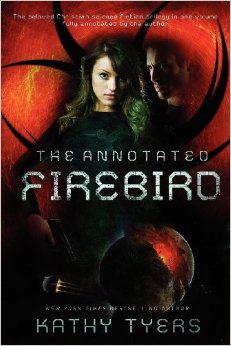 Whew, burning the midnight oil to get this one written by Friday! I ask for your prayers for uninterrupted sleep, dear readers. Still sleep training little man and boy is he stubborn! Anyway, I have here an assortment of great reads for you. We have a biblical look at the length of the days of creation, an interview with the great sci-fi author (and woman of faith!) Kathy Tyers, a response to 50 Shades of Grey, a look at companies who profit off porn, and Harry Potter. Oh yeah, that’s all right here for your perusal! As always, let me know what you think–I love to read your thoughts. Be sure to let the authors know your appreciation as well.
Biblical Reasons to Doubt the Creation Days Were 24-hour Periods– One of the most frequently repeated canards of the Young Earth Creationist side is that anyone who isn’t YEC is somehow undermining the Bible. Here’s a post from the conservative site The Gospel Coalition on some reasons to doubt the notion that strict literalism must be held regarding the length of creation days.
Interview with Kathy Tyers– Kathy Tyers is the author of the exceedingly awesome Firebird Trilogy (link to my post on the books) along with its sequels. She is also the New York Times Bestselling author of two Star Wars novels. Here’s an interesting interview about her body of work, her faith, and more!
50 Shades of Broken– Okay, I know there are a ton of posts out there on 50 Shades of Grey and Christian responses, etc. I still think this one is the one to read. I have a mind to respond to a specific post about the book, but this post itself presents the notion that our sexuality is broken, and the popularity of the book points to that.
Companies Who Profit Off Porn– Time to give these companies some feedback about their profiting off porn.
Someone Put Snape’s Scenes in Chronological Order and it will Make You Feel Things– Harry Potter is a series with some major moral and philosophical points to think about throughout the series. Here is a spoiler-laden set of the scenes of Professor Snape from the movies in chronological order, which reveals (SPOILERS HERE:) how his self-sacrifice ultimately preserved Harry’s life and by extension saved the wizarding world. Yes, there are major themes of redemption and sacrifice in Harry Potter. Check out my posts on the movies and books here.
“Eternity Falls” by Kevin Outerbridge – Faith, Extremism, and Cyberpunk
 Eternity Falls
Faith and Redemption
One of the primary themes running throughout Eternity Falls is that of redemption. Rick Macey was once a Christian, but like many people in the future (and present), he starts off the book thinking that religion has been proven to be irrational–an ancient belief with little to recommend it in the present. However, he also realizes his own imperfections and regrets. When he is confronted by Virgil, a man with whom he had strong disagreements in the past, he is also brought face-to-face with faith that is still genuine.
However, it is not left at this. Virgil’s beliefs have become a bit unhinged (see below), and in a beautiful twist of storytelling, it is Macey who is brought back to faith and confronts Virgil’s own self-righteousness.
Outerbridge’s tale here demonstrates something that we should all take to heart–God can and will use anyone to wake us up to our own failures and call us home.
Religious Extremism- What Rationale?
Perhaps the most poignant aspect of Eternity Falls are the conversations between Macey and Virgil about religious extremism. They both have backgrounds in combating terrorism, but their past experience led them in opposite directions and Virgil has come to conclude that facing death is the only way for humans to possibly turn to God. Virgil seeks to destroy the “Miracle Treatment” and thus make it so that everyone will once again die natural deaths, confronted with that moment when “eternity falls.” Macey, however, points out that God has used the extended lives of many of these people to bring them to the faith through their own realization of the pointlessness of an endless life of leisure.
Their conversations play out in this way through the book, and Macey ultimately makes a compelling case that God may, in sovereignty, use even things which may be apparently sinful to bring about great good. The melding of the concepts of human free will and God’s omnipotent control over events is powerful, and in what is truly a reflection of Outerbridge’s talent, it meshes very well into the plot of the book.
Moreover, the book portrays the impetus behind religious extremism in many philosophically interesting ways. It is not at all promoting extremism, but the fact that motivations beyond the tired “religious = violent” rhetoric that too often plays out in commentary on terrorism are brought up adds even more solid worldview-level bites to chew on. The key issue is that quote-unquote “religious extremists” certainly themselves believe they are acting rationally, and to have the story play this out in a way in which multiple extremists are spoken to on a logical level rather than simply discounted was fantastic.
Conclusion
Eternity Falls
Links
Be sure to check out the page for this site on Facebook and Twitter for discussion of posts, links to other pages of interest, random talk about theology/philosophy/apologetics/movies and more!
Microview: “Eternity Falls” by Kirk Outerbridge– I reviewed the book, including giving some “good” and “bad” points along with a letter grade. Check out the review!
Popular Books– Check out my looks into other popular books (scroll down for more).
Source
Kirk Outerbridge, Eternity Falls
SDG.
——
The preceding post is the property of J.W. Wartick (apart from quotations, which are the property of their respective owners, and works of art as credited; images are often freely available to the public and J.W. Wartick makes no claims of owning rights to the images unless he makes that explicit) and should not be reproduced in part or in whole without the expressed consent of the author. All content on this site is the property of J.W. Wartick and is made available for individual and personal usage. If you cite from these documents, whether for personal or professional purposes, please give appropriate citation with both the name of the author (J.W. Wartick) and a link to the original URL. If you’d like to repost a post, you may do so, provided you show less than half of the original post on your own site and link to the original post for the rest. You must also appropriately cite the post as noted above. This blog is protected by Creative Commons licensing. By viewing any part of this site, you are agreeing to this usage policy.
Sunday Quote!- The Reality of Adam and the Origins Debate
 Every Sunday, I will share a quote from something I’ve been reading. The hope is for you, dear reader, to share your thoughts on the quote and related issues and perhaps pick up some reading material along the way!
The Reality of Adam and the Origins Debate
Adam, the Fall, and Original Sin
The temptation in this debate [about the historicity of Adam] is to think that Adam is simply one piece in a puzzle in which the fall and evolution are separate pieces that we can rearrange and shuffle around the board. But… Adam and the fall do not float free in Scripture like rootless, atomistic, independent ideas. They are central nodes that hold together and are completely enmeshed in a much broader, organic, theological matrix. (ix, cited below)
What makes this quote so interesting is the way it speaks to the notion–a correct one, I think–that these doctrines are of such central concern. Whether or not these are “essential” doctrines to the Christian faith is hotly debated, but it seems clear that one’s view of original sin (and indeed whether it even exists) and Adam will inter-relate with all kinds of other doctrines, including soteriology, justification, sanctification, and beyond.
What do you think? What doctrines inter-relate most closely with these doctrines? Is it correct to think we can’t treat them in “atomized” form? Is it possible to speak of the notion of whether Adam and Eve were historical figures without also speaking of the implications it has for other doctrines?
Links
Be sure to check out the page for this site on Facebook and Twitter for discussion of posts, links to other pages of interest, random talk about theology/philosophy/apologetics/movies and more!
Sunday Quote– If you want to read more Sunday Quotes and join the discussion, check them out! (Scroll down for more)
Source
Michael Reeves and Hans Madueme, “Adam Under Siege” in Adam, the Fall, and Original Sin
SDG.
Adam, Fall, Original Sin ix
Really Recommended Posts 2/6/15- Attack on Titan, Prophets, and More!
 Sleep training a baby? Not the easiest thing in the world, believe it or not. I peel apart my eyelids to present to you, dear readers, this latest round of Really Recommended Posts. Topics include egalitarianism/complementarianism, the Messianic Prophecy in Deuteronomy 18, young earth creationism, and Attack on Titan (with cultural apologetics). I’d say that’s a pretty good set of links, if I do say so myself. Let me know your thoughts in the comments here, and be sure to let the authors know what you thought as well.
Confusing Equality with Sameness: A Complementarian Misconception– Often, those who argue that women should be excluded from leadership roles in the church and home argue against those of the egalitarian position by asserting that egalitarians do not allow for gender differences. Is that true?
Attack on Titan (Empires and Mangers)- Anthony Weber presents a worldview-level analysis of the anime, “Attack on Titan” along with some brief comments and definitions related to anime itself. This is a fantastic post for Christians interested in the show or anime in general, or those who would like to familiarize themselves with those categories in order to interact at a cultural apologetic level. I highly recommend you follow his site as well.
A Look at Messianic Prophecy: Who is the Prophet of Deuteronomy 18:15-18? [Part One] – Hint: it’s Jesus. This three-part series offers a solid look at reasons to believe that Jesus is the fulfillment of this prophecy, not Muhammad (as some Muslims claim) or some other prophet. Here’s another post arguing more specifically against the Muslim claim.
Man’s fallible opinions vs. God’s perfect Word: Who wins?– The notion that the origins debate is set up in this dichotomy is often presented by young earth creationists. Here is an insightful analysis of this argument. I highly recommend you follow “Age of Rocks” as it is an excellent site providing much analysis of the young earth position.
That’s no beaver– Young earth creationists often make claims about species being similar and so showing that they came from the Ark, or that certain fossils in the past somehow throw off the sequence of fossils demonstrating an old earth. Here, an analysis is presented of one young earth claim to this effect.
On the Alleged Atheism of Early Christians
 It is interesting to note that modern atheists of the internet-infidel variety share much with Pagan counterparts in the first few centuries after Christ. “How can this be?” one might ask. Well, the charge of atheism against Christians is shared both by the common internet-infidel comment that “We’re all atheists, I [the atheist] just take it one god further” and Pagans in the Roman Empire. Oddly, some atheists have gone so far as to suggest that the Pagan accusation is somehow evidence for their position.
The early Christians, it is true, were accused of being atheists. However, to suggest that this is somehow synonymous with contemporary usage of the term “atheist” is ahistorical and anachronistic. Frances Young notes several facets of the charge of atheism leveled against Christians:
What the charge [of atheism leveled against Christians] really amounted to was an expression of dismay and distaste over the fact that people were abandoning conventional ritual practices… The charge of atheism against Christians focused on their refusal after conversion to continue to participate in traditional religious customs… Religion, embedded in the ethnic cultures, was a matter not of belief but of loyalty. (99, 101, cited below)
The charge against Christians, then, was that they were abandoning the ways of the Romans. They were outsiders, outcasts, and, by extension, atheists. By refusing to worship the gods of Rome, they became targets. The fact that the Christians did this conscientiously–they intentionally abandoned the gods–led to the charge of atheism. It was a charge related not to belief in deity, but rather to rejection of shared societal practice, with a culturally charged impetus for making it.
In fact, others who yet believed in the gods were also charged with atheism. The Epicureans were accused of atheism, despite believing that the gods existed:
It is significant that these ‘atheists’ [Epicureans] did not question the existence of the gods. Rather, they liberated people from religion by suggesting that the blessed immortals were not the slightest bit interested in what goes on among human beings… (ibid, 100)
Thus, when modern atheists continue to perpetuate the claim that “we’re all atheists,” and then move on to argue that Christians should agree with them because, after all, Christians were considered ‘atheists’ by the Romans, it is difficult to take them seriously. The Pagan charge was made for cultural reasons, and is tied up in the notion of rejection of the societal norms of the time. It was also made even against those who acknowledged those gods existence. This last point is very important, because one attempted rebuttal I have seen from the modern atheist is that “You are an atheist to other religions.” Well, according to ancient Pagans, you could even be an atheist to your own religion! Of course, the point is that Christians are not atheists, but theists.
The word “atheism” was used back then as a damning charge of societal blasphemy–rejecting the ethnic practices of your own society in pursuit of another’s. Now, modern atheists attempt to forcibly include others in atheism with this kind of pithy phrase. The historical charge is interesting, but clearly entirely different from the modern one. Either charge, however, is inaccurate. Christians, by definition, are not atheists–theists cannot be atheists. The ancient cultural charge is of interest for its historical implications, but it is hardly evidence for the modern use of the charge of atheism against Christians.
I suspect that this post won’t silence many who will continue to persist in saying Christians are atheists. At that point, I suggest to others the following: the people who persist in this mislabeling should be written off as being just as irrelevant as the ancient Pagans with whom they share at least this part of their worldview.
Links
Be sure to check out the page for this site on Facebook and Twitter for discussion of posts, links to other pages of interest, random talk about theology/philosophy/apologetics/movies and more!
On the statement that “We are all atheists”– I evaluate the claim that atheists make which say that “we are all atheists.” I evaluate it from a philosophical point of view here.
On the Shoulders of Giants: Rediscovering the lost defenses of Christianity– I have written on how we may discover these enormous resources historical apologists have left behind for us. Take and read!
Source
Frances Young, “Greek Apologists of the Second Century” in Mark Edwards, Martin Goodman, and Simon Price, eds., Apologetics in the Roman Empire
SDG.
——
The preceding post is the property of J.W. Wartick (apart from quotations, which are the property of their respective owners, and works of art as credited; images are often freely available to the public and J.W. Wartick makes no claims of owning rights to the images unless he makes that explicit) and should not be reproduced in part or in whole without the expressed consent of the author. All content on this site is the property of J.W. Wartick and is made available for individual and personal usage. If you cite from these documents, whether for personal or professional purposes, please give appropriate citation with both the name of the author (J.W. Wartick) and a link to the original URL. If you’d like to repost a post, you may do so, provided you show less than half of the original post on your own site and link to the original post for the rest. You must also appropriately cite the post as noted above. This blog is protected by Creative Commons licensing. By viewing any part of this site, you are agreeing to this usage policy.
Sunday Quote!- Spiritual Warfare and Mapping the Land?
 Every Sunday, I will share a quote from something I’ve been reading. The hope is for you, dear reader, to share your thoughts on the quote and related issues and perhaps pick up some reading material along the way!
Spiritual Warfare and Mapping the Land?
I recently read through Understanding Spiritual Warfare: Four Views
Spiritual mapping is the practice of identifying the spiritual conditions at work in a given community, city, or nation. By gathering objective information (including key historical facts… locations of bloodshed, idolatrous practices, [etc…]) and combining it with spiritual impressions (prophecy, revelation, words of knowledge, dreams, and visions), believers can prayerfully combine all of this information and draw a map that identifies the open doors between the spiritual world and the material world (182-183, cited below).
Now I admit that I come from a background in which spiritual warfare was little (if at all) discussed, but this does seem a little bit more than we can glean from the biblical image of spiritual warfare. Where, for example, are we instructed to try to use dreams and revelation in order to find “open doors” of the spiritual world? Where are we instructed that there might be doors for the spiritual world into our own that are identifiable? I think some aspects of this notion might be helpful for witnessing and the like–after all, knowing the landscape in this fashion would be helpful for identifying areas of conflict in a community and offering Christlike compassion in those areas–but I hesitate to think that the way they can be applied is in this fashion.
What are your thoughts on this? What do you think of spiritual warfare?
Again, I highly recommend this book with its very wide range of diverse views presented on the topic in order to get an introduction.
Links
Be sure to check out the page for this site on Facebook and Twitter for discussion of posts, links to other pages of interest, random talk about theology/philosophy/apologetics/movies and more!
Microview: Understanding Spiritual Warfare: Four Views– I briefly review this highly interesting book on different views of spiritual warfare.
Sunday Quote– If you want to read more Sunday Quotes and join the discussion, check them out! (Scroll down for more)
Source
C. Peter Wagner and Rebecca Greenwood, “The Strategic-Level Deliverance Model” in James Beilby and Paul Rhodes Eddy, eds., Understanding Spiritual Warfare: Four Views
SDG.


