J.W. Wartick
“A Crown of Swords” and “The Path of Daggers”- A Christian Reflection on the Wheel of Time
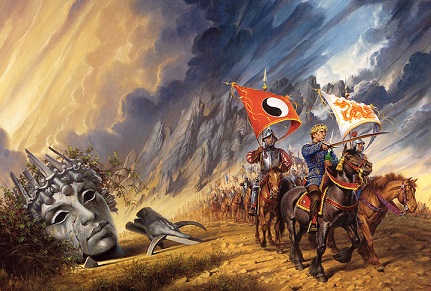 Robert Jordan’s epic fantasy series, “The Wheel of Time,” has much to reflect upon from a Christian perspective. Here, I’ll be examining books seven and eight, “A Crown of Swords” and “The Path of Daggers.” There are minor SPOILERS from both books here. Please do not share spoilers from later books for the sake of readers.
Men and Women
Throughout both books–and indeed the entire series–there is an undercurrent from many characters that “men always ____” or “women always ____.” What is interesting is that Jordan frequently flips these phrases around so that men are saying women are impossible to understand, but women then turn around and say the same about men. There is parallelism here which I believe was intentional.
The notion that there is a kind of “gender essentialism” is one which, unfortunately, is frequently pushed in Christian communities. I’m not saying at all there is no such thing as distinct genders; rather, my point is that what we conceive of as being gendered is often not the case at all. I actually found myself jarred at times when the women in the Wheel of Time novels would complain about the men being “impossible” or “gossipy”–after all, is that not what women are generally conceived as? But of course these patterns of behavior are not essential to male or female but rather aspects of personalities. Thus, it seems Jordan has a streak of feminist thought running through his works, though it is at times very subtle and even concealed. His writing speaks to the absurdity of labeling all people of one gender or the other as acting in specific, deterministic ways.
In the Service of…
Another concept which frequently occurs throughout these books is that there is complexity to relationships and loyalties particularly concerning evil or “The Dark One.” Many of the Forsaken follow after their own ends, to the point in which they frequently oppose each other, which itself seems to work against the will and ends of “The Dark One.”
Thus, it seems that for “The Wheel of Time” the service of evil is ultimately an irrational end which leads to chaos and disorder. It moves against the Pattern–the idea that there is a unity of time which continues to be woven together to make reality–and it also ultimately seeks to defeat itself just as much as it fights against the forces of the Light.
Belief, Evil, and Pragmatism
At one point in The Path of Daggers, Rand is surveying his arrayed forces and he considers their loyalty (and lack thereof). But in this considering, he notes:
they feared him [Rand] far more than they did the Aiel. Maybe more than they did the Dark One, in whom some did not really believe… (327-328)
The people, it seems, were more concerned with firmly holding their own wealth or gaining positions of authority and power than they were with the true evil which threatened the world. Unconvinced by the coming tribulation, they instead sought favor from the most powerful man in the world. The condition, it seems, is one which mirrors our own at points. Rather than being concerned with evil facing our world, or rather than fighting injustice, people are obsessed with gain that cannot be carried over across death and the grave. The true powers which threaten the world are left to expand and strengthen,while people seek their own gain.
It is a kind of pragmatism which infects us: injustice is “over there” and we are “right here,” so why be concerned with it? The notion that there is a spiritual realm with any sort of power is shrugged off, ignored, or even scorned as ancient superstition, unworthy of concern. Like the people who surround Rand in the book, we convince ourselves that evil has no power in the world and “[the Dark One”] could [not] and would [not] touch the world harder than he had already (328).
Conclusion
There is much to consider throughout the “Wheel of Time” series. Fantasy resonates with reality in sometimes tangible ways, as anyone who reads fiction frequently knows. How do you approach books from a worldview perspective? What do you think of the themes above, and what others have I not discussed from these two books?
I will be writing on later books in the series when able. Until then, I covet your thoughts!
Links
Be sure to check out the page for this site on Facebook and Twitter for discussion of posts, links to other pages of interest, random talk about theology/philosophy/apologetics/movies and more!
SDG.
——
The preceding post is the property of J.W. Wartick (apart from quotations, which are the property of their respective owners, and works of art as credited; images are often freely available to the public and J.W. Wartick makes no claims of owning rights to the images unless he makes that explicit) and should not be reproduced in part or in whole without the expressed consent of the author. All content on this site is the property of J.W. Wartick and is made available for individual and personal usage. If you cite from these documents, whether for personal or professional purposes, please give appropriate citation with both the name of the author (J.W. Wartick) and a link to the original URL. If you’d like to repost a post, you may do so, provided you show less than half of the original post on your own site and link to the original post for the rest. You must also appropriately cite the post as noted above. This blog is protected by Creative Commons licensing. By viewing any part of this site, you are agreeing to this usage policy.
Sunday Quote!- Desecrating Creation’s Holy Ground?
 Every Sunday, I will share a quote from something I’ve been reading. The hope is for you, dear reader, to share your thoughts on the quote and related issues and perhaps pick up some reading material along the way!
Desecrating Creation’s Holy Ground?
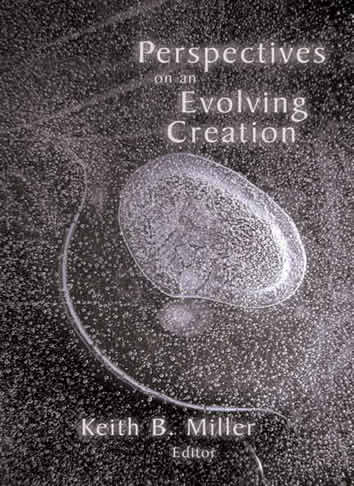
I recently read through Perspectives on an Evolving Creation, a book of essays centered around defending theistic evolutionism. I think it is important to read books from several different perspectives in order to test them and keep the good. I came upon an interesting quote in one of the essays on caring for creation:
For those who can see creation glorifying God there is an opportunity to get a glimpse of “his eternal power and divine nature” (Romans 1:20, NRSV) in the things he has made. Genesis presents the entire creation as a cosmic sanctuary where the Creator is present, glorified, and to be worshipped… If creation is God’s sanctuary, then when we desecrate creation for our short-term needs, we are desecrating holy ground. (Braaten, 422-423, cited below)
The notion that creation is God’s temple or sanctuary is one found in numerous studies on Genesis and its context. I find it to be a very appropriate way to envision creation as God’s ordered cosmos. I had not, however, thought of creation care in these terms. It seems to me to be correct, however. After all, if we really believe that all of creation is God’s temple, then the unwarranted and often greedy molestation of creation for monetary or other short-term gain is a molestation of God’s holy ground. It is a desecration.
How might we better approach creation and care for it as we have been charged to do? That is a difficult question–one I and others have explored elsewhere. However, I think it is time we as Christians stop ignoring the issues of caring for creation. We need to stand against the desecration of God’s temple.
Links
Be sure to check out the page for this site on Facebook and Twitter for discussion of posts, links to other pages of interest, random talk about theology/philosophy/apologetics/movies and more!
Caring for Creation: A discussion among evangelicals– I write about creation care from a number of perspectives offered at a recent panel of prominent evangelical thinkers in this area.
Sunday Quote– If you want to read more Sunday Quotes and join the discussion, check them out! (Scroll down for more)
Source
Laurie Braaten, “May the Glory of the Lord Endure Forever! Biblical Reflections on Creation Care” in Perspectives on an Evolving Creation edited Keith Miller (Grand Rapids, MI: Wm. B. Eerdmans, 2003).
SDG.
Really Recommended 1/2/15- 2014 books and movies, bread and wine, and more!
 The first “Really Recommended Posts” go-round of this year has a set of diverse posts to lure you in, dear readers. As always, let me know what you think of the posts, and be sure to let the authors know as well!
The Inevitable 2014 List: Books, Movies, and TV Shows Worth Noting– Empires and Mangers is a fantastic site that features discussions of YA Literature, movies, and books from a Christian perspective. I highly recommend you follow it, and that you also check out this awesome post on some of the best reads and watches from this past year.
Why Does God Come to Us in Bread and Wine?– There is a sense of terror related to the Holy in our interactions with deity. But what does this mean for the Lord’s Supper and the way we interact as a people of God?
Everyone is Religious (comic)– Everyone has a religion. What can Christianity say to this notion?
The Case of the Shrinking Comet and the Age of the Universe– Does the rate of water loss on comets like the one Rosetta landed on mean the universe must be young? Here, an argument from the Institute for Creation Research is analyzed.
Is silicon-based life a possible alternative for carbon-based life?– One of the proposed alternative origin-of-life scenarios to try to explain fine-tuning away is the notion that silicon-based life widens the scenario. Is this the case?
Book Review: “Mere Existentialism: A Primer” by Max Malikow
 Max Malikow’s Mere Existentialism: A Primer is an excellent introduction to existential thought.
This brief work offers brief (less than 10 pages a piece) introductions to Kierkegaard, Nietzsche, Karl Jaspers, Heidegger, Viktor Frankl, Sartre, Simone de Beauvoir, Albert Camus, and Irvin Yalom. These are exactly what they should be for being a primer on existential thought and encourage further reading.
At the end of the book is a brief single-question summary of the thought of each of these major existential thinkers. These are thought-provoking and fairly accurate (at least for those with whom I was already familiar).
The benefit of a book like this is that it allows readers to dive in and learn about major aspects of existential thought without a major time commitment. It is best seen as a way to introduce these thinkers rather than as a comprehensive look at existentialism.
There are a few typos in the work, with perhaps the most noticeable being that Simone de Beauvoir is referred to as “Simon” in the table of contents and the chapter title (though it is correct elsewhere).
Mere Existentialism would best be used as a way to briefly look at existential thought, whether for one’s own edification or in a classroom. It is a good read for an afternoon, provided the reader wants to sit back and think of their own place in the universe for a while afterwards.
Disclaimer: I was provided with a review copy of the book from Theocentric Publishing. I was not obligated to provide any kind of feedback whatsoever.
Links
Be sure to check out the page for this site on Facebook and Twitter for discussion of posts, links to other pages of interest, random talk about theology/philosophy/apologetics/movies and more!
Book Reviews– There are plenty more book reviews to read! Read like crazy! (Scroll down for more, and click at bottom for even more!)
Source
Max Malikow, Mere Existentialism: A Primer (Chipley, FL: Theocentric Publishing Group, 2014).
The Image in this post was a picture I took in the Rocky Mountains and shall not be used without expressed consent.
SDG.
——
The preceding post is the property of J.W. Wartick (apart from quotations, which are the property of their respective owners, and works of art as credited; images are often freely available to the public and J.W. Wartick makes no claims of owning rights to the images unless he makes that explicit) and should not be reproduced in part or in whole without the expressed consent of the author. All content on this site is the property of J.W. Wartick and is made available for individual and personal usage. If you cite from these documents, whether for personal or professional purposes, please give appropriate citation with both the name of the author (J.W. Wartick) and a link to the original URL. If you’d like to repost a post, you may do so, provided you show less than half of the original post on your own site and link to the original post for the rest. You must also appropriately cite the post as noted above. This blog is protected by Creative Commons licensing. By viewing any part of this site, you are agreeing to this usage policy.
Sunday Quote!- Bonhoeffer on the Abuse of Grace
 Every Sunday, I will share a quote from something I’ve been reading. The hope is for you, dear reader, to share your thoughts on the quote and related issues and perhaps pick up some reading material along the way!
The Abuse of Grace
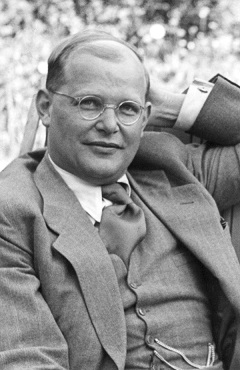
The life of a Christian is not easy, and many pitfalls remain in our path as we walk along the narrow way. One difficulty that is particularly acute is the problem of falling into taking grace for granted. Dietrich Bonhoeffer, a Lutheran minister martyred by the Nazis in World War II, has powerful words about this:
Is there a more diabolical abuse of grace than to sin and rely on the grace which God has given? (52, cited below)
As Christians, we need always be aware of the danger of thinking we can sin freely because of God’s grace. Bonhoeffer was of course aware of Luther’s oft-abused and taken out of context phrase, “Sin Boldly.” He commented:
For Luther, “sin boldly” could only be his very last refuge, the consolation for one whose attempts to follow Christ had taught him that he can never become sinless, who in his fear of sin despairs of the grace of God. (ibid)
Knowing that God is graceful, we can be confident that our stumbles will not condemn us; however, we must always be wary lest we begin to blaspheme against God’s grace by taking it for granted. Bonhoeffer’s work, The Cost of Discipleship, is as powerful as ever. I suggest you read it.
Links
Be sure to check out the page for this site on Facebook and Twitter for discussion of posts, links to other pages of interest, random talk about theology/philosophy/apologetics/movies and more!
Sunday Quote– If you want to read more Sunday Quotes and join the discussion, check them out! (Scroll down for more)
Source
Dietrich Bonhoeffer, The Cost of Discipleship (New York: Simon & Schuster, 1995). First edition 1959 published by SCM Press, Ltd.
SDG.
Handel’s “Messiah” as Apologetic
 “I should be sorry if I only entertained them [the audience], I wish to make them better.” – Handel
Handel’s “Messiah” is one of the greatest pieces of music ever composed. It has been performed constantly since he wrote it. There is no doubting the enduring popularity of the piece and the way it brings comfort to God’s people. It is often played during the Christmas or Advent seasons and has become a way for many to hear the message of Christ during this time.
One aspect that is not often explored, however, is the way the piece may be seen as an apologetic for Christianity. Calvin Stapert, in his work on the piece, Handel’s Messiah: Comfort for God’s People, notes how the work was written in part as apologetic. The biblical selections which were put together to form the lyrics of the performance were selected by Charles Jennens, whose brother had committed suicide during some doubt-inducing talks with a famous deist (77-78, cited below).
Moreover, Christian apologists during this time–during the height of Enlightenment–were beginning to realize that simply making arguments from natural revelation or reason alone was in some way to not engage with the Deists who were at large. After all, Deists could agree God existed. The question was which God and whether God was personal. So although the arguments of natural theology were helpful, they could not do all the work on their own, and Christian apologists set about the task of proving Christianity through the Scriptures (75-77).
By simply putting forth a different narrative than that of the Deists, Handel and Jennens challenged the notion that God was impersonal. Moreover, they pressed home the need for a savior due to our own futile raging against God. The beauty of he piece serves to enhance its apologetic narrative, making it entice the heater to keep listening. The music forges links between the notion of he need for a savior and the Incarnate Son.
The Messiah, then, is part of this project. It is a story of prophecy and the way that God sent the Son into the world, incarnate in the flesh, to bring about salvation. It is a masterful interweaving of Old Testament prophecy and New Testament fulfillment. More than that, it is an apologetic voice in the wilderness.
Source
Calvin Stapert, Handel’s Messiah: Comfort for God’s People (Grand Rapids, MI: Wm. B. Eerdmans, 2010).
Links
Be sure to check out the page for this site on Facebook and Twitter for discussion of posts, links to other pages of interest, random talk about theology/philosophy/apologetics/movies and more!
Book Reviews– There are plenty more book reviews to read! Read like crazy! (Scroll down for more, and click at bottom for even more!)
SDG.
——
The preceding post is the property of J.W. Wartick (apart from quotations, which are the property of their respective owners, and works of art as credited; images are often freely available to the public and J.W. Wartick makes no claims of owning rights to the images unless he makes that explicit) and should not be reproduced in part or in whole without the expressed consent of the author. All content on this site is the property of J.W. Wartick and is made available for individual and personal usage. If you cite from these documents, whether for personal or professional purposes, please give appropriate citation with both the name of the author (J.W. Wartick) and a link to the original URL. If you’d like to repost a post, you may do so, provided you show less than half of the original post on your own site and link to the original post for the rest. You must also appropriately cite the post as noted above. This blog is protected by Creative Commons licensing. By viewing any part of this site, you are agreeing to this usage policy
Really Recommended Posts 12/19/14- Christmas Apologetics Edition
 Merry Christmas everybody! It’s just around the corner and I wanted to share some apologetics posts related to Christmas and our Lord going into this week. We have some awesome topics and reading here, so be sure to check them all out and let me know what you think!
Advent Series: Christological Heresies– Here, you can read about a number of historic Christological heresies. Why would you want to? Well the easiest answer is that heresies keep popping up with new names and supporters. Read through this series for some solid Christology.
God and Santa Claus– Are the cases for evidence for Santa Claus and God really on par as atheists sometimes claim? Here’s a brief post highlighting some errors with this notion.
The Jewish Background of the Incarnation in the Gospel of John– Eric Chabot here puts forward a wide-ranging look at Jewish views that are related to the notion of Incarnation as found in the Gospel of John. This is a really worthwhile read, so be sure you take the time to go through it.
Did Luke mess up on the timing of the Christmas Story?– Is the Gospel of Luke historically inaccurate on some key details?
Should Christians Celebrate Christmas– A lengthy look at this question from a Christian apologist. I don’t agree with everything here necessarily, but it is well worth the read and worth interacting with.
Picard- Make it So– Okay this is not apologetics related but it is Star Trek related and awesome. Check out Picard (and crew) singing “Make it So”- a mashup parody of “Let it Snow.”
My Posts on Apologetics related to Christmas
Jesus’ Birth: How Undesigned Coincidences give evidence for the truth of the Gospel Accounts– Undesigned coincidences are one of the major apologetics arguments that remains untapped from historical apologetics. Here, I use it to examine the narratives of Jesus’ birth.
The Virgin Birth?– Is a virgin birth possible? I look at this key issue of creedal Christianity.
Saint Nicholas- A Christian Life Lived, A Story Told– What can the life and story of Saint Nicholas tell us about ourselves and about Christianity?
Guest Post: Rev. Kent Wartick on the Virgin Birth– My dad shares some awesome insights into the virgin birth and its importance for Christianity.
Microview: “Understanding Spiritual Warfare: Four Views” edited by James Beilby and Paul Rhodes Eddy
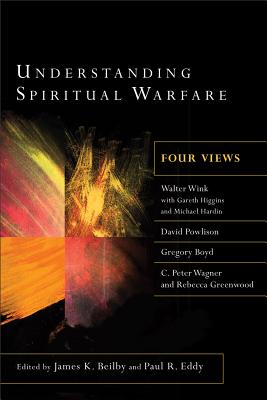 Understanding Spiritual Warfare: Four Views
The work starts with an introduction that does a great job introducing questions of primary importance in discussions of spiritual warfare. Walter Wink’s (alongside Gareth Higgins and Michael Hardin) view is presented first and might best be summarized as: Satan is equal to (and reducible to) human institutions of evil and suffering; he is neither personal nor is he the enemy of God but rather God’s servant–showing people their evil. We fight Satan by fighting institutionalized evil.
David Powlison’s “Classical” view is that spiritual warfare is essentially living like Christ and fighting temptation and sin. Satan is a real person and tempts us. Evils are combated through prayer and a call to repentance. Gregory Boyd’s “Ground-Level Deliverance model” argues for both a Christlike life but also for active warfare against demonic powers and Satan (who are personal and ontologically extant) on an individual level. C. Peter Wagner and Rebecca Greenwood’s “Strategic Level Deliverance model” is committed to finding and rooting out demonic activity in local and even national levels, including making “spiritual maps” to find where areas of demonic activity might be found and trying to identify the specific demons behind various activity.
From the above, it may seem like these views are radically diverse. You’d be correct to think so. James Beilby and Paul Rhodes Eddy did a fantastic job putting together this volume with such diverse views. Questions of orthodoxy at times arise (particularly in regard to Wink’s perspective), but this makes it clear how much divergence there is related to this specific issue. The responses to the different views are each insightful and provide more material of interest to pursue.
It’s rare that I’ve had a book be this interesting and engaging throughout. I highly recommend this volume for anyone with even a remote interest in the topic of spiritual warfare.
The Good
+Excellent diversity of views never feels like you’re reading rehashed material
+Clearly defines several key terms
+Superb introductory material prepares readers to understand some key questions on issue
+Author responses insightful and given just enough space to make serious points
+Cool cover
+Excellent indices
The Bad
-Could have given even more space to responses
-Not enough interaction on exegetical questions
-No rejoinders for authors to responses
Links
Be sure to check out the page for this site on Facebook and Twitter for discussion of posts, links to other pages of interest, random talk about theology/philosophy/apologetics/movies and more!
Book Reviews– There are plenty more book reviews to read! Read like crazy! (Scroll down for more, and click at bottom for even more!)
Source
James Beilby and Paul Rhodes Eddy, eds., Understanding Spiritual Warfare: Four Views
“Lord of Chaos” – Robert Jordan’s “The Wheel of Time,” Book 6 and Christianity
“Humanity retreated, and the Shadow advanced.” – Robert Jordan, “Lord of Chaos,” p. 450.
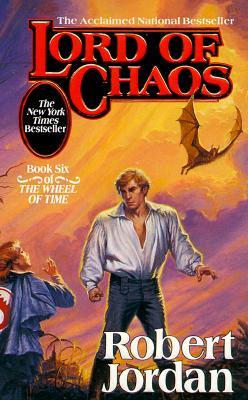
Poignant words. Robert Jordan’s epic series, The Wheel of Time, continued with book 6: Lord of Chaos. In this post, we’ll explore a couple major themes that came through in this exciting fantasy adventure. There will be SPOILERS for book 6 (and possibly those before) in this post. Please DO NOT SPOIL later books for other readers.
The Shadow
One of the strongest themes throughout the book is the pending doom of the rise of evil. Evil advanced throughout the land, and had been making advances historically throughout the region with little opposition. In our world, it seems often that evil continues to exist unchecked. The parallels are palpable as one reads the book. One scene paints this reality starkly. Rand al’Thor is looking over a number of maps:
Borders and names were enough to rank the maps by age. On the oldest [nations were butted up against each other. Then…] Maredo was gone… Caralain vanished…. other nations… eventually [became] unclaimed land and wilderness. Those maps told a story of fading since Hawkwing’s empire crumbled, of humanity in slow retreat. A second Borderland map showed… the Blightborder fifty miles further north too. Humanity retreated , and the Shadow advanced. (440-450)
These names would be unfamiliar to those who haven’t read the series, but the implication should be clear: the maps showed the steady retreat of humanity in the face of the evil forces of the “Shadow.” The picture is breathtaking: one can easily imagine a series of maps showing encroaching darkness. But beyond the mere imaginary, it seems to be a fact that humanity–true humanity–is constantly retreating from evil. The evils of human trafficking, hunger, dishonesty, abortion, and the like continue to be perpetuated, and yet humanity is more interested–much like the people of The Wheel of Time–in the everyday mundane occurrences. Those things which “don’t harm me” are ignored. If we could see a map, we could see the Shadow encroaching as well.
It’s important not to completely focus on doom and gloom, however. In Lord of Chaos, the Dragon is Reborn, and the opportunity to defeat the Shadow is approaching. But those who know of prophecies know that this Dragon may also bring much destruction to the world. The Christian narrative presents a picture less bleak: evil is already defeated through our Lord. Final victory is inevitable.
Destruction of Life and other Injustice
The wanton destruction of life is found through much of Lord of Chaos. The forces of evil are not the only ones who are killing the innocent, however. Even those who call themselves the “Children of Light” bring about much evil through their actions. One scene which illustrates this is found in the way that a “Child of the Light” decided to deal with those who had sworn to the Dragon–the coming defender of the world:
He had managed to kill some of [the Dragonsworn], at least, though it was hard fighting foes who melted away more often than they stood, who could blend into the accursed streams of refugees… He had found a solution, however… The roads behind his legion were littered now, and the ravens fed to bursting. If it was not possible to tell the Prophet’s trash from refugee trash, well then, kill whoever clogged the way. The innocent should have remained in their homes where they belonged; the Creator would shelter them anyway. (611)
There is much injustice in this passage. First, the victims are blamed for their destruction: the reasoning is that they brought it upon themselves. Unfortunately, reasoning like this is frequently found today when people comment on various tragedies. We should not blame the victims, but rather go to their aid. Second, there is a kind of notion that “the Creator” (God?) would be pleased with this destruction, or at least could not be bothered to intervene. Again, this kind of reasoning is sometimes mentioned: God will sort them out, why bother with the possible consequences of bombing targets in civilian zones? Why deal with the plight of the refugee? Third, this plight of the refugee is found throughout the book. What of those who have been displaced by violence and war? In the book, it is actually Rand al’Thor who is the one who cares most about them. In our world, it should be the Christian who rushes to aid the defenseless.
Prophecy
The world of “The Wheel of Time” continues to be deeply steeped in fulfilled prophecy–whether coming fulfillment or already culminated. The emphasis on prophecy plays into the notion in Jordan’s world that there is a “Wheel of Time” which leads to a kind of cyclical universe model.
For our purposes, it is worth simply considering the notion that prophecies may have unexpected fulfillment. Rand does not always meet the prophecies of the Dragon in expected ways. Similarly, the way that some prophecies about the Messiah were fulfilled is not the way that many at the time (or now) expected.
Onward!
We have seen that Lord of Chaos brings up a number of interesting themes. From here, we shall move onward into more books in the series. What are your thoughts on these themes? Do you have any other major themes you can think of as being found within the series? Remember- no spoilers for later books!
Links
Be sure to check out the page for this site on Facebook and Twitter for discussion of posts, links to other pages of interest, random talk about theology/philosophy/apologetics/movies and more!
SDG.
——
The preceding post is the property of J.W. Wartick (apart from quotations, which are the property of their respective owners, and works of art as credited; images are often freely available to the public and J.W. Wartick makes no claims of owning rights to the images unless he makes that explicit) and should not be reproduced in part or in whole without the expressed consent of the author. All content on this site is the property of J.W. Wartick and is made available for individual and personal usage. If you cite from these documents, whether for personal or professional purposes, please give appropriate citation with both the name of the author (J.W. Wartick) and a link to the original URL. If you’d like to repost a post, you may do so, provided you show less than half of the original post on your own site and link to the original post for the rest. You must also appropriately cite the post as noted above. This blog is protected by Creative Commons licensing. By viewing any part of this site, you are agreeing to this usage policy.
Sunday Quote!- My Position is the Gospel; Yours is Not!
 Every Sunday, I will share a quote from something I’ve been reading. The hope is for you, dear reader, to share your thoughts on the quote and related issues and perhaps pick up some reading material along the way!
My Position is the Gospel; Yours is Not!
I recently re-read James Emery White’s fantastic Christ Among the Dragons. It is a book that encourages Christian conviction with charity. That is, it encourages Christians to stand firm in their beliefs, while doing so in ways that do not lead to name-calling, bitterness, and resentment. One highly interesting part was when White discussed how some Christians tend to reduce the Gospel to their own position:
when we condescendingly say that our position is simply the ‘gospel,’ as if it’s not really a debate worth having, then we are being arrogant. When we make our view the litmus test of orthodoxy, or even community, we are being neither gracious nor loving. When we say that our view alone upholds God’s sovereignty or that our perspective is the only one that cares about lost people, we are not being truthful. When we exhibit a haughty smirkiness, or we so state our position that we divide churches, student ministry groups, or denominations, then we are sinning. (126-127)
White suggests various criterion for when we might say that one position is, in fact, not the Gospel, but this means moving past our narrow definitions of what we want others to believe about things that are not essentials of the Christian faith. Yes, these things remain important, but they do not allow us to exclude from the church of Christ those who disagree with us.
Christ Among the Dragons is a fantastic book, and well worth the read. White’s insights on this and other issues are spot-on.
Links
Be sure to check out the page for this site on Facebook and Twitter for discussion of posts, links to other pages of interest, random talk about theology/philosophy/apologetics/movies and more!
Sunday Quote– If you want to read more Sunday Quotes and join the discussion, check them out! (Scroll down for more)
Source
James Emery White, Christ Among the Dragons (Downers Grove, IL: InterVarsity, 2010).
SDG.

 J.W. Wartick - Reconstructing Faith