J.W. Wartick
Book Review: “In the Beginning God: A Fresh Look at the Case for Original Monotheism” by Winfried Corduan
 Rarely does a book come along which forces a reader to completely rethink how they’ve viewed a whole slew of interrelated topics. Winfried Corduan’s latest work on the origin of religion is just such a book. I’ve waited some time to finish writing the review simply because it’s taken a while to reflect upon its content and reread and absorb many of the arguments to support the conclusions Corduan provides. Here, I offer some thoughts which can only touch upon the wealth of information in this fantastic book.
The Thesis
Winfried Corduan’s central thesis is simply stated:
Regardless of how one explains the origin of human beings, one cannot get around the fact that the first religion of human beings was monotheism, the recognition and worship of one God.
The way Corduan defends this claim is initially through analysis of competing claims of major thinkers in the past and present on the origin of religion. He then provides a positive case for original monotheism.
Critical Examination of Competing Views
Corduan surveys a number of major thinkers in anthropology who have proposed various ways that religion may have arisen and developed. A central thought throughout many of these thinkers is the notion that cultures, like organisms, evolve. Thus, the thought was that the earliest stages of religion would be “primitive” while later stages of religion would be more complex and perhaps people would even move beyond religion.
The various theses Corduan examines are each interesting in their own light. Max Müller’s theory that mythology is corruption of human language is wonderfully imaginative, though ultimately bereft of real evidential backing. E.B. Tylor’s application of Darwinism to the development of religion remains highly influential but also provides insight into how a paradigm may corrupt and even create evidence. Andrew Lang set the stage for later thought about how religion may have developed, but unfortunately his theory suffered from assumptions that anyone not “developed” like the Europeans was clearly inferior or lower on the evolutionary scale. Thus, his theory suffered from its own brand of self-confirmation and key blind spots.
A telling critical insight Corduan provided which applies to many of the evolutionary perspectives on the origin of religion is that the field evidence gathered for these hypotheses operated under a critical assumption: “nineteenth-century anthropology proceeded on the premise that the ancient past has preserved itself. We can still see it in full bloom in the cultures of tribal people. Human beings who are now living on a stone-age level must have preserved stone-age culture, they argued.
But of course this doesn’t follow at all. It is perfectly possible for such “stone age” societies to in fact be extremely complex and advanced. In fact, Corduan provides much evidence to suggest that this is exactly the case. Highly complex rituals and traditions are often found in these allegedly primitive societies. Moreover, many of these societies show kinds of vestiges of original monotheism, which itself provides counter-evidence to the hypothesis that these societies support the notion of evolution of religion.
A Case for Original Monotheism
Corduan’s case for original monotheism incorporates many aspects of Wilhelm Schmidt’s work. Thus, he dedicates a few chapters to analysis and defense of Schmidt’s theories. Schmidt’s theories are based off of his analysis of how cultures shift. Corduan provided fascinating and practical examples to look at how cultural movement works. One application of this to the origin of religion is that societies shift and push competing cultures either to adapt and integrate or to be pushed more to the fringes. Early settlers are often supplanted by later explorers who stayed in one place and developed before moving on. Allegedly primitive societies are often found in the deserts or at the outskirts of society because they were the first to move on and thus developed only as they settled in ever-distant areas. However, this cannot be used to support the notion that a “stone age” level of a society today entails the preservation of cultural behaviors and practices from such a time period.
The shifting of cultures through “culture circles” thus is used to evaluate how religion may have developed and moved across the Earth. Most importantly, Schmidt worked with the anthropological data that other researchers used, but he approached it without the dogmatic stance that the development of religion must have been Darwinian. This assumption led many other researchers to reject or downplay aspects of the observational evidence because they did not fit the theory. Schmidt discovered, however, that a number of cultures had vestiges of monotheism from earlier times. This resulted in Schmidt hypothesizing that one possible explanation for the shared original monotheism of these cultures could have been an actual deity.
Corduan then provides analysis of a number of critical responses to Schmidt as well as more modern evolutionary or simply agnostic approaches to the origin and diversification of religion. Finally, he surveys a number of world religions to see if aspects of original monotheism may still be found therein.
 Interesting Avenues to Explore
Other avenues are opened as Corduan analyzes specific cultures, such as Egypt or China, and finds that Egypt’s brief affair with “monotheism” may not have been as significant as some take it or that China’s modern religious thought perhaps reflects an original monotheism beneath the surface.
The application of various aspects of anthropological research and the rejection of agnostic approaches to the origins of religion also open up new avenues for research and exploration. If we don’t assume that we can’t know something, how might we approach the project of discovering how religion may have originated and spread? Corduan, of course, provides Schmidt’s theories as one way, though he also integrates insight even from those scholars with whom he disagrees. Thus, he provides a rather integrative approach to the question.
The analysis of various anthropologists who have thought on issues of the origins of religion also open up new ideas to explore, books to read, and evidence to consider.
Avenues for exploration like this are found throughout the book in droves. I mean that: there is so much in this book that makes me want to know more, to learn more. That is coupled with the fact that it made me realize, again, how little I do know regarding entire fields of research and study. In the Beginning God is a call not only to re-evaluate one’s presuppositions, but also a vast treasury of topics to explore.
Of course another extremely interesting thought to examine is that if monotheism were the original religion of people of all sorts, might this have implications for apologetics? Ultimately, Corduan answers in the affirmative. He argues that at least some aspects of this study point to the existence of a monotheistic deity as a possible explanation for the data. He does not think that the anthropological study provides a comprehensive case for the Christian truth, but he does ultimately argue it can be one factor among many to show the truth of Christianity.
A Final Defense
The immediate reaction of some might be that Corduan’s bias yields his results. Similarly, in Schmidt’s time, some alleged that missionary influence led to the purported evidence for original monotheism. However, it should be clear that although everyone has a bias, the evidence presented by Corduan seems impossible to dismiss as simply the wishes of a theist. Rather, he has provided sound reasons for thinking that original monotheism is a relevant hypothesis which perhaps outstrips its opponents in terms of explanatory scope.
Conclusion
In the Beginning God: A Fresh Look at the Case for Original Monotheism
Links
Be sure to check out the page for this site on Facebook and Twitter for discussion of posts, links to other pages of interest, random talk about theology/philosophy/apologetics/movies and more!
Sigmund Freud, Totemism, and the origin of religion- Who cares about facts?– I analyze some of Corduan’s comments regarding Sigmund Freud’s theorizing about the origin of religion.
Sunday Quote!- Is Monotheism from Egypt?– I provide a brief quote from Corduan’s book and note how it may interface with some theories related to the source of monotheism.
Source
Winfried Corduan, In the Beginning God: A Fresh Look at the Case for Original Monotheism
SDG.
——
The preceding post is the property of J.W. Wartick (apart from quotations, which are the property of their respective owners, and works of art as credited; images are often freely available to the public and J.W. Wartick makes no claims of owning rights to the images unless he makes that explicit) and should not be reproduced in part or in whole without the expressed consent of the author. All content on this site is the property of J.W. Wartick and is made available for individual and personal usage. If you cite from these documents, whether for personal or professional purposes, please give appropriate citation with both the name of the author (J.W. Wartick) and a link to the original URL. If you’d like to repost a post, you may do so, provided you show less than half of the original post on your own site and link to the original post for the rest. You must also appropriately cite the post as noted above. This blog is protected by Creative Commons licensing. By viewing any part of this site, you are agreeing to this usage policy.
Sunday Quote! – Does location determine personhood?
 Every Sunday, I will share a quote from something I’ve been reading. The hope is for you, dear reader, to share your thoughts on the quote and related issues and perhaps pick up some reading material along the way!
Does location determine personhood?
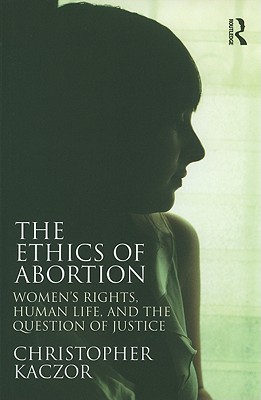
I have been reading through The Ethics of Abortion: Women’s Rights, Human Life, and the Question of Justice by Christopher Kaczor. It is a philosophical defense of the pro-life position and the notion that the unborn is a human person. In his discussion of partial-birth abortion, Kaczor makes the following point:
In Sternberg v. Carhart, later reversed in Gonzalez v. Carhart, the United States Supreme Court affirmed a constitutional right to… partial-birth abortion, and with it affirmed the legality of the conventional pro-choice view that abortion ought to be legally permissible through all nine months of pregnancy, until the human being has been entirely removed from the mother’s body. The court gave no justification why moving the head of the child just a few inches marks the crucial distinction between non-personhood and personhood… (52, cited below)
Frankly, I think this is something that any pro-choice individual must deal with: what is it about the location of the unborn which conveys personhood or prevents the unborn from being a person? What is it, that is, which transforms the unborn from non-person to person as the unborn is birthed?
Links
Be sure to check out the page for this site on Facebook and Twitter for discussion of posts, links to other pages of interest, random talk about theology/philosophy/apologetics/movies and more!
Check out my other posts on the debate over abortion.
Source
Christopher Kaczor, The Ethics of Abortion: Women’s Rights, Human Life, and the Question of Justice (New York: Routledge, 2011).
Really Recommended Posts 3/28/14- Nature and Scripture, Tolkien’s Beowulf, oneness in Christ, and more!
 I have a nice range of posts set up for you. First, we look at the “God’s Not Dead” flick. Then, Tolkien’s translation of Beowulf! From there we survey the interrelationship between nature and Scripture, men and women as images of God, and young earth creationism and animal mimicry. I hope you enjoy them. As always, drop a comment here to let me know what you thought!
An Apologist Reviews “God’s Not Dead”– The movie “God’s Not Dead” is drawing a lot of interest from Christians. How does it hold up with it’s seeming purpose: to show that God is not dead? Check out this review by Nick Peters, a Christian apologist.
JRR Tolkien’s Translation of Beowulf: Bring on the Monsters– A translation from Tolkien of Beowulf may seem pretty ho-hum. After all, there are already English translations! But the book is going to be published not only with the translation, but also Tolkien’s notes and a couple essays. This is, of course, not to mention Tolkien is a renowned scholar of linguistics and so his translation is undoubtedly fantastic. I wait with barely contained glee for this one. Check out this post for reasons to get excited about the book!
Are Nature and Scripture Compatible?– Here, Luke Nix analyzes a number of ways to evaluate nature and Scripture alongside each other. The post has helpful flow charts to visualize this reasoning throughout. I highly recommend the read.
Male and Female: One Image, One Purpose– Men and women are both made in the image of God. What does that mean? How does it play out in our view of men and women? Check out this post by Mimi Haddad on the topic.
The “Good Creation” – Mimicry, Design, and Young Earth Creationism– How do creatures which mimic others (or the environment) reflect upon God’s creation? Check out this post which analyzes the question against the backdrop of young earth creationism.
Peter Enns on Definitions and Inerrancy
 Not long ago, I finished reading Five Views on Biblical Inerrancy, a book in the Zondervan Counterpoints series which focused on the plausibility and meaning of inerrancy. Peter Enns was by far the most critical of the doctrine of inerrancy, and his essay largely put forward the position that we should not merely modify but simply get rid of the notion of biblical inerrancy. Here, I want to focus upon Enns’ methodology throughout the work.
We’ll look at Enns’ contributions to Five Views… a bit backwards, by focusing first upon his responses to the other authors. What I found was that time and time again, Enns demanded definitions for individual words from the authors he was responding to. Sometimes, these demands were warranted, but overall it seemed Enns would just call on the others to define their terms and say he didn’t know what they meant otherwise. Moreover, even where he did not demand definitions, he often put scare quotes around seemingly random words in his responses. This latter point is more a complaint about writing style than substance, but it was extremely distracting! On p. 61, for example, Enns put quotes around three words–“many,” “history,” and “accurate”–the latter two for seemingly no reason whatsoever.
However, what I want to focus on is Enns emphasis on the importance of definitions. Here are just some examples of Enns’ method in application:
“…’true,’ ‘error,’ ‘erroneously,’ and ‘falsehood’ are all left floating. I am not sure what Bird means by them–at least at this point” (Enns’ response to Bird, p. 182).
“For one thing, we have the perennial problem of what ‘affirm’ actually means, and Vanhoozer’s subsequent thoughts did not clear this up for me. Further, ‘eventually’ raises flags…” (Enns’ response to Vanhoozer, p. 245).
Now, as I noted, surely some of this is fair. It is true that it is important to wonder at the meaning of “truth,” as we know from the oft-quoted words of Pontius Pilate “What is truth?” (John 18:38). Thus, I am not saying that Enns has no point when he called for definitions throughout his critical engagement with his co-authors. Surely, definitions are extremely important. And it is because of the importance of definitions that I wonder why on earth Enns failed to even allow for different definitions of inerrancy in his own contribution to the book.
Think about this for a second: despite spending significant [what is meant by significant?] portions of his responses calling upon definitions from his co-authors, Enns himself titled his contribution: “Inerrancy, However Defined, Does Not Describe What the Bible Does.”
Yes, that’s right, the man who called for definitions of individual words like truth, falsehood, error, affirm, and more himself eschews the hassle of defining inerrancy, the central topic of not just his chapter but the subject of the book! I’m astonished by this. How can someone who has demonstrated such concern for details himself just lump all inerrantists together and say that “well, however they define it, it doesn’t work”? Well, what does Enns mean by “inerrancy”? Enns does interact with the Chicago Statement on Biblical Inerrancy (hereafter CSBI) and apparently takes this for his norm regarding the meaning of inerrancy, but without any explicit definition of inerrancy, readers are left wondering whether Enns really is so concerned with definitions after all.
Enns, of course, brings up a number of interesting points and several challenges to inerrancy with which those who hold to the doctrine must interact. However, without any distinction between inerrantists, Enns is left doing that which he accuses others of: making statements which are hard to understand because he hasn’t defined terms. One obvious difficulty with Enns’ approach comes to the forefront when he assumes that inerrancy is necessarily committed to a literalistic hermeneutic: “The implication [of the CSBI on historical matters] is self-evident: inerrancy means, first of all, that literalism is the default hermeneutic of the CSBI… Taken at face value, this means that any comparison of Genesis with other ancient Near Eastern origins stories… is ruled out of bounds” (88). Enns qualified the last statement by noting that only those comparisons outside of CSBI conclusions are ruled out.
But of course the CSBI itself does allow for the comparison of genre, cultural contexts, and more in regards to interpretation of the text. Moreover, the CSBI allows for not just young earth creationism, but for other approaches to the text as well.
Thus, it seems to me that Enns’ lack of concern for possible nuance to definitions of inerrancy–his rejection of defining terms despite his insistence that others must do so–leads to great difficulties with his own critique. I have not here engaged in the core of Enns’ argument. As I said, many of his points are thoughtful and engaging. However, I think that his method seems a bit disingenuous: he demands that others define terms, but when it comes to the central topic of the entire book, refuses to acknowledge that any distinctions within the doctrine of inerrancy can combat his conclusion that the Bible is not inerrant.
Links
Be sure to check out the page for this site on Facebook and Twitter for discussion of posts, links to other pages of interest, random talk about theology/philosophy/apologetics/movies and more!
“Theological Colonialism”? On theological issues which are ‘only popular in America’– Here, I evaluate the claims made by Michael Bird in his essay in Five Views on Biblical Inerrancy. More particularly, I consider the notion that doctrines which are allegedly only popular in one place of the world are somehow restricted in importance.
Source
Peter Enns, Responses and “Inerrancy, However Defined, Does not Describe What the Bible Does” in Five Views on Biblical Inerrancy (Grand Rapids, MI: Zondervan, 2013).
SDG.
——
The preceding post is the property of J.W. Wartick (apart from quotations, which are the property of their respective owners, and works of art as credited; images are often freely available to the public and J.W. Wartick makes no claims of owning rights to the images unless he makes that explicit) and should not be reproduced in part or in whole without the expressed consent of the author. All content on this site is the property of J.W. Wartick and is made available for individual and personal usage. If you cite from these documents, whether for personal or professional purposes, please give appropriate citation with both the name of the author (J.W. Wartick) and a link to the original URL. If you’d like to repost a post, you may do so, provided you show less than half of the original post on your own site and link to the original post for the rest. You must also appropriately cite the post as noted above. This blog is protected by Creative Commons licensing. By viewing any part of this site, you are agreeing to this usage policy.
Star Wars: Fate of the Jedi- a Christian reflection on the most recently completed Star Wars series
 Star Wars is not normally where I go to begin discussions about worldview. The most recently completed mini-series, however, “The Fate of the Jedi,” was full of material for discussing worldview perspectives. Here, I will only touch on a few of the many themes the series brought up. Some of these include world religions, objective morality, and theism. Of course, there will be HUGE SPOILERS for the Star Wars universe prior and up to this point. PLEASE REFRAIN FROM POSTING COMMENTS FROM OTHER STAR WARS STORYLINES.
I’ll not be summarizing the plot of the Fate of the Jedi series, which you may find by following the links for the individual books here.
World Religions and the Force
A huge part of the early stages of Fate of the Jedi involved Luke Skywalker and his son, Ben, traveling around the galaxy and visiting other various Force-using schools. These different Force-using schools paralleled, in many ways, various world religions. For example, the Baran Do Sages held onto a kind of gnostic way of knowing, where secret knowledge was preserved by a select group of masters to pass on from generation to generation. Another example is found in the Mind Walkers, who try to separate body from soul in order to walk in a completely different reality. Not only does this also seem gnostic in its bent, but it also reflects the notion of the extinction of the self found in some Eastern religions like Buddhism and Hinduism. There are a few other schools that the Skywalkers visit throughout their travels, and each has aspects of at least one world religion reflected therein.
Of interest is that the way the series approached the various parallels to world religions is that many of them appeared to be fairly obviously wrong. That is, they had a feel of wrongness to them, but they also seemed to get aspects of reality wrong. The Mind Walkers, for example, allowed their bodies to waste away while they experienced their own way of entering into the Force. One cannot help but sense a kind of aversion to this belief system, in which the body is so totally denigrated. Some of their comments also reflected a lack of concern for distinctions between good and evil. Yet again, this is a distinctive of some Eastern religions, and it is a way in which they are factually mistaken. Those who fail to make distinctions between good and evil, between reality and the mental life; they are operating under a mistaken view of reality.
The Fate of the Jedi, then, does not teach a kind of religious pluralism. Instead, it eschews pluralism for showing that some belief systems do not work. They simply do not line up with reality.
Redemption and Betrayal
The character of Vestara Khai is an extremely interesting figure. She may be the most complex character since Mara Jade. A Sith, she is captured by the Skywalkers, who initially do not trust her whatsoever (and for good reason). Yet, in a kind of typical story of conversion in the Star Wars universe, they begin to turn her to the Light Side of the Force. She realizes that her own life has not been based upon good, and she also acknowledges a distinction between good and evil. Her realization is centered around her relationship with her family and friends (such as they are). For a little while, it seems that Vestara is a true convert.
Yet the reader knows throughout that although Vestara has changed her whole way of viewing the universe, she is not entirely a convert. She still puts herself first. In fairness to her, she does so thinking that she is putting others first, and she often does seem to prioritize the needs of Ben–whom she’s come to love–over herself. But when push comes to shove, she betrays the trust of the Skywalkers in the most dire possible way, by giving away the secret identity of a loved one and dooming her to a life of dodging the Lost Tribe of the Sith. A commentary on the darker side of human nature, Khai’s life in the books also begs the question of where one goes from there: what redemption may be in store for someone who seems to have ruined all chances at salvation?
Prophecy and the Celestials
The notion of prophecy is found throughout the Star Wars universe. There was the prophecy of the “Chosen One”; later, prophecies revolved around the Sword of the Jedi and the Unification of the Force. Each of these prophecies were expected to be fulfilled. In the Star Wars universe, prophecy is the product of the Force. One wonders, however, how this plays out with what is an essentially impersonal force. It seems that in order to give revelation, there must be some kind of personal reality; for prophecy relates to the actions of persons.
Ultimately, readers encounter the Celestials–a group of beings (Father, Son, and Daughter… and later Mother) of extreme power. These beings are tied into the whole plot of the expanded universe books of Star Wars in some ingenious (and sometimes a bit questionable) ways. Although these beings may appear to parallel a kind of pantheon, it becomes clear that they are not. They may be seemingly eternal, but they are also contingent: it was entirely possible for them to be destroyed. Again, it is not these beings who drive reality; it is the Force. The Force is the power in the universe, the ‘all in all’ of the Star Wars universe. Yet, as I’ve argued above, it is hard to envision the force as entirely impersonal. It delivers prophecies and sometimes even answers the call of those in need. The “Trinity” created and driven by the Force ultimately drive the Force themselves in many ways.
Conclusion
The Fate of the Jedi series explores a huge number of issues related to worldview. I didn’t get to nearly all the major issues, let alone the minor ones, which come out throughout the series. Of interest is how the series clearly brought up world religions in such a way as to avoid pluralism, but rather provided ways to distinguish between truth and falsehood in religion. Prophecy begs for a personal being, yet the allegedly impersonal Force provides it. It was great to experience the Star Wars universe in such a way as to have it bring up so many issues of worldview in often thoughtful and, frankly, thought-provoking ways.
Links
Be sure to check out the page for this site on Facebook and Twitter for discussion of posts, links to other pages of interest, random talk about theology/philosophy/apologetics/movies and more!
“Fitzpatrick’s War”- Religion, truth, and forgiveness in Theodore Judson’s epic steampunk tale– I take a look at the book Fitzpatrick’s War, a novel of alternative history with steampunk. What could be better? Check out some of the worldview issues brought up in the book.
I have discussed the use of science fiction in showing how religious persons act. Check out Religious Dialogue: A case study in science fiction with Bova and Weber.
Source
Troy Denning, Star Wars: Fate of the Jedi- Apocalypse (New York: Del Rey, 2012).
Disclaimer: The images in this post are copyright of the Star Wars universe and I use them under fair use. I make no claims to ownership of the images.
SDG.
——
The preceding post is the property of J.W. Wartick (apart from quotations, which are the property of their respective owners, and works of art as credited; images are often freely available to the public and J.W. Wartick makes no claims of owning rights to the images unless he makes that explicit) and should not be reproduced in part or in whole without the expressed consent of the author. All content on this site is the property of J.W. Wartick and is made available for individual and personal usage. If you cite from these documents, whether for personal or professional purposes, please give appropriate citation with both the name of the author (J.W. Wartick) and a link to the original URL. If you’d like to repost a post, you may do so, provided you show less than half of the original post on your own site and link to the original post for the rest. You must also appropriately cite the post as noted above. This blog is protected by Creative Commons licensing. By viewing any part of this site, you are agreeing to this usage policy.
Sunday Quote! – Do Trilobites Yield a Greater Good?
 Every Sunday, I will share a quote from something I’ve been reading. The hope is for you, dear reader, to share your thoughts on the quote and related issues and perhaps pick up some reading material along the way!
Trilobites Yield a Greater Good
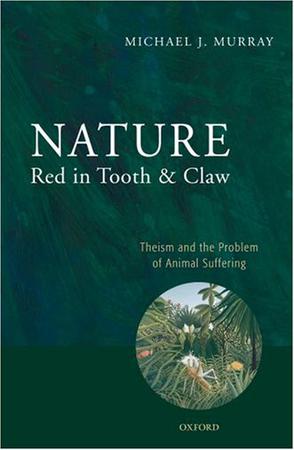
Recently, I finished reading Nature Red in Tooth and Claw
The purpose of that low organism [the trilobite] is by no means exhaustively explained when we have taken a measure of the sensational happiness he derived from his monotonous existence… But a far higher purpose is served in the adaptation of his complicated organism and of the position of his tomb in a sedimentary deposit to arrest the attention and direct the reasoning of a scientific observer. The pleasure of one lofty thought is worth more… than a whole heard of sensational pleasures. (142, cited below)
There is much to unpack in this quote, but for simplicity’s sake we’ll just examine one facet. Wright asserted that the final cause–the ultimate purpose–of a trilobite is not merely found in its own existence, but also in its existing to “arrest the attention and direct the reasoning” of a more highly developed organism. Indeed, Wright argued that the learning the life (and death) of the trilobite brought to the scientific observer was a far greater good than the life the trilobite lived of sensational pleasures.
A number of issues would need to be addressed before a fuller theodicy could be developed from this point. First, not every trilobite was able to convey its life to the good of a scientific observer. Second, is the good of scientific observation really better than sensational life of the trilobite?
Of course, I personally think the point by Wright is interesting and compelling to a point–but to develop that argument would take as much space as Murray dedicates to it. My final observation would be that Wright’s argument was not intended as the final word on the subject. It is but one among many facets of a greater good theodicy or a conjoined theodicy with other varieties of approaches to the problem of evil. Nature Red in Tooth and Claw
Links
Be sure to check out the page for this site on Facebook and Twitter for discussion of posts, links to other pages of interest, random talk about theology/philosophy/apologetics/movies and more!
Animal Pain Re-Visited– Over at Reasonable Faith, Michael Murray defends some theses of his book that I discussed above.
Source
Michael J. Murray, Nature Red in Tooth and Claw: Theism and the Problem of Animal Suffering
Really Recommended Posts 3/21/14- egalitarian marriage, the Bible and murdering children, inerrancy, and more!
 Well we got snow again here (about 3 inches). If it’s anything like last year, we’ll be seeing snow in May. Alas. Given that we’re stuck inside, I am pleased to present a number of excellent posts here for your perusal. The posts address the notion that egalitarian marriage is less satisfactory, apologetic interaction in social media, a recent meme about murdering children in the Bible, and more!
Gender Roles in Marriage (Part 1): Couples in Traditional Roles Have More Sex, Study Finds– I have seen several people sharing the results of a study in which it was found that couples in traditional roles have more sex. Some have trumpeted this as proof that traditional marriage is actually superior to egalitarian marriage. (Here, realize that “traditional marriage” is referring to a complementarian relationship wherein the man is in charge of the household.) However, apart from the problem that the number of instances of sex in a month is perhaps not the best indicator of marital stability and happiness, it seems there are other difficulties with this study and those drawing conclusions about the superiority of complementarianism. Check out this article on the topic.
How to Murder Children: Bible Style – Debunked– There’s a meme rolling around the internet about how the Bible has murdering children in it. It’s constructed without commentary and seems to be slanted towards the view that the Bible is evil. Check out this debunking of the meme (it includes the original). Very good work here, and I really think you should check it out!
What Christians can learn from skeptics– Certainly not an exhaustive list, this is actually more specifically looking at how skeptics are using Wikipedia to slant opinion on religious issues. How might Christians use this as a way to increase confidence in the faith?
Errors of Inerrancy– An interesting post on how to avoid some pitfalls when thinking of the doctrine of inerrancy. The list of errors includes both mistakes made by both critical scholarship and evangelicals regarding the text of Scripture.
One Christian Apologist’s Advice on Using (Anti-)Social Media– Some good advice here on how to become more effective via social media. Though I personally think Facebook is actually a better way to do apologetics than described in this post.
No Instruments in Church?
“Churches of Christ” have one primary distinctive belief: the NT does not authorize the use of musical instruments in worship services (thus they are committed to a capella worship). (Castelein, 130)

I was reading through the Zondevan Counterpoints series book, Understanding Four Views on Baptism recently and encountered the above quote. I admit that it caused me much confusion (I wrote on the margin: “Uh?”). First, I’ll admit I didn’t go looking through the New Testament to see if the claim was true. I’m just going to give John Castelein the benefit of the doubt and assume he’s right. Second, Castelein noted that “Churches of Christ” is not a denomination in the strictest sense and so there is diversity; but it seemed that his point was that they unified around this point. I also don’t know if this is true and will assume Castelein is correct (feel free to correct me if I’m wrong).
Okay, now to my point: even were I to grant that the NT does not authorize the use of musical instruments in worship, what does this mean? Think about it for a second. What else does the NT not authorize? I’m pretty sure there’s nothing in there about offering plates, displaying crosses in a sanctuary (or really anything at all about what a church may look like considering it was written during the time of house churches), playing Frisbee, or going on family vacations either. Does this mean all of these things may not be practiced? Certainly not. On the face of it, this appears to be an argument from silence: the NT doesn’t say we can, so we cannot. But of course that doesn’t follow.
Moreover, what of the multiple places in the Old Testament where the use of instruments in worship is clearly condoned and even encouraged? One may consider Psalm 33:2-3:
Praise the Lord with the harp;
make music to him on the ten-stringed lyre.
Sing to him a new song;
play skillfully, and shout for joy.
It seems to me that in order to argue that there may be no instruments in church, one must explicitly state that the Psalms may not apply to worship in Christian churches. For me, that’s a tough sell.
I’m curious to see whether there are positive arguments for this doctrinal distinctive. Let me know if you have encountered any and also let me know your own thoughts on the issue.
Links
Be sure to check out the page for this site on Facebook and Twitter for discussion of posts, links to other pages of interest, random talk about theology/philosophy/apologetics/movies and more!
Source
John D. Castelein, “Christian Churches/Churches of Christ View: Believers’ Baptism as the Biblical Occasion of Salvation” in Understanding Four Views on Baptism edited by Paul Engle and John Armstrong (Grand Rapids, MI: Zondervan, 2007).
SDG.
——
The preceding post is the property of J.W. Wartick (apart from quotations, which are the property of their respective owners, and works of art as credited; images are often freely available to the public and J.W. Wartick makes no claims of owning rights to the images unless he makes that explicit) and should not be reproduced in part or in whole without the expressed consent of the author. All content on this site is the property of J.W. Wartick and is made available for individual and personal usage. If you cite from these documents, whether for personal or professional purposes, please give appropriate citation with both the name of the author (J.W. Wartick) and a link to the original URL. If you’d like to repost a post, you may do so, provided you show less than half of the original post on your own site and link to the original post for the rest. You must also appropriately cite the post as noted above. This blog is protected by Creative Commons licensing. By viewing any part of this site, you are agreeing to this usage policy.
“Divergent” by Veronica Roth – A Christian review of the book
 Veronica Roth’s Divergent
Factions/Divergence
In the world of Divergent, Factions are the way of order. The people of the city of Chicago came together after a cataclysmic event (left largely unexplained in the book) to try to restore order. The thought was that they would split people into various Factions which each held to a certain primary guiding principle to combat evil and wrongdoing. For example, the Candor Faction felt that lies were the primary way in which evil entered the world. Deception was how anger and hatred could be brought into the world again, with dire consequences. Other factions-Abnegation, Erudite, Amity, and Dauntless-follow a similar structure of thought: each is constructed around the notion that a specific weakness led to the destruction of the world.
However, Tris, the main character of the book, is Divergent- she does not fit well into any one faction. Those who are divergent are considered dangerous because they are not as fully in line with the thinking of a faction, which makes it harder for them to be conditioned behaviorally to fit into any of the differing paradigms. Thus, they are not only dangerous to the system, but also dangerous to life: they might ruin the system which has protected those inside it.
The notion that humans would divide into different groups which each see a certain facet of human nature as dangerous for the thriving of the species is intriguing. It did seem a bit of a stretch for me to believe that people would willingly divide up into such factions and focus on nothing but those aspects of the human psyche, but it helped to drive the plot and it is perhaps more believable in light of Roth’s statement (through Tris, of course) that each faction began to mock even the good aspects of the others. For example, those who were in Dauntless like Tris would often mock the perceived need for Tris to take an extra step to care for others; or they would laugh at the difficulties with telling lies some people had (“You should have been from Candor!”).
Human nature in Divergent is shown to be more complex through those who are themselves divergent. They see beyond the narrow limits of each individual faction and are therefore immune to the conditioning others succumb to.
Family
Throughout the book, Tris repeats the mantra: Faction before Family. However, the mantra does not play out in reality. Instead, Tris find herself continually longing for her family and the familiarity of her former faction. Although she also finds herself becoming loyal to her new faction, the Dauntless, Tris is ultimately saved by the reunification (however brief) of her family.
The theme is rather poignant, for it suggests there is something to the notion that the family is the proper realm of interaction. It’s not that everyone has a perfect family in the “real world,” rather, the point is that in an ideal situation, everyone would have a support structure within a family. This support structure would be a place for ultimate refuge.
Choice
The book’s cover focuses on choice: it is one choice that defines who you are forever, it says. That choice, of course, is which faction to join. But when push comes to shove, so to speak, towards the end of the book, it turns out that a whole series of choices define you, not just which faction you want to belong to. It is not one choice that defines Tris and the others; it is the choices they make in times of crises, alongside those choices they’ve made throughout their lives, which ultimately determines who they are.
The concept of choice in the book resonates alongside the notion of divergence. After all, the Divergent are those who cannot be neatly categorized into any of the factions. Their choices, it seems, have a bit more freedom, or at least freedom from conditioning. I can’t help but think of the choice made in Eden that led to the Fall. Before that fateful choice, humans had a very wide range of choices available to them; afterwards, humans became bound to sin and much more narrow in their vision. In seeking freedom, we became bound; in trying to open more opportunities, we limited them.
Conclusion
Divergent is a very interesting book written by a woman who professes her Christian faith. The book is very dark at times and there are many more themes I could explore. The interest in “choice” and “divergence” related to human nature and sin is fascinating to me. I’m interested to hear your own thoughts on the issue, so be sure to leave a comment below!
Links
Divergent– Anthony Weber over at Empires and Mangers, one of my favorite sites (and one you should follow!), reviewed the YA Book Divergent. He examined it from a worldview perspective. The book is being made into a major motion picture and has been hailed by some as the “next Hunger Games.” That means we’re going to run into it everywhere. What questions can we bring to the table? There are SPOILERS in this linked post.
Be sure to check out my other looks into popular books (scroll down for more posts).
Source
Veronica Roth, Divergent
SDG.
——
The preceding post is the property of J.W. Wartick (apart from quotations, which are the property of their respective owners, and works of art as credited; images are often freely available to the public and J.W. Wartick makes no claims of owning rights to the images unless he makes that explicit) and should not be reproduced in part or in whole without the expressed consent of the author. All content on this site is the property of J.W. Wartick and is made available for individual and personal usage. If you cite from these documents, whether for personal or professional purposes, please give appropriate citation with both the name of the author (J.W. Wartick) and a link to the original URL. If you’d like to repost a post, you may do so, provided you show less than half of the original post on your own site and link to the original post for the rest. You must also appropriately cite the post as noted above. This blog is protected by Creative Commons licensing. By viewing any part of this site, you are agreeing to this usage policy.
Sunday Quote!- A Disconnect Between Parchment and Pew?
 Every Sunday, I will share a quote from something I’ve been reading. The hope is for you, dear reader, to share your thoughts on the quote and related issues and perhaps pick up some reading material along the way!
A Disconnect Between Parchment and Pew?
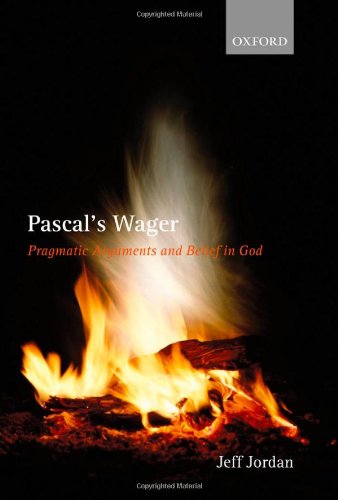
I just started reading Jeff Jordan’s Pascal’s Wager: Pragmatic Arguments and Belief in God, which I admit I have high hopes for. Right at the beginning I came upon a brief tidbit I thought was interesting to consider:
A disconnect exists between the arguments that philosophers find interesting and the arguments actually employed by Christians and other theists as reasons in support of their religious commitments. (vii, cited below)
I wonder sometimes about this very disconnect. The average person in the pew is unfamiliar with and unaffected by things like the Kalam Cosmological Argument or the subtle distinctions required to discuss the problem of evil. Rather, they are more concerned with the practical aspects of faith and the amount of work needed to explain these arguments is neither required nor desired. There does exist this disconnect between parchment–the philosophical theories–and the pew–the average Christian. What can we do to bridge this gap? What does this say about the epistemic validity of faith generally? Is this even an area for concern at all? I don’t think there are easy answers to these questions.
Interestingly, Jordan went on to suggest that one way to bridge the disconnect was with pragmatic arguments, such as Pascal’s Wager. It will be interesting to see how he develops that thesis, and how he defends such arguments. I eagerly look forward to continuing my read of the book.
Links
Be sure to check out the page for this site on Facebook and Twitter for discussion of posts, links to other pages of interest, random talk about theology/philosophy/apologetics/movies and more!
Jeff Jordan, Pascal’s Wager: Pragmatic Arguments and Belief in God

 J.W. Wartick - Reconstructing Faith