apologetics
On September 11th, 2001, harmless things became fearful
 There is a day that is burned into the memory of a generation–a day in which so many things we thought were harmless were turned against us. On September 11th, 2001, the United States was attacked by terrorists who flew planes into our buildings. The World Trade Center collapsed as we watched. We listened with pride about the men and women on United Airlines Flight 93 who died in order to prevent another attack.
We found out later box cutters were used to take over the airplanes. It was airplanes–a mere form of transportation–which were used to cause so much destruction. Harmless things became weapons.
But what does it all mean? How are we to come away from such an event unscathed? Something as simple as a box cutter was used against us. Can we trust anything? Is the person who invented the box cutter to blame? What about the manufacturer? What of the airplanes? Should we never fly again?
I can’t help but think about the ultimate when I am faced with the immediate. And the ultimate leads me to think of God. God created our universe, and as He created, He called each new creation “good” (see Genesis 1:4ff). But bad things started happening fairly quickly. Sin entered the world, and it wasn’t long before we had genocides, racism, hatred, terrorism, hunger, and you name it. The evils perpetuated by man would take too long to enumerate, and we can easily think of more.
Ultimately, God created the world as “good.” It was we who turned these good things against each other, it is we who actively seek to hurt, harm, and destroy each other. It is our free will that has turned things which are good into things used for evil.
On this 10th anniversary of 9/11… I sit back and ponder such things. It’s easy to throw blame around when we think about evil. It would be easiest to blame God. “Why don’t you prevent these evils, God?” But then we forget about the kinds of things God made, and how He only made them good.
The question is not: “Why did God create these things [free will, among others]?” The question is “Why have we used these things for evil?”
Links
“Are We All Moral Monsters?” Clay Jones looks at how 9/11 has awakened us to mortality in new ways.
Simply Incoherent– Christopher Hitchens argues that 9/11 is evil. But on his ontology, evil makes no sense.
9/11 ‘Full cognitive meltdown’ and its fallout
From Ground Zero to 10 Years Later–September 11, 2011– a reflection on 9/11
Did God Allow the Attacks on 9/11 for a “Greater Good”?– A post writing against ‘greater good’ theodicies. Not sure I agree entirely, but I think there are some great difficulties with the ‘greater good’ theodicy which Erik Manning draw out.
Where was God on 9/11?– A reflection on 9/11 along with a point-by-point critique of Rabbi Kushner’s response to 9/11.
Do all roads (and flights) lead to God?– A critique of religious pluralism.
Two Ground Zeros– From the horrors of 9/11 to the hope of Christ.
Suffering and the Cross of Christ– Christ helps us explain suffering.
America After 9/11, Is Religion Evil?– Is it?
Atheism, Evil, and Ultimate Justice– God will provide ultimate justice.
Ground Zero: Why truth matters more than preventing another 9/11 style attack
SDG.
——
The preceding post is the property of J.W. Wartick (apart from citations, which are the property of their respective owners) and should not be reproduced in part or in whole without the expressed consent of the author. All content on this site is the property of J.W. Wartick and is made available for individual and personal usage. If you cite from these documents, whether for personal or professional purposes, please give appropriate citation with both the name of the author (J.W. Wartick) and a link to the original URL. This blog is protected by Creative Commons licensing. By viewing any part of this site, you are agreeing to this usage policy.
Dawkins and Oppy vs. Theism: Defending the Kalam Cosmological Argument
 “[Arguments for God’s existence from an infinite regress] make the entirely unwarranted assumption that God himself is immune to the regress.” -Richard Dawkins, The God Delusion, 101.
Dawkins vs. the Kalam
Just over a year ago at Richard Dawkins’ site, someone asked Dawkins to respond to the Kalam Cosmological Argument (see an exposition of the argument here). The reader outlined the argument:
- Whatever begins to exist has a cause
- The universe began to exist
- Therefore, the universe has a cause
Dawkins is frequently witty, but often wrong. The argument is for broad theism. The Kalam is intended to show that the universe is caused, it is not an argument for Christianity specifically. I pointed out in another post that just because an argument is for broad theism (or just the brute existence of God), that doesn’t mean the argument is useless evidentially for Christianity. If we know the universe is caused, then we also know whatever caused the universe must be capable of causation (obviously), choice (it must select a moment to bring about the universe), powerful enough to bring the universe into existence out of nothing, etc. This would be powerful evidence and part of a cumulative case towards Christianity.
Then there’s Dawkins’ quote in The God Delusion which I have seen utilized to challenge the Kalam. First, I should note that Dawkins’ quote is in response to Aquinas’ Five Ways/Proofs. Further, it seems to be intentionally pointed towards a Leibnizian version of the Cosmological Argument (for a fuller defense of that argument, see here). But, a simple answer to Dawkins objection, which he seems to think is devastating, would be to point out that the universe and God are different types of entities. The universe is contingent, and God is necessary. That’s not arbitrary, that’s just the kind of things those entities are.
A Philosophical Attack On the Kalam
Not all atheists are as capable of blind, willful ignorance as Dawkins. Graham Oppy’s recent book Arguing About Gods has a thoughtful, challenging section dedicated to William Lane Craig’s exposition of the Kalam.
Oppy challenges Craig on every step of the Kalam, but I’m going to focus upon one. Oppy writes, “[I]t is quite unclear why one should suppose that the allegedly counter-intuitive behavior of the transfinite [numbers]… casts doubt on the idea that the very smallest transfinite cardinals do find application to ‘the real world'”(Arguing About Gods, 140).
This proposal is meant to challenge Craig’s contention that the infinite cannot actually exist. For, if there can be no actual infinites, then the objects we see around us–indeed, the universe itself–must have begun. Yet Oppy’s contention really only reflects mathematical truths. But surely this is a rather untenable claim. Oppy would have to provide evidence that the infinite actually exists and is not just an abstract mathematical concept. Craig’s contention is that the infinite can only be used in things like Cantor’s theory for mathematical equations. Why does Craig make this restriction? He cites David Hilbert, the famous German Mathematician, who points out that:
the infinite is nowhere found in reality. It neither exists in nature nor provides a legitmate basis for rational thought… the role for infinite to play is solely that of an idea… (David Hilbert Quoted in Craig, 87, cited below)
Yet Oppy provides no reason to think that there are actually infinite things found in reality. Rather, he resorts to claiming that Craig misinterpreted Hilbert’s paradoxes and that “If the Cantorian theory of the transfinite numbers is intelligible, then we can suppose that some parts of it find application ‘in the real world…'” (Oppy, 140). But is that true? Aren’t there plenty of things that are intelligible but for which we have no application ‘in the real world’? I abstract a bit when I point this out, but it is perfectly intelligible that there could be flying pigs, yet we don’t find an application of that in “the real world” other than as a false statement. There are nearly limitless examples of intelligible things we can think of, or intelligible theories, which have no application in the real world.
But perhaps Oppy isn’t making a claim quite as strong as saying actual infinites exist. Perhaps he is just referring to the possibility that they do. The problem then, however, is that, as Craig writes in a critique of Oppy’s position, “Oppy’s attempt to defend the possibility of the existence of an actual infinite is vitiated by his conflation of narrowly and broadly logical possibility.” The problem is that Oppy has confused broad logical possibility (that it is possible to construct a consistent set with an actual infinite) with modal (the notion that an infinite actually does exist in a possible world) or actual possibility in the real world. Again, Craig writes, ” Oppy… seems to take a proposition’s freedom from inconsistency in first-order logic to be indicative of that proposition’s being true in some possible world” (Craig b, cited below). So Oppy has not done anything to defeat the Kalam. Even were Craig to grant that Cantorian theory allows for broad logical possibility of actual infinites, it would not show that they are actually possible in our world. And again, even were they possible in the real world, an actual infinite would have to exist in order to discredit the Kalam. Thus, Oppy’s counter to the Kalam is quite weak–it’s based upon a conflation of broadly logical and actual possibility, and even were he to show that infinites are actually possible, the problem would remain that we have observed none.
Yet, and this is very important to note, even if actual infinites did exist, that wouldn’t undermine the idea that everything which began has a cause. It would only allow atheists to claim the universe did not begin. But how would they go about claiming that? They’d have to show that a model of the origins of the universe which allowed for an infinite past was plausible–more plausible than the alternative. Yet the only hope for showing this would be to make a theory as parsimonious as the Big Bang theory, which postulates an absolute beginning to the universe. So, even were there actually infinite things in the universe, which I very much doubt, that would not undermine the Kalam. It would make the argument more difficult to defend, but it would not falsify it. All it would show is that there are objects which are not caused.
Thus, I take it that the Kalam Cosmological Argument does not suffer defeat, either from vocal, misguided atheists like Dawkins, or thoughtful philosophers like Graham Oppy.
Links:
Again, see an outline and defense of the Kalam Cosmological Arugment here.
William Lane Craig discusses another objection: whether a beginningless past is actually infinite: here. He offers a number of critiques of Oppy’s position here. You can also access a review by Craig of Oppy’s book here (you will need to sign up for a free account on http://www.reasonablefaith.org/).
Check out my review of a recent debate between Craig and Lawrence Krauss, in which the Kalam was discussed here. (Includes a link to the actual debate.)
Wintery Knight writes about how to defend the Kalam at his site: http://winteryknight.wordpress.com/2009/04/08/how-to-defend-the-kalam-cosmological-argument-just-like-william-lane-craig/
Sources:
Graham Oppy, Arguing About Gods (New York, NY: Cambridge, 2006).
Richard Dawkins, The God Delusion (New York, NY: Houghton Mifflin, 2008).
William Lane Craig, The Kalam Cosmological Argument (Eugene, OR: Wipf and Stock, 1979).
William Lane Craig b, “Graham Oppy on the Kalam Cosmological Argument” (Leadership U, November 8, 2005), http://www.leaderu.com/offices/billcraig/docs/oppy.html, accessed 9/1/2011. Also found at http://www.reasonablefaith.org/site/News2?page=NewsArticle&id=5162.
Image credit: ESA/Hubble and NASA: http://spacetelescope.org/images/potw1021a/, found at http://commons.wikimedia.org/wiki/File:PGC_39058.jpg.
SDG.
——
The preceding post is the property of J.W. Wartick (apart from citations, which are the property of their respective owners) and should not be reproduced in part or in whole without the expressed consent of the author. All content on this site is the property of J.W. Wartick and is made available for individual and personal usage. If you cite from these documents, whether for personal or professional purposes, please give appropriate citation with both the name of the author (J.W. Wartick) and a link to the original URL. This blog is protected by Creative Commons licensing. By viewing any part of this site, you are agreeing to this usage policy.
Reading Mackie “Miracle of Theism”: Chapter 1
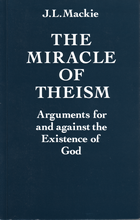 I’ve been reading through The Miracle of Theism by J.L. Mackie. The book is known as one of the more powerful philosophical explications of atheism. You can read my thoughts on the introduction here (along with links to the rest of the series as they appear).
Chapter one thoughts:
Mackie begins with a brief outline of Hume’s argument, which he first outlines in five points, and refines it further thereafter. The five points from Hume, according to Mackie (p. 14-16) are: 1) “Hume says there are no really well-attested miracles…”; 2) “the human mind has a positive tendency to believe what is strange and marvelous”; 3) “reports of miracles ‘are observed chiefly to abound among ignorant and barborous nations’. Where they are believed by civilized peoples, these ‘will be found to have received them from ignorant and barbarous ancestors’, so that the stories will have acquired the authority of received opinions before the nations in question have developed powers of criticism and traditions of rational inquiry…”; 4) “different religions are in conflict: their claims therefore undermine and destroy one another…”; 5) “Hume says, the very fact that a miracle story is used to introduce a new religion or to support an existing one is an additional reason for skepticism. Many people have an intense desire to believe in some religious object…”
I see very little to commend among these five points. In fact, I find them all rather horribly mistaken. In regards to 1, this is simply begging the question. This “argument” is less a premise than it is an axiomatic denial of miraculous claims. It’s a broad, sweeping claim with no reason to accept it. There is nothing to support the second claim. I actually see it as a bit of “folk psychology of religion,” as it were. Isn’t it funny that the person, like Hume, who makes this point is believing a rather marvelous claim: that they are epistemically in a position to judge everyone else? It’s quite patronizing to make a point like 2, and given that the only evidence Mackie is willing to offer to support the claim is a vague hand wave towards people who believe in flying saucers, I don’t see any positive evidence to accept 2.
Regarding 3, we have a wonderful example of the genetic fallacy. Not only that, but I think we have a decent amount of evidence to show that this claim is simply false. While there are certainly persons who uncritically accept reports of miracles, there is a startling tradition within Christianity specifically which tells us to test such things for truth (cf. the comment to test the truth of spirits by the received Spirit in 1 John 4:1). And, of course, we could grant the third point and still find little reason to undermine the truth of miracles. Just because we have “received opinions” doesn’t mean these opinions are false. Mackie/Hume again just assume falsity, and apply folk psychology. It’s not a very objective method.
Point 4 is interesting because Mackie grants that “[4] has less force now than it had when Hume was writing.” But this is due, according to Mackie, not to the radical overvaluing of religious conflict, but because, according to him, various religions have made efforts to conform and take in aspects of each other—allowing for a broader spectrum and less internal conflict with claims of miracles from other religions. Fair enough, but I think there’s an even better reason to think the argument has little force: it doesn’t follow that because claims conflict, they are all false. Or, as I often like to put it, “Diversity of opinions does not entail the falsehood of them all.” I still struggle to see what the problem is supposed to be about miracle reports. It’s clearly false to say that they would cancel each other out, as Hume so ineloquently assumes. Suppose we apply this to another example: a murder investigation. One expert witness comes forward and says that the DNA evidence is positive. Another expert says it is negative. According to Hume’s standards, they’re both wrong, because they have conflicting opinons! But one of them has to be correct. I see no reason to accept 4 whatsoever because it literally tells us nothing useful.
Against 5, there must be some argument to show that 5 should be true, apart from more folk psychology. What evidence does Hume have to show us what he is saying is correct? I haven’t seen any offered.
Interestingly, Mackie actually grants a number of things which give credibility to the Resurrection. For example, he grants that independent witnesses increase the value of testimony (25). But, perhaps with the argument from the historicity of the resurrection in mind, he quickly modifies this account in an ad hoc way to provide himself a way out: “Not only in remote and barbarous times, but also in recent ones, we are usually justified in suspecting that what looks like distinct reports of a remarkable occurrence arise from different strands of a single tradition between which there has already been communication” (26). But of course Mackie gives no reason to accept this premise, and that is what it is: a premise. Mackie is positing that given a “remarkable occurrence” which is testified by different sources, we are justified in believing that they aren’t really independent, but are strands of a single tradition. Why should we believe him? What justifies us (epistemically) to do this? It is a rather monumental claim made by Mackie here, because he’s literally telling us that we are justified in question-begging any independent testimonies of miraculous reports out of existence.
Finally, Mackie closes the chapter with another remark similar to those he’s grown accustomed to throughout the chapter: “…it is all too easy to explain [a miracle/violation of a natural law] immediately by the automatic communication of beliefs between persons and the familiar psychological processes of wish fulfillment, and ultimately by what Hume himself was later to call ‘the natural history of religion’” (29). Well this sounds quite impressive, but Mackie has given us no reason to think that these explanations serve as the best explanation or presented us with evidence for the supposition that a natural explanation is always preferable to a supernatural one.
I can’t say I’m very impressed with Mackie’s critique of miracles. Hume’s argument fails to take into account anything but folk psychology, and Mackie’s additions really just amount to “Beg the question against the believer, and you’ve explained miracles.”
SDG.
——
The preceding post is the property of J.W. Wartick (apart from citations, which are the property of their respective owners) and should not be reproduced in part or in whole without the expressed consent of the author. All content on this site is the property of J.W. Wartick and is made available for individual and personal usage. If you cite from these documents, whether for personal or professional purposes, please give appropriate citation with both the name of the author (J.W. Wartick) and a link to the original URL. This blog is protected by Creative Commons licensing. By viewing any part of this site, you are agreeing to this usage policy.
What if? The “Job Answer” to the Problem of Evil
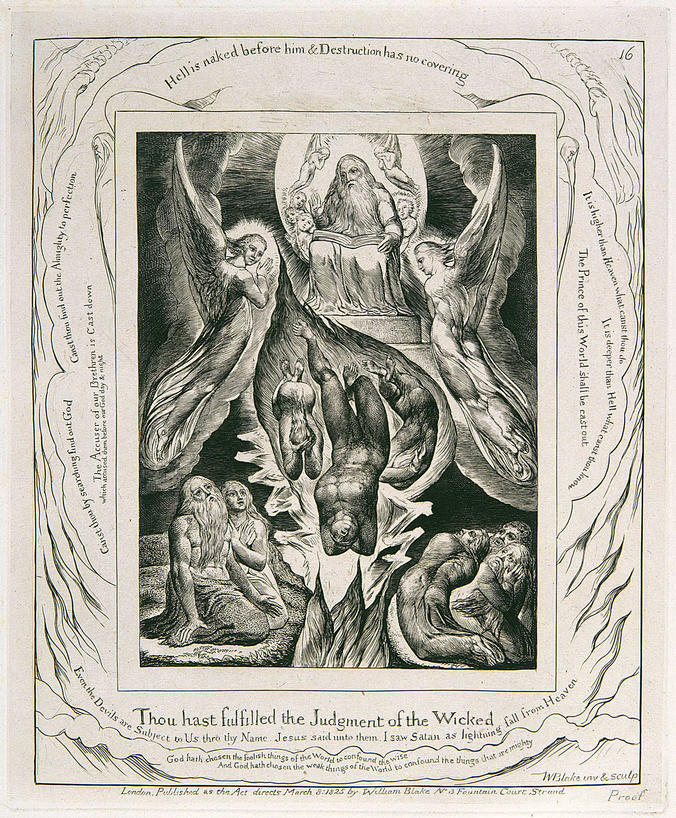 “Who has a claim against me that I must pay?
Everything under heaven belongs to me.” Job 41:11
There are many different kinds of theodicy or defenses to rebut the problem of evil. As I read the Bible I see a few different answers, but one extremely important theodicy in the Scriptures is what I shall deem the “Job Answer,” which is found in the book of Job, although a similar idea is touched upon by Paul in Romans.
Job was known as the most righteous of all the people on earth. Yet God allowed terrible things to happen to him, as part of a test to show Satan that Job was indeed as faithful and righteous as was thought.
But why? Why do bad things happen to good people? Why is it that Job, who God Himself called blameless and upright (1:8) has so many bad things happen to him?
Job’s friends gathered around him and offered various explanations. Job must have done something to deserve it, he must have erred in some way, etc, etc. Yet all of these, Job says, are wrong. He is indeed without blame, and he remains faithful. Yet despite this faith, he cannot help but complain to God. And in this defense of himself and appeal to God, he again points out that he is righteous (see Job 31).
God’s answer to this complaint is where I draw the “Job Answer.” God responds, basically, by saying “Job, you don’t know how I operate, but don’t you think it’s reasonable to conclude that I know what I’m doing?”
Is this a satisfactory answer? Can Job demand another answer? Should he?
That is often the route taken by atheists and even Christians when they investigate the problem of evil. They demand that God provide an answer they themselves find suitable. They act as though God owes them the answer, as if God cannot possibly be good unless the answer is found acceptable in their own eyes. But what does God say to that? In Job chapter 41, He says “Who has a claim against me that I must pay? Everything under heaven belongs to me.”
Is that easy? Is that the answer we Christians like to see? Not really. It would be so much easier if God just said “You know, I gave you guys freedom of will, so given your sinful nature (which you chose, by the way), wouldn’t you expect to see some pretty awful things happening?” That’s the kind of answer I find more appealing. That’s easy.
But that isn’t the answer God gave. He said “Everything belongs to me. Who must I repay?” Does that mean God is not good?
Francis Chan and Preston Sprinkle’s recent book Erasing Hell has had me reflecting on these very questions. Hell is a tough issue, and it has some serious implications for the problem of evil. In a particularly intriguing part of this book, the authors quote Scripture and follow it with a few questions. Specifically, they are reflecting on the idea that God knows who is going to hell before they themselves choose to do so. Check it out:
“What if God, desiring to show his wrath and to make known his power, has endured with much patience vessels of wrath prepared for destruction, in order to make known the riches of his glory for vessels of mercy, which he has prepared beforehand for glory?” (Rom. 9:22-23)
…What if God, as the sovereign Creator of the universe, decided to create ‘vessels of wrath prepared for destruction”? …And what if it’s His way of showing those He saves just how great His glory and mercy is? What would you do if He chose to do this? Refuse to believe in Him? Refuse to be a ‘vessel of mercy’? Does that make any sense? Would you refuse to follow him? Really? Is that wise? (p. 130, cited below)
The passage quoted is from Paul, writing to the Romans. Note how he phrases it: he starts it with what if. He’s not saying this is what God does, or that God does operate in this way, but he’s offering it as a possibility. Chan and Sprinkle continue this line of reasoning: What would we do if this is how God works? Would it make sense to rebel… to become a vessel of wrath just because we know they exist? Does it mean that God is doing wrong if this is how He operates?
Again, we turn back to Job to find the answer. God’s ways our not our own. God answers Job by listing things Job cannot do, and cannot even comprehend. ‘These things,’ God implies, ‘are outside of your comprehension… yet you expect to understand something even more incomprhensible?’ But that is not where God leaves it. He also tells us that ultimately, He will bring justice to all. Those who are now downtrodden will be lifted up, and justice will reign. How can Job respond? By repenting “in dust and ashes” (42:6).
So the “Job Answer” fits in a unique place among various defenses and theodicies for the problem of evil. Instead of using human nature and free will or a greater good to justify evil, the answer given to and by Job is that God, being good, has a reason, even if that reason is inscrutable for us. It is a response of faith.
But this does not mean the “Job Answer” is the only answer given in all of Scripture. Jesus is the ultimate answer to the problem of evil. He came and took our pain and suffering upon Himself, which in turn defeats evil ultimately and for all time. There are other Biblical answers to the problem of evil, but the answer Job gives is simple: Have faith. It does not promote an unphilosophical or unreflective faith, but points out the obvious: If we have good reasons to believe in God, and reasons which point to God as good, then we can simply trust that the apparent problem of evil is solved, ultimately, by God.
Thus, the “Job Answer” implies a second version of theodicy. Namely, that the evidence for the existence of God provides a rebutting defeater for the problem of evil. If we know that God exists and is good, then the problem of evil simply cannot be coherent.
In either case, the “Job Answer” provides a powerful, Biblical, answer to the problem of evil.
Source cited: Francis Chan and Preston Sprinkle Erasing Hell (Colorado Springs, CO: 2011, David C. Cook).
Response to an attack on this post found here (Search for “On Job.”)
SDG.
——
The preceding post is the property of J.W. Wartick (apart from citations, which are the property of their respective owners) and should not be reproduced in part or in whole without the expressed consent of the author. All content on this site is the property of J.W. Wartick and is made available for individual and personal usage. If you cite from these documents, whether for personal or professional purposes, please give appropriate citation with both the name of the author (J.W. Wartick) and a link to the original URL. This blog is protected by Creative Commons licensing. By viewing any part of this site, you are agreeing to this usage policy.
Inerrancy, Scripture, and the “Easy Way Out”
 Inerrancy, defined as simply as possible, is the Christian doctrine that the Bible is divinely inspired and without error.
But it is important to move beyond this simple definition, because people often come away with misconceptions about the doctrine. The Chicago Statement on Biblical Inerrancy explicates what evangelicals mean when they speak of inerrancy. I highly recommend that anyone interested in Inerrancy read this statement. It clears up a number of misconceptions.
A rejection of inerrancy is frequently due to a misunderstanding of what the doctrine means. Here are some common misreadings of the doctrine:
1) Inerrancy does not mean that there will be no discrepancies between Gospel accounts. These discrepancies, based upon an interpretation given by one who affirms inerrancy, are not seen as errors but as the different authors expressing their biographical accounts in different ways. Unlike modern conceptions that a quoted phrases must be exact, historians in the first century felt at their liberty to rearrange temporal events to better illustrate a common theme. The Gospels can be seen to utilize several methods of ancient biographies as they emphasize certain aspects of Christ’s life.
2) Inerrancy does not mean that there are no cultural or personal aspects to Scripture. An example of this can be seen in the geocentrism in the Bible. That there is geocentrism in the Bible does not undermine inerrancy. Inerrancy is the belief that what the Bible teaches is without error. The Bible does not teach geocentrism, but features it as part of the background beliefs of the cultural context of the authors. The authors have imported their culture into expressing God’s word, but that does not undermine the teachings.
3) Inerrancy does not mean God dictated the Bible word-for-word. This point ties into 2: God used human authors and gave them the leeway to write within their cultural background.
Those who reject inerrancy have taken an easy way out. Rather than investigating the issue of historical grammatical interpretation of Scripture or looking into what inerrancy means, they find what is perceived as an “error” in Scripture and reject the doctrine. The misconceptions outlined above are just a few of the errors made by people who do not investigate the issue seriously enough. Rather than coming upon a difficulty in the text and rejecting inerrancy, I urge readers to explore the difficulty, see what people have to say about it. I’ve found on more than one occasion that something I thought could be an error was explained by a cultural tradition or misreading of the text.
Finally, I’d like to address something that might come up to those reading through this. Often atheists object to the doctrine of inerrancy. I’ve run into this in my own personal discussions with those outside of the faith. They say things like “Do you really think a book written by a bunch of humans is without error?”
Well, if the Christian God exists, then the Bible is not just a book written by a bunch of humans. If God exists, there is no reason to think that God would be incapable of guiding His people to write a book to reveal Himself in a way that allows them to use their historical and cultural contexts without transmitting error in teaching. It would take a very powerful argument to convince me that an omnipotent deity would be unable to do this.
Image credit: http://commons.wikimedia.org/wiki/File:Bibbia_con_rosa.jpg
SDG.
——
The preceding post is the property of J.W. Wartick (apart from citations, which are the property of their respective owners) and should not be reproduced in part or in whole without the expressed consent of the author. All content on this site is the property of J.W. Wartick and is made available for individual and personal usage. If you cite from these documents, whether for personal or professional purposes, please give appropriate citation with both the name of the author (J.W. Wartick) and a link to the original URL. This blog is protected by Creative Commons licensing. By viewing any part of this site, you are agreeing to this usage policy.
Quick Links: Craig on the Ontological Argument
A common objection to the ontological argument for the existence of God is that existence is not a property. People often misunderstand that modern versions of the argument don’t rely on making existence a property, but upon the idea that necessary existence is greater than contingent existence. William Lane Craig has some clarifying comments on the ontological argument in response to two questions regarding this confusion: here.
Reading “Miracle of Theism” by J.L. Mackie: Introduction
This post will serve as a base for links to the rest of the chapters as I read them:
One reader of my blog recently challenged me to take on the heady atheists. Rather than focusing on the kind of basic fallacies found in various atheistic objections to belief, he suggested I should devote some of my philosophical energy to rebutting the claims of atheists who should actually be taken seriously. I took the advice to heart, acquired copies of J.L. Mackie’s Miracle of Theism and Graham Oppy’s Arguing About Gods. I’ve started reading Mackie’s book. I will be posting thoughts as I continue to read through it, and tie it into an extended critique of his arguments. For today, I’ll discuss only the introduction.
I found a few areas of agreement. Mackie noted that a cumulative case would not point to certainty, but could overcome objections to individual arguments. I agree with him here. I tend to favor a “cumulative case” type of argument, though I think that some theistic arguments could easily stand on their own to prove general aspects of theism (like a first cause).
I find a bit of difficulty with Mackie’s rather dismissive attitude towards faith (p. 4-6). As tends to be the case when faith is discussed by non-theists, he just brought up arguments which he believes shows that reason must be the basis for belief, and then moved on. But I’m not totally convinced that faith can be tossed aside as it is so often. First, I think of Plantinga’s proper function account and I think that while it is ultimately based on reason, it allows for one to be justified in belief through faith. Second, I’m not persuaded that faith cannot work as a kind of reason or discovery of reality. Faith, as it were, seems to account for many of our beliefs (other minds, for example?). So I think while I tend to be an evidentialist when it comes to these things, I am skeptical of a simple dismissal of faith. If anyone could help me with these points, I’d appreciate it.
Mackie discussed the possibility of naturalistic explanations of religion. I’m continually perplexed by the pervasiveness of this idea.Why should the origin of a belief undermine its truth? This would only work if the origin would serve to discredit the belief itself (as in Plantinga’s Evolutionary Argument Against Naturalism).
And I’ve been similarly unconvinced when it comes to others who argue that an account of how religious came to be would undermine the belief. I know Plantinga gives the idea more credit than I: in Warranted Christian Belief, I think, I recall him arguing extensively against naturalistic accounts. But I don’t see them as much of a threat, and I admit I groaned a bit when Mackie started going in that direction. It always seems like the kind of “hidden weapon” atheists have: “We have an evolutionary account of religion!” Of course whether that is true or not, I don’t see it as very persuasive.
SDG.
——
The preceding post is the property of J.W. Wartick (apart from citations, which are the property of their respective owners) and should not be reproduced in part or in whole without the expressed consent of the author. All content on this site is the property of J.W. Wartick and is made available for individual and personal usage. If you cite from these documents, whether for personal or professional purposes, please give appropriate citation with both the name of the author (J.W. Wartick) and a link to the original URL. This blog is protected by Creative Commons licensing. By viewing any part of this site, you are agreeing to this usage policy.
Letter to a free thinker.
Dear Free Thinker,
What does it mean to think freely?
Does it mean I must be an atheist?
You tell me there is no evidence for the existence of God.
You say that there is more evidence for unicorns than the object of my worship.
You tell me that I’m an atheist too.
Why do you say “we’re all atheists” when I believe in God?
You tell me “That’s just your interpretation”; “You’re wrong”; “I’m right.”
I reject science, according to you. I don’t know how to open my eyes. I’m blind, foolish, and stubborn.
You say that I’m delusional, and that my belief is a disease.
I have a final question:
Am I allowed to think freely…
Or is it just you?
Sincerely,
J.W. Wartick
——
The preceding post is the property of J.W. Wartick (apart from citations, which are the property of their respective owners) and should not be reproduced in part or in whole without the expressed consent of the author. All content on this site is the property of J.W. Wartick and is made available for individual and personal usage. If you cite from these documents, whether for personal or professional purposes, please give appropriate citation with both the name of the author (J.W. Wartick) and a link to the original URL. This blog is protected by Creative Commons licensing. By viewing any part of this site, you are agreeing to this usage policy.
Atheists and Unicorns: Emotional Appeal

 You may have heard it before. “I’m an a-unicornist, just like I’m an atheist.” “I don’t believe in unicorns, nor do I believe in God.” “There’s as much evidence for unicorns as for God.”
What are these statements supposed to show?
Whether intended or not, these kinds of statements are simply emotional appeals. The atheist is attempting to psychologically discredit Christianity without ever engaging any kind of logical reasoning.
Think about it, when you hear these phrases, what rational process goes on? There is no rational link between unicorns and theism. There is no reason to correlate the two.
Theists could just as easily use psychological appeals, but there is no need to do so. Such pejorative language doesn’t serve to foster discussion. It’s preaching to the choir. It is useful only for increasing dogmatism. So why do atheists use it so frequently?
Again, the key is to note that those who use this phrase are not doing so in the interest of academic honesty or discussion, but in the interest of psychologically weighting the discussion in their favor before it even begins. Rather than looking at the evidence, they dismiss it.
But what about another common use of the unicorn within atheism? Namely “I can’t prove there is no God, just like I can’t prove there are no unicorns.”
While this initially seems plausible, it only remains plausible if one assumes positivism. We can actually prove there is no God. If the Christian’s account of God was found to be incoherent, then God would not exist. It would, in fact, be impossible for God to exist were his nature contradictory.
So even in this use of the phrase we find that the atheist is committed to a dogmatic assumption of positivism. By assuming that God can only be disproven by empirical evidence, they uncritically advance a philosophical enterprise which has largely been abandoned within modern philosophy.
A word of advice: focus on the arguments at hand, not pejorative language.
SDG.
——
The preceding post is the property of J.W. Wartick (apart from citations, which are the property of their respective owners) and should not be reproduced in part or in whole without the expressed consent of the author. All content on this site is the property of J.W. Wartick and is made available for individual and personal usage. If you cite from these documents, whether for personal or professional purposes, please give appropriate citation with both the name of the author (J.W. Wartick) and a link to the original URL. This blog is protected by Creative Commons licensing. By viewing any part of this site, you are agreeing to this usage policy.
Immortal, Invisible: Do Christians believe something crazy?

 I was singing a hymn in church today, one of my favorites: “Immortal, Invisible”; also known as “Immortal, Invisible God Only Wise”
Looking through the lyrics I could see objections to Christianity arise:
“Immortal, invisible, God only wise… Unresting, unhasting, and silent as light… ‘Tis only the splendour of light that hides thee.”
I could see the objection that would be raised almost instantly: Why do Christians believe in something they cannot see? Are Christians crazy?
Simple answer: No, we all believe in invisible things, whether we know it or not.
Long answer: Think of all the things we cannot see that we believe in, and judge for yourself.
1) We believe in the reality of others’ thoughts. This cannot be observed. Although we can observe, in some sense, the brain functioning, we cannot literally see others’ thoughts.
2) Other minds. This one is very similar to the previous one; we believe other people have minds (not to beg the question against materialist–this could be reworded to say we believe other people have brains which trigger phenomena).
3) The ‘real world.’ It is impossible to prove that we are not brains-in-vats. We cannot prove that everything we know is not being projected into our minds by some outside source. Yet we are justified in believing in a world outside of ourselves.
4) Causation. We cannot “see” causation; we can only see its effects. While some philosophers (Hume, for example) deny causation; we are justified in believing that events can cause each other.
5) Gravity. I can’t “see” gravity, I can only infer that it’s there based upon its effects and/or measurements from instruments which don’t show me pictures of gravity.
6) Dinosaurs lived. We have not observed living, breathing dinosaurs. Yet we feel are within our epistemic rights believing that, at one time, dinosaurs walked on the earth. But think about it: we’ve never seen a dinosaur–we’ve only seen its bones. What allows us to think that those bones were once covered with flesh and walking around?
To deny the above examples (which could be multiplied continually) rightly seem ludicrous, yet they are based on similar reasoning as those who object to God’s existence simply because we cannot see God. Think about it: the inference is “I cannot see God, therefore, God does not exist.” Yet the same types of argument would dispute belief for any of the above examples.
These things are known only by their effects. But the Christian believes God is known by His effects as well. God responds to prayer; He keeps the universe in existence; He causes miracles; He caused the universe. Not only that, but we have philosophical arguments which justify belief in God. The case for the existence of God does not rest on whether we can “see” Him or not.
Those who ridicule Christians for their belief in a God who cannot be seen but by His effects may want to reevaluate their arguments; as with most fallacious arguments, they either prove too much (all things we can’t see don’t exist) or nothing at all (the argument is false).
SDG.
——
The preceding post is the property of J.W. Wartick (apart from citations, which are the property of their respective owners) and should not be reproduced in part or in whole without the expressed consent of the author. All content on this site is the property of J.W. Wartick and is made available for individual and personal usage. If you cite from these documents, whether for personal or professional purposes, please give appropriate citation with both the name of the author (J.W. Wartick) and a link to the original URL. This blog is protected by Creative Commons licensing. By viewing any part of this site, you are agreeing to this usage policy.

 J.W. Wartick - Reconstructing Faith

