Book Reviews
Book Review: “The Way of Dante: Going Through Hell, Purgatory, and Heaven with C.S. Lewis, Dorothy L. Sayers, and Charles Williams” by Richard Hughes Gibson
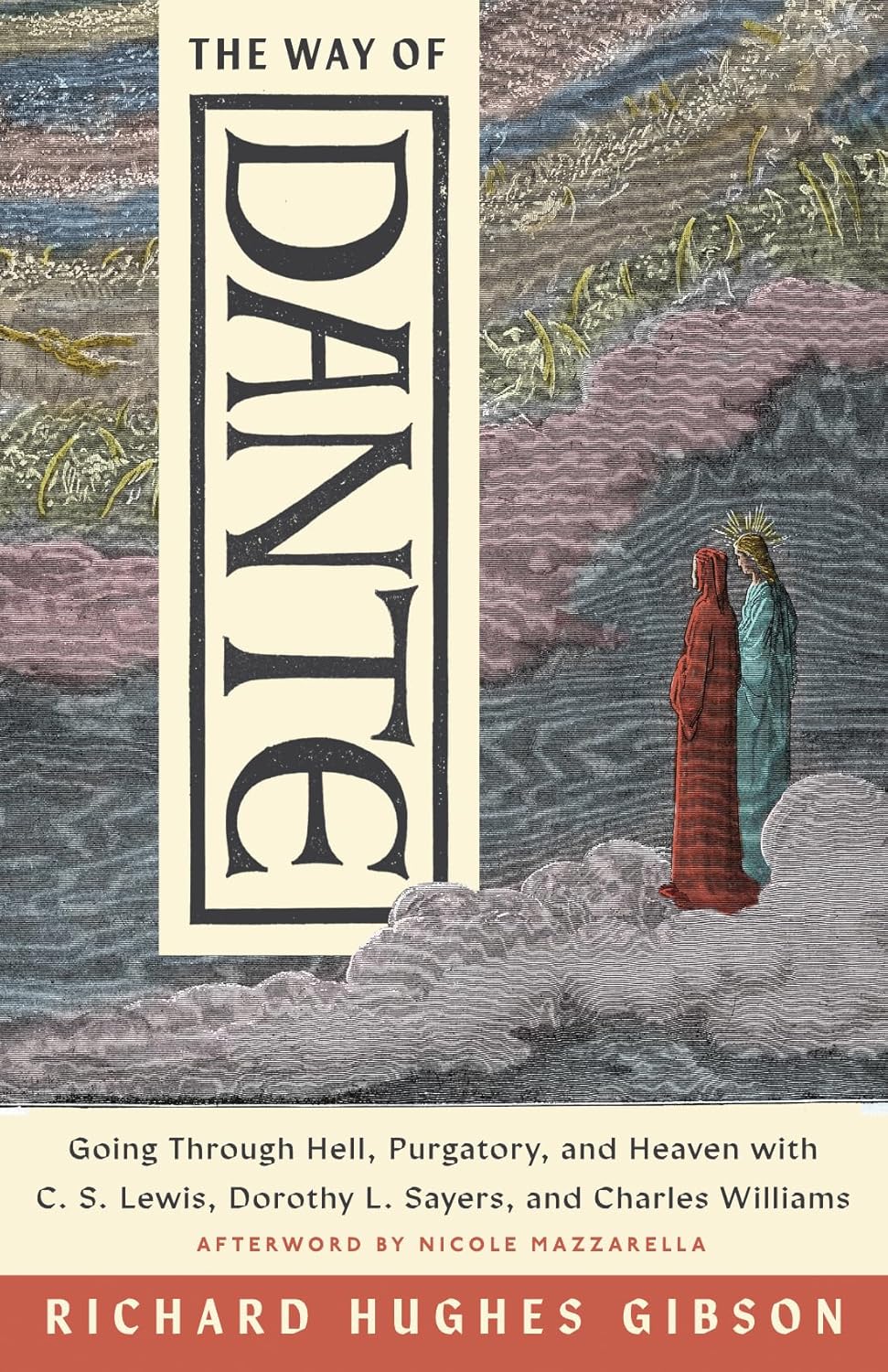
The Way of Dante explores how Dante’s works influenced C.S. Lewis, Dorothy L. Sayers, and Charles Williams. Richard Hughes Gibson leads readers through an introduction to these thinkers, followed by a number of chapters highlighting each and how Dante inspired them.
Gibson leads readers across a wide array of topics related to these authors. The topics relate directly to the notions of hell, purgatory, and heaven (as noted in the book’s subtitle). Readers are presented with the writers’ wide array of thoughts and interactions on these topics, from reflections on the concept of hell to how a concept of the glory of heaven might be most adequately described.
By way of critique, I would note that I think the book is a bit in search of its audience. Gibson seems to assume at least some amount of background knowledge not just of Dante’s works but also of scholarship related to all of the authors mentioned. This assumption of background knowledge allows Gibson to dive into deeper themes more quickly, but can leave the reader feeling a bit lost without guidance. For example, a whole chapter dedicated to allegory notes not just the use of allegory in Dante, but also interplay between authors Sayers and Lewis on the topic of allegory. But readers are mostly left to their own devices to know the finer points of what the debate is even about. Also, because the book is exploring the interactions between three major Christian thinkers and Dante, there’s a necessary brevity to the points Gibson makes. But this brevity surely makes the book less useful to the scholar (the one with all the relevant background necessary to understand or know all the references being made) who may be looking for deeper insights. In short, the book leaves readers to dive into the deep end, sink or swim.
The Way of Dante touches on a lot of interesting themes. Readers will find quite a bit to digest here, though it can feel disorienting at times with the way the information is presented.
SDG.
Book Review: “Worth Doing: Fallenness, Finitude, and Work in the Real World” by W. David Buschart & Ryan Tafilowski
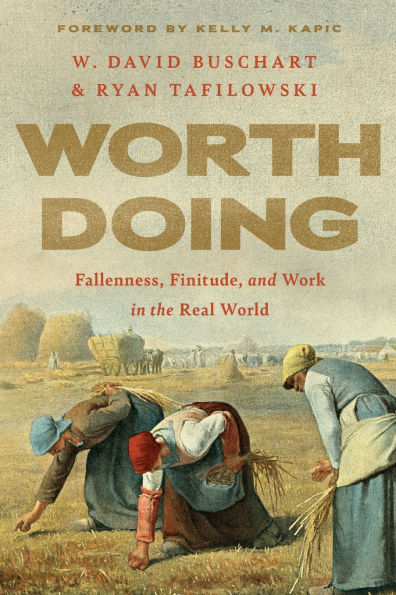
Worth Doing by W. David Buschart and Ryan Tafilowski explores the concept of “work in the real world” through a lens of fallenness and finitude.
The authors first introduce the concepts of finitude and fallenness, noting that their goal is to provide a theology of work for the “real world.” They use a few intriguing examples of how perspective can change attitudes related to workers. One is a comparison of the thoughts of both construction workers and office workers about the other–wishing they had what the other had not.
There are a few things that are notable for their absence. For example, there is little-to-no linkage of the concept of work to the capitalist system, nor are there critiques of unfettered capitalism and the exploitation of the worker. This, despite how neatly such a topic fits into the exploration. What could be more fallen than turning finite workers into mere numbers or cogs in the machine? The subject index, for example, doesn’t even have capitalism as a reference, while far more general terms (economics) or hyper-specific concepts (gig economy) get entries. Is it because there’s an avoidance of what could be a controversial critique of capitalism from a theological standpoint? I don’t know. What I do know is that the whole book seems to have such a topic looming in the background. When questions about how certain theologies of work might lead to the oppression of workers are right there and even being asked, the conspicuous absence of how capitalism can set up such an exploitation is all the more alarming.
The section on the goodness of work is another area where the critique of exploitative systems is notably so subtle as to be absent. Despite commenting on the goodness of work, it does so alongside the insights form Qoheleth (the teacher of Ecclesiastes). Even as discussing how everything is meaningless under the sun, the need for and even goodness of the harvest can be emphasized. Turning to the very end of the book, the authors urge readers to “still make hay while the sun rises” for creation is growning in need of redemption and renewal, but we must “come to terms with the kinds of creatures we are…” and that work, while “constrained… by finitude and haunted as it is by the curse, work is nonetheless a good gift from the good God and therefore worth doing” (195). I appreciate this ending note, though linked as it is with some of the discussion on vocation (see below) and the lack of critique of exploitative systems, it can feel a little empty or trite.
One section (190-193) has a scintillating discussion of the concept of “vocation” and how such a concept could be “easily put to exploitative use” through the notion of “doing what you love” (190). The authors call this a kind of “work mythology” that can use an “agency-dignity-power narrative” that “works well for those whose work is creative and satisfying” but perhaps not so much for those whose work is “degrading or unfulfilling” (190-192). Many scholars are referenced here–but one of the major thinkers on the concept of vocation, Martin Luther, is not. While the authors turn back on the concept of vocation and find some benefits, they do so in an explicitly theological framework that essentially sidelines the concept of work rather than integrating it into the concept of work. Here, Luther’s insights on the topic of vocation feel almost painfully absent. While the authors simply say that people were made for communion and union in Jesus Christ (193) and that “it is this; it is not a job or career or even a vocation” as the one thing we should be passionate about (ibid). Yet closing the discussion of vocation with this, moments after noting the lack of fulfillment that might be found in “degrading or unfulfilling” work reads almost as if the entire foregoing discussion on work and the “mythologies” involved in it is solved by a kind of “thoughts and prayers” response. Well, it’s one thing to have a job that we might feel is degrading; but worry not, our true fulfillment is found in union with Christ! Saying this is one thing; living it is another. And living it requires, ironically (based on the emphasis on “real world” in the subtitle), a more real world approach that has God entering into the world, entering into our suffering, and entering into our vocations.
The concepts of finitude and fallenness work well alongside discussions of work, and Buschart and Tafilowski are to be commended for bringing these insights alongside the concept of work. They do this alongside also finding the goodness of work. It’s a fine balance that the authors mostly navigate well (though, see above). Readers looking to start a theological exploration of work will certainly find plenty of depth to think on here.
Worth Doing is, well, worth reading if you’re interested exploring the intersection of theology and work. Readers of this review will, perhaps, think my thoughts are largely negative. But where I’m offering critique, I’m seeking more. There’s a wealth of information and topics to mine here, I just wish that some of them were turned to more incisive points made against what seems to be invisible problems lurking in the background. The book provoked quite a bit of thinking for me, and I believe it will for other readers, as well.
SDG.
Book Review: “Markus Barth: His Life & Legacy” by Mark R. Lindsay
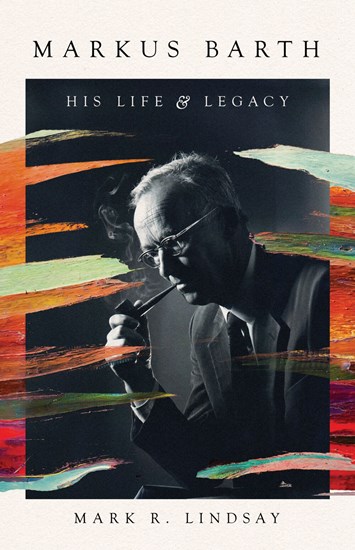
Markus Barth, son of the well-known theologian Karl Barth, was also a theologian. He is less-discussed and his legacy less well-established, but Mark R. Lindsay seeks to offer some corrective to that in Markus Barth: His Life & Legacy.
Lindsay offers this study in a work that is biographically and chronologically organized, but splits the focus with a look at Markus Barth’s theology and thought. What’s especially interesting is how Barth got caught up in controversies in Baptist and Reformed theology at his time, many of which touched upon events in the “real world” (read: life outside academic theology). For example, he criticized adoption of new Sunday School curricula as accommodation to coddling of children. While he didn’t use that very phrase, he was taken as being hyper-critical of children’s education in church, rather than the actual point he was making about integrating children into the life of the (adult) church as well. At other times, his views got him in hot water about various topics related to the Cold War (such as a divided Germany).
Barth also united his ethical-theological thought with the real world. His book, Acquittal by Resurrection argued that Christian ethical perspectives must be grounded in the Resurrection life of the church. This was doubly controversial due to his reliance upon the actual historicity of the Resurrection and the way he saw societal justice as being caught up in the theological narrative of the Bible (see 166-167).
One topic that occupied Barth at multiple points in his life was the Eucharist, which he taught in an anti-Sacramental way. He wrote on it as early as 1945, but returned to the topic in 1980. Then, he argued that because the Eucharist was a remembrance, it couldn’t be a Sacrament meant to be repeated. Despite his claim to go back to Scripture here, it is intriguing that Christ himself commanded his followers to “do this”–suggesting repetitive, Sacramental nature.[1]
Markus Barth: His Life & Legacy offers a solid look at the theology of Markus Barth. It’s unlikely the younger Barth will step out of the shadow of his father any time soon, but Lindsay offers some reasons to think that his theology should be explored as well. Whatever the topic, Lindsay offers a number of intriguing insights from Barth’s theology alongside contemporary events. It is a fascinating read that deserves careful study.
[1] I say this, of course, as a Lutheran with all the biases that entails. But I am admittedly baffled by Barth’s arguments here.
All Links to Amazon are Affiliates
Links
Be sure to check out the page for this site on Facebook!
Book Reviews– There are plenty more book reviews to read! Read like crazy! (Scroll down for more, and click at bottom for even more!)
SDG.
——
The preceding post is the property of J.W. Wartick (apart from quotations, which are the property of their respective owners, and works of art as credited; images are often freely available to the public and J.W. Wartick makes no claims of owning rights to the images unless he makes that explicit) and should not be reproduced in part or in whole without the expressed consent of the author. All content on this site is the property of J.W. Wartick and is made available for individual and personal usage. If you cite from these documents, whether for personal or professional purposes, please give appropriate citation with both the name of the author (J.W. Wartick) and a link to the original URL. If you’d like to repost a post, you may do so, provided you show less than half of the original post on your own site and link to the original post for the rest. You must also appropriately cite the post as noted above. This blog is protected by Creative Commons licensing. By viewing any part of this site, you are agreeing to this usage policy.
Book Review: “Triune Relationality: A Trinitarian Response to Islamic Monotheism” by Sherene Nicholas Khouri
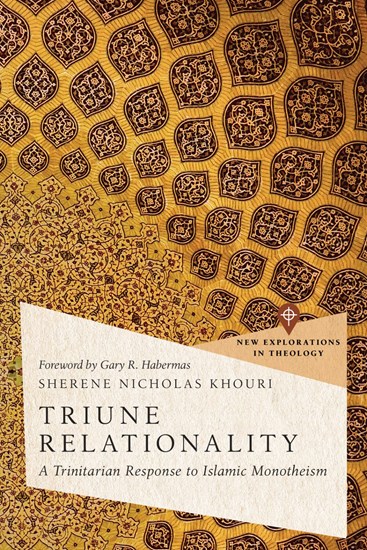
Triune Relationality: A Trinitarian Response to Islamic Monotheism is more than a modern work of Trinitarian theology in conversation with Islam. Khouri brings centuries of historical conversations on this topic to light in a survey of the history of Trinitarian and anti-Trinitarian arguments between these two faiths. This, alongside an appeal to modern analytic theology and the argument that theology based upon the Greatest Possible Being must inherently be relational.
The first four chapters of the book work to survey the history of the Muslim-Christian dialogue on Christianity. Modern tools are brought to this analysis, but it also provides excellent background on the arguments involved. It is only in the final chapter that Khouri turns fully to modern Christian answers to Muslim anti-Trinitarian apologetics.
Any topic of this specificity requires engagement with seemingly obscure points, but readers interested in the topic will find it a wealth of information. Where mileage will vary is on how much readers adhere to the use of analytic theology and whether they believe that arguments for the Greatest Possible Being have a place in theology.
Triune Relationality is a challenging, informative read. People interested in Trinitarian theology and, specifically, how it might come into conversation with Muslim apologetics for absolute monotheism should check it out.
All Links to Amazon are Affiliates
Links
Be sure to check out the page for this site on Facebook!
Book Reviews– There are plenty more book reviews to read! Read like crazy! (Scroll down for more, and click at bottom for even more!)
SDG.
——
The preceding post is the property of J.W. Wartick (apart from quotations, which are the property of their respective owners, and works of art as credited; images are often freely available to the public and J.W. Wartick makes no claims of owning rights to the images unless he makes that explicit) and should not be reproduced in part or in whole without the expressed consent of the author. All content on this site is the property of J.W. Wartick and is made available for individual and personal usage. If you cite from these documents, whether for personal or professional purposes, please give appropriate citation with both the name of the author (J.W. Wartick) and a link to the original URL. If you’d like to repost a post, you may do so, provided you show less than half of the original post on your own site and link to the original post for the rest. You must also appropriately cite the post as noted above. This blog is protected by Creative Commons licensing. By viewing any part of this site, you are agreeing to this usage policy.
Book Review: “Walking Through Deconstruction: How to Be a Companion in a Crisis of Faith” by Ian Harper
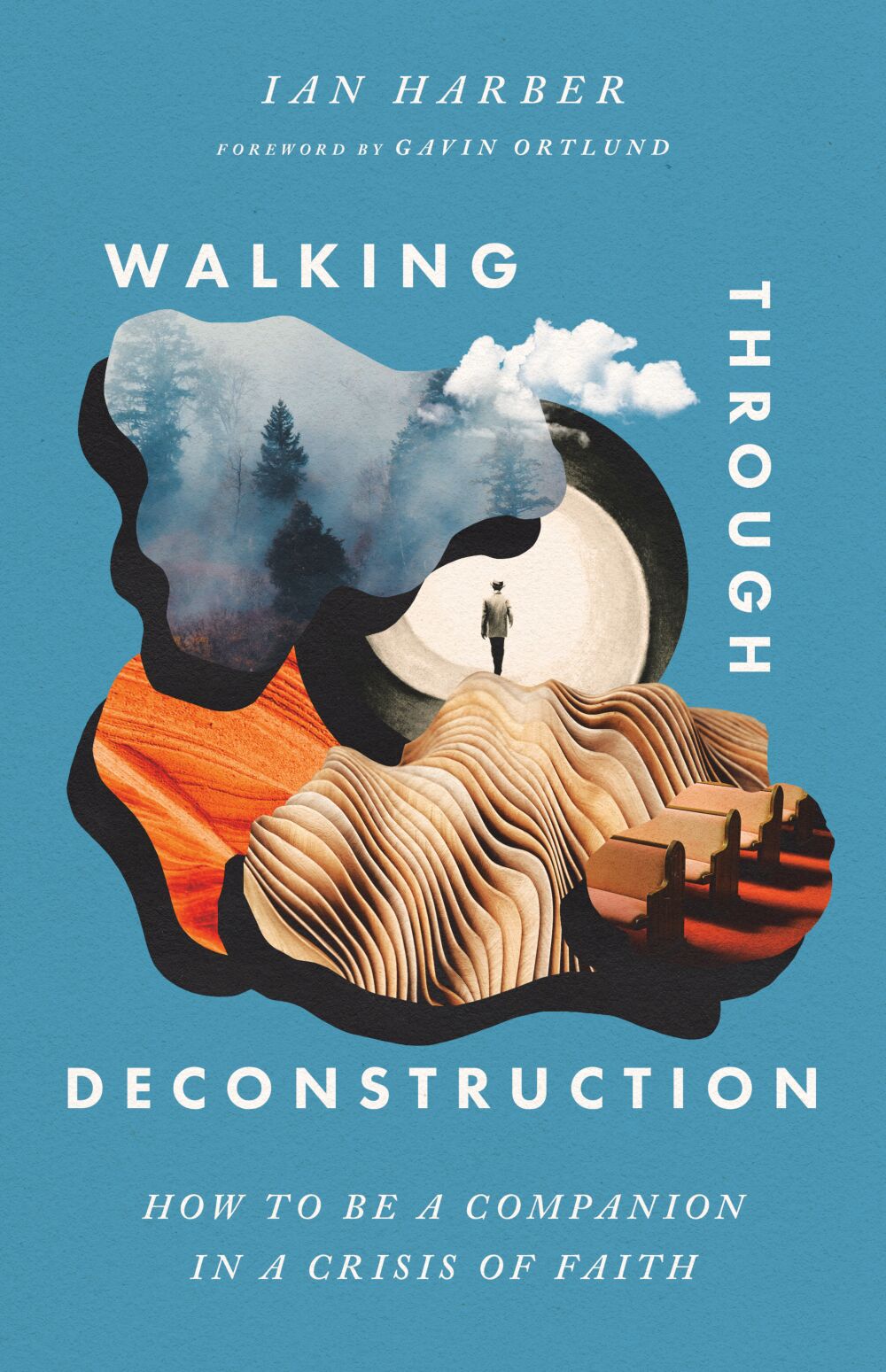
Walking Through Deconstrution: How to Be a Companion in a Crisis of Faith by Ian Harper is a book not so much for people who are deconstructing but for Christians who know someone who is deconstructing and are struggling to know how to be a friend along the way. I read it as a Christian who has deconstructed (and, in case you have seen the tagline of this site, reconstructed) his faith. I think I can give at least some perspective to the contents from an insider and interested party.
I have to admit I had some healthy skepticism going into this book. The author has written for The Gospel Coalition, an evangelical reformed ministry that leans conservative [1]. There’s a Foreword from Gavin Ortlund, who is largely seen as an apologist who engages with and against… other Christians. I won’t apologize for that skepticism, but I am happy to report it was mostly misplaced.
Harper clearly acknowledges the many reasons why people deconstruct, while also making note of the trite, oft-wrong reasons that people offer to explain why other people deconstruct. Too often, Christians say things that suggest people only question Christianity because they want to lead a sinful lifestyle, or they downplay the real problems within Christianity by saying that the sins of individual people don’t make the central message untrue. You won’t find that in this book. Instead, Harper carefully notes that labels such as “good” or “bad” deconstruction–implying that a journey of faith can be categorized as such–are unhelpful. Additionally, he notes the many, many reasons people deconstruct and does so with an eye towards understanding rather than judging.
None of this is to say that Harper doesn’t still approach the problem from within a Reformed evangelical background. He clearly states that he believes human hearts are inherently sinful, and that deconstruction can be one thing that stems from that–despite having often good or at least understandable motivations (78-79). Another problem he cites is the need for individualism in our society (80ff). He notes that therapy “can” be a good thing, but that total reliance on therapeutic speech and activity can misplace true healing (83ff). This latter point is one that demonstrates Harper is attempting to walk along a very fine line. He doesn’t seem to want to say therapy is bad–and indeed says the opposite at times–but he also seems to want to say that we over-rely upon therapy and self-help and sees that therapy can become a replacement for religion (the latter point he makes explicit on p84). Intriguingly, he also notes that reliance on therapy alone can highlight class divisions as seeing a therapist is often a position of privilege (85). The over-reliance on devices that make promises about how we can now live is another factor Harper sees as contributing to deconstruction (88-89). In all of this, though, Harper seems to be seeking to make a point, which he ultimately brings home at the end of the chapter–that we humans have needs that we will meet in whatever way is available to us, and he sees the church as one way to meet some of those needs that should not be ignored (91).
The second part of the book focuses on Harper’s look at what it might mean to reconstruct faith and to assist in doing so as one of those “companion(s) in a crisis of faith” noted in the subtitle. Mileage on this section will vary wildly depending upon what readers themselves are looking to do and what their background beliefs are. Harper is again coming from a Reformed background, so his advice makes the most sense within that context. Even here, however, he makes several points that could carry beyond that specific set of beliefs. For example, he frames questioning of beliefs of Christianity as “what it feels like” vs. “what it is.” The former, he notes, people often see people’s questioning of faith as dipping into heresy when they are deconstructing and a goal of reconstructing towards orthodoxy. However, reality as he sees it is more aligned with deconstruction moving through beliefs that are unimportant to those that are important, urgent, or core, and then building back up from there (138-140). People move too quickly, sometimes, to judge others for heresy when it might be something else like ignorance or an attempt to reframe and discover core truths (ibid, cf also 141).
Walking Through Deconstruction isn’t perfect. No book is. But for a book for Christians to give other Christians about deconstruction, it is a solid choice. Unlike many books in this field that try to immediately say deconstructing Christians are trying to lead sinful lives or don’t want to conform to rules, Harper acknowledges the many reasons that people deconstruct and offers a way forward that isn’t entirely focused on trying to reconvert someone. Saying “you can do worse” is, at this point, honestly a good endorsement. There aren’t enough books that follow this path–trying to navigate both the realities of reasons why people deconstruct and still offer a way forward for staying faithful and being a faithful friend in that space. If nothing else, it is a very interesting and sometimes challenging read. Recommended reading.
Notes
[1] It’s worth noting that The Gospel Coalition has, at least, gone on record to push back against some far-right leaning Christians who have claimed, for example, that empathy is sinful. See, for example, the article “The Godliness of Empathy.” I would still take issues with some of the points made here, but this is a far cry from those claiming that empathy is somehow the path to sinful acceptance of anything.
All Links to Amazon are Affiliates
Links
Be sure to check out the page for this site on Facebook!
Book Reviews– There are plenty more book reviews to read! Read like crazy! (Scroll down for more, and click at bottom for even more!)
SDG.
——
The preceding post is the property of J.W. Wartick (apart from quotations, which are the property of their respective owners, and works of art as credited; images are often freely available to the public and J.W. Wartick makes no claims of owning rights to the images unless he makes that explicit) and should not be reproduced in part or in whole without the expressed consent of the author. All content on this site is the property of J.W. Wartick and is made available for individual and personal usage. If you cite from these documents, whether for personal or professional purposes, please give appropriate citation with both the name of the author (J.W. Wartick) and a link to the original URL. If you’d like to repost a post, you may do so, provided you show less than half of the original post on your own site and link to the original post for the rest. You must also appropriately cite the post as noted above. This blog is protected by Creative Commons licensing. By viewing any part of this site, you are agreeing to this usage policy.
Book Review: “The Pursuit of Safety: A Theology of Danger, Risk, and Security” by Jeremy Lundgren
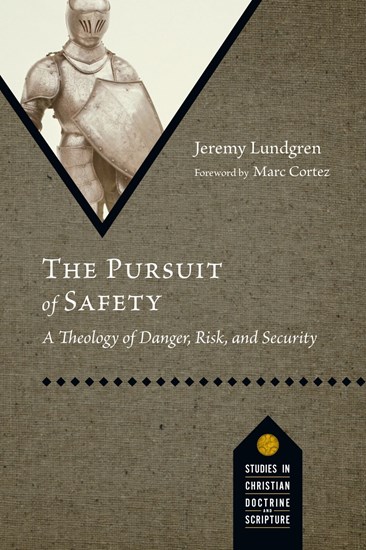
The Pursuit of Safety: A Theology of Danger, Risk, and Security by Jeremy Lundgren invites readers to delve deeply into concepts that seem quite simple on the surface–safety, protection, risk, security–and realize there is much more to these topics than might first seem obvious.
First, Lundgren dives into the concept of safety. What does it mean to have safety? What signs point us to feeling safe? Then, he goes through ways to analyze risk. Humanity has viewed risk differently at different points in history. Things that used to be risky are much “safer” now, but new risks have been introduced to deal with them. For example, travel across a continent is much safer than it used to be in any number of ways, but making such travel safe has introduced not just the risk of automobile accidents, but also has impacted the climate in negative ways. Humans don’t often realize the risks they are introducing while pursuing safety. These sections were insightful in many ways and certainly led to quite a bit of thought-provoking reflection later.
Next, Lundgren looks at ways humans have sought to avoid harm. Risk mitigation with the goal of zero accidents, for example, is pursuit of a goal that is both impossible and perhaps causes harms outside of safety that might not be worth the goal itself. The way we idolize technology looms large here, along with the many, many ways technology has actually made humanity open to new risks. Finally, Lundgren reflects on Christian discipleship and what it can mean to live as a Christian in a fallen, unsafe world. This last section includes the concepts of seeking to share news about Christ and what risks discipleship might lead to in the world.
One thing I thought was especially well done in the book was Lundgren’s bringing home of the realization that seeking safety does not always yield safety, and that mitigating risks can often lead to additional risks. Lundgren briefly cites Bonhoeffer in his discussion of discipleship and safety, but I wish he had gone further. Bonhoeffer has some fascinating words reflecting on peace and safety. He wrote that “peace must be dared” and refused to link peace with lack of bodily harm. I think this would have played well into Lundgren’s overall thesis.
The Pursuit of Safety rewards careful reading and reflection. Lundgren has written a formidable look at the concepts of safety and risk in Christian life, and it’s one that I think deserves serious study.
All Links to Amazon are Affiliates
Links
Be sure to check out the page for this site on Facebook!
Book Reviews– There are plenty more book reviews to read! Read like crazy! (Scroll down for more, and click at bottom for even more!)
SDG.
——
The preceding post is the property of J.W. Wartick (apart from quotations, which are the property of their respective owners, and works of art as credited; images are often freely available to the public and J.W. Wartick makes no claims of owning rights to the images unless he makes that explicit) and should not be reproduced in part or in whole without the expressed consent of the author. All content on this site is the property of J.W. Wartick and is made available for individual and personal usage. If you cite from these documents, whether for personal or professional purposes, please give appropriate citation with both the name of the author (J.W. Wartick) and a link to the original URL. If you’d like to repost a post, you may do so, provided you show less than half of the original post on your own site and link to the original post for the rest. You must also appropriately cite the post as noted above. This blog is protected by Creative Commons licensing. By viewing any part of this site, you are agreeing to this usage policy.
Book Review: “The New Testament in Color: A Multiethnic Bible Commentary”
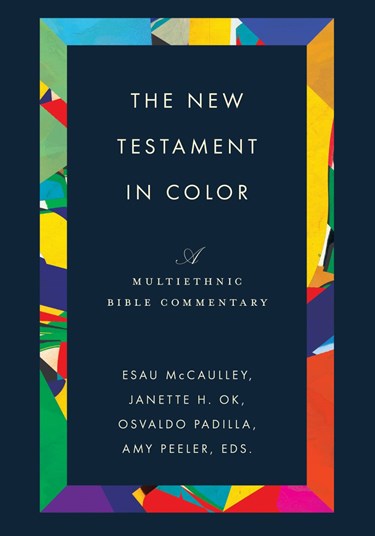
The New Testament in Color: A Multiethnic Bible Commentary is an attempt to bring together people from many different backgrounds to offer commentary on the New Testament.
After an introduction, readers get essays on African American, Asian American, Hispanic, Turtle Island, and Majority-Culture biblical interpretation. Then, the book launches into individual authors offering commentaries on each book of the New Testament. Interspersed are a few selected essays on gender in the New Testament, resources for the mental health of the oppressed in the NT, multilingualism, and immigrants in the Kingdom of God.
The commentaries on individual books of the Bible are usually close to chapter-by-chapter, with authors seemingly getting a good amount of leeway with how focused they ought to be verse-by-verse. The format lends itself to deeper discussion of individual topics each author wants to write about, but makes it a bit less useful if one is looking specifically for a verse-by-verse commentary.
The commentary itself is consistently excellent and thought-provoking. I recall especially one moment while reading the commentary on Luke in which the author, Diane G. Chen, whose parents are Chinese, reflected on the passage about treasures in heaven (Luke 12:13-34). Chen wrote about her parents teaching her to save, live within her means, and how to balance that with the concern of a safety net turning into worldliness and power. Time and again insights are offered into the Bible that spring from the cultural traditions of the authors included. The contributors hail from all over the world, with many different background represented.
There are a number of ways a commentary like this could have been formatted. I think about the series of Reformation Commentaries in which individual verses or sections are given comments from multiple different Reformers. I’m glad the editors chose a mode which allowed the authors to give running commentary on entire books of the Bible as it allows readers more insight into the thoughts and breadth of ideas of each individual author.
The New Testament in Color serves as a fantastic resource and, frankly, a fascinating read. I highly recommend it for those interested in diving deeply into what the Bible is telling us today.
All Links to Amazon are Affiliates
Links
Be sure to check out the page for this site on Facebook!
Book Reviews– There are plenty more book reviews to read! Read like crazy! (Scroll down for more, and click at bottom for even more!)
SDG.
——
The preceding post is the property of J.W. Wartick (apart from quotations, which are the property of their respective owners, and works of art as credited; images are often freely available to the public and J.W. Wartick makes no claims of owning rights to the images unless he makes that explicit) and should not be reproduced in part or in whole without the expressed consent of the author. All content on this site is the property of J.W. Wartick and is made available for individual and personal usage. If you cite from these documents, whether for personal or professional purposes, please give appropriate citation with both the name of the author (J.W. Wartick) and a link to the original URL. If you’d like to repost a post, you may do so, provided you show less than half of the original post on your own site and link to the original post for the rest. You must also appropriately cite the post as noted above. This blog is protected by Creative Commons licensing. By viewing any part of this site, you are agreeing to this usage policy.
Book Review: “Thriving with Stone Age Minds: Evolutionary Psychology, Christian Faith, and the Quest for Human Flourishing” by Justin L. Barrett with Pamela Ebstyne King
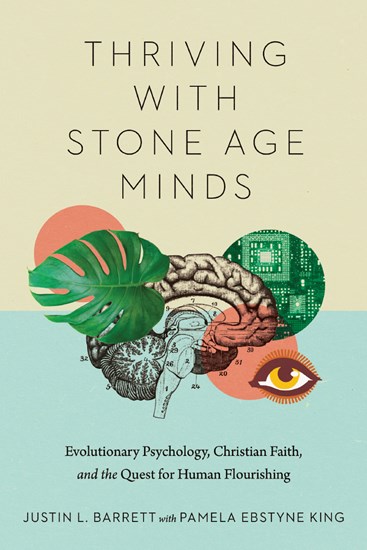
Thriving with Stone Age Minds is a fascinating journey into looking at a combination of evolutionary psychology and Christian faith.
First, this book is not located in the space of debating Christianity and evolution. It simply assumes mainstream science is correct and that Christianity remains viable given that. Frankly, that makes the book more useful, in my opinion, than it would have been if it spent pages trying to justify those premises. There is an introductory chapter that goes over some basic assumptions and background knowledge necessary for at least diving in to the later chapters.
Next, there’s the question of what it means to “thrive.” The definition is more complex than a reader may think, especially when one is attempting to balance both evolutionary and Christian theological assumptions. Thriving in this space means there can be gaps in understanding, and that finding a niche means more than successful procreation and passing on of genetic code. Humans also tend to expand into whatever space they find and modify nature to suit their needs; this creates a kind of nature-niche gap that is crossed repeatedly by humans, but might not also yield thriving.
The authors go over various features of human anatomy and what those features might suggest about human nature. For example, humans have large white sclerae in our eyes that allows others to see where we’re directing our attention. The nature-niche gap also refers to how quickly humans are moving various aspects of our lives ahead of nature. For example, our nutrition is linked to our evolutionary past, when finding sugar and fat-rich foods would have been important sources of large nutritional importance; but they are hyper-abundant now and our bodies and minds haven’t been trained or evolved to combat this massive availability.
Some focus of the book is on contrasting the pace of revolutionary change and adaptation and the extremely rapid advancement of technology and–tying into the above–diet and availability of food. Evolutionary psychology can help us understand some of the gaps in understanding and the necessity of learning more about how technology is changing our minds and bodies. Each chapter has a number of ways to focus on the concept of thriving and tying it into both Christian theology and evolutionary biology.
Thriving with Stone Age Minds is a highly recommended read. It rewards careful reading and spurs quite a bit of thought.
All Links to Amazon are Affiliates
Links
Be sure to check out the page for this site on Facebook and Twitter for discussion of posts, links to other pages of interest, random talk about theology/philosophy/apologetics/movies and more!
Book Reviews– There are plenty more book reviews to read! Read like crazy! (Scroll down for more, and click at bottom for even more!)
SDG.
——
The preceding post is the property of J.W. Wartick (apart from quotations, which are the property of their respective owners, and works of art as credited; images are often freely available to the public and J.W. Wartick makes no claims of owning rights to the images unless he makes that explicit) and should not be reproduced in part or in whole without the expressed consent of the author. All content on this site is the property of J.W. Wartick and is made available for individual and personal usage. If you cite from these documents, whether for personal or professional purposes, please give appropriate citation with both the name of the author (J.W. Wartick) and a link to the original URL. If you’d like to repost a post, you may do so, provided you show less than half of the original post on your own site and link to the original post for the rest. You must also appropriately cite the post as noted above. This blog is protected by Creative Commons licensing. By viewing any part of this site, you are agreeing to this usage policy.
Book Review: “Faithful Politics: Ten Approaches to Christian Citizenship and Why it Matters” by Miranda Zapor Cruz

Faithful Politics: Ten Approaches to Christian Citizenship and Why it Matters by Miranda Zapor Cruz provides an introduction to several different ways Christians have engaged in the political arena.
A few introductory chapters outline Cruz’s approach. Instead of taking a direct partisan line, she seeks to provide overviews of the ten approaches she covers and then give some analysis for each broad approach to Christian life in politics. One early insight is contrasting Christian and broadly American concepts of freedom: “American freedom conceptualizes freedom as for self; the Kingdom conceptualizes freedom for others” (15). This latter insight is backed by theologians such as Bonhoeffer, who wrote about explicitly being free for the sake of the other in Christianity (ibid).
After several broad comments on general guidelines for analyzing political approaches from within Christian perspectives, Cruz turns to the 10 approaches she covers. These are sometimes grouped together, and I’ll list them as grouped: three separationist approaches based on “Keeping the Kingdom out of the Country” (essentially approaches that advocate for Christians separating from public life in various ways in order to demark a clear separation between “the world” and church); two separationist approaches based on “Keeping the Country out of the Kingdom” (these are approaches like early Baptist separationism based upon keeping church and state separate, less than actually splintering from society itself); social gospel approaches (using one’s faith to guide society, ethics, and even spending programs); two Calvinist approaches (contrasting direct Christian influence on society a la Geneva and John Calvin and a more nuanced approach from Abraham Kuyper); dominionist approaches (the teaching that Christians must gain dominion over society and how this applies to political spheres); and Christian Nationalism (a view which puts faith in Christ essentially subordinate to allegiance to the nation-state).
Summarizing all of these is beyond the scope of what I want to do. Highlights include the look at Two Kingdoms separationist approaches and how Lutheranism was co-opted through that view for Fascism, but how Dietrich Bonhoeffer, a Lutheran pastor, went back to nuance of the Two Kingdom approach to fight back (101). I thought the insight into social gospel approaches and the several Anabaptist approaches was fascinating. Cruz’s evaluation of the different approaches constantly offered fruitful ground for thought and comment. For example, in her analysis of Christian nationalism, she writes, “physical and rhetorical violence are endemic to Christian nationalism, which is part of what makes it incompatible with Christian faithfulness…” (189). The constant rhetoric of modern nationalists that challenges people opposed to them to define Christian nationalism and show how it is bad would run into a wall when confronted with the basic quotes from Christian nationalists and analysis by Cruz here. Cruz’s analysis isn’t always negative, of course. For example, despite clearly not advocating for a separationist approach, Cruz writes that: “Anabaptist and evangelical approaches to separationism have their strongest appeals in their ability to clearly differentiate between the church and the world, and their commitment to Christian formation as an essential function of the church. We are all being discipled by something…” (81). These kinds of insightful comments from Cruz make the book incredibly valuable.
The book would absolutely serve well for a reading group of Christians who wanted to discuss how to interact with Christianity and politics, or even just looking at one single approach and diving more deeply from there.
Faithful Politics is an insightful, timely book. It provides readers with enough background on numerous options in Christian living to at least get a grasp on key concepts. It also provides ways forward for continued thought and research. Recommended.
All Links to Amazon are Affiliates
Links
Be sure to check out the page for this site on Facebook and Twitter for discussion of posts, links to other pages of interest, random talk about theology/philosophy/apologetics/movies and more!
Book Reviews– There are plenty more book reviews to read! Read like crazy! (Scroll down for more, and click at bottom for even more!)
SDG.
——
The preceding post is the property of J.W. Wartick (apart from quotations, which are the property of their respective owners, and works of art as credited; images are often freely available to the public and J.W. Wartick makes no claims of owning rights to the images unless he makes that explicit) and should not be reproduced in part or in whole without the expressed consent of the author. All content on this site is the property of J.W. Wartick and is made available for individual and personal usage. If you cite from these documents, whether for personal or professional purposes, please give appropriate citation with both the name of the author (J.W. Wartick) and a link to the original URL. If you’d like to repost a post, you may do so, provided you show less than half of the original post on your own site and link to the original post for the rest. You must also appropriately cite the post as noted above. This blog is protected by Creative Commons licensing. By viewing any part of this site, you are agreeing to this usage policy.
Book Review: “Ownership: The Evangelical Legacy of Slavery in Edwards, Wesley, and Whitefield” by Sean McGever
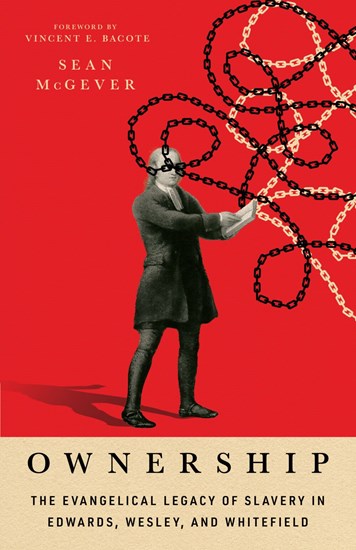
Jonathan Edwards, John Wesley, and George Whitefield remain incredibly influential on American Evangelicalism to this day. Yet, in their own times, they were morally compromised on the issue of slavery. Edwards and Whitefield were enslavers, while Wesley didn’t speak against slavery until late in life. Ownership: The Evangelical Legacy of Slavery in Edwards, Wesley, and Whitefield by Sean McGever explores the history of these evangelicals related to slavery and appraises that legacy into today.
The book is broken up into four parts. The first explores the historical context of the titular men, the second outlines their participation in a society of enslavement, the third shows actions taken against slavery in their times, and the final part explores the legacy of these men.
The first task McGever sets for himself is to outline why it is important today to talk about slavery then and the impact thinkers may continue to have despite their history with slavery. He sets out some of the questions asked about studying slavery and bringing it up as a live topic today, then he argues that the legacy of enslavement in White Evangelical circles continues to cause rifts and problems into the present time. He directly confronts the argument that these were “men of their times.” He contextualizes the counter-argument by noting that how we are remembered does matter and asks how we would want to be remembered in the future–as people who were simply following whatever whims of our times or as people who follow timeless moral truths? (10-11).
The historical section is a fairly straightforward history of the three men and their history with slavery. The contextual history showing that there were movements for abolitionism during the time helps refute the “men of their times” argument. It also shows how easy it would be to stay a “person of their time” in such an era. Once again, though, McGever questions whether this is really the excuse to give to historical persons–and certainly whether we’d want to give it to ourselves. If one believes in any kind of objective or timeless moral truth (for example, the truth that enslaving others is wrong), then that is a truth that could be recognized and striven for even if it would be easy to not do so. Wesley did ultimately speak up against slavery, though it took many, many years to do so.
McGever’s work is unique because it not only traces the history of the deeply problematic legacy of slavery in American Evangelicalism but also calls on readers today to explore and counter that legacy. “Our stories do not end when we die” (153). This is a central aspect of McGever’s thesis–that legacy does matter and that our legacy lives in in friends, family, and others. For us, this means ownership of the failures of our heroes (169ff). Failures may lead to pointing fingers and making even heroes enemies, but McGever notes that “Loving our enemies includes holding people accountable and expecting change” (171). He urges readers to realize the society they’re born into has deep influence on moral and other decisions (175-176); that ideologies we perpetuate can yield larger results (176-178); and that we can make changes throughout our lives to own our moral legacy (178-184).
Ownership is a fascinating book that not just informs readers but also calls them to action. By using the examples of Edwards, Whitefield, and Wesley, McGever urges readers to learn from the past and be better in the future. Highly recommended.
All Links to Amazon are Affiliates
Links
Be sure to check out the page for this site on Facebook and Twitter for discussion of posts, links to other pages of interest, random talk about theology/philosophy/apologetics/movies and more!
Book Reviews– There are plenty more book reviews to read! Read like crazy! (Scroll down for more, and click at bottom for even more!)
SDG.
——
The preceding post is the property of J.W. Wartick (apart from quotations, which are the property of their respective owners, and works of art as credited; images are often freely available to the public and J.W. Wartick makes no claims of owning rights to the images unless he makes that explicit) and should not be reproduced in part or in whole without the expressed consent of the author. All content on this site is the property of J.W. Wartick and is made available for individual and personal usage. If you cite from these documents, whether for personal or professional purposes, please give appropriate citation with both the name of the author (J.W. Wartick) and a link to the original URL. If you’d like to repost a post, you may do so, provided you show less than half of the original post on your own site and link to the original post for the rest. You must also appropriately cite the post as noted above. This blog is protected by Creative Commons licensing. By viewing any part of this site, you are agreeing to this usage policy.

 J.W. Wartick - Reconstructing Faith