Book Reviews
Book Review: “Enjoying the Old Testament” by Eric A. Seibert
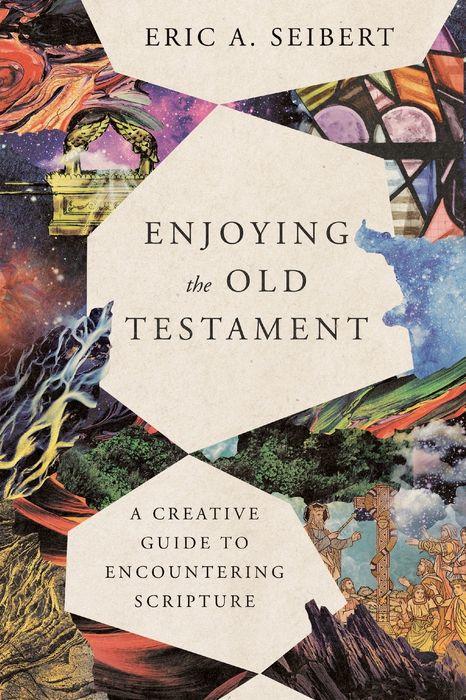
Enjoying the Old Testament by Eric A. Seibert is an invitation to Christians to read and love the Old Testament.
I admit this reader was shocked when I realized the ultimate purpose of the book. When I saw the subtitle: “A Creative Guide to Encountering Scripture,” I assumed the book was some kind of work introducing the OT. It is that… kind of. What the book is really trying to do is encourage Christians who are hesitant about reading the OT to actually do so and even enjoy doing so. I was shocked because I, personally, love the OT and spend as much time as I can therein. However, Seibert’s careful and sometimes cheeky writing drew me in nonetheless as he encouraged fellow Christians to read and understand.
The book is arranged around three parts: Preparing to Read the Neglected Testament; Having Fun with the Old Testament; and Encountering the Old Testament in New Ways. The first part exhorts and even cajoles Christians to read the OT, while helping set expectation and discuss a mindset that might be needed to do so. The second part helps, among other things, highlight how even the “boring” parts can be found meaningful. The third part offers some ways to read the OT that might help readers, both hesitant and not, encounter the OT in new ways.
Enjoying the Old Testament will hopefully accomplish the goal it sets out to do: bring Christians to read and encounter more Scripture. Seibert’s style and chapters will certainly help any reader who is hesitant to understand and draw out the reasons for doing so. The book accomplishes the task set before it.
Disclaimer: I was provided with a copy of the book for review by the publisher. I was not required to give any specific kind of feedback whatsoever.
All Links to Amazon are Affiliates links
Links
Be sure to check out the page for this site on Facebook and Twitter for discussion of posts, links to other pages of interest, random talk about theology/philosophy/apologetics/movies and more!
Book Reviews– There are plenty more book reviews to read! Read like crazy! (Scroll down for more, and click at bottom for even more!)
SDG.
——
The preceding post is the property of J.W. Wartick (apart from quotations, which are the property of their respective owners, and works of art as credited; images are often freely available to the public and J.W. Wartick makes no claims of owning rights to the images unless he makes that explicit) and should not be reproduced in part or in whole without the expressed consent of the author. All content on this site is the property of J.W. Wartick and is made available for individual and personal usage. If you cite from these documents, whether for personal or professional purposes, please give appropriate citation with both the name of the author (J.W. Wartick) and a link to the original URL. If you’d like to repost a post, you may do so, provided you show less than half of the original post on your own site and link to the original post for the rest. You must also appropriately cite the post as noted above. This blog is protected by Creative Commons licensing. By viewing any part of this site, you are agreeing to this usage policy.
Book Review: “Jonathan Edwards and Deification” by James R. Salladin

Jonathan Edwards and Deification deeply dives into Edwards’s theology to discover what he taught about theosis and whether that can be reconciled with the Reformed tradition.
It must be stated from the outset that this is a dense book on a topic that is itself highly complex. Theosis, the doctrine that humans may be undergoing a kind of transformation into the divine, has many streams of thought within Christianity, but is also among the more easily misunderstood and hotly debated (when it comes up) doctrines therein.
Salladin does an admirable job of outlining the way Edwards himself thought and wrote about theosis–sometimes without making it clear he was doing so. A careful analysis of many of Edwards’s works yields a fairly consistent picture that Edwards did hold to a kind of theosis while merging it with Reformed belief. This is a kind of shocking juxtaposition, given the belief of total depravity within Reformed circles. It is difficult to square that with the notion that humans might be becoming divine, in some fashion. Salladin is careful in drawing out the distinctions Edwards himself made, and supplements that with his own analysis of what theosis could mean within that tradition.
I must admit one piece of skepticism about this project, which is my own belief that people like Jonathan Edwards don’t deserve the attention they get. Jonathan Edwards was an enslaver. While no one is perfect, I tend to believe we need to find better heroes and theological interlocutors than people who enslaved others. Unfortunately, due to Edwards’s immense influence on American religion, even outside of Reformed circles, some study of his work at times is, if not necessary, then understandable.
Jonathan Edwards and Deification is a fascinating read on a niche topic. If you are part of a niche that is adjacent to the topic (eg. interested in theosis and Protestantism, for example), it’s a must-read. If not, it may be too esoteric to consider.
Disclaimer: I was provided with a copy of the book for review by the publisher. I was not required to give any specific kind of feedback whatsoever.
All Links to Amazon are Affiliates links
Links
Be sure to check out the page for this site on Facebook and Twitter for discussion of posts, links to other pages of interest, random talk about theology/philosophy/apologetics/movies and more!
Book Reviews– There are plenty more book reviews to read! Read like crazy! (Scroll down for more, and click at bottom for even more!)
SDG.
——
The preceding post is the property of J.W. Wartick (apart from quotations, which are the property of their respective owners, and works of art as credited; images are often freely available to the public and J.W. Wartick makes no claims of owning rights to the images unless he makes that explicit) and should not be reproduced in part or in whole without the expressed consent of the author. All content on this site is the property of J.W. Wartick and is made available for individual and personal usage. If you cite from these documents, whether for personal or professional purposes, please give appropriate citation with both the name of the author (J.W. Wartick) and a link to the original URL. If you’d like to repost a post, you may do so, provided you show less than half of the original post on your own site and link to the original post for the rest. You must also appropriately cite the post as noted above. This blog is protected by Creative Commons licensing. By viewing any part of this site, you are agreeing to this usage policy.
Book Review: “The Qur’an and the Christian” by Matthew Aaron Bennett
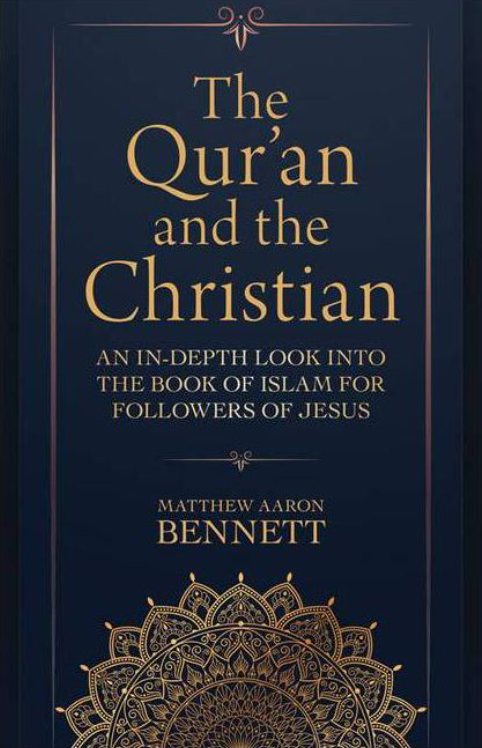
The Qur’an and the Christian is an introduction to the Qur’an from the perspective of a Christian. I admit that going in I had no small amount of skepticism about such a project. Christians don’t have a sterling record when it comes to colonialism and Islam, and I was concerned that this would be more of an attempted take-down than a broad introduction. Instead, Matthew Aaron Bennet provides a genuinely winsome introduction to the Qur’an that will assist Christians in learning about Islam.
The first two parts of the book, “The Qur’an as Revelation” and “The Qur’an as a Text” help provide readers background not just into the Qur’an but into Islam’s teachings about the Qur’an and how Muslims often approach it. Bennett notes how the Qur’an itself teaches about revelation, how Muslims tend to view the Qur’an, and topics related to what the Qur’an teaches, how its laid out, and more. He also surveys major teachings found in the Qur’an, such as the absolute unity and singularity of God, tahwid (47, see also 73-77).
What’s helpful in all of this is that Bennett tends to report these teachings and beliefs matter-of-factly. There’s very little analysis in the early chapters; Bennett is just reporting what Muslims believe and what the Qur’an teaches. It is in the third part of the book that such analysis occurs. The analysis itself is not as much polemics as some might expect. Instead, he starts by looking at whether Christians should read the Qur’an, and how they might fruitfully do so. Then, Bennett turns to one apologetic method used by some Christian apologists in talks with Muslims. I initially thought the method was too simplistic, and was gratified to find that Bennett, rather than pushing a simple approach to an entire faith, points out some of the difficulties with this approach in speaking with Muslims. Other apologetic approaches are also considered, and the potential problems are highlighted. Ultimately, one comes away from this section more aware of the complex nature of approaching other religions in a simple fashion. Bennett does, in the final chapter, provide what he sees as a bridge to open meaningful dialogue between a Christian and a Muslim, but he doesn’t push it as a one-size-fits-all approach.
If there can be a fault found here, it’s that Bennett perhaps doesn’t provide a clear picture of the diverse array of Muslim scholarship, which, as I understand, is quite broad regarding various aspects of faith, including beliefs about the Qur’an. Bennett is likely trying to keep things simple, but having a clearer explanation of this, even in introductory form, would be helpful. Christians could come away from reading the book thinking there’s almost entire agreement among Muslims about the topics offered. I do also wish there had been an index included to make it easier to look up specific topics.
The Qur’an and the Christian is a great introduction to the Qur’an from a Christian perspective. Bennett doesn’t totally dismiss the Qur’an, instead offering genuine insight into how Muslims view their holy book and how Christians might begin to engage with it. Recommended.
All Links to Amazon are Affiliates links
Links
Be sure to check out the page for this site on Facebook and Twitter for discussion of posts, links to other pages of interest, random talk about theology/philosophy/apologetics/movies and more!
Book Reviews– There are plenty more book reviews to read! Read like crazy! (Scroll down for more, and click at bottom for even more!)
SDG.
——
The preceding post is the property of J.W. Wartick (apart from quotations, which are the property of their respective owners, and works of art as credited; images are often freely available to the public and J.W. Wartick makes no claims of owning rights to the images unless he makes that explicit) and should not be reproduced in part or in whole without the expressed consent of the author. All content on this site is the property of J.W. Wartick and is made available for individual and personal usage. If you cite from these documents, whether for personal or professional purposes, please give appropriate citation with both the name of the author (J.W. Wartick) and a link to the original URL. If you’d like to repost a post, you may do so, provided you show less than half of the original post on your own site and link to the original post for the rest. You must also appropriately cite the post as noted above. This blog is protected by Creative Commons licensing. By viewing any part of this site, you are agreeing to this usage policy.
Book Review: “The Everlasting People: G.K. Chesterton and the First Nations” by Matthew J. Milliner
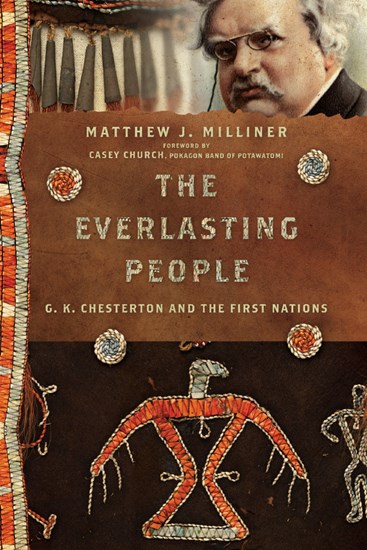
The Everlasting People: G.K. Chesterton and the First Nations is a book I picked to read because the premise seems so utterly strange. I admittedly avoid Chesterton somewhat actively, in part because of his extreme anti-Protestantism, and in part because of his misogynistic comments about women. I’m also wary of colonialism and the title smacked of that as a possibility. But something about the description got to me, and I gave it a try. I’m glad I did, because what I found was Matthew J. Milliner’s fascinating study that looks at individual places, their First Nations heritage, and Christianity.
The book is a series of lectures with responses from different scholars. The first lecture, the Sign of Jonah, discusses cave art, the ways in which myths about “savages” have been perpetuated, Chesterton’s own counter words about how cave art should correct some of the myths, other art, Turtle Island, and more. The second lecture is largely about Chicago and the First Nations heritage that was displaced and destroyed there and elsewhere. In this lecture, he offers alternate meanings for the stars on the Chicago flag. The third lecture turns to Chesterton’s poetry and the Byzantine imagery of “Our Lady of Perpetual Help” while uniting it with discussion of white expansion and warfare against First Nations people.
Throughout, G.K. Chesterton is used as a backdrop; whether quotes that speak to Milliner’s specific focus or with more extended discussion. Milliner doesn’t cover up Chesterton’s ills, but rather seeks to offer correction where needed and elucidation when possible.
Each chapter has a response from a different scholar to Milliner, and though these are short, they often offer their own insights and discussion of First Nations culture and the richness of humanity. In almost every section there is some kind of new delight, fascinating detail, or new avenue to explore that is initially unexpected. Milliner and those responding to him offer a wealth of knowledge. The unexpected way they manage to discuss Christianity, First Nations people, First Nations artists, and more (some of the responses themselves are by people from First Nations groups) make the book a wonderful read from front to back.
I don’t really know what I expected when I started The Everlasting People. I also don’t know how to adequately describe it. It’s a fairly slim volume with a rather massive amount of content and encouragement for further reflection and learning. It’s one of those books that makes you think about it long afterwards, and flip it open to a random page to see what might be found. I highly recommend it.
Disclaimer: I was provided with a copy of the book for review by the publisher. I was not required to give any specific kind of feedback whatsoever.
All Links to Amazon are Affiliates links
Links
Be sure to check out the page for this site on Facebook and Twitter for discussion of posts, links to other pages of interest, random talk about theology/philosophy/apologetics/movies and more!
Book Reviews– There are plenty more book reviews to read! Read like crazy! (Scroll down for more, and click at bottom for even more!)
SDG.
——
The preceding post is the property of J.W. Wartick (apart from quotations, which are the property of their respective owners, and works of art as credited; images are often freely available to the public and J.W. Wartick makes no claims of owning rights to the images unless he makes that explicit) and should not be reproduced in part or in whole without the expressed consent of the author. All content on this site is the property of J.W. Wartick and is made available for individual and personal usage. If you cite from these documents, whether for personal or professional purposes, please give appropriate citation with both the name of the author (J.W. Wartick) and a link to the original URL. If you’d like to repost a post, you may do so, provided you show less than half of the original post on your own site and link to the original post for the rest. You must also appropriately cite the post as noted above. This blog is protected by Creative Commons licensing. By viewing any part of this site, you are agreeing to this usage policy.
Book Review: “From Plato to Christ” by Louis Markos
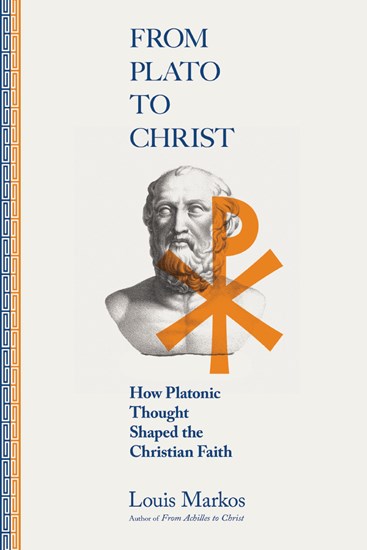
What has Jerusalem to do with Athens? Quite a lot, if one reads Louis Markos’s From Plato to Christ. The work is a partly a look into Plato’s thought, and partly a survey of how Plato’s thought impacted Christianity through its early history.
Markos wastes little time essentially baptizing Plato after the fact. The first page of the preface has Markos claiming that Plato’s writings can be read “as inspired writings used by the God of the Bible to prepare the ancient world for the coming of Christ and the New Testament” (ix). On the same page, he says that Plato is the “culmination of the best of the pagan (Pre-Christian) wisdom” (ibid). One might wonder how, say, the Hebrew Scriptures fit into this scheme, and whether Markos lumps Judaism in with “paganism” as it is pre-Christian or whether he simply dismisses it as being capable of preparing the ancient world for the coming of Christ. Markos’s fervor to recommend Plato to his readers seemingly has no limits, as he quickly navigates through chapters that analyze several of Plato’s writings and argue that he offers a kind of vision for Christianity in the future. I may indeed be understating how eagerly Markos endorses Plato, as he later quotes C.S. Lewis approvingly stating that “Prophets and holy men… do not so much teach us morality as remind us of it” (57). This quote is then applied, at least by implication, to Plato.
Those looking for a critical analysis will need to look elsewhere. Markos’s enthusiasm knows few bounds. Even the very occasional time in which he points out something problematic in Plato’s thought are steeped in explanations about why that might have been part of Plato’s belief system. There is also little by way of critiquing Plato’s system itself, something with a long and storied tradition within Christian philosophy and theology. One might forgive the book for this, as it clearly isn’t intended to be a total look at Christian Platonism, but it seems worth mentioning given that readers without background knowledge on the subject may walk away from reading the book thinking that Christians generally have no problem with Platonism despite there being entire systems of thoughts developed to circumvent or deny Platonism in Christianity.
One example is in the chapter outlining The Republic. Markos outlines the way the republic is built by noting it is Socrates presenting all of these ideas. In a way, this shields Plato from criticism, but allows Markos to pour on praise when he agrees with Plato (see the shift from Socrates to Plato on page 27, for example). There is little about the awful way the city is set up to essentially force young adults into sexual relationships to produce offspring as dictated by the city’s leaders. Markos, having shifted before to claiming that these parts of the text reflect a more mature Plato using Socrates as a mouthpiece, in a footnote directly and singularly assigns Socrates the blame for this eugenic and ethical quagmire (45n9). Plato, it appears, can actually do no wrong.
Markos’s survey of Christian history and influence from Platonism is of interest, though not without problems of its own. He questions Origen’s orthodoxy due to his universalism, which fails to account for the lengthy stream of orthodox Christians (some of whom, as Origen, were condemned much later as heretical for their beliefs) who held to universalism or at least something similar. These sections provide insight into at least the range of Christians who were influenced by Plato, however.
From Plato to Christ is an enthusiastic endorsement of Plato and Platonism for Christians to explore. It’s difficult for this reader to wholly endorse the work, as it presents so uneven a picture both of Platonic thought and early Christian history that it could lead to a skewed view going forward. However, it could serve as an introduction to Christian Platonism for those interested who read it with a critical eye.
Disclaimer: I was provided with a copy of the book for review by the publisher. I was not required to give any specific kind of feedback whatsoever.
All Links to Amazon are Affiliates links
Links
Be sure to check out the page for this site on Facebook and Twitter for discussion of posts, links to other pages of interest, random talk about theology/philosophy/apologetics/movies and more!
Book Reviews– There are plenty more book reviews to read! Read like crazy! (Scroll down for more, and click at bottom for even more!)
SDG.
——
The preceding post is the property of J.W. Wartick (apart from quotations, which are the property of their respective owners, and works of art as credited; images are often freely available to the public and J.W. Wartick makes no claims of owning rights to the images unless he makes that explicit) and should not be reproduced in part or in whole without the expressed consent of the author. All content on this site is the property of J.W. Wartick and is made available for individual and personal usage. If you cite from these documents, whether for personal or professional purposes, please give appropriate citation with both the name of the author (J.W. Wartick) and a link to the original URL. If you’d like to repost a post, you may do so, provided you show less than half of the original post on your own site and link to the original post for the rest. You must also appropriately cite the post as noted above. This blog is protected by Creative Commons licensing. By viewing any part of this site, you are agreeing to this usage policy.
Book Review: “Postmortem Opportunity” by James Beilby
Questions about eternity abound, but one of the most complex is the question of what happens to people who never heard the Gospel. If, the question goes, people who don’t believe in Jesus Christ are condemned, what about people who never even had the chance to decide for themselves? James Beilby’s book, Postmortem Opportunity: A Biblical and Theological Assessment of Salvation After Death is, in part, an answer to that question.
Put simply, Beilby here defends Postmortem Opportunity (hereafter PO in my text), which has the core claim (using his terminology) that: “those who die without receiving a genuine opportunity to hear and respond to the gospel will receive a Postmortem Opportunity to do so” (35, emphasis removed). Of course, there’s quite a bit to unpack even in this claim, such as what constitutes a “genuine opportunity.” Beilby does a commendable job of drawing out definitions and carefully moving readers through each step of the argument.
Beilby starts with a chapter that goes over common views on the destiny of the unevangelized, whether it’s universal salvation, predestination, or any number of other possibilities. In the chapter in which he defines PO, he outlines ways his version may differ from others, such as when it will occur and to whom it will be given. Throughout this and other sections, he uses thought experiments to explain situations. One example was the very helpful and challenging thought experiment regarding the fate of believers who either were on the way to disbelief or non-believers who were very close to believing before they died. It was helpful to clarify that faith and belief is not a kind of black-and-white, all-or-nothing situation, and that robust soteriology must deal with that fact.
Next, Beilby goes over arguments for and against PO, surveying both biblical, historical, and theological arguments. Beilby musters numerous verses to support each aspect of affirmative points he affirms in his view of PO, while also raising some of the objections that immediately come up in any discussion of PO. Interestingly, Beilby has a chapter to explicitly reject inclusivism as a conjunction with his PO, noting that his version basically makes affirmations that would preclude inclusivism and perhaps even make it unnecessary.
Beilby’s argument is interesting and certainly presents the most robust case for PO I have ever encountered. Though, to be fair, some of that may be my own lack of research into the topic. Nevertheless, Beilby’s modest conclusions that PO is, minimally, a possibility based on Scripture and broader theological concerns seem supported by his arguments here.
There are a few critiques I want to point out, however. First, the way Beilby treats biblical texts as data points to be collated as pros and cons for theological argument may call into question some of his interpretations thereof. For example, in the chapter entitled “Scriptural Evidence for Postmortem Opportunity,” he supports one aspect of his PO theory, that people are only condemned for explicit rejection of Christ, by mustering John 3:18, Matthew 10:32-33, and more verses to show that it is a theme found in Scripture. I am tempted to read scripture this same way, as it is what appeals most to my analytical mind.* However, I’m not convinced that this is the best way to read and interpret Scripture. Instead, I believe that the verses cited have contexts that are pointing to entirely different purposes of the entire thought happening. That doesn’t preclude that some kind of tangential points can be found in individual verses, including what Beilby argues is there, but I think more caution regarding interpretation and appealing to broader contexts for these verses would make the argument much stronger. I’m not fully convinced proof texting is a necessarily mistaken way of reading the text, but I am convinced that using the text in that way can and does frequently significantly damage the text. Such a critique can hardly be limited to Beilby, but can certainly be applied to myself and many others.
Another critique is that Beilby unnecessarily limits the scope of his argument fairly early on by saying his version of PO “assumes an explicitly Arminian soteriology” (75). His reasoning behind this appears to be that PO assumes a kind of synergistic view of salvation (75ff). However, to this reader, who is Lutheran and so neither Calvinist or Arminian in soteriology, Beilby’s self-imposed limitation is premature. I suspect this limitation was on purpose for the sake of not having to adjust his PO model to account for other soteriological views. I, however, think that his view of PO could be adjusted without losing too much to match different theological systems. From my own Lutheran upbringing, while many I know would reject PO out of hand, the teaching and affirmation about Christ descending to Hell/the dead was always explicit and strong. From there, it’s not much of a stretch to ask what Christ was doing there, and a kind of PO could flow out from an historic/credal background.
Postmortem Opportunity is a fascinating read on a number of important topics. I admit it has challenged my own views on several topics, and certainly has me going to scripture to read it more fully. I recommend the book for any readers interested in soteriological positions, and those interested in challenging their views.
*My thanks to a friend for pointing out this aspect of reading verses out of context and as data points.
Disclaimer: I was provided with a copy of the book for review by the publisher. I was not required to give any specific kind of feedback whatsoever.
All Links to Amazon are Affiliates links
Links
Be sure to check out the page for this site on Facebook and Twitter for discussion of posts, links to other pages of interest, random talk about theology/philosophy/apologetics/movies and more!
Book Reviews– There are plenty more book reviews to read! Read like crazy! (Scroll down for more, and click at bottom for even more!)
SDG.
——
The preceding post is the property of J.W. Wartick (apart from quotations, which are the property of their respective owners, and works of art as credited; images are often freely available to the public and J.W. Wartick makes no claims of owning rights to the images unless he makes that explicit) and should not be reproduced in part or in whole without the expressed consent of the author. All content on this site is the property of J.W. Wartick and is made available for individual and personal usage. If you cite from these documents, whether for personal or professional purposes, please give appropriate citation with both the name of the author (J.W. Wartick) and a link to the original URL. If you’d like to repost a post, you may do so, provided you show less than half of the original post on your own site and link to the original post for the rest. You must also appropriately cite the post as noted above. This blog is protected by Creative Commons licensing. By viewing any part of this site, you are agreeing to this usage policy.
“The Mystery of Julia Episcopa” by John I. Rigoli and Diane Cummings- Historical fiction about the early church and women
What if there had been a woman who was a bishop in the earliest parts of Christian history? What would her life have been like? And, if we found out about her now, what would that entail? These are the questions raised by John I. Rigoli and Diane Cummings in their historical fiction novel, The Mystery of Julia Episcopa.
The Mystery of Julia Episcopa has two primary storylines: the first, set in modern times, follows Valentina Vella and Erika Simone, two archaeologists who come across a tantalizing discovery. The second plot follows Julia Episcopa’s life in the first century as she encounters Christianity and navigates her household life.
The story of Valentina and Erika starts off with a bang: the discovery of a document case that had some intentional damage done to remove the evidence that it was from Julia Episcopa, the last syllable indicating the person involved was a woman. It’s found at the Vatican during the tenure of a pope who is working to make reforms to the Roman Catholic church. These scholars have been, in part, charged with seeing whether there is any evidence of women in leadership in the earliest periods of the church. Their discovery launches them on a quest to attempt to find more information about Julia’s life and position in the church. To that end, readers are taken on an archaeological quest enlisting a few other experts as Valentina and Erika work against the clock and church leaders who are less interested in finding women in leadership than in suppressing them. It’s got the makings of a thriller, and at its best, it delivers the goods.
It’s difficult as a non-expert to assess how accurate the representation of Julia’s life is historically. As a reader, however, these sections delving into her life are among the strongest in the novel. Julia is a complex character with a difficult life, despite being born into wealth in the Roman world. No small amount of reflection on household dynamics and paterfamilias is built into this part of the story. But the concepts the author’s put forward in these sections never overtake the character of Julia and her own tale. It’s a spellbinding story, and strong enough to stand upon its own.
These two stories intertwine as Valentina and Erika come closer and closer to discovering the truth of Julia even as they try to hide the massive significance of their discovery from church authorities who are determined to prevent women from having authoritative roles in the church. Forced to conceal their findings for fear of losing funding in retribution due to others not liking the implications of their discovery, they continue on, using whatever resources they can find and their wit to keep the investigation going. It leads to some surprising discoveries.
One difficulty with the novel is twofold: things happen either too easily or with too much difficulty. For example, when Valentina and Erika decide to try to track down Julia’s tomb, they are convinced they’ll be able to find it. They simply enlist another expert and go to find it. However, archaeological finds, to my knowledge, don’t work that way. Picking a name and then going to try to find that specific person’s tomb from 2000 years ago is not how such finds usually happen. Though there are some pointers to help locate the tomb, the sheer confidence of Valentina and Erika that they can easily find the tomb made it difficult to suspend disbelief. On the flip side, when discoveries are made that include languages like Greek, at least one of our two main characters is unable to read it. It does not seem possible that anyone could become a renowned classical scholar and work with archaeological finds in the ancient world around the Mediterranean and not know a language like Greek.
The novel stumbles a bit in the last third. The following includes major spoilers. The archaeological expedition manages to discover Julia Episcopa’s tomb. Rigoli and Cummings here start to introduce a number of fantastic discoveries all at once. Not only do they find the tomb and therefore strong evidence of a woman who was a bishop in the early church, but they also find her mostly intact diary. The discovery of the tomb alone pushes on plausibility a bit, but adding in ancient texts starts to stretch credulity. Then, however, it truly starts to hit home how much is being packed into this novel at the end. They also find ensconced there a letter revealing the origins of a strong hierarchy for the papacy. If that’s not enough, they also find the Holy Grail! Then, at the end, additional events twist and turn so rapidly it’s hard to keep up. It’s a clear set up for a second novel, but by the end I was left wondering if I thought the whole thing was plausible enough to dive in to the next volume. I will, of course, because the premise alone was enough to sell me into the next book, but I was disappointed by this stumble towards the end.
All of that aside, The Mystery of Julia Episcopa is a refreshing read. More and more real world evidence turns up showing that women did have a much stronger role in the church than has been known for some time. This historical fiction novel, despite some flaws, delivers a compelling tale that lets readers wonder what it might have been like–and what it could be like–if huge discoveries to that end turn up.
All Links to Amazon are Affiliates links
Links
Be sure to check out the page for this site on Facebook and Twitter for discussion of posts, links to other pages of interest, random talk about theology/philosophy/apologetics/movies and more!
Book Reviews– There are plenty more book reviews to read! Read like crazy! (Scroll down for more, and click at bottom for even more!)
SDG.
——
The preceding post is the property of J.W. Wartick (apart from quotations, which are the property of their respective owners, and works of art as credited; images are often freely available to the public and J.W. Wartick makes no claims of owning rights to the images unless he makes that explicit) and should not be reproduced in part or in whole without the expressed consent of the author. All content on this site is the property of J.W. Wartick and is made available for individual and personal usage. If you cite from these documents, whether for personal or professional purposes, please give appropriate citation with both the name of the author (J.W. Wartick) and a link to the original URL. If you’d like to repost a post, you may do so, provided you show less than half of the original post on your own site and link to the original post for the rest. You must also appropriately cite the post as noted above. This blog is protected by Creative Commons licensing. By viewing any part of this site, you are agreeing to this usage policy.
Book Review: “Resisiting the Marriage Plot: Faith and Female Agency in Austen, Brontë, Gaskell, and Wollstonecraft” by Dalene Joy Fisher

Darlene Joy Fisher’s Resisting the Marriage Plot analyzes the works of Jane Austen, Anne Brontë, Mary Wollstonecraft, and Elizabeth Gaskell to see how each had features that actively went against societal expectations for women. Specifically, the authors Fisher examines used the novel to create dialogues and put forward frameworks for women to have agency within their faith life and society.
Fisher sets these novels within their contemporary context. She notes the pushback many, including pastors, had against novels. This included calling those who read novels “prostitutes” who committed “treason against Virture” (17). However, the novel’s popularity had already been solidified, and some women saw it as a way to expand the way women could influence and interact in society. After an introduction and a chapter that shows how women authors began to “leverage the novel form” (ibid), Fisher turns to examination of individual works by the authors listed. The first chapter is essential reading, though, as Fisher shows how novels can be used for ideology, how women authors challenged coverture, analyzes the authors she looks at for their different faith lives (including questions of orthodoxy, etc.), and shows a preliminary look at the examinations to follow.
Each chapter has an inset providing crucial information about the novel being examined, such as major characters and a summary. This means that readers who have no familiarity with the texts can still easily read along with the book. And Fisher presents quite a bit of analysis on each work. Mansfield Park by Jane Austen is the one I was familiar with, and my understanding of that novel was reshaped in many ways by Fisher’s astute analysis. What Fisher focuses on in each chapter is focused on how each woman resisted the marriage plot–the notion that women needed to get married and stay under their husbands’ protection in unquestioning subservience and obedience. What’s fascinating is how each author challenged this “marriage plot” in different ways. Whether it’s resisting the pressure to marry someone who had abused them in the past or through prioritizing one’s faith, the authors present different ways to challenge their cultural understandings of marriage.
The chapter on Wollstonecraft’s unfinished novel shows how the author valued freedom of agency in order to follow God in an unmediated fashion (61-63). Wollstonecraft also resisted the “romantic delusions” novelists often created, instead using her characters to pursue true virtue instead of simply conforming to romantic expectations (71ff). Austen’s Mansfield Park shows how Fanny, often reviled as a simple or foolish character, is actually using her faith to have resistance to societal expectations (155-156). Anne Brontë’s The Tenant of Wildfell Hall features questions of abuse, women’s need to be able to leave, and the question of romance and obligations to reform partners. Not only does Brontë connect women’s capacity for moral reform with their intellect, she also showed how faith can be liberative rather than constrictive (182-187). Elizabeth Gaskell’s Ruth would be a challenging read for many to this day, as it rejects a kind of “fallen woman” narrative while also using her faith to persevere.
Fisher ultimately shows that the authors she examines presented a challenge to societal norms that remained faithful to a Christian life. While there are questions of the orthodoxy of some of these authors, Fisher’s point is that they showed one need not abandon Christianity as an oppressive religion. Instead, these authors show that Christianity can instead empower and bring freedom to women through countercultural choices (246-247).
Resisting the Marriage Plot is a fascinating read. Fisher thoroughly examines the authors she presents and puts forth a vision of their works that can bring not just new enjoyment to them but also lead readers to living better and more fulfilling lives. Highly recommended.
Disclaimer: I was provided with a copy of the book for review by the publisher. I was not required to give any specific kind of feedback whatsoever.
All Links to Amazon are Affiliates links
Links
Be sure to check out the page for this site on Facebook and Twitter for discussion of posts, links to other pages of interest, random talk about theology/philosophy/apologetics/movies and more!
Book Reviews– There are plenty more book reviews to read! Read like crazy! (Scroll down for more, and click at bottom for even more!)
SDG.
——
The preceding post is the property of J.W. Wartick (apart from quotations, which are the property of their respective owners, and works of art as credited; images are often freely available to the public and J.W. Wartick makes no claims of owning rights to the images unless he makes that explicit) and should not be reproduced in part or in whole without the expressed consent of the author. All content on this site is the property of J.W. Wartick and is made available for individual and personal usage. If you cite from these documents, whether for personal or professional purposes, please give appropriate citation with both the name of the author (J.W. Wartick) and a link to the original URL. If you’d like to repost a post, you may do so, provided you show less than half of the original post on your own site and link to the original post for the rest. You must also appropriately cite the post as noted above. This blog is protected by Creative Commons licensing. By viewing any part of this site, you are agreeing to this usage policy.
Book Review: “Permission to Be Black: My Journey with Jay-Z and Jesus” by A.D. “Lumkile” Thomason

Permission to Be Black: My Journey with Jay-Z and Jesus by A.D. “Lumkile” Thomason is a fascinating read that explores the intersections of race, gender, and Christianity.
Thomason writes with a sometimes stream of consciousness exuberance that nevertheless grounds itself in lived reality. He talks about how Jay-Z’s lyrics gave him a kind of honest form of expression, while in the gospel of Christ, he found hope. Each chapter includes what he calls “cheat codes” about how to live life that include personal advice about blackness, masculinity, and more.
The book is at times hopeful, at times challenging, and all the time piercing in its analysis and thoughts. As a reader, I’m not sure I feel qualified to evaluate it. Thomason comes in like a whirlwind of energy and thought, and this pithy volume will force readers to think. Permission to Be Black is recommended.
Disclaimer: I was provided with a copy of the book for review by the publisher. I was not required to give any specific kind of feedback whatsoever.
All Links to Amazon are Affiliates links
Links
Be sure to check out the page for this site on Facebook and Twitter for discussion of posts, links to other pages of interest, random talk about theology/philosophy/apologetics/movies and more!
Book Reviews– There are plenty more book reviews to read! Read like crazy! (Scroll down for more, and click at bottom for even more!)
SDG.
——
The preceding post is the property of J.W. Wartick (apart from quotations, which are the property of their respective owners, and works of art as credited; images are often freely available to the public and J.W. Wartick makes no claims of owning rights to the images unless he makes that explicit) and should not be reproduced in part or in whole without the expressed consent of the author. All content on this site is the property of J.W. Wartick and is made available for individual and personal usage. If you cite from these documents, whether for personal or professional purposes, please give appropriate citation with both the name of the author (J.W. Wartick) and a link to the original URL. If you’d like to repost a post, you may do so, provided you show less than half of the original post on your own site and link to the original post for the rest. You must also appropriately cite the post as noted above. This blog is protected by Creative Commons licensing. By viewing any part of this site, you are agreeing to this usage policy.
Book Review: “Discovering Biblical Equality” Third Edition edited by Ronald W . Pierce, Cynthia Long Westfall, and Christa L. McKirland
Discovering Biblical Equality: Biblical Theological, Cultural, & Practical Perspectives is a massive tome defending the equality of women in the church and home from a Christian standpoint.
The book is organized around 31 chapters plus an introduction and conclusion. The chapters are broken up into four parts: Looking to Scripture: The Biblical Texts; Thinking it Through: Theological and Logical Perspectives; Addressing the Issues: Interpretive and Cultural Perspectives; Living it Out: Practical Applications. There are highlights in each section, and each essays has its own strengths. Linda Belville’s “Women Leaders in the Bible” goes through many names readers might be familiar with, but also dives into details about some of the specifics, such as the background info we can see in the text for the importance of Huldah (p. 73) and some surprising examples readers might be unfamiliar with (74-75). The discussion of both marriage and singleness with regards to mutuality in Ronald W. Pierce and Elizabeth A. Kay’s chapter (“Mutuality in Marriage and Singleness: 1 Corinthians 7:1-40) is refreshing because so often the discussion centers entirely around marriage. The so-called “clobber passages” of 1 Timothy 2:11-15 and 1 Corinthians 14:34-35 each get their own passage, as do many other related passages.
Kevin Giles’s chapter on “The Trinity Argument for Women’s Subordination” shows the lengths to which some have gone to try to ground women’s inequality. Jeffrey D. Miller’s chapter on gender accurate Bible translation was fascinating and shows how the issues that are often dismissed regarding translation issues can have real, spiritual implications. Mimi Haddad’s chapter on global perspectives and why gender equality matters helps demonstrate the real-life applications of theology.
The book is the third edition of this collection. I own the second edition, which I read some years ago. I compared the table of contents for the two editions, and there is in the third edition a significant overhaul of the included essays. There are 31 chapters in the new edition vs. 29 in the previous one. Several chapters have been entirely replaced, and several new topics are introduced in the third edition. For example a chapter on “Gender Equality and Homosexuality” by William J. Webb in the second edition appears to have been replaced by “Biblical Equality and Same-Sex Marriage” by Ronald W. Pierce in this third edition. The third edition also addresses race and gender, a topic that I don’t recall or see a chapter dedicated to in the second edition. In other words, readers interested in knowing whether it’s worth re-purchasing should rest assured that it very much is. This new edition has a huge amount of new content. I cannot comment on whether essays that appear in each are revised in any way from the original.
The chapter on “Biblical Equality and Same-Sex Marriage” is written by Piece, who is non-affirming in his stance on same-sex marriage. The thrust of the chapter seems to be that one can be a fully committed egalitarian while not affirming same-sex marriage. Such a topic is certainly of interest to the many people who are caught in the middle on these issues. For my part, I’d have liked to see another chapter from an affirming perspective, though I wonder if it wasn’t included because that’s a less controversial pairing. The chapter on race and gender is fascinating and shows how these topics often intersect and overlap.
Discovering Biblical Equality is unquestionably the standard text for those wishing to explore the basics of egalitarian theology on a scholarly level that remains accessible. Every chapter has something to add to the discussion. The depth and breadth of some of the chapters is truly remarkable. I recommend it extremely highly as among the best books on the topic.
Disclaimer: I was provided with a copy of the book for review by the publisher. I was not required to give any specific kind of feedback whatsoever.
All Links to Amazon are Affiliates links
Links
Be sure to check out the page for this site on Facebook and Twitter for discussion of posts, links to other pages of interest, random talk about theology/philosophy/apologetics/movies and more!
Book Reviews– There are plenty more book reviews to read! Read like crazy! (Scroll down for more, and click at bottom for even more!)
SDG.
——
The preceding post is the property of J.W. Wartick (apart from quotations, which are the property of their respective owners, and works of art as credited; images are often freely available to the public and J.W. Wartick makes no claims of owning rights to the images unless he makes that explicit) and should not be reproduced in part or in whole without the expressed consent of the author. All content on this site is the property of J.W. Wartick and is made available for individual and personal usage. If you cite from these documents, whether for personal or professional purposes, please give appropriate citation with both the name of the author (J.W. Wartick) and a link to the original URL. If you’d like to repost a post, you may do so, provided you show less than half of the original post on your own site and link to the original post for the rest. You must also appropriately cite the post as noted above. This blog is protected by Creative Commons licensing. By viewing any part of this site, you are agreeing to this usage policy.

 J.W. Wartick - Reconstructing Faith