Book Reviews
Book Review: “First Nations Version: An Indigenous Translation of the New Testament”
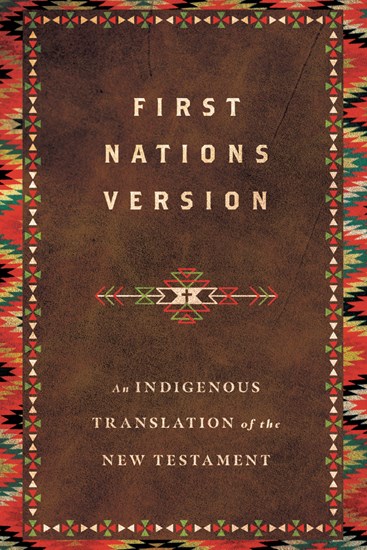
When I saw the First Nations Version: An Indigenous Translation of the New Testament was coming out, I was intrigued. What kind of new things might it bring to the table? The editors of this version provide some explanation of choices made in the brief introduction. For example, they translated names while leaving the Anglicized version of the name in parentheticals in smaller font. Thus, Jesus is “Creator Sets Free (Jesus)” whenever the name appears. The editors tried to bring as many First Nations peoples into the process as possible, but of course there are so many that it wasn’t possible.
Even small things like the decision made about names made for some fascinating reading as I saw so many names with meanings I would have known if I’d sat and thought about them (or consulted my Hebrew or Greek Lexicons if I couldn’t remember the roots), but that I never had done the work for. It was amazing time and again to see these names with their meanings right in front of the reader.
The editors also added occasional italicized texts to help the story get told in a more oral fashion. Thus, there are occasional places in the text where an italicized portion (which the editors make very clear are not part of the original text, but there to help emphasize the oral recitation/hearing aspect of the text) adds some flare, such as Jesus “turning powerfully” to do something or confront someone. There are also some explanatory notes, italicized and set apart from the text that offer either context for passages or additional insight into reasoning behind some of the passages. For example, 1 Peter 3, with its discussion of the Flood and Baptism (translated as “purification ceremony”), has a brief explanatory note about the Flood so hearers unfamiliar with it may know what’s happening. These italicized portions are a remarkable addition that makes the text more readable and which give key insights into some passages.
I was driven near to tears time and again by the beauty of the text. I knew that “Jesus” meant “He Saves,” but to see Jesus’s name time and again translated as “Creator Sets Free” really drove the point home in a way that knowing it abstractly didn’t do. Headings occasionally made me sit back and think, such as the Transfiguration (Matthew 17:1-13) having the heading “He Talks to the Ancestors.” Growing up and hearing how “ancestor worship/veneration” would be seen as syncretism and bad, I had never thought of this particular passage as a species of the same. It’s just a fascinating and challenging way to put the passage, an this happens many times throughout the NT (another example is the Temptation of Christ being called in Mark, “His Vision Quest”). Parables are sometimes reworded entirely, such as substituting horses for talents (the coins) in some parables. These are examples of contextualizing the NT and I found them to be quite beautiful.
One way I analyze a translation of the Bible is by looking up some specific passages and seeing how they are translated. One I look at is Romans 16:7. This passage has a history of obstruction, as some biblical scholars have attempted to turn Junia into a man due to her being listed as an apostle. I was gratified to see the FNV translation: “I send greetings also to Victory Man (Andronicus) and Younger One (Junia), my fellow Tribal Members and fellow prisoners, who have a good reputation as message bearers. They walked with the Chosen One before I did.” The translation as “message bearers” is interesting, as the same term is used occasionally for the disciples (eg. Matthew 10:1). Thus, the FNV does a good job noting that Junia was both a woman and among the apostles/disciples/etc. Of course, this study shows that some of our theological interests aren’t necessarily shared by the translators of the FNV, as they are more free with using varied terms for offices than some other translators are. Again, the equivalence between “disciples” (translated in various way) as “message bearers” and “apostles” as the same suggests this.
Other passages are 1 Timothy 3, in which many translations add masculine pronouns where the are none. The FNV reads naturally on this section, speaking of spiritual leaders. Problematic passages like 1 Corinthians 11:5-6 have explanatory notes (see above) that show how the cultural expectations may be applied here, and contextualizing it for First Nations believers (in this specific passage, with a reference to women not sitting around the drum).
Overall, time and again I found some of the more difficult passages translated in ways I thought caught the meaning of the text. Some were given explanatory notes, while others were not. It’s clear the text provides one of the more egalitarian readings of the New Testament in any translation. Additionally, discussions of Baptism (called the “Purification Ceremony”) and the Lord’s Supper are well done.
The First Nations Version is a phenomenal work. It is poetic, beautiful, and striking time and again. It captures the feel of hearing God’s word spoken, and it corrects some mistakes other translations make. I cannot recommend it highly enough. I honestly might start using it as my preferred version for personal reading. It’s that wonderful.
Disclaimer: I was provided with a copy of the book for review by the publisher. I was not required to give any specific kind of feedback whatsoever.
All Links to Amazon are Affiliates links
Links
Be sure to check out the page for this site on Facebook and Twitter for discussion of posts, links to other pages of interest, random talk about theology/philosophy/apologetics/movies and more!
Book Reviews– There are plenty more book reviews to read! Read like crazy! (Scroll down for more, and click at bottom for even more!)
SDG.
——
The preceding post is the property of J.W. Wartick (apart from quotations, which are the property of their respective owners, and works of art as credited; images are often freely available to the public and J.W. Wartick makes no claims of owning rights to the images unless he makes that explicit) and should not be reproduced in part or in whole without the expressed consent of the author. All content on this site is the property of J.W. Wartick and is made available for individual and personal usage. If you cite from these documents, whether for personal or professional purposes, please give appropriate citation with both the name of the author (J.W. Wartick) and a link to the original URL. If you’d like to repost a post, you may do so, provided you show less than half of the original post on your own site and link to the original post for the rest. You must also appropriately cite the post as noted above. This blog is protected by Creative Commons licensing. By viewing any part of this site, you are agreeing to this usage policy.
Bonhoeffer’s Life in Fiction- Critical Review of “My Dearest Dietrich: A Novel of Dietrich Bonhoeffer’s Lost Love” by Amanda Barratt

Amanda Barratt offers an historical novel based on the life of Dietrich Bonhoeffer with My Dearest Dietrich. As the subtitle states, it is “A Novel of Dietrich Bonhoeffer’s Lost Love.” Specifically, Barratt delves into Bonhoeffer’s letters and writings and builds a narrative around them focused on his relationship with Maria von Wedemeyer.
Barratt does a fine job of weaving that narrative around Bonhoeffer’s letters. I wouldn’t consider myself an expert on Bonhoeffer, but having read many books about him as well as his collected works, the narrative seems to at least largely follow the course of his life. Bonhoeffer’s close relationship with Ruth von Kleist-Retzow, Maria’s grandmother, is highlighted. Interestingly, Bonhoeffer’s first meeting with Maria is only presented in the briefest type of flashbacks. Historically, Maria’s grandmother had tried to get Bonhoeffer to accept Maria into his confirmation class, but he refused after seeing her as “too immature” to do so. In the novel, she’s upset about having embarrassed herself in front of him some years before.
In a sense, My Dearest Dietrich is a reframing of Bonhoeffer’s life. Essentially, Barratt turns many of his encounters with Maria or others into a kind of building of and reflecting upon growing love in order to make the plot work. However, much of this is done inside Bonhoeffer’s head rather than being drawn from historical documents. This is, of course, the way historical novels must work. Barratt’s goal of showing Bonhoeffer’s growing relationship and love for Maria requires this kind of internal monologue throughout in order to make sense. Thus, it has to be invented for the sake of the story.
Those who have studied Bonhoeffer extensively know that there is some question about his sexuality and more specifically his relationship with Eberhard Bethge. The most thorough look at these questions may be found in The Doubled Life of Dietrich Bonhoeffer by Diane Reynolds. Reynolds argues extensively that Bonhoeffer was in love with Bethge. Moreover, she argues that Bonhoeffer’s relationship with Maria von Wedemeyer was a kind of cover as his imprisonment loomed. His relationship with the much younger Maria would solidify him as a “masculine” German–something emphasized in Nazi propaganda–while also providing a cover for any hints of homosexuality. Gay people were one of the oppressed classes of the Nazis who were rounded up and murdered by them (homosexuality remained outlawed in Germany for sometime after, as well). Thus, Maria would serve as a kind of double cover for any questions about Bonhoeffer’s conforming to cultural expectations.
Reynolds’s book presents a strong, thoughtful argument with which any scholarship related to Bonhoeffer must contend (see my full review of the book here). Barratt’s novel ignores that and essentially offers a counter-narrative in which Bonhoeffer is struck almost immediately by the thoughtfulness of young Maria and eventually comes to fall in love with her and get engaged with the intent to marry. For Barratt, none of these questions about sexuality arise. The absence of Bonhoeffer’s growing love and thoughts of love in some of his other works is explained largely through having no time to reflect upon it and actively resisting reflecting on it because he believed, in Barratt’s account, that other things were more important.
My Dearest Dietrich, then, is not just a novel about Bonhoeffer’s life. It is a retelling of the events and framing them in a way that cuts away some of the more intriguing questions about his sexuality and love for Maria. Bonhoeffer’s relationship to Maria, and the age difference between them (he was her senior by 18 years) has perplexed some Bonhoeffer scholars. Reynolds’s exploration helps make sense of some of these questions. Indeed, even setting aside his sexuality, simply offering the explanation that he saw Maria as a way to show his German virility to the Nazi interrogators is plausible enough.
What one makes of My Dearest Dietrich, then, is what one may. Barratt’s clear influence from Eric Metaxas’s pseudo-biography of Bonhoeffer is found in her acknowledgements, where she makes it clear that she was most influenced by that work. Metaxas’s biography, however, is largely ignored or rejected by broader Bonhoeffer scholarship due to its transformation of Bonhoeffer into a character of Metaxas’s own choosing. That Barratt was so deeply influenced by this biography and then wrote a novel of Bonhoeffer’s life with virtually no reference to any of the possible controversies it may raise is an interesting detail.
Barratt does make a compelling narrative, though, and one which, if she’s right about Bonhoeffer’s relationship, does a good job explaining those historical anomalies she does acknowledge. For example, Maria’s constant theme of doubting Bonhoeffer’s love is partially balanced by Bonhoeffer actively resisting the same for the sake of what he sees in the novel as his more important work of resistance. If Barratt’s view of Bonhoeffer’s love and sexuality (again, the latter being wholly ignored as a topic here) are correct, then her novel at least offers a way to make more sense of it all.
My Dearest Dietrich, then, is not merely an historical fiction. Rather, it is a kind of apologetic for one vision of Bonhoeffer. One that stretches the man in ways that go beyond the historical record, his own writings, and perhaps even the deepest parts of his character. As Stephen R. Haynes put it, the “battle for Bonhoeffer” continues. This novelization of his life is another battle front offering an alternate narrative of the man’s life and legacy.
All Links to Amazon are Affiliates links
Links
Dietrich Bonhoeffer– read all my posts related to Bonhoeffer and his theology.
Be sure to check out the page for this site on Facebook and Twitter for discussion of posts, links to other pages of interest, random talk about theology/philosophy/apologetics/movies and more!
Book Reviews– There are plenty more book reviews to read! Read like crazy! (Scroll down for more, and click at bottom for even more!)
SDG.
——
The preceding post is the property of J.W. Wartick (apart from quotations, which are the property of their respective owners, and works of art as credited; images are often freely available to the public and J.W. Wartick makes no claims of owning rights to the images unless he makes that explicit) and should not be reproduced in part or in whole without the expressed consent of the author. All content on this site is the property of J.W. Wartick and is made available for individual and personal usage. If you cite from these documents, whether for personal or professional purposes, please give appropriate citation with both the name of the author (J.W. Wartick) and a link to the original URL. If you’d like to repost a post, you may do so, provided you show less than half of the original post on your own site and link to the original post for the rest. You must also appropriately cite the post as noted above. This blog is protected by Creative Commons licensing. By viewing any part of this site, you are agreeing to this usage policy.
Book Review: “Winsome Conviction” by Tim Muehlhoff and Richard Langer

Winsome Conviction: Disagreeing Without Dividing the Church by Tim Muehlhoff and Richard Langer provides readers with a way to analyze conviction and acknowledge differences of opinion even on deeply held beliefs without causing undue division.
The book is divided into three sections. The first provides biblical foundations for analyzing conviction, along with several historical examples. The second section discusses how to communicate convictions, including questions about division and divisiveness, fellowship, echo chambers, and more. The third section provides five chapters on how to discuss convictions–even differing ones–in a more winsome way.
I especially enjoyed the authors using historical examples to highlight some of the problems we still face today regarding convictions. The first chapter, a “historical prelude,” used the example of Roger Williams and the formation of New England with its history of religious freedom. It’s fascinating to see how, historically, some of the people most concerned with separating church and state were those who had the most deeply held religious convictions. More recent examples, such as religious symbolism in the crest of a city, help to bring these discussions into modern light. This chapter alone makes the book well-worth reading, because it sets up a way to look at some neutral examples in history and other places and to use them in discussing convictions in one’s own setting.
The final five chapters on applying what the authors have case studies, such as differing opinions on how to read the book of Genesis, intermixed with advice on how to hold to sincere convictions while still maintaining unity in church. The book is therefore a valuable resource for those seeking to unite while allowing for significant disagreements. Not only that, it also provides a way forward in understanding how people with similar background ideologies may differ significantly on what seem like basic issues.
Winsome Conviction would make an excellent group read for churches, especially those looking to welcome people from many different backgrounds and beliefs.
Disclaimer: I was provided with a copy of the book for review by the publisher. I was not required to give any specific kind of feedback whatsoever.
All Links to Amazon are Affiliates links
Links
Be sure to check out the page for this site on Facebook and Twitter for discussion of posts, links to other pages of interest, random talk about theology/philosophy/apologetics/movies and more!
Book Reviews– There are plenty more book reviews to read! Read like crazy! (Scroll down for more, and click at bottom for even more!)
SDG.
——
The preceding post is the property of J.W. Wartick (apart from quotations, which are the property of their respective owners, and works of art as credited; images are often freely available to the public and J.W. Wartick makes no claims of owning rights to the images unless he makes that explicit) and should not be reproduced in part or in whole without the expressed consent of the author. All content on this site is the property of J.W. Wartick and is made available for individual and personal usage. If you cite from these documents, whether for personal or professional purposes, please give appropriate citation with both the name of the author (J.W. Wartick) and a link to the original URL. If you’d like to repost a post, you may do so, provided you show less than half of the original post on your own site and link to the original post for the rest. You must also appropriately cite the post as noted above. This blog is protected by Creative Commons licensing. By viewing any part of this site, you are agreeing to this usage policy.
Book Review: “The Manifold Beauty of Genesis One” by Gregg Davidson and Kenneth J. Turner
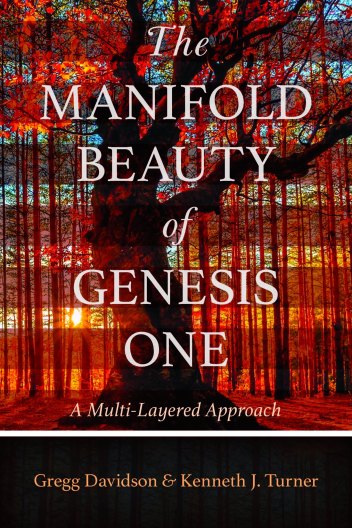
The Manifold Beauty of Genesis One navigates the first chapter of Genesis against the background of many different attempted readings. Gregg Davidson and Kenneth J. Turner argue that the best way to look at Genesis One is a “Multi-Layered approach” that acknowledges that there is more than meets the eye in the text.
The advantage of Davidson and Turner’s approach is that they take the text seriously enough to not try to reduce it to a simplistic reading. Rather than offering multiple views that contradict each other, the authors offer what they see as different yet complementary ways of reading the text that help show the depth of its meaning for both ancient readers/listeners and those to this day.
There are 7 layers that Davidson and Turner argue may be found in the text: song, analogy, polemic, covenant, temple, calendar, and land. Each of these is the subject of its own chapter in which the authors note how this layer may be found in Genesis. For example, the chapter on Genesis 1 as song notes the many ways the chapter has parallels and other forms that could suggest it as a song, while also showing that these features forestall a simplistic reading of shoehorning it into a specific genre from the outset. Each chapter answers objections, and in the chapter on song, they answer objections that the parallels fall apart (they don’t), and that such a reading is driven by an attempt to harmonize with science (it’s not).
I especially enjoyed the chapter on Genesis 1 as polemic. I have long seen the polemical strands in Genesis, and having recently read an argument that the polemic isn’t actually there, found their answers to objections helpful. They note that while polemic is not the primary function of the text, it would be remiss to not see polemic as part of the background of what’s happening in the text. This, of course, adds to the argument for seeing Genesis as multi-layered. The polemic is not the central message of Genesis 1, but it is a message.
While a lot of the authors’ central point (reading Genesis means we should see more than one layer happening) seems pretty basic and maybe even obvious on retrospect, there aren’t enough scholars out there saying this, and many double down on a specific chosen reading. Davidson and Turner’s approach allows readers to fully explore the depth and breadth of Genesis one without feeling shoehorned into any one way of reading the text.
The Manifold Beauty of Genesis One is a fantastic read, even for those who have long been invested in reading about the earliest chapters of Genesis. It would also make a great first read for those looking to get more from the text or explore the doctrine of creation more fully. I recommend it highly.
Disclaimer: I was provided with a copy of the book for review by the publisher. I was not required to give any specific kind of feedback whatsoever.
All Links to Amazon are Affiliates links
Links
Be sure to check out the page for this site on Facebook and Twitter for discussion of posts, links to other pages of interest, random talk about theology/philosophy/apologetics/movies and more!
Book Reviews– There are plenty more book reviews to read! Read like crazy! (Scroll down for more, and click at bottom for even more!)
SDG.
——
The preceding post is the property of J.W. Wartick (apart from quotations, which are the property of their respective owners, and works of art as credited; images are often freely available to the public and J.W. Wartick makes no claims of owning rights to the images unless he makes that explicit) and should not be reproduced in part or in whole without the expressed consent of the author. All content on this site is the property of J.W. Wartick and is made available for individual and personal usage. If you cite from these documents, whether for personal or professional purposes, please give appropriate citation with both the name of the author (J.W. Wartick) and a link to the original URL. If you’d like to repost a post, you may do so, provided you show less than half of the original post on your own site and link to the original post for the rest. You must also appropriately cite the post as noted above. This blog is protected by Creative Commons licensing. By viewing any part of this site, you are agreeing to this usage policy.
Book Review: “A Short History of Christian Zionism” by Donald M. Lewis
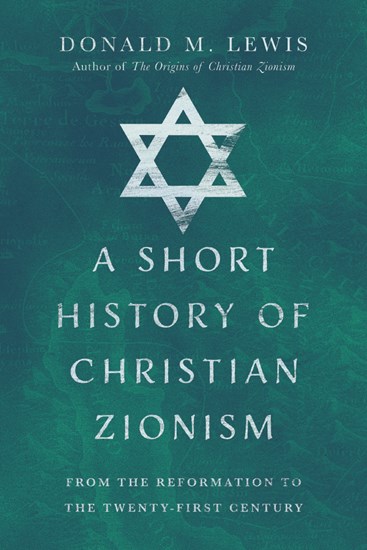
Christian Zionism is a major force in today’s political landscape. It’s especially powerful in the United States, but it’s also a global force. Donald M. Lewis’s A Short History of Christian Zionism gives readers a background for understanding what Christian Zionism is, where and when it came from, and how it impacts us to this day.
The book specifically deals with the time period from the Reformation to the modern day. Chapters cover a huge range of topics, largely in chronological order. First, Lewis’s helpful introduction deals with the competing definitions of Zionism and related terms. Ultimately, he settles upon this as a definition for Christian Zionism: it is “a Christian movement which holds to the belief that the Jewish people have a biblically mandated claim to their ancient homeland in the Middle East” (3, emphasis removed). Lewis notes how Christian Zionism has played a part in identity formation, especially for those in the dispensationalist movement. From there, Lewis moves into tracing the history of the movement itself. The first chapter does give a brief history from the Early Church to the Reformation, after which several chapters deal with different strands of Zionism emerging from various links to the Reformation. From there, links are forged showing Christian Zionism in American Puritanism, 19th Century British Evangelicalism, and how prominent a role the British Empire played in establishing some of the groundwork for later Zionist movements. The vision of World War I and II as vindications for Premillennialism and the correlating rise of Premillennial Dispensationalism and Christian Zionism presents a fascinating case study in the tenth chapter, and multiple developments in Palestine and global revivalist and Zionist activities form out the rest of the book.
Each chapter is filled with enlightening information. I was especially surprised to learn about the Balfour Declaration, a 1917 document in which the British Government publicly declared its support for a “national home of the Jewish people.” This, despite it being opposed by or ignored by many Jews of the time. The chapters outlining the rise of Christian Zionism in the British Empire laying the groundwork for this Declaration and how that declaration impacted later Zionism were absolutely fascinating.
Insights like those are present in virtually every chapter. The early is often cited by modern Zionists to support their reading of Scripture, but Lewis shows how many in the early church were largely ambivalent to ideas that would later form the basis for Christian Zionism. Lewis also is consistently even-keeled in his evaluation of Christian Zionism, rarely offering direct critique or support for any specific aspects of Christian Zionism. It makes the book invaluable as a reference work with little to bother readers about how it reports the historical information.
A Short History of Christian Zionism is a commendably fair evaluation of the Christian Zionist movement. Any readers remotely interested in the topic would be well-served to pick up and read a copy of this fine historical overview.
Disclaimer: I was provided with a copy of the book for review by the publisher. I was not required to give any specific kind of feedback whatsoever.
All Links to Amazon are Affiliates links
Links
Be sure to check out the page for this site on Facebook and Twitter for discussion of posts, links to other pages of interest, random talk about theology/philosophy/apologetics/movies and more!
Book Reviews– There are plenty more book reviews to read! Read like crazy! (Scroll down for more, and click at bottom for even more!)
SDG.
——
The preceding post is the property of J.W. Wartick (apart from quotations, which are the property of their respective owners, and works of art as credited; images are often freely available to the public and J.W. Wartick makes no claims of owning rights to the images unless he makes that explicit) and should not be reproduced in part or in whole without the expressed consent of the author. All content on this site is the property of J.W. Wartick and is made available for individual and personal usage. If you cite from these documents, whether for personal or professional purposes, please give appropriate citation with both the name of the author (J.W. Wartick) and a link to the original URL. If you’d like to repost a post, you may do so, provided you show less than half of the original post on your own site and link to the original post for the rest. You must also appropriately cite the post as noted above. This blog is protected by Creative Commons licensing. By viewing any part of this site, you are agreeing to this usage policy.
Book Review: “Forming Resilient Children: The Role of Spiritual Formation for Healthy Development” by Holly Catterton Allen

Forming Resilient Children by Holly Catterton Allen is not just a parenting book, though it is that. It also provides research-based insights into children’s spiritual formation and development.
The book has four parts. The first outlines foundational concepts, the second discusses families and children’s spirituality, the third looks at the role churches play, and the fourth takes a deeper look at resilience and trauma. Each chapter has anecdotes from real-life people about children’s resilience. Each chapter also has some data or research-based information about children and spirituality. For example, in a chapter about the way grandparents can help shape their grandchildren’s spirituality, research from Barna is provided showing how grandparents are often more intentional about spiritual interactions with children (71). The stories of real children coming through stressful or traumatic situations are touching, but also provide a basis for how to look at each chapter and things to think about.
Some readers may be surprised by the insights in this book. Research shows that children’s spirituality is revealed essentially from birth, as the connections we make are universal (17-19). I was one surprised by this, though I honestly shouldn’t have been, since it seems clear that God has made humans to be spiritual creatures. At many points, the author shares ways people can build children up not just to be resilient, but also to follow spiritual practices and establish a life of faith.
Forming Resilient Children is an excellent read that opens a number of insights into how to form connections between children and their faith. It also provides a basis for learning about resilience and bringing kids through difficult times. Recommended.
Disclaimer: I was provided with a copy of the book for review by the publisher. I was not required to give any specific kind of feedback whatsoever.
All Links to Amazon are Affiliates links
Links
Be sure to check out the page for this site on Facebook and Twitter for discussion of posts, links to other pages of interest, random talk about theology/philosophy/apologetics/movies and more!
Book Reviews– There are plenty more book reviews to read! Read like crazy! (Scroll down for more, and click at bottom for even more!)
SDG.
——
The preceding post is the property of J.W. Wartick (apart from quotations, which are the property of their respective owners, and works of art as credited; images are often freely available to the public and J.W. Wartick makes no claims of owning rights to the images unless he makes that explicit) and should not be reproduced in part or in whole without the expressed consent of the author. All content on this site is the property of J.W. Wartick and is made available for individual and personal usage. If you cite from these documents, whether for personal or professional purposes, please give appropriate citation with both the name of the author (J.W. Wartick) and a link to the original URL. If you’d like to repost a post, you may do so, provided you show less than half of the original post on your own site and link to the original post for the rest. You must also appropriately cite the post as noted above. This blog is protected by Creative Commons licensing. By viewing any part of this site, you are agreeing to this usage policy.
Book Review: “The Coming Race Wars: Expanded Edition” by William Pannell
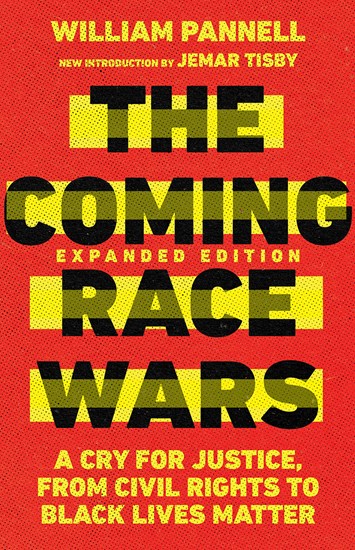
The Coming Race Wars is a work from William Pannell that was originally written after the 1992 Los Angeles Riots. The expanded edition reviewed here is largely the same, but has an extra Afterword that discusses the state of race and the church today.
What is immediately apparent as one reads through the book is how clearly false the narrative is that lumps any criticism of the church or state on race into allegations of bowing to critical race theory or some other bogeyman. Pannell is direct and firm in his critique of the church and its failure related to race relations.
Pannell addresses many of the stereotypes that linger into today, whether it is the notion that simply being a black male is enough to be dangerous or the double standards when it comes to violent acts. The book closes with a brief afterword that notes that the rise of nationalism is just symptomatic of its racist past. He also highlights the problems with economic disparity and political ideology driving segregation of churches and people more generally (171ff).
The Coming Race Wars is a good read for those interested in evangelicalism and race. It can also serve as a stark reminder that the issues of today have often been addressed in the past.
Disclaimer: I was provided with a copy of the book for review by the publisher. I was not required to give any specific kind of feedback whatsoever.
All Links to Amazon are Affiliates links
Links
Be sure to check out the page for this site on Facebook and Twitter for discussion of posts, links to other pages of interest, random talk about theology/philosophy/apologetics/movies and more!
Book Reviews– There are plenty more book reviews to read! Read like crazy! (Scroll down for more, and click at bottom for even more!)
SDG.
——
The preceding post is the property of J.W. Wartick (apart from quotations, which are the property of their respective owners, and works of art as credited; images are often freely available to the public and J.W. Wartick makes no claims of owning rights to the images unless he makes that explicit) and should not be reproduced in part or in whole without the expressed consent of the author. All content on this site is the property of J.W. Wartick and is made available for individual and personal usage. If you cite from these documents, whether for personal or professional purposes, please give appropriate citation with both the name of the author (J.W. Wartick) and a link to the original URL. If you’d like to repost a post, you may do so, provided you show less than half of the original post on your own site and link to the original post for the rest. You must also appropriately cite the post as noted above. This blog is protected by Creative Commons licensing. By viewing any part of this site, you are agreeing to this usage policy.
Book Review: “Does God Exist? A History of Answers to the Question” by W. David Beck
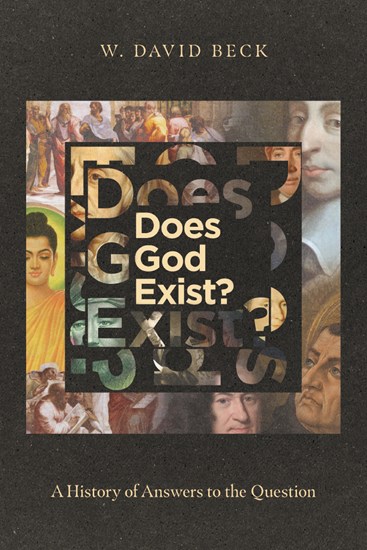
W. David Beck’s Does God Exist? A History of Answers to the Question is a remarkable historical survey of some of the best-known arguments for the existence of God. In a crowded field of books about the existence of God, Beck’s work sets itself apart by providing both an historical survey of the ways these arguments developed and working explanations and analyses of the arguments into today.
The first chapter introduces readers to the origins of theistic arguments, providing a broad background for the rest of the book. After that, the chapters act as a kind of typology of theistic arguments, dividing them into chapters on cosmological arguments, teleological arguments, moral arguments, and ontological arguments, respectively. A final chapter closes the book with a look ahead at the prospects and possibilities for theistic arguments and conclusions based upon the same.
Each chapter on a type of argument traces the argument from its earliest clear example into the modern day. It is important to note that these chapters are necessarily broad and plural. What I mean is that the chapters end with the plural “arguments” rather than “argument” for a reason–each type of theistic argument has numerous ways of presenting the argument and several different proponents and detractors through history and into today. Thus, for example, the cosmological argument can be traced back to the earliest known writings on philosophy both East and West and into today with sophisticated arguments based (in some cases) upon modern cosmology or physics.
I especially enjoyed the chapter on ontological arguments, which are surely the more opaque but hotly debated theistic arguments today. As with every other chapter, Beck doesn’t shy away from showing both theistic and atheistic takes on the argument. He gives the atheist philosopher Graham Oppy quite a bit of space and somewhat amusingly quotes Oppy to the effect of saying ontological arguments may work but it’s difficult to know whether they succeed. That is, due to the amazingly confusing nature of the multifarious questions any ontological argument raises (such as “is existence a property?”), it is possible the arguments work but don’t succeed–they don’t convince people due to the many trails and red herrings they raise. As someone deeply interested in the ontological argument, I found this a great way to end a thoroughly thought-provoking chapter.
Each chapter has its own issues raised. It’s already been mentioned, but bears repeating that Beck includes both theists and atheists in his survey of arguments. Many objections are noted, for example, in a lengthy section on the analysis of Aquinas’s version of a cosmological argument from the philosopher Paul Edwards (1923-2004). Over the course of several pages, Edwards’s objections to cosmological arguments are noted, but Beck also shows how several of these objections fail, even by Edwards’s own admission. Such introduction of modern debates, often featuring back-and-forth discussion edited for succinctness by Beck, make the book highly readable despite often heady subject matter. Again, each section must be brief, so the book provides more of an overview than it does anything in depth, but it’s clear how easily readers could pursue additional reading based on extensive, annotated bibliographies Beck provides section-by-section.
Does God Exist? is a fascinating read, even for readers like myself who are veterans of apologetics training or who have read hundreds of books on the subject. It could easily be used as a springboard for more discussion, as a reference with bibliographical data, or a grab bag of discussion. Beck has provided an invaluable resource to help spur additional discussion, and doesn’t shy away from highlighting powerful objections to theistic arguments even as he concludes it is reasonable and justifiable to believe God exists. Recommended.
Disclaimer: I was provided with a copy of the book for review by the publisher. I was not required to give any specific kind of feedback whatsoever.
All Links to Amazon are Affiliates links
Links
Be sure to check out the page for this site on Facebook and Twitter for discussion of posts, links to other pages of interest, random talk about theology/philosophy/apologetics/movies and more!
Book Reviews– There are plenty more book reviews to read! Read like crazy! (Scroll down for more, and click at bottom for even more!)
SDG.
——
The preceding post is the property of J.W. Wartick (apart from quotations, which are the property of their respective owners, and works of art as credited; images are often freely available to the public and J.W. Wartick makes no claims of owning rights to the images unless he makes that explicit) and should not be reproduced in part or in whole without the expressed consent of the author. All content on this site is the property of J.W. Wartick and is made available for individual and personal usage. If you cite from these documents, whether for personal or professional purposes, please give appropriate citation with both the name of the author (J.W. Wartick) and a link to the original URL. If you’d like to repost a post, you may do so, provided you show less than half of the original post on your own site and link to the original post for the rest. You must also appropriately cite the post as noted above. This blog is protected by Creative Commons licensing. By viewing any part of this site, you are agreeing to this usage policy.
Book Review: “Spiritual Practices of Jesus: Learning Simplicity, Humility, and Prayer with Luke’s Earliest Readers” by Catherine J. Wright
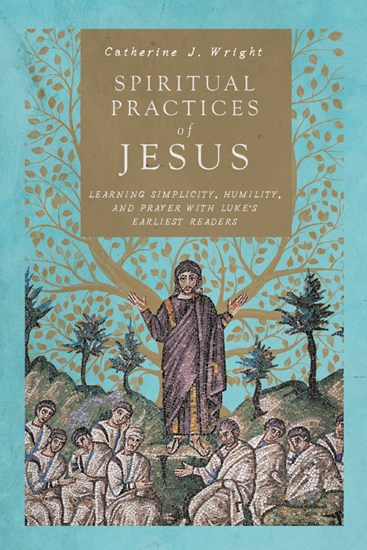
It is rare to read a book that is not just insightful, but also formative and challenging. Catherine J. Wright’s Spiritual Practices of Jesus: Learning Simplicity, Humility, and Prayer with Luke’s Earliest Readers is one such book. Each part of the subtitle is deeply important to the contents of the book. Wright introduces readers to a number of early readers of the Gospel of Luke and provides their insights into how to read the texts. These insights often challenge modern readings and spiritualization of the text.
Each section–on Simplicity, Humility, and Prayer–features a chapter that highlights how the early church read the Gospel of Luke on these issues. That means readers will see how Augustine, Chrysostom, and many others read Luke on questions related to those topics. It’s deeply important to read about that, because those early readers have a different cultural context than we do. Their readings can therefore offer correctives that highlight the importance of the texts in ways that we may not think of otherwise.
The sections start with a chapter in which Wright goes through Luke highlighting where verses or stories reflect the theme at hand. For example, in the section on simplicity, Wright shows how frequently Jesus speaks about giving to the poor and highlights the plight of the poor and the difficulties and sinfulness in wealth. Pairing this with the second chapter in the section on how the early church read these verses shows how many modern readings that try to spiritualize these texts do not align with both the earliest readings and probably the intended meaning of the text. A second chapter in each section highlights the first-century context of the passages and how understanding the challenges of that time can lead to correcting our readings of the text as well.
Some of the content with simplicity has been highlighted, but each section has numerous parts worth interacting with. Whether it’s the challenge to live humble lives or how to read Jesus’s prayers and pray ourselves, Wright constantly brings applicable insights to the table throughout the book.
Wright’s Spiritual Practices of Jesus is a phenomenal read that could even change how readers live their lives. By reading the early church on Jesus, readers are exposed to challenges to our own culture that can cause use to rethink our reading of the text and the ways we live. Highly recommended.
Disclaimer: I was provided with a copy of the book for review by the publisher. I was not required to give any specific kind of feedback whatsoever.
All Links to Amazon are Affiliates links
Links
Be sure to check out the page for this site on Facebook and Twitter for discussion of posts, links to other pages of interest, random talk about theology/philosophy/apologetics/movies and more!
Book Reviews– There are plenty more book reviews to read! Read like crazy! (Scroll down for more, and click at bottom for even more!)
SDG.
——
The preceding post is the property of J.W. Wartick (apart from quotations, which are the property of their respective owners, and works of art as credited; images are often freely available to the public and J.W. Wartick makes no claims of owning rights to the images unless he makes that explicit) and should not be reproduced in part or in whole without the expressed consent of the author. All content on this site is the property of J.W. Wartick and is made available for individual and personal usage. If you cite from these documents, whether for personal or professional purposes, please give appropriate citation with both the name of the author (J.W. Wartick) and a link to the original URL. If you’d like to repost a post, you may do so, provided you show less than half of the original post on your own site and link to the original post for the rest. You must also appropriately cite the post as noted above. This blog is protected by Creative Commons licensing. By viewing any part of this site, you are agreeing to this usage policy.
Book Review: “Majority World Theology: Christian Doctrine in Global Context”

Christianity is a global religion, yet many discussions of theology are dominated by American or European voices. In Majority World Theology: Christian Doctrine in Global Context, the editors Gene L. Green, Stephen T. Pardue, and K. K. Yeo seek to provide a partial remedy to this problem.
The Majority World is sometimes called the Global South. It’s the part of Earth in which the majority of humans reside and includes Africa, Asia, and Latin America, among other places. The editors have focused on giving theologians from these places voices addressing several major topics in theology. The book is organized around six parts with multiple essays in each part. These parts are: The Trinity Among the Nations: The Doctrine of God in the Majority World, Jesus Without Borders: Christology in the Majority World, The Spirit Over the Earth: Pneumatology in the Majority World, So Great a Salvation: Soteriology in the Majority World, The Church from Every Tribe and Tongue: Ecclesiology in the Majority World, and All Things New: Eschatology in the Majority World.
The essays are each of interest. This reader read the book front-to-back, but it is clear that it could be read in parts, used for classes with individual essays, or in any number of other ways. One thing that readers ought to keep in mind is that each of these essays is just that–a single essay introducing one perspective on a huge topic. Thus, for example, the fascinating essay “The Trinity in Africa: Trends and Trajectories” by Samuel Waje Kunhiyop shows readers some ways in which African theologians are exploring the doctrine of the Trinity. Readers should not come away thinking that these are the only trends or that all African theologians are thinking along these lines. That said, Kunhiyop brings readers to engage with numerous lines of African theology. Each of the essays included in this collection is like that: it provides a way forward for additional exploration.
One example of an essay that provides many avenues for additional reading is “Asian Reformulations of the Trinity: An Evaluation” by Natee Tanchanpongs. Tanchanpongs Highlights several Asian theologians and the way they have discussed or reformulated the doctrine of the Trinity within their own contexts. It’s a fascinating read and one that allows Tanchanpongs to analyze numerous ways to take the Trinity in exploratory theology.
Majority World Theology is an excellent introduction to global theology. Readers can treat it as a reference book, read it front-to-back, or sample as they see fit. Most importantly, readers will be exposed to global perspectives on Christianity that they otherwise may not have ever experienced.
Disclaimer: I was provided with a copy of the book for review by the publisher. I was not required to give any specific kind of feedback whatsoever.
All Links to Amazon are Affiliates links
Links
Be sure to check out the page for this site on Facebook and Twitter for discussion of posts, links to other pages of interest, random talk about theology/philosophy/apologetics/movies and more!
Book Reviews– There are plenty more book reviews to read! Read like crazy! (Scroll down for more, and click at bottom for even more!)
SDG.
——
The preceding post is the property of J.W. Wartick (apart from quotations, which are the property of their respective owners, and works of art as credited; images are often freely available to the public and J.W. Wartick makes no claims of owning rights to the images unless he makes that explicit) and should not be reproduced in part or in whole without the expressed consent of the author. All content on this site is the property of J.W. Wartick and is made available for individual and personal usage. If you cite from these documents, whether for personal or professional purposes, please give appropriate citation with both the name of the author (J.W. Wartick) and a link to the original URL. If you’d like to repost a post, you may do so, provided you show less than half of the original post on your own site and link to the original post for the rest. You must also appropriately cite the post as noted above. This blog is protected by Creative Commons licensing. By viewing any part of this site, you are agreeing to this usage policy.

 J.W. Wartick - Reconstructing Faith