Movies
“For Greater Glory” – A look at a movie about Christianity in the face of violence
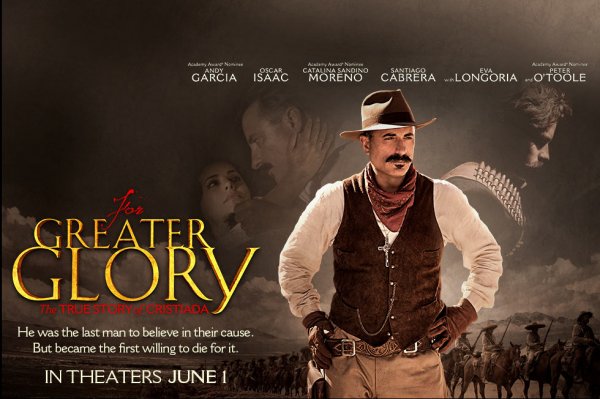 “For Greater Glory“
The Good, the Bad, and the Ugly
The Good
The general Enrique Gorostieta Velarde is clearly a “good guy.” He was, himself, no Christian and certainly not a Roman Catholic, but he stood up against those who would persecute people simply for their beliefs. He also did not stand for compromise: he wanted toleration to be granted to Roman Catholics. He fought for an ideal. Even if that ideal was not one of the faith he was fighting to defend, he felt that there was injustice, and fought against it.
It is unclear whether the historical Enrique Gorostieta Velarde ever became a Christian. In the film, it certainly make it seem as though in making his arguments, he came into a kind of faith in God. It also seems to be the case that the historical general had some political ambitions in that he desired to bring about a change in the Constitution to provide for more toleration.
Father Christopher is an example for Christians everywhere. He does not back down in the face of violence. He became a martyr by standing in front of men who were doing him violence and proclaiming Christ to them. His martyrdom served as inspiration for a number of people in the film.
The Bad
The anti-catholics in the film are clearly the “bad guys.” It is hard to argue with this. Anyone who chooses to attack and kill people simply because of their beliefs certainly qualifies for the catchall “bad guy” terminology.
Plutarco Elías Calles, the Mexican President, an atheist, decides that he must use a violent crackdown to keep the Roman Catholic Church from becoming involved in Mexico. He couches his oppression of the Roman Catholics in language of secularism. Instead of focusing upon their religion, he makes his argument based upon the rule of government: the Roman Catholics serve a ruler (the Pope) who is outside of this country, and so they are a danger to the stability of this country. Despite this “secular” language, the fact of the matter is that throughout the film, the government is viscous not just towards the Roman Catholics as people who serve a different master, but also simply as religious persons. Crosses are burned and churches are destroyed. People are slaughtered during worship. It is a wholesale war against Christianity.
The Ugly
The film does not draw a hard and fast line between “good” and “bad,” however. There are also the ugly: those who, with good intentions, also commit atrocities. The Cristeros (those who fought for religious tolerance of Roman Catholicism) who commit atrocities were the “ugly.” Some felt they had to fight evil with evil, and committed horrible acts in the name of their cause. This is exactly what Christians are called to avoid.
Just War and Pacifism
The movie brought up the constant debate within Christianity between just war theorists and pacifists. It was surprising how lucidly it presented the issues. There were those in the film who refuse to use violence to fight against the government, citing Christ’s example of turning the other cheek. Yet even they become involved in getting supplies such as bullets to the Cristeros. On the other hand, there are those who argue for a just war tradition: when injustice is running rampant, should not Christians be among those who stand up against it, even if that calls for using force? The film never answers one way or another; instead, it leaves it to those watching to weigh the merits of just war and pacifism.
I tend to favor the just war theory myself. It seems to me that if a government like the Nazi Regime exists, then it is perfectly justifiable to use force to prevent them from perpetuating their evils.
Historically, according to more than one source I looked up, it is argued that the Cristeros actually had little impact on the overall outcome of the changes and toleration which came to Mexico. Instead, it was a deal negotiated by the Vatican with the Mexican government. Yet it seems for me historically perplexing as to why, exactly, the Mexican government would have desired a compromise if the Cristeros were not in operation. I speak here as no expert on the topic by any means. I’d be interested in reading your own thoughts.
The Elephant in the Room
It is hard to see this movie without thinking about the elephant in the room: atheists are in power, and religious people are killed. It’s a theme in the movie, but it also plays out time and again throughout human history: the French Revolution, the Soviet Union, the massacres of Armenians in Turkey, the Spanish Civil War, and more. Why is it that it seems, historically, every time a secularist government has taken power, the religious persons are the ones who suffer violence?
The answer to this vexing question seems to me to be quite clear: the notion that religion is violent and secularism stops violence is just false. Not only that, but the distinction between secular and religious is, itself, a mere construct with no ontological reality. I have argued this before when I discuss the Myth of Religion.
Conclusion
“For Greater Glory” is a movie that should be a must-see for those interested in worldview discussions. I could see it being used at an interfaith group, church youth group, or seeker group to generate discussion. The movie is definitely violent, and it shows the good, the bad, and the ugly unapologetically. It is for that reason that it must be seen.
What is perhaps the most shocking part of this movie is the fact that, prior to watching it, I had never heard or even imagined that Mexico had persecuted Christians. The violence committed against Christians by others in authority continues into the modern era, and it is truly depressing to know how little we hear about it. I can’t help sometimes but join with David and say “How long, Oh LORD?” (Psalm 13).
Links
I discuss the way that construct of “religion” has been used to denigrate an alleged “religious other” in my post: The Myth of Religion.
I have looked at a number of other popular movies. Check them out (scroll down to see more posts) in my movies category.
An interesting discussion of Christian pacifism can be found over at Glenn Andrew Peoples’ blog: Pacifism, Matthew 5, and ‘Turning the other cheek’.
SDG.
——
The preceding post is the property of J.W. Wartick (apart from citations, which are the property of their respective owners, and works of art as credited) and should not be reproduced in part or in whole without the expressed consent of the author. All content on this site is the property of J.W. Wartick and is made available for individual and personal usage. If you cite from these documents, whether for personal or professional purposes, please give appropriate citation with both the name of the author (J.W. Wartick) and a link to the original URL. If you’d like to repost a post, you may do so, provided you show less than half of the original post on your own site and link to the original post for the rest. You must also appropriately cite the post as noted above. This blog is protected by Creative Commons licensing. By viewing any part of this site, you are agreeing to this usage policy.
“Les Miserables”: A Christian reflection
“Les Misérables
Natural Law and Human Dignity
One of the most clear themes throughout the movie is the challenge raised in balancing natural rights, natural law, and human dignity. Jean Valjean starts off the movie as a prisoner. He has been imprisoned for 19 years–5 for stealing a loaf of bread, and 14 for trying to escape. These prisoners are essentially slaves. Their personhood is denigrated, and Javert, the Inspector, insists on calling them merely by their numbers. During this scene, the prisoners sing of calling for Jesus to save them, but complain that Jesus has not heard them. Yet God is not dead in this story, as we shall see below.
Several questions are raised here. It seems clear that the human dignity and therefore the natural rights of these people is being violated by the way they are treated, as well as the cruelty of the punishment for petty crimes. Not only that, but it seems that natural law is being violated in that the poor continue to cry out for help to no avail. They need food, shelter, and the like. They are willing to work but can’t find any. The movie provides a poignant commentary on the violations of natural law, rights, and human dignity that continue to be found in our own society.
Javert is the story’s foil for natural law. He brings in a kind of Kantian certainty about moral questions. For him, the law is morally right, and one cannot violate the law. Yet it becomes clear through the film that Javert’s view is actually that which is mistaken. He is operating under a skewed vision of natural law which cannot stand up to scrutiny. His view equates natural law with the law of the land. Valjean grants Javert mercy and Javert later does the same for Valjean, but unlike Valjean, Javert cannot understand mercy. For him, the law of the land is always absolute. Finally, he cannot reconcile his view of the law with the realities of the world which include not just natural law but also the redemptive mercy that God has embedded in it and he kills himself.
Jean Valjean is not the only person whose very worth is questioned. Fantine suffers immensely in the story. She is reduced to selling her hair, then her teeth, and finally her body when she loses her job. Again, her very humanity is threatened by her treatment. She is dehumanized and forced to give up hope. However, Jean Valjean, as she is dying, comes to her aid and promises to take care of Cosette, her daughter. This gives her hope, and restores some of her human dignity.
Redemption
Despite the apparent hopelessness in many scenes, it becomes clear that evil has not won the day. Indeed, Jean Valjean is given another lease on life by Bishop Myriel, who is an extremely positive example of Christian concern for other persons. The Bishop saves Valjean from imprisonment and torture and tells him that he has saved him. He tells Valjean God has a plan for him and in an extremely poignant scene, Valjean struggles with his feelings of hatred and anger in a church. He cannot seem to reconcile the mercy shown to him by the Bishop with his view of the world. It is Valjean’s initial view which loses out. His anger and hatred are given over to providing hope and taking care of the needy. He becomes a moral hero, despite the necessity of his continuing to flee from the authorities.
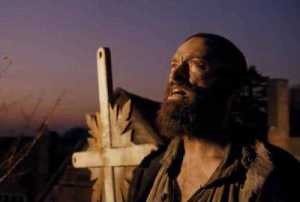
Ultimately, the grounding for human dignity and rights is found not in the tribulations of the world but in God’s justice in the hereafter. The epic closing scene depicts all the dead lined up in heaven praising God and glorying in redemption. Without this, the movie would be nearly hopeless. Instead, Jean Valjean is guided into the afterlife by Fantine and Bishop Myriel. The explicit Christian elements in this final redemption are clearly portrayed, crucifixes are prominent and it is the Bishop into whose hands Valjean is accepted.
 Salvation and God
It seems clear from the story of “Les Miserables” that God is operating even in the darkness and bitterness of the poor, the downtrodden, and the weary. Jean Valjean comes to realize that God’s plan can be carried out even by him in the mercies that he is able to show by taking care of Cosette and giving to the poor. His struggle over the fact that Bishop Myriel did not condemn him leads him to a view of reality that is a stark contrast with that of Javert’s view, noted above.
Jean Valjean sees the world through the eyes of one to whom mercy has been shown. He realizes that he did not deserve the mercy he was given, but he instead lets it change him forever. He fights against the evils of the world and ultimately, at the end of his life, he realizes that is what he was called to do.
One cannot help but see how stories of all the characters interweave in such a way as to show foreknowledge and planning. Valjean is shown mercy, but to what end? Ultimately, the end is to provide hope into a world with little hope (Fantine) and to save the life of a girl (Cosette). The way these people are brought together provides an abundance of grace and mercy, but not without suffering.
The characters cry out to God throughout the film, asking where He is or why He has allowed some evil. But it becomes clear that their eyes have been focused upon the suffering here-and-now instead of God’s plan for salvation. Without the foreknowledge of God, it is easy to see the ills of this world as reason to hate God. Indeed, that is exactly what some people do. But in “Les Miserables,” God’s plan wins in the end: he brings his people to salvation and they sing in heaven at the end of the film.
Other Themes
Water is a recurring theme in “Les Miserables.” As a Christian I could not help but think of baptism. Valjean is baptized in the rain, but Javert uses water to bring about his own destruction.
There are crosses featured prominently throughout the movie. The barricade behind which the revolutionaries fight has coffins on the front during the battle. However, at the end of the movie, when all the dead are lined up and singing in the glory of heaven and God’s presence, there is a cross prominently featured. When Jean Valjean struggles with the mercy Bishop Myriel showed to him, crosses are featured all over the screen. All of this seems to tie into the themes of redemption, God’s will, and salvation noted above.
Christians, or people who claim to be Christians, are not always good people. Javert’s skewed view of justice prevented him from taking into account God’s mercy. The innkeeper and his wife claim to be Christians but spend their lives trying to swindle and steal from others. This is a reflection of the truth. Jesus himself noted that there will be weeds among the wheat (Matthew 13:24-30). That is, there will be those who claim to be among the saved who are not and may even seek to destroy the saved.
Victor Hugo
Victor Hugo was not necessarily a friend of organized religion. His religious beliefs changed throughout his life. It seems he became frustrated with the suffering of the people and the inactivity of organized churches in response to this suffering. Some have pegged him as a deist, though a bit of exploration turns up hints that he may have maintained theism through his life. Regardless of Hugo’s own spiritual state, it is clear from the film “Les Miserables” that Christianity is largely beneficial. Not only that, but the story is such an epic tale of redemption with Christian themes interwoven throughout that I can’t help but think (having, admittedly, not read the book) of the extremely positive overall impression I had of the power of Christianity to change people.
Conclusion
“Les Misérables
SDG.
——
The preceding post is the property of J.W. Wartick (apart from citations, which are the property of their respective owners, and works of art as credited) and should not be reproduced in part or in whole without the expressed consent of the author. All content on this site is the property of J.W. Wartick and is made available for individual and personal usage. If you cite from these documents, whether for personal or professional purposes, please give appropriate citation with both the name of the author (J.W. Wartick) and a link to the original URL. If you’d like to repost a post, you may do so, provided you show less than half of the original post on your own site and link to the original post for the rest. You must also appropriately cite the post as noted above. This blog is protected by Creative Commons licensing. By viewing any part of this site, you are agreeing to this usage policy.
The Hobbit: An Unexpected Journey- A Christian perspective
 Unless you’ve been living in a Hobbit-hole somewhere (forgive me!), you know that The Hobbit: An Unexpected Journey was just released in theaters. Short, spoiler free review: It was amazing, go see it. Hereafter, I offer my thoughts on the themes present in the film from a Christian worldview perspective, followed by some links to great posts on the movie and related items. Yes, there are SPOILERS ahead.
An Unexpected Journey
Yes, there is an unexpected journey which begins in this film, believe it or not. Yet the journey was not just unexpected but also vehemently resisted. Bilbo Baggins did not want to go. He was too comfortable with his armchair, his full cabinet, and his total lack of adventure. He was comfortable in his home. He liked it there, and as long as nothing was bothering him, he’d like to stay put, thank you very much.
I can’t help but think of how so many people today are in that same position. We are too comfortable in our pleasant (or at least largely undisturbed) lives, living as though we haven’t a care in the world. We avoid those things which make us uncomfortable. We don’t want to think about them, and we’d rather not even say the words that have anything to do with these hard topics which have become our “adventures.”
For the Christian, this is especially poignant. The scene where Bilbo finally decides to go on the journey has him waking up the next morning after his refusal. He sees his hobbit-hole cleaned up and looking as though the previous night had never happened. But then he sees the contract from Thorin Oakenshield on a table. He picks it up and realizes what he has been called to do. He has to step out and live that life in the great beyond. It is as Gandalf tells him: the world is not contained in books and maps, it is “out there.” Similarly, we cannot become too comfortable in our lives. We are to be in the world, changing it through our actions and through the call to repent and believe. Yes, we can have all the books, we can pray the prayers, but what are we doing? Are we running, leaping, yelling like Bilbo to join the adventure, to spread the Gospel?
Big Evil
Defeating Evil
When the party comes to Rivendell, they encounter Saruman, who had summoned Galadriel. After a brief conference on whether the dwarves should continue their quest and a debate over the existence of a Necromancer, Galadriel privately confronts Gandalf. She asks him why he chose a Hobbit, Bilbo, to embark on such a dangerous quest as a burglar. Gandalf’s insight is telling. He says that “Sarumon thinks evil must be defeated with great power.” But Gandalf is not so convinced. He argues that it is the little things, the everyday choices, which can lead to the defeat of evil. When enough choices are made for good, evil cannot overcome the turning tide against it. Bilbo is weak, but he will become strong in his actions. He will be used for good, despite not having great power.
We can fight evil in that same way. The choices we make everyday have larger consequences. How will I spend my time? Will I make that nasty remark? Will I forgive? There is big evil in this world, but it can be fought, by God’s grace.
Its Reality and Our Resistance
Evil is real. There is evil everywhere in the world, and we need only to look at the headlines to see it. Gandalf is aware of the rising evil in Middle Earth as well. The evils which confront the adventurers are “big.” There are trolls, stone giants, a goblin with a grudge, and more. They are resisted at every turn.
Who can help but see how this theme ties into the last one? Christians are called into a world of big evil. We are called to go into a world which is resisting them–often violently–at every turn.
Evil’s Foothold
Evil seeks places to dwell. The things which are evil must be actively resisted, for any foothold evil gains, it will utilize. Bilbo, Gandalf, Thorin, and Radagast the Brown must all fight against evil as it seeks its foothold in their lives. Radagast is a particularly poignant example. He runs through the forest, fighting evil as much as can be done. He is eccentric and seems crazy, yet he does what he can to fight the evil which seeks to penetrate at every level into the forest. Our hearts are too often willing dwelling places for evil. We must fight it.
 Small Mercies
Courage is the strength to show mercy. Gandalf urges Bilbo to remember this as he considers the adventure. A mercy shown can have important ramifications in the future, as those who know not only the Hobbit but also the Lord of the Rings trilogy should note. By sparing Gollum, Bilbo opened the door for the defeat of a much greater evil far into the future. What mercies can we show? Certainly, we don’t often have a life-or-death situation placed at our feet, but we have the capacity to show mercy on a day-to-day basis.
Evidence and Will
Saruman was confronted by Gandalf with evidence for the existence of a great evil, a Necromancer, who had been discovered by Radagast. Saruman–perhaps already in the thrall of Sauron–seeks any avenue to redefine the evidence. He says that Radagast cannot be trusted, for he is too eccentric and perhaps crazy. Saruman says Radagast spends too much time in the forest, eating mushrooms. Even when confronted with physical evidence, a blade full of evil, he seeks to offer an alternative explanation.
This dialogue between Gandalf, Elrond, Galadriel, and Gandalf is a powerful example of how our will can change the evidence. If we do not wish something to be true, we will seek every avenue to escape its truth. Perhaps Saruman was not yet in the thrall of Sauron, perhaps he merely did not want to think evil could gain such a foothold in his world, but he nevertheless made a decision to doubt his brother wizards. If he had trusted them, he perhaps would not have trodden down the path he takes in Lord of the Rings.
Back Again- Conclusion
JRR Tolkien wrote one of the greatest fantasy epics of all time. He was also a deeply thoughtful Christian. The themes which appear throughout his novels are portrayed vividly on screen. I urge readers to see this movie. When you put on those 3-D glasses, don’t forget to put on your worldview glasses as well. What themes are occurring in this film? How do they relate to my worldview? What worldview can account for these things? The Hobbit: An Unexpected Journey was a fantastic exploration of these themes. We are called to live in the world, we are called to adventure, no matter how much we want to resist. We are called to Christ.
Links
The Call to Adventure– What does the call to adventure mean? Garret Johnson offers a thought-provoking look at the call to adventure in literature and how it can inform our worldview.
Tolkien Experts Talk About His Christian Themes– A video with a number of experts on Tolkien offering their thoughts on the Christian themes in his body of work. Definitely worth watching.
Big Truths from the Hobbit– An excellent post calling Christians to step out of their hobbit-holes.
SDG.
——
The preceding post is the property of J.W. Wartick (apart from citations, which are the property of their respective owners, and works of art as credited) and should not be reproduced in part or in whole without the expressed consent of the author. All content on this site is the property of J.W. Wartick and is made available for individual and personal usage. If you cite from these documents, whether for personal or professional purposes, please give appropriate citation with both the name of the author (J.W. Wartick) and a link to the original URL. If you’d like to repost a post, you may do so, provided you show less than half of the original post on your own site and link to the original post for the rest. You must also appropriately cite the post as noted above. This blog is protected by Creative Commons licensing. By viewing any part of this site, you are agreeing to this usage policy.
A Christian look at “John Carter”
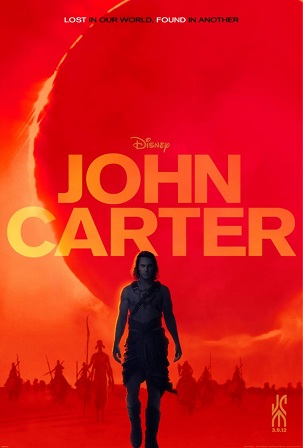
Disney’s “John Carter
Heroism and Just War
John Carter is a hero with a haunted past. The movie, unfortunately, never really explores his history much. From what I could tell, he went to war and came back to find his family had all been killed and his house burned as part of the conflict. He thus swore off fighting for a cause and instead decided to seek his fortune.
Once Carter reaches Mars (Barsoom), however, he is thrown into a conflict in which he realizes that the fate of an entire planet rests upon the victory of the city of Helium. Once he realizes the implications of this battle (and conveniently, finds the princess of Helium particularly attractive) Carter aligns himself with the Tharks, a race of aliens largely viewed as savages by the humanoid aliens on the planet. He is able to seal victory for Helium by making the Tharks realize that they, too, have a place on Barsoom which is influenced heavily by the conflict between Helium and Zodanga.
The movie touches, then, on the notion of a just war. Helium is trying to save the planet, while Zodanga does little but consume and subjugate. The Tharks view both sides as neutral and prefer them to continue fighting, as long as the war stays away from them. Yet it becomes clear that due to the influence of the Thern–an extremely advanced (technologically speaking) race which seeks to orchestrate the destruction of planets–that the conflict has implications for everyone on Barsoom, and indeed, on Earth.
Sin
The Tharks have a tradition in which they brand their people as punishment for their sins. The brands are placed so that they continue to cover one’s skin throughout their lives. If one has committed enough offenses that there is no longer any place for a branding, then one is either killed or thrown into the arena to fight against impossible odds. One’s sins literally cover their flesh. One cannot escape from one’s offenses. There is no redemption.
Christianity affirms that sin is something for which one can make no redemption for themselves. One’s sins are, in a sense, branded onto one’s past. Only by repentance and grace through faith can one be saved. There is no escape from one’s offenses except through the full and free forgiveness through Jesus Christ our Lord. There imagery in the movie of one’s sins being displayed on one’s flesh is powerful, and it resonates with the Christian view that our sins condemn us forever. Only by grace can we be saved. There is no removing the sins–branded onto us–by our own power.
Religion
The Therns are supposedly oracles of the goddess. However, it turns out that they are actually dedicated to manipulating civilizations across the galaxy. It is never discussed whether the goddess and the Therns were ever actually genuine, but it seems fairly clear that those calling themselves Therns are just using the title in order to gain power.
Religion is therefore seen as a kind of way to manipulate and enthrall the masses. All of the sides of the conflict are shown to be dedicated to the goddess, but none seems to have the full truth. However, it does seem that the dedication of the Tharks, in particular, shows a resonance with truth and a genuineness that reaches beyond the mere use of religion as subjugation. The movie, I would say, gives an overall neutral view of religion. In some ways it can be used for ill, but it nonetheless is not inherently evil.
Yet another aspect of religion in the movie, however, is that one can observe the difference between genuine faith and exploitative faith. It is clear that many of the Therns genuinely believed in the goddess and there are scenes which convey a sense of awe over the faith on Barsoom. Religious practice is seen as taking place on a genuine level and being an important part of the lives of the practitioners. These religious persons are seen as genuine and largely trustworthy. On the other hand, those who seek to exploit the faith are seen as inherently evil. Such a view should resonate with Christians, who are instructed to be aware of those within the church who would seek to lead us astray (antichrists).
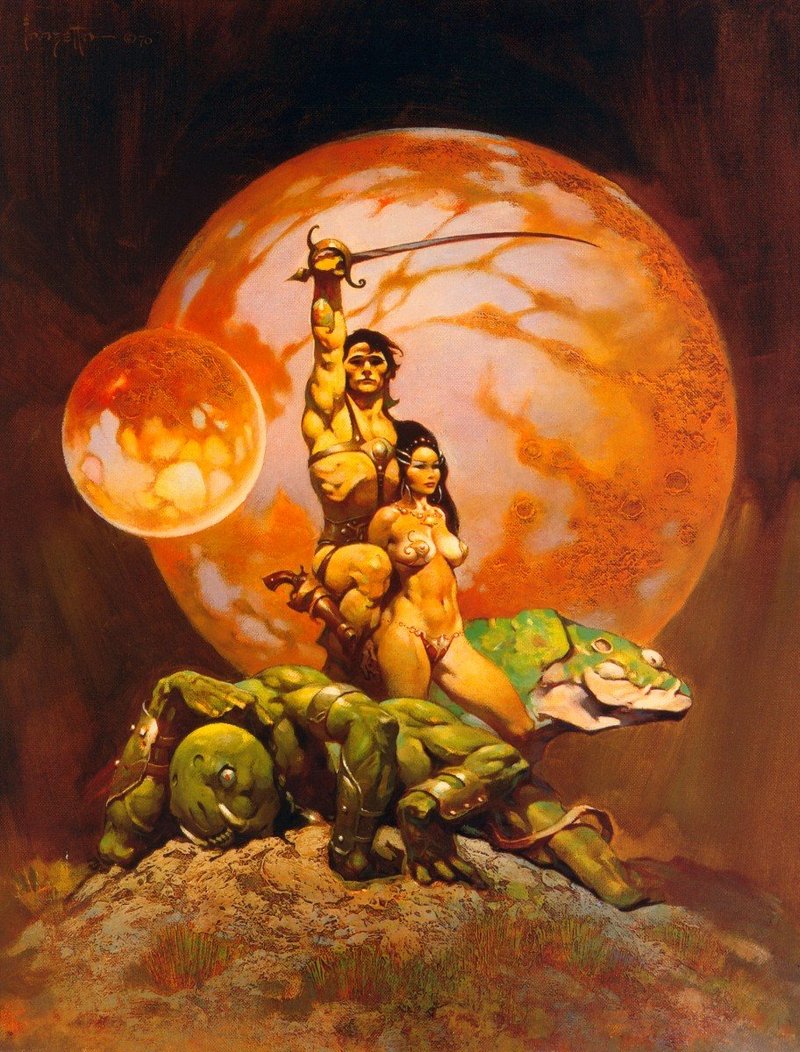 Alien Life and social (in)justice
Social justice is an underlying theme in the movie. By portraying the alien Tharks as the outsiders, the movie is able to focus on the notion that the downtrodden and overlooked can rise above the limitations of their position. Although viewed as unequals, they are equals.
One poignant scene early in the film showed a hatchery for the Tharks. They came to collect the hatchlings and it turned out that some eggs hadn’t yet hatched. The Tharks then fired on all the eggs with their gun and destroyed the “weak” young. I couldn’t help but think that this is largely what is happening in the real world with abortion [a topic I have written on extensively].
Here again, worldviews rear their ugly heads. The faith of Barsoom is a bit enigmatic. The goddess seems largely uninterested in the goings-on of everyday life. Furthermore, those who follow her are fully willing to kill their own young in order to ensure the survival of the strongest. One can’t help but think of the prioritization of desires over objective morality in our own world.
Conclusions
The film was a lot of fun. One can easily see how the source material influenced science fiction in a number of ways. As a huge fan of science fiction, I can’t help but love the movie. It is so awesome to see the origins of sci-fi play out on screen. Christians watching the film will find areas to discuss social justice, just war, and heroism. Furthermore, there are some poignant scenes which can bring up issues related to abortion and racism. A final talking point would be to discuss religion as a transcultural entity and see how it has been used in both good and bad ways. I go into this issue in my own post on the “Myth of ‘Religion.'”
“John Carter
Links
Check out another review of the movie over at Sci-Fi Christian, which looks into the background of the movie more, as well as exploring some Bible texts in relation to the movie: Barsoom or Bust!
Engaging Culture: A brief guide for movies– I discuss how Christians can view movies with an eye towards worldview.
Religious Dialogue: A case study in science fiction with Bova and Weber– I look at how science fiction is frequently used to discuss worldviews and analyze two major authors in the field along with their view of religious dialogue.
Alien Life: Theological reflections on life on other planets– What would it mean for Christianity if we discovered life on other planets?
Check out my other looks at movies, including the Hunger Games and the Dark Knight Rises here (scroll down for more).
SDG.
——
The preceding post is the property of J.W. Wartick (apart from citations, which are the property of their respective owners, and works of art as credited) and should not be reproduced in part or in whole without the expressed consent of the author. All content on this site is the property of J.W. Wartick and is made available for individual and personal usage. If you cite from these documents, whether for personal or professional purposes, please give appropriate citation with both the name of the author (J.W. Wartick) and a link to the original URL. If you’d like to repost a post, you may do so, provided you show less than half of the original post on your own site and link to the original post for the rest. You must also appropriately cite the post as noted above. This blog is protected by Creative Commons licensing. By viewing any part of this site, you are agreeing to this usage policy.
The Avengers: Sin, Salvation, and Jonah
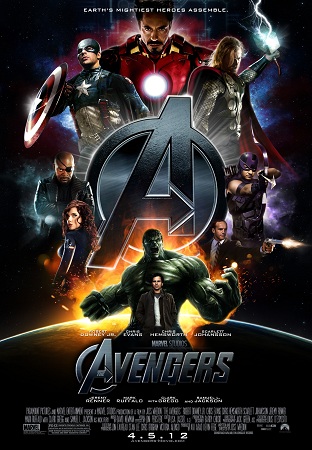 I have already reflected on Marvel’s “The Avengers” from a Christian perspective, but upon watching the recently released blu-ray and DVD
There will be SPOILERS here.
Slavery of all mankind
A thoughtful friend of mine on Facebook pointed to the dialogue between Loki and a crowd of people near the beginning of the film wherein he forces them all to kneel. Loki stands before them and shouts:
Kneel before me. I said… Kneel! Is not this simpler? Is this not your natural state? It’s the unspoken truth of humanity that you crave subjugation. The bright lure of freedom diminishes your life’s joy in a mad scramble for power. For identity. You were made to be ruled. In the end, you will always kneel.
Think of how this resonates with the Christian notion of slavery in sin. We align ourselves with things that we love. Greed. Envy. Pride. Lust. Gossip. These things, while initially pleasurable, ultimately enslave us. Loki’s speech was very discerning, however. For even though these things come to enslave us and take time away from the goods in life, we come to love them, to glorify them, and to become attached to them. We want to be enslaved in sin. We desire it. Sin calls to us, enslaves us, and we love it.
Yet, as in the movie, we are called to rise up against this sin. But we can’t do it on our own. As I discussed in my other post on “The Avengers,” we “need a hero.” We cannot rise out of slavery. Paul discusses this very notion in his letter to Rome:
Don’t you know that when you offer yourselves to someone as obedient slaves, you are slaves of the one you obey—whether you are slaves to sin, which leads to death, or to obedience, which leads to righteousness? But thanks be to God that, though you used to be slaves to sin, you have come to obey from your heart the pattern of teaching that has now claimed your allegiance. You have been set free from sin and have become slaves to righteousness. (Romans 6:16-18, NIV)
Who is it that set us free? We did not do it on our own. After all, we became slaves to sin and offered ourselves freely to it. No, it is Christ Jesus who set us free. He was the “hero” who broke the chains and gave us our freedom in Him.
Debts that Cannot Be Paid
Later on, Loki converses with Black Widow. They discuss the notion that Black Widow has “debts” to others. She owes them for the things they’ve done for her. She says that her ledger is in the “red”–she is on the wrong side of debt. During this conversation, Loki tries to break Black Widow down verbally, “Can you wipe out that much red? …Your ledger is… gushing red.”
Loki’s comments are telling, for they are actually true of not just Black Widow but of everyone. We all have our debts. We have our sins that we commit in private, away from others. We have the anger we have expressed through thought and deed. Our ledgers are overflowing, they gush red. Our sins are too great for us to repay; we cannot wipe away the red.
Yet God has loved us so much that He paid the debt. Jesus, God in human form, came to earth and paid that debt for each and every one of us. Our ledgers were full, but now we’re in the black. We have become co-heirs with Christ and have received salvation by grace through faith. We are justified through Jesus’ death and resurrection. God forgives us our sins and wipes our ledgers clean on His behalf. Loki’s comments are not unlike those of the Devil, trying to convince us that we are still in debt. Can anyone–even God–wipe away all the wrongs we’ve done? Fortunately, that answer is yes. Although we ourselves cannot repay it, God has done so for us.
Jonah
Another great line in the film is when New York City is under attack (seriously, why can’t that city catch a break?). Iron Man comes face to face with a gigantic enemy ship/creature/thing (my wife named it “Leviathan” and I think that’s a great title) and has to take it down. He asks his onboard computer: “You ever heard the tale of Jonah?” He then bursts into the mouth of the Leviathan and flies through it, exploding from the end and destroying it.
No, the reference was never explained. Hey, if you don’t know the story, look it up! It’s one of my favorites in the Bible. Just get out a Bible (or search online) and flip to “Jonah.” It’s short, and I guarantee you it’s worth the read!
Conclusion
It seems to me that there are a number of themes in “The Avengers” that Christians can relate to. The notion of the incredible debt we owe and cannot pay due to our past resonates directly with the Christian worldview. It points towards the salvation we have in Christ. Similarly, our slavery to sin cannot be overlooked. We want to sin, we crave it, but thankfully those bonds are broken in Christ.
Links
A Christian Look at “The Avengers”– I examine a number of other themes in “The Avengers” which Christians and non-Christians can discuss.
Engaging Culture: A Brief Guide for movies– I reflect on how Christians can engage with popular movies in order to have meaningful conversations with those around them.
SDG.
——
The preceding post is the property of J.W. Wartick (apart from citations, which are the property of their respective owners, and works of art as credited) and should not be reproduced in part or in whole without the expressed consent of the author. All content on this site is the property of J.W. Wartick and is made available for individual and personal usage. If you cite from these documents, whether for personal or professional purposes, please give appropriate citation with both the name of the author (J.W. Wartick) and a link to the original URL. If you’d like to repost a post, you may do so, provided you show less than half of the original post on your own site and link to the original post for the rest. You must also appropriately cite the post as noted above. This blog is protected by Creative Commons licensing. By viewing any part of this site, you are agreeing to this usage policy.
“The Hunger Games” movie reviewed and discussed by a Christian
 I have already written about the Hunger Games trilogy and offered some uniquely Christian insights into the Hunger Games movie, but here I wanted to give a brief review of The Hunger Games
Rather than giving an overview of the plot (any interested reader can get such an overview here), I’m going to dive right into a review.
Review
The movie is definitely not for children. There is a great deal of violence in the film as well as a number of scary images. Anyone who looks at my previous posts on the Hunger Games and sees the comments will realize there is a great deal of controversy over whether it is appropriate viewing for the Christian. I will comment on that shortly.
I enjoyed the movie a great deal. The moral conflict is pervasive throughout the film is so dense and immediate that it almost presses on one as a viewer. On the other hand, the conflict is not blatantly obvious, nor does the film clearly portray who is in the right or wrong. Everyone has dirty hands. It’s a movie that seems to reflect life in its parallels with the real world. Obviously, these parallels are blown out of proportion in some ways (for example, we do not sacrifice children in a battle to the death for our pleasure), but on reflection one can easily find disturbing ties into our own society (child trafficking, child pornography, and the like–these can easily be seen as parallels to the Hunger Games).
The action in the film is great but I have to admit the occasional use of camera waggle to try to make the action intense is unneeded and distracting. I think this is a modern convention among filmmakers that has far outlived its welcome. For a few movies it seems to work, but now it seems every film uses camera waggle for every explosion, every punch, every fall to the ground. It can be really, really distracting.
Back to the controversy: a number of Christians have spoken out against viewing this film. For example, some who commented on my previous posts argue that we should not view it because it shows violence (or even glorifies it) and that such things are not good for the Christian to view. But the Bible itself depicts all kinds of horrifically violent scenes. Surely these same Christians would not object to reading the Bible! The question to ask ourselves is this: what is the point of the violence? Is there a purpose in the portrayal of the horrors on screen? It seems to me, as far as the Hunger Games is concerned, there is indeed a purpose. I’ve written in extended detail on this in my post on the trilogy, but I’d like to point it out here one more time: the impact of this film and its story is not so much that it is an action flick that gets your blood going; the impact is rather that we are so close to being the Capitol in so many ways. The film practically screams that we must stop this unnecessary violence. We must work against injustice in our world. And those who are affected most by the conflicts, greed, and malevolence in our world are children. Having that portrayed on screen is a powerful call to Christians to fight for justice.
Talking Points for Christians
Why is what’s happening in the Hunger Games wrong?
Think about this question for a moment. If you think that there is something inherently wrong about what the Capitol is doing to the people of the Districts in the movie, then there must be some kind of basis for your moral reasoning. But, as I’ve argued extensively (for example, in my post on secular humanism), on an atheistic worldview there really is no ultimate moral code. How then, do we consistently condemn violence like this, even if it is someone else’s belief that such things are good or necessary?
Is there anything wrong with the lives of those in the Capitol?
As Christians, we can use this as a talking point. The people of the Capitol seem to be doing pretty well for themselves. They have others to do their every bidding and they can effectively enjoy life to its fullest. Yet it is interesting to note that there are a few characters who seem to be unfulfilled. President Snow is an obvious example–he is a despot who must maintain his power. Why is it that these people are unsatisfied? Do we need more than limitless pleasure and leisure to have a satisfactory life?
What is unjust in our world and how are we working to stop it?
Let us be frank. There are things in our own “backyard” that are reflected in the hunger games. Any time a child is abused, we can see that injustice portrayed and subtly condemned in this movie. What are we going to do to stop injustices like these? Is the Capitol really so different from our everyday lives?
Conclusion
Overall I think The Hunger Games is a movie that Christians can watch in good conscience. In fact, I think there are any number of talking points that Christians can bring to the movie and discuss with those who are talking about it. Some of these talking points were illustrated above. The movie is a call to fight injustice, and yes, it is a good action flick while it makes this point. I recommend it.
SDG.
Links
Deeper Hungers and Darker Games– The Hunger Games reflects a world without God. What does it mean?
The Hunger Games: The Atheist’s Utopia– No God: Utopia?
Christian Reflection on the Hunger Games Trilogy– My thoughts on the entire book trilogy.
——
The preceding post is the property of J.W. Wartick (apart from citations, which are the property of their respective owners, and works of art as credited) and should not be reproduced in part or in whole without the expressed consent of the author. All content on this site is the property of J.W. Wartick and is made available for individual and personal usage. If you cite from these documents, whether for personal or professional purposes, please give appropriate citation with both the name of the author (J.W. Wartick) and a link to the original URL. If you’d like to repost a post, you may do so, provided you show less than half of the original post on your own site and link to the original post for the rest. You must also appropriately cite the post as noted above. This blog is protected by Creative Commons licensing. By viewing any part of this site, you are agreeing to this usage policy.
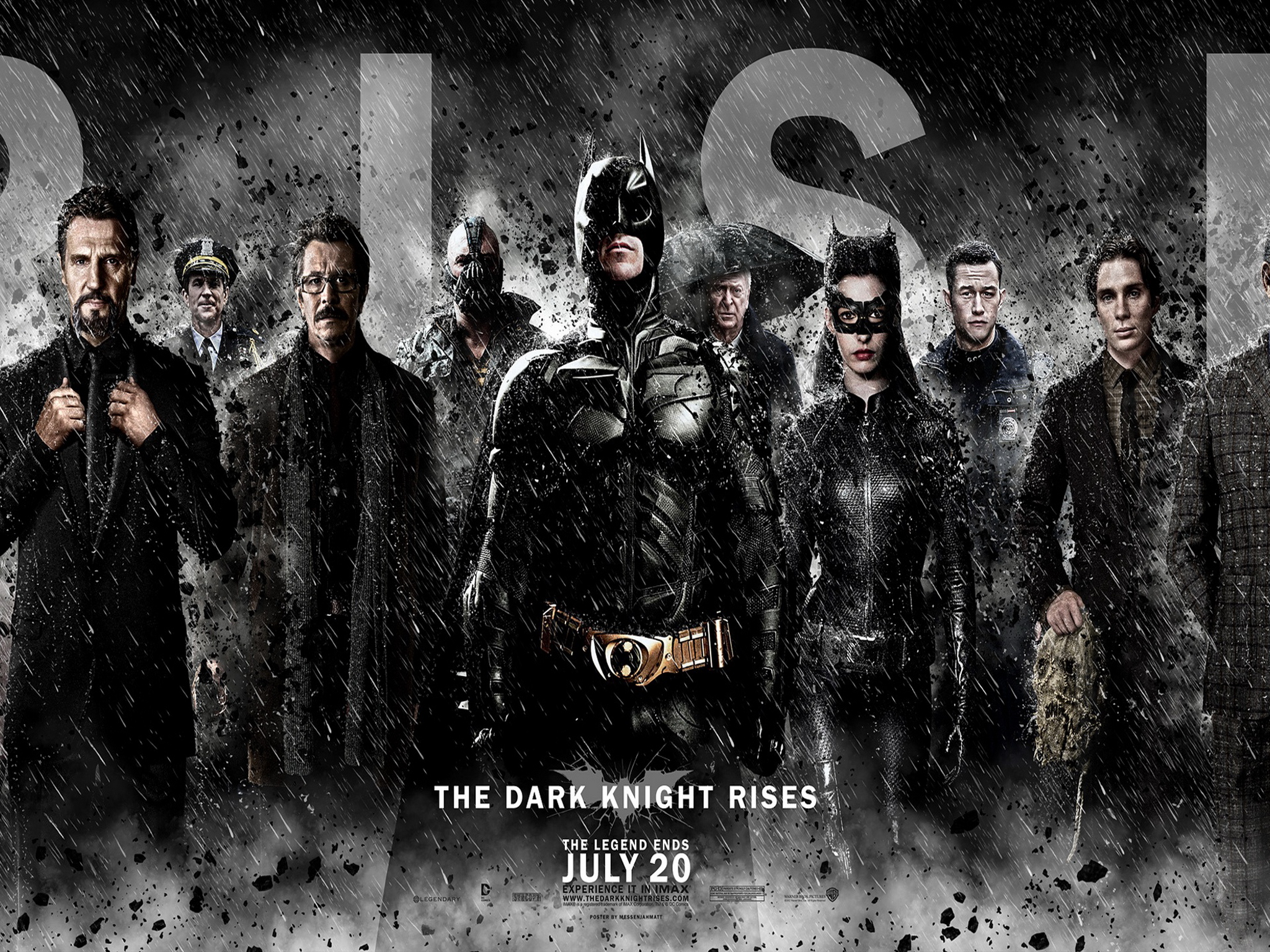
“The Dark Knight Rises”- A Christian Reflection
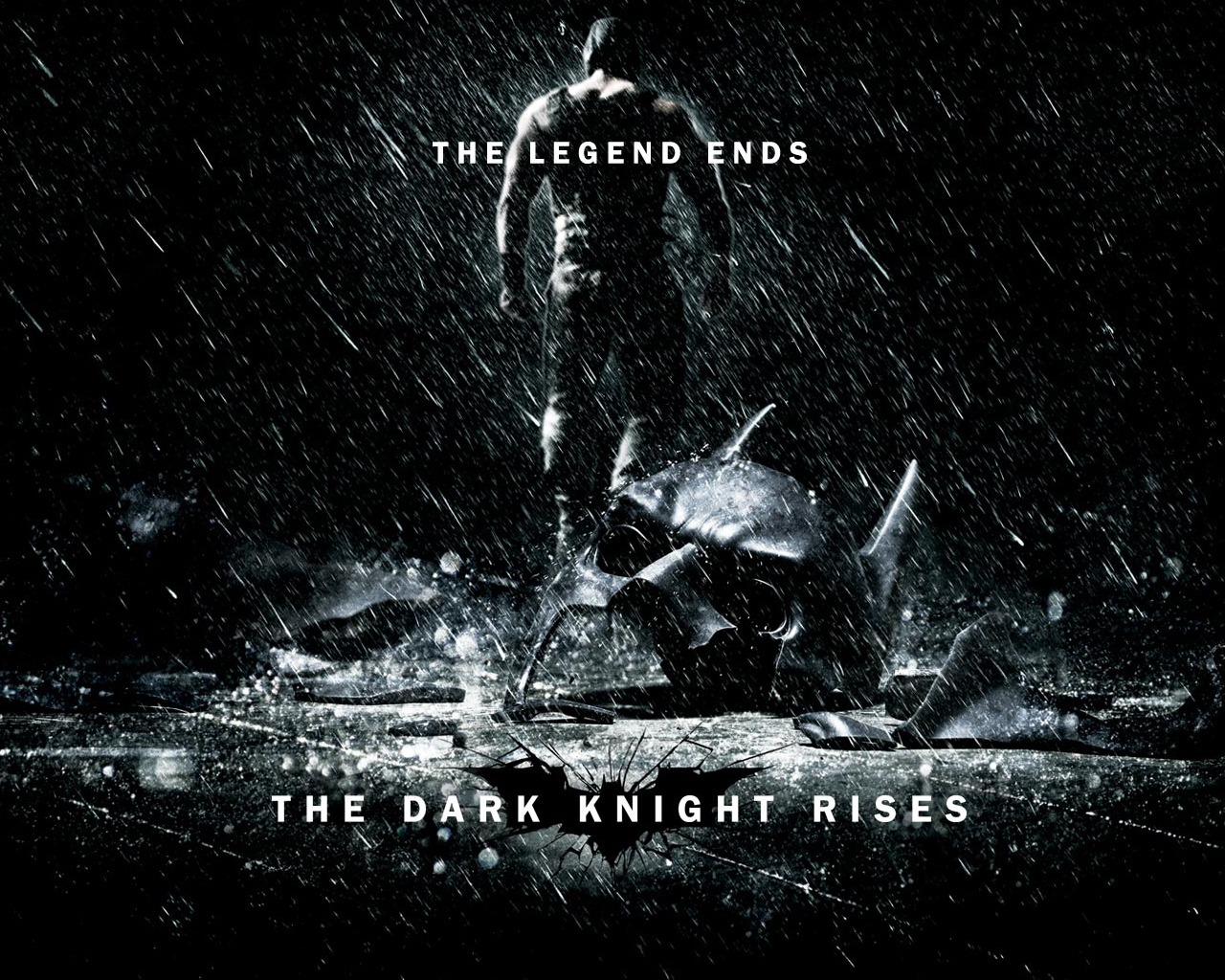 The epic tale begun with Batman Begins


Here’s the last warning: THERE ARE SPOILERS HERE. BIG ONES.
I’m going to eschew giving a plot summary because what I want to contribute to the conversation is a discussion on the themes. If you don’t feel like bothering with the movie, it would be good to at least know about the plot before reading this post. Check here for a brief summary.
Faith
Throughout the movie I kept noticing faith as a major theme. There were those who had maintained faith in a lie: Harvey Dent. Batman had taken the fall for him in The Dark Knight in order to provide Gotham with a needed hero. This faith was misplaced, and Jim Gordon, the police commissioner of Gotham City, almost destroyed himself keeping it inside himself. He said, at one point, “I knew Harvey Dent. I was his friend. And it will be a very long time before someone… Inspires us the way he did. I believed in Harvey Dent.” Yet the whole time Gordon knew he was speaking a lie. He believed in Dent, but he no longer believes in him.
Batman placed his faith in Catwoman/Selina Kyle. He firmly believed that there was more to her than the anger she continually expressed. This interplay was made more interesting by the interaction between Batman’s and Catwoman’s alter egos, Bruce Wayne and Selina Kyle. Selina Kyle, who seemed generally upset with all the rich and famous in Gotham and the decadence found therein–told the rich billionaire Bruce Wayne, “You think this can last? There’s a storm coming, Mr. Wayne. You and your friends better batten down the hatches, because when it hits, you’re all gonna wonder how you ever thought you could live so large and leave so little for the rest of us.” More on the interaction between the two later.
Alfred put his trust in Bruce Wayne. He strongly wanted Wayne to have a satisfying, fulfilling life, and throughout the film he worried that Batman would destroy Wayne. When push came to shove, Alfred was willing to leave Wayne in order to try to save him. Again, more on this later.
Finally, there were those who had faith in Batman. Batman, to them, was more than just a hero, he was a symbol of hope and justice.
One thing viewers should note is that the use of “faith” in The Dark Knight Rises is not some kind of hack definition. It doesn’t mean “belief in the face of insurmountable evidence to the contrary” or “belief in something you know ain’t true.” Instead, faith in the movie is faith in–a trusting faith based on evidence. Those who believed in Harvey Dent were mistaken, but that wasn’t due to evidence, it was active deception. Batman’s faith in Selina Kyle was firmly based on his ability to read her character. Others’ faith in Batman was based upon either a personal knowledge of the secret (Gordon) or knowledge of his actions as Batman (John Blake, others). It is very similar to the faith of the Christian, which is based upon knowledge.
 Rise
Rise
The most obvious theme in the movie was that of “arising.” Bruce Wayne had to overcome his doubts, fears, and become something greater. Yet he had to rely on others to build this journey. The knowledge of his fellow prisoners in ‘the pit’–a prison into which people were thrown, but could climb out. Only one had ever managed it, however, and that was Ra’s Al Ghul’s daughter, who had subsequently saved Bane. Ironically, then, the rise of his enemies forced the Dark Knight to meet their challenge. He had to transcend his limits and become that which Gotham needed in order to save it.
Yet Batman/Wayne wasn’t the only one who rose in the movie. Selina Kyle also experienced a major transition. As a character, she was initially powerfully motivated by anger and a desire to escape. She was portrayed as being very frustrated and angry with the social imbalance of the world and determined to not only try to balance it–in her favor, of course–but also to punish those who made it so imbalanced. When Batman returns to Gotham after his exile by Bane, he confronts Selina. He points out that the storm she predicted earlier has hit, and it doesn’t seem like it was what she wanted. Still, however, she seems determined to be in it all for herself. Yet ultimately she comes back to fight with the Dark Knight against the evil powers that are trying to destroy Gotham. In the end, she does manage to rise, with the guidance and help of Bruce Wayne/Batman.
John Blake–the incorruptible cop–also rose. It is revealed shortly before the film’s end that he is Robin–and that he is about to take up the cowl of Batman, to become the symbol for Gotham. Here, I sensed a feeling of fulfillment. We encourage others to walk in our shoes and left them up when they are down. Without Batman, Blake would not have survived. Yet he goes on to [presumably] become the next Batman, to save others.
Corruption
The world is not all sunshine and daisies. The world is full of corruption and sin. Interestingly, The Dark Knight Rises has much less corruption on the part of the police force than the previous movies. The turn was a noticeable, perceptible shift. As far as the plot goes, I wonder if any of that was due to the “Dent Act” which effectively ended organized crime in Gotham. Despite the relative “cleanness” of the police force, however, there was plenty of corruption to go around. Once Bane overthrows the city, there are “people’s courts” where “justice” is dole out on those already deemed guilty. The prisons are ripped open due to the lie [Harvey Dent] that many were imprisoned by. One wonders, how much of this is justice? Is any of what Bane says true?
Furthermore, it is a powerful reminder of the human condition. Given the chance to rule themselves, Gotham erupted into violence and brutality. It is little wonder that this should happen, given a Christian worldview, because all are sinful and need grace. All deserve justice.
Justice and Freedom
Is there justice? Was Batman just in continuing his adventures as the Caped Crusader? Is violence ever a justifiable means to an end?
Within Christianity there is a long history–traceable to Augustine, at least–of the concept of a “Just War.” There will be much debate over whether the actions of someone like Batman could be justified. Is it ever permissible to take justice into one’s own hands? I leave the question open.
Yet more important questions loom. What is justice? Who is to determine it?
One wonders what worldview could plug these holes that continue to open as human nature is probed by director Christopher Nolan throughout the Batman Trilogy. From the irrational desire to cause fear and anarchy of Scarecrow to the anarchist nihilism of the Joker to the over-reactive retribution of Bane, Nolan has exposed viewers to the depths of human freedom. What price, freedom? Bane tells Gotham he has set them free, yet he has truly imprisoned them by their own nature. What occurs is a vivid portrayal of human nature and destruction.
 Christian Threads- Redemption and Cleansing
I can’t help but think of Bruce Wayne’s ascension from the pit to the chants of “rise” without thinking of the Christian faith. We sinners are in our own pits of sin. Yet just as Wayne we have a very real lifeline. Yes, Bruce Wayne shunned the physical lifeline, but he clung to an idea: he clung to faith. Similarly, the Christian shuns the physical realm and is saved by faith. Rise.
There is the notion of a “clean slate.” Selina Kyle is primarily motivated by her desire to have such a clean slate. She wants to start over. Batman offers it as a tantalizing price to pay for her help in the final battle. Yet in the end, Selina comes back and redeems herself more than was required by the Bat. At the end of the movie, however, it is revealed that both Bruce Wayne and Selina Kyle have managed to use the “clean slate.” They have started afresh. Again, a Christian allegory or overlay could be applied here. We are all sinners in search of a clean slate, yet we cannot provide it for ourselves. While have no nearly-magical technology to give us a clean slate, we do have salvation by grace through faith. And that, my friends, is something worth considering.
Finally, Wayne’s “rise” coincides with the need I described earlier. The fact that enemies had arisen meant that Batman had to also rise to the challenge. Christians know that once sin came into the world, the only way to cure it would be for God to come into the flesh to save us. Such is poignantly portrayed when Jim Gordon talked to John Blake. Gordon talks about the evils of Gotham and describes how Batman transcends the filth, but he “puts his hands into the filth [with us]” [I believe he says filth, but I have a suspicion it may have been muck–correct me if I’m wrong here]. Wayne, though having no obligation to these people, still loves Gotham, and he is willing to condescend to get his hands dirty–to put his hands into the filthy muck and dirty them in order to save it. Is it an allegory? It certainly works as one. Jesus is God incarnate. A God who loved His creatures so much that He was willing to become one of them–to put his hands into the filth and reach down to save us. Just as Batman did what was necessary to save while also dealing justice, Christ did what was necessary in order to save humanity from its own sin. The Son Rises.
Links
Check out more of my reflections on movies. If you liked The Dark Knight Rises, check out my look at The Avengers.
SDG.
——
The preceding post is the property of J.W. Wartick (apart from citations, which are the property of their respective owners) and should not be reproduced in part or in whole without the expressed consent of the author. All content on this site is the property of J.W. Wartick and is made available for individual and personal usage. If you cite from these documents, whether for personal or professional purposes, please give appropriate citation with both the name of the author (J.W. Wartick) and a link to the original URL. If you’d like to repost a post, you may do so, provided you show less than half of the original post on your own site and link to the original post for the rest. You must also appropriately cite the post as noted above. This blog is protected by Creative Commons licensing. By viewing any part of this site, you are agreeing to this usage policy.
Pixar’s “Brave”- A Christian Perspective
 Disney Pixar’s “Brave
Brief Plot Overview
Brave follows Merida, a princess whose father in some ways endorses her Tom boyish ways, while her mother tries to get her to be the perfect princess. Conflict rages when Queen Elinor, her mother, tells Merida she is to be wed to one of the firstborn sons of the other clan leaders. Merida would rather marry in her own time and for love, while still being able to pursue her love of archery and other warrior’s tasks.
Ultimately, Merida seeks the help of a witch, to whom she was led by will-o’-the-wisps (in this movie, spirits which lead you to your fate), in order to change her mother. Her lack of specificity leads to her mother being turned into a bear. King Fergus, her father, is known for having his leg cut off in an epic battle with Mor’du, the demon bear, and so her mother’s shape turns her into a mortal enemy of her father. Merida thus has to balance keeping her mother safe with trying to turn her back before the change becomes permanent. Not only that, but the tribes are bordering on open war as they desire to have Merida’s betrothal announced.
Merida manages to calm the tribes with a speech somewhat guided by her mother-bear. In the speech she endorses marriage for the sake of love instead of arrangement. The climax comes when her mother-bear is discovered and King Fergus leads the tribes to pursue her, thinking the bear has killed his wife. As they are about to kill Queen Elinor-bear, Mor’du arrives. Elinor-bear fights Mor’du to protect Merida and eventually defeats him, but sustains great injury to herself. Merida manages to undo the spell by finally admitting that it was she herself who did this to her mother, turning her into a bear because of her own pride (before she had been saying it wasn’t her fault). Her mother returns to herself, and the tribes leave, convinced that one should marry for their own love. Happy endings all around.
Brief Review
I liked the movie a lot but I can’t help but think it was missing something. Merida herself is little involved in the climax; instead, it is her mother who pulls all the weight. Because her mother spends much of the movie unable to talk, it is hard to relate to the character as much as it is to Merida. It seems, in some sense, by the end, that although Merida has experienced a coming-of-age, she is still very reliant upon her parents.
Further, it seemed to me that they could have developed Merida’s own character more before the plot began to roll in full swing. The action scenes experienced with Merida were wonderful, but they were few and far between. It would have been significantly more interesting to have Merida developed further in order to make her into a character that is only hinted at in those beautiful scenes where she climbs a mountain, defying fear; or where she races through a forest, landing arrows on every target. The movie, it seemed, wavered between trying to appeal to the adults in the crowd and the children, and ultimately never found a voice. Unlike “Up” or some other huge successes from Pixar, “Brave” was good, not great. Overall, I can’t help but feel I wanted more. When one sees a teaser image like the one featured here, it seems the movie should have so much more of that epic imagery than it did.
Themes To Discuss
Reconciliation
Perhaps the most important theme in Brave is that of reconciliation. Initially, Merida is convinced that the way to change her mother back is to repair the tapestry she destroyed due to her anger. However, she continues to deny that she is at fault for what her mother turned into. She blames the witch, saying she didn’t know that her mother would become a bear. She just wanted to change Elinor’s mind.
Yet it is only when her mother’s change is seemingly permanent that she realizes the truth. She repents to her mother, in perhaps the most heartfelt scene in the movie, saying “I did this to you…” while she weeps. It is here, I think, that the Christian can draw out a theme from the film. It is too easy to blame the ills we bring about on others. Yet we are called to repentance. Without sincere sorrow and repentance for our sins, we are not reconciled. It is when we say, “I have sinned against You” that we are truly repentant. And, like Elinor, Christ has given his life for our sake. Despite the grievances we bring to God, God reaches out and saves us.
Fate(?)
There was little focus on what was meant by “fate” in the film. The only references to it were in the context of Merida struggling to change her fate. It was unclear what was intended, then, by fate. If it is changeable, it seems it is hardly fate. Here, “fate” seemed more a vague plot device than anything to do with the reality of the world portrayed.
Evil
There was a bit of confusion over good and evil. The witch in the film was more bumbling than cruel. She did not (as far as the movie reveals) intentionally turn Mor’du into a demon bear forever, nor did she intentionally nearly cause Elinor to become a permanent bear. In some sense, one could say she brought about the reconciliation refereed to above.
Again, Mor’du initially seems a great evil, but one can’t help but feel sorry for him, particularly when at the scene of his death his spirit (?) nods a thanks to Elinor and then becomes a will-o’-the-wisp.
Overall, “evil” in the film is slightly ill-defined. This doesn’t mean it is bad, but it does make it hard to really jump on board with one side or the other.
Conclusion
Ultimately, it seems the primary theme of the movie is indeed reconciliation. Good vs. Evil is a theme, but the lines are fairly unclear. Instead, the movie reflects on Merida’s coming of age and her reconciliation with her mother. A good flick, but not a great one.
As always, I’d love to hear your own thoughts on the movie from a Christian perspective. What did you think?
Brief Note for Parents
The film has some violence and action sequences. The witch is scary but not wholly evil. The notion of spirits changing one’s fate is vague and ill-defined. The humor is probably understandable for about an 8-year-old level.
The film, in my opinion, is not one to be terribly worried about as far as content is concerned. It is clearly fictional and ultimately is resolved by a reconciliation between mother and daughter.
Links
See my other reflections on movies.
RE: Brave and Matthew 18:15-35– another excellent Christian reflection on the movie. A slightly different angle than my own work.
Engaging Culture– my guide for drawing out Christian themes and discussions from movies.
SDG.
——
The preceding post is the property of J.W. Wartick (apart from citations, which are the property of their respective owners) and should not be reproduced in part or in whole without the expressed consent of the author. All content on this site is the property of J.W. Wartick and is made available for individual and personal usage. If you cite from these documents, whether for personal or professional purposes, please give appropriate citation with both the name of the author (J.W. Wartick) and a link to the original URL. If you’d like to repost a post, you may do so, provided you show less than half of the original post on your own site and link to the original post for the rest. You must also appropriately cite the post as noted above. This blog is protected by Creative Commons licensing. By viewing any part of this site, you are agreeing to this usage policy.
A Christian Look at “The Avengers”
 The Avengers is a huge blockbuster film. Reviewers are raving about it. It’s a cultural phenomenon now. How should a Christian take the movie? Is there anything of value to it, or is it just another action flick? Here, I’ll offer less a review [short review: it was amazing, probably my favorite hero movie other than “The Dark Knight”] than a survey of some thinking points Christians can use to engage with the culture as they interact with the movie. There will be spoilers.
I Need a Hero
Consider the overall theme of The Avengers. Earth is in trouble from outside (alien/demigod) forces. But, in a way, the humans brought this plight upon themselves (they messed with powers they should not have–this theme is found throughout the entirety of the film). How can we be saved? We must look to our hero(es) and utterly rely upon them. Think about it. That is exactly the human condition now. We need a hero. I can’t help but channel that song by Skillet, “Hero.” We aren’t superhuman, we aren’t superheroes. Ultimately, we have to rely on someone else.
The overarching theme of The Avengers is therefore very reminiscent of the Christian story. Christianity holds that we have a plight: we’re under assault from our own sinfulness, into which we were tempted by Satan. We tried to mess with that which we should not have attempted: sin. And now, because of that, we are under assault. We have no way to save ourselves. We need a hero. We can’t escape from it ourselves. Like the civilians on the streets of the cities as they come under attack in the film, we must rely utterly upon that hero. We are powerless.
Yes, I do think that this theme resonates deeply with Christianity. Jesus Christ is our hero. He gave his life for us, willingly. He rose again. He came despite having no need to do so, and saved us from that from which we cannot save ourselves.
Another way to look at this theme is the deep human need for help. We realize we are floating in this gigantic universe and we feel insignificant. What meaning is there? We look to heroes–we fictionalize them and make them into “superheroes.” Even the previews before the movie showed two more hero flicks coming up: The Dark Knight Rises and The Amazing Spiderman. We are obsessed with this theme. Yet the real story of Christianity is even more compelling: we’ve already been saved. God has already acted. He sent us our hero, when we needed Him most. Death itself has been defeated. The human urge to look for a hero, to look beyond ourselves for help, is satisfied poignantly in Christ Jesus our Lord.
God Doesn’t Wear That
One of my favorite lines in the entire movie came from Captain America: “There is only one God, ma’am, and I’m pretty sure He doesn’t dress like that.” [Author’s note: I found several references to this quote and they all varied slightly, however if my memory serves me, this is the correct version.]
What can Christians think about this? Well clearly just saying there is “one God” doesn’t do much, but what is interesting is the context he says this in. Captain America has just met Thor (a demigod/superhero), yet he still affirms there is “only one [true] God.” Sure, Thor can play with lightning, but ultimately he is not God. There is but one God, and He’s infinitely greater than Thor or any of the other “gods” who turn out to be little more than powerful beings from Asgard.
More importantly, I think a Christian could use this pop culture reference in a dialog as one notes the importance of anthropomorphic language about God. God “doesn’t dress like that!” Too often, when we speak of God, we have this picture of some old guy with a beard. But God “doesn’t dress like that.” He’s transcendent, beyond. Yet He chose to come into the flesh to save us (see “I Need a Hero” above)! I found this quote very thought-provoking.
The Beyond
Another theme of The Avengers is the fact that we aren’t alone. Humanity is thought of by some in the movie’s universe as a helpless, defenseless planet which will certainly fall at the slightest attack. Humans are but one amongst many powers in the universe, and not the most powerful.
Again, this theme resonates with Christianity. We aren’t the most powerful beings in the universe, and we are not alone. There are angels and demons, gods, and God. I can’t fully develop the layers of meaning in the Bible in regards to all the powers of the universe, but a great discussion can be found in Gerald McDermott’s God’s Rivals
Conclusion
The Avengers was a fantastic flick. It has everything a huge summer blockbuster needs. It’s worth seeing for the action alone, but the story resonates deeply with our strongest urges. It informs us of our need for a hero/savior. It affirms that we are not alone. I can’t help but say I strongly encourage Christians to see the movie and take note of the themes which resonate with our worldview; they are there in abundance. As we seek to engage with the culture, we can point out how our own story–the True Story of Jesus Christ–satisfies the needs felt in the movie, and more.
Links
The Avengers: Sin, Salvation, and Jonah– There are even more themes in the movie that I think really resonate with the Christian worldview. Check out my other post on the topic.
Please check out my other writings on movies and books. For starters, if you liked The Avengers you may want to check out John Carter.
Drew Zahn also raves about Christian themes in The Avengers. [Major spoilers at this link.]
SDG.
——
The preceding post is the property of J.W. Wartick (apart from citations, which are the property of their respective owners) and should not be reproduced in part or in whole without the expressed consent of the author. All content on this site is the property of J.W. Wartick and is made available for individual and personal usage. If you cite from these documents, whether for personal or professional purposes, please give appropriate citation with both the name of the author (J.W. Wartick) and a link to the original URL. If you’d like to repost a post, you may do so, provided you show less than half of the original post on your own site and link to the original post for the rest. You must also appropriately cite the post as noted above. This blog is protected by Creative Commons licensing. By viewing any part of this site, you are agreeing to this usage policy.
Engaging Culture: A brief guide for movies
There has been much furor recently over the release of the Hunger Games movie. My own discussion of that movie has drawn a number of comments from Christian visitors, both good and bad (and I appreciate the candor!). One theme that has reverberated throughout the discussion is the appropriateness of Christians watching violent movies or even considering using them to try to engage with the culture at large. There are no easy answers to these questions, but in this post I seek to provide a brief guide for Christians who hope to use movies to engage with the culture at large.
Appropriate?
 Perhaps the most contentious issue that was brought up in my own discussions of the Hunger Games was the appropriateness of viewing violent movies and even using them to engage with others. Jonathan Morrow, in his important book Think Christianly, provides an excellent discussion of the topic at hand. He prefaces his remarks with the comment that “the Bible would probably get… an NC-17 rating in [some areas like the end of Judges]…” Yet it is important to note that “The Bible does not use evil for exploitation” but rather “always records evil and sinful behavior and the consequences that come with them” (193). Violence in a work does not necessarily exclude it from the Christians’ sphere of engagement.
Morrow provides a number of useful questions for Christians to consider when looking at a movie. Here are a few samples (see p. 194):
- Does it endorse evil…?
- Does it incite us to evil acts?
- Is the evil gratuitous?
These are the types of questions Christians must ask as they consider a movie. Now, it is clear that Christians won’t always agree on the answers to these questions. What some consider gratuitous might be something someone else considers necessary for a plot. But violence of itself does not mean a Christian cannot engage with a movie. In particular, some movies use violence in order to point out the horrors which follow from it. This is, in fact, Biblical. Throughout the Bible, violence is depicted along with its consequences, yet it is clear that in all God is in control (see, for example, the Joseph narrative). As Christians interact with movies that have violence, they can focus the discussion on the consequences of humanity’s sinfulness and the need for a savior.
Engaging With the Movies
Morrow suggests a three-layered approach to movies: examine the form of the film (this involves engaging with the artistic elements such as music, cinematography, and the like); observe the content of the film (what is the message the director is putting forward? who is the hero/villain [these characters generally convey that which the director wants to show as good or bad]); note the function of the film (what is the film’s purpose? does it portray sinful behavior in a positive light?) [191].
These questions allow one to proceed to the level of engagement with the culture. If a film is inappropriate, it is not enough to simply dismiss it as a horrible, immoral movie. Rather, one can engage thoughtfully with those who want to discuss the movie. “Why did you enjoy the movie?”; “What kind of message do you think the movie tried to put forward?”; “Do you agree with the central theme of the film?”–these are the types of questions Christians can ask in order to engage with the culture. Note that none of these questions comes across as antagonistic or angry. Rather, they come across as interested and thoughtful. Whether one has seen a movie or not, one can easily engage in a dialog which can lead to some interesting discussions.
The brief overview I’ve given here is merely a guide. Interested readers should check out Morrow’s book (linked below).
A Case Study: The Hunger Games
 I’ve already discussed The Hunger Games at length in both the film and book versions, so I won’t repeat that discussion. Here, let me just apply what we see above. There are a few minor spoilers below.
What is the form of the film? -Generally, it seems to be a blockbuster movie with grandiose special effects and stirring musical scores. The visuals often dazzle with bright colors in the capitol but they are very subdued in some parts, particularly in the districts which are under the oppressive rule of the capitol.
What is the film’s content? -In my post on the movie, I argued that the content largely serves to direct the audience’s attention inward: we are, in a sense, the capitol. We are the ones who actively participate in activities to give ourselves comfort while there is great suffering around us. The violence in the movie is there, but it is portrayed in a way which does not glorify it. It is the people of the capitol who glorify the violence, and it is the people of the capitol who are the confused villains.
What is the function of the film? -Again, it seems to be a social commentary on the evils we bring about here. The decadence of the capitol is our own indulgence; the violence going on in the Games are the evils of the world. I see the film as a stirring commentary on social injustice.
But what if you think the violence is too much? What if you think I’m just wrong about this particular film? Should you jettison it altogether? I think not. Instead, I suggest you turn to the questions above. Ask: “Why did you like the Hunger Games?”; “Do you think the film glorifies violence, why or why not?”; “What current problems do you think relate to the film?”
Conclusion
Christians are called to engage the culture around them in a transforming fashion (1 Cor 9:19-23). Engaging with popular films is just one way to engage with the culture. As popular movies come out, it is important for Christians to know the relevant issues they raise and be ready to comment on them as they come up. If we can more effectively open discussions with people about these highly relevant topics, we can help show Christianity is an extremely powerful worldview that touches upon every aspect of our lives in a positive way.
Source
Jonathan Morrow, Think Christianly: Looking at the Intersection of Faith and Culture

 J.W. Wartick - Reconstructing Faith