TV
Downton Abbey: The Final Season Episodes 8 and 9 – a Christian Perspective
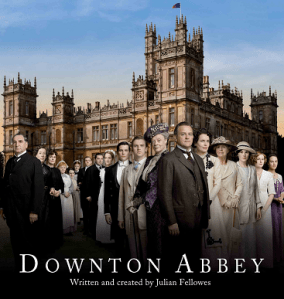 I will be analyzing each episode of the final season of Downton Abbey from a worldview perspective. I will be doing them two at a time to make space for my series on “The Expanse.” There will, of course be SPOILERS for each episode, and I will assume readers know about each previous season and episode’s content as well. It will be assumed that readers are familiar with the characters and circumstances. I will not be summarizing the plot of the episode; I will merely interact with the content from a perspective of worldview. BE COURTEOUS AND DO NOT BRING UP LATER EPISODES THAN THE ONE DISCUSSED HERE IN YOUR COMMENTS.
Episode 8
Self-giving love is something that has been evidenced throughout this season of Downton Abbey, largely in the person of Phyllis Baxter. Here, she manages to save the life of Thomas Barrow because she senses something in him that suggests he will attempt suicide–something that has been somewhat anticipated all season.
Jealousy is one of the most dangerous emotions, as we see throughout the Bible in narratives, wisdom, and letters. Lady Mary’s jealousy of Lady Edith’s happiness led, once again, to her visiting ruination upon that happiness. The rebuke that Tom Branson brought to Mary was well-deserved and it also shows something that we are not always comfortable with in our own lives–the need to confront sin. As the next episode shows, such a rebuke brought about change in behavior. This is a kind of demonstration of a Christian theme that is very Lutheran as well–the use of the Law to bring about change of behavior. By rebuking Mary’s self-serving attitude and calling her to better living, Branson was acting rightly.
Episode 9
Loyalty is something that often grows with us, and Barrow’s loyalty to Downton at last comes to the forefront in this final episode. His own bitterness and cruelty got him to a point in which he felt no return, but ultimately the kindness of some saved his life. It is a wonderful story of redemption to see Barrow taking on the duties of Butler to close out the series. There were times in the series I felt nothing good could come of Barrow, but that is just what we are as sinners: grace is something that breaks through and without deserving it, God lifts us from our sin. Barrow’s story of redemption is a powerful reminder of the concept of grace.
Forgiveness is another theme that has played throughout the series, and the first steps towards broader understanding and forgiveness were taken by Lady Mary and Lady Edith. Edith (at last!) has happiness, and that is at least partly due to Mary’s intervention. Mary took Branson’s rebuke to heart and made efforts to change the outcomes of her pettiness. There is little that can be said kindly about Mary, but her own story shows one in which the proud are humbled.
Downton Abbey is finished. It has brought us tales of sorrow, of joy, and of grace. I hope you’ve enjoyed the journey as much as I have.
More!
I know there is a ton more to discuss, and in this post we can feel free to talk about the whole series. I’d love to read your thoughts. Be sure to let me know what you thought of the episodes, and what worldview-level issues you saw them raise, in the comments below.
Links
Be sure to check out the page for this site on Facebook and Twitter for discussion of posts, links to other pages of interest, random talk about theology/philosophy/apologetics/movies and more!
Eclectic Theist– Check out my other blog for my writings on science fiction, history, fantasy movies, and more!
SDG.
——
The preceding post is the property of J.W. Wartick (apart from quotations, which are the property of their respective owners, and works of art as credited; images are often freely available to the public and J.W. Wartick makes no claims of owning rights to the images unless he makes that explicit) and should not be reproduced in part or in whole without the expressed consent of the author. All content on this site is the property of J.W. Wartick and is made available for individual and personal usage. If you cite from these documents, whether for personal or professional purposes, please give appropriate citation with both the name of the author (J.W. Wartick) and a link to the original URL. If you’d like to repost a post, you may do so, provided you show less than half of the original post on your own site and link to the original post for the rest. You must also appropriately cite the post as noted above. This blog is protected by Creative Commons licensing. By viewing any part of this site, you are agreeing to this usage policy.
Downton Abbey: The Final Season Episode 7 – A Christian Perspective
I will be analyzing each episode of the final season of Downton Abbey from a worldview perspective. I will be doing them two at a time to make space for my series on “The Expanse.” There will, of course be SPOILERS for each episode, and I will assume readers know about each previous season and episode’s content as well. It will be assumed that readers are familiar with the characters and circumstances. I will not be summarizing the plot of the episode; I will merely interact with the content from a perspective of worldview. BE COURTEOUS AND DO NOT BRING UP LATER EPISODES THAN THE ONE DISCUSSED HERE IN YOUR COMMENTS.
Episode 7
It is easy to get caught in the trap of demanding perfection from other human beings–despite knowing we can never meet the same standard ourselves. Lady Mary seems to have this kind of demand in her relationships: she wants perfection, and she is rarely able to forgive or see past people’s faults. The question is: will she be able to do this both in regards to herself (by allowing herself to come to terms with some of her own past) and others (particularly Edith). I am concerned with how Lady Mary has been reacting to her suspicions about Lady Edith and Marigold. Will she ever demonstrate anything towards Edith other than a kind of sniping attitude that they have each perpetuated throughout the series?
There was an intriguing point made about Mr. Mason. Daisy has been concerned about sharing him and the love he has for her. But it was stated here that love is not something finite, rather it is something infinite. It is not a zero-sum game in which as love for one person increases, it must decrease for another. Instead, love can keep increasing in an ever-flowing stream. This is a beautiful way to state it, and one that points to the reality of God, who is love. The love of God is abundant, and we need not fear that it will fade away from us.
Finally, not so related to worldview, but can someone explain to me why a man is spying on Mrs. Patmore? He looked like a private detective or something, but there seems to be no possible reason why anyone would ever be spying on Mrs. Patmore. She has no connection to anything I can think of that would make her a person of interest. Any ideas? Don’t spoil if you’ve already seen the next one!
More!
Be sure to let me know what you thought of the episodes, and what worldview-level issues you saw them raise, in the comments below.
Links
Be sure to check out the page for this site on Facebook and Twitter for discussion of posts, links to other pages of interest, random talk about theology/philosophy/apologetics/movies and more!
Eclectic Theist– Check out my other blog for my writings on science fiction, history, fantasy movies, and more!
SDG.
——
The preceding post is the property of J.W. Wartick (apart from quotations, which are the property of their respective owners, and works of art as credited; images are often freely available to the public and J.W. Wartick makes no claims of owning rights to the images unless he makes that explicit) and should not be reproduced in part or in whole without the expressed consent of the author. All content on this site is the property of J.W. Wartick and is made available for individual and personal usage. If you cite from these documents, whether for personal or professional purposes, please give appropriate citation with both the name of the author (J.W. Wartick) and a link to the original URL. If you’d like to repost a post, you may do so, provided you show less than half of the original post on your own site and link to the original post for the rest. You must also appropriately cite the post as noted above. This blog is protected by Creative Commons licensing. By viewing any part of this site, you are agreeing to this usage policy.
Downton Abbey: The Final Season Episodes 5 and 6 – A Christian Perspective
I will be analyzing each episode of the final season of Downton Abbey from a worldview perspective. I will be doing them two at a time to make space for my series on “The Expanse.” There will, of course be SPOILERS for each episode, and I will assume readers know about each previous season and episode’s content as well. It will be assumed that readers are familiar with the characters and circumstances. I will not be summarizing the plot of the episode; I will merely interact with the content from a perspective of worldview. BE COURTEOUS AND DO NOT BRING UP LATER EPISODES THAN THE ONE DISCUSSED HERE IN YOUR COMMENTS.
Episode 5
Mr. Mason moved into his new place, and the whole drama surrounding this shows a kind of balance of justice and pragmatism by those involved. He was effectively stripped of his place because a new owner came in and gave him the boot–despite his being tied to the land for so long. This raises many questions about justice, a sense of place, and the balance of all of these concerns. It was good to see it ending well for him, so far.
Episode 6
Trust is something that can be lost, and it is hard to gain. A Christian perspective, I would argue, entails a kind of believing the best of others until proven otherwise. After all, isn’t that how we would like to be treated ourselves? Thomas Barrow has given others many reasons to lose their trust in him. Now that he is reaping the rewards of his own incessant sowing of discontent, he has fully come to realize just how hard it is to regain that trust. In his character, so far, we see in a way the state that all of us have been in or will be in–a state in which we must confront the fact that we have sinned, fallen short of expectations, and cannot earn our way back. Baxter has continued to be an example of grace shown to Barrow in his situation, but his own recalcitrance on accepting her grace shows, perhaps, how far he has fallen. The question is: Will he be able to come back?
Finally, we are left wondering about the relationship of Lady Edith and Lady Mary. When will they ever come to terms? Is it possible that they will? Again we see the impact of broken trust on a relationship. I’m hopeful that grace can make its appearance here as well.
More!
Be sure to let me know what you thought of the episodes, and what worldview-level issues you saw them raise, in the comments below.
Links
Be sure to check out the page for this site on Facebook and Twitter for discussion of posts, links to other pages of interest, random talk about theology/philosophy/apologetics/movies and more!
Eclectic Theist– Check out my other blog for my writings on science fiction, history, fantasy movies, and more!
SDG.
——
The preceding post is the property of J.W. Wartick (apart from quotations, which are the property of their respective owners, and works of art as credited; images are often freely available to the public and J.W. Wartick makes no claims of owning rights to the images unless he makes that explicit) and should not be reproduced in part or in whole without the expressed consent of the author. All content on this site is the property of J.W. Wartick and is made available for individual and personal usage. If you cite from these documents, whether for personal or professional purposes, please give appropriate citation with both the name of the author (J.W. Wartick) and a link to the original URL. If you’d like to repost a post, you may do so, provided you show less than half of the original post on your own site and link to the original post for the rest. You must also appropriately cite the post as noted above. This blog is protected by Creative Commons licensing. By viewing any part of this site, you are agreeing to this usage policy.
Downton Abbey: The Final Seasion Episodes 3 and 4 – A Christian Perspective
I will be analyzing each episode of the final season of Downton Abbey from a worldview perspective. I will be doing them two at a time to make space for my series on “The Expanse.” There will, of course be SPOILERS for each episode, and I will assume readers know about each previous season and episode’s content as well. It will be assumed that readers are familiar with the characters and circumstances. I will not be summarizing the plot of the episode; I will merely interact with the content from a perspective of worldview. BE COURTEOUS AND DO NOT BRING UP LATER EPISODES THAN THE ONE DISCUSSED HERE IN YOUR COMMENTS.
Episode 3
Mr. Carson and Mrs. Hughes got married! The celebration and excitement that surrounds this event is a reflection of reality. Marriage is a good, one God has given to us from the beginning. There is something beautiful about seeing two people come together before God, blessing their marriage in the name of the Triune Lord. It was particularly interesting to see how the Trinitarian blessing was included in this episode, rather than being left out.
Episode 4
Lady Painswick’s offhand remark about being able to call Mrs. Carson Mrs. Hughes still is worth reflecting on: “There is a God!” We so often jokingly say things like this, but I wonder whether a more serious perspective is right. Is God not found in the little things in life as well as the big things? Is not every joy from God? This is not to say that God will never allow suffering, but it does mean we ought to thank God for even the tiniest blessings.
I’m starting to get quite worried about Thomas, the underbutler. He continues to reject any attempts to be friendly to him, but then turns around and notes to Baxter how he does feel the sometimes cruel remarks and jabs made in his direction. Part of this, of course, is reaping what he has sown. When has he ever done anything to help someone else? I struggle to think of a single instance in which he did so without an ulterior motive. But again, part of what he needs is grace. Baxter, as I noted in the last recap, has been offering that grace to him, but he continues to reject it.
The theme of rejected grace continues in how he has been treating the interview process. He has high hopes for the other positions he is applying to: but each time he is disappointed. He wants to have a position of highest import, like one in bygone years, but these positions are disappearing rapidly. Again, these opportunities are examples of grace towards him, but his own choice is to continue to reject them. I hope this story doesn’t continue to spiral down, because I could see Thomas doing something drastic.
More!
Be sure to let me know what you thought of the episodes, and what worldview-level issues you saw them raise, in the comments below.
Links
Be sure to check out the page for this site on Facebook and Twitter for discussion of posts, links to other pages of interest, random talk about theology/philosophy/apologetics/movies and more!
Eclectic Theist– Check out my other blog for my writings on science fiction, history, fantasy movies, and more!
SDG.
——
The preceding post is the property of J.W. Wartick (apart from quotations, which are the property of their respective owners, and works of art as credited; images are often freely available to the public and J.W. Wartick makes no claims of owning rights to the images unless he makes that explicit) and should not be reproduced in part or in whole without the expressed consent of the author. All content on this site is the property of J.W. Wartick and is made available for individual and personal usage. If you cite from these documents, whether for personal or professional purposes, please give appropriate citation with both the name of the author (J.W. Wartick) and a link to the original URL. If you’d like to repost a post, you may do so, provided you show less than half of the original post on your own site and link to the original post for the rest. You must also appropriately cite the post as noted above. This blog is protected by Creative Commons licensing. By viewing any part of this site, you are agreeing to this usage policy.
The Expanse: Episodes 6-7 – A Christian perspective
 I’ve been enjoying watching SyFy’s TV series, “The Expanse,” quite a bit. Part of that is because I’m a huge science fiction fan, but another part of it is because there is plenty of worldview discussion to go around. I’ll be posting a series on worldview in episodes from the expanse biweekly as they come out. There will be SPOILERS for the episodes discussed here, as well as possibly any earlier episodes. Please don’t post spoilers for later episodes on this post.
Home, Family, and Self
Once more we have the OPA entangled in a struggle for a sense of home. I emphasized this last time for episodes 1-5, but here we have the need for home countered by the revelation that the OPA killed Chrisjen Avasarala’s son, and it has become personal for her. Family was emphasized on her side of the plot, as she tries to play that card to get more information about the OPA. It will be interesting to see whether dynamics of family, self-service, and home continue to drive some of the main characters in the series. One question I still have: how important is it to have a place we can call “home”? So far, “The Expanse” seems to emphasize that this is a great need, and this resonates with a Christian worldview when, throughout the Bible, we have continued pointers to a promised land and sense of place.
Truth and Lies
One of the most common expressions regarding lies is that we “weave a web” of them. The more we engage in deception, the more we must tell more lies to keep up the facade. Detective Miller goes deeper and deeper into a web of lies. The question is: what does he have to ground himself? His job was terminated instantly once it was found out he was delving too close into territory that others wanted to keep quiet. What does it mean to continue to seek truth even in the face of such opposition–even threat to one’s own life?
Christianity was based upon the testimony of those who were willing to die for truth. This isn’t merely an appeal to sincerity of belief, but rather an argument that shows that some truths are worth dying for–something difficult to do if you know what you’re dying for is false. Miller–technically no longer Detective Miller–seems like he is willing to go to extraordinary lengths to discover the truth. I wonder where it will lead him.
Survival and the Secular Ethic
The conversation Burton has with the stowaway spy, Kenzo, in episode 7 is interesting, because it focuses on the notion that survival is the highest good for humanity. This reflects an understanding of reality that puts mere continued existence as “the good” as opposed to anything else. Frankly, this is the kind of grounding that secular ethics almost always end up appealing to, whether it is mere survival or some abstraction like “human flourishing.” Yet in this episode we see how hollow such an ethic is. It leads to Burton’s willingness to kill anyone–whether it is someone he just met (and has completely at his mercy) or to keep from getting captured.
Later in the same episode, Kenzo has a deep conversation, asking whether he is going to be dropped out an airlock because he is found to be “inconvenient.” Perhaps with the most moving line in the series so far, he asks to be told if they’re just going to kill him so he can make his peace, because “I am not an animal.” Yet, so far, many of the people have been acting just like animals, again, with Burton’s argument for mere survival as his motto for life.
The absurdity of this way of life was revealed by Kenzo, because his words resonate with us. Mere survival is not enough–we are not animals. Indeed, even the more popular appeals to ground ethics upon “human flourishing” is little more than putting forward prettier words for the same concept. Is mere survival, or even the move towards whatever hedonistic view of “flourishing” we’d like to put forward, the best we can do? I don’t believe so, and I have argued at length that the secular grounding for morality fails even on its own criteria. We are not merely animals, and we can do better than grounding a philosophy of life on an animalistic drive to survive.
Such an ethic makes the most sense on a theistic view of the world, and Christianity is the worldview that stands up under scrutiny. Those who wish to deny this and continue to affirm a secular ethic must embrace the very opposite of that which Kenzo states in this episode. That is, they must affirm “I am [merely] an animal” and then ground their moral action on that.
Conclusion
The Expanse continues to bring intriguing questions about worldview to the forefront, while couching it all in a pseudo-noir science fiction epic. I’m loving the series so far, and would like to know what you think as well. Let me know in the comments!
Links
Be sure to check out the page for this site on Facebook and Twitter for discussion of posts, links to other pages of interest, random talk about theology/philosophy/apologetics/movies and more!
Eclectic Theist– Check out my other blog for my writings on science fiction, history, fantasy movies, and more!
SDG.
——
The preceding post is the property of J.W. Wartick (apart from quotations, which are the property of their respective owners, and works of art as credited; images are often freely available to the public and J.W. Wartick makes no claims of owning rights to the images unless he makes that explicit) and should not be reproduced in part or in whole without the expressed consent of the author. All content on this site is the property of J.W. Wartick and is made available for individual and personal usage. If you cite from these documents, whether for personal or professional purposes, please give appropriate citation with both the name of the author (J.W. Wartick) and a link to the original URL. If you’d like to repost a post, you may do so, provided you show less than half of the original post on your own site and link to the original post for the rest. You must also appropriately cite the post as noted above. This blog is protected by Creative Commons licensing. By viewing any part of this site, you are agreeing to this usage policy.
Downton Abbey’s Final Season: Episodes 1-2 – A Christian Perspective
I will be analyzing each episode of the final season of Downton Abbey from a worldview perspective. I will be doing them two at a time to make space for my series on “The Expanse.” There will, of course be SPOILERS for each episode, and I will assume readers know about each previous season and episode’s content as well. It will be assumed that readers are familiar with the characters and circumstances. I will not be summarizing the plot of the episode; I will merely interact with the content from a perspective of worldview. BE COURTEOUS AND DO NOT BRING UP LATER EPISODES THAN THE ONE DISCUSSED HERE IN YOUR COMMENTS.
Episode 1
Lady Mary seemed to take some accountability in this episode. She was confronted by a woman who wanted to blackmail her for her affair, but she didn’t back down or agree to give her any money. She admitted her guilt, but did not want to tap into the family funds in order to pay off the woman. Ultimately, Lord Grantham interceded and got rid of the woman–for now. (As an aside, I’m not convinced we’ve seen the last of her. She seemed so angry! I could see her showing up again.)
However, taking accountability is not the full picture. Mary has shown little remorse for any of the acts she has done, whether it is sniping at her sister or something more serious. Moreover, her attitude of not giving into blackmail also reflected a rather nonchalant attitude towards how the news of her trist would impact others, whether the family of Tony Gillingham or her own. She seems to continue to think that her attitudes will only impact herself, completely unaware of how she impacts many others around her.
Episode 2
Thomas. Barrow. The name will almost certainly conjure up feelings in longtime watchers of Downton. This episode in particular showed how Barrow’s own attitude of bitterness and aggression towards most other people has led to his being ostracized by almost everyone else. Phyllis Baxter remains the only one who shows him any compassion and yet he continues to rebuff her attempts to be friendly towards him. There are many angles to be explored here, whether it is how our actions can bring upon ourselves the consequences thereof (without any need for things like Karma), but the angle I want to take is how Baxter’s action shows a kind of Christlike love towards Thomas.
Although this is never made explicit (or even implicit, really), the parallel is intriguing. It is one thing to love someone who is friendly to you. It is another to take compassion on someone who is hateful towards you. While we were still sinners, Christ died for us (Romans 5:8). Baxter’s kindness towards Thomas is a kind of sacrificial love that doesn’t require anything in return. It will be interesting to see how this plays out going forward.
More!
Be sure to let me know what you thought of the episodes, and what worldview-level issues you saw them raise, in the comments below.
Links
Be sure to check out the page for this site on Facebook and Twitter for discussion of posts, links to other pages of interest, random talk about theology/philosophy/apologetics/movies and more!
Eclectic Theist– Check out my other blog for my writings on science fiction, history, fantasy movies, and more!
SDG.
——
The preceding post is the property of J.W. Wartick (apart from quotations, which are the property of their respective owners, and works of art as credited; images are often freely available to the public and J.W. Wartick makes no claims of owning rights to the images unless he makes that explicit) and should not be reproduced in part or in whole without the expressed consent of the author. All content on this site is the property of J.W. Wartick and is made available for individual and personal usage. If you cite from these documents, whether for personal or professional purposes, please give appropriate citation with both the name of the author (J.W. Wartick) and a link to the original URL. If you’d like to repost a post, you may do so, provided you show less than half of the original post on your own site and link to the original post for the rest. You must also appropriately cite the post as noted above. This blog is protected by Creative Commons licensing. By viewing any part of this site, you are agreeing to this usage policy.
“The Expanse” Episodes 1-5- A Christian Perspective
I’ve been enjoying watching SyFy’s TV series, “The Expanse,” quite a bit. Part of that is because I’m a huge science fiction fan, but another part of it is because there is plenty of worldview discussion to go around. I’ll be posting a series on worldview in episodes from the expanse biweekly as they come out. There will be SPOILERS for the episodes discussed here. Please don’t post spoilers for later episodes on this post.
Fear and Safety
A theme that resonates all too readily with the current state of our society is that of fear of the “other.” People on Earth are afraid of anyone not from Earth, people of the outer planets/belters are afraid of people of Mars and Earth. Fear is a driving motivation for many of the characters so far. Chrisjen Avasarala is a clear example of this so far. She submits a captured suspected OPA terrorist to torture in order to try to get information from him that should protect others. The apparent callousness with which she does this act seems to be unquestioned by those around her.
It is all too easy to dehumanize those who are not like us. It is made easier when we fear “them.” Safety is the proverbial carrot that is held out to justify wrongful acts against the perceived evil “other.” We are assured that if such measures are not taken, our lives may be forfeit. Yet what price is too high to pay for safety?
Christians should be working against injustice wherever it occurs. Injustice includes cruel punishments and torture of others. Although we need not be completely without defense, there is no place for an ethic of the ends justifying the means in Christianity.
Home and Place
Episode 5 had an interesting conversation between an OPA man and Detective Miller. In it, the OPA man was pointing out how people on earth have a home, a place to call their own, but elsewhere, people do not. Throughout the series so far, there has been a sense of displacement among the characters. No one does seem entirely comfortable where they are. This notion of place is one that should not be too easily passed over.
Place is something that everyone needs–somewhere to call their own. In the Bible, this is evident in the narratives of Israel and the Promised Land, but it continues into our time with the promise of the New Creation. The hope for a home is something that is ultimately forward-looking, because we will never be truly home until we have been united with Christ. The longing evident in characters in “The Expanse” points us towards our own longings.
Conclusion
I’d love to know what you think of the series thus far and what worldview level issues you have seen therein. Leave a comment and be sure to follow the blog as I will be writing more as the series progresses.
Links
Be sure to check out the page for this site on Facebook and Twitter for discussion of posts, links to other pages of interest, random talk about theology/philosophy/apologetics/movies and more!
Eclectic Theist– Check out my other blog for my writings on science fiction, history, fantasy movies, and more!
SDG.
——
The preceding post is the property of J.W. Wartick (apart from quotations, which are the property of their respective owners, and works of art as credited; images are often freely available to the public and J.W. Wartick makes no claims of owning rights to the images unless he makes that explicit) and should not be reproduced in part or in whole without the expressed consent of the author. All content on this site is the property of J.W. Wartick and is made available for individual and personal usage. If you cite from these documents, whether for personal or professional purposes, please give appropriate citation with both the name of the author (J.W. Wartick) and a link to the original URL. If you’d like to repost a post, you may do so, provided you show less than half of the original post on your own site and link to the original post for the rest. You must also appropriately cite the post as noted above. This blog is protected by Creative Commons licensing. By viewing any part of this site, you are agreeing to this usage policy.
“Childhood’s End” – Utopia, God, and Science

SyFy, the channel once known as SciFi (it should still be!) recently aired a TV miniseries adaptation of Arthur C. Clarke’s book, Childhood’s End. Here, I will examine the miniseries from a Christian worldview perspective. There will be SPOILERS in what follows.
Utopia? A transhuman “hope”
In the first part, dimensions of religion are found in the wings. Why didn’t God fix everything if these aliens can come along and fix everything for us? Where was God during all those wars and atrocities? Yet as the story progresses, it is clear that not is all as it seems. Where is Karellen, the alien who seems so godlike in his powers, when people are scared, sad, and afraid? Why do the children start to change, and what does it all mean? Why is Karellen so unwilling to let humans know about him?
Karellen and the Overlords are working for the Overmind to “change the world…” They follow its bidding and do what it says in order to reshape reality in the image that the Overmind desires. The Overmind claims to be “the collective consciousness of this universe” and, more simply, “all.” The Overmind takes the children of humanity to transform them into part of the collective consciousness of itself. So where is God? In the world of “Childhood’s End,” the Overmind plays the part of God, but a pantheistic type of being which is itself clearly not all powerful. Indeed, to call the Overmind pantheistic is itself a bit of an overstatement, as it can only bring certain people to itself and do so in certain ways.
The message of Childhood’s End is one of transhumanism- it is the end of humanity and humankind’s evolution towards some higher state of existence. It seems at points that this is supposed to be presented as something that is a great good, though perhaps with some sorrow. Yet What does this mean for humans? Ultimately, this transhuman hope–really the only hope that a pervasively atheistic worldview could offer–is the death of humanity. Earth is destroyed, in the end. Humanity is gone. All that is left of us is a beautiful piece of music, that whoever passes by will be able to hear.
The utopia that seems to be described as the Overlords come is a fiction. Thankfully, it is not the real world. The hope that we have can be found in Christ and the resurrection.
God and Science
The second part of the miniseries starts with the song “Imagine” in the background as the utopic state of Earth is described. One of the lines that comes through in the song is the line “and no religion too!” Yet the voiceover is by the young scientist, who is bemoaning the death of the sciences–they are no longer needed. Initially, it seems the implication is that if we just get rid of all the silliness of religion and stop trying to pursue useless knowledge in science, we would find ourselves in a utopia.
Another scene juxtaposes a character effectively praying to Karellan, the alien, while another goes into a church. Churches have largely been abandoned, for what use is religion in a world in which there is no injustice? It is intriguing to see the connections made between religion and science made throughout here. It seems that both science and religion are cast aside as people find suffering no longer exists. There are a number of ways this suggestion could be taken.
First, it could be taken as an assertion that science and faith are seeking answers to the same questions, though with different approaches. Faith is asking “why is there suffering?” and looking to God for answers; science is attempting to fix various problems such as disease through a direct approach. Yet this brief sketch oversimplifies things. After all, people expect prayers to be effective, and often think of scientific discoveries as being answers to those prayers.
Second, it could be taken as a broader commentary on the futility of either religion or science. If we could just solve all our problems, why try to figure out how they work? Again, this answer is too simplistic.
Instead, it seems a third option is more likely: the value of faith and the value of scientific exploration in and of themselves as ways to provide answers for what we observe in the universe. These answers may often overlap–and they do–but that doesn’t make them useless or invalid.
Faith
“Faith is on its last legs, only we don’t see it, because they give us ice cream,” says a man who is keeping a church clean.
“There is no such thing as evil,” a character snaps to a religious individual.
“I’m not sure God every helped anyone… only the Overlords answered.” Sandwiched between these two statements is an accusation that God gave us diseases and then sent more once we discovered how to cure some.
“All the world’s religions cannot be right… you know that… Your faith, beautiful and poetic… has no place now.”
What is particularly interesting about “Childhood’s End” is that all the people who are taken to be quacks–they are ridiculous, silly, superstitious, paranoid–turn out to be right, at least in part. The Overlords did come to change everything, but not in the positive, benign way they presented themselves. Instead, they came to reshape humanity in the image they desired. It led to the destruction of all humanity. One character may assert there is no such thing as evil, but that flies in the face of the injustice that the Overlords allegedly came to destroy.
The miniseries, whether intentionally or not, offers a view of the world which is both bleak and profound. It is bleak because it takes away all our hope. Even that which seems to offer hope ultimately destroys us. But it is profound in that it presents that world as fiction. It is not the world in which we live, which has hope, and in which we do not need to destroy ourselves. The price that humanity was asked to pay in “Childhood’s End” was paid in reality by God.
Conclusion
Ultimately, “Childhood’s End” is a story of humanity. It is a story of humanity giving in to deceiving itself. Humans sought an easy way to peace, freedom, and justice, and what they received instead was the death of humanity. The story itself does not have any final hope, apart from the hope that some transcendent humanity would live on. In reality, humanity does have the hope provided in Jesus Christ, our savior. It is interesting that the hope humans trusted in in Childhood’s End was something outside of themselves, and indeed the true hope for humanity is not found in ourselves, but in the Incarnate God, Christ.
Links
Be sure to check out the page for this site on Facebook and Twitter for discussion of posts, links to other pages of interest, random talk about theology/philosophy/apologetics/movies and more!
Eclectic Theist– My other interests site is full of science fiction, fantasy, food, sports, and more random thoughts. Come on by and take a look!
SDG.
——
The preceding post is the property of J.W. Wartick (apart from quotations, which are the property of their respective owners, and works of art as credited; images are often freely available to the public and J.W. Wartick makes no claims of owning rights to the images unless he makes that explicit) and should not be reproduced in part or in whole without the expressed consent of the author. All content on this site is the property of J.W. Wartick and is made available for individual and personal usage. If you cite from these documents, whether for personal or professional purposes, please give appropriate citation with both the name of the author (J.W. Wartick) and a link to the original URL. If you’d like to repost a post, you may do so, provided you show less than half of the original post on your own site and link to the original post for the rest. You must also appropriately cite the post as noted above. This blog is protected by Creative Commons licensing. By viewing any part of this site, you are agreeing to this usage policy.
“The Measure of a Man” – Star Trek: The Next Generation and Personhood
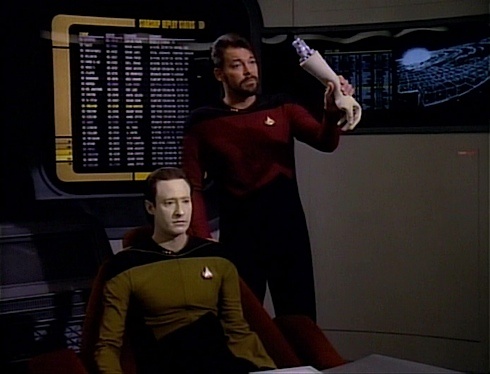 Star Trek: The Next Generation is my favorite television series. I’ve been rewatching it recently with my wife and I got to the episode called “The Measure of a Man” (check out my plot recap and review here). This episode brings up some issues I felt were pretty relevant for discussing here. We will explore only two major aspects of this episode: personhood and self-sacrifice. There will be SPOILERS for the episode in what follows.
Personhood
The episode centered around the question of whether Data could be property. Properly speaking, it seems the episode was centered around whether Data was to be considered a “person” in the legally relevant sense. The arguments brought up regarding this question were interesting, particularly for those of us interested in philosophy of mind.
Data’s conversation with Maddox, the scientist who wishes to disassemble him in order to build more of him, centers around phenomenal consciousness. Data argues that although he has no doubt Maddox could preserve the content of his memories by simply downloading the, erm, data from his brain, he thinks there is something more to these thoughts and memories than simple facts. There is a “feel” to thoughts which have a kind of aboutness that is ultimately beyond the facts and into the realm of experience.
Frankly, this is a stunningly complex argument to make for a television show. It reflects a kind of appeal to phenomenology: the content of thoughts and the “aboutness” or taste of them. Some philosophers of mind (and I would agree with them) argue that there is a real notion of this phenomenal aspect of thought which goes beyond the simple facts. Indeed, this very aspect of thoughts and feelings–the ability to have an “about” aspect to them–is the very criterion for consciousness which some philosophers appeal to. In context of the episode, if Data really has this “aboutness,” I would say it is indisputable that he would be a person (not to say that consciousness is required for personhood, but surely a self-aware, conscious being would by necessity a person be).
Ultimately, the episode climaxes in an argument over what is it that determines someone as human or a person, and Maddox summarizes the standard definitions well by appealing to self-awareness and consciousness–though again this is disputable: surely I am a person even when unconscious!–and the arguments center around this question. These are interesting and necessary questions and I think they get at the depth of the philosophical debate surrounding this issue.
Self-Sacrifice
Interestingly, this episode also clearly focuses on the concept of “self-sacrifice.” William Riker does not want to prosecute the case against Data, but he is forced to in order to save his friend. In one epic scene, he ends up flipping Data’s power switch off and as Data collapses he says “the strings are cut” referring to Pinocchio. The final scene shows Data finding Riker staring out into space, clearly pensive over his actions and hurt over his own seeming attack on his friend. Data, however, states that although Riker knew his actions would “wound” him, Riker still prosecuted the case because he knew the alternative would be, for Data, at least akin to if not literally death. Thus, Data says, Riker “saved me.”
This kind of self-sacrifice is found exactly at the heart of the Christian message. Christ was wounded for our transactions, and, as Riker does here, Jesus came knowing that such wounding would happen. These wounds were borne for our sake.
Conclusion
“The Measure of a Man” is one of those rare episodes of a serial TV show which forces viewers to take a step back and think–really think–on a topic. Whether you agree with the conclusions of the episode or not, it must be admitted it raises a number of interesting topics to explore. What do you think of this episode? What additional themes did you pick up in it? How do your favorite shows resonate with your worldview?
Links
Be sure to check out the page for this site on Facebook and Twitter for discussion of posts, links to other pages of interest, random talk about theology/philosophy/apologetics/movies and more!
Star Trek: TNG Season 2, “The Measure of a Man” and “The Dauphin”– Check out my ongoing recaps and reviews of Star Trek: TNG episodes at my “other interests” site, Eclectic Theist. Here, I review this episode and the following one. More recaps may be viewed here or by searching on that site.
The photo in this episode was a screenshot capture of the episode. I claim no rights to it and use it under fair use.
SDG.
——
The preceding post is the property of J.W. Wartick (apart from quotations, which are the property of their respective owners, and works of art as credited; images are often freely available to the public and J.W. Wartick makes no claims of owning rights to the images unless he makes that explicit) and should not be reproduced in part or in whole without the expressed consent of the author. All content on this site is the property of J.W. Wartick and is made available for individual and personal usage. If you cite from these documents, whether for personal or professional purposes, please give appropriate citation with both the name of the author (J.W. Wartick) and a link to the original URL. If you’d like to repost a post, you may do so, provided you show less than half of the original post on your own site and link to the original post for the rest. You must also appropriately cite the post as noted above. This blog is protected by Creative Commons licensing. By viewing any part of this site, you are agreeing to this usage policy.
“Family Guy” is no friend of atheists
 I used to watch almost every episode of Family Guy in the first season or two. I thought it was sometimes a clever show, but as it went on it seemed to devolve into a series of flashbacks and random, drawn-out asides which broke apart the coherence of the story. I recently saw most of an episode of “Family Guy” in which it was revealed that Brian, the family’s dog (who talks and is essentially part of the family), is an atheist. The episode is called “Not All Dogs Go to Heaven.”
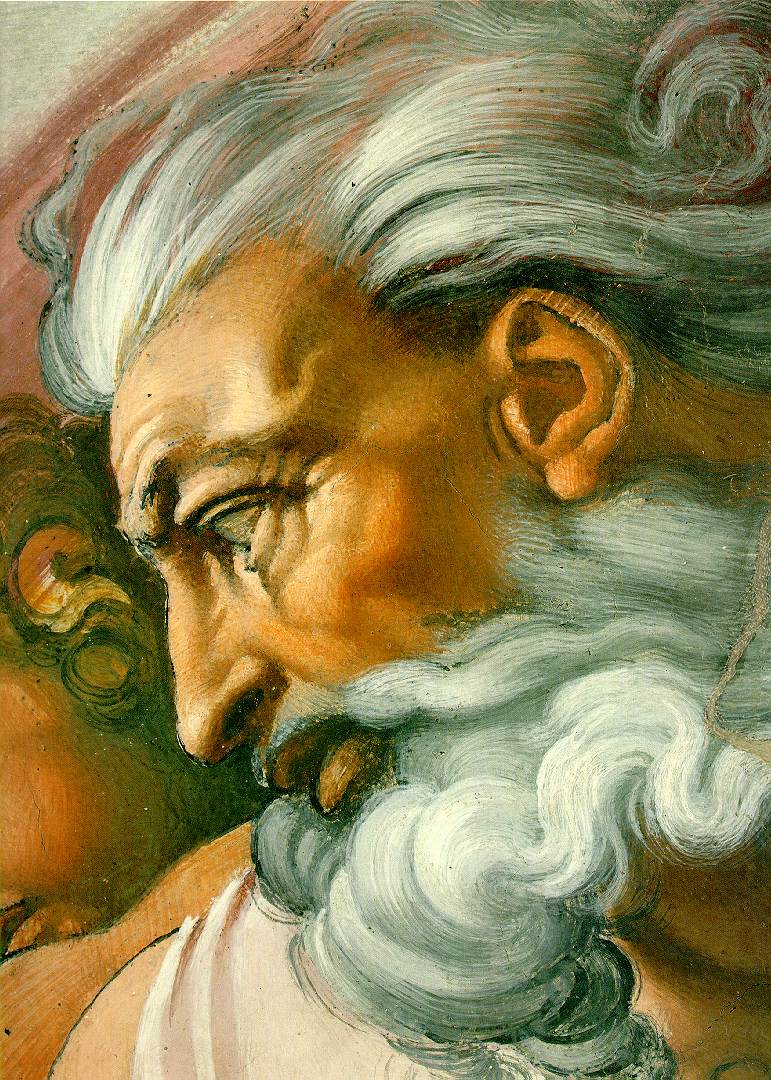
My first observation is that despite the apparent intent to make people more aware of the demonization which happens with atheists, the episode does not portray Brian in the best light by any means. For one, Brian’s reasons for remaining an atheist are revealed to be a bit absurd to say the least. When Meg–the daughter who is often the butt of jokes on the show–asked Brian why he doesn’t believe in God given “all the evidence,” he responded with an argument that made my jaw drop. To paraphrase him, he said that Hubble Space Telescope has been taking so many amazing pictures of the wonders of the universe but has never found some old man with a white beard “out there” somewhere. It then cut to an aside with an old man with a beard riding on something with some sweet music in the background [see my comments on the show being a bunch of asides and flashbacks].
Seriously, that is apparently one of Brian’s main reasons for rejecting theism, according to the episode. Really? I don’t know if this is really a reflection of what Seth MacFarlane (creator of Family Guy) believes about Christianity; but if it is he needs to perhaps reflect upon his own rejection of it. The notion that God should be found somewhere in the physical universe by something as simplistic as the Hubble Space Telescope (or anything, for that matter) and would be seen as an old man with a beard is… well, obscene. If that were my picture of what Christians believed, I’d be an atheist too. But Christians don’t believe this. Instead, they believe that God is spirit and one cannot artistically make anything which looks like God. The old man with a beard was popularized by some Christian art which, for the sake of depicting deity, chose that image to portray God. That doesn’t mean Christians actually believe God is an old man with a beard cruising through space somewhere.
The worst part about this scene is that it seems like Brian is supposed to get points for his response here somehow. That is, it’s like the viewer can feel a running tally going and apparently they’re supposed to check one off for the atheists. But gross misrepresentation of others’ religion does not mean that one has made a good point. Sure, people can sit around laughing at the notion that God is some old white guy–I’ll join them!–but to think that Brian said anything constructive is absurd. I realize it is a TV show, and a fairly shallow one at that, but I expected more. Mea Culpa, I suppose.
So it seems Brian’s atheism is based upon a farce. But that’s not the only reason I think this episode is actually unfriendly to atheists. In a later conversation with Meg, who has newly found a rather zealous faith, he confronts her belief directly with what is apparently some kind of knock-down argument because it destroys her faith:
Meg: “You are not gonna turn me from my faith, Brian!”
Brian: “Ok, fine. Then let me just ask you this. If there were a God would he put you here on Earth with a flat chest and a fat [butt]?”
Meg: “I’m made in his image…”
Brian: “Really? Would he give you a smoking hot mom like Lois and then have you grow up looking like Peter [her odd looking father]? …And what kind of God would put you in a house where no one respects or cares about you?”
That is essentially the extent of the comments on Brian’s reasoning for atheism. Apparently, for Brian [and perhaps MacFarlane, depending upon if he is actually sharing his view], God’s entire purpose should be to go around making everyone’s life the best possible life ever. God is some kind of cosmic vending machine, and if you don’t win the lottery, you should doubt the existence of that vending machine. What was most horrifying about this sequence, in my opinion, was the fact that the “image of God” was reduced down to having a hot body. Ridiculous! Being made in God’s image does not mean that everyone is going to be physically perfect. Such a notion completely misrepresents what is meant by the “image of God” which historic Christianity has long held refers to the intellect, soul, reason, etc.; not physical perfection or even physical form.
Brian’s last retort seems to seal the deal for Meg. After all, why would God put people in homes in which they aren’t cared for? Well, I don’t know, why would God put Joseph in a home in which his brothers sold him into slavery? Oh… right. You see, anyone who thinks that is an objection to the existence of God presumes they know better than God. That is, they know how to run things; they should be in charge. But I’m sorry to anyone who thinks that: you don’t. Moreover, why assume that we should know the reasons for this, or even that there are reasons? Again, I am stretching the philosophical muscle of the show quite a bit [understatement of the millenium], but the whole episode seems disingenuous.
The episode did do some good things, however, in showing the absurdity of mistreating and abusing atheists due to their lack of shared belief. I agree with this. We should not say atheists are automatically terrible people or that we wouldn’t want to live next to them. Anyone who does endorse mistreatment of atheists is acting in a decidedly un-Christian manner and should repent. Period. My point in this post is simply that this episode of Family Guy doesn’t do atheists any favors. It misrepresents Christianity in order to abuse it, but it also presents atheism in an extremely shallow way. Rather than spurring discussion, the episode merely seems bent upon mutual ridicule. I hope my atheist friends would choose, instead, to engage in dialogue rather than resorting to this kind of nonsense–and the same goes for my Christian friends as well.
Links
Be sure to check out the page for this site on Facebook and Twitter for discussion of posts, links to other pages of interest, random talk about theology/philosophy/apologetics/movies and more!
——
The preceding post is the property of J.W. Wartick (apart from quotations, which are the property of their respective owners, and works of art as credited; images are often freely available to the public and J.W. Wartick makes no claims of owning rights to the images unless he makes that explicit) and should not be reproduced in part or in whole without the expressed consent of the author. All content on this site is the property of J.W. Wartick and is made available for individual and personal usage. If you cite from these documents, whether for personal or professional purposes, please give appropriate citation with both the name of the author (J.W. Wartick) and a link to the original URL. If you’d like to repost a post, you may do so, provided you show less than half of the original post on your own site and link to the original post for the rest. You must also appropriately cite the post as noted above. This blog is protected by Creative Commons licensing. By viewing any part of this site, you are agreeing to this usage policy.

 J.W. Wartick - Reconstructing Faith