TV
Cosmos: Episode I Recap and Review
The Cosmos is all there is or was or ever will be. – Carl Sagan
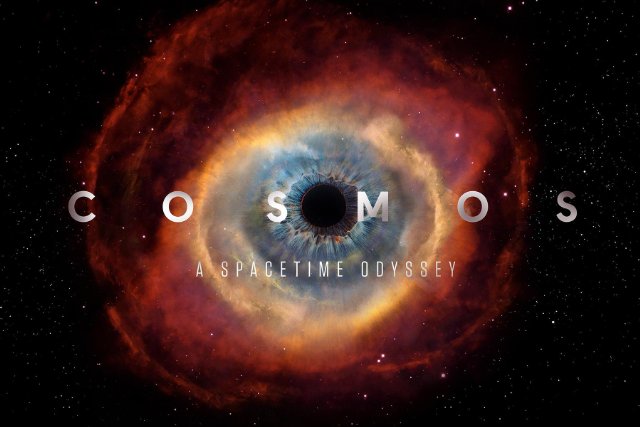
I will be watching the “Cosmos” TV series and providing recaps and responses as we go. I’ll evaluate the ideas presented for accuracy and give critical responses where I see necessary. Future “Recaps” will likely be shorter, with more length dedicated to the response.*
Episode I: Recap
The episode started off with the above quote from Sagan. Then, we took a trip in a spaceship with the “imagination” to see what the Earth looked like millions of years ago, followed by a picture of what it might look like in the future (apparently like the Borg invasion in “Star Trek: First Contact,” so watch out!).
Then, we got a pretty sweet CG-heavy tour of the solar system via fake spaceship that looks like Eve from Wall-E. I mean it, it was awesome! I was reminded of the majesty of a Ben Bova novel (if you haven’t read him, I would recommend it, but be aware of some rather simplistic discussion of religion). Finally, we zoomed in on Voyager I which had sound travelling from it in vacuum. I’m pretty sure that can’t happen, but I could easily be mistaken about that, so I’d be happy to be corrected.
An unimanginably awesome picture of the Milky Way through infrared really put us in perspective: there are seemingly infinite stars to be seen merely in our galaxy, which is one of an untold panoply of galaxies. As we zoomed out through the gigantic extremes of the universe (the Supercluster), we find that that supercluster is but one among untold billions of galaxies and the observable universe.
But what is meant by “observable universe”? The universe is actually so huge that we can’t actually observe the entire thing because there is more beyond what we can see. But “many… suspect” that our universe is but one in an extremely huge number of actual individual universes (here shown as little bubbles spreading out continually over the screen).
Let’s also not forget the church is a big destroyer and persecutor of science. Galileo proves that science and religion are forever enemies, right? Galileo’s story is preceded by Giordano Bruno, who is portrayed as a kind of anime graphic novel hero maverick because he went along with Copernicus. I’ll just narrate along. He “dared to read the books banned by the church… and that was his undoing.” No really, that’s what they said about him. Interestingly, they also say that Bruno reasoned that because God was infinite, creation couldn’t be anything less. But the evil church threw him out into the cold and he had to sleep on the ground and freeze at night! Then, he had a vision of science dreamland wherein he broke the universe with his finger and lifted the veil of knowledge that the idiots surrounding him had put in place. He floated around the universe and was the first person to figure out that there was vacuum and also the first person to fly in space and land on the moon and sun. (Again, I’m not making this up: this is what he does in the animated sequence in the dream.)
If Bruno was right, according to “Cosmos,” then not only is church authority overthrown, but the Bible can be brought into question *cue religious people gasping in shock.* Bruno was condemned by the church and burned at the stake but magically had powers to float throughout the universe so that’s pretty cool: throw off the chains of church oppression and what you’ll get is genius and the ability to fly in space.
The episode then walked through the history of the universe by paralleling a single year. The Big Bang: we are all made of “star stuff” which was produced through various processes during and after the Big Bang. Earth formed through a number of collisions with various asteroids and the like. The origin of life “evolved” through biochemical evolution. These “pioneering microbes” invented sex, so that’s pretty cool. December 30th (in the cosmic year) brought about the desolation of the dinosaurs with an asteroid. Humans only evolved “the last hour of the last day of the cosmic year.”
 Evaluation
I love space. I love astronomy–my wife can attest to this as I randomly bought an astronomy textbook to read when I was in college. Yeah… I’m a nerd. I don’t claim to have science training or be a scientist, but there is something I can spot: unfounded metaphysical statements. That’s something I honestly expect to see quite a bit of when it comes to this TV series. It actually began with one from Carl Sagan: “The cosmos is all there is or was or ever will be.” Is that a scientific fact about the cosmos? Could you demonstrate that one for me? No. In short, the show begins with an ungrounded metaphysical statement.
Another issue I have is the personification and reification of science. “Science” does x; “Science” gives us y. I’m not at all convinced that “science” is a clearly dilineated entity such that we may speak of it as though it were a reified, ontologically extant entity. What does it mean to say that “science” does something? Don’t we mean that scientists are really the ones who do this? And are not scientists just as much people as anyone else?
The episode’s portrayal of history was very unbalanced. They depicted Giordano Bruno as a kind of hero against the church full of blundering idiots. When he was finally excommunicated, the quotes they put into the church’s mouth were interesting because they portrayed some of the actual issues happening, such as a strict adherence to Aristotelian science. At the time academia really was fully behind Aristotle, and it helped that the church had bought into his cosmology as well. However, for every minimal effort they made at showing some of the historical background, there was some significant effort made to show that the stupid church and its evil Inquisition had a “sole purpose to… torment anyone” who disagreed with the views of the Church. Bruno thought God was infinite so the universe could be infinite as well. Interesting thoughts, but these are juxtaposed against a depiction of everyone else as a bunch of religious idiots who couldn’t transcend space like Bruno could.
Moreover, what banned books that Bruno read are they referencing? Copernicus’ works weren’t put on the list of banned books until 1616 (thanks to Tim McGrew for this information). Just for reference, Bruno died in 1600. I’m curious as to what this depiction was supposed to suggest. I think they mentioned someone else earlier but the ties to Copernicus were evident throughout this section, and given that it was really the rejection of Aristotelianism which was condemning, there was some historical accuracy to be desired here.
Tim McGrew also points out a number of other historical errors, such as the notion that Bruno was burned at the stake for his astronomical views; the notion that everyone at the time thought the Earth was the center of the universe; the notion that being the “center” of the universe meant Earth had a privileged place; and several more major difficulties. I highly recommend surveying them.
The depiction of the multiverse with little-to-no qualification was alarming, for there is much debate over whether there even is such a multiverse, and if there is, to what extent it may be called a multiverse. The portrayal within this episode was essentially a fictitious account being passed off without qualification as something a lot of people believe. The wording used was that “many… suspect” there is such a universe. Well yes, that may be true, but to what extent can we test for these other universes? What models predict them and why? I am uninterested in how many people hold to a belief; I am interested in whether that belief is true.
The survey of the history of the universe was interesting, but there were some major glosses. As an apologist, let me admit my bias here: I would have loved to see some discussion of the fine-tuning involved for life. But that aside, I have to say that the brief snippet used to explore the origin of life: “biochemical evolution” was astonishingly insufficient. I’m sure we’ll get into that in the next episode, but the origin of life is one of the great unsolved mysteries within science and to just hand wave and say “biochemical evolution” is, well, notable to say the least.
Overall, I have to say I was unimpressed by this episode. The historical difficulties were great, but the metaphysical claims throughout passed off as scientific fact were more disturbing.
Links
Be sure to check out the page for this site on Facebook and Twitter for discussion of posts, links to other pages of interest, random talk about theology/philosophy/apologetics/movies and more!
Cosmos, Giordano Bruno, and Getting it Right– A brief but incisive critique of a number of major historical errors made throughout the first episode.
Cosmos with Neil deGrasse Tyson: Same Old Product, Bright New Packaging- In this post, Casey Luskin takes on the notion that science and religion are at war alongside some other errors in the episode.
Is there any science in the new “Cosmos” series, or is it all naturalistic religion?– Wintery Knight takes on the episode for making a bunch of claims without evidence.
Notes
*I may miss an episode or two if I have to work.
The image with the text “Cosmos: A Spacetime Odyssey” is from Fox and belongs to them. It came from promotional material and I use it under fair use and make no claims to ownership.
SDG.
——
The preceding post is the property of J.W. Wartick (apart from quotations, which are the property of their respective owners, and works of art as credited; images are often freely available to the public and J.W. Wartick makes no claims of owning rights to the images unless he makes that explicit) and should not be reproduced in part or in whole without the expressed consent of the author. All content on this site is the property of J.W. Wartick and is made available for individual and personal usage. If you cite from these documents, whether for personal or professional purposes, please give appropriate citation with both the name of the author (J.W. Wartick) and a link to the original URL. If you’d like to repost a post, you may do so, provided you show less than half of the original post on your own site and link to the original post for the rest. You must also appropriately cite the post as noted above. This blog is protected by Creative Commons licensing. By viewing any part of this site, you are agreeing to this usage policy.
Downton Abbey: Season 4 Finale (episode 8)- A Christian worldview perspective
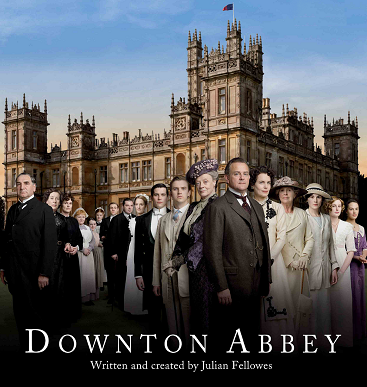 I will be analyzing each episode of the fourth season of Downton Abbey from a worldview perspective. There will, of course be SPOILERS for each episode, and I will assume readers know about each previous season and episode’s content as well. It will be assumed that readers are familiar with the characters and circumstances. I will not be summarizing the plot of the episode; I will merely interact with the content from a perspective of worldview. BE COURTEOUS AND DO NOT BRING UP LATER EPISODES THAN THE ONE DISCUSSED HERE IN YOUR COMMENTS.
A Murder?
It seems to me that the case that Bates definitely killed Mr. Green. The ticket found puts him in London on the same day, and given the looks he was shooting in the man’s direction the last time we saw them together, I’m convinced Bates knew it. I admit I find it hard to fault him though it is clearly a morally wrong action (see my discussion about justice in the last episode). Justice belongs to God, and God has given the sword to the state, not to individual avengers. The reason behind this, I suspect, is because human emotion is too easily swayed. If God did not rather relegate the power of punishment to the authority of the state, then it would be essentially given to anarchy. It is interesting that from the earliest points of the Bible, provisions were made for justice within a whole society (again, see the discussion of the last episode).
Moreover, I wonder about his determined silence about the matter with his wife. I do not think it is healthy to be keeping such secrets from his wife, though it seems to me Anna is smart enough to figure out what happened on her own.
Preserving the Royals
The scene with everyone conspiring to preserve the dignity of the prince was interesting and honestly pretty entertaining. In conjunction with the points above, it led me to wonder how to deal with the state when the state is in forms like a monarchy and being run poorly. I’m not necessarily saying that’s what’s happening here, I’m trying to draw a broader question and perspective related to the issue. I mean at what point are we obligated to defend the dignity of the state? Is there such a thing as an ideal form of government? (I admit my answer to this is: “probably not.”) Is there such an obligation to a defense of government? What are your thoughts?
A Baby?
The story skipped ahead so far that Lady Edith already had her baby (thank goodness! but remember, I really don’t think this was a great pro-life message). It will be interesting to see next season how she deals with the proximity of her child, and what happened to Michael Gregson. I reiterate my thoughts from last episode: “A culture in which the primary reaction to pregnancy is essentially to shutter women away (whether married or not) as if it were an illness, and in the case of unmarried women, to socially scorn them, is not a culture in which a strong pro-life message can succeed.”
What can we do to make the here and now into a better pro-life culture?
High Society
Branson’s relationship with the local schoolteacher is developing, and I have to wonder how the family will take it if he ends up falling entirely for her. How will the society which he continually feels uncomfortable with treat him if it comes to that point?
I also want to briefly touch on the fact that the Grentham family’s estate continues to support a wider community. The jobs provided there would seemingly disappear if it weren’t there, but is that true? It seems to me that there is something to be considered about how we view economics and fairness in the here and now as often changing how we view then. We shouldn’t simply apply economic policies that work now or concepts of fairness which have been developed in our culture arbitrarily to a different (even fictional) time and place. I personally feel great care must be taken when trying to evaluate what societal or economic systems would be “better” for various areas.
Onward and a Prediction
There is much to consider for whatever comes next, but I think the primary areas of interest from a worldview perspective will center around Lady Edith and Bates. Will Bates ultimately be found out, or will his performance with the preservation of the prince be enough to convince Lady Mary he should not be; will Anna find out? Moreover, if found out will they convict him with virtually no evidence?
A prediction: I suspect that the maid that Grantham kissed will turn up again at some point.
Links
Be sure to check out the page for this site on Facebook and Twitter for discussion of posts, links to other pages of interest, random talk about theology/philosophy/apologetics/movies and more!
The image is copyright BBC and I do not claim any rights to it. To my knowledge it is freely available for purposes of promotion/critique and I use it under fair use.
SDG.
——
The preceding post is the property of J.W. Wartick (apart from quotations, which are the property of their respective owners, and works of art as credited; images are often freely available to the public and J.W. Wartick makes no claims of owning rights to the images unless he makes that explicit) and should not be reproduced in part or in whole without the expressed consent of the author. All content on this site is the property of J.W. Wartick and is made available for individual and personal usage. If you cite from these documents, whether for personal or professional purposes, please give appropriate citation with both the name of the author (J.W. Wartick) and a link to the original URL. If you’d like to repost a post, you may do so, provided you show less than half of the original post on your own site and link to the original post for the rest. You must also appropriately cite the post as noted above. This blog is protected by Creative Commons licensing. By viewing any part of this site, you are agreeing to this usage policy.
Downton Saturday: Season IV, Episode 7- A Christian worldview perspective
I will be analyzing each episode of the fourth season of Downton Abbey from a worldview perspective. There will, of course be SPOILERS for each episode, and I will assume readers know about each previous season and episode’s content as well. It will be assumed that readers are familiar with the characters and circumstances. I will not be summarizing the plot of the episode; I will merely interact with the content from a perspective of worldview. BE COURTEOUS AND DO NOT BRING UP LATER EPISODES THAN THE ONE DISCUSSED HERE IN YOUR COMMENTS.
The Suitors
I can’t help but think of the opening line of Jane Austen’s Pride and Prejudice: “It is a truth universally acknowledged, that a single man in possession of a good fortune must be in want of a wife.” Here, however, we have “It is a truth universally acknowledged, that a single woman in possession of good fortune must be in want of a husband.” Lady Mary is highly eligible widow, and the men are lining up. It will be interesting to see on what criteria she ultimately chooses, if she chooses any of them. Matthew was a genuinely good man, and it took him quite a while to be convinced/convince Mary.
The Disappearing Bates
Bates disappeared to York for a day. Then, the man who raped Anna turned up dead in an accident. Shocking. It looks like my prediction may come true. From a Christian worldview perspective, one has to ask whether Bates would be justified in killing the man. I would think the answer is fairly obviously no. I recall reading many comments from friends who said they’d kill the man and they really wanted Bates to do so. Although I understand the rage behind such comments, I have to wonder what justification one could get from a Christian worldview for doing so.
On the Christian worldview, such punishment should never be done in a vigilante fashion. Rather, the government has been given the sword (Romans 13:4) in order to carry out justice and punishment as a representative of God on Earth. Interestingly, this is the view of civil government I think we are taught in the Bible: we are to submit to the authorities because they are given as God’s agents on Earth. Does that mean governments always do right or do what God would desire? No, governments are run by sinful people and often for sinful purposes. However, God did not issue “the sword” to the individual; even in the times of ancient Israel, punishment was most often a communal thing: the whole community would present witnesses (at least two in order to convict), and punish through stoning. There is, of course, the notion of the avenger of blood, but even in those cases cities of sanctuary were provided and witnesses were needed.
So, to return to Bates, I do understand his extreme rage, but if he killed the man–as I suspect he did–then his action is not justified. Now, the question may arise as to whether the government would have done right had Bates gone to it. That is a separate issue as well. This episode brought up many things to contemplate regarding justice.
What are your thoughts on this issue?
The Baby
It seems Lady Edith has chosen to keep her baby. Again, as I noted last time, I hardly see a ringing endorsement of a pro-life message here, but it is, nonetheless, a good thing to not have to face that in this series (yet). This episode highlighted another aspect of injustice, however: namely, that in order to not face public ridicule and shame, Lady Edith has to be whisked away to privately have the baby and then give him or her away. Such a society is inherently not a society which fully would support the pro-life message. Women should not be faced with shaming if they choose to have children.
A culture in which the primary reaction to pregnancy is essentially to shutter women away (whether married or not) as if it were an illness, and in the case of unmarried women, to socially scorn them, is not a culture in which a strong pro-life message can succeed.
Prediction
Lady Edith’s pregnancy will be outed.
Links
Be sure to check out the page for this site on Facebook and Twitter for discussion of posts, links to other pages of interest, random talk about theology/philosophy/apologetics/movies and more!
The image is copyright BBC and I do not claim any rights to it. To my knowledge it is freely available for purposes of promotion/critique and I use it under fair use.
SDG.
——
The preceding post is the property of J.W. Wartick (apart from quotations, which are the property of their respective owners, and works of art as credited; images are often freely available to the public and J.W. Wartick makes no claims of owning rights to the images unless he makes that explicit) and should not be reproduced in part or in whole without the expressed consent of the author. All content on this site is the property of J.W. Wartick and is made available for individual and personal usage. If you cite from these documents, whether for personal or professional purposes, please give appropriate citation with both the name of the author (J.W. Wartick) and a link to the original URL. If you’d like to repost a post, you may do so, provided you show less than half of the original post on your own site and link to the original post for the rest. You must also appropriately cite the post as noted above. This blog is protected by Creative Commons licensing. By viewing any part of this site, you are agreeing to this usage policy.
Downton Saturday: Season IV, Episode 6- a Christian worldview perspective
I will be analyzing each episode of the fourth season of Downton Abbey from a worldview perspective. There will, of course be SPOILERS for each episode, and I will assume readers know about each previous season and episode’s content as well. It will be assumed that readers are familiar with the characters and circumstances. I will not be summarizing the plot of the episode; I will merely interact with the content from a perspective of worldview. BE COURTEOUS AND DO NOT BRING UP LATER EPISODES THAN THE ONE DISCUSSED HERE IN YOUR COMMENTS.
The Decision
The most momentous part of this episode was when Lady Edith was very close to getting an abortion. The scene was extremely emotional: Edith’s sharing of her pregnancy with her Aunt Rosamund and the fact that she had scheduled an abortion. Rosamund insisted on going with and as they were in the waiting room, Edith shared her reasoning: she would be shunned by society, and she wasn’t sure she would be strong enough to deal with that.
Interestingly, the language used about the pregnancy affirmed several points: the baby was “wanted”–the issue was Edith’s own strength; the unborn was considered a baby, as opposed to a part of the mother. I’m hesitant to get as excited as some have gotten regarding possible commentary on “pro-life” or “pro-choice” categories in this episode for a few reasons: although the child was acknowledged as such, the issue was presented as a great danger to Edith. It was, essentially, the myth of the “back alley” abortions tied in with some bones thrown to pro-life people as well. Essentially, the episode offered a kind of please everyone approach to the issue, which, on the one hand, showed the complexity on the issue, but the other made it seem quite contrived.
The issue, of course, is extremely complex, and I did appreciate the emotional turmoil that Edith confronted when it came to the decision one way or the other. However, in light of the language used–killing a baby–one has to wonder, and I emphasize this: at the level of objective truth, what the debate is about.
The Bates Family
The guilt that Anna deals with continues to tear at my heartstrings. She is the victim and the fact that she is dealing with so much guilt–as though she thinks she is somehow to blame or stained because of it–is simply awful. I want to reach through the screen and hug her. Bates’ own take on it is to find whoever did it and destroy them. I get his motivation, but I wonder at his own treatment of Anna as a porcelain doll. He also seems to have shifted his view of her, and that seems to be another way in which the victim is having more wrongs piled atop each other. I do hope they manage to heal as a family.
Prediction
I predict that Bates has figured out who violated Anna and he’s going to kill him, resulting in Bates’ execution and a reaffirmation that British people must want everyone else on Earth to be as depressed as they are. (Yes, this is a bit tongue-in-cheek.)
Links
Be sure to check out the page for this site on Facebook and Twitter for discussion of posts, links to other pages of interest, random talk about theology/philosophy/apologetics/movies and more!
The image is copyright BBC and I do not claim any rights to it. To my knowledge it is freely available for purposes of promotion/critique and I use it under fair use.
SDG.
——
The preceding post is the property of J.W. Wartick (apart from quotations, which are the property of their respective owners, and works of art as credited; images are often freely available to the public and J.W. Wartick makes no claims of owning rights to the images unless he makes that explicit) and should not be reproduced in part or in whole without the expressed consent of the author. All content on this site is the property of J.W. Wartick and is made available for individual and personal usage. If you cite from these documents, whether for personal or professional purposes, please give appropriate citation with both the name of the author (J.W. Wartick) and a link to the original URL. If you’d like to repost a post, you may do so, provided you show less than half of the original post on your own site and link to the original post for the rest. You must also appropriately cite the post as noted above. This blog is protected by Creative Commons licensing. By viewing any part of this site, you are agreeing to this usage policy.
Downton Saturday: Season 4, Episode V
I will be analyzing each episode* of the fourth season of Downton Abbey from a worldview perspective. There will, of course be SPOILERS for each episode, and I will assume readers know about each previous season and episode’s content as well. It will be assumed that readers are familiar with the characters and circumstances. I will not be summarizing the plot of the episode; I will merely interact with the content from a perspective of worldview. BE COURTEOUS AND DO NOT BRING UP LATER EPISODES THAN THE ONE DISCUSSED HERE IN YOUR COMMENTS.
Justice & Aristocracy
The showdown between the Dowager Countess and Mrs. Crawley over the alleged thieving of the gardener was interesting because it illustrated the damage done by injustice. The Dowager was convinced the gardener was a thief, but she didn’t allow for the possibility to clear his name. Interestingly, such injustice would have been prevented by even the ancient laws found in the book of Deuteronomy (19:15) out of the Ancient Near East, in which two witnesses were necessary for conviction.
But the Dowager also showed great courtesy when she was shown to be wrong. She even asked for forgiveness.. from the gardener! What an incredible show of injustice being righted!
I thought the discussions Mary had with the researcher who was anti-aristocracy (I can’t remember his name and I’m afraid to Google spoilers!) were interesting in context of the whole series up to this point. The researcher held Mary and the aristocrats in general in contempt, because they had received what they had rather than earned it and they expected to keep it. But the show has demonstrated how the Grantham family not only provides jobs for the people who work in the home, but also for the farmers who use the land. They have created jobs rather than destroyed them. They are also able to contribute to things like the local hospital and other causes. This is not to say that aristocracy is the greatest thing ever; it is just to note that the show has presented a fairly complex vision of how aristocracy can help or harm the more general population.
One might reflect on this and consider how our own actions may impact others, whatever our place in society.
Race
It was interesting to see how the characters reacted to Jack Ross, a black band leader. I was pleased that Lord Grantham didn’t throw a fit about it. I wish they’d briefly mentioned Wilberforce’s influence in ending the slave trade in Great Britain. It will be interesting to see how the relationship between Mr. Ross and Rose develops.
Women
The discussion Anna had with Bates is worth reflecting upon: she was noting how she should not be viewed as a victim. Bates countered by saying he should have been there to protect her. I think that Anna’s thoughts were perhaps more on target than Bates’. The latter assumed a kind of responsibility for the activity of another; Bates assumed that he should be protecting Anna at all times, and that anything that happened to her was his fault. Such a view, I would argue, is mistaken. Bates’ blame game is misplaced. It is not his fault; nor is it Anna’s fault; it is the rapist’s fault.
Conclusion
I thought the episode brought up a number of interesting points related to race, women, and aristocracy. Justice for the poor was another major theme. I look forward to seeing what comes next. Feel free to comment with your own thoughts on the episode (remember NO SPOILERS FOR LATER EPISODES).
*Okay, I missed a couple. We’re back on now!
Links
Be sure to check out the page for this site on Facebook and Twitter for discussion of posts, links to other pages of interest, random talk about theology/philosophy/apologetics/movies and more!
The image is copyright BBC and I do not claim any rights to it. To my knowledge it is freely available for purposes of promotion/critique and I use it under fair use.
SDG.
——
The preceding post is the property of J.W. Wartick (apart from quotations, which are the property of their respective owners, and works of art as credited; images are often freely available to the public and J.W. Wartick makes no claims of owning rights to the images unless he makes that explicit) and should not be reproduced in part or in whole without the expressed consent of the author. All content on this site is the property of J.W. Wartick and is made available for individual and personal usage. If you cite from these documents, whether for personal or professional purposes, please give appropriate citation with both the name of the author (J.W. Wartick) and a link to the original URL. If you’d like to repost a post, you may do so, provided you show less than half of the original post on your own site and link to the original post for the rest. You must also appropriately cite the post as noted above. This blog is protected by Creative Commons licensing. By viewing any part of this site, you are agreeing to this usage policy.
Downton Saturday: Downton Abbey Season 4, Episode 2
Here, I will be analyzing each episode of the fourth season of Downton Abbey from a worldview perspective. There will, of course be SPOILERS for each episode, and I will assume readers know about each previous season and episode’s content as well. It will be assumed that readers are familiar with the characters and circumstances. I will not be summarizing the plot of the episode; I will merely interact with the content from a perspective of worldview. BE COURTEOUS AND DO NOT BRING UP LATER EPISODES THAN THE ONE DISCUSSED HERE IN YOUR COMMENTS.
That Escalated Quickly
Anna Bates. If you’ve seen it, you know already. I don’t really know what to say. From a worldview perspective, which is my intention with these posts, it is clear that this horrific tragedy deserves punishment. Moreover, the show did a good job of showing the horror of the situation without being explicit–a subtlety from which much contemporary media could learn. I knew something terrible would happen to the Bates family, but I didn’t expect this.
One thing which was abundantly clear is that something like this should not be allowed to continue. If there exists a situation in which anyone is afraid to report abuse, that is an inherently unjust situation and Christians must work against it.
I’m honestly still a bit emotionally disturbed by this episode and it is hard to comment further. Let me know your thoughts in the comments.
Gambling
The episode handled the dangers of gambling in an interesting way. Initially, I thought they’d be going full-court press on the real harms of the activity. Lord Grantham, who can hardly afford to lose money as he’s thinking about how to pay taxes on the estate, loses an undisclosed amount. Moreover, he conceals this loss from his wife, who deserved to know. But, in stepped Michael Gregson, the [married] man with whom Edith is in love. He had some “unscrupulous” times in his past and had figured out that the poker table was infested with a cheat. He then turned the tables on the cheat, recovering the money Grantham and others had lost.
Thus, the episode could have done more to show the great dangers of gambling. Instead, it seemed to make light of the situation. Though, for the sake of the plot, the writers may have simply been using this to endear Gregson to Grantham.
Predictions
I must unfortunately predict the most dire things imaginable. Although I didn’t post it here, one of my predictions–that something horrific would happen to the Bates family because they are too wonderful–already happened. Now, I think that Anna will become pregnant from the travesty and the show might use it to make a case for abortion. I know, that reads like just about the worst direction it could go, but I just think that’s where it will end up. Believe me, if/when it comes to that point I’ll have a lot to say.
I was made distraught by this episode. What are your reactions? Remember to stay spoiler free for later episodes.
Links
Be sure to check out the page for this site on Facebook and Twitter for discussion of posts, links to other pages of interest, random talk about theology/philosophy/apologetics/movies and more!
The image is copyright BBC and I do not claim any rights to it. To my knowledge it is freely available for purposes of promotion/critique and I use it under fair use.
SDG.
——
The preceding post is the property of J.W. Wartick (apart from quotations, which are the property of their respective owners, and works of art as credited; images are often freely available to the public and J.W. Wartick makes no claims of owning rights to the images unless he makes that explicit) and should not be reproduced in part or in whole without the expressed consent of the author. All content on this site is the property of J.W. Wartick and is made available for individual and personal usage. If you cite from these documents, whether for personal or professional purposes, please give appropriate citation with both the name of the author (J.W. Wartick) and a link to the original URL. If you’d like to repost a post, you may do so, provided you show less than half of the original post on your own site and link to the original post for the rest. You must also appropriately cite the post as noted above. This blog is protected by Creative Commons licensing. By viewing any part of this site, you are agreeing to this usage policy.
Downton Saturday: Downton Abbey, Season 4, Episode I
It should be known that I’ve quite enjoyed Downton Abbey. I’ll be watching Season 4 as it airs on PBS, and sharing a few comments from a worldview perspective on each episode, provided I have time, of course! There will, of course be SPOILERS for each episode, and I will assume readers know about each previous season and episode’s content as well. It will be assumed that readers are familiar with the characters and circumstances. I will not be summarizing the plot of the episode; I will merely interact with the content from a perspective of worldview. BE COURTEOUS AND DO NOT BRING UP LATER EPISODES THAN THE ONE DISCUSSED HERE IN YOUR COMMENTS.
Trust
It seems to me that this episode was particularly focused upon the issue of trust. Lady Grantham’s trust in Thomas was increased, but it was actually merely a fluke that Thomas’ hint about the nurse’s mistreatment turned out to be true. Trust can easily be misplaced. Of course, as my wife pointed out, it is possible to see this scene through the lens of “What you intended for evil, God intended for good” (see Genesis 50). Clearly, Thomas’ hint turned out to bring about a great good: the ridding of an abusive nurse.
Another example might be found in the young man’s trust of Rose’s story about being a housemaid. Although these may appear to be “white lies,” it is clear later in the episode that such lies can potentially bring about great harm. The first aspect is the fight the young man got in over Rose. The second potential for harm would be when the man showed up at Downton itself seeking Rose. Although the situation was handled comically, it seems clear it could also have ended in great emotional harm for the young man and possibly Rose as well.
Of course, “Downton Abbey” is largely centered around themes of trust. The way viewers see the interplay of truth and lie is part of the interest of the show. We know who is trustworthy (usually) and not, but the characters do not. It is telling that so many people turn out to have little value so far as trust is concerned.
Women
The times, they are a-changing! The women of Downton are seeking larger roles for themselves, whether it is Rose’s constant striving to explore and be entertained, or Lady Mary’s taking her rightful place as a co-owner of Downton. The show has continually done a good job of showing the interplay of power between patriarchy and the emergence of more egalitarian views in society. Of course much of this is steeped in our own cultural biases as a show is made about the past, but that doesn’t make it any less interesting.
The relationship between Lady Edith and the editor (whose name I can’t recall at this moment) will be interesting to monitor. For the first season in particular, Edith was kind of the whipping child for the show. Everyone seemed to take her for granted. Yet she has emerged as her own person, only to get involved with a married man. Of course, the man’s marriage is to someone who is, with the standards of the time, deemed mad. One might wonder how such a relationship will play out. Moreover, from a worldview perspective, how might we deal with the question of his attempt to divorce his wife due to insanity to marry another? Part of the difficulty of analyzing the situation migIht be found in the fact that (as my wife pointed out), we never meet his wife. Insanity could mean any of a broad spectrum of things; so it is hard to pinpoint the meaning and discussion here. Edith’s whole character continually raises tough questions, which makes her an excellent foil.
Prediction
My primary prediction for this season is that the housemaid that Lord Grantham kissed is going to turn up; likely dredged up in some fashion by Thomas or some other character with a major agenda against the family.
Conclusion
There is, of course, much more to comment on regarding this episode. I’m curious to have your thoughts on the episode and series. Again, do not spoil anything past this episode. What do you think of Edith’s relationship? How might the newfound trust in Thomas play out? What other worldview issues do you see in the episode?
Links
Be sure to check out the page for this site on Facebook and Twitter for discussion of posts, links to other pages of interest, random talk about theology/philosophy/apologetics/movies and more!
The image is copyright BBC and I do not claim any rights to it. To my knowledge it is freely available for purposes of promotion/critique and I use it under fair use.
SDG.
——
The preceding post is the property of J.W. Wartick (apart from quotations, which are the property of their respective owners, and works of art as credited; images are often freely available to the public and J.W. Wartick makes no claims of owning rights to the images unless he makes that explicit) and should not be reproduced in part or in whole without the expressed consent of the author. All content on this site is the property of J.W. Wartick and is made available for individual and personal usage. If you cite from these documents, whether for personal or professional purposes, please give appropriate citation with both the name of the author (J.W. Wartick) and a link to the original URL. If you’d like to repost a post, you may do so, provided you show less than half of the original post on your own site and link to the original post for the rest. You must also appropriately cite the post as noted above. This blog is protected by Creative Commons licensing. By viewing any part of this site, you are agreeing to this usage policy.

 J.W. Wartick - Reconstructing Faith