philosophy
Sunday Quote! – Does location determine personhood?
 Every Sunday, I will share a quote from something I’ve been reading. The hope is for you, dear reader, to share your thoughts on the quote and related issues and perhaps pick up some reading material along the way!
Does location determine personhood?
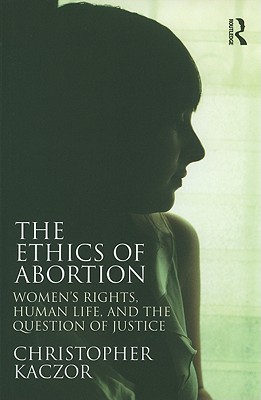
I have been reading through The Ethics of Abortion: Women’s Rights, Human Life, and the Question of Justice by Christopher Kaczor. It is a philosophical defense of the pro-life position and the notion that the unborn is a human person. In his discussion of partial-birth abortion, Kaczor makes the following point:
In Sternberg v. Carhart, later reversed in Gonzalez v. Carhart, the United States Supreme Court affirmed a constitutional right to… partial-birth abortion, and with it affirmed the legality of the conventional pro-choice view that abortion ought to be legally permissible through all nine months of pregnancy, until the human being has been entirely removed from the mother’s body. The court gave no justification why moving the head of the child just a few inches marks the crucial distinction between non-personhood and personhood… (52, cited below)
Frankly, I think this is something that any pro-choice individual must deal with: what is it about the location of the unborn which conveys personhood or prevents the unborn from being a person? What is it, that is, which transforms the unborn from non-person to person as the unborn is birthed?
Links
Be sure to check out the page for this site on Facebook and Twitter for discussion of posts, links to other pages of interest, random talk about theology/philosophy/apologetics/movies and more!
Check out my other posts on the debate over abortion.
Source
Christopher Kaczor, The Ethics of Abortion: Women’s Rights, Human Life, and the Question of Justice (New York: Routledge, 2011).
Does the child have a choice?
Recently, I saw a very powerful ad discussing the dangers of secondhand smoking. Check it out:
I want to be clear on this: I think tobacco is a very horrible problem. My grandpa died of lung cancer even after not smoking for many years. The damage had been done. I know others who have also died from cancer and the correlation to smoking is high. I do not at all want to minimize the dangers of smoking and the enormous health problems it may cause.
However, this ad was extremely poignant to me because of its language. “The tobacco companies say that smoking is a choice… What choice does she have?”
Think about that for a moment. The power behind this ad is the fact that the word “choice” has been used dishonestly: it has been used to deceive people into thinking that something is a choice made in the abstract, with an effect that only applies to the person making the choice.
Who else uses this kind of rhetoric?
I’ll give you a hint: what group calls themselves pro-choice?
That’s right: people who are pro-choice tend to give the same message as the tobacco companies called out in this video. The reasoning is similar: Tell women that abortion is a choice. It is an intellectually dishonest way to hide the real issue: that abortion impacts more than just the woman. What about the unborn child inside of the woman? Do they have a choice? Obviously they do not. The difference between the unborn child and the one in this ad is that we can see one. It is a difference of size, level of development, environment, and degree of dependency. None of these should be used to make the unborn ontologically different from the crying baby in the car seat in the ad.
I do not think we need to co-opt every argument or discussion to talk about pro-life issues. In fact, I am generally hesitant to do so, because I think it may take away from the power of the pro-life message. However, I do think that this ad could just as easily be about abortion as it is about the dangers of secondhand smoke. The only difference is the location of the child outside the womb. Does the baby inside the womb have a choice?
“The Knower and the Known” by Stephen Parrish, Part 2
 Stephen Parrish’s The Knower and the Known
Thought and Consciousness
What does it mean to have a thought? Parrish notes several aspects which go into the very act of knowing. There must be an object of knowledge; there must be a subject to consider the object; there must be consciousness in order to apprehend concepts and aboutness; there must be a relationship between subject and object and consciousness; there must be understanding of that relationship; and finally there must be a view of the world in which all of this can occur.
Consciousness itself is an extremely complex notion which involves phenomenality: the actual experience of thought; intentionality: the turning of one’s thoughts to consider an object; subjectivity: an agent which is itself the subject of the thought; and rationality: the capacity to order thoughts in such a way as to make sense of them. (206-213).
Consciousness has certain phenomenal properties. That is, when we consider our own thoughts, there is a distinct feeling to them which allows us to differentiate them from simple sense perceptions. There is an aspect of inentionality or attending-to our thoughts which is itself irreducible. Moreover, we are able to comprehend things which are themselves non-physical, such as the nature of a logical argument like modus ponens (226-228).
Consciousness must somehow interact with the physical world. If one is a physicalist, it becomes a matter of reducing consciousness to purely physical explanations, eliminating consciousness, or offering a brute relationship between consciousness and the physical world.
Qualia are also extremely important when considering consciousness. How is it that we are able to see objects as objects with certain properties? What process allows for individual particles/rays of light to manifest themselves in phenomenal consciousness in such a way as to provide a coherent picture of an object? Moreover, “there is more to recognizing qualia than just having color in one’s sensory field; there is also our attention to said qualia, the judgments we make about them, the objects that they represent, and also our memory of them–and these factors can make all of the difference” (257).
Subjectivity is also extremely important to forming a theory of consciousness. It seems that subjects are, in fact, irreducible. For the physicalist, the concept of a subject is extremely difficult. After all, a subject at t1 is going to be different from that subject at t2 in a number of highly relevant physical ways. Their neurons are firing differently from t1 to t2. How is it that subjectivity is maintained. The substance dualist holds that subjectivity is maintained through unity of consciousness which may not be reduced to the physical (291). The unity is preserved through intentionality but more thoroughly through rationality. The use of reason is one of the primary ways to offer continuity of the self. For the subject, S, at t3 is considering both thoughts at t1 and t2 in order to come to a conclusion at t4. Reason itself has aspects of intentionality which cannot be accounted for on a physicalist view of reality, for a physical object is capable of performing mathematical computations but not understanding the aboutness inherent in those computations (266-267).
Our Minds in the World
Parrish grounds his understanding of consciousness in a theistic worldview. There are numerous difficulties with an account of substance dualism which seem to only be soluble on a theistic interpretation. One of these is the problem of the interaction between body and mind. If God exists, then it seems inherently possible that a deity would be capable of forming the world in such a way that mind could interact with body. Parrish addresses several objections to the notion that an immaterial being could interact with a physical universe while also making an argument for non-physical selfs apart from God interacting in the universe (324ff).
The match of our minds with the world is something which must be accounted for. Parrish notes that if we ground ideal objects in an immaterial being like God, the difficulties with such objects existence and subsistence may be solved. Moreover, the glorious match of our mental life with reality is also explained, for a rational being is the source of all which we observe. If that is the case, then we no longer must appeal to simple brute fact to attempt to explain the phenomena of consciousness; instead, we may note that it is exactly as one might expect given theism (337ff).
And Then There was More…
Parrish concludes the work with a brief comparison of physicalism and substance dualism across multiple questions related to consciousness and the physical world. Finally, there are two appendices which address free will/agency and the theory of panpsychism, respectively.
Conclusion
In Part 1 of this review I outlined Parrish’s discussion of physicalism. Here, we have seen the structure of his substance dualism. It seems to me that Parrish’s deconstruction of physicalism is quite powerful. In particular, I noted that he makes a strong argument that physicalist theories ultimately boil down into either epiphenomenalism or mysterianism, neither of which is plausible. Moreover, his use of numerous examples and thought experiments throughout makes the work easier to comprehend while also providing a solid basis for grounding further discussions in philosophy of mind. Finally, the vast amount of research and documentation Parrish provides makes the work invaluable as a reference for physicalist writings alongside its clear value as a thorough critique of those same works.
The second major section, in which Parrish outlines his view of a theistic dualist ontology, is equally important. He provides a large amount of background for understanding how to put together various aspects of consciousness while also noting that, on theism, these observed phenomena cohere within an ontology, while on physicalism they are generally either discredited or ignored. The one thing the work may lack is a bit of cohesion in the section on substance dualism. Parrish has given a broad vision for how to hold a dualist ontology, but sometimes leaves it up to the reader to put the pieces together. The pieces are there, but not always assembled. I should note, however, that even here Parrish has provided an invaluable resource for those who wish to argue for a dualist vision of philosophy of mind.
I have already noted that Parrish’s The Knower and the Known is a tour de force in the realm of analyzing physicalist theories. However, the work is much more than a simple refutation of physicalism. Alongside that critique, Parrish has laid out the groundwork for substance dualism as a cogent alternative. Simply put, it is a must read for anyone with any interest in philosophy of mind. Comprehensive in scope, exhaustively documented, and interesting to read, The Knower and the Known is a must-have.
Source
Stephen Parrish, The Knower and the Known
SDG.
——
The preceding post is the property of J.W. Wartick (apart from citations, which are the property of their respective owners, and works of art as credited) and should not be reproduced in part or in whole without the expressed consent of the author. All content on this site is the property of J.W. Wartick and is made available for individual and personal usage. If you cite from these documents, whether for personal or professional purposes, please give appropriate citation with both the name of the author (J.W. Wartick) and a link to the original URL. If you’d like to repost a post, you may do so, provided you show less than half of the original post on your own site and link to the original post for the rest. You must also appropriately cite the post as noted above. This blog is protected by Creative Commons licensing. By viewing any part of this site, you are agreeing to this usage policy.
Book Review: “The Knower and the Known” by Stephen Parrish – Part 1
What is the mind? Are humans purely physical beings? What are we to make of physicalist/materialist philosophies of the mind? Do these debates have any relevance for the existence of God?
Stephen Parrish seeks to answer these questions (and more) in his work, The Knower and the Known
The work is split into two major sections. The first is an exploration of physicalist/materialist theories of mind; the second is an exploration of consciousness and how theism provides the best explanation for our phenomenal consciousness (among other things). We shall explore these in order. In this post, I shall focus upon Parrish’s critique of physicalism.
Physicalism
Parrish introduces the major physicalist theories related to the mind-body problem. These include reductionism, eliminativism, supervenience, and emergence. In order to make sense of the claim that the mind is a purely physical substance, it is important to come to an understanding of what it means to be “physical,” and Parrish cites numerous philosophers in order to come to a fairly simple working definition: “to be a material object (to be composed of matter) is ultimately to have certain kinds of causal power over certain areas” (69). The definition must, necessarily, be more complex. Thus, various aspects of dimension, space, and the like are explored. Then, KK provides an explanation of the standard materialist/physicalist view of reality, which is essentially that “everything that exists… can be located within space and time…” (85, Parrish’s definition cites that of C. Koons, and is also lengthier, but for the purpose of this review I have left it at this).
The nature of physicalism must also be understood in order to analyze the claims of physicalists. How is it, exactly, that the physical is to account for the mental? Parrish explores numerous ways proposed to explain physically the connection. These are centered around various proposed psycophysical laws, which hold that there are certain ways in which conscious states relate relation to other physical states. There have been many different proposals about how these laws might work.
According to the nomological theory, there is a lawlike correlation between conscious and other physical states. A nomological theorist would note the correlation between neurons firing in the brain and various mental states. The proposal would then lead to a law of correlation (and perhaps causation) for brain states b1, b2, and b3 with conscious states c1, c2, and c3. Parrish notes a number of problems with this theory, however. Most notably is the fact that there are sometimes different patterns of neurons firing for the same thought. Of course, a physicalist could counter that there are different laws for these different patterns as well. In that case, notes Parrish, “there would have to be laws to regulate the relation of every brain state with the relevant phenomenological aspect of thought to which it is correlated” (89-90). Of course, this becomes even more problematic when one considers that there is an infinite set of phenomenological aspects of our consciousness. That is, we can focus our minds around thinking of numbers and continue counting from one to a billion and beyond. For nomological theory to be correct, there must be a specific brain state for each of these thoughts (along with whatever different brain states would need to exist for the variations which can produce the same number). So there would then need to be an infinite set of laws to account for our mental life.
Yet there is another difficulty, for “since it seems possible for different types of brains to have the same conscious phenomenal thought, and every brain is constructed somewhat differently from every other brain, there would have to be even more laws that accounted for conscious items to accommodate all of the brain states of all the different brains” (90). To say that such a theory of mind begins to make a bloated metaphysics seems something of an understatement. And this is not to even begin to consider the possibility of other intelligent life in the universe, which would also need these lawlike relations for governing their conscious states.
And all of this is not to take into account the problems with explaining how and why there could be different patterns for the same thoughts not only across species but also across brains of the same species and also across individuals. A number of other possibilities are examined, including accidental correlation theory, realizability, and identity. Each of these comes with their own set of problems which Parrish elucidates (92-97).
Parrish throws the gauntlet at physicalist theories of mind in the chapter aptly titled “Judging Physicalist Theories of the Mind.” In this chapter, KK provides a thorough critique of all the major physicalist theories of mind. For the purpose of this review, I will only provide the briefest of summaries for each of these critiques. Mysterianism is essentially the notion that we cannot know how consciousness and the brain relate, but we do know that physicalism is true. The problem with this position is that such a position basically pushes the burden of proof unto other physicalist theories of mind as opposed to providing its own explanation, and the theory in fact seems to be just another form of epiphenomenalism.
Eliminativism is a simpler theory in which it is simply asserted that consciousness does not exist (133ff). Such a theory seems patently absurd on its face, yet some physicalist philosophers continue to maintain that despite any appearance to the contrary, “there are no conscious aspects, objects, properties, or events at all” (136). The difficulty with such a position is that it is “self-referentially incoherent” (137). That is, it cannot be consistently believed (whatever it means to “believe” something) that there are on mental state when, in order to have such a belief, one must have some sort of mental state. Parrish further offers a scenario to describe our world in terms of an eliminativist worldview, which would yield a kind of “zombie” world in which our fictional mental states have no relation to the world around us (149-150).
Identity theory basically asserts that consciousness just is identical to the brain. Much work must be done to analyze this theory by noting which theory of identity one might hold to, along with how such a theory of identity might play out. KK provides just such an exploration and comes to conclude that any of these identity theories falls to a number of objections, including the arbitrariness of the connection between the physical and the [identical] consciousness (162-163). Supervenience theory, which holds that somehow the mental supervenes upon the physical, suffers from providing no actual explanation for how this should be the case and thus basically devolves into one of the other physicalist theories.
Functionalism is the theory that “the conscious mind is the brain functioning in a certain manner” (171). Again, the difficulty here is that this seems to boil down largely into a bare assertion and how closely related to (and probably reliant upon) eliminativism it is.
Higher order theories of mind posit that consciousness is something like the brain scanning itself. However, this provides no explanation for how consciousness could arise and thus is again parasitic upon other varieties of physicalism, most notably eliminativism.
Epiphenomenalism is at the core of Parrish’s critique, for throughout the work he shows in numerous ways how the other physicalist theories of mind are ultimately mysterian or epiphenomenal in nature. Epiphenomenalism is basically the view that consciousness is causally inefficacious. Thus, it is the brain which “does the work” while consciousness is some kind of byproduct of brain activity. However, such a theory does not adequately explain how consciousness may itself arise, nor does it provide any attachment for our thoughts to reality. It thus suffers again from self-referential incoherence, for our mental states have no causal attachment to our brain states or reality. They are, again, merely “epiphenomena” which somehow are generated by our brains. If our mental states happen to line up with reality, that becomes a merely happy accident, for our mental states do not control our brain states but are rather generated by them. This is not to imply that mental states must control brain states to give rise to coherency, but rather to note that unless our mental states are causal in some sense, the very process of rational thought is illusory, for our prior mental states have no connection to our past mental states other than to be generated in a certain temporal order.
Conclusion
We have outlined Parrish’s critique of physicalism. Next week, we shall explore his defense of dualism and his case for theism from the nature of intelligibility. However, by way of conclusions for this section, it is important to note the insights which Parrish has offered in KK. The arguments he presented seem devastating to physicalism. In particular, the fact that so physicalist theories of mind all seem to either ultimately appeal to mystery or reduce consciousness beyond causal powers undermine the physicalists’ ability to explain reality sufficiently. If a worldview cannot even account for something as basic as our thoughts, such a deficiency seems to bode ill for the rest of that view. As noted, we shall note a powerful alternative which Parrish argues for in the latter part of the book, theistic substance dualism.
Parrish, of course, offers much more thorough critiques of every position listed here (along with many that were not included in this outline). The work is extremely important in not only its comprehensiveness but also its thoroughness for exploring theories of mind.
Stephen Parrish’s The Knower and the Known
Source
Stephen Parrish, The Knower and the Known
SDG.
——
The preceding post is the property of J.W. Wartick (apart from citations, which are the property of their respective owners, and works of art as credited) and should not be reproduced in part or in whole without the expressed consent of the author. All content on this site is the property of J.W. Wartick and is made available for individual and personal usage. If you cite from these documents, whether for personal or professional purposes, please give appropriate citation with both the name of the author (J.W. Wartick) and a link to the original URL. If you’d like to repost a post, you may do so, provided you show less than half of the original post on your own site and link to the original post for the rest. You must also appropriately cite the post as noted above. This blog is protected by Creative Commons licensing. By viewing any part of this site, you are agreeing to this usage policy.
The Epistemic Argument Against Abortion
 Epistemology is the study of knowing. That is, it is the study of how we know something is true. Here, I will offer an argument against abortion which concerns the question: what do we know about the unborn?
An Analogy*
Suppose you are a demolition expert. You’re sitting outside a building you are to blow and you are about to hit the button. The area has been declared clear and so you have flipped the cover of the button up and you’re about to blow the building. Suddenly, someone cries out–a little red tricycle has been discovered outside the building. Fortunately, however, the people who spotted the tricycle tell you there is only a 20% chance that the child made his or her way inside the building. The equipment being used is expensive and your company is paying more Shrugging while thinking “Time is money,” you go ahead and press the button, blowing up the building. After all, you’re 80% sure there is no one inside.
…Wait a second. That’s horrible! Shouldn’t you check and be sure that there is no one inside the building? After all, that person’s life is worth so much more than the extra money your company will have to spend as the child is searched for.
The question then must be asked: what percent is low enough for you to press the button? Suppose you were 90% sure the child was not inside the building, would you pull the button then, confident that you gave your best effort? How about 95%? 98%? It seems to me the only morally permissible situation would be certainty. The building has been swept entirely from top to bottom and cordoned off, you are positive no one is inside. Then, you may press the button without moral culpability: you are certain you are not killing anyone whether directly or indirectly.
*I should note this example is from Kevin A. Lewis. I modified the scenario slightly.
The Argument Stated and Defended
The argument is actually very simple:
1) If it is possible that the unborn is a human person, we should not kill the unborn.
2) It is possible that the unborn is a human person.
3) Therefore, we should not kill the unborn.
Premise one seems obviously true to me. In order to deny premise one, the advocate for abortion must claim that we may destroy “fetuses” even if it is possible that they are human persons. That is, the pro-choice position must hold that it is permissible to blow the building at 80%; or perhaps even at 98%. Given a similar situation: the doctor with the tools for abortion goes and destroys the fetus with the possibility that, like the red tricycle sitting outside the building, they may not know whether they are killing a child; instead, they go forward with the procedure, even though they may be murdering a baby.
Note that what I’m claiming here is a very small claim: it may be even a .5% chance that the fetus is a baby (of course, I am convinced that from conception, we have a human being, but for the sake of argument I will grant even .01% chance), but then the doctor, like the demolition expert, goes ahead and “blows the building” anyway.
Premise 2 also seems to be obviously true. In order to show me that it is wrong, the pro-choice party must make an argument towards the claim that the unborn is not a human person. Why must they try to prove a universal negative? Well, my claim is very broad: It is possible the unborn is a human person. I have argued towards this end multiple times, and would be willing to engage someone on those points. But the bottom line is, even if my arguments fail, I still think that it is possible the unborn is a human person. I just need reasonable doubt here, not epistemic certainty. Unfortunately for those who are pro-choice, their position must yield epistemic certainty, but it cannot.
The conclusion follows from the premises via modus ponens. Thus, the argument succeeds.
Objections
We can never be sure about anything
Perhaps the most thoughtful answer a pro-choice advocate might make for this argument is that we can never be sure of anything. After all, we cannot be certain that when we drive somewhere, a child might run in front of our car and get hit and killed. Indeed, in the case of a demolition expert, one could always have a helicopter drop a small child onto the building at the last second, or a child could tunnel underneath and get in, etc.
My response to this argument is fairly straightforward. In abortion, we are intentionally going in and killing the fetus (or dismantling it; however you want to put it). The analogy with driving simply doesn’t work. In order for it to be even close to accurate, the driver isn’t driving safely. Instead, it would be like driving drunk along a sidewalk in Chicago. You shouldn’t do it.
The problem with the ‘certainty’ objection is that while it is true we cannot be 100% of just about anything, it is also true that there are some steps we should take in order to give ourselves epistemic certainty. That is, there is a line between saying something is broadly logically possible and saying that it actually reduces one’s epistemic certainty of a proposition. Certainly, it is possible for a helicopter to parachute a child onto the building in the seconds before it explodes, but does that reduce one’s epistemic certainty pertaining to the situation? I do not think so.
You’re A Man
Unfortunately, I run into this argument far more often than one might think. It should be pretty obvious that this argument is completely fallacious. Whatever my gender happens to be, I am capable of reasoning.
Sometimes, the argument is put forth as “get out of my womb” or something similar. Well again, if the unborn is a human being, then I am attempting to protect a distinct human being. Thus, this objection not only begs the question, but it is also insulting. It is nothing more than a rhetorical device.
We can never be certain that the fetus is not a human being
A response like this basically grants my argument. As I have argued, if this is the case abortions should be impermissible. We shouldn’t just bank on uncertainty to gamble with lives. Of course, I am not going to merely appeal to uncertainty, I have positively argued that the unborn are human beings. Period.
Links
Like this page on Facebook: J.W. Wartick – “Always Have a Reason.”
Be sure to check out my other posts in which I argue for the pro-life position. Particularly relevant to the present discussion are “From conception, a human” and “The issue at the heart of the abortion debate.”
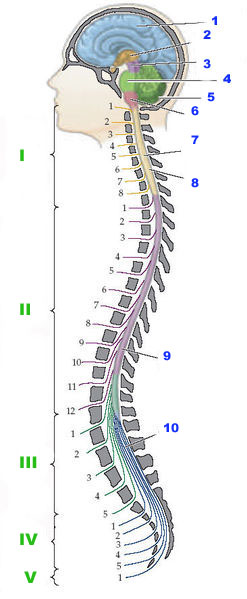
Image Credit: Wikimedia Commons Chixoy.
SDG.
——
The preceding post is the property of J.W. Wartick (apart from citations, which are the property of their respective owners, and works of art as credited) and should not be reproduced in part or in whole without the expressed consent of the author. All content on this site is the property of J.W. Wartick and is made available for individual and personal usage. If you cite from these documents, whether for personal or professional purposes, please give appropriate citation with both the name of the author (J.W. Wartick) and a link to the original URL. If you’d like to repost a post, you may do so, provided you show less than half of the original post on your own site and link to the original post for the rest. You must also appropriately cite the post as noted above. This blog is protected by Creative Commons licensing. By viewing any part of this site, you are agreeing to this usage policy.
Against Christian Materialism
 Is it possible for Christians to be materialists? A number of Christians say that yes, it is. Here, I will argue that the conjunction of Christianity and materialism is indefensible.
The Biblical Witness
Having read a bit on this topic, I realize that many who are Christian materialists do not think that the Biblical data is conclusive. However, granting that this is their position, I would maintain that the Biblical evidence is very strong: we are more than a material body. Here, I will examine only a small collection of texts.**
Matthew 10:28- “Do not be afraid of those who kill the body but cannot kill the soul. Rather, be afraid of the One who can destroy both soul and body in hell.” (NIV)
What does this text mean if the soul and the body are not different things which compose the human being?
Ecclesiastes 12:7- “and the dust returns to the ground it came from, and the spirit returns to God who gave it.” (NIV)
When we die, our bodies–made of dust–return to the earth, but our spirit returns to God. What does this mean on materialism? Which part of our material selves go to God?
Revelation 6:9- “When he opened the fifth seal, I saw under the altar the souls of those who had been slain because of the word of God and the testimony they had maintained.” (NIV)
The souls of those killed for their faith cry out for justice from under the altar. The objection may be made that this is apocalyptic language. In answer, I would simply point out that even then it makes no sense on materialism even in that context. What are the souls that are crying out in this vision? What is the referent for the alleged metaphor?
In Matthew 17:1-8, Jesus speaks with Moses and Elijah, who have died. Did God raise them bodily, and did they then die again immediately afterwards and decompose when they are no longer visible?
1 Peter 3:18-19- “For Christ also suffered once for sins, the righteous for the unrighteous, to bring you to God.He was put to death in the body but made alive in the Spirit. After being made alive, he went and made proclamation to the imprisoned spirits…”
What was Jesus proclaiming the Gospel to? What is imprisoned? Where are the physical/material bodies in this passage? (Note that in context it is talking about those alive in Noah’s day–so again, where did their bodies go?)
Verses like these could be multiplied continually. Perhaps more telling is that the reasoning I’m using here regarding the texts and the distinction between body and soul is similar to the arguments put forth to justify the Trinity. That is, texts which discuss the Father and Son as different entities or even have all three persons of the Trinity in the same context are used to demonstrate that there really are three distinct persons in the Godhead. Yet this is exactly the type of argument I am here making for body and soul. They are used too many places together to be the same thing.
It seems to me utterly clear from the Biblical text that human beings are not purely material entities. Again and again texts can be shown to refer to the body on the one hand and the soul on the other. This is not to say that humans are necessarily one or the other; instead, it is to point out that humans are (at least) body and soul. (I say “at least” because there is a long tradition of trichotomy in Christianity wherein people hold that humans are body, soul, and spirit. I remain neutral in that debate and here only wish to show that humans are not merely material entities.)
The Philosophical Debate
Suppose that one maintains that the Biblical evidence is inconclusive. What then? Could we then say that Christianity and materialism are compatible, for materialism is not explicitly ruled out by the text? Here, I will offer two arguments against these conjoined propositions.
Identity Through Time
How do we maintain identity through time? Here, the problem must be answered by all materialists, not just Christian materialists.
The problem is, of course, that our bodies don’t maintain physical identity. We are continually replacing the physical parts of our body over time. Now, I am hesitant to make the oft-repeated claim that our entire bodies are replaced every so many years, as I have been unable to find any research confirming it. However, it simply is the case that large portions of our body are replaced. Given this fact, how do we maintain identity? What is it that keeps us the same person over time?
Another major problem is this: to which part of our body are we identical? Or, to put it another way, which parts of our body do we need to keep in order to be the same person? Here we can appeal to a thought experiment. A mad scientist has us captured and he wants to see how long we can maintain identity. Slowly, he replaces each part of our body with a new one with the exact same DNA, structure, etc. As he replaces these parts, he discards the old ones and destroys them. He starts with the legs. Then he moves to the midsection, replacing one organ at a time. Then the heart, the arms, the ears, the eyes. When he gets to the brain, he goes through and replaces only single neurons at a time.
The question is pretty obvious: When do we stop being the same person? The materialist simply has to admit that we are our bodies (for what else could we be?). But given that fact, to which part are we identical? The brain? If so, at one point in the experiment do we cease to exist? 51% of our brain is gone? 70%? All but one neuron? So is our identity grounded in that one neuron? If so, which one? Or is it just grounded in having any one neuron as the same? If so, how?
Frankly, I think this problem is devastating for materialists, but especially those who are Christians. Why would it be more acute for Christians? Well…
 Is There Hope in the Resurrection?
Central to the Christian hope is the hope for a future resurrection. The question which must be asked is this: Is this hope grounded in reality?
Suppose materialism were true. If that is the case, then humans are identical with their bodies in some fashion. I am intentionally vague here because I admit I’m not convinced as to how identity works within a Christian view of materialism (see above). If this were the case, then when we die and our material body decomposes, it may go on to become all sorts of different things, which themselves later pass away (plants may grow from the nutrients broken down from the body; then those plants may be harvested and eaten by other humans/animals/etc, which then die and are broken down, etc.). In the resurrection, then, God creates our body anew, complete–I assume–with our memories, experiences, etc. built in (perhaps they are simply functions of our brain, which God recreated perfectly, which thus contains our experiences).
Is there actual hope on this scenario?
Suppose the mad scientist were to come and kidnap you. He gleefully announces that he is going to use you for excruciatingly painful experiments which will take place over several years until you die. But, do not worry, because once you die, he is going to create a new body which is an exactly perfect copy of you, which will of course have all your experiences (minus this torturous one) and memories in place, and then he is going to give you billions of dollars.* Would you be comforted by this scenario? After all, you’re not going to remember the pain and you are going to come out the other end extremely rich!
Well there is a problem: the new body is not you. It is just a copy. For any materialist, this is problematic. We seem to know that identity transcends the body. But let us not delve into that difficulty right now. Instead, we will focus on Christian materialism. Now, it seems to me that this problem is almost the same for the Christian materialist with the Resurrection. After all, we are going to die. But we are told, don’t worry, we will be raised bodily by God! But whose body is going to be raised? How will God gather the material from our body (and at which time of our body–see above) in order to recreate us? And will not this body purely be a copy, rather than actually us?
There is a real disconnect here. Christian materialism cannot offer us the hope of the resurrection, without which our faith is worthless (1 Corinthians 15). Instead, it offers us the hope for our future copies, which will themselves have our memories and experiences, but will not be us. Our bodies will die and distribute throughout various portions of the world (even the universe–who knows if an asteroid might hit and distribute the molecules which made up our body elsewhere?). Then God will create us again in some fashion, and that body will live on in the Kingdom. But that body is not us. It will be a new body. This isn’t begging the question, it is merely stating a fact. The body that will be raised is not the body I have now. Thus, if I am my body, I am not raised.
Interestingly, Peter van Inwagen, a Christian philosopher who is himself a materialist, concedes the point I made in this section. In order to escape this extreme problem for Christian theology, he comes up with a rather unique solution: “Perhaps at the moment of each man’s death, God removes each man’s corpse and replaces it with a simulacrum which is what is burned or rots. Or perhaps God is not quite so wholesale as this: perhaps he removes for ‘safekeeping’ only the ‘core person’–the brain and the central nervous system–or even some special part of it… I take it that this story shows that the resurrection is a feat an almighty being could accomplish. I think it is the only way such a being could accomplish it…” (Van Inwagen, 121, cited below).
What response can we have to this? Well surely, it is possible for God to do this, but it raises all kinds of speculation. First, what Biblical evidence do we have to support that our bodies or our brains/nervous systems are transported by God somewhere in order to preserve them? Honestly, I think that someone who posits this kind of miraculous working holds a burden of proof to support it. Second, where is this storage yard of brains/nervous systems? This question is not intended to beg the question. Instead, my intent is to point out that they would have to be somewhere in the physical universe. Thus, we should be able to find a planet where all the brains/central nervous systems of everyone who ever died are being stored. Third, given this, could we potentially destroy this planet and thus destroy all possibility of the resurrection? Fourth, other than as a completely ad hoc measure to preserve the possibility of hope, what possible justification (philosophical, theological, and/or Biblical) do we have for this?
On the whole, it seems to me that Peter van Inwagen’s proposed solution fails. It fails because it is extremely ad hoc and because it may not even solve the problem it is intended to solve. Thus, it seems to me that Christian materialism fails as a worldview.
Conclusion
I have offered several arguments against the conjunction of Christianity and materialism. I think any one of these arguments is successful on its own (I should note that I also think the argument from the ego is successful–I have argued here against atheistic materialism, but this argument would be equally successful against Christian materialism). If any one is successful, the conjunction of Christianity and materialism must be false. Frankly, I think all the arguments are successful. I leave the Christian materialist to justify their position.
Links
Like this page on Facebook: J.W. Wartick – “Always Have a Reason.”
If Materialism, are there Subjects?– I contend that a materialist worldview cannot account for subjects. This post was written specifically to address atheistic materialism, but is perfectly relevant for theistic materialism as well.
Sources
*I am indebted to Alvin Plantinga and Stephen Parrish for this type of argument.
**I am indebted to Kevin A. Lewis for his list of texts provided in his “Essentials of Christian Doctrine II” syllabus.
Peter van Inwagen “The Possibility of Resurrection,” International Journal for Philosophy of Religion, 9:2 (1978), 114ff.
SDG.
——
The preceding post is the property of J.W. Wartick (apart from citations, which are the property of their respective owners, and works of art as credited) and should not be reproduced in part or in whole without the expressed consent of the author. All content on this site is the property of J.W. Wartick and is made available for individual and personal usage. If you cite from these documents, whether for personal or professional purposes, please give appropriate citation with both the name of the author (J.W. Wartick) and a link to the original URL. If you’d like to repost a post, you may do so, provided you show less than half of the original post on your own site and link to the original post for the rest. You must also appropriately cite the post as noted above. This blog is protected by Creative Commons licensing. By viewing any part of this site, you are agreeing to this usage policy.
“How Much Evidence to Justify Religious Conversion?” – John Warwick Montgomery on Conversion
 I had the opportunity to hear John Warwick Montgomery speak at the Evangelical Theological/Philosophical Conference in 2012. He was one of the most engaging speakers I have ever had the pleasure of listening to. Here, we’ll look at his presentation alongside the journal article that he discussed. The topic was “How Much Evidence to Justify Religious Conversion?”*
Conversion and Evidence
Montgomery began by discussing the possibility of a position which had so much evidence that it becomes difficult to not believe it. Despite this, people do not hold that position. The reason, he argued, is because reasons other than evidence play into one’s conversion. Moreover, we live in a pluralistic age, which means that there are a vast array of options available to people looking for a worldview. This pluralism necessitates a drop in conversion rates because there are more worldviews presenting their evidence to each individual. Thus, it is important to look into the issue of the burden of proof alongside the issue of the standard of proof.
Burden and Standard of Proof
Here, Montgomery turned to his experience in law to explore the notion. Simply put, the burden of proof can also be seen as the burden of persuasion . Montgomery noted that the prosecutor does not always carry the burden of proof because the defendant often provides a positive defense, and so has their own burden of proof. For example, if someone says “I could not have done x because I was doing y at the same time at location z” then they have made a positive claim which itself requires a burden of proof. Or, as Montgomery put it, “The person who wants to make a case has the burden of proof.”
But it is important to note that the burden of proof is not the same thing as a standard of proof. When people object to Christianity based upon a supposed lack of proof, they are not addressing the burden of proof but rather the standard. Montgomery acknowledged that Christianity must assume the burden of proof but makes several points related to the standard of proof.
First, proof “depends on probability–not on absolute certainty or on mere possibility” (Montgomery, 452, cited below). He appealed to the “Federal Rules of Evidence” to make this clear. The key is to note that probability ,not absolute certainty, is at stake. Why? Epistemologically speaking, absolute certainty can only be set out in formal logic or mathematics. It is unjustifiable to require absolute certainty for every fact. “Where matters of fact are concerned–as in legal disputes, but also in the religious assertions of historic Christianity–claims can be vindicated only by way of evidential probability” (Ibid).
Second, and more importantly for the current discussion, there are differing standards of proof. The legal system is again a model for this notion. In criminal trials, there is a higher standard of proof than for civil matters. The criminal standard is beyond reasonable doubt, while the civil standard is “preponderence of evidence.” Montgomery argued that religious conversion should be seen as bearing a standard of proof “beyond a reasonable doubt” (453).
Third, competing religious claims must each assume their own burden of proof. They cannot simply say “prove my religious claim false.” One must meet the standard of proof in order to have legitimate entry into the competition between worldviews.
Extraordinary Claims Need Extraordinary Evidence?
Often, the claim is made that religious claims, because they are extraordinary, need extraordinary evidence. I have written on this exact topic at length elsewhere, but here will focus on Montgomery’s argument. He argued “The notion that the ‘subject matter’ should be allowed to cause a relaxation or an augmentation of the standard of proof is a very dangerous idea…. No one would rationally agree to a sliding evidence scale dependent on the monetary sum involved [in a crime]–nor should such a scale be created… The application to religious arguments based on the factuality of historical events should be obvious. Of course, the resurrection of Christ is of immensely more significance than Caesar’s crossing of the Rubicon, but the standards required to show that the one occurred are no different from those employed in establishing the other” (Ibid, 455-456).
The notion that the import of a claim makes a sliding scale of evidence is made to be absurd because historical events have more importance across cultures and so would, on such a view, be radically different in their acceptable standards of proof.
The Existential Factor
Finally, Montgomery focused on the existential side of conversion. Here, he offered what he admitted as a somewhat crude argument which was derived from Pascal’s wager. Assuming that the standard of proof is met for a religious system, one still must deal with the existential factors of conversion. Thus, Montgomery argued, one’s commitment to a truth claim should be weighed by the benefits divided by the entrance requirements: C=B/E.
Because the entrance requirements for Christianity are extremely low, and its benefits infinite, one should, assuming the standard of proof has been met, be highly committed to Christianity. Montgomery noted that some may argue the entrance requirements are very high (i.e. setting aside adulterous relationships). Against this, Montgomery argued that the benefits vastly outweigh the finite bliss one feels by such sinful actions.

Applications
The subtlety of Montgomery’s argument should not be missed. It has application in a number of areas. First, Montgomery is as thoroughgoing an evidentialist as they come. His argument about the standard of proof being probabilistic is unlikely to gain much credence among those who favor a presuppositional approach to apologetics.
Yet it seems to me that Montgomery’s argument in this regard is correct. We must take into account the evidence when we are looking at various religious claims, and also acknowledge the existential factors which play into conversion.
Montgomery’s argument does much to clarify the issue for apologists in general. Our task is to clear barriers and present convincing evidence to those who argue that Christianity has not met the standard of proof. But our task does not end with that; we must also present the existential challenge of Christianity to those who believe the standard of proof has been met. This includes the preaching of the Gospel.
Montgomery was also careful not to discount the Holy Spirit in religious conversion. He made it clear that he was speaking to the notion of conversion in the abstract. People must be renewed by the Holy Spirit; yet that renewal may come through evidence and standard of proof.
It seems to me that Montgomery’s arguments were insightful and sound. He presented an excellent way to look at religious claims and evaluate them in light of evidence, while also taking existential factors into account.
Links
Like this page on Facebook: J.W. Wartick – “Always Have a Reason”
Montgomery’s use of evidence in law to look at religious truth claims reminds me very much of J. Warner Wallace’s Cold Case Christianity. Check out my review of that fantastic book.
Extraordinary Claims need… what, exactly?– I argue that the claim that religious claims need extraordinary evidence is mistaken.
I have written about numerous other talks at the EPS Conference on an array of topics. Check them out:
Gregg Davidson vs. Andrew Snelling on the Age of the Earth– I write about a debate I attended on the age of the earth.
Caring for Creation: A dialogue among evangelicals– I discuss a lecture and panel discussion on caring for the environment.
Genetics and Bioethics: Enhancement or Therapy?– Here, I outline a fascinating talk I attended about gene enhancement and gene therapy.
You can read my overview of every single talk I attended: My Trip to the Evangelical Philosophical/Theological Society Conference 2012.
Sources
*Unless otherwise noted, the information herein was discussed in John Warwick Montgomery’s EPS 2012 Conference talk entitled “How Much Evidence to Justify Religious Conversion? Some Thoughts on Burden and Standard of Proof vis-a-vis Christian Commitment”
John Warwick Montgomery, “How Much Evidence to Justify Religious Conversion?” in Philosophia Christi 13, #1 2011, 449-460.
SDG.
——
The preceding post is the property of J.W. Wartick (apart from citations, which are the property of their respective owners, and works of art as credited) and should not be reproduced in part or in whole without the expressed consent of the author. All content on this site is the property of J.W. Wartick and is made available for individual and personal usage. If you cite from these documents, whether for personal or professional purposes, please give appropriate citation with both the name of the author (J.W. Wartick) and a link to the original URL. If you’d like to repost a post, you may do so, provided you show less than half of the original post on your own site and link to the original post for the rest. You must also appropriately cite the post as noted above. This blog is protected by Creative Commons licensing. By viewing any part of this site, you are agreeing to this usage policy.
Genetics and Bioethics: Enhancement or Therapy?
[Note: Revised and expanded 6/15/2015.]
Bioethics is an expanding field with direct implications for our lives. Here, we’ll reflect on the possibility and implications of gene therapy and enhancement. While I was at the Evangelical Philosophical/Theological Society Conference in 2012, I had the pleasure of sitting in on a talk about this very topic, and that will be the focus of this post. Unfortunately, the speaker had been switched around and was not listed in the booklet that I have. Furthermore, I never caught the speaker’s actual name (I tried to write it down when he was introduced, and got Gary Alkins, though I have tried searching online for that and haven’t come up with it), so if someone knows what it is, please let me know. I’ll reference the speaker as “speaker” throughout this post.
The central relevant moral question under discussion was: “Should genetic technology be used to not only heal but also to enhance the human condition?”
A Vital Distinction
An important aspect of this discussion is the distinction between gene enhancement and therapy. Gene therapy is the use of genetic research and information to cure illness. Speaking very hypothetically, suppose that we were able to discover the exact genetic code for illnesses like sickle cell anemia, isolate it, and replace it with a non-anemic code before a person was even born; that would be gene therapy. Genetic enhancement takes this a step further. It allows for modifying people genetically to enhance certain features such as physical strength, endurance, mental aptitude, and the like. It would, in a sense, create “super humans.”
Therapy
Using our knowledge of genetics for therapy, the speaker argued, is perfectly justified. We are called by Christ’s example to treat illnesses, and gene therapy can be seen as an extension of this. There was little time spent defending the moral permissiveness of gene therapy, as the primary question was whether genetic enhancement is morally permissible.
Enhancement
There are several arguments for genetic enhancement. These include:
1) The “natural lottery” argument: if we have the capacity to genetically enhance humans but do not, that means we are, effectively, just playing a genetic lottery to see if our children turn out well. Parents have a moral duty to act against the natural lottery.
2) We encourage environmental enhancement (i.e. seeking better education, putting children in brain-stimulating environments, encouraging sports for their physical well-being, etc.), why is genetic enhancement any different?
3) We already manipulate chemicals (caffeine, vitamins, etc.) for our well-being, why not genetics? In the end, what matters is human well being.
4) Genetic enhancement is simply the next logical step for humanity. If we agree that therapy is good because it stops genetic defects, should we not also hold that enhancement is good because it pushes people to fill their greatest potential.
Against these arguments, the speaker argued [updated section 6/15/15 with some counter-responses]:
A) Genetic enhancement could never match the ideal outlined in these arguments, wherein every human being is enhanced on a number of levels. Instead, it would very likely increase the split between the haves and have-nots by allowing those who have much to increase their dominance over society. The haves could afford to continue enhancing and remain a kind of super-human society while the have-nots would never be able to catch up.
However, a possible counter-argument to this reasoning would be to note that there will always be people who are advantaged and people who are disadvantaged. It’s unclear as to how this should serve to undermine the moral base for genetic enhancement.
B) There is a great good in letting humans accomplish things which stretch their skill set. Think about the steroids controversy in sports. We intuitively know that those who used performance enhancing drugs had an unfair advantage over those who did not. Similarly, those who would be genetically enhanced would have an unfair advantage over those who were not enhanced in almost any conceivable area of human achievement.
It is unclear, though, whether genetic enhancement would undermine the good of accomplishment and human achievement. Indeed, one could argue that genetic enhancement, in fact, bolsters human achievement by widening the scope of possibility for humans. From a pragmatic perspective, though, it sure would make it hard to keep on top of sports records and the like! We’d have to build bigger baseball parks to make home runs harder to hit! But seriously, the argument from human achievement does not seem sound to me.
C) What of bodily autonomy? Who’s to say that it is a good for parents to meddle with their children’s genes. What if a child does not want to be extremely strong, or what of their parents choose to give them giftedness in music, but they simply don’t like to do music? What if the children hate what their parents chose for them: hair color, eye color, etc.? Unlike the “natural lottery,” such attributes related to enhancement actually do have blame to assign to someone. Is there no bodily autonomy involved?
However, as Elijah argues, parents violate “autonomy” of their children all the time. This means there is some difficulty with determining how genetic enhancement would be a qualitative, rather than quantitative difference for this violation of autonomy. The opponent of genetic enhancement must establish that there is an objective difference between enhancement and other forms of violating autonomy, and must also show this difference is enough to ground a rejection of enhancement.
Enhancement and Theology
There are numerous theological issues involved in the debate over genetic enhancement. First, what might it mean for the image of God? Humans were created as “very good” and in the “image of God.” What does it mean to be in that “image of God” and does enhancement change that in any way?
For Christians, the ultimate fulfillment of God’s plan comes in the New Creation. The notion that humanity needs a genetic upgrade reflects the worldview of naturalism. Christians do not hope in their own ingenuity but rather in God’s plan for creation. That does not mean we cannot get actively involved in healing, but it does mean that we do not need to violate persons’ humanity by enhancement. One might argue that the assumption involved in enhancement is that our bodies are not good enough and that we need to improve them. However, such an assumption is not the only possible basis for enhancement. One could argue, instead, that enhancement is based on the notion that we are to keep fighting against the impact of sin in the world and one way to do this is to become stronger, smarter, and the like through the tools God has given us through scientific research.
Although we are fallen creatures, that does not imply that we are creatures capable of getting out of our own fallenness. No enhancement we can do can bring us ultimate salvation.
Evaluation
It seems to me that the arguments against enhancement may seem initially sound, but each one has its own problems.
It seems that if parents select for certain attributes, then parents can be held morally culpable for the genes their children develop. Thus, if the child dislikes an attribute, they could feasibly hold their parents responsible for that selected attribute. Interestingly, this may work both ways too: a child could hold their parents responsible for not changing an attribute. Yet this latter argument seems to make a mockery of parenthood, holding parents responsible for nature. I’m not sure, though, that this culpability is enough of an argument against genetic enhancement.
In the theological sphere, one may wonder whether someone could just as easily argue that because we were created initially “very good,” a pursuit of bodily perfection could be viewed as a fight against the Fall and the curse. I tried to ask this as a question, but there wasn’t time at the end to get to all the questions. The speaker did an excellent job noting possible counter-arguments to their points, and I thought gave a very fair presentation overall. It seems that the best argument against genetic enhancement may be the bodily autonomy argument, but this one has its own significant problems.
I’d like to know what your thoughts are on this topic: Do you think enhancement is moral? Why or why not?
Links
I have written on a number of other talks I went to at the ETS/EPS Conference. I discuss every single session I attended in my post on the ETS/EPS Conference 2012. I also discuss a panel discussion on Caring for Creation, and a debate between a young earth and old earth proponent.
SDG.
——
The preceding post is the property of J.W. Wartick (apart from citations, which are the property of their respective owners, and works of art as credited) and should not be reproduced in part or in whole without the expressed consent of the author. All content on this site is the property of J.W. Wartick and is made available for individual and personal usage. If you cite from these documents, whether for personal or professional purposes, please give appropriate citation with both the name of the author (J.W. Wartick) and a link to the original URL. If you’d like to repost a post, you may do so, provided you show less than half of the original post on your own site and link to the original post for the rest. You must also appropriately cite the post as noted above. This blog is protected by Creative Commons licensing. By viewing any part of this site, you are agreeing to this usage policy.
“Is Faith in God Reasonable?” Brief Debate Review: Alex Rosenberg vs. William Lane Craig
 Recently, the atheist Alex Rosenberg debated the theist William Lane Craig. The meat started to happen in the rebuttals, so I will focus on those. For a full review, check out Wintery Knight’s excellent summary.
Craig’s First Rebuttal
Craig pointed out the extreme implausibility of the naturalistic worldview in contrast to theism. He outlined several ways in which naturalism fails as an explanation of reality and cited Rosenberg’s work several times throughout this discussion. He argued that mental states have an “aboutness” which naturalism cannot explain.Then, he pointed out the profound difficulty naturalism has with locating truth and meaning within the worldview. He asserted that libertarian free will and purpose are incompatible with naturalism. Finally, the concept of the “self” and the first-person awareness cannot be explained by naturalism.
Rosenberg’s First Rebuttal
Alex Rosenberg: He focused on this question quite a bit in his rebuttal: “How is it possible for one chunk of manner to be ‘about’ some other piece of matter?” Yet after saying that this, he asserted that this debate over naturalism has nothing to do with the topic of the debate: “Is Faith in God Reasonable?”
He then turned to a discussion of the problem of evil. “If God is omnibenevolent, omniscience, and omnipotent, then the suffering of animals and humans needs desperately to be explained… Nobody has yet to offer a satisfactory explanation… Dr. Craig needs to tell us how [God] had to have the holocaust!”
He also argued that different religious books are false, so there is no reason to trust the New Testament.
Rosenberg said if Craig could provide an explanation for this, then he would become a Christian.
Craig 2nd Rebuttal
Craig immediately exclaimed his excitement over Rosenberg’s possibility of becoming a Christian, arguing that the logical problem of evil, which Rosenberg seemed to be using, has been largely abandoned due to its immense problems. In order to make this argument, the atheist assumes that if God is all powerful than he can create any world he wants, but this is not necessarily true. It is logically impossible for God to make someone freely do something. The atheist would have to prove that there is a world with as much free good in this world but without as much free evil. It seems this premise is impossible to prove. Thus, the logical problem of evil has largely been dropped.
Craig pointed out the fact that Rosenberg was simply mistaken about the importance of metaphysical naturalism. If metaphysical naturalism is false, then it seems clear that theism is that much more plausible.
Craig also once again pointed out that discrediting things like the Book of Mormon or the Qur’an does nothing to undermine the truth of the New Testament documents.
Rosenberg Final Rebuttal
Rosenberg continued to attack Craig as well as the format of the debate. He asserted that Craig was merely repeating himself. Then he commented that the format of a debate does not work to discuss questions like those at hand. One honestly is forced to wonder why Rosenberg chose to engage in the debate, if such were his opinions. Rosenberg attacked Craig’s arguments for “giving philosophy a bad name” and said he would be “embarrassed” to outline Craig’s defense of his arguments.
He did get into some actual comments on the arguments, however. He argued that some things can come into being from “nothing at all,” specifically alpha particles.
Finally, he got to the problem of evil. Here I continued to be confused over whether Rosenberg was sure which variety of the problem of evil he was presenting. He continued to utilize the evidential problem of evil as though it were the same as the logical problem of evil. He was confusing his arguments, mixing necessity with contingency. There is little to comment on here, because it was so confused.
Regarding the New Testament, Rosenberg essentially argued that we cannot know how corrupt the New Testament is.
Craig Closing
Craig turned once more to Rosenberg’s construction of the problem of evil. He pointed out that Rosenberg was mistaken about free will as well as the nature of the God’s creation. He pointed out that the holocaust was not necessary. Instead, he noted that the onus is upon Rosenberg to show that God could have actualized a world with as much good as there is in this world while simultaneously showing there would be less evil, which is of course beyond the ken of the atheist (or the theist).
Craig pointed out that we can confirm that New Testament sources we have go back to within 5 years of the actual events. Furthermore, Rosenberg was mistaken in saying that the New Testament documents were written in Aramaic. They were written in Greek.
Rosenberg Closing
Rosenberg used his closing to present an “obvious” argument for atheism. He argued that science has no need of the God hypothesis and that there is no basis “to invoke God for explanatory or any other purpose” in science. Thus, science has no reason to accept the existence of God. I find it interesting that he chose to save this argument for the point when he couldn’t be rebutted on the argument. Perhaps that is due to the extreme weakness of the argument. Only be equating science with knowledge could this argument have any relevance. This is not to mention that he is mistaken on this, but to show that he is mistaken would take us too far afield. Interested readers can view the links at the end of this post.
Rosenberg closed with “advice from an atheist.” His advice was to tell theists to not demand that their faith be reasonable. He continued with a discussion saying that theists should say “I believe because it is absurd.” He essentially asserted that theists cannot be reasonable. Honestly, this was just an insult. I admit I was not surprised by this comment by the end of the debate, as Rosenberg’s general strategy had seemed to be to denigrate, rather than interact with, theism.
Comments
I was honestly stunned by Rosenberg’s assertion that substance dualism or a debate over naturalism had nothing to do with faith in God. It seems quite obvious that such things are indeed germane to the discussion. If substance dualism is true, then theism has a much better account than non-theistic worldviews. If naturalism is false, the plausibility of theism increases greatly.
In the Q+A following the debate, someone asked Rosenberg why they should believe anything he said in the debate if he himself doesn’t believe in true. Rosenberg basically answered by saying that he’s just rearranging the brain in a way to meet truth… but of course he already denied that we can know what truth is. It’s just a certain way of orienting the matter in one’s brain! Ridiculous. I’m sorry, but it is ridiculous.
Regarding the debate itself, there were a number of non-scientific ways that people voted on the results of the debate. A formal panel awarded Craig the victory 4-2. The local (Purdue) voting on the debate 303-1390 Craig won. Online vote favored Craig 734-59. In other words, Craig crushed Rosenberg. I agree wholeheartedly. Let me know your thoughts. Comment below!
One awesome line from the debate came from Craig: “The purpose of life is not happiness. The purpose of life is knowledge of God.”
An awesome tweet: “Rosenberg apparently knows not only what God could have done but what would have been best for us for all eternity.” @ThnkngChristian
Links
Wintery Knight provided a simply fantastic summary of the debate.
Glenn Andrew Peoples has a post on quantum events in relation to the cosmological argument which is very relevant to this debate.
Shoulders of Giants?- Philosophy and Science in Context, or, “Lawrence Krauss Jumps off!”– I write on the relationship of science to philosophy as well as Christianity.
Science: “Thanks Christianity!”– Does Christianity say anything about science?

 J.W. Wartick - Reconstructing Faith
