Young Earth Creationism
Ken Ham vs. Bill Nye- The Debate of the Decade?
 Why care about something written about a debate that hasn’t happened yet? Well frankly, because you need to be prepared for whatever happens afterwards, and the best way to do so is to reflect upon the issue at hand. I decided to do a little research, and I put together this post to help frame the upcoming debate. I also have a few comments on it throughout.
Be Prepared
Fellow Christians, we need to be prepared for this debate. We need to be posting on it beforehand, during, and afterwards. Why? A simple look at Google Trends shows that the search traffic for Ken Ham has spiked hugely since the debate was announced. Side-by-side comparison of Bill Nye and Ken Ham shows both have seen an increase of search traffic from it. To put it simply: people are talking and thinking about this. We need to have a response ready throughout so that the we may demonstrate the reason for the hope within us.
Bill Nye Starts the Fire
The origins of this debate go back all the way to the 17th and 18th century, but we’ll go a bit more modern here and start with Bill Nye’s strong words against creationism. In a video, he began by saying that “Denial of Evolution is unique to the United States…” Such a denial is like “trying to do geology without believing in tectonic plates.” A worldview which denies billions of years, which explains much of the data we see, becomes “untenable” and “inconsistent.” He then addressed the “grown ups” and said “if you want to deny” the scientific evidence for the age of the universe… “that’s fine, but don’t make your kids do it… we need scientifically literate voters [for the future].” Regarding the case for a young earth “there’s no evidence for it.” Nye noted that he believes the young earth worldview won’t exist within a couple centuries.
Answers in Genesis Responds
The young earth creationist group, Answers in Genesis, was quick to respond to Nye’s comments. In a video entitled “Ken Ham Responds to Bill Nye ‘The Humanist Guy,'” Ham was quick to denounce Nye’s attack on creationism. First, he called out Nye for having an “Agenda to teach children not to believe in God…” He went on to say that Bill Nye doesn’t actually understand science. Tying evolutionism to engineering, Ham argued, is nonsensical. Ham felt that Nye’s comments made creationism seem equivalent to child abuse. Instead, he said one should view the teaching that children are “just animals” and there’s no God is the real child abuse. “It’s really people like Bill Nye that are damaging kids. Creationists are telling children that they’re special… made in the image of God.”
Ham alleged that if evolutionism were true, then people should just be able to see it. Instead, he argued that people like Nye have to protect children from hearing any alternative theories so that they don’t question what they’re being taught. “You don’t teach them to think critically… you just want to make sure they only hear about evolution.” Creationists, Ham said, should be happy to teach their children about evolution so that they are able to think critically about it.
False Dichotomy
My primary issue with this debate is that it seems both sides are putting forth a false dichotomy: the only two options, it is alleged, are either naturalistic evolutionism or young earth creationism. However, this does not even begin to exhaust the range of possibilities regarding the origins debate. There are theistic evolutionists, old earth creationists, progressive creationists, and more.
The problem is that when the average person on the street sees a debate like this, they’re going to assume the options they observe are the only positions out there. Suppose Ken Ham gets beaten badly in this debate; in that case, Christians who now think young earth creationism is the only option will believe that it cannot stand up to scrutiny, and–by extension–their faith cannot stand up to scrutiny either. Similarly, suppose Bill Nye gets beaten badly; in that case, Christians may attach their belief to young earth creationism, a position which does not seem viable.
Other Problems
Bill Nye’s comments regarding what parents should or should not do sounds quite a bit like indoctrination. That is, he urged creationist parents not to teach their parents creationism. Now, even though I disagree with Ham’s form of creationism, I do think that parents should be allowed to pass their beliefs on to their children. To say otherwise seems to me an affront to freedom of expression.
As far as Ken Ham’s comments go, I’m not convinced by his assertion that one’s desire to teach evolution must be linked to a desire to teach kids not to believe in God. After all, later in the same video he urges creationist parents to teach their kids about evolution. Surely he’s not saying that creationist parents are trying to teach their children there’s no God when they teach them about evolution! Ham’s comments seem to do the same thing Nye’s did: paint a picture of a false choice between naturalism and his brand of creationism.
Conclusion
I’m not secret about my views regarding young earth creationism. I simply do not think it accounts for the biblical text or the natural record. Neither do I think a naturalistic perspective is capable of dealing with all the data at hand. However, whatever your view, I still strongly encourage you to consider 1) writing on this topic from your perspective. The more Christian voices we have talking about this, the better. Also, 2) don’t fall victim to the false dichotomy offered by this debate. The extremes are not the only options.
Links
Be sure to check out the page for this site on Facebook and Twitter for discussion of posts, links to other pages of interest, random talk about theology/philosophy/apologetics/movies and more!
Check out the live stream of the debate here (the debate is on 2/4/14 at 7PM ET).
The image used in this post is was retrieved at Christianity Today and I believe it’s origin is with Answers in Genesis. I use it under fair use to critique the views. I make no claims to owning the rights to the image, and I believe the image, as well as “The Creation Museum” are copyright of Answers in Genesis.
SDG.
——
The preceding post is the property of J.W. Wartick (apart from quotations, which are the property of their respective owners, and works of art as credited; images are often freely available to the public and J.W. Wartick makes no claims of owning rights to the images unless he makes that explicit) and should not be reproduced in part or in whole without the expressed consent of the author. All content on this site is the property of J.W. Wartick and is made available for individual and personal usage. If you cite from these documents, whether for personal or professional purposes, please give appropriate citation with both the name of the author (J.W. Wartick) and a link to the original URL. If you’d like to repost a post, you may do so, provided you show less than half of the original post on your own site and link to the original post for the rest. You must also appropriately cite the post as noted above. This blog is protected by Creative Commons licensing. By viewing any part of this site, you are agreeing to this usage policy.
Answering “More Questions for Old Earth Creationists”

One of my primary areas of interest revolves around the debate over origins, specifically within Christianity. Is the universe “young” (~6-10k years) or “old” (about 13.79 billion years)? How do we look at creation texts in the Bible? What do they teach us?
Last week, I wrote on an article in which a young earth creationist on a radio show I enjoy asked a number of questions of old earth creationists. I noted that many of these questions were off-base because they don’t actually address something that is an issue for old earth creationists. For those who follow this debate within Christianity, I want to make it clear that it is extremely important to accurately represent your opponents’ views. It is all well and good to engage in dialogue with and critical examination of other views, but in doing so you should represent those other views accurately.
Pastor Todd Wilken recently wrote a follow up to the article I responded to last week. The first thing of note is that Wilken does nothing to expound on his previous questions. The assumption seems to be that they are left unanswered. But, as I demonstrated before, Wilken’s questions for “old earth creationists” were wildly off-base in a number of ways. The question is, has Wilken now (as he notes, more than a decade later) come to an understanding of the distinctions between views on origins? Do his questions reflect this?
Old Earth Creationism?
One immediate hint at an answer to my questions here is found in the introduction to his paper. He writes:
The Old-Earth Creationist wants to keep the idea of a Creator. But, he also wants to accommodate the latest theory of the age of the Universe, about 15 billion years. The Old-Earth Creationist wants to keep the Genesis Creation account. But, rather than read that account as a record of seven consecutive days of God’s miraculous creation, the Old-Earth Creationist wants to read it as a record of those 15 billion years. Thus the name “Old Earth Creationist.”
There are a number of distortions which already hint that Wilken has not attempted to understand the view he opposes. First, the number of “15 billion years.” Certainly, that date was accurate… many years ago. As the old earth creationist think-tank Reasons to Believe notes (the link will immediately begin playing audio), however, direct measurements place the age at around 13.79 billion years of age. To be fair, Wilken may just be rounding up. However, he says it is the “latest theory.” His number does not reflect that.
More importantly, Wilken misrepresents what old earth creationists think of the text. This is very serious problem. He writes, “…rather than read that account as a record of seven consecutive days of God’s miraculous creation, the Old-Earth Creationist wants to read it as a record of those 15 billion years.” In the broadest sense this may be correct (other than the number), but old earth creationists (hereafter OECs/OEC) such as Hugh Ross specifically read the account as seven days. The question, of course, is what the days are. But Wilken begins his definition of OEC with this question-begging statement. Before even attempting to interact with the view he criticizes, he misrepresents their position.
After this introduction, though, Wilken confidently states that his previous article–which, as I argued, totally misrepresents old earth creationists–was so powerful that it demonstrated that “[The OEC] is reading into that text considerations outside the text. He must go outside the text of Genesis, and of Scripture as a whole to support his 15 billion year reading of the Genesis account.” I demonstrated beyond a reasonable doubt that at least some of Wilken’s questions don’t actually address OEC at all. He quite seriously had no idea what the positions were for OECs related to human origins, the actual dating of processes, and the like. Yet he continues to allege that he has somehow single-handedly demonstrated the project of OEC (which he doesn’t seem to understand) is unbiblical.
 The Questions
I skipped through the next section of Wilken’s paper, in which he basically just argues that OECs cannot be exegetically consistent. What I want to jump to is Wilken’s questions once more. They reflect what he must think OECs actually believe, so if his questions once more show that he is mistaken, I think it is fair to say that Wilken cannot fairly think that he has done anything to refute OEC. Unfortunately for him, his questions do portray exactly that: he again demonstrates that he has little understanding of what OECs actually believe. I will write his questions here in bold/italics. The wording is exactly the same as in the paper. I do not take credit for anything he wrote. My responses will be immediately after each question.
1. How do you reconcile the sequence of events recorded in the Genesis account with the prevailing theories of the formation of the Universe –In particular, the formation of the Earth first before the rest of the Universe, including the Sun, Moon and stars; and the assertion that the early Earth had both liquid water and plant life before the formation of the Sun?
My mouth literally dropped open as I read this question. Why? Well, the fact is that this question is the one that OECs have directly addressed time and again. There is no attempt by Wilken whatsoever to acknowledge that many OECs have written, nor does he attempt to engage with or refute these interpretations.
That said, Wilken’s question here shows that he is spot-on in understanding that this is a project for OEC. But the fact that he asks the question makes me wonder whether he has ever even interacted with any of those works which answer the question. Representative is Hugh Ross’ work, A Matter of Days
2. What does the numbering of the days in the Genesis account signify, if not six, discrete, sequential days or time periods?
As I continued to read the article, my impression that Wilken is unaware of even the most basic tenets of OEC increased. Here is another major blunder. Nearly every major OEC of whom I am aware holds that the days of creation are six discrete time periods. So why even bother to ask this question? The answer for most OECs would be “I don’t know, because they are six discrete time periods.” Once more, Wilken betrays a lack of study in this area.
3. How should the six days of Creation in the Genesis account be rearranged to better reflect the actual events of the Universe’s 15 billion year history?
Again, OECs don’t rearrange the days. Framework theorists do–depending on what is meant by “rearrange”–but the vast majority of OECs today do not hold to the framework view. They hold to the “day-age” view. So again, Wilken shows he is not interacting with OEC.
4. How should the sequence of events within those individual days be rearranged to better reflect the actual events of the Universe’s 15 billion year history?
See above. OECs would answer almost unanimously: “They shouldn’t.”
 5. If the six days of the Genesis account are really six parts of the Universe’s 15 billion year history, how long was the seventh day described in Genesis 2:1-4?
OECs tend to note that the 7th day seems to be continuing. Creation is done, and God is no longer creating. Therefore, the 7th day has continued into the present. I am willing to see someone show any OECs who hold different views on this. I suspect there are at least some who may hold the 7th day is 24 hours or has ended at some point in the past, but those OECs of whom I am aware would say the 7th day continues.
6. To what specifically does the seventh day of Genesis 2:1-4 correspond in the Universe’s 15 billion year history?
The end of God’s creative activity. God is no longer creating distinct species ex nihilo.
7. What is the real chronological relationship between the events describing [sic] in Genesis, chapter one (the six days of Creation), and Genesis chapter two (the specific creation of man)? Is the second chapter a reiteration of the sixth day, focusing on man, or it is a event separate from and subsequent to the six days described in the first chapter?
Great care must be exercised in answering this question. I am trying to answer broadly from the consensus of OECs I have read. I realize there are a number of views OECs hold on these specific questions. I will answer what I think is the majority opinion, but feel free to comment and share other opinions. Genesis chapter two is a reiteration of the sixth day, zooming in on the creation of humankind. It is not a separate event.
8. What is the real chronological relationship between the events describing [sic] in Genesis, chapter one, and Genesis chapter three? Does the Fall described in the third chapter involve the same particular individuals created in chapter two? Are they the same particular individuals created in chapter one?
I admit that the first sentence of this question confuses me. I’m not entirely sure what Wilken is asking, so I will not try to answer it. The second question can easily be answered: “Yes.” OECs, again, hold to the special creation of Adam and Eve. They do not deny this. The insinuations of these questions that OECs hold some other view of human origins is startling, because it is so off-base. Regarding the third question, again the answer is “Yes.” As I noted in my previous response to Wilken’s other article, one of the distinguishing features of OEC is precisely that OECs hold to the special creation of Adam and Eve. It is telling that Wilken seems to be ignorant to this point. Gerald Rau in his work Mapping the Origins Debate explicitly cites this as an area in which young earth creationists and old earth creationists agree (as I noted in my previous response). Wilken seems to be unaware of his agreement with the side he so adamantly opposes (and misrepresents) on this issue.
9.Where in the entire book of Genesis is the transition to “real time”? What in the text itself specifically marks this transition?
I would note the subtle stacking the deck in this question. What is meant by “real time”? After all, we don’t have, in the rest of the Bible, a counting of days. It’s not as though, on the young earth view, one can reference the first week and then simply start adding individual days. The Bible has no running clock in it counting off days and weeks. So Wilken’s term of “real time” seems disingenuous or confused. I am not sure what is meant by the term. Presumably, Wilken means for it to connect to the young earth view of seven 24 hour days as “real time” and the rest of the Bible also using days to mean 24 hours. But again, this is mistaken, because the Bible doesn’t continue to count off days.
As for the transition, it is hard to answer because I’m not sure what the transition is supposed to be between. From “real time” to what? What is meant by “real time”? Would not several billion years be “time” and if it is time, is it not “real”?
10. When the word “day” means something other than 24 hours in Scripture, it most often means a period of less than 24 hours. Why ignore this possibility regarding the Genesis account?
OECs do not ignore this possibility. In fact, they frequently cite Augustine, who held (at one point) that God created the universe in an instant. Why do OECs cite this ultra-young earth interpretation? Because YECs tend to present church history as though everyone throughout history agrees with their interpretation of 7 24-hour days. They don’t. So the possibility is not ignored.
Conclusion
So we return, finally, to the question: Does Wilken’s paper reflect actual knowledge of the distinctions between views on origins? Frankly, the answer is no. It honestly seems to me that Wilken is either blissfully unaware of the actual positions of old earth creationists or he is intentionally misrepresenting them. This seems to be reinforced by the fact that he never once cites any major old earth creationist when representing the position. Instead, he simply reports what he thinks OEC is. But then he goes on to misrepresent OEC and confuse categories. I find this deeply troubling.
The surprising thing is that Wilken has actually demonstrated how much his own view agrees with OEC. In asking questions to try to distinguish himself from OEC, he shows that he and OECs agree on the sequence of days, the days representing distinct time periods, human origins, and a few other minor areas. Unfortunately, Wilken has continued–apparently for over a decade–to misrepresent old earth creationists. I call on him to stop doing so. Read some items from Reasons to Believe. Read Gerald Rau’s book, Mapping the Origins Debate so that one can make the distinctions between differing groups. But stop misrepresenting the views one may oppose. That is disingenuous, and it doesn’t help readers or listeners.
Source
Todd Wilken, “More Questions for Old Earth Creationists” Issues, Etc. Journal (Fall 2013). Accessible here: http://issuesetc.org/podcast/FALL2013.pdf.
SDG.
——
The preceding post is the property of J.W. Wartick (apart from quotations, which are the property of their respective owners, and works of art as credited; images are often freely available to the public and J.W. Wartick makes no claims of owning rights to the images unless he makes that explicit) and should not be reproduced in part or in whole without the expressed consent of the author. All content on this site is the property of J.W. Wartick and is made available for individual and personal usage. If you cite from these documents, whether for personal or professional purposes, please give appropriate citation with both the name of the author (J.W. Wartick) and a link to the original URL. If you’d like to repost a post, you may do so, provided you show less than half of the original post on your own site and link to the original post for the rest. You must also appropriately cite the post as noted above. This blog is protected by Creative Commons licensing. By viewing any part of this site, you are agreeing to this usage policy.
Responding to “Nine Questions for the Old Earth Creationist”
 One of the podcasts I enjoy listening to is “Issues, Etc.,” a conservative Lutheran radio program that addresses a number of different views. As is the case with anything, however, once you talk to someone or listen to something long enough, you find things with which you disagree. Recently, I heard a podcast which was discussing Christianity and Science. During this podcast, the guest alleged that the Bible contradicts things like the Big Bang theory or any interpretation of millions or billions of years. As that is an area of great interest for me, I did a little more digging and found that Pastor Todd Wilken, one of the primary speakers on the radio program, had written a series of questions for Old Earth Creationists in an article titled “Nine Questions for Old Earth ‘Creationists.‘” [Note that he uses scare quotes around the word “Creationists.”]
Here, I shall respond to the Nine Questions asked of Old Earth Creationists. Before I dive in, I want to offer one major disclaimer: these topics are far more complex than one blog post can cover. I fully realize I am leaving objections unanswered and some questions unasked. Feel free to comment to clarify. Second major disclaimer: I realize that there is diversity within old earth creationism. However, I have striven to answer the questions in as broad a manner as possible.
I will be leaving the questions from Todd Wilken in bold and italic font and my answers in this standard font. The questions are direct quotes from his article, and I take no credit for their wording.
1. What in the text of Genesis 1 requires or suggests an old Earth?
I admit that I know of no Old Earth Creationist (hereafter OEC/OECs) who holds that Genesis 1 requires an old earth. I think the question is mistaken to even use that word, but I would be happy to be corrected should someone find an OEC who does allege that the text requires an old earth. Thus, the question must be what is it that suggests an old earth? Well, as readers of this blog may know already, I think this question itself is mistaken. The text is not referring to the age of the universe at all, anywhere. On this view, although an old earth may be permissible according to the text, it is not suggested; nor is a young earth suggested. The text just isn’t talking about the age of the universe.
Now, many OECs do hold that the text suggests an old earth. Hints of this, they argue, can be found in the fact that evening and morning occurs before there is a sun. Moreover, it is not until the fourth day that days may even be measured. Others hold that the terminology in Genesis 1:1, “In the beginning God created the heavens and the earth” suggests that the creation occurred in that verse, and that the rest of the chapter (and chapter 2) narrow the focus to earth or even the Garden of Eden.
2. What are the referents of the words “morning” and “evening” in Genesis 1?
I find it extremely telling that Wilken decided to switch the order of these words around. It absolutely must be noted that the text says “evening” and morning.” Why is this? Well, if the first day is really the first 24 hour period in the history of all that exists apart from God, how is it possible for evening to come before morning? [One insightful reader noted that the Hebrews saw evening as the beginning of the day anyway… but my point is that the fact there is an evening implies there is a sun to set… which isn’t created until later.] That is a question with which the literalistic young earth creationists must contend. If they choose to read the Bible literal[istical]ly, they must be consistent. The fact that they cannot when it comes to things such as evening coming first shows that their reading is self-referentially inconsistent.
Now, to answer the actual question, that really depends on which OEC you are referring to. I would tentatively suggest that most OECs hold that the referents are simply ways to mark the beginning and ends of creation periods.
3. What in the text of Genesis 1:26-27 requires or suggests the creation of man over millions of years?
I admit that this was where I really started to wonder whether Wilken understands the distinctions between OECs and other views of creation. In asking this question of OECs, Wilken betrays an apparent ignorance of the views of major proponents of OEC.
Representative is Hugh Ross, the founder of Reasons to Believe, which is itself the largest Old Earth Creationist organization. In his work, More Than a Theory, he writes regarding human origins: “God created humans in a deliberate, miraculous act” (182, cited below). In other words, Ross (and this is the position of the entire organization, along with every other OEC I know of) holds that humankind was specially created by God in a single miraculous act. “Ah, but wait!” one might cry. “That doesn’t deny millions of years for the creation of humanity.”
Very well, a very small amount of digging shows Hugh Ross again writing, this time with Fazale Rana (also of Reasons to Believe and another Old Earth Creationist) in their work Who Was Adam? “God created the first humans… both physically and spiritually through direct intervention… All humanity came from Adam and Eve… God created Adam and Eve relatively recently, between 10,000 and 100,000 years ago” (44-45, cited below).
Therefore, it seems this question is nonsensical. OECs hold that humankind was created specially by God and not over the course of millions of years. I admit that I think just about any OEC would be scratching their head trying to figure out why this question is even being asked because it is so far off the mark of the actual views of OECs. It is particularly remarkable because this feature is one of the very things which distinguishes Old Earth Creationism from other, non-creationist models. Gerald Rau notes this distinction: “Although differing in the timing, both [Young- and Old- Earth creationists] believe God created two humans… without progenitor. This, of course, is a radically different perspective from the evolutionary models” (147, cited below). Note his wording: “of course”; “radically different.” Frankly, anyone who has done even a cursory study of varying Christian views about the timing and means of creation would know this.
4. Where in the text of the Genesis 2 and following is the transition from epoch-long days to 24-hour days?
This question seems to be a bit strange. The word “day” is only used in Genesis 2:2, 3, 4, and 17. In verse 4 even Young Earth Creationists (YEC) have to admit that the word is being used as more than one day (the text says “These are the generations of the heavens and the earth when they were created, in the day that the LORD God made the earth and the heavens” (ESV).
Verse 17 is also of great interest because it says, “…’but of the tree of the knowledge of good and evil you shall not eat, for in the day that you eat of it you shall surely die'” (ESV).
Did Adam die on the 24-hour day he ate of that tree? No. In fact, he and Eve went on to have children and raise them to some point. So again, we find that “day” is not referring to a 24 hour period.
But where is the transition? I don’t know. I think the question itself is confused because the word is used four times in the chapter, two of which cannot be 24-hour days.
5. What creative actions described in Genesis 1 require more than six 24-hour days to accomplish for a God Who creates ex nihilo?
The use of the word “require” is again extremely problematic. Of course any OEC would agree that God could create in any time period God wanted. God certainly could have created anything God wanted in any amount of time in which God wanted to. So no OEC that I know of would say that God required more time.
However, some OECs do argue that Adam may have needed more time to accomplish everything it is said he accomplished in the allotted times. Naming all the animals, given the untold thousands of species which exist, would have taken quite a bit of time. (Genesis 2:19 is still part of the sixth day because God is still creating and has not yet made woman.)
But, again, I do not think any OEC would say that the text “requires” God to use more than 24 hours.
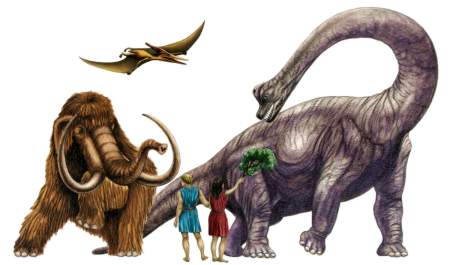 6. Where else in Scripture is the word “day” used to designate billions of years?
Here we find yet another question that is just so incredibly off base that it is remarkable. Of course, the Bible does use the word “day” to denote that such a period, for the LORD, is like a thousand years. And the meaning of “like a thousand years” is debatable, but surely it is a long period of time [and much longer than 24 hours]. But the question of “billions of years” is just the wrong question. Again, the text is not trying to tell us how old the earth is.
If Wilken desires to dispute this, I would gladly ask him to present me with a verse in the Bible which sets the date of creation.
7. How are we to understand the connection between the six epoch-days of creation and the sanctification of a literal seventh day in Genesis 2:1-3 and Exodus 20:11?
I am often confused when YECs bring up this argument. Yes, Exodus 20:11 parallels Genesis 1-2 by having 7 days and denoting the seventh as a day of rest. Now, what about that somehow entails that they are exactly the same? I mean think about the Biblical categories of typology. Very often things correspond to each other but are not exactly the same. One might think of the use of Hosea 11:1 to Matthew 2:15. The passage in Hosea is clearly discussing the nation of Israel. In Matthew 2:15 it is applied to an individual, the Son of God. Does this automatically mean that in Hosea we must assume that “son” is being used in the same sense as “Son of God”? Obviously not. Then why ignore typological categories in other texts?
Okay, but how would an OEC answer this objection? By pointing out that the words “day” and “Sabbath” are used variably in the Pentateuch, so a direct 1 to 1 correlation is off-base. Sabbath, for example, may refer to the span of an entire year as opposed to just one day (Leviticus 25:4). Day may refer to a thousand years (Psalm 90:4).
8. Are there considerations outside the text of Genesis that require an old Earth?
I’m not sure if Wilken means to express the question of other texts, or whether he wishes to address the issue of extra-Biblical evidence.
Regarding the first possible meaning, again the answer would be “No.” I will continue to maintain that I know of no OEC who holds the Bible requires an old earth. Many would follow my own reasoning and note that the Bible isn’t trying to discuss time periods. That just isn’t a concern of the text.
9. According to the Old-Earth theory, what is the relationship between death and human sin? When did death enter the world?
Frankly, at this point it should be abundantly clear that Wilken has not interacted very much with the works of Old Earth Creationists. As was noted in the answer to question 3, many OECs hold to the special creation of Adam and Eve. Therefore, this question is similarly extremely easy to answer: human death entered the world because of sin.
A Major Issue
I think one of the main problems with Wilken’s comments are that he doesn’t seem to distinguish between Old Earth Creationists, Theistic Evolutionists, and the various varieties of design theorists. This leads him to a few confused questions which he directs towards OECs that make no sense when directed towards them. I admit that the series of questions here leads me to wonder whether Wilken is simply unaware of the distinctions between these groups or just over-simplifying and obfuscating. I suspect the former.*
Conclusion
I have endeavored to provide brief answers for the Nine Questions Wilken asks of Old Earth Creationists. I believe that some of the questions he asks demonstrate confusion about the actual category of Old Earth Creationism. Moreover, the questions that are on target have been answered repeatedly by various OECs. Whether these answers are taken as convincing is another story.
*It should be noted that Wilken’s article was published in 2002, which is prior to the works cited here. Therefore, Wilken could not have known about the works I have cited to show some of the difficulties with his paper. However, I cited these works specifically to show how mistaken these questions are. If one is going to attempt to educate concerned Christians about a topic like this, it is vastly important to be aware of the distinctions to be found within each group, and Wilken fails to show awareness of these distinctions. Moreover, we will explore Wilken’s very recent article next week, in which he continues to make these errors.
Sources
Hugh Ross, More Than a Theory (Grand Rapids, MI: Baker Books, 2009).
Hugh Ross and Fazale Rana, Who Was Adam? (Grand Rapids, MI: Baker, 2005).
Gerald Rau, Mapping the Origins Debate (Downers Grove, IL: InterVarsity Press, 2012).
Todd Wilken, “Nine Questions for the Old Earth ‘Creationist,'” 2002.
SDG.
——
The preceding post is the property of J.W. Wartick (apart from citations, which are the property of their respective owners, and works of art as credited) and should not be reproduced in part or in whole without the expressed consent of the author. All content on this site is the property of J.W. Wartick and is made available for individual and personal usage. If you cite from these documents, whether for personal or professional purposes, please give appropriate citation with both the name of the author (J.W. Wartick) and a link to the original URL. If you’d like to repost a post, you may do so, provided you show less than half of the original post on your own site and link to the original post for the rest. You must also appropriately cite the post as noted above. This blog is protected by Creative Commons licensing. By viewing any part of this site, you are agreeing to this usage policy.
“The Rocks Don’t Lie” by David Montgomery: Chapter 4
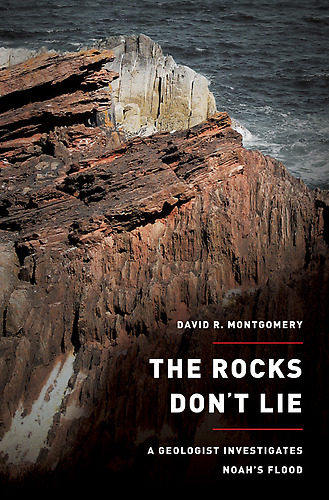 Here, I continue my look at The Rocks Don’t Lie
Chapter 4: World in Ruins
Outline
Montgomery begins by outlining the state of beliefs before early geological investigations. These were formed from theological understandings and thus derived themselves either from creation or the Flood.
The early theories of how the Flood shaped the rocks lent themselves as hypotheses for investigating the natural world. Although many of these theories would be dismissed immediately now, for their time they were serious ideas about how the world may have been shaped. Yet even in the early days of geological investigation, many theologians and geologists realized some of the major difficulties attributing the whole geologic story to the Flood would raise. Isaac Vossius, for example, “argued for a local flood on the grounds that there simply was not enough water on earth to submerge the highest mountains” (55). The amount of water needed for a global flood remains a great difficulty into today.
Other early geologic difficulties were centered around fossils. Were they really vestiges of once-living creatures, or merely tricks of the stones (59)? Steno entered this debate and, apart from noting that fossils were similar to those bones of living creatures, he also developed principles of geology which are used to this day. These were the notion that the bottom of a pile of sediment is oldest and that sedimentary layers are deposited horizontally (60).
As geologic investigations continued, more radical theories were put forth to hold a global flood. These included the notion that, prior to the Flood, the earth was smooth, and so it would have been easy to cover the globe with the water we observe now (66). Yet theories like this, which hypothesize the Flood wreaking havoc upon the earth, yield great difficulties of their own. For example, how could Noah’s descendants have populated the ends of the earth so quickly? Thomas Burnet, who had proposed this theory, argued that Native Americans had also survived the Flood (68).
John Woodward became another champion for advocates of a global flood. He asserted that the Flood dissolved the Earth’s crust and then laid down the sediment observable now (70). His theory was in keeping with others who held that a “mighty flood burst forth from a subterranean abyss” (71). However, John Arbuthnot, a physician, published an essay which not only showed that Woodward had plagiarized Steno, but also blew holes through the Flood theory Woodward had proposed. These included the fact that fossils did not rearrange according to specific gravity and that the layering of sediment could not have occurred within such a mix (71, 73).
Edmund Halley (of Halley’s Comet fame) came up with a theory which involved a comet coming near the earth and disturbing it on its axis, which “heaved the seafloor up… carving the topography we know today.” He also came up with the idea of a “vapor canopy” over the Earth which yielded the great amount of water needed to flood the entire planet (74).
Montgomery notes that it is “ironic” that many of the arguments used by young earth creationists for their positions on geology have been derived from the seventeenth-century geologists, who themselves “did not blindly trust particular literal interpretations of scripture. They had faith reason would lead to enlightened interpretation of God’s creation, as read from the pages of the book of nature…” (76).
Analysis
Montgomery has done a commendable job documenting the long history of the interplay between geology and theology related to the Flood. Moreover, he has shown how many of the ideas found in modern creationism reflect the debates of this period–some of which were acknowledged as refuted back then.
The importance of this historical background should not be understated. When one investigates the way that theories of the Flood developed alongside geology, it provides a fascinating case study for the interplay between science and faith. More importantly, studying the arguments of the past shows how easy it is to resurrect the same ideas in new contexts. Modern young earth creationism owes a great debt to people like Halley and Woodward. Unfortunately, many of these ideas remain just as refuted as they were shortly after they were first proposed.
It is also important to observe cases like Burnet, who started out trying to fit geology into his interpretation of Genesis, but ended up being forced to hypothesize all kinds of things which are not actually found in the Genesis account in order to maintain his theory. Modern creationists should be wary of doing the same: in attempting to stay true to the meaning of the text, people too often introduce concepts which are entirely foreign to the passages themselves. Ironically, this is often done in the name of being “literal.” I hope that works like Montgomery’s (and Young’s, see below) will help inform the Church regarding this debate.
Conclusion
Again, Montgomery’s book shows its great similarities with The Biblical Flood by Davis Young, which itself focuses almost entirely upon the interplay between geology and theology. Both of these books come recommended from me. Montgomery’s work is a faster read with a bit more focus upon the arguments of modern young earth views, while Young’s work provides more of the much-needed background for the debate. [I skipped ahead a bit and saw that Montgomery acknowledges Young’s own contributions to this discussion. I am of the opinion that each of their works bring unique contributions and are worth having.]
The Rocks Don’t Lie has so far proven to be a fantastic work in which the author acknowledges the complexities of the issues as well as the debt geology owes to Christianity. Soon, we will look into chapter 5.
Links
Like this page on Facebook: J.W. Wartick – “Always Have a Reason”
Check out my review of a similar work by a Christian: The Biblical Flood. I think this book is vastly important and should be in every Christian’s library.
Be sure to browse my extensive writings on the “Origins Debate” over creationism, theistic evolutionism, and intelligent design (among other views) in Christianity.
Source: David Montgomery, The Rocks Don’t Lie
SDG.
——
The preceding post is the property of J.W. Wartick (apart from citations, which are the property of their respective owners, and works of art as credited) and should not be reproduced in part or in whole without the expressed consent of the author. All content on this site is the property of J.W. Wartick and is made available for individual and personal usage. If you cite from these documents, whether for personal or professional purposes, please give appropriate citation with both the name of the author (J.W. Wartick) and a link to the original URL. If you’d like to repost a post, you may do so, provided you show less than half of the original post on your own site and link to the original post for the rest. You must also appropriately cite the post as noted above. This blog is protected by Creative Commons licensing. By viewing any part of this site, you are agreeing to this usage policy.
“The Rocks Don’t Lie” by David Montgomery: Chapters 2 and 3
Here, I continue my look at The Rocks Don’t Lie
Chapter 2: A Grand Canyon
Those who are familiar with Young Earth Creationism know that a major contention is that the Grand Canyon can serve as evidence for a global flood. For example, both Answers in Genesis and the Institute for Creation Research have several articles dedicated to the topic. (Just do a search on the sites–I have linked two examples. In the latter, the ICR author notes that the Grand Canyon is “Exhibit A for the flood model of geology.”)
Outline
David Montgomery notes this interest from young earth groups and so he dedicates a chapter to the topic. He uses his own exploration of the Canyon to lead into a discussion of the geological evidence. Some of the rock formations found there “require[d] both extreme heat and high pressure” to form (17). He turns to a brief explanation of radiometric dating: “…the age of a rock can be read like a geologic clock because radioactive isotopes decay at a fixed rate… If you know the half-life of an isotope–how long it takes for the remaining amount to decay–then the ratio of the parent-to-daughter isotope now in a rock tells you how long ago the rock crystallized” (17-18).
Next, Montgomery gives a fairly basic introduction to geology. He provides a brief overview of how one can note unconformities in the rock and how different formations cut across each other. These evidences, found in the Grand Canyon, show that it was formed by a series of events rather than one single event (20ff). Moreover, physical evidence of fossilized burrows from “wormlike animals” in the sandstone provides evidence against flood geology. “How could fragile worms have been crawling around on and burrowing into the seafloor during a flood powerful enough to remodel the planet? The biblical flood would have had to have dumped more than ten feet of sediment every day for a whole year in order to have deposited the thousands of feet of sediment exposed in the canyon walls” (22).
More evidence against flood geology is found in the way the sediments themselves were formed. First, the differing mass of types of silt, clay, sand etc. make it difficult to believe that they could have been mixed together in a flood and then been deposited with uniformity of layers. Second, layers like that of white sandstone are composed of “fine-scale features” which “would have been obliterated if they had formed underwater… These dunes were made by wind” (25).
Finally, the fossils found within the Canyon present another difficulty. “If all the creatures buried… had been put there by the biblical flood, then why aren’t modern animals entombed among them? That the vast majority of fossils are extinct species presents a fundamental problem for anyone trying to argue that fossils were deposited by a flood from which Noah saved [at least] a pair of every living thing” (27).
Analysis
Montgomery has presented a number of extremely difficult problems for young earth interpretations of the Grand Canyon. In particular, the difficulty with the species of animals found buried seems intractable. My reason for noting this in particular is because flood geologists must assert that all the animal life is either descended from or prior to the animals in existence at the flood. Of course, if the Grand Canyon was formed by the flood, we should observe some of these extinct animals now–or at least recently. Yet for many, we do not. Why is that? A young earth perspective cannot simply assert that they died in the flood, for these would have been preserved in the flood.
The other problems Montgomery noted may sometimes be dismissed by advocates of young earth theories. In particular, Montgomery does little to defend radiometric dating, which is itself a major target of young earth views. For those interested, Davis Young’s The Bible, Rocks and Time
Chapter 3: Bones in the Mountains
Montgomery surveys briefly and selectively a history of Christian interpretation of the Genesis account and argues that some found room for less literal interpretations. Moreover, he points out that those who insist upon a literal reading of the text for Genesis must present reasons for not taking other references to the sky as a dome, etc. as non-literal (44-46, 50). Yet he also notes that the perspective from which the Bible is written (on earth) alleviates these difficulties–but these difficulties can only be alleviated by “allowing for figurative or allegorical interpretations” in which we “acknowledge… the fact that we live on a planet” (50).
Another difficulty with young earth views is presented, because the discovery of the New World revealed a massive amount of new species which the Ark would have had to carry. How does one fit all of these species onto the Ark? More importantly, how did these species get to the Ark and back to their homes in North America without leaving their ancestors’ bones behind in places other than their native lands? (42-43)
I have to say this chapter really surprised me, because Montgomery showed an appreciation for and interaction with Christian theology that I was not expecting. For just one example, he refused to set up the oft-rehearsed science-vs-religion rants that often accompanied discussions of Galileo. Instead, he explored the historical context, and noted that the ideas the church held were not necessitated by the text but were rather incorporated from Ptolemic ideas (49).
Conclusion
The Rocks Don’t Lie continues to impress me. Montgomery is careful to avoid overstating his case. More importantly, he seems to genuinely respect the beliefs of those whose writings he surveys and he shows a true concern for accuracy regarding some of the controversies. Thus far, he has presented a number of significant scientific challenges to a young earth paradigm, as well as noting the change and variety of perspectives within theology. Be sure to follow the blog for the next chapter(s)!
Links
Like this page on Facebook: J.W. Wartick – “Always Have a Reason”
Check out my review of a similar work by a Christian: The Biblical Flood. I think this book is vastly important and should be in every Christian’s library.
Be sure to browse my extensive writings on the “Origins Debate” over creationism, theistic evolutionism, and intelligent design (among other views) in Christianity.
Source: David Montgomery, The Rocks Don’t Lie
SDG.
——
The preceding post is the property of J.W. Wartick (apart from citations, which are the property of their respective owners, and works of art as credited) and should not be reproduced in part or in whole without the expressed consent of the author. All content on this site is the property of J.W. Wartick and is made available for individual and personal usage. If you cite from these documents, whether for personal or professional purposes, please give appropriate citation with both the name of the author (J.W. Wartick) and a link to the original URL. If you’d like to repost a post, you may do so, provided you show less than half of the original post on your own site and link to the original post for the rest. You must also appropriately cite the post as noted above. This blog is protected by Creative Commons licensing. By viewing any part of this site, you are agreeing to this usage policy.
“The Rocks Don’t Lie” by David Montgomery: Preface and Chapter 1
I recently finished reading the Christian geologist Davis Young’s The Biblical Flood
It didn’t take long before I had decided that I would go through this one on an extended basis (sometimes lumping more than one chapter together) similar to how I reviewed Rob Bell’s work Love Wins. The reason is because I think the work has much to inform both Christian and atheist alike, while it also has some problems I would like to discuss as I go along.
I have not finished the book, but am rather writing these reviews as I read the chapters, so each one is fresh. Check out the end of the post for links to the other chapters as well as other related posts.
Outline
Preface
David Montgomery states that his purpose in writing the book was initially “to present a straightforward refutation of creationism, the belief that the world is a few thousand years old and that all the world’s topography… was formed by the biblical Flood.” However, he came to “a different story about the nature of faith” once he began researching the topic: “…I thought I’d find the standard conflict between reason and faith. Instead, I found a much richer story of people struggling to explain the world–and our place in it” (xii).
Essentially, he discovered that there was a complex interrelationship between science and theology which has played out in vastly different ways over time.
Chapter 1
Montgomery begins the book by telling a story of how he discovered evidence for a local flood in Tibet. He observed various geological features and came to believe that a lake had once covered the land. He suspected that such a feature in memorable history would yield an oral tradition and was rewarded with a story of a flood in the area (2-7). He asserts that “People around the world tell stories to explain distinctive landforms and geological phenomena” (7).
These stories are often dismissed as “relic[s] of another time,” but he believes that they may have an element of truth: “For most of our history as a species, oral traditions were the only way to preserve knowledge. So why wouldn’t the world’s flood stories record actual ancient disasters” (8-9). He notes that the story of Noah’s Flood may perhaps be among these stories, and hints that there could be truth to the biblical tale (9).
When science has come to interact with evidence which may hint at explanations for Noah’s Flood, certain forms of Christianity (here he uses “creationist” as he defined it in the preface) are “outraged” due to the preconceived notion that the Flood must have been global and account for all geologic history.
Yet the Flood has had a positive influence on geology by providing an early hypothesis to be tested once geology had progressed as a science (11-12). Theology and geology played off each other in a complex way which has spawned various factions of belief over the use of that evidence in theology (12-14).
Analysis
Preface
David Montgomery presents his case in a very winsome manner. I cannot help but be pleased by the way he has begun his interaction with science and faith issues. Rather than ranting over the alleged war between science and faith (something he admits he was expecting), he discovered a different story of a complex relationship which has often been mutually beneficial. Would that all atheists–and yes, it is worth saying, theists–interacted with other views in such a generous manner.
Chapter 1
Montgomery has provided a number of interesting insights already, particularly in regards to the fact that the relationship between science and faith is multifaceted and not as one-dimensional as many often portray it.
It is unfortunate, I think, that his own faith was seemingly built upon very poor theology. He writes, “In Sunday school I learned that Bible stories were parables to be read more for their moral message than their literal words. The story of Noah’s Flood taught mankind to be stewards of the environment… Growing up, I was satisfied that Jesus taught how to live a good life and that science revealed how the world worked” (9-10). Here we see how an anemic theology cannot be sustained. Christianity is picture that is much fuller than a mere “moral message” or “how to live a good life.” If only someone had taught that in Sunday school instead!
If the book continues in this fashion, I will have no qualms about recommending it. Tune in next week to continue the series!
Links
Like this page on Facebook: J.W. Wartick – “Always Have a Reason”
Check out my review of a similar work by a Christian: The Biblical Flood. I think this book is vastly important and should be in every Christian’s library.
Be sure to browse my extensive writings on the “Origins Debate” over creationism, theistic evolutionism, and intelligent design (among other views) in Christianity.
Source: David Montgomery, The Rocks Don’t Lie
SDG.
——
The preceding post is the property of J.W. Wartick (apart from citations, which are the property of their respective owners, and works of art as credited) and should not be reproduced in part or in whole without the expressed consent of the author. All content on this site is the property of J.W. Wartick and is made available for individual and personal usage. If you cite from these documents, whether for personal or professional purposes, please give appropriate citation with both the name of the author (J.W. Wartick) and a link to the original URL. If you’d like to repost a post, you may do so, provided you show less than half of the original post on your own site and link to the original post for the rest. You must also appropriately cite the post as noted above. This blog is protected by Creative Commons licensing. By viewing any part of this site, you are agreeing to this usage policy.
The Rocks Cry Out: A visual journey on a lake and its implications for the age of the earth
 I recently visited Mirror Lake in Wisconsin and had the opportunity to canoe along the lake. Looking up from rowing the canoe, one is able to see exposed rock formations on either side as one goes from one major part of the lake to the other. How did this lake get here? How did the rocks erode as they show?
Two Primary Paradigms
There are two primary paradigms for interpreting the formation of the Earth. These are naturalistic or supernaturalistic. A naturalistic paradigm excludes God from the outset. A supernaturalistic paradigm may have any number of gods or spiritual forces. The reason I make the split here is because it is important to note that, regarding the ultimate origins of the universe and the Earth Christians are in agreement. God is the ultimate cause of reality.
Although we occupy the same paradigm with regards to the origin of all things, Christians are divided along a spectrum of possibilities (other paradigms) about the origin and diversity of life and species. Moreover, Christians are divided on the age of the Earth itself. Is the Earth a few thousand years old or a few billion years old? It is around this question that I shall focus here. Which subdivision of the supernaturalist paradigm better accounts for the evidence? Is the Earth “young” or “old”?
The Rocks, the Flood, and the Questions
Take a look at the photo above. The stone you see there is largely sandstone, layered upon itself. One can go up to the wall and crumble some of the rock between one’s fingers. The layers are extensive, going several dozen feet above the water level before diving below the surface. Where did all this sand come from? Why is it now here, above the ground and exposed?
Global Flood and a Young Earth
There are a number of ways to answer this question, but there is a stark difference between how the answers are given. Young Earth Creationists (hereafter YEC will refer to Young Earth Creationists, Young Earth Creationism, etc.) largely hold to the position that this sand was deposited during the Noahic Flood found in the Bible. That is, these layers of sand were deposited all at once during the great deluge which covered the surface of the earth. Other YECs hold that after the flood, some additional depositions were made by other catastrophic events, including the Ice Age.
What of the notion that nearly all this sediment was placed there by the Noahic Flood? There are immediate problems with this explanation. How is it that the layers are clearly distinct types of rock? For example, I canoed up to the rock shown in the picture and observed the fact that the rock was almost uniformly sandstone. But if the explanation for this is that the sediment was mired together in the Flood, how is it that the types of stone were so neatly parsed out? Should we not instead observe all types of different sediments congealed together? Now, a YEC might counter by pointing out that perhaps the granules were deposited according to their specific gravity, but this would be to appeal to a notion which has been proven wrong via direct observation since John Arbuthnot wrote An Examination of Dr. Woodward’s Account of the Deluge in 1697 (Montgomery, 72-73, cited below).
But there are even more problems with this explanation. If the sediments were all stirred up during a violent Flood, then how did marine animals survive? How did fossilization occur when such violent activity was taking place? What of unconformities in the rock? The issues multiply the more one considers the explanation proffered.
The alternative YEC interpretation–that some of the sediment was placed only later, during the Ice Age, runs into its own share of major difficulties.
 Geologic Time
Other explanations come forth via inference from principles of geology. It should be noted that the foundations of geology were largely laid down by Christians like Hugh Miller and Steno who had themselves reflected upon the Flood and its implications for geology, while also looking at the natural world.
The geology of the Mirror Lake area in Wisconsin, according to this position, was shaped over the course of very long periods of time. The sandstone was cut across during a period of glaciation about 10-20 thousand years ago, and it rests on top of millions of years of geologic processes which created other rock formations, which each have their own explanations of how they came to rest under the sandstone. The lakes themselves were formed by Dell Creek, which takes a right angle. The reason for this angle is explained by “glacial outwash” which blocked the flow of the Creek and forced it to proceed at an angle. The Creek then proceeded to flow into the area it now occupies, shaping the landscape as it moved. It is amazing to consider the time which one can observe as one travels through this area, which was carved by a Creek! For a detailed summary of the formation of the geology of this area, check out the Wisconsin Geological Survey’s report on this region.
Another Challenge for the Flood Explanation
As I canoed through the two major portions of Mirror Lake with several friends, it was interesting to consider how all the winding we experienced as we traversed could have been formed. If this area were formed by the Noahic Flood, then how could it have occurred? After all, the sediment through which it cuts is supposed to have been formed during this flood. But how did the rock get hard enough to be carved through even as it was settling? Why would not the Flood waters have simply caused a mixing of materials?
Plus, one must consider the angle that the occurs in the Mirror Lake area. Why, given fresh layers of sediment deposited by the Flood, did the waters carve out an angle? There seems to be no physical explanation for this phenomenon, granting a YEC paradigm. If the Flood accounts for Earth’s geologic past, then how does it actually explain the physical world?
YECs have sometimes contended that the great amount of pressure put on the sediments by the Flood waters would have allowed for these rocks to form quickly enough to then be carved by the Flood. But if this were the case, how did any marine life survive this extreme pressure? How did delicate fossils get preserved when so much pressure and turbulent water came crashing upon them? Again, we see the difficulties continue to multiply.
 Catastrophism or Uniformitarianism?
Very often, YECs will make a distinction between their own view as catastrophism and other views as uniformitarianism. I have discussed this distinction elsewhere, but it is highly relevant for the observations I was able to make around Mirror Lake.
Generally speaking, catastrophism is the notion that catastrophes (such as a flood, earthquake, etc.) form Earth’s geologic past. WIthin the parlance of YEC, this is generally tightened to mean something more akin to the notion that catastrophes can account for the vast majority of the geologic record. Uniformitarianism is the notion that the processes we observe today were the processes which formed Earth’s geologic past.
It absolutely must be noted that this notion of either catastrophism or uniformitarianism is a false dichotomy. Note that standard geology describes the formation of the Mirror Lake region as both a series of lengthy events taking place over fairly uniform time periods (the formation of the rocks and layers of sediment themselves) and a series of catastrophic events (wherein the Wisconsin Glaciation both scoured the surface and left new deposits and later flooding from the glaciers melting helped carve a path through the area to help form much of the region). That is, there is no either/or question. It is a matter of both/and within standard geology. Catastrophes are part of Earth’s past, but they do not destroy completely the record of the uniformities which have shaped the planet.
A Linchpin?
We have already noted briefly many problems for a YEC paradigm. Perhaps there is an even greater difficulty to be found. YECs wish to offer an explanation for the geologic past and they hold that their reading of the Bible is the most literal. But after looking into YEC explanations of how specific geological formations are formed, is it really the case that YECs are reading the Bible literally? Where does it, in the text, suggest extremely high pressures from the water, the destruction of Earth’s crust or at least its extensive modification, the formation of lakes and rivers due to the activity of the Flood, the deposition of sediments, the formation of fossils, or any number of other specific things that YECs tend to argue are results of the Flood?
It should become clear that these suggestions made by YECs are merely attempts to match their interpretation of the text with the geologic record. It is a guiding presupposition which determines all interpretation of the Bible and natural history. And, as I have argued extensively, it is a presupposition which is misguided.
Conclusion
My journey along the Mirror Lake watershed was enlightening. It was as though I could observe geologic time simply by looking at the rock formations around me. Moreover, it presented me with ample opportunity for reflecting upon the varied explanations given for how all these things were formed and shaped. It seems clear to me that the YEC paradigm suffers from impossible difficulties.
Links
Like this page on Facebook: J.W. Wartick – “Always Have a Reason.” I often ask questions for readers and give links related to interests on this site.
Gregg Davidson vs. Andrew Snelling on the Age of the Earth– This debate was between two Christians about the age of the Earth. I found it highly informative. Check out this post, which surveys the arguments.
Answering Common Young Earth Creationist Arguments– I survey a number of theological, Biblical, and scientific arguments put forth for YEC and find them wanting.
Young Earth Creationism and Presuppositionalism– I argue that YEC is tied directly to a specific use of presuppositionalism, but that it provides an epistemological quandary by doing so.
Check out my other posts on the Origins Debate.
Sources:
David Montgomery, The Rocks Don’t Lie
The Wisconsin Geologic Society.
Wisconsin DNR: Mirror Lake Geology.
SDG.
——
The preceding post is the property of J.W. Wartick (apart from citations, which are the property of their respective owners, and works of art as credited) and should not be reproduced in part or in whole without the expressed consent of the author. All content on this site is the property of J.W. Wartick and is made available for individual and personal usage. If you cite from these documents, whether for personal or professional purposes, please give appropriate citation with both the name of the author (J.W. Wartick) and a link to the original URL. If you’d like to repost a post, you may do so, provided you show less than half of the original post on your own site and link to the original post for the rest. You must also appropriately cite the post as noted above. This blog is protected by Creative Commons licensing. By viewing any part of this site, you are agreeing to this usage policy.
Book Review: “The Biblical Flood” by Davis Young
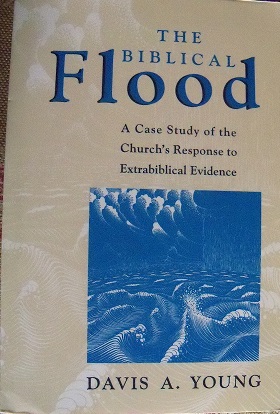 Davis Young seeks in his work, The Biblical Flood
Overview
Young, a Christian geologist, provides a detailed overview of the Church’s theological and scientific musings on the Flood. He develops this overview chronologically, beginning with early Jewish thought. The focus within the entirety of his book is directly centered upon how extrabiblical evidence was used to shape theology and vice versa. The relation should not be understood as binary. Throughout history, there was a spectrum of approaches to the extrabiblical evidence which included resistance (not infrequently forged by ignorance) as well as integration. Here, I will survey only the broadest outline of Young’s discussion.
Early Flood Views
Early Christians were aware of Pagan stories of floods but made little or no appeal to them as evidence for a universal flood, and in fact some argued that these other stories were clearly differentiated from the Biblical account because they were local as opposed to global. There was much speculation over the location of the Ark as well as the notion that fossils were the result of this universal deluge.
Middle Ages and Renaissance
Medieval thought regarding the Flood was steeped in the “ahistorical view of creation” found at the time. That is, the science of the time thought of creation as deductible from the character and nature of God. However, the discovery of the New World brought up many challenges to a universal deluge theory, which challenges began to get recognition. These included the vast number of species which would have had to fit onto the Ark and the discovery of people across the world. During this period, the discovery of flood stories in various cultures began to be viewed as evidence for a universal deluge (37).
New World
The New World continued to present challenges to the universal deluge theory. One of the foremost among these was animal migration. Entirely new and distinct species were discovered in the New World which did not exist in Europe. How did these animals get to these distant lands? More importantly, how did they get there without leaving any traces of themselves behind if they all only came from one location: the Ark? These challenges continue to vex those who hold to a universal deluge (60ff).
Geology’s Origins
The notion of a universal flood has contributed much to the development of geology as a science. The Christian worldview finally presented a picture of the universe which humans could explore in order to learn truths about reality. The Flood itself presented a theory about how to account for the geological features of the earth (65ff). Various features of the natural world were attributed to the flood, including the discovery of marine fossils on mountains and geological features like valleys. These early geologists were committed to an following the evidence where it led.
Diluvialism and Catastrophism
Various theories were put forward to explain the features of the earth. These included varied catastrophic notions, wherein the geological features were explained by a global, catastrophic flood. Such theories are repeated into today.
Geological Evidence Mounts into the Twentieth Century
Young establishes that the evidence against catastrophic diluvialism became weighty fairly early into the investigations of geologists (109ff). New discoveries related to mammoths and the way they died (over a period of time by a variety of causes rather than all at once) were greatly important, as the issue of these mammoths was found throughout the speculation about the flood. New dating methods were developed which were more accurate. Archaeological finds showed floods in areas of the Mesopotamia, but they were dated at different times. The discovery that humanity was widely spread over the earth and that there was no major extinction event throughout this spread raises a significant challenge for Flood Geologists (233). Other major challenges to Flood Geology include (but are by no means limited to): the dating of igneous formations, the cooling of the earth, metamorphism, and continental drift.
Theological Reflections
Throughout this period of discovery, theologians were not inert. Indeed, many theologians were at the front lines, actually participating in the discoveries themselves. Near Eastern Studies have revealed parallels with the Flood account which some have suggested show derivation. Others, however, argue these other flood stories merely show the perpetuity of such events and how ingrained they became on the human consciousness (236ff).
More recently, Flood Geologists have come into being once more. Their arguments parallel almost exactly those found spread in the early days of geology. Yet these arguments have been refuted by the evidence from the earth itself. Some continue to make false statements about the mammoths’ deaths, the formation of sedimentation, dating methods, and more. Young argues that this is largely due to the specialization of studies found within various fields like theology and geology. Theologians are rarely acquainted with the geological evidence, while geologists are rarely versed in theological language.
Theologians who were versed in geology began to see how interpretations of the text, rather than the text itself, had shaped the Christian response to geological evidence. People like Hugh Miller appealed to extrabiblical data in support of their intepretations of the Flood narrative (147ff).
Miller professed puzzlement that learned, respectable theologians would accept “any amount of unrecorded miracle” rather than admit a partial deluge. Could they not see that the controversy was not between Moses and the naturalists but between the readings of different theologians? (151)
More recently, many and varied theories of the flood as local have been developed and defended. The reaction from Flood Geologists has been vigorous, but theories of a global flood include a multitude of quotes from various scientists which would support competing theories of rock formation, sedimentation, and more. That is, Catastrophic Flood views present mutually exclusive theories for how the geological (and other) evidence came to be.
Appendix: Arkeology
The book is capped off with a discussion of “arkeology”: the search for Noah’s Ark. Young notes the array of locations which have been given as well as the mutually contradictory accounts of those who claim to have seen the Ark or evidence of the Ark. He warns Christians to remain cautious of any such claims.
Challenge
I believe that a good way to summarize the content of the book would be to view it as a challenge Young is issuing to those who allege that catastrophic theories are the only possible way to interpret the text and geological evidence. He himself writes, “If conservative and orthodox theology is to remain vital and relevant to a world in need of the Christian gospel… theologians will have to abandon their flirtation with flood geology and other forms of pseudo-science, reacquaint themselves with genuine scientific knowledge, and incorporate that knowledge into their thinking, secure in the realization that genuine insight into God’s creation… is still a gift of God to be treasured” (215).
Young’s book can be viewed through this lens. He shows how scientific knowledge challenged traditional readings of the text, but also how many theologians and Christian geologists alike interacted with this in order to gain “genuine insight” into God’s word and creation.
Conclusion
The Biblical Flood
I do not claim to have touched upon even all the major points found in Young’s work. The book is full of voluminous amounts of historical details which reveal interesting scientific and theological notions. The theory of a global flood was the one of the first major proposals for how the earth’s geological history was formed. As geological discoveries mounted, this theory was falsified. Moreover, theologians who interacted with the extrabiblical evidence had a wide array of responses, from downright rejection of the evidence or reinterpretation of it to attempt to fit a global flood to concordist views in which the extrabiblical evidence informed interpretation of the text. Which direction should we go? Young has presented a major challenge to those wishing to maintain a notion of the global flood. He presents mountains of evidence to challenge catastrophism, while also showing how, historically, thought on the Noahic Flood has comfortably incorporated the extrabiblical evidence without any necessary compromise of the text or faith. I commend the book to the reader without reservation.
Links
Like this page on Facebook: J.W. Wartick – “Always Have a Reason.” I often ask questions for readers and give links related to interests on this site.
Be sure to check out my posts on the “origins debate” which feature a wide range of posts on issues related to varying Christian views on evolution, creation, and more.
Davis Young, The Biblical Flood
SDG.
——
The preceding post is the property of J.W. Wartick (apart from citations, which are the property of their respective owners, and works of art as credited) and should not be reproduced in part or in whole without the expressed consent of the author. All content on this site is the property of J.W. Wartick and is made available for individual and personal usage. If you cite from these documents, whether for personal or professional purposes, please give appropriate citation with both the name of the author (J.W. Wartick) and a link to the original URL. If you’d like to repost a post, you may do so, provided you show less than half of the original post on your own site and link to the original post for the rest. You must also appropriately cite the post as noted above. This blog is protected by Creative Commons licensing. By viewing any part of this site, you are agreeing to this usage policy.
Young Earth Creationism and Presuppositionalism: An Analysis
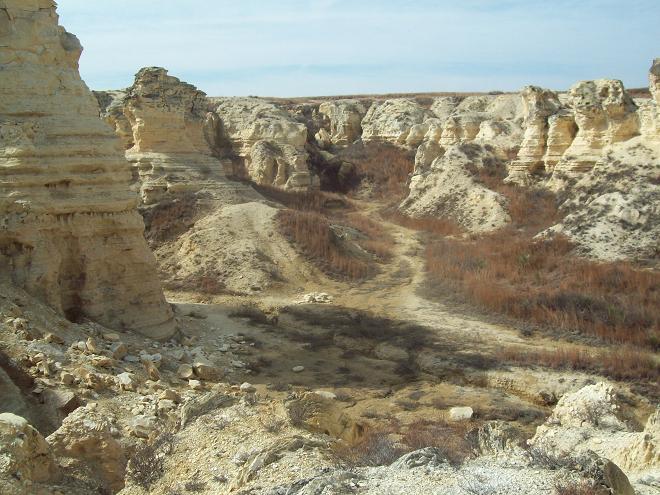 Young Earth Creationism stands or falls based upon the specific use of presuppositionalism as an epistemological groundwork. Here, I will challenge the very core of the young earth paradigm: I will charge that it is an invalid presuppositionalist approach to viewing science and theology.
Young Earth Creationism (YEC will be used hereafter for “young earth creationism,” “young earth creationist” and other forms of those words as needed), is, of course, the position that the Genesis account of the creation of the universe took place over the course of seven literal 24-hour days about 6-12,000 years ago. I have extensively explored various aspects of young earth creationism and other positions, and my posts can be found under the “Origins Debate” page.
Presuppositionalism is a type of apologetics (defense of the faith) which relies upon presupposing the truth of the Christian worldview in order to defend it. I have analyzed presuppositional apologetics a number of times. For an introduction into this position, check out “The Presuppositional Apologetic of Cornelius Van Til.”
Epistemology is the study of how we come to know things. Essentially, it asks questions like “How do we know that we know?”
Before proceeding, it is worth noting that many debates between YECs and people who believe in an ‘old earth’ perspective turn on the YEC use of presuppositionalism. A common theme for mocking YECs is to say they just refuse to hear evidence or shout over evidence, yet it seems that this is an unfair portrayal. As we evaluate the young earth position, it will become clear that the YEC perspective operates from within a presuppositional framework that explains much of the way YECs reason. It will also become clear, however, that the YEC use of this framework is invalid.
Thus, it is my contention that YEC is directly dependent upon a presuppositional approach to how we know things. For support of this contention, I note the fact that many YECs see this connection themselves. For example, Answers in Genesis has a number of posts on the topic, including a post outlining the meaning of and need for presuppositional apologetics. Or again, Nathaniel Jeanson of ICR presented a presuppositional case for YEC (analyzed by the Geochristian). However, this is not the only evidence. YECs tend to argue exclusively within a presuppositional framework.
Consider this argument:
The Bible clearly states that the earth was made in seven days. There is no room to interpret the text in any way other than as a literal week of creation.
Such an argument is extremely typical within the YEC community. However, it is also clearly a presuppositionalist approach to the question of the age of the earth. YECs will argue that science must be interpreted in such away as to line up with the creation account. A common theme is that “The data is the same, it is the interpretations of that data that differ,” another notion is that people are rejecting the “plain and obvious meaning of the text” when they offer an old earth interpretation. Such a position is often united with the notion that only by using “man’s fallible ideas” can one come up with a date of millions or billions of years.
The thought process goes in this order: we presuppose the truth of the Bible => the Bible teaches that the earth is 6-12,000 years old => all scientific evidence for the age of the earth must line up with the truth of the Bible. The Bible is the infallible word of God, and so it cannot be in error. Because, according to the YEC paradigm, the only possible interpretation for the Biblical account of creation is the young earth perspective, it therefore becomes clear that all science and truth must line up with YEC.
We are thus left with two possible ways to challenge YEC. Evidence simply is not the problem. Any evidence, if the YEC use of presuppositionalism is valid, simply must line up with YEC. Thus, to challenge YEC, one must confront directly its presuppositions. First, one can challenge the position by attacking the premise that the YEC paradigm is the only possible interpretation of the Genesis creation account. Second, one can challenge the position by directly attacking the presuppositional epistemological groundwork that the arguments are built upon. Rather than focus upon the first challenge, we will here explore whether or not the YECs have validly made use of the presuppositional approach.
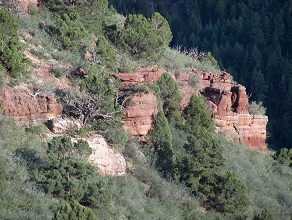 Assuming a Young Earth
It is important to note that the way the YEC argument works is to begin by simply assuming the truth of young earth creationism. I know this may sound radical, but it plays out time and again when discussing the various positions on the age of the earth. The young earth paradigm brokers no alternatives; only the young earth perspective is even possibly correct. How is it that YECs are so confident in their approach?
Simply put, the confidence is gained from the very way that they defend the young earth. YEC is not defended based upon evidence. It is not as though scientists are examining the earth and coming to the conclusion that the earth was formed only some thousands of years ago. Indeed, several prominent YECs assert that the very notion of finding the age of the earth from investigation of the geologic past is impossible or hampered by sin and fallible ideas. For just one example, Whitcomb and Morris, in their highly influential work, The Genesis Flood
[I]f He [God] did this [created a universe full-grown], there would be no way by which any of His creatures could deduce the age or manner of Creation by study of the laws of maintenance of His Creation. (238, emphasis theirs, cited below)
Such a notion persists throughout much YEC literature. In principle, the only way to conclude a young earth is to abandon supposed “uniformintarianism” (hold that the processes in place today continue at the same rate they did in the past–see an evaluation of one YEC’s use of this notion here) and view all of the history of the earth through the lens of God’s word. Now, whether or not it is valid to assume that the Genesis text is a scientific account, the argument here should be fairly clear. Namely, the young earth position is assumed. It is not something demonstrated by science, but rather a given before any scientific investigation takes place. Similarly, the position is assumed to be true before any exegesis has occurred. All scientific evidence and any exegetical hints at a different position are subsumed into the YEC position because it is assumed from the outset as correct. Because YEC is correct, all evidence must line up with it.
Some may object by arguing that frequently YECs offer evidence for their position. They may cite various catastrophic theories or flood geology as alternative explanations of Earth’s geologic past. However, even the authors of books like these (such as Whitcomb and Morris, or Walter Brown in his In the Beginning) admit that the key is to presuppose Scripture, which is of course, on their view, to presuppose a young earth.
The Validity of the Young Earth Assumption
It is clear that YEC turns upon presupposing its truth. YEC is assumed to be true, and all alternative views are simply wrong by default. Unfortunately, this is an abuse of presuppositional apologetics.
It is important to contrast the specifically YEC use of presuppositionalism with the wider use of presuppositional apologetics. Presuppositional apologetics in general is the method of engaging entire worldviews by granting their core assumptions and lining them up against reality in a competition of best explanation. The YEC use of presuppostionalism is to defend a single contention–a young earth–against all comers. There are very significant disanalogies here. What the YEC has done is use presuppositionalism not to enter into the square of debate over whole worldviews, but rather to insulate their interpretation against any possible counter-evidence.
There is a distinct difference between the use of presuppositional apologetics, and the use of YEC in presuppositionalism. The latter tends to simply reject outright any challenge as either against the “clear word of God” or as “assuming uniformitarianism.” By placing their own view beyond the realm of rational inquiry, they have undermined their own potential to know that it is true.
The Faulty Grounds of the YEC Presuppositionalist
The foregoing evaluation leads us to the greatest difficulty facing the YEC approach: a faulty epistemology. Unfortunately, the way that the defense of YEC has been shown to work introduces a paradigm of knowledge which is impossible to sustain. Essentially, the YEC must assume what they think they know. Such an assumption seems to be viciously circular. The YEC must reason thus: “The Bible teaches a young earth=> The Bible is True=> the earth is young.” When presented with counter evidence, rather than engaging with the evidence, the YEC generally falls back to this same argument and reinterprets the evidence. That is where the whole system breaks down: the YEC has not made the right use of presuppositionalism, which allows for entire worldviews to be falsified. Instead, the YEC has misused presuppostionalism to put a young earth interpretation beyond falsification.
The objection will be made that everyone has core beliefs that must be assumed without evidence. Although such an assertion is itself hotly debated, I think it is possible to sidestep such a difficult discussion. Instead, one can note that even if one grants that core beliefs are necessarily assumed, the burden of proof is squarely placed upon the YEC to show how holding to a young earth is necessary for knowledge. Why is this the case? The simplest explanation is that if one assumes the epistemology needed for presuppositionalism is correct, then one has essentially a framework that involves the assumption of core beliefs that are necessary to allow for any knowledge. Thus, for example, the existence of God might be argued as necessary for knowledge (a la Alvin Plantinga, Cornelius Van Til, Greg Bahnsen, and the like) because without God to make us rational, there is no basis for thinking that our beliefs have any actual relationship to reality. Whether or not this is the case, it seems that a young earth is not one of these core beliefs.
Thus, we have finally come to the ultimate failing of the presuppositional defense of YEC: it abuses its epistemological framework to the point of breaking. The YEC has utilized an epistemological approach that allows for core beliefs to be assumed, but has done so in such a way that essentially any belief could be assumed with equal validity. An old earth creationist or theistic evoloutionist could equally argue that their position is based upon a core belief that must be assumed, in which case YEC is undermined. In turn, they could assume their reading of Scripture and make all others wrong by default.
Presuppositionalism must walk a fine line to determine which presuppositions are genuinely those which must be assumed for knowledge. When challenged, the presuppositionalist must make arguments to show that the presuppositions are indeed necessary for knowledge. Unless and until a YEC makes a case that by abandoning the notion of a young earth, one necessarily undermines all knowledge–a case which I must admit seems impossible–the YEC use of presuppositionalism is undermined. Rather than making a valid use of that apologetic approach, YECs have undermined its very principles, and have thus eliminated their own possibility of knowledge. They have relativized all truth by introducing as “first principles” things which are not necessary for knowledge.
A Final Defense
The YEC may object, saying that they have indeed established that YEC is necessary for knowledge. After all, if one denies YEC, which is the clear teaching of Scripture, one has denied God’s word, which is the basis for the entire presuppositional approach.
Setting aside a critique of presuppositionalism as the notion that one must assume the entirety of Scripture to have any knowledge, I would respond by simply noting that this argument does nothing to rebut my charge. I have argued that believing the notion that the earth is merely thousands of years old is not necessary for knowledge. The burden of proof rests squarely on the YEC to show how it is. By merely asserting that denying YEC undermines all of Scripture, one has begged the question. They have engaged in a presuppositional defense of something for which it has been charged that such an approach is epistemologically impossible. In order to defend it, one cannot simply assume that the other side is wrong, one must show how they are wrong.
Objective Knowledge
We have seen that YEC misuses presuppositionalism. A final point worth noting is that the YEC approach to apologetics actually undermines the possibility of objective knowledge. For, as we have noted, the YEC simply assumes their interpretation of the text without argument and then evaluates all science and theology through that lens. However, the YEC offers no reason for rejecting the notion that others could do exactly the same thing with their interpreatations of the text. The YEC has essentially made all truth relative. Anyone can simply assume their position is correct without argument, and then reinterpret all counter-evidence based on that approach. It therefore becomes clear that the YEC use of presuppositionalism must be rejected.
Unfortunately for YECs, the young earth position itself stands upon the bedrock of its faulty use of presuppositionalism. It remains to be seen whether it can adapt itself for a solid evidential base.
A Way Forward in the Age of the Earth Dialogue
It has become clear that YEC is based upon a faulty use of presuppositionalism and that its use of the presuppositional approach undermines the very possibility of objective knowledge.
How, then, can one proceed? It seems that the best way to proceed is to simply throw off the bindings of the misuse of presuppositionalism (taking note that presuppositionalism in general is not necessarily invalid if used properly–see discussion here) and engage in an honest debate over the evidence for either position. Rather than throwing out rote accusations at the other side (“You’re denying Scripture”; “That’s just because you’re assuming ‘uniformitarianism'”; etc, etc), let us engage in dialogue on the evidence at hand. Let’s look at the text in its cultural and linguistic context. Let’s examine the geological evidence of the earth and see where the evidence leads us. Let us not cut off the discussion before it has even begun by simply assuming we’re right and the others are wrong. We are called to always have a reason (1 Peter 3:15). By abandoning the necessity of reasoning when it comes to an issue such as young earth creationism, YECs have undermined the very possibility of a consistent apologetic.
Links
I examine a number of common young earth creationist arguments. Also check out my extensive writings on the origins debate.
Naturalis Historia is a phenomenal site which largely focuses upon investigating claims about a young earth. Some great starting places would be the series on the amount of salt in the oceans (Part 1 here) or some of the thoughts on baraminology.
Geocreationism is another site that examines evidence for the age of the earth with a theological approach. I highly recommend it.
Finally, the GeoChristian offers a number of critiques of the young earth theological and scientific perspectives.
Sources
John Whitcomb and Henry Morris, The Genesis Flood 50th Anniversary Edition
The last image is from NASA. The other images were personal photographs and protected by the copyright on this site.
SDG.
——
The preceding post is the property of J.W. Wartick (apart from citations, which are the property of their respective owners, and works of art as credited) and should not be reproduced in part or in whole without the expressed consent of the author. All content on this site is the property of J.W. Wartick and is made available for individual and personal usage. If you cite from these documents, whether for personal or professional purposes, please give appropriate citation with both the name of the author (J.W. Wartick) and a link to the original URL. If you’d like to repost a post, you may do so, provided you show less than half of the original post on your own site and link to the original post for the rest. You must also appropriately cite the post as noted above. This blog is protected by Creative Commons licensing. By viewing any part of this site, you are agreeing to this usage policy.
Resource Review: “In the Days of Noah: A Deeper Look at the Genesis Flood”
 Reasons to Believe is a science faith think-tank dedicated to showing that Christianity is true. Recently, I had the opportunity to view their resource, “In the Days of Noah.” The video features a lecture by Hugh Ross regarding the extent, location, and timing of the Noahic (Biblical) Flood.
One of the central points of Ross’ argument is that people must take an integrative approach to the question of the Genesis Flood. It is not enough to look at just one verse or one chapter or even one book of the Bible and declare the question closed. Instead, Ross argues, one must take the entirety of the Scriptural data and see what it tells readers about the Flood. Not only that, but the relevant scientific findings must be taken into account as well.
For many Christians, the extent of the Flood is taken as a test for orthodoxy. Ross argues convincingly, however, that the Biblical account does not necessitate that the Flood covered the entire surface of the planet. He goes over a wide range of texts that discuss events that are said to be “world wide” or to “cover the whole earth” or that are supposed to bring “every nation” to a certain place and shows how the usage of the term was relative to the author. Ross cites a number of texts to back up this claim and shows how in many places–the Joseph narrative, writings about Solomon, etc.–the words taken as universals generally (“whole earth,” “all nations,” etc.) are used specifically to mean the whole immediate/relevant world.
There are a number of texts describing creation that go into greater detail about specific aspects of the Genesis account. Ross outlines his argument via these texts by specifically noting a number which discuss the limits set for the waters. For example, Proverbs 8:29 states quite explicitly that God gave the sea its boundary. Ross continues through the Bible and cites numerous examples wherein it talks about God setting boundaries for the waters. From there, he makes the argument that these verses give us a principle: God has set the oceans in their boundaries from Creation. He then utilizes this as an argument for a local flood as opposed to a global flood.
I think that this may be the weakest part of Ross’ argument, because it is possible to counter this reasoning by saying that just because there are a number of texts talking about the boundaries set for the water, it does not mean that the water can never cross these boundaries. In fact, one might counter by noting that Ross’ view entails a kind of uncertainty over what exactly is meant when the Bible discusses the boundaries or limits for the oceans. After all, even on Ross’ view, some body of water covered a vast expanse of land–indeed, the whole inhabited world at the time. In fact, one may argue that due to what we know about plate tectonics, the oceans have not, in fact, had clear boundaries from the beginning but have instead been shifting as the continental plates drift.
Of course, Ross could counter by noting that those continental plates themselves act as boundaries for the oceans. Even though these plates shift, they remain ‘fixed’ in the sense of constant. Regardless, it seems that the rebuttal given above must be given at least some weight in considering Ross’ overall argument. However, even if one denies the force of his argument for the Scriptural notion of fixed boundaries as being a limit for a global flood, one must still contend with his argument to open up the possibility of a local flood by noting the difference between general and specific uses of the notion of a “worldwide” event.
That said, Ross turns to the scientific evidence and notes a number of evidences against a global flood. First, there are such things as unambiguous signs of a flood. He points out the possibility of checking ice cores and sediment cores for the continuous record of the last several hundred thousand years, so if there was a global flood there should be a signal in the ice layers evidence for a global flood. These layers are annual and we know this by looking for volcanic eruptions lined up in the layers at the correct times. These can therefore be calibrated by lining them up with volcanic eruptions that we know of historically. Moreover, the ice layers line up with the ellipticity of the earth, so there are multiple independent ways to test these ice layers. However, in these layers there are none of the telltale signs for a global flood.
So where was the flood? Ross notes a number of verses in the Bible to narrow in on the location of Eden, and then extrapolates from that where civilization would flourish. Due to some geological evidence for there having been a blockage on the end of the Persian Gulf which would have, combined with the melting of ice and the extreme amount of rain noted in the Biblical account, flooded a huge portion of the Mesopotamian Plain. The region is surrounded by mountains which would have blocked in the water for the flood. Such a flood would have wiped out the extent of known humanity at the time, argues Ross.
 There are a number of arguments that young earth creationists, who often rely upon “Flood Geology” to explain a number of features of the geological past to maintain their view of the history of the earth, would raise to Ross’ presentation. For example, the image on the right was created by Answers in Genesis to parody the notion that a flood can be local when the Bible says that even the mountain-tops were covered (Genesis 7:18-20) [all credit for the image to Answers in Genesis, I make no claim to having produced it in any way]. Ross answers this argument by noting that the word can also mean hills and that with the extent of the flood he proposed, there would be no visible hills or mountains from the Ark. Thus, Ross’ argument is much along the lines of his integrative approach: that we must take into account all the relevant Biblical texts as well as noting the scientific evidence.
It would be remiss to have a review of a video without looking into the visuals. The video is a lecture divided into chapters, so a decent portion of it is spent watching Hugh Ross talk. However, there are also a number of very useful images and slides presented which will provide viewers in groups with opportunity for discussion and individual viewers with valuable resources to discuss the Biblical Flood.
“In the Days of Noah” is a great resource for those interested in the Noahic Flood. Hugh Ross is a lucid thinker and clearly lays out his perspective on the flood in terms that listeners will easily comprehend. Ross’ case is based off a holistic approach to natural and special revelation. Although Ross does not answer every counter-argument which those opposed to his view may present, the video can act as a valuable way to open discussions and perhaps come to a better understanding of God’s truth.
Source
“In the Days of Noah: A Deeper Look at the Genesis Flood” (Reasons to Believe), 2010.
Image Credit for the second image goes to Answers in Genesis.
SDG.
——
The preceding post is the property of J.W. Wartick (apart from citations, which are the property of their respective owners, and works of art as credited) and should not be reproduced in part or in whole without the expressed consent of the author. All content on this site is the property of J.W. Wartick and is made available for individual and personal usage. If you cite from these documents, whether for personal or professional purposes, please give appropriate citation with both the name of the author (J.W. Wartick) and a link to the original URL. If you’d like to repost a post, you may do so, provided you show less than half of the original post on your own site and link to the original post for the rest. You must also appropriately cite the post as noted above. This blog is protected by Creative Commons licensing. By viewing any part of this site, you are agreeing to this usage policy.

 J.W. Wartick - Reconstructing Faith