Science
Animal Death?- A Response to AiG Critique of My Argument
I recently wrote a post called “A theological argument against young earth creationism.” In it, my stated claim was “YEC is morally impermissible…” Why? Because “on YEC, animals died because of Adam’s sin…” not because of anything they themselves did. This argument is intended to use the YEC assumption that animal death is an inherently bad thing against them. Let’s outline the argument:
1. If animals did not die before the fall, then their death must be the result of sin.
2. Animals are incapable of sinning (they are not morally responsible agents)
3. Therefore, animal death must be the result of a morally culpable agent’s sin.
The argument as it stands contains a few assumptions which I’ve found in YEC literature. 1) Animals did not die before the fall; 2) Death is inherently a bad thing; 3) all physical death is the result of sin. Now a denial of these assumptions can undermine my argument; I grant that. My point is that if one holds to these three assumptions, my argument shows that YEC is morally impermissible.
Now, Answers in Genesis has provided a critique of my argument, and I must say that I’m very appreciative of their interaction on this important topic. Elizabeth Mitchell wrote the entry, check out her critique, in its entirety, here (under the “And don’t miss…” section). Let me examine the criticism below. (I recommend reading my entire post prior to this one in order to have proper interaction with it.)
First, Mitchell wrote, that my post “…attempts to show young earth creationism is wrong by demonstrating death documented in the fossil record preceded human sin and was unrelated to it.”
I admit I was a bit befuddled when I read this, because nowhere in my post did I try to “demonstrate death document in the fossil record preceded human sin…” I’m not sure where this claim was made in my original post. I don’t mention the fossil record anywhere in the original post and so I’m a bit concerned by this apparent misreading of my article.
Then, she wrote, “He cites no Scripture…” Indeed, I did not cite a single Scripture passage. However, the argument is directly based upon the assertions that some YECs make. But what kind of rebuttal is it to say “He cites no Scripture…” anyway? An argument must be dealt with whether it has Bible passages in it or not.
 The argument itself is based upon the logic of the YEC argument against old earth positions. The picture to the right here demonstrates pictorially the view most YECs present of old earth positions–that animal death before the fall makes God morally questionable (image credit to AiG, accessed here). For example, premise 1 is backed up by this quote from the AiG critique: “the connection between Adam’s sin and animal death…” Premise 2 is indeed mostly an assumption, but I think it is one that most Christians would grant. Animals are not on the same level as humans; they are not moral agents made in God’s image. Three is again backed up by the quote I put above; the AiG (and more generally, YEC) argument assumes that all death is the result of Adam’s sin.
Now, AiG does claim that the Bible backs up this position. They wrote, that I “[seem] oblivious toRomans 8:20–22, which explains the connection between Adam’s sin and animal death” (Mitchell, cited below). Well no, I’m not oblivious to Romans 8:20-22, which makes no mention of animal death. In fact, the word “death” is not even used in the passage. Thus, it looks like this an inference from Scripture, not an obvious connection. And an inference is subject to presuppositions. The YEC presupposition is that animals did not die before the fall, so of course their inference will lead to a reading of Romans 8 in light of that presupposition.
Mitchell argues in regard to my statement, “The post on Answers in Genesis hints that it is because animals are cursed due to the serpent’s deception of Adam and Eve,” that “…we [AiG] teach no such thing” (Mitchell, cited below). That’s fair, and I appreciate the clarification. The reason was that I read the following quote on the original post I was working from: “The first recorded death and passages referring to death as a reality came with sin in Genesis 3 when the serpent, Eve, and Adam all were disobedient to God” (Hodge, cited below). The wording here does seem to at least “hint” at a connection between the serpent and the rest of animal death, but I could be mistaken here and I’m fine with that.
To sum up, my argument was based upon rather firmly established YEC assumptions. That animals did not die before the fall is argued throughout YEC literature, and both posts I cite have this idea in them. That animal death is due to the sin of Adam is demonstrated in the AiG response to my post. That animal death is somehow inherently bad is shown in the picture above as well as throughout YEC literature. For just one example, Bodie Hodge wrote, in the article I was originally linking (cited below), “God gave the command in Genesis 2:16–17 that sin would be punishable by death. This is significant when we look at the big picture of death. If death in any form was around prior to God’s declaration in Genesis 1:31 that everything was ‘very good,’ then death would be very good too—hence not a punishment at all.” But just from these three theses I can construct my argument (as above) which leads to the conclusion:
“Animal death must be the result of a morally culpable agent’s sin…” (on the YEC position).
And, as I argued in my original post, this seems to undermine the goodness of God on YEC, for “the animals didn’t do anything. One day, they were happily living potentially infinitely long lives, eating plants, and doing their animal things. The next day, Adam sinned, and so God decides to start killing them all… not because they themselves sinned” (here).
So, given the assumptions that YECs make, I have constructed an argument that shows their own position is morally impermissible. What does this entail? I suggest it entails that the reading of the texts that YECs present is incorrect and must be modified. I suggested a few ways to do this in the original post, so I won’t repeat them here. Ultimately, it seems my original post has not been refuted.
Sources
Bodie Hodge, “Biblically, Could Death Have Existed before Sin?” Answers in Genesis. 2010. Accessible here: http://www.answersingenesis.org/articles/2010/03/02/satan-the-fall-good-evil-could-death-exist-before-sin
Elizabeth Mitchell, “News to Note, March 17, 2012.” Answers in Genesis. Accessible here: http://www.answersingenesis.org/articles/2012/03/17/news-to-note-03172012.
J.W. Wartick, “Animal Death?- A Theological Argument Against Young Earth Creationism.” 2012. Accessible here: https://jwwartick.com/2012/03/12/against-yec-theology/.
——
The preceding post is the property of J.W. Wartick (apart from citations, which are the property of their respective owners) and should not be reproduced in part or in whole without the expressed consent of the author. All content on this site is the property of J.W. Wartick and is made available for individual and personal usage. If you cite from these documents, whether for personal or professional purposes, please give appropriate citation with both the name of the author (J.W. Wartick) and a link to the original URL. If you’d like to repost a post, you may do so, provided you show less than half of the original post on your own site and link to the original post for the rest. You must also appropriately cite the post as noted above. This blog is protected by Creative Commons licensing. By viewing any part of this site, you are agreeing to this usage policy.
Animal Death?- A Theological Argument Against Young Earth Creationism
 [Answers in Genesis recently posted a critique of this article. I have responded here.] I have explored extensively the varied positions within Christianity about the origins and diversity of life. I come from a background in which I was a young earth creationist for quite some time, but my research has caused me to reject this position in favor of another. Those reading this article, please understand I do not wish to denigrate or devalue those who are young earth creationists (hereafter YEC and YECs). I appreciate that many who are YEC are doing their work in the field because they feel it is closest to the Biblical position and that they often believe science supports their view. That said, I cannot agree. In the following, I present a theological argument against the YEC position.
One of the theological arguments YECs use against other Christian positions (such as Intelligent Design or Theistic Evolutionism) is that it would imply death before the fall. I tried to track down an explicit syllogistic form of this argument and couldn’t find any in the literature with which I am familiar, however the argument is everywhere presented. For example, Ken Ham writes in The New Answers Book 1:
The book of Genesis teaches that death is the result of Adam’s sin… and that all of God’s creation was ‘very good’ upon its completion… But if we compromise the history of Genesis by adding millions of years, we must believe that death and disease were part of the world before Adam sinned… How could a God of love allow such horrible processes as disease, suffering, and death for millions of years as part of his ‘very good’ creation? (36)
Elsewhere, we can find statements like this: “The Bible tells us very clearly that there was no death before sin from many passages. In fact, there are no Bible verses indicating there was death prior to sin.”
Now it is not my point in this post to cite every disagreement I have with such arguments (there are a great deal of them), but rather to show that the implications of an argument like this are absurd. One immediate problem with the argument is that it begs the question in the opening sentence by smuggling in a hidden premise. Namely, the notion that all death is the result of sin, as opposed to the death of mankind or a kind of spiritual death. Further, note the conflation of the terms in the second quote–just because there are no Bible verses which show there was death before sin, it does not follow that the Bible teaches that there was no death before sin. But those parts aside, I wish to show that this argument from YECs actually works against their position.
Suppose we lay out the argument:
- Death is the result of sin.
- If YEC is false, then things died before sin.
- Therefore, if YEC is false, God is unjust.
Now I know this is not the full argument. There are many premises I have left unstated, but it seems that is the gist of the passage cited from Ham. Why do I find this problematic? Well, it seems that the logic is that if death happened because of sin, then animals would not have died before the fall. But if that is the case, then why do animals die after the fall? The post on Answers in Genesis hints that it is because animals are cursed due to the serpent’s deception of Adam and Eve (cited below). One is still forced to wonder why all animals are cursed because a serpent–Satan–deceived Adam and Eve. Thus we are led to the following argument:
- If animals did not die before the fall, then their death must be the result of sin.
- Animals are incapable of sinning. (They have no culpability.)
- Therefore, their death would have to be the result of morally culpable agents’ sins.
But this argument, it seems, shows that YEC is morally impermissible. For on YEC, animals died because of Adam’s sin. The animals themselves didn’t do anything. One day, they were happily living potentially infinitely long lives, eating plants, and doing their animal things. The next day, Adam sinned, and so God decides to start killing them all, putting countdowns on their lifespans. But why? Because Adam sinned, not because they themselves sinned. Thus, animals, through no culpability of their own, suffered the punishment of death for Adam’s sin. This seems to be morally impossible.
Now it seems the YEC position could be modified to get around this argument, but it would have to drop the argument against the other positions that death could not have happened before the fall. The modification would essentially have to hold that animals were part of the natural world which lived and died. Or, the YEC position could charge that animals were moral agents, but that would seem absurd. Finally, the YEC position could hold that, somehow, the serpent’s culpability transferred to all other animals, but that would seem extremely difficult as well, particularly because the serpent is Satan.
The argument, therefore, has been that animals are not morally culpable because they are not moral agents. Because that is the case, if they died due to sin, it was through not fault of their own. This would make God seem unjust if He caused animal death due to Adam’s fall. I’ve noted that YECs can avoid this injustice, but only by dropping the argument that Ham and others use against other positions.
There have been some interesting reactions to this article, and some of them are confusing my argument. What I’d like to note is this post is written from a perspective inside of YEC. In other words, I’m using the presuppositions of YEC against itself. What I’m not doing is personally saying that the death of animals is a morally impermissible state of affairs. What I am doing is saying that, on YEC, they assert it is morally impermissible, and so they have to accept the consequences of that argument.
Finally, I’d like to note that even if readers are unconvinced by this argument, they still must contend with other theological problems with YEC. For example, the notion that YEC makes God a deceiver. For this and other reasons I am no longer a YEC.
But what of the argument itself from YEC? What of the argument that there cannot be death before the fall? I urge readers to check out the following post over at geocreationism: Death before the fall — an old-Earth Biblical perspective. See also Luke Nix’s phenomenal post on the topic, “Cartoons, Animal Death, and Theology.”
Image Credit- http://commons.wikimedia.org/wiki/File:R%C3%B8d_r%C3%A6v_(Vulpes_vulpes).jpg image by Malene
Sources
Answers in Genesis, “Biblically, Could Death Have Existed Before Sin?” – http://www.answersingenesis.org/articles/2010/03/02/satan-the-fall-good-evil-could-death-exist-before-sin
Ken Ham, The New Answers Book 1 (Green Forest, Arizona: Answers in Genesis, Master Books, 2006).
SDG.
——
The preceding post is the property of J.W. Wartick (apart from citations, which are the property of their respective owners) and should not be reproduced in part or in whole without the expressed consent of the author. All content on this site is the property of J.W. Wartick and is made available for individual and personal usage. If you cite from these documents, whether for personal or professional purposes, please give appropriate citation with both the name of the author (J.W. Wartick) and a link to the original URL. If you’d like to repost a post, you may do so, provided you show less than half of the original post on your own site and link to the original post for the rest. You must also appropriately cite the post as noted above. This blog is protected by Creative Commons licensing. By viewing any part of this site, you are agreeing to this usage policy.
Guest Post: “Is There Life on Other Planets?” by Greg Reeves
 If you’ve been reading the science news lately, you’ll find there has been a lot of buzz about “extrasolar planets”, or “exoplanets” (i.e., planets that orbit other stars). For an example, see here. The reason why is in the last several years, the number of exoplanets that we’ve discovered has increased dramatically, mostly due to the Kepler mission. But regardless of the reason why, one interesting question this brings up is, “Are there other planets that host life?”
This is an incredibly profound question for both the religious and non-religious alike. For the Christian, the knee-jerk reaction might be “no, of course not, God specially created the life on earth and did not do so elsewhere.” (By the way, I do not necessarily espouse this view.) For the secularist, the presence of life on other planets only adds weight to the idea that life arose here on earth by strictly naturalistic processes. So what does science have to say about this subject? Given the sensationalistic popular news articles, one might think the universe is teeming with alien life. However, the data actually say otherwise.
First, answering the origin of life question, from a scientific standpoint, is incredibly hard. In fact, after investigating the state of affairs on this problem in order to write a book, it has driven agnostic physicist Paul Davies to proclaim1:
When I set out to write this book, I was convinced that science was close to wrapping up the mystery of life’s origin…Having spend a year or two researching the field, I am now of the opinion that there remains a huge gulf in our understanding…This gulf’s not merely ignorance about certain technical details, it is a major conceptual lacuna.
He goes on to say:
Many investigators feel uneasy about stating in public that the origin of life is a mystery, even though behind closed doors they freely admit that they are baffled. There are two reasons for their unease. First they feel it opens the door to religious fundamentalists…Second, they worry that a frank admission of ignorance will undermine funding…
Second, even though it is a conceptually difficult phenomenon to study, scientists are incredibly confident that it will be resolved one day. The main reason why is that the alternative to having a naturalistic origin of life would be a supernaturalistic origin of life, something that most secular scientists not only do not believe in but also that they rule out completely according to their philosophical worldview.
Third, we now know that life on our planet originated in a geological instant. As soon as this planet became even remotely suitable for life, roughly 3.9-3.8 billion years ago, life began (our earliest evidence for life is between 3.86 and 3.80 billion years ago). To the secular scientist, this implies that even though we have no idea how, the origin of life must be a very simple, fast process.
Fourth, because the origin of life is simple and fast, it probably is not a finely-tuned process, according to the reasoning of secularism. In other words, all you need are some minimal requirements (liquid water, a rocky planet, some carbon-containing compounds, and a short window of time) and life will surely appear. This principle led astronomer Steve Vogt, upon discovery of a rocky exoplanet in the “Goldilocks zone” (the distance from their star that would allow a planet to potentially harbor liquid water), to state, “The chances for life on this planet are 100 percent.” (As an interesting sidenote, the particular planet he was referring to may not even be a planet. Of course, we are still discovering exo-planets, and I have been confident for some time that we would find a near-earth-sized rocky planet in the Goldilocks zone. And lo and behold, we have. For examples, see here and here.)
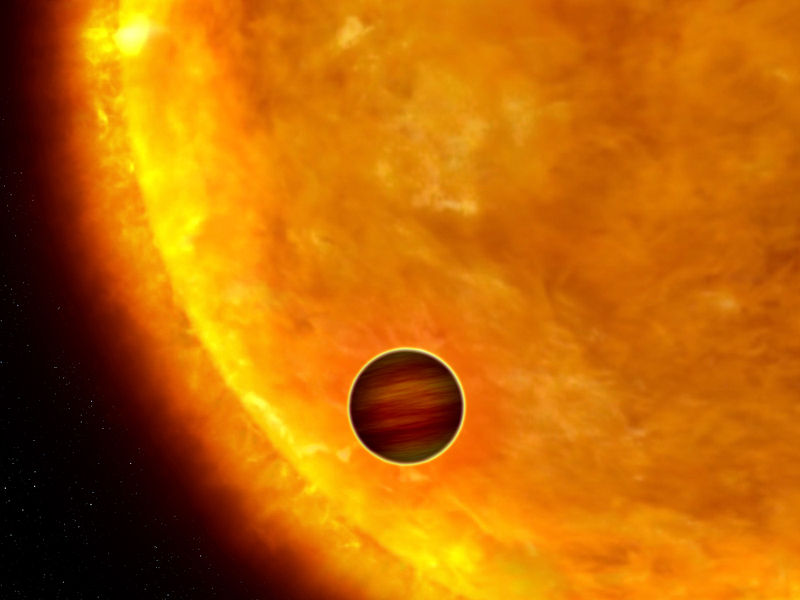 So, given this background, is it likely that such “Goldilocks planets”, which are likely to be all over the place in the universe, harbor life? Well, there are two sides to this story. As I laid out above, the popular secular point of view (and the point of view portrayed by the media) is that life is inevitable whenever loose conditions are met (background point four). So of course, whenever you have a planet in the Goldilocks zone, life is inevitable. This view springs solely from the assumption of naturalism (background point 2) and the fact that life arose on earth quickly (background point 3). You can easily see this point of view when reading the popular news articles, which are overflowing with unbridled optimism.
The other view is that life is rare in the universe, because all of the prowess of the origin-of-life scientific community has returned a comparatively small amount of promising data (background point 1). In fact, not only has little actual progress been made towards discovering naturalistic pathways towards origin of life, but instead the more we know the more we discover how far away we are. Problems such as the lack of a prebiotic soup, the irreducible complexity of life, the homochirality problem (all bio-molecules must be either 100% right-handed or 100% left-handed), the difficulty in producing a cell membrane, and the finely-tuned conditions needed to carry out the chemical reactions that produce biological precursors all reveal a much less optimistic story from the point of view of hard science.
The problems for the hypothesis of the naturalistic origin of life don’t stop there, however. The more we study our planet, the more we realize that an exoplanet needs a lot more going its way than just to be in the Goldilocks zone. There are a whole host of astronomical and geological parameters that must be exquisitely finely-tuned for life to (1) exist and (2) persist on a planet. The timing of the formation of the exosolar system, the location of the exosolar system within the galaxy, the type of galaxy the exosolar system is in, the elemental composition of the star and planet, and the existence of stable, long-lasting plate tectonics are just a few of the finely-tuned parameters that must be met for life to exist and thrive.
None of this is to say that we should not be investigating how life could have originated, or whether exoplanets may harbor other life forms. Indeed, if God did create the universe and life, I am convinced that these scientific disciplines will serve only to glorify Him further.
But these observations do beg the question: which is it? Is life abundant in the universe, a premise based on one data point and questionable assumptions, or is life rare, a premise based upon the empirical findings of the fields of biochemistry, organic chemistry, astronomy, and geology? It seems to me that hope springs eternal for the secular exoplanet researcher, but the hard scientific data tells another story.
1. Davies, Paul. “The Fifth Miracle: The Search for the Origin and Meaning of Life.” Simon & Schuster; 1 edition (March 16, 2000)
Dr Greg Reeves holds a PhD in Chemical Engineering from Princeton University, and is currently an assistant professor of chemical and biomolecular engineering at North Carolina State University. He is the co-director of the NC State chapter of Ratio Christi. His blog can be found at twobooksapproach.blogspot.com.
Darwin Day Blog Posts
Check out these Christian Perspectives on Darwin Day.
Book Review: “I, Charles Darwin: Being the Journal of His Visitation to Earth in the Year 2009”– A review of a fictional account of Darwin’s thoughts if he visited the earth in 2009. The review is pretty interesting in itself. Check it out.
Why Darwin Day is Hosted by the Wrong People– A fascinating look at the major groups that celebrate Darwin Day and their inconsistencies.
Useful or Useless Evolutionary Terms?– Do the terms microevolution and macroevolution actually have any value to distinguish them from each other?
Guest Post: “Is There Life on Other Planets?” by Greg Reeves– Some think life on other planets is inevitable. Others, not so much. Check out this interesting exploration of the topic by Greg Reeves.
Really Recommended Posts: 11/26/11
 The Problem of Pain Sonnet Sequence 3– Holly Ordway, author of “Not God’s Type,” has an awesome blog going. This post is a sonnet which focuses on the problem of pain/evil. Be sure to check her site out in-depth, it has some amazing and unique content.
Over at Geocreationism, there is a new blog discussing death and original sin. It’s extremely interesting. Be sure to read his links on the various passages, which each lead to another in-depth and thoughtful discussion of creationism.
Book Review: “Good God: The Theistic Foundations of Morality” by David Baggett and Jerry Walls. The best book reviews don’t just review the content of a book, but present its central arguments. This is one such review. Check it out.
David and Tiffany O’Day have a great series of posts about “Authentic Community & Friendship.” Check out Part 1. Be sure to visit their homepage to check out the rest in the series.
The problem of anti-intellectualism in the church and some solutions.
Check out Apologetics 315’s list of 10 Apologetics books for giving. I will surely copy this feature with one of my own. His top book is Edgar Andrews’ “Who Made God,” with which I heartily agree. Check out the review.
10 Surprisingly Simple Tips for Talking to Cult Members, Part 3– this is part of a series on, well, look at the title! Find Part 1 and Part 2 as well.
The Multiverse and Theism: Theistic reflections on many worlds
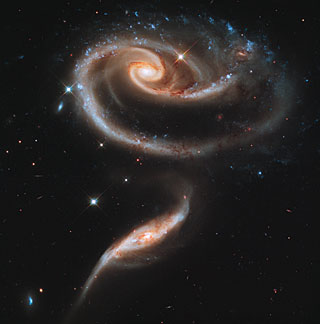 There has been much philosophical and scientific discussion on the topic of the multiverse. Recently, a lot of this discussion has been happening within philosophy of religion. Some attempt to use the multiverse to overcome classical theistic arguments like the Kalam Cosmological Argument, while others try to utilize it to avoid the teleological argument. Atheists and skeptics are not the only ones who are interested in the multiverse, however. Recently, a few prominent theistic philosophers have utilized the multiverse in inventive ways.
The Multiverse and the Problem of Evil
Some theistic philosophers have argued that the multiverse can provide a new type of theodicy. As eminent a philosopher as Alvin Plantinga writes:
…a theist might agree that it is unlikely, given just what we know about our world, that there is such a person as God. But perhaps God has created countless worlds, in fact, all the… universes… in which there is a substantial overall balance of good or evil… [A]s it happens, we find ourselves in one of the worlds in which there is a good deal [of evil]. But the probability of theism, given the whole ensemble of worlds, isn’t particularly low (Plantinga, 463).
Does such a theodicy help theists with the problem of evil? It seems to me that it may, but that it is not particularly strong. It could be included in a cumulative-case type of theodicy, however.
First, Michael Almeida offers a critique of this position. Suppose that God did, in fact, create such a multiverse. It seems plausible that such a universe would be infinite in the number of worlds (after all, for every “good” world, there seems one can always imagine a “better” world). Here Almeida ingeniously applies William Lane Craig’s arguments about the infinite, not to show that the set of universes cannot be infinite, but to show that in an infinite multiverse one could subtract specific worlds from this set without decreasing the good of the multiverse (Almeida, 305-306). Suppose God did in fact actualize an infinite multiverse–all the worlds which are, on the whole, good. If that’s the case, then God could easily not actualize any one (or infinite!) world(s) without decreasing the total good of creation. After all, it would remain infinitely good!
Timothy O’Connor offered a possible response to this argument, noting that “It may well be that [God] would have a distinct motivation to realize every fundamental kind of good-making feature, some of which are incommensurable. If so, this would put a further constraint on universe types… within a candidate infinite hierarchy” (O’Connor 2, 315). God could have chosen to actualize each individual type of good–some of which may exist in our own world to a maximal extent. This doesn’t seem implausible given the tremendous goodness of an event like the Redemption.
Some may be concerned that an appeal to the multiverse may undermine more traditional theodicies such as the “greater good theodicy” or the “free-will defense.” One might envision the multiverse as a kind of “throwing in the towel” on the traditional theistic defenses. I don’t see why this should follow, because any of these traditional theodicies would be just as applicable to our own universe whether it were one or one of many. There are, however, a few problems I see with this defense, which I’ll put off until the section “On the Possibility of a Multiverse” below.
 Which world would God Create?
Some have argued theism is irrational because they hold God is a perfect being, which would entail that God would create the best possible universe–itself an incoherent concept. It is possible that God need not create the best possible world. Robert Merrihew Adams, for example, doesn’t agree that God is obligated to create the “best possible world.” Rather, God could choose to create worlds which manifest His grace (Adams, 62). O’Connor cites William Rowe as providing an effective counter to this by arguing that there would then be a possible being better than the perfect being (O’Connor 1, 114). I’m unconvinced by this counter. If there is no best possible world, God cannot be obligated to create it (because it doesn’t exist).
O’Connor anticipates this response and seems to grant that it may be plausible (115). However, he among other theists, seems to believe that God would actualize a multiverse. He writes, “God’s choice isn’t between… single universes, but between the super universes [‘super universe’ being a ‘collection of one or more totalities that are mutually disconnected save for their common origin within God’s creative choice’]” (O’Connor 1, 116). God, on this view, actualizes many “good” worlds. He writes, “the creative motivation would be not to settle for a finite limit on the individual organic goodness of any of His products” (O’Connor 2, 315). God’s creation of many universes shows his “artisanship” (Ibid).
Such arguments are both interesting and compelling. Those who attack theism based upon the “best possible world” objection may be thwarted by the hypothesis of God’s creative multiverse.
On the Possibility of a Multiverse
Theistic proposals of a multiverse are clearly sometimes motivated for entirely different reasons than naturalists. What difficulties are there with such a proposal?
First, some theists object to the multiverse by arguing that it undermines several theistic arguments. It does not seem that the multiverse would do so, however. The cosmological argument would stand strong in spite of a multiverse, because any inflationary multiverse would still have a beginning in time. Design arguments would similarly be unchallenged because one would have to explain the fine-tuning of the multiverse. These objections to the multiverse, therefore, do not do much damage.
Other objections to the multiverse require more discussion of the meaning of the term “multiverse.” Jeffrey Zweerink notes several levels of multiverse. Some of these are uncontroversial. For example, the “Level I” multiverse is simply a description of other regions beyond the observable universe (Zweerink, 28). Of course, this is hardly what many mean when they refer to a “multiverse.” What is meant by multiverse here is a Level II or higher multiverse, such as inflationary bubble universes or other generative scenarios (Zweerink, 28-29). The difficulty with these is that there doesn’t seem to be any reason to hold that these universes exist. Zweerink notes that the Level II multiverse is predicted by some models of string theory, but to believe there are literally other unobservable universes on the basis of theoretical predictions alone hardly seems convincing.
Given these observations, it seems initially that while theism is unthreatened by the multiverse (and perhaps even bolstered by its possible existence), there is no better reason to think it exists on theism as on other worldviews. But perhaps that’s not the case. One can reflect once more on O’Connor’s belief that the multiverse shows God’s creative artistry (O’Connor 2, 315). Not only that, but one may even predict that God would actualize many worlds in order to bring about His desire to actualize various goods (O’Connor 1, 112ff). Perhaps one could argue that theism may even predict many universes. In that case, the multiverse is more likely than not.
My thoughts
Clearly, I think there may be some merit in the use of the multiverse in theistic arguments. I think it would amazing if, somehow, we made a discovery which confirmed the existence of other universes, and I do believe people could hold that theism might even predict such a discovery, but color me skeptical. I think it would generate an enormous amount of metaphysical baggage to hold to the existence of a multiverse. While the previous arguments may have shown that theism increases the likelihood of a multiverse, I don’t think it increases it enough to justify belief in a world ensemble. I remain open to the possibility, and indeed some compelling arguments have been offered in its favor, but for now I remain unconvinced. That said, I think theists could still utilize the multiverse in response to the problems illustrated above, because even a hypothetical multiverse could be used to bolster these defenses. Those opposed to theism might here object, saying that I condemn their own uses of the multiverse to try to get around theistic arguments. They would be incorrect. I condemn the use of the multiverse on competing views because I don’t think the other views can justify belief in the multiverse, nor do I think their usage actually defeats the difficulties with their own positions.
Is there a theistic multiverse? Maybe. Can theists utilize a hypothetical multiverse in their philosophical speculations? Absolutely.
Sources
Alvin Plantinga, Warranted Christian Belief (New York, NY: Oxford, 2000).
Timothy O’Connor 1, Theism and Ultimate Explanation (Malden, MA: Blackwell, 2008).
Timothy O’Connor 2, “Is God’s Necessity Necessary? Replies to Senor, Oppy, McCann, and Almeida,” Philosophia Christi 12 (2010), 309-316.
Michael J. Almeida, “O’Connor’s Permissive Multiverse” Philosophia Christi 12 (2010), 297-307.
Robert Merrihew Adams, “Must God Create the Best?” in The Virtue of Faith and Other Essays in Philosophical Theology 51-64 (New York: Oxford, 1987).
Jeffrey Zweerink, Who’s Afraid of the Multiverse? (Reasons to Believe, 2008).
Links
I discuss and rebut multiverse objections to the Kalam Cosmological Argument here and here.
The Theological Attraction of the Multiverse– An interesting post on the theology of the multiverse.
Christological Implications of the Multiverse– Another post worth reading on theology and the multiverse.
Living in the Multiverse- Is It Science?– Discussion of scientific evidence for the multiverse.
SDG.
——
The preceding post is the property of J.W. Wartick (apart from citations, which are the property of their respective owners) and should not be reproduced in part or in whole without the expressed consent of the author. All content on this site is the property of J.W. Wartick and is made available for individual and personal usage. If you cite from these documents, whether for personal or professional purposes, please give appropriate citation with both the name of the author (J.W. Wartick) and a link to the original URL. If you’d like to repost a post, you may do so, provided you show less than half of the original post on your own site and link to the original post for the rest. You must also appropriately cite the post as noted above. This blog is protected by Creative Commons licensing. By viewing any part of this site, you are agreeing to this usage policy.
Quantum Indeterminacy, Materialism, and Free Will: Do our minds shape reality?
The idea is that “freedom” of the will is simply the fact that human behavior is unpredictable, and that this unpredictability is a consequence of the random character of “quantum processes” happening in the brain… To be subject to random mental disturbance is not freedom but a kind of slavery or even madness. (Professor of Theoretical Particle Physics at the University of Delaware, Stephen Barr, 178)

Can there be free will on materialism?
The question has been perpetuated throughout the history of modern science. For quite a while, it was thought that all things were deterministic, given materialism. Thus, the view of life was a bit fatalistic. However, with the advent of Quantum Mechanics, some have argued that quantum indeterminacy allows for freedom of the will. Is that the case?
First, it’s important to outline quantum indeterminacy. On the quantum level, events are probabilistic. What that means is that “given complete information about the state of a physical system at one time, its later behavior [cannot] be predited with certainty… [only] the relative probabilities of various future outcomes [can be predicted]” (Barr, 176, cited below).
It becomes immediately apparent how some might see this as salvation for a physicalist perspective on free will. If events are not determined on a quantum level, perhaps our choices are free in some sense as well. But difficulties with this interpretation arise immediately. First, quantum indeterminacy is not a reflection of our choices, but just that: indeterminacy. As quoted above, our supposed choices would (on physicalism) be merely probabilistic. Our actions would be unpredictable, but that is not freedom. Surely, if the actions we take are merely the reflections of probability curves on a quantum level, that is not the same as freedom. Rather, they would be actions taken due to a basically random process. If I have the “choice” between A and B, and the probability is 50/50 on a quantum level, then my “choice” for B instead of A is just the same as if I flipped a coin. The coin doesn’t choose which side to land on, its just probability.
So it seems that right off the bat, quantum indeterminacy cannot explain free will on materialism or physicalism. Rather than being “free will” it would boil down to random events. As Barr wrote, we would be subject to random mental disturbances, and this would entail slavery at best (178).
But can materialists circumvent this problem? One suggestion is that we have control of quantum events themselves, so we therefore would be in control of our choices. But note that this presupposes a kind of extra-quantum center of control from which we can observe and control quantum events. Let’s put it into a thought experiment. Suppose we granted materialism. In that case, our “selves” are our brains. The brain is a physical object, itself governed by quantum events. Now, the purported way out for materialism is that our brain, a physical thing governed by physical processes, itself monitors and controls physical processes such that they effect the brain in the way the brain has chosen. The difficulties with this position should be immediately apparent. The brain, as a physical object, is itself governed by quantum events. These quantum events are not just logically prior but also temporally prior to the brain. Therefore, those things the brain chooses have been determined by previous physical states of affairs. So ultimately, it’s all material, and it’s all probabilistic. The freedom does not enter into the equation.
The problems don’t end there for those who wish to rescue freedom of the will in materialism. Another issue is that of the observer in a quantum event. In order for quantum indeterminacy to be helpful in regards to free will, the observer of a quantum event would have to be outside of the system. “[T]he observer cannot be considered part of the system that is being physically described and remain the observer of it” (Barr, 238). If all there is were the physical world, then the system would include “me.” I could not be the observer who took action in the quantum events, because I would be part of the description of these events. As Barr puts it:
The mathematical descriptions of the physical world given to us by quantum theory presuppose the existence of observers who lie outside those mathematical descriptions (238).
If materialism were true, then quantum indeterminacy could not rescue free will. The agents who were suppoed to be free would be, themselves, part of the system which they were supposed to observe and determine.
So does quantum indeterminacy factor into free will at all? Here’s where things get really interesting. It seems that those who argue for its importance with free will are correct, in a qualified sense. The indeterminacy provides a necessary, but not sufficient, reason for free will. We’ve already seen that it can’t help out in a purely materialistic world–the brain states which supposedly select from various choices are themselves physically determined by prior choices and/or other physical aspects of reality. But what if there were an immaterial mind in the mix? This immaterial mind would not be determined by prior quantum events, and indeed it could take the place of observer for quantum events. Thus, the immaterial mind could serve as the observer of these quantum events.
Quantum indeterminacy, then, acts as a necessary but not sufficient reason for freedom of the will. While the discovery of quantum indeterminacy ushered in an era in which comprehensive physical determinism was tempered by probability, it allowed an opening for free will which can only be utilized by an extra-physical observer. Because our experience of the world includes an intuitive sense of freedom, the previous arguments therefore provide a strong reason to embrace substance dualism. If we experience the world as one in which we are free, and we cannot be free on materialism, then our experience provides us with evidence against materialism.
The world, it seems, is more than merely the physical.
Source:
Stephen Barr, Modern Physics and Ancient Faith (Notre Dame, Indiana: University of Notre Dame, 2003).
SDG.
——
The preceding post is the property of J.W. Wartick (apart from citations, which are the property of their respective owners) and should not be reproduced in part or in whole without the expressed consent of the author. All content on this site is the property of J.W. Wartick and is made available for individual and personal usage. If you cite from these documents, whether for personal or professional purposes, please give appropriate citation with both the name of the author (J.W. Wartick) and a link to the original URL. This blog is protected by Creative Commons licensing. By viewing any part of this site, you are agreeing to this usage policy.
Book Review: “The Cell’s Design” by Fazale Rana
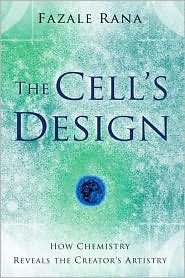 Arguments for intelligent design often hinge upon what mechanistic, naturalistic means “cannot explain.” The arguments go something like “See feature x, how can naturalistic mechanisms explain x? They cannot. Therefore, ID is true.” There is something to be said for this type of argument. If one simply cannot explain a specific thing by means of the mechanisms suggested, one must look for different means. That said, if the case for intelligent design rested only upon negative arguments, it would not be as robust as if it also had positive evidence.
Fazale Rana’s book, The Cell’s Design
Rana’s argument is an argument from analogy. He draws heavily from William Paley’s “watchmaker” example (If one came across a watch in the sand, they’d know it was designed… Paley argued that one could similarly conclude that life was designed). Rana doesn’t ignore the arguments raised against such analogical reasoning, but confronts them head on. After identifying several criteria which allow proper analogical reasoning (30ff), Rana makes his case for the Creator.
The first line of evidence comes from the machines in the cell. Again, Rana’s approach is analogical, rather than negative. The machine-like nature of the flagellum, along with other motor-like cellular functions presents an argument: “Organisms display design. Therefore, organisms are the product of a creator” (86).
The case doesn’t rest merely upon molecular machines. Rather, that is but one of the many lines of evidence. Rana draws out the implications of several “chicken-and-egg” paradoxes. These include the “mutual interdependence of DNA and proteins” (99), the origin of proteins themselves (100ff), and more (105ff). These systems present a kind of “irreducible complexity in which the system depends on the system to exist” (108).
Other elements of design are present in the cell as well. Aquaporins intricate and detailed workings illustrate the design that is present in the system (111ff). Other detailed, intricate designs (such as collagen, mRNA, and the breakdown of proteins) hint at the need for a designer. But the reasoning is not only supported by the details, it is also bolstered by the structural composition of the cell (126ff). The analogy of cells to machines is strengthened further by the quality control systems within the cell (198ff). Again, the reasoning is analogical–these things are designed, therefore they need a designer.
“Information can’t be separated from the activity of an intelligent agent” (142). The numerous examples of information in the cell lead to the inference of an agent. But it is not only the information’s presence that hints at a designer. Here Rana’s case really builds on and develops the work of other ID theorists. The information alone could be enough to infer an agent, but one must also account for the fact that cellular information follows rules like syntax, semantics, and pragmatics (144ff). It is not merely information, it is the use of that information and the rules governing that use that strengthen the case for an agent behind the information.
One of the most amazing parts of The Cell’s Design is the chapter called “A Style All His Own.” Darwinian evolution, if rewound, would come out different ways every time. Different mutations would occur, which would lead to different organisms. What is not expected, on Darwinism, is a convergence pattern in evolution. When the same templates keep showing up through independent routes of development, it provides strong evidence for a designer. Yet this “molecular convergence” is exactly what scientists have discovered again and again. On pages 207-214 Rana writes, with citations from scientific journals, of no less than 100 examples of molecular convergence. As a reader, one can’t help but be stunned as they go through these pages. Over and over, there is evidence that the same designs show up in different places, independently, throughout nature. As Rana writes, “if life emanates from a Creator, it’s reasonable to expect he would use the same designs repeatedly…” (215). And this repetition of design is found in life’s most basic components: DNA (216ff).
Rana does not ignore detractors arguments against his position. One counter-argument to Rana’s conclusions is the presence of poorly-designed mechanisms in nature. Yet Rana effectively nullifies these examples, citing how many of them have turned out to be optimally tuned for life, and how others may be expected to be equally tuned (258ff).
The Cell’s Design is an extremely difficult read, but it does not leave readers who are not scientists to flounder. Rana’s second and third chapters provide some basic biological understanding which readers must have to understand the argument throughout the rest of the book. There is also a 12-page glossary at the back of the book which will let those unfamiliar with the terminology follow along. That said, this is not an easy book. The argument is heavily scientific and involves an exploration, in extreme detail, of the mechanisms and machines at work in the cell. The book presents a fantastic case for ID, but not at the expense of the details.
Finally, it is important to underscore the reasoning behind Rana’s conclusions. His argument is abductive. He explicitly outlines it:
1) X is observed
2) If Y were true, then X would be expected.
3) There is good reason to believe that Y is true.
In the case of the cell:
1) Design is observed in biochemical systems.
2) If life stemmed from the direct work of a Creator, the elegant design of biochemical systems would be expected.
3) There is good reason to believe that life is the product of a Creator (276, these arguments are an exact quote).
After reading through The Cell’s Design, this reader cannot help but agree with this argument. Over and over again, Rana has drawn out the exquisite design in the cell. The positive evidence is there, life is designed.
The Cell’s Design presents a phenomenal case for a designer of life. Those interested in exploring intelligent design should add this book to their list. It is not an easy read, by any means, but it provides some explicit, positive evidence for the conclusion that a Creator exists. Those wishing to deny this fact will find much with which they must contend in Rana’s work. I recommend it without reservation.
Source:
Fazale Rana, The Cell’s Design
Disclaimer: I was provided with a review copy of this book by Reasons to Believe. You can learn more about this science-faith think tank at reasons.org.
SDG.
——
The preceding post is the property of J.W. Wartick (apart from citations, which are the property of their respective owners) and should not be reproduced in part or in whole without the expressed consent of the author. All content on this site is the property of J.W. Wartick and is made available for individual and personal usage. If you cite from these documents, whether for personal or professional purposes, please give appropriate citation with both the name of the author (J.W. Wartick) and a link to the original URL. This blog is protected by Creative Commons licensing. By viewing any part of this site, you are agreeing to this usage policy.
Book Review: “Hidden Treasures in the Book of Job” by Hugh Ross
 Hidden Treasures in the Book of Job
Ross begins with an exhortation to Christian leaders to stop avoiding the issue of Creation and to come up with a reasonable “strategy of engagement. Christians who take the Bible as a trustworthy revelation from God need to study science and engage with scientists at the highest academic and research levels” (12). I pray Ross’s words will not fall on deaf ears.
Ross goes on to point out the historical backdrop of the book. The debaters present, Job, Eliphaz, Zophar, and Bildad were “likely the intellectual powerhouses of their day…” (28). Along with Elihu, who most likely recorded the book, they comprise the major characters. Interestingly, Eliphaz was named as a Temanite. Teman, Ross points out, “was famous in the ancient world for its exceptionally wise scholars” (28). Contrary to some who may accuse Ross of demeaning the historical value of Scripture, it is clear that he affirms the historical realism of the Book of Job.
Interestingly, HTBJ doesn’t start with the scientific questions; it dives in to “timeless questions” about God. Ross points out answers given throughout Job about the reason for death (39-40), the shorter lifespans of humans (40-41), blessings for the wicked (43ff), and more. Ross provides an argument about what is often called “natural evil.” He points out Job’s rejection of a “direct cause-and-effect relationship between destructive natural events and the people affected by them” and goes on to argue that scientifically, these “acts of God” are necessary for life (49). Hurricanes, for example, bring a number of benefits (51).
Ross quickly moves into scientific questions throughout the book of Job. He argues that God’s challenges to Job and friends reject naturalism, deism, evolutionism, and young-earth creationism (54). Job specifically points out that God continually interacts with creation. Perhaps most interestingly, Ross points out that in Job the Bible specifically points towards the Big Bang–with language of God “stretching out the heavens.” This, thousands of years before any scientific evidence existed (56-58). Not only that, but the book also alludes to dark matter. Rather than treating darkness as the “absence of light” as was the belief historically, Job points out the actual existence of darkness and its separation from light. Here again there is evidence that Job lines up powerfully with science (60-63).
Another fascinating aspect of the Book of Job, argues Ross, is its ability to speak to current situations like Global Warming (63ff).
Central to Ross’ argument in HTBJ is the thesis that the book of Job can be used as an interpretive backdrop for the Genesis creation account. Ross argues that Job 38-39 can be read in their entirety as a creation account (72). This opens the gate for interpreting other creation accounts through the lens of Job 38-39. He points out that there are areas of Moses’ creation account that Job makes explicit. Some of these points include a correct interpretation of “heavens and earth” (74); an outline of when plants were created (78-79); and perhaps most interestingly, one of the best explanations of the problem of light before the sun I’ve ever seen (80-84). Ross argues that, contrary to most interpretations, the Genesis account does not explicate that there was no sun before light, but rather that the light had been hidden by the atmosphere (82-83). Again, this would serve as powerful scientific confirmation of the Bible.
Ross is unafraid to pull his punches. He takes on the question of the extent of the flood (92ff) and argues convincingly that the flood was localized to all of humanity. Perhaps the most controversial point Ross makes is in regards to one of the best arguments for young-earth creationism–death and the Fall. Often, the young-earth argument is that the Bible excludes any possibility of death before the Fall. Ross argues that, given Job 38-39’s creation account, that interpretation can no longer be valid. He urges that Job 38:39-41 coincides with creation day five, and because these verses include death before the fall, this argument for a young-earth is unsuccessful. Ross’s argument here will really depend upon how convincing his assertion is that all of Job 38-39 lines up with the days of creation. Ultimately, I think, most young-earth creationists will remain unconvinced and argue that only the early part of Job 38 is a creation account. In Ross’s favor is the continuing tense (it appears as though the verbs throughout the section are in the Qal stem). But Ross doesn’t make this argument. Thus, it seems that this part of Ross’s argument will be convincing only to those willing to agree that Job 38-39 are, in their entirety, a creation account.
Later, Ross soundly demolishes the young-earth argument that Job provides evidence for dinosaurs living with humans. He convincingly argues that the behemoth is a hippopotamus (178-180) and the leviathan a crocodile (180-183).
Ross doesn’t leave the book of Job without discussing what seems like its primary question: suffering. He presents evidence that Job argues for both a greater good theodicy along with a free-will defense (190ff). Both of these sections are interesting, if brief.
There are many areas of interest within HTBJ I have left unexplored. Ross focuses extensively on soulish creatures and the differences between humans and animals. Most interestingly is Ross’s explication of the list of 10 “soulish” creatures named in Job and their import for humans (150-165). Suffice to say that there is much more content in the book worth reading.
There were times as I read Hidden Treasures in the Book of Job that I was filled with marvel at the magnificence of creation. At one point I stood up and surprised my wife, saying “Can you believe what God has made? And we know it from the Book of Job! Can you believe this!?” as I described some of the things Ross reveals in the book. There are some astounding ways that the Bible lines up with the evidence we have from cosmology, astronomy, biology, and other sciences. While some Christians may remain unconvinced by Ross’s argument for interpreting Genesis 1 through the lens of all of Job 7-39, the book deserves a reading and response by even those who disagree. Ultimately, readers of Hidden Treasures in the Book of Job will come away with some powerful evidence from science for the truths of Scripture–and vice versa.
Disclaimer: I was provided with a review copy of this book by Reasons to Believe. You can learn more about this science-faith think tank at reasons.org.
Source: Hugh Ross, Hidden Treasures in the Book of Job
SDG.
——
The preceding post is the property of J.W. Wartick (apart from citations, which are the property of their respective owners) and should not be reproduced in part or in whole without the expressed consent of the author. All content on this site is the property of J.W. Wartick and is made available for individual and personal usage. If you cite from these documents, whether for personal or professional purposes, please give appropriate citation with both the name of the author (J.W. Wartick) and a link to the original URL. This blog is protected by Creative Commons licensing. By viewing any part of this site, you are agreeing to this usage policy.
Book Review: “Who Made God?” by Edgar Andrews
 Who Made God?
Interestingly, Andrews gets the title of the book out of the way quickly. Andrews argues against the common atheistic retort, “Well if God made everything, who made God?” He writes, “Because cause and effect is only proven for the physical world, we can no longer insist that cause and effect are relevant when it comes to the origin of a spiritual entity like God.” I am not sure about the strength of this response. It seems to potentially put God outside the rules of logic, something of which most theists are very wary. A more convincing response, in my opinion, is to simply point out that the concept of God includes necessity. Theistic arguments are designed to show just this–that God is the uncaused ground of being.
Who Made God, however, quickly jumps into stride and doesn’t look back. Andrews lucidly argues that while science can describe events and put them to the test, it cannot explain things in the sense of a comprehensive explanation. Science, for example, “doesn’t tell us why there is [a force of gravity]” (30).
Without slowing down Andrews jumps into a clear explanation of String Theory and its attempts to be a “theory of everything.” Even were science to unify into a theory of everything, however, Andrews point would still stand. The theory would offer descriptions of how things happen, but it wouldn’t explain why the theory itself worked. He also offers a few critiques of string theory, such as the counter-intuitive nature of the theory (48).
Andrews continues on, offering God as a “hypothesis.” He argues that “the methodology of science” can be applied to God (58-59). He argues that Victor Stenger’s God: the failed hypothesis fails on a number of levels. Stenger claims that God “should be detectable: (1) by scientific ‘models’; (2) by scientific measurements… (3) by scientific ‘methods'” (67). Against this, Andrews points out that Stenger is trying to exclude God from existence by “having it both ways.” Stenger argues that God should be detectable, but cannot be because the measurements of science are restricted to the physical. Obviously, this begs the question against theism.
Andrews also addresses nothing, by which I mean the redefinition of “nothing” into “something” often done by atheists (see the debate between Lawrence Krauss and William Lane Craig). He points out that they often use “nothing” to reference vacuum and/or empty space or dark matter. But this is either deliberately misleading or just incomprehensible (97ff). As the atheists who say this often admit themselves, this “empty” space is hardly “nothing.” It is full of energy. But beyond space, beyond the existence of our universe, outside of space and time–that is what is meant by “nothing” (105).
The God hypothesis is vindicated when it comes to the evidence from astronomy and physics. The low entropy state of our universe (117-118), along with its origin (98ff) both point to a creator. Andrews moves on to argue that the origin of the laws of nature must also point to the God hypothesis (138-153). He then goes on to argue that our biological origins, the information found in cells, and the diversity of life have their best explanation with God. To cover these arguments fully would double the size of this review, but I found these arguments just as exciting as the rest of Who Made God. A sampling: proteins and DNA must have information in order to function correctly (181ff); origin of life theories can only be explained with the God hypothesis (196ff); evolution is nonfalsifiable (214-216); natural selection is a tautology (219-220); junk DNA isn’t junk (234ff); mutations really only help within dynamic populations and cannot lead to new species (230ff [through 240]). Andrews isn’t finished there, however, he tackles arguments for and against mind/body dualism (250ff).
Another strength of Who Made God is the format. There is a summary of each chapter prior to its contents, along with definitions of important terms. Humor is found throughout the work as the author tells funny stories or makes witty comments about the arguments. These aspects increase the readability of the book to a great degree.
This is not to say the book is without faults. Andrews’ treatment of the Ontological Argument was a bit abrupt. I’ve written on the argument before (see my posts here and here). Andrews’ critiques don’t apply to the most current versions of the argument. The most commonly used ontological argument is the modal version developed by Alvin Plantinga and others. This version of the argument doesn’t appeal to human ideas, but to modal necessity and possibility. To his credit, Andrews does point out that some philosophers find the argument compelling.
Another issue with Who Made God is the sometimes unconventional use of philosophical terms. For example, Andrews defines “phenomenology” as “The way phenomena… manifest themselves” (27). Phenomenology, however, is most commonly used (in philosophy) as the study of consciousness. Outside of philosophy, it generally refers to conscious experience or sense experience, not so much about the phenomena themselves. While the definition is not wrong, it caused some confuse, and may confuse other readers familiar with the other, more conventional uses. Another uncommon definition was given for “Monism.” Most often, the term refers to the idea that all of reality is one [i.e. it is all material, or all immaterial]. Andrews definition makes sense in context (he defines it as “The idea that mind is nothing more than the brain at work” [257] but that definition in philosophy of mind is more often used for “reductionism” which Andrews defines differently as well).
However, neither of these negatives outweigh the significant positives found throughout Who Made God. You know that I’m nitpicking when my main critique focuses on a couple unconventional definitions, particularly when Andrews uses valid definitions that simplify the terminology for the reader.
Edgar Andrews’ Who Made God is unique among the slew of apologetics books written at a popular level in that it offers a nearly comprehensive argument for Christianity based upon various scientific theories. Despite a few small flaws, I unreservedly recommend this book to all Christians looking to increase their knowledge of biology, physics, and astronomy. Andrews clearly and succinctly explains several scientific theories in terms which are easy to understand, while also showing the relevance for the “God hypothesis.” Readers will come away convinced that when it comes to science, their faith stands on firm ground. Books with scopes this broad most often shine their lights upon lots of topics and illumine none. Readers will find that Who Made God illumines nearly every topic it touches, bringing new insight and clarity into often confusing issues.
Source: Edgar Andrews, Who Made God?
Disclaimer: I was provided with a review copy free of charge by EP books. My thanks to both Edgar Andrews and EP books.
SDG.
——
The preceding post is the property of J.W. Wartick (apart from citations, which are the property of their respective owners) and should not be reproduced in part or in whole without the expressed consent of the author. All content on this site is the property of J.W. Wartick and is made available for individual and personal usage. If you cite from these documents, whether for personal or professional purposes, please give appropriate citation with both the name of the author (J.W. Wartick) and a link to the original URL. This blog is protected by Creative Commons licensing. By viewing any part of this site, you are agreeing to this usage policy.

 J.W. Wartick - Reconstructing Faith
.jpg)