Sunday Quote
Sunday Quote!- Does Concordism Fail?
 Every Sunday, I will share a quote from something I’ve been reading. The hope is for you, dear reader, to share your thoughts on the quote and related issues and perhaps pick up some reading material along the way!
Does Concordism Fail?
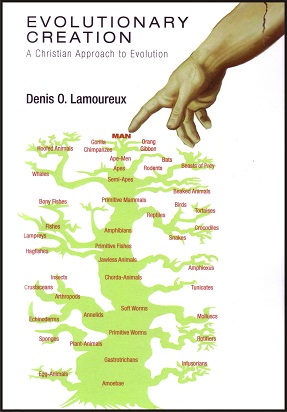
Denis Lamoureux argues in his book Evolutionary Creation
After rather exhaustively making this point, he asserts:
It is obvious that scientific concordism fails. There is no correspondence between the conceptualization of nature in the Book of God’s Words and our common knowledge of the Book of God’s Works. (149)
Lamoureux’s argument is lengthy and challenging. I think it presents at least two major difficulties for concordists. First, his argument demands that we who are concordists take the texts seriously at what they are teaching. If we want to affirm that the Bible is scientifically accurate, then we cannot simply dismiss these apparent discussions of a three-tier universe, firmament, and more as “background understandings” of the ancients. Instead, for the sake of consistency, we must explain how these texts will be in concord with a right scientific understanding. This task is one I will not undertake, but I think some have done an admirable job in this regard, particularly groups like Reasons to Believe.
Second, it provides a direct attack at the roots of the concordist position: can the concordist justify their position through the Bible rather than falling into the danger of misrepresenting what the Bible actually teaches and what the authors’ understanding actually was?
I do not take these challenges as insurmountable, but they do provide food for thought. I am wary of arguing the Bible should be anything like a science textbook, and particularly wary of thinking that it might have some kind of prophetic 21st century science written into the background. However, I am equally wary of acting as though the Bible has nothing to say about the natural world and that we can just blithely dismiss anything it might say as background understanding.
What are your thoughts? Does concordism fail? What is the best way to treat the interplay between Christianity and science?
Links
Be sure to check out the page for this site on Facebook and Twitter for discussion of posts, links to other pages of interest, random talk about theology/philosophy/apologetics/movies and more!
Sunday Quote– If you want to read more Sunday Quotes and join the discussion, check them out! (Scroll down for more)
Source
Denis O. Lamoureux, Evolutionary Creation
SDG.
Sunday Quote!- A Science Fiction Parable
Every Sunday, I will share a quote from something I’ve been reading. The hope is for you, dear reader, to share your thoughts on the quote and related issues and perhaps pick up some reading material along the way!
Science Fiction Parable
Before I dive in here, I want to note that there are SPOILERS for the last book of the fantastic Firebird series by Kathy Tyers in what follows.
Kathy Tyers’ Firebird Trilogy was an amazing piece of science fiction which integrated issues of faith and worldview into a stirring narrative. In Daystar
“Once there was a little girl… She had a little pet that she loved… It was a kind of creature she’d never seen…. It had four stubby legs, a big head, ans sharp little teeth… She opened the bag of pet food the dealer sold them, she put the food into [the pet’s] bowl, and she stroked it while it ate with those sharp little teeth… After a few days, the girl noticed something. Her pet wasn’t getting any bigger. In fact, it looked thin… She found out that [its] species was strictly herbivorous–but the pet dealer had sold them dried meat pellets by mistake…
“It looked like a carnivore. So she asked her parents to buy the right food… And it sniffed the good food, but it wouldn’t eat. It walked away from the bowl and looked up at her with desparately hungry eyes. It had learned to like the wrong food. It refused to eat what would nourish it, because that food seemed strange and mysterious. One day it lay down at her feet, looking up at her with those hungry eyes, and it died.” (430-431, cited below)
The story is powerful and emotionally charged. Like the parables of Jesus, it also hints at much beyond the mere words spoken. For the rest of the book, Meris–the non-believing character Tavkel is telling the parable too–reflects on it and tries to draw out its meaning. The meaning, however, does not become clear until the Boh-Dabar fulfills the same kind of prophecies which Christ fulfilled.
Looking at this specific parable, there are many layers of possible meaning. How might we be eating food that doesn’t nourish us? Could it be a sinful habit, a practice, a temptation we give in to? Have we made ourselves used to bad food so that we don’t recognize that which is good? Do we need to ask God to help bring healing to our own habits of life? But the text could go in other directions as well. Have we seen others in ways that are mistaken? Perhaps we see something about someone else and think we do not want to associate with them. We see “sharp teeth” and think “predator.” We flee from that which is different.
Daystar
Links
Be sure to check out the page for this site on Facebook and Twitter for discussion of posts, links to other pages of interest, random talk about theology/philosophy/apologetics/movies and more!
Enter [Science] Fictional Messiah- Kathy Tyers’ “Wind and Shadow” and “Daystar”– I look into several worldview themes that Tyers raises in these sequels to her Firebird trilogy. What would a Messiah in the future look like?
Sunday Quote– If you want to read more Sunday Quotes and join the discussion, check them out! (Scroll down for more)
Kathy Tyers’ “Firebird Trilogy”- Faith, Humanity, and Conflict in the Far Future– I look at a number of worldview issues brought up in the “Firebird Trilogy.” Be sure also to check out my review of the trilogy on my other site.
Source
Kathy Tyers, Daystar
SDG.
Sunday Quote!- Is Adam Necessary for Christianity?
Every Sunday, I will share a quote from something I’ve been reading. The hope is for you, dear reader, to share your thoughts on the quote and related issues and perhaps pick up some reading material along the way!
Is Adam Necessary for Christianity?
Not long ago, I wrote a post about the historical Adam in which I asked whether it was a “Gospel” issue. Unsurprisingly, there were many different voices raised talking about it, and I quite enjoyed the discussion. I also shared a different Sunday Quote! on how the doctrine of Adam is interwoven with others. I often read books that I know will challenge what I believe, because I think it is important to test your beliefs constantly in order to strengthen them and correct what is wrong. I read through Denis Lamoureux’s book, Evolutionary Creation
His central thesis is particularly striking:
Adam never existed, and this fact has no impact whatsoever on the foundational beliefs of Christianity. (367)
This thesis is very strongly worded, and I think there are a few problems with it. Key, of course, is the question of what is meant by “foundational” beliefs. Lamoureux does dive into that earlier in the book, but I think in some ways he doesn’t hit all the points he needs to. For example, the notion of original sin is one which is “foundational” in some theological traditions. Thus, for them, Adam’s non-existence would be extremely problematic. Lamoureux, however, does try to offer ways to even accommodate these traditions in the book. However, he ultimately has to settle for a “reformulation” of the doctrine in which:
[T]he entrance of sin was not a punctiliar event committed by two individuals. Instead, original sin was manifested mysteriously and gradually over countless many generations… (292).
I think this “reformulation” is unsatisfying. Moreover, as I have argued briefly elsewhere, federal headship seems to be a possible way around this for the evolutionary creation (read: theistic evolution) advocate. So, ultimately, I’m not convinced that Lamoureux’s central thesis can be carried. In fact, I think it is unnecessary for advocates of his position to even put forward.
What are your thoughts? How might we engage Lamoureux in a winsome way? What theological challenges might be offered to his position?
Links
Be sure to check out the page for this site on Facebook and Twitter for discussion of posts, links to other pages of interest, random talk about theology/philosophy/apologetics/movies and more!
Sunday Quote– If you want to read more Sunday Quotes and join the discussion, check them out! (Scroll down for more)
Is the historical Adam a “Gospel” issue? – I discuss what impact it has on Christianity if Adam is not a historical person.
Source
Denis O. Lamoureux, Evolutionary Creation
SDG.
Sunday Quote!- Trading Off the Bible for Science?
 Every Sunday, I will share a quote from something I’ve been reading. The hope is for you, dear reader, to share your thoughts on the quote and related issues and perhaps pick up some reading material along the way!
Trading Off the Bible for Science?
Adam, the Fall, and Original Sin
One area that was fairly interesting was the discussion Hans Madueme offered of an interplay between the Bible and science:
There is a trade-off between what is biblically plausible and what is scientifically plausible. To the degree that the doctrine of the fall reflects the biblical story, to the same degree is it inversely faithful to the evolutionary story. (238, cited below)
I think the language of “trade-off” here might be viewed as a rhetorical flourish. The next phrase is equally weighted to seemingly back-load a specific reading of the story of the fall into what is “plausible” over and against that which is “scientifically plausible.” Although I think there may be something of a trade-off in some sense, in order for this qupte to be true there would have to be an inherent inverse relationship between evolution and the Bible. This may, in fact, be the case, but there are a number of steps that need to be proven before one can get to that point.
More intriguing, perhaps, is the notion that we could recast this “trade-off” between exactly how much science we want to read into the Bible and how biblically plausible we are. I would argue that the more we insist that the Bible is explicitly revealing specifics of exact empirical science, the more we do damage to the text. This is a position that does not see science and the Bible as in complete opposition to each other, nor does it see the Bible as scientifically inaccurate or as “non overlapping magisteria.” Instead, where the Bible speaks to scientific issues–if anywhere–those are affirmed. Where it doesn’t, we should not insist that it does.
What do you think? Is there really a trade-off between science and the Bible? If so, in what way?
Links
Be sure to check out the page for this site on Facebook and Twitter for discussion of posts, links to other pages of interest, random talk about theology/philosophy/apologetics/movies and more!
Sunday Quote– If you want to read more Sunday Quotes and join the discussion, check them out! (Scroll down for more)
Source
Hans Madueme, “The Most Vulnerable Part of the Whole Christian Account: Original Sin and Modern Science” in Adam, the Fall, and Original Sin
SDG.
adam, fall, original sin 238
Sunday Quote!- Sending the “Other” to Hell
 Every Sunday, I will share a quote from something I’ve been reading. The hope is for you, dear reader, to share your thoughts on the quote and related issues and perhaps pick up some reading material along the way!
Sending the “Other” to Hell
We as Christians often need reminders that we are to share our faith with gentleness and respect. I know I often fail in this regard, and sincerely repent and ask for forgiveness from those whom I have failed. Re-reading James Emery White’s Christ Among the Dragons
Many Christians view those outside of the faith as needing to go to hell. They are the bad guys, the enemy. (95)
We see this often when, for example, someone dies and a comment is shared “he/she is burning in hell.” I have, unfortunately, seen this myself many times. But is that the attitude we should be taking as Christians with regard to those of other faiths or–heaven forbid–those with whom we disagree in our own faith tradition?
Whenever this kind of attitude crops up in our own lives, we should repent and ask for forgiveness. Our job is not to send the “other” to hell. It is to share Christ’s love with them.
Links
Be sure to check out the page for this site on Facebook and Twitter for discussion of posts, links to other pages of interest, random talk about theology/philosophy/apologetics/movies and more!
Sunday Quote– If you want to read more Sunday Quotes and join the discussion, check them out! (Scroll down for more)
Source
James Emery White, Christ Among the Dragons
SDG.
christ among dragons- 95
Sunday Quote!- The Reality of Adam and the Origins Debate
Every Sunday, I will share a quote from something I’ve been reading. The hope is for you, dear reader, to share your thoughts on the quote and related issues and perhaps pick up some reading material along the way!
The Reality of Adam and the Origins Debate
Adam, the Fall, and Original Sin
The temptation in this debate [about the historicity of Adam] is to think that Adam is simply one piece in a puzzle in which the fall and evolution are separate pieces that we can rearrange and shuffle around the board. But… Adam and the fall do not float free in Scripture like rootless, atomistic, independent ideas. They are central nodes that hold together and are completely enmeshed in a much broader, organic, theological matrix. (ix, cited below)
What makes this quote so interesting is the way it speaks to the notion–a correct one, I think–that these doctrines are of such central concern. Whether or not these are “essential” doctrines to the Christian faith is hotly debated, but it seems clear that one’s view of original sin (and indeed whether it even exists) and Adam will inter-relate with all kinds of other doctrines, including soteriology, justification, sanctification, and beyond.
What do you think? What doctrines inter-relate most closely with these doctrines? Is it correct to think we can’t treat them in “atomized” form? Is it possible to speak of the notion of whether Adam and Eve were historical figures without also speaking of the implications it has for other doctrines?
Links
Be sure to check out the page for this site on Facebook and Twitter for discussion of posts, links to other pages of interest, random talk about theology/philosophy/apologetics/movies and more!
Sunday Quote– If you want to read more Sunday Quotes and join the discussion, check them out! (Scroll down for more)
Source
Michael Reeves and Hans Madueme, “Adam Under Siege” in Adam, the Fall, and Original Sin
SDG.
Adam, Fall, Original Sin ix
Sunday Quote!- Spiritual Warfare and Mapping the Land?
 Every Sunday, I will share a quote from something I’ve been reading. The hope is for you, dear reader, to share your thoughts on the quote and related issues and perhaps pick up some reading material along the way!
Spiritual Warfare and Mapping the Land?
I recently read through Understanding Spiritual Warfare: Four Views
Spiritual mapping is the practice of identifying the spiritual conditions at work in a given community, city, or nation. By gathering objective information (including key historical facts… locations of bloodshed, idolatrous practices, [etc…]) and combining it with spiritual impressions (prophecy, revelation, words of knowledge, dreams, and visions), believers can prayerfully combine all of this information and draw a map that identifies the open doors between the spiritual world and the material world (182-183, cited below).
Now I admit that I come from a background in which spiritual warfare was little (if at all) discussed, but this does seem a little bit more than we can glean from the biblical image of spiritual warfare. Where, for example, are we instructed to try to use dreams and revelation in order to find “open doors” of the spiritual world? Where are we instructed that there might be doors for the spiritual world into our own that are identifiable? I think some aspects of this notion might be helpful for witnessing and the like–after all, knowing the landscape in this fashion would be helpful for identifying areas of conflict in a community and offering Christlike compassion in those areas–but I hesitate to think that the way they can be applied is in this fashion.
What are your thoughts on this? What do you think of spiritual warfare?
Again, I highly recommend this book with its very wide range of diverse views presented on the topic in order to get an introduction.
Links
Be sure to check out the page for this site on Facebook and Twitter for discussion of posts, links to other pages of interest, random talk about theology/philosophy/apologetics/movies and more!
Microview: Understanding Spiritual Warfare: Four Views– I briefly review this highly interesting book on different views of spiritual warfare.
Sunday Quote– If you want to read more Sunday Quotes and join the discussion, check them out! (Scroll down for more)
Source
C. Peter Wagner and Rebecca Greenwood, “The Strategic-Level Deliverance Model” in James Beilby and Paul Rhodes Eddy, eds., Understanding Spiritual Warfare: Four Views
SDG.
Sunday Quote!- Can Adam be (merely) a federal head?
Every Sunday, I will share a quote from something I’ve been reading. The hope is for you, dear reader, to share your thoughts on the quote and related issues and perhaps pick up some reading material along the way!
Can Adam be (merely) a federal head?
I recently finished reading the thought-provoking book, Adam, the Fall, and Original Sin
Adam’s imputed sin has no ontological basis [on this view]. If only Africans and Asians, let us say, are true physical descendants of Adam, God will still impute Adam’s sin to Britons and Americans since Adam was also the federal head of all his contemporaries (among whom would have been their ancestors). This divine decree seems unfair and arbitrary since it is not grounded in an antecedent natural reality. (217, cited below)
I found this to be an argument that could trouble those who hold to Adam as mere federal head (rather than “natural head”–here being used to mean that Adam and Eve were the first of all humans and all are descended from them), but I think a few responses would be possible from the theistic evolutionist perspective. First, one could argue that there need be no grounding in a natural reality for Adam’s federal headship. After all, divine fiat should settle the question! Second, one might instead argue that God’s decree of Adam as federal headship itself just is the ontological basis. That is, there is an ontological basis for the condemnation: God’s decree. Third, one might argue that the federal headship of Adam went alongside the giving of the human soul to Adam and Eve and that the other humans were also given souls with Adam as their federal head. I think other possibilities are possible as well.
What do you think? Does this argument undermine the possibility of theistic evolutionism? Are the possible responses good rebuttals? Are there other possible responses?
Links
Be sure to check out the page for this site on Facebook and Twitter for discussion of posts, links to other pages of interest, random talk about theology/philosophy/apologetics/movies and more!
Sunday Quote– If you want to read more Sunday Quotes and join the discussion, check them out! (Scroll down for more)
Source
Michael Reeves and Hans Madueme, “Threads in a Seamless Garment: Original Sin in Systematic Theology” in Adam, the Fall, and Original Sin
SDG.
Sunday Quote!- Charismata and Authority of Scripture
 Every Sunday, I will share a quote from something I’ve been reading. The hope is for you, dear reader, to share your thoughts on the quote and related issues and perhaps pick up some reading material along the way!
Charismata and the Authority of Scripture
I have been reading through Jon Mark Ruthven’s On the Cessation of the Charismata
the implicit attack on the sufficiency of scriptural authority made by those claiming miracles and extraordinary gifts of the Holy Spirit… Such claims [of spiritual gifts]… represented a direct challenge to Protestant religious authority in that it was specifically based upon a closed canon of Scripture. (32, cited below)
Now I have not finished the book, so I’m not sure whether Ruthven would affirm this point. Indeed, he calls this a “polemical” argument against spiritual gifts, so I suspect he’s going to argue that the “continuationist” position–that which affirms spiritual gifts moving into the modern era–does not need to deny the closedness of the canon or affirm a denial of the sufficiency of Scripture. I’m looking forward to seeing how his argument proceeds, and whether he will indeed argue against this or affirm the openness of the canon.
What do you think? Do charismata–spiritual gifts–entail this position? If so, how problematic is it? What is your position? I’d love to read your thoughts in the comments.
Links
Be sure to check out the page for this site on Facebook and Twitter for discussion of posts, links to other pages of interest, random talk about theology/philosophy/apologetics/movies and more!
“Are Miraculous Gifts for Today?”- A look at four views in Christian Theology– I provide a look at four positions on miraculous/spiritual gifts in contemporary theology.
Sunday Quote– If you want to read more Sunday Quotes and join the discussion, check them out! (Scroll down for more)
Source
Jon Mark Ruthven, On the Cessation of the Charismata
SDG.
Sunday Quote!- An Eclectic Dialogue Between Christianity and Science
Every Sunday, I will share a quote from something I’ve been reading. The hope is for you, dear reader, to share your thoughts on the quote and related issues and perhaps pick up some reading material along the way!
An Eclectic Dialogue Between Christianity and Science
I recently finished reading Adam, the Fall, and Original Sin, a series of essays from a variety of authors on these highly important subjects. There are a number of excellent articles in this work, and I highly recommend it. One great quote from the book was about Christianity and science and the way to integrate them:
[W]hy should we choose sides [between science and Christianity]? Theology should be eclectic in how it engages with science. Christians should engage scientific theories on a case-by-case basis. Different theories will invite different attitudes and responses (sometimes dialogue, sometimes conflict, sometimes independence, and so on)… This is partly because Scripture does not usually answer our scientific questions and partly because scientific claims are by nature revisable. (243-244, cited below)
I found this an enormously helpful quote and approach because I think too often Christians and non-Christians act as though “science” is this homogeneous whole, and that “Christianity” is itself a single entire unit. But realistically, this is not at all the case. Different theories and different theological points have their own
What are your thoughts? Is this a helpful way to view the religious and scientific dialogue?
Links
Be sure to check out the page for this site on Facebook and Twitter for discussion of posts, links to other pages of interest, random talk about theology/philosophy/apologetics/movies and more!
Sunday Quote– If you want to read more Sunday Quotes and join the discussion, check them out! (Scroll down for more)
Source
Adam, the Fall, and Original Sin
SDG.

 J.W. Wartick - Reconstructing Faith