Christian Doctrines
Proverbs 31 destroys preconceived “Biblical Womanhood”
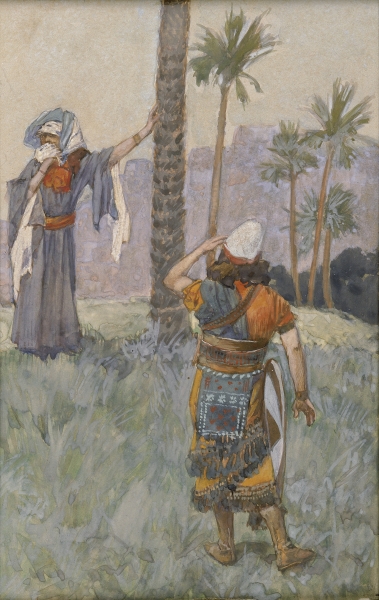
Deborah, leading the people of Israel
There are some who advocate a notion of “Biblical Manhood and Womanhood” with strict definitions of what roles men and women should occupy. Representative is John Piper, a leading voice in the movement named “Recovering Biblical Manhood and Womanhood.” In his essay “A Vision of Biblical Complementarity: Manhood and Womanhood Defined According to the Bible,” Piper writes about “biblical” manhood:
When my father came home he was clearly the head of the house… (32, cited below)
[W]hen there is no bread on the table, it is the man who should feel the main pressure to do something to get it there… a man will feel his personhood compromised if he… becomes dependent over the long haul… on his wife’s income. (42)
Shockingly, Piper even goes so far as to say that:
“[E]ven where a Christian wife may have to stand with Christ against the sinful will of her husband, she can still have a spirit of submission–a disposition to yield” (47).
Piper alleges that biblical womanhood follows this pattern:
A mature woman is glad when a respectful, caring, upright man… provides a pattern of appropriate initiatives in their relationship. (48)
[She is to follow] Biblical submission[, which] for the wife is the divine calling to honor and affirm her husband’s leadership and help carry it through… (53)
From Piper, we learn that “biblical” womanhood is to yield, to be led, not to be the head of the home, be provided for, indeed even to avoid situations in which a woman is closely leading a man in the office (52).
Proverbs 31 destroys this concept of what a “biblical” woman should be. In this astonishing passage, we read that the ideal woman:
1. Takes care when selecting products to purchase (31:13)
2. Brings food to her family (31:14)
3. Provides for her family (31:15)
4. Appraises and purchases land (31:16)
5. Brings profitable gain (31:18)
6. Works with tools of various trades (31:18)
7. Helps the poor and needy (31:20)
8. Crafts goods to be used by the family (31:22)
9. Crafts goods to sell and is shrewd in selling them (31:24; 18)
10. Speaks and instructs with wisdom (31:26)
11. Watches over the ways of the household (31:27)
12. Above all, she fears the Lord (31:30)
Now remember, this is an “ideal” and of course no woman could be or do all of these things. This passage illustrates aspects of what a biblical woman would be.
Recall, though, the roles that have been defined for women by some complementarians–people who hold a view in which man and woman occupy different roles in the home and church, with men as leaders. Which of these are found in the description of woman in Proverbs 31? Let’s just do a quick comparison of a few (Piper citations from above):
Piper: [I]t is the man who should feel the main pressure to do something to get [bread on the table]
Bible: “[The ideal wife/woman] gets up while it is still night; she provides food for her family...” (31:15a)
Do women not share the pressure in putting bread on the table when the Bible describes ideal womanhood as a provider of food for her family without excluding the husband?
Piper: When my father came home he was clearly the head of the house…
Bible: “She watches over the affairs of her household…”(31:27a)
Does watching over the affairs of the household have an unwritten, unspoken clause that excludes men?
Piper: [A] man will feel his personhood compromised if he… becomes dependent over the long haul… on his wife’s income.
Bible: “She considers a field and buys it; out of her earnings she plants a vineyard… She sees that her trading is profitable, and her lamp does not go out at night.” (31:16; 18)
Does the wife/woman’s managing money, earning it, buying fields, ensuring profit, and staying up late into the night focusing on this profitable gain compromise her husband’s personhood?
Also interesting are the things that are not said. It doesn’t say the ideal woman yields to her husband when he does wrong, she rather brings him good, not harm (31:12). Sin is a harmful cycle, and to say women are to rebuke it, but yield because a man is the leader is perpetuating that cycle.
The question, then, becomes this: where are those like Piper, who make the statements quoted above getting their ideas from? Is Proverbs 31 biblical womanhood when it contradicts these notions, or are the Scriptural quotes above instead to be defined as the properly biblical womanhood?
The question is ‘how do we define Biblical Womanhood’? The answer: A buyer, seller, purveyor, manufacturer, innovator, leader, provider, entrepreneur, and above all, one of God.
You ask “What is Biblical womanhood?” I’ll tell you: Proverbs 31.
Links
Be sure to check out the page for this site on Facebook and Twitter for discussion of posts, links to other pages of interest, random talk about theology/philosophy/apologetics/movies and more!
Check out my posts on egalitarianism – the belief that men and women are equally qualified and called in the church and home (scroll down for more).
On the Femnization of the Church– It is frequently alleged that the church is being “feminized” and that this is a bad thing. Check out this post, wherein I analyze this notion from a few different angles.
Source
John Piper, “A Vision of Biblical Complementarity: Manhood and Womanhood Defined According to the Bible” in Recovering Biblical Manhood and Womanhood edited by Piper and Grudem (Wheaton, IL: Crossway, 2006).
SDG.
——
The preceding post is the property of J.W. Wartick (apart from quotations, which are the property of their respective owners, and works of art as credited; images are often freely available to the public and J.W. Wartick makes no claims of owning rights to the images unless he makes that explicit) and should not be reproduced in part or in whole without the expressed consent of the author. All content on this site is the property of J.W. Wartick and is made available for individual and personal usage. If you cite from these documents, whether for personal or professional purposes, please give appropriate citation with both the name of the author (J.W. Wartick) and a link to the original URL. If you’d like to repost a post, you may do so, provided you show less than half of the original post on your own site and link to the original post for the rest. You must also appropriately cite the post as noted above. This blog is protected by Creative Commons licensing. By viewing any part of this site, you are agreeing to this usage policy.
Should All Churches Be “Mere”ly “Christian”?
I gave you milk, not solid food, for you were not yet ready for it. Indeed, you are still not ready. (1 Corinthians 3:2)

Apologetics Church
I have had many discussions with my apologetics-inclined friends on the nature and purpose of church. One thing I have heard again and again is the notion that all churches–even all services–should be seeker-friendly or should reflect what C.S. Lewis calls “mere Christianity.” Mere Christianity, as defined by C.S. Lewis, is essentially that which all Christians everywhere have believed.
Interestingly, I have run into several people from a broad spectrum of backgrounds who have told me that they think all churches should be “mere Christian” churches centered on apologetics. The point of church on this view is to evangelize and to provide Christians with reasons to believe what they believe.
Statements like this are repeated by many of my apologist friends. I had a conversation with one friend in which I was informed that the purpose of church was to evangelize, and what better way to do that then to go to “mere Christianity” and have every service revolve around apologetics discussion. That’s right, this person–and others I have talked to–said that every sermon, every service, every time the church meets should be about apologetics and should not focus on those doctrines which have caused so much division within the body of Christ.
As an apologist with an MA in the field, this has some appeal! After all, were all churches to do this it would certainly raise my “employability” quotient! I would be in demand every single Sunday. But realistically, I think that statements like this show underlying confusion about the nature of church and the importance of Christian doctrine.
The Point of Church
There is no way for a complete, systematic outline of what church is about in a post like this. Nor would I claim to be an expert on the doctrine of the church. So, at risk of being simplistic, I would say that the meaning of church is to glorify God. How is this done?* I think it’s clear that the creedal statements about the church accepted throughout the history of Christianity (dare I say, the “mere Christian” definition of church?) is that it is “holy” and a “communion of saints” (Apostles’ Creed) and it is “holy and Apostolic” and “catholic/universal” (Nicene Creed).
A church should not be a place which wards off those who are seeking, but the ultimate purpose of church, confessed for over a thousand years, is to be “holy” and a community of saints. The body of Christ is not immediately perfect; but the point of church is to have community with fellow saints–the Body of Christ. Worshiping and glorifying our Creator and Redeemer is central to the life of the church. If we abandon that, we abandon the very reason for having community to begin with.
Whatever vision we have of church, then, should incorporate how the church has always defined itself. A primary need for the Christian is to worship and thank God for the blessings poured out on us each and every day. The community of believers longs to worship Christ, to join the company of angles to laud and magnify the name of the Most High God.
Moreover, when we look at the verse I led this post with, the church is a place to get the “solid food” believers need to go beyond the “milk.” Churches instruct the community in how to move beyond the “milk” of “mere Christianity” and acceptance of the bare minimum and into “solid food” and a fuller understanding of God’s word.
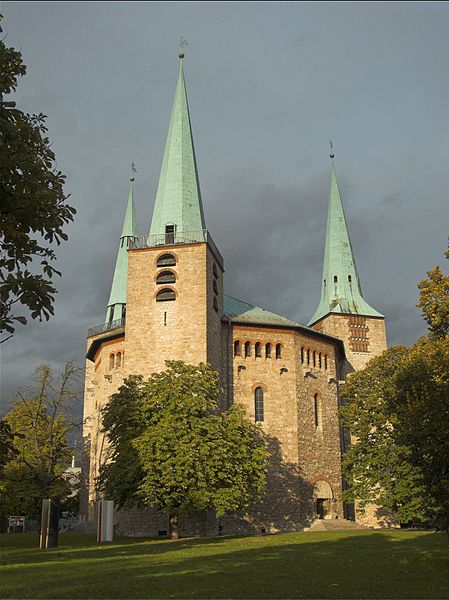 Apologetics Church, Revisited
I have my own vision of what a church that is focused on apologetics would look like.
The “Apologetics Church” would have a study group for both youth and adults to participate in which focused upon various apologetics issues. The group would start at a basic level, teaching on the nature of apologetics and its methods, then move into individual objections to the Christian faith.
The pastor would have studied apologetics on his/her own and would integrate apologetics into sermons when appropriate (Easter would be a great time to talk about evidence for the resurrection, for example). The church would have a monthly “outreach night” in which the local community was invited in to discuss questions about the faith and simply engage in dialogue over desserts or a snack. The church would have groups that went to a movie, or an art show, or a concert, etc. and then met afterwards to discuss the implications of that media for the Christian worldview.
It would be a church aware of, but not overtaken by, apologetics. It would be an evangelical, mission-oriented church, but not a missions-only church.
Conclusion
I have said only the bare minimum about the nature of church and its function. Ultimately, though, I think a vision of the nature of church should include apologetics, but it should not be reduced to it. We seek “solid food” and long for deeper knowledge of God. Your church is an excellent place to get that needed, longed-for instruction.
As the deer pants for the water, so my soul longs for you.. (Psalm 42:1)
Links
Be sure to check out the page for this site on Facebook and Twitter for discussion of posts, links to other pages of interest, random talk about theology/philosophy/apologetics/movies and more!
The Church Universal: Reformation Review– I take a deeper look into the definition of a “universal church” in a post that focuses on theology of the reformation.
*As a Lutheran, I would say that glorifying God in church is best done through Word and Sacrament, but I realize that not all churches are sacramental and do not desire to start that debate here.
SDG.
——
The preceding post is the property of J.W. Wartick (apart from quotations, which are the property of their respective owners, and works of art as credited; images are often freely available to the public and J.W. Wartick makes no claims of owning rights to the images unless he makes that explicit) and should not be reproduced in part or in whole without the expressed consent of the author. All content on this site is the property of J.W. Wartick and is made available for individual and personal usage. If you cite from these documents, whether for personal or professional purposes, please give appropriate citation with both the name of the author (J.W. Wartick) and a link to the original URL. If you’d like to repost a post, you may do so, provided you show less than half of the original post on your own site and link to the original post for the rest. You must also appropriately cite the post as noted above. This blog is protected by Creative Commons licensing. By viewing any part of this site, you are agreeing to this usage policy.
On the Feminization of Christianity
Christianity is being feminized–men just don’t go to church anymore!
Worship is so feminine now, with all of its appeals to emotions.
Christianity has a “masculine” feel to it.

I had a conversation recently in which several men were bemoaning the “feminization of Christianity,” particularly worship. I asked them what they meant by this and one man illustrated it with a story: he was at a church one time and this guy was up front singing this lovey-dovey song he had written about how Jesus loved him and wanted to hold him or something and he–the one telling the story–thought it was ridiculous. This, he said, was an example of the feminization of worship. It makes men leave the church.
I pointed out that his example was about a man singing a song written by a man–himself–leading worship in a church in which (the man had told me) the only leaders were men. He nodded and reiterated his point. …This, it seems, is the result of feminizing the church.
I thought that was rather odd, to be frank, but the conversation has stuck with me for its message. I’ve had many like it over the past year or two. I’ve seen fellow bloggers post on this apparently insidious trend of the “feminization of Christianity.” A prominent apologist recently issued a similar complaint, noting that worship has gotten more “emotional” and therefore more “feminine.” Some theologians and books I’ve read have had similar concerns about this “feminine” aspect being brought into churches. Apparently, from my reading of these sources and the conversations I’ve had, the message is that this is A Bad Thing.
Do you really think that Christianity is masculine? What does that even mean?
What does it mean to say worship is “feminine” or “masculine”? Does that mean that if I, a man, worship, then my praise is somehow “manly,” while my wife’s praise is “womanly”?
I want to focus on this notion that “feminization of Christianity” is A Bad Thing. What does this say about men and women?
It seems to me that if feminizing Christianity inherently makes it somehow deficient, then that means females are also deficient. If “feminized” worship is bad, or at least not as good as “masculine” worship–whatever either one of those things means–then that means that what are identified as male patterns of worship have higher value. But can such patterns really even be identified? If “feminization of the Church” is to be avoided, while making it more “masculine” is to be lauded, then what does that say about our position, male and female, as the image of God? On the one hand, humanity, male and female, were each created in God’s likeness, in the image of God. On the other, we are told that “feminine” themes within Christianity are to be avoided and downplayed, while “masculine” themes are to be pursued and emphasized.
The most common answer I’ve gotten to questions about the nature of masculine or feminine worship is that that which is feminine is emotional or passive, while masculine is rational or active. I would like to ask: how is this reflected in God’s Word? Recall that God gets angry (Psalm 7:11) or grieved by sin (Genesis 6:6), takes pleasure in obedience (Psalm 147:111), delights (Zephaniah 3:17), etc. God is a God with emotions and whether we set this aside as anthropomorphism or not, it seems clear that Scripture understands God not rejecting emotions but rather, in some sense, taking part in them. But if God’s Word does not denigrate emotions and even attributes them to God, why should we not worship in emotional ways? And why are emotions treated as something to be avoided, as necessarily feminine and somehow not good, or at least not as good as that which is identified as masculine?
I’m not trying to advocate for one side or the other in the so-called “worship wars.” Instead, my point is that the narrative of complaints about the “feminization of Christianity” is misguided and far from the truth. Being female is not bad, nor is it somehow less perfect than being male. Similarly, having a “feminine” Christianity is not an imperfection. To be honest, I’d like to call my Christian brothers and sisters to a more complete understanding of God and God’s word.
There is hope for us that applies to us all as people:
There is neither Jew nor Gentile, neither slave nor free, nor is there male and female, for you are all one in Christ Jesus. – Galatians 3:28
These are words of hope, words of reconciliation. But they are also words which cut against the notion that in our church there is masculine worship vs. feminine worship; masculine music vs. feminine music; masculine sermons vs. feminine ones. “Nor is there male and female… you are all one in Christ Jesus.” My heart leaps at these words. These words tell me I need have no fear, for our God–a great God–has reconciled us in our Lord Jesus Christ.
Links
Be sure to check out the page for this site on Facebook and Twitter for discussion of posts, links to other pages of interest, random talk about theology/philosophy/apologetics/movies and more!
Check out my posts on egalitarianism – the belief that men and women are equally qualified and called in the church and home (scroll down for more).
I found the image on Bing searching for images of worshipers in church and I claim no rights to it and saw no claims to rights upon it.
SDG.
——
The preceding post is the property of J.W. Wartick (apart from quotations, which are the property of their respective owners, and works of art as credited; images are often freely available to the public and J.W. Wartick makes no claims of owning rights to the images unless he makes that explicit) and should not be reproduced in part or in whole without the expressed consent of the author. All content on this site is the property of J.W. Wartick and is made available for individual and personal usage. If you cite from these documents, whether for personal or professional purposes, please give appropriate citation with both the name of the author (J.W. Wartick) and a link to the original URL. If you’d like to repost a post, you may do so, provided you show less than half of the original post on your own site and link to the original post for the rest. You must also appropriately cite the post as noted above. This blog is protected by Creative Commons licensing. By viewing any part of this site, you are agreeing to this usage policy.
Book Review: “Chance and the Sovereignty of God” by Vern Poythress
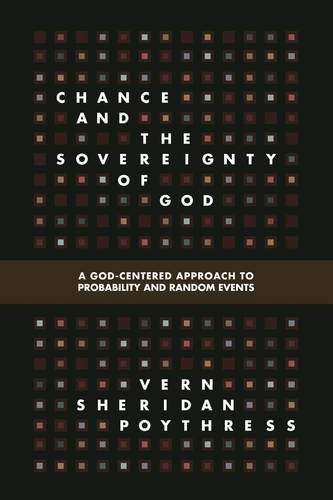 When I saw the title Chance and the Sovereignty of God: A God-Centered Approach to Probability and Random Events, I pounced on the opportunity to review it. This is a topic I’ve been considering for doctoral work so I was extremely excited to dive in.
The book starts off well, with discussions on the nature of chance and exploration of the biblical material for anything dealing with seemingly random events. Poythress ably shows that the Bible clearly presents God as in control of all these events. Numerous verses suggest that God is in control over “all” events, while verses which explicitly mention seemingly random or chance occurrences also attribute such events to divine knowledge and control. Poythress’ look into these topics is detailed and broad. He addresses the weather, random events like the toss of a die, human free choices, the life and death of the smallest creature or plant, and even gambling! These things are all argued to be ultimately, biblically under the sovereignty of God.
Another area the book excels in is the discussion of chance in rival worldviews. Any view which denies the centrality of God is one which suppresses the knowledge of God (Romans 1). Poythress notes that this means that “chance” may become a God-substitute. Chance is seen as being not only the explanation of events but their actual cause:
People are implying that [Chance] has the power to bring about events… The word chance first gets associated with events that we as humans cannot predict or explain… Then, in a second step… [Chance] becomes a label that we offer as the new explanation for the unpredictable event… We say “Chance brought it about”… (Kindle Location 1707)
Chance as an explanation, Poythress argues, is ultimately empty. For chance is substituted to become whatever we cannot predict or explain, and is then used itself as the explanation. I found Poythress’ comments here interesting and very insightful. His application of this concept to other worldviews later in the book makes it worth the read for these sections alone.
One difficulty with the book is the question of audience. At times, the discussion of probability theory becomes complex and very scholarly, but the earlier sections of the book speak broadly and with words that seem aimed more at a general readership. This mixture of technical and general writing makes it hard to pinpoint the audience. Who is supposed to read this book? What is it supposed to be used for?
Another problem I saw in the book is the lack of thorough argumentation for many points. No complaint of this nature may be lodged against the book’s discussion of probability theory, which is well fleshed-out. But on God’s relation to probability theory and how that relates back to sovereignty, there are often only a few sentences at a time to make a claim about the nature of the interrelationship. For example, throughout Section IV on “Probability and Mathematics,” there are lengthy discussions of probability theory with passages on how it relates back to God seemingly tacked on throughout. Near the beginning of this section, one sample is representative:
Both of these [mathematical] principles [discussed above] have their foundations in God… The separations within this world have their ultimate foundation in the distinction among the persons of the Trinity… The unity and diversity in outcomes rest… on the original pattern of unity and diversity in God. God has caused the creation to reflect his glory and wisdom. (Kindle Location 3346)
Poythress does make some earlier references to this argument, but it just never seems to be fully established and surely a statement about mathematical separations for probability in the world being a reflection of distinction among persons in the Trinity may cause some skepticism. It is a point which begs for more argumentation than was dedicated to it here. Where Poythress does address it (Chapter 11), we find more detail to the arguments, but even more questions left unanswered. For example, granting that God is revealed in all things which are made, why think that a sequence of flipping coins is explicitly a revelation of the Trinity instead of simply a revelation of God’s imbuing the universe with order and regularity so that seemingly random events are possible? But Poythress takes it as the former–a revelation of the Trinity–without so much as a comment on alternative possibilities.
Perhaps more problematic is that Poythress never seems to tackle the broader implications of his biblical argumentation. Yes, he put much work into showing God is sovereign over the weather, chance events, free will, and the like. But I kept thinking, “And now what?” What does it mean to say God is in control over natural disasters? What does it mean to say that the roll of dice I make in a game of Risk, for example, is controlled by God? What are the implications of the biblical data Poythress has set before me? Topics like these are taken up at points, only to be quickly set aside by a paragraph or even just a sentence or two.
Overall, Chance and the Sovereignty of God is an interesting look at an oft-neglected topic, but its scope is too broad and its argumentation at times too vague to be helpful. On biblical issues Poythress has offered much to consider. His outline of probability theory is helpful but technical. What I found after reading the book is that I continued to hope for a more detailed discussion on how sovereignty would interlink with chance. Yes, the book makes it plain that God has sovereignty over seemingly random events, but exactly how does that work? What does that mean for everyday life? At times these topics are taken up, only to be set down after but a few sentences. At times helpful and stunningly insightful, at other times frustratingly vague and broad, it’s a book that will leave you longing for more.
Links
Be sure to check out the page for this site on Facebook and Twitter for discussion of posts, links to other pages of interest, random talk about theology/philosophy/apologetics/movies and more!
Source
Vern Poythress, Chance and the Sovereignty of God: A God-Centered Approach to Probability and Random Events (Wheaton, IL: Crossway, 2014).

Disclaimer: I received a review copy of the book through Crossway. I was not obligated by the publisher to give any specific type of feedback whatsoever.
SDG.
——
The preceding post is the property of J.W. Wartick (apart from quotations, which are the property of their respective owners, and works of art as credited; images are often freely available to the public and J.W. Wartick makes no claims of owning rights to the images unless he makes that explicit) and should not be reproduced in part or in whole without the expressed consent of the author. All content on this site is the property of J.W. Wartick and is made available for individual and personal usage. If you cite from these documents, whether for personal or professional purposes, please give appropriate citation with both the name of the author (J.W. Wartick) and a link to the original URL. If you’d like to repost a post, you may do so, provided you show less than half of the original post on your own site and link to the original post for the rest. You must also appropriately cite the post as noted above. This blog is protected by Creative Commons licensing. By viewing any part of this site, you are agreeing to this usage policy.
The Lutheran View of Law and Gospel is not an Old-New Testament dividing line
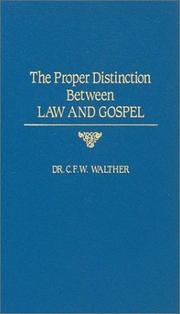 I’m going to admit a huge pet peeve of mine here: non-Lutherans misunderstanding the Lutheran view of Law and Gospel. I have found this demonstrated more than once in the Zondervan Counterpoints series. Now, I don’t want to take anything away from that series. My wife can attest that I love it. I have over 15 volumes of the series. But I have to wonder why it seems they rarely get Lutherans involved and, frankly, why they would have a non-Lutheran like Douglas Moo write the “Modified Lutheran” view in the Five Views of Law and Gospel book (an essay which I argued elsewhere is not the Lutheran view at all and should not be called even “modified” Lutheran).
Anyway, I was reading through another book in the series, Understanding Four Views on Baptism, and came upon the response to the Lutheran view written by the Reformed believer, Richard Pratt, Jr. He wrote, “Broadly speaking, Lutheranism has stressed discontinuity between the OT and NT under the rubrics of law and gospel” (Pratt, 117, cited below). He contrasted this with the Reformed understanding of the unity of Scriptures. Douglas Moo also made a similar statement in the Five Views of Law and Gospel book: “Basic… to biblical revelation is the contrast between ‘before’ and ‘after’ Christ, a contrast between two ‘ages’ or ‘eras’… the New Testament writers… relegate [the Mosaic Law] basically to the period of time before the coming of Christ” (322). Moo’s view is allegedly the “Modified Lutheran View” in this book.
What is astonishing to me about these statements, particularly the critical one made by Pratt, is that it seems to me neither of them has interacted with Lutheranism in a meaningful fashion. You see, Lutheranism has a very simple way to see what it does or does not teach: The Book of Concord
The Lutheran Confessions make it clear that both of these authors–and those who follow their interpretation of the Lutheran view–are mistaken. I’ll highlight a few statements below:
All Scripture should be divided into these two main topics: the law and the promises [Gospel]. In some places it communicates the law. In other places it communicates the promise concerning Christ… (Apology of the Augsburg Confession, Article IV.5)
…Scripture is full of such testimonies. In some places it commends the law, in other places it commends the promises… (Apology of the Augsburg Confession, Article IV.102)
These, and many other citations, make it clear that the entirety of Scripture contains both Law and Gospel. Moreover, the entire Article V of the Formula of Concord teaches that these two doctrines are found both in the Old and New Testament. In fact, the confessors noted that Jesus’ ministry demonstrated both aspects. Because Jesus’ ministry is in the New Testament, and yet Jesus utilized the law, it is clear that the Lutheran view is not a discontinuity between the Old and New Testament. For Pratt, this means that his allegation that his Reformed position preserves unity of Scripture as opposed to the Lutheran view which divides it is far off the mark. Lutherans hold that both law and gospel are found throughout the Bible, and the discontinuity is resolved by properly distinguishing these teachings. For Moo, this basically means his “modified Lutheran” view simply isn’t Lutheran.
Long story short: the Lutheran view of Law and Gospel is not a temporal dividing line between the Old and New Testament.
Links
The Law Always Condemns, The Gospel Always Saves. Or, why I’m a Lutheran.– I outline the Lutheran view of Law and Gospel with references. If you’re interest at all in this discussion, I recommend you read this post to be sure you’re not messing up the distinctions Lutherans make.
Be sure to check out the page for this site on Facebook and Twitter for discussion of posts, links to other pages of interest, random talk about theology/philosophy/apologetics/movies and more!
Sources
Douglas Moo, “The Law of Christ as the Fulfillment of the Law of Moses” in Five Views on Law and Gospel, ed. Stanley Gundry (Grand Rapids: MI: Zondervan 1999).
Richard Pratt, Jr. “A Reformed Response” in Understanding Four Views on Baptism edited by Paul Engle and John Armstrong (Grand Rapids, MI: Zondervan, 2007).
The Book of Concord
SDG.
——
The preceding post is the property of J.W. Wartick (apart from quotations, which are the property of their respective owners, and works of art as credited; images are often freely available to the public and J.W. Wartick makes no claims of owning rights to the images unless he makes that explicit) and should not be reproduced in part or in whole without the expressed consent of the author. All content on this site is the property of J.W. Wartick and is made available for individual and personal usage. If you cite from these documents, whether for personal or professional purposes, please give appropriate citation with both the name of the author (J.W. Wartick) and a link to the original URL. If you’d like to repost a post, you may do so, provided you show less than half of the original post on your own site and link to the original post for the rest. You must also appropriately cite the post as noted above. This blog is protected by Creative Commons licensing. By viewing any part of this site, you are agreeing to this usage policy.
Sunday Quote!- What does “head” mean?
 Every Sunday, I will share a quote from something I’ve been reading. The hope is for you, dear reader, to share your thoughts on the quote and related issues and perhaps pick up some reading material along the way!
What does “head” mean?
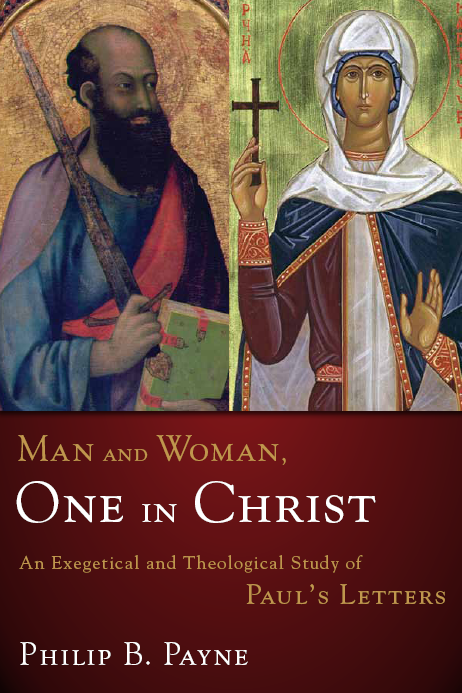
I’ve been rereading Philip Payne’s monumental study of Paul’s letters in relation to the roles of men and women in the church and home, Man and Woman, One in Christ. There is so much in this book to discuss I feel as though every single page deserves its own post. For now, I wanted to highlight his discussion of the meaning of “head” in the much-discussed 1 Corinthians 11:2-16. Payne writes:
The majority view in recent scholarship has shifted to understand “head”… in this passage to mean “source” rather than “authority”… One reason for the popularity of [interpreting it as “authority”] is that in English, German, and Hebrew… the most common metaphorical meaning of “head” is “leader”… Interpreters who in their native tongue associate metaphorical uses of “head” with “leader” naturally make this association when reading this passage. (117-118, cited below)
In the book, Payne goes on to demonstrate why it is that the majority view has turned to viewing “head” as “source.” He provides 15 reasons to think this is the case. A few highlights include contemporary 1st-3rd century usage of the term, lexical support for “source” and lack thereof for “authority,” other usage within the Pauline epistles, difficulties raised by reading it as “authority,” and support for the meaning as “source” from a number of contemporary authors and Church Fathers. In the passage above, I think it’s interesting to see that one’s native language often imports meaning into the text. I’m sure this happens in many places, and I’ve caught myself on some.
If you have any interest at all in the debate over women’s roles in the church and home and do not have this book, you must amend the situation immediately. It doesn’t matter if you are egalitarian or complementarin; you must deal with the arguments raised by Payne, who interacts with top scholars from both sides of the debate (including Piper, Grudem, Wright, and more).
What are your thoughts? How do you read this difficult passage? Does your native tongue perhaps change your perception of the meaning of some parts of the Bible?
Links
Be sure to check out the page for this site on Facebook and Twitter for discussion of posts, links to other pages of interest, random talk about theology/philosophy/apologetics/movies and more!
Sunday Quote– If you want to read more Sunday Quotes and join the discussion, check them out! (Scroll down for more)
Check out my posts on egalitarianism (scroll down for more).
Source
Philip B. Payne, Man and Woman, One in Christ
SDG.
“Husband of One Wife” – What does this mean?
 A common argument for limiting the pastoral ministry to men only is to cite a number of texts where the requirements for elders/overseers/etc. are given. Among these, one which allegedly shows that women are not to hold positions of authority in the church is the statement that the holder of such a position is to be the “husband of one wife” (1 Timothy 3:2; 12; Titus 1:6).
On the face of it, this seems to be a pretty telling argument. After all, if someone is the husband of one wife, then that would certainly seem to exclude women! So what’s the problem?
Is your pastor married?
You see, if someone wants to take the statement in its most literal sense, it isn’t merely, abstractly stating that the overseer/bishop/deacon/elder is supposed to be a man; it is actually saying he is supposed to be a husband.* So if one wants to take the Bible in its most “literal” reading, then one must argue that not only may women not be pastors; neither may any unmarried (or remarried, or divorced, or widowed, etc.) men. Period.
So what’s the problem with this? The problem is that once we get to this level, it should be pretty easy to see how absurd the argument is. What the phrase is intended to convey is monogamy. That is, church leaders are to be monogamous. The teaching is pretty clear when understood in this light. If one is to be a leader in the church, it should be easily observable that they are monogamous and celibate apart from marriage. There are to be no exceptions.
If someone wants to dispute this and press that the real point is that one must be a man, then they must equally argue that no church leader should be unmarried. Considering Paul himself extolled the values of remaining unmarried (and was himself unmarried), such a reading of Paul is problematic, at best.
All of this is to set aside the other difficulties with using passages like this to restrict women from the ministry. One example is the excessive addition of male pronouns into the English translations which are not present in the Greek (see Philip Payne, Man and Woman: One in Christ, 445 [I have reviewed this book here]). Another problem is that they seem to be teaching against polygamy as opposed to any type of gender restrictions (ibid). Finally, the lists of requirements are stated in such a way as to make it actually open for women to hold such offices (Payne, 448-452).
Even if one disagrees on the last paragraph, it should be clear that one cannot use these passages to restrict women from the ministry. They simply do not have the data in them to allow for such a restriction.
*(Yes, I am aware that it may be translated “man of one woman,” but that just makes it extremely clear that the meaning is supposed to be referring to husband and wife. After all, what other reason could there be to be “of one woman”?)
Links
Be sure to check out the page for this site on Facebook and Twitter for discussion of posts, links to other pages of interest, random talk about theology/philosophy/apologetics/movies and more!
Check out my posts on egalitarianism (scroll down for more).
Paul Adams has a series of posts on Philip Payne’s work discussed herein. Check out his series, starting with the first post.
SDG.
——
The preceding post is the property of J.W. Wartick (apart from quotations, which are the property of their respective owners, and works of art as credited; images are often freely available to the public and J.W. Wartick makes no claims of owning rights to the images unless he makes that explicit) and should not be reproduced in part or in whole without the expressed consent of the author. All content on this site is the property of J.W. Wartick and is made available for individual and personal usage. If you cite from these documents, whether for personal or professional purposes, please give appropriate citation with both the name of the author (J.W. Wartick) and a link to the original URL. If you’d like to repost a post, you may do so, provided you show less than half of the original post on your own site and link to the original post for the rest. You must also appropriately cite the post as noted above. This blog is protected by Creative Commons licensing. By viewing any part of this site, you are agreeing to this usage policy.
Peter Enns on Definitions and Inerrancy
 Not long ago, I finished reading Five Views on Biblical Inerrancy, a book in the Zondervan Counterpoints series which focused on the plausibility and meaning of inerrancy. Peter Enns was by far the most critical of the doctrine of inerrancy, and his essay largely put forward the position that we should not merely modify but simply get rid of the notion of biblical inerrancy. Here, I want to focus upon Enns’ methodology throughout the work.
We’ll look at Enns’ contributions to Five Views… a bit backwards, by focusing first upon his responses to the other authors. What I found was that time and time again, Enns demanded definitions for individual words from the authors he was responding to. Sometimes, these demands were warranted, but overall it seemed Enns would just call on the others to define their terms and say he didn’t know what they meant otherwise. Moreover, even where he did not demand definitions, he often put scare quotes around seemingly random words in his responses. This latter point is more a complaint about writing style than substance, but it was extremely distracting! On p. 61, for example, Enns put quotes around three words–“many,” “history,” and “accurate”–the latter two for seemingly no reason whatsoever.
However, what I want to focus on is Enns emphasis on the importance of definitions. Here are just some examples of Enns’ method in application:
“…’true,’ ‘error,’ ‘erroneously,’ and ‘falsehood’ are all left floating. I am not sure what Bird means by them–at least at this point” (Enns’ response to Bird, p. 182).
“For one thing, we have the perennial problem of what ‘affirm’ actually means, and Vanhoozer’s subsequent thoughts did not clear this up for me. Further, ‘eventually’ raises flags…” (Enns’ response to Vanhoozer, p. 245).
Now, as I noted, surely some of this is fair. It is true that it is important to wonder at the meaning of “truth,” as we know from the oft-quoted words of Pontius Pilate “What is truth?” (John 18:38). Thus, I am not saying that Enns has no point when he called for definitions throughout his critical engagement with his co-authors. Surely, definitions are extremely important. And it is because of the importance of definitions that I wonder why on earth Enns failed to even allow for different definitions of inerrancy in his own contribution to the book.
Think about this for a second: despite spending significant [what is meant by significant?] portions of his responses calling upon definitions from his co-authors, Enns himself titled his contribution: “Inerrancy, However Defined, Does Not Describe What the Bible Does.”
Yes, that’s right, the man who called for definitions of individual words like truth, falsehood, error, affirm, and more himself eschews the hassle of defining inerrancy, the central topic of not just his chapter but the subject of the book! I’m astonished by this. How can someone who has demonstrated such concern for details himself just lump all inerrantists together and say that “well, however they define it, it doesn’t work”? Well, what does Enns mean by “inerrancy”? Enns does interact with the Chicago Statement on Biblical Inerrancy (hereafter CSBI) and apparently takes this for his norm regarding the meaning of inerrancy, but without any explicit definition of inerrancy, readers are left wondering whether Enns really is so concerned with definitions after all.
Enns, of course, brings up a number of interesting points and several challenges to inerrancy with which those who hold to the doctrine must interact. However, without any distinction between inerrantists, Enns is left doing that which he accuses others of: making statements which are hard to understand because he hasn’t defined terms. One obvious difficulty with Enns’ approach comes to the forefront when he assumes that inerrancy is necessarily committed to a literalistic hermeneutic: “The implication [of the CSBI on historical matters] is self-evident: inerrancy means, first of all, that literalism is the default hermeneutic of the CSBI… Taken at face value, this means that any comparison of Genesis with other ancient Near Eastern origins stories… is ruled out of bounds” (88). Enns qualified the last statement by noting that only those comparisons outside of CSBI conclusions are ruled out.
But of course the CSBI itself does allow for the comparison of genre, cultural contexts, and more in regards to interpretation of the text. Moreover, the CSBI allows for not just young earth creationism, but for other approaches to the text as well.
Thus, it seems to me that Enns’ lack of concern for possible nuance to definitions of inerrancy–his rejection of defining terms despite his insistence that others must do so–leads to great difficulties with his own critique. I have not here engaged in the core of Enns’ argument. As I said, many of his points are thoughtful and engaging. However, I think that his method seems a bit disingenuous: he demands that others define terms, but when it comes to the central topic of the entire book, refuses to acknowledge that any distinctions within the doctrine of inerrancy can combat his conclusion that the Bible is not inerrant.
Links
Be sure to check out the page for this site on Facebook and Twitter for discussion of posts, links to other pages of interest, random talk about theology/philosophy/apologetics/movies and more!
“Theological Colonialism”? On theological issues which are ‘only popular in America’– Here, I evaluate the claims made by Michael Bird in his essay in Five Views on Biblical Inerrancy. More particularly, I consider the notion that doctrines which are allegedly only popular in one place of the world are somehow restricted in importance.
Source
Peter Enns, Responses and “Inerrancy, However Defined, Does not Describe What the Bible Does” in Five Views on Biblical Inerrancy (Grand Rapids, MI: Zondervan, 2013).
SDG.
——
The preceding post is the property of J.W. Wartick (apart from quotations, which are the property of their respective owners, and works of art as credited; images are often freely available to the public and J.W. Wartick makes no claims of owning rights to the images unless he makes that explicit) and should not be reproduced in part or in whole without the expressed consent of the author. All content on this site is the property of J.W. Wartick and is made available for individual and personal usage. If you cite from these documents, whether for personal or professional purposes, please give appropriate citation with both the name of the author (J.W. Wartick) and a link to the original URL. If you’d like to repost a post, you may do so, provided you show less than half of the original post on your own site and link to the original post for the rest. You must also appropriately cite the post as noted above. This blog is protected by Creative Commons licensing. By viewing any part of this site, you are agreeing to this usage policy.
Is Molina’s God Fallible? A response to James N. Anderson
 Recently, I responded to James White’s comments on molinism. Shortly thereafter, White had another podcast in which he made several comments on molinism. He also commented favorably on an article by James N. Anderson, which argues that God is fallible. I left a comment over on Anderson’s blog because I frankly think that he misrepresented Molina’s view. Here, I’ll reproduce the comment I left there with a bit more commentary after the block quote to demonstrate that Anderson’s argument, like White’s, really is a misrepresentation.
My comment (edited to make it a bit shorter):
You wrote, “In other words, there are possible worlds in which God actualizes C so that S will choose A, but S doesn’t choose A. There are possible worlds in which God’s eternal decree doesn’t come to pass, because libertarian-free agents do otherwise than he had planned.”
Molina, on the other hand, explicitly held that if we were to choose otherwise, God would have known otherwise. That is, on Molina’s view (and on the view of William Lane Craig), if we were to choose ~A instead of A, then God would have known ~A instead. Molina, in “On Divine Foreknowledge” makes this extremely clear.
Of course, you could argue that the means by which Molina argues that this is possible is itself mistaken, but the argument is complicated and I’m not going to reproduce it here. My main point is the very core of the argument you’ve given simply misrepresents the position of molinists. Molina (and Craig) held that if a creature were to choose otherwise, then God would know it. Period.
Anderson responded to my comment by noting his argument was related to the decree. Now, I’m not at all sure how this saves Anderson’s article from this error, which I think is fatal: his argument just fails to account for molinism on molinism’s terms. That is, his argument is an attempt at a reductio. Thus, he has to grant the system which he is trying to show is self-referentially incoherent its own terms. He failed to do so. Here is Anderson’s argument in a nutshell:
[T]he Molinist is committed to the claim that although God knows that S would choose A in C, and he actualizes C because he plans for S to choose A, it is nonetheless possible for S not to choose A in C. (Craig clearly affirm[ed] this point a couple of times in his exchange with Helm.) In other words, there are possible worlds in which God actualizes C so that S will choose A, but S doesn’t choose A. There are possible worlds in which God’s eternal decree doesn’t come to pass, because libertarian-free agents do otherwise than he had planned.
Thus, Anderson concludes, on the molinist view, God is possibly fallible. But, as I pointed out in my comment above, Anderson’s argument basically just ignores Molina’s own views about God’s knowledge. I take it from his response to me that he thinks that God’s eternal decree somehow trumps considerations about foreknowledge, and I would think that on a Calvinist system that may be correct, depending upon how one hashes at the details (i.e. on some Calvinists’ expositions of foreknowledge, I have read it is grounded on God’s own action; that is, God foreknows x will happen because God wills x). But of course we’re not here interested on a Calvinist view of foreknowledge or the decree; Anderson is allegedly addressing Molinists.
By now it should be fairly clear where Anderson’s mistake lies: he imports his Calvinistic understanding of foreknowledge and the decree into molinism. But he claims to be critiquing Molina’s views internally; that is, his argument is supposed to show that molinism is self-referentially incoherent because it entails a fallible God. But it doesn’t! It only does so once Anderson has forced the concept of the eternal decree (that is, the specifically Calvinist view of this) as the filter through which molinism must be drawn. But of course that hardly shows that molinism is wrong, any more than filtering Calvinism through an Arminian filter demonstrates Calvinism is incoherent. One must evaluate each view on its own merits; not by presupposing positions which make them false!
There are a few other major difficulties with Anderson’s argument, such as a continued confusion with free knowledge and middle knowledge. See the “technical discussion” below as well as the comments for more.
So to return to Molina and his modern defenders, we find that they affirm in apparent unanimity that if one were to choose to do ~x instead of x, then God would have known ~x to be the case and x to be false. Thus, there simply is no question of a subject bringing about the falsity of God’s knowledge. Moreover, Anderson’s argument also confuses middle knowledge with free knowledge. Once God has actualized a world, it simply is the case that if, in that world, God knows that S will choose A, then S will choose A. Middle knowledge is the moment which considers counterfactuals; free knowledge is the creation of the world and the actualization of those counterfactuals. Thus, Anderson’s argument fails because 1) it fails to actually take Molina’s views into account; 2) it fails to interpret Molina’s views in such a way as to show the view is self-referentially incoherent; and 3) it fails to distinguish between middle and free knowledge.
Technical Discussion in the Comments
Be sure to check out the comments for some great interaction in which Anderson came along and commented as well. It’s a great discussion.
For example, this comment I wrote draws out some of the difficulties with Anderson’s argument further:
Your [I am here addressing Anderson directly] argument is that molinism entails a fallible God. Thus, your argument is that molinism–on molinism’s terms–entails a fallible God. Now, you wrote, “It doesn’t do to say, ‘If S were to choose otherwise then God would have decreed otherwise,’ because that’s dodging the issue.”
First, you misstate the actual premise, which is not that God would have decreed otherwise but that God would have foreknown otherwise; again, this leads me to think you’re not taking molinism on molinism’s terms. Instead, it seems you continue to conflate foreknowledge and the decree. Now, perhaps you simply mistyped that and you meant to say foreknown instead of decreed… in that case:
Second, your argument, again, is to try to show internal incoherence of molinism. In order to do so, you have to grant the premises of molinism. After all, if one wants to show an internal incoherence in a position, simply denying that parts of that position are true will not yield internal incoherence; rather, one must show how the pieces that such a position actually holds do not cohere with each other. Thus, because molinists from Molina to Craig to Thomas Flint (and I think this point is unanimous, though there may always be a “maverick” somewhere, I’m sure) hold that “If S were to do otherwise, God would have known otherwise,” you can’t just deny that premise and say “HA, now see, it is internally incoherent once I’ve denied this premise!” Rather, you would have to show that that premise is itself false.
Now, Molina doesn’t just assert that God would have known otherwise. He does spend several pages developing exactly how it could be the case that If S were to do otherwise, God would have known it–all without appealing to backwards causation. Craig also defends this account in his lengthier work on the topic. Fredosso develops this defense over the course of p 57-63 and 65-68 of his translation of Molina’s “On Divine Foreknowledge.” In the same work, Molina defends his position may be found on p. 119-120; as well as several other places where a whole view of his account provides a lengthier defense.
Thus, it seems to me your argument fails to demonstrate internal incoherence. Molinism on molinism’s terms does not make God fallible.
Third, as far as why I argued you confused middle and free knowledge; the reason is because Molina himself held that because God is eternal and exists in the eternal now rather than as an omnitemporal or temporal being (contra Craig, who defends his position somewhat differently), it is incorrect to hold that once a world has been actualized, then the creatures world may bring it about that that world is not brought about. Again, this goes back to Molina’s view of foreknowledge and free will. But free knowledge is not middle knowledge and is absolute certainty about the “actualized” world. It is unchangeable. Thus, on this third point, your argument fails not only to demonstrate internal coherence but also to interact with Molina’s actual view. The reason is because your argument relies upon the notion that in the here and now a creature could bring it about that ~x if God knows that X will happen. But both Craig and Molina (and every other major defender of Molinism of whom I’m aware, though possibly not Zagzebski as I haven’t read her view) hold that if God knows x will happen, then, necessarily, x will happen. Thus, the freedom of creatures is found in middle knowledge, and that is how it is preserved. God’s actualizing a world brings it about that in that world, the counterfactuals God brought into being will happen. Again, Molina reconciles this as above (and alongside his view that God is Eternal in the technical sense rather than temporal).
Thus, although interesting, I once more conclude that your argument fails to either address molinism or show that it is internally incoherent.
Links
Be sure to check out the page for this site on Facebook and Twitter for discussion of posts, links to other pages of interest, random talk about theology/philosophy/apologetics/movies and more!
James White and Molinism- Confusion about middle knowledge– I argue that James White has made a couple key errors related to molinism. On his most recent comments regarding molinism (his 2/11 podcast), he repeats a key error by saying that in the “exact same circumstances” he chooses differently. In this post, I demonstrate the error of his statement, along with some other mistakes in his critique.
SDG.
——
The preceding post is the property of J.W. Wartick (apart from quotations, which are the property of their respective owners, and works of art as credited; images are often freely available to the public and J.W. Wartick makes no claims of owning rights to the images unless he makes that explicit) and should not be reproduced in part or in whole without the expressed consent of the author. All content on this site is the property of J.W. Wartick and is made available for individual and personal usage. If you cite from these documents, whether for personal or professional purposes, please give appropriate citation with both the name of the author (J.W. Wartick) and a link to the original URL. If you’d like to repost a post, you may do so, provided you show less than half of the original post on your own site and link to the original post for the rest. You must also appropriately cite the post as noted above. This blog is protected by Creative Commons licensing. By viewing any part of this site, you are agreeing to this usage policy.
James White on Molinism- Confusion about middle knowledge
Recently, James White (a theologian and apologist) did a review of the debate on the Unbelievable? radio show between Paul Helm and William Lane Craig [accessible here; audio will begin immediately]. I thought that White did a decent job critiquing the synergistic tendencies in Craig’s exposition, but I also felt he failed to grasp the thrust of Molinism. I say this with great respect for White, whom I consider very thoughtful in the areas in which he engages. However, it is because of this respect that I write this with the hope that he–or at least others who wish to engage in this area–may be better equipped to engage with Molinism.* Although there are a number of places I could engage with White’s commentary, I want to focus on three particular areas, along with a fourth, methodological, issue.
Molinism and Free Will
The most problematic area in James White’s exposition came when he argued that free will is essentially vacuous on Molinism. His argument was essentially that the Molinist assertion that God knows what we will do in any given circumstance (the doctrine of middle knowledge) entails: “In this circumstance, this person will always do this” (emphasis White’s). Thus, he argued that Molinism is incapable of preserving human free will, which is ironically what Molinism was intended to preserve.
White based his argument on an example [actually a few examples, but this was most prominent]. While biking, he often came to a certain fork in the road. On one day, he may choose to turn one way, on another, he may choose to turn the other. Here’s the issue: White then said “The exact same conditions…” were in play in the scenario he described. The difficulty should be immediately obvious: White is very clearly mistaken that these are the “exact same conditions.” One day is not “exactly the same” as another day. Period. Thus, White’s objection fails. It fails for another reason, which we’ll explore in the next section, but for now it is enough to point out that White bases this objection on the notion that humans are able to choose differently in similar circumstances. That is, although he used the terminology of “the exact same conditions,” his example is merely that of similar conditions. His objection therefore fails.
Confusion about Middle Knowledge
It pains me to point this out for someone who I value as much as White, but I must object that it appeared as though White was disturbingly unfamiliar with what middle knowledge actually is. He continually objected to middle knowledge, as shown above, by arguing that people should be able to choose differently on Molinism but may not. Now, I don’t know how much White has read in this area, but surely if he’s going to engage with Molinists like Craig, he should–as someone whom I recognize as taking great care to read and engage with primary sources–read and understand Molina [let me be clear: I’m not saying he never has–I do not know what White has or has not read and would not claim to know]. Molina himself answers White’s objections in this regard very explicitly at a number of points in his On Divine Foreknowledge.
First, White is mistaken when he portrays Molinists as holding that middle knowledge determines choice. He has it backwards. It is the choices which “would be made” which determine middle knowledge. If one would have chosen differently, middle knowledge would have had different content. This is absolutely central to Molina’s view, and I’ll just quote him once to prove it. In his exposition of how various church fathers allegedly taught things similar to his own view, Molina wrote, “…when free choice by its innate freedom indifferently chooses this or its opposite, then God will bring it about that from eternity He foreknew nothing else, they [the church fathers he is favorably citing] are obviously teaching not that things will come to be because God foreknows that they will, but rather just the opposite” (180, emphasis mine).
Now whether Molina accurately exegeted these church fathers, and regardless of the objection which clearly will follow such a statement (“How is this possible?”–something Molina himself answers in detail in On Divine Foreknowledge), the clear and plain teaching of Molina is exactly opposite of what White seemingly attributed to him: namely, the notion that God’s middle knowledge determines free choices. Rather, it–even according to Molina–is exactly the opposite. Thus, White’s critique in this regard is simply wrong.
Confusion about Middle Knowledge II
A final difficulty with White’s critique was that he, at at least one identifiable point, confused middle knowledge with free knowledge. White was criticizing Craig by saying “if you’re truly free” you should be able to choose a different thing from what middle knowledge states (such as buying a different car than the Mercedes you wanted).
White’s critique was off base for two primary reasons. First, as shown above, he failed to recognize the absolute core of Molina’s doctrine of middle knowledge: that middle knowledge is not dependent upon foreknowledge. Second, White’s critique fails to recognize that middle knowledge interacts with free knowledge (God’s comprehensive knowledge of all things which will occur in creation). The reason for this is because White argues that one, if one has freedom, cannot “violate the middle knowledge… that was supposedly true.”
Here White seemingly confused the free knowledge of God with middle knowledge. It is true that the free knowledge of God cannot have been otherwise, for it is a result of the decree of creation. However, what White failed to recognize is that free knowledge is posterior to middle knowledge and so the fact remains that on Molina’s system (as demonstrated above), one can, in effect, change middle knowledge which would thus bring about a different state of affairs.
Again, the question is not here how this may be the case. Instead, what I am arguing is that White failed to correctly explain Molina’s position and so his critique actually failed to be centered upon the view against which he was arguing.
Methodological Issue: Philosophy?
I was surprised to see White comment so frequently on how this or that “may fly in philosophy classrooms” but apparently would not fly in the “real world” [this latter is not a quote, but he contrasted philosophy classrooms with the world outside of them]. He repeated this claim–or something similar–a number of times. I’ll keep this brief: White’s own engagement with Molinism was almost entirely philosophical. He continued to bring up the grounding objection (a philosophical objection if there ever was one), and he also pressed the attack by saying that Molinism cannot adequately account for the free will it is supposed to preserve (again, a purely philosophical argument). I was surprised to see this from White because I do really think he is quite a careful thinker, but the bottom line is that in denigrating philosophy while using a number of philosophical objections to Molinism he appeared rather inconsistent. Philosophy is a tool of the theologian, and White himself uses it in a number of ways. I would urge him to drop this kind of tongue-in-cheek dismissal of philosophical reasoning, even within theology. It seems to me he himself finds philosophical objections to theological systems to be of worth.
Conclusion
I commend White for taking on a difficult issue, and I readily admit he has more knowledge on any number of areas than I can begin to claim. I highly recommend much of his work, and even where he and I disagree, I have found him to be thoughtful and challenging. That said, I maintain White is mistaken in a few aspects of his interpretation of molinism. In particular, he doesn’t seem to acknowledge the broader philosophical framework behind the view. He also failed to allow for Molina’s own very explicit distinctions and definitions, and thus his critique actually declared Molina’s view to be the exact opposite of that which Molina actually held. I hope my own critique will be seen not as an attack, but rather as a call for clarification for White and others who hope to interact with Molinism.
*Full disclosure: I am a Lutheran with Molinist leanings, though I reject the synergism Molina himself held to. I view Molinism as a philosophical framework as opposed to a complete system.
Links
Be sure to check out the page for this site on Facebook and Twitter for discussion of posts, links to other pages of interest, random talk about theology/philosophy/apologetics/movies and more!
Sources
Luis de Molina On Divine Foreknowledge, edited by Alfred Freddoso (New York: Cornell, 1988).
James White, “The Dividing Line,” January 16, 2014. Accessible here. The primary interaction starts a ways into the show.
SDG.
——
The preceding post is the property of J.W. Wartick (apart from quotations, which are the property of their respective owners, and works of art as credited; images are often freely available to the public and J.W. Wartick makes no claims of owning rights to the images unless he makes that explicit) and should not be reproduced in part or in whole without the expressed consent of the author. All content on this site is the property of J.W. Wartick and is made available for individual and personal usage. If you cite from these documents, whether for personal or professional purposes, please give appropriate citation with both the name of the author (J.W. Wartick) and a link to the original URL. If you’d like to repost a post, you may do so, provided you show less than half of the original post on your own site and link to the original post for the rest. You must also appropriately cite the post as noted above. This blog is protected by Creative Commons licensing. By viewing any part of this site, you are agreeing to this usage policy.

 J.W. Wartick - Reconstructing Faith