theology
Book Review: “To the Ends of the Earth” by Michael Haykin and C. Jeffrey Robinson Sr.
 The question of “Why evangelize?” is one which is often leveled against Calvinism. After all, it is reasoned, if people are fore-ordained to be elect or one of the damned, then why bother to go out and evangelize them? Interestingly, this is a charge which I think may be leveled against virtually any view of foreknowledge, so the Calvinist answers given in To the Ends of the Earth: Calvin’s Missional Vision and Legacy
Contents
The book begins with a survey of the arguments made to suggest that Calvinism would not endorse evangelism or makes evangelism pointless. Clearly, the charge has come from many fronts throughout the history of the church. Then, Haykin and Robinson introduce the primary reason for others’ concerns about Calvinism’s evangelical prospects: that Calvin believed God had ordained some to be elect, and others to be damned, before the foundations of the world.
The authors defend the doctrine, taking on many of the key “all” passages which some argue make explicit the openness of salvation to all individual people. Calvin is brought to his own defense alongside a number of modern Calvinist theologians, ably presenting the Calvinist case for exegesis of these key passages, which basically is that when “all” or “world” is used, it is referring to the breaking open of salvation for all tribes and nations as opposed to merely the chosen people of Israel. The book goes beyond these basics and also outlines how other passages might be understood in this context.
Next, the authors turn to an exposition of Calvin’s theology of missions. Part of this theology was the notion that a Christian life lived was a profound witness to the Gospel. Word and deed were central to Calvin’s missions theology. This missional activity was to be for all people (Kindle location 993). Prayer was also central to Calvin’s theology, as he believed that it might be used by God to bring about change in persons (rather than change in God).
Historical Reformed missions are surveyed in the next sections. Calvin taught many going into France and certain torture and death if discovered, and even made significant efforts towards (ultimately failing) missions into Brazil. These efforts showed that through his actions, Calvin himself valued global missions.
Later Calvinist traditions and persons also demonstrated the urge to missions that the Reformer’s theology compelled. The Puritans sought to evangelize and frequently prayed for the same, though they may not have had the success of other contemporaries. Calvinist Baptists in England feverishly evangelized and planted churches, while also demonstrating concern for global evangelism (Kindle loc. 1420ff). Jonathan Edwards, contrary to some opinions, was also focused on missions by developing his own missional theology and also going on a mission to Native Americans himself.
The book closes with thoughts on “developing missional passion” through observations about Samuel Pearce, a theologian known in his time for fervent prayer and love of missions. Central to Pearce’s theology was the cross; Christ crucified was “his darling theme from first to last”; while the other primary theme of his life was a “passion for the salvation of his fellow human beings” (Kindle loc. 1978).
Evaluation
To the Ends of the Earth is a great, pithy read on a topic that should be of interest to many from a diverse array of backgrounds. It has appeal which goes beyond Calvinism in the way it demonstrates missions ought to be of central importance and also in its justification of missions even in light of the notion that there really do exist an elect people. Of course, the thrust of the book is to demonstrate that Calvinist theology does not undermine the need or motivation for missions. Those interested in that topic will find the most to benefit from the book. Regardless of one’s level of interest, however, the book generates its own avenues for exploration by introducing several little-known figures and historical events for further reading. It is short enough to enjoy in a single afternoon (as I did), yet deep enough to keep one’s mind occupied for some time afterwards.
Perhaps the greatest weakness of the book, however, is its length in that there is little ultimate exposition of the counter-arguments to those who would fault Calvinism with lack of evangelical fervor. That is, readers are often left to tie the arguments off themselves instead of having them drawn out and defended. This, however, is a minor fault in what is an otherwise excellent book, regardless of one’s position on the arguments made therein. It was well worth the read, in my humble opinion.
Links
Be sure to check out the page for this site on Facebook and Twitter for discussion of posts, links to other pages of interest, random talk about theology/philosophy/apologetics/movies and more!
Source
Michael Haykin and C. Jeffrey Robinson, Sr., To the Ends of the Earth: Calvin’s Missional Vision and Legacy
Disclaimer: I received a review copy of the book through Crossway. I was not obligated by the publisher to give any specific type of feedback whatsoever.
SDG.
——
The preceding post is the property of J.W. Wartick (apart from quotations, which are the property of their respective owners, and works of art as credited; images are often freely available to the public and J.W. Wartick makes no claims of owning rights to the images unless he makes that explicit) and should not be reproduced in part or in whole without the expressed consent of the author. All content on this site is the property of J.W. Wartick and is made available for individual and personal usage. If you cite from these documents, whether for personal or professional purposes, please give appropriate citation with both the name of the author (J.W. Wartick) and a link to the original URL. If you’d like to repost a post, you may do so, provided you show less than half of the original post on your own site and link to the original post for the rest. You must also appropriately cite the post as noted above. This blog is protected by Creative Commons licensing. By viewing any part of this site, you are agreeing to this usage policy.
On the Feminization of Christianity
Christianity is being feminized–men just don’t go to church anymore!
Worship is so feminine now, with all of its appeals to emotions.
Christianity has a “masculine” feel to it.

I had a conversation recently in which several men were bemoaning the “feminization of Christianity,” particularly worship. I asked them what they meant by this and one man illustrated it with a story: he was at a church one time and this guy was up front singing this lovey-dovey song he had written about how Jesus loved him and wanted to hold him or something and he–the one telling the story–thought it was ridiculous. This, he said, was an example of the feminization of worship. It makes men leave the church.
I pointed out that his example was about a man singing a song written by a man–himself–leading worship in a church in which (the man had told me) the only leaders were men. He nodded and reiterated his point. …This, it seems, is the result of feminizing the church.
I thought that was rather odd, to be frank, but the conversation has stuck with me for its message. I’ve had many like it over the past year or two. I’ve seen fellow bloggers post on this apparently insidious trend of the “feminization of Christianity.” A prominent apologist recently issued a similar complaint, noting that worship has gotten more “emotional” and therefore more “feminine.” Some theologians and books I’ve read have had similar concerns about this “feminine” aspect being brought into churches. Apparently, from my reading of these sources and the conversations I’ve had, the message is that this is A Bad Thing.
Do you really think that Christianity is masculine? What does that even mean?
What does it mean to say worship is “feminine” or “masculine”? Does that mean that if I, a man, worship, then my praise is somehow “manly,” while my wife’s praise is “womanly”?
I want to focus on this notion that “feminization of Christianity” is A Bad Thing. What does this say about men and women?
It seems to me that if feminizing Christianity inherently makes it somehow deficient, then that means females are also deficient. If “feminized” worship is bad, or at least not as good as “masculine” worship–whatever either one of those things means–then that means that what are identified as male patterns of worship have higher value. But can such patterns really even be identified? If “feminization of the Church” is to be avoided, while making it more “masculine” is to be lauded, then what does that say about our position, male and female, as the image of God? On the one hand, humanity, male and female, were each created in God’s likeness, in the image of God. On the other, we are told that “feminine” themes within Christianity are to be avoided and downplayed, while “masculine” themes are to be pursued and emphasized.
The most common answer I’ve gotten to questions about the nature of masculine or feminine worship is that that which is feminine is emotional or passive, while masculine is rational or active. I would like to ask: how is this reflected in God’s Word? Recall that God gets angry (Psalm 7:11) or grieved by sin (Genesis 6:6), takes pleasure in obedience (Psalm 147:111), delights (Zephaniah 3:17), etc. God is a God with emotions and whether we set this aside as anthropomorphism or not, it seems clear that Scripture understands God not rejecting emotions but rather, in some sense, taking part in them. But if God’s Word does not denigrate emotions and even attributes them to God, why should we not worship in emotional ways? And why are emotions treated as something to be avoided, as necessarily feminine and somehow not good, or at least not as good as that which is identified as masculine?
I’m not trying to advocate for one side or the other in the so-called “worship wars.” Instead, my point is that the narrative of complaints about the “feminization of Christianity” is misguided and far from the truth. Being female is not bad, nor is it somehow less perfect than being male. Similarly, having a “feminine” Christianity is not an imperfection. To be honest, I’d like to call my Christian brothers and sisters to a more complete understanding of God and God’s word.
There is hope for us that applies to us all as people:
There is neither Jew nor Gentile, neither slave nor free, nor is there male and female, for you are all one in Christ Jesus. – Galatians 3:28
These are words of hope, words of reconciliation. But they are also words which cut against the notion that in our church there is masculine worship vs. feminine worship; masculine music vs. feminine music; masculine sermons vs. feminine ones. “Nor is there male and female… you are all one in Christ Jesus.” My heart leaps at these words. These words tell me I need have no fear, for our God–a great God–has reconciled us in our Lord Jesus Christ.
Links
Be sure to check out the page for this site on Facebook and Twitter for discussion of posts, links to other pages of interest, random talk about theology/philosophy/apologetics/movies and more!
Check out my posts on egalitarianism – the belief that men and women are equally qualified and called in the church and home (scroll down for more).
I found the image on Bing searching for images of worshipers in church and I claim no rights to it and saw no claims to rights upon it.
SDG.
——
The preceding post is the property of J.W. Wartick (apart from quotations, which are the property of their respective owners, and works of art as credited; images are often freely available to the public and J.W. Wartick makes no claims of owning rights to the images unless he makes that explicit) and should not be reproduced in part or in whole without the expressed consent of the author. All content on this site is the property of J.W. Wartick and is made available for individual and personal usage. If you cite from these documents, whether for personal or professional purposes, please give appropriate citation with both the name of the author (J.W. Wartick) and a link to the original URL. If you’d like to repost a post, you may do so, provided you show less than half of the original post on your own site and link to the original post for the rest. You must also appropriately cite the post as noted above. This blog is protected by Creative Commons licensing. By viewing any part of this site, you are agreeing to this usage policy.
Book Review: “Chance and the Sovereignty of God” by Vern Poythress
 When I saw the title Chance and the Sovereignty of God: A God-Centered Approach to Probability and Random Events, I pounced on the opportunity to review it. This is a topic I’ve been considering for doctoral work so I was extremely excited to dive in.
The book starts off well, with discussions on the nature of chance and exploration of the biblical material for anything dealing with seemingly random events. Poythress ably shows that the Bible clearly presents God as in control of all these events. Numerous verses suggest that God is in control over “all” events, while verses which explicitly mention seemingly random or chance occurrences also attribute such events to divine knowledge and control. Poythress’ look into these topics is detailed and broad. He addresses the weather, random events like the toss of a die, human free choices, the life and death of the smallest creature or plant, and even gambling! These things are all argued to be ultimately, biblically under the sovereignty of God.
Another area the book excels in is the discussion of chance in rival worldviews. Any view which denies the centrality of God is one which suppresses the knowledge of God (Romans 1). Poythress notes that this means that “chance” may become a God-substitute. Chance is seen as being not only the explanation of events but their actual cause:
People are implying that [Chance] has the power to bring about events… The word chance first gets associated with events that we as humans cannot predict or explain… Then, in a second step… [Chance] becomes a label that we offer as the new explanation for the unpredictable event… We say “Chance brought it about”… (Kindle Location 1707)
Chance as an explanation, Poythress argues, is ultimately empty. For chance is substituted to become whatever we cannot predict or explain, and is then used itself as the explanation. I found Poythress’ comments here interesting and very insightful. His application of this concept to other worldviews later in the book makes it worth the read for these sections alone.
One difficulty with the book is the question of audience. At times, the discussion of probability theory becomes complex and very scholarly, but the earlier sections of the book speak broadly and with words that seem aimed more at a general readership. This mixture of technical and general writing makes it hard to pinpoint the audience. Who is supposed to read this book? What is it supposed to be used for?
Another problem I saw in the book is the lack of thorough argumentation for many points. No complaint of this nature may be lodged against the book’s discussion of probability theory, which is well fleshed-out. But on God’s relation to probability theory and how that relates back to sovereignty, there are often only a few sentences at a time to make a claim about the nature of the interrelationship. For example, throughout Section IV on “Probability and Mathematics,” there are lengthy discussions of probability theory with passages on how it relates back to God seemingly tacked on throughout. Near the beginning of this section, one sample is representative:
Both of these [mathematical] principles [discussed above] have their foundations in God… The separations within this world have their ultimate foundation in the distinction among the persons of the Trinity… The unity and diversity in outcomes rest… on the original pattern of unity and diversity in God. God has caused the creation to reflect his glory and wisdom. (Kindle Location 3346)
Poythress does make some earlier references to this argument, but it just never seems to be fully established and surely a statement about mathematical separations for probability in the world being a reflection of distinction among persons in the Trinity may cause some skepticism. It is a point which begs for more argumentation than was dedicated to it here. Where Poythress does address it (Chapter 11), we find more detail to the arguments, but even more questions left unanswered. For example, granting that God is revealed in all things which are made, why think that a sequence of flipping coins is explicitly a revelation of the Trinity instead of simply a revelation of God’s imbuing the universe with order and regularity so that seemingly random events are possible? But Poythress takes it as the former–a revelation of the Trinity–without so much as a comment on alternative possibilities.
Perhaps more problematic is that Poythress never seems to tackle the broader implications of his biblical argumentation. Yes, he put much work into showing God is sovereign over the weather, chance events, free will, and the like. But I kept thinking, “And now what?” What does it mean to say God is in control over natural disasters? What does it mean to say that the roll of dice I make in a game of Risk, for example, is controlled by God? What are the implications of the biblical data Poythress has set before me? Topics like these are taken up at points, only to be quickly set aside by a paragraph or even just a sentence or two.
Overall, Chance and the Sovereignty of God is an interesting look at an oft-neglected topic, but its scope is too broad and its argumentation at times too vague to be helpful. On biblical issues Poythress has offered much to consider. His outline of probability theory is helpful but technical. What I found after reading the book is that I continued to hope for a more detailed discussion on how sovereignty would interlink with chance. Yes, the book makes it plain that God has sovereignty over seemingly random events, but exactly how does that work? What does that mean for everyday life? At times these topics are taken up, only to be set down after but a few sentences. At times helpful and stunningly insightful, at other times frustratingly vague and broad, it’s a book that will leave you longing for more.
Links
Be sure to check out the page for this site on Facebook and Twitter for discussion of posts, links to other pages of interest, random talk about theology/philosophy/apologetics/movies and more!
Source
Vern Poythress, Chance and the Sovereignty of God: A God-Centered Approach to Probability and Random Events (Wheaton, IL: Crossway, 2014).

Disclaimer: I received a review copy of the book through Crossway. I was not obligated by the publisher to give any specific type of feedback whatsoever.
SDG.
——
The preceding post is the property of J.W. Wartick (apart from quotations, which are the property of their respective owners, and works of art as credited; images are often freely available to the public and J.W. Wartick makes no claims of owning rights to the images unless he makes that explicit) and should not be reproduced in part or in whole without the expressed consent of the author. All content on this site is the property of J.W. Wartick and is made available for individual and personal usage. If you cite from these documents, whether for personal or professional purposes, please give appropriate citation with both the name of the author (J.W. Wartick) and a link to the original URL. If you’d like to repost a post, you may do so, provided you show less than half of the original post on your own site and link to the original post for the rest. You must also appropriately cite the post as noted above. This blog is protected by Creative Commons licensing. By viewing any part of this site, you are agreeing to this usage policy.
Book Review: “From Heaven He Came and Sought Her”
 From Heaven He Came and Sought Her: Definite Atonement in Historical, Biblical, Theological, and Pastoral Perspective
Due to the length of this book, I will split my review into broad comments on positives and negatives of the book, with a few specifics. It should be noted I didn’t simply reduce the positives to areas I agreed or negatives to disagreements. Rather, I have tried to be as fair as possible and show several areas of interest for this uniquely important work. I look forward to any comments you’d drop off with your own thoughts.
Positives
The most obvious positive of the book is its magisterial scope. From Heaven He Came and Sought Her is a simply huge study which touches upon multiple avenues of research related to the topic of definite atonement. The book touches upon almost every conceivable aspect of the doctrine of limited atonement, from church history to biblical theology to pastoral implications and evangelism. As Daniel Strange comments in the chapter on “The ‘Uncomfortability’ of the ‘Unevangelized’ for a Universal Atonement”: “No doctrine is an island” (Kindle location 14696).
The portions of the book which deal with specific authors are extremely interesting. The chapter on Calvin, for example, shows (in my mind) beyond a reasonable doubt that Calvin–at the least–would have found definite atonement a logical path for his theology to take. The chapter on “Blaming Beza” highlights some interesting aspects of the development of the doctrine which were fascinating.
Many chapters could be held up as “highlights,” but I particularly would say that Strange’s aforementioned chapter, which provides an argument that any view which holds that at least some are not saved is a form of limited atonement was a major highlight of the book. Whether one agrees or disagrees with Strange, his argument forces those who disagree with him to contend with it. Other major highlights are the chapters on Calvin by Paul Helm (an author whose previous work I have enjoyed), the chapter on John Owen (which highlights some aspects of Owen’s teaching I found particularly interesting), and the chapter on “The Triune God” and definite atonement by Robert Letham.
To say that these are “highlights” is to do injustice to the work as a whole, however, which simply provides a comprehensive argument for definite atonement. Even as one who does not hold to the doctrine, I was impressed by the incredible scope of the work and very interested in the historical development of the doctrine as it was highlighted therein. This book is a good read, even if you ultimately disagree with its conclusions. And, if you do disagree, you will be forced to think long and hard about your disagreement.
Negatives
Perhaps the biggest issue is that at multiple points, conclusions drawn from evidence seems overstated. One example, drawn from the chapter on Definite Atonement in Church History, states that Justin Martyr fairly clearly held to definite atonement. Now, I’m not claiming to be a patristic scholar by any stretch of the imagination, but it seems to me the passages cited are hardly a resounding endorsement of definite atonement. Indeed, Martyr said that “[Christ] was going to endure, cleansing through his blood those who believed in him” (Kindle Location 1088). I’m not at all sure why this would be taken as evidence for definite atonement, because apart from universalists, anyone who believes Christ died for the salvation of humanity would also hold that Christ’s death ultimately cleanses the elect; those who believe. None who disbelieve are ultimately cleansed, for the application of Christ’s atonement was not brought about. Now the point is not to demonstrate this latter view is correct; my point is merely that the conclusion drawn here is actually overstated.
Going with the same section, one could just as easily take the passage cited from Martyr about how Christ “ransomed” us as allegedly pointing to the ransom theory of atonement. The problem is this latter case would also be a clear overstatement. Only by starting with a paradigm and reading Martyr through that lens does the alleged evidence turn out to support that conclusion.
Another example comes from the chapter on “Problematic Texts” by Thomas Schreiner. There, in dealing with 1 Timothy 2:1-7, he states “The immediate [contextual] reference to ‘kings and all who are in high positions’ (v. 2) suggests that various classes of people are in view” (Kindle location 9564). For support, he cites further context and a commentary. However, on face value alone, if 1 Timothy 2:2 is indeed that which limits the scope of the passage, one would have to wonder how “kings and… high positions” could be comprehensive in the way required by “all.” I don’t know about you, dear reader, but I by no means rank among kings or those in high places, but I do think that I am part of “all” or at least “various classes of people…” Moreover, Schreiner seems to think that v. 2 is the limiting factor, but the flow of the passage seems to fit more with the notion that all people includes those who are kings and those in high places and that Paul is simply emphasizing the latter group as particularly worth praying for (after all, leaders are those most in need of God’s guiding hand). Schreiner goes on to argue based upon this that the best reading is, again, “all kinds of people” not merely “all people.”
Apart from the fact that Paul could have simply said “all kinds of people” to make it clear that that were his intended meaning, the text itself again goes against Schreiner’s view, because its context is not “all kinds” but rather “kings” or “those in high places…” In any case, I would think this passage would lead to caution about the conclusion, not the absolute conclusion given later: “[T]he pastorals… focus on salvation being accomplished for all without distinction, both Jews and Gentiles…” (Kindle location 9989).
Unfortunately, examples like this may be easily multiplied. Throughout the book, conclusions seem to be drawn prior to the evidence, and so evidence is made to neatly fit with the conclusion. Conclusions often seem to be overstated throughout, without much caution for some of the more difficult passages or acknowledgement that there is diversity among even those who hold to definite atonement on the interpretation of various biblical passages or authors.
Conclusion
Looking back over the review, I can’t help but think that it is inadequate. The scope of From Heaven He Came and Sought Her is so massive that it simply cannot be adequately covered in a review of readable length. Anyone who wishes to deny the doctrine of definite atonement must contend with this work and engage with it critically. Those who hold to definite atonement will find their view ably defended. As a reader, I was challenged as much as I was engaged. I recommend the book highly for those interested in this doctrine, though I do wish there were perhaps some more acknowledgement of the real difficulties on various points.
Disclaimer: I received a review copy of the book through Crossway. I was not obligated by the publisher to give any specific type of feedback whatsoever.
Links
Be sure to check out the page for this site on Facebook and Twitter for discussion of posts, links to other pages of interest, random talk about theology/philosophy/apologetics/movies and more!
Source
David Gibson and Jonathan Gibson, eds., From Heaven He Came and Sought Her: Definite Atonement in Historical, Biblical, Theological, and Pastoral Perspective
SDG.
——
The preceding post is the property of J.W. Wartick (apart from quotations, which are the property of their respective owners, and works of art as credited; images are often freely available to the public and J.W. Wartick makes no claims of owning rights to the images unless he makes that explicit) and should not be reproduced in part or in whole without the expressed consent of the author. All content on this site is the property of J.W. Wartick and is made available for individual and personal usage. If you cite from these documents, whether for personal or professional purposes, please give appropriate citation with both the name of the author (J.W. Wartick) and a link to the original URL. If you’d like to repost a post, you may do so, provided you show less than half of the original post on your own site and link to the original post for the rest. You must also appropriately cite the post as noted above. This blog is protected by Creative Commons licensing. By viewing any part of this site, you are agreeing to this usage policy.
The Lutheran View of Law and Gospel is not an Old-New Testament dividing line
 I’m going to admit a huge pet peeve of mine here: non-Lutherans misunderstanding the Lutheran view of Law and Gospel. I have found this demonstrated more than once in the Zondervan Counterpoints series. Now, I don’t want to take anything away from that series. My wife can attest that I love it. I have over 15 volumes of the series. But I have to wonder why it seems they rarely get Lutherans involved and, frankly, why they would have a non-Lutheran like Douglas Moo write the “Modified Lutheran” view in the Five Views of Law and Gospel book (an essay which I argued elsewhere is not the Lutheran view at all and should not be called even “modified” Lutheran).
Anyway, I was reading through another book in the series, Understanding Four Views on Baptism, and came upon the response to the Lutheran view written by the Reformed believer, Richard Pratt, Jr. He wrote, “Broadly speaking, Lutheranism has stressed discontinuity between the OT and NT under the rubrics of law and gospel” (Pratt, 117, cited below). He contrasted this with the Reformed understanding of the unity of Scriptures. Douglas Moo also made a similar statement in the Five Views of Law and Gospel book: “Basic… to biblical revelation is the contrast between ‘before’ and ‘after’ Christ, a contrast between two ‘ages’ or ‘eras’… the New Testament writers… relegate [the Mosaic Law] basically to the period of time before the coming of Christ” (322). Moo’s view is allegedly the “Modified Lutheran View” in this book.
What is astonishing to me about these statements, particularly the critical one made by Pratt, is that it seems to me neither of them has interacted with Lutheranism in a meaningful fashion. You see, Lutheranism has a very simple way to see what it does or does not teach: The Book of Concord
The Lutheran Confessions make it clear that both of these authors–and those who follow their interpretation of the Lutheran view–are mistaken. I’ll highlight a few statements below:
All Scripture should be divided into these two main topics: the law and the promises [Gospel]. In some places it communicates the law. In other places it communicates the promise concerning Christ… (Apology of the Augsburg Confession, Article IV.5)
…Scripture is full of such testimonies. In some places it commends the law, in other places it commends the promises… (Apology of the Augsburg Confession, Article IV.102)
These, and many other citations, make it clear that the entirety of Scripture contains both Law and Gospel. Moreover, the entire Article V of the Formula of Concord teaches that these two doctrines are found both in the Old and New Testament. In fact, the confessors noted that Jesus’ ministry demonstrated both aspects. Because Jesus’ ministry is in the New Testament, and yet Jesus utilized the law, it is clear that the Lutheran view is not a discontinuity between the Old and New Testament. For Pratt, this means that his allegation that his Reformed position preserves unity of Scripture as opposed to the Lutheran view which divides it is far off the mark. Lutherans hold that both law and gospel are found throughout the Bible, and the discontinuity is resolved by properly distinguishing these teachings. For Moo, this basically means his “modified Lutheran” view simply isn’t Lutheran.
Long story short: the Lutheran view of Law and Gospel is not a temporal dividing line between the Old and New Testament.
Links
The Law Always Condemns, The Gospel Always Saves. Or, why I’m a Lutheran.– I outline the Lutheran view of Law and Gospel with references. If you’re interest at all in this discussion, I recommend you read this post to be sure you’re not messing up the distinctions Lutherans make.
Be sure to check out the page for this site on Facebook and Twitter for discussion of posts, links to other pages of interest, random talk about theology/philosophy/apologetics/movies and more!
Sources
Douglas Moo, “The Law of Christ as the Fulfillment of the Law of Moses” in Five Views on Law and Gospel, ed. Stanley Gundry (Grand Rapids: MI: Zondervan 1999).
Richard Pratt, Jr. “A Reformed Response” in Understanding Four Views on Baptism edited by Paul Engle and John Armstrong (Grand Rapids, MI: Zondervan, 2007).
The Book of Concord
SDG.
——
The preceding post is the property of J.W. Wartick (apart from quotations, which are the property of their respective owners, and works of art as credited; images are often freely available to the public and J.W. Wartick makes no claims of owning rights to the images unless he makes that explicit) and should not be reproduced in part or in whole without the expressed consent of the author. All content on this site is the property of J.W. Wartick and is made available for individual and personal usage. If you cite from these documents, whether for personal or professional purposes, please give appropriate citation with both the name of the author (J.W. Wartick) and a link to the original URL. If you’d like to repost a post, you may do so, provided you show less than half of the original post on your own site and link to the original post for the rest. You must also appropriately cite the post as noted above. This blog is protected by Creative Commons licensing. By viewing any part of this site, you are agreeing to this usage policy.
Sunday Quote!- What does “head” mean?
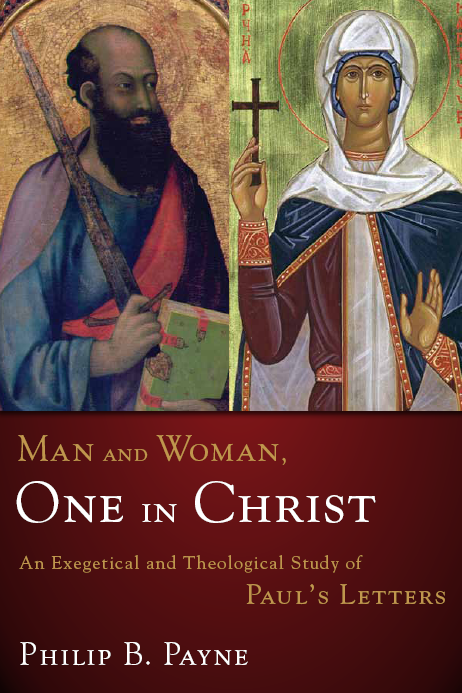 Every Sunday, I will share a quote from something I’ve been reading. The hope is for you, dear reader, to share your thoughts on the quote and related issues and perhaps pick up some reading material along the way!
What does “head” mean?
I’ve been rereading Philip Payne’s monumental study of Paul’s letters in relation to the roles of men and women in the church and home, Man and Woman, One in Christ. There is so much in this book to discuss I feel as though every single page deserves its own post. For now, I wanted to highlight his discussion of the meaning of “head” in the much-discussed 1 Corinthians 11:2-16. Payne writes:
The majority view in recent scholarship has shifted to understand “head”… in this passage to mean “source” rather than “authority”… One reason for the popularity of [interpreting it as “authority”] is that in English, German, and Hebrew… the most common metaphorical meaning of “head” is “leader”… Interpreters who in their native tongue associate metaphorical uses of “head” with “leader” naturally make this association when reading this passage. (117-118, cited below)
In the book, Payne goes on to demonstrate why it is that the majority view has turned to viewing “head” as “source.” He provides 15 reasons to think this is the case. A few highlights include contemporary 1st-3rd century usage of the term, lexical support for “source” and lack thereof for “authority,” other usage within the Pauline epistles, difficulties raised by reading it as “authority,” and support for the meaning as “source” from a number of contemporary authors and Church Fathers. In the passage above, I think it’s interesting to see that one’s native language often imports meaning into the text. I’m sure this happens in many places, and I’ve caught myself on some.
If you have any interest at all in the debate over women’s roles in the church and home and do not have this book, you must amend the situation immediately. It doesn’t matter if you are egalitarian or complementarin; you must deal with the arguments raised by Payne, who interacts with top scholars from both sides of the debate (including Piper, Grudem, Wright, and more).
What are your thoughts? How do you read this difficult passage? Does your native tongue perhaps change your perception of the meaning of some parts of the Bible?
Links
Be sure to check out the page for this site on Facebook and Twitter for discussion of posts, links to other pages of interest, random talk about theology/philosophy/apologetics/movies and more!
Sunday Quote– If you want to read more Sunday Quotes and join the discussion, check them out! (Scroll down for more)
Check out my posts on egalitarianism (scroll down for more).
Source
Philip B. Payne, Man and Woman, One in Christ
SDG.
How much doctrine is enough?
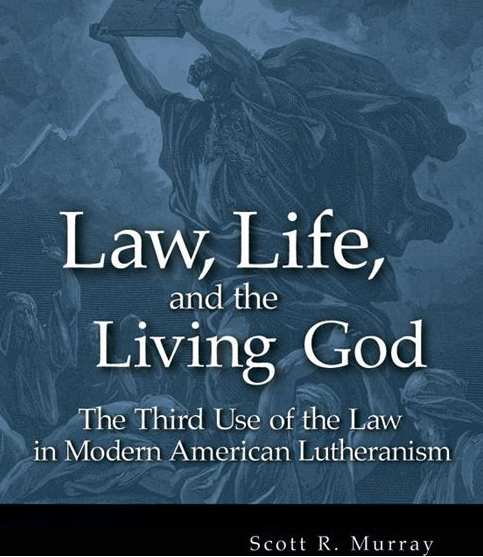 I have been reading through a book on the “Third Use of the Law”–a doctrine with its origin in Lutheranism (for explanation see the * below)–Law, Life, and the Living God by Scott Murray. One of the theologians examined in the work, William Hordern, was critical of this doctrine largely because he held to an existentialist view of theology. For the purpose of this post, there is little of import other than part of Murray’s summary of Hordern’s position:
Hordern held an existentialistic view of faith and the Christian life. He made a sharp distinction between faith as trust and faith as belief in correct doctrine. He criticized the Protestant penchant for reducing salvation to ‘correct belief.’ (Murray, 119, cited below).
The criticism is one I have seen echoed in various places: the notion that evangelicals in particular care more about doctrinal purity than in actual evangelization. The accusation is actually on point in some cases, so far as I am concerned. Endless division over non-essential doctrines causes needless strife in the church. However, Murray’s critique of Hordern’s position also raises a valid point:
The question might legitimately be asked, ‘Trust in what?’ While it is true that faith is not merely assent to true propositions, faith as trust must repose in the promises of God. There is a specific doctrinal content to the preaching of the Gospel, which engenders and calls forth trust in the heart… (Murray, 122).
It seems to me that Murray’s response is compelling. If one wishes to reduce the Christian faith merely to trust in God; one may fairly ask which God one is trusting in. It seems that at least some doctrinal content is necessary for saving faith. The question may then be asked: how much doctrine is enough?
My own answer to such difficult questions would be to fall back upon the grace of God. We do not know for certainty who shall be saved. But what we do know is that God is a just and loving God and will act according to God’s nature. It seems to me, moreover, that there is great importance also in what one hears and rejects.
What are your thoughts on these tough questions? Let me know in the comments, below!
*The third use of the Law may be defined as: that which “gives direction for the impulses of the Christian to do good works” (Murray, 14, cited below).
Links
Be sure to check out the page for this site on Facebook and Twitter for discussion of posts, links to other pages of interest, random talk about theology/philosophy/apologetics/movies and more!
Source
Scott Murray, Law, Life, and the Living God: The Third Use of Law in Modern American Lutheranism
SDG.
——
The preceding post is the property of J.W. Wartick (apart from quotations, which are the property of their respective owners, and works of art as credited; images are often freely available to the public and J.W. Wartick makes no claims of owning rights to the images unless he makes that explicit) and should not be reproduced in part or in whole without the expressed consent of the author. All content on this site is the property of J.W. Wartick and is made available for individual and personal usage. If you cite from these documents, whether for personal or professional purposes, please give appropriate citation with both the name of the author (J.W. Wartick) and a link to the original URL. If you’d like to repost a post, you may do so, provided you show less than half of the original post on your own site and link to the original post for the rest. You must also appropriately cite the post as noted above. This blog is protected by Creative Commons licensing. By viewing any part of this site, you are agreeing to this usage policy.
Sunday Quote!- Does Science Limit Exegesis?
 Every Sunday, I will share a quote from something I’ve been reading. The hope is for you, dear reader, to share your thoughts on the quote and related issues and perhaps pick up some reading material along the way!
Does Science Limit Exegesis?
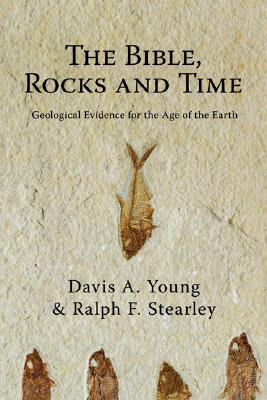
I’ve been rereading The Bible, Rocks and Time: Geological Evidence for the Age of the Earth
[T]he claims advanced in favor of a young Earth or Flood geology remain unacceptable to the scientific community. Thus their claims should also be unacceptable within the church, which… ought to be committed to truth and reality–for the simple reason that the young-Earth creationist claims lack scientific credibility. (161)
Now I think this is a pretty obviously controversial claim for a few reasons. First, the immediate question is how broad Davis and Stearley are intending this to be. After all, one might say that God creating the universe is “unacceptable” depending how one defines the scientific community. Of course, they do qualify the statement by noting that what they mean is that the evidence young earth creationists put forward can often, in principle, be tested for; and when tested, it fails muster. In this sense, I think that one might say the statement is acceptable.
Second, one may object to this noting that science often changes consensus, so what is “unacceptable” today becomes in vogue tomorrow. A problem with this claim is that it flies in the face of the real, overwhelming evidence for an ancient Earth. I’ve examined this and many other arguments YECs put forth in my post on YEC arguments.
Third, one might wonder exactly how Davis and Stearley think science and exegesis are supposed to interact. Though this is a far cry from the purpose of their book, statements like these beg the question of whether science really does limit exegesis.
What are your thoughts?
Links
Be sure to check out the page for this site on Facebook and Twitter for discussion of posts, links to other pages of interest, random talk about theology/philosophy/apologetics/movies and more!
Answering Common Young Earth Creationist Arguments– I evaluate a number of arguments for young earth creationism. There are a large number of biblical, philosophical, and scientific arguments briefly answered here.
What options are there in the origins debate? – A Taxonomy of Christian Origins Positions– I clarify the breadth of options available for Christians who want to interact on various levels with models of origins. I think this post is extremely important because it gives readers a chance to see the various positions explained briefly.
Source
Davis A. Young and Ralph F. Stearley, The Bible, Rocks and Time: Geological Evidence for the Age of the Earth
Perspicuity and Inerrancy- a dialogue response
 Recently, a fellow blogger responded to my post on arguments for young earth creationism. This blogger insinuated that I deny inerrancy because I do not hold to young earth creationism. I’ve run into this frequently and apart from the fact I frequently defend inerrancy (simply scroll down to read several posts to this end), I think that Christians should not falsely represent others. For the record, I affirm inerrancy. If you say I do not, you are giving false testimony against a neighbor.
Anyway, once more, this is the link for the post that I’m responding to. Here’s the post he responded to.
The issue this fellow blogger brought up is the issue of perspicuity. At some point I’ll try to dedicate a post specifically to perspicuity and inerrancy, but for now I want to focus on how it is used to try to say every single point in Scripture is just utterly clear. I often run into this in discussions over theological issues. One person claims perspicuity for their reading, and thus says that anyone who disagrees denies the clear meaning of the text. Of course, it is appropriate to point out such clear meaning and offer correction, but one has to argue for that clear meaning rather than simply accuse the other of denying inerrancy. Also, apart from the fact that perspicuity has historically changed in meaning due to controversies during the Reformation, there is also the simple fact that defining perspicuity as the clarity of Scripture in everything simply doesn’t work. We’ll see why I say this below.
I’d like to make public record of my response and get readers’ thoughts as well. Here’s what I commented on his blog, in its entirety. I address “you” to the author of the blog response:
Thanks for taking the time to respond. I have a few thoughts, and I’ll try to be brief.
First, the doctrine of perspicuity changed during the Reformation period. As I [very] briefly point out in my post on sola scriptura in the Reformation (https://jwwartick.com/2012/10/15/who-interprets-sola/), this was because the Reformers realized there was genuine disagreement over certain passages of Scripture.
Second, there are some issues within Scripture which are genuinely unclear. If you want to deny that, I would suggest you basically have to ignore the text of Scripture. There are a number of issues: for example, underdeterminiation. One looks in vain to find the amount of detail we often wish we had on people that are listed in the genealogies, for example. More concrete examples would be the question of the meaning of certain words, lining up some apparent differences in the Gospels, etc. For example, would you say that Matthew 28:1-7 is unclear? Ah, but it says there is one angel there who speaks to the women. But then is Luke 24:1-8 unclear? But it says there are two angels!
I bring up this example not to say there is an actual contradiction (after all, it seems that Matthew just reports the one who talks), but rather to show the appeal to clear verses does not always solve the apparent difficulties. Unless you want to say that either Matthew or Luke are unclear, you have an apparent contradiction which is not solved by a “clearer” text. It is solved by thoughtful reflection and looking more deeply into the backgrounds, the way oral tradition was passed along, and the like. But your post suggests we can simply cast about for a “clearer” text to figure out the unclear. Tell me, which is unclear, Matthew or Luke?
Third, your view of perspicuity seems to mean that we only learn from being spoon fed easy truths, the exact opposite of the difference between milk and meat that Paul suggests. For example, you wrote:
“Probably the clearest example of the perspicuity of Scripture is found in Paul’s words to Timothy in 2 Timothy 3:16, 17 which says, ‘All Scripture (not just the Gospel message) is given by inspiration of God, and is profitable for doctrine, for reproof, for correction, for instruction in righteousness, that the man of God may be complete, thoroughly equipped for every good work.’ How can a person profit from Scripture so as to be reproved by it, corrected by it, and instructed in righteousness by it, if it was so unclear he had difficulty understanding it?”
Have you never learned anything by being confronted with a difficult problem and striving to understand it? I suspect that you have. I suspect you’ve struggled with specific portions of the text and come out better for it when you came to reconcile the text through other observations, insights, and reflection. If you haven’t I certainly have, and I know many others who have as well.
Regarding this text, I’d also simply point out that the interpretation of it is quite forced. Is the intent of the text teaching us that all of Scripture is inspired and profitable, or is it teaching us we can just expect to understand everything?
Finally, I firmly affirm and defend inerrancy and any suggestion to the otherwise should be withdrawn. Difference of opinion over interpretation should not be taken as denying inerrancy. Rather than misrepresent your Christian brother, you should stand beside me in a defense of inerrancy. We differ on interpretation of certain texts. Unless you take your interpretation to be itself inerrant and the word of God, I ask you to stop slandering me by implying I deny the doctrine.
“Husband of One Wife” – What does this mean?
 A common argument for limiting the pastoral ministry to men only is to cite a number of texts where the requirements for elders/overseers/etc. are given. Among these, one which allegedly shows that women are not to hold positions of authority in the church is the statement that the holder of such a position is to be the “husband of one wife” (1 Timothy 3:2; 12; Titus 1:6).
On the face of it, this seems to be a pretty telling argument. After all, if someone is the husband of one wife, then that would certainly seem to exclude women! So what’s the problem?
Is your pastor married?
You see, if someone wants to take the statement in its most literal sense, it isn’t merely, abstractly stating that the overseer/bishop/deacon/elder is supposed to be a man; it is actually saying he is supposed to be a husband.* So if one wants to take the Bible in its most “literal” reading, then one must argue that not only may women not be pastors; neither may any unmarried (or remarried, or divorced, or widowed, etc.) men. Period.
So what’s the problem with this? The problem is that once we get to this level, it should be pretty easy to see how absurd the argument is. What the phrase is intended to convey is monogamy. That is, church leaders are to be monogamous. The teaching is pretty clear when understood in this light. If one is to be a leader in the church, it should be easily observable that they are monogamous and celibate apart from marriage. There are to be no exceptions.
If someone wants to dispute this and press that the real point is that one must be a man, then they must equally argue that no church leader should be unmarried. Considering Paul himself extolled the values of remaining unmarried (and was himself unmarried), such a reading of Paul is problematic, at best.
All of this is to set aside the other difficulties with using passages like this to restrict women from the ministry. One example is the excessive addition of male pronouns into the English translations which are not present in the Greek (see Philip Payne, Man and Woman: One in Christ, 445 [I have reviewed this book here]). Another problem is that they seem to be teaching against polygamy as opposed to any type of gender restrictions (ibid). Finally, the lists of requirements are stated in such a way as to make it actually open for women to hold such offices (Payne, 448-452).
Even if one disagrees on the last paragraph, it should be clear that one cannot use these passages to restrict women from the ministry. They simply do not have the data in them to allow for such a restriction.
*(Yes, I am aware that it may be translated “man of one woman,” but that just makes it extremely clear that the meaning is supposed to be referring to husband and wife. After all, what other reason could there be to be “of one woman”?)
Links
Be sure to check out the page for this site on Facebook and Twitter for discussion of posts, links to other pages of interest, random talk about theology/philosophy/apologetics/movies and more!
Check out my posts on egalitarianism (scroll down for more).
Paul Adams has a series of posts on Philip Payne’s work discussed herein. Check out his series, starting with the first post.
SDG.
——
The preceding post is the property of J.W. Wartick (apart from quotations, which are the property of their respective owners, and works of art as credited; images are often freely available to the public and J.W. Wartick makes no claims of owning rights to the images unless he makes that explicit) and should not be reproduced in part or in whole without the expressed consent of the author. All content on this site is the property of J.W. Wartick and is made available for individual and personal usage. If you cite from these documents, whether for personal or professional purposes, please give appropriate citation with both the name of the author (J.W. Wartick) and a link to the original URL. If you’d like to repost a post, you may do so, provided you show less than half of the original post on your own site and link to the original post for the rest. You must also appropriately cite the post as noted above. This blog is protected by Creative Commons licensing. By viewing any part of this site, you are agreeing to this usage policy.

 J.W. Wartick - Reconstructing Faith