Thinking
2013: The Year’s Best Books, Web, and More! An Apologist’s Year in Review
 Who doesn’t love to look back on the year and reflect on the things done and learned? I’m sure plenty of people don’t! But I do! So here’s my reflection on the year simply highlighting the “bests” that I’ve read/watched/etc. from an apologetic perspective throughout the year. I have not included all the books I read in 2013; rather, only books/movies/etc. which came out/were active/etc. in 2013 are eligible.
Best Books
Best Apologetics Book
J. Warner Wallace, Cold-Case Christianity. I think this book is, hands down, the most important introductory level book for the historical reliability of the New Testament. I reviewed this fantastic book here. Wallace does a fantastic job introducing hard topics in readable ways. His experience as a cold-case detective allows him to draw on his knowledge to make the “detective work” of history exciting and engaging. I highly recommend this book to any and all, whether they are interested in apologetics or not.
Best Advanced Apologetics Book
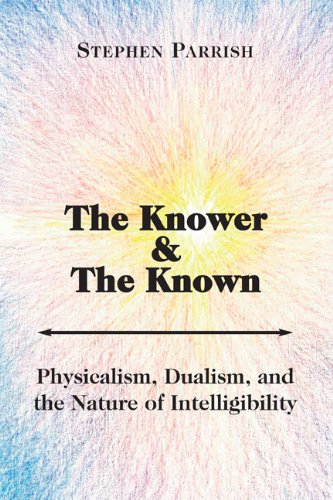
Stephen Parrish, The Knower and the Known. In this advanced work of epistemology and metaphysics, Parrish provides a comprehensive case against physicalism. However, not content with merely the via negativa, he also provides readers with an extensive positive case for substance dualism. I analyzed and reviewed this work in two parts: part 1 focused on the case against naturalism; part 2 focused on the case for dualism.
Best Movie for Discussing Worldview
 “Ender’s Game”- The movie “Ender’s Game” is one of the more philosophical movies to have come out this year. Although its core is a kind of race-against-time action movie, the film explores issues of just war, innocence, morality, and more. I reviewed it with a focus on worldview issues here; I also reviewed the award-winning science fiction book on which it is based.
Best Podcast- For the Best Overall Podcast
The Dividing Line– The podcast of the Calvinist theologian and apologist James White, “The Dividing Line” is consistently interesting and engaging–even when I disagree. White’s emphasis revolves around worldview issues, Calvinist theology, and apologetics–particularly those issues which deal with textual criticism. He is one of the few apologists I know of who consistently engages Muslims. “The Dividing Line” is one of the few podcasts which I listen to every single time. Whether or not you agree with White–and I find I do disagree on several points–you will find his level of engagement with primary materials high, and his critiques will force one to rethink their positions where they disagree.
Best Apologetics Site- For the Best Site focused upon Apologetics
The Poached Egg– I do, of course, mean “best” apart from this one! Okay, not really… I don’t actually think this is the best apologetics blog on the internet… not by a long shot. Anyway, “The Poached Egg” is a kind of apologetics-resource site which features a number of blog articles daily. Greg West runs it and he consistently has an excellent range of resources featured so that people interested in apologetics and related issues may continually interact with new articles of interest. I highly recommend that any readers of this site go and immediately begin following (or at least routinely checking) The Poached Egg.
Best Theological Topics Blog- For the Best Blog on topic(s) specifically related to Theology
Baker Book House Church Connection– Yep, this is a blog about books. That not only means it gets immediate bonus points from me, but it also means that the author, Louis McBride, has a whole slew of topics available. The posts on the blog are generally centered around works the McBride has browsed recently, with brief quotes and reflection upon the content. The broadness of the blog’s content is its greatest draw. I highly recommend following this blog and reading every post for thought-provoking and wide-ranging theological content.
Best Worldview Blog- For The Best Blog on a topic(s) related to the Christian Worldview
The CBE Scroll– The CBE Scroll is the official blog for Christians for Biblical Equality, a group which advocates for the full equality in the home and ministry for men and women. Whether one agrees or disagrees with this perspective, the blog raises a number of highly important arguments with which one must contend.
Best Creation Issues Blog
Naturalis Historia– The issue of the time and length of creation is a highly controversial one among evangelicals today. Here, “The Natural Historian” covers a wide range of topics related to the evidence for the age of the earth, as well as occasionally reflecting upon theological topics. Every single post on this site is worth reading and will inspire much thinking in related areas. I highly, highly recommend this site.
Best Non-Traditional Presentation Apologetics/Theology Blog- For the best blog that utilizes method other than pure text or video to convey its meaning
No Apologies Allowed– Who doesn’t like comics? That’s right, nobody. No Apologies Allowed is a site that uses comics as its primary means to get across apologetic and theological insights. The site is always entertaining and the conversation is quite interesting. Be sure to swing by.
My Current Projects and Graduation
Hello, dear readers!
I wanted to let you know how much I appreciate your coming and reading my blog, whether you are just a one-off who happened to stumble on this post, or a follower who has read it for years.
As a kind of thank you, I wanted to give you an update on what I’m currently working on behind the scenes. I am, as always, constantly writing blog posts. I try to give a pretty good spread of topics I’m interested and I hope you find them interesting too. I read a lot of books, so book reviews are a constant part of the process.
I graduate from Biola University with my MA in Christian Apologetics on December 20, 2013. I will be graduating in absentia. I don’t have the money to fly out to CA for it, so I’m a little bummed that I won’t be able to walk for my graduation, but I’m also very excited to be finishing. I have had an absolute blast with the courses and I have learned a lot. Anyway, I have actually had two readers contact me because they wanted to send a gift for graduation and/or Christmas. Wow. That is really, really awesome. Thanks so much! If you also want to consider such a thing, feel free to check out my constantly-updated Amazon wish list.
I’m honestly really looking forward to getting the MA hood. Perhaps I’ll wear it around the home. Okay, no I won’t. But it is a really awesome feeling to be right on the verge of my MA!
But now that I’m on the verge of graduating with my MA in Christian Apologetics, I have been thinking ahead and considering what projects I should work on. Here’s an idea of what I’ll be doing.
Writing Books:
Yes, I’m working on a couple books. I’m actively writing on two of them, with a couple others planned in the future. My hope is to get these published through a major Christian publishing house. So hey, if you have any connections or advice, please send them my way either through the comments here or through the “contact” form.
The books I’m working on right now are, I think, going to be both highly relevant and also very sellable. They’re the kind of books that, if I saw they had been written, I would snap them off Amazon instantly. So I hope that others will feel the same way. The first book is about 95 pages right now, but I hate to say that I’m going to keep the topic top secret. I’ll just say this: it is related to apologetics, and it is going to give a lot of unique insight. It will, I think, drive a whole lot of discussion and research going forward. I’m not trying to brag here, I just think that the outcome will be pretty significant.
The other book I’m working on is related to issues of creation and creationism. It’s going to be largely autobiographical and written in the first person as a kind of memoir of my explorations of the issues involved. I may not reflect it much on the blog, but I have a fairly dry sense of humor and that will be reflected in this book.
School
I am planning on continuing my education, hopefully by pursuing a PhD in theology next. I will be applying not for 2014 but for 2015, so I’m taking this year to study languages and the like while working on my books before I go into full time school work again.
Bible Commentary
I have been working on a commentary on the entire Bible. I’m writing this less as a book project than as a simple project for edification. I have been keeping a document in outline format with notes on the various books of the Bible as I read through them. The outline format allows for easily searchable notes, and I also use some paragraphs therein as well. I think it is pretty neat! I am currently going through Proverbs, Deuteronomy, and Luke.
The insights one gets from such a project are amazing. It is fascinating to see the way you find links between books that you never had before. I highly recommend that you also keep a kind of running commentary going as you read through the Word.
Onward!
Anyway, those are the projects I’m currently working on. I hope you enjoyed reading about them. Let me know what your thoughts are! What are you working on? Leave some comments.
My Trip to the Evangelical Philosophical/Theological Society Conference 2012
 Last weekend I had the supreme pleasure of attending the 64th annual meeting of the Evangelical Theological Society and the Evangelical Philosophical Society (there’s a mouthful!). I took over 80 pages of notes (43 front/back) and enjoyed the entire time immensely. I’ll be posting in the upcoming weeks and months on a number of these topics, so for now I’m just going to very briefly outline the talks I went to and give one or two comments each. I encourage readers to browse through these and let me know which ones they’d be interested on me writing on in a bit more depth. Feel free to ask questions as well.
Scripture, Geology, and the Age of the Earth
Readers know that I am very interested in the controversy among Christians over the age of the earth. I’ve written quite a bit on the topic. This session featured Gregg Davidson (University of Mississippi), a geologist, facing off against Andrew Snelling of Answers in Genesis. I have to admit that I was surprised by how much this debate focused on the science. Specifically, Davidson presented two very thorough evidences for an old earth, while Snelling rebutted these and argued that a catastrophic interpretation was perfectly consistent with the record. It was a fascinating back-and-forth. You can read an extended outline/review of this talk in my post: Gregg Davidson vs. Andrew Snelling on the Age of the Earth.
Bioethics – Genetic Enhancement
Gary Alkin(? his name wasn’t in my program) presented a paper on genetic enhancement and whether it is morally permissible. Essentially, his argument was that while as Christians we are obligated to heal diseases and help others, we are not obligated to try to become superhuman, and indeed are perhaps prohibited from doing so. He countered numerous arguments for the notion that we should continue to try to ‘enhance’ humanity. It was an interesting paper. I have since written an extended examination of his paper here: Genetics and Bioethics: Enhancement or Therapy?
Whose Moral, Which Axiom- The Transforming Virtue of Sub-Creation in J.R.R. Tolkien’s Mythology
Thomas Provenzola presented a mind-stretching paper on how Tolkien’s use of myth helps us to think about care for creation. It was a fascinating look into philosophy and literature.
The Metaphor of Divine Repentence
Rob Lister of Talbot School of Theology presented a paper in which he argued that we must understand language about God both literally and analogically. He argued that open theists often err too far towards creating an anthropocentric concept of God, rather than understanding passages about God’s repentance in light of clear statements about His being. I was so fascinated by this talk that I went and got his book on the topic afterwards. I look forward to reading it.
Other Voices in Interpretation Panel Discussion: An Evangelical Statement on the Trinity, Part 2: Application to the Ongoing Discussion on the Trinity
Kevin Giles (Victoria, Australia), Steve Tracy (University of New Brunswick), Mimi Haddad (Christians for Biblical Equality), and David Malick (CBE) participated in a panel discussion on the evangelical statement on the Trinity. I was surprised to see how contentious this talk was, but unfortunately there are people who are undermining the Trinity by eternally subordinating GOD the Son. This discussion went beyond an egalitarian/complementarian debate and essentially touched on how we must not distort the Trinity for our own purposes.
The Stars Will Fall From Heaven: Cosmic Catastrophe in the Synoptic Gospels
N.T. Wright, who needs no introduction, presented a paper arguing that the cosmic language used for the destruction of the temple is not so much due to an end of the space-time universe as it is because the Temple was the center of the universe for Judaism.
The Orthodox Doctrine of the Trinity
Kevin Giles presented a paper arguing that orthodoxy on the Trinity does not subordinate the persons. Rather, the distinctions made between persons according to the orthodox faith are made according to generation (the Son is begotten by the Father, and the Spirit proceeds from the Father and Son). He stressed the importance of drawing implications of the Trinity from the Godhead and not from humanity.
An Examination of Jesus’ View of Women through Three Intercalations in the Gospel of Mark
David cogently argued that we can look at the narratives in the Gospels to see what Jesus’ view of women was. Because we can see with clarity how Jesus elevated women’s roles to that of equal to men, he argued that we should interpret hard passages in light of the clearer passages. This paper was very clearly argued and extremely compelling. I hope more work is done in this area, because the argument was very tight, and there is much development to come from it.
Complementarians, Egalitarians, and Unicorns: What are they, and do they exist?
Walker argued that the categories we are using to identify people in the gender debate reflect a genus/species fallacy which essentially drains them of all meaning. It may be helpful to develop new terms to make the distinctions more clear.
Biblical Theology and Creation Care
I must confess that I only went to this one because there weren’t any others going on. I’m very pleased I did, because this plenary talk proved to be one of the most interesting discussions that I attended. Moo argued decisively that we must not cause Christianity to lose credence due to clinging to faulty science. Furthermore, he argued that it is our duty to take care of creation. He traced an interpretive strategy through Scripture and argued very convincingly for the use of the hermeneutic he was pressing for looking at Christianity and the environment. I wrote an extended post on this paper and the following panel discussion: Caring for Creation: A dialogue among evangelicals.
Panel Discussion on Creation Care
Following Moo’s plenary talk, there was a panel discussion with Moo, E. Calvin Beisner, Russell Moore, and Richard Bauckham. This panel discussion was highly contentious and the audience clapped for their favored party numerous times. Beisner seemed to be the odd man out, as he did not deny climate change, but rather argued that we don’t yet know conclusively that it is anthropogenic (caused by humans). The other panelists argued that the science is convincing and that we do cause people to look with wariness upon Christianity. It was a very invigorating debate.
Body-Soul Interaction and the Theism-Naturalism Divide
Ryan West presented a paper arguing that many of the arguments raised against substance dualism are essentially faulty once one grants theism. He further argued that naturalistic dualists (of which there are few!) would be better off embracing theism, for their view is in extreme tension given the arguments he presented. It was a brief paper that was very well argued. The Q+A was great.
How Much Evidence to Justify Religious Conversion? Some Thoughts on Burden and Standard of Proof vis-a-vis Christian Commitment
The great apologist John Warwick Montgomery presented his paper on religious conversion. Essentially, the argument was that given certain benefits and a low price of commitment, people should commit to Christianity assuming the standard of proof has been carried. It was a fascinating paper, and Montgomery’s presentation style was both engaging and endearing. It was a huge pleasure to get a chance to talk to him briefly after the talk.
Taking a Stand Against Rand: A Biblical Evaluation of Ayn Rand’s Capitalism
I’m not very interested in Rand, but this paper by David Kotter was interesting enough to get me interested in the topic. He noted both good and bad portions of Ayn Rand’s philosophy and argued that ultimately, her perfect man has come to fulfillment in Christ. He presented a critique of a number of her views, while arguing that some things are worth looking at for Christians and the government. A truly engaging paper.
Miscellaneous Extras
Throughout the conference I had numerous pleasures of running into fellow bloggers, friends, and huge names in philosophy and theology. I enjoyed lunch with Matt over at Well Spent Journey and stayed with Kurt over at Real Clear Apologetics. I was so delighted to meet Holly Ordway from Hieropraxis and engage with her in some great discussion. Other examples include running into Hugh Ross from Reasons to Believe, socializing with William Lane Craig, however briefly, and bumping into numerous others (Jerry Walls, David Baggett, Nabeel Qureshi, and more). I also enjoyed interacting more with David Malick of CBE. What a blast!
SDG.
——
The preceding post is the property of J.W. Wartick (apart from citations, which are the property of their respective owners, and works of art as credited) and should not be reproduced in part or in whole without the expressed consent of the author. All content on this site is the property of J.W. Wartick and is made available for individual and personal usage. If you cite from these documents, whether for personal or professional purposes, please give appropriate citation with both the name of the author (J.W. Wartick) and a link to the original URL. If you’d like to repost a post, you may do so, provided you show less than half of the original post on your own site and link to the original post for the rest. You must also appropriately cite the post as noted above. This blog is protected by Creative Commons licensing. By viewing any part of this site, you are agreeing to this usage policy.
EPS Conference
I will be away for several days at the EPS Conference and EPS Apologetics Conference. I will be back to approve comments and engage in discussion after that!
Suggestions for my site
Readers,
I’m looking for some feedback on the site and some suggestions. Here are some questions I have, and please comment!
1) Do you use the categories at all to explore the site? Are they useful? Should I make fewer categories/more categories?
2) Do you like the “featured posts” on the front page? Should I update them more frequently? Do you check them out?
3) Have you found it easy to find older posts?
4) The pages at the top (God Exists, Pro-Life, etc.)–are they useful to you? Should I condense any of them? Should I add more?
5) Do you “like” me on facebook? Do you follow me on twitter? Any other suggestions for social media?
1st Anniversary
A year ago today, I married the love of my life. Eternity will not be enough time to spend with this wonderful woman.
I love you, babe. Forever.
-J.W.
On the Shoulders of Giants: Rediscovering the lost defenses of Christianity
 There is something missing from our arsenal as Christian apologists. I came upon this truth about a year and a half ago, but have only begun to realize how much we have been missing. Let me begin with an illustration:
It was a short, scenic drive down Interstate-94 to meet with Dr. Timothy McGrew, a professor of philosophy at Western Michigan University. At the time I was living in Ann Arbor, and I had only conversed with Tim on Facebook. He told me, with ill-concealed glee, about a folder on his computer that was filled with PDF scans of copyright-free (public domain) books by forgotten Christian apologists and theologians. The arguments in them, he told me, were not often used by modern apologists and could but increase my knowledge.
We met at a restaurant along the highway and talked for about an hour and a half while Tim uploaded files on my computer. Tim described to me a number of the items in this collection, but what struck me was how many arguments he referenced which are simply forgotten in current apologetics discussions. For example, he described the argument from “undesigned coincidences,” which basically goes through the Bible and shows how interrelated texts confirm each other’s historical veracity. I was shocked that I had not run into such a profound argument for the Christian faith. I was tremendously excited to find out that there were many such treasures waiting to be discovered.
Despite our continued interactions, I only very slowly began to read through this fantastic set of resources with which Tim had provided me. Once I got my Kindle, however, I began to tear through them. I have discovered so many delightful discussions, wonderful arguments, thought-provoking works that I could hardly begin to list them here. But I will try at least provide a few avenues for study.
I want you, and yes, especially you–the spirited apologist who has your Kalam argument memorized, your Leibnizian argument polished, and the like–to consider this fact: there are scores more arguments for the veracity of Christianity just waiting to be accessed. These arguments have little-to-no discussion in the apologetic blogosphere, they very rarely appear in modern books (if ever), and many of them are quite strong. What is your reaction to that knowledge?
I suspect it is a salivating, whetting of the appetite; it is a yearning desire to learn more. Fear not! These books, and the arguments within them, are, as I said, at your fingertips. The following is my brief, annotated list of fantastic free resources to help you, my fellow Christian apologists, broaden your knowledge.
Repositories of Resources
Library of Historical Apologetics (Currently DOWN)- Here is where I got started, with Tim McGrew’s phenomenal collection of works. In particular, the “annotated bibliography” will set you up with some fine works. The site features a “spotlight” on the main page for various fantastic reads. Browse and download at will. Also check out their Facebook page.
Open Library– Open Library has a number of the books listed at the Library of Historical Apologetics available in a more Kindle-friendly format, if that’s your reading method of choice. I highly recommend using it to send books to your Kindle for free (when you select wi-fi delivery). See below for some specifics.
 Getting Started
Yes, it can be daunting once you realize the voluminous nature of the study ahead of you. So I’ve made it easy by providing links to a few books–again, for free–to get you started, along with some comments. Oh, and I’ll be running a series shortly which outlines and examines several of these arguments.
Forgotten Arguments for Christianity: Undesigned Coincidences- The argument stated– I outline one of the many forgotten arguments for the truth of Christianity.
The Four Gospels from a Lawyer’s Standpoint– Edmund Bennett. Short and sweet, this book presents an argument I find extremely compelling: undesigned coincidences. Essentially, what Bennett argues is that the authors of the Gospels, writing individual histories, incidentally confirmed each other’s histories. I can’t recommend this highly enough. [To download, click the [G] or [A]; or if you want it for kindle, click here and on the right select “send to Kindle.”
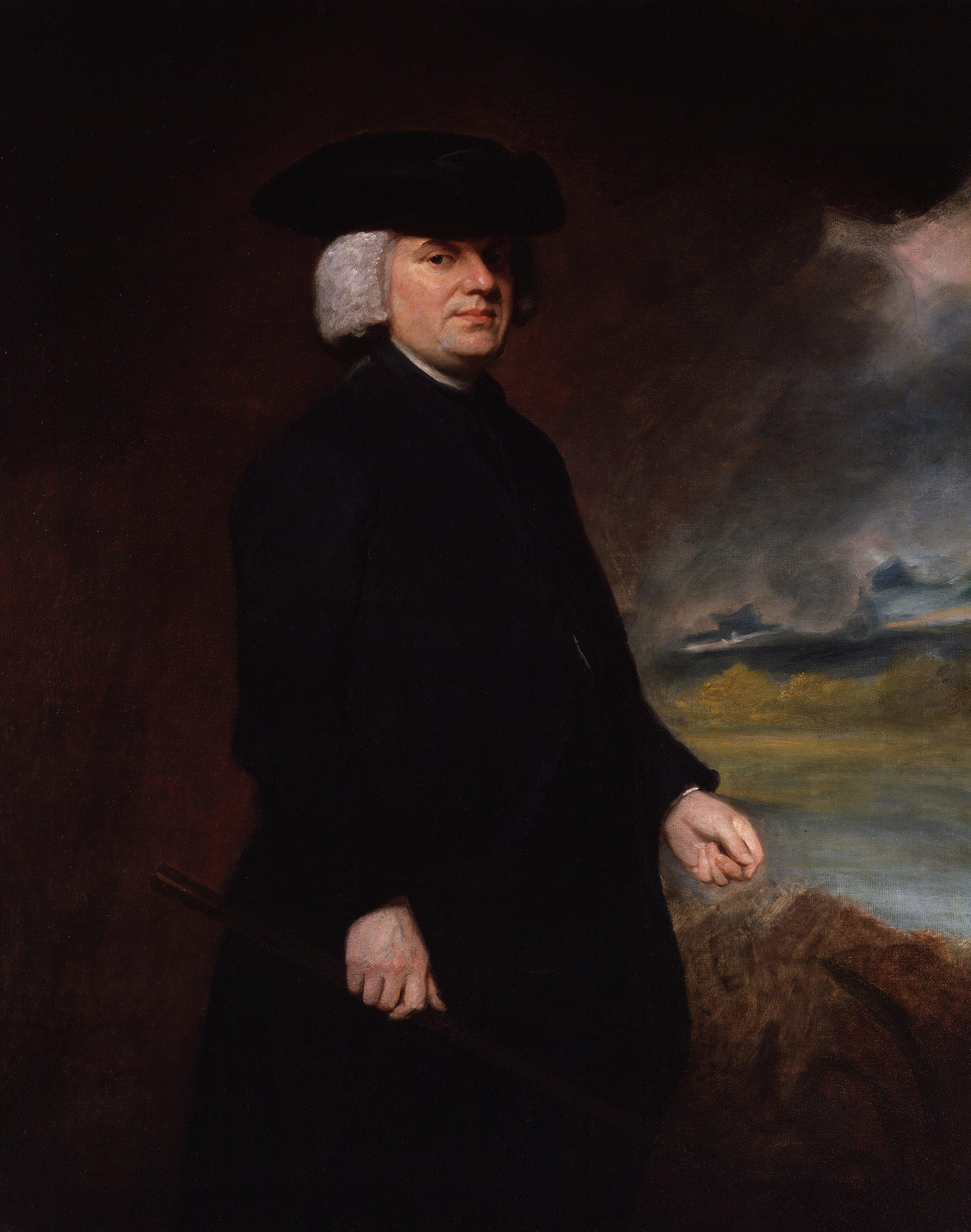
A View of the Evidences of Christianity– by William Paley. It would be hard to describe the impact this book will have on your apologetic. Paley is simply masterful. In his first section alone he tears apart Humean arguments against miracles. This book is of extreme import for anyone interested in apologetics. Again, Kindle users.
Undesigned Coincidences– by J.J. Blunt. Once you’ve read Bennett, this book takes you through the entire Bible pointing out more historical arguments of great import throughout. I find this argument stunningly powerful, and I think as apologists we must incorporate it. Kindle [warning-lots of typos in this one due to the transition from PDF to Kindle. If you find a better version for Kindle, let me know].
Historic Doubts Relative to Napoleon Bonaparte– I’ll let Tim McGrew describe it: ” In this delightful spoof, published while Napoleon was still alive, Whately turns Hume’s skeptical doubts regarding miracles against reports of the career of Napoleon—with devastating results.” One can’t help but think of those who deny the historical Jesus today and how one might apply this to Abraham Lincoln, JFK, or (as I have), the Titanic. Kindle users.
The Bridge of History over the Gulf of Time– Thomas Cooper’s exhortation to apologetics and a general introduction to a number of arguments against Christianity. Check out this essay on Cooper.
A Dissertation on Miracles– by George Campbell. A devastating critique of Hume’s argument against miracles.
The Voyage and Shipwreck of St. Paul– by James Smith [click the link in the article]. This work is an argument for the historical accuracy of Luke in Acts constructed by a sailor who also knew numerous languages and was intimately familiar with the documents with which he worked for this account.
There is now a fire within me that seeks after these forgotten or little-known arguments–a burning that is only quenched by finding more early writings–and I can’t help but hope that you, too, will be delighted to delve into these lost treasures. We can’t let the past escape us. One thing I always tell the apologetics class I teach is this: “If you have a doubt or a question about the Christian faith, I can guarantee you that someone smarter than me has already thought about it and written on it. Don’t go at it alone.” Christian brothers and sisters, don’t let this knowledge escape you. We must spread it to this generation and beyond.
Final Thoughts
My thanks to Tim McGrew for his guidance in this study. May we all strive for Christ as he has.
I leave you with something he told me about these historical apologetics books:
I know …
… a music theory professor who read Thomas Cooper’s _Bridge of History_ and phoned me up screaming violently for more …
… a seminary graduate who confessed that he had never been taught the evidences of Christianity that he was discovering in the old, forgotten works …
… a marathon runner and stay-at-home mom who fell in love with George Campbell’s _Dissertation on Miracles_ …
… a construction worker who was captivated by the argument from undesigned coincidences …
… a daycare worker who has educated himself by reading dozens of old works of apologetics …
… a civil service worker in Chicago who set out to refute the arguments in Thomas Chalmers’s _Evidence and Authority of the Christian Revelation_ and ended up becoming a Christian …
… the list goes on and on …
SDG.
——
The preceding post is the property of J.W. Wartick (apart from citations, which are the property of their respective owners) and should not be reproduced in part or in whole without the expressed consent of the author. All content on this site is the property of J.W. Wartick and is made available for individual and personal usage. If you cite from these documents, whether for personal or professional purposes, please give appropriate citation with both the name of the author (J.W. Wartick) and a link to the original URL. If you’d like to repost a post, you may do so, provided you show less than half of the original post on your own site and link to the original post for the rest. You must also appropriately cite the post as noted above. This blog is protected by Creative Commons licensing. By viewing any part of this site, you are agreeing to this usage policy.
Out until 4/23
I will not be around to approve comments/respond until April 23rd. I’ll be in California for a class related to my M.A. studies.
My apologies in advance for the delay in approving comments/responding.
Announcing my new site: “Eclectic Theist”
I have many more interests than just philosophy of religion and Christian apologetics. I’ve been longing for an outlet for these interests for some time. Finally, I got down to business and made a new blog: “Eclectic Theist.”
On this new site, I’ll be writing about topics not normally discussed here on “Always Have a Reason.” For example, my first main entry is a reflection on science fiction. On this new site I’ll be discussing my other interests. Readers on here may be surprised at how random my reading is sometimes. In my undergraduate studies, I was a social studies major and I read extensively about Mesoamerican history. Did you know that!? Well now you do, and guess what? I’ll be writing about it again. I also love World War 2 history and have been reading more in that area in what exists of my free time. Of course, I’m also a huge fan of science fiction and fantasy, role-playing games, and more. All of these will be featured on this new site.
Will there be crossover? Probably. I’ve already thought of a few posts which can bring my outside interests on here and vice versa. For example, a series I’ve been contemplating for a while about science fiction and Christianity will see its launch on here in just a few short weeks. Other topics may crossover as well as they come up.
Does this mean I’ll write less here? Absolutely not. I have posts lined up for weeks now, and I continue to add to them. I’ll be maintaining my regular posts on here and using “Eclectic Theist” as an outlet for my other creative energy. Please, take the time to check out my introductory post to “Eclectic Theist” and browse the two new posts I have up. The site will be expanding quickly, so be sure to subscribe.
I’m looking forward to seeing many of you over there and talking about topics that interest us apart from philosophy of religion.
Finally, because I like pictures, I’ll share one that I just put up over on the new site: a picture of Orson Scott Card and myself.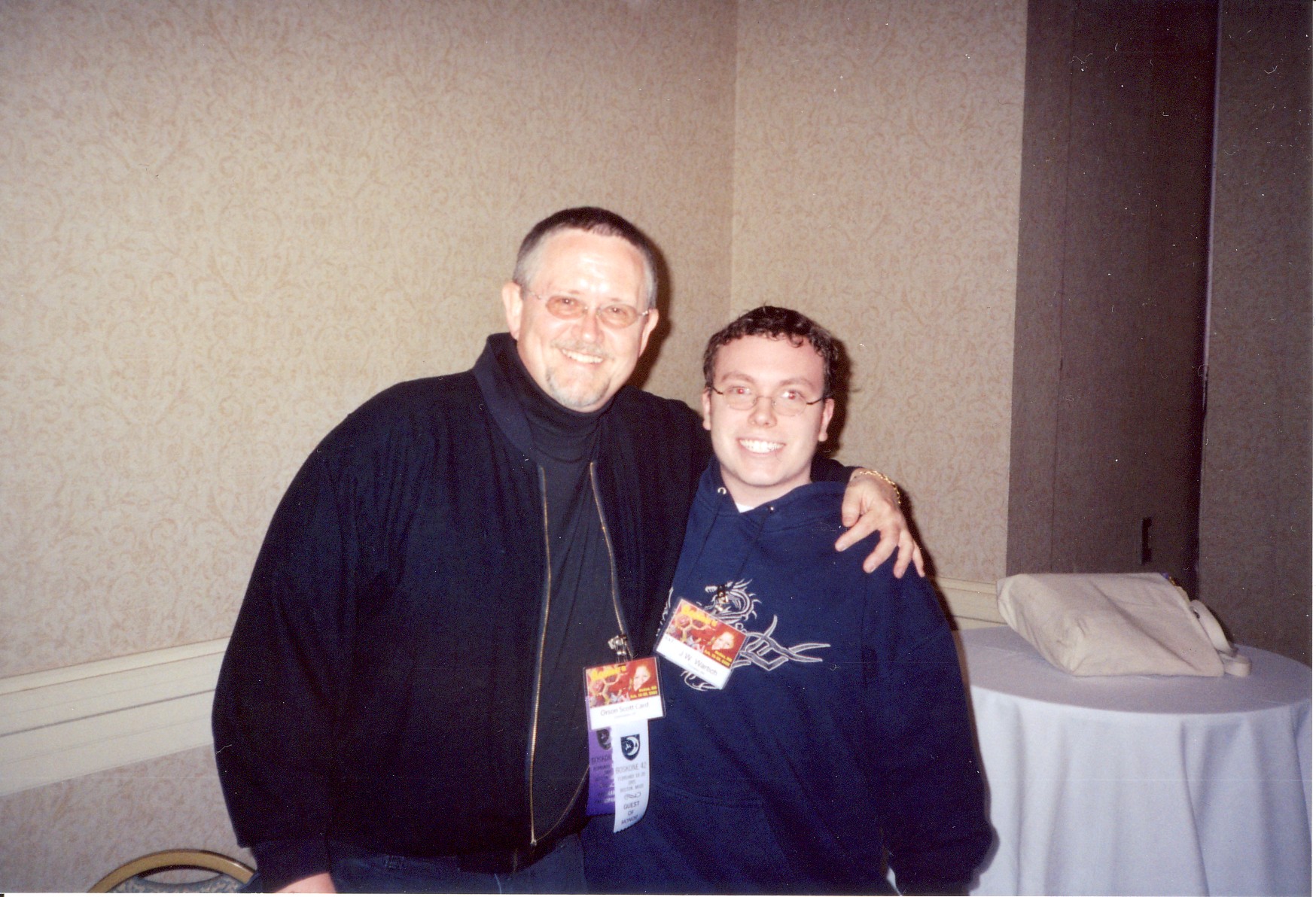
Changes to site layout
Readers,
I wanted to let you know that (obviously) I’ve made some changes to the layout of the site. I’d appreciate any feedback about the changes, whether positive or negative.
A quick walkthrough of the site: on the home page you’ll find the most recent post in abbreviated form. Underneath that post are featured posts which I think they are important/interesting/etc. Thus, you can view either the featured posts or the latest post directly from the home page. At the top of the page you’ll find pages with other links in the various series’ of posts I’ve made or general topics. For example, you can click on “God exists” to find several posts about the existence of God.
On the home page, if you look to the right of the latest post, you’ll see 5 more recent posts, along with my latest Twitter entries, along with an option to follow me (please do!). Under that on the left are the categories (another helpful way to skim through the site for things you want to read about), recent comments, and a calendar of posts. On the right side there is a search option so you can look for specific phrases or concepts on the site. Under that is a place to put your e-mail and subscribe (thanks to those who have).
If you want to read posts older than the last 5, you’ll need to either use the archive or the calendar. The archive is directly under the subscription box, and you can utilize the drop down menu to select a month. The number of posts per month is listed.
Finally, under the archive you can find my blogroll. A lot of these sites are really quite awesome and I recommend them all highly. If you hover over the link, you’ll find a short description will pop up.
So that’s the new layout for my site. I’d really like to hear your input so either drop me a comment or use the contact form at the top!
While you’re here don’t forget to check out the most recent post (yesterday) about J.L. Mackie’s book attacking theism.
Thanks for taking the time to visit the site. I hope you’ll come back!
-J.W.

 J.W. Wartick - Reconstructing Faith