abortion
Really Recommended Posts 3/1/13

Having scoured the internet for great posts to commend to my readers, I have turned up this smorgasbord for your reading pleasure.
My Father’s “Eviscerated” Work – Son of Hobbit Scribe J.R.R. Tolkien Finally Speaks out– Christopher Tolkien gives some fascinating insight to the world of the Lord of the Rings as well as Tolkien’s writing process in this interview/overview. I find it unfortunate that he feels his father’s work has been distorted by all the commercializing, and in particular I am saddened by his analysis of the movies. I have enjoyed them greatly and found The Hobbit in particular to be edifying (see my analysis of the first Hobbit movie). Nonetheless, this was a fascinating read.
William Lane Craig: [Young Earth] Creationism is an embarrassment– A Youtube video that is really a picture with an audio file in which Craig discusses the scientific impossibility of the young earth position which is held by the majority of evangelical pastors. The problem is that some have taught that the only Biblical position is that of the young earth interpretation and when youths realize that the earth is not 10,000 (or so) years old, they will fall away.
Much Undead Ado About Nothing– Our recent obsession with zombies and the undead has lead to some interesting philosophical and scientific reflection. Check out Anthony Weber’s excellent post, which relates back to The Walking Dead, among other references.
Bait and Switch– Eminent philosopher Alvin Plantinga evaluates Sam Harris’ book on free will. Spoilers: Plantinga is unimpressed. Read on for his systematic refutation of Harris’ work.
The New Apologetics– Check out this fantastic post on literary apologetics and using imagination in the defense of the faith.
‘Going Clear,’ Lawrence Wright’s Book on Scientology– Scientology is fascinating in its ability to continue. Founded by a science fiction author who describes the real world in terms that reflect those writings, Hubbard founded a religion that continues to fascinate. Check out this look at a recent book outlining the beliefs of Scientology.
Time to Tour the Camp– I found this post on the Holocaust and abortion fascinating and convicting. Please, check it out.
Really Recommended Posts 1/17/13
I have searched the ‘net far and wide to bring you this lineup of really recommended posts. Check out posts on morality, abortion, archaeology, Carl Jung’s theology, and more.
As always, if you liked something, drop a comment!
Does the Future Have Moral Authority– It is common in debates about morality related to Christianity to see someone appeal to the moral progress we have made and to argue that in the future we won’t think x, y, or z are wrong, or we’ll think a, b, and c are right. What authority do such arguments have? Read this great post on the topic.
Abortion Methods: An Overview– A disturbing look (with pictures) at the methods used for abortions. This is a truly horrifying thing we are allowing in our country and across the world.
The Gobekli Tepe Ruins and the Origins of Neolithic Religion– An archaeological discovery may be turning what some thought about the origins of religion on its head. It’s also informing us about early religion.
Interpreting Similarities between Christian Doctrine and Pagan Mythology– An interesting look at how to think about the alleged similarities between Christianity and pagan mystery religions.
Jung’s Therapeutic Gnosticism– A fascinating (lengthy) read about Carl Jung’s theology. I really enjoyed this one.
The Powerful Resolutions of Jonathan Edwards– Think you were awesome with your New Year’s resolution? Check out this list from Jonathan Edwards.
Really Recommended Posts 1/4/13
 Readers, I encourage you to check out the posts I have linked here. Let me know what you think and be sure to check out the other Really Recommended Posts!
What’s Wrong with the Zeitgeist Movie? – Jonathan McLatchie has written this excellent article which thoroughly rebuts the Zeitgeist movie. That movie claims that Jesus is an amalgamation of Pagan myths and never actually existed. It claims that the very foundation of Christianity is a lie. McLatchie’s examination dispels this claims in the movie with insight. I highly recommend reading this.
Philosophical Arguments Destroy “Pro-Choice” Case on Abortion – Clinton Wilcox presents a fantastic look at how strong the philosophical arguments against abortion are, along with an evaluation of some common pro-choice arguments.
Time for a New Hobby – An apologetics comic (!) which poignantly shows the truth about end-of-the-world predictions. Short, sweet, and awesome.
Alien Particles Challenge a Young-Earth Creationist Model – This fascinating article presents a great difficulty with the young earth paradigm. Namely, the fact that we have particles from places which are too far away for a young universe. It’s a fascinating read. Check it out.
Apologetics: Fighting Last Year’s Battles, Last Year’s Way – A really insightful post on the need for story with arguments. A worldview is a story of how the universe works, and it is important to keep that in mind. This will stretch your mind.
J.P. Moreland’s EPS Address– I had the pleasure of attending the 2012 ETS/EPS conference. J.P. Moreland’s address was fantastic, with a message that deserves to be heard. I have written on the conference itself here.
Saint Nicholas- A Christian life lived, a story told
It has been remarked, with much truth, that all of us lead double lives, a life of our fancy, in a world of things as they should be, or as we should like them to be, and a life in a world of things as they really are. And this is as it should be. We can lift the level of real existence by thinking of things as we should like them to be. It is well not to walk with one’s eyes always fixed on the ground. (McKnight, cited below, Kindle location 401)
It is easy to hear the “real story” of Santa Claus, but few investigate further than looking it up to see the parallels between the Bishop of Myra’s life and that of the story of Santa Claus. There is so much more to his story–and indeed to stories in general–than that.
Saint Nicholas (270-343 AD) was a valiant man who fought prostitution, abortion, and poverty. He attended the council at Nicaea, from which we received the Nicene Creed. At that council, he defended vigorously the orthodox doctrine of the Trinity. He was an exemplar of Christian teaching put into practice. Not only that, but the legend which has grown up around his life has inspired and enthralled untold numbers of people through the Christian era.
It is important to note the intertwining of legend and truth in the stories about St. Nicholas, and the impact that has had upon innumerable people. George McKnight, writing in the early 1900s, explored a number of issues related to the mingling of fact and fiction in the life of St. Nicholas. The quote highlighted above touches on many of these topics.
First, there is power in narrative. A story which is told well is one which can effect change. We are impacted by fantasy in ways which cause us to reflect upon reality with new–perhaps better trained–eyes. Second, we, as spirited people in a world which we so often see only as the physical, are called to heights of reality by fiction. As McKnight noted, “It is well not to walk with one’s eyes always fixed on the ground.” Our eyes are driven upwards and outwards by the stories we hear–they cause us to interact with others in new ways, and they also cause us to think about topics which perhaps we had not even considered before.
The story of St. Nicholas is no different. Yes, legend has crept into the accounts of this godly man, but what is the purpose of that legend? Not only that, but is it possible to separate out the fiction?, McKnight also commented upon the nature of radical skeptical history being done in his time (about 100 years ago). He bemoaned the fact that nearly every facet of Nicholas’ life is thrown into question with the arrival of critical scholarship. But of course to focus merely upon what is historical fact or fiction is to miss the entire point of the life of St. Nicholas. McKnight goes on:
The story of St. Nicholas consists almost entirely of a series of beneficent deeds, of aid afforded to humanity in distress, accomplished either by St. Nicholas… or through his intervention… The conception of St. Nicholas, then, is almost that of beneficence incarnate. (Kindle Location 469-481).
That is, the story of St. Nicholas, and the legends that surround him, turn him into a type of Christ–one who is deeply concerned for humanity and showing Christian love for God and neighbor.
Yet this is not all there is to the life of the Saint. Although difficult to sift from the legends, there is a historical core to the life of St. Nicholas which is just as profoundly Christian as the legends which have grown up around him. With that said, we turn to the story of St. Nicholas, with an eye toward how his life is one of a Christian lived as well as a story told.
Nicholas is well-attested to have attended the council of Nicaea. There is a possibly apocryphal story about his 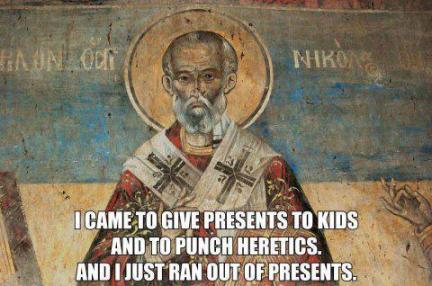 attendance there wherein he confronted the heretic Arias himself and slapped him in the face. The story continues, telling of how Nicholas was initially exiled for his act but later allowed to return after Arianism had been thoroughly acknowledged as heresy. Although it is nearly impossible to know whether this story is historically accurate, there is at least some truth behind the story in that Nicholas was known to vehemently defend the orthodox doctrine of the Trinity.
Nicholas actively opposed prostitution. However, instead of simply condemning the practice, he also gave money to young women in need to keep them from turning to prostitution to feed themselves. Again, this truth served as the basis for a possibly historic legend in which Nicholas learned of three women who were about to turn to prostitution (or be sold into slavery, depending on the account) because they couldn’t pay their dowries in order to be wed. Nicholas is said to have thrown a bag of gold for each young woman through their window so that they could be married instead of sell their bodies. Again, this legend may not be true–but it points to the truth about Nicholas’ life–he gave to those in need and fought against the evils of prostitution. It also points beyond itself towards an ideal.
Nicholas fought against the Pagan practices, which led to his persecution and imprisonment by those angered by his preaching against false idols. Furthermore, his opposition to paganism included working against a number of practices in the pagan world, including abortion. Roman Catholics have continued to spearhead St. Nicholas’ commitment to helping children. A search for “Nicholas of Myra” turns up adoption agencies one after another. Christians have used Nicholas’ example as a call to end human trafficking and slavery. One can see throughout these historical kernels how myth and legend could grow up around this figure–fighting heresy, giving to those in need, and having utmost concern for the innocent were all aspects of St. Nicholas’ life. We don’t necessarily know the extent of his actions in these areas, but we know enough to be inspired.
Therefore, we turn to another part of McKnight’s thought-provoking quote at the beginning of this post:
…all of us lead double lives, a life of our fancy, in a world of things as they should be, or as we should like them to be, and a life in a world of things as they really are. And this is as it should be. We can lift the level of real existence by thinking of things as we should like them to be.
Take a moment to consider what McKnight is saying here: we know there is a realm of absolutes–a way that things should be. We also have a way that we should like things to be. But the way the world “really is” does not often reflect that. Yet we can enact change upon our realm of existence–we can “lift it up”–by focusing on the way that things should be, and living our lives differently because of that. St. Nicholas enacted this in his life, working towards the ideal while living in an imperfect world. The legends of St. Nicholas inspire us to do the same. We are not to focus so much on the critical challenge–which stories are true and which are “only” legends. Instead, we are to focus on St. Nicholas as a story–one which inspires us to change the world around us.
Nicholas’ life was one which fought against poverty, paganism, heresy, prostitution, and idolatry. He incorporated sound doctrine into his life and then lived it. There can hardly be a better example of a Christian life lived than that of St. Nicholas. Yet that is not all there is to the story of the “real” saint. No, his life is one of calling us to live a life for Christ as well. His life is action. It is a life incarnate with truth and the beneficence that comes from the Christian worldview. It is a call to follow Christ.
Sources
James Parker III, “My Kind of Santa Claus.”
Robert Ellsberg, “St. Nicholas, Bishop of Myra.”
George Harley McKnight, St. Nicholas (New York: G.P. Putnam’s sons, 1917). This book is available legally free of charge in a number of digital formats through Open Library.
SDG.
——
The preceding post is the property of J.W. Wartick (apart from citations, which are the property of their respective owners, and works of art as credited) and should not be reproduced in part or in whole without the expressed consent of the author. All content on this site is the property of J.W. Wartick and is made available for individual and personal usage. If you cite from these documents, whether for personal or professional purposes, please give appropriate citation with both the name of the author (J.W. Wartick) and a link to the original URL. If you’d like to repost a post, you may do so, provided you show less than half of the original post on your own site and link to the original post for the rest. You must also appropriately cite the post as noted above. This blog is protected by Creative Commons licensing. By viewing any part of this site, you are agreeing to this usage policy.
Pre-Election Day 2012 Political Readings for Christians
 The U.S. election in 2012 is just around the corner. I think it is a monumentally important election for a number of issues. I have surveyed the ‘net for Christian perspectives on varied political issues and presented them for your browsing pleasure. We are all biased, we cannot deny that, so please don’t bother accusing me of being biased one way or the other. I’ll talk issues, I won’t debate whether or not I’m biased (I am, and so are you).
Natural Law and Christians in the Public Square– One of the most difficult questions for Christians in politics is “How do we interact in the Public Square?” David VanDrunen provides a way forward by viewing Natural Law as a way to interact in the public square with people who don’t share our beliefs. It is an extremely lucid article, and I highly recommend it.
A Mormon in the White House?– One area that many Christians have expressed concern about has been whether we can vote for a Mormon without violating our conscience. Nick Peters over at Deeper Waters has a fantastic article that approaches this from a unique angle. Here’s one choice quote:
What we have to ask [in regards to the President] is not “Who believes like me the most in religion?”, but “Who is more capable of doing the job?”
If there is one area we should be concerned about, it’s that Christians unfortunately are not producing the best candidates. Christians are shying away from politics when we shouldn’t. There are several brilliant Christian minds that could make a difference in the world if we will allow them to do so.
Are Reproductive Rights Civil Rights?– Another area of major importance in the election concerns reproductive rights. Paul Rezkalla discusses this hot issue from a unique perspective: whether it involves civil rights. I have written a great deal about abortion specifically on my pro-life page.
California: Obamacare exchanges will raise health insurance premiums up to 25%– Obamacare is supposed to make life easier on those without health insurance, and even on those with health insurance. Does it actually do that? This case study in California suggests otherwise. Wintery Knight’s site is awesome in general, so I would recommend you browse it.
Should we vote for 3rd party candidates?– A pragmatic argument for voting with the major parties in order to bring about the most possible good. There is an alternative view on why we cannot compromise offered below, the post with a title starting “Abolitionist’s Voting Guide.”
Abolitionist’s Voting Guide addendum, or more info on how we will note vote Romney– Abolish Human Abortion, a movement I wholeheartedly support, offers this post on why we cannot vote for compromise regarding the abortion issue. Equally important is their “Abolitionist’s Voting Guide” which argues against any type of compromise when it comes to one’s vote. I highly recommend reading this along with the post above on whether we should vote 3rd party. It will help give you a balanced perspective.
Your Vote in this Election– Tom Gilson at Thinking Christian urges Christians to vote and to use discernment in their voting decisions. Some great advice in a concise form here.
Freedom of Religion and the HHS Mandate– I write about HHS Mandate and the fact that it is not so much the issue of contraception or abortion that is at stake; rather it is religious freedom that is under attack.
Modern Secularism and its Disdain for Conscience– Are Christians imposing their religion on others? Can we vote for what we believe? A number of tough topics are tackled in this great post.
A Pre-Election Post: Abortion and the Right of Conscience– Matt shares some insight into the right of conscience in the medical field. He explores how the topic relates to the coming election.
For the Roman Catholics out there (and those interested, like me!), check out Disciple’s post on the Vote which features a number of Catholic resources for voting discernment.
Really Recommended Posts 10/12/12
Another great run around the internet today. I noticed that this edition of Really Recommended Posts has a lot on Christianity and Science, Islam, and religious or activist violence. Abortion, biochemistry, the Qur’an, violence in Islam, Mitt Romney, and more are all featured. Check out the posts. If you like them, let me know.
Cataloging the Historical Anachronisms in the Qur’an– Does the Qur’an potray accurately the period that it purports to describe in historical narrative? It does not seem so. Check out some of the anachronisms which crept in.
New peer-reviewed paper in Nature falsifies Darwinian junk DNA prediction– Darwinian Evolution has long used the notion of “junk DNA” as confirmation of its naturalistic processes. However, recent study has confirmed one of the predictions of the Intelligent Design movement: this supposed junk DNA would prove to be useful. I don’t claim to be a scientist at all, but I find this very intriguing. Check out the article.
Hey Atheists, Just Shut Up Please [LANGUAGE WARNING]- I found this article very interesting. An atheist discusses how people can tend to hate the “other” in their over-enthusiastic attempts to refute them. I was pleased with the article in general, but be aware that there is some strong language there. I myself have written about how religion is often used as a mechanism to hate the “religious other.”
Would a Romney presidency boost Mormonism?– Some Christians have come out saying they are afraid to vote for Romney because it would boost Mormonism. A pastor responds briefly to these claims.
Why Abolition Must be Non-Violent– The Abolish Human Abortion blog discusses why we in the pro-life movement must not resort to violence. The struggle is between worldviews, and pro-life persons cannot say they are pro-life while using violence.
Modern Muslims Who Choose the Path of Violence– Nabeel Qureshi discusses violence in Islam and the fact that Islam is not monolithic. The important thing to think about is how and when Islam turns violent. As I have emphasized elsewhere, religion and violence must be analyzed empirically, not with a mind towards demonizing the religious “other.”
Yes, the media does deliberately misrepresent and demonize creationists– Readers of my blog know I do not hold to a young-earth position. However, like Glenn Andrew Peoples I am still offended when the media blatantly misrepresents my Christian brothers and sisters. Check out this thoughtful post.
A Christian look at “John Carter”
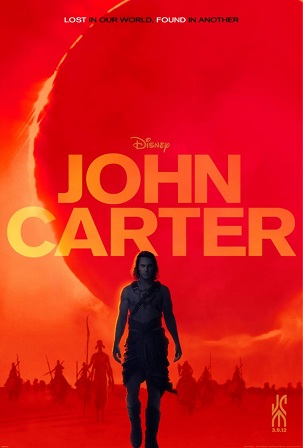
Disney’s “John Carter
Heroism and Just War
John Carter is a hero with a haunted past. The movie, unfortunately, never really explores his history much. From what I could tell, he went to war and came back to find his family had all been killed and his house burned as part of the conflict. He thus swore off fighting for a cause and instead decided to seek his fortune.
Once Carter reaches Mars (Barsoom), however, he is thrown into a conflict in which he realizes that the fate of an entire planet rests upon the victory of the city of Helium. Once he realizes the implications of this battle (and conveniently, finds the princess of Helium particularly attractive) Carter aligns himself with the Tharks, a race of aliens largely viewed as savages by the humanoid aliens on the planet. He is able to seal victory for Helium by making the Tharks realize that they, too, have a place on Barsoom which is influenced heavily by the conflict between Helium and Zodanga.
The movie touches, then, on the notion of a just war. Helium is trying to save the planet, while Zodanga does little but consume and subjugate. The Tharks view both sides as neutral and prefer them to continue fighting, as long as the war stays away from them. Yet it becomes clear that due to the influence of the Thern–an extremely advanced (technologically speaking) race which seeks to orchestrate the destruction of planets–that the conflict has implications for everyone on Barsoom, and indeed, on Earth.
Sin
The Tharks have a tradition in which they brand their people as punishment for their sins. The brands are placed so that they continue to cover one’s skin throughout their lives. If one has committed enough offenses that there is no longer any place for a branding, then one is either killed or thrown into the arena to fight against impossible odds. One’s sins literally cover their flesh. One cannot escape from one’s offenses. There is no redemption.
Christianity affirms that sin is something for which one can make no redemption for themselves. One’s sins are, in a sense, branded onto one’s past. Only by repentance and grace through faith can one be saved. There is no escape from one’s offenses except through the full and free forgiveness through Jesus Christ our Lord. There imagery in the movie of one’s sins being displayed on one’s flesh is powerful, and it resonates with the Christian view that our sins condemn us forever. Only by grace can we be saved. There is no removing the sins–branded onto us–by our own power.
Religion
The Therns are supposedly oracles of the goddess. However, it turns out that they are actually dedicated to manipulating civilizations across the galaxy. It is never discussed whether the goddess and the Therns were ever actually genuine, but it seems fairly clear that those calling themselves Therns are just using the title in order to gain power.
Religion is therefore seen as a kind of way to manipulate and enthrall the masses. All of the sides of the conflict are shown to be dedicated to the goddess, but none seems to have the full truth. However, it does seem that the dedication of the Tharks, in particular, shows a resonance with truth and a genuineness that reaches beyond the mere use of religion as subjugation. The movie, I would say, gives an overall neutral view of religion. In some ways it can be used for ill, but it nonetheless is not inherently evil.
Yet another aspect of religion in the movie, however, is that one can observe the difference between genuine faith and exploitative faith. It is clear that many of the Therns genuinely believed in the goddess and there are scenes which convey a sense of awe over the faith on Barsoom. Religious practice is seen as taking place on a genuine level and being an important part of the lives of the practitioners. These religious persons are seen as genuine and largely trustworthy. On the other hand, those who seek to exploit the faith are seen as inherently evil. Such a view should resonate with Christians, who are instructed to be aware of those within the church who would seek to lead us astray (antichrists).
 Alien Life and social (in)justice
Social justice is an underlying theme in the movie. By portraying the alien Tharks as the outsiders, the movie is able to focus on the notion that the downtrodden and overlooked can rise above the limitations of their position. Although viewed as unequals, they are equals.
One poignant scene early in the film showed a hatchery for the Tharks. They came to collect the hatchlings and it turned out that some eggs hadn’t yet hatched. The Tharks then fired on all the eggs with their gun and destroyed the “weak” young. I couldn’t help but think that this is largely what is happening in the real world with abortion [a topic I have written on extensively].
Here again, worldviews rear their ugly heads. The faith of Barsoom is a bit enigmatic. The goddess seems largely uninterested in the goings-on of everyday life. Furthermore, those who follow her are fully willing to kill their own young in order to ensure the survival of the strongest. One can’t help but think of the prioritization of desires over objective morality in our own world.
Conclusions
The film was a lot of fun. One can easily see how the source material influenced science fiction in a number of ways. As a huge fan of science fiction, I can’t help but love the movie. It is so awesome to see the origins of sci-fi play out on screen. Christians watching the film will find areas to discuss social justice, just war, and heroism. Furthermore, there are some poignant scenes which can bring up issues related to abortion and racism. A final talking point would be to discuss religion as a transcultural entity and see how it has been used in both good and bad ways. I go into this issue in my own post on the “Myth of ‘Religion.'”
“John Carter
Links
Check out another review of the movie over at Sci-Fi Christian, which looks into the background of the movie more, as well as exploring some Bible texts in relation to the movie: Barsoom or Bust!
Engaging Culture: A brief guide for movies– I discuss how Christians can view movies with an eye towards worldview.
Religious Dialogue: A case study in science fiction with Bova and Weber– I look at how science fiction is frequently used to discuss worldviews and analyze two major authors in the field along with their view of religious dialogue.
Alien Life: Theological reflections on life on other planets– What would it mean for Christianity if we discovered life on other planets?
Check out my other looks at movies, including the Hunger Games and the Dark Knight Rises here (scroll down for more).
SDG.
——
The preceding post is the property of J.W. Wartick (apart from citations, which are the property of their respective owners, and works of art as credited) and should not be reproduced in part or in whole without the expressed consent of the author. All content on this site is the property of J.W. Wartick and is made available for individual and personal usage. If you cite from these documents, whether for personal or professional purposes, please give appropriate citation with both the name of the author (J.W. Wartick) and a link to the original URL. If you’d like to repost a post, you may do so, provided you show less than half of the original post on your own site and link to the original post for the rest. You must also appropriately cite the post as noted above. This blog is protected by Creative Commons licensing. By viewing any part of this site, you are agreeing to this usage policy.
A violation of God’s Will: Abortion- or why no Christian should be pro-choice
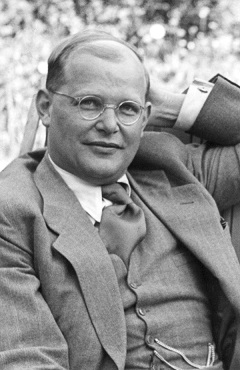 Destruction of the embryo in the mother’s womb is a violation of the right to live which God has bestowed upon this nascent life. To raise the question whether we are here concerned already with a human being or not is merely to confuse the issue. The simple fact is that God certainly intended to create a human being and that this nascent human being has been deliberately deprived of his life. And that is nothing but murder.- Dietrich Bonhoeffer, Ethics
The foresight which Dietrich Bonhoeffer showed in this passage from his book, Ethics, is astounding. Bonhoeffer was a pastor who stood up to the Nazi regime and was martyred–hanged by the Nazis–for his activism on behalf of the innocent lives being slaughtered by Hitler. His view on abortion lines up exactly with his views on preserving human life in Nazi Germany. Bonhoeffer’s argument anticipates and cuts off a number of pro-choice arguments for abortion. Let’s see how.
Bonhoeffer’s argument does not depend whatsoever on whether the unborn is a human being or not (and the unborn is indeed a human being). His argument instead is based upon God’s will for that unborn entity. Examine once more what Bonhoeffer said: “The simple fact is that God certainly intended to create a human being and that this nascent human being has been deliberately deprived of life.” The focus here is not so much on the status of the unborn as a human or not, but rather the focus is upon God’s will for the unborn. Why is it that God set the world up in such a way that the nascent (developing) human being grows into a toddler, adolescent, adult, and senior? Bonhoeffer focuses the argument directly upon God’s will. God has willed that from conception, a plan for a human life is set into motion. Thus, to terminate a pregnancy is to destroy part of God’s plan, a plan for a human life.
For Christians, this logic is binding. The pro-choice objection that the fetus is not a human person is a rabbit trail at this point. Another objection must be thrown out the window as well: namely, the notion that even if the unborn is a human person, the mother has an absolute right to bodily autonomy. For the Christian, God’s will trumps any supposed absolute autonomy. God’s will is absolute. It must be obeyed. To go against God’s will is to sin.
Is there a way for Christians to avoid the implications of Bonhoeffer’s argument? It seems the only way to do this is to deny that God wills for there to be a human being as the result of a pregnancy. I confess that I do not see any possible way for this argument to be convincing. The objector would essentially have to say that God’s will for the unborn is based entirely upon that of the parents’ will. For, after all, if God did not will for there to be a human being as the result of a pregnancy, what would God’s will regarding the conceived being be? It seems that it would have to be arbitrary. But this would seem to be untenable given the doctrine of the nature of God as perfection.
Therefore, Bonhoeffer’s ingenious argument leads to the inescapable conclusion: no Christian can endorse abortion. The fact of the matter is that God so set up the world that the process of human growth begins at conception. Unless there is a complication in the pregnancy or there is an outside source intervening to terminate the pregnancy, the result of conception is a human being.
All Christians say in chorus: Let God’s Will Be Done!
Links
Abortion: The Holocaust of our Day– I explore more reasons to reject the pro-choice position for both Christians and non-Christians at length.
Pro-Life– check out my numerous posts on the issue of abortion.
Sources
Dietrich Bonhoeffer, Ethics
SDG.
——
The preceding post is the property of J.W. Wartick (apart from citations, which are the property of their respective owners, and works of art as credited) and should not be reproduced in part or in whole without the expressed consent of the author. All content on this site is the property of J.W. Wartick and is made available for individual and personal usage. If you cite from these documents, whether for personal or professional purposes, please give appropriate citation with both the name of the author (J.W. Wartick) and a link to the original URL. If you’d like to repost a post, you may do so, provided you show less than half of the original post on your own site and link to the original post for the rest. You must also appropriately cite the post as noted above. This blog is protected by Creative Commons licensing. By viewing any part of this site, you are agreeing to this usage policy.
Really Recommended Posts 8/3/12
Wow, there are some really excellent posts out there. I am constantly blessed by reading or viewing great material from others. This week, the topics covered are all over the board: abortion, Leviticus, 50 Shades of Grey, apologetics methodology, and more! Check out these really recommended posts.
Grey Areas: How explicit literature went mainstream– You’ve heard of 50 Shades of Grey. What’s all the fuss about? And what kind of junk are we putting on the bookshelves?
The Mistake of Leviticus– Leviticus is one of those books in the Bible many balk at reading. Check out the insight provided here by Credo House. I really, really recommend this post.
Some Standard Definitions From the Doublespeak Dictionary– Bigot, Christian, and Intolerant tie together so well! Check out this great apologetic cartoon.
The Bibliographical Test Updated– Clay Jones, a professor over at Biola University, offers an update to the number of ancient manuscripts available for the various “bibliographic tests” for the accuracy of the New Testament. A brief, readable, and important post.
Is Abortion Really Wrong?– A great introduction to the debate over abortion.
Why I don’t reply to everyone (and neither should you)– It’s easy to get caught up in online debates or try to respond to everyone who comments on a blog or forum. Glenn Andrew Peoples offers an excellent post on why he doesn’t respond to everyone. He also gives some good guidelines for deciding whether you’re going to respond to someone.
The Atheist War Against Logic and Philosophy– I’m not sure this video is fairly named, because it seems like it is more the extreme views on philosophy of a number of people dismissed by the vast majority of others. Good watch if you want to pull your hair out at people rejecting logic while using it.
Apologetic Taxonomy: Methodological Approaches– Readers of my blog know I’ve been exploring a few other apologetic approaches. Here’s an excellent post which outlines the various methodological approaches to apologetics in a brief, readable format.
Really Recommended Posts 6/9/2012
I found a number of excellent posts this go-round, with a video, a comic, and several articles of great importance. Check them out and tell me what you think.
Two Socially Acceptable Ways to Deal With Unwanted Children– An apologetics comic site looks at abortion.
New York Magazine: “A Life Worth Ending”– Euthanasia because someone is old or sick and therefore a financial burden… our society has indeed come this far.
Aquinas on Virtue in Relation to Law– Very interesting post on Thomism.
Proof that God Exists– I found out about this site through the Unbelievable!? Podcast, which featured a presuppositional apologist and an agnostic in debate. The site is interesting, but it definitely takes a different approach to apologetics than I do/would. I found it interesting.
On Hope for the Hopeless– Do you feel hopeless/lost/worthless? JP Moreland talks about having hope when all seems lost.
Do Extraordinary Claims Need Extraordinary Evidence?– Great article on this oft-trumpeted phrase.
Is the Qur’an the Word of God?– Self explanatory.

 J.W. Wartick - Reconstructing Faith