apologetics
Question of the Week- Mistakes for Apologists?
 Each Week on Saturday, I’ll be asking a “Question of the Week.” I’d love your input and discussion! Ask a good question in the comments and it may show up as the next week’s question! I may answer the questions in the comments myself.
Mistakes for Apologists
We often talk about what apologists should do and what the best arguments are, etc. What we don’t often discuss is what apologists should not do and what some mistakes may be regarding method, argument, and the like. Thus, I thought I would ask:
What’s the single biggest mistake you think apologists make? Why do they make it? What can we do to avoid it?
Is there a methodological error apologists frequently make? Is there a way of presenting that might not be as effective? What are some issues involved in apologetics that might turn others off? Let’s see what you think in the comments.
Links
Be sure to check out the page for this site on Facebook and Twitter for discussion of posts, links to other pages of interest, random talk about theology/philosophy/apologetics/movies and more.
Question of the Week– Check out other questions and give me some answers!
SDG.
Really Recommended Posts 8/22/14- Osteen, apologetics, creationism, and more!
 I have put together what I consider a very strong list of topics for you this go-round. Here, we have Acts, Osteen, Creationism, apologetics (x2), and C.S. Lewis. Check out the posts, and let me know what you think in the comments below!
Finally: A simple timeline of Acts– This tremendously helpful post provides a timeline of acts which shows when different people were traveling together and where they were at various points throughout the book. It is a great way to keep track of the goings-on in the book. Be sure to follow The Overview Bible, as they constantly have fantastic posts.
A Diluvialist Response to Buckland’s Kirkdale Cave Hyena Den– Flood geology has been around for a little while, and here, Joel Duff describes how early diluvialists-young earth flood geologists-initially reacted to some major important finds.
The Guide to Online Decorum for Christian Apologists– How, then, shall we live? This is a question to ask yourself, no matter your situation. Here, Pastor Matt Rawlings discusses how Christian apologists should interact in online settings.
C.S. Lewis’ (really) 10 Best Books– From Christian philosopher David Marshall, we have this list of C.S. Lewis’ 10 best books. Some might be obvious, some might surprise you. Regardless, it’s time to get some extra reading!
Osteen and Peter (Comic)– A poignant pictorial contrast between prosperity “gospel” and Christian life.
5 Things I Hate about Apologetics– Doing apologetics does present some pitfalls regarding faith and life. Check out this post related to these possible difficulties.
Book Review: “Total Truth” by Nancy Pearcey
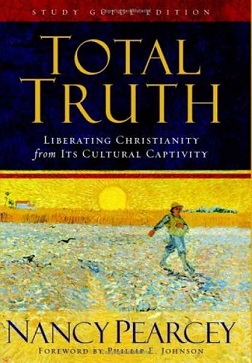 Nancy Pearcey’s Total Truth is dedicated to bringing Christianity into every realm of knowledge rather than relegating it to the outskirts. That is, Christianity is to be seen as “total truth,” applicable to every aspect of reality. It’s a lengthy book so any review of this size is going to leave things out by necessity. I’ll first provide a brief overview. Then, I’ll emphasize some areas I found helpful and areas I questioned.
Overview
The first section of the book is a call for Christians to integrate their worldview into every aspect of reality rather than bifurcating it and only living in different spheres of reality at different times. Next, Pearcey frames the debate over worldviews in terms of a battle for beginnings as she argues Darwinism fails and Intelligent Design is more plausible. Integrated into this section is the notion that Darwinism is a way of looking at reality and a worldview-level belief which is being used to displace Christianity.
The third part traces a brief history of Christianity in America with an eye towards showing that Americans have tended to privatize their religion and use the fact/value split to relegate religion to the area of values. The last chapter addresses how we might live out the Christian worldview in every aspect of our lives.
There is a series of appendices which address topics like Islam, materialism, apologetic method, and politics. Finally, a study guide is included in the edition I was provided, which gives summaries, additional stories, and some questions for each chapter.
Helpful Areas
Pearcey’s emphasis on integrating Christianity into all aspects of our lives is commendable. She accurately describes the plight of many when she speaks of how Christians approach their lives as though church is religion and the rest is something else. Instead, she advocates an integration of the Christian worldview into every aspect of life.
The historical background Pearcey provides into various areas of thought is enlightening and encourages further study into several important areas, including the first and second Awakening.
The stories Pearcey shares throughout the book are great at grabbing and holding attention. They make for good illustrations of many of her points, and also make the book more readable.
The outline of the Fact/Value split and the damage it has done to intellectual and faithful life was much appreciated. Pearcey demonstrated that this alleged split is generally a construct which is used by various worldview systems to try to relegate certain beliefs into the “value” sphere and outside of factual claims. Her incisive critique of this method was both on-point and helpful. The appendices covered interesting topics, and the one on apologetic method, in particular, was worth reading and considering.
Areas I Questioned
At many points throughout the book there is a somewhat conspiratorial tone. That is, it seems to be alleged that somehow all the skeptics (particularly Darwinists) banded together in order to try to overthrow Christianity and American values. It is continually alleged that Darwin was explicitly trying to overthrow religion or at least the possibility of taking religion seriously in the “fact” domain. Many sources were cited in order to justify these claims, but I’m still not convinced that there is some kind of grand conspiracy, nor am I convinced that this is the best way to approach claims about knowledge.
In the section on how Christians can integrate their faith into all aspects of life, Pearcey shares a story about a young man with a marketing degree who was hired to raise funds for a Christian ministry. He “immediately set about implementing the standard techniques he had learned… including a sharp increase in the number of fundraising letters sent out…” (7597).* He defended this choice by saying that statistical analysis showed this would lead to more funds raised. Pearcey’s analysis is as follows:
[I]f any secular organization can achieve the same results using the same “guaranteed” methods, where is the witness to God’s existence? How does relying on statistically reliable patterns persuade a watching world that God is at work? (7610)
I was surprised by this comment. Are we to assume that Christians should ignore statistical analysis? Could not such statistical regularities be part of God’s providential plan (something, in fact, argued by Poythress)? It seems that Pearcey is discounting the possibility of “secular” methods working. But God has ordered the universe in such a way that statistical regularities will occur, and to suggest that we as Christians must reject such regularities and do something else so that we can “persuade a watching world that God is at work” may lead to disaster. I’m not saying we should not trust in God to provide, but when God has revealed a way that things work to us, that’s just as providential as a miraculous windfall of donations [to go off the fundraising example]. Perhaps by following trusted methods, we can prove to a watching world that Christians don’t reject facts or reality.
Pearcey, unfortunately, clings to a view of gender-essentialism: the notion that certain aspects of gendered persons are essential to their nature. For example, after talking about the relegation in modern society of Christianity to the “upper shelf” (the values shelf) of the fact-value split, she laments over the “feminization of the church.” Now the so-called feminization of Christianity has many problems (see my linked post), but Pearcey’s work seems determined to really drag out all stops to present a seeming bogey-woman of femininity:
The underlying dynamic is that the church was adopting a defense strategy vis-a-vis the culture at large. Many churchmen simply retreated from making cognitive claims for religion that could be defended in the public square. Instead, they transferred faith to the private sphere of experience and feelings–which put it squarely into the domain of women. (6978)
I found this, and many statements like it, to be utterly shocking. It seems to be patently absurd to say that “experience” and “feelings” are “squarely… the domain of women.” Really? According to this view, men somehow devoid of all feeling or reliance upon experience and instead manly men spend the day making all sorts of cognitive claims (devoid of experience, mind you, so presumably about Platonic forms or somesuch). I find this to be clearly false. Men have feelings, and that doesn’t make them womanly. Men also have experience (!?). Unfortunately, claims like this persist throughout the book.
Perhaps most importantly, the book doesn’t seem to adequately address the main topic of the book: the need to integrate Christianity into every aspect of life. The final chapter does ask Christians to be godly in their business dealings, to avoid lying and cheating and the like. Moreover, Christians are called to trust in God in their endeavors and view their lives as providentially governed by God. However, I was left wanting much more. After having around 25% of the total length of the book (the beginning chapters, 120ish pages in the print version) dedicated to how Christians seem to not know how to integrate their worldview into their lives, it seemed like having so little space dedicated (about 30 pages in the print version) to how this might actually work in practice was a letdown. It seems like the even the direction offered was pretty straightforward, as Christians at least should know that they are to avoid lying, cheating, etc. in their day-to-day lives and careers.
But how does the Christian go beyond these bite-sized bits like “Moment by moment, we must learn to say no to sin and worldly motivations” (7414) or “[we are to follow] biblical principles in the personal and practical spheres of life” (7516) and get to a position of total integration of Christianity in our lives? Maybe I hope for too much, but I think there ought to be more to it than that. I don’t pretend to say I can do better outlining it, but I do think that there is much more that could have been said here. What readers are left with is essentially a call to be Christians in all their lives, but I think they’ll largely be left asking “how?”
Links
Be sure to check out the page for this site on Facebook and Twitter for discussion of posts, links to other pages of interest, random talk about theology/philosophy/apologetics/movies and more!
Source
Nancy Pearcey, Total Truth (Wheaton, IL: Crossway, 2008).
*All references are to kindle locations.
Disclaimer: I received a review copy of the book through Crossway. I was not obligated by the publisher to give any specific type of feedback whatsoever.
SDG.
——
The preceding post is the property of J.W. Wartick (apart from quotations, which are the property of their respective owners, and works of art as credited; images are often freely available to the public and J.W. Wartick makes no claims of owning rights to the images unless he makes that explicit) and should not be reproduced in part or in whole without the expressed consent of the author. All content on this site is the property of J.W. Wartick and is made available for individual and personal usage. If you cite from these documents, whether for personal or professional purposes, please give appropriate citation with both the name of the author (J.W. Wartick) and a link to the original URL. If you’d like to repost a post, you may do so, provided you show less than half of the original post on your own site and link to the original post for the rest. You must also appropriately cite the post as noted above. This blog is protected by Creative Commons licensing. By viewing any part of this site, you are agreeing to this usage policy.
Sunday Quote!- Modern Warfare and the Power of God
Every Sunday, I will share a quote from something I’ve been reading. The hope is for you, dear reader, to share your thoughts on the quote and related issues and perhaps pick up some reading material along the way!
Modern Warfare and the Power of God
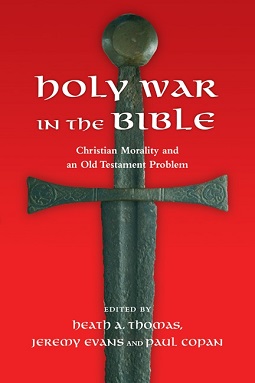
I’ve been reading through Holy War in the Bible: Christian Morality and an Old Testament Problem
Modernity is arguably no less brutal than the ancient world for conducting a secularized, technologized, indiscriminate form of war that excludes God from the kill zone on principle, thereby seducing the strong into believing that they are masters of their own destiny. Indeed, the biblical witness unblinkingly confronts modernity most sharply right at this point: “Assyria will not save us; we will not ride upon horses; we will say no more, ‘Our God’ to the work of our hands'” (Hosea 14:3) (66, cited below)
The so-called secularization of war has not somehow cleansed it of evil, but rather made the work of our hands the sole credit and often reason for war. Salvation comes not from others, but we turn to the work of our hands–cruise missiles, drone strikes, and the like–to wage war for resources, land, money, and the like. Has war become more or less justified? Is it somehow sanctified through “secularization”? I think this quote speaks powerfully to these notions. I’m about 1/3 of the way through the book now and I really have enjoyed it. It hasn’t quite been about the topics I expected, but it’s been more challenging and expanding in its vision for that reason.
Links
Be sure to check out the page for this site on Facebook and Twitter for discussion of posts, links to other pages of interest, random talk about theology/philosophy/apologetics/movies and more!
Sunday Quote– If you want to read more Sunday Quotes and join the discussion, check them out! (Scroll down for more)
Source
Stephen Chapman, “Martial Memory, Peaceable Vision: Divine War in the OT” in Holy War in the Bible: Christian Morality and an Old Testament Problem
SDG.
Really Recommended Posts 8/8/14- 666 and the Beast, Evidentialism, Pascal, and more!
 I have set up another round of great posts for your reading pleasure, dear readers! Check out posts on eschatology, egalitarianism, apologetics, creationism, and more! Let me know if you liked a post in the comments below, and if you liked theirs, be sure to let them know! Comments keep us going! This edition is an “owl post” because I’m watching Harry Potter while I write this.
The Mark of the Beast Demystified; or, “I’ve got 666 problems but the rapture ain’t one of them”– A post which discusses the various interpretations of the “Mark of the Beast” among various eschatological views. A very good read!
Different but Equal? Giving Words their Real Meaning– What is entailed by a position which suggests that men and women have different but equal roles in marriage and the church (and society)? Check out this evaluation of the position.
Why I’m a Christian Evidentialist– J. Warner Wallace explains the benefits of an apologetic method like evidentialism and the reasons he chose this method over any other. It’s a fascinating post with some solid insights. While you’re at it, why not answer the “Question of the Week” about your own favorite apologetic method?
Ken Ham’s Ark Adventure to Usher in a Modern Reformation?– Ken Ham of Answers in Genesis was recently in the news for his views on aliens, but he’s also been working to build Noah’s Ark, kind of. Check out this post which analyzes Ham’s comments about this project and the history of creationism.
Betting on Pascal’s Wager, Kind of– Pastor Matt Rawlings explains Pascal’s Wager in a brief, basic way. I recently also outlined and defended a version of the Wager, which I think has more credence than many people grant it.
Sunday Quote!- The Gullibility of Religious Experience?
 Every Sunday, I will share a quote from something I’ve been reading. The hope is for you, dear reader, to share your thoughts on the quote and related issues and perhaps pick up some reading material along the way!
The Gullibility of Religious Experience?
My discussions of the Argument from Religious Experience here have led to any number of challenges, many of which center around the notion that if we were to accept religious experience as a way to discern reality, why not also accept UFOs, Bigfoot sightings, and the like? In other words, the charge is that if we accept REs, we are somehow made gullible regarding other, non-desirable situations. Caroline Franks Davis, in her tour de force work on the argument from religious experience, The Evidential Force of Religious Experience, confronts this charge head on:
[T]he challenges to certain types of experience (e.g. dreams) and to experience of certain types of entities and phenomena (e.g. elves, ‘auras’) are so widely successful and so well-known that claims based on such experiences have come to be regarded by adults initially with suspicion rather than with credulity. (101, cited below).
The point is that in cases like those she lists, and others like UFOs, Bigfoot, etc., the challenges to such observations are indeed successful (i.e. an airplane light interpreted as a UFO) and well-known that we have an a priori reason to treat them with suspicion. However, it remains to be shown whether there are such successful and well-known rebuttals for the case of religious experience. Indeed, the majority of Caroline Franks Davis’ work is dedicated to showing that this is, in fact, not the case. Moreover, her argument in this section is more complex, and should not be reduced merely to this quote (which I have only done for the sake of this post!).
What are your thoughts? Do you think this is a successful rebuttal? How might we distinguish between credible cases and non-credible cases?
Links
Be sure to check out the page for this site on Facebook and Twitter for discussion of posts, links to other pages of interest, random talk about theology/philosophy/apologetics/movies and more!
Sunday Quote– If you want to read more Sunday Quotes and join the discussion, check them out! (Scroll down for more)
Source
Caroline Franks Davis, The Evidential Force of Religious Experience
SDG.
Question of the Week: Which apologetic method do you prefer?
Each Week on Saturday, I’ll be asking a “Question of the Week.” I’d love your input and discussion! Ask a good question in the comments and it may show up as the next week’s question! I may answer the questions in the comments myself.
Apologetic Method
There are a number of different apologetic methods, such as evidentialism, presuppositionalism, classical apologetics, cumulative-case apologetics, Reformed Epistemology, and some even consider forms of fideism to be a type of apologetics.
I’m curious as to what your preferred apologetic method is:
Which apologetics method do you prefer? Do you consider it to be the only method which is viable?
There are some who argue that, for example, presuppositionalism is the only biblical apologetic method. Others (like myself) prefer an integrative approach which uses aspects of as many different approaches as possible. What are your thoughts? How have you used your apologetic approach most effectively? Let me know in the comments!
Links
Be sure to check out the page for this site on Facebook and Twitter for discussion of posts, links to other pages of interest, random talk about theology/philosophy/apologetics/movies and more.
Question of the Week– Check out other questions and give me some answers!
SDG.
Really Recommended Posts 8/1/14- Marriage, Biblical Songs, Confucius, and More!
Here’s another go-round of great posts for your perusal, dear readers! As always, let me know what you thought, and be sure to drop a comment on those you enjoyed!
Co-Leadership in Marriage: Who’s in Authority?– A question which often comes up in discussions about egalitarianism–the view that men and women have equal authority in the church and home–is how one is supposed to determine who’s in charge in marriage. Here’s a solid post answering that question.
Man’s Fallible Ideas vs. God’s Infallible Word– It is often said that we should harbor some sort of distrust towards “Man’s Fallible Ideas.” Here, Luke Nix examines this claim and sees how it may be applied to issues like creationism.
The Two Most Overlooked Apologetics Verses in the Bible– There are many verses in the Bible which are commonly referenced when it comes to apologetics. Here, Tom Gilson brings up two which are not often referenced in terms of apologetics. I originally found this over at The Poached Egg, which is a site well worth you following!
All the Songs in the Bible [Infographic]– Here, there is an outline and explanation of every single song in the Bible. It’s pretty interesting to see them all written out and explained. Frankly, I find this to be one of the more interesting and helpful sites on the web related to general Bible knowledge. Be sure to follow it for some more excellent general Bible knowledge posts.
How Confucius proves Jesus– Did Jesus exist? How we approach this question should be consistent. How do we explore other historical questions? Check out this post, which explores the question.
Pascal’s Wager: The Utility Argument Explained
 …I realized that Pascal’s Wager is a much stronger argument than I had thought.
Let’s get it out of the way: Pascal’s Wager does not have much “street cred.” It’s much-maligned as nothing more than rolling the dice, and doing so for no good reason. After all, on which deity should one wager?
Here, I’ll take a look at one formulation of Pascal’s Wager, then very briefly offer a way to perhaps circumvent the “many gods” objection. I’ll be relying heavily upon Jeff Jordan’s book, Pascal’s Wager: Pragmatic Arguments and Belief in God, in what follows.
One way to lay out the Wager may be as follows (quoted from Jordan, 23, cited below):
1. for any person S, and alternatives, a and b, available to S, if the expected utility of a exceeds that of b, S should choose a
2. believing in God carries more expected utility than does not believing
3. Therefore, one should believe in God
Now, this is a pretty straightforward argument. 3, the conclusion, follows via modus ponens. Thus, it is up to the one who wants to deny 3 to deny one of the premises. Let’s examine each in turn.
Premise 1 seems to be logical, but it has actually garnered just as many objections as the second premise. Some have argued that one should not reduce belief in God to a “gamble” or some pragmatic choice. Others have argued that one cannot simply choose to believe and argued that the Wager results in Doxastic Voluntarism–the notion that one may simply change beliefs at will. In order to combat each objection in turn, one would have to show that it may be permissible to choose pragmatically even in religion. Jordan argues to this effect at length, but for the sake of argument I think it may be enough to just say that generally, we do make choices which we think will benefit us, and this is not an objectionable path of reasoning. Moreover, the Wager does not reduce to doxastic voluntarism, for one may indeed change one’s disposition toward something, but not at will. This is a complex argument, and I think we may set it aside for now because there is nothing in Premise 1 which would demand doxastic voluntarism.
Premise 2, of course, is highly contentious as well. Some allege that belief in God prevents the joys of hedonistic living; others allege that one would not know which deity to choose; still others would argue that there could exist deities that would reward unbelief.
Again, dealing with each in turn would take quite some time, so I’ll simply offer a few comments. First, hedonistic living in one life would not outweigh the benefits of eternity with a benevolent deity. Second, the Wager may simply be used to prefer theism generally–after all, if one does not wager on any deity, there would be no possibility of infinite (or nearly limitless) expected utility from one’s wager. Third, inventing fictions to attempt to rival established religious traditions which have, presumably, been believed by our epistemic peers (to use the term of Jordan, 80-81) does not put them on par.
Now, it should be fairly clear that even an incredibly low probability for God’s existence may have much higher expected utility than unbelief, for the overall possible gain is much higher. Jordan elaborates on this and answers many objections (such as the notion that “betting” on something which is highly improbable is necessarily irrational). For now, I simply leave this statement hanging because it helps my purpose, which is to demonstrate to those interested that the Wager is worth investigating further.
Because of the above, another of the strengths of the argument may be found in its usefulness to the apologist. Pascal’s Wager, Jordan argued, may be viewed as a kind of “last ditch” argument for apologists and theism (24). After all, suppose one were to come up with an argument which convinced you that the truth of theism is quite unlikely indeed. In that case, Pascal’s Wager provides a rational reason to continue to believe in God. For, even if it is unlikely that God exists, the utility of believing that God exists has a potentially infinite reward and thus trumps the utility of not believing that God exists.
Remember, though, that this functions for any possibility of God existing that is greater than zero. It was at this point in the book that I realized that Pascal’s Wager is a much stronger argument than I had thought. Not only may it be adequate to ground theistic belief, but it also may serve as a kind of bulwark against anti-theistic arguments as well.
I have argued that Pascal’s Wager may be formulated in such a way that one should believe in God. Now there is, of course, much more nuance and many more objections to each premise. Interested readers should check out Jeff Jordan’s Pascal’s Wager: Pragmatic Arguments and Belief in God.
Links
Be sure to check out the page for this site on Facebook and Twitter for discussion of posts, links to other pages of interest, random talk about theology/philosophy/apologetics/movies and more!
Question of the Week: Wagering Much?– In this post, I asked the question of apologists about whether or not they used Pascal’s Wager. The feedback I got was diverse and interesting. Check out the post, and let me know your own thoughts.
Source
Jeff Jordan, Pascal’s Wager: Pragmatic Arguments and Belief in God
SDG.
——
The preceding post is the property of J.W. Wartick (apart from quotations, which are the property of their respective owners, and works of art as credited; images are often freely available to the public and J.W. Wartick makes no claims of owning rights to the images unless he makes that explicit) and should not be reproduced in part or in whole without the expressed consent of the author. All content on this site is the property of J.W. Wartick and is made available for individual and personal usage. If you cite from these documents, whether for personal or professional purposes, please give appropriate citation with both the name of the author (J.W. Wartick) and a link to the original URL. If you’d like to repost a post, you may do so, provided you show less than half of the original post on your own site and link to the original post for the rest. You must also appropriately cite the post as noted above. This blog is protected by Creative Commons licensing. By viewing any part of this site, you are agreeing to this usage policy.
Question of the Week- The Focus of Apologetics
Each Week on Saturday, I’ll be asking a “Question of the Week.” I’d love your input and discussion! Ask a good question in the comments and it may show up as the next week’s question! I may answer the questions in the comments myself.
The Focus of Apologetics
I am obviously very interested in apologetics, and one thing I often wonder is where energy dedicated to apologetics research might be most beneficial. In light of that, here’s the Question of the Week:
What would you say is the single most important issue which apologists should work to understand more fully?
Could it be the problem of evil? Natural evil? Textual criticism? Defining inerrancy? Outlining the science/religion perspectives? Something else entirely? Let me know what you think the most important issue is in the comments.
Links
Be sure to check out the page for this site on Facebook and Twitter for discussion of posts, links to other pages of interest, random talk about theology/philosophy/apologetics/movies and more.
Question of the Week– Check out other questions and give me some answers!
SDG.

 J.W. Wartick - Reconstructing Faith