atheism
“Family Guy” is no friend of atheists
 I used to watch almost every episode of Family Guy in the first season or two. I thought it was sometimes a clever show, but as it went on it seemed to devolve into a series of flashbacks and random, drawn-out asides which broke apart the coherence of the story. I recently saw most of an episode of “Family Guy” in which it was revealed that Brian, the family’s dog (who talks and is essentially part of the family), is an atheist. The episode is called “Not All Dogs Go to Heaven.”
My first observation is that despite the apparent intent to make people more aware of the demonization which happens with atheists, the episode does not portray Brian in the best light by any means. For one, Brian’s reasons for remaining an atheist are revealed to be a bit absurd to say the least. When Meg–the daughter who is often the butt of jokes on the show–asked Brian why he doesn’t believe in God given “all the evidence,” he responded with an argument that made my jaw drop. To paraphrase him, he said that Hubble Space Telescope has been taking so many amazing pictures of the wonders of the universe but has never found some old man with a white beard “out there” somewhere. It then cut to an aside with an old man with a beard riding on something with some sweet music in the background [see my comments on the show being a bunch of asides and flashbacks].
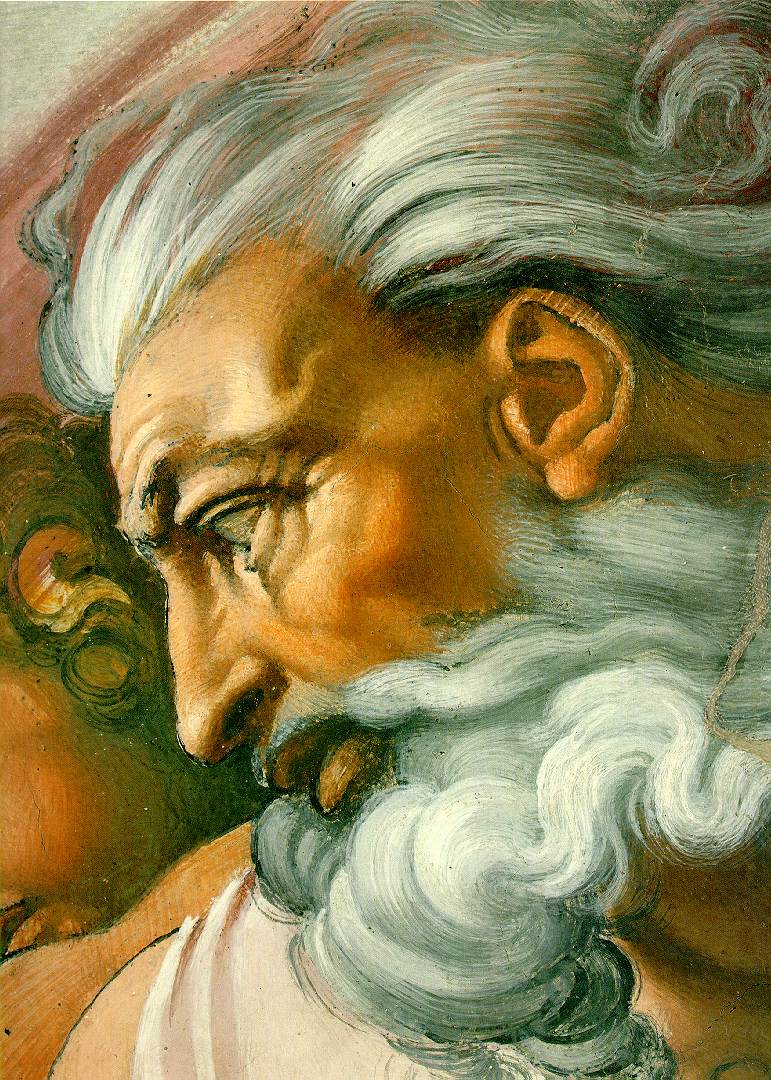
Seriously, that is apparently one of Brian’s main reasons for rejecting theism, according to the episode. Really? I don’t know if this is really a reflection of what Seth MacFarlane (creator of Family Guy) believes about Christianity; but if it is he needs to perhaps reflect upon his own rejection of it. The notion that God should be found somewhere in the physical universe by something as simplistic as the Hubble Space Telescope (or anything, for that matter) and would be seen as an old man with a beard is… well, obscene. If that were my picture of what Christians believed, I’d be an atheist too. But Christians don’t believe this. Instead, they believe that God is spirit and one cannot artistically make anything which looks like God. The old man with a beard was popularized by some Christian art which, for the sake of depicting deity, chose that image to portray God. That doesn’t mean Christians actually believe God is an old man with a beard cruising through space somewhere.
The worst part about this scene is that it seems like Brian is supposed to get points for his response here somehow. That is, it’s like the viewer can feel a running tally going and apparently they’re supposed to check one off for the atheists. But gross misrepresentation of others’ religion does not mean that one has made a good point. Sure, people can sit around laughing at the notion that God is some old white guy–I’ll join them!–but to think that Brian said anything constructive is absurd. I realize it is a TV show, and a fairly shallow one at that, but I expected more. Mea Culpa, I suppose.
So it seems Brian’s atheism is based upon a farce. But that’s not the only reason I think this episode is actually unfriendly to atheists. In a later conversation with Meg, who has newly found a rather zealous faith, he confronts her belief directly with what is apparently some kind of knock-down argument because it destroys her faith:
Meg: “You are not gonna turn me from my faith, Brian!”
Brian: “Ok, fine. Then let me just ask you this. If there were a God would he put you here on Earth with a flat chest and a fat [butt]?”
Meg: “I’m made in his image…”
Brian: “Really? Would he give you a smoking hot mom like Lois and then have you grow up looking like Peter [her odd looking father]? …And what kind of God would put you in a house where no one respects or cares about you?”
That is essentially the extent of the comments on Brian’s reasoning for atheism. Apparently, for Brian [and perhaps MacFarlane, depending upon if he is actually sharing his view], God’s entire purpose should be to go around making everyone’s life the best possible life ever. God is some kind of cosmic vending machine, and if you don’t win the lottery, you should doubt the existence of that vending machine. What was most horrifying about this sequence, in my opinion, was the fact that the “image of God” was reduced down to having a hot body. Ridiculous! Being made in God’s image does not mean that everyone is going to be physically perfect. Such a notion completely misrepresents what is meant by the “image of God” which historic Christianity has long held refers to the intellect, soul, reason, etc.; not physical perfection or even physical form.
Brian’s last retort seems to seal the deal for Meg. After all, why would God put people in homes in which they aren’t cared for? Well, I don’t know, why would God put Joseph in a home in which his brothers sold him into slavery? Oh… right. You see, anyone who thinks that is an objection to the existence of God presumes they know better than God. That is, they know how to run things; they should be in charge. But I’m sorry to anyone who thinks that: you don’t. Moreover, why assume that we should know the reasons for this, or even that there are reasons? Again, I am stretching the philosophical muscle of the show quite a bit [understatement of the millenium], but the whole episode seems disingenuous.
The episode did do some good things, however, in showing the absurdity of mistreating and abusing atheists due to their lack of shared belief. I agree with this. We should not say atheists are automatically terrible people or that we wouldn’t want to live next to them. Anyone who does endorse mistreatment of atheists is acting in a decidedly un-Christian manner and should repent. Period. My point in this post is simply that this episode of Family Guy doesn’t do atheists any favors. It misrepresents Christianity in order to abuse it, but it also presents atheism in an extremely shallow way. Rather than spurring discussion, the episode merely seems bent upon mutual ridicule. I hope my atheist friends would choose, instead, to engage in dialogue rather than resorting to this kind of nonsense–and the same goes for my Christian friends as well.
Links
Be sure to check out the page for this site on Facebook and Twitter for discussion of posts, links to other pages of interest, random talk about theology/philosophy/apologetics/movies and more!
——
The preceding post is the property of J.W. Wartick (apart from quotations, which are the property of their respective owners, and works of art as credited; images are often freely available to the public and J.W. Wartick makes no claims of owning rights to the images unless he makes that explicit) and should not be reproduced in part or in whole without the expressed consent of the author. All content on this site is the property of J.W. Wartick and is made available for individual and personal usage. If you cite from these documents, whether for personal or professional purposes, please give appropriate citation with both the name of the author (J.W. Wartick) and a link to the original URL. If you’d like to repost a post, you may do so, provided you show less than half of the original post on your own site and link to the original post for the rest. You must also appropriately cite the post as noted above. This blog is protected by Creative Commons licensing. By viewing any part of this site, you are agreeing to this usage policy.
Pascal’s Wager: The Utility Argument Explained
 …I realized that Pascal’s Wager is a much stronger argument than I had thought.
Let’s get it out of the way: Pascal’s Wager does not have much “street cred.” It’s much-maligned as nothing more than rolling the dice, and doing so for no good reason. After all, on which deity should one wager?
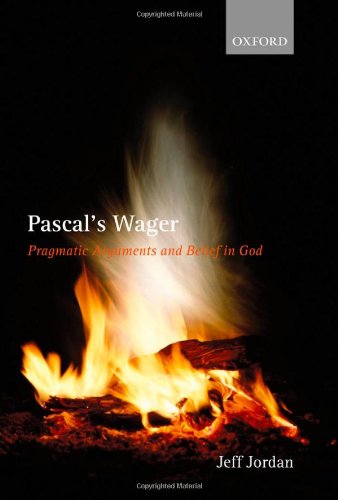
Here, I’ll take a look at one formulation of Pascal’s Wager, then very briefly offer a way to perhaps circumvent the “many gods” objection. I’ll be relying heavily upon Jeff Jordan’s book, Pascal’s Wager: Pragmatic Arguments and Belief in God, in what follows.
One way to lay out the Wager may be as follows (quoted from Jordan, 23, cited below):
1. for any person S, and alternatives, a and b, available to S, if the expected utility of a exceeds that of b, S should choose a
2. believing in God carries more expected utility than does not believing
3. Therefore, one should believe in God
Now, this is a pretty straightforward argument. 3, the conclusion, follows via modus ponens. Thus, it is up to the one who wants to deny 3 to deny one of the premises. Let’s examine each in turn.
Premise 1 seems to be logical, but it has actually garnered just as many objections as the second premise. Some have argued that one should not reduce belief in God to a “gamble” or some pragmatic choice. Others have argued that one cannot simply choose to believe and argued that the Wager results in Doxastic Voluntarism–the notion that one may simply change beliefs at will. In order to combat each objection in turn, one would have to show that it may be permissible to choose pragmatically even in religion. Jordan argues to this effect at length, but for the sake of argument I think it may be enough to just say that generally, we do make choices which we think will benefit us, and this is not an objectionable path of reasoning. Moreover, the Wager does not reduce to doxastic voluntarism, for one may indeed change one’s disposition toward something, but not at will. This is a complex argument, and I think we may set it aside for now because there is nothing in Premise 1 which would demand doxastic voluntarism.
Premise 2, of course, is highly contentious as well. Some allege that belief in God prevents the joys of hedonistic living; others allege that one would not know which deity to choose; still others would argue that there could exist deities that would reward unbelief.
Again, dealing with each in turn would take quite some time, so I’ll simply offer a few comments. First, hedonistic living in one life would not outweigh the benefits of eternity with a benevolent deity. Second, the Wager may simply be used to prefer theism generally–after all, if one does not wager on any deity, there would be no possibility of infinite (or nearly limitless) expected utility from one’s wager. Third, inventing fictions to attempt to rival established religious traditions which have, presumably, been believed by our epistemic peers (to use the term of Jordan, 80-81) does not put them on par.
Now, it should be fairly clear that even an incredibly low probability for God’s existence may have much higher expected utility than unbelief, for the overall possible gain is much higher. Jordan elaborates on this and answers many objections (such as the notion that “betting” on something which is highly improbable is necessarily irrational). For now, I simply leave this statement hanging because it helps my purpose, which is to demonstrate to those interested that the Wager is worth investigating further.
Because of the above, another of the strengths of the argument may be found in its usefulness to the apologist. Pascal’s Wager, Jordan argued, may be viewed as a kind of “last ditch” argument for apologists and theism (24). After all, suppose one were to come up with an argument which convinced you that the truth of theism is quite unlikely indeed. In that case, Pascal’s Wager provides a rational reason to continue to believe in God. For, even if it is unlikely that God exists, the utility of believing that God exists has a potentially infinite reward and thus trumps the utility of not believing that God exists.
Remember, though, that this functions for any possibility of God existing that is greater than zero. It was at this point in the book that I realized that Pascal’s Wager is a much stronger argument than I had thought. Not only may it be adequate to ground theistic belief, but it also may serve as a kind of bulwark against anti-theistic arguments as well.
I have argued that Pascal’s Wager may be formulated in such a way that one should believe in God. Now there is, of course, much more nuance and many more objections to each premise. Interested readers should check out Jeff Jordan’s Pascal’s Wager: Pragmatic Arguments and Belief in God.
Links
Be sure to check out the page for this site on Facebook and Twitter for discussion of posts, links to other pages of interest, random talk about theology/philosophy/apologetics/movies and more!
Question of the Week: Wagering Much?– In this post, I asked the question of apologists about whether or not they used Pascal’s Wager. The feedback I got was diverse and interesting. Check out the post, and let me know your own thoughts.
Source
Jeff Jordan, Pascal’s Wager: Pragmatic Arguments and Belief in God
SDG.
——
The preceding post is the property of J.W. Wartick (apart from quotations, which are the property of their respective owners, and works of art as credited; images are often freely available to the public and J.W. Wartick makes no claims of owning rights to the images unless he makes that explicit) and should not be reproduced in part or in whole without the expressed consent of the author. All content on this site is the property of J.W. Wartick and is made available for individual and personal usage. If you cite from these documents, whether for personal or professional purposes, please give appropriate citation with both the name of the author (J.W. Wartick) and a link to the original URL. If you’d like to repost a post, you may do so, provided you show less than half of the original post on your own site and link to the original post for the rest. You must also appropriately cite the post as noted above. This blog is protected by Creative Commons licensing. By viewing any part of this site, you are agreeing to this usage policy.
Really Recommended Posts 6/20/14- textual criticism, Krauss, and more!
 I’ve put together what I think is a pretty diverse array of topics for you, dear reader, to peruse. Check them out, and let me know what you thought of them! If you liked their post, let them know, too! Comments keep we bloggers going!
Gospel Truth? 10 Quick Questions– Here’s an interesting way to approach evaluation of rival Scriptural traditions–how might we determine whether one is true? What do you think of this list of questions about revealed truth? While you’re at it, Saints and Sceptics (they’re British!) is a great site that is well worth your time to follow and read on a regular basis.
Lawrence Krauss debates “A Universe From Nothing” with an Astrophysicist– Check out this review and commentary on a debate in which Lawrence Krauss continues to press his redefined version of “nothing” to try to explain the existence of the universe. This time, he debates an astrophysicist. Hint: it doesn’t go well.
Towards a Deeper Theology of Women: 4 Contributions of Women Scholars– Both men and women were created in the image of God. As such, they are each capable of contributing to theology and teaching. Check out this list of four contributions of women scholars, complete with some reading to pick up along the way!
Free Bible Icons– The title isn’t the catchiest, but these digital icons for every book of the Bible (and groupings therein) are fun, free, and a great thing to just print off and use as book markers in your Bible. Moreover, they’re just fun to look at.
Evangelical Textual Criticism– How might evangelicals engage in textual criticism? Here’s a site that explores that while also providing a number of resources like bibliographies for study, conference reminders, and the like. For an example of how this plays out, check out this post on Codex Bezae.
Sunday Quote!- The New Atheist Mythology
 Every Sunday, I will share a quote from something I’ve been reading. The hope is for you, dear reader, to share your thoughts on the quote and related issues and perhaps pick up some reading material along the way!
The New Atheist Mythology
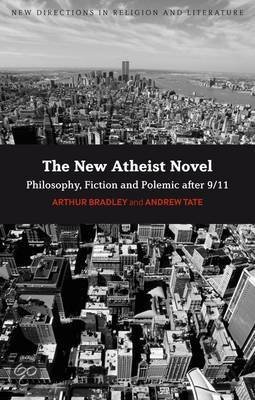
I recently finished reading The New Atheist Novel: Fiction, Philosophy and Polemic after 9/11. The book was simply phenomenal as it applied critical theory to four novelists in order to draw out various themes in their works and parallels with the writings of the “New Atheists.” I’ll write up a review at some point, but for now I want to highlight the central theme of the book:
[I]t is possible to detect an obscure… reason for the massive popular appeal of the New Atheism: it constitutes a new and powerful creation mythology that–like all mythologies–performs an implicit anthropological service… For Dawkins… it has become de rigueur to wax lyrical about, say, the ‘breathtaking poetry of modern cosmology’ (whatever that means) even amidst attacks on the ‘fairy story’ that is monotheism. (7, 9, cited below)
The book analyzes various novels in light of this theme: that the New Atheists are, in a sense, creating a rival mythology to the monotheism they denigrate, and this expands into literature in various and interesting ways. In a sense, this mythologizing about the power of the human mind, the wonders of the cosmos, or the beauty of poetry is a project to create transcendence in a worldview which, by definition, rails against the transcendent. It is a kind of creation myth which allows for meaning to seep into the meaningless.
What do you think? Can humans live without a mythology? Is wonder a necessary part of the human condition? Why do you think that even the “New Atheists” have put forward such lyrical and mythological language in their writings?
As I said, I’ll try to get a review of this book up ASAP.
Links
Be sure to check out the page for this site on Facebook and Twitter for discussion of posts, links to other pages of interest, random talk about theology/philosophy/apologetics/movies and more!
Sunday Quote– If you want to read more Sunday Quotes and join the discussion, check them out! (Scroll down for more)
Source
Arthur Bradley and Andrew Tate, The New Atheist Novel: Fiction, Philosophy and Polemic after 9/11 
SDG.
Really Recommended Posts 5/30/14- the Cross, Arminianism, “banned” evangelicals, and more!
 The Really Recommended Posts this week have some mixed in that are sure to get your noodle going. Can a doctrinal system which emphasizes free human choice in salvation affirm total depravity? Is the Big Bang model wrong? Would evangelicalism label some of its “favorites” heretics? Do skeptics dehumanize Christianity? These, and more, are questions for you to ponder with this week’s reading choices. Let me know what you thought, and if you liked them, be sure to leave them a comment as well. That’s a major reason why we write–to get your feedback!
Skeptics Dehumanizing Christianity– Does the “New Atheism” affirm equality across lines of religion, culture, and the like? How do some skeptics talk about people of faith in ways which may dehumanize them? Check out this thought-provoking article to read some insights on these and other topics.
Do Arminians Believe in Total Depravity?– One constant point of contention between Arminians and Calvinists (and others like Lutherans) is the notion of “total depravity” and the charge that Arminianism denies it. According to this article (following Roger Olson), Arminius himself affirmed the doctrine. It was an interesting read, but I wonder how consistent it would be with the consequences of Arminianism after all. What are your thoughts?
One Very Misleading Article About Six “Heretics” Who Should Be Banned from Evangelicalism– Recently, I saw an article being passed around on how some prominent figures within Christianity often cited by evangelicals would allegedly be labeled as heretics by contemporary evangelicalism for some of their beliefs. I thought it was interesting, but also clearly mistaken on some of the figures mentioned therein. This article took the time I did not by outlining numerous errors in the argument about “consistency” and evangelicalism.
More Than a Piece of Jewelry (Comic)– The cross is more than a piece of jewelry to hang around your neck. Check out this poignant comment which puts that into perspective.
Selection Bias– The universe isn’t expanding after all! So said a lot of headlines around the web of late. Is that really the case? Check out this article from an astrophysicist explaining some difficulties with this supposed problem with Big Bang Cosmology.
“Is Faith a False Epistemology?”- Debate Review: Tim McGrew vs. Peter Boghossian
 Peter Boghossian, whose recently wrote a book, A Manual for Creating Atheists, recently met with Tim McGrew in a debate on the Unbelievable? radio program. Here, we’ll take a look at the debate and what we might conclude from it. The Unbelievable? show is set up like a moderated dialogue, and Justin Brierly often asks thoughtful questions throughout the dialogue. Unless otherwise noted, anything in quotation marks are the exact words of the speakers.
McGrew Opening
McGrew notes that he went into epistemology and philosophy of science due to his interest in evidence for his faith. He shares his chagrin that there doesn’t seem to be any “trickle down” from academic arguments about the faith into internet debates–though he tongue-in-cheek noted that it is “surprising” that someone on the internet might be wrong. He notes that philosophy of religion has given many different reasons to think that faith is grounded in evidence and good reasons to think Christianity is true.
Boghossian Opening
Boghossian notes his movement of “street epistemology” is not about evangelizing for atheism but rather a call to people to think more rationally. He says he wanted to write a book which was aimed at the kind of conversations people have on the street. Developed theology, he says, is “purposeful obfuscation” which has no respect for. Brierly asked Boghossian what, in his view, would believers reaction be when challenged on their thinking, to which Boghossian answered that people would be “disabused of… superstitions” and must be more careful with how they use the word “faith.” He sees people leaving their faith as a consequence of reasoning. His book, he says, is a way to equip people to dialogue about faith without being uncivil.
Dialogue Highlights
McGrew
McGrew states that Boghossian is defining terms in “irregular ways,” particularly the definition of “faith.” He states that he knows of no one outside of Boghossian and those he has encouraged, who defines faith as “pretending to know things you don’t know” (this is the actual definition Boghossian provides for the word “faith”).
Boghossian
The primary definition of “faith” should instead be seen as “belief without evidence.” He says he’s focused on how people use the word faith as opposed to dealing with definitions. He states that this is how “literally billions” of people define faith (belief without evidence). “Pretending to know what you don’t know” is “a very valid” definition of faith, though “belief without evidence” is to be seen as the primary definition.
McGrew
The vast majority of people do not use faith to mean belief without evidence. Even atheists like “The Good Atheist” are opposed to Boghossian’s definition of faith.
Boghossian
I’m concerned with how “people actually use terms.” When people use the term “faith” they mean there is confidence over and above the value of the evidence. Prominent Christians also use the word “faith” to mean belief without evidence.
McGrew
Boghossian has already changed his definition of faith by now saying that “faith” means “belief with confidence above that which is allowed by the evidence” (paraphrase). These definitions are not the same as belief without evidence. Well below 1% use faith in that same fashion. There may be different conceptions of what counts as evidence, but this does not mean that people think they are believing without evidence.
Faith should be defined as “trusting, holding to, and acting on what one has good reason to believe is true in the face of difficulties.” McGrew uses an example of a parachute: one who is going skydiving may be apprehensive about jumping out of a plane despite knowing that the vast majority of people make the ground alive when they go skydiving. One can know all of this evidence, but can still say they have “faith” that their instructor packed the parachute correctly. There is a distinction between hope and faith.
Boghossian
People use faith and hope as synonyms, but they are not. But where “does evidence stop and faith take over?”
McGrew
Putting it that way prejudices the outcome of the question, because it puts the question in such a way that faith has to “sometimes make up” evidence for action or belief. But when we act, we are not acting on percentages but rather we are acting or trusting in something on the basis of the evidence we have, despite not having complete certainty.
 Brierly
Justin Brierly eventually cut in and moved to refocus the conversation around Boghossian’s claims that faith should be seen as a mental illness, complete with entire institutions devoted to treating faith as a disease and working towards “interventions” to move people away from faith. Brierly was quoting from Boghossian’s book in this section, and he asked Boghossian to expand on this.
Boghossian
It is “very unfair” to say that I target the Christian faith. “I am deeply hostile to all faiths… My attempt isn’t to demean anybody.” Religions should be seen as possible mental illness, and to exclude faith from treatment as a mental illness is hampering science. Faith “hijacks the thinking process… We need to help people through these delusions they have.”
McGrew
There still seems to be no point of agreement. To define faith in this manner is to “reduce disagreement to derision.” By defining faith as belief without evidence, Boghossian has derided people of faith. Essentially, the definition is propaganda: defining faith as inferior by default and so demeaning those people of faith.
Boghossian
When people have conversations with people of faith, they should not have a one-on-one conversation with name calling. The advocating of putting religion on the DSM (a manual for diagnosing various mental disorders) is not connected with everyday conversation and is so not insulting.
McGrew
Boghossian’s overall body of work defines faith in a way which is demeaning: “pretending to know what you don’t know.” If this is the strategy, this is like “newspeak” in 1984 by George Orwell.
Boghossian
The difference is that in public lectures, one should not do this. Instead, we should have “interventions” with people. People who have faith are “not well.” Apologetics is confirmation bias and is damaging.
McGrew
Boghossian seriously misunderstands the role of apologetics, which is the pursuit of whether a conviction holds up under scrutiny. It is no more necessary to make a detailed scholarly study of every faith before coming to a settled belief that only one is true than to have to read every biography of every person who was alive at the time Lincoln was shot to conclude that John Wilkes Booth shot him. To say otherwise is to “pretend” that one can’t have good evidence unless one concludes one doesn’t have good evidence for other things. We don’t have to rule out all alternatives to a theory, rather, one just has to have good evidence to hold that which they do.
Analysis
It should be fairly clear that Boghossian’s attitude towards people of faith is not one that is friendly, as he apparently claims. When someone says that people of faith need to have “interventions” and be studied as mentally ill, that hardly is a way to respect them. Moreover, he then advocated a kind of split-personality: when someone is one-on-one, they should not bring up the notion that the person of faith is mentally ill because that would be insulting, but apparently it’s not insulting when someone writes a book saying that very thing.
Clearly the biggest issue in this debate was that of the definition of faith. Here it should be seen that once again, Boghossian’s view did not hold up. He ended up actually changing his definition in the course of the conversation, when pressed, to belief beyond the evidence. But he still claimed that “billions of people” use the term “faith” to mean “belief without evidence.” I would simply ask Boghossian: what is your evidence for that claim? Has he talked to billions of people to discover this? Where is his data to back up this claim? It seems to me that Boghossian’s definition of faith is based upon his “pretending to know something he doesn’t know”–namely, that this is how people of faith define faith.
Polemical use of the term aside, I strongly suspect that Boghossian truly does not have evidence for his use of that term faith as backed by “billions.” Moreover, I wonder whether Boghossian defines faith in that way simply because he rejects the evidence for, say, Christianity, and has gone from his own view that there is no evidence for Christianity to saying that Christians must be having faith as “belief without evidence.” But of course disagreeing with someone else’s assessment of the evidence does not entail that the religious “other” believes they are believing without evidence.
McGrew did a fantastic job of continually orienting the discussion around the topic at hand: epistemology. Boghossian’s continued appeal to certainty or the alleged need to explore every faith to know if one is true was thoroughly shredded. As McGrew pointed out, Boghossian could hardly hold a single belief if one truly had to reject every other possibility in order to hold to one as true. Boghossian’s epistemology, it seems, is the faulty one.
Links
Be sure to check out the page for this site on Facebook and Twitter for discussion of posts, links to other pages of interest, random talk about theology/philosophy/apologetics/movies and more!
“Peter Boghossian, Atheist Tactician”- A brief look at the e-book by Tom Gilson– Tom Gilson has challenged Boghossian on a number of points, including his view of the meaning of “faith,” in his e-book “Peter Boghossian, Atheist Tactician.” It is well worth the read, and this review provides a summary of the major points.
Check out Tom Gilson’s live blog of the debate.
SDG.
——
The preceding post is the property of J.W. Wartick (apart from quotations, which are the property of their respective owners, and works of art as credited; images are often freely available to the public and J.W. Wartick makes no claims of owning rights to the images unless he makes that explicit) and should not be reproduced in part or in whole without the expressed consent of the author. All content on this site is the property of J.W. Wartick and is made available for individual and personal usage. If you cite from these documents, whether for personal or professional purposes, please give appropriate citation with both the name of the author (J.W. Wartick) and a link to the original URL. If you’d like to repost a post, you may do so, provided you show less than half of the original post on your own site and link to the original post for the rest. You must also appropriately cite the post as noted above. This blog is protected by Creative Commons licensing. By viewing any part of this site, you are agreeing to this usage policy.
Really Recommended Posts 5/2/14- Hitler’s Philosophers, Lutheranism, and more!
I’ve once more gone through the internet archives to bring together a slew of awesome posts for you, dear readers! Let me know your thoughts, and feel free to share links you’ve enjoyed. I may even put them on an upcoming RRP!
Why I was Once an Atheist– Pastor Matt was a PK–a pastor’s kid–(like me!) and he had some expereinces in the church which led to his atheism. Reading his thoughts provides insight into what we can do better for our children and beyond.
Sanctification– Imagine a woman hearing these words: “The guys just don’t feel like they would be able to lead you spiritually…” What follows from a view in which men spiritually lead women without question? What roles do men and women play?
Why Pro-Life People Need to Become Amateur Philosophers– It is important to have some philosophical knowledge in order to make the case for the pro-life position. Here, some basics are covered with relevance for the issue.
Ways to be Lutheran– How are Lutheran splinter denominations working? What developments and trends are forming in the U.S.? An interesting background for Lutheranism in the United States. I thought it was worth the quick read.
Review: Hitler’s Philosophers by Yvonne Sherratt– What philosophical motivations lay behind Hitler’s activities? This interesting book review talks about some of them. What are your thoughts?
Bruce Gordon: problems with inflationary multiverse cosmologies– What of the multiverse? Might there be evidence for it?
Really Recommended Posts 4/25/14- Dean Koontz, egalitarianism, “Cosmos,” and more!
 Here, I have a list of great reads for you to browse, from Easter errors to Dean Koontz, from marriage to atheism. Check them all out, and let me know what you thought!
Five Errors to Drop from Your Easter Sermon– Check out this read on common mistakes made when talking about Easter.
Tie-Breaker– What happens when married couples come to a point where they are at an impasse? Does there need to be a marital tie-breaker grounded in notions of hierarchy of genders? Check out this thought-provoking post on the topic. For my own thoughts on the topic, check out my post “Who’s in Charge?” over at CBE.
Dean Koontz’s “Innocence”– From the author (links removed), Anthony Weber, “Dean Koontz is perhaps the most famous Christian author alive today. He has sold over 450,000,000 books, with 17,000,000 added each year. He’s sold more books than Stephen King…” That’s why you should care about the guy. Check out this look at a recent book from Koontz.
What I Needed to Hear as an Atheist (And How I Needed to Hear It)– Approach matters! Check out this fantastic post on how we may approach atheists who are wondering about the faith.
Cosmos Scrubs Religion’s Positive Influence from the History of the Scientific Revolution– The TV series “Cosmos” has seemingly purged any notion of the positive influence of religion from the history of scientific development. Check out this insightful article which explores some of this history and the way “Cosmos” has distorted it.
Really Recommended Posts 4/4/14- Views on “Noah” and “God’s Not Dead”
I think it’s important to view a range of perspectives on two of the latest flicks to hit the big screens: “Noah” and “God’s Not Dead.” These films are going to draw religious viewers simply based on their content. How do we approach them? What conversations do we have? Here, I’ve offered a few posts about each film. I’d love to read your own thoughts on either or both of these flicks. Yes, this is an owl post edition because I have a winter storm blowing through right now. So that’s fun. (This is my attempt to keep smiling.)
God’s Not Dead
An Apologist Reviews “God’s Not Dead”– Here, a Christian apologist discusses his viewing of the movie. His overall thought is that though it is at times simplistic, it may help awaken the need for apologetics within the church.
David Baggett Guest Post: “God’s Not Dead”– Noted Christian philosopher David Baggett takes on the film. He’s concerned that the film oversimplifies and caricatures atheists and Christians, without paying enough attention to the thoughtfulness of either.
Personal Comments on God’s Not Dead– Astrophysicist Hugh Ross shared his personal thoughts on the film. He thinks it is worth seeing for Christians, but also has reservations regarding its portrayal of the people involved.
A Christian Philosopher’s Thoughts on “God’s Not Dead”– This is a Christian apologist from a different [presuppositional] perspective offering thoughts on the film. To be fair, he is actually looking at the trailer. Can his comments be valid still? Check out the post and judge for yourselves.
Noah
Darren Aronofsky’s “Noah”– Over at The Gospel Coalition, the flick “Noah” is presented as having numerous issues, but it may start conversations and it also helps show the reality of evil before the Flood. Moreover, the reality of the spiritual realm is something that not enough people think of, but in the film the spiritual reality is very real and powerful.
I’m a Christian and I think ‘Noah’ deserves a four star review– In stark contrast to the above, Matt Walsh rips the film apart and also questions why any Christian leaders would be endorsing it or thinking of it as worthy viewing.
Sympathy for the Devil– In this post, Brian Mattson argues that the film is actually an ingenious way of portraying Gnostic ideas and Kabbalah. Essentially, his view is that the film is very explicitly Gnostic and portrays God as evil and the devil as sympathetic.
No, Noah is not Gnostic– In response to the claims of Gnosticisim, Peter Chattaway argues that one cannot conflate Kabbalah with Gnostic thought. Furthermore, he argues that Mattson gets several plot points and points of comparison wrong.
Both, and Then Some!
Hollywood, Movies, and the Bible: Should We Rewind on How We View?– Darrell Bock shares some thoughts on several recent movies with faith themes in them, such as “Noah” and “God’s Not Dead.” He offers practical advice regarding how one might view films with a discerning eye as well.
Sunday Quote! – Do Trilobites Yield a Greater Good?
 Every Sunday, I will share a quote from something I’ve been reading. The hope is for you, dear reader, to share your thoughts on the quote and related issues and perhaps pick up some reading material along the way!
Trilobites Yield a Greater Good
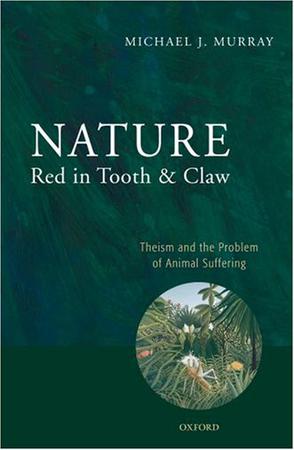
Recently, I finished reading Nature Red in Tooth and Claw
The purpose of that low organism [the trilobite] is by no means exhaustively explained when we have taken a measure of the sensational happiness he derived from his monotonous existence… But a far higher purpose is served in the adaptation of his complicated organism and of the position of his tomb in a sedimentary deposit to arrest the attention and direct the reasoning of a scientific observer. The pleasure of one lofty thought is worth more… than a whole heard of sensational pleasures. (142, cited below)
There is much to unpack in this quote, but for simplicity’s sake we’ll just examine one facet. Wright asserted that the final cause–the ultimate purpose–of a trilobite is not merely found in its own existence, but also in its existing to “arrest the attention and direct the reasoning” of a more highly developed organism. Indeed, Wright argued that the learning the life (and death) of the trilobite brought to the scientific observer was a far greater good than the life the trilobite lived of sensational pleasures.
A number of issues would need to be addressed before a fuller theodicy could be developed from this point. First, not every trilobite was able to convey its life to the good of a scientific observer. Second, is the good of scientific observation really better than sensational life of the trilobite?
Of course, I personally think the point by Wright is interesting and compelling to a point–but to develop that argument would take as much space as Murray dedicates to it. My final observation would be that Wright’s argument was not intended as the final word on the subject. It is but one among many facets of a greater good theodicy or a conjoined theodicy with other varieties of approaches to the problem of evil. Nature Red in Tooth and Claw
Links
Be sure to check out the page for this site on Facebook and Twitter for discussion of posts, links to other pages of interest, random talk about theology/philosophy/apologetics/movies and more!
Animal Pain Re-Visited– Over at Reasonable Faith, Michael Murray defends some theses of his book that I discussed above.
Source
Michael J. Murray, Nature Red in Tooth and Claw: Theism and the Problem of Animal Suffering

 J.W. Wartick - Reconstructing Faith