bible
Some quick thoughts on the “Noah” trailer
 It’s coming, folks. A big-budget movie about Noah and the Flood. A trailer was recently released for the film, in which Russell Crowe plays Noah.
I thought I’d share some thoughts on the brief glimpse we’ve had on the film, after a brief narration of the trailer. See the end of the post in which I reflect on a couple things not in the trailer.
The Scene
The trailer opens with Noah having some weird vision which seems to depict the Fall of humanity. He wakes up and says “He’s going to destroy the world.” Some old dude tells Noah about a story passed down from his father about how if humans continued in their wicked ways, the “Creator would annihilate this world.”
The old man also tells Noah that this Creator is able to communicate with him in a way he understands, which is apparently by dunking Noah in water and showing lots of burning things and then a flower growing, because, you know, that is really understandable. But apparently Noah gets it because he decides to build a big boat. One problem: the local King is upset about it for some undisclosed reason.
Lots of animals come to load up the Ark. It starts to rain. People try to get on the Ark but get blown up by water. The fountains of the deep are depicted as big geysers blowing up all over the place. Rain.
By the way, Hermione plays someone [I looked it up and she plays “Ila” who is apparently Noah’s adopted daughter and a heartthrob to Shem(?)], so that’s kind of cool.
Thoughts
Well, it looks like we have some Hollywoodization here. I’m not really sure what to think. First, I appreciate the fact that in the trailer the responsibility for the Flood is placed upon humans, who continued to behave in clearly brutal ways.
Clearly the random king showing up with some reason to be angry with Noah is fictitious in the sense that it is not recorded in the Bible. I suspect it is there to add drama to the narrative, but what will it add in addition to that? What plot exposition will be given that diverges from the biblical account? The Old Testament in many places is very terse, not many details are given. It is tempting to fill in the details, and it is clear this film will do so.
The movie also seems to be thankfully not avoiding the theological issues. I will be very interested to see how God interacts with humanity. Despite my tongue-in-cheek narration above, I think there is a point to be had that God may communicate in phenomenological ways, and that the biblical narratives often do report things from the viewer’s perspective.
Also: those clothes! Why is Noah wearing a tailored shirt made out of some weird attempted period-piece? What kind of styling is this!?
Joking aside it looks kind of cool. As a film, it looks like it will be exciting. Lots of special effects; extra tension added in; you name it. But how much correction of faulty understanding of the biblical narrative will need to be done afterwards? I don’t know. On the other hand, perhaps it will get people talking more about the Bible. It may help spur discussion of the issues raised in that passage, which could expand beyond that. Could this be a tool for believers? It may be best to read up on the Flood story yourself.
The movie is clearly generating a lot of discussion already, and having drawn in a big-name director as well as actors/resses, it will likely be discussed broadly.
Be assured that, God willing, I will reflect on the movie when it comes out next year. Until then, let me know your thoughts!
Having Written This, I discovered something else:
Apparently there may be quite significant additions to the film from the pseudepigraphal Book of Enoch, including some scenes with 6-armed angels and the like. I’m disappointed to learn about this divergence from the Biblical story. I get creative license, but this is a bit much.
Check out this excellent post which discusses the screenplay. My disappointment continues to mount as I read more about it. Note that I wrote this post 100% based upon the trailer, with almost no prior knowledge of the movie. The post I just linked to has major spoilers for the differences from film to movie. It looks like what we’re getting is something which is not faithful to the biblical story. I find that deeply disappointing. I get the use of creative license, but based upon this reading of the screenplay, it goes beyond creative license and into exploitation of the Bible to forward a specific agenda.
I wonder whether the rumors floating around about the studio wanting to make significant cuts to the film might be do to this negative reaction from Christian viewers. I suspect that it is possible that the studio wants to make it more palatable to Christian audiences.
The Image was found on Google and is not mine. I could not find rights to it, and do not claim them.
SDG.
——
The preceding post is the property of J.W. Wartick (apart from quotations, which are the property of their respective owners, and works of art as credited; images are often freely available to the public and J.W. Wartick makes no claims of owning rights to the images unless he makes that explicit) and should not be reproduced in part or in whole without the expressed consent of the author. All content on this site is the property of J.W. Wartick and is made available for individual and personal usage. If you cite from these documents, whether for personal or professional purposes, please give appropriate citation with both the name of the author (J.W. Wartick) and a link to the original URL. If you’d like to repost a post, you may do so, provided you show less than half of the original post on your own site and link to the original post for the rest. You must also appropriately cite the post as noted above. This blog is protected by Creative Commons licensing. By viewing any part of this site, you are agreeing to this usage policy.
By Whose Authority? The question of authority in the church

The Question of Authority
One cannot question that perhaps the most central issue which divides the Roman Catholic Church from Protestants is the question of authority. The issue touches upon a number of others. Who has the authority to interpret Scripture (ultimately)? What is the structure of a church? How do we learn doctrines? It must be acknowledged by all that the Roman Catholic Church’s claims to authority are paramount. It is possible for the Church to claim infallible authority for its teachings, however few claims they have actually made.
The question of authority persists in its importance today. If one church body–the Roman Catholic Church–is capable of infallibly defining doctrine for the whole of the Christian world, and some deny these doctrines, then that automatically means that those who deny these doctrines are in some sense denying God. It is important to note what the Church itself has said regarding this doctrine. Here is part of the definition of infallibility from the First Vatican Council (Section 4, Chapter 4):
[W]e teach and define as a divinely revealed dogma that when the Roman Pontiff speaks EX CATHEDRA, that is, when, in the exercise of his office as shepherd and teacher of all Christians, in virtue of his supreme apostolic authority, he defines a doctrine concerning faith or morals to be held by the whole Church, he possesses, by the divine assistance promised to him in blessed Peter, that infallibility which the divine Redeemer willed his Church to enjoy in defining doctrine concerning faith or morals.
What is to be said about those who deny any teaching that the Pope declares infallible? Again, I’ll allow the Church to speak for itself:
So then, should anyone, which God forbid, have the temerity to reject this definition of ours: let him be anathema.
Because I personally do reject some of the infallible teachings of the Church (such as the Marian Dogmas of perpetual virginity, immaculate conception, and the asumption), I, by virtue of this teaching, am anathema. Thus, it should be clear that the authority of the church is at the core of the divide between Catholics and Protestants.
Discordant Voices
The problem of authority is often pressed by Roman Catholic thinkers as a kind of argument against Protestantism. The way in which it is is presented is often through an argument for unity. For example, the claim is made that the Magisterium is capable of preserving doctrinal unity to a higher degree than the Protestant denomination. The claim is also often accompanied by an offhand remark about the number of Protestant Denominations. What is the implication? The discordant voices within Protestantism are, in some way, to be viewed as a discrediting piece of evidence when it comes to the nature of the truth claims of these churches. The implication (as quoted here) that some Roman Catholic apologists draw is that this proves the necessity of an infallible interpreter of doctrine/Scripture.
Infallible Magisterium?
Initially, the claim sounds a bit appealing. One may trust in the infallible Church to settle the debate on various theological topics once and for all. One need not try to draw out the implications of specific texts for themselves, leading to any number of diverging interpretations and arguments and ultimately, the splitting of the church into ever-smaller units each warring against each other and saying they have the truth.
There’s one major problem, though. By whose authority does one make the decision to trust in the infallible magisterium? This question should be on the mind of any individual who chooses to join the Roman Catholic Church based upon the argument from authority. After all, it is the decision of the individual to trust the Church which leads to accepting the Church as the infallible authority.
One must then ask the question: are you infallible? That is, is your [fallible] decision to make the Roman Catholic Church your infallible authority itself an infallible decision? Could you be mistaken? If the answer is that you are indeed fallible and you may be mistaken, then it must follow that any trust placed in the allegedly infallible Church must be equally fallible and stand upon shaky ground. For it is the person who joins the church who has joined the Church, not vice versa. The decision rests upon the individual, and it is therefore a fallible decision to make the Church infallible for one’s faith.
This argument therefore tears down any grounds one might have for asserting that one should trust the infallible Church in order to eliminate the discordant voices of Protestantism or choose-your-own-theology which may be the case outside of the Roman Catholic Church.*
*This is not to mention the often discordant voices within the Roman Catholic Church itself and the fact that fallible persons must interpret allegedly infallible statements in order to discern what they mean. Are you an infallible interpreter? Surely not.
Sola Ecclesia?
Moreover, suppose it is correct that the Church is the infallible interpreter of the Bible and tradition. Does this not mean that any allegations that one is under the authority of the Bible, Tradition, and the Church really boil down to the authority of the Church? After all, the last and final authority in interpreting the Bible, Tradition, or the Church is the Church. If one has a dispute about the meaning of a biblical teaching, the Church may (but does not have to) make the ultimate, infallible decision regarding its meaning. If one argues that tradition hints at something which the Church does not teach, the Church is the ultimate arbiter of tradition as well. Thus, it seems like the final authority in every case lies with the Church. The system, I would argue, ultimately boils down into sola ecclesia.
A Final Note for my Roman Catholic Readers
I want to end with a call to my Roman Catholic readers. First, I would note that in this post I have not sought to insult or denigrate Roman Catholics or their beliefs. I have allowed the Vatican to give its own definitions and presented them, I hope, without distortion. Second, I think that we need to be honest about the differences that we have rather than covering them up. Third and finally, these differences should not, I hope, lead us to be incapable of working together in social and yes–at times–even theological issues. I hope that you will be comfortable interacting with me on this topic and others. I appreciate whatever insight you would like to share.
Links
The Church Universal- Reformation Review– I discuss the possibility of maintaining a universal church in light of the breakup of the church into ever smaller groups. I place this discussion against the background of Reformation theology.
“20,000 denominations”– an in-depth analysis of the claims of those who wish to use denominationalism as an argument against sola scriptura. The link for the article the author evaluates is now down.
Much of the argument found herein has been learned from listening to or reading James White, and although I do not directly quote his work I am greatly indebted to him. A particularly helpful work was The Roman Catholic Controversy
SDG.
——
The preceding post is the property of J.W. Wartick (apart from quotations, which are the property of their respective owners, and works of art as credited; images are often freely available to the public and J.W. Wartick makes no claims of owning rights to the images unless he makes that explicit) and should not be reproduced in part or in whole without the expressed consent of the author. All content on this site is the property of J.W. Wartick and is made available for individual and personal usage. If you cite from these documents, whether for personal or professional purposes, please give appropriate citation with both the name of the author (J.W. Wartick) and a link to the original URL. If you’d like to repost a post, you may do so, provided you show less than half of the original post on your own site and link to the original post for the rest. You must also appropriately cite the post as noted above. This blog is protected by Creative Commons licensing. By viewing any part of this site, you are agreeing to this usage policy.
Responding to “Nine Questions for the Old Earth Creationist”
 One of the podcasts I enjoy listening to is “Issues, Etc.,” a conservative Lutheran radio program that addresses a number of different views. As is the case with anything, however, once you talk to someone or listen to something long enough, you find things with which you disagree. Recently, I heard a podcast which was discussing Christianity and Science. During this podcast, the guest alleged that the Bible contradicts things like the Big Bang theory or any interpretation of millions or billions of years. As that is an area of great interest for me, I did a little more digging and found that Pastor Todd Wilken, one of the primary speakers on the radio program, had written a series of questions for Old Earth Creationists in an article titled “Nine Questions for Old Earth ‘Creationists.‘” [Note that he uses scare quotes around the word “Creationists.”]
Here, I shall respond to the Nine Questions asked of Old Earth Creationists. Before I dive in, I want to offer one major disclaimer: these topics are far more complex than one blog post can cover. I fully realize I am leaving objections unanswered and some questions unasked. Feel free to comment to clarify. Second major disclaimer: I realize that there is diversity within old earth creationism. However, I have striven to answer the questions in as broad a manner as possible.
I will be leaving the questions from Todd Wilken in bold and italic font and my answers in this standard font. The questions are direct quotes from his article, and I take no credit for their wording.
1. What in the text of Genesis 1 requires or suggests an old Earth?
I admit that I know of no Old Earth Creationist (hereafter OEC/OECs) who holds that Genesis 1 requires an old earth. I think the question is mistaken to even use that word, but I would be happy to be corrected should someone find an OEC who does allege that the text requires an old earth. Thus, the question must be what is it that suggests an old earth? Well, as readers of this blog may know already, I think this question itself is mistaken. The text is not referring to the age of the universe at all, anywhere. On this view, although an old earth may be permissible according to the text, it is not suggested; nor is a young earth suggested. The text just isn’t talking about the age of the universe.
Now, many OECs do hold that the text suggests an old earth. Hints of this, they argue, can be found in the fact that evening and morning occurs before there is a sun. Moreover, it is not until the fourth day that days may even be measured. Others hold that the terminology in Genesis 1:1, “In the beginning God created the heavens and the earth” suggests that the creation occurred in that verse, and that the rest of the chapter (and chapter 2) narrow the focus to earth or even the Garden of Eden.
2. What are the referents of the words “morning” and “evening” in Genesis 1?
I find it extremely telling that Wilken decided to switch the order of these words around. It absolutely must be noted that the text says “evening” and morning.” Why is this? Well, if the first day is really the first 24 hour period in the history of all that exists apart from God, how is it possible for evening to come before morning? [One insightful reader noted that the Hebrews saw evening as the beginning of the day anyway… but my point is that the fact there is an evening implies there is a sun to set… which isn’t created until later.] That is a question with which the literalistic young earth creationists must contend. If they choose to read the Bible literal[istical]ly, they must be consistent. The fact that they cannot when it comes to things such as evening coming first shows that their reading is self-referentially inconsistent.
Now, to answer the actual question, that really depends on which OEC you are referring to. I would tentatively suggest that most OECs hold that the referents are simply ways to mark the beginning and ends of creation periods.
3. What in the text of Genesis 1:26-27 requires or suggests the creation of man over millions of years?
I admit that this was where I really started to wonder whether Wilken understands the distinctions between OECs and other views of creation. In asking this question of OECs, Wilken betrays an apparent ignorance of the views of major proponents of OEC.
Representative is Hugh Ross, the founder of Reasons to Believe, which is itself the largest Old Earth Creationist organization. In his work, More Than a Theory, he writes regarding human origins: “God created humans in a deliberate, miraculous act” (182, cited below). In other words, Ross (and this is the position of the entire organization, along with every other OEC I know of) holds that humankind was specially created by God in a single miraculous act. “Ah, but wait!” one might cry. “That doesn’t deny millions of years for the creation of humanity.”
Very well, a very small amount of digging shows Hugh Ross again writing, this time with Fazale Rana (also of Reasons to Believe and another Old Earth Creationist) in their work Who Was Adam? “God created the first humans… both physically and spiritually through direct intervention… All humanity came from Adam and Eve… God created Adam and Eve relatively recently, between 10,000 and 100,000 years ago” (44-45, cited below).
Therefore, it seems this question is nonsensical. OECs hold that humankind was created specially by God and not over the course of millions of years. I admit that I think just about any OEC would be scratching their head trying to figure out why this question is even being asked because it is so far off the mark of the actual views of OECs. It is particularly remarkable because this feature is one of the very things which distinguishes Old Earth Creationism from other, non-creationist models. Gerald Rau notes this distinction: “Although differing in the timing, both [Young- and Old- Earth creationists] believe God created two humans… without progenitor. This, of course, is a radically different perspective from the evolutionary models” (147, cited below). Note his wording: “of course”; “radically different.” Frankly, anyone who has done even a cursory study of varying Christian views about the timing and means of creation would know this.
4. Where in the text of the Genesis 2 and following is the transition from epoch-long days to 24-hour days?
This question seems to be a bit strange. The word “day” is only used in Genesis 2:2, 3, 4, and 17. In verse 4 even Young Earth Creationists (YEC) have to admit that the word is being used as more than one day (the text says “These are the generations of the heavens and the earth when they were created, in the day that the LORD God made the earth and the heavens” (ESV).
Verse 17 is also of great interest because it says, “…’but of the tree of the knowledge of good and evil you shall not eat, for in the day that you eat of it you shall surely die'” (ESV).
Did Adam die on the 24-hour day he ate of that tree? No. In fact, he and Eve went on to have children and raise them to some point. So again, we find that “day” is not referring to a 24 hour period.
But where is the transition? I don’t know. I think the question itself is confused because the word is used four times in the chapter, two of which cannot be 24-hour days.
5. What creative actions described in Genesis 1 require more than six 24-hour days to accomplish for a God Who creates ex nihilo?
The use of the word “require” is again extremely problematic. Of course any OEC would agree that God could create in any time period God wanted. God certainly could have created anything God wanted in any amount of time in which God wanted to. So no OEC that I know of would say that God required more time.
However, some OECs do argue that Adam may have needed more time to accomplish everything it is said he accomplished in the allotted times. Naming all the animals, given the untold thousands of species which exist, would have taken quite a bit of time. (Genesis 2:19 is still part of the sixth day because God is still creating and has not yet made woman.)
But, again, I do not think any OEC would say that the text “requires” God to use more than 24 hours.
 6. Where else in Scripture is the word “day” used to designate billions of years?
Here we find yet another question that is just so incredibly off base that it is remarkable. Of course, the Bible does use the word “day” to denote that such a period, for the LORD, is like a thousand years. And the meaning of “like a thousand years” is debatable, but surely it is a long period of time [and much longer than 24 hours]. But the question of “billions of years” is just the wrong question. Again, the text is not trying to tell us how old the earth is.
If Wilken desires to dispute this, I would gladly ask him to present me with a verse in the Bible which sets the date of creation.
7. How are we to understand the connection between the six epoch-days of creation and the sanctification of a literal seventh day in Genesis 2:1-3 and Exodus 20:11?
I am often confused when YECs bring up this argument. Yes, Exodus 20:11 parallels Genesis 1-2 by having 7 days and denoting the seventh as a day of rest. Now, what about that somehow entails that they are exactly the same? I mean think about the Biblical categories of typology. Very often things correspond to each other but are not exactly the same. One might think of the use of Hosea 11:1 to Matthew 2:15. The passage in Hosea is clearly discussing the nation of Israel. In Matthew 2:15 it is applied to an individual, the Son of God. Does this automatically mean that in Hosea we must assume that “son” is being used in the same sense as “Son of God”? Obviously not. Then why ignore typological categories in other texts?
Okay, but how would an OEC answer this objection? By pointing out that the words “day” and “Sabbath” are used variably in the Pentateuch, so a direct 1 to 1 correlation is off-base. Sabbath, for example, may refer to the span of an entire year as opposed to just one day (Leviticus 25:4). Day may refer to a thousand years (Psalm 90:4).
8. Are there considerations outside the text of Genesis that require an old Earth?
I’m not sure if Wilken means to express the question of other texts, or whether he wishes to address the issue of extra-Biblical evidence.
Regarding the first possible meaning, again the answer would be “No.” I will continue to maintain that I know of no OEC who holds the Bible requires an old earth. Many would follow my own reasoning and note that the Bible isn’t trying to discuss time periods. That just isn’t a concern of the text.
9. According to the Old-Earth theory, what is the relationship between death and human sin? When did death enter the world?
Frankly, at this point it should be abundantly clear that Wilken has not interacted very much with the works of Old Earth Creationists. As was noted in the answer to question 3, many OECs hold to the special creation of Adam and Eve. Therefore, this question is similarly extremely easy to answer: human death entered the world because of sin.
A Major Issue
I think one of the main problems with Wilken’s comments are that he doesn’t seem to distinguish between Old Earth Creationists, Theistic Evolutionists, and the various varieties of design theorists. This leads him to a few confused questions which he directs towards OECs that make no sense when directed towards them. I admit that the series of questions here leads me to wonder whether Wilken is simply unaware of the distinctions between these groups or just over-simplifying and obfuscating. I suspect the former.*
Conclusion
I have endeavored to provide brief answers for the Nine Questions Wilken asks of Old Earth Creationists. I believe that some of the questions he asks demonstrate confusion about the actual category of Old Earth Creationism. Moreover, the questions that are on target have been answered repeatedly by various OECs. Whether these answers are taken as convincing is another story.
*It should be noted that Wilken’s article was published in 2002, which is prior to the works cited here. Therefore, Wilken could not have known about the works I have cited to show some of the difficulties with his paper. However, I cited these works specifically to show how mistaken these questions are. If one is going to attempt to educate concerned Christians about a topic like this, it is vastly important to be aware of the distinctions to be found within each group, and Wilken fails to show awareness of these distinctions. Moreover, we will explore Wilken’s very recent article next week, in which he continues to make these errors.
Sources
Hugh Ross, More Than a Theory (Grand Rapids, MI: Baker Books, 2009).
Hugh Ross and Fazale Rana, Who Was Adam? (Grand Rapids, MI: Baker, 2005).
Gerald Rau, Mapping the Origins Debate (Downers Grove, IL: InterVarsity Press, 2012).
Todd Wilken, “Nine Questions for the Old Earth ‘Creationist,'” 2002.
SDG.
——
The preceding post is the property of J.W. Wartick (apart from citations, which are the property of their respective owners, and works of art as credited) and should not be reproduced in part or in whole without the expressed consent of the author. All content on this site is the property of J.W. Wartick and is made available for individual and personal usage. If you cite from these documents, whether for personal or professional purposes, please give appropriate citation with both the name of the author (J.W. Wartick) and a link to the original URL. If you’d like to repost a post, you may do so, provided you show less than half of the original post on your own site and link to the original post for the rest. You must also appropriately cite the post as noted above. This blog is protected by Creative Commons licensing. By viewing any part of this site, you are agreeing to this usage policy.
“The Rocks Don’t Lie” by David Montgomery: Chapter 4
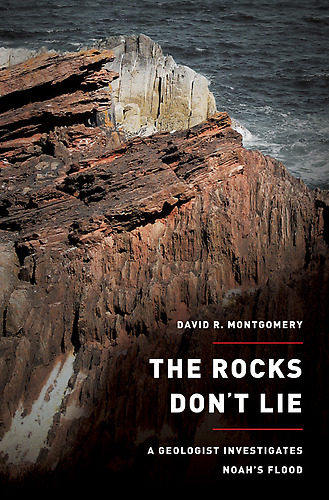 Here, I continue my look at The Rocks Don’t Lie
Chapter 4: World in Ruins
Outline
Montgomery begins by outlining the state of beliefs before early geological investigations. These were formed from theological understandings and thus derived themselves either from creation or the Flood.
The early theories of how the Flood shaped the rocks lent themselves as hypotheses for investigating the natural world. Although many of these theories would be dismissed immediately now, for their time they were serious ideas about how the world may have been shaped. Yet even in the early days of geological investigation, many theologians and geologists realized some of the major difficulties attributing the whole geologic story to the Flood would raise. Isaac Vossius, for example, “argued for a local flood on the grounds that there simply was not enough water on earth to submerge the highest mountains” (55). The amount of water needed for a global flood remains a great difficulty into today.
Other early geologic difficulties were centered around fossils. Were they really vestiges of once-living creatures, or merely tricks of the stones (59)? Steno entered this debate and, apart from noting that fossils were similar to those bones of living creatures, he also developed principles of geology which are used to this day. These were the notion that the bottom of a pile of sediment is oldest and that sedimentary layers are deposited horizontally (60).
As geologic investigations continued, more radical theories were put forth to hold a global flood. These included the notion that, prior to the Flood, the earth was smooth, and so it would have been easy to cover the globe with the water we observe now (66). Yet theories like this, which hypothesize the Flood wreaking havoc upon the earth, yield great difficulties of their own. For example, how could Noah’s descendants have populated the ends of the earth so quickly? Thomas Burnet, who had proposed this theory, argued that Native Americans had also survived the Flood (68).
John Woodward became another champion for advocates of a global flood. He asserted that the Flood dissolved the Earth’s crust and then laid down the sediment observable now (70). His theory was in keeping with others who held that a “mighty flood burst forth from a subterranean abyss” (71). However, John Arbuthnot, a physician, published an essay which not only showed that Woodward had plagiarized Steno, but also blew holes through the Flood theory Woodward had proposed. These included the fact that fossils did not rearrange according to specific gravity and that the layering of sediment could not have occurred within such a mix (71, 73).
Edmund Halley (of Halley’s Comet fame) came up with a theory which involved a comet coming near the earth and disturbing it on its axis, which “heaved the seafloor up… carving the topography we know today.” He also came up with the idea of a “vapor canopy” over the Earth which yielded the great amount of water needed to flood the entire planet (74).
Montgomery notes that it is “ironic” that many of the arguments used by young earth creationists for their positions on geology have been derived from the seventeenth-century geologists, who themselves “did not blindly trust particular literal interpretations of scripture. They had faith reason would lead to enlightened interpretation of God’s creation, as read from the pages of the book of nature…” (76).
Analysis
Montgomery has done a commendable job documenting the long history of the interplay between geology and theology related to the Flood. Moreover, he has shown how many of the ideas found in modern creationism reflect the debates of this period–some of which were acknowledged as refuted back then.
The importance of this historical background should not be understated. When one investigates the way that theories of the Flood developed alongside geology, it provides a fascinating case study for the interplay between science and faith. More importantly, studying the arguments of the past shows how easy it is to resurrect the same ideas in new contexts. Modern young earth creationism owes a great debt to people like Halley and Woodward. Unfortunately, many of these ideas remain just as refuted as they were shortly after they were first proposed.
It is also important to observe cases like Burnet, who started out trying to fit geology into his interpretation of Genesis, but ended up being forced to hypothesize all kinds of things which are not actually found in the Genesis account in order to maintain his theory. Modern creationists should be wary of doing the same: in attempting to stay true to the meaning of the text, people too often introduce concepts which are entirely foreign to the passages themselves. Ironically, this is often done in the name of being “literal.” I hope that works like Montgomery’s (and Young’s, see below) will help inform the Church regarding this debate.
Conclusion
Again, Montgomery’s book shows its great similarities with The Biblical Flood by Davis Young, which itself focuses almost entirely upon the interplay between geology and theology. Both of these books come recommended from me. Montgomery’s work is a faster read with a bit more focus upon the arguments of modern young earth views, while Young’s work provides more of the much-needed background for the debate. [I skipped ahead a bit and saw that Montgomery acknowledges Young’s own contributions to this discussion. I am of the opinion that each of their works bring unique contributions and are worth having.]
The Rocks Don’t Lie has so far proven to be a fantastic work in which the author acknowledges the complexities of the issues as well as the debt geology owes to Christianity. Soon, we will look into chapter 5.
Links
Like this page on Facebook: J.W. Wartick – “Always Have a Reason”
Check out my review of a similar work by a Christian: The Biblical Flood. I think this book is vastly important and should be in every Christian’s library.
Be sure to browse my extensive writings on the “Origins Debate” over creationism, theistic evolutionism, and intelligent design (among other views) in Christianity.
Source: David Montgomery, The Rocks Don’t Lie
SDG.
——
The preceding post is the property of J.W. Wartick (apart from citations, which are the property of their respective owners, and works of art as credited) and should not be reproduced in part or in whole without the expressed consent of the author. All content on this site is the property of J.W. Wartick and is made available for individual and personal usage. If you cite from these documents, whether for personal or professional purposes, please give appropriate citation with both the name of the author (J.W. Wartick) and a link to the original URL. If you’d like to repost a post, you may do so, provided you show less than half of the original post on your own site and link to the original post for the rest. You must also appropriately cite the post as noted above. This blog is protected by Creative Commons licensing. By viewing any part of this site, you are agreeing to this usage policy.
Inerrancy and Presuppositional Apologetics: A different approach to defending the Bible
Scripture is inerrant because the personal word of God cannot be anything other than true. -John Frame (The Doctrine of the Word of God
, 176 cited below)

One of the most difficult issues facing evangelical Christian apologists is the doctrine of inerrancy. I’m not trying to suggest the doctrine is itself problematic. Indeed, I have defended the doctrine in writing on more than one occasion. Instead, I am saying that defending this doctrine in an apologetics-related discussion is difficult. Here, I will explore one way that I think should be used more frequently when discussing the doctrine.
What is the problem?
There are any number of attacks on inerrancy and Biblical authority, generally speaking. Very often, when I discuss the Bible with others in a discussion over worldviews, I find that the challenge which is most frequently leveled against the notion of inerrancy is a series of alleged contradictions. The second most common objection is some sort of textual criticism which allegedly shows that the Bible could not be without error in its autographs. A third common argument against inerrancy is to quote specific verses and express utter incredulity at their contents.
Of course, it doesn’t help that the definition of inerrancy is often misunderstood. For simplicity’s sake, I will here operate under the definition that “The Bible, in all it teaches, is without error.” I have already written on some misconceptions about the definition of inerrancy, and readers looking for more clarification may wish to read that post.
How do we address the problem?
Most frequently, the way I have seen apologists engage with these challenges is through a series of arguments. First, they’ll argue for the general reliability of the Bible by pointing out the numerous places in which it lines up with archaeological or historical information we have. Second, they’ll argue that these historical reports given in the Bible cannot be divorced from the miraculous content contained therein. Given the accuracy with which these writers reported historical events, what basis is there to deny the miraculous events they also report?
Other apologists may establish inerrancy by rebutting arguments which are leveled against the doctrine. That is, if one puts forth an argument against inerrancy by pointing out alleged contradictions, these apologists seek to rebut those contradictions. Thus, once every single alleged error has been addressed, this approach concludes the Bible is inerrant.
Now, I’m not suggesting that either of these methods are wrong. Instead, I’m saying there is another way to approach the defense of the Bible.
A Presuppositional Defense of Inerrancy
Suppose God exists. Suppose further that this God which exists is indeed the God of classical Christian theism. Now, supposing that this is the case, what basis is there for arguing that the Bible is full of errors? For, given that the God of Christianity exists, it seems to be fairly obvious that such a God is not only capable of but would have the motivation to preserve His Word as reported in the Bible.
Or, consider the first step-by-step argument for inerrancy given in the section above, where one would present archaeological, philosophical, historical, etc. evidence point-by-point to make a case for miracles. Could it not be the case that the only reason for rejecting the miraculous reports as wholly inaccurate fictions while simultaneously acknowledging the careful historical accuracy of the authors is simply due to a worldview which cannot allow for the miraculous at the outset?
What’s the Point?
At this point one might be thinking, So what? Who cares?
Well, to answer this head on: my point is that one’s overall worldview is almost certainly going to determine how one views inerrancy. The point may seem obvious, but I think it is worth making very explicit. If we already hold to a Christian worldview broadly, then alleged contradictions in the Bible seem to be much less likely–after all, God, who cannot lie (Numbers 23:19), has given us this text as His Word. Here it is worth affirming again what John Frame said above: the Bible is inerrant because it is of God, who is true.
Thus, if one is to get just one takeaway from this entire post, my hope would be that it is this: ultimately the issue of Biblical inerrancy does not stand or fall on whether can rebut or explain individual alleged errors in the Bible–it stands or falls on one’s worldview.
One final objection may be noted: Some Christians do not believe in inerrancy, so it seems to go beyond an issue of worldview after all. Well yes, that is true. I’m not saying a defense of inerrancy is utterly reducible down to whether or not one is a Christian or not–as I said, I think evidential arguments are very powerful in their own right. I am saying that inerrancy is impossible given the prior probabilities assigned by non-Christian worldviews and altogether plausible (not certain) given Christian worldview assumptions.
A Positive Case for Inerrancy
Too often, defense of inerrancy take the via negativa–it proceeds simply by refuting objections to the doctrine. Here, my goal is to present, in brief, a positive argument for inerrancy. The argument I am proposing here looks something like this (and I admit readily that I have left out a number of steps):
1) Granting that a personal God exists, it seems likely that such a deity would want to interact with sentient beings
2) such a deity would be capable of communicating with creation
3) such a deity would be capable of preserving that communication without error
Therefore, given the desire and capability of giving a communication to people without error, it becomes vastly more plausible, if not altogether certain, that the Bible is inerrant. Of course, if God does not exist–if we deny that there is a person deity–then it seems altogether impossible that an inerrant text could be produced on anything, let alone a faith system.
I consider this a positive argument because it proceeds from principles which can be established (or denied) as opposed to a simple assertion. It is not a matter of just presupposing inerrancy and challenging anyone who would take it on; instead it is a matter of arguing that God exists, desires communication with His people, and has brought about this communication without error. Although each premise needs to be expanded and defended on its on right, I ultimately think that each is true or at least more plausible than its denial. Christians who deny inerrancy must, I think, interact with an argument similar to this one. Their denial of inerrancy seems to entail a denial of one of these premises. I would contend that such a denial would be inconsistent within the Christian worldview.
Note that this argument turns on the issue of whether or not God exists. That is, for this argument to be carried, one must first turn to the question of whether God exists. I would note this is intentional: I do think that inerrancy is ultimately an issue which will be dependent upon and perhaps even derivative of one’s view of God.
Other Books
One counter-argument which inevitably comes up in conversations about an argument like this is that of “other books.” That is, could not the Mormon and the Muslim (among others) also make a similar case.
The short answer: Yes, they could.
Here is where I would turn to the evidence for each individual book. Granting a common ground that these claimed revelations–the Bible, the Book of Mormon, the Qu’ran, etc.–are each purported to be inerrant and that their inerrancy is more probable on a theistic view, which best matches reality? In other words, I would turn here to investigate the claims found within each book in order to see if they match with what we can discern from the world.
The argument I am making here is not intended to be a one step argument for Christian theism. Instead, it is an argument about the possibility of an inerrant work.
 Appendix 1: Poythress and Inerrancy
Vern Poythress provides an example of how this approach works. In his work, Inerrancy and Worldview (my review of this work can be found here), he continually focuses on how worldviews color one’s approach to challenges presented against inerrancy such as historical criticism, certain sociological theories, and philosophy of language. One example can be found in his discussion of historical criticism:
The difference between the two interpretations of the principle [of criticism] goes back to a difference in worldview. Does God govern the universe, including its history, or do impersonal laws govern it? If we assume the latter, it should not be surprising that the resulting principle undermines the Bible… It undermines the Bible because it assumes at the beginning that the God of the Bible does not exist. (Poythress, Inerrancy and Worldview
, 53, cited below)
Yet it is important to see that my approach here is different from that of Poythress. His approach seems to be largely negative. That is, he utilizes presuppositionalism in order to counter various challenges to the Bible. When a challenge is brought up to inerrancy, he argues that it of course stems from an issue of worldview. Although this is similar to my approach, Poythress never makes a positive argument for inerrancy, which I consider to be a vital part of the overall defense of the doctrine.
Appendix 2: Standard Presuppositionalism and Inerrancy
I would like to note that I am not attempting to claim that my defense of inerrancy here is the standard presuppositional approach. The standard presuppositional approach is much simpler: the apologist simply assumes the absolute truth and authority of God’s word as the starting point for all knowledge.
It should not surprise readers that, given this approach, most (if not all) presuppositionalists embrace the via negativa for defense of inerrancy. That is, the standard presuppositional defense of the Bible usually is reducible to merely pointing out how the attacks on Scripture stem largely from one’s worldview, not from the facts.
Thus, one of the foremost presuppositional apologists to have lived, Greg Bahnsen, writes:
[I]f the believer and unbeliever have different starting points [that is, different presuppositions from which all authority comes for the realm of knowledge] how can apologetic debate ever be resolved? [In answer to this,] the Christian carries his argument beyond “the facts…” to the level of self-evidencing presuppositions–the ultimate assumptions which select and interpret the facts. (Bahnsen, Always Ready, 72 cited below).
It should be clear that this standard presuppositional defense is therefore very different from what I have offered here. The standard presuppositional defense simply reduces the debate to “starting points” and attempts to show contradictions in other “starting points” in method, exposition, or the like. My defense has noted the vast importance of worldviews in a denial of inerrancy, but has also offered a positive defense of inerrancy. Yes, this defense turns on whether God exists, but that can hardly be seen as a defect or circularity in the argument.
Links
Like this page on Facebook: J.W. Wartick – “Always Have a Reason.” I often ask questions for readers and give links related to interests on this site.
The Presuppositional Apologetic of Cornelius Van Til– I explore the presuppositional method of apologetics through a case study of the man who may fairly be called its founder, Cornelius Van Til.
Debate Review: Greg Bahnsen vs. Gordon Stein– I review a debate between a prominent presuppositional apologist, the late Greg Bahnsen, and a leading atheist, Gordon Stein. It is worth reading/listening to because the debate really brings out the distinctiveness of the presuppositional apologetic.
Sources
Greg Bahnsen, Always Ready
John Frame The Doctrine of the Word of God
Vern Sheridan Poythress, Inerrancy and Worldview
SDG.
——
The preceding post is the property of J.W. Wartick (apart from citations, which are the property of their respective owners, and works of art as credited) and should not be reproduced in part or in whole without the expressed consent of the author. All content on this site is the property of J.W. Wartick and is made available for individual and personal usage. If you cite from these documents, whether for personal or professional purposes, please give appropriate citation with both the name of the author (J.W. Wartick) and a link to the original URL. If you’d like to repost a post, you may do so, provided you show less than half of the original post on your own site and link to the original post for the rest. You must also appropriately cite the post as noted above. This blog is protected by Creative Commons licensing. By viewing any part of this site, you are agreeing to this usage policy.
William Paley (1743-1805) – Historical Apologist Spotlight
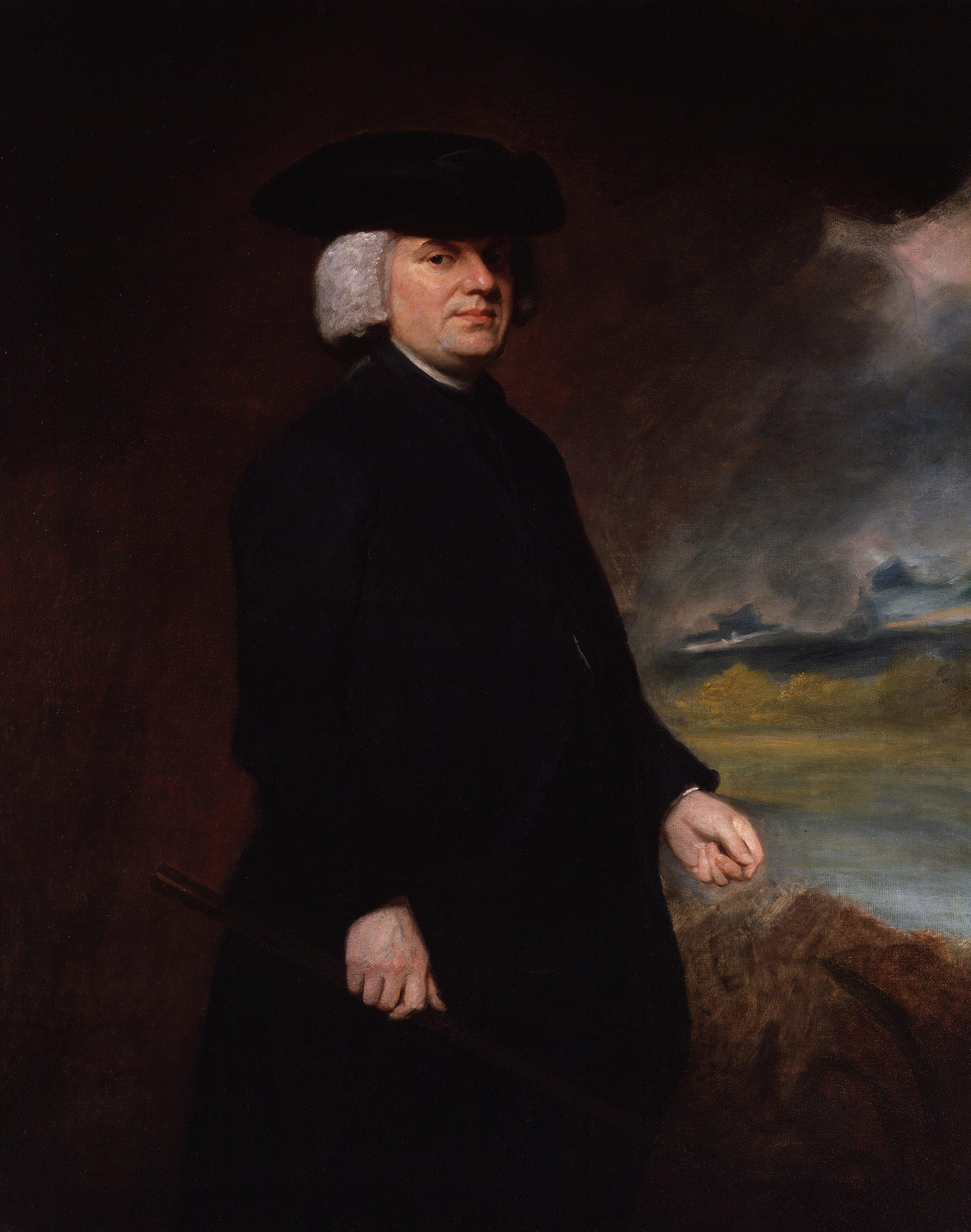 William Paley (1743-1805) is a name which echoes through history. His Natural Theology

Brief Biographical Note*
Paley went to school at Christ’s College and Cambridge. At the latter, he was awarded multiple times for his scholarship. He eventually became the Senior Dean at Christ’s College and was awarded a Doctorate of Divinity from Cambridge. Bishop Barrington of Durham granted him the rectory of Bishop Wearmouth. His life was strewn with accomplishments.
He was a utilitarian with deep Christian convictions. Throughout his life, he remained controversial. His utilitarianism was condemned, as was his critique of the often extreme defenses of property ownership. His anti-slavery was unpopular alongside his support of the American Colonies in the Revolutionary War.
The powerful nature of Paley’s works is revealed in the fact that his major work on utilitarianism, The Principles of Moral and Political Philosophy, became mandatory reading at Cambridge. His Natural Theology continues to be discussed in courses on philosophy of religion. The man was acclaimed by some within the church, who praised his defense of the faith despite others’ objections to his metaethical views.
His contributions to Christian apologetics are the focus of this piece, and we shall turn to them now.
Natural Theology
Paley’s most famous work nowadays is undoubtedly Natural Theology. In this work, he makes his well-known case for the design argument. He utilizes the analogy of a watch. If one finds a watch on a beach, one knows instantly that someone made the watch. Paley applied this same notion to life; one sees the sheer complexity and life and can infer that it, like the watch, was designed.
Many have dismissed Paley’s work here, noting that at points he relies on scientific explanations which have been discredited, while at others his examples have been explained. Yet the genius of his work is found in broader principles, which moderns should note. First, he argued that simply never having observed design in action on a biological level does not preclude any possibility of arguing for that same design (Natural Theology, 8, cited below). Second, evidence of things “going wrong” within a design does not invalidate the design of an object in and of itself. Third, higher level natural laws which may lead to order does not explain away the order itself. Fourth, when something appears to be designed, the burden of proof is upon those who assert an object is not designed.
These points seem to me to hold true to this day. I am sure none of them are uncontroversial, but Paley places his defense of this points squarely within his analysis of those artifacts which he considers to be designed (i.e. the eye and ear). A full treatment of these points thus must turn to his own arguments, but for now I would provide the following brief defenses. Regarding the first, this point seems obvious. If I have never seen someone construct a car, that does not in any way mean that I cannot conclude that someone had to have made it. The second point should be well taken within the context of the debate between Intelligent Design and Darwinian forms of evolution. The point is that simply pointing out a flaw in a design does not mean an entire object is undesigned. The third item seems correct because if something exhibits order, and that order is shown to be based around an ordering principle, the very order in and of itself has not been explained; instead, it is only the mechanism for generating that order which is observed. Finally, the fourth point is likely to be the most controversial–after all, appearances may deceive. Yet it does seem to be the case that if, a priori, something appears designed, then to conclude that something is not designed one must have defeating evidence for this appearance.
A View of the Evidences of Christianity
Paley’s Evidences (commonly known as “Evidences of Christianity”) became almost instantly famous. The work generated a number of summaries and expositions by other authors who were delighted with its style and the arguments contained therein. It is easy to see why, once one has begun a read through this apologetic treatise. Paley presents a number of arguments in favor of the Christian worldview. These evidences are largely historical in nature and include the suffering of those who spread Christianity as evidence for its truth, extrabiblical evidence for the truth of the Gospels, the authenticity of our Gospel accounts due to the early practices and beliefs of Christians, undesigned coincidences, and many more. Paley also provides a dismantling of David Hume’s argument against miracles.
It seems to me that any and all of these arguments retain the force they had in Paley’s own day. Consider the argument from the suffering of Christians. Well of course those of other faiths are willing to even die for that which they believe is true. But Paley rightly pointed out a huge difference between those of other faiths dying for their beliefs and the early eyewitnesses of the events surrounding Christ dying for their own beliefs. Namely, these people would know for certain whether that which they believed were true. That is, they either saw the resurrected Christ or they did not. If they did not, then explaining their willingness to die for this profession of faith becomes extremely difficult. However, if they did actually see that which they declared, their willingness to suffer unto death for this belief makes perfect sense. Many miss this important distinction even to this day. The rest of Paley’s arguments found in the Evidences is filled with insights similar to this.
Horae Paulinae
An argument which has largely been neglected within modern apologetic circles is that of “undesigned coincidences.” I have made an exposition of this argument already, and it should be noted that the best places to discover it are in the realm of historical apologetics. William Paley dedicated this work, Horae Paulinae
Now, the argument from undesigned coincidences takes quite a bit of work to properly outline. It is, in essence, a matter of looking through the Scriptures and finding how incidental details in one account fill in the blanks of another account. However, this description is so brief as to be simplistic. Paley himself acknowledged a number of the difficulties with describing undesigned coincidences in this way. Regarding the Pauline corpus, for example, it could be that someone invented letters from Paul but based them upon his history found in Acts. But the argument itself takes this into account and generally serves as a defeater for this notion by sheer weight of evidence. That is, the more coincidences are found, the more credulity is stretched if one wishes to assert forgery.
Paley buries the objections to undesigned coincidences in this fashion throughout the Horae Paulinae. The sheer volume of coincidences he finds, and the way they seem so clearly to be incidental, serves to dispel doubts about their genuine nature.
Other Works
Here, we have surveyed Paley’s major works, but he was a prolific writer who published sermons and of course his (in)famous work on utlitarian ethics. The preeminence of Paley as a scholar and writer is unquestionable. It is time we acknowledge how much we have to learn from those who have come before us.
Conclusion
We have seen the diverse array of arguments which Paley offered in favor of Christianity. These ranged from biological design arguments to undesigned coincidences to historical arguments in favor of the Gospels. Paley was a masterful writer whose arguments continue to influence apologists and draw ire from atheists to this day. Although the arguments have not been unscathed, I have offered a few reasons to reconsider some which have long been dismissed or forgotten. Paley’s influence endures.
I would like to dedicate this post to Tim McGrew, who introduced me to the vast field of historical apologetics. Without his bubbling delight and enthusiasm in the field, I would never have known much–if anything–about people like Paley. It is my hope and prayer that you may also be persuaded to pursue historical apologetists/apologetics. Be sure to check the links for some good starting places.
Be sure to check out the links at the end of this post as well as the resources from Paley.
Links
Like this page on Facebook: J.W. Wartick – “Always Have a Reason.” I often ask questions for readers and give links related to interests on this site.
Library of Historical Apologetics– Here is where I got started, with Tim McGrew’s phenomenal collection of works. In particular, the “annotated bibliography” will set you up with some fine works. The site features a “spotlight” on the main page for various fantastic reads. Browse and download at will. Also check out their Facebook page.
On the Shoulders of Giants: Rediscovering the lost defenses of Christianity– I provide a number of links as well as an annotated list of historical apologetics works which are great jumping off points for learning more about the vast array of arguments which have largely been forgotten within the realm of apologetic argument. I consider this one of the most important posts on this site.
Forgotten Arguments for Christianity: Undesigned Coincidences- The argument stated– Here I outline the argument from undesigned coincidences and explain how it can be used within apologetics.
Sources
William Paley, Evidences of Christianity
—-, Natural Theology (Oxford World’s Classics)
—-, Horae Paulinae
*I am indebted to the discussion of Paley’s life found in the introduction of the Oxford Classic’s edition of Paley’s Natural Theology, which I have cited above.
SDG.
——
The preceding post is the property of J.W. Wartick (apart from citations, which are the property of their respective owners, and works of art as credited) and should not be reproduced in part or in whole without the expressed consent of the author. All content on this site is the property of J.W. Wartick and is made available for individual and personal usage. If you cite from these documents, whether for personal or professional purposes, please give appropriate citation with both the name of the author (J.W. Wartick) and a link to the original URL. If you’d like to repost a post, you may do so, provided you show less than half of the original post on your own site and link to the original post for the rest. You must also appropriately cite the post as noted above. This blog is protected by Creative Commons licensing. By viewing any part of this site, you are agreeing to this usage policy.
Really Recommended Posts 5/24/13
 Once more I have gone to the ends of the internet to find some posts to recommend for you, dear readers. This week, the topics are, as ever, diverse. We have bioethics, parameters for debates, creationism, the Quran, and Nietzsche. As always, check them out. Let me know your thoughts.
Bioethics and Worldview– A fascinating post which shows how one’s worldview can guide one’s positions in bioethics. What do we value? That will come out in practice. Our society does not value life. I think that is obvious in our practices.
Convenient Explanations– Luke Nix offers some advice to Christians and non-Christians about respectful debate.
Biblical case for Long Days (VIDEO)– I found this short video informative. It gives some reasons that Bible-believing Christians hold to views other than young earth creationism.
The Bible or the Quran– A fascinating, worldview-level comparison of the Bible and the Quran. Which makes more sense of reality? Mike Robinson argues persuasively that it is the Bible.
Doug Groothuis – Nietzsche’s Evaluation of Christian Ethics– I found this very thought-provoking and insightful. Nietzsche is often seen as one of the more talented atheistic philosophers. How does his evaluation of Christian ethics play out? Is it sound? Doug Groothuis puts forth cogent arguments which must be considered.
Book Review: “The Biblical Flood” by Davis Young
 Davis Young seeks in his work, The Biblical Flood
Overview
Young, a Christian geologist, provides a detailed overview of the Church’s theological and scientific musings on the Flood. He develops this overview chronologically, beginning with early Jewish thought. The focus within the entirety of his book is directly centered upon how extrabiblical evidence was used to shape theology and vice versa. The relation should not be understood as binary. Throughout history, there was a spectrum of approaches to the extrabiblical evidence which included resistance (not infrequently forged by ignorance) as well as integration. Here, I will survey only the broadest outline of Young’s discussion.
Early Flood Views
Early Christians were aware of Pagan stories of floods but made little or no appeal to them as evidence for a universal flood, and in fact some argued that these other stories were clearly differentiated from the Biblical account because they were local as opposed to global. There was much speculation over the location of the Ark as well as the notion that fossils were the result of this universal deluge.
Middle Ages and Renaissance
Medieval thought regarding the Flood was steeped in the “ahistorical view of creation” found at the time. That is, the science of the time thought of creation as deductible from the character and nature of God. However, the discovery of the New World brought up many challenges to a universal deluge theory, which challenges began to get recognition. These included the vast number of species which would have had to fit onto the Ark and the discovery of people across the world. During this period, the discovery of flood stories in various cultures began to be viewed as evidence for a universal deluge (37).
New World
The New World continued to present challenges to the universal deluge theory. One of the foremost among these was animal migration. Entirely new and distinct species were discovered in the New World which did not exist in Europe. How did these animals get to these distant lands? More importantly, how did they get there without leaving any traces of themselves behind if they all only came from one location: the Ark? These challenges continue to vex those who hold to a universal deluge (60ff).
Geology’s Origins
The notion of a universal flood has contributed much to the development of geology as a science. The Christian worldview finally presented a picture of the universe which humans could explore in order to learn truths about reality. The Flood itself presented a theory about how to account for the geological features of the earth (65ff). Various features of the natural world were attributed to the flood, including the discovery of marine fossils on mountains and geological features like valleys. These early geologists were committed to an following the evidence where it led.
Diluvialism and Catastrophism
Various theories were put forward to explain the features of the earth. These included varied catastrophic notions, wherein the geological features were explained by a global, catastrophic flood. Such theories are repeated into today.
Geological Evidence Mounts into the Twentieth Century
Young establishes that the evidence against catastrophic diluvialism became weighty fairly early into the investigations of geologists (109ff). New discoveries related to mammoths and the way they died (over a period of time by a variety of causes rather than all at once) were greatly important, as the issue of these mammoths was found throughout the speculation about the flood. New dating methods were developed which were more accurate. Archaeological finds showed floods in areas of the Mesopotamia, but they were dated at different times. The discovery that humanity was widely spread over the earth and that there was no major extinction event throughout this spread raises a significant challenge for Flood Geologists (233). Other major challenges to Flood Geology include (but are by no means limited to): the dating of igneous formations, the cooling of the earth, metamorphism, and continental drift.
Theological Reflections
Throughout this period of discovery, theologians were not inert. Indeed, many theologians were at the front lines, actually participating in the discoveries themselves. Near Eastern Studies have revealed parallels with the Flood account which some have suggested show derivation. Others, however, argue these other flood stories merely show the perpetuity of such events and how ingrained they became on the human consciousness (236ff).
More recently, Flood Geologists have come into being once more. Their arguments parallel almost exactly those found spread in the early days of geology. Yet these arguments have been refuted by the evidence from the earth itself. Some continue to make false statements about the mammoths’ deaths, the formation of sedimentation, dating methods, and more. Young argues that this is largely due to the specialization of studies found within various fields like theology and geology. Theologians are rarely acquainted with the geological evidence, while geologists are rarely versed in theological language.
Theologians who were versed in geology began to see how interpretations of the text, rather than the text itself, had shaped the Christian response to geological evidence. People like Hugh Miller appealed to extrabiblical data in support of their intepretations of the Flood narrative (147ff).
Miller professed puzzlement that learned, respectable theologians would accept “any amount of unrecorded miracle” rather than admit a partial deluge. Could they not see that the controversy was not between Moses and the naturalists but between the readings of different theologians? (151)
More recently, many and varied theories of the flood as local have been developed and defended. The reaction from Flood Geologists has been vigorous, but theories of a global flood include a multitude of quotes from various scientists which would support competing theories of rock formation, sedimentation, and more. That is, Catastrophic Flood views present mutually exclusive theories for how the geological (and other) evidence came to be.
Appendix: Arkeology
The book is capped off with a discussion of “arkeology”: the search for Noah’s Ark. Young notes the array of locations which have been given as well as the mutually contradictory accounts of those who claim to have seen the Ark or evidence of the Ark. He warns Christians to remain cautious of any such claims.
Challenge
I believe that a good way to summarize the content of the book would be to view it as a challenge Young is issuing to those who allege that catastrophic theories are the only possible way to interpret the text and geological evidence. He himself writes, “If conservative and orthodox theology is to remain vital and relevant to a world in need of the Christian gospel… theologians will have to abandon their flirtation with flood geology and other forms of pseudo-science, reacquaint themselves with genuine scientific knowledge, and incorporate that knowledge into their thinking, secure in the realization that genuine insight into God’s creation… is still a gift of God to be treasured” (215).
Young’s book can be viewed through this lens. He shows how scientific knowledge challenged traditional readings of the text, but also how many theologians and Christian geologists alike interacted with this in order to gain “genuine insight” into God’s word and creation.
Conclusion
The Biblical Flood
I do not claim to have touched upon even all the major points found in Young’s work. The book is full of voluminous amounts of historical details which reveal interesting scientific and theological notions. The theory of a global flood was the one of the first major proposals for how the earth’s geological history was formed. As geological discoveries mounted, this theory was falsified. Moreover, theologians who interacted with the extrabiblical evidence had a wide array of responses, from downright rejection of the evidence or reinterpretation of it to attempt to fit a global flood to concordist views in which the extrabiblical evidence informed interpretation of the text. Which direction should we go? Young has presented a major challenge to those wishing to maintain a notion of the global flood. He presents mountains of evidence to challenge catastrophism, while also showing how, historically, thought on the Noahic Flood has comfortably incorporated the extrabiblical evidence without any necessary compromise of the text or faith. I commend the book to the reader without reservation.
Links
Like this page on Facebook: J.W. Wartick – “Always Have a Reason.” I often ask questions for readers and give links related to interests on this site.
Be sure to check out my posts on the “origins debate” which feature a wide range of posts on issues related to varying Christian views on evolution, creation, and more.
Davis Young, The Biblical Flood
SDG.
——
The preceding post is the property of J.W. Wartick (apart from citations, which are the property of their respective owners, and works of art as credited) and should not be reproduced in part or in whole without the expressed consent of the author. All content on this site is the property of J.W. Wartick and is made available for individual and personal usage. If you cite from these documents, whether for personal or professional purposes, please give appropriate citation with both the name of the author (J.W. Wartick) and a link to the original URL. If you’d like to repost a post, you may do so, provided you show less than half of the original post on your own site and link to the original post for the rest. You must also appropriately cite the post as noted above. This blog is protected by Creative Commons licensing. By viewing any part of this site, you are agreeing to this usage policy.
The Law Always Condemns, The Gospel Always Saves. Or, why I’m a Lutheran.
Comparing Holy Scripture with other writings, we observe that no book is apparently so full of contradictions as the Bible, and that, not only in minor points, but in the principal matter, in the doctrine how we may come to God and be saved… This riddle is solved when we reflect that there are in Scriptures two entirely different doctrines, the doctrine of the Law and the doctrine of the Gospel. C.F.W. Walther, The Proper Distinction Between Law and Gospel
, 6 (cited fully below)
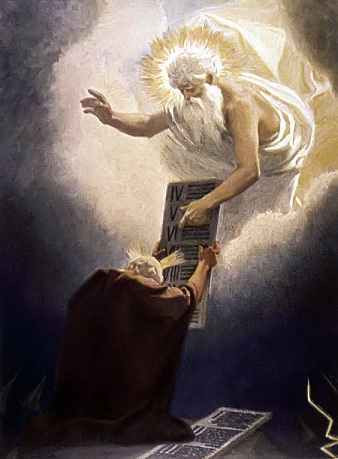
How are Christians to view the relationship between Law and Gospel? The issue has generated countless views and debates. One recent work which illustrates the breadth of views on this topic is Five Views on Law and Gospel
C.F.W. Walther’s work, The Proper Distinction Between Law and Gospel
Law and Gospel
The most central point of all–that is, the point that I hope readers remember if nothing else–is this: The Law always condemns, the Gospel always saves. This point is emphasized throughout Lutheran theology. What does it mean? Simply put: it means that these two doctrines, found throughout Scripture, have entirely distinct meanings and usages. One cannot intermingle law and gospel while remaining true to either doctrine. Wherever the Gospel is presented as if it had requirements attached to it, there the Gospel is not rightly preached. Whenever the Law is preached as if it offered some kind of free gift, it is not rightly preached.
Law only has power to condemn. It cannot save. That is because none can keep God’s Law. All sin, and all fall short of the glory of God (Romans 3:23). The Law shows what God requires of us. It “issues only commands and demands” (Walther, Proper Distinction…, 9).
In contrast, the Gospel only gives offers without requirements attached (ibid). The Gospel shows us God’s promises and offer of grace.
At first face, one examines the whole of the Bible and finds these teachings throughout. The teachings seem so at odds with one another that one might suspect a contradiction throughout the Biblical teaching. However, the fact is that both doctrines are “equally necessary. Without the Law the Gospel is not understood; without the Gospel the Law benefits us nothing” (Ibid, 8). The reason this is so important is because Law and Gospel are not opposites working against each other. Instead, both “have their final aim [human] salvation” (Ibid, 7). They work together to present a full picture of how salvation comes unto men.
The Law, as we have noted, cannot bring salvation because none but God can fulfill it. That is, it gives the requirements for salvation but no one can meet these requirements! We would all be lost if this were the whole of Biblical teaching. Yet there is more to the story, for the Gospel offers only its promises. God has promised to save. He is mighty to save. God has accomplished our salvation. And this salvation does not come with requirements attached. Such is our hope.
Most simply put then, the purpose of the Law is to show our need for the Gospel because we cannot meet the requirements of the Law. The purpose of the Gospel is to show that God has already met these requirements for us in Jesus Christ and to offer us that fulfillment through Christ’s atoning work. So the Gospel, without the Law, would be empty promises. What need have we for Gospel if we are not sinners? Yet without the Gospel, the Law is only a terror which tells us that all are condemned.
 Some Distortions
A number of objections have been raised against this understanding of Law and Gospel. For example: “[The notion t]hat the law must be viewed as a single entity is one of the most common of all objections made against the Christian use of the Law” (Walter Kaiser, Jr., “The Law as God’s Guidance for the Promotion of Holiness,” 188, cited below). Kaiser then argues against viewing the Law as a single entity. He makes distinctions between Civil, Ceremonial, and Moral laws. I agree that we can make these distinctions, but they do not somehow mean it is impossible to refer to the “Law” as a whole entity with all of the commands God has issued.
Another common objection is that of dispensational thought. It is often charged that because we live in a new dispensation, the teachings of the Mosaic Law, for example, no longer apply to us. Without commenting on the plausibility of dispensationalism, I would simply answer that it seems extremely hard to reconcile the notion that the Mosaic Law has no applicability in our own context with Jesus’ words about the Law: “For truly I tell you, until heaven and earth disappear, not the smallest letter, not the least stroke of a pen, will by any means disappear from the Law until everything is accomplished” (Matthew 5:18). Note that this verse also shows Christ using the “Law” as a single, coherent entity.
Yet does this mean that everything recorded in the Mosaic Law has applicability exactly as written? No. A further discussion along this line of thought would take me too far afield, but I think that the Bible does clearly teach there is some discontinuity between the application of Mosaic Law to the Jew and the New Covenant with Christians (for example, the dietary laws do not apply to Christians). This hints back at the divisions Kaiser was keen to make within the Law, and I think the application to the Christian life can be viewed within the categories he discusses.
Conclusion
There is so much more worth saying about Law and Gospel, but in the interest of keeping this post at a readable length, I have had to set some aside. Interested readers should see the annotated sources below.
We have seen that the Law and Gospel must be properly divided in order to properly understand the whole of the Bible’s teaching. Why do I say that this is why I’m a Lutheran? I hope, at least, that other branches of Christianity teach these distinctions between Law and Gospel. But I have to admit that I have not seen it so consistently done as it is within the Lutheran perspective. Martin Luther was right to focus directly upon this teaching, and I believe it is central to the Reformation[s]. It touches upon soteriology, sanctification, the atonement, and more. Thus, I think it is vitally important to get this doctrine correct. In my studies, I have found no teaching so close to the Biblical truth as the Lutheran teaching on Law and Gospel. I’m not saying that everyone should go and become Lutherans. Instead, I think that everyone should benefit from learning the proper distinction between Law and Gospel and apply it to their lives.
The Law always condemns, the Gospel always saves.
Appendix: The Modified Lutheran View?
I think it is important to note that the view put forth as “The Modified Lutheran View” in Five Views on Law and Gospel
Those who have stuck with me this long should be able to immediately see how this is utterly different from the Lutheran view I proposed above. The distinction between law and gospel is not a temporal distinction whatsoever. The Law is still with us. Walther himself makes this explicit: “[W]e find both teachings in the Old as well as in the New Testament” (Proper Distinction… 62). There is no temporal dividing line between Old and New such that some new reality has dawned on Law and Gospel. Instead, the Law continues to condemn, while the Gospel continues to save.
Yet Moo goes so far as to say this is a point which needs to be “corrected” within the Lutheran view (ibid). He seems to think that Lutherans would deny that Jesus was able to speak law, while also mistakenly painting the Sermon on the Mount as being a preaching entirely of the Law. Indeed, Moo’s view seems to affirm many of the basic tenants the Lutheran view explicitly denies, such as mixing the uses of Law and Gospel.
I thus would say that Moo’s position is not at all the Lutheran view. It is not a modified Lutheran view at all. Instead, it seems to violate a number of the primary distortions noted above. That said, Moo does admirably to defend the notion of the Law as a coherent, cohesive whole. There is much to commend Moo’s essay, but it ultimately fails, I think, to provide a properly Lutheran view of Law and Gospel.
Links
Like this page on Facebook: J.W. Wartick – “Always Have a Reason.” I often ask questions for readers and give links related to interests on this site.
Annotated Sources
C.F.W. Walther, The Proper Distinction Between Law and Gospel
For a more succinct summary of what Walther argues in the above, see God’s No and God’s Yes: The Proper Distinction Between Law and Gospel
Five Views on Law and Gospel, ed. Stanley Gundry (Grand Rapids: MI: Zondervan 1999) – I specifically used the following essays: Walter Kaiser, Jr., “The Law as God’s Guidance for the Promotion of Holiness” in Five Views on Law and Gospel, ed. Stanley Gundry, 177-199, (Grand Rapids, MI: Zondervan, 1999); Douglas Moo, “The Law of Christ as the Fulfillment of the Law of Moses” in Five Views on Law and Gospel, ed. Stanley Gundry, 319-376, (Grand Rapids, MI: Zondervan, 1999). I found this book to be very helpful in outlining various views, but was disappointed with the “modified Lutheran view” (see my appendix here).
SDG.
——
The preceding post is the property of J.W. Wartick (apart from citations, which are the property of their respective owners, and works of art as credited) and should not be reproduced in part or in whole without the expressed consent of the author. All content on this site is the property of J.W. Wartick and is made available for individual and personal usage. If you cite from these documents, whether for personal or professional purposes, please give appropriate citation with both the name of the author (J.W. Wartick) and a link to the original URL. If you’d like to repost a post, you may do so, provided you show less than half of the original post on your own site and link to the original post for the rest. You must also appropriately cite the post as noted above. This blog is protected by Creative Commons licensing. By viewing any part of this site, you are agreeing to this usage policy.
Book Review: “Inerrancy and Worldview” by Vern Sheridan Poythress
Vern Sheridan Poythress approaches the defense of the truth of the Bible in a unique way in his recently-released duo of books, Inerrancy and Worldview
Overview
Poythress has set Inerrancy and Worldview
That is the central thesis of the book: our preconceived notions shape how we will view the Bible. Poythress writes:
Part of the challenge in searching for the truth is that we all do so against the background of assumptions about truth. (21)
Thus, it is critical to recognize that one’s presuppositions will in some ways guide how they view the Bible.
Poythress then introduces the materialistic worldview as the primary presupposition for the Western world which sets itself up against a Biblical worldview. The essential point here is that the world is a very different place if primary causes are personal or impersonal.
From here, Poythress dives into the various challenges which are set up against the Bible. First, he looks at modern science. The major challenges here are the Genesis account of creation, which he argues is explained by God making a “mature creation” where the world appears aged (41) and other alleged scientific discrepancies, which he argues are due to God’s condescending to use human expressions to explain the concepts in the Bible (38-39).
What of historical criticism? Again, worldview is at the center. If God exists, then history inevitably leads where God wills it. If, however, one assumes the Bible is merely human, then it is unsurprising to see the conclusions which historical critics allege about the text.
Challenges from religious language are dealt with in the same fashion. On a theistic worldview, God is present “everywhere” including in “the structures of language that he gives us.” Thus, we should expect language to refer to God in meaningful ways (101). Only if one assumes this is false at the outset does one come to the conclusion that language cannot possibly refer to God (ibid).
Sociology, psychology, and ordinary life receive similar treatments. The point which continues to be pressed is that ideologies which reject God at the outset will, of course, reject God in the conclusions.
Analysis
Inerrancy and Worldview was a mixed read for me. Poythress at times does an excellent job explaining points of presuppositional apologetics, but at others he seems to be floundering in the vastness of the topics he has chosen to discuss.
There are many good points Poythress makes. Most importantly is his focus on the concept of one’s worldview as the primary challenge to Biblical authority. It seems to me that this is the most important thing to consider in any discussion of inerrancy. If theism is true, inerrancy is at least broadly possible. If theism is false, then inerrancy seems to be prima facie impossible.
The continued focus upon the fact that worldview largely determines what one thinks about various challenges to the Bible is notable and important. In particular, Poythress’ conclusion about challenges from religious language is poignant. The notion that we can’t speak meaningfully about God is ludicrous if the God of Christianity exists.
While there are numerous good points found in the book, but they all seem to be buried in a series of seemingly random examples, objections, and response to those objections. For example, an inordinate amount of space is dedicated to the OT discussing “gods” (including sections on p. 63-65; 66-70; 71-78; 79-81; 111-112; 116-117). His discussion of the Genesis creation account also left much to be desired. The “appearance of age” argument is, I believe, the weakest way to defend a Biblical view of creation.
Poythress’ discussion of feminism is also problematic. The reason is not so much because his critique of feminist theology is off-base, but rather because his definition is far too broad for the view he is critiquing. He writes, “feminism may be used quite broadly as a label for any kind of thinking that is sympathetic with gender equality. For simplicity we concentrate on the more popular, militant, secular forms” (121). But from the text it seems clear that Poythress is focused upon feminist theology more broadly speaking then secular feminism specifically. Where he does seem to express secular feminism, he still mentions the Bible in context (124). Not only that, but his definition of feminism seems to express a view which should be entirely unproblematic (“sympathy with gender equality”) yet he then spends the rest of the section as though there is some huge negative connotation with gender equality. One must wonder: is Poythress suggesting we should advocate for “gender inequality”? And what does he mean by “equality” to begin with? Sure, this section is a minor part of the book, but there are major problems here.
Furthermore, one is almost forced to wonder how this work is a defense of inerrancy. For example, the lengthy discussion of gods referenced above has little if anything to do with inerrancy. Instead, Poythress spends the bulk of this space attempting to show how the gods referenced are really idols which people worship instead of God. Well, of course! But what relevance does this have for inerrancy specifically? Perhaps it helps solve some issues of alleged errors, but solving individual errors does little to defend the specific doctrine of inerrancy.
And that, I think, is one of the major issues with the book. Poythress seems to equate rebutting specific errors with a defense of inerrancy. While this obviously has relevance for inerrancy–if there were errors, the Bible is not inerrant–it does little to provide a positive case for inerrancy.
Perhaps more frustratingly, Poythress never spends the time to develop or explain a robust doctrine of inerrancy. It seems to me that this is part of the reason the defense seems so imbalanced. Rather than clearly defining the doctrine and then defending it, he spends all his time defending the Bible against numerous and varied errors. This is important; but it does not establish inerrancy specifically. There are plenty of Christians who are not inerrantists who would nevertheless defend against particular alleged errors in the Bible.
Conclusion
Inerrancy and Worldview
Addendum
I must make it clear that I am an inerrantist. The reason I do this is because I have seen other critical reviews of this work where comments are left that the author of the review must not believe inerrancy. Such an accusation is disingenuous. It is perfectly acceptable to say that a specific defense of inerrancy is insufficient while still believing the doctrine itself.
Links
Like this page on Facebook: J.W. Wartick – “Always Have a Reason”.
Inerrancy, Scripture, and the “Easy Way Out”– I analyze inerrancy and why so many Christians reject it. I believe this is largely due to a misunderstanding of the doctrine.
The Presuppositional Apologetic of Cornelius Van Til– I analyze the apologetic approach of Cornelius Van Til, largely recognized as the founder of the presuppositional school of apologetics.
The Unbeliever Knows God: Presuppositional Apologetics and Atheism– I discuss how presuppositional apologetics has explained and interacted with atheism.
Source
Vern Sheridan Poythress, Inerrancy and Worldview
SDG.
——
The preceding post is the property of J.W. Wartick (apart from citations, which are the property of their respective owners, and works of art as credited) and should not be reproduced in part or in whole without the expressed consent of the author. All content on this site is the property of J.W. Wartick and is made available for individual and personal usage. If you cite from these documents, whether for personal or professional purposes, please give appropriate citation with both the name of the author (J.W. Wartick) and a link to the original URL. If you’d like to repost a post, you may do so, provided you show less than half of the original post on your own site and link to the original post for the rest. You must also appropriately cite the post as noted above. This blog is protected by Creative Commons licensing. By viewing any part of this site, you are agreeing to this usage policy.

 J.W. Wartick - Reconstructing Faith