bible
The Continuing Influence of the Reformation: Our lives, our thoughts, our theology- Reformation Review
 The Reformation has had a lasting impact upon our lives. You may not realize it, but from the economy to politics, from theology to family life, the debates of the Reformation resonate through to today. Here, we will investigate in very broad strokes the influence the Reformation continues to have on our daily lives.
Family
The Reformation period led to a development of thought about the family. Praise of the family over and against celibacy was ubiquitous throughout the Reformation thinkers (Diamard MacCulloch, The Reformation
The Reformation’s thought on marriage was largely patriarchal. Men were the heads of the family both spiritually and in society. This was less a development of the Reformation as it was a continuation of the view of marriage in contemporary cultural thought. Interestingly, Protestantism led to a relaxation of two aspects of marriage. First, the clergy was allowed to marry; second, divorce was legally established in many Reformation contexts (MacCulloch, 660). By allowing for divorce, the Reformers undercut the notion of marriage as a sacrament (as above), but they also helped draw a distinction between the moral law of the Bible and the law of the land. Whether this was for better or worse, one may debate.
Economy
Capitalism had already begun before the European Reformations, having its renewal start in Italian city states in the 12th Century (for a detailed and extremely interesting discussion of this, see Rodney Stark, The Victory of Reason

The Reformation also paved the way for a “Protestant Work Ethic.” Martin Luther’s notion of the “priesthood of all believers” demolished the hard distinction between the “temporal” and “spiritual” realm which dominated the thought of the church at the time. By breaking down this barrier, hard labor was elevated. It was no longer seen as an inferior life to that of monastic withdrawal; rather, any type of work could be pleasing to God (McGrath, 256-258). In contemporary churches, one can often hear about how the engineer, the retail worker, the auto worker, and the like should all utilize their skills to the glory of God. Such thinking came directly from the Reformation.
 Theology
Clearly, the most pervasive influence of the Reformation has been upon theology. I have already written on a number of these aspects. The Reformation thought necessarily reflected upon the church. How do we define the church, and who belongs in the church? These questions drove the Reformers to a number of views on the role of the church universal. I discuss these at length in my post on the Church Universal. Central to the Reformation was the notion of sola scriptura. However, it quickly became apparent that without any specific way to interpret Scripture, radical individualism would follow. I’ve written on the Reformers views on these topics and the continuing debate today in my post on Sola Scriptura. To try to list all the areas of theology that the Reformation touched upon would be impossible for a post of this size, so suffice to say I will be discussing these more in the future.
Other Aspects
Diarmard MacCulloch, in his magisterial study of the Reformation, aptly named The Reformation
Counter Reformation
It would be remiss of me to write this without noting that one of the huge continuing influences of the Reformation was the Roman Catholic counter-reformation. The Reformation did not go by unnoticed by Roman Catholics, by any stretch of the imagination. Instead, the Catholic Church reacted against the Reformation and, in part, did so by incorporating many aspects of the Reformation.
Interestingly, some of the debates that played out within Protestantism were mirrored within the Roman Catholic Church. For example, a debate similar to the Calvinist-Arminian arguments became pervasive in Banezian and Molinist schools of thought. It is intriguing to note, however, that the Catholics largely allowed these debates to remain internal without dividing. The Catholic Church, it seems favored doctrinal humility over unity on a number of levels (for a discussion of doctrinal humility/unity, check out my post on the Church).
That is not to say, however, that the Roman Catholics were eager to affirm every aspect of the Reformer’s theology. Part of the counter-reformation included the Inquisition and the formation of the Society of Jesus (Jesuits). Ignatius of Loyola founded the Society of Jesus to counter what he saw not as doctrinal aberration but lives that were not conformed to the moral standards of the church (Carter Lindberg, The European Reformations, 333ff).
Finally, it could easily be argued that the modern innovation of Vatican II has its roots within the Reformation and Counter-Reformation. The changes brought about by Vatican II reflect a development of thought that has occurred since the Reformation on many of the issues brought up by the Reformers.
Conclusion
The Reformation’s influence on today’s society is pervasive. Our thinking on family, economy, working, theology, sex and sexuality, and more are all reflections of the influence of Reformation thought. In many ways, these aspects of our lives are just further reforms on the thoughts of the Reformers. The aspects in which we have changed dramatically since the Reformation, it could be argued, are areas in which the Reformation laid the groundwork for exploration. Our thoughts are Reformation thoughts. Our debates are Reformation debates. Our God is the Reformation’s God.
Regardless of your own feelings on the Reformation, these comments are undeniable. The way you think is largely formed by the debates that happened during the Reformation. Your freedom of expression was opened by Reformation developments on the value of every human being. Investigating the Reformation is a worthy endeavor because it opens up new avenues for exploration of our own era.
Links
Please check out my other posts on the Reformation:
I discuss the origins of the European Reformations and how many of its debates carry on into our own day.
The notion of “sola scriptura” is of central importance to understanding the Reformation, but it is also hotly debated to day and can be traced to many theological controversies of our time. Who interprets Scripture?
The Church Universal: Reformation Review– What makes a church part of the Church Universal? What makes a church part of the true church? I write on these topics (and more!) and their origins in the Reformation.
Sources
Alister E. McGrath, Reformation Thought: An Introduction
Carter Lindberg, The European Reformations
Diarmaid MacCulloch The Reformation
Rodney Stark, The Victory of Reason
Thanks
Alister McGrath’s Reformation Thought: An Introduction was a gift from an anonymous donor. I was blown away when I saw it show up at my door and I have to say Thank you so much for being such a blessing! Whoever you are, you made my day. Well, more than just one day actually. This series of posts is a direct result of your donation. Thank you!
SDG.
——
The preceding post is the property of J.W. Wartick (apart from citations, which are the property of their respective owners, and works of art as credited) and should not be reproduced in part or in whole without the expressed consent of the author. All content on this site is the property of J.W. Wartick and is made available for individual and personal usage. If you cite from these documents, whether for personal or professional purposes, please give appropriate citation with both the name of the author (J.W. Wartick) and a link to the original URL. If you’d like to repost a post, you may do so, provided you show less than half of the original post on your own site and link to the original post for the rest. You must also appropriately cite the post as noted above. This blog is protected by Creative Commons licensing. By viewing any part of this site, you are agreeing to this usage policy.
Who Interprets Scripture? Sola Scriptura, the Reformation, and the modern era: Reformation Review
 Theological debates raged throughout the period of the Reformation. These debates were about who had the right to interpret Scripture, what was the nature of salvation, who had authority in the church, and the like. Sound familiar? It should. Many of the debates that were central to the reformers are still in our purview today. Central to several of these debates focused upon the interpretation of Scripture.
Sola Scriptura: Two difficulties
The Reformers operated under the ideal of sola scriptura. The term literally means “scripture alone.” The notion seems simple enough: when it comes to doctrine, practice, and belief, the church universal is to be guided by Scripture alone. Yet it quickly became apparent during the Reformation era that things were not quite so simple.
First, sola scriptura was largely founded upon the notion that any Christian could read and understand Scripture. Yet, as became clear due to the fierce debates of the meaning of the Sacraments (i.e. the debate between Luther and Zwingli on the “real presence” in the Lord’s Supper), it seemed that on some things, Scripture wasn’t so simple (McGrath a, Reformation Thought: An Introduction
Second, Anabaptists and others argued that sola scriptura meant that every single individual Christian could read and understand the Bible for themselves. How was this problematic? Well, if every Christian could understand every part of the Bible, then there was no way to arbitrate between differing interpretations of soteriology (doctrine of salvation), eschatology (doctrine of the end times), and the like. Of course, not all of these interpretations could be correct, and if those who had argued for the individualism of Scriptural interpretation were correct, then they could all be right, in some sense. Furthermore, the issue was exacerbated in that because no one had the authority to proclaim what doctrines were correct, the church began to increasingly split to the point that “the radical Reformation was not a unified movement, but rather a chorus of protest against the clergy, secular authorities, and Reformers such as Luther and Zwingli. It was a reservoir for uncompromising protest that could well up in the most varied social circles… ‘Within the turmoiled flood of radical reform or restitution the fresh vitalities of the Reformation… were borne along swiftly to radical extremes'” (Carter Lindberg, The European Reformations
Limiting Perspicuity
The solution to the first problem was simply to concede that, on at least some issues, Scripture was not crystal clear. On at least certain points, the magisterial reformers “had conceded that Scripture is obscure” (McGrath a, 108). There was genuine disagreement over some issues. However, not all agreed with this conclusion, and some still pressed that all of Scripture was indeed clear. Such an argument tied into the second problem the Reformers had to confront in relation to sola scriptura: who has the right interpretation?
 Which Interpretation? Tradition’s Importance
Tradition played an important role in determining how the interpretation of Scripture was to be undertaken. During the Medieval period, a number of developments in hermeneutics laid the groundwork for the various interpretive methods utilized in the Reformation (McGrath b, 148ff). There were three primary views which emerged during the Reformation.
First, there was the position that “there is no place for tradition in the interpretation of the Bible. Every individual or community is free to interpret the Bible without reference to the Christian past” (McGrath a, 100). Such a position was part of the Radical Reformation and led to innumerable differing interpretations of Scripture. Of course, this was the group of reformers which applied sola scriptura most consistently. They took the principle literally and only allowed the Bible to be authoritative. However, with no way to arbitrate between differing doctrines, it seemed that such a position was incapable of standing up to scrutiny. All it could allow for was rampant individualism.
Second, there was the position that tradition was “an additional mode of divine revelation, in which information that was not committed to writing in the Bible was passed down…” (McGrath a, 100). The Roman Catholic church endorsed this position. However, it did not become popular with the reformers at all.
Instead, the Reformers developed a third position, one which stood as a middle way between the extremes of enshrining tradition and rejecting it outright. On this position, “Tradition designates a traditional way of interpreting a biblical text, which does not displace the text” (McGrath a, 100). Tradition therefore does not become an independent source of authority, but rather a way of interpreting the authority–Scripture–in an authoritative manner. By using tradition in this manner, the Reformers avoided the individualism of rejecting tradition, while also avoiding the error of raising tradition to the same level of importance as Scripture.
The third way was developed largely in the Reformed and Lutheran traditions, but it had its core in the historic Christian Creeds. Within the Lutheran tradition, the Apostles’; Nicene; and Athanasian Creeds were taken as theological foundations, and the Augsburg Confession and the later Book of Concord (which drew together several other confessions of the Lutheran faith) became the interpretive lens through which the Lutheran church would view Scripture and right doctrine.
Modern Theology, Reformation Problems
The discussions which occurred in the Reformation on the nature of sola scriptura, tradition, and the interpretation of Scripture had their origins in the past, and they continue into today. Some continue to insist that anyone can read the Bible and understand it in its entirety.
Against those who argue against their position, they insist that they themselves are just reading what the Bible says. This can be seen in a number of debates in Christian theology. It seems the best response to those who wield the ‘perspicuity of Scripture’ as a weapon against alternatives to their own doctrine have no alternative against those who disagree other than going back and forth claiming their own interpretation is correct and/or more clear.
The example I most often like to use is the book of Revelation and eschatology. Someone who claims the perspicuity of Scripture applies to the whole of Scriptural teaching must claim, in order to be consistent, that these doctrines are clear. Thus, such a person must maintain that every single verse in Revelation can simply be read by anyone and understood.
To be frank, I find this absurd. The extreme diversity of people’s interpretations of Revelation seem to undermine the notion that every passage in Scripture is clear. Furthermore–as has already been noted–those who hold to this radically individualistic position of Scripture have no way to decide between differing interpretations of Scripture. They are thus left with no way to determine any doctrine, whether it is radically opposed to Christianity or not, is heretical. Thus, one who holds this position cannot condemn modalism, as long as the person arguing for it is only using the Bible. After all, Scripture is clear! Everyone can read it. Therefore, it seems that this debate which continues to rage on from the Reformation must end. In order to avoid the mire of wanton individualism, we must have some principles for interpretation.
Another major issue of contemporary debate is that of Creeds and “paper popes.” Often, for example, the Lutheran Church is accused of utilizing the Book of Concord as a “paper pope”–a book which acts as an infallible interpreter of Scripture. Similarly, some argue that the historical Christian creeds are not Scripture and therefore must not be affirmed: again, sola scriptura.
It may be helpful to see this as a case study: in Lutheran circles, there is a debate over whether one must agree with the Book of Concord (the Lutheran Confessions) because it agrees with Scripture or insofar as it agrees with Scripture. Note the very important difference. If one says it is “because,” one is affirming that the Book of Concord is the correct intepretation of every relevant passage of Scripture. If one affirms that it is “insofar as,” one is admitting that there may be error in that interpretation. From a Lutheran perspective, this debate is hard to resolve. I tend to line up on the latter (insofar as) view.
However, it is clear that once one takes that position, one must lean more towards individualism. Again: how does one arbitrate doctrine if one does not adhere to any kind of authoritative statement on doctrine? It seems to me that one must at least hold that God has the power to transmit His teaching truthfully, and that’s why the historical Christian Creeds are vastly important. There must be a line drawn somewhere, but people may ever debate where to draw that line.
The key is perhaps found in Scripture itself, in which Christians are instructed not to continue arguments needlessly nor to focus upon topics which will create division (1 Corinthians 1:10ff; Ephesians 4:1ff). These teachings do not, however, preclude division nor do they allow for rampant individualism. It seems to me, therefore, that by adhering to the ecumenical council’s teaching–specifically, the creeds–as drawing out the right teachings of the church, we can avoid some of the great difficulties illustrated above. That’s why I would focus upon the Creeds which were drawn from those councils (like the Apostles’, and Nicene Creeds) as the sources of authoritatively governing Christian interpretations on those topics.
Conclusion
Many theological questions that are in play today have their origins in various aspects of Reformation thought, which themselves have their origins in earlier Christian thought. The issue of the perspicuity of Scripture, it seems to me, must be limited to that of soteriology and perhaps a few other core issues. On who has the authority to interpret Scripture, it seems that the Reformers offered a way forward: by agreeing to submit to the authority of ecumenical Creeds not as sources of their own authority but rather as authoritative interpretations of the Bible, Christians can proceed in their reading of Scripture and interpretations thereof through those lenses. Thus, the danger of individualism and endless division can be avoided.
Link(s)
I survey the origins of the Reformation.
Sources
Alister E. McGrath a, Reformation Thought: An Introduction
Alister E. McGrath b, The Intellectual Origins of the European Reformation
Carter Lindberg, The European Reformations
Thanks
Alister McGrath’s Reformation Thought: An Introduction was a gift from an anonymous donor. I was blown away when I saw it show up at my door and I have to say Thank you so much for being such a blessing! Whoever you are, you made my day. Well, more than just one day actually. This series of posts is a direct result of your donation. Thank you!
SDG.
——
The preceding post is the property of J.W. Wartick (apart from citations, which are the property of their respective owners, and works of art as credited) and should not be reproduced in part or in whole without the expressed consent of the author. All content on this site is the property of J.W. Wartick and is made available for individual and personal usage. If you cite from these documents, whether for personal or professional purposes, please give appropriate citation with both the name of the author (J.W. Wartick) and a link to the original URL. If you’d like to repost a post, you may do so, provided you show less than half of the original post on your own site and link to the original post for the rest. You must also appropriately cite the post as noted above. This blog is protected by Creative Commons licensing. By viewing any part of this site, you are agreeing to this usage policy.
The Avengers: Sin, Salvation, and Jonah
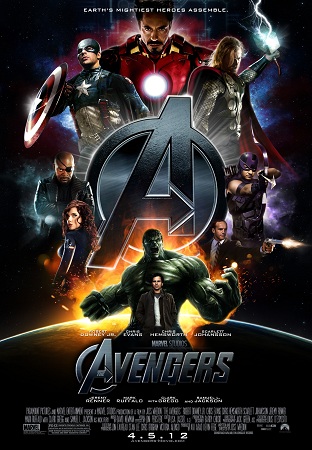 I have already reflected on Marvel’s “The Avengers” from a Christian perspective, but upon watching the recently released blu-ray and DVD
There will be SPOILERS here.
Slavery of all mankind
A thoughtful friend of mine on Facebook pointed to the dialogue between Loki and a crowd of people near the beginning of the film wherein he forces them all to kneel. Loki stands before them and shouts:
Kneel before me. I said… Kneel! Is not this simpler? Is this not your natural state? It’s the unspoken truth of humanity that you crave subjugation. The bright lure of freedom diminishes your life’s joy in a mad scramble for power. For identity. You were made to be ruled. In the end, you will always kneel.
Think of how this resonates with the Christian notion of slavery in sin. We align ourselves with things that we love. Greed. Envy. Pride. Lust. Gossip. These things, while initially pleasurable, ultimately enslave us. Loki’s speech was very discerning, however. For even though these things come to enslave us and take time away from the goods in life, we come to love them, to glorify them, and to become attached to them. We want to be enslaved in sin. We desire it. Sin calls to us, enslaves us, and we love it.
Yet, as in the movie, we are called to rise up against this sin. But we can’t do it on our own. As I discussed in my other post on “The Avengers,” we “need a hero.” We cannot rise out of slavery. Paul discusses this very notion in his letter to Rome:
Don’t you know that when you offer yourselves to someone as obedient slaves, you are slaves of the one you obey—whether you are slaves to sin, which leads to death, or to obedience, which leads to righteousness? But thanks be to God that, though you used to be slaves to sin, you have come to obey from your heart the pattern of teaching that has now claimed your allegiance. You have been set free from sin and have become slaves to righteousness. (Romans 6:16-18, NIV)
Who is it that set us free? We did not do it on our own. After all, we became slaves to sin and offered ourselves freely to it. No, it is Christ Jesus who set us free. He was the “hero” who broke the chains and gave us our freedom in Him.
Debts that Cannot Be Paid
Later on, Loki converses with Black Widow. They discuss the notion that Black Widow has “debts” to others. She owes them for the things they’ve done for her. She says that her ledger is in the “red”–she is on the wrong side of debt. During this conversation, Loki tries to break Black Widow down verbally, “Can you wipe out that much red? …Your ledger is… gushing red.”
Loki’s comments are telling, for they are actually true of not just Black Widow but of everyone. We all have our debts. We have our sins that we commit in private, away from others. We have the anger we have expressed through thought and deed. Our ledgers are overflowing, they gush red. Our sins are too great for us to repay; we cannot wipe away the red.
Yet God has loved us so much that He paid the debt. Jesus, God in human form, came to earth and paid that debt for each and every one of us. Our ledgers were full, but now we’re in the black. We have become co-heirs with Christ and have received salvation by grace through faith. We are justified through Jesus’ death and resurrection. God forgives us our sins and wipes our ledgers clean on His behalf. Loki’s comments are not unlike those of the Devil, trying to convince us that we are still in debt. Can anyone–even God–wipe away all the wrongs we’ve done? Fortunately, that answer is yes. Although we ourselves cannot repay it, God has done so for us.
Jonah
Another great line in the film is when New York City is under attack (seriously, why can’t that city catch a break?). Iron Man comes face to face with a gigantic enemy ship/creature/thing (my wife named it “Leviathan” and I think that’s a great title) and has to take it down. He asks his onboard computer: “You ever heard the tale of Jonah?” He then bursts into the mouth of the Leviathan and flies through it, exploding from the end and destroying it.
No, the reference was never explained. Hey, if you don’t know the story, look it up! It’s one of my favorites in the Bible. Just get out a Bible (or search online) and flip to “Jonah.” It’s short, and I guarantee you it’s worth the read!
Conclusion
It seems to me that there are a number of themes in “The Avengers” that Christians can relate to. The notion of the incredible debt we owe and cannot pay due to our past resonates directly with the Christian worldview. It points towards the salvation we have in Christ. Similarly, our slavery to sin cannot be overlooked. We want to sin, we crave it, but thankfully those bonds are broken in Christ.
Links
A Christian Look at “The Avengers”– I examine a number of other themes in “The Avengers” which Christians and non-Christians can discuss.
Engaging Culture: A Brief Guide for movies– I reflect on how Christians can engage with popular movies in order to have meaningful conversations with those around them.
SDG.
——
The preceding post is the property of J.W. Wartick (apart from citations, which are the property of their respective owners, and works of art as credited) and should not be reproduced in part or in whole without the expressed consent of the author. All content on this site is the property of J.W. Wartick and is made available for individual and personal usage. If you cite from these documents, whether for personal or professional purposes, please give appropriate citation with both the name of the author (J.W. Wartick) and a link to the original URL. If you’d like to repost a post, you may do so, provided you show less than half of the original post on your own site and link to the original post for the rest. You must also appropriately cite the post as noted above. This blog is protected by Creative Commons licensing. By viewing any part of this site, you are agreeing to this usage policy.
Jesus’ wife? A survey of responses.
SEE UPDATE: It has become revealed that this fragment is almost certainly a fraud. But, if you’re still bothered by it, check out the links below.
UPDATE 2 (4/17/2014): The case has been reopened as some alleged new evidence has shown that the document might not be a forgery after all, which now makes the links below relevant again! I’ve also added a comedic video I found via Tim McGrew.
There has been a bit of an uproar about a 4th Century Coptic Manuscript which purportedly provides evidence that Jesus had a wife. Apart from the fact that it is 4th century and therefore a few hundred years after the events and during primetime for Gnostics making up facts about Jesus to undergird their own theological leanings, many seem to think this is somehow evidence against Christianity. Well, here are some great responses to the discovery.
Reality Check: The “Jesus’ Wife” Coptic Fragment– Daniel Wallace, an influential NT scholar, comments on the discovery. He really gets into some great textual-critical details here. I would say this is one of the more important responses. I highly recommend this response.
Durham University professor calls the “Jesus had a wife” manuscript fragment a forgery– Yep, folks, we might be cutting this one off pretty quickly. Some analyses are suggesting fragment is actually a hoax, and the arguments seem pretty decisive. See the next post:
The Gospel of Jesus’ Wife: How a Fake Gospel-Fragment Was Composed– This is a very interesting post which you can find Francis Watson, a professor of religion and theology at Durham University making a concise argument in a PDF which argues that the fragment is a fake. It’s a fascinating article, and perhaps destroys the whole controversy at the start. (To be fair, the late purported date of the fragment does little for me, anyway.)
New Coptic Fragment Says Jesus Was Married– A summary of skeptics’ attitudes towards historicity.
The Gospel of Jesus’ Wife?– Glenn Andrew Peoples has a simply fantastic discussion of the implications of this discovery. One of my favorite lines: “Prepare yourself. Suddenly, people are going to read a sensational article about a tiny scrap of parchment and become experts on early church history.”
Did Jesus Have a Wife?– A post which focuses on the authenticity of the document and the implications if it is indeed authentic. Another great response.
SHOCKING New Evidence Reveals 4th-Century Coptic Christians WONDERED If Jesus Was MARRIED!– What is the historical significance of the discovery, assuming it is genuine? A few very good, concise points.
So What if Jesus did Have a Wife?– Definitely an alternative approach. John Byron notes that Christians could grant that Jesus was married without somehow undermining the core doctrines of Christianity. This one is really interesting and I’m sure will be controversial. While not a response to this article, Aggie Catholics has a very different view of the implications of the discovery, while denying that it has historical import other than as showing the beliefs of Gnosticism: Proof That Jesus Was Married?
The Wife of Christ and the Bride of Christ– This post looks at the discovery from a more presuppositional type approach. We know the Bible is reliable, so what should we make of this discovery?
Stop the presses! Jesus was married! Oh no!– Carl Olson at the Catholic World Report comments on a number of issues with jumping to conclusions about the text. I found this one particularly insightful about how the discovery is being portrayed in the media.
Quick Thoughts on the New Jesus Wife Text– Darrell Bock, a prominent NT scholar, shares his thoughts on the implications of the text. It’s highly informative and concise.
Was Jesus Married?– A reflection on the way the media portrays stories like this along with an examination of the importance of the document and apologetics.
Get Ready for A Wave of Gnostic Looniness Again– James White notes that the discovery was made by a woman who loves to sensationalize gnosticism.
Shock! Horror! Jesus’ Wife! (Video)– a satirical video about the discovery and its alleged implications for Christian faith.
Book Review: “From God to Us” by Norman Geisler and William Nix
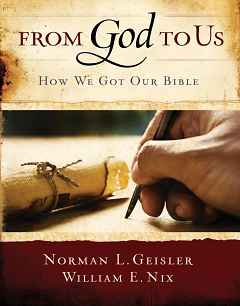 From God To Us
Inspiration
FGU outlines the nature of inspiration. It is important to note that “it is only the product that is inspired, not the persons” (17). Another misconception is that inerrancy/inspiration applies to copies. The sense in which it does must be limited: “Only the autographic [original] texts themselves (or perfect copies of them) are inerrant… Every other copy is inspired only insofar as it is an accurate reproduction of the original” (18).
The authors then turn to a defense of inspiration through the Biblical teaching of inspiration. By outlining the way the text is treated as inspired in both the Old and New Testaments, the authors make a case for the general inerrancy of the autographic texts. Finally, the authors provide an argument for the Bible as the word of God (68ff). The argument is 12 steps and they provide a basic defense of each premise.
Canonization
One of the most frequent objections brought up offhand to those who hold to a high view of the inspiration of the Bible is that of the canon. Some say that the canon was just arbitrarily chosen by a church council somewhere, and that there is no way to determine how books got into the Bible.
FGU provides a more historically accurate look at the canon. The authors first outline a number of factors that are faulty for determining canonicity. For example, age alone cannot determine canonicty because some books of the Bible drew from contemporary sources.
In direct opposition to the notion that a council alone could determine the canon, FGU underscores the notion that: “the role of the Christian church… is not to determine which books are in the canon but to discover which books God determined should be in the canon, namely, those that He had inspired” (91). The authors then explore a number of factors which play into discovering the canon.
Historically, FGU explores the extent and formation of the Old Testament and New Testament canons. The arguments are concise and direct readers to further areas of exploration, while providing enough information to refute most basic arguments.
Transmission
The Bible had to be transmitted: namely, God’s word had to be communicated to human persons. How was this done? Largely in the form of written languages. FGU explores the importance of written language as a means of communication and provides a brief background in the development thereof (164ff).
Of great importance to the reader is the extensive material on the manuscripts of the Bible. The details of the manuscript tradition are outlined and even several forms of extrabiblical manuscript evidence is brought into the picture. Such evidence is an important part of a believers’ background of Bible knowledge. FGU also does a fantastic job outlining the foundations of textual criticism and the valuable role it can play in determining the accurate reading of the text (221ff).
One of the most enlightening parts of FGU outlines the nature of finding “errors” in the transmission of Scripture. Often, one will hear the claim that there are 100s of thousands of errors in the Bible. Bart Ehrman has, in particular, focused upon this in order to cause some unrest in the notion of the accuracy of the Bible (243). But these are actually variants in manuscripts which are sometimes counted numerous times:
If a single word were misspelled in 3,000 different manuscripts, they are counted as 3,000 variants… Ironically, the way Ehrman counts ‘errors’ (variants), there were 1.6 million errors in the first printing of his book. For there were 16 errors, and the book printed an alleged 100,000 copies… Ehrman himself admits the biblical variants do not affect the central message of the Bible. (243)
The authors then turn to an analysis of variant readings and how they occur, from misspellings and unintentional changes to corrections to try to bring texts into concord (246ff).
Translation
FGU provides an intense look at a number of ways the Bible has been translated and the way that translations happen. The traditions of translation are outlined and traced through history (280ff) and the importance of individual translations are analyzed.
Another extremely valuable part of the book is the analysis of how translations come about as far as the emphasis placed upon form-driven versions, meaning-driven versions, and paraphrases. Readers interested in modern Bible translations will find a wealth of resources for analyzing the varied translations. There are nearly 70 pages of information on these translations, so readers will have a number of points to discuss with those asking questions about translations.
Analysis
FGU is a huge resource for those interested in not just defending but learning about the Bible and how it has arrived in its current state in our pews. The book covers a number of issues and it will have appeal to both lay readers and interested professionals. Christian apologists will find a treasure trove of information about the background of the Bible which is often glossed or ignored in a number of apologetics resources.
The authors come from a decidedly conservative background, but this does not prevent them from a generally fair analysis of a number of topics. For example, though they seem critical of the so-called “gender accurate” language of TNIV, the analysis of the translation is objective and simply outlines how the translation comes to its current form (350-353).
Conclusion
Norman Geisler and William Nix have provided a solid resource with From God to Us. It will appeal to those who want to get a lengthy introduction to a number of relevant apologetical issues related to the Bible. Furthermore, it provides a significant amount of background on various translations of the Bible. What is most surprising about the book is how it manages to provide so much information without becoming too dense or thin. It covers so many issues that the danger would seem to be either to err on the side of being too long or too brief on each issue. The authors admirably do not stray to either side, and in doing so, have provided an invaluable resource for both the interested lay reader and professional.
SDG.
——
The preceding post is the property of J.W. Wartick (apart from citations, which are the property of their respective owners, and works of art as credited) and should not be reproduced in part or in whole without the expressed consent of the author. All content on this site is the property of J.W. Wartick and is made available for individual and personal usage. If you cite from these documents, whether for personal or professional purposes, please give appropriate citation with both the name of the author (J.W. Wartick) and a link to the original URL. If you’d like to repost a post, you may do so, provided you show less than half of the original post on your own site and link to the original post for the rest. You must also appropriately cite the post as noted above. This blog is protected by Creative Commons licensing. By viewing any part of this site, you are agreeing to this usage policy.
Really Recommended Posts 8/17/12
 Another really diverse round of posts this time. Politics, reading the Bible, and creationism are just a few of the featured topics. Check them out. If you like them, let me know!
Why don’t we read the Bible?– An exhortation to reading the Bible. We need to set aside the time for real Bible study. Why don’t we?
Who is Paul Ryan? What are his political views and motivations?– Frequent readers will know that I very, very rarely discuss politics. However, I can’t help but be excited about Mitt Romney’s nomination of Paul Ryan for his running mate. Why? Well Paul Ryan’s track record as far as pro-life politics are concerned is nearly spotless. His fiscal policy also seems spot-on to me. I highly recommend checking this post out to those of my readers interested in U.S. Politics.
“What Books Are a Good Investment for Scholars?”– Doug Geivett outlines which types of books will make good investments for scholars.
Debating Tips for Atheists– Want to have genuine discussion with Christians, atheists? Here are some tips.
The Correct View of Creation?– A survey of views on creation (old, young earth) along with some discussion over how to determine which is correct.
Ehrman’s Problem 16: Cosmic Issues He Doesn’t Understand– Bart Ehrman has a lot of problems. One is that he completely misunderstands the book of Job and the cosmic issues therein.
Really Recommended Posts 8/3/12
Wow, there are some really excellent posts out there. I am constantly blessed by reading or viewing great material from others. This week, the topics covered are all over the board: abortion, Leviticus, 50 Shades of Grey, apologetics methodology, and more! Check out these really recommended posts.
Grey Areas: How explicit literature went mainstream– You’ve heard of 50 Shades of Grey. What’s all the fuss about? And what kind of junk are we putting on the bookshelves?
The Mistake of Leviticus– Leviticus is one of those books in the Bible many balk at reading. Check out the insight provided here by Credo House. I really, really recommend this post.
Some Standard Definitions From the Doublespeak Dictionary– Bigot, Christian, and Intolerant tie together so well! Check out this great apologetic cartoon.
The Bibliographical Test Updated– Clay Jones, a professor over at Biola University, offers an update to the number of ancient manuscripts available for the various “bibliographic tests” for the accuracy of the New Testament. A brief, readable, and important post.
Is Abortion Really Wrong?– A great introduction to the debate over abortion.
Why I don’t reply to everyone (and neither should you)– It’s easy to get caught up in online debates or try to respond to everyone who comments on a blog or forum. Glenn Andrew Peoples offers an excellent post on why he doesn’t respond to everyone. He also gives some good guidelines for deciding whether you’re going to respond to someone.
The Atheist War Against Logic and Philosophy– I’m not sure this video is fairly named, because it seems like it is more the extreme views on philosophy of a number of people dismissed by the vast majority of others. Good watch if you want to pull your hair out at people rejecting logic while using it.
Apologetic Taxonomy: Methodological Approaches– Readers of my blog know I’ve been exploring a few other apologetic approaches. Here’s an excellent post which outlines the various methodological approaches to apologetics in a brief, readable format.
Answering Common Young Earth Creationist Arguments
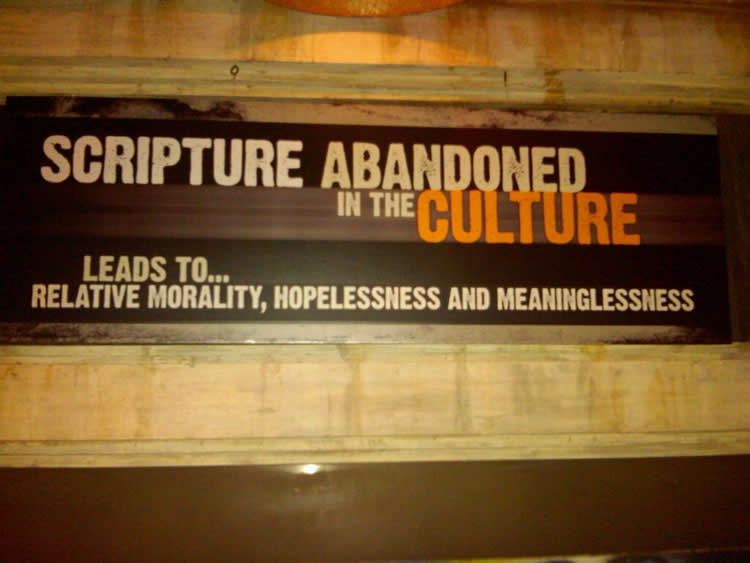 The debate over the age of the universe is a hot issue for some Christians, and this unfortunately leads to a number of faulty arguments and even some name-calling. This post is not going to argue against young earth creationism specifically. Rather, I hope that it can be a resource for both young earth and old earth proponents in order to avoid faulty reasoning. Each argument’s topic will be in bold with the problem outlined and a response. [Image at head of post credit here.]
Please see the end of the post for a response to an article linking back to this one.
Perspicuity of Scripture–
The Argument
Some young earth creationists (hereafter YEC or YECs) argue that old earth positions undermine the perspicuity of Scripture. Perspicuity of Scripture is the notion that the central teachings of Scripture can be understood by any who come to the Gospel. The charge YECs make is that because it seems, on a surface level reading of the text, that Genesis 1 implies creation over the period of 6 literal 24 hour days, those who deny this undermine the Perspicuity/Clarity of Scripture.
Response
The Perspicuity of Scripture does not apply to all areas of Biblical doctrine. Rather, it is the notion that anyone can understand the plan of salvation as laid out in Scripture and come to right knowledge for faith.
Think of it this way: read the book of Revelation. Do you understand everything in this book, or is the apocalyptic literature hard to discern? Throughout much of Christian history, there has been debate over the meaning of Revelation. There are a number of views, like preterism, idealism, dispensationalism, etc. But this doesn’t mean that what Scripture teaches in general is unclear. The clarity of Scripture in regards to salvific issues is absolute. Any reader can read and understand God’s plan for salvation.
Addendum
If the argument is pressed, again ask the YEC whether they are claiming they understand every single doctrine that the Bible teaches. Do you understand perfectly the Trinity, the atonement, the incarnation, the Lord’s Supper, the proper relation of Law and Gospel, etc.? If someone claims they do, they are essentially equating their understanding to God, rather than adhering to Scriptural teaching (1 Corinthians 13:12).
The Meaning of Day
The Argument
The Hebrew word used in Genesis one, yom, means day. It literally means a 24 hour period.
Often this argument is presented in a fairly demeaning and/or ad hominem way to the opponent: “Why do you insist on reading man’s fallible ideas into the text? It says day, it means day. I trust the Bible.”
Response
Actually, the Hebrew word yom has several different literal meanings. For example, according to Brown-Driver-Briggs’ Hebrew Lexicon, yom can mean “day, time, or year”; day as opposed to night; a 24 hour day; a time or period of time; a year; an age. Thus, if someone reads the text and argues that in Genesis 1 the days mean “ages”, they are still reading the text literally.
Evening and Morning
The Argument
When the Genesis 1 text refers to the days, it applies the terms “evening and morning” to each one of days 1-6, which means that each day is indeed a 24 hour period. That’s what evening and morning means.
Response
The delineation of time periods for days was not possible until the fourth day. As it is written, “Let there be lights in the vault of the sky to separate the day from the night, and let them serve as signs to mark sacred times, and days and years, and let them be lights in the vault of the sky to give light on the earth” (Genesis 1:14-15, I italicized “days”). Thus, the text itself tells us that the sun did not serve as a specific indicator of the length of days until the fourth “day.”
The repetition of evening and morning is an indication of the metaphor for the work week used throughout Genesis 1. Notice that evening and morning are reversed from the order in which they occur in a 24 hour day.
Day is not a long period of time
The Argument
Sure, there are other literal meanings of “yom” and in poetic literature it says that a day is like a thousand years for the LORD, but Genesis is a narrative and so the days mean literal 24 hour periods.
Response
Actually, in the very same account the word day is used in order to refer to the whole time of creation. As it is written, “These are the generations of the heavens and the earth when they were created, in the day that the Lord God made the earth and the heavens” (Genesis 2:4). I used the ESV translation here because the NIV translation translates yom as “when” here. In this text, the word “day” refers to the entirety of God’s creative work. Thus, the text itself utilizes the same word, yom, to mean a longer period of time than a 24 hour period in the same context of creation. And because this is “narrative” it can’t be dismissed as “mere poetry.” Speaking of which…
That’s Just Poetry
The Argument
Many of the verses that old earth proponents use are from places like the Psalms. For example, the verse about a day being like a thousand years is from Psalm 90:4. These verses are poetry and therefore not relevant to the actual age of the earth.
Response
Poetic literature still makes truth claims. Are you suggesting that nothing in the Psalms is true? To dismiss a text that is brought up in order to counter your position by saying “that’s just poetry” is tantamount to throwing God’s word out the window. One might wonder why it is that the YEC interpretation of Genesis 1 trumps every other passage in the Bible.
Appearance of Age
The Argument
Sure, some scientific evidence may make it seem as though the earth is old, but it is not actually old. Instead, God made it in such a way that it would support life, and in order to do so, it had to look old. He created light already on its way to earth and the Flood explains sedimentation.
Response
Nature tells us about reality, though we cannot infallibly search it (Psalm 19); God does not lie; therefore, God would not make something which by all appearances would look old, but is not in fact old.
Rebuttal
But Adam looked old. He was created about 30 years [or some adult age] old! Similarly, the plants in the garden, etc. would have looked old, but been new.
Response
The text doesn’t actually say how old Adam was when he was created. But that’s a side issue. More importantly, we would be able to tell how old Adam was by looking at evidences like his teeth, his bones, and the like. All of these would show signs of age.
Regarding the plants, this argument really just begs the question for YEC. As it is written, “And the LORD God planted a garden in Eden, in the east, and there he put the man whom he had formed. And out of the ground the LORD God made to spring up every tree that is pleasant to the sight and good for food…” (Genesis 2:8-9a).
The text clearly says that God planted a garden. While it says that God made plants spring up, it is prefaced by the notion of planting. The notion of planting implies growth over time.
And suppose this is wrong; suppose the plants were grown instantly: we’d still be able to test them and see how old they actually were by looking at things like cell division and tree rings.
Rebuttal
Your response assumes uniformitarianism.
Response
See section on uniformitarianism.
Presuppose Naturalism
The Argument
This one is extremely common when one listens to/watches debates between YEC and old earth proponents. Essentially, the argument goes like this: “You are presupposing naturalism in order to come up with an old earth. I presuppose the Bible is true instead. The difference is I [the YEC] am aware of my presupposition.”
Response
Strictly speaking this argument is actually completely false. Naturalism is the philosophical position that only the natural world exists. The debates in which this argument is often brought up are very often between Christians of opposing views. Therefore, because they are both Christians, neither one is operating under the presupposition of naturalism.
Rebuttal
The YEC may press this objection, however, and say what they mean is that one is presupposing a naturalistic methodology as opposed to the entire worldview.
Response
Define “naturalistic methodology.”
1) If you mean assuming “uniformitarianism”: see the argument and response below.
2) If by “naturalistic methodology” you mean something else, show how that is the case.
Uniformitarianism
The Argument
The only way to come up with an old earth is by assuming that everything has been uniform forever; in other words, the processes in place now are operating at the same speed they always have.
Response
Let’s apply this argument to one field: geology. Geology does come up with ages around 4.5 billion years old for the age of the earth. Now, the problem is that this is not due to uniformitarianism. Rather, geologists must take into account the fact that catastrophes do happen. For example, a huge meteor hitting the earth would change the geological landscape. Modern geology is neither catastrophist nor uniformitarian; rather, it must take both into account. And it still comes up with an “ancient” earth. The problem is that YECs go to the opposite extreme and actually assume that a catastrophe (or numerous catastrophes) can account for all geologic evidence. By citing specific examples of catastrophism, they then apply a catastrophic geology to the rest of the earth. It’s exactly the methodology YECs critique, but then they do it themselves. This is simply naive.
Furthermore, the burden of proof here is upon the YEC to show that the rates could increase at such a monumental rate on such a monumental scale that everything we observe that looks ancient is, in fact, ‘young.’ They must make the argument.
Rebuttal
You’re just starting with man’s fallible ideas. I just use the text for my guide.
Response
See “Look, it’s what the Bible says” and “Man’s Fallible Ideas” sections below.
Look, it’s what the Bible says
The Argument
I just read the Bible and agree with it. It says days, I say days; it gives genealogies, I add them together. All I do is take Genesis literally. You use man’s fallible ideas to distort the text.
Response
It has already been shown that the word “day” has several literal meanings. It has already been shown that “day” is used for a longer period than a “day” in the context of creation in Genesis. Thus, one could respond by saying “I just read the text literally too. On the first ‘age’, God created…. on the second age, God created…., etc.”
Furthermore, the genealogies are incomplete. It can be demonstrated that a number of genealogies in the Bible skip people or operate in an inexact fashion. By assuming the genealogies are linear, one has read anachronistically a 21st century notion of a genealogy back onto the text. That would be one of man’s fallible ideas.
Furthermore, the notion of an old earth proponent importing ‘man’s fallible ideas’ into the text can be equally applied to YEC. Who says that YECs are infallible? Would you claim you read the Bible perfectly and discern everything correctly?
You weren’t there!
The Argument
You weren’t there at creation. Neither were these “scientists” you cite in your “evidence.” How do you know what happened?
Response
You weren’t there either, my friend. However, when we look at the stars, we are looking at the past. Furthermore, we can measure things like cosmic background radiation, sedimentation rates, volcanic activity, and the like in order to discern how old the earth is. Again, God tells us that nature gives us a record (Psalm 19), so one wonders why we are being told to doubt that record.
 Very Good
The Argument
God says that his creation was “very good”; how could there then be animal death, thorns, cancer, and the like. The world would have been beautiful, without death, and without any kind of evils. Think about it, you’re saying that God was calling cancer eating away at dinosaurs and the like a “very good” thing! [Image credit here.]
Response
First, it seems very often that when YECs use the phrase “very good” what they mean is “perfect” in their own eyes. Why think that animal death is necessarily bad? If animals didn’t die, ecosystems would collapse: all the plant-eaters would starve, insects would take over and eat all plant life, and any number of other “bad” things would happen. Animal death is part of a beautiful system of maintaining order in the world.
Using the cancer example to try to argue that it couldn’t be “very good” is importing human emotions into creatures which are not moral agents. Simply put, an animal is not a moral agent. This doesn’t mean it is good to kill them, but it isn’t bad either. The harm comes when a moral agent intentionally brings unnecessary harm to an animal.
I would like to see an argument for what “very good” means to YECs. Why should it mean absolute perfection?
Finally, one must wonder about the fact that God planted the garden in Eden and it is that creation which is “very good”. God planted this Garden, and it was the localized area in which Adam and Eve were placed. That’s what the text says. Nowhere does it say the whole earth was like the Garden.
Compromise
The Argument
Unfortunately, this is one of the less subtle ad hominem types of arguments YECs employ. It basically goes like this: use a scare word like “evolution,” put in in context with an old earth proponent, and then call them compromisers. For example, “Wartick, who believes in a form of old earth creationism–really just a variety of theistic evolutionism–chooses to compromise the text to fit secular science.”
Response
Unfortunately, this very type of argument is used to discredit many fellow Christians. Rather than focusing on the issues at hand, it is indeed easier to just bash the opposition. For the record, I am not a theistic evolutionist. The point is that others who hold views similar to my own suffer from arguments like this against them. It’s dishonest.
The most unfortunate thing to take from this type of argument is that the average Christian on the street is very affected by it. Recently, I recommended an article from an extremely prominent Christian philosopher to another Christian. Their response was that if this other believer thought evolution might be true, they were too biased and they would not read the article.
That’s right, the effect of this type of argument is that it brings about a situation in which people won’t even read what other believers have to say about a topic. One must wonder, at least a little bit, about a position which discourages adherents to read the works of the opposition. Why not read and consider other viewpoints and take what is true?
Plain and Obvious Meaning- or “I don’t need to twist the text.”
The Argument
Basically, the way this one goes is as follows:
I just read the text for what it says. You have to do all kinds of things to interpret it. Why do you twist the text to fit your views?
Response
 Actually, YEC is also an interpretation of the Biblical text. It is an inference from the textual data. You are also interpreting the text, and need to justify your hermeneutic. Given the mounting evidence against it in books like The Lost World of Genesis One
You’re Using Science to Change the Meaning of Scripture
The Argument
Old earth proponents may have a viable exegetical position, but why on earth would they pick old earth over young earth? It seems the only reason is because they are caving in to science.
Response
Science can give us a record of reality. When the church lines itself up with views that do not accord with reality, it is discredited. Consider the controversy over heliocentrism vs. geocentrism. This controversy resulted because the church lined itself up with a philosophical position that it thought was taught by the text of the Bible. Similarly, the young earth position is an interpretation of Scripture and its advocates must contend with the scientific evidence.
Augustine issued a strong warning related to this objection [Literal Meaning of Genesis, Chapter 19, Volume 1]:
“If they find a Christian mistaken in a field which they themselves know well and hear him maintaining his foolish opinions about our books, how are they going to believe those books in matters concerning the resurrection of the dead, the hope of eternal life, and the kingdom of heaven, when they think their pages are full of falsehoods and on facts which they themselves have learnt from experience and the light of reason?”
The Bible says it, I believe it, that settles it
The Argument
This argument has a few varieties:
1) The Bible says the earth is not millions or billions of years. Why do you insist on changing God’s word for man’s fallible ideas?
2)The Biblical text entails a young earth. Why do you read it as a long period of time?
Response
1) Where in the Bible does it say “the earth is not millions or billions of years old”? Where in the Bible does it tell me the date of creation?
2) Please show me: where in the Bible does it tell me the date of creation? Where does in the Bible does it specifically say YEC is true? If you can’t, then you’re using an inference. See “Plain and Obvious Meaning” above.
Man’s Fallible Ideas
The Argument
Perhaps the most frequently used argument is of this variety. Too often, when threatened by exegetical or extra-biblical evidence that contradicts their position, YECs will fall back to this type of argument:
“That’s just using man’s fallible ideas to interpret the text.”
or
“That’s using man’s fallible [geology, astronomy, physics, insert discipline] to alter the meaning of God’s word.”
Response
The Young Earth position is an interpretation of the text as much as any other. Thus, the argument could just as easily be turned around:
“You’re just using man’s fallible interpretation to read a young earth onto the text.”
But, to be honest, this argument just amounts to a subtle ad hominem, even if the one using the argument doesn’t realize it. Why? Because it suggests that the other side is a) wrong; and b) not thinking Biblically.
A better response, therefore, would be to simply point out that the YEC position is also interpreting the text and that old earth proponents are looking at the whole body of evidence God has provided instead of just trusting what others tell them about the text.
Response to article against this one:
Over at “fortress maximus” the author offered a response to this article. I’ll not go point by point, but rather I listed a few areas of major contention. The most contentious point for me is that the author says I reject inerrancy, which is false. When I say “you” after this, I’m referencing his article. As of this point in time (January, 2013), he has not amended his article to remove the false claims made about me therein. Anyway, response:
Thanks for your thoughtful response. I have a few comments, but I won’t be too lengthy because I don’t have time.
1) You wrote “the author fails his own claims by only outing the YEC arguments as faulty and then offering the OEC arguments as an unchallenged substitute.”
The title of the post is “answering common YEC arguments.” I think that pretty much makes my intention clear. The stated purpose is that I’m not arguing specifically against the YEC position, which I don’t. I only answer many arguments. It’s a bit disingenuous to claim I’m doing otherwise.
2) You wrote, “Poetry in the Bible certainly is relevant, but only in revealing spiritual truths, not historic ones.”
No historic truths in the Psalms, eh? I guess the Psalms by David when he was fleeing from his enemies don’t tell us anything about his situation? I would like to see an argument for this claim.
3) Regarding appearance of age, you wrote “I’ve never heard any serious YECer use these arguments. Old appearance has nothing to do with God’s creation and how it may appear. This stance is also unsupported scripturally, hence it is blatantly flawed. So, if you are a YECer and you used this argument, stop it!”
I was once YEC and unfortunately used this argument myself, because almost every other YEC I knew used it as well. Thus, it’s an argument used by YECs, and I answered it. I agree, though: stop it!
4) You wrote “We’re finally getting to the greatest point of contention – this argument states that the Bible is inaccurate and as such flawed (“the genealogies are incomplete”). This goes against the premise that the Bible is the holy, inspired, infallible, written Word of God.”
Wrong, absolutely wrong. Unfortunately, YECs tend to do this to me all the time: put words in my mouth. Please show me in a quote where I said the Bible is inaccurate and flawed. Show me. You literally say it right there: “this argument states that the Bible is inaccurate and as such flawed”
But wait, the quote is actually: “the genealogies are incomplete” which we can demonstrate from the Bible. It’s not that they are inaccurate; it is that the modern notion of a genealogy stating one generation after another with no gaps is just that: a modern notion. I never stated the Bible is inaccurate, nor do I state it is flawed. I have been a staunch defender of inerrancy. Your statement here is extremely ad hominem; it is, in fact, so wrong and unsubstantiated by my blog that if I weren’t giving you the benefit of the doubt I’d think you’re just lying about me. I therefore ask you to retract it.
5) regarding dating methods: I hate to say it but anyone who reads non-YEC literature on this topic will not be convinced by these arguments. Yes, there are aberrations in the dating which are not covered up by secular or other scientists whatsoever: they state them in their works; no, they do not undermine the whole system.
Resources
Here is a list of resources for old earth perspectives. I will annotate it at some point. For now it’s just a list of amazon links.


SDG.
——
The preceding post is the property of J.W. Wartick (apart from citations, which are the property of their respective owners) and should not be reproduced in part or in whole without the expressed consent of the author. All content on this site is the property of J.W. Wartick and is made available for individual and personal usage. If you cite from these documents, whether for personal or professional purposes, please give appropriate citation with both the name of the author (J.W. Wartick) and a link to the original URL. If you’d like to repost a post, you may do so, provided you show less than half of the original post on your own site and link to the original post for the rest. You must also appropriately cite the post as noted above. This blog is protected by Creative Commons licensing. By viewing any part of this site, you are agreeing to this usage policy.
Method or Madness? A reflection on Jesus, the Titanic, and Parallelomania
“[I]n the case of Jesus Christ, where virtually every detail of the story fits the mythic hero archetype, with nothing left over, no ‘secular,’ biographical data, so to speak, it becomes arbitrary to assert that there must have been a historical figure lying back of the myth.”[1]
One needs only to ask the question, “Did Jesus exist?” in order to spark intense debate amongst skeptics and Christians. A simple search for the question online turns up any number of non-professionals who boldly assert that there was no historical Jesus, or even that the evidence that Jesus was a myth outweighs the evidence that he was a real man.[2] There are even a few scholars who allege that Jesus never existed.[3] Perhaps the most frequently-cited “evidence” that Jesus never existed is the purported evidence of parallels in pagan and mystery religions.[4] The notion that legendary or historical parallels can discredit a historical account is itself on shaky epistemological ground. If, however, one were to take seriously the notion that parallels discredit a historical account, vast swathes of history would also evaporate into skepticism. Simply put, if the hyper-skepticism related to parallels about Jesus were applied to all of history without bias, historical inquiry would be undermined. In order to draw out the implications of parallelomania[5] for what are generally acknowledged as historical accounts, the rest of this study will start off with a tongue-in-cheek investigation of one historical event (the wreck of the Titanic), emphasizing the parallels between it and a fictional account; then an inquiry into historiographical investigation will be launched in relation to the methodology which utilizes alleged parallels and their connotations for historical study. Thus, the following study will show that the methodology of those who argue from alleged parallels to the non-existence or “legendary hypothesis” of Christ is mistaken, rather than arguing that individual parallels are wrong.[6]
There is a tradition within Christian apologetics of pointing out the absurdity of rival positions, sometimes even by satire.[7] Essentially, by showing that an opponent’s method or conclusions lead to absurd conclusions about things nearly everyone agrees upon, the apologist can discredit the method or conclusion that is under investigation. The following section will be an exercise in this strategy. Note that the author is satirically employing the methods found in several sources of supposed historical inquiry into the existence of Jesus.[8]
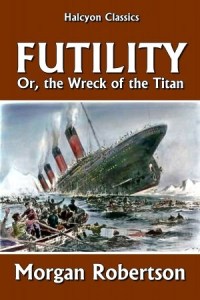 The Myth of the Titanic: An argument from a “Titanic myther”
It is clear that the wreck of the Titanic is a mythic tale which has been foisted upon history. Few people know that Morgan Robertson’s novel, Futility, or the Wreck of the Titan,[9] which was written in 1898, 14 years before the RMS Titanic sank, outlines a highly telling, fictional account that has any number of parallels to the purported wreck of the Titanic. First, note the number 14’s significance: the Titanic hit an iceberg on April 14th, 1912![10] The book itself discusses the wreck of the Titan, which a child could see is very similar to Titanic. Consider the first line of Robertson’s work: “She was the largest craft afloat and the greatest of the works of men.”[11] The Titanic was supposedly the largest ship afloat at the time of her voyage.[12] The captains on both ships had the same name, Robert Porter. Not only that, but both the fictional and supposedly historical ships[13] had three propellers. Both were said to be unsinkable.[14] Both ships carried the minimum number of lifeboats required by law and therefore both ships lost an enormous number of passengers when sunk. [15] Finally, the clinching piece of evidence is that both the Titan and the Titanic were sunk by hitting an iceberg.[16]
From these evidences one would not be hard-pressed to conclude that the story of the Titanic is merely the plot of the Titan with historical embellishments. Consider the parallels once more. From the description (unsinkable) to the propulsion system (three propellers); from the lifeboats to the size of the ship; from the names of the ships to the very means of destruction, the Titan and Titanic are the same. Furthermore, numerology is inherent in the Titan/Titanic narratives. The 14 years between the two stories echoes in the alleged date of the wreck of the Titanic. Therefore, in the case of the Titanic, where virtually every detail of the story fits the “shipwreck” archetype, with nothing left over, it becomes arbitrary to assert that there must have been a historical event lying behind the myth.[17]
Parallels and Historiography
Setting aside the satire, it is clear that the example of the Titanic used here is only[18] the tip of the iceberg.[19] There are a number of other historical accounts and persons one could do a similar “study” upon.[20] But what does such an investigation prove? The notion that parallels can somehow discredit a historical account is on a very faulty ground. First, the notion of “parallel” is highly subjective and can mean different things to different readers. “One tends to read into accounts the commonalities one is looking for.”[21] If one assumes that a text is mythical—if one assumes the text is not trustworthy or at least had other sources or was derived—then one will find exactly that which one has assumed in the text. Samuel Sandmel writes, “I am not denying that literary parallels and literary influence, in the form of source and derivation, exist… I am speaking words of caution about exaggerations about the parallels and about source and derivation.”[22] He goes on to argue, regarding alleged parallels as derivations in Paul’s writings, “[T]o make Paul’s context conform to the content of the alleged parallels is to distort Paul… if we make him mean only what the parallels mean, we are using the parallels in a way that can lead us to misunderstand Paul.”[23] Similarly, if readers look at a historical account—even one that they believe only alleges to be historical—and make it mean only that which the parallels allow, then they distort the text’s meaning. Indeed, it can lead one to look only to the parallels for meaning rather than to the text itself.[24]
A second problem with the kind of parallelomania found in some skeptics’ looks at Jesus and alleged sources for the Jesus “legend” is that they have discounted many principles of historical inquiry. Historians begin by looking at the conventional meaning of a text.[25] They also look at the historical context of the text in order to interpret the text.[26] However, in order to do this accurately, they must be aware of their own biases and be open to correction.[27] It is of the utmost importance for historians to consider the complexities of a historical picture as well as the links between causation, contingency, and counterfactual reasoning in historical research.[28] To put it more precisely, history is not a simple task in which one can conclude with certainty the causes of a past event.[29] Rather, historians must consider the interdependency of variables in a historical event[30] and avoid the temptation to oversimplify a historical account in an attempt to “clean it up.”[31] Those who seek to reduce the story of Jesus “without remainder” to legendary figures have fallen victim to a historiography of their own invention. They’ve followed their intellectual biases to their own conclusions and failed to take the texts into account.
 Those who argue that the Gospels are discredited because of alleged parallels also utilize a poor, unjustified inference. Even were there a huge number of parallels between Jesus and the supposed mystery (and other pagan) religions, these would not, of themselves, discredit the account of Jesus as historical. Consider the “Titanic Myther”[32] in the satirical account above. The myther seeks to show that, due to all the parallels one can draw between the Titan and the Titanic, the latter is derived from the former. But by what principle of reasoning does it follow that similarities show derivation? Is there a way to determine when a document is derived from another? What is the cutoff point at which we know that a supposedly historical event can be said to be legend? None of these questions is intended to say that historians can never accurately say that a document—even one that claims to be historical—is legend. Rather, the question is whether the Gospels are shown to be legend by supposed parallels. If one holds that they are legends, then how is it that one comes to the conclusion? One can see by looking at most of the purported “studies” online that the conclusion is most often reached simply by citing a number of alleged parallels to Jesus across differing accounts, but of course that won’t do. One would have to show that these parallels are accurate in their claims (and many of them are not),[33] while also showing that the parallels are not mere coincidences, like those between the Titan and Titanic. Finally, the question remains: what rule of logic or historical inquiry yields the outcome that a prima facie historical account is in fact legend because there are legendary parallels?
Finally, there is the question of the burden of historical proof. The burden of proof is upon the one making the claim,[34] and in this case, people claim that Jesus was a legend. That is a positive claim in need of evidence. Unfortunately, the argument is most often made in a manner which simply dismisses counter-evidence while vastly overstating and sometimes even lying about the parallels which are found in other religious figures.[35] The dismissal without argument of counter-evidence, combined with a sometimes blatant disregard for historical accuracy[36] radically undermines the case of those who claim Jesus was a legend based on parallels.
Jesus and Legend
Hypotheses about historical events must take into account the entire body of evidence.[37] The theories which try to reduce Jesus to a legendary figure alone do not take into account the entire body of evidence, and therefore fail the test of historical credibility.[38] Suppose, for the moment, the numerous alleged historical parallels to Jesus were true. How, then, would historians account for the willingness of the disciples to go to their deaths for their beliefs in the truth of the Gospel accounts?[39] What of the Pauline epistles?[40] What of the archaeological evidence and extra-biblical documentation about the life of Jesus?[41] By reducing their historiography to a mere shadow of that which is used in standard historical studies, those who argue that the parallels of Jesus discredit the Gospel accounts have failed the test of explanatory scope for their theories. Like the “Titanic Myther” above, who didn’t take into account the photographs of the wreckage of the Titanic or the numerous firsthand accounts of her voyage, their theory cannot begin to account for the above questions—it does not cover the whole body of evidence. The “Jesus Legend” is a pure figment of their own imaginations–one which is not backed by historical inquiry.
 Finally, those who argue from parallels make a number of other methodological blunders. First, they tend to lump all the mystery religions in with other pagan and ancient religions in order to form a kind of “composite parallel” to Jesus from which the Gospels are supposedly derived.[42] The problems with such a method, of course, are that it is extraordinarily anachronistic and that those proposing such theories “have been a bit too casual in fitting Christian elements into mystery religion data.”[43] Second, they borrow terminology from Christianity in order to retrospectively apply it to mystery religions, despite what are often entirely different contexts.[44] Third, the theories disregard the first century context of the Gospels in which, first, the “Homeric assumption” about resurrection (that is, that humans did not rise from the dead) persisted throughout the world;[45] second, the Jews would have been staunchly opposed to letting pagan religions undermine Judaism.[46] Fourth, the groundwork which must be laid down in order to establish dependence of one religion upon another is often ignored or misrepresented by those who alleged the ahistorical nature of Jesus.[47] Finally, at least some of the “sources skeptics typically cite as evidence that pagan religions influenced early Christian beliefs postdate the writings of the New Testament.”[48]
Concluding Remarks
Just like the “Titanic Myther” above, who drew upon disparate, unconnected, and self-invented (the reader may have noted one such example in the satirical section above)[49] connections and connotations to prove his point, those who hold that Jesus never existed, or that the Gospel narratives are reducible to legend have fallen into the trap of parallelomania. In their search for meaning, they have found exactly that which they set out to find. By rejecting the standard methods of historiography and embracing a hyper-skeptical approach to the Gospels, those who argue from parallels to the non-existence of Jesus become caught in their own arguments. Without any kind of historiographic base, their theories are trumpeted as unassailable facts. The study that has been presented here reveals that rather than using sound historiographic methods, these hyper-skeptics have fallen into historical madness. Once one applies their method to widely acknowledged historical facts, history collapses in upon itself. In short, the way of parallelomania leads only to madness.
Links
Some people, reading this post, may immediately object because they find the parallels referenced in things like Zeitgeist very convincing. My stated topic in this paper was not to explore the individual parallels and refute them, but rather to point out the flawed methodology of these persons. However, for those who want more point-by-point rebuttals of these “parallels,” I have included a few links:
All About Horus– in-depth analysis of Horus as a potential parallel for Christ. Also, follow the links for discussions of other supposed parallels. See the next link.
Evidence for Jesus and Parallel Pagan “Crucified Saviors” Examined– More supposed parallels examined.
Zeitgeist Part I– a fairly thorough rebuttal of the movie.
[1] Robert Price, “Christ a Fiction.” Infidels.org. 1997, http://www.infidels.org/library/modern/robert_price/fiction.html.
[2] Mark Thomas, “Did Jesus Really Exist?” Godless Geeks. 2011. http://www.godlessgeeks.com/JesusExist.htm.
[3] Robert Price, Alan Dundes, and others are cited in Paul Eddy and Gregory Boyd, The Jesus Legend (Grand Rapids, MI: Baker, 2007), 136ff.
[4] Eddy and Boyd dedicate a chapter to rebutting such claims in The Jesus Legend, 133ff. Examples of those who use this evidence are in abundance, for example: Robert Price, “Christ a Fiction”; Mark Thomas, “Did Jesus Really Exist?”; Jim Walker, “Did a historical Jesus exist?” No Beliefs. 22 April, 2011. http://www.nobeliefs.com/exist.htm.
[5] Following Samuel Sandmel’s study of Parallelomania, “We might for our purposes define parallelomania as that extravagance among scholars which first overdoes the supposed similarity in passages and then proceeds to describe source and derivation as if implying literary connection flowing in an inevitable or predetermined direction.” (Sandmel, “Parallelomania” Journal of Biblical Literature 81, 1962: 1-13, 1.) I came upon this source independently of Eddy and Boyd, but am pleased that they cite this excellent paper as well.
[6] Again, for a study of these supposed parallels, see Eddy and Boyd, The Jesus Legend, esp. 133f; see also the excellent study in J. Ed Komoszewski, M. James Sawyer, and Daniel Wallace, Reinventing Jesus (Grand Rapids, MI: Kregel Publications, 2006), 219-258.
[7] Perhaps the most interesting and humorous of these can be found in Richard Whately, Historical Doubts Relative to Napoleon Bonaparte (1819), where Whately applies Humean skepticism about the historical Jesus to Napoleon Bonaparte with great success.
[8] This study is not intended to be a comprehensive refutation of the sources which have already been cited. However, by showing the flaws in historical methodology, it seeks to show that those who ascribe to the non-existence of Jesus due to parallels are starting off from a flawed position.
[9] Morgan Robertson, Futility, or the Wreck of the Titan, 1898.
[10] This Day in History, April 14th, The History Channel. http://www.history.com/this-day-in-history/rms-titanic-hits-iceberg.
[11] Robertson, Futility, Kindle location 15.
[12] “Historic Images from the Titanic Sinking” Times Union, 2012, http://www.timesunion.com/news/slideshow/Historic-images-from-the-Titanic-sinking-41504.php#photo-2803535.
[13] “The Titanic: All About the Ship” Titanic Facts, 2012, http://www.titanicfacts.net/the-titanic.html.
[14] Robertson, Futility, Kindle Location 15; “Sinking the Unsinkable” 2005, http://www.snopes.com/history/titanic/unsinkable.asp.
[15] Robertson, Futility, Kindle Location 32; “Titanic Lifeboats” Titanic Facts, 2012, http://www.titanicfacts.net/titanic-lifeboats.html.
[16] “The Titanic Iceberg” Titanic Facts, 2012, http://www.titanicfacts.net/titanic-iceberg.html; Robertson, Futility, Kindle Location 329.
[17] The wording here intentionally parallels that of Robert Price at the beginning of this study.
[18] A search on Bing of “weird parallels between fiction and history” turns up millions of results. Many of these parallels are extremely thoughtful and creative, and demonstrate parallelomania (intentionally) in a perfect way.
[19] No pun intended in relation to the Titanic. Or was it the Titan? Sorry.
[20] One of the more popular historical examples is to compare Abaraham Lincoln to John F. Kennedy—in particular, the stories of their assassinations. A skeptical treatment investigating these parallels (while still acknowledging that many of them are parallels) can be found at “Linkin’ Kennedy”, 2007, http://www.snopes.com/history/american/lincoln-kennedy.asp.
[21] Boyd and Eddy, The Jesus Legend, 141.
[22] Sandmel, “Parallelomania,” 1.
[23] Ibid, 5.
[24] There are indeed writings on the internet which allege, for example, that Robertson was “inspired” to prophesy the wreck of the Titanic in his novel. This is an example of parallels dictating not only the history but also the interpretation of a text. See “Inspiration 1: Futility, or the Wreck of the Titan” http://www.light-eternal.com/Titan.htm/.
[25] C. Behan McCullagh, The Logic of History (New York: Routledge, 2004), 18.
[26] McCullagh, The Logic of History, 24-26.
[27] Ibid, 31-34.
[28] John Lewis Gaddis, The Landscape of History (New York: Oxford, 2002), 71ff.
[29] Gaddis, The Landscape of History, 102-103.
[30] Ibid, 69-70.
[31] Ibid, 108-109.
[32] Using the terminology of those who denote themselves “Jesus Mythers” who deny the historical existence of Jesus.
[33] Eddy and Boyd evaluate many claims in The Jesus Legend, 142ff; another problem with assessing many of these claims is that they are often given without any citation. One infamous example of outright lies is the “Zeitgeist” video (Peter Joseph, “Zeitgeist, the Movie” 2007, accessible here: http://www.youtube.com/watch?v=oZgT1SRcrKE), which literally makes up a number of its parallels (a critique can be found here: Edward Winston “Zeitgeist Part I: The Greatest Story Ever Told” 2007, http://conspiracies.skepticproject.com/articles/zeitgeist/part-one/). For example, it uses the English words’ “sun” and “son” to supposedly demonstrate that Jesus was the Sun God (despite the fact that English didn’t exist when the Gospels were written).
[34] For an argument to this effect see Michael Licona, The Resurrection of Jesus: A New Historiographical Approach (Downers Grove, IL: InterVarsity, 2010), 94ff.
[35] A number of claims are analyzed and come up wanting, or as simply inaccurate or false in Komoszewski, Sawyer, and Wallace, Reinventing Jesus, 219ff.
[36] Ibid; see also Eddy and Boyd, The Jesus Legend, esp. 139-146.
[37] McCullagh, The Logic of History, 49-52.
[38] On testing for historical credibility, see McCullagh, The Logic of History, 138ff.
[39] William Lane Craig, “Opening Statement” in Jesus’ Resurrection: Fact or Figment? Edited by Paul Copan and Ronald Tacelli (Downers Grove, IL: InterVarsity, 2000), 34ff; William Lane Craig, The Son Rises (Eugene, OR: Wipf and Stock, 1981), 127-134.
[40] Licona, The Resurrection of Jesus, 400ff.
[41] Gary Habermas, The Historical Jesus (Joplin, MS: College Press, 1996), 187-242.
[42] Komoszewski, Sawyer, and Wallace, Reinventing Jesus, 223-224.
[43] Ibid, 224.
[44] Ibid, 224-226.
[45] See N.T. Wright’s brief but devastating criticism of the “dying and rising gods” alleged motif in The Resurrection of the Son of God (Minneapolis, MN: Fortress, 2003), 80-81.
[46] Eddy and Boyd, The Jesus Legend, 136ff.
[47] Komoszewski, Sawyer, and Wallace, Reinventing Jesus, 226ff.
[48] Ibid, 233; for even more historiographical blunders made by those putting forward this theory, see Eddy and Boyd The Jesus Legend, 134ff.
[49] The reader may not have caught the lack of citation for the notion that the Captains’ names were the same in the book Titan and the “real life” Titanic. It is that easy to sneak a claim in between the lines. The actual names of the captains were Captain Bryce of the Titan and Captain Edward Smith of the Titanic.
SDG.
——
The preceding post is the property of J.W. Wartick (apart from citations, which are the property of their respective owners) and should not be reproduced in part or in whole without the expressed consent of the author. All content on this site is the property of J.W. Wartick and is made available for individual and personal usage. If you cite from these documents, whether for personal or professional purposes, please give appropriate citation with both the name of the author (J.W. Wartick) and a link to the original URL. If you’d like to repost a post, you may do so, provided you show less than half of the original post on your own site and link to the original post for the rest. You must also appropriately cite the post as noted above. This blog is protected by Creative Commons licensing. By viewing any part of this site, you are agreeing to this usage policy.
Book Review: “7 Truths that Changed the World” by Kenneth Samples
 Kenneth Samples’ latest book, 7 Truths That Changed the World
Samples presents 7TC as a kind of investigation into the “dangerous ideas” that are central to Christianity. These dangerous ideas are:
- Not all men stay dead. In this section, Samples defends the historicity of Jesus’ resurrection. Christians who are actively involved in reading apologetics will find that the argument is the fairly well-known “minimal facts” style, but Samples does manage to give some uniqueness to the argument in the next chapter, wherein he examines various objections to the argument for the resurrection. Particularly unique was the fact that Samples takes the time to offer critiques of some of the more outlandish objections, like the twin brother theory (38).
- God walked the earth- Here, Samples puts the “dangerous idea” squarely in the context of religious pluralism. Not all religions can be true (48ff) and if Jesus was God on earth, then Christianity is true. Interestingly, rather than simply presenting arguments for Jesus’ Godhood, Samples offers a few theories of the incarnation and only then moves towards Biblical evidence for Jesus’ deity (50-53; 53ff). Again, Samples engages with some little-known but often abused objections, including the notion that Jesus was a guru (69-70) or even an alien (70-71).
- A fine-tuned cosmos with a beginning- Samples then engages in an argument from cosmic fine-tuning. Again, Samples puts the argument into a context rather than simply throwing it out to be fielded. Throughout the book, Samples grounds the arguments he makes within the broad theological history that surrounds the ideas. For this argument, he points out the historical doctrine of creation out of nothing through the Bible and church history (78-80). He also points out the “weighty theological implications” of the fine-tuning argument (82-83). He then argues that Christian theology helped ground the emergence of science (91ff).
- Clear pointers to God- Explanatory power is one way to evaluate worldviews, and Samples weighs atheistic naturalism against Christian theism. Samples offers a method by which people can evaluate worldviews. Essentially, this is a summary of his excellent work, A World of Difference, which I comment on in my post “Can We Evaluate Worldviews? How to navigate the sea of ideas.” Throughout this section, Samples offers a number of arguments in favor of the notion that God exists and can best explain the universe we observe.
- Not by Works- One of the core tenets of Protestantism, and indeed of evangelicalism (and in many ways, more modern Roman Catholicism) is salvation by grace. The fact that Christianity offers salvation as a gift provides another way to analyze it in light of other worldviews (134ff). All humans feel an urge to try to work for salvation, but this is mistaken. Ultimately, we cannot do it by ourselves (136ff). Sin is a predicament in which we find ourselves, it is a condition (137-138). Thus, Christianity offers a “way out” by salvation through grace in Christ.
- Humanity’s Value and Dignity- Humans have value. Most humans realize that it is wrong to cause harm or suffering and that certain virtues are good. However, without theism, there is no basis for human values (167ff). Some atheists have realized this and rejected meaning (163-166), but their worldviews dim in comparison to the light Christianity brings.
- The Good in Suffering- The problem of evil is the most oft-trumpeted argument for atheism, and Samples responds to it mostly by utilizing the “greater good” theodicy (theodicy means, basically, a defense from the problem of evil). First, he points out that it is not logically incoherent to suppose God is all powerful and all good while still believing evil exists (196-200). Then, he argues that God can have good purposes for evil and suffering (205ff). While we may not come up with a specific reason for every single evil that occurs, God’s sovereignty ensures that good will triumph and that all things work for His purposes (209ff). I don’t tend to favor the “greater good” theodicy because I’m not sure I can swallow the notion that every evil has a greater good–but I think that when applied to evil generally it may be more powerful. Samples does a good job introducing the reader to the basics on the problem of evil and a theodicy here.
While much of the material in 7TC goes over things the avid reader of apologetics will have encountered, the novelty of some of the arguments as well as the answers to some infrequently-considered objections makes the book worthwhile even to “veterans.” It is also very helpful to have some of the background in historical theology that Samples gives to contextualize many of his points. These kinds of extra details with the overall argument give readers a level of background knowledge that not all introductory apologetics books can provide.
Moreover, the format makes it work well as the kind of book to hand to a skeptic or a believer with doubts. It presents the core doctrines of the Christian faith in their broad contexts and defends them admirably. While hardened skeptics may laugh a book like this off, for those with open minds the arguments will be compelling enough to start conversations. Due to the effort to make the book readable for a general audience, it is clear that Samples can’t touch on every objection, but it will get readers thinking.
Overall, 7 Truths That Changed the World
Disclosure: I received a copy of the book for review from the publisher. I was not asked to endorse it, nor was I in any way influenced in my opinion by the publisher. My thanks to the publisher for the book.
SDG.
——
The preceding post is the property of J.W. Wartick (apart from citations, which are the property of their respective owners) and should not be reproduced in part or in whole without the expressed consent of the author. All content on this site is the property of J.W. Wartick and is made available for individual and personal usage. If you cite from these documents, whether for personal or professional purposes, please give appropriate citation with both the name of the author (J.W. Wartick) and a link to the original URL. This blog is protected by Creative Commons licensing. By viewing any part of this site, you are agreeing to this usage policy.

 J.W. Wartick - Reconstructing Faith