bible
Really Recommended Posts 10/9/15- Inerrancy, Immigration, apologetics, and more!
 I’m pleased to offer this go-round of the Really Recommended Posts to you, dear readers. I think they are about as diverse as you can get. We have Stephen Colbert on his faith, illegal immigration and Christianity, apologetics, Jesus’ view of Scripture, and Planned Parenthood on the docket today. Check them out and let me know what you thought!
Watch Stephen Colbert, a Lifelong Catholic, on Hearing a Female Priest Celebrate the Eucharist– I don’t put a lot of stock in celebrity comments about faith or politics or really anything. After all, they don’t automatically become authorities simply because they are famous. However, Colbert’s faith is quite sincere, and this whole interview is worth watching. Here’s a clip in which he talks about a female priest celebrating the Eucharist.
American Christianity and Illegal Immigration– Here’s a fairly lengthy look at the historic interaction with illegal immigration that American Christianity has had. It helps provide a historical perspective on some of the current debates regarding illegal immigration.
Apologetics Strategies: The Myth of a Bulletproof Argument– It is easy to think that, regarding Christian apologetics, we can come up with an argument that will convince everyone. Is that the case? Here’s a post on apologetic method that is well worth your time.
Jesus Viewed Scripture as Inerrant: A Reply to Kyle Roberts– A few weeks ago I featured an article arguing all Christians should view the Bible as inerrant. Here is a follow-up post in which Rob Bowman takes an extended look at Jesus’ view of Scripture.
3 Pinnochios to Planned Parenthood Supporters for Slippery Mammogram Language– The Washington Post calls out Planned Parenthood supporters for their claims about mammograms. Look, Planned Parenthood doesn’t provide any mammograms at all. Not a single one. It should not be used as a scare tactic against those arguing to defund the abortion provider.
Sunday Quote!- Making a Composite Jesus
 Every Sunday, I will share a quote from something I’ve been reading. The hope is for you, dear reader, to share your thoughts on the quote and related issues and perhaps pick up some reading material along the way!
Making a Composite Jesus
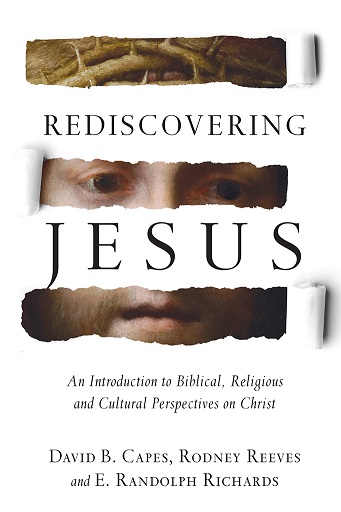
I finished reading through Rediscovering Jesus not too long ago and I was struck by something fairly early on: the authors challenged readers to come to the realization that we are often operating under a kind of composite portrait of Jesus:
My Jesus is often a smorgasbord Jesus, a Jesus who doesn’t look like the one in the Bible. Just like a buffet in the cafeteria, where I go through the line and pick out what I want, I read through the Gospels, pulling out stories I like. (17, cited below)
The authors go on to note that our view of Jesus is not only formed buffet-like from imagery found in the Bible, but also through various ways the culture has influenced us to think about Jesus. What are some of the ways that your picture of Jesus may have been shaped by extra-biblical imagery? How might we find the composite Jesus we have created that often stands alongside us as we try to read about Jesus in the scriptures?
Rediscovering Jesus is full of insights like this, and I highly commend it to you, dear readers.
Source
David B. Capes, Rodney Reeves, and E. Randolph Richards, Rediscovering Jesus (Downers Grove, IL: InterVarsity, 2015).
Links
Be sure to check out the page for this site on Facebook and Twitter for discussion of posts, links to other pages of interest, random talk about theology/philosophy/apologetics/movies and more!
Sunday Quote– If you want to read more Sunday Quotes and join the discussion, check them out! (Scroll down for more)
SDG.
“The Sojourner in your Land” – A Christian perspective on immigration and refugees

A Public Domain image of Syrian Refugees. Accessible: https://commons.wikimedia.org/wiki/File:Syrian_refugee_of_the_Syrian_civil_war.jpg
The issue of immigration has been turned into a political meme. Refugees flee from Syria and other nations in the wake of violence. There are some who treat the plight of the refugee and immigrant, however, as a blight to be extinguished. What does the Bible have to tell us about these issues? A great deal. Here I will briefly draw out a few ways the Bible discusses these topics.
All Humans Share Equal Dignity
The Bible makes it extremely clear that all humans share the image of God (Genesis 2), and that the divisions we make of nation and race have no place in the body of Christ (Galatians 3:28).
The Sojourner in Your Land
The Old Testament has much to say regarding sojourners or exiles. There is no comment about the legality of the sojourner or exile, but rather the focus is on the plight of those who flee from their own lands.
“When a stranger sojourns with you in your land, you shall not do him wrong. You shall treat the stranger who sojourns with you as the native among you, and you shall love him as yourself, for you were strangers in the land of Egypt: I am the Lord your God.” – Leviticus 19:33-34 (ESV)
The argument might be made that these are specific commands to a specific people: the Israelites. After all, we read the reasoning: for you were strangers in the land of Egypt. We were never in Egypt! we might cry. The teaching, however, seems to be binding and universal.To point out that the latter part does not apply to Christians is like the teachers of the Law saying they were slaves to no one, despite being Abraham’s descendants (John 8:33).
Moreover, when we consider a verse like Exodus 22:21- ““You shall not wrong a sojourner or oppress him, for you were sojourners in the land of Egypt” (ESV), we note that the reasoning provided is not necessary for the command. You shall not wrong or oppress a sojourner; next clause: here’s a reason why. But the command itself stands whether or not the reason given directly applies to us or not. Of course, even if you don’t buy into this reasoning, there are plenty of verses that simply command us to care for the sojourner.
Malachi 3:5 states “Then I will draw near to you for judgment. I will be a swift witness against the sorcerers, against the adulterers, against those who swear falsely, against those who oppress the hired worker in his wages, the widow and the fatherless, against those who thrust aside the sojourner, and do not fear me, says the Lord of hosts.”
God issues dire warnings “against those who thrust aside the sojourner.”
The letter to the Hebrews applies this from a New Testament perspective: “Do not neglect to show hospitality to strangers, for thereby some have entertained angels unawares.” (13:2).
Commands to help the needy and poor are found throughout Scripture, such as in Proverbs: “Open your mouth for the mute, for the rights of all who are destitute. Open your mouth, judge righteously, defend the rights of the poor and needy.” (31:8-9)
It would be difficult to discount that “illegal immigrants” are often among the poor and needy, or that refugees could not be counted among that number.
Hope for all nations is preached throughout the Bible, calling people from all directions to God.
An Eschatological Perspective
Christians are told by Peter that we are all exiles in this world (1 Peter 2:11). We are in this world, and not of it. Such verses speaking of the nature of Christians as exiles on earth tie the thread, and bring us full circle. The reasoning that applied to the Israelites because they were sojourners in Egypt applies to us, because we are sojourners on Earth. Care for the poor and needy, do not turn aside the sojourner, for we are exiles as they are.
Drawing Conclusions
Christians have no wiggle room: the plight of the sojourner, the refugee, and/or the exile are not to be ignored. We are to care for them as we would be cared for. How exactly does this play out in a practical fashion? That is up for some debate. However, any perspective cannot be called Christian which ignores the Bible’s clear teaching and command to care for others.
It is also clear that there is nowhere in the Bible where provisions are made for some of the arguments commonly used in the political sphere. For example, there is no exception stating that if people do not want to pay higher taxes, they are allowed to turn aside the sojourner. Neither does it prescribe a specific system for providing assistance, or say that a specific form of government should be established to do so. One thing that is excluded explicitly would be any demeaning of others made in the image of God. One thing that is required is that we do care for those in need.
We are called to help the sojourner. Whether that is the refugee from Syria, the young neighbor boy who ran away from an abusive home, or an “illegal” seeking to escape from systemic poverty: no exceptions are made. We as Christians should remember that we, too, are exiles seeking scraps from the Master’s table.
Grace and peace.
Links
Be sure to check out the page for this site on Facebook and Twitter for discussion of posts, links to other pages of interest, random talk about theology/philosophy/apologetics/movies and more!
SDG.
——
The preceding post is the property of J.W. Wartick (apart from quotations, which are the property of their respective owners, and works of art as credited; images are often freely available to the public and J.W. Wartick makes no claims of owning rights to the images unless he makes that explicit) and should not be reproduced in part or in whole without the expressed consent of the author. All content on this site is the property of J.W. Wartick and is made available for individual and personal usage. If you cite from these documents, whether for personal or professional purposes, please give appropriate citation with both the name of the author (J.W. Wartick) and a link to the original URL. If you’d like to repost a post, you may do so, provided you show less than half of the original post on your own site and link to the original post for the rest. You must also appropriately cite the post as noted above. This blog is protected by Creative Commons licensing. By viewing any part of this site, you are agreeing to this usage policy.
Sunday Quote!- Our Cultural Concepts of Christianity
 Every Sunday, I will share a quote from something I’ve been reading. The hope is for you, dear reader, to share your thoughts on the quote and related issues and perhaps pick up some reading material along the way!
Our Cultural Concepts of Christianity
I recently finished Rescuing the Gospel from the Cowboys by Richard Twiss. It was a phenomenal, thought-provoking read that I highly recommend. In one section, Twiss argues that:
If self-revelation is the work of Creator and Creator’s engagement with people and nations, then crosscultural communication never occurs in isolation, in a cultural vacuum, but by definition occurs in a crosscultural context. Human messengers are never free from the prevailing cultural influences of their upbringing, worldview values, and sociocultural/political attitudes of their day. (61, cited below)
The point he is making is that humans are tied to their cultural background in such a way that any time we speak to someone from a different context, that becomes a cross-cultural context, no matter how neutral we attempt to be in our understanding. Thus, when applied to missions, it is important to keep in mind one’s own cultural influences and try to avoid imposing those cultural standards onto other cultures. We must not turn Christianity into Christianity + our own cultural understanding and practice of Christianity. Much of the book focuses on how Western culture has been imposed upon Native culture in Christianity as well as how we might break that cycle.
Rescuing the Gospel from the Cowboys is an excellent read that will challenge most readers’ expectations and presuppositions. I highly recommend it.
Links
Be sure to check out the page for this site on Facebook and Twitter for discussion of posts, links to other pages of interest, random talk about theology/philosophy/apologetics/movies and more!
Sunday Quote– If you want to read more Sunday Quotes and join the discussion, check them out! (Scroll down for more)
Source
Richard Twiss, Rescuing the Gospel from the Cowboys (Downers Grove, IL: InterVarsity, 2015).
SDG.
Sunday Quote!- Genesis 1-11 is Fiction?
 Every Sunday, I will share a quote from something I’ve been reading. The hope is for you, dear reader, to share your thoughts on the quote and related issues and perhaps pick up some reading material along the way!
Genesis 1-11 is Fiction?
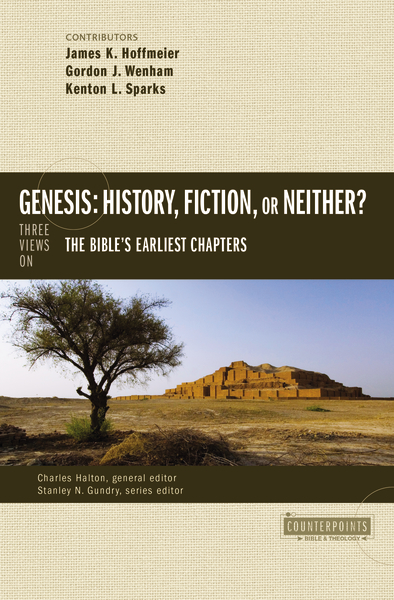
Kenton Sparks argues in his chapter of Genesis: History, Fiction, or Neither? that Genesis 1-11 is “ancient historiography,” which is to say, largely mythic fiction. Why does he argue this, and what are the implications? He sums up his position nicely:
[I]t is no longer possible for informed readers to interpret the book of Genesis as straightforward history. There was no Edenic garden, nor trees of life and knowledge, nor a serpent that spoke, nor a worldwide flood in which all living things, save those on a giant boat, were killed by God. Whatever the first chapters of Genesis offer, there is one thing that they certainly do not offer, namely, a literal account of events that actually happened prior to and during the early history of humanity. If Genesis is the word of God, as I and other Christians believe, then we must try to understand how God speaks through a narrative that is no longer the literal history that our Christian forebears often assumed it to be… (111, cited below)
I’m sure some of this statement was for rhetorical flourish, but it is clear that Sparks has chosen to contrast his position with the staunchest literalist position. He references the Flood as global; despite many conservative scholars arguing that it is local; in the same essay he sets his position against 6-day creationism, but does nothing to hint at how his position might contrast with those who do not adhere to that perspective. As I said, I’m sure a lot of this is rhetorical flourish rather than ignorance, but his essay could have been stronger if he’d interacted with more nuanced positions.
That said, it is difficult to reconcile his statement that effectively nothing in Genesis 1-11 refers to a “literal account of events that actually happened…” with his statement that Genesis is the “word of God.” However, he does try to demonstrate this throughout his essay. I remain unconvinced that Genesis 1-11 is largely fiction, though I would find myself in agreement with Sparks at a few points in his exegesis.
What do you think? Would arguing that Genesis 1-11 is effectively fiction–theological fiction, but fiction nonetheless–undermine its viability as the word of God? What might this mean for interpretation of these early chapters?
Links
Be sure to check out the page for this site on Facebook and Twitter for discussion of posts, links to other pages of interest, random talk about theology/philosophy/apologetics/movies and more!
Sunday Quote– If you want to read more Sunday Quotes and join the discussion, check them out! (Scroll down for more)
Source
Kenton Sparks, “Genesis 1-11 as Ancient Historiography” in Genesis: History, Fiction, or Neither? Charles Halton and Stanley Gundry, eds. (Grand Rapids, MI: Zondervan, 2015).
SDG.
Sunday Quote!- Samson as Israel
 Every Sunday, I will share a quote from something I’ve been reading. The hope is for you, dear reader, to share your thoughts on the quote and related issues and perhaps pick up some reading material along the way!
Samson as Israel
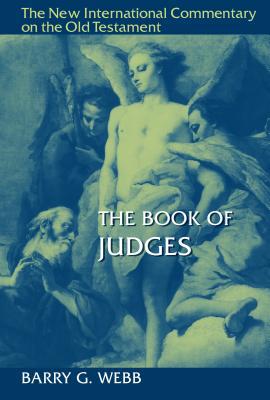
I finished reading the Samson narrative (Judged 13-16) after going through it in detail over the last several months. I found Barry Webb’s summary statement regarding Samson to be profound and deeply moving:
[B]eneath all the surface chaos, and the mad careering here and there of the wild-man hero, there is a steady building toward a predetermined climax of profound theological significance. For Samson is not just Samson; he is also Israel. His is separated from other men, but he longs to be like them, just as Israel is separated from other nations, but is continually drawn to them. He goes after foreign women, as Israel goes after foreign gods. He suffers for his willfulness, as Israel does for its. And in his extremity he cries out to Yahweh, as Israel has repeatedly done. But now it is Samson alone who does so; he is remnant Israel; Israel reduced to a single man. (416-417)
After this summary statement, Webb goes on to place this in canonical perspective and analyze other perspectives of Samson. The commentary is worth the purchase for these sections alone, but the whole thing is phenomenal. I highly recommend that you, dear readers, take the time to read the Bible alongside a solid commentary sometime.
Links
Be sure to check out the page for this site on Facebook and Twitter for discussion of posts, links to other pages of interest, random talk about theology/philosophy/apologetics/movies and more!
Sunday Quote– If you want to read more Sunday Quotes and join the discussion, check them out! (Scroll down for more)
Source
Barry Webb, The Book of Judges (Grand Rapids, MI: Wm B. Eerdmans, 2012).
SDG.
Sunday Quote!- Genre and Genesis 1-11, does it matter?
Every Sunday, I will share a quote from something I’ve been reading. The hope is for you, dear reader, to share your thoughts on the quote and related issues and perhaps pick up some reading material along the way!
Genre and Genesis 1-11, does it matter?
The central question of Genesis: History, Fiction, or Neither? is the question of the genre of Genesis 1-11. But does this question really even matter? Gordon Wenham argues that shouldn’t trump interpretation:
[U]ltimately we must recognize that how we define the genre of Gen[esis] 1-11 is a secondary issue: our primary concern must be the interpretation of the stories and their application today. The definition of genre refines and clarifies the message of Genesis, but disagreements about genre should not obscure our substantial agreement about the theological teaching of these stories. Whether one calls Gen[esis] 1-11 doctrine, history, fiction, or myth, it is clear that these chapters are making profound statements about the character of God and his relationship to mankind. Elucidating these truths must be the goal of every interpreter. (74,cited below)
Later in the book, Sparks argues that Wenham is mistaken and genre does determine much more about the text–even what might be considered binding to believe. What are your thoughts? How important is it to determine the genre of Genesis 1-11 in order to properly interpret it? Can we focus instead on the texts themselves?
Links
Be sure to check out the page for this site on Facebook and Twitter for discussion of posts, links to other pages of interest, random talk about theology/philosophy/apologetics/movies and more!
Sunday Quote– If you want to read more Sunday Quotes and join the discussion, check them out! (Scroll down for more)
Source
Gordon Wenham, “Genesis 1-11 as Protohistory” in Genesis: History, Fiction, or Neither? Charles Halton and Stanley Gundry, eds. (Grand Rapids, MI: Zondervan, 2015).
SDG.
Sunday Quote!- Gender Dysphoria and the Bible?
 Every Sunday, I will share a quote from something I’ve been reading. The hope is for you, dear reader, to share your thoughts on the quote and related issues and perhaps pick up some reading material along the way!
Gender Dysphoria and the Bible
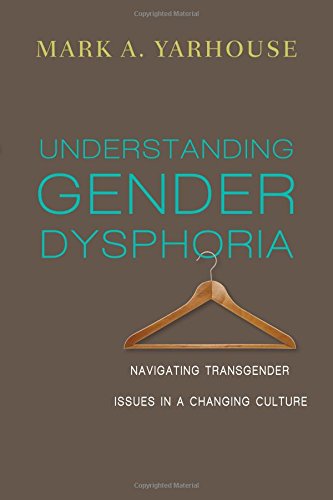
In Understanding Gender Dysphoria, Mark Yarhouse seeks to provide ways for Christians to think about gender dysphoria and transgender issues. Regarding the use of biblical passages in this discussion, Yarhouse urges caution:
There is a need to balance between two hazards when we turn to the Bible to inform our discussions about gender dysphoria. The one hazard is to look to Scripture for answers it is not prepared to provide. The other hazard is to fail to critically reflect on the sociocultural context in which we live and make decisions about gender identity and dysphoria. (30, cited below)
He goes on to comment on several biblical passages (like 1 Corinthians 6:9-10) which are frequently cited in contexts of discussions about gender dysphoria.
What do you think? Do we need to exercise more caution when we cite “proof texts” related to issues like gender dysphoria? Is 1 Corinthians 6:9-10 best applied to issues of transgender identification? Are these categories valid at all?
Links
Be sure to check out the page for this site on Facebook and Twitter for discussion of posts, links to other pages of interest, random talk about theology/philosophy/apologetics/movies and more!
Sunday Quote– If you want to read more Sunday Quotes and join the discussion, check them out! (Scroll down for more)
Source
Mark Yarhouse, Understanding Gender Dysphoria (Downers Grove, IL: InterVarsity, 2015).
SDG.
Sunday Quote!- Genesis as Sui Generis (Its Own Genre)?
Every Sunday, I will share a quote from something I’ve been reading. The hope is for you, dear reader, to share your thoughts on the quote and related issues and perhaps pick up some reading material along the way!
Genesis as Sui Generis (Its Own Genre)?
I’ve been reading through Genesis: History, Fiction, or Neither? It is part of the Zondervan Counterpoints series in which authors with different views present essays and (usually) interact with each other’s views. In it, there is much debate over the genre–and thus in part the meaning–of Genesis 1-11 in particular. In his response to Gordon Wenham, Kenton Sparks argued that Genesis could not be its own genre or sui generis because:
…all intelligible discourse must conform to a significant degree with existing modes and patterns of discourse, else readers would not understand it… (102, cited below)
Thus, he asserted, we cannot see these early chapters of Genesis as standing apart or unique as a completely separate genre. To do so would be to make it unintelligible.
It seems to me that this is on-point. We shouldn’t just throw up our hands and separate Genesis from the rest of the Bible as its own genre, distinct from any other human writing. God would not have communicated in a way that we cannot understand.
What do you think? Is Genesis 1-11 completely unique? Should we give up on trying to discern its genre, or is it clearly discernible?
Links
Be sure to check out the page for this site on Facebook and Twitter for discussion of posts, links to other pages of interest, random talk about theology/philosophy/apologetics/movies and more!
Sunday Quote– If you want to read more Sunday Quotes and join the discussion, check them out! (Scroll down for more)
Source
Kenton Sparks, “Response to Gordon J. Wenham” in Genesis: History, Fiction, or Neither? Charles Halton and Stanley Gundry, eds. (Grand Rapids, MI: Zondervan, 2015).
SDG.
Sunday Quote!- Samson’s Torment
Every Sunday, I will share a quote from something I’ve been reading. The hope is for you, dear reader, to share your thoughts on the quote and related issues and perhaps pick up some reading material along the way!
Samson’s Torment
Reading commentaries can be an extremely edifying and valuable experience. I have very slowly been working through the book of Judges alongside Barry G. Webb’s commentary from the New International Commentary on the Old Testament series–an excellent series indeed–and came upon a gem regarding Samson. The passage in question is Judges 16:1-3, in which the people of Gaza attempt to trap him when he comes and sleeps with a prostitute (an interesting path to pursue at a later point) and he instead escapes in the middle of the night by tearing their gate out of the ground and carrying it to Hebron. Webb comments:
[The gate] would have been a formidable barrier… But Samson has spent all his life breaching barriers: between the permissible and the forbidden, holy and profane, man and animal, Israelite and Philistine, Naziriteship and normality. Barriers have never been able to contain him. They appear to him only as challenges which rouse him to a renewed frenzy of breaking through. So it is here again. His “grasping,” “pulling,” “putting,” and “taking” (v. 3) transgress the boundary between the human and superhuman. No normal person could do what he did. But Samson is not normal; that is his glory and his torment. (395, cited below)
Webb’s comments continue as he shows that this act of carrying the gates and placing them before Hebron demonstrate the lack of possible peace between Philistine and Israelite in Samson’s time, among other things. Webb’s comments on Samson are well worth taking the time to read, as is the rest of the commentary on Judges.
Links
Be sure to check out the page for this site on Facebook and Twitter for discussion of posts, links to other pages of interest, random talk about theology/philosophy/apologetics/movies and more!
Sunday Quote– If you want to read more Sunday Quotes and join the discussion, check them out! (Scroll down for more)
Source
Barry Webb, The Book of Judges (Grand Rapids, MI: Wm B. Eerdmans, 2012).
SDG.

 J.W. Wartick - Reconstructing Faith
