book review
Book Review: “Expository Apologetics” by Voddie Baucham, Jr.
 Expository Apologetics by Voddie Baucham, Jr. puts forward an apologetics methodology that is largely presuppositional in its approach. The core of Baucham’s approach is the use of biblical texts in engaging with those who do not believe.
A central aspect of Baucham’s methodology is the notion that the problem of unbelieve is not a lack of information but rather sin. He bases this claim on an interpretation of Romans 1 that is very much in line with that of other presuppositional apologists (see my post on the topic here). Because of this, Baucham alleges, apologetic approaches which approach others with information (such as an argument for the existence of God) rather than the Gospel (i.e. direct exposition of the Bible) fail.
Baucham also appeals to Scripture throughout the book, noting that the use of God’s word ought to be central to our lives as Christians and therefore central to our witness. He argues rightly that every single Christian ought to be engaged in apologetics; it is not something merely for experts.
Chapter 5, which emphasized learning apologetics through the use of historical creeds, confessions, and catechisms, was an excellent piece of advice for apologists. This was a breath of fresh air as too often Christians ignore the historical definitions of faith which are full of the richness of Christian thinkers throughout time. Baucham notes that anyone who attempts to dismiss a creedal tradition by saying “No creed but the Bible” has already made their own creed to which they adhere.
The book has many applicable insights into doing apologetics. This is worth taking note of, because often introductory apologetics books claim to present a method, but then never show that method in action. This makes it difficult to actually understand how to do apologetics or what is even meant by all the discussion about method. Baucham, however, continually uses examples that have direct practical application. Chapter 9 “Preaching and Teaching Like an Expository Apologist” is full of practical insights for apologists trained and untrained. Chapter 8 applied various ways to answer objections to a number of different situations. I appreciated how much practical advice is found throughout the book. It should be noted that a primary target for these practical engagements is same-sex marriage. It would have been nice to have the focus be on atheism rather than on specific moral issues, but the practical advice given can be applied to other situations as well.
A serious question might be raised about the audience of the book. Baucham claims that it is for “everyone” but then goes on to outline the audiences he intends. “The first audience is the heathen” (Kindle location 293). Surely, the use of this term will prejudice those who do not believe towards the book immediately. Heathen has come to be understood as very pejorative, and it is difficult to see why it was chosen. Moreover, he adopts the biblical use of the term “fool” not just in its technical sense, but also throughout the book to refer to those who do not believe. One wonders whetherthose who are described as heathen fools would be willing to read the book.
Another difficulty with the book is Baucham’s suggestion that children are basically little unbelievers. This stands in contrast to the notion of having faith like a child (which suggests that children have faith). Elsewhere, Baucham discusses the question one of his children asked him and how it demonstrated this child had not come to faith in Christ yet. But of course children ask questions about all kinds of things, and this does not entail they don’t believe in them. Indeed, Baucham’s continual assertion that unbelief is a problem of sin rather than information suggests that he is going against his own advice here. He treats his own children’s information problem as though this proves they are atheistic. This kind of theology is deeply troubling, and it cuts against the grain of Jesus’ own words about little children coming to him and having faith such as those little children.
The critique of other apologetic methods is also off base. For example, Baucham is highly critical of any method which does not use Scripture throughout the whole process. He cites a number of verses that speak of the power of God’s word, as well as other presuppositional thinkers like Sye Ten Bruggencate to forcefully admonish those apologists who use other forms of apologetics. However, such a critique is fundamentally flawed, for despite presuppositionalists’ commitment to realizing the epistemic effects of sin, they maintain this critique despite the fact that atheists often immediately shut down conversation–whether by refusing to continue, mocking, or the like–when the Christian cites Scripture. Baucham allows for this in some fashion by coming sidelong with Scriptural principles rather than direct citations, but if that is his position, then his whole critique is misguided to begin with! After all, a Scriptural principle is surely that God exists. Ergo, an apologist seeking to prove that God exists without explicitly citing Scripture is permitted to do so on Baucham’s own view, despite his critique of that very same apologist.
For some reason, Baucham also clings to using male pronouns for everything throughout the book, referring to humanity as “man,” and talking about all believers as “men.” Interestingly, the only female pronoun I noticed being used generically in the whole book was for an atheist “interlocutor.” When portions of the book refer to not needing to be seen as wise by “men” and or needing to be thought of well by “men,” one wonders whether Baucham simply dismisses women’s opinions entirely.
Expository Apologetics is an ultimately uneven ride introducing presuppositional apologetics to a broad audience. There is much applicable knowledge here, to be sure. However, it is alongside some poor arguments against other apologetic methods, questionable use of terminology, and some disturbing theological conclusions. It’s worth the read for the applicable knowledge, but there are many pitfalls to be found.
The Good
+Emphasizes the notion that every Christian should be an apologist
+Creeds seen as major point to drive apologetics
+Good amount of practical application to apologetics
The Bad
-Poor use of terminology
-Suggests children are to be treated as unbelievers
-Consistently uses male pronouns and “man” instead of gender inclusive language
-Dismisses other forms of apologetics
Disclaimer: I was provided with a copy of this book for review by the publisher. I was not required to write any specific kind of feedback whatsoever.
Source
Voddie Baucham, Jr. Expository Apologetics (Wheaton, IL: Crossway, 2015).
Links
The Unbeliever Knows God: Presuppositional Apologetics and Atheism– I write about the notion that all people have knowledge of God whether that is acknowledged or not. This has great implications for apologetics of all methods.
Be sure to check out the page for this site on Facebook and Twitter for discussion of posts, links to other pages of interest, random talk about theology/philosophy/apologetics/movies and more!
Book Reviews– There are plenty more book reviews to read! Read like crazy! (Scroll down for more, and click at bottom for even more!)
Eclectic Theist– My other interests site is full of science fiction, fantasy, food, sports, and more random thoughts. Come on by and check it out!
SDG.
——
The preceding post is the property of J.W. Wartick (apart from quotations, which are the property of their respective owners, and works of art as credited; images are often freely available to the public and J.W. Wartick makes no claims of owning rights to the images unless he makes that explicit) and should not be reproduced in part or in whole without the expressed consent of the author. All content on this site is the property of J.W. Wartick and is made available for individual and personal usage. If you cite from these documents, whether for personal or professional purposes, please give appropriate citation with both the name of the author (J.W. Wartick) and a link to the original URL. If you’d like to repost a post, you may do so, provided you show less than half of the original post on your own site and link to the original post for the rest. You must also appropriately cite the post as noted above. This blog is protected by Creative Commons licensing. By viewing any part of this site, you are agreeing to this usage policy.
Book Review: “The Love of God” by John C. Peckham
 There are many different views about what it means to say “God is love” or “God is loving.” Is God’s love like ours? Does God’s love mean God changes? Does God’s love mean God has potential rather than being pure act? How can God be loving? How is the love of God reconciled with justice and election? John C. Peckham’s work, The Love of God, is an attempt to answer many of these questions.
The book is organized topically, with each chapter focusing on a different aspect of divine-world relationship. These include the semantics of divine love, volitional and evaluative aspects of love, whether divine love can be emotional or foreconditioned, and whether that love is reciprocal. Other topics are addressed in addition to these, including the debate over various ways divine-world relationship may be portrayed.
Peckham surveys an enormous number of biblical passages as he analyzes these questions. Unfortunately, only rarely is much time spent on drawing out how these various citations are directly relevant to the points being made. Thus, readers are left to look up the many passages themselves to see whether they concur with the evaluation provided. Peckham largely sides with a perspective that favors human freedom. He also stands against the notion that God is completely immutable or changeless.
The latter point, however, is well-nuanced. Drawing on the work of Rob Lister, who affirms God’s impassibility alongside God’s capability of being impassioned, Peckham qualifies his concept of divine love and its relationship with the doctrine of impassibility. Effectively, he argues that God’s love is reciprocal but does not necessarily rule out the possibility of immutability. He does, however, seem to favor a perspective in which God at least partially changes in response to prayer and love.
Peckham’s perspective in the introduction appears to be quite broad-minded, allowing for concessions to those on either side of (and in between) debates like Calvinism-Arminianism, Thomism-other views, Augustinianism-other perspectives. However, as the book goes on, it becomes apparent that apart from a few places wherein there is some nuance (as noted above with immutability), Peckham draws conclusions with some certainty, while effectively setting aside the opposing view.
The value one gets out of The Love of God, then, largely depends on the amount of work one is willing to put into it. If one takes the time to look up the many, many biblical references, compare them back to the text, and examine the counter-arguments that Peckham offers, this is a book that is well worth the time spent. By contrast, those not willing to put in that time will at least get an idea of what the various major questions are regarding God-world relations and love, but will only be given one perspective on those questions in most cases. The questions are not left as open as many of them seem to require.
The Good
+Provides much insight into biblical teaching on various aspects of love
+Many citations to allow for further study
The Bad
-Not as broad-minded as it initially appears
-Occasionally dismissive of counter-arguments and rival positions
Disclaimer: I received a review copy of this book from the publisher. I was not obligated to write any specific kind of feedback whatsoever.
Source
John C. Peckham, The Love of God (Downers Grove, IL: InterVarsity, 2015).
Links
Be sure to check out the page for this site on Facebook and Twitter for discussion of posts, links to other pages of interest, random talk about theology/philosophy/apologetics/movies and more!
Book Reviews– There are plenty more book reviews to read! Read like crazy! (Scroll down for more, and click at bottom for even more!)
SDG.
——
The preceding post is the property of J.W. Wartick (apart from quotations, which are the property of their respective owners, and works of art as credited; images are often freely available to the public and J.W. Wartick makes no claims of owning rights to the images unless he makes that explicit) and should not be reproduced in part or in whole without the expressed consent of the author. All content on this site is the property of J.W. Wartick and is made available for individual and personal usage. If you cite from these documents, whether for personal or professional purposes, please give appropriate citation with both the name of the author (J.W. Wartick) and a link to the original URL. If you’d like to repost a post, you may do so, provided you show less than half of the original post on your own site and link to the original post for the rest. You must also appropriately cite the post as noted above. This blog is protected by Creative Commons licensing. By viewing any part of this site, you are agreeing to this usage policy.
Book Review: “The Great Christ Comet” by Colin Nicholl
 There are few biblical images which capture the imagination as much as the Star of Bethlehem. Its prominent portrayal in films featuring the Nativity, in popular renditions of a Nativity scene, and its place in many Christmas carols demonstrates its continuing popularity. Colin Nicholl’s work, The Great Christ Comet is a significant contribution to scholarship about the nature of the Star of Bethlehem. Nicholl approaches the topic from both the standpoint of theology and astronomy.
Nicholl’s analysis of the biblical data is extensive and interesting. Early in the book, he establishes that the exegetical evidence is important to anyone–including astronomers–who would like to pinpoint what the Star of Bethlehem may have been.
As I read through the theological portions of the book, I found myself opening up my running Bible commentary document to add several notes as Nicholl provide insight into the text and argued for specifics about the narrative. In addition to interpreting the passage, he also sheds light on it from extrabiblical sources, particularly in regards to the Magi and Herod. Regarding the former, he discusses the practice and likely origin of the Magi, noting they were likely astrologer/astronomers from Babylon. Regarding the latter, he shows how the Massacre of the Innocents would not be so out of place for Herod, and why he would have been so willing to go to the depths of evil action that he did. There were many more times I found Nicholl’s exegesis enlightening on various passages–including prophetic ones in Numbers and Isaiah and others in Revelation.
The interpretation offered by Nicholl related to the movement of the Christ Comet is different than any I have read. Nicholl delves into Revelation 12:1-5a in order to argue that this passage describes a literal astronomical phenomenon with the celestial movements of Virgo, a comet, and a meteor storm in view. It was in this section that my confidence in his conclusions wavered. He makes a convincing argument for showing that the comet could have moved and shined in the way he believes is described in this passage, but I am less convinced by the simple connection of Revelation to Matthew in this literal, astronomical way. The infancy narrative of Matthew and the description in Revelation are both referencing the birth of Christ, but I’m not convinced John in Revelation is attempting to give a full explanation of a cosmic event that occurred here. Regardless of my reservations, however, Nicholl does establish that this is a possible, if not probable, reading of the text while also laying out in extensive detail how a comet could have engaged in this “cosmic drama.”
I am not an expert in astronomy, so my comments on that regard are that of an interested lay person. Nicholl gave significant background into astronomy before he delved into some of the data and the competing theories regarding the Star of Bethlehem. This included extensive discussion of the nature of different kinds of comets and how they move throughout. At many points these details are accompanied by historical drawings or artistic renditions of the aspects discussed. Nicholl’s theory is outlined in intricate detail, and it includes a kind of procession of the comet throughout various astrological signs to the point that it reaches Virgo. At this point, the Magi were convinced by the movement of the comet that a significant birth was occurring and they headed west. Nicholl draws upon the words of the Magi as well as Matthew and Luke’s infancy narrative, in addition to Revelation 12 to show that his theory corresponds to literal readings of the various passages and allows a real astronomical event to lie behind the explanation of the comet. This, however, does not mean that the comet is a purely naturalistic phenomenon, as Nicholl argues that the one-of-a-kind, astounding nature of this comet and its performance–down to marking the very location of Jesus’s home in Bethlehem–point to divine intent.
One significant difficulty with the book is the overall feeling of “assured results” found throughout. A search for “certainly” shows up 66 results; 9 for “unquestionably” (each used in context of conclusions drawn). Other words like “undoubtedly” (11 results) show up throughout as well. While it is admirable to have confidence in one’s own position, at times I wondered whether the arguments presented could yield such levels of confidence. The very existence of such continuing debate over the nature of the Star of Bethlehem calls into question any interpretation which comes along and offers certainty across the board, whether it is the refutation of other theories or the interpretation of the Book of Revelation.
So much is invested in the relation of Revelation 12 to the infancy narratives that if one remains unconvinced by his exegesis there, one may not find his overall theory convincing. However, this is not necessarily the case. The argument he presented for a great comet being the origin of the Star of Bethlehem was quite convincing to me, despite my not being fully sold on the Revelation 12 theory. One does not have to accept Nicholl’s view of how the comet played across the sky to accept that the comet is the best explanation.
As far as substantive critique of Nicholl, on the astronomical part I admit I don’t have the knowledge to offer much. Both theologically and astronomically, it seems Nicholl’s proposal is airtight and stunning. Frankly, that is probably where my suspicion comes from: I tend to be a bit suspicious of anything that is such a perfect fit. The Bible is a complex work, and the debate over the Star of Bethlehem is entrenched with many differing positions. Could it really be so simple (in the sense of having this be the answer)? I would like to say yes. I want to. But I’m not sure I can be fully on board. Nicholl has convinced me that the Star was a great comet, and the movement he describes seem possible, but it is perhaps only a personal feeling of reservation that holds me back from embracing the whole picture. This does say something for the strength of Nicholl’s argument, of course, for it suggests that it is really this personal reservation that holds me back rather than significant criticisms.
Nicholl’s concluding thoughts about the Christ Comet deserve to be quoted:
What the Great Christ Comet did… was extraordinary and merits wide telling. People of all disciplines… must come to grips with its story. In an era when science is often viewed as the enemy of religion, the Christ Comet suggests that science may be the best friend of religion. In a period when the claims of Christ are commonly disregarded, the Star callse upon all to give his claims a fresh reappraisal… (Kindle Location 7343).
Whatever one thinks about certain aspects of Nicholl’s argument, the book as a whole presents a comprehensive, deep case for the Star of Bethlehem being a great comet. The Great Christ Comet is a fantastic, deep read that will expose readers to a variety of topics in a fresh way. The amazing intricacy of the movement of the comet and its correspondence to the readings Nicholl presents in the book would be, if true, a monumentally powerful testament to the power of God and the truth of the Gospels. I enjoyed it immensely, even though I may not be fully convinced of every detail.
The Good
+Extensive look at the Biblical data
+Fascinating topic
+Provides background for astronomical analysis
+Massive scope with in-depth discussion
The Bad
-Overstates case at points
-Exegesis of some passages uncertain
Disclaimer: I received a copy of this book for review purposes from the publisher. I was not required to provide any specific kind of feedback whatsoever.
Source
Colin Nicholl, The Great Christ Comet (Wheaton, IL: Crossway, 2015).
Links
Be sure to check out the page for this site on Facebook and Twitter for discussion of posts, links to other pages of interest, random talk about theology/philosophy/apologetics/movies and more!
Book Reviews– There are plenty more book reviews to read! Read like crazy! (Scroll down for more, and click at bottom for even more!)
Eclectic Theist– Check out my other interests site for posts on science fiction, fantasy, television, and more!
SDG.
——
The preceding post is the property of J.W. Wartick (apart from quotations, which are the property of their respective owners, and works of art as credited; images are often freely available to the public and J.W. Wartick makes no claims of owning rights to the images unless he makes that explicit) and should not be reproduced in part or in whole without the expressed consent of the author. All content on this site is the property of J.W. Wartick and is made available for individual and personal usage. If you cite from these documents, whether for personal or professional purposes, please give appropriate citation with both the name of the author (J.W. Wartick) and a link to the original URL. If you’d like to repost a post, you may do so, provided you show less than half of the original post on your own site and link to the original post for the rest. You must also appropriately cite the post as noted above. This blog is protected by Creative Commons licensing. By viewing any part of this site, you are agreeing to this usage policy.
Book Review: “Scripture and Cosmology” by Kyle Greenwood
 Kyle Greenwood’s Scripture and Cosmology might initially seem to be just another introduction to the study of Ancient Near Eastern (ANE) cosmology related to the Bible, but it is not. It is much more than that. Greenwood, in his excellent book, relates not just ANE cosmology to the Bible, but also reflects on how theologians dealt with changes in the prevailing views of cosmology throughout Christian history. That is, Scripture and Cosmology provides a means for readers to explore in brief the history of Christian thought on Scripture and, well, cosmology of different times.
The book is organized around three parts: Scripture and Cosmos in Cultural Context (which explores the ANE background of the Bible and finding that cosmology in Scripture), Cosmology and Scripture in Historical Context (which examines the cosmology of Scripture alongside Aristotelian and Copernican Cosmology, along with how Christians read the Bible in these periods), and Scripture and Science (which ties together the previous two sections along with discussing how we should consider the findings therein).
Greenwood frankly notes that the Bible’s view of cosmology is situated directly within the ANE background of the text and the understanding of people groups surrounding Israel. He challenges some of the modern revisionist attempts to take texts about, for example, the land floating as an example of Earth in space (Job 26:7). His counter is to show that such a writing would fit nicely within the ANE understanding of a cosmic ocean rather than favoring a modern attempt to fit it into Big Bang cosmology.
The chapters on Copernicanism and Aristotelianism show that Christians have historically adjusted their readings of Scripture in light of modern cosmology. He cites several interpreters, including Aquinas, Augustine, Calvin, and Luther to show how some of the greatest minds in the history of Christianity have been shaped by their own contemporary views of cosmology and Scripture.
The book ends with a pair of chapters on interpretation of the Bible and the authority of Scripture in light of Greenwood’s findings. These are invaluable tools for those wishing to take the Bible’s text as it stands. Greenwood argues that divine accommodation is one of the acceptable ways to reconcile scriptural authority and the ancient cosmology found therein. The last chapter addresses various avenues for research and science and how a proper understanding of cosmology in Scripture will help to reconcile these issues.
I was particularly interested in the findings which compared Aristotelian cosmology to biblical cosmology. It is important to see that Christians have constantly been part of their own cultural understandings of the Bible and the cosmos, and that we are no less victim to the short-sightedness that can come from equating our understanding with ultimate truth. We must be aware that our own understanding is incomplete and that we should not try to make the Bible read how we think it should.
Scripture and Cosmology is a superb book that is enlightening and challenging on many different topics. As someone who has read extensively on science-faith issues, I still found many new avenues to explore in this book and much valuable insight. It was exciting to see a work that addressed not only the ANE context of the Bible but also how Christians have interacted with more modern views of cosmology throughout time. I very highly recommend this book.
The Good
+Demonstrates the relationship between the Bible and ANE Cosmology
+Shows history of Christian interaction with their own understandings of cosmology and the Bible
+Provides means for readers to explore questions of relating Cosmology and Scripture
+Several solid insights into exploring related issues
+Opens avenues for further research
The Bad
-Feels a bit rushed towards the end
I received a review copy of this book from the publisher. I was not obligated to write any specific kind of feedback whatsoever.
Links
Be sure to check out the page for this site on Facebook and Twitter for discussion of posts, links to other pages of interest, random talk about theology/philosophy/apologetics/movies and more!
Book Reviews– There are plenty more book reviews to read! Read like crazy! (Scroll down for more, and click at bottom for even more!)
Source
Kyle Greenwood, Scripture and Cosmology (Downers Grove, IL: InterVarsity, 2015).
SDG.
——
The preceding post is the property of J.W. Wartick (apart from quotations, which are the property of their respective owners, and works of art as credited; images are often freely available to the public and J.W. Wartick makes no claims of owning rights to the images unless he makes that explicit) and should not be reproduced in part or in whole without the expressed consent of the author. All content on this site is the property of J.W. Wartick and is made available for individual and personal usage. If you cite from these documents, whether for personal or professional purposes, please give appropriate citation with both the name of the author (J.W. Wartick) and a link to the original URL. If you’d like to repost a post, you may do so, provided you show less than half of the original post on your own site and link to the original post for the rest. You must also appropriately cite the post as noted above. This blog is protected by Creative Commons licensing. By viewing any part of this site, you are agreeing to this usage policy.
Book Review: “The Analogy of Faith” by Archie J. Spencer
A question which we don’t often stop to think about in theological discussions is whether or not it is, in principle, possible to speak of the divine. Archie Spencer’s book, The Analogy of Faith, asks just this question and offers an in-depth analysis of various approaches alongside proposing a model for speaking about God.
The book is split, roughly, between analysis of various proposed models for speaking about God and a development of a Christocentric model for speaking of the divine.
The analysis of Aristotle’s analogy of being in the first chapter is particularly interesting. Spencer notes that because Aristotle’s analogy depends upon the interrelatedness of things through cause, and because God is the ultimate relation of causation as the unmoved mover, his concept of analogy is ultimately almost useless. The reason is because it becomes too broad: effectively anything can be related to anything else through an analogy of relation, and then this tells us nothing about the things being related themselves. Yet even here Spencer argues that Aristotle’s concept of analogy–itself reliant upon Plato in many relevant ways–can be useful in that it relates causality and the divine ideas, thus preparing the way for Neoplatonist thinking.
Following on the heals of this analysis are some fantastic insights into Augustinian and Thomistic thought about analogy as well. Thomas Aquinas is perhaps the most important thinker regarding the use of analogy in speaking about God of all time. As Spencer notes, it is impossible to adequately deal with the topic without spending significant time on Aquinas’s view of analogy. However, Spencer’s ultimate analysis is that Aquinas did not have a well-developed theory of analogy of his own. Instead, he asserts, it has been the followers and interpreters of Aquinas who made a “Thomistic” theory of analogy, based around the analogy of being. Because these theories ultimately depend on an Aristotelian foundation, they, too, are found to be ultimately inadequate. After all, if we are unable to reference God’s being in any direct way, then it is difficult to see how creatures totally unlike the divine can have an analogue of that divine. Spencer’s analysis in this section is thorough and fairly convincing.
Karl Barth and Eberhard Jungel are the next thinkers addressed, and they provide a basis for Spencer’s own theory of analogy, which is Christological. I’m summarizing an extraordinarily detailed theory here, so I’m sure I’m not adequately outlining it, but the basic thought is that because God has come to us, that allows us through divine revelation of Christ to refer to God. Thus, analogy is the analogy of faith rather than an analogy of being–one in which God has condescended to allow reference to the divine being in human language, rather than one in which we are able to, by our own thinking, come to language which speaks of God.
Upon reading Spencer’s analysis and arguments, I am fairly convinced that he is correct in his notion that the analogy of being is insufficient to capture the possibility of talk about God. What I do wonder, however, is whether Spencer (and most others) too quickly dismiss the possibility of univocal language about God. It seems to me that if we are to say “God is love” then we must have some sense in which that actually relates to God. To be fair, Spencer could respond by pointing to such a statement as exactly in concord with his theory, which would assert that it does relate to God because God has revealed the divine nature to us in Christ and God’s Word, thus allowing us to rightly say “God is love.” However, I think that a deeper treatment of the possibility of univocal language related to God talk would have been appreciated in a book like this. Though, admittedly, the book is already lengthy and is specifically focused on analogy, not the possibility of univocity or equivocal language.
One minor complaint I have is that in the thoroughness of the book, it seems that Spencer is sometimes repetitive. He hits the same point from several different angles in the same chapter, to the point that the book can become quite dry at times. However, the subject matter itself is deeply intriguing, and his full treatment of the topic makes it hard to fault him for stating a few things more than once.
Those interested in reading a dense book of philosophical theology should look no further than The Analogy of Faith by Archie Spencer. It is a deep work that demands much reflection and consideration. It is the kind of seminal writing to which one will constantly return as one thinks about the topic discussed. I can say that I learned a great deal from the book, and had my mind stretched as it hasn’t been stretched in some time. I recommend it highly.
The Good
+Deep analysis of key concepts related to analogy
+Many avenues for further research
+Workable theory which offers some resolution
The Bad
-A bit too verbose at times
-Dismisses univocity a bit too quickly
Disclaimer: I received a review copy of the book from the publisher. I was not required to provide any specific kind of feedback whatsoever.
Links
Be sure to check out the page for this site on Facebook and Twitter for discussion of posts, links to other pages of interest, random talk about theology/philosophy/apologetics/movies and more!
Book Reviews– There are plenty more book reviews to read! Read like crazy! (Scroll down for more, and click at bottom for even more!)
Source
Archie Spencer, The Analogy of Faith(Downers Grove, IL: InterVarsity, 2015).
SDG.
——
The preceding post is the property of J.W. Wartick (apart from quotations, which are the property of their respective owners, and works of art as credited; images are often freely available to the public and J.W. Wartick makes no claims of owning rights to the images unless he makes that explicit) and should not be reproduced in part or in whole without the expressed consent of the author. All content on this site is the property of J.W. Wartick and is made available for individual and personal usage. If you cite from these documents, whether for personal or professional purposes, please give appropriate citation with both the name of the author (J.W. Wartick) and a link to the original URL. If you’d like to repost a post, you may do so, provided you show less than half of the original post on your own site and link to the original post for the rest. You must also appropriately cite the post as noted above. This blog is protected by Creative Commons licensing. By viewing any part of this site, you are agreeing to this usage policy.
Book Review: “Aborting Aristotle” by Dave Sterrett
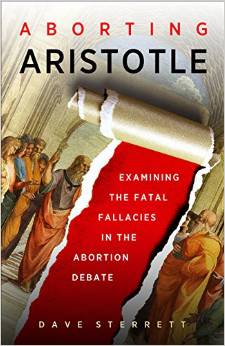 Aborting Aristotle by Dave Sterrett explores some of the metaphysical background needed to discuss the morality of abortion. It is a brief book best seen as a primer on issues related to abortion in philosophy.
The book proceeds in a logical fashion from showing that inconsistency doesn’t undermine the good things that people like Aristotle or Thomas Jefferson said, then arguing that metaphysics is necessary, and moving on through examination of some of the primary grounds for believing abortion is permissible: uncertainty and materialism. Then, arguments are put forward showing that natural law can be a basis for rule of law, that distinctions related to substance are important to the debate, that all humans are persons, and that we are persons not based on what we do but rather on who we are. The book ends wit ha chapter showing some ares of agreement or disagreement between pro-life and pro-choice advocates.
Weighing in at 120 pages, the book is quite brief on these various topics. Again, it functions as a primer, not an exhaustive overview of any of these issues. That limits its usefulness in some ways, as there are other books which provide groundwork on philosophy before diving into the abortion debate with greater depth. Where Sterrett’s work excels is in its focus on the concept of “substance” and its importance for understanding personhood. He demonstrates that much of the debate boils down to one’s philosophical background, and advocates one which sees humans as substances.
Aborting Aristotle is a great read for someone looking to ground themselves in the abortion debate. It is the kind of book that one should read before delving into some of the meatier works on ethics and bioethics related to abortion.
The Good
+Provides much-needed background knowledge of the abortion debate
+Builds a framework for discussing various arguments about abortion
The Bad
-Extremely brief
-Relies a bit too much on quotes
Book Review: “Who Was Adam?” – 10-Year Update by Fazale Rana with Hugh Ross
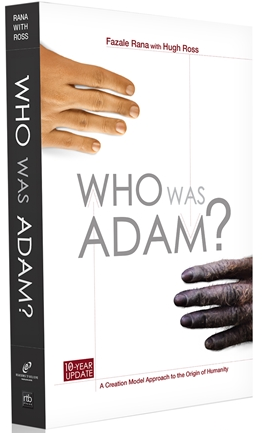
Who Was Adam? by Fazale Rana with Hugh Ross is a major work on human origins from the group Reasons to Believe, an Old-Earth Creationist think-tank. This edition, the 10-Year Update, features over 100 pages of additional material analyzing recent discoveries.
The book is organized in such a way that the first two parts are the original book, while the third part is all new material and analysis. Rana and Ross do an admirable job surveying an immense amount of scientific material related to human origins. They present what they argue is a scientific, creationist model (called the Reasons to Believe model [hereafter referred to as the RTB model]) on human origins. This model includes predictions and testable hypotheses. For example, one of the main predictions is that humans–homo sapiens sapiens–are utterly unique and that their cultural capacity will turn out to be unmatched. Thus, any alleged ancestors of humans will not demonstrate continuity of culture and the like.
They take as confirmation of this prediction the notion that biologists have not managed to put together a solid order in which to place the fossils that are alleged to be human ancestors. Without any such family tree that can be confirmed, the notion that humans evolved, Rana and Ross argue, remains a theory and the question of human evolution is not a fact. They conclude this after having looked at a number of major fossil finds while identifying difficulties with dating them, difficulties with taxonomy and identification, and more.
The updated portion of the book is significant. Those wondering if it is worth getting for this update should know the answer is in the affirmative. There are over 100 additional pages filled with analysis of more recent discoveries and how they impact the RTB model of human origins. To their credit, the authors frankly admit areas in which their predictions were mistaken or their model is challenged. Perhaps the most interesting section is that in which Rana and Ross analyze various behaviors thought to be evidence of early culture among hominids and the like (chapter 23). They show that these behaviors might be anthropomorphism of animal behavior. The chapter on junk DNA shows how scientific discovery has confirmed one of the predictions of the RTB model, and the concluding pair of chapters analyze arguments for and against the RTB model and its viability.
One critique I have is particularly evident in the original work (not in the expanded materials, though), is the occasional use of pure rhetoric to try to make a point. For example, in discussing hominid and homo fossils, Rana and Ross argue that the connections between these fossils has not been established. They therefore conclude that “Without these connections, human evolution cannot be declared a fact but remains a theory” (42). I find this type of wording unfortunate.
Some of the other reasoning behind the RTB model seems possible to go either way (i.e. towards evolutionary theory or the RTB model). For example, Chapter 6 outlines a number of conditions which are to demonstrate humans arrived at the just-right timing for human civilization to flourish–something the RTB model would predict. On the other hand, the authors state the evolutionary model would not necessarily predict this. However, it seems that–from my admittedly limited understanding of biology–the evolutionary model would also predict something similar because life adapts so well that if there was a “just right” circumstance for a type of life, that life would be selected for. Whether this is accurate or not is a different question (and whether I have it right), but it doesn’t seem like this is necessarily evidence for RTB over and against evolution.
The difficulty of evidence that could go either way is one of the biggest difficulties throughout the book. Arguments are often made that because the RTB model allows for a specific piece of evidence, that means that the RTB model is still viable. But there is a difference between confirmation of a model and lack of disconfirmation. It would be more reassuring to have more specific scientific evidence in favor of the model rather than simply being able to be subsumed into it.
At times I also wondered whether certain aspects of the RTB model were necessary for them to defend. For example, the insistence on reading the ages of early humans in the Bible as literal periods in which humans lived for 900+ years. They acknowledge in the expanded section that there has yet to be confirmation of this and that findings so far challenge this idea, yet they continue to hold it as part of the model. I can’t help but think it is a superfluous part that doesn’t actually contribute much to the overall workings of their model.
Who Was Adam? is a significant work worthy of a careful reading by any interested in Christian perspectives on human origins. It provides Christians insight into an Old Earth Creationist perspective on human origins, while also providing enough raw information for readers to draw their own conclusions and formulate their own ideas. It will challenge Christians on their thinking and perhaps force people to re-evaluate their own theories. It is a valuable resource despite having what I see as some difficulties throughout. It is recommended.
The Good
+Frank evaluation of own model after 10 years
+Offers much insight into research of hominids
+Plenty of data means readers can form their own conclusions
+Genuinely valuable update with much new material
The Bad
-Some unfortunate reliance on rhetoric
-Methodological concerns
Disclaimer: I received a copy of the book for review from the publisher. I was not required to give any specific kind of feedback whatsoever.
Links
Be sure to check out the page for this site on Facebook and Twitter for discussion of posts, links to other pages of interest, random talk about theology/philosophy/apologetics/movies and more!
Book Reviews– There are plenty more book reviews to read! Read like crazy! (Scroll down for more, and click at bottom for even more!)
Source
Fazale Rana with Hugh Ross, Who Was Adam? (Covina, CA: Reasons to Believe Press, 2015).
SDG.
——
The preceding post is the property of J.W. Wartick (apart from quotations, which are the property of their respective owners, and works of art as credited; images are often freely available to the public and J.W. Wartick makes no claims of owning rights to the images unless he makes that explicit) and should not be reproduced in part or in whole without the expressed consent of the author. All content on this site is the property of J.W. Wartick and is made available for individual and personal usage. If you cite from these documents, whether for personal or professional purposes, please give appropriate citation with both the name of the author (J.W. Wartick) and a link to the original URL. If you’d like to repost a post, you may do so, provided you show less than half of the original post on your own site and link to the original post for the rest. You must also appropriately cite the post as noted above. This blog is protected by Creative Commons licensing. By viewing any part of this site, you are agreeing to this usage policy.
Book Review: “Augustine on the Christian Life” by Gerald Bray
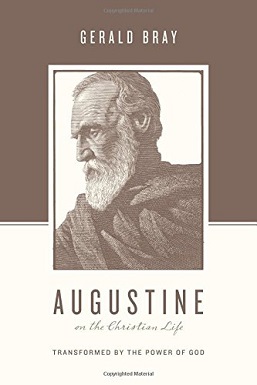 Gerald Bray’s Augustine on the Christian Life is written in a very different style from previous entries in the “Theologians on the Christian Life” series–at least those that I have read. It is organized around a mere five chapters, each focusing on an aspect of Augustine’s own life: life and times of Augustine, Augustine as believer, teacher, pastor, and for today. What makes the presentation so unique is that a good portion of the first few chapters follow Augustine’s own series of thoughts from pagan to Christian, derived from his Confessions.
The focus on Augustine as Augustine makes the book quite readable, as it presents his theology in ways that are directly applied to the subject of each chapter. It reads as though it is the life story of Augustine, punctuated with his theological insights, which are themselves applied back onto Christian life in general.
The way the book is presented, however, often means that Bray spends a significant amount of time focusing on the general theology of Augustine rather than on his specific theology of the Christian life. Large portions of the book are spent outlining Augustine’s theology, without any clear application to the theology of the Christian life. Thus, there is lengthy discussion over predestination, original sin, and the like. Each gets developed in great detail, with Augustine’s thoughts laced throughout. Each is also related back to Augustine’s own life and shows how his thought was developing over time.
A good portion of the book is also spent showing Augustine’s specific exegesis of various passages, and how his holistic view of Scripture allowed him to make good points despite having often subpar manuscripts with which to work. These sections are intriguing, because they introduce readers to Augustine’s hermeneutics as specific passages demonstrate the care with which he worked with the text. Moreover, Bray notes that the influence of the allegorical method upon Augustine can be overstated, and that the method itself should not be completely ignored when it comes to reading the Bible.
The final chapter, “Augustine for Today” does much to draw all the threads together into a coherent picture of Augustine’s theology of the Christian life. Indeed, the last chapter is the one that is most similar to other books in the series. Yet it is built upon the foundation of the previous chapters, turning the work into a kind of biographical, narrative theology similar to Augustine’s Confessions themselves. It is an intriguing way to have written the book. Readers may have to work harder to gain the specific insights on the Christian life from within the book, but doing so is a pleasurable journey into the mind and heart of one of Christianity’s most important thinkers. It is as though readers are discovering the hows and whys of the Christian life right alongside Augustine, and exploring the same issues he has in drawing out the faith.
Augustine on the Christian Life is a fresh read that provides readers with insight into the whole of Augustine’s theology. Its style is different from other books in the series, but the presentation is interesting and accessible. It is well worth the time spent reading it.
The Good
+Takes advantage of the mass of personal reflection by Augustine
+Unique presentation of theology of Christian life
+Many applicable insights
The Bad
-Overly focused on Augustine’s general theology
Disclaimer: I was provided with a review copy of the book by the publisher. I was not required to provide any specific kind of feedback whatsoever.
Source
Gerald Bray, Augustine on the Christian Life (Wheaton, IL: Crossway, 2015).
Links
Be sure to check out the page for this site on Facebook and Twitter for discussion of posts, links to other pages of interest, random talk about theology/philosophy/apologetics/movies and more!
Book Reviews– There are plenty more book reviews to read! Read like crazy! (Scroll down for more, and click at bottom for even more!)
SDG.
——
The preceding post is the property of J.W. Wartick (apart from quotations, which are the property of their respective owners, and works of art as credited; images are often freely available to the public and J.W. Wartick makes no claims of owning rights to the images unless he makes that explicit) and should not be reproduced in part or in whole without the expressed consent of the author. All content on this site is the property of J.W. Wartick and is made available for individual and personal usage. If you cite from these documents, whether for personal or professional purposes, please give appropriate citation with both the name of the author (J.W. Wartick) and a link to the original URL. If you’d like to repost a post, you may do so, provided you show less than half of the original post on your own site and link to the original post for the rest. You must also appropriately cite the post as noted above. This blog is protected by Creative Commons licensing. By viewing any part of this site, you are agreeing to this usage policy.
Book Review: “The Reformation Study Bible”
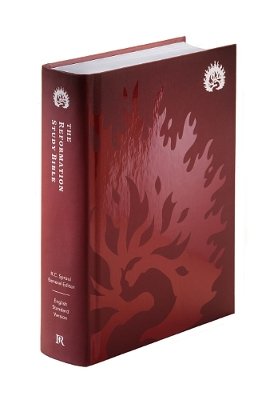 A few months ago I was sent a review copy of The Reformation Study Bible. Given the title, I kind of expected there to be study notes from Luther, Calvin, Zwingli, and the like. I mean, it’s the “Reformation” Study Bible, right? What it actually is is a Reformed Study Bible. I’ll be reviewing it from that perspective as well as I can, but I wanted to be sure readers wouldn’t be confused, as I was.
The Bible is extremely robust, with notes often taking up half or more of the actual pages of the text. Each book has a brief introduction that does a good job outlining key details and theological themes. There are extensive maps and additional notes found throughout the text. Notes range from theological exposition to apologetics-oriented. At times they focus on a pastoral perspective or draw out inter-canonical readings of the texts. There is little that passes without comment.
I received the edition pictured here. The cover is beautiful and also very solid. The binding clearly will hold up quiet well under lengthy use. There are, of course, other bindings available including leather. The pages are extremely thin, however, and it is easy to see the text through the page. The font is small, though readable. As with most other modern study bibles, there is very little space in the margins for writing notes (apart from sections of biblical poetry).
The extent to which readers will enjoy this Bible is going to be almost entirely based on how much they align with Refromed theology. In some places (such as interpretation of Genesis 1), there is leeway granted in the notes for a spectrum of views. In others (such as the discussion over men and women in the church), a specific perspective (complementarianism) is heavily endorsed. Discussions of sacraments, foreknowledge, predestination, election, and the like are all explicitly Reformed in their perspective. This is not a strike against the study Bible–it is, after all, effectively a Reformed Study Bible–but readers must realize that they will get exactly that.
In order to write this review, I went through several books in their entirety, along with reading the notes and the like. These included Ruth, Genesis, John, and 1 Corinthians. In addition, I read selections from every other book. The tone and notes are consistent throughout. As already noted, the notes are also fairly extensive.
The bottom line is that you’re going to get out of The Reformation Study Bible exactly what you would expect from a conservative Reformed study Bible. It is excellent in that regard–and could even serve as a resource if you are interested in researching Reformed perspectives on various passages–but if that is not what you want, you should look elsewhere for a study Bible.
The Good
+Extensive notes with deep discussion of inter-related texts
+Good format
+Readable introductions with inter-canonical perspective noted
The Bad
-Confusing title
-Lots of notes will be largely disregarded if you have a different theological bent
Disclaimer: I was provided with a review copy of this book by the publisher. I was not obligated to write any specific kind of feedback whatsoever.
Book Review: “Owen on the Christian Life” by Matthew Barrett and Michael Haykin
 Owen on the Christian Life provides a broad-spectrum approach to John Owen’s theological insights into the Christian life. It is part of the “Theologians on the Christian Life” series from Crossway (see my other reviews in this series here).
John Owen was a Puritan. Yes, one of “those people.” The word “puritan” has something of a bad connotation nowadays, but the theological movement was actually remarkably broad. Moreover, many insights can be gleaned from reading through the works of these theologians who emphasized a Christian life lived.
The authors outline Owen’s theology through a number of chapters that build on each other, including chapters on the Trinity, penal substitution, justification, and more. Readers also learn about Owen’s transition towards congregationalism, discussions about church and state, and more.
Central to Owen’s theology are the Trinitarian relations, which can help us to learn about divine-human and human-relations as well. Owen emphasized the importance of religious experience for the Christian life. This experience was never taken to trump the authority of the Bible–far from it. Instead, it was taken to be a bulwark in times of doubt and need. Justification in Owen’s view provides a way to be assured of one’s salvation, for God completes that which God has set out to do. Sanctification is where I believe Owen’s main contributions might be found, though I will outline that more below.
The primary critique I have of the book is that it doesn’t seem to focus on Owen’s specific views of the Christian life as the other works in the series have. As I outlined above, there are chapters emphasizing various aspects of Owen’s theology, but these only get tied into the Christian life in what seems like offhand fashion at times. This makes the book read more like an exposition of Owen’s broader (largely Calvinistic) theology than a specific look at his doctrine of the Christian life. Particularly surprising to me was how Owen’s insights on sanctification and overcoming sin and temptation were lumped in with discussions of the power of prayer and the indwelling Spirit. Perhaps this is at least partially my own bias, having been edified greatly by his works on sin and temptation, but I think that more space dedicated to his work in this area would have been on point in a book on the Christian life.
That said, the authors do a good job summarizing Owen’s approach to overcoming sin and putting it to death in our lives. Owen argues for several steps a Christian can take to battle sin and temptation in their lives. This is a proactive approach which views the Christian life as a Spirit-empowered battle against the temptations we face. Steps Owen describes include the envisioning of the consequences of sin, reflection on the Bible, and realizing the fact of the suffering our sin causes Christ.
Owen on the Christian Life provides insight into the whole of Owen’s theology, with a focus on his theology of Christian living. It’s not necessarily as focused on the topic at hand as some other books in the series, but it is a worthy read that provides an introduction into the thought of this theological giant.
The Good
+Excellent insights into the Christian life
+Provides broad overview of Owen’s work
+Great insights into doctrine of the Holy Spirit, sanctification, and more
The Bad
-Doesn’t seem to focus entirely on the Christian Life
Links
Be sure to check out the page for this site on Facebook and Twitter for discussion of posts, links to other pages of interest, random talk about theology/philosophy/apologetics/movies and more!
Book Reviews– There are plenty more book reviews to read! Read like crazy! (Scroll down for more, and click at bottom for even more!)
Book Review: “Overcoming Sin and Temptation” by John Owen– I review a book from John Owen which has positively impacted my spiritual life in many ways.
Source
Matthew Barrett and Michael Haykin Owen on the Christian Life (Wheaton, IL: Crossway, 2015).
SDG.
——
The preceding post is the property of J.W. Wartick (apart from quotations, which are the property of their respective owners, and works of art as credited; images are often freely available to the public and J.W. Wartick makes no claims of owning rights to the images unless he makes that explicit) and should not be reproduced in part or in whole without the expressed consent of the author. All content on this site is the property of J.W. Wartick and is made available for individual and personal usage. If you cite from these documents, whether for personal or professional purposes, please give appropriate citation with both the name of the author (J.W. Wartick) and a link to the original URL. If you’d like to repost a post, you may do so, provided you show less than half of the original post on your own site and link to the original post for the rest. You must also appropriately cite the post as noted above. This blog is protected by Creative Commons licensing. By viewing any part of this site, you are agreeing to this usage policy.

 J.W. Wartick - Reconstructing Faith