C.S. Lewis
Book Review: “Lewis on the Christian Life” by Joe Rigney
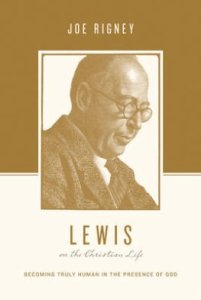 Lewis on the Christian Life is another installment in the “Theologians on the Christian Life” series from Crossway. This time, the subject is the extremely popular Christian thinker, C.S. Lewis.
It is clear from the start that Rigney has a monumental task. Lewis wrote a lot and clearly had development in his thought throughout his life. Some of this is briefly touched upon by Rigney, but other aspects of it are skipped over (especially Lewis’s development of thought on men and women). Rigney makes it clear early on that he intentionally draws from many of Lewis’s lesser known works in order to try to bring some balance on people’s thoughts regarding Lewis. Rigney divides his look at Lewis’s theology of Christian living up topically, including such things as Prayer, Christian Hedonics, Healthy Introspection, “The Choice,” “The Gospel,” and more (17 different topics worth!).
Of particular interest to me were the sections on prayer and choice. Lewis’s theology is worked through with the idea of choice for the Christian and the person–whether it is heaven or hell. As Rigney puts it, “This is the Choice: God or self. Happiness or misery. Heaven or hell” (Kindle Location 468). People’s choices lead to right (or wrong) living and play out into eternity. This idea of choosing doesn’t meld very well with some forms of theology, particularly a more Reformed or Calvinist one–which is typically what the publisher Crossway leans towards. Rigney touches on some parts of this notion showing how he thinks Lewis’s thought may be compatible with Reformed thought, while also offering some critique. Rigney draws heavily from The Screwtape Letters to discuss many aspects of Lewis’s theology of Christian living, including prayer. I find this work fascinating, and was edified by Rigney’s many looks at aspects of it.
One area I thought was odd was how much time Rigney spent on Lewis’s doctrine of atonement. Lewis was no systematic theologian, but RIgney seems quite concerned to make Lewis one when it comes to the doctrine of the atonement. Particularly, he is keen to show Lewis affirmed penal substitutionary atonement. I’ve been surprised by how frequently this view of the atonement is seen by its adherents as almost equivalent to the Gospel, and this is no exception. I’ve always seen the scene with Aslan in The Lion, The Witch, and the Wardrobe as more of a ransom theory notion of atonement, but Rigney takes it penal substitutionary, with a slight nod to how it could be seen as ransom theory. For myself, I don’t see a huge gap between the two, and also honestly don’t understand much of the debate. It seems clear to me penal substitution is found in the Bible, but so are many, many other aspects of the various theories put forward. Is not a holistic view more preferable because it easily integrates everything? Why must we be mutually exclusive? More relevant for this book, why must Lewis become one who endorses penal substitution when it doesn’t actually seem that clear from his writings? Such questions remain unanswered.
Lewis’s idea of Christian living also allowed for pretty much anything not forbidden. This doesn’t go well with more Puritan-like aspects of thought, but it is, I think, generally correct. Rigney, oddly, takes this as a chance to try to explore what is allowed or forbidden in worship services (kindle loc 4612ff). I didn’t really get how this was relevant or why it mattered, but that might be my own theological background showing through (as a Lutheran, I believe much of this is adiaphora).
Lewis’s views of male and female are certainly a product of his time, and Rigney, apparently endorsing complementarian doctrine, seems to delight in some of the frankly silly things Lewis said in some of his works. Particularly silly was the idea of the oh-so-manly Mars in the Space Trilogy. Why is it manly? Because it has Mountains ‘n’ stuff! Yep, no distorted cultural expectations of masculinity and femininity reflected there, right? Wrong. Rigney seems particularly affirming of these aspects of Lewis’s theology, which frankly seem like the strangest aspects to affirm. Moreover, there is debate over whether Lewis actually maintained this kind of strong complementarian doctrine throughout his life. For example, Mary Stewart Van Leeuwan dedicated an entire book to the topic.
Perhaps my biggest complaint with the book, which I’ve already touched on, is how much space is dedicated to correcting Lewis’s theology, which most frequently means moving him more in line with the kind of Reformed Baptist theology that Crossway promotes. I’ve read numerous books in this series of theologians on the Christian life (see more here by scrolling down), and there are some (like the one on Luther) that seem to fulfill the series’ mission of expositing the various theologians’ views on the Christian Life. This one offers much more by way of analysis than some of the others, and I think I have gotten more out of those that focus almost entirely on showing what the titular thinker had to say than what the author wanted to correct.
Lewis on the Christian Life is an uneven but interesting look at the breadth of C.S. Lewis’s theology of Christian living. Rigney opens up whole fields of investigation into Lewis’s thought, but spends a bit too much time on analysis relative to other books on the series. I recommend it for those interested in investigating what Lewis has to teach us about living life in Christ.
Disclaimer: I was provided with a copy of the book for review by the publisher. I was not required to give any specific kind of feedback whatsoever.
Links
Be sure to check out the page for this site on Facebook and Twitter for discussion of posts, links to other pages of interest, random talk about theology/philosophy/apologetics/movies and more!
Book Reviews– There are plenty more book reviews to read! Read like crazy! (Scroll down for more, and click at bottom for even more!)
SDG.
——
The preceding post is the property of J.W. Wartick (apart from quotations, which are the property of their respective owners, and works of art as credited; images are often freely available to the public and J.W. Wartick makes no claims of owning rights to the images unless he makes that explicit) and should not be reproduced in part or in whole without the expressed consent of the author. All content on this site is the property of J.W. Wartick and is made available for individual and personal usage. If you cite from these documents, whether for personal or professional purposes, please give appropriate citation with both the name of the author (J.W. Wartick) and a link to the original URL. If you’d like to repost a post, you may do so, provided you show less than half of the original post on your own site and link to the original post for the rest. You must also appropriately cite the post as noted above. This blog is protected by Creative Commons licensing. By viewing any part of this site, you are agreeing to this usage policy.
Really Recommended Posts 9/9/16- Zionism, Lewis on Medieval Literature, and more!
 Hello friends! I have gathered some links from around the web to share with you! Be sure to let the authors know if you find them interesting, and let me know what you think in the comments.
Notes on “Studies in Medieval and Renaissance Literature” by C.S. Lewis– Some interesting insights gleaned from Lewis’ work on writings of the period noted. Lewis was a fascinating literary critic, and these insights are worth reading through.
The Popular Bonhoeffer Quote that Isn’t in Bonhoeffer’s Works– One of the most popular quotes I’ve seen circulating from Dietrich Bonhoeffer may not actually be from Bonhoeffer. Check out this thorough investigation into finding the source for the quote. Be sure to let me know if you know of some actual citation from Bonhoeffer for the quote.
The New Christian Zionism- Introduction- Review- The beginning of a thorough look at a book I’ve also been in the process of reviewing, The New Christian Zionism.
Celebrating 50 Years of Star Trek– Check out the series of posts in which I collaborated with The Sci-Fi Christian to celebrate 50 years of Star Trek.
Really Recommended Posts 4/8/16- Lewis, Van Til, headship, and more!
Just got back from vacation in Washington state. Wow, it is beautiful there! Anyway, I have another round of links for you, dear readers. We have free writings from Cornelius Van Til, a problem for post-Flood models of diversification, C.S. Lewis, and discussion of “male headship.” Check them out and let me know what you think!
Cornelius Van Til free downloads– Cornelius Van Til was an advocate of presuppositional apologetics. I have written extensively on presuppositionalism myself. Van Til is probably the best-known advocate of the method. Here are free readings from him.
The Great Genetic Bottleneck that Contradicts Ken Ham’s Radical Accelerated Diversification– Ken Ham advocates a kind of hyper-diversification after the Flood which allows for the number of species we see today. What
Christian Thinkers 101: A Crash Course on C.S. Lewis– C.S. Lewis is one of the greatest Christian thinkers of the 20th century. Here’s a great post (with infographic!) that gives tons of information on his life and thought.
5 Myths of Male Headship– The concept of “headship” is often a product more of our own assumptions than of the biblical text. Here is a post that shows 5 myths about male headship that are often assumed.
Really Recommended Posts 7/25/14- Lewis, Jesus Myth, the Bible, and more!
 Around the ‘net we go, where we stop, I guarantee a good read! Check out this latest round of recommended posts, on subjects like C.S. Lewis’ apologetics, the need to read the Bible, the Jesus myth, and more! Make sure to drop a comment at the sites of those whose posts you enjoyed, and let me know what you thought her!
The Telephone Game and Biblical Transmission– Is the “Telephone Game” really an analogue for how the Bible was transmitted over time? Short answer: no. Check out this post to find out many problems with this analogy.
C.S. Lewis and the Language of Apologetics– I cannot emphasize how great a read this post is. It discusses how Lewis’ apologetic is able to penetrate even secularized countries like the Czech Republic. It is imperative to realize that the Gospel is to be presented in different ways to different people. I discovered this post through The Poached Egg, which is a site well worth bookmarking for its constant stream of quality apologetics links.
How do you respond to Conquests in the Old Testament– The problem of “Holy War” in the Bible is one which many feel acutely. Here, some of the most interesting responses are briefly summarized. I found this to be a helpful introduction to the issues.
Why Mythicism Should Not Be Taken Seriously– Nick Peters looks into some of the issues with the “Jesus Myth” movement. In particular, he examines the historiographic approach of those who are trying to show that Jesus never existed. It’s a fascinating read about a strange topic.
Open the Book– Here is an exhortation: open the Bible and read it! This post is worth a read too, as it gives a brief history behind how we got the Bible in our hands today.
7 Things Christian Parents Can Learn from the Tim Lambesis Story– Here, some very good insights into the need for apologetics and solid grounding in theology are taken from the story of Tim Lambesis- the lead singer of a band who has recently said he rejected his Christian faith but kept the label in order to sell records. Check out these great insights. See also my post On Christian Music.
Should All Churches Be “Mere”ly “Christian”?
I gave you milk, not solid food, for you were not yet ready for it. Indeed, you are still not ready. (1 Corinthians 3:2)

Apologetics Church
I have had many discussions with my apologetics-inclined friends on the nature and purpose of church. One thing I have heard again and again is the notion that all churches–even all services–should be seeker-friendly or should reflect what C.S. Lewis calls “mere Christianity.” Mere Christianity, as defined by C.S. Lewis, is essentially that which all Christians everywhere have believed.
Interestingly, I have run into several people from a broad spectrum of backgrounds who have told me that they think all churches should be “mere Christian” churches centered on apologetics. The point of church on this view is to evangelize and to provide Christians with reasons to believe what they believe.
Statements like this are repeated by many of my apologist friends. I had a conversation with one friend in which I was informed that the purpose of church was to evangelize, and what better way to do that then to go to “mere Christianity” and have every service revolve around apologetics discussion. That’s right, this person–and others I have talked to–said that every sermon, every service, every time the church meets should be about apologetics and should not focus on those doctrines which have caused so much division within the body of Christ.
As an apologist with an MA in the field, this has some appeal! After all, were all churches to do this it would certainly raise my “employability” quotient! I would be in demand every single Sunday. But realistically, I think that statements like this show underlying confusion about the nature of church and the importance of Christian doctrine.
The Point of Church
There is no way for a complete, systematic outline of what church is about in a post like this. Nor would I claim to be an expert on the doctrine of the church. So, at risk of being simplistic, I would say that the meaning of church is to glorify God. How is this done?* I think it’s clear that the creedal statements about the church accepted throughout the history of Christianity (dare I say, the “mere Christian” definition of church?) is that it is “holy” and a “communion of saints” (Apostles’ Creed) and it is “holy and Apostolic” and “catholic/universal” (Nicene Creed).
A church should not be a place which wards off those who are seeking, but the ultimate purpose of church, confessed for over a thousand years, is to be “holy” and a community of saints. The body of Christ is not immediately perfect; but the point of church is to have community with fellow saints–the Body of Christ. Worshiping and glorifying our Creator and Redeemer is central to the life of the church. If we abandon that, we abandon the very reason for having community to begin with.
Whatever vision we have of church, then, should incorporate how the church has always defined itself. A primary need for the Christian is to worship and thank God for the blessings poured out on us each and every day. The community of believers longs to worship Christ, to join the company of angles to laud and magnify the name of the Most High God.
Moreover, when we look at the verse I led this post with, the church is a place to get the “solid food” believers need to go beyond the “milk.” Churches instruct the community in how to move beyond the “milk” of “mere Christianity” and acceptance of the bare minimum and into “solid food” and a fuller understanding of God’s word.
 Apologetics Church, Revisited
I have my own vision of what a church that is focused on apologetics would look like.
The “Apologetics Church” would have a study group for both youth and adults to participate in which focused upon various apologetics issues. The group would start at a basic level, teaching on the nature of apologetics and its methods, then move into individual objections to the Christian faith.
The pastor would have studied apologetics on his/her own and would integrate apologetics into sermons when appropriate (Easter would be a great time to talk about evidence for the resurrection, for example). The church would have a monthly “outreach night” in which the local community was invited in to discuss questions about the faith and simply engage in dialogue over desserts or a snack. The church would have groups that went to a movie, or an art show, or a concert, etc. and then met afterwards to discuss the implications of that media for the Christian worldview.
It would be a church aware of, but not overtaken by, apologetics. It would be an evangelical, mission-oriented church, but not a missions-only church.
Conclusion
I have said only the bare minimum about the nature of church and its function. Ultimately, though, I think a vision of the nature of church should include apologetics, but it should not be reduced to it. We seek “solid food” and long for deeper knowledge of God. Your church is an excellent place to get that needed, longed-for instruction.
As the deer pants for the water, so my soul longs for you.. (Psalm 42:1)
Links
Be sure to check out the page for this site on Facebook and Twitter for discussion of posts, links to other pages of interest, random talk about theology/philosophy/apologetics/movies and more!
The Church Universal: Reformation Review– I take a deeper look into the definition of a “universal church” in a post that focuses on theology of the reformation.
*As a Lutheran, I would say that glorifying God in church is best done through Word and Sacrament, but I realize that not all churches are sacramental and do not desire to start that debate here.
SDG.
——
The preceding post is the property of J.W. Wartick (apart from quotations, which are the property of their respective owners, and works of art as credited; images are often freely available to the public and J.W. Wartick makes no claims of owning rights to the images unless he makes that explicit) and should not be reproduced in part or in whole without the expressed consent of the author. All content on this site is the property of J.W. Wartick and is made available for individual and personal usage. If you cite from these documents, whether for personal or professional purposes, please give appropriate citation with both the name of the author (J.W. Wartick) and a link to the original URL. If you’d like to repost a post, you may do so, provided you show less than half of the original post on your own site and link to the original post for the rest. You must also appropriately cite the post as noted above. This blog is protected by Creative Commons licensing. By viewing any part of this site, you are agreeing to this usage policy.
Really Recommended Posts 3/14/14- “Cosmos,” The Monuments Men, C.S. Lewis, and more!
Here, I have compiled a kind of special edition of the “Really Recommended Posts.” We first focus on a number of critical responses to the first episode of “Cosmos: A Spacetime Odyssey.” It seems to me the episode did some pretty shoddy history and also made any number of metaphysical claims. After that, we look at some more extremely interesting posts which focus on educating children in the faith, literature as a way to discover meaning, and the film “The Monuments Men.” As always, I’d love to read your thoughts on these posts.
Cosmos: A Spacetime Odyssey
Cosmos, Giordano Bruno, and Getting it Right– A brief but incisive critique of a number of major historical errors made throughout the first episode.
Cosmos with Neil deGrasse Tyson: Same Old Product, Bright New Packaging- In this post, Casey Luskin takes on the notion that science and religion are at war alongside some other errors in the episode.
Is there any science in the new “Cosmos” series, or is it all naturalistic religion?– Wintery Knight takes on the episode for making a bunch of claims without evidence.
Cosmos Revives the Scientific Martyr Myth of Giordano Bruno– “[T]he materialist bias of the producers, editors, and writers of Cosmos is so complete that they couldn’t be bothered even to check Wikipedia.” Yep. Check out this incisive critique of the way Bruno was presented in the episode.
Cosmos: Episode I Recap and Review– I give an overview of the episode and critique it for making rather poor metaphysical and historical assertions instead of presenting more observational evidence.
More Great Reads
The Number One Sign Your Kids Are Just Borrowing Your Faith– Natasha Crain shares some interesting thoughts on how to better develop the faith of your children. Here, she looks into the possibility that your kids may just be borrowing your faith.
Be Careful What You Read… C.S. Lewis’ literary encounter with George MacDonald– The ways in which literature can shape one’s thoughts are astounding. Here, the impact of literature on C.S. Lewis’ conversion is explored.
The Monuments Men: A dialectic not to be ignored– The film “The Monuments Men” has rather mediocre reviews overall. However, Max Andrews over at Sententias points out that the film’s emphasis on the importance of identifying and preserving art and beauty may hint at greater things. Check out his interesting thoughts on the topic.
Really Recommended Posts 2/28/14
 Kids Say the Darnedest Heresies– How should we react when kids don’t understand essentials of Christian doctrine? Jason Wisdom offers some interesting advice for how to deal with the situation… and it’s not just to laugh it off! I’d be curious to see what parents think of this post!
A Critical Review of Myron Penner’s “The End of Apologetics”– “The End of Apologetics” recently received some acclaim from Christianity Today, which I find a bit shocking, to be honest. Rather than declaring the “end” of Apologetics, we should be encouraging its bolstering and spread. I very highly recommend this post for some looks into the issues Penner’s book raised.
Kevin Lewis: Sharing the Gospel with Atheists (VIDEO)- One of my professors from Biola University, Kevin Lewis, here shares his thoughts on how to share the Gospel with atheists. Kevin Lewis is a witty, awesome lecturer, and I think you’ll enjoy this as much as I did!
Option (COMIC)- A fun way to look at the rather famous “trilemma” from C.S. Lewis. Here, it is presented in comic form.
A Smart Movie that Questions Evolution (Yes It’s Possible!)– There’s a movie coming called “I Origins” which explores intelligent design and the New Atheism through… yes! a storyline! Check out this look into the flick. It’s apparently out already but I can’t seem to track it down anywhere. Have you seen it? What are your thoughts?
Really Recommended Posts 10/11/13- Worldview, Wilberforce, and World [Religions]! Plus some more!
Dear readers, this week I stumbled across a collection of posts I had prepared some months ago for your reading, but had forgotten to actually share! I have now rectified that error by placing the following posts before you for your reading pleasure. Check ’em out, and as always, leave a comment to let me know what you thought!
Dallas Willard – The Nature and Necessity of Worldviews (Video)– An hour-long presentation by the late Dallas Willard on worldviews. He provides some good insights into what makes up a worldview and the applications thereof.
William Wilberforce, Hannah More, and Their Legacy in Public Education– A wonderful but brief historical post reflecting on the impact of Wilberforce and the More sisters upon education today. Christian lives lived.
C.S. Lewis: A Life, by Alister McGrath – Book Review– I haven’t hard the opportunity to read this biography by Alister McGrath, but this review at least quenched some of my thirst by providing a great overview and discussion of the work.
Listening to Young Atheists: Lessons for a Stronger Christianity– What are young atheists saying? Whatever it is they are telling us about religion is quite instructive, because it allows Christians to shore up their defenses and counter the distortions atheists have about Christianity. Most importantly, it seems that Christians are viewed as insincere and unconcerned with the way their beliefs should inform their lives. Read this post and get some valuable takeaways.
Allah is not Jehovah– I found this post to be remarkably insightful. There are some who have been trying to synthesize Christianity and Islam. The fact is that these two faiths are mutually contradictory on a number of points. This post by the “Valley Girl Apologist” outlines 21 major differences between Islam and Christianity.
Really Recommended Posts 2/22/13
I have to say, the posts for this week are really the cream of the crop. Make sure you follow the blogs I link to here, because they are constantly amazing. We look at The Mortal Instruments, Richard Carrier and the Jesus Myth, the power of prayer, how pornography can destroy the brain, science fiction, and a fun interview!
Empires and Mangers: The Mortal Instruments– What’s all the buzz about surrounding the upcoming movie and the books called “The Mortal Instruments?” Anthony Weber analyzes the series in this fantastic post. I haven’t read the books and I was still fascinated. Do check this one out, as it will be all over culturally. Also, follow this blog because the posts are consistently at this quality. It’s a must-read every time.
Does Richard Carrier Exist?– A fun but rigorous look at whether Richard Carrier exists. Why? Richard Carrier is best known for his denial that a historical Jesus ever existed. Here, Glenn Andrew Peoples and Tim McGrew partnered to use Carrier’s methods on him, to devastating results.
C.S. Lewis on the efficacy of prayer– Have you ever heard the objection that prayer doesn’t work? Matt Rodgers takes on this argument through C.S. Lewis, the eminent Christian writer and theologian.
The Effects of Porn on the Mail Brain– This is a scary, uncomfortable post. The topic is pretty self-explanatory. Pornography is devastating. Let us pray for those under its chains and continue to work against it.
Grand Blog Tarkin– Have fun with this one. It is a blog dedicated to looking at the social and military themes in science fiction and fantasy. I cannot describe how nerd-awesome this is (just a hint: if you get the title, you’d love it… even if you don’t, you’ll still love it). You must check it out.
Mike Robinson interviews J.W. Wartick– A bit of a plug here: check out Mike Robinson interviewing me on his (great!) blog. I’d love your comments.
Book Review: “Good News for Women” by Rebecca Groothuis
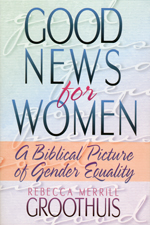 The debate over women’s roles in the home and in the church rages on. A large part of the debate has focused upon the Bible verses that either side raises in defense of their view. Little of the debate has focused on the philosophical implications of either position. Rebecca Groothuis’ Good News for Women
Groothuis first turns to a Biblical case for the equality of men and women. She bases this notion on several Biblical texts. She refers to God’s creation of both male and female in the image/likeness of God (21ff). Her argument also goes into Galatians 3:26-28 and notes how it again draws out the equality between male and female. Regarding the discussions of women’s silence in the churches, Groothuis parallels these passages to those about slaves submitting to their masters:
[T]he strategy of the New Testament church was to tolerate the social subordination of slaves and women so as not to risk alienating non-Christians from the gospel, and yet to modulate and moderate these customs, and ultimately to point beyond them to God’s original intention for human relations. Today, however, when non-Christians are not likely to be offended by an equalitarian gospel, but are likely to find a hierarchical gospel offensive, we have no reason to perpetuate the cultural practices that were intially intended for Christians living in patriarchal societies (25).
Groothuis concludes that throughout the Bible, there is a pattern in which male and female are equal in being. They are, in other words, ontologically equal. Neither is more valuable than the other.
It should be noted that most complementarians today are willing to grant this case. They agree that women and men are indeed created equal and should have equal rights. Groothuis then turns to a series of philosophical arguments which seek to demonstrate that the complementarian position cannot consistently hold that women are equal to men while holding that they are excluded from the ministry. Her argument, therefore, goes deeper than an exegetical challenge. Instead, her argument undermines the theological core groundings of complementarianism.
The very core of Groothuis’ argument is that complementarianism is grounded upon an ontological difference between male and female. The reason she holds that complementarinism must hold this position is “[b]ecause a woman’s traditionally inferior status follows necessarily from the single fact of her essential, female nature, her status is itself a function of her ‘being’ [ontology]; it is determined by what she is, not by what she can do” (53). Complementarians hold that women cannot hold certain offices of the church due only to the fact of her femininity. It is not based upon a functional subordination in which the female chooses to take up a role that is subordinate (62ff); instead, it must be grounded upon the female’s nature as a female. There is nothing about the female which limits her from being a pastor, on most contemporary complementarian positions (that is, those which no longer hold that women are excluded from the ministry simply because she is not as smart or gifted as men in general). Instead, it is exclusively her feminine nature which determines her role as subordinate. Therefore, it is part of her essential nature. I have argued this point myself elsewhere: “Women in the Ministry: The philosophy of equality and why complementarianism fails.”
Grothuis continues with extensive argument to rebut the notion of servant leadership (78ff). She also deals with various analogies complementarians use to attempt to ground equality and hierarchy, such as the Trinity (55ff–it should be noted that grounding subordination in the Trinity undermines the doctrine of the Godhead). It should become immediately apparent as to how this leads to a problem for complementarians. Biblically, they are forced to concede that women and men are, in fact, equal. However, their position undermines this Biblical position of the equality of men and women. Therefore, it seems their position fails.
Groothuis then turns to a number of strategies that complementarians have used in order to try to tie the subordination of women in to patterns of the Godhead. Unfortunately, many of these strategies end up making God into a gendered creature rather than a transcendent Creator. Some complementarians, such as C.S. Lewis, actually go so far as to make God male (93). Groothuis points out that this gendering of God cannot be affirmed based upon the Bible. One difficulty is that both male and female language is used of God (93-94). Yet she insists that the debate must not become a simple adding up of verses on either side to see how God illustrates either gender. That would turn God into a “God who suffers from some gender identity confusion” (93). Instead:
The view that God is both masculine and feminine confuses and distorts the image of God in humanity. It requires that the divine image be divided between women and men, such that women image God’s feminine aspects and men image God’s masculine aspects. This sexualizing of spiritual attributes renders men and women spiritual ‘opposites,’ creating a need to compartmentalize aspects of spiritual life and ministry into separate masculine and feminine quarters. (98)
Groothuis also spends some time dealing with some of the odd–and frankly, pagan–ideas used by some complementarians. For example, some argue that God must act as a male in the creation event: one who gives so much, while the created world merely receives. To be blunt, they describe God’s creative act as a sexual act, with no Biblical support. Groothuis rightly points out that this idea is little more than paganism dressed up in theism, but goes on to note that “It seems a good deal of imagination and determination is required in order to characterize the strenuous effort required of a woman’s body in nourishing, growing, and delivering a child as ‘overwhelmingly passive,’ while depicting the male role of standing around watching it happen as ‘active’!” (95). Another abuse of gender in the Godhead involves some complementarians arguing that because Jesus was a man, only men can be priests (109ff). Groothuis points out that “If we are to regard maleness as essential to who Christ is as Christ, not only must we question whether Jesus Christ can represent women as fully as he can men… we must also view women as essentially inferior to men. Women lack the Christlike attribute of maleness that renders men best qualified to represent Christ…” (113). Interestingly, then, complementarians who utilize this argument essentially undermine the doctrine of the atonement: for Christ’s maleness is emphasized to the point that Jesus is not an adequate representation of humanity. He is essentially male.
The second half of Good News for Women focuses upon an evaluation of the texts used to support complementarianism. These texts are examined in light of the theological points already established. Namely, women and men are created equally as imagers/likenesses of God; and that any attempt to ground hierarchy ultimate fails because it undermines this Biblical concept of equality. A full presentation of Groothuis’ analysis of these texts would probably triple the length of this review, and I don’t see any way to sum up these arguments adequately in a few sentences, so I unfortunately must leave it to those interested to read the book to see these analyses.
Finally, it would be remiss to go without mentioning the outstanding contribution Groothuis gives to the discussion of egalitarian marriage. Groothuis discusses marriage in detail for over 40 pages of the book. What is astonishing is how lucidly she lays out the principles of egalitarian marriage. She illustrates the nature of marriage and how it is a give-and-take with both persons involved as opposed to one ruling over the other. She also discusses in detail how such an egalitarian system can work without having anyone to have a vote to “trump” the other’s vote. Frankly, the book is worth reading just for her discussion on marriage.
Groothuis’ most important contribution here is in the first part of her book, which establishes a strong theological and philosophical case for the equality of men and women in teaching roles in the Church and equal roles in marriage. However, there are numerous important insights throughout the text, both into specific verses and into overarching themes in the debate from both the complementarian and egalitarian positions. Groothuis’ discussion of egalitarian marriage provides a way forward for discussion on the roles of men and women in marriage and also helps to give insight into the Biblical view of marriage. Overall Good News for Women
Links
See my other writings on egalitarianism on my theology page (scroll to the bottom).
I argue that certain complementarian arguments undermine the Trinity.
I review a book which focuses entirely upon exegetical issues related to egalitarianism: Man and Woman: One in Christ.
Source
Rebecca Groothuis, Good News for Women
SDG.
——
The preceding post is the property of J.W. Wartick (apart from citations, which are the property of their respective owners, and works of art as credited) and should not be reproduced in part or in whole without the expressed consent of the author. All content on this site is the property of J.W. Wartick and is made available for individual and personal usage. If you cite from these documents, whether for personal or professional purposes, please give appropriate citation with both the name of the author (J.W. Wartick) and a link to the original URL. If you’d like to repost a post, you may do so, provided you show less than half of the original post on your own site and link to the original post for the rest. You must also appropriately cite the post as noted above. This blog is protected by Creative Commons licensing. By viewing any part of this site, you are agreeing to this usage policy.

 J.W. Wartick - Reconstructing Faith