christian apologetics
Sunday Quote!- Historical Criticism and What Prophets Would Have Done
 Every Sunday, I will share a quote from something I’ve been reading. The hope is for you, dear reader, to share your thoughts on the quote and related issues and perhaps pick up some reading material along the way!
Historical Criticism and What Prophets Would Have Done
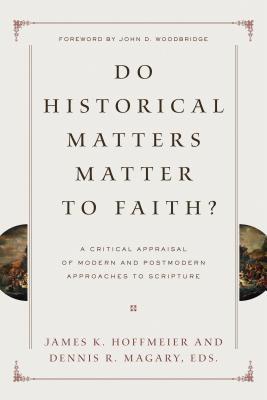
Do Historical Matters Matter to Faith?
[R]edactional analysis is, of course, based on a number of presuppositions about Old Testament prophets and prophecy that cannot be proved, or disproved: (1) that a prophet/editor would not use the same concept or theme in more than one way… (2) that a prophet would not reuse, allude to, or elaborate upon his own (earlier) oracles… and (3) that a prophet would not proclaim anything that was not clearly relevant and perspicuous for his contemporaries ( Schultz 256, cited below)
There is great difficulty with each of these assumptions, as should be clear simply from reading through them. Although each is not necessarily without some merit–surely, for example, it is not an error to think that very often concepts are used in the same ways–the difficulty is when rather than becoming guides for interpretation, these points become areas around which to base limits on the possible meaning of various texts.
The book is full of insights like this throughout, and though I’m still reading through it, I would say I recommend it for the amount of information contained in it, along with the variety of its contents.
What do you think? Are these assumptions valid? How might historical critical methods impact how one reads the text? What presuppositions might be better suited to Christian scholarship regarding prophecy, if any?
Links
Be sure to check out the page for this site on Facebook and Twitter for discussion of posts, links to other pages of interest, random talk about theology/philosophy/apologetics/movies and more!
Sunday Quote– If you want to read more Sunday Quotes and join the discussion, check them out! (Scroll down for more)
Source
Richard Schultz, “Isaiah, Isaiahs, and Current Scholarship” in Do Historical Matters Matter to Faith?
SDG.
Book Review: “The Stories We Tell” by Mike Cosper
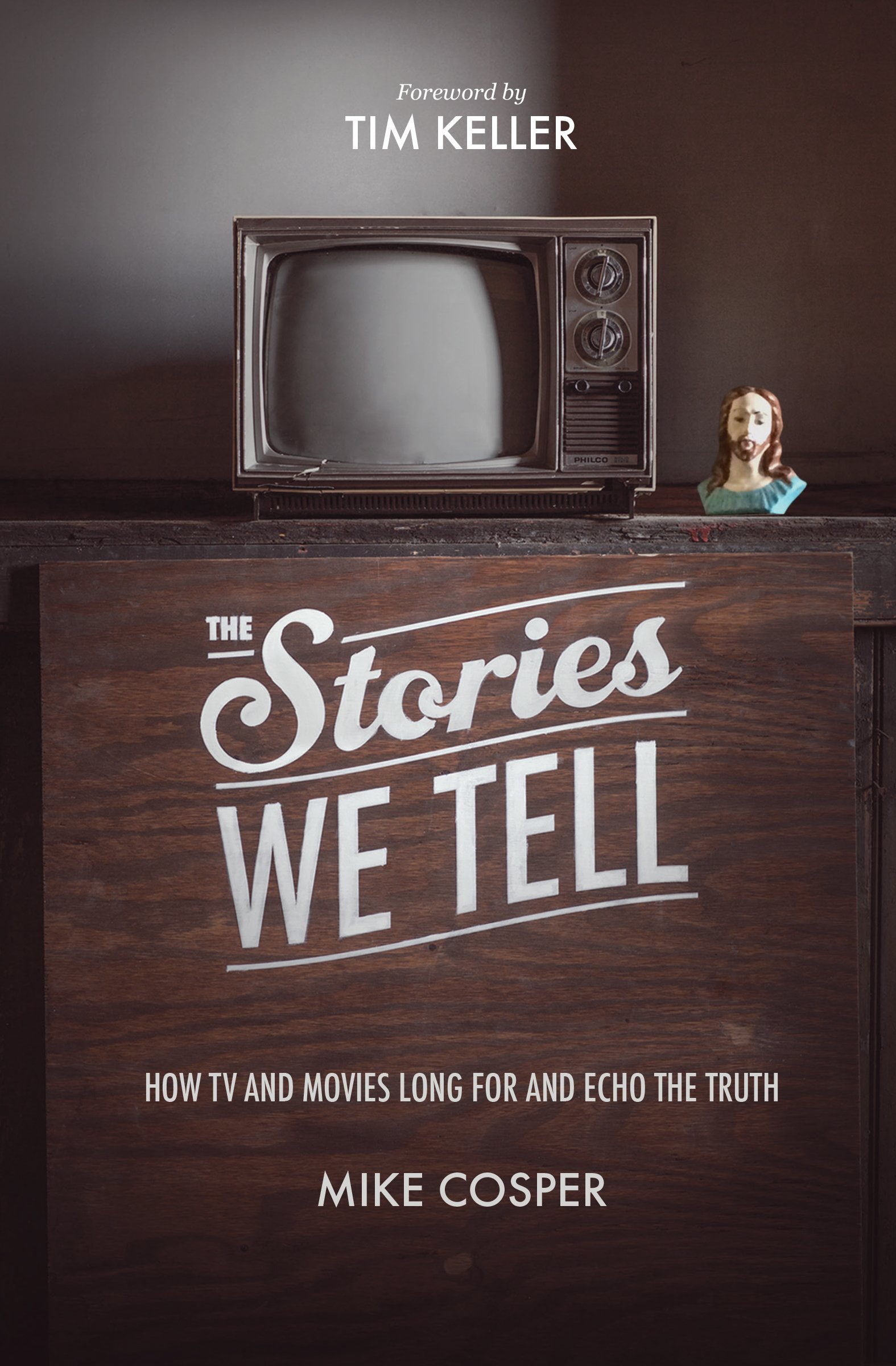
Mike Cosper’s The Stories We Tell
Cosper analyzes several television shows from Mad Men to Project Runway and looks at themes with redemptive value. He doesn’t present a one-size-fits-all picture of how individual genres or specific movies or shows reflect all one specific picture, but rather analyzes the stories told in these forms of media from the perspectives of various aspects of the Christian worldview. These include themes of creation, sin, redemption, love, the fall and success of heroes, and more.
This holistic vision of analyzing stories in TV and at the movies allows readers to open their own avenues for perspectives and reflection in ways that not all books on a topic like this provide. Not only that, but Cosper’s writing is genuinely fascinating. I haven’t watched most of the television shows he discussed, but his presentation of them was enough to allow me to feel as though I knew what was happening and even got me deeply interested in the stories he described. This is not just a good book on how to discuss movies, but it’s also a genuinely interesting overview of a number of stories, whether they’ve been encountered already or not.
Another excellent insight Cosper provided was his look at whether certain stories, movies, and television are appropriate for Christians. He presented a very balanced and insightful look at this topic. First, he noted that the question “how far is too far” is often used to draw boundaries either to allow oneself to get as far as possible or to try to denigrate or call out others. Then, he used two examples of the extremes when it comes to appropriateness: the “overanxious teenager” who wants to get right up to the boundary in order to see as much as they can and the “church lady” who wants to stand as judge to show how others are sinners. He uses these examples to great effect, but does not leave it merely at that. He argues that either extreme is mistaken and also offers a way for Christians to explore appropriateness of various shows and movies.
Conscience and community are to be our guideposts when it comes to the appropriateness of media. Conscience allows us to have an inner arbiter of whether something is appropriate: “If you’re struggling with whether to watch something, ask yourself if you’re sturrling against a conscience that knows better” (Kindle Location 671). A community will help as well by offering a group of others with different experiences and advice. The community will only be helpful, however, if one commits to being honest about viewing habits and having friends who are willing to confront one over the viewing. I found this to be remarkably insightful and Cosper’s perspective on appropriateness is a solid way for Christians to evaluate their viewing habits.
There are many books about Christianity and visual arts like movies and television. Mike Cosper’s The Stories We Tell
Disclaimer: I received a review copy of the book through Crossway. I was not obligated by the publisher to give any specific type of feedback whatsoever.
Links
Be sure to check out the page for this site on Facebook and Twitter for discussion of posts, links to other pages of interest, random talk about theology/philosophy/apologetics/movies and more.
Book Review: “Hollywood Worldviews” by Brian Godawa– Speaking of worldviews in the movies, why not check out my review of this book which seeks to provide a method for analyzing film from a worldview perspective? Let me know what you think.
Engaging Culture: A brief guide for movies– I outline my approach to evaluating movies from a worldview perspective.
I have a number of ways in which I have critically engaged with culture in movies, books, and other arts in my posts on current events (scroll down for more posts).
Source
Mike Cosper, The Stories We Tell (Wheaton, IL: Crossway, 2014).
SDG.
——
The preceding post is the property of J.W. Wartick (apart from quotations, which are the property of their respective owners, and works of art as credited; images are often freely available to the public and J.W. Wartick makes no claims of owning rights to the images unless he makes that explicit) and should not be reproduced in part or in whole without the expressed consent of the author. All content on this site is the property of J.W. Wartick and is made available for individual and personal usage. If you cite from these documents, whether for personal or professional purposes, please give appropriate citation with both the name of the author (J.W. Wartick) and a link to the original URL. If you’d like to repost a post, you may do so, provided you show less than half of the original post on your own site and link to the original post for the rest. You must also appropriately cite the post as noted above. This blog is protected by Creative Commons licensing. By viewing any part of this site, you are agreeing to this usage policy.
An Apologist’s Insights on “God’s Not Dead”
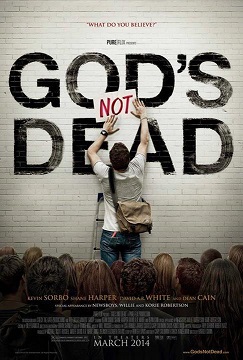 I recently had the chance to watch “God’s Not Dead,” a film which presents a story in which a college student decides to take a stand for his faith against the pressure of an atheistic philosophy professor. A summary of the plot may be found here. As an apologist with an MA in the field, I thought my comments might help provide some insight into the film. I’ll offer a look at some aspects of the film which I wanted to address. Feel free to chime in in the comments with your own thoughts.
Apologetics
The movie presents a clear picture of the need for apologetics. When challenged by attacks on the faith it is important to always have a reason for the hope within (1 Peter 3:15). Josh Wheaton–the protagonist–put together a decent presentation of various evidences for theism in the snippets that viewers get through the film. Of course, these are very simplified and don’t address several major issues with the arguments, but it gets the point across. It also, I have noted through conversations with others, spurred much interest in the area of apologetics. That’s awesome!
That said, I think there are some issues with even the arguments presented in the film. First, after Wheaton has presented the cosmological, design, and other arguments for theism, he is challenged by Professor Radisson on the notion that one just has to choose between atheism and theism. Wheaton acknowledges that yes, it is a choice. Now, there are a number of issues with this portrayal. First, it treats the balance of evidence as a kind of 50/50 proposition, which is, I would think, hardly the position of anyone. Second, it presents a view of belief in which we can just choose what we believe. This is called “doxastic voluntarism” which is a fancy way of saying that one can believe propositions at will. But that is a highly controversial position (just try to force yourself to believe that “Fairies fill my refrigerator every morning” and you’ll see the folly of it) and also flies in the face of biblical accounts of what faith is. Third, here I’ll tip my bias a bit and say I’m fairly well convinced that the balance of evidence is hardly 50/50 but actually compelling.
Another difficulty with the apologetic in the film is that it seems like the lynchpin argument offered was actually just a point of rhetoric. Wheaton presses Professor Radisson and asks “Why do you hate God?” and follows it up with [paraphrased]: “How can you hate someone who doesn’t exist?” This is the last straw and what prompts the class to vote by standing to say that “God’s not dead.” Although I think rhetoric has a clear place in the Christian apologetic (and has since the earliest times: see the apologetic works of Lactantius and Arnobius in the 200-300s AD), I thought it was an odd choice to make it the climactic argument for God. Perhaps it was because this added to the drama of the moment–and I suspect that’s right–but it did so at the cost of detracting from whatever apologetic the film could put forward.
I did, however, appreciate the interaction with some top scholars like Hawking and Lennox. I think it is very important for Christians interested in apologetics to read the top scholars in their fields in order to best get acquainted to the arguments.
Characters or Caricatures?
The way the Muslim father was portrayed was problematic. In the beginning of the film we see him dropping off his daughter and showing great concern for her. Later, he shares an intimate discussion of his faith and the importance of obedience in his background. But then, when it is revealed his daughter has converted to Christianity, he not only kicks her out of the house, but he also immediately hits her more than once. Now, I make no claims to being an expert on this, but I know from anecdotal evidence only that people are indeed kicked out of their homes for converting to Christianity (and sometimes for deconverting), and this is surely a bad thing. It’s not a bad thing to address this as an issue.
But the problem I saw was that the Muslim father’s immediate reaction was violence, without any explanation or any background for thinking this would be a reaction. The rest of the film up to this point had shown him as a caring father who was concerned for the faith and well-being of his daughter. To have him immediately turn to violence when she converted was jarring and I think it speaks to our cultural presuppositions about the religious “Other” to portray the “Other”–the Muslim–in that way. We need to move beyond such stereotypes and into genuine dialogue with those of other faiths, always looking to share the light and love of Christ with them.
On the positive side, the film did do a great job speaking to the importance of reaching out to others like the young man from China. It also emphasized missions in a number of ways, like centering some major plot points around a very amiable character as a missionary.
Pastoral Care
I appreciated the comments about the work of a pastor, in which Pastor Dave in the film was comparing his own work to that of a missionary friend’s and felt his own day-to-day tasks were mundane and trivial. The answer given by the missionary, however, was essentially that such work is part of the work of God as well and that we each occupy a place which God has put us in to make an impact on the world. I thought this was a great message and one that deserves further exploration.
On the other hand, I thought that the pastoral care at points in the movie presented some difficulties. For example, Pastor Dave’s conversation with Josh Wheaton before Wheaton decides to for sure stand up to his professor boiled down to a couple citations (not even quotations) of Bible verses to look up later and the comment that “It’s not easy, but it’s simple” [I may have the order in this quotation wrong]. I’ll be blunt: I think that this is actually a gross oversimplification. Quoting Matthew 10:33 (click for reference) does not actually make the issue facing Wheaton “simple.”
For example, would it be “denying” Christ to acknowledge that one might not have the resources available as a freshman student in a general studies philosophy class (and not a major) to take on a philosophy professor on the topic of God’s existence? I don’t think so. One could instead acknowledge that both the clearly adversarial tone taken in the environment and one’s own lack of knowledge or expertise in the area make it likely that one may actually harm the body of Christ by, well, looking like a freshman non-philosophy student outmatched by an atheistic philosophy professor. Wheaton, of course, has the benefits of film, so he is able to put together a beautiful powerpoint each week and manages to pound the books so hard that he can articulate the cosmological, design, and other arguments within a few days. But is this a realistic perspective? Moreover, is it a “simple” application of the passage to our lives?
Conclusion
“God’s Not Dead” awakens people to the need for apologetics. That is a great compliment, because it is a much-needed awakening. However, it has several issues (including those mentioned above) with the presentation of apologetics, its portrayal of the “Other,” and the oversimplification of several arguments, positions, and even pastoral care and reading of texts. In short, it’s a mixed bag.
Links
Be sure to check out the page for this site on Facebook and Twitter for discussion of posts, links to other pages of interest, random talk about theology/philosophy/apologetics/movies and more!
SDG.
——
The preceding post is the property of J.W. Wartick (apart from quotations, which are the property of their respective owners, and works of art as credited; images are often freely available to the public and J.W. Wartick makes no claims of owning rights to the images unless he makes that explicit) and should not be reproduced in part or in whole without the expressed consent of the author. All content on this site is the property of J.W. Wartick and is made available for individual and personal usage. If you cite from these documents, whether for personal or professional purposes, please give appropriate citation with both the name of the author (J.W. Wartick) and a link to the original URL. If you’d like to repost a post, you may do so, provided you show less than half of the original post on your own site and link to the original post for the rest. You must also appropriately cite the post as noted above. This blog is protected by Creative Commons licensing. By viewing any part of this site, you are agreeing to this usage policy.
Sunday Quote!- Building the Argument from Undesigned Coincidences
 Every Sunday, I will share a quote from something I’ve been reading. The hope is for you, dear reader, to share your thoughts on the quote and related issues and perhaps pick up some reading material along the way!
Build the Argument
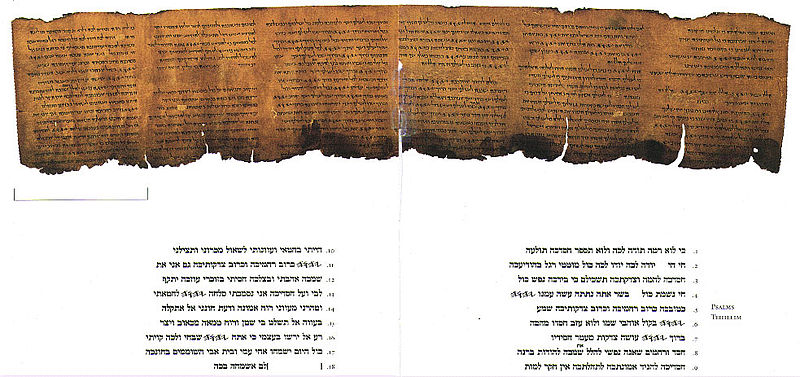
J.J. Blunt (1794-1855) wrote what I consider to be one of the strongest pieces of apologetics literature ever written, Undesigned Coincidences in the Writings Both of the Old and New Testaments. The book focuses, clearly enough, on the argument from undesigned coincidences. I’ll not explain the argument here, as I have done so already. But Blunt operated under no false hopes of having comprehensively covered this extremely broad argument:
Much, however, of the same kind of testimony I have no doubt has escaped all of us; and still remains to be detected by future writers on the Evidences. (v, cited below)
Blunt’s words are a call to action for the Christian apologist. The argument from undesigned coincidences is extremely powerful, but it also has massive depths to explore throughout the totality of the Bible which have not even begun to be explored. Moreover, Blunt began the work of relating these “coincidences” to contemporary literature by relating the Gospels and Acts to Josephus, but surely there is much more work to be done by exploring other literature outside of the Bible and seeing how these might be cross-confirmed.
So, fellow Christian apologists, let’s get to work!
Links
Be sure to check out the page for this site on Facebook and Twitter for discussion of posts, links to other pages of interest, random talk about theology/philosophy/apologetics/movies and more!
Forgotten Arguments for Christianity: Undesigned Coincidences- the argument stated– I outline the basics of the argument from undesigned coincidences. I also provide an example of the argument in practice.
Sunday Quote– If you want to read more Sunday Quotes and join the discussion, check them out! (Scroll down for more)
Source
John James Blunt, Undesigned Coincidences in the Writings of both the Old and New Testament, New York, 1847.
SDG.
Really Recommended Posts 9/5/14- Jesus’ resurrection, logical fallacies, and more!
 Well depending on if my child comes on time, I may currently be in the hospital with my wife and a baby being born today, as it is our due date! Thus, I may not respond right away to any comments. On the other hand, I may just be hanging out waiting for the baby (or he or she may come early!). So long story short keep my family in your prayers, if you please. This week’s posts include Jesus’ resurrection, logical fallacies, “The Unbelievers” movie, Michael Behe’s design argument, and Rob Bell and Oprah Winfrey.
Prior Probability of the Resurrection– David Marshall presents a lengthy argument related to the prior probability of the resurrection of Jesus. This argument is very important, and Marshall’s approach is one of many leading ways to argue for the truth of Jesus’ resurrection. This article has much depth and is worth the read.
How Not to Argue: The Problem of “Folk Fallacies”– It is easy to fall into the trap of Googling random fallacies and charging others with committing these errors. Here, some difficulties with pointing out an alleged stream of fallacies are pointed out. It’s a good post for apologists to consider.
Are “The Unbelievers” Unbelievable?– Here, Saints and Skeptics addresses several issues of “The Unbelievers” film, including its method, arguments, and conclusions.
A Pretty Sharp Edge: Reflecting on Michael Behe’s Vindication– Michael Behe’s argument for intelligent designed is based upon the concept of irreducible complexity. Check out this post which argues that his argument has been vindicated.
Rob Bell, Oprah Winfrey, and the missing Jesus– What happens when Rob Bell meets Oprah Winfrey? Check out this post for some interesting thoughts on the missing Christ in the conversation. See my own series of posts on Rob Bell’s Love Wins for some more reading.
Really Recommended Posts 8/29/14- Eschatology, Creationism, Morality, and more!
There is a lot of good reading to be found in this round of Really Recommended Posts. Be sure to leave comments on those you enjoyed and let me know what you thought here! The topics include eschatology, creationism, morality, Star Trek, and more!
Hitchens’ Challenge: Name one moral act that a religious person can do that an atheist cannot– Jason Wisdom takes on Christopher Hitchens’ challenge to name a moral act that is exclusive to a religious person. He challenges the core assumptions behind the argument, along with the notion of what it means to be “moral.” This is a great read.
Coexist? – A Pox On Both Bumper Stickers-This post is about more than you may think, so be sure to read it. Philosopher David Marshall takes on the “bumper sticker” mentality of both the “Coexist” bumper sticker and its negation.
Exceptional Dinosaur Tracksite in Denali National Park Reveals Herd of Hadrosaurs– Who doesn’t love to read about dinosaurs and creationism? Put your hand down, you, you’re lying! Check out this post which talks about how a rather awesome find of dinosaur tracks presents a challenge for a young earth paradigm.
What does the Bible say about “End Times”? Three Historic Perspectives– Eschatology is something of a side interest for me, and I found this post by J. Warner Wallace to be a pretty solid summary of a few major positions Christians hold regarding end times.
Some Tips on Research– The title pretty much says it all. These are some handy things to keep in mind while doing research.
Make It So- Parody of “Let it Go”– It’s no secret that I love Star Trek. I’ve discussed it on this site with theological/apologetic questions, and I’ve also had an ongoing series of reviews of TNG on my “alternate interests” site. Here, there is a parody of the song “Let it Go” based on Star Trek: First Contact. I thought it’d be a fun way to round out this week’s posts.
Question of the Week- Mistakes for Apologists?
 Each Week on Saturday, I’ll be asking a “Question of the Week.” I’d love your input and discussion! Ask a good question in the comments and it may show up as the next week’s question! I may answer the questions in the comments myself.
Mistakes for Apologists
We often talk about what apologists should do and what the best arguments are, etc. What we don’t often discuss is what apologists should not do and what some mistakes may be regarding method, argument, and the like. Thus, I thought I would ask:
What’s the single biggest mistake you think apologists make? Why do they make it? What can we do to avoid it?
Is there a methodological error apologists frequently make? Is there a way of presenting that might not be as effective? What are some issues involved in apologetics that might turn others off? Let’s see what you think in the comments.
Links
Be sure to check out the page for this site on Facebook and Twitter for discussion of posts, links to other pages of interest, random talk about theology/philosophy/apologetics/movies and more.
Question of the Week– Check out other questions and give me some answers!
SDG.
Book Review: “Total Truth” by Nancy Pearcey
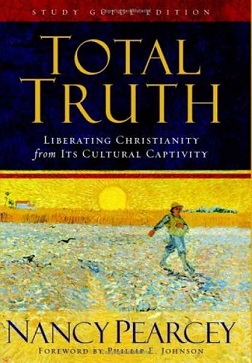 Nancy Pearcey’s Total Truth is dedicated to bringing Christianity into every realm of knowledge rather than relegating it to the outskirts. That is, Christianity is to be seen as “total truth,” applicable to every aspect of reality. It’s a lengthy book so any review of this size is going to leave things out by necessity. I’ll first provide a brief overview. Then, I’ll emphasize some areas I found helpful and areas I questioned.
Overview
The first section of the book is a call for Christians to integrate their worldview into every aspect of reality rather than bifurcating it and only living in different spheres of reality at different times. Next, Pearcey frames the debate over worldviews in terms of a battle for beginnings as she argues Darwinism fails and Intelligent Design is more plausible. Integrated into this section is the notion that Darwinism is a way of looking at reality and a worldview-level belief which is being used to displace Christianity.
The third part traces a brief history of Christianity in America with an eye towards showing that Americans have tended to privatize their religion and use the fact/value split to relegate religion to the area of values. The last chapter addresses how we might live out the Christian worldview in every aspect of our lives.
There is a series of appendices which address topics like Islam, materialism, apologetic method, and politics. Finally, a study guide is included in the edition I was provided, which gives summaries, additional stories, and some questions for each chapter.
Helpful Areas
Pearcey’s emphasis on integrating Christianity into all aspects of our lives is commendable. She accurately describes the plight of many when she speaks of how Christians approach their lives as though church is religion and the rest is something else. Instead, she advocates an integration of the Christian worldview into every aspect of life.
The historical background Pearcey provides into various areas of thought is enlightening and encourages further study into several important areas, including the first and second Awakening.
The stories Pearcey shares throughout the book are great at grabbing and holding attention. They make for good illustrations of many of her points, and also make the book more readable.
The outline of the Fact/Value split and the damage it has done to intellectual and faithful life was much appreciated. Pearcey demonstrated that this alleged split is generally a construct which is used by various worldview systems to try to relegate certain beliefs into the “value” sphere and outside of factual claims. Her incisive critique of this method was both on-point and helpful. The appendices covered interesting topics, and the one on apologetic method, in particular, was worth reading and considering.
Areas I Questioned
At many points throughout the book there is a somewhat conspiratorial tone. That is, it seems to be alleged that somehow all the skeptics (particularly Darwinists) banded together in order to try to overthrow Christianity and American values. It is continually alleged that Darwin was explicitly trying to overthrow religion or at least the possibility of taking religion seriously in the “fact” domain. Many sources were cited in order to justify these claims, but I’m still not convinced that there is some kind of grand conspiracy, nor am I convinced that this is the best way to approach claims about knowledge.
In the section on how Christians can integrate their faith into all aspects of life, Pearcey shares a story about a young man with a marketing degree who was hired to raise funds for a Christian ministry. He “immediately set about implementing the standard techniques he had learned… including a sharp increase in the number of fundraising letters sent out…” (7597).* He defended this choice by saying that statistical analysis showed this would lead to more funds raised. Pearcey’s analysis is as follows:
[I]f any secular organization can achieve the same results using the same “guaranteed” methods, where is the witness to God’s existence? How does relying on statistically reliable patterns persuade a watching world that God is at work? (7610)
I was surprised by this comment. Are we to assume that Christians should ignore statistical analysis? Could not such statistical regularities be part of God’s providential plan (something, in fact, argued by Poythress)? It seems that Pearcey is discounting the possibility of “secular” methods working. But God has ordered the universe in such a way that statistical regularities will occur, and to suggest that we as Christians must reject such regularities and do something else so that we can “persuade a watching world that God is at work” may lead to disaster. I’m not saying we should not trust in God to provide, but when God has revealed a way that things work to us, that’s just as providential as a miraculous windfall of donations [to go off the fundraising example]. Perhaps by following trusted methods, we can prove to a watching world that Christians don’t reject facts or reality.
Pearcey, unfortunately, clings to a view of gender-essentialism: the notion that certain aspects of gendered persons are essential to their nature. For example, after talking about the relegation in modern society of Christianity to the “upper shelf” (the values shelf) of the fact-value split, she laments over the “feminization of the church.” Now the so-called feminization of Christianity has many problems (see my linked post), but Pearcey’s work seems determined to really drag out all stops to present a seeming bogey-woman of femininity:
The underlying dynamic is that the church was adopting a defense strategy vis-a-vis the culture at large. Many churchmen simply retreated from making cognitive claims for religion that could be defended in the public square. Instead, they transferred faith to the private sphere of experience and feelings–which put it squarely into the domain of women. (6978)
I found this, and many statements like it, to be utterly shocking. It seems to be patently absurd to say that “experience” and “feelings” are “squarely… the domain of women.” Really? According to this view, men somehow devoid of all feeling or reliance upon experience and instead manly men spend the day making all sorts of cognitive claims (devoid of experience, mind you, so presumably about Platonic forms or somesuch). I find this to be clearly false. Men have feelings, and that doesn’t make them womanly. Men also have experience (!?). Unfortunately, claims like this persist throughout the book.
Perhaps most importantly, the book doesn’t seem to adequately address the main topic of the book: the need to integrate Christianity into every aspect of life. The final chapter does ask Christians to be godly in their business dealings, to avoid lying and cheating and the like. Moreover, Christians are called to trust in God in their endeavors and view their lives as providentially governed by God. However, I was left wanting much more. After having around 25% of the total length of the book (the beginning chapters, 120ish pages in the print version) dedicated to how Christians seem to not know how to integrate their worldview into their lives, it seemed like having so little space dedicated (about 30 pages in the print version) to how this might actually work in practice was a letdown. It seems like the even the direction offered was pretty straightforward, as Christians at least should know that they are to avoid lying, cheating, etc. in their day-to-day lives and careers.
But how does the Christian go beyond these bite-sized bits like “Moment by moment, we must learn to say no to sin and worldly motivations” (7414) or “[we are to follow] biblical principles in the personal and practical spheres of life” (7516) and get to a position of total integration of Christianity in our lives? Maybe I hope for too much, but I think there ought to be more to it than that. I don’t pretend to say I can do better outlining it, but I do think that there is much more that could have been said here. What readers are left with is essentially a call to be Christians in all their lives, but I think they’ll largely be left asking “how?”
Links
Be sure to check out the page for this site on Facebook and Twitter for discussion of posts, links to other pages of interest, random talk about theology/philosophy/apologetics/movies and more!
Source
Nancy Pearcey, Total Truth (Wheaton, IL: Crossway, 2008).
*All references are to kindle locations.
Disclaimer: I received a review copy of the book through Crossway. I was not obligated by the publisher to give any specific type of feedback whatsoever.
SDG.
——
The preceding post is the property of J.W. Wartick (apart from quotations, which are the property of their respective owners, and works of art as credited; images are often freely available to the public and J.W. Wartick makes no claims of owning rights to the images unless he makes that explicit) and should not be reproduced in part or in whole without the expressed consent of the author. All content on this site is the property of J.W. Wartick and is made available for individual and personal usage. If you cite from these documents, whether for personal or professional purposes, please give appropriate citation with both the name of the author (J.W. Wartick) and a link to the original URL. If you’d like to repost a post, you may do so, provided you show less than half of the original post on your own site and link to the original post for the rest. You must also appropriately cite the post as noted above. This blog is protected by Creative Commons licensing. By viewing any part of this site, you are agreeing to this usage policy.
Sunday Quote!- Modern Warfare and the Power of God
Every Sunday, I will share a quote from something I’ve been reading. The hope is for you, dear reader, to share your thoughts on the quote and related issues and perhaps pick up some reading material along the way!
Modern Warfare and the Power of God
I’ve been reading through Holy War in the Bible: Christian Morality and an Old Testament Problem
Modernity is arguably no less brutal than the ancient world for conducting a secularized, technologized, indiscriminate form of war that excludes God from the kill zone on principle, thereby seducing the strong into believing that they are masters of their own destiny. Indeed, the biblical witness unblinkingly confronts modernity most sharply right at this point: “Assyria will not save us; we will not ride upon horses; we will say no more, ‘Our God’ to the work of our hands'” (Hosea 14:3) (66, cited below)
The so-called secularization of war has not somehow cleansed it of evil, but rather made the work of our hands the sole credit and often reason for war. Salvation comes not from others, but we turn to the work of our hands–cruise missiles, drone strikes, and the like–to wage war for resources, land, money, and the like. Has war become more or less justified? Is it somehow sanctified through “secularization”? I think this quote speaks powerfully to these notions. I’m about 1/3 of the way through the book now and I really have enjoyed it. It hasn’t quite been about the topics I expected, but it’s been more challenging and expanding in its vision for that reason.
Links
Be sure to check out the page for this site on Facebook and Twitter for discussion of posts, links to other pages of interest, random talk about theology/philosophy/apologetics/movies and more!
Sunday Quote– If you want to read more Sunday Quotes and join the discussion, check them out! (Scroll down for more)
Source
Stephen Chapman, “Martial Memory, Peaceable Vision: Divine War in the OT” in Holy War in the Bible: Christian Morality and an Old Testament Problem
SDG.
Really Recommended Posts 8/15/14- Christians and Romans, Bible Measurements, Robin Williams, and more!
Here I have another go-round the web as we survey a posts on creationism, early Christianity, measurement in the Bible, interactions between men and women, and Robin Williams. Let me know what you thought of the posts in the comments, and be sure to leave a comment on those whose posts you enjoyed!
Book Plunge: “The Christians as the Romans Saw Them”– Nick Peters reviews a book which seems to be really interesting, because it is about how the Romans viewed the Christians in the early periods of Christian development. The topic should be of interest for those interested in apologetics, church history, history, and sociology.
All the biblical units of measurement– the “Overview Bible” has become one of my favorite sites. It’s value lies in both clear examples and posts but also in its generally denominationally neutral approach to the Bible. In other words, it’s a great site for general Bible knowledge. Here, there is a chart with every single biblical unit of measurement and a modern equivalent. It’s enormously helpful!
5 Ways Married Men Can Act Like Adults Around Women, Single or Not– This post has some satire in it as the author is responding to the notion that men are somehow incapable of controlling themselves around women.
NH Notes- Bent Rock on Display: The Sidelong Hill road cut– how might rocks bend? Must we attribute such bent rocks to the biblical Flood? Check out this post which has some great pictures and discussion of these topics. See my debate review between a young earth and old earth Christian in which this very topic came up.
Robin Williams, Matt Walsh, and Choice– Stephen Bedard offers some very good insight into Christianity and mental illness, along with a response to Matt Walsh’s comments about how Robin Williams’ suicide may be reduced to a choice.
On the Death of Robin Williams-A great reflection on Christianity, mental illness, and hope in the midst of suffering. Check out this thoughtful post.

 J.W. Wartick - Reconstructing Faith