Christian Doctrine
Sunday Quote!- Forgiveness in Islam and Christianity
 Every Sunday, I will share a quote from something I’ve been reading. The hope is for you, dear reader, to share your thoughts on the quote and related issues and perhaps pick up some reading material along the way!
Forgiveness in Islam and Christianity
James White’s book, What Every Christian Needs to Know About the Qur’an
Here Allah not only forgives the man of horrendous sin but also does so without the slightest reference to the fulfillment of the divine law against murder. The key issue is not God’s mercy or even God’s desire to forgive. The issue is how forgiveness can be obtained without violating His holiness and justice. From the perspective of this hadith, forgiveness flows not from God’s actions in providing a basis for salvation, but from His power alone. (158, cited below)
The distinction White discusses here is crucial. The basis for forgiveness in Christianity flows along with God’s holiness and justice: God provides for justice through the atonement provided by Christ. In Islam, however, Allah may choose to forgive whomever, whenever, merely because Allah is all-powerful–and this in the radical sense that Allah may do whatever Allah wishes, even violate divine law against murder and the like without any intercession and mediation.
It seems to me that this provides another reason to think of the reasonableness of Christianity: it provides a basis for God’s forgiveness apart from mere divine fiat.
What do you think? How important is this distinction? Does James White accurately portray this difference?
Links
Be sure to check out the page for this site on Facebook and Twitter for discussion of posts, links to other pages of interest, random talk about theology/philosophy/apologetics/movies and more!
Sunday Quote– If you want to read more Sunday Quotes and join the discussion, check them out! (Scroll down for more)
Source
James White, What Every Christian Needs to Know About the Qur’an
SDG.
Constantine’s Faith and the Myth of “Constantine’s Takeover”
 There is a narrative within some branches of Christianity (and some… “offshoots”) regarding church history. It is a narrative in which Constantine is seen as the great evil (whether intentionally or not) which corrupted Christianity. The narrative basically goes like this: Constantine rose to power, then everything went wrong in Christianity. He made Christianity the state religion, which introduced scores of nominal Christians into the church. He made service in the church a well-paying position, which corrupted the office of the ministry. He himself was probably not even a Christian!
So the story goes. Is it accurate?
From Narrative to History
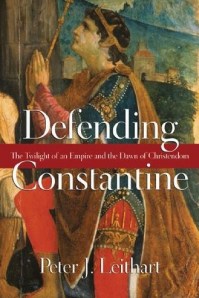
The question of Constantine is one of history. Too often, people have subjected Constantine to psychoanalysis, analyzing an ancient historical figure’s mental state to determine his motives. Historical study may indeed speculate about such things, but to suggest, as some do, that one may uncover some nefarious ancient plot to take over Christianity and lead it into heresy is to engage in writing historical fiction. So what may we actually learn from the historical accounts? Peter Leithart’s work, Defending Constantine: The Twilight of an Empire and the Dawn of Christendom 
Leithart notes that it seems clear that Constantine actually paid much deference to Christianity (Leithart, 93; 121ff; 128-129; 326-328, etc., cite below). He was keen to prevent major divisions within the Church which could have resulted, for example, from the Arian controversy. Hence, he called a council at Nicaea which would define Christian orthodoxy for centuries to come. Constantine himself likely favored the view of Arius, but when the Nicene Council ultimately came against Arianism, Constantine submitted to the defining of orthodoxy.
Constantine’s life appears to be one not of a plot to take Christianity over for political gain, but rather as a life lived struggling with newfound faith and attempting to integrate that faith into public policy. Alister McGrath notes that Constantine’s faith led him to legalize Christianity and sanction it, with some interesting and perhaps unforeseen side-effects:
The new imperial status of Christianity meant that its unity and polity were now matters of significance to the state. (McGrath, 139, cited below)
The much-discussed question of why, if Constatine’s faith were genuine, he would have waited until his deathbed to get baptized is easily answered by his belief that he should wait until the last possible moment to gain the purifying from sins which baptism would provide (Leithart, 299-300).
Frankly, the more one reads about Constantine, the more difficult it becomes to imagine him as someone whose faith was not genuine. Like any Christian, he had his faults–he was a sinner-saint–but he also worked through his position to try to spread and unite Christianity. Leithart notes that many of Constantine’s laws were “more often Christian in effect than in intent” (304). What he means by this is that many laws he made spring from a Christian worldview, though not being explicitly Christian themselves. For example, he outlawed gladiator shows–hardly something which can be said to be explicitly Christian–and this demonstrated Constantine’s genuine concern for human life and the “image of God” in humanity which was noted in yet another law he made (303-304).
In another work, a collection of essays on Apologetics in the Roman Empire
[The work] reveals an emperor who was able to give more substance to his faith than many clerics, and an apologist whose breadth of view and fertile innovations make it possible to mark him with the more eminent theologians of his age (275).
It’s time to set aside the notion that Constantine was somehow “faking it.”
 Constantine’s Takeover?
The “narrative” of Constantine has, unfortunately, often dipped into the notion that he was indeed a Pagan who overthrew traditional Christianity and condemned Christianity to political power-plays for centuries after his death. This notion simply does not line up with historical reality. Although Constantine’s enriching of the church’s coffers did lead to church positions becoming a political gain, it also provided a counter-balance to Imperial authority (Leithart, 304).
Moreover, Leithart argues that the notion that Constantine himself brought about so many wrongs to the church is historically fictitious: “[T]here was a brief, ambiguous ‘Constantinian moment’ in the early fourth century, and there have been many tragic ‘Constantinian moments’ since. There was no permanent, epochal ‘Constantinian shift'” (287). Indeed, the notion of church and state was something found seeded in Augustine’s writings (286) and although Constantine did bring about some monumental changes, the effects they had could only take place over vast amounts of time. It would be impossible to argue that the Catholic Church of the Medieval Period was directly the same or even the exact result of Constantine’s policy.
Finally, Constantine’s policies and actions “Baptized Rome” (Leithart, 301ff). He built churches, empowered bishops, called for unity, and deferred to church teaching. His laws, as noted above, were rooted in a genuinely Christian worldview and sprung from faith.
Conclusion: Defending Constantine
Was Constantine a perfect human? Obviously not. But was Constantine a Pagan who dramatically undermined Christianity; was he a usurper of the Church’s authority who did incalculable damage to Christianity? It does not seem so. Whatever your views on the matters, one must contend with strong historical evidence for the genuineness of Constantine’s faith. His policies indeed may have (and at points certainly did) damage the church, but was that his intent? Again, psychoanalysis of ancient figures is dubious, but the actions Constantine took were those of someone with genuine concern for the stability of Christianity. Most telling, perhaps, were his actions that were not explicitly stamped with Christianity but reflective of his background beliefs: by seeking to end violence, help alleviate poverty, and the like, he demonstrated his faith.
Links
Be sure to check out the page for this site on Facebook and Twitter for discussion of posts, links to other pages of interest, random talk about theology/philosophy/apologetics/movies and more!
Sources
Peter Leithart, Defending Constantine: The Twilight of an Empire and the Dawn of Christendom
Alister McGrath, Heresy: A History of Defending the Truth
Mark Edwards, Martin Goodman, and Simon Price, eds., Apologetics in the Roman Empire
SDG.
——
The preceding post is the property of J.W. Wartick (apart from quotations, which are the property of their respective owners, and works of art as credited; images are often freely available to the public and J.W. Wartick makes no claims of owning rights to the images unless he makes that explicit) and should not be reproduced in part or in whole without the expressed consent of the author. All content on this site is the property of J.W. Wartick and is made available for individual and personal usage. If you cite from these documents, whether for personal or professional purposes, please give appropriate citation with both the name of the author (J.W. Wartick) and a link to the original URL. If you’d like to repost a post, you may do so, provided you show less than half of the original post on your own site and link to the original post for the rest. You must also appropriately cite the post as noted above. This blog is protected by Creative Commons licensing. By viewing any part of this site, you are agreeing to this usage policy.
A Brief Musing on the “Prosperity Gospel” – Psalm 4:6-7
 I have been reading back through the Psalms, because, you know, it’s what the cool kids do. Anyway, I came upon a passage which I thought may have some relevance for the “Prosperity Gospel” teaching (check out this brief summary and critique of this movement):
“Many, LORD, are asking, ‘Who will bring us prosperity?’
Let the light of your face shine on us.
Fill my heart with joy
When their grain and new wine abound.” Psalm 4:6-7 [7-8 in Hebrew Bible]
The text may not immediately seem to have anything to say about the notion that God will grant us ‘health, wealth, and prosperity.’ However, I think it actually does serve as a brief refutation of this alleged “gospel.” I’ll break it down.
Many, LORD, are asking “Who will bring us prosperity?”
There are those who call out to anyone, seeking prosperity rather than seeking after the LORD. Rather than asking the King of the Universe to let His will be done, they seek out prosperity from whatever place it may come. The modern teaching of the “prosperity gospel” is a form of this, but it smuggles in the notion that God is going to provide such wealth to those who ask.
Let the light of your face shine on us.
Rather than asking the LORD for prosperity, the Psalmist David seeks only to have God “shine” on him. Happiness comes from the presence of God.
Fill my heart with joy when their grain and new wine abound.
Here is what I would consider the dramatic turnaround: the first quoted section speaks of how there are others who are seeking after wealth from wherever it may come. Now, David asks from God, the only true provider, to give joy to him even when those who seek such prosperity actually get it.
Thus, we have a very real contrast: those who seek wealth as opposed to those who realize that the rain falls even upon the wicked and so they should rejoice in the light of God’s presence. The difficulty is not purely that the “others” are seeking from others; rather it is that they are seeking prosperity (more literally “happiness”) from God rather than simply rejoicing in God’s presence and Word.
Am I on Track?
I decided to take the time to look up these verses in a commentary after writing the above to see if I may be on the right track. There’s something to be said for the notion that we shouldn’t be doing theology in a vacuum. Samuel Terrien, in his commentary on Psalms from the Eerdman’s Critical Commentary series, argues that Psalm 4 should be seen as an evening prayer, likely even sung in the bedroom/prayed as one was getting into bed. His comments on the relevant passage note that “the poet is… saddened by the discovery of a certain skepticism around [him]… Happiness… which is lacking around him, may be due to a satiety of a materialist kind… For the pious, however, happiness arises from a grateful acceptance of God’s presence” (98-99, cited below).
Again, we see that the problem is that we should be finding our joy in the presence of God rather than material blessings from wherever they may come. Those who seek “health, wealth, and prosperity” are in fact pursuing the latter rather than the former. Psalm 4 should serve as a corrective to the prosperity “gospel.”
Links
Be sure to check out the page for this site on Facebook and Twitter for discussion of posts, links to other pages of interest, random talk about theology/philosophy/apologetics/movies and more!
Source
Samuel Terrien, The Psalms: Strophic Structure and Theological Commentary (Grand Rapids, MI: William B. Eerdmans, 2003).
SDG.
——
The preceding post is the property of J.W. Wartick (apart from quotations, which are the property of their respective owners, and works of art as credited; images are often freely available to the public and J.W. Wartick makes no claims of owning rights to the images unless he makes that explicit) and should not be reproduced in part or in whole without the expressed consent of the author. All content on this site is the property of J.W. Wartick and is made available for individual and personal usage. If you cite from these documents, whether for personal or professional purposes, please give appropriate citation with both the name of the author (J.W. Wartick) and a link to the original URL. If you’d like to repost a post, you may do so, provided you show less than half of the original post on your own site and link to the original post for the rest. You must also appropriately cite the post as noted above. This blog is protected by Creative Commons licensing. By viewing any part of this site, you are agreeing to this usage policy.
Sunday Quote!- Mythical Wars in the Bible?
 Every Sunday, I will share a quote from something I’ve been reading. The hope is for you, dear reader, to share your thoughts on the quote and related issues and perhaps pick up some reading material along the way!
Mythical Wars in the Bible?
I was reading through Holy War in the Bible: Christian Morality and an Old Testament Problem and was surprised to come upon an essay which essentially argues that the narratives in Joshua were mythical retellings of the entry into Israel:
…Deuteronomy 7:1-5 is incoherent if read literally, for the command to kill all the inhabitants of the land is followed by an exhortation against intermarriage with them. In other words, in a “mythological” sense, Deuteronomy 7 itself encourages not so much annihilation of Canaanites as radical separation from them and their idolatrous practices–exactly as Joshua 23-24 exhorts. (163, cited below)
The essay was by Douglas Edwards, whose argument is essentially that Joshua does not recount actual events but rather a mythology with a specific purpose to show that God’s goal of placing Israel in the promised land was fulfilled. It’s an interesting perspective which helps make sense of some pointers in the narratives (and the fact that Judges follows Joshua with discussion of people who were allegedly exterminated in the prior canonical book).
However, I’m not convinced we may categorize the narrative as being a mythology, for it seems to have some clear historical claims about how, when, and where Israel entered into Canaan. Indeed, there are other essays in the same book which do not dehistoricize the text while also not putting forward genocide in the Bible.
What do you think? How do you interpret the texts which some take to mean genocide occurred in the Bible? How might one maintain Earl’s view and inerrancy, or can one not do so?
Links
Be sure to check out the page for this site on Facebook and Twitter for discussion of posts, links to other pages of interest, random talk about theology/philosophy/apologetics/movies and more!
Sunday Quote– If you want to read more Sunday Quotes and join the discussion, check them out! (Scroll down for more)
Book Review: “The Myth of Religious Violence” by William T. Cavanaugh– I review the book which has led me to discuss the ways the category of religion is used to stigmatize the other and also forced me to rethink a number of issues. I highly recommend this book.
Source
Douglas Earl, “Holy War and Hesed” in Holy War in the Bible: Christian Morality and an Old Testament Problem
SDG.
Young Earth Creationism Does Not Have Historical Pedigree
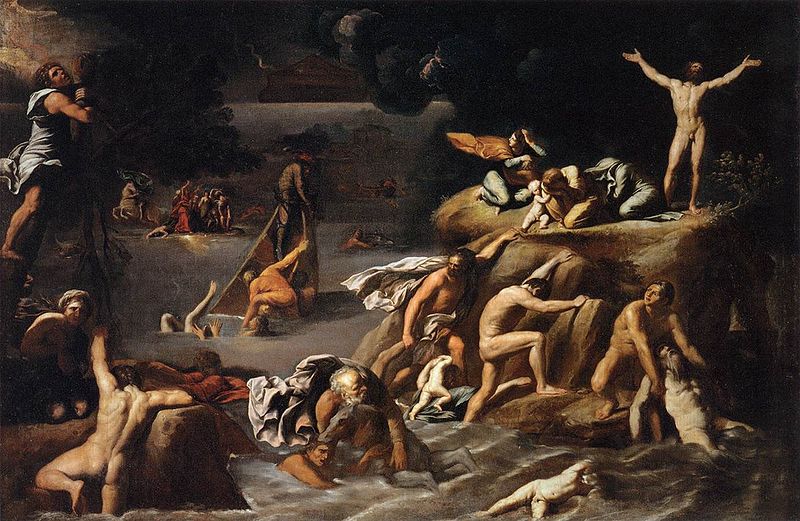
Young Earth Creationists often claim that their view has been the position of the church since its earliest period. Here, I will challenge that notion and argue that, instead, modern creationism is unrecognizable in historic Christianity. Thus, my contention is simple:
Modern young earth creationism has no historical pedigree.
It is impossible to go through a comprehensive survey of early Christian teaching on creation, so my discussion here will be necessarily brief. Further reading may be found in the sources cited, below. I note that if someone wants to contradict my contention, above, they must present evidence showing that the claims about Flood Geology, etc. are all present in early church writings, or indeed any church writings before around 1600.
Now, it is a simple fact that for much of church history, theologians held that the Earth was only a few thousand years old. Do not take this sentence out of context. Recall that we’re talking about modern young earth creationism, not just a belief that the Earth is young. To say that because, for example, some church fathers held the world was a few thousand years old and allege that proves they held to modern creationism is a blatant historical anachronism for several reasons.
First, the reason many of these early teachers of the church held to this view is because their view of overall history was such that the 6 days of creation should match up with 6 “days” of thousand year periods of all of history, culminating in the second coming. The literature on this is quite easy to find, but here are a few choice examples:
“the Lord will finish all things in six thousand years, for a day is with Him a Thousand years… in six days, that is, in six thousand years, all things will be finished…” – Epistle to Barnabas, (quoted in Young and Stearley)
“for in as many days as this world was made, in so many thousand years shall it be concluded.”- Irenaeus (quoted in ibid, 35)
“[Because] in six days God made all things, it follows that 6000 years must be fulfilled.” – Hippolytus (quoted in ibid, 35)
These quotes could be (and are, in the literature) multiplied. The simple fact is that the earliest interpretation of the Genesis text was yes, that it took place in 6 days, but also that those 6 days were important because they outlined the 6000 years of all of Earth’s history, which would end in a seventh day rest of 1000 more years.
Does that sound like modern young earth creationism to you? It shouldn’t. I don’t know of any modern creationist who holds that the Earth should have already ended because it is more than 6000 years old now, or that the days in Genesis correspond strictly to days of 1000 year lengths that define the history of creation.
Second, even the early thinkers who resonate most closely with modern young earth creationism would not have recognized it as it exists now. Early flood theories often had the water simply get placed on earth miraculously and then destroyed by God, held to a “tranquil flood” theory in which the global flood didn’t make any impact on the surface of the planet, held that fossils weren’t actual vestiges of previously living organisms (an interesting piece of geological history), and the like.
 Why is it that YECs take these writers out of their historical contexts? It would be easy to say it is due to a project of quote-mining to find support for one’s view in the past–and I’m sure this is part of it–but perhaps a lot of it is just mere ignorance. The volumes of writings we have from the church fathers, for example, would take years to read, and lifetimes to become well-versed in. Many haven’t even been translated. Thus, it is more expedient to simply find the quote that supports one’s view and use it.
But that’s not at all how we should construct historical theology. The fact is that the constant parade of claims made by YECs that their position is that of the early church is only possible because of a lifting of quotes from church fathers out of their context in order to support the position. Moreover, the people quoted themselves, though they would support the notion of a “young earth” would do so for theological reasons tied to their view of the whole of human history–one which I know of no modern YEC buying into. To cite them as supporting modern YEC, then, is a kind of baptism-by-decontextualization. Only by ignoring the very reasons the early church held their views and the theological worldview that the early church operated under can a YEC find support for their view.
An analogy might be helpful here. To say that the early church agrees with modern young earth creationists would be like saying the early church agrees with modern modalists. Why? Because, after all, many modern modalists claim to be able to uphold the Apostles’ Creed, which, after all, never speaks of distinction of persons in an explicit enough way so as to exclude modalism. Thus, a modalist could say “Our view is from the Apostles’ Creed.” Now of course this is an extreme example, and one could argue at length as to whether the modalist is actually agreeing with the historic Creed, however, the point is that simply finding a single point of doctrine with which one agrees does not mean that one holds to an historic Christian view. It is instead to treat a system of doctrine as something which may be broken apart piecemeal into individual affirmations and then find one of these affirmations with which one agrees. But that doesn’t show one agrees to the system, only to one decontextualized part.
Thus, the best a modern YEC can claim is that the early church also felt the Earth was only a few thousand years old. But to leave it at that is disingenuous, because it paints a picture as though the early church believed this for the same reasons the modern YEC does, but that is not the case. Or perhaps instead it is to, as noted above, just break apart doctrinal systems into component parts and just pick what suits oneself. In either case, it is a mistaken way to approach the question.
The reason the early church held to the young earth was because, as noted above, of their view of the history of the Earth corresponding to 6 days of 1000 years each, not because of alleged geological evidence for a global, catastrophic flood. Although some of the early writers did not hold to this 6 – 1000 paradigm, it is very clear from their writings that there was absolutely no familiarity with the kind of “the Flood did it” reasoning which is so pervasive in YEC today. Modern creationism is founded upon Flood Geology, an absolutely foreign concept to the earliest church teachings.
Indeed, the notion that the early church would have even recognized modern YEC is a bit absurd. Modern YECs use the Noachian Deluge to explain the fossil record, stratification, and the like. But up until John Ray’s time period in the late 1600s, it had been assumed fossils were simply tricks of the rock, not vestiges of once-living organisms (for some interesting reading on this history, check out this post on John Ray). Thus, someone living earlier would simply not have understood what was meant by saying fossils were due to the Flood, let alone knowing what fossils even refer to! Moreover, stratification as a studied feature of geology didn’t really begin in earnest until the 1800s. Again, to then attribute Flood theories back to the early church is wrongheaded.
The Bottom Line
To put what we’ve reviewed above all together: modern young earth creationism does agree with the historical church broadly on the age of the Earth. That’s it. But the categories of thought in which the church has historically envisioned the history of the universe–the very context which YECs try to link their views–have no points of contact with modern creationism. Indeed, they would have been baffling to the early church because these points of contact with Flood Geology simply do not exist. The reasons the early church believed in a “young earth” were linked to their own faulty reading of Scriptures, and an eschatology not shared by modern YECs. In short, Modern Young Earth Creationism has no historical pedigree.
The Young Earth Challenge, Restored
‘Ah!’ one might exclaim. ‘That means that, at least, the early church held to the notion that the Earth was young.’
Well yes, it does mean that. But that hardly justifies belief in modern YEC. Modern YEC is an invention intended to unify the geologic record with an interpretation of the Bible. It is itself an entire system. This interpretation, which leads to speculation about the way the flood formed the geologic record, is not found in the early church. If you disagree, find it for me. Demonstrate that, say, Irenaeus when he wrote about the entire history of the Earth as corresponding to 6 days of 1000 years each, was actually speaking of how Noah’s Flood shaped the geology of the planet in order to layer sediment one atop the other. If one cannot do this, they should not claim to garner support for YEC from the early church.
Once more, YEC has no historical pedigree.
Links
Be sure to check out the page for this site on Facebook and Twitter for discussion of posts, links to other pages of interest, random talk about theology/philosophy/apologetics/movies and more!
“Oceans of Kansas,” Unexpected Fossils, and Young Earth Creationism– I discuss the alleged findings out out-of-sequences fossils in the fossil record and how YEC explanations fail to show they are attributable to a global catastrophic Flood.
What options are there in the origins debate? – A Taxonomy of Christian Origins Positions– I clarify the breadth of options available for Christians who want to interact on various levels with models of origins. I think this post is extremely important because it gives readers a chance to see the various positions explained briefly.
Source and Further Reading
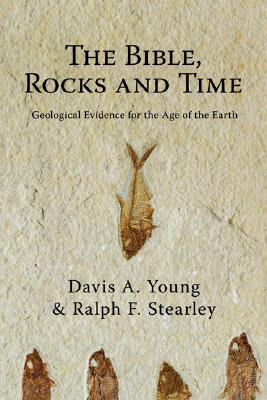
Davis A. Young and Ralph F. Stearley, The Bible, Rocks and Time: Geological Evidence for the Age of the Earth
Stanley L. Jaki, Genesis 1 Through the Ages (New York: Thomas Moore Press, 1992).
SDG.
——
The preceding post is the property of J.W. Wartick (apart from quotations, which are the property of their respective owners, and works of art as credited; images are often freely available to the public and J.W. Wartick makes no claims of owning rights to the images unless he makes that explicit) and should not be reproduced in part or in whole without the expressed consent of the author. All content on this site is the property of J.W. Wartick and is made available for individual and personal usage. If you cite from these documents, whether for personal or professional purposes, please give appropriate citation with both the name of the author (J.W. Wartick) and a link to the original URL. If you’d like to repost a post, you may do so, provided you show less than half of the original post on your own site and link to the original post for the rest. You must also appropriately cite the post as noted above. This blog is protected by Creative Commons licensing. By viewing any part of this site, you are agreeing to this usage policy.
Really Recommended Posts 8/1/14- Marriage, Biblical Songs, Confucius, and More!
 Here’s another go-round of great posts for your perusal, dear readers! As always, let me know what you thought, and be sure to drop a comment on those you enjoyed!
Co-Leadership in Marriage: Who’s in Authority?– A question which often comes up in discussions about egalitarianism–the view that men and women have equal authority in the church and home–is how one is supposed to determine who’s in charge in marriage. Here’s a solid post answering that question.
Man’s Fallible Ideas vs. God’s Infallible Word– It is often said that we should harbor some sort of distrust towards “Man’s Fallible Ideas.” Here, Luke Nix examines this claim and sees how it may be applied to issues like creationism.
The Two Most Overlooked Apologetics Verses in the Bible– There are many verses in the Bible which are commonly referenced when it comes to apologetics. Here, Tom Gilson brings up two which are not often referenced in terms of apologetics. I originally found this over at The Poached Egg, which is a site well worth you following!
All the Songs in the Bible [Infographic]– Here, there is an outline and explanation of every single song in the Bible. It’s pretty interesting to see them all written out and explained. Frankly, I find this to be one of the more interesting and helpful sites on the web related to general Bible knowledge. Be sure to follow it for some more excellent general Bible knowledge posts.
How Confucius proves Jesus– Did Jesus exist? How we approach this question should be consistent. How do we explore other historical questions? Check out this post, which explores the question.
Sunday Quote!- Is God in Control of Disasters?
 Every Sunday, I will share a quote from something I’ve been reading. The hope is for you, dear reader, to share your thoughts on the quote and related issues and perhaps pick up some reading material along the way!
Is God in Control of Disasters?
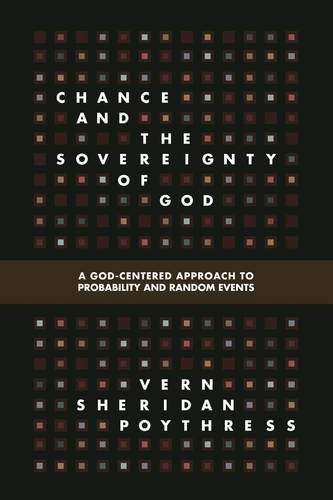
I’ve been reading through Chance and the Sovereignty of God
The main alternative is to say that God is not thoroughly in control. It says that some disasters “just happen,” apart from God’s control. This alternative is superficially attractive, because it appears to protect the goodness of God… further reflection shows that it is not satisfying–in fact it is spiritually devastating… If God is in control… we have a consolation such as the Bible provides… that God is able to bring good out of evil.
…[W]hat if we say that God is not in control of the disaster? God might still do something good in the response. But the disaster itself is still out of control, and inherently unredeemable. There is no comfort to be had for it. We are left with fear for the future. (Kindle location 738, cited below)
What do you think? When a disaster strikes, like Hurricane Katrina, it is inevitable that some will stand up and say it was God’s judgment on a town. Others quote Jesus’ words in Luke 13:1-5 and say that these disasters come seemingly at random. Are these mutually exclusive claims? What are your thoughts on Poythress’ comments: do they show that it is better to say God is in control than not?
Links
Be sure to check out the page for this site on Facebook and Twitter for discussion of posts, links to other pages of interest, random talk about theology/philosophy/apologetics/movies and more!
Sunday Quote– If you want to read more Sunday Quotes and join the discussion, check them out! (Scroll down for more)
Book Review: “Chance and the Sovereignty of God” by Vern Poythress– Check out my review of this interesting book about chance and God’s control over all events.
Source
Vern Poythress, Chance and the Sovereignty of God: A God-Centered Approach to Probability and Random Events (Wheaton, IL: Crossway, 2014).
SDG.
On the “Fuzzification” of Inerrancy
 [Theological a]djustment is achieved through “interpretation”–in theological parlance, hermeneutics… [I]f the loss of the term “inerrancy”… is fraught with sufficiently dire consequences, there will be the strongest temptation to retain these expressions while giving the Bible such “adjustive interpretation” that negatively critical approaches to it can be employed anyway. (Montgomery, 217, cited below)
The definition of inerrancy has been hotly disputed as of late. The infamous Geisler-Licona controversy, which continues to boil over at points, serves as a poignant example of this (see here for a Christianity Today article on the controversy; see also links below for a few discussions of the same). What is meant by inerrancy? Are we in a new era of Bible wars? These are the questions being asked right now.
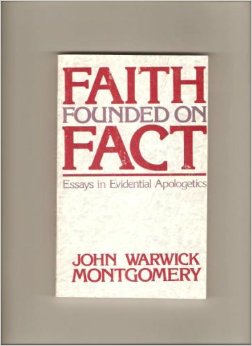
I remember reading an essay from a book–Faith Founded on Fact–by noted Christian apologist John Warwick Montgomery entitled “The Fuzzification of Inerrancy.” The quote above comes from the essay, and it has gotten me thinking. Have lines been crossed? Where do we draw the lines anyway?
Montgomery defined “fuzzification” following James Boren. It is the “presentation of a matter in terms that permit adjustive interpretation” (217, cited below). Turning back to the quote above, the term speaks of the need to retain a specific idea essentially at all costs. Thus, when a challenge is raised to that idea, the idea is broadened or changed to incorporate the data raised by the challenge. Montgomery, originally writing in 1978, seems at times prophetic. He spoke of a time when one might see a contradiction, source theory, or even possibly an error in the Bible and simply define it as “a question of hermeneutics, not of inspiration at all!” (218); he worried about a time when “the ‘inerrancy’ with which one is left is an inerrancy devoid of meaningful content”; and he warned of the dangers of “adjustive interpretation” (227).
I wonder, at times, whether his statements have come to fruition. When I survey various works from evangelicals on interpretation or hermeneutics I find a baffling array of ways we are to understand individual passages or how we are to interpret various passages. Turning to Church Fathers, I find a number of passages in which their readings would be unrecognizable today due to the heavy use of allegory in passages we take to be literal or explicitly historical in genre. Moreover, the question of the Chicago Statement on Biblical Inerrancy looms large. As with any document, questions are raised about what exactly is meant in each clause or in what way individual denials or affirmations might be meant.
It’s enough to make one wonder whether it is time to go back to a baseline understanding. “I believe the Bible is true in whatever it teaches.”*
The question that will be immediately raised, of course, is “What does the Bible teach?” The overriding desire to restrict exactly what it is the Bible teaches and prevent so-called “liberal” scholarship from finding ground to stand on in evangelicalism has led to an incessant narrowing of the definition of inerrancy, such that clause after clause is piled one atop the other to the point that it is hard to operate within such limits. Moreover, it seems some of these definitions actually prevent development within theology and squelch the impulse to question received traditions in light of new evidence.
The danger that some may think is posed by whittling the definition of inerrancy down to something like “The Bible is true in all that it teaches” may perhaps have some of the concern negated by the fact that it gets the dialogue going. If people return to this question: if someone genuinely, with open heart and mind, asks me “What does the Bible teach?” then I think that’s a glorious thing. Moreover, one may wonder at the purpose of inerrancy: is it a way to declare that the Bible is without error (as it seems to be based on the word itself); or is it a way to define how we go about reading the Bible? After all, if it is simply a declaration that the Bible is without error, should not simply declaring it as such be sufficient?
Perhaps it’s time to de-“fuzzify” inerrancy and get back to the basics. We may ask “What is the thrust of the doctrine of inerrancy?” instead of “What rival theological views may I exclude with the definition of inerrancy?”
Perhaps the danger of “fuzzification” from dehistoricizing texts, critical scholarship, and the like has in fact led to a fuzzification of the definition of inerrancy by making it over-determine the limits within which one may operate. I’m not claiming to offer all the answers, nor should it be thought that I am rejecting inerrancy. Far from it.** What I am instead rejecting is a “fuzzification” of the doctrine: when did declaring the Bible to be God’s Word and Truth become so complex that volumes of books were necessary simply to define what that means?
Let me know what you think in the comments below.
*This definition has suggested itself to me from a number of sources, including Nick Peters of Deeper Waters.
**I’m sure some people will take any questioning of current discussion about inerrancy to be denying the doctrine. However, this post is clearly written in order to defend the doctrine. What does inerrancy mean? That’s the thrust of this post, not “Inerrancy is false.” I believe the Bible is true in all it teaches.
Links
Be sure to check out the page for this site on Facebook and Twitter for discussion of posts, links to other pages of interest, random talk about theology/philosophy/apologetics/movies and more!
Book Review: “Faith Founded on Fact” by John Warwick Montgomery– I review Montgomery’s well-known book on apologetic methodology.
Inerrancy– Check out my other posts on this topic. (Scroll down for more posts.)
The Geisler/Licona Debate– Nick Peters has a number of posts on this controversy if you want to read up on the topic. This post summarizes the debate and offers a thoughtful critique, in my opinion.
The Geisler/Licona Controversy– A quick, easy read on the reasoning behind the controversy.
SDG.
——
The preceding post is the property of J.W. Wartick (apart from quotations, which are the property of their respective owners, and works of art as credited; images are often freely available to the public and J.W. Wartick makes no claims of owning rights to the images unless he makes that explicit) and should not be reproduced in part or in whole without the expressed consent of the author. All content on this site is the property of J.W. Wartick and is made available for individual and personal usage. If you cite from these documents, whether for personal or professional purposes, please give appropriate citation with both the name of the author (J.W. Wartick) and a link to the original URL. If you’d like to repost a post, you may do so, provided you show less than half of the original post on your own site and link to the original post for the rest. You must also appropriately cite the post as noted above. This blog is protected by Creative Commons licensing. By viewing any part of this site, you are agreeing to this usage policy.
Book Review: “Death Before the Fall” by Ronald Osborn
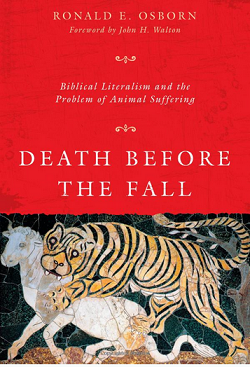
I eagerly anticipated the release of Ronald Osborn’s book, Death Before the Fall: Biblical Literalism and the Problem of Animal Suffering
The first part occupies the bulk of the book (100/179 pages of text). In it, Osborn first offers his interpretation of the creation account in Genesis 1. His take on it is that is fairly open to being taken in a number of ways. For example, having creatures come forth “from the earth” may be direct special creation, or a linguistic device aimed at describing the “open” status of creation–its ability to change and self-correct (see esp. 27-28).
After laying out the interpretation, Osborn sets out to show how “literalism” is a mistaken hermeneutic. He argues that literalism has been brought to the forefront due to Enlightenment ways of thinking. That is, biblical literalists are influenced by modernism and their readings tend to be highly reliant on that kind of rationalist epistemology (42ff). A major difficulty with literalism, he notes, is that it seems to ultimately lead to fideism: one’s view of what the “plain sense” reading of the Bible is must be taken as normative for all areas of inquiry (44; 45-46). Another difficulty is that literalism tends to actually go far beyond what the text says in order to defend a preferred interpretation of the text (56-57).
Scientific creationism, Osborn argues, is flawed because it isn’t a “progressive research program” but rather a “degenerative” one. That is, scientific creationism is simply adjusted in an ad hoc way to meet new challenges rather than predicting them (63ff). He rounds out this first part with a discussion of how literalism ultimately leads to circling the wagons and an “enclave mentality,” alongside various representatives of historical interpretation of Genesis–Barth, Calvin, Augustine, and Maimonides.
The second part focuses on animal suffering and approaches it from a number of angles. He begins the section with three difficulties with a “literalist” view of animal suffering and the Fall. Briefly, these are the notion that a flawless creation as put forward by some seems to simply be the winding up of a watch; that God is made to be a deceiver; and difficulties with how the curse is to be applied to animals (126ff). These are presented briefly but cogently and each offers a unique challenge to typical creationist readings of the text. Next, Osborn turns to explanations other than the Fall as reasons animals suffer. He turns to the book of Job and argues both that God may have created nature with predation and death and also that God’s answer to Job out of the whirlwind may be applied to animal suffering (154-155). Moreover, God’s choosing to participate in the world in the Incarnation helps to consummate all creation and bring it to completion (165).
A difficulty with the book is the sustained polemic against literalism/YEC. At times, Osborn shares great insights in the movement. Moreover, pointed criticism is surely needed in some form. Unfortunately, after some helpful introductory comments, he seems to degenerate into posturing against those with whom he disagrees. For example, after admitting that Gnosticism is rather ill-defined, he nevertheless goes on to compare literalism to Gnosticism and simply state that they each share certain features in common (86ff). I like to call this the “Gnostic fallacy” in which someone declares the ‘other’ to be a Gnostic in order to refute them. As Osborn himself notes, Gnosticism is hard to pin down, which also means it is very easy to twist various teachings into lining up with Gnosticism. I think this is honestly one example. [See comments for Osborn’s clarifying comments on this section.]
This section is understandable, and it is easy for someone like Osborn–a former YEC (like myself)–to want to lash out against these formerly held, and sometimes damaging, beliefs, but it is not a very helpful. I suspect it will alienate any readers he would perhaps hope to engage in dialogue, which leaves one wondering about the audience for the book.
Another difficulty with Osborn’s sustained critique of “literalism” is that he never provides much insight into how and/or when texts are to be read literally. That is, would the Gospels need to be read literally when they speak of Jesus dying on the cross and rising again? Osborn clearly affirms this, but doesn’t provide mechanisms which distinguish between “literalism” and simply proper exegesis which would allow for and engage with literal readings of the texts.
One further problem is that the book, despite purporting to be about Death Before the Fall, only briefly addresses this issue. The book really doesn’t provide anything more than most basic non-young earth literature does when it comes to the issue. As such, it is difficult to determine exactly how useful the book is when compared to other works.
Ultimately, Death Before the Fall: Biblical Literalism and the Problem of Animal Suffering
Readers who are interested in the topic of animal suffering and death before the fall are better served to pick up Michael Murray’s excellent and enthralling book, Nature Red in Tooth and Claw: Theism and the Problem of Animal Suffering
Links
Be sure to check out the page for this site on Facebook and Twitter for discussion of posts, links to other pages of interest, random talk about theology/philosophy/apologetics/movies and more!
Sunday Quote!- Do Trilobites Yield a Greater Good?– I discuss a very minor point in Murray’s work which shows how diverse its threads are for thinking on this topic.
Source
Ronald Osborn, Death Before the Fall: Biblical Literalism and the Problem of Animal Suffering (Downers Grove, IL: InterVarsit, 2014).
SDG.
——
The preceding post is the property of J.W. Wartick (apart from quotations, which are the property of their respective owners, and works of art as credited; images are often freely available to the public and J.W. Wartick makes no claims of owning rights to the images unless he makes that explicit) and should not be reproduced in part or in whole without the expressed consent of the author. All content on this site is the property of J.W. Wartick and is made available for individual and personal usage. If you cite from these documents, whether for personal or professional purposes, please give appropriate citation with both the name of the author (J.W. Wartick) and a link to the original URL. If you’d like to repost a post, you may do so, provided you show less than half of the original post on your own site and link to the original post for the rest. You must also appropriately cite the post as noted above. This blog is protected by Creative Commons licensing. By viewing any part of this site, you are agreeing to this usage policy.
Question of the Week: Obscure Theological Topics
 Each Week on Saturday, I’ll be asking a “Question of the Week.” I’d love your input and discussion! Ask a good question in the comments and it may show up as the next week’s question! I may answer the questions in the comments myself.
Obscure Theological Topics
The picture on the left (which I took and then added a question mark with my mad paint skills) is perhaps more appropriate this week than most, because some people may be scratching their heads:
What’s your favorite obscure theological topic? Why? What relevance does it have in the broader scheme of things?
Theology is an area of thought that has existed since the beginning of humanity. As such, there are a lot of topics to focus on (understatement). Think about some that interest you. I think a lot of my readers are probably interested in some cool stuff, and I want to know about it! Here are some examples of “obscure” theological topics: aliens and Christian theology or King James Onlyism. What are some you’re interested in? How do you apply what you’ve looked into in that area to a broader schematic of Christian theology?
Links
Be sure to check out the page for this site on Facebook and Twitter for discussion of posts, links to other pages of interest, random talk about theology/philosophy/apologetics/movies and more.
Question of the Week– Check out other questions and give me some answers!
SDG.

 J.W. Wartick - Reconstructing Faith