Christian Doctrine
Book Review: “From Heaven He Came and Sought Her”
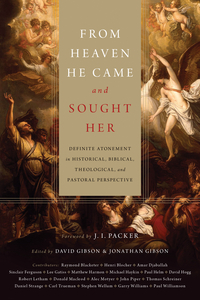 From Heaven He Came and Sought Her: Definite Atonement in Historical, Biblical, Theological, and Pastoral Perspective
Due to the length of this book, I will split my review into broad comments on positives and negatives of the book, with a few specifics. It should be noted I didn’t simply reduce the positives to areas I agreed or negatives to disagreements. Rather, I have tried to be as fair as possible and show several areas of interest for this uniquely important work. I look forward to any comments you’d drop off with your own thoughts.
Positives
The most obvious positive of the book is its magisterial scope. From Heaven He Came and Sought Her is a simply huge study which touches upon multiple avenues of research related to the topic of definite atonement. The book touches upon almost every conceivable aspect of the doctrine of limited atonement, from church history to biblical theology to pastoral implications and evangelism. As Daniel Strange comments in the chapter on “The ‘Uncomfortability’ of the ‘Unevangelized’ for a Universal Atonement”: “No doctrine is an island” (Kindle location 14696).
The portions of the book which deal with specific authors are extremely interesting. The chapter on Calvin, for example, shows (in my mind) beyond a reasonable doubt that Calvin–at the least–would have found definite atonement a logical path for his theology to take. The chapter on “Blaming Beza” highlights some interesting aspects of the development of the doctrine which were fascinating.
Many chapters could be held up as “highlights,” but I particularly would say that Strange’s aforementioned chapter, which provides an argument that any view which holds that at least some are not saved is a form of limited atonement was a major highlight of the book. Whether one agrees or disagrees with Strange, his argument forces those who disagree with him to contend with it. Other major highlights are the chapters on Calvin by Paul Helm (an author whose previous work I have enjoyed), the chapter on John Owen (which highlights some aspects of Owen’s teaching I found particularly interesting), and the chapter on “The Triune God” and definite atonement by Robert Letham.
To say that these are “highlights” is to do injustice to the work as a whole, however, which simply provides a comprehensive argument for definite atonement. Even as one who does not hold to the doctrine, I was impressed by the incredible scope of the work and very interested in the historical development of the doctrine as it was highlighted therein. This book is a good read, even if you ultimately disagree with its conclusions. And, if you do disagree, you will be forced to think long and hard about your disagreement.
Negatives
Perhaps the biggest issue is that at multiple points, conclusions drawn from evidence seems overstated. One example, drawn from the chapter on Definite Atonement in Church History, states that Justin Martyr fairly clearly held to definite atonement. Now, I’m not claiming to be a patristic scholar by any stretch of the imagination, but it seems to me the passages cited are hardly a resounding endorsement of definite atonement. Indeed, Martyr said that “[Christ] was going to endure, cleansing through his blood those who believed in him” (Kindle Location 1088). I’m not at all sure why this would be taken as evidence for definite atonement, because apart from universalists, anyone who believes Christ died for the salvation of humanity would also hold that Christ’s death ultimately cleanses the elect; those who believe. None who disbelieve are ultimately cleansed, for the application of Christ’s atonement was not brought about. Now the point is not to demonstrate this latter view is correct; my point is merely that the conclusion drawn here is actually overstated.
Going with the same section, one could just as easily take the passage cited from Martyr about how Christ “ransomed” us as allegedly pointing to the ransom theory of atonement. The problem is this latter case would also be a clear overstatement. Only by starting with a paradigm and reading Martyr through that lens does the alleged evidence turn out to support that conclusion.
Another example comes from the chapter on “Problematic Texts” by Thomas Schreiner. There, in dealing with 1 Timothy 2:1-7, he states “The immediate [contextual] reference to ‘kings and all who are in high positions’ (v. 2) suggests that various classes of people are in view” (Kindle location 9564). For support, he cites further context and a commentary. However, on face value alone, if 1 Timothy 2:2 is indeed that which limits the scope of the passage, one would have to wonder how “kings and… high positions” could be comprehensive in the way required by “all.” I don’t know about you, dear reader, but I by no means rank among kings or those in high places, but I do think that I am part of “all” or at least “various classes of people…” Moreover, Schreiner seems to think that v. 2 is the limiting factor, but the flow of the passage seems to fit more with the notion that all people includes those who are kings and those in high places and that Paul is simply emphasizing the latter group as particularly worth praying for (after all, leaders are those most in need of God’s guiding hand). Schreiner goes on to argue based upon this that the best reading is, again, “all kinds of people” not merely “all people.”
Apart from the fact that Paul could have simply said “all kinds of people” to make it clear that that were his intended meaning, the text itself again goes against Schreiner’s view, because its context is not “all kinds” but rather “kings” or “those in high places…” In any case, I would think this passage would lead to caution about the conclusion, not the absolute conclusion given later: “[T]he pastorals… focus on salvation being accomplished for all without distinction, both Jews and Gentiles…” (Kindle location 9989).
Unfortunately, examples like this may be easily multiplied. Throughout the book, conclusions seem to be drawn prior to the evidence, and so evidence is made to neatly fit with the conclusion. Conclusions often seem to be overstated throughout, without much caution for some of the more difficult passages or acknowledgement that there is diversity among even those who hold to definite atonement on the interpretation of various biblical passages or authors.
Conclusion
Looking back over the review, I can’t help but think that it is inadequate. The scope of From Heaven He Came and Sought Her is so massive that it simply cannot be adequately covered in a review of readable length. Anyone who wishes to deny the doctrine of definite atonement must contend with this work and engage with it critically. Those who hold to definite atonement will find their view ably defended. As a reader, I was challenged as much as I was engaged. I recommend the book highly for those interested in this doctrine, though I do wish there were perhaps some more acknowledgement of the real difficulties on various points.
Disclaimer: I received a review copy of the book through Crossway. I was not obligated by the publisher to give any specific type of feedback whatsoever.
Links
Be sure to check out the page for this site on Facebook and Twitter for discussion of posts, links to other pages of interest, random talk about theology/philosophy/apologetics/movies and more!
Source
David Gibson and Jonathan Gibson, eds., From Heaven He Came and Sought Her: Definite Atonement in Historical, Biblical, Theological, and Pastoral Perspective
SDG.
——
The preceding post is the property of J.W. Wartick (apart from quotations, which are the property of their respective owners, and works of art as credited; images are often freely available to the public and J.W. Wartick makes no claims of owning rights to the images unless he makes that explicit) and should not be reproduced in part or in whole without the expressed consent of the author. All content on this site is the property of J.W. Wartick and is made available for individual and personal usage. If you cite from these documents, whether for personal or professional purposes, please give appropriate citation with both the name of the author (J.W. Wartick) and a link to the original URL. If you’d like to repost a post, you may do so, provided you show less than half of the original post on your own site and link to the original post for the rest. You must also appropriately cite the post as noted above. This blog is protected by Creative Commons licensing. By viewing any part of this site, you are agreeing to this usage policy.
The Lutheran View of Law and Gospel is not an Old-New Testament dividing line
 I’m going to admit a huge pet peeve of mine here: non-Lutherans misunderstanding the Lutheran view of Law and Gospel. I have found this demonstrated more than once in the Zondervan Counterpoints series. Now, I don’t want to take anything away from that series. My wife can attest that I love it. I have over 15 volumes of the series. But I have to wonder why it seems they rarely get Lutherans involved and, frankly, why they would have a non-Lutheran like Douglas Moo write the “Modified Lutheran” view in the Five Views of Law and Gospel book (an essay which I argued elsewhere is not the Lutheran view at all and should not be called even “modified” Lutheran).
Anyway, I was reading through another book in the series, Understanding Four Views on Baptism, and came upon the response to the Lutheran view written by the Reformed believer, Richard Pratt, Jr. He wrote, “Broadly speaking, Lutheranism has stressed discontinuity between the OT and NT under the rubrics of law and gospel” (Pratt, 117, cited below). He contrasted this with the Reformed understanding of the unity of Scriptures. Douglas Moo also made a similar statement in the Five Views of Law and Gospel book: “Basic… to biblical revelation is the contrast between ‘before’ and ‘after’ Christ, a contrast between two ‘ages’ or ‘eras’… the New Testament writers… relegate [the Mosaic Law] basically to the period of time before the coming of Christ” (322). Moo’s view is allegedly the “Modified Lutheran View” in this book.
What is astonishing to me about these statements, particularly the critical one made by Pratt, is that it seems to me neither of them has interacted with Lutheranism in a meaningful fashion. You see, Lutheranism has a very simple way to see what it does or does not teach: The Book of Concord
The Lutheran Confessions make it clear that both of these authors–and those who follow their interpretation of the Lutheran view–are mistaken. I’ll highlight a few statements below:
All Scripture should be divided into these two main topics: the law and the promises [Gospel]. In some places it communicates the law. In other places it communicates the promise concerning Christ… (Apology of the Augsburg Confession, Article IV.5)
…Scripture is full of such testimonies. In some places it commends the law, in other places it commends the promises… (Apology of the Augsburg Confession, Article IV.102)
These, and many other citations, make it clear that the entirety of Scripture contains both Law and Gospel. Moreover, the entire Article V of the Formula of Concord teaches that these two doctrines are found both in the Old and New Testament. In fact, the confessors noted that Jesus’ ministry demonstrated both aspects. Because Jesus’ ministry is in the New Testament, and yet Jesus utilized the law, it is clear that the Lutheran view is not a discontinuity between the Old and New Testament. For Pratt, this means that his allegation that his Reformed position preserves unity of Scripture as opposed to the Lutheran view which divides it is far off the mark. Lutherans hold that both law and gospel are found throughout the Bible, and the discontinuity is resolved by properly distinguishing these teachings. For Moo, this basically means his “modified Lutheran” view simply isn’t Lutheran.
Long story short: the Lutheran view of Law and Gospel is not a temporal dividing line between the Old and New Testament.
Links
The Law Always Condemns, The Gospel Always Saves. Or, why I’m a Lutheran.– I outline the Lutheran view of Law and Gospel with references. If you’re interest at all in this discussion, I recommend you read this post to be sure you’re not messing up the distinctions Lutherans make.
Be sure to check out the page for this site on Facebook and Twitter for discussion of posts, links to other pages of interest, random talk about theology/philosophy/apologetics/movies and more!
Sources
Douglas Moo, “The Law of Christ as the Fulfillment of the Law of Moses” in Five Views on Law and Gospel, ed. Stanley Gundry (Grand Rapids: MI: Zondervan 1999).
Richard Pratt, Jr. “A Reformed Response” in Understanding Four Views on Baptism edited by Paul Engle and John Armstrong (Grand Rapids, MI: Zondervan, 2007).
The Book of Concord
SDG.
——
The preceding post is the property of J.W. Wartick (apart from quotations, which are the property of their respective owners, and works of art as credited; images are often freely available to the public and J.W. Wartick makes no claims of owning rights to the images unless he makes that explicit) and should not be reproduced in part or in whole without the expressed consent of the author. All content on this site is the property of J.W. Wartick and is made available for individual and personal usage. If you cite from these documents, whether for personal or professional purposes, please give appropriate citation with both the name of the author (J.W. Wartick) and a link to the original URL. If you’d like to repost a post, you may do so, provided you show less than half of the original post on your own site and link to the original post for the rest. You must also appropriately cite the post as noted above. This blog is protected by Creative Commons licensing. By viewing any part of this site, you are agreeing to this usage policy.
Sunday Quote!- What does “head” mean?
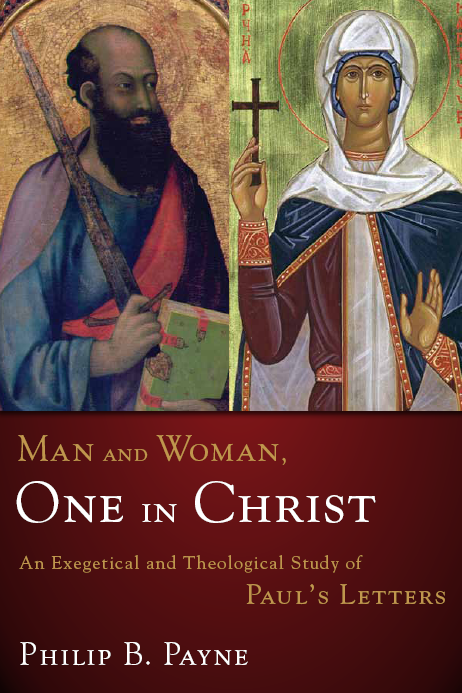 Every Sunday, I will share a quote from something I’ve been reading. The hope is for you, dear reader, to share your thoughts on the quote and related issues and perhaps pick up some reading material along the way!
What does “head” mean?
I’ve been rereading Philip Payne’s monumental study of Paul’s letters in relation to the roles of men and women in the church and home, Man and Woman, One in Christ. There is so much in this book to discuss I feel as though every single page deserves its own post. For now, I wanted to highlight his discussion of the meaning of “head” in the much-discussed 1 Corinthians 11:2-16. Payne writes:
The majority view in recent scholarship has shifted to understand “head”… in this passage to mean “source” rather than “authority”… One reason for the popularity of [interpreting it as “authority”] is that in English, German, and Hebrew… the most common metaphorical meaning of “head” is “leader”… Interpreters who in their native tongue associate metaphorical uses of “head” with “leader” naturally make this association when reading this passage. (117-118, cited below)
In the book, Payne goes on to demonstrate why it is that the majority view has turned to viewing “head” as “source.” He provides 15 reasons to think this is the case. A few highlights include contemporary 1st-3rd century usage of the term, lexical support for “source” and lack thereof for “authority,” other usage within the Pauline epistles, difficulties raised by reading it as “authority,” and support for the meaning as “source” from a number of contemporary authors and Church Fathers. In the passage above, I think it’s interesting to see that one’s native language often imports meaning into the text. I’m sure this happens in many places, and I’ve caught myself on some.
If you have any interest at all in the debate over women’s roles in the church and home and do not have this book, you must amend the situation immediately. It doesn’t matter if you are egalitarian or complementarin; you must deal with the arguments raised by Payne, who interacts with top scholars from both sides of the debate (including Piper, Grudem, Wright, and more).
What are your thoughts? How do you read this difficult passage? Does your native tongue perhaps change your perception of the meaning of some parts of the Bible?
Links
Be sure to check out the page for this site on Facebook and Twitter for discussion of posts, links to other pages of interest, random talk about theology/philosophy/apologetics/movies and more!
Sunday Quote– If you want to read more Sunday Quotes and join the discussion, check them out! (Scroll down for more)
Check out my posts on egalitarianism (scroll down for more).
Source
Philip B. Payne, Man and Woman, One in Christ
SDG.
Sunday Quote: Do we need to agree with past thinkers?
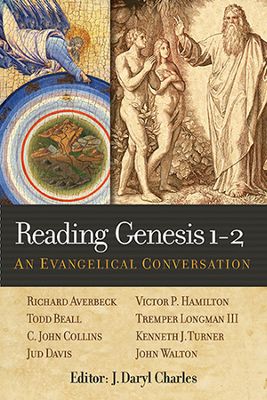 Every Sunday, I will share a quote from something I’ve been reading. The hope is for you, dear reader, to share your thoughts on the quote and related issues and perhaps pick up some reading material along the way!
Do we need to agree with past thinkers?
I recently read through Reading Genesis 1-2: An Evangelical Conversation, which has given me a lot to reflect upon. One quote that struck me was from Jud Davis:
A beloved teacher once said, “If you cannot find at least one ancient, one medieval, and one modern commentator who shares your view, it probably means you are wrong.” Over the years, I have thought long and hard about this statement, and I believe it is exactly right because if you could not find such examples, you would be forced to say, “Everyone before missed it until me.” (215)
I thought this was an interesting quote because it says much about how one approaches theological issues. First, there is some concern regarding this passage for me because it seems that some truths are indeed missed by everyone until someone discovers (or rediscovers) them. Second, there is a real concern for whether one innovates in doctrine and thus becomes a heretic. That is, innovation in theology is often divergence from established truths. These established truths are often established exactly because they follow from the text. Thus, an innovation which says, for example, that Jesus is not God is rightly denounced as heretical.
Based upon these conflicting concerns, I think it is permissible to say there is some tension within the practice of historical theology and exegesis. We must be careful to avoid the pitfalls of either ignoring the voices of the past or being too cautious to reconsider the evidence for certain positions. Going to either extreme would be dangerous. The most prominent danger, in my opinion, is the danger of using a passage like this to squelch debate or exploration. Ultimately, the text is the arbiter of truth, not established interpretations. If someone comes up with a “new” look at a text, it is important to consider it on its own terms rather than reject it because it is new. The weight of unanimity in the past should be seen to increase the standard of proof for those who disagree, but it should not be used to silence those who seek truth.
What are your thoughts on the balance between historical scholarship and new interpretations?
Links
Be sure to check out the page for this site on Facebook and Twitter for discussion of posts, links to other pages of interest, random talk about theology/philosophy/apologetics/movies and more!
Source
Jud Davis, “Unresolved Major Questions: Evangelicals and Genesis1-2” in Reading Genesis 1-2: An Evangelical Conversation
Peter Enns on Definitions and Inerrancy
 Not long ago, I finished reading Five Views on Biblical Inerrancy, a book in the Zondervan Counterpoints series which focused on the plausibility and meaning of inerrancy. Peter Enns was by far the most critical of the doctrine of inerrancy, and his essay largely put forward the position that we should not merely modify but simply get rid of the notion of biblical inerrancy. Here, I want to focus upon Enns’ methodology throughout the work.
We’ll look at Enns’ contributions to Five Views… a bit backwards, by focusing first upon his responses to the other authors. What I found was that time and time again, Enns demanded definitions for individual words from the authors he was responding to. Sometimes, these demands were warranted, but overall it seemed Enns would just call on the others to define their terms and say he didn’t know what they meant otherwise. Moreover, even where he did not demand definitions, he often put scare quotes around seemingly random words in his responses. This latter point is more a complaint about writing style than substance, but it was extremely distracting! On p. 61, for example, Enns put quotes around three words–“many,” “history,” and “accurate”–the latter two for seemingly no reason whatsoever.
However, what I want to focus on is Enns emphasis on the importance of definitions. Here are just some examples of Enns’ method in application:
“…’true,’ ‘error,’ ‘erroneously,’ and ‘falsehood’ are all left floating. I am not sure what Bird means by them–at least at this point” (Enns’ response to Bird, p. 182).
“For one thing, we have the perennial problem of what ‘affirm’ actually means, and Vanhoozer’s subsequent thoughts did not clear this up for me. Further, ‘eventually’ raises flags…” (Enns’ response to Vanhoozer, p. 245).
Now, as I noted, surely some of this is fair. It is true that it is important to wonder at the meaning of “truth,” as we know from the oft-quoted words of Pontius Pilate “What is truth?” (John 18:38). Thus, I am not saying that Enns has no point when he called for definitions throughout his critical engagement with his co-authors. Surely, definitions are extremely important. And it is because of the importance of definitions that I wonder why on earth Enns failed to even allow for different definitions of inerrancy in his own contribution to the book.
Think about this for a second: despite spending significant [what is meant by significant?] portions of his responses calling upon definitions from his co-authors, Enns himself titled his contribution: “Inerrancy, However Defined, Does Not Describe What the Bible Does.”
Yes, that’s right, the man who called for definitions of individual words like truth, falsehood, error, affirm, and more himself eschews the hassle of defining inerrancy, the central topic of not just his chapter but the subject of the book! I’m astonished by this. How can someone who has demonstrated such concern for details himself just lump all inerrantists together and say that “well, however they define it, it doesn’t work”? Well, what does Enns mean by “inerrancy”? Enns does interact with the Chicago Statement on Biblical Inerrancy (hereafter CSBI) and apparently takes this for his norm regarding the meaning of inerrancy, but without any explicit definition of inerrancy, readers are left wondering whether Enns really is so concerned with definitions after all.
Enns, of course, brings up a number of interesting points and several challenges to inerrancy with which those who hold to the doctrine must interact. However, without any distinction between inerrantists, Enns is left doing that which he accuses others of: making statements which are hard to understand because he hasn’t defined terms. One obvious difficulty with Enns’ approach comes to the forefront when he assumes that inerrancy is necessarily committed to a literalistic hermeneutic: “The implication [of the CSBI on historical matters] is self-evident: inerrancy means, first of all, that literalism is the default hermeneutic of the CSBI… Taken at face value, this means that any comparison of Genesis with other ancient Near Eastern origins stories… is ruled out of bounds” (88). Enns qualified the last statement by noting that only those comparisons outside of CSBI conclusions are ruled out.
But of course the CSBI itself does allow for the comparison of genre, cultural contexts, and more in regards to interpretation of the text. Moreover, the CSBI allows for not just young earth creationism, but for other approaches to the text as well.
Thus, it seems to me that Enns’ lack of concern for possible nuance to definitions of inerrancy–his rejection of defining terms despite his insistence that others must do so–leads to great difficulties with his own critique. I have not here engaged in the core of Enns’ argument. As I said, many of his points are thoughtful and engaging. However, I think that his method seems a bit disingenuous: he demands that others define terms, but when it comes to the central topic of the entire book, refuses to acknowledge that any distinctions within the doctrine of inerrancy can combat his conclusion that the Bible is not inerrant.
Links
Be sure to check out the page for this site on Facebook and Twitter for discussion of posts, links to other pages of interest, random talk about theology/philosophy/apologetics/movies and more!
“Theological Colonialism”? On theological issues which are ‘only popular in America’– Here, I evaluate the claims made by Michael Bird in his essay in Five Views on Biblical Inerrancy. More particularly, I consider the notion that doctrines which are allegedly only popular in one place of the world are somehow restricted in importance.
Source
Peter Enns, Responses and “Inerrancy, However Defined, Does not Describe What the Bible Does” in Five Views on Biblical Inerrancy (Grand Rapids, MI: Zondervan, 2013).
SDG.
——
The preceding post is the property of J.W. Wartick (apart from quotations, which are the property of their respective owners, and works of art as credited; images are often freely available to the public and J.W. Wartick makes no claims of owning rights to the images unless he makes that explicit) and should not be reproduced in part or in whole without the expressed consent of the author. All content on this site is the property of J.W. Wartick and is made available for individual and personal usage. If you cite from these documents, whether for personal or professional purposes, please give appropriate citation with both the name of the author (J.W. Wartick) and a link to the original URL. If you’d like to repost a post, you may do so, provided you show less than half of the original post on your own site and link to the original post for the rest. You must also appropriately cite the post as noted above. This blog is protected by Creative Commons licensing. By viewing any part of this site, you are agreeing to this usage policy.
Is Molina’s God Fallible? A response to James N. Anderson
 Recently, I responded to James White’s comments on molinism. Shortly thereafter, White had another podcast in which he made several comments on molinism. He also commented favorably on an article by James N. Anderson, which argues that God is fallible. I left a comment over on Anderson’s blog because I frankly think that he misrepresented Molina’s view. Here, I’ll reproduce the comment I left there with a bit more commentary after the block quote to demonstrate that Anderson’s argument, like White’s, really is a misrepresentation.
My comment (edited to make it a bit shorter):
You wrote, “In other words, there are possible worlds in which God actualizes C so that S will choose A, but S doesn’t choose A. There are possible worlds in which God’s eternal decree doesn’t come to pass, because libertarian-free agents do otherwise than he had planned.”
Molina, on the other hand, explicitly held that if we were to choose otherwise, God would have known otherwise. That is, on Molina’s view (and on the view of William Lane Craig), if we were to choose ~A instead of A, then God would have known ~A instead. Molina, in “On Divine Foreknowledge” makes this extremely clear.
Of course, you could argue that the means by which Molina argues that this is possible is itself mistaken, but the argument is complicated and I’m not going to reproduce it here. My main point is the very core of the argument you’ve given simply misrepresents the position of molinists. Molina (and Craig) held that if a creature were to choose otherwise, then God would know it. Period.
Anderson responded to my comment by noting his argument was related to the decree. Now, I’m not at all sure how this saves Anderson’s article from this error, which I think is fatal: his argument just fails to account for molinism on molinism’s terms. That is, his argument is an attempt at a reductio. Thus, he has to grant the system which he is trying to show is self-referentially incoherent its own terms. He failed to do so. Here is Anderson’s argument in a nutshell:
[T]he Molinist is committed to the claim that although God knows that S would choose A in C, and he actualizes C because he plans for S to choose A, it is nonetheless possible for S not to choose A in C. (Craig clearly affirm[ed] this point a couple of times in his exchange with Helm.) In other words, there are possible worlds in which God actualizes C so that S will choose A, but S doesn’t choose A. There are possible worlds in which God’s eternal decree doesn’t come to pass, because libertarian-free agents do otherwise than he had planned.
Thus, Anderson concludes, on the molinist view, God is possibly fallible. But, as I pointed out in my comment above, Anderson’s argument basically just ignores Molina’s own views about God’s knowledge. I take it from his response to me that he thinks that God’s eternal decree somehow trumps considerations about foreknowledge, and I would think that on a Calvinist system that may be correct, depending upon how one hashes at the details (i.e. on some Calvinists’ expositions of foreknowledge, I have read it is grounded on God’s own action; that is, God foreknows x will happen because God wills x). But of course we’re not here interested on a Calvinist view of foreknowledge or the decree; Anderson is allegedly addressing Molinists.
By now it should be fairly clear where Anderson’s mistake lies: he imports his Calvinistic understanding of foreknowledge and the decree into molinism. But he claims to be critiquing Molina’s views internally; that is, his argument is supposed to show that molinism is self-referentially incoherent because it entails a fallible God. But it doesn’t! It only does so once Anderson has forced the concept of the eternal decree (that is, the specifically Calvinist view of this) as the filter through which molinism must be drawn. But of course that hardly shows that molinism is wrong, any more than filtering Calvinism through an Arminian filter demonstrates Calvinism is incoherent. One must evaluate each view on its own merits; not by presupposing positions which make them false!
There are a few other major difficulties with Anderson’s argument, such as a continued confusion with free knowledge and middle knowledge. See the “technical discussion” below as well as the comments for more.
So to return to Molina and his modern defenders, we find that they affirm in apparent unanimity that if one were to choose to do ~x instead of x, then God would have known ~x to be the case and x to be false. Thus, there simply is no question of a subject bringing about the falsity of God’s knowledge. Moreover, Anderson’s argument also confuses middle knowledge with free knowledge. Once God has actualized a world, it simply is the case that if, in that world, God knows that S will choose A, then S will choose A. Middle knowledge is the moment which considers counterfactuals; free knowledge is the creation of the world and the actualization of those counterfactuals. Thus, Anderson’s argument fails because 1) it fails to actually take Molina’s views into account; 2) it fails to interpret Molina’s views in such a way as to show the view is self-referentially incoherent; and 3) it fails to distinguish between middle and free knowledge.
Technical Discussion in the Comments
Be sure to check out the comments for some great interaction in which Anderson came along and commented as well. It’s a great discussion.
For example, this comment I wrote draws out some of the difficulties with Anderson’s argument further:
Your [I am here addressing Anderson directly] argument is that molinism entails a fallible God. Thus, your argument is that molinism–on molinism’s terms–entails a fallible God. Now, you wrote, “It doesn’t do to say, ‘If S were to choose otherwise then God would have decreed otherwise,’ because that’s dodging the issue.”
First, you misstate the actual premise, which is not that God would have decreed otherwise but that God would have foreknown otherwise; again, this leads me to think you’re not taking molinism on molinism’s terms. Instead, it seems you continue to conflate foreknowledge and the decree. Now, perhaps you simply mistyped that and you meant to say foreknown instead of decreed… in that case:
Second, your argument, again, is to try to show internal incoherence of molinism. In order to do so, you have to grant the premises of molinism. After all, if one wants to show an internal incoherence in a position, simply denying that parts of that position are true will not yield internal incoherence; rather, one must show how the pieces that such a position actually holds do not cohere with each other. Thus, because molinists from Molina to Craig to Thomas Flint (and I think this point is unanimous, though there may always be a “maverick” somewhere, I’m sure) hold that “If S were to do otherwise, God would have known otherwise,” you can’t just deny that premise and say “HA, now see, it is internally incoherent once I’ve denied this premise!” Rather, you would have to show that that premise is itself false.
Now, Molina doesn’t just assert that God would have known otherwise. He does spend several pages developing exactly how it could be the case that If S were to do otherwise, God would have known it–all without appealing to backwards causation. Craig also defends this account in his lengthier work on the topic. Fredosso develops this defense over the course of p 57-63 and 65-68 of his translation of Molina’s “On Divine Foreknowledge.” In the same work, Molina defends his position may be found on p. 119-120; as well as several other places where a whole view of his account provides a lengthier defense.
Thus, it seems to me your argument fails to demonstrate internal incoherence. Molinism on molinism’s terms does not make God fallible.
Third, as far as why I argued you confused middle and free knowledge; the reason is because Molina himself held that because God is eternal and exists in the eternal now rather than as an omnitemporal or temporal being (contra Craig, who defends his position somewhat differently), it is incorrect to hold that once a world has been actualized, then the creatures world may bring it about that that world is not brought about. Again, this goes back to Molina’s view of foreknowledge and free will. But free knowledge is not middle knowledge and is absolute certainty about the “actualized” world. It is unchangeable. Thus, on this third point, your argument fails not only to demonstrate internal coherence but also to interact with Molina’s actual view. The reason is because your argument relies upon the notion that in the here and now a creature could bring it about that ~x if God knows that X will happen. But both Craig and Molina (and every other major defender of Molinism of whom I’m aware, though possibly not Zagzebski as I haven’t read her view) hold that if God knows x will happen, then, necessarily, x will happen. Thus, the freedom of creatures is found in middle knowledge, and that is how it is preserved. God’s actualizing a world brings it about that in that world, the counterfactuals God brought into being will happen. Again, Molina reconciles this as above (and alongside his view that God is Eternal in the technical sense rather than temporal).
Thus, although interesting, I once more conclude that your argument fails to either address molinism or show that it is internally incoherent.
Links
Be sure to check out the page for this site on Facebook and Twitter for discussion of posts, links to other pages of interest, random talk about theology/philosophy/apologetics/movies and more!
James White and Molinism- Confusion about middle knowledge– I argue that James White has made a couple key errors related to molinism. On his most recent comments regarding molinism (his 2/11 podcast), he repeats a key error by saying that in the “exact same circumstances” he chooses differently. In this post, I demonstrate the error of his statement, along with some other mistakes in his critique.
SDG.
——
The preceding post is the property of J.W. Wartick (apart from quotations, which are the property of their respective owners, and works of art as credited; images are often freely available to the public and J.W. Wartick makes no claims of owning rights to the images unless he makes that explicit) and should not be reproduced in part or in whole without the expressed consent of the author. All content on this site is the property of J.W. Wartick and is made available for individual and personal usage. If you cite from these documents, whether for personal or professional purposes, please give appropriate citation with both the name of the author (J.W. Wartick) and a link to the original URL. If you’d like to repost a post, you may do so, provided you show less than half of the original post on your own site and link to the original post for the rest. You must also appropriately cite the post as noted above. This blog is protected by Creative Commons licensing. By viewing any part of this site, you are agreeing to this usage policy.
“Theological Colonialism”? On theological issues which are ‘only popular in America’
I recently picked up the latest in the Zondervan “Counterpoints” series: “Five Views on Biblical Inerrancy.” One of the essays, by Michael F. Bird, is entitled “Inerrancy is Not Necessary for Evangelicalism Outside the USA.” I flipped through it and I thought the author certainly had some good things to say. But, I admit that I find the apparent thrust of Bird’s argument is quite mistaken.
The notion that certain theological issues are essentially uninteresting to folks on the other side of either ocean is one I have read (and heard in person) on more than one occasion related to various Christian doctrines. Bird’s own presentation, regarding inerrancy, argues that the CSBI (Chicago Statement on Biblical Inerrancy, a document he is critiquing) demonstrates “An Unfortunate Trend toward Theological Colonialism” (the capitalization is due to this being a section heading). This trend might be discerned thus: “there are thousands of churches around the world that are both evangelical and orthodox and get on with their ministry without ever having heard of the CSBI and without ever using the word inerrancy in their statement of faith” (153-154, cited below).
Very well. Suppose we grant Bird this fact. I’m sure it actually is a fact. But so what? What possible relevance does this have for the truth and claims of inerrancy? Bird’s own conclusion is that, basically, we should not expect evangelicals across the world to saddle themselves with a view that is essentially unfamiliar to them. I think this may be a fair point, but it raises a couple concerns: first, the actual truth value of whatever doctrine is in question; second, concern for continuing to grow in knowledge and faith.
Suppose that you believe a doctrine is of great importance to how one might view other doctrines. Now, someone comes along and informs you that there are people in some area of the world who don’t know about that doctrine or that that area of the world is generally unconcerned with it. Should this somehow lead you to think that the doctrine is unimportant because people outside of your own cultural milieu do not view it as such? Certainly not! It may cause you to reflect upon its alleged importance and perhaps even come to a new view, but the notion that a specific doctrine is largely unimportant to certain groups of people does nothing, in itself, to downplay the actual importance of that doctrine. Nor does it impact the truth value of that doctrine in any way.
Now, at risk of being accused of “theological colonialism,” I am going to also suggest that the apparent disinterest in an important doctrine is less reason to think the doctrine is unimportant than it is reason to perhaps try to inform others of the doctrine’s actual importance. Returning to the example above, suppose the disinterest caused you to reflect upon the doctrine and you concluded that yes, it is actually deeply important. Would you not be concerned that others do not share your conviction, such that perhaps you may feel obligated to inform others about the centrality of said doctrine?
I’m not trying to suggest anyone without concern for inerrancy is ignorant or foolish. But I do think there is something to be said for the notion that a doctrine like inerrancy (or eschatology, or a view of creation, etc., etc.) is something worth exploring and learning about. We are called to expand our knowledge, not be content to sit in the knowledge of the faith we already have. I have become aware of entire realms of theological debates which I didn’t even know existed by reading authors–both international and, yes, American. I have found topics I was disinterested in to be deep, engaging, and edifying. I was subsisting on milk, but I have pursued solid food, and continue to do so [Hebrews 5:12ff]. I hope to continue to be enlightened by international theologians. But I would also hope that international theologians would not dismiss a doctrine because it comes from America.
Finally, is not the very notion that ‘if a doctrine is only of concern to American Evangelicals, then it should be moderated or reigned in’ itself a form of theological colonialism?
Links
Be sure to check out the page for this site on Facebook and Twitter for discussion of posts, links to other pages of interest, random talk about theology/philosophy/apologetics/movies and more!
Source
Michael Bird, “Inerrancy is Not Necessary for Evangelicalism Outside the USA” in Five Views on Biblical Inerrancy (Grand Rapids, MI: Zondervan, 2013), 145-173.
SDG.
——
The preceding post is the property of J.W. Wartick (apart from quotations, which are the property of their respective owners, and works of art as credited; images are often freely available to the public and J.W. Wartick makes no claims of owning rights to the images unless he makes that explicit) and should not be reproduced in part or in whole without the expressed consent of the author. All content on this site is the property of J.W. Wartick and is made available for individual and personal usage. If you cite from these documents, whether for personal or professional purposes, please give appropriate citation with both the name of the author (J.W. Wartick) and a link to the original URL. If you’d like to repost a post, you may do so, provided you show less than half of the original post on your own site and link to the original post for the rest. You must also appropriately cite the post as noted above. This blog is protected by Creative Commons licensing. By viewing any part of this site, you are agreeing to this usage policy.
Molinism and Aseity- A knock-down argument against middle knowledge?
 One of the most recent “Straight Thinking” podcasts–a podcast put on by Reasons to Believe–featured Travis Campbell discussing Middle Knowledge (which is an aspect of the philosophical theological position known as molinism). Middle Knowledge is, essentially, God’s knowledge of counterfactuals–that is, the knowledge of things like “If someone talks about molinism, J.W. Wartick will be interested.” That is a counterfactual because it states something which may be contrary to fact–that is, it depends on some condition to be fulfilled in order to be true (in the example above, it is the occasion of someone to talk about molinism).
On the second part of the interview, Campbell discussed some objections to molinism which he felt made the position intractable. One of the first objections he presented was an objection from “aseity” that is, God’s self-existence. According to the doctrine of divine aseity, God does not rely upon anything else for God’s existence. Now, molinism classically holds that God surveys the realm of possible worlds prior to the creative act and so sees all possibilities related to free creaturely choices. Then, God creates the world God desires. Campbell argued that this undermines God’s aseity because it makes God dependent upon creatures for omniscience–one of God’s essential attributes.
The argument, if sound, has great force. After all, if molinism means one must deny an essential attribute of God, there is a pretty serious difficulty with the doctrine. But does it? Campbell cited William Lane Craig, a leading proponent of molinism, as admitting that molinism entails that God’s knowledge, at least, is in some sense dependent upon creaturely choices. From what I have read of WLC,* I have found it seems he frequently makes it appear as though molinism presents God as able to choose among any parts of possible worlds to construct whatever possible world God wants. Not correct… but possibly also not Craig’s actual view;* perhaps Craig is only making it seem thus when he discusses molinism in summary. What I’m getting at is that I’m not convinced Craig is as consistent a molinist as, well, Molina (or in modern times, Thomas P. Flint).
Now for the claim itself, I do not think it follows that God is actually dependent upon creaturely choices. And, if it follows from molinism that God is dependent in that way, then it must also be true of any view which holds to foreknowledge whatsoever. In fact, this is where I have a pretty serious bone to pick with any view which denies comprehensive foreknowledge. Unless I am much mistaken–which is quite possible–the realm of possible worlds is a set of necessary truths. That is, each possible world is a complete set of all true propositions for the entire history of that world.*** But if that is the case, then molinism is no different on God’s creative activity than any other view of creation, for God is simply selecting one from a set of possible worlds.
There is debate over how such a set of possible worlds might be populated–does the set of possible worlds come from God, or is it simply a set of necessary truths?** Whatever one’s answer for this, it remains clear to me that molinism is not defective in this area: the molinist simply holds that God selects a possible world from the set of possible worlds. The fact that the molinist emphasizes that these possible worlds include free choices is essentially a moot point so far as aseity is concerned. If there is such a set of possible worlds, then any view of God’s foreknowledge and creation has to acknowledge that God’s creative act is the bringing forth of one such possible world. If there is no such set, then it seems our universe is necessary, which would itself be problematic for the doctrine of creation.
So it seems to me that Campbell failed to make a compelling argument against molinism from aseity. In order for his argument to be successful, he would have to show that molinism’s view of possible worlds is somehow radically different from any other position and then also demonstrate that molinism’s view also necessarily makes God dependent upon creaturely freedom. But of course that would also involve him having to show that the set of possible worlds, on molinism, is itself independent of God. And it seems to me that although perhaps not all molinists hold that God does generate the set of possible worlds, it is entirely possible for a molinist to consistently hold that this is the case: the set of possible worlds is dependent upon God. And, if that is true, Campbell’s argument fails. I conclude that Campbell’s argument fails because it is both incomplete and unsound.
*I have his Divine Foreknowledge and Human Freedom but I am working through Molina’s work before I transition into it.
**Interestingly, Craig is working in this area for his next major academic work, according to his own discussion of related topics on his podcasts.
***One may hold that a possible world is merely the starting conditions of a world, but I do not see how that distinction could be made coherently. That is, I’m not convinced that a set of possible worlds would not include the entire history of the possible world. Moreover, any who would argue that God has comprehensive knowledge of the future would have to grant that God’s creative act would entail the history of the entire [possible] world.
Links
Be sure to check out the page for this site on Facebook and Twitter for discussion of posts, links to other pages of interest, random talk about theology/philosophy/apologetics/movies and more!
SDG.
——
The preceding post is the property of J.W. Wartick (apart from quotations, which are the property of their respective owners, and works of art as credited; images are often freely available to the public and J.W. Wartick makes no claims of owning rights to the images unless he makes that explicit) and should not be reproduced in part or in whole without the expressed consent of the author. All content on this site is the property of J.W. Wartick and is made available for individual and personal usage. If you cite from these documents, whether for personal or professional purposes, please give appropriate citation with both the name of the author (J.W. Wartick) and a link to the original URL. If you’d like to repost a post, you may do so, provided you show less than half of the original post on your own site and link to the original post for the rest. You must also appropriately cite the post as noted above. This blog is protected by Creative Commons licensing. By viewing any part of this site, you are agreeing to this usage policy.
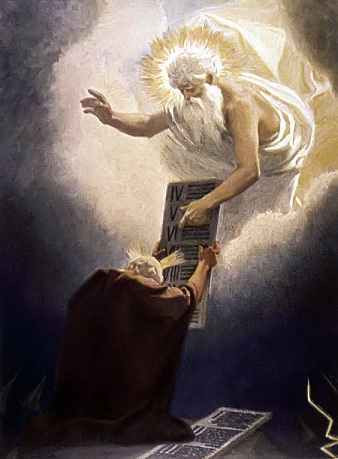
The Law Always Condemns, The Gospel Always Saves. Or, why I’m a Lutheran.
Comparing Holy Scripture with other writings, we observe that no book is apparently so full of contradictions as the Bible, and that, not only in minor points, but in the principal matter, in the doctrine how we may come to God and be saved… This riddle is solved when we reflect that there are in Scriptures two entirely different doctrines, the doctrine of the Law and the doctrine of the Gospel. C.F.W. Walther, The Proper Distinction Between Law and Gospel
, 6 (cited fully below)
How are Christians to view the relationship between Law and Gospel? The issue has generated countless views and debates. One recent work which illustrates the breadth of views on this topic is Five Views on Law and Gospel
C.F.W. Walther’s work, The Proper Distinction Between Law and Gospel
Law and Gospel
The most central point of all–that is, the point that I hope readers remember if nothing else–is this: The Law always condemns, the Gospel always saves. This point is emphasized throughout Lutheran theology. What does it mean? Simply put: it means that these two doctrines, found throughout Scripture, have entirely distinct meanings and usages. One cannot intermingle law and gospel while remaining true to either doctrine. Wherever the Gospel is presented as if it had requirements attached to it, there the Gospel is not rightly preached. Whenever the Law is preached as if it offered some kind of free gift, it is not rightly preached.
Law only has power to condemn. It cannot save. That is because none can keep God’s Law. All sin, and all fall short of the glory of God (Romans 3:23). The Law shows what God requires of us. It “issues only commands and demands” (Walther, Proper Distinction…, 9).
In contrast, the Gospel only gives offers without requirements attached (ibid). The Gospel shows us God’s promises and offer of grace.
At first face, one examines the whole of the Bible and finds these teachings throughout. The teachings seem so at odds with one another that one might suspect a contradiction throughout the Biblical teaching. However, the fact is that both doctrines are “equally necessary. Without the Law the Gospel is not understood; without the Gospel the Law benefits us nothing” (Ibid, 8). The reason this is so important is because Law and Gospel are not opposites working against each other. Instead, both “have their final aim [human] salvation” (Ibid, 7). They work together to present a full picture of how salvation comes unto men.
The Law, as we have noted, cannot bring salvation because none but God can fulfill it. That is, it gives the requirements for salvation but no one can meet these requirements! We would all be lost if this were the whole of Biblical teaching. Yet there is more to the story, for the Gospel offers only its promises. God has promised to save. He is mighty to save. God has accomplished our salvation. And this salvation does not come with requirements attached. Such is our hope.
Most simply put then, the purpose of the Law is to show our need for the Gospel because we cannot meet the requirements of the Law. The purpose of the Gospel is to show that God has already met these requirements for us in Jesus Christ and to offer us that fulfillment through Christ’s atoning work. So the Gospel, without the Law, would be empty promises. What need have we for Gospel if we are not sinners? Yet without the Gospel, the Law is only a terror which tells us that all are condemned.
 Some Distortions
A number of objections have been raised against this understanding of Law and Gospel. For example: “[The notion t]hat the law must be viewed as a single entity is one of the most common of all objections made against the Christian use of the Law” (Walter Kaiser, Jr., “The Law as God’s Guidance for the Promotion of Holiness,” 188, cited below). Kaiser then argues against viewing the Law as a single entity. He makes distinctions between Civil, Ceremonial, and Moral laws. I agree that we can make these distinctions, but they do not somehow mean it is impossible to refer to the “Law” as a whole entity with all of the commands God has issued.
Another common objection is that of dispensational thought. It is often charged that because we live in a new dispensation, the teachings of the Mosaic Law, for example, no longer apply to us. Without commenting on the plausibility of dispensationalism, I would simply answer that it seems extremely hard to reconcile the notion that the Mosaic Law has no applicability in our own context with Jesus’ words about the Law: “For truly I tell you, until heaven and earth disappear, not the smallest letter, not the least stroke of a pen, will by any means disappear from the Law until everything is accomplished” (Matthew 5:18). Note that this verse also shows Christ using the “Law” as a single, coherent entity.
Yet does this mean that everything recorded in the Mosaic Law has applicability exactly as written? No. A further discussion along this line of thought would take me too far afield, but I think that the Bible does clearly teach there is some discontinuity between the application of Mosaic Law to the Jew and the New Covenant with Christians (for example, the dietary laws do not apply to Christians). This hints back at the divisions Kaiser was keen to make within the Law, and I think the application to the Christian life can be viewed within the categories he discusses.
Conclusion
There is so much more worth saying about Law and Gospel, but in the interest of keeping this post at a readable length, I have had to set some aside. Interested readers should see the annotated sources below.
We have seen that the Law and Gospel must be properly divided in order to properly understand the whole of the Bible’s teaching. Why do I say that this is why I’m a Lutheran? I hope, at least, that other branches of Christianity teach these distinctions between Law and Gospel. But I have to admit that I have not seen it so consistently done as it is within the Lutheran perspective. Martin Luther was right to focus directly upon this teaching, and I believe it is central to the Reformation[s]. It touches upon soteriology, sanctification, the atonement, and more. Thus, I think it is vitally important to get this doctrine correct. In my studies, I have found no teaching so close to the Biblical truth as the Lutheran teaching on Law and Gospel. I’m not saying that everyone should go and become Lutherans. Instead, I think that everyone should benefit from learning the proper distinction between Law and Gospel and apply it to their lives.
The Law always condemns, the Gospel always saves.
Appendix: The Modified Lutheran View?
I think it is important to note that the view put forth as “The Modified Lutheran View” in Five Views on Law and Gospel
Those who have stuck with me this long should be able to immediately see how this is utterly different from the Lutheran view I proposed above. The distinction between law and gospel is not a temporal distinction whatsoever. The Law is still with us. Walther himself makes this explicit: “[W]e find both teachings in the Old as well as in the New Testament” (Proper Distinction… 62). There is no temporal dividing line between Old and New such that some new reality has dawned on Law and Gospel. Instead, the Law continues to condemn, while the Gospel continues to save.
Yet Moo goes so far as to say this is a point which needs to be “corrected” within the Lutheran view (ibid). He seems to think that Lutherans would deny that Jesus was able to speak law, while also mistakenly painting the Sermon on the Mount as being a preaching entirely of the Law. Indeed, Moo’s view seems to affirm many of the basic tenants the Lutheran view explicitly denies, such as mixing the uses of Law and Gospel.
I thus would say that Moo’s position is not at all the Lutheran view. It is not a modified Lutheran view at all. Instead, it seems to violate a number of the primary distortions noted above. That said, Moo does admirably to defend the notion of the Law as a coherent, cohesive whole. There is much to commend Moo’s essay, but it ultimately fails, I think, to provide a properly Lutheran view of Law and Gospel.
Links
Like this page on Facebook: J.W. Wartick – “Always Have a Reason.” I often ask questions for readers and give links related to interests on this site.
Annotated Sources
C.F.W. Walther, The Proper Distinction Between Law and Gospel
For a more succinct summary of what Walther argues in the above, see God’s No and God’s Yes: The Proper Distinction Between Law and Gospel
Five Views on Law and Gospel, ed. Stanley Gundry (Grand Rapids: MI: Zondervan 1999) – I specifically used the following essays: Walter Kaiser, Jr., “The Law as God’s Guidance for the Promotion of Holiness” in Five Views on Law and Gospel, ed. Stanley Gundry, 177-199, (Grand Rapids, MI: Zondervan, 1999); Douglas Moo, “The Law of Christ as the Fulfillment of the Law of Moses” in Five Views on Law and Gospel, ed. Stanley Gundry, 319-376, (Grand Rapids, MI: Zondervan, 1999). I found this book to be very helpful in outlining various views, but was disappointed with the “modified Lutheran view” (see my appendix here).
SDG.
——
The preceding post is the property of J.W. Wartick (apart from citations, which are the property of their respective owners, and works of art as credited) and should not be reproduced in part or in whole without the expressed consent of the author. All content on this site is the property of J.W. Wartick and is made available for individual and personal usage. If you cite from these documents, whether for personal or professional purposes, please give appropriate citation with both the name of the author (J.W. Wartick) and a link to the original URL. If you’d like to repost a post, you may do so, provided you show less than half of the original post on your own site and link to the original post for the rest. You must also appropriately cite the post as noted above. This blog is protected by Creative Commons licensing. By viewing any part of this site, you are agreeing to this usage policy.
Book Review: “Four Views on the Book of Revelation” (Zondervan Counterpoints Series)
 I have been researching eschatology quite a bit of late. Please be aware, therefore, that this review comes from one who has only read a limited amount on the subject. I will not be offering insights from an expert, and am fully ready to admit that I am still learning. That said, I chose Four Views on the Book of Revelation
Overview of Content
Introduction
The work begins with a rather lengthy introduction to the book of Revelation and the various views regarding its content. The bulk of this section is its introductions to each of the views featured in the work. Interestingly, the historicist view is basically dismissed out of hand in the introduction:
This volume incorporates the current, prevailing interpretations of Revelation. Thus, while the historicist approach once was widspread, today, for all practical purposes, it has passed from the scene. (18)
Preterist View
Kenneth Gentry, Jr. begins his exposition of preterism with a bold claim: “I am firmly convinced that even an introductory survey of several key passages, figures, and events in John’s majestic prophecy can demonstrate the plausibility of the preterist position” (37). Before diving into this survey, however, Gentry outlines the importance of understanding that Revelation “is a highly figurative book that we cannot approach with… literalism” (38). He defends this claim with a number of points, including the precedent of earlier prophets who used symbolism and the difficulty of consistent literal readings (38-40).
Gentry’s case for preterism focuses squarely on the introduction to the book. This is not to suggest that is the only part of his argument, but rather than he himself recognizes the introduction as a central tenant of preterism. He notes the continued refrain of Jesus “coming soon” and argues that this suggests a reading of the text as real prophecies occurring within the lifetimes of those present.
Much of the rest of Gentry’s survey is built upon tying the prophecies in Revelation to the historical events of the attack upon Jerusalem. A good representation can be found in tying the “Beast” 666 to Nero and the seven mountains to Rome (67-69).
Idealist View
Sam Hamstra, Jr. argues that the core of the idealist view of Revelation is found in a message: “While at this moment the children of God suffer in a world where evil appears to have the upper hand, God is sovereign and Jesus Christ has won the victory” (96).
The idealist case centers around seeing Revelation as apocalyptic literature, and interpreting it through that lens (97). However, Revelation is not exclusively apocalyptic but is rather “a mixture of literary styles” (99). The idealist interpretation sees the use of “like” throughout the descriptions of Christ and elsewhere as supportive of the non-literal nature of the book (101ff).
Hamstra’s survey of the book of Revelation continues to note what he holds are the symbolic use of symbols and other imagery. Representative is the use of the number seven, which suggests “completeness… the author is speaking of the church at all times and in all places” (102).
For the idealist, then, the book of Revelation can have multiple fulfillment throughout time. It is a book which comforts Christians who see the constant wars, plagues, and the like seen in Revelation by reminding them that God is in charge. Ultimately, Pate’s view can be summarized easily: “the best understanding… is that Jesus’ utterances about the Kingdom of God were partially fulfilled at his first coming… but remain forthcoming until his return” (175).
Progressive Dispensationalist View
C. Marvin Pate’s progressive dispensationalism is grounded in the theme of “already/not yet” (135). This notion hints at eschatological tension which can be found throughout the book of Revelation, according to Pate. That is, there are things which may seem fulfilled “already” but have “not yet” reached their fullest completion. As an example, he notes “with the first coming of Jesus Christ the age to come already dawned, but it is not yet complete; it awaits the Paraousia for its consummation” (136).
The notion of already/not yet allows Pate to interpret some texts in a kind of preterist light, while maintaining that they still have yet to find their fullest realization. An example can be found in the letters to the churches in which Pate notes that these are set against the background of Caesar worship while also pointing forward to future events (139ff).
Pate’s view is decidedly focused on the millennium and a more literal reading of the texts than the previous two views. The interpretation of Christ’s return is illustrative (166ff).
Classical Dispensationalist View
Robert Thomas argues that dispensationalism must be viewed in light of its hermeneutical system, which attempts to remain as literal as possible throughout the itnerpretation of a text (180). Thus, Thomas is an ardent futurist, waiting for the events recorded in Genesis to come about.
A major challenge for this view is the interpretation of texts about Christ coming “soon” and “quickly.” Thomas notes that this theme can be grounded in the notion of imminence in which we are to always be ready for Christ’s return as opposed to a notion of immediacy (189).
A typical classical dispensationalist reading of Revelation can be found in Thomas’ interpretation of the horsemen. He notes that the first “portrays a rider on a white horse, who represents a growing movement of anti-Christian and false Christian forces at work early in the period… the third… rider on a black horse [represents] famine-inducing forces….” (193-194). Thomas also argues that Israel is not the church and so must have the promises fulfilled to Israel as a nation (196ff).
Thomas argues that the major issue is dependent upon which hermeneutical system one employs. If one employs a literal hermeneutic, he contends, one will be dispensational. Period (211-214).
Analysis/Conclusion
I will only briefly comment on each view here.
Preterism
Gentry’s case is quite strong, but I have to wonder about the appeal to the language of “coming soon,” particularly in light of the constant refrain in the Hebrew Scriptures of the day of the Lord being “near.” These prophets clearly did not witness the “day of the Lord” (which, on preterist views is either the 70AD destruction of the Temple or still is yet to come), and so such language has a precedent for longer periods of time than the preterist appeals to.
Overall, however, some of the themes Gentry points to does hint at the possibility for interpreting certain prophecies as fulfilled in the destruction of Jerusalem.
Idealism
The idealist position has some draw for me because it focuses on the applicability of the book to all Christians in every time and place. In particular, the idealist interpretation of the letters to the churches is, I think, spot on. It allows for historicity while also noting the fact that we continue to live in an age in which all those types of churches still exist.
Yet I can’t help but also note that the idealist interpretation at times seems to play too fast and loose with the text, assuming that certain persons or events are types when it seems more clearly to point to a future fulfillment. Of course, the idealist could respond by saying many of these still are in the future after all.
Progressive Dispensationalism
There is great appeal in the notion of the already/not yet aspects of Revelation, which seems to give proper deference to the historical background of the book while also grounding it ultimately in the future promised fulfillment.
It is interesting to see that Pate is willing to interpret some aspects of the text figuratively, yet remains convinced that there will be a literal 1000 year reign, among other things. One could charge him with inconsistency here (as Robert Thomas does).
Classical Dispensationalism
I admit Thomas’ view was the most confusing for me. He insists that one must read the text literally, but then says that the white horse is not a white horse with a rider but rather “anti-Christian and false Christian forces.” Frankly, that is not the literal meaning of the text. It is commendable to desire to stay as true to the text’s meaning as possible, but using the word “literal” in this way seems to be abuse of language.
But Thomas’ view also has more to recommend it, such as his focus upon the future fulfillment. It is hard to read Revelation and not see many of the events as yet to occur, particularly if one desires to read the text as literally as possible.
General remarks
One thing I must note is that I did experience some great disappointment with the book in that it did not follow the standard format of the Zondervan Counterpoints series. Specifically, the book does not have each author interacting with the others after each view. Although the authors clearly had access to the other essays and were given the opportunity to interact via footnotes throughout their own essay, the level of interaction was not on par with other books in the series.
Others have expressed displeasure with the fact that the book does not present the historicist view of Revelation. I share some of that, though I would still maintain that–despite other reviewers [mostly on Amazon] are saying–there are definitely four distinct views presented in this book. They do not cover all the views as comprehensively as some might like, but the views which are included are each unique and worth reading. The quick dismissal of historicism in the introduction may be the consensus of scholarship, but historicism remains a major view among the laity as well as many clergy and some scholars. To have it not included is not the greatest crime, but it does hint at a lack of completeness with the survey here.
Overall, I would recommend this book as a way for those interested in Revelation and eschatology more generally to read. It presents four major views of the interpretation of Revelation by giving each author a rather lengthy section to make their case. Readers will be familiarized with the different views, along with arguments for and against each view. Although the book could be improved by the inclusion of the historicist position and greater interaction between the views, Four Views on the Book of Revelation
Links
Like this page on Facebook: J.W. Wartick – “Always Have a Reason.”
Book Review: “Understanding End Times Prophecy” by Paul Benware– I review a book on eschatology written from the premillenial dispensationalist position.
Source: Four Views on the Book of Revelation
SDG.
——
The preceding post is the property of J.W. Wartick (apart from citations, which are the property of their respective owners, and works of art as credited) and should not be reproduced in part or in whole without the expressed consent of the author. All content on this site is the property of J.W. Wartick and is made available for individual and personal usage. If you cite from these documents, whether for personal or professional purposes, please give appropriate citation with both the name of the author (J.W. Wartick) and a link to the original URL. If you’d like to repost a post, you may do so, provided you show less than half of the original post on your own site and link to the original post for the rest. You must also appropriately cite the post as noted above. This blog is protected by Creative Commons licensing. By viewing any part of this site, you are agreeing to this usage policy.

 J.W. Wartick - Reconstructing Faith