christian
Book Review: “Can ‘White’ People Be Saved?” edited by Sechrest, Ramirez-Johnson, and Yong
 Can “White” People Be Saved? The provocative title of this book is sure to catch many an eye, cause head shaking, visceral anger, or curiosity. Of course white people can be saved! Anybody can be saved! But how we react to this very challenge to being as white people–myself included–may tell us something about our need to read the content of this book.
The titular essay begins by noting that, of course, white people can be saved. But the concept of “whiteness” is itself a social construction (for more on this, see The History of White People, a book that shows how the concept of “white” person developed) and it is the defense of this “White” concept that leads to truly anti-Christian behaviors, both historically and to this day.
The book is a collection of essays, and like any collection, it has both ups and downs throughout. Perhaps the most important insight of the entire book, and one that I have thought of time and again, is found in Andrew T. Draper’s chapter entitled “The End of ‘Mission.'” Therein, Draper calls for people to truly listen to the “other”:
White folks need not protest that our hearts are in the right place but instead must focus on how the white economies of privilege we have constructed marginalize others. Imagine the transformation in relationships marked by difference if even a fraction of the grace that White folks extend to one another in regard to intentions were extended to all people. For instance, we as White people are often defensive when confronted with something offensive we have said and protest that “we didn’t mean in that way.” But, if our ignorance has hurt others, it doesn’t matter how we meant it. (183)
I was so struck by this passage because it’s something I’ve observed time and again. When racism is called out, too often the response is “I didn’t mean to offend you” or “You’re too easily offended” instead of “I’m sorry.” Ignorance is sometimes even appealed to: “I didn’t know that was offensive” is seen as a defense rather than as a call to get informed and learn about cultures and beliefs outside of our own. Imagine if, instead, we simply said “I’m sorry, can you help me understand how I offended you so that I can avoid doing so in the future?” or “I’m sorry I hurt you. Please forgive me and help me take steps to avoiding hurting you.” Those are truly Christian responses to harm–perceived or real. It is not our place to determine when others ought to feel offended–or not. Instead, it is our place to work for unity and forgiveness.
Later in this same essay, supersessionism was effectively equated with anti-Semitism (185). Though Draper is certainly right to note how that theology has led to applications of such, to equate the two seems to be going farther than the data allows. However, more and more recent evidence seems to suggest the two are often linked. The essay on mission in India by Daniel Jeyaraj was fascinating and shows how no matter how good intentions are, outcomes can lead to colonization. A stunning epilogue by Erin Dufault-Hunter, written in the style of C.S. Lewis’s Screwtape Letters offers insight into many of the themes found throughout the book and a call to action.
Can “White” People Be Saved? is a challenging book that asks readers to rethink assumptions and think about things in ways they may never have done so before. If only for that, it is worth reading, but the depth of its insights are more than offset by the occasional question I have. I recommend it.
Disclaimer: I was provided with a copy of the book for review by the publisher. I was not required to give any specific kind of feedback whatsoever.
Links
Be sure to check out the page for this site on Facebook and Twitter for discussion of posts, links to other pages of interest, random talk about theology/philosophy/apologetics/movies and more!
Book Reviews– There are plenty more book reviews to read! Read like crazy! (Scroll down for more, and click at bottom for even more!)
SDG.
——
The preceding post is the property of J.W. Wartick (apart from quotations, which are the property of their respective owners, and works of art as credited; images are often freely available to the public and J.W. Wartick makes no claims of owning rights to the images unless he makes that explicit) and should not be reproduced in part or in whole without the expressed consent of the author. All content on this site is the property of J.W. Wartick and is made available for individual and personal usage. If you cite from these documents, whether for personal or professional purposes, please give appropriate citation with both the name of the author (J.W. Wartick) and a link to the original URL. If you’d like to repost a post, you may do so, provided you show less than half of the original post on your own site and link to the original post for the rest. You must also appropriately cite the post as noted above. This blog is protected by Creative Commons licensing. By viewing any part of this site, you are agreeing to this usage policy.
Book Review: “Modern Technology and the Human Future: A Christian Appraisal” by Craig M. Gay
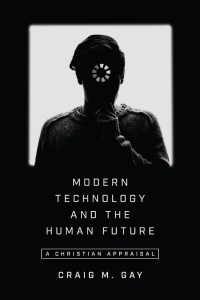 Craig M. Gay argues in Modern Technology and the Human Future: A Christian Appraisal that human flourishing is not grounded in blind advancement for the sake of advancement but rather in a theological grounding of the Incarnation and its vision for the future of humanity.
Gay begins by noting that he is not intending to dismiss technology or be some kind of Luddite. Instead, he urges that we–all people–need to view technology with at least some measure of caution. Rather than accepting hat life-changing technologies will just get developed and used, it may be worth a dose of skepticism when it comes to thinking about how these technologies may impact our lives and future.
A survey of a few reasons for skepticism about technology is first offered. For example, Gay explores the notion that things like Google and easy access to search engines, simultaneously with limiting factors like 140 (or 280) characters may be making humans lazy intellectually (37ff). The easy access to surface-level information tends to make everyone feel an expert, while not engaging in long-term, strategic thinking or planning (ibid). Alongside this, when aspects of thinking or behavior become autonomous, human abilities decline as we simply rely on autonomous features to assist us. Autonomous systems deprive humans of the ability to learn through experience (37-38). Technological unemployment–the notion that autonomy will replace human jobs–is another concern. Technology can outdo humans at a significant rate in some fields, leading to unemployment and potential lost of means of living.
Gay argues that there is a kind of “technological worldview” that is offered that drives complacency when it comes to the development and adoption of new technologies. This worldview, in part, is made up of materialist assumptions about the world, such as the notion that a scientific explanation of the world can allow us to re-engineer or re-organize the world as we see fit. A mechanistic view of nature accompanies this, and it is interesting to observe that some of this comes from Christian thinkers of the past.
A question of “what now” appears obvious following these concerns about humanity and technology. Gay argues we must course correct against notions that disembody humans. We ought to repent of our continued desire for and striving after of total autonomy that separates us from God (169). Worship and faith life must be encouraged to be deeply personal rather than impersonal. We can see the full embodying nature of Christianity in the Incarnation, and the Eucharist is offered as a deeply personal and real example of this. Here, Gay’s vision of the Eucharist is deeply influenced by John Calvin, and the mileage different readers may get from this final reflection may depend upon how they align with this view. As a Lutheran myself, I think it doesn’t go far enough.
A critical comment might be offered in response to portions of the book. For example, the cautionary tale of technology, in general, may be offset over time by other factors. Automation of basic tasks may allow humans to explore new heights that they had not done before. Though it is clear that search engines and encyclopedias online make it easy to gain a simple, surface level knowledge of virtually anything, they can also encourage further research and study through additional sources and links and citing books. Though I wouldn’t claim there is no cause for concern regarding technology and the human future, it also seems that we may be at a crossroad in which we can work actively to harness technology for human good rather than retreat from or slow it down–something that seems unlikely to happen. Indeed, if the “technological worldview” is as pervasively imbibed as Gay appears to suggest, it may be impossible at this point to slow down technology, so working actively towards developing teaching techniques and other important human skills to work with technologies as they develop may be a better tactic.
Overall, Modern Technology and the Human Future is a book that will make readers think, whether they agree or disagree. At minimum, it will spur readers to think critically when they engage with modern technology and perhaps push themselves to learn more about it and try to control their own interaction with it.
Disclaimer: I was provided with a copy of the book for review by the publisher. I was not required to give any specific kind of feedback whatsoever.
Links
Be sure to check out the page for this site on Facebook and Twitter for discussion of posts, links to other pages of interest, random talk about theology/philosophy/apologetics/movies and more!
Book Reviews– There are plenty more book reviews to read! Read like crazy! (Scroll down for more, and click at bottom for even more!)
SDG.
——
The preceding post is the property of J.W. Wartick (apart from quotations, which are the property of their respective owners, and works of art as credited; images are often freely available to the public and J.W. Wartick makes no claims of owning rights to the images unless he makes that explicit) and should not be reproduced in part or in whole without the expressed consent of the author. All content on this site is the property of J.W. Wartick and is made available for individual and personal usage. If you cite from these documents, whether for personal or professional purposes, please give appropriate citation with both the name of the author (J.W. Wartick) and a link to the original URL. If you’d like to repost a post, you may do so, provided you show less than half of the original post on your own site and link to the original post for the rest. You must also appropriately cite the post as noted above. This blog is protected by Creative Commons licensing. By viewing any part of this site, you are agreeing to this usage policy.
“The Eye of the World” by Robert Jordan – A Christian (re-)Reads “The Wheel of Time”
 “The Wheel of Time” is a massive fantasy series by Robert Jordan (and, later, Brandon Sanderson) that is being developed into a television show for Amazon Prime. It’s cultural impact is huge, the series having sold more than 44 million copies. Here, I begin my re-read of the series. There will be SPOILERS in this post for the series.
The Cost of Darkness
Evil has a real, palpable effect on the world in The Eye of the World. Everything it touches, it corrupts. Darkfriends–those who aid the Dark One–are not always visibly evil, but a key figure–a darkfriend who had been a merchant to Two Rivers–gets twisted into an almost unrecognizable form. Trollocs are the “standard” bad guy in the Wheel of Time, and their features are distortions of reality: human forms mixed with those of beasts. The Forsaken, who make an appearance later, are again visible distortions of nature. If I wanted to go all Aristotelian-Thomistic on it, one could argue the evil has impacted the nature of these things, turning them from their proper ends and towards ends that lead to physical abnormalities and certainly impacting their capacity to see beyond their evil desires. The Foresaken, in particular, are twisted to the will of the Dark One and against each other. Evil, in Jordan’s world, has real impact. It is not just something to shake our heads at.
Yet even in our world–the real world–evil does have an impact. It doesn’t physically distort its perpetrators, but it does impact their well-being. It may not immediately show up in their everyday lives, at least from the outside, but by going against proper ends–by going against that which is good–evildoers distort nature and disrupt it. Sin corrupts and needs to be healed–it is not something that heals itself.
Men and Women
A theme throughout the whole series is the interactions between men and women. In some ways, Jordan seems to play into tropes of chivalry and the like, but then he subverts them, sometimes playfully, throughout the book. There are multiple scenes that become running jokes to fans of the series in The Eye of the World, whether it is Perrin and Rand each wishing the other were there to confide in about women or the hair tugs, there are several things Jordan integrates into his storytelling that seem to, at first, perhaps reinforce gender norms. However, the shared heritage of the One Power, which men are unable to touch at this point without going insane, is one way he subverts these norms. Another is through having the women themselves subvert expectations within the narrative. Egwene and Rand’s story, for example, seems like a clear setup for a love story settling in over time, but when push comes to shove it becomes much more. Egwene and Nynaeve each go against expectations, realizing roles for themselves that push them beyond what their cultural expectations were. For example, Egwene in The Eye begins to see her potential for the One Power, as does Nynaeve, yet back in Two Rivers and abroad this may as well paint them as Darkfriends–or worse, something to be feared and totally unknown. It will be interesting in this re-read to see how Jordan continues to play with broader gender narratives.
Myth and Reality
A constant theme throughout The Eye of the World is that of myth and reality, which is itself set alongside prophecy and fulfillment throughout the whole series. The folk of Two Rivers see Aes Sedai as practically myths themselves, but when it comes to the news of false Dragons or even the mundane things like Trollocs, they’re nothing more than myths in the unreal sense. But myth has a way of worming its way into reality. The people of Two Rivers, unfortunately, must face reality rather starkly when those legends come to life and Trollocs attack. More broadly speaking, Rand and the others must come to realize that their perceptions of what is real or possible may be wrong.
This theme of reality and myth resonates with the real world. Many things are dismissed as wrong or fairy tales when they are in fact grounded in reasonable beliefs. Others try to deny evidence that is directly before them (like those who deny that Jesus even existed, for example). But our world is one that is full of wonder and mystery still. Perhaps it is time to confront our own presuppositions and skepticisms and allow evidence to sway opinions. And that’s just it–evidence does sway opinions in The Eye of the World, sometimes in very quick and easy ways–seeing a Trolloc attack–but other times it takes much more. Seeing is believing, as they say, but testimony is also evidence, and Rand and company are just beginning to learn about more myth breaking in to reality.
Prophecy and fulfillment, as I said, goes alongside this notion of myth and reality. The Dragon is a terrible, fearsome one who is prophesied, and there are seemingly clear ways to know when the Dragon has come along. Many false Dragons have come and gone. The world awaits with fear the one who will fulfill the prophecies. It’s not quite like the anticipation of the Messiah, but it does show how expectations can be very different from what one thinks a clear reading of the texts entails.
Conclusion
The Eye of the World remains a compelling narrative nearly 30 years after its initial publication. Jordan wove myth, narrative, prophecy, and humanity together into a coherent whole that only begins with this first book. What questions do you have coming out of reading the book? What other worldview issues did you see arise?
Links
Be sure to check out the page for this site on Facebook and Twitter for discussion of posts, links to other pages of interest, random talk about theology/philosophy/apologetics/movies and more!
Book Reviews– There are plenty more book reviews to read! Read like crazy! (Scroll down for more, and click at bottom for even more!)
SDG.
——
The preceding post is the property of J.W. Wartick (apart from quotations, which are the property of their respective owners, and works of art as credited; images are often freely available to the public and J.W. Wartick makes no claims of owning rights to the images unless he makes that explicit) and should not be reproduced in part or in whole without the expressed consent of the author. All content on this site is the property of J.W. Wartick and is made available for individual and personal usage. If you cite from these documents, whether for personal or professional purposes, please give appropriate citation with both the name of the author (J.W. Wartick) and a link to the original URL. If you’d like to repost a post, you may do so, provided you show less than half of the original post on your own site and link to the original post for the rest. You must also appropriately cite the post as noted above. This blog is protected by Creative Commons licensing. By viewing any part of this site, you are agreeing to this usage policy.
Book Review: “A Week in the Life of Rome” by James L. Papandrea
 James L. Papandrea’s A Week in the Life of Rome is a kind of historical fiction work mixed with numerous expositions on the ancient world. It provides readers with insights into the early Christian church in Rome, First Century Roman Life, and more.
Central to the book is the plot that weaves it all together. Papandrea introduces readers to a number of characters, including slaves, the walthy, clients, Christians, and catechumens. A few biblical names show up, too. The story is actually more interesting than I expected. It captured me in a way that novels often do, and I truly was not expecting that from a book that at first seemed like just a clever way to info-dump about ancient Rome. The main plot is quite well done and I felt myself wanting to learn more about Stachys and Urbanus in particular. The relationship betwen these Roman men helps serve as a background for giving readers numerous expositions.
The expositions scattered throughout the book are quite welcome and give essential information at each point. The relationship between Stachys and Urbanus, for example, serves to show readers the client-patron relationship in ancient Rome. This relationship can help in understanding some biblical texts and certainly the cultural world from which early Christian writings sprang. One exposition I remember in particular was about culinary habits of the wealthy Romans, such as eating small birds or mice roasted and dipped in honey and poppy seeds (do not sign me up for this one). Another interesting aside was the exploration of the Phoenix as a symbol of Christians in the earliest time periods, though it faded out of use rather quickly.
Reading this book will truly teach readers a wealth of information, but will do so in a way that is engaging in unexpected ways. A Week in the Life of Rome is an informative, interesting book. Papandrea makes a narrative that is interesting and insightful all the way through. The book is a great way to learn about ancient Rome and Christianity. Recommended.
Disclaimer: I was provided with a copy of the book for review by the publisher. I was not required to give any specific kind of feedback whatsoever.
Links
Be sure to check out the page for this site on Facebook and Twitter for discussion of posts, links to other pages of interest, random talk about theology/philosophy/apologetics/movies and more!
Book Reviews– There are plenty more book reviews to read! Read like crazy! (Scroll down for more, and click at bottom for even more!)
SDG.
——
The preceding post is the property of J.W. Wartick (apart from quotations, which are the property of their respective owners, and works of art as credited; images are often freely available to the public and J.W. Wartick makes no claims of owning rights to the images unless he makes that explicit) and should not be reproduced in part or in whole without the expressed consent of the author. All content on this site is the property of J.W. Wartick and is made available for individual and personal usage. If you cite from these documents, whether for personal or professional purposes, please give appropriate citation with both the name of the author (J.W. Wartick) and a link to the original URL. If you’d like to repost a post, you may do so, provided you show less than half of the original post on your own site and link to the original post for the rest. You must also appropriately cite the post as noted above. This blog is protected by Creative Commons licensing. By viewing any part of this site, you are agreeing to this usage policy.
Book Review: “The Morals of the Story: Good News about a Good God” by David Baggett and Marybeth Baggett
 The Morals of the Story: Good News about a Good God is a witty look at the moral argument and some objections to it.
The book begins with an overview of the moral argument (more like moral arguments because there are several varieties) throughout the centuries, giving readers a working knowledge of the major philosophers who have engaged with the argument in the past. A brief section addresses Euthyphro’s dilemma in between the major sections before transitioning into positive arguments in favor of the premises of the moral argument. The argument the Baggett’s present is an abductive version of the argument rather than a deductive one. That is, their argument relies on observations of moral facts leads to God’s existence as the best conclusion from these facts.
David and Marybeth Baggett provide readers with anecdotes and examples to break up the more philosophical portions of the book, and there are study questions at the end of each chapter. The book is geared towards those with up to a moderate knowledge of the moral argument and can serve as an introduction to the same. Overall, the book seems to be presenting the argument in a winsome way alongside giving the basics such that readers will come away able to articulate the argument themselves.
The Morals of the Story: Good News about a Good God is a good introduction to one of the more intriguing theistic proofs. It acts as an introductory synthesis to much of David Baggett’s earlier work on the same argument. It’s recommended for those who are engaging in apologetics and interested in exploring this argument further. It could be used as a study group book, as well.
Disclaimer: I was provided with a copy of the book for review by the publisher. I was not required to give any specific kind of feedback whatsoever.
Links
Be sure to check out the page for this site on Facebook and Twitter for discussion of posts, links to other pages of interest, random talk about theology/philosophy/apologetics/movies and more!
Book Reviews– There are plenty more book reviews to read! Read like crazy! (Scroll down for more, and click at bottom for even more!)
SDG.
——
The preceding post is the property of J.W. Wartick (apart from quotations, which are the property of their respective owners, and works of art as credited; images are often freely available to the public and J.W. Wartick makes no claims of owning rights to the images unless he makes that explicit) and should not be reproduced in part or in whole without the expressed consent of the author. All content on this site is the property of J.W. Wartick and is made available for individual and personal usage. If you cite from these documents, whether for personal or professional purposes, please give appropriate citation with both the name of the author (J.W. Wartick) and a link to the original URL. If you’d like to repost a post, you may do so, provided you show less than half of the original post on your own site and link to the original post for the rest. You must also appropriately cite the post as noted above. This blog is protected by Creative Commons licensing. By viewing any part of this site, you are agreeing to this usage policy.
Book Review: “Joseph: A Story of Love, Hate, Slavery, Power, and Forgiveness” by John Lennox
 Joseph: A Story of Love, Hate, Slavery, Power, and Forgiveness addresses one of my all-time favorite Bible stories. I may be a bit biased, as my name is Joseph, but I’ve always loved this narrative. I also had it assigned as a narrative to translate from Hebrew in college, which only deepened my love for this story. Lennox’s title says it: this story has it all. But what of this book? I was excited to dive in to find out what John C. Lennox, a rather famous man in some Christian circles, would have to say about this narrative.
Lennox is a somewhat strange choice for a book on Joseph on the face of things. A search of “John Lennox” with terms like “Joseph” and “Bible” brings up a number of videos of Lennox discussing this narrative, however, showing something of a longstanding interest in the topic. Lennox’s training is in mathematics, though he has written extensively in the fields of apologetics in particular as well as science-faith topics. Where this becomes relevant is when Lennox delves more deeply into the background of texts. He leans heavily on other thinkers for this, and seems particularly reliant upon Kenneth A. Kitchen. These include citations from a text from 1966, along with the more recent On the Reliability of the Old Testament (2006). Kitchen is an excellent scholar with impeccable credentials, but again, the heavy reliance on other scholars by Lennox makes any background here seem superficial.
Nevertheless, Lennox does provide quite a bit of background for readers. He begins not with the start of the Joseph narrative, but with an overview of the structure of Genesis, including a re-reading of many of the Genesis accounts. Though this may seem somewhat unnecessary, Lennox does this to give a real sense of place, time, and setting for the Joseph narrative, making it feel even more alive and fresh than it might otherwise. Lennox is keen throughout the book to show that God’s judgement, mercy, and sovereignty are in play throughout the narrative.
Lennox gives plenty of context for readers, but mostly follows an totally expository path, deviating little from the content of the story itself. Where he does deviate, it sometimes goes into strange territory. For example, when discussing “Joseph’s rise to power,” Lennox goes on a tangent about confidence, which leads to a discussion about Christianity in “the West.” In the midst of this discussion, Lennox cites others noting that “there has been a collapse of Western self-confidence…” He then goes on to link this loss of confidence to a rise in trust in science as over and against Christianity. Following previously cited authors, Lennox argues that “confidence in God and in the Lord and the Gospel is being shaken as never before” (154). Then, Lennox just brings Joseph back in. Joseph was just “a single individual, with no other human group supporting him, yet such was his conviction of the truth of the message he had… that he influenced the future of an entire nation. That is the sort of confidence in God… that is necessary in order to stand up and reverse the trend of weakness and lack of conviction and authenticity that characterize far too much of that which calls itself Christian” (155). Frankly, I am baffled by this rabbit trail. Apart from the strangeness of demanding that Christianity be characterized by strength and authenticity rather than being humble (Ephesians 4:2, for example), it also seems very much like a grasp by Lennox to make an application in a section that he has thus far done little to make practical theology happen.
The story of Joseph, of course, features prominently at least one woman: Potiphar’s wife. Lennox goes over the story of Potiphar’s wife attempting to seduce Joseph in detail. Once more, Lennox is keen to make applications to today from the story, including arguing that sexual activity “including pornography” is encouraged in “our contemporary world.” In contrast, Lennox argues, this leads to bitterness and anti-social behavior. To combat this, we ought “to make God the center and focal point of our morality, not our desires, or feeling that it is so right” (128). Later, when discussing Potiphar’s attempt to frame Joseph, Lennox appeals not to the Bible but to the common proverb “a woman scorned” to make his point (129), attempting an appeal to what he seems to think is a shared agreement–women, right? This movement from an individual woman–Potiphar’s wife–to all women: “a woman scorned,” is surely overdone and not a little insulting. Lennox’s implication seems to be that Potiphar’s wife’s attempt to frame Joseph is just what we ought to expect from a woman who was trying to seduce a man like Joseph. But this is the very kind of generalizing from abusive behavior to excuses that has led to so many problems in the world and church around the topic of abuse. I was surprised to see this, but then Lennox follows it with another disappointing statement, saying that Potiphar’s wife “denounced Joseph to the other servants, playing the race card” (129). This “race card” was that Potiphar’s wife blamed Joseph due to his being a Hebrew (Genesis 39:13-15). But the use of “race card” in this way is clearly pejorative. Lennox doesn’t give any further context for this statement, but this kind of terminology is often used to denounce those who point to real, current abuses happening due to people’s race. What makes it particularly odd is that Lennox puts this apparent condemnation of lumping whole groups together right next to his own action doing the same (“race card” means calling Joseph Hebrew to denounce him is bad, but in the very same paragraph Lennox uses “a woman scorned” to reference the “hell hath no fury like a woman scorned” proverb that implies all women act in this manner). It’s an alarming and disappointing series of discussions from Lennox in this section.
Joseph: A Story of Love, Hate, Slavery, Power, and Forgiveness is a competent look at a beautiful story. Lennox gives much by way of background, but derives most of the details from other sources. When he makes contemporary applications, they are quite uneven. The theological leanings of the reader will most likely be the determining factor in one’s enjoyment.
Disclaimer: I was provided with a copy of the book for review by the publisher. I was not required to give any specific kind of feedback whatsoever.
Links
Be sure to check out the page for this site on Facebook and Twitter for discussion of posts, links to other pages of interest, random talk about theology/philosophy/apologetics/movies and more!
Book Reviews– There are plenty more book reviews to read! Read like crazy! (Scroll down for more, and click at bottom for even more!)
SDG.
——
The preceding post is the property of J.W. Wartick (apart from quotations, which are the property of their respective owners, and works of art as credited; images are often freely available to the public and J.W. Wartick makes no claims of owning rights to the images unless he makes that explicit) and should not be reproduced in part or in whole without the expressed consent of the author. All content on this site is the property of J.W. Wartick and is made available for individual and personal usage. If you cite from these documents, whether for personal or professional purposes, please give appropriate citation with both the name of the author (J.W. Wartick) and a link to the original URL. If you’d like to repost a post, you may do so, provided you show less than half of the original post on your own site and link to the original post for the rest. You must also appropriately cite the post as noted above. This blog is protected by Creative Commons licensing. By viewing any part of this site, you are agreeing to this usage policy.
Book Review: “Demanding Liberty: An Untold Story of American Religious Freedom” by Brandon J. O’Brien
 Demanding Liberty: An Untold Story of American Religious Freedom explores, largely, the life and thought of Isaac Backus, a Baptist pastor who helped navigate between the completely hands-off approach to religion that Thomas Jefferson argued for and the notion of theocracy other Americans were trying to establish.
O’Brien’s look at Backus’s life begins with a look at the reasoning behind seeing the need for revival in the United States. Backus was struck by the need for this revival and dedicated his life to preaching. Ultimately, he moved to Baptist theology from his life as a farmer and part of the “separate church.” His theology developed through his life. It is in outlining this development that I found O’Brien’s book occasionally problematic. It is difficult to present such large theological issues in such a small space, but at times it seemed as though Backus’s movement theologically is one all should make–somewhat odd considering O’Brien says his own theological journey moved him in the opposite direction (from Baptist to Presbyterian). Perhaps this is a case of a biographer effectively conveying the convictions of their subject, but it was distracting at times here. It felt jarring to be pulled from a narrative of Backus’s life into an exposition of Baptist theology, only to be thrown back in again.
Backus’s look at how religion and state should work continued to develop as well. His view ultimately helped influence how we view religious liberty today. Backus refused to affirm anything like a theocracy in which the state was simply established with a religion. But he also argued against a complete separation that did not allow the state to have some involvement in religion. The issue was to do so fairly. Backus had drafted his on bill of rights for protecting religious liberty which has many parallels to the Constitution that was ultimately adopted. Backus’s bill provided for all people to follow their own convictions regarding faith, though it also was rejected because many thought Backus was bringing false accusations about his own liberties being constrained. It is interesting, then, to see that Backus was a rival of Paine and Adams, and it was ultimately they who adopted a bill of rights quite similar to the one that Backus presented.
Demanding Liberty is a somewhat uneven look at the life of a man who was more influential on the formation of the United States than most may think. It provides an interesting but flawed overview of his life and influence. For those interested in the topic of religious freedom in the United States, it is worth picking up for a read.
Disclaimer: I was provided with a copy of the book for review by the publisher. I was not required to give any specific kind of feedback whatsoever.
Links
Be sure to check out the page for this site on Facebook and Twitter for discussion of posts, links to other pages of interest, random talk about theology/philosophy/apologetics/movies and more!
Book Reviews– There are plenty more book reviews to read! Read like crazy! (Scroll down for more, and click at bottom for even more!)
SDG.
——
The preceding post is the property of J.W. Wartick (apart from quotations, which are the property of their respective owners, and works of art as credited; images are often freely available to the public and J.W. Wartick makes no claims of owning rights to the images unless he makes that explicit) and should not be reproduced in part or in whole without the expressed consent of the author. All content on this site is the property of J.W. Wartick and is made available for individual and personal usage. If you cite from these documents, whether for personal or professional purposes, please give appropriate citation with both the name of the author (J.W. Wartick) and a link to the original URL. If you’d like to repost a post, you may do so, provided you show less than half of the original post on your own site and link to the original post for the rest. You must also appropriately cite the post as noted above. This blog is protected by Creative Commons licensing. By viewing any part of this site, you are agreeing to this usage policy.
“Undocumented: How Immigration Became Illegal” by Aviva Chomsky- immigration, legal status, and personhood
 Immigration is an extremely messy issue. Under both Republican and Democratic administrations, “law and order” has been a cover for making the “other” unwanted and “illegal.” Every human being has basic human rights. Those do not need to be earned. Aviva Chomsky’s book, Undocumented: How Immigration Became Illegal provides both historical background to how immigration came to be viewed in such a negative light as it now is as well as arguments for the basic human rights and dignity of all.
Chomsky provides historical data to understand how immigration became illegal. This is extremely valuable and important because too often, people just say that their ancestors came to the United States the “right way” and make the assumption the process was similar to what it is today. However, there was very little regulation of immigration whatsoever until racial bias began to lead to quotas for people coming in. The Chinese were some of the earliest people targeted, as exceptions and quotas were made to prevent Chinese from becoming citizens. Mexicans were, historically, another national group that was seen either as non-immigrants (not because they were here illegally–no laws governed such migration until relatively recently–but because it was simply taken as a given Mexicans would not stay in the United States) or as a group to be suppressed in its immigration status. Nationality was used to allow for colorblind laws that would simply restrict immigration on one’s nation. As Chomsky writes, “Once status is inscribed in the law, this becomes an automatic justification for inequality: ‘it’s the law!'” (25). The movement to national exclusion of immigrants allowed racist policies to be enshrined in law. After all, countries are not races. Once race could no longer be allowed to deny citizenship, “nationality stood in for it, and citizens of countries like China lost their right to immigrate” (35).
Laws had to be made in order to restrict immigration. Chomsky notes the inequality of movement of people: a United States citizen can, generally, get their passport and unlock travel to virtually any country in the world. Some travel may require a visa with an extra fee, but there aren’t many total restrictions on travel. Contrast this with attempting to enter the United States: here, we have laws that restrict people of other nationalities from entering our country. Similarly, though Chomsky’s book was written before the current administration under President Trump, there have been arguments for and actions banning travel to the United States purely based upon one’s religion. Such restrictions are social, legal constructs that allow the definition of human beings to be tied to national or religious affiliation. Feasibly, this could be expanded almost indefinitely. Thus, immigration law is not an unchanging, immutable thing but rather something that has changed and continues to change. It is mistaken simply to write off the “other” as illegal or even as “other” purely based on laws that have not even been in effect for more than a few decades.
Chomsky delves into the questions related to undocumented status and alleged eligibility for various benefits (it is almost certainly more complex than any reader may think). Then, she moves into undocumented status and working. What is of interest is that labor laws that target undocumented immigrants has, in several cases, led to economic hardship. The exploitation of undocumented laborers helps drive the standard of living citizens of the United States have become used to. One example is in agriculture. “Farm work is so marginal, strenuous, and low paid, that if workers achieve legal status, they quickly move to other sectors… True, for many Mexicans… low-wage, temporary, migrant labor in the United States offers a viable or even hopeful alternative to poverty at home. But this merely means that the US agricultural system depends upon the existence of a lot of extremely poor people in Mexico” (127-128). Furthermore, by making migrant workers “illegal,” this allows citizens of the United States to benefit from their low-cost labor while also not having to provide them with any benefits in turn. “Although the current system benefits many people in the United States, we must also recognize its fundamental injustice and think seriously about how it works and what steps could make it more just. If immigrants are being exploited by the current system, and if undocumentedness is one of the concepts that sustains inequality and unjust treatment, then we need to question undocumentedness itself” (150).
The impact of immigration laws and changing ideals about documentation has tremendous impact on families as well, dividing families and forcing cruelty upon some of the people in the greatest need. The laws that exist in our present situation have come from both Republicans and Democrats, so neither party can claim a high moral ground when it comes to immigration reform. However, such reform is needed, and Chomsky provides several suggestions. Comprehensive reform is a difficult goal to aim for, but Chomsky suggests we ought to instead perhaps question the very basis for immigration law to begin with. A longer quote helps illustrate her points:
[W]e have become accustomed to the notion that controlling the border is a basic prerequisite for security, safety, and sovereignty… The entire immigration apparatus is based on the presumption that we know where people belong and we need to legislate their mobility.
It’s also based on some unquestioned assumptions about countries. It is not OK for a public park… to discriminate regarding who is allowed to enter its space. But it’s OK for a country to do that… US immigration laws do just that: discriminate, on the basis of nationality, regarding who is allowed to be where.
If we really want to address the problem of undocumentedness, or so-called “illegal” immgiration, we need to look more in depth at why the United States made some immigration illegal to begin with… It’s just the latest stage in a centuries-long process of legislated inequality, a process both global and domestic. (205-206)
That is, we need to question the very basis for the need for such strong immigration laws rather than accept public assumptions about them. Reform includes a reformation of our minds and thoughts: a questioning of assumptions and looking at facts instead. Since immigration does contribute to our economy in numerous ways (some of which Chomsky documents), we ought to question why there is such a push to restrict it. “In the most immediate terms, we as a society created illegal immigration by making immigration illegal” (208). Is such a move actually something that is necessary? If so, why? These questions need to be answered not by knee-jerk reactions or platitudes such as “a nation without borders is no nation.” After all, nations may still have borders while allowing for immigration. The United States managed to do so all the way until 1882 when immigration laws targeted Chinese people!
Undocumented is a book that is worth reading no matter your political persuasion. Neither Democrats nor Republicans have offered a holistic view of personhood that allows us to adequately view the rights of all humans as equal. This is something we ought to address. Particularly for Christians, there is no question that all people are equal and deserving of our protection. Chomsky has provided historical perspective and even a way forward in thinking on this complex issue.
Links
Be sure to check out the page for this site on Facebook and Twitter for discussion of posts, links to other pages of interest, random talk about theology/philosophy/apologetics/movies and more!
Book Reviews– There are plenty more book reviews to read! Read like crazy! (Scroll down for more, and click at bottom for even more!)
SDG.
——
The preceding post is the property of J.W. Wartick (apart from quotations, which are the property of their respective owners, and works of art as credited; images are often freely available to the public and J.W. Wartick makes no claims of owning rights to the images unless he makes that explicit) and should not be reproduced in part or in whole without the expressed consent of the author. All content on this site is the property of J.W. Wartick and is made available for individual and personal usage. If you cite from these documents, whether for personal or professional purposes, please give appropriate citation with both the name of the author (J.W. Wartick) and a link to the original URL. If you’d like to repost a post, you may do so, provided you show less than half of the original post on your own site and link to the original post for the rest. You must also appropriately cite the post as noted above. This blog is protected by Creative Commons licensing. By viewing any part of this site, you are agreeing to this usage policy.
Book Review: “Bonhoeffer’s Reception of Luther” by Michael P. DeJonge
 Michael P. DeJonge’s thesis in Bonhoeffer’s Reception of Luther may be summed up as saying the best interpretative framework for understanding Dietrich Bonhoeffer’s theology and thought is by understanding him as a Lutheran theologian specifically engaged in Luther’s thought.
DeJonge supports his thesis primarily through two strands of evidence: first, by showing Bonhoeffer’s close readings of and interactions with Luther; and second, by demonstrating that Bonhoeffer’s perspective on important controversies was a Lutheran perspective.
Bonhoeffer’s interactions with Luther outpace his interactions with any other theologian. DeJonge cites a statistic: Bonhoeffer cites or quotes Luther 870 times, “almost always approvingly”; “The next most frequently cited theologian is a distant second, Karl Barth with fewer than three hundred” (1). This alone may serve to demonstrate Bonhoeffer’s concern for interacting with Luther, but DeJonge goes on to note that Bonhoeffer also strove to correct competing interpretations of Luther, and affirm specifically Lutheran doctrine. For instance, in his interactions with Karl Holl, one of his teachers, he goes against Holl’s interpretation of Luther’s view of religion, arguing that Luther’s Christology saves one from idolatry of the conscience, which he felt Holl may have slipped into. Bonhoeffer also affirmed the emphasis on Christ’s “is” statements when it came to the Lord’s Supper, defending the position that “this is my body” means Christ is truly present in the Supper (70ff).
DeJonge’s argument expands to a demonstration that Bonhoeffer aligned with a Lutheran understanding on important issues. The Lord’s Supper has already been noted, but it is worth pointing out that in regards to this, Bonhoeffer explicitly sided with Luther against Karl Barth and the Reformed tradition, which argued that the finite could not contain the infinite. Instead, Bonhoeffer affirmed that, by virtue of the infinite, the infinite could be contained in the finite; allowing for a Lutheran understanding of real presence in the Supper. Another major controversy DeJonge notes is that of the interpretation of Luther’s “Two Kingdoms.” DeJonge argues that Bonhoeffer has been misunderstood as rejecting Luther’s doctrine in part because Luther’s doctrine itself is misunderstood. Thus, DeJonge engages in a lengthy section in which he traces the influence of Troelsch on the understanding of Luther’s Two Kingdoms and how often it is Troelsch’s understanding rather than Luther’s that is seen as “the” doctrine of the Two Kingdoms. Going against this, Bonhoeffer’s thoughts on the Two Kingdoms are closer to Luther’s position than many have argued.
DeJonge also interacts with other interpretations of Bonhoeffer, such as an understanding of Bonhoeffer as a pacifist, which has been a common understanding among some. Utilizing his deep analysis of the Two Kingdoms doctrine, DeJonge counters that Bonhoeffer’s comments about resisting the Nazis align with this doctrine much more closely than they do to a pacifist understanding. Like Stephen R. Haynes’s The Battle for Bonhoeffer, DeJonge notes that Bonhoeffer’s resistance cannot be linked explicitly to the Nazi treatment of the Jews. Though it is clear that Bonhoeffer detested this treatment, DeJonge argues he did so not through a broadly humanitarian theology (going against some interpreters here), but rather due to his understanding, again, of the Two Kingdoms. When the Nazis sought to attack the Jews, particularly by separating them from the so-called German Christians, they issued a direct assault on the body of Christ–the church. Thus, Bonhoeffer’s resistance to these ideals, again, springs from a Lutheran understanding of the Two Kingdoms. (As an aside, it is worth nothing DeJonge also acknowledges the contributions some aspects of Martin Luther’s own writings had to the Nazi ideology. However, DeJonge here shows how Bonhoeffer’s understanding of his theology set him against these anti-Semitic notions.)
Finally, DeJonge demonstrates that Bonhoeffer’s view of justification–certainly a vastly important doctrine for Luther and Lutherans–ought to be properly understood as Lutheran rather than anything else. Time and again, throughout the book, DeJonge carefully demonstrates how an interpretation of Bonhoeffer suffers when not understood in a Lutheran lens. Over and over, readings of Bonhoeffer that make sense in one context are shown to fail when compared to the whole of his writings. DeJonge also manages to offer a coherent account of Bonhoeffer’s theology that does not set an “early Bonhoeffer” against a “late Bonhoeffer” nor does it read the whole of his thought through any one work. As such, DeJonge offers a truly compelling reading of the totality of Bonhoeffer’s work.
Bonhoeffer’s Reception of Luther is an incredibly important work for understanding the theology of Dietrich Bonhoeffer. Anyone who is interested at all in the theology of Bonhoeffer and understanding it fully would do well to read and digest it. I cannot recommend it highly enough for those who wish to understand the theology of this man.
Disclaimer: I was provided with a copy of the book for review by the publisher. I was not required to give any specific kind of feedback whatsoever.
Links
Be sure to check out the page for this site on Facebook and Twitter for discussion of posts, links to other pages of interest, random talk about theology/philosophy/apologetics/movies and more!
Book Reviews– There are plenty more book reviews to read! Read like crazy! (Scroll down for more, and click at bottom for even more!)
SDG.
——
The preceding post is the property of J.W. Wartick (apart from quotations, which are the property of their respective owners, and works of art as credited; images are often freely available to the public and J.W. Wartick makes no claims of owning rights to the images unless he makes that explicit) and should not be reproduced in part or in whole without the expressed consent of the author. All content on this site is the property of J.W. Wartick and is made available for individual and personal usage. If you cite from these documents, whether for personal or professional purposes, please give appropriate citation with both the name of the author (J.W. Wartick) and a link to the original URL. If you’d like to repost a post, you may do so, provided you show less than half of the original post on your own site and link to the original post for the rest. You must also appropriately cite the post as noted above. This blog is protected by Creative Commons licensing. By viewing any part of this site, you are agreeing to this usage policy.
The Age of the Earth: How Interlinking Evidence from Tree Rings, Carbon-14, and Varves demonstrates an old earth

Image from Wikipedia. Credit: By Copyright © National Land Image Information (Color Aerial Photographs), Ministry of Land, Infrastructure, Transport and Tourism, Attribution, https://commons.wikimedia.org/w/index.php?curid=28702247
What kind of evidence do we have to support the notion that the Earth is truly ancient? It’s a question I often get asked, as someone who came from a young earth background. Young Earth Creationists often posit that the evidence for an “old earth,” if viewed from a different angle, could just as easily (or perhaps better) point to a young earth. However, there are some aspects of evidence for an old earth that seem to defy this argument, particularly because they interlink in such a way that independently points towards an old earth. Here, I take a look at an article by Gregg Davidson and Ken Wolgemuth in which they make this very argument. Below is the title and abstract.
Testing and Verifying Old Age Evidence: Lake Suigetsu Varves, Tree Rings, and Carbon-14
Gregg Davidson and Ken Wolgemuth
Abstract
Carbon-14 measurements from layered sediments collected in 2006 from Lake Suigetsu, Japan, together with tree-ring data, offer an unprecedented opportunity to demonstrate how competing old- and young-earth hypotheses can be quantifiably tested. Conventional observation of radioactive decay rates, atmospheric carbon-14 production, tree-ring growth, cross-dating, and varve formation yields a narrow range of expected values for the carbon-14 content of samples over the last 50,000 years. Young-earth challenges to each observation should result in specific and predictable departures from conventional expectations. This article documents a sequence of tests to demonstrate beyond reasonable doubt that carbon-14 decay rates have remained unchanged, estimates of past atmospheric production rates are accurate, cross-dating of tree rings is reliable, the sampled trees have grown one ring per year going back more than 14,000 years, and finely layered sediments from Lake Suigetsu were deposited annually going back more than 50,000 years.
Gregg Davidson and Ken Wolgemuth, in this paper, analyze three independent lines of evidence that interlink to confirm each other. Specifically, by looking at tree rings, varve formation, and carbon-14 dating, they yield a range of possible dates that matches across these independent variables. This gives a strong confirmation of the age of the earth, along with demonstrating that the decay rate of carbon-14 does not seem to have changed and remain accurate for more than 50,000 years.
The importance of this paper, and arguments like it, is that these are independent lines of evidence that all interlink to show the same conclusion. This needs to be emphasized, because young earth creationists will often call into question these pieces of evidence individually, shooting them down with objections that they then conclude shows they are individually faulty. Rarely, if ever, do young earth creationists acknowledge or deal with the fact that these evidences, while being independent, yield results that all add up to the same ages. Again, the importance of this cannot be understated, because it would mean that, for whatever reason, the young earth creationist must then assert that their independent objections to each individual dating method also can somehow explain why those dating methods to which they are objecting yield the same results.
Tree Rings
Trees record the years they’ve been growing through rings that show how quickly their cells grew during different seasons. A record of years can be traced by comparing tree rings to show wet/dry seasons that form something similar to a bar code type pattern allowing for identifications across years. The oldest living trees have 5000 years recorded, and fossilized trees can be compared to living trees to extend that record back further, with the oldest reliable comparison yielding 14,000 years. Young earth objections to tree rings typically center around the notion that multiple rings form in single years.
Carbon-14 Dating
Wolgemuth and Davidson write that, in regards to Carbon-14 dating:
The primary requirements for determining age are (1) a constant radioactive decay rate, (2) knowledge of the original carbon-14 content, and (3) quantification of any old carbon that may have been incorporated into the specimen.
Standard young earth objections are leveled at each of these three requirements. However, it is rarely (if ever–though I’m sure someone does, somewhere) disputed that certain dates are yielded when Carbon-14 testing is done. Thus, it is the young earth objections to the three requirements where they rest their case. These objections are often that we cannot know whether the radioactive decay rate changed in the past; (less typically) that the original carbon-14 content is in question; and that the samples are somehow contaminated. Now, Wolgemuth and Davidson do clearly state that scientists must account for some known factors that can vary how quickly Carbon-14 is formed. But these can be accounted for and allow scientists to get fairly accurate data on dating samples.
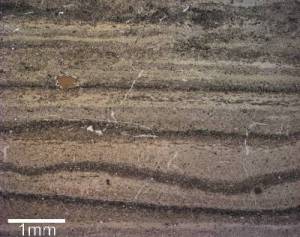
Image source: http://www.suigetsu.org/varves.html Used under fair use. Accessed January 2019
Varves
Probably the least familiar of these dating methods to anyone with a passing interest in the age of the earth is varves. These are sets of alternating layers formed by sediment on the floor of bodies of water due to a number of factors. With Lake Suigetsu in mind, the method of dating involved is a measurement of algae blooms via examination of the varves. At this lake, cores have yielded dependable rates that allow dates traced back to around 150,000 years.
Independent Methods, Same Results
Where this gets interesting, and where young earth creationists ought to take note, is that while it is somewhat easy to discount individual pieces of evidence based on independent objections, it is much more difficult to do so when these allegedly faulty dating systems yield the same dates.
Carbon-14 dating methods allow scientists to make predictions for how much Carbon-14 ought to be present in a sample before testing the sample. Thus, scientists can use these predictions to chart what the expected Carbon-14 content of tree rings or varves will be. The article has just such a chart, yielding a very narrow range of expectations regarding Carbon-14 content with the age of the sample. They can then take tree rings, going with the conventional assumption that the rings indicate years, and sample them for Carbon-14 to see if they match the expectations of carbon dating. What is remarkable (visually, especially, again, see the article) is that these expected ranges correspond exactly to the samples taken of tree rings. This means that a tree ring yielding an age of 14,000 years due to the number of rings also yields an age of 14,000 years when sampled for Carbon-14. But these dating methods are completely independent. The Carbon-14 date doesn’t rely at all on the number of rings in a tree, nor is reverse true.
Wolgemuth and Davidson then show the expectations from a young earth model with explanations of tree rings. For example, the expectation of multiple rings per year is tested and falls well outside the predictions of the Carbon-14 dating. This is important, because it means that the conventional assumptions about testing dates align together independent dating systems while young earth predictions yield wildly dissimilar results. These results are presented in the paper.
Scientists go further, though, and can line these evidences up with varves of Lake Suigetsu. Here, there is some technical data about how scientists can determine when significant events happened in the lake, such as extreme algae blooms or additional brackish water, but the core of the point is that when these factors are accounted for, a predictive range for Carbon-14 can again be made and set alongside the age estimate based upon the varve samples. Once again, when aligned, there is remarkable correspondence between Carbon-14 expectations and the actual measurements set alongside the varve-counting method of dating. Additionally, note Wolgemuth and Davidson, there is a steady decline backwards in the amount of Carbon-14 present, showing not a wildly erratic decay rate but rather a steady and predictable rate as one goes deeper into the sediment of Lake Suigetsu. These predictions falsify a young earth account, in part, because the young earth model “expects… massive sediment deposits during the flood year…” in addition to other expectations of many flood models for a young earth.
Next, Wolgemuth and Davidson turn to combining all of these lines of evidence together, demonstrating that the period of overlap where we can measure tree rings, varves, and Carbon-14 yields a graph just as predicted by conventional expectations, and that varves and Carbon-14 can be plotted much farther (due to their availability and the lack of reliable tree ring data older than 14,000 years), showing a constant alignment of these independent forms of evidence.
The authors state the decisiveness of this data and its implications for models of the age of the earth quite well:
we have two options. Option 1 is that God gave us amazing tools to test and verify that carbon-14 decay rates have not changed and sediments in Lake Suigetsu have been accumulating for more than 50,000 years. Option 2 is that God precisely manipulated multiple independent phenomena—tree ring growth, atmospheric carbon-14 production, and sediment couplet formation—to mimic conventional expectations.
More Methods of Dating
Wolgemuth and Davidson don’t leave the evidence there, however, because more methods of dating can converge on Lake Suigetsu, allowing for additional independent dating. Argon-Argon dating from volcanic ash in the Lake yields a radiometric test that corresponds to Carbon-14 dating and tree ring data.
They note that most young earth creationists don’t object when Carbon-14 dating is used on things that corroborate biblical materials, such as the Dead Sea Scrolls. Yet when one puts the data point for the Dead Sea Scrolls alongside the tree ring carbon data, we find that there is, again, alignment between the Carbon-14 dating for the tree rings, the actual counting of the tree rings, and the age of the Dead Sea Scrolls. This would mean that some form of manipulation of dating systems would have to yield the correct date for the Dead Sea Scrolls but incorrect dates by counting tree rings and Carbon-14 despite the fact that these align perfectly with the data for the Dead Sea Scrolls. And with this latter data, again, Argon-Argon dating with radiometric dating can be incorporated to show yet another independent method of dating.
Conclusion
Young earth creationists have not dealt with the fact that it is not just independent methods of dating that yield similar dates but rather that these independent methods correspond with each other and back each other up. On a young earth reading of the evidence, there is no explanation for why the allegedly mistaken methods of counting tree rings, varves, measuring Carbon-14 dating, and Argon-Argon dating from volcanic ash should all correspond with the same dates. After all, each of these is taken to be independently mistaken for different reasons and at different rates. But if that’s true, then the observed data should be completely different from what it actually is. Additionally, the alleged accuracy for dating things in biblical archaeology is generally conceded by young earth creationists, and this dating for biblical artifacts also corresponds to other dating methods. Thus, the accurate date of the Dead Sea Scrolls corresponds with the allegedly inaccurate methods of tree ring counting, varve counting, and radiometric dating. What possible reason could there be for this to be the case? Going back to the words of Wolgemuth and Davidson, the most reasonable explanation is that God has given us the tools to study creation, and that these tools give us an accurate record of earth’s history.
Links
Be sure to check out the page for this site on Facebook and Twitter for discussion of posts, links to other pages of interest, random talk about theology/philosophy/apologetics/movies and more!
What options are there in the origins debate? – A Taxonomy of Christian Origins Positions– I clarify the breadth of options available for Christians who want to interact on various levels with models of origins. I think this post is extremely important because it gives readers a chance to see the various positions explained briefly.
What is the relationship between Christianity and science?- An Overview of 4 Views– How should the Christian faith interact with science? Do they interact at all? I survey 4 major views on these and other questions.
SDG.
——
The preceding post is the property of J.W. Wartick (apart from quotations, which are the property of their respective owners, and works of art as credited; images are often freely available to the public and J.W. Wartick makes no claims of owning rights to the images unless he makes that explicit) and should not be reproduced in part or in whole without the expressed consent of the author. All content on this site is the property of J.W. Wartick and is made available for individual and personal usage. If you cite from these documents, whether for personal or professional purposes, please give appropriate citation with both the name of the author (J.W. Wartick) and a link to the original URL. If you’d like to repost a post, you may do so, provided you show less than half of the original post on your own site and link to the original post for the rest. You must also appropriately cite the post as noted above. This blog is protected by Creative Commons licensing. By viewing any part of this site, you are agreeing to this usage policy.

 J.W. Wartick - Reconstructing Faith