christian
Problems with the “Slippery Slope” argument for Inerrancy
 I believe the Bible is true in all that it teaches, and that this is what is meant by inerrancy. The Bible teaches no error. There is much debate over the meaning of inerrancy, and I’m not going to enter into that debate now (though I have written on it, if you’d like to see my opinion). What is important is that I want to start by saying that I affirm inerrancy, but I think one common argument in favor of the doctrine is mistaken.
The Slippery Slope Argument for Inerrancy
The argument I’m referring to is what I shall dub the “Slippery Slope” argument. Basically, it asserts that if someone doubts that one part of the Bible is true, doubt about the rest of the Bible unerringly follows [see what I did there?]. One example of this can be found in a recent webcomic from Adam Ford. We might write out the argument in syllogistic form as something like:
1. If one part of the Bible is in thought to be an error, other parts are thrown into doubt
2. Person A believes the Bible has an error.
3. Therefore, person A has reason to believe other parts are thrown into doubt.
The syllogism as I have written it is surely not the only way to put this argument. I am providing it largely as an illustration of how the argument might be stated. The core of the argument, however, is that if one thinks part of the Bible is an error, the rest of it is made at least possibly dubious.
Analyzing the Argument
There are several difficulties that immediately come up, ranging from concrete to obscure. On the obscure end, we might question what is meant by “an error” and whether that error is said to be theological, scientific, medical, or something else. We could then debate whether an alleged scientific error in the Bible is grounds for stating that there is “an error” in the Bible to begin with, by debating different views Christians hold about the Bible’s relationship with science (or medicine, or whatever). I’m not going to delve into obscurities here, however interesting they may be (and, in my opinion, they are very interesting).
Instead, I want to focus on some major difficulties with the argument. For one, it assumes that the interlocutor, person A, views the entirety of the Bible as on the same evidential plain. That is, for the argument to hold any weight, person A would have to believe that the Bible is linked together so intricately that a belief that Genesis 34:17 [I arbitrarily chose this verse] is an error (however defined) would entail that John 3:16 is possibly an error as well. Clearly, for the argument to be sound, Premise 1 must be correct, and it seems to be obviously false.
The reason I say this is because the possible errancy of John 3:16 does not follow from belief that there is an error in Genesis 34:17. Suppose you are reading a history textbook and you see that it states the date of General Lee’s surrender at Appomattox to be April 9, 1864. You, being a proud history buff, know that the date was actually April 9, 1865. However, the year is only off by one. You may proceed more carefully through the rest of the book, but you would not have any reason to think that the book was mistaken when it said that General Patton was a United States general in World War II.
The argument therefore assumes a unity of the text such that the entire Bible stands or falls together. Now, that might be a perfectly correct position to hold–and I do hold to the unity of Scripture myself–but that is not an obligatory or necessary view. That is, someone might deny that the Bible is a unified text and therefore need not ascribe to the view that if one part is in error, another must be.
But this is not the only difficulty with the argument. Another problem is that it assumes person A has no more reason to believe the portions of the Bible they believe are true than they do for the portions they believe might be errors. Yet this is mistaken, and demonstrably so. Person A may believe there is overwhelming evidence for the truth of the resurrection of Jesus Christ, such that they affirm that without question, while also thinking that the evidence against Israel having been in Egypt is quite weighty as well. Thus, they believe the Bible is perhaps mistaken on the status of Israel in relation to Egypt in Exodus, but they also affirm that it is clearly correct on Jesus’ resurrection. But the slippery slope argument presumes that they cannot hold these beliefs together without at least significant tension. But why? Again, the reason appears to be because the slippery slope argument relies on the assumption that the evidence for one part of the Bible must be exactly on par with the evidence for another. However, that in itself is clearly wrong.
Conclusion
Again, I affirm the doctrine of inerrancy. I just think we should not rely on this as one of our arguments. I have used the slippery slope argument myself in the past, but I believe the above analysis shows I was mistaken to do so. I think that others should avoid the argument as well so that we can present the best possible arguments for the truth of the Bible without error.
I suspect many will take issue with the analysis above. I’m not saying that I believe any portion of the Bible is an error. Nor am I denying the unity of Scripture. What I am saying is that it is not logically fallacious to deny that unity. I’m saying that I believe it is logically consistent to believe that the Bible may have an error while still affirming, for example, the death and resurrection of Jesus Christ. Is that something I would recommend? No, but neither is it something I would say is necessarily contradictory. Those who do want to take issue with my analysis must demonstrate how it is mistaken, and thus provide reason to think that the assumptions the slippery slope argument is based upon are sound.
Again, a final note is that I have taken the place of the interlocutor in several instances in this post. My point is simply that someone who did deny these things could come up with effective counters to the slippery-slope argument for inerrancy. Therefore, it seems to me that the argument is ineffective at best and faulty or fallacious at worst. It relies on presupposing that the opponent operates in the same sphere of presuppositions as the one offering the argument, but they need not do so.
Links
Be sure to check out the page for this site on Facebook and Twitter for discussion of posts, links to other pages of interest, random talk about theology/philosophy/apologetics/movies and more!
On the “Fuzzification” of Inerrancy– I argue that we have qualified the term “inerrancy” unnecessarily and to the extent that it has become difficult to pin down its actual meaning. I advocate a return to a simple definition of the term.
SDG.
——
The preceding post is the property of J.W. Wartick (apart from citations, which are the property of their respective owners, and works of art as credited) and should not be reproduced in part or in whole without the expressed consent of the author. All content on this site is the property of J.W. Wartick and is made available for individual and personal usage. If you cite from these documents, whether for personal or professional purposes, please give appropriate citation with both the name of the author (J.W. Wartick) and a link to the original URL. If you’d like to repost a post, you may do so, provided you show less than half of the original post on your own site and link to the original post for the rest. You must also appropriately cite the post as noted above. This blog is protected by Creative Commons licensing. By viewing any part of this site, you are agreeing to this usage policy.
Sunday Quote!- Nation or Kingdom?
 Every Sunday, I will share a quote from something I’ve been reading. The hope is for you, dear reader, to share your thoughts on the quote and related issues and perhaps pick up some reading material along the way!
Nation or Kingdom?
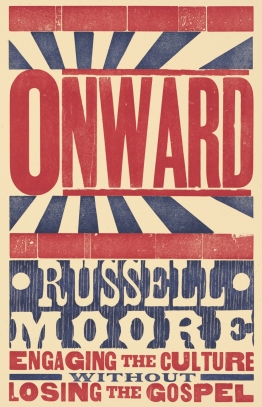
Russell Moore, in his latest book, Onward: Engaging the Culture Without Losing the Gospel counters the notion that passages like 2 Chronicles 7:14 should be read as a kind of “God and Country” text for civil religion in America:
The problem is that the application of this, and other passages, to the United States–or to any other nation, for that matter–is a confusion of the question of who “we” are. The United States, or any other modern nation, is not in a covenant with God… We too often see America as somehow more “real” than the kingdom [of God], and our country as more important than the church. (75, 76 cited below)
Moore has more to say about the use of this and other passages, but this sums up his argument. We too often make our identity with our nation rather than with the Kingdom.
I have found Russell Moore’s Onward to be a very rewarding read thus far.
Links
Be sure to check out the page for this site on Facebook and Twitter for discussion of posts, links to other pages of interest, random talk about theology/philosophy/apologetics/movies and more!
Sunday Quote– If you want to read more Sunday Quotes and join the discussion, check them out! (Scroll down for more)
Source
Russell Moore, Onward: Engaging the Culture Without Losing the Gospel (Nashville, TN: B&H Publishing, 2015).
SDG.
Really Recommended Posts 11/20/15- Anti-Trinitarian theology, the Bible without God, and more!
 I’ve got another round up of reads for you, dear readers! This week, there are some posts I’m pretty excited about. Thinking about attacking the doctrine of the Trinity? Our first post tells you how not to defend one prominent anti-Trinitarian theology. Why are there books in my Bible that don’t mention God? Found a post for ya! Other posts include Star Trek and theology, the death of the apostles, and standing up for women at a men’s retreat. Let me know what you think, and be sure to let the authors know as well!
How Not to Defend Jehovah’s Witness Theology– An excellent post analyzing the way that non-Trinitarians attempt to attack the doctrine of the Trinity. It’s not enough to poke holes in another theory. This is a piece well worth your time!
The 2 Books of the Bible that Don’t Mention God– Here’s an interesting post looking at the book of Esther and the Song of Songs, 2 books which don’t mention God. Why are they in the Bible. Disclaimer: I have been convinced that YHWH–the divine name–is mentioned in Song of Songs, but I think this post is still excellent.
5 Reasons to Reunite with Reunion- Star Trek: The Next Generation Retrospective– I love Star Trek. I love when I get to think about theology and Star Trek. If you have those loves, you’ll enjoy this post.
What Makes the Death of the Apostles Unique?– All kinds of people are willing to die for their faith. Here is a post showing why the Disciples’ willingness to die sets them apart. I have written on this topic myself: “Dying for Belief: Analysis of a Confused Objection to one of the evidences for the Resurrection“, so check out my post on it as well!
Standing up for our Sisters at a Men’s Retreat– Men have privilege. It’s true. Here is a post about how we should stand up for those who do not have the same advantages, even in man-to-man talks.
Support Biblical Gender Equality TODAY!

Used with permission.
Today, November 12th, is “Give to the Max Day” for “GiveMN,” which means a number of organizations are eligible for matching grants to help support their growth and outreach. I want to bring your attention to one organization which is near and dear to my heart, Christians for Biblical Equality (CBE). CBE’s mission statement reads:
CBE exists to promote biblical justice and community by educating Christians that the Bible calls women and men to share authority equally in service and leadership in the home, church, and world.
Such a cause is of immense importance and value in our world. I have personal experience with CBE as a volunteer, writer, and supporter. I love this cause and have a heart for it. You can donate to help support this cause here.
Please consider donating today to help spread the good news that God is not a God of limiting through gender. Thank you.
Book Review: “Augustine on the Christian Life” by Gerald Bray
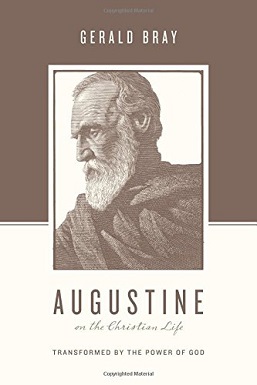 Gerald Bray’s Augustine on the Christian Life is written in a very different style from previous entries in the “Theologians on the Christian Life” series–at least those that I have read. It is organized around a mere five chapters, each focusing on an aspect of Augustine’s own life: life and times of Augustine, Augustine as believer, teacher, pastor, and for today. What makes the presentation so unique is that a good portion of the first few chapters follow Augustine’s own series of thoughts from pagan to Christian, derived from his Confessions.
The focus on Augustine as Augustine makes the book quite readable, as it presents his theology in ways that are directly applied to the subject of each chapter. It reads as though it is the life story of Augustine, punctuated with his theological insights, which are themselves applied back onto Christian life in general.
The way the book is presented, however, often means that Bray spends a significant amount of time focusing on the general theology of Augustine rather than on his specific theology of the Christian life. Large portions of the book are spent outlining Augustine’s theology, without any clear application to the theology of the Christian life. Thus, there is lengthy discussion over predestination, original sin, and the like. Each gets developed in great detail, with Augustine’s thoughts laced throughout. Each is also related back to Augustine’s own life and shows how his thought was developing over time.
A good portion of the book is also spent showing Augustine’s specific exegesis of various passages, and how his holistic view of Scripture allowed him to make good points despite having often subpar manuscripts with which to work. These sections are intriguing, because they introduce readers to Augustine’s hermeneutics as specific passages demonstrate the care with which he worked with the text. Moreover, Bray notes that the influence of the allegorical method upon Augustine can be overstated, and that the method itself should not be completely ignored when it comes to reading the Bible.
The final chapter, “Augustine for Today” does much to draw all the threads together into a coherent picture of Augustine’s theology of the Christian life. Indeed, the last chapter is the one that is most similar to other books in the series. Yet it is built upon the foundation of the previous chapters, turning the work into a kind of biographical, narrative theology similar to Augustine’s Confessions themselves. It is an intriguing way to have written the book. Readers may have to work harder to gain the specific insights on the Christian life from within the book, but doing so is a pleasurable journey into the mind and heart of one of Christianity’s most important thinkers. It is as though readers are discovering the hows and whys of the Christian life right alongside Augustine, and exploring the same issues he has in drawing out the faith.
Augustine on the Christian Life is a fresh read that provides readers with insight into the whole of Augustine’s theology. Its style is different from other books in the series, but the presentation is interesting and accessible. It is well worth the time spent reading it.
The Good
+Takes advantage of the mass of personal reflection by Augustine
+Unique presentation of theology of Christian life
+Many applicable insights
The Bad
-Overly focused on Augustine’s general theology
Disclaimer: I was provided with a review copy of the book by the publisher. I was not required to provide any specific kind of feedback whatsoever.
Source
Gerald Bray, Augustine on the Christian Life (Wheaton, IL: Crossway, 2015).
Links
Be sure to check out the page for this site on Facebook and Twitter for discussion of posts, links to other pages of interest, random talk about theology/philosophy/apologetics/movies and more!
Book Reviews– There are plenty more book reviews to read! Read like crazy! (Scroll down for more, and click at bottom for even more!)
SDG.
——
The preceding post is the property of J.W. Wartick (apart from quotations, which are the property of their respective owners, and works of art as credited; images are often freely available to the public and J.W. Wartick makes no claims of owning rights to the images unless he makes that explicit) and should not be reproduced in part or in whole without the expressed consent of the author. All content on this site is the property of J.W. Wartick and is made available for individual and personal usage. If you cite from these documents, whether for personal or professional purposes, please give appropriate citation with both the name of the author (J.W. Wartick) and a link to the original URL. If you’d like to repost a post, you may do so, provided you show less than half of the original post on your own site and link to the original post for the rest. You must also appropriately cite the post as noted above. This blog is protected by Creative Commons licensing. By viewing any part of this site, you are agreeing to this usage policy.
What is the relationship between Christianity and science? – An Overview of 4 Views
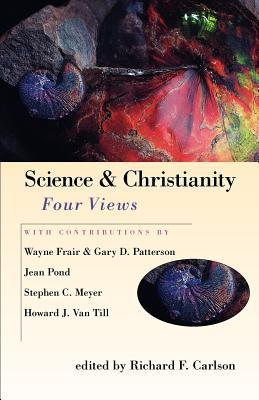
There are several different ways that Christians perceive the relationship between science and religion. Science & Christianity: Four Views edited by Richard Carlson provides some insight into the major positions Christians hold regarding this relationship. Here, I will outline these major positions and then provide a few of my own thoughts on the relationship between science and Christianity.
Concordism
The Bible is more Authoritative than Science
The book’s taxonomy files this under “creationism,” but I file it under Concordism because there are different views of how this interplay between science and the Bible play out on these perspectives. The first example is that often exhibited by creationists of both young- and old-earth perspectives. On this view, the Bible is the ultimate authority for all truth, including scientific truth. Thus, in any place where science is thought to conflict with what the Bible is purported to teach, so much the worse for science. Wayne Frair and Gary Patterson, arguing for this perspective, note that “Science is a human activity” and “Science is motivated by the full range of human emotions and ambitions, and the history of science is replete with examples of human greed…” (20-21, cited below).
Thus, on this perspective there is often an understood–whether inherent or spoken–distrust of the findings of scientists. Science is a human activity and so can be seen as full of errors and “replete” with examples of human motivation driving conclusions. On the other hand, the Bible is of divine origin, and so it may be trusted absolutely. Any conflict must be decided in favor of the Bible.
Qualified Agreement
Creationists of all varieties might also hold to a kind of “qualified agreement” regarding science and Christianity. Those who affirm this position argue that science provides support for biblical Christianity. Stephen C. Meyer writes, in his essay, “when correctly interpreted, scientific evidence and biblical teaching can and do support each other” (130). This model holds that scientific theories do have wider metaphysical impact, but that this impact will be seen, ultimately, to support a biblical worldview.
Meyer doesn’t explicitly state this, but most forms of this model also hold that science and theology can mutually benefit from correctives to each other. Scientific discoveries might force us to rethink the extent of the Flood, for example, while a teaching of creation out of nothing in the Bible can serve as a corrective for metaphysical speculation alongside multiverse and other theories. Many different interpretations of this model are possible, and some would not allow for much mutual correcting.
Independence
The independence model ultimately views science and Christianity as operating in largely different spheres. Commonly known as non-overlapping magisteria (or NOMA, for short), those who hold to this model argue that we must “not make blanket claims about the supposed religious implications of scientific theory” (83) and that models which see science and Christianity as trying to answer the same questions ultimately lead to conflict. Science and religion are viewed as “different models of knowing” which do not overlap, and so they offer little threat whatsoever to each other (71-72).
Thus, the Bible is seen as a book which teaches us theological truths, while science teaches us about the natural world. Jean Pond argues that we must live as non-bifurcated people. It is not that we live compartmentalized lives with science and Christianity in different compartments. Rather, it is just the acknowledgement that different methods govern different aspects of reality. She uses a metaphor of interlocking fingers—each finger is different and independent but locked together they are stronger (90-92).
Partnership
Here I use the terminology found in the book once more, because I think it is a helpful way to envision this final model. The Partnership model envisions science and Christianity as working side by side and explaining the same sets of data. However, they explain them in different ways and are able to offer correctives to each other. Howard J. Van Till argues that this view allows for a view of creation that we can constantly learn more about and see as constantly changing.
However, where this model differs from concordism (the qualified agreement model) is those who hold it argue we should fully accept scientific consensus as telling us about the history of the natural world and that this consensus simply corrects theological views whenever there is conflict. Thus, in a way, this model gives priority to the findings of science over theological views about origins. However, Van Till argues that this is not a kind of science trumps religion model, but rather than we should view creation as “fully gifted” with a function economy that means God made creation itself self-sustaining.
Analysis
Each position has its own set of difficulties, though I think some are more plausible than others.
Regarding concordism, one of the biggest issues can be found in the first position: that of the comparison between the human origin of science and divine origin of the Bible. While it is true that the Bible is divinely inspired, any reading of the Bible is a human act of interpretation. Thus, to claim that science has human motivations possibly leading it astray while ignoring that very same possibility in reading and interpreting the Bible is misguided. Often, those holding this position tend to reduce the Bible to their specific interpretation of the Bible, and then anything which conflicts with that is rejected. The title I gave to this view, “The Bible is more Authoritative than Science” reflects the truth: ultimately, the Bible has God’s authority. But as people use titles like this, we find that often the “Bible” means “my interpretation thereof.” I conclude that this position holds to a view of science and Christianity which is too naive to be affirmed consistently.
The Qualified Agreement model avoids this inconsistency, but it does so at the cost of being ambiguous at points. In what way, exactly, is there qualified agreement? How does theology inform science and vice-versa? Who ultimately decides if there does seem to be a simple contradiction between the two? These questions are left largely unresolved by this model. There is much that turns upon how we take the clause of Meyer’s that “when correctly interpreted” theology and science support each other.
The independence model provides the easiest solution to conflicts perceived between science and Christianity. It simply states that there can be no conflict because the two aren’t even discussing the same realms of truth. What it gains in simplicity, it loses in clarity, however. We are left wondering how we are to take it that matters of faith simply have nothing to say about, for example, the bare existence of the universe. If it is true that science and Christianity do not overlap and speak of entirely different realms of knowledge, what do we do with the Christian claim that the universe was created? Is it not actually about the material universe but rather some kind of spiritual truth that we don’t yet know? Moreover, the independence model seems to assume a view of the world in which there are two buckets: spiritual and material, and those buckets are entirely independent of each other. That is, if I am considering something, it is either spiritual or material, but it cannot be both. This seems to be an overly simplistic view of the universe and one which is difficult to square with the apparent unity between the spiritual and physical within much of the Judeo-Christian worldview.
The Partnership model is appealing in its language, but difficult to understand. It has most of the same problems as the “qualified agreement” model: how do we decide which one is correct when science and theology come into apparent conflict? Why does the partnership model give priority to science in most of these matters? What does it mean to claim that creation has functional economy, and how do we square that with miracles found in the Bible and the doctrine of creation?
Ultimately, I think we still have much work to do in finding an adequate model of science and Christianity. Each of the models surveyed here have aspects that are useful but they each have some difficulties to resolve. I recommend reading Science & Christianity: Four Views to provide a deeper look at these models if you are interested in the topic.
Links
Be sure to check out the page for this site on Facebook and Twitter for discussion of posts, links to other pages of interest, random talk about theology/philosophy/apologetics/movies and more!
What options are there in the origins debate? – A Taxonomy of Christian Origins Positions– I clarify the breadth of options available for Christians who want to interact on various levels with models of origins. I think this post is extremely important because it gives readers a chance to see the various positions explained briefly.
Origins Debate– Here is a collection of many of my posts on Christianity and science.
Source
Science and Christianity: Four Views edited by Richard F. Carlson (Downers Grove, IL: InterVarsity, 2000).
SDG.
——
The preceding post is the property of J.W. Wartick (apart from quotations, which are the property of their respective owners, and works of art as credited; images are often freely available to the public and J.W. Wartick makes no claims of owning rights to the images unless he makes that explicit) and should not be reproduced in part or in whole without the expressed consent of the author. All content on this site is the property of J.W. Wartick and is made available for individual and personal usage. If you cite from these documents, whether for personal or professional purposes, please give appropriate citation with both the name of the author (J.W. Wartick) and a link to the original URL. If you’d like to repost a post, you may do so, provided you show less than half of the original post on your own site and link to the original post for the rest. You must also appropriately cite the post as noted above. This blog is protected by Creative Commons licensing. By viewing any part of this site, you are agreeing to this usage policy.
Sunday Quote!- Future Kings and Queens of the Universe
Every Sunday, I will share a quote from something I’ve been reading. The hope is for you, dear reader, to share your thoughts on the quote and related issues and perhaps pick up some reading material along the way!
Future Kings and Queens of the Universe
Russell Moore’s book, Onward: Engaging the Culture Without Losing the Gospel argues for a Christian perspective on cultural engagement that goes beyond (and even rejects) simply trying to integrate Christianity into existing culture. At one point, he argues that we cannot reduce the people that are often outsiders in our pews to being projects; instead, we must see the Christians around us as part of the glorious resurrection to come:
When the church honors and cares for the vulnerable among us, we are not showing charity. We are simply recognizing the way the world really works, at least in the long run. The child with Down syndrome on the fifth row from the back in your church, he’s not a “ministry project.” He’s a future king of the universe. The immigrant woman who scrubs toilets every day on hands and knees, and can barely speak enough English to sing along with your praise choruses, she’s not a problem to be solved. She’s a future queen of the cosmos, a joint-heir with Christ. (81-82, cited below)
I thought the perspective offered here is wonderful. The body of Christ is made up of people that we so often want to just reject out-of-hand or treat differently because of who they are. But there is no room for that in the ultimate hope of Christianity. We will be ruling with our Lord Jesus Christ with all of these “others.”
Thus far, I highly recommend Russell Moore’s Onward to you, dear readers.
Links
Be sure to check out the page for this site on Facebook and Twitter for discussion of posts, links to other pages of interest, random talk about theology/philosophy/apologetics/movies and more!
Sunday Quote– If you want to read more Sunday Quotes and join the discussion, check them out! (Scroll down for more)
Source
Russell Moore, Onward: Engaging the Culture Without Losing the Gospel (Nashville, TN: B&H Publishing, 2015).
SDG.
Really Recommended Posts 11/06/15- Star Trek theology, egalitarianism, and more!
 I hope you’ll enjoy this week’s roundup of posts from around the web. You can watch a video explaining egalitarian theology from Genesis, survey challenges your kids might encounter for their faith, learn about pro-life dialogue, discover theology in Star Trek: The Next Generation, and explore a cold time before a young earth could have existed. Let me know what you think of the posts, and be sure to let the authors know as well.
Egalitarian from the Start (Vide0)– this sermon is from Richard Davidson, author of the monumentally important study on sexuality in the Old Testament, Flame of Yahweh. He argues that, from the beginning of creation, egalitarianism is the ideal perspective.
17 Ways Your Kids Will Encounter Challenges to their Faith– Children will encounter a great number of challenges to their faith as they grow up. Simply being aware of the way children can be confronted by these challenges will help parents prepare to answer them and help their kids find answers.
Four Practical [Pro-Life] Dialogue Tips from My Conversation with Brent– Josh Brahm, an excellent pro-life speaker, offers some dialogue tips alongside a case study of an actual conversation he had with a pro-choice advocate.
Star Trek Theology- “Remember Me”– The Sci-Fi Christian, an excellent website and podcast, offers up this heaping helping of theological analysis of The Next Generation episode, “Remember Me.” It’s an episode I enjoy immensely, and I also enjoyed reading this post. Check it out.
A Holocene Cold Snap In the Year 2,200 B.C. (Before Creation)– Here is an analysis which challenges the Young Earth timeline, because it demonstrates that we can observe weather patterns from before dates set by groups like Answers in Genesis.
Really Recommended Posts 10/30/15- What do you know about Domestic Abuse?, apologetics, and more!
Another week, another round of enjoyable reads for you, dear readers. It is Domestic Violence Awareness Month, so I’ve shared a double-feature of posts that work to dispel myths about domestic violence. How many of these myths have you heard or held onto? Other posts include the fine-tuning argument, apologetics in the Bible, fossilized burrows, and the strangeness of the Bible. Check them out, and let me know what you think.
Ten Myths About Domestic Abuse You Didn’t Know You Believed – Part 1 – I found this post enlightening about some of the perceptions related to domestic abuse we often absorb without realizing it. I think everyone should read this post to get an idea of some of the difficulties around speaking about domestic abuse. This post has the first 5 myths. Don’t forget to check out Part 2 as well.
The Fine-Tuning Argument (Video)– A video which outlines and explains the argument for the existence of God from fine-tuning. I think this is a sound argument well-worth knowing.
Fossilized Animal Burrows in Argentina from the Triassic Period– If the Flood is supposed to explain the overwhelming majority of sedimentary layers on Earth, how do Flood Geologists explain animal burrows? This post presses home the challenge.
Apologetics Started in the Bible– Some reject the need for Christian apologetics, but the fact is that apologetics is found in the Bible itself.
Parents, Please Don’t Forget How Strange the Bible Is– If we don’t take the whole word of God seriously, it will be hard for our children to do so. We need to be aware of the sometimes strange aspects of the Bible and be prepared to answer our kids’ questions about them.
Adhering to the Book of Concord: “In So Far As” or “Because” it agrees with Scripture?
A title page of the Book of Concord
Lutheran theology is derived from and reflective upon not just Martin Luther but also the Lutheran Confessions, as found in the Book of Concord. Within Lutheranism, there is much debate over exactly how tightly one must adhere to the Book of Concord. On one side, there are those who insist we must affirm the Book of Concord “because” it agrees with the Bible. On the other side, others maintain we should affirm it “in so far as” it agrees with the Bible.
Because it Agrees
Representative of the view that one must agree with the Book of Concord because it teaches what the Bible teaches is the following:
Authentically Lutheran churches insist on a subscription to the Confessions [The Lutheran Confessions/Book of Concord are used interchangeably] because they agree with the Bible, not merely in so far as they agree with Scripture. Otherwise, there would be no objective way to make sure that there is faithful teaching and preaching of God’s Word. Everything would depend on each pastor’s private opinions, subjective interpretations, and personal feelings, rather than on objective truth as set forth in the Lutheran Confessions. (Book of Concord (.org) FAQ)
Note some important aspects in this quote. First, the Book of Concord just does agree with the Bible. That is insisted upon. Second, the Book of Concord is said to be “objective truth” as opposed to the “subjective interpretations” of the individual. These considerations frame what I’d like to comment on regarding those who hold to the view that we must agree with the book of Concord “because…”
Because?
I’ll start with the second aspect noted above. There are, of course, all kinds of increasingly detailed issues people on either side of the debate might raise here. For example, how are “objective” and “subjective” being here defined? I’m going to set that kind of issue mostly aside and focus on a few difficulties I see.
The first is that one cannot simply read the words off the pages of the Book of Concord without going through the necessary step of interpreting them. That is, I as a reader of the Book of Concord must try to make sense of the words I am reading, and thus I am participating in the act of interpreting the Book of Concord. If, as the quote above states, the problem is the individual’s subjective nature, then the problem is completely unavoidable. Indeed, even if we grant that the Book of Concord is “objective truth” in its entirety, all we’ve done is moved the problem of subjective interpretation one step back. Now the reader must interpret the Book of Concord in order to get to the objective truth about Scripture found therein.
Another difficulty with this objective/subjective distinction is that it assumes the writers of the Lutheran Confessions were themselves either not subjective (which seems impossible) or explicitly guided by the Spirit to write out objective truth only. I would not dispute that the Holy Spirit could bring about a completely faultless writing, but the question is whether those who affirm the “because” position would like to argue this. The first thing we should do if they do want to argue this would be to see whether the writers of the Book of Concord assert the Holy Spirit did bring about such a completely objective, 100% correct work.
In the Preface to the Book of Concord, we can read:
Finally, with invocation of God Almighty and to his praise and glory and with careful deliberation and meticulous diligence through the particular grace of the Holy Spirit, they wrote down in good order and brought together into one book everything that pertains to and is necessary for this purpose. (Preface, 12)
Later, the Preface makes clear (15) that this Book was “the correct, Christian understanding of the Augsburg Confession…” In the closing of the Preface, we read (23) that those who signed on to it that they “are minded not to manufacture anything new… nor to depart in either substance or expression… from the divine truth… by the grace of the Holy Spirit we intend to persist and remain unanimously in this truth and regulate all religious controversies and their explanations according to it.”
These are all strong statements, and they clearly called upon God the Holy Spirit for guidance in the composition of the various works that make up the Book of Concord. But does it follow that they were explicitly, inerrantly inspired and guided by the Spirit to never once get a single thing wrong in this book? Those who affirm the “because” position must answer yes. There is no wiggle room.
But a close reading of the Preface seems to suggest that although the writers certainly believed everything in the Book of Concord to be without theological error (otherwise they would not have it regulate all controversies, etc.), I have yet to find anywhere that a claim could be made that the book is explicitly inerrant. It would have to be, however, for the “because” position to be true. This human composition would have to be 100% correct in every single minute detail down to the last proof text cited in order for it to be acceptable to affirm that we must agree with it “because” it agrees with Scripture.
Among other things, what follows from that is that anyone who subscribes to the Book of Concord “because” position must have read the entirety, looked up every citation, and assured themselves that every single interpretation, doctrinal position, and the like is 100% correct, lest they be saying that it is a human-made book without error on God’s Word without actually knowing every detail it contains.
The first issue raised above will be addressed in the section named “A Case Study,” below.
In So Far As
A supporting argument for the “In So Far As” position is that we should always only affirm that which is true. If we can agree that the Bible is true in all it teaches, then we should only agree with other writings about the Bible so far as they agree with the Bible. This seems like an obvious conclusion, but the whole debate centers on whether this argument is sound. It is difficult for me to figure out how to support this argument, not because I think it is a poor argument, but because it seems just intuitively clear.
It may help to use an analogy. Historians have debated how to write history and whether writers of history can ever fully get at the “true” history as it happened. Yet very few would deny that there is such a thing as a “true” history. There must be some absolutely correct sequence in which events occurred such that if we had a complete set of writings that simply reported those events, that would be the “true” history. Thus, there is an objectively true history, against which historians can be measured. Granting some of the hand waving involved in this thought experiment, suppose we had a book, The True History of the World, and we looked up the John F. Kennedy assassination therein. We would then have the objectively true report of that hotly-debated historical event as it really did happen. Now suppose I wanted to write a book about the JFK assassination based upon The True History of the World. However careful a historian I am, however excellent and detailed my mind is, however much guidance I may have had, would it be reasonable to say that you agree with my book, The Objective JFK Assassination “because” it agrees with The True History of the World or “in so far as” it does? It seems that the reasonable conclusion would be “in so far as” it does, because we know that The True History of the World is objectively true.
Though imperfect, this analogy gets at the argument written above. We can agree the Bible is inerrant. Thus, if I were to write a book entitled The Objective Bible, I think we can agree that we should only agree with my book so far as it agrees with the Bible, right? No matter how detailed I am, no matter how meticulous, no matter how large a group of thoughtful interpreters I got together to vet my work, it would be entirely reasonable to only affirm agreement with my book so far as it is biblical. Then why would such a standard not also apply to the Book of Concord? I see no reason why that standard would not.
Indeed, to argue against those who affirm the Book of Concord only “in so far as” it agrees with the Bible would mean that one would have to assert that the caution and respect for God’s word implicit in that position–that I would not want to affirm anything, even by mistake, as biblical if it is even possibly in error anywhere–are mistaken. That the care and caution necessary to say “I will only agree with any book in so far as it agrees with the Word of God” is mistaken, and that that the Book of Concord must also be included under the umbrella of books against which all others must be judged.
For the “because” position ultimately, unswervingly leads to the conclusion that we should only affirm any other book “in so far as” it agrees with the Book of Concord. After all, if it is true that the Book of Concord is affirmed because it agrees with Scripture, then it follows that the authority of the Bible is effectively equivalent to the authority of the Book of Concord. The Bible is God’s word, and the Book of Concord is the objective teaching of God’s word without even possible error. That is not simply rhetoric; it is what must follow from the “because” position. Any interpretation of the Bible must be judged against the Book of Concord; hence, any reading of the Bible must also be judged against it.
A Case Study
Finally, we are in position to ask whether the Book of Concord does indeed have any error therein. That is a crucial question, of course, and one not easily resolved by those who remain faithful Lutherans. If, however, there is even one incorrect use of a proof text in the Book of Concord, the “because” position fails.
In the Apology of the Augsburg Confession, Article XXIII (XI) on the Marriage of Priests, section 25, we read:
Therefore this law concerning perpetual celibacy is peculiar to this new pontifical despotism. Nor is it without a reason. For Daniel 11:37, ascribes to the kingdom of Antichrist this mark, namely, the contempt of women.
Daniel 11:37 reads (ESV) “He shall pay no attention to the gods of his fathers, or to the one beloved by women. He shall not pay attention to any other god, for he shall magnify himself above all.”
The whole passage is difficult to interpret given its prophetic message about the Kings of the North and the South. I’m not going to enter into whether this is specifically referencing “Antichrist” or “the kingdom of Antichrist” or anything of the sort. Instead, the issue is with the reading as “contempt of women.” The Reformers were obviously not using the ESV or anything in English. But older English editions like the KJV might support this text as a proof for contempt of women: “Neither shall he regard the God of his fathers, nor the desire of women, nor regard any god: for he shall magnify himself above all.”
But the problem is that critical editions of the Old Testament don’t support a reading as contempt of women. Without going into depths of detail, and because I’m not a Hebrew scholar by any measure, I would just point out that the Hebrew does seem to clearly state “the one desired by women.” So if we are to read 11:37 as a proof text for contempt of women, it doesn’t seem to be a right reading. It’s a minor difficulty, but one nevertheless. Did the citation above from the Book of Concord properly exegete the Bible? I would assert that the use of this proof text is mistaken. If we are to take “paying no attention” as “contempt”–itself a move that could be disputed, then the subject remains “the one desired by women” not “women.”
Now, if the Book of Concord should be agreed with because it agrees with the Bible, then how are we to take this? I don’t know. It seems to me that this is more an example of the way people read the Bible at the time and used proof texts–often stripped of context–in defense of their positions. A single dispute over a citation is not a paradigm shift; indeed, I think that the authors of the Apology were correct on this notion about the marriage of priests. But that doesn’t mean everything they wrote is correct.
Conclusion
I agree with and affirm the Book of Concord in so far as it agrees with Scripture. I think it is correct on a huge amount of the things it teaches. I am currently re-reading it (slowly) and checking citations as I go. I have found it to be edifying and a source of profound theological insight. But it is not the Bible, and I do not think that to be Lutheran–or even a confessing Lutheran–I need to affirm that the Book of Concord is without possible error.
Source
Robert Kolb and Timothy J. Wengert, eds. with Charles P. Arand, translator, The Book of Concord.
Links
Be sure to check out the page for this site on Facebook and Twitter for discussion of posts, links to other pages of interest, random talk about theology/philosophy/apologetics/movies and more!
SDG.
——
The preceding post is the property of J.W. Wartick (apart from quotations, which are the property of their respective owners, and works of art as credited; images are often freely available to the public and J.W. Wartick makes no claims of owning rights to the images unless he makes that explicit) and should not be reproduced in part or in whole without the expressed consent of the author. All content on this site is the property of J.W. Wartick and is made available for individual and personal usage. If you cite from these documents, whether for personal or professional purposes, please give appropriate citation with both the name of the author (J.W. Wartick) and a link to the original URL. If you’d like to repost a post, you may do so, provided you show less than half of the original post on your own site and link to the original post for the rest. You must also appropriately cite the post as noted above. This blog is protected by Creative Commons licensing. By viewing any part of this site, you are agreeing to this usage policy.

 J.W. Wartick - Reconstructing Faith